




IntelliPaper
Abstract
The conservation of biodiversity within fruit crops is essential for sustaining both ecological and agricultural systems. Fruit crops, as integral components of nature's orchard, play a pivotal role in global food security and ecosystem health. India is one of the 12 mega biodiversity centres with 2 biodiversity hotspots which are the reservoirs of plant genetic resources. India stands at 7thplace in the global agricultural biodiversity status. Among fruit and nut crops, there are about 117 cultivated species with 175 wild relatives of which only 25 species have been domesticated. Genetic resources conservation of fruit trees is intricate and complex as they are belonging to various genera and species which require specific climate. Hence, in situ and ex situ conservation can go simultaneously. The western ghat and North eastern India are centres of diversity for several important native fruits including Mango, Jackfruit and Citrus. Apart from the major fruit crops, India is home to several underutilized fruit crops. However, due to increased pressure on land use several of the wild types, which are a great source of genes governing useful traits, are disappearing. Thus, there is an urgent need to conserve them in both in situ and ex situ conditions. The genetic diversity and modes of conservation of tropical fruits are discussed in this paper.
Explore Digital Article Text
I. INTRODUCTION
II. WILD SPECIES AND DIVERSITY
The role of wild species in the fruit improvement programme is increasingly becoming important as the donor source for many of the disease and pest resistance. However, in most of the perennial trees, wild species or the indigenous germplasm has not been evaluated extensively either by morphological or by molecular means. Some geographical? areas may be richer in biodiversity than other areas, and some species may also have more variation than others in a particular area. Conservation of germplasm is very important, because many species are becoming extinct and many others are threatened and endangered. The diversity of some fruits is well documented, while for others relatively little work has been done (Arora, 1994). Gaps in collections are found both between species and between regions. This is especially true for both underutilized species and wild crop relatives, where big gaps are noted. Kostermans and Bompard (1993) indicate that Mangifera blommesteinii, M. leschenaultii, M. superba and.. paludosa are in real danger of extinction. High genetic erosion has been noticed for jackfruit, Citrus spp. and Litchi chinensis in a survey carried out by the International Centre for Underutilized Crops (ICUC) and IPGRI (Haq, 1994). It is to be mentioned here that collection and utilization of wild species is not an easy task, as they require specific climate and do not so easily get acclimatized to the ex- situ conditions on introduction.
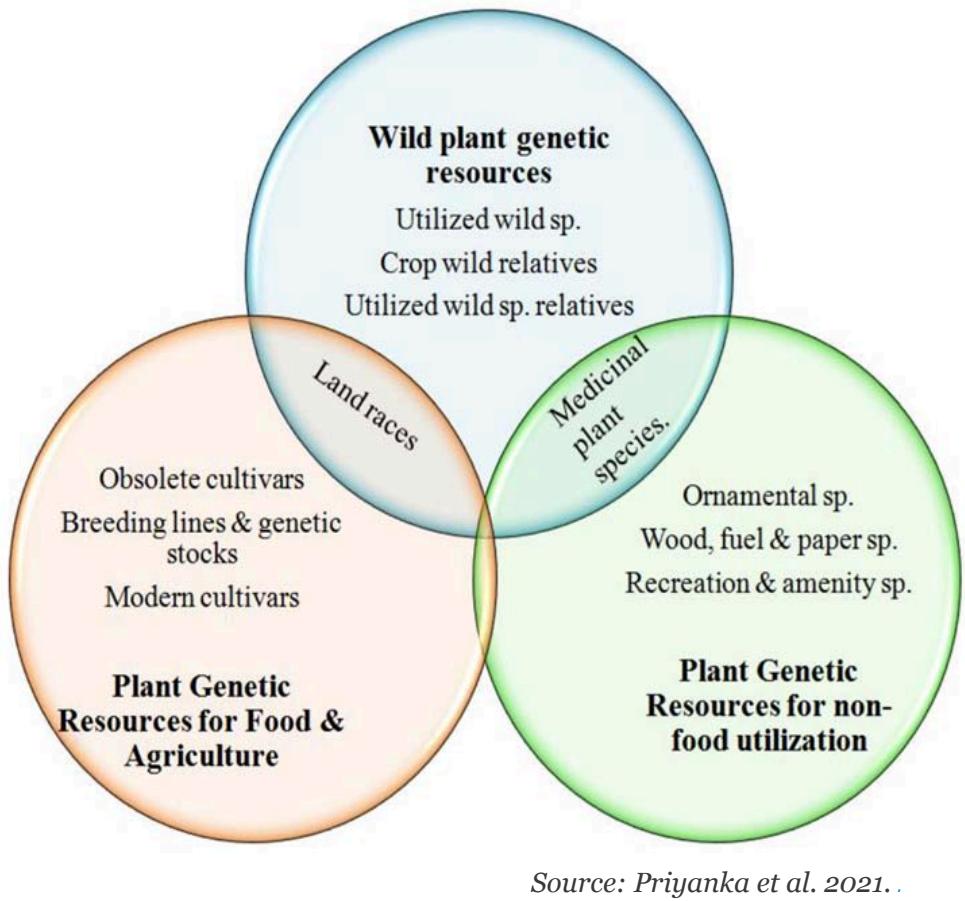 Fig. 1: Understanding the Impact of Climate Change on Biodiversity,
III. BIODIVERSITY OF FRUITS
The concept of origin of cultivated plants was first put forth by A de Candolle and the geographic centres of variability were described by Vavilov. He identified Asia as a major centre with "Indian centre" of North East region as primary or secondary centre of origin for many crop plants. 擬 is region is centre of diversity for several important native fruits including mango, jackfruit and citrus. The plant genetic resources represent a sum of the diversity that come from wild species and primitive forms, accumulated through evolution and natural selection, plant introduction, migration and domestication and the material developed by artificial selection and breeding. The North Eastern region had remained isolated for a long time even today the accessibility is poor to many parts of this region.
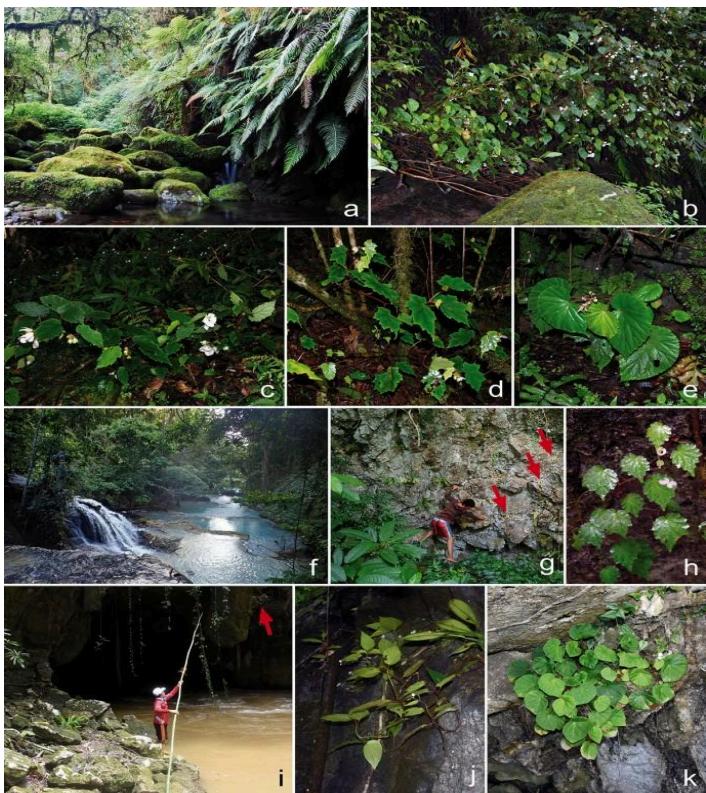
Fig. 2: Typical habitats and growth habits of Sulawesi Begonia species. (a) Stream in primary montane forest on Gunung Bawakaraeng, SW Sulawesi. (b) Begonia bonthainensis growing terrestrially on the stream bank (wider habitat shown in a). (c) Begonia sanguineopilosa growing terrestrially on the forest floor. (d) Begonia rantemarioensis growing terrestrially on the forest floor, on a steep slope. (e) Begonia ozotothrix growing terrestrially on the forest floor, at the base of a limestone boulder. (f) Stream on limestone bedrock in lowland forest close to Luwuk, eastern Central Sulawesi. (g) Vertical limestone wall at side of stream (wider habitat shown in f), red arrows indicate Begonia willemii individuals. (h) Begonia willemii growing lithophytically on a limestone wall (wider habitat shown in g). (i) Limestone karst landscape with river and cave in Matarombeo, SE Sulawesi; the red arrow indicates Begonia watuwilensis growing lithophytically on a stalactite. (j) Begonia watuwilensis growing lithophytically on limestone. (k) Begonia matarom beoensis growing lithophytically on a limestone cliff. Photo credit: a, b, f–k, Wisnu H. Ardi; c–e, Daniel C. Thomas.
The wet tropics with rain forests, undisturbed environmental conditions and variable altitudes are some of the major reasons for genetic diversity North-eastern Himalayas-wild, semi-wild cultivated species North-west-Semi-wild and cultivated types South-centre mostly cultivated types "Vast diversity in tropical and temperate Thuots cultivated and wild -109 species several wild, endangered and endemic species" Biodiversity can be located both in the wild or in the backyard. Regarding many of the tropical fruit species, the variability can be traced in wild, wherein many species grow naturally even today viz., the occurrence of Mangifera sylvatica in the North-eastern parts of India or M. antimanic and M. Nicobaric in Andaman group of islands. In the wild diversity was generated over a period mainly because of spontaneous mutants and the dispersal of seeds and seedling population. Seedling populations have been the source of diversity in the backyard as noticed in the case of fruits like mango and jackfruit. Diversity due to natural means has come about due to the seed dispersal as in pickling types of mango viz., Appemidi types in Uttara Kannada district of Karnataka or varietal wealth found in the Western Ghat regions.
IV. CHARACTERISTIC FEATURES OF TROPICAL FRUIT TREE DIVERSITY
The main causes for the tropical fruit diversity in India be it mango or an underutilized fruit like jamun, whether in the wild or in the cultivated types have been;
-
the presence of high heterozygosity
-
cross pollination
-
seed propagation
-
absence of vegetative propagation in the earlier day's indiscriminate multiplication.
Unlike other crops, where there is a need to create variability, in tropical fruit species, it is the management of diversity, which is the more challenging task. In fact, in crops like mango, the varietal diversity itself is considered as a hindrance to the improvement (Naik et al., 1958).
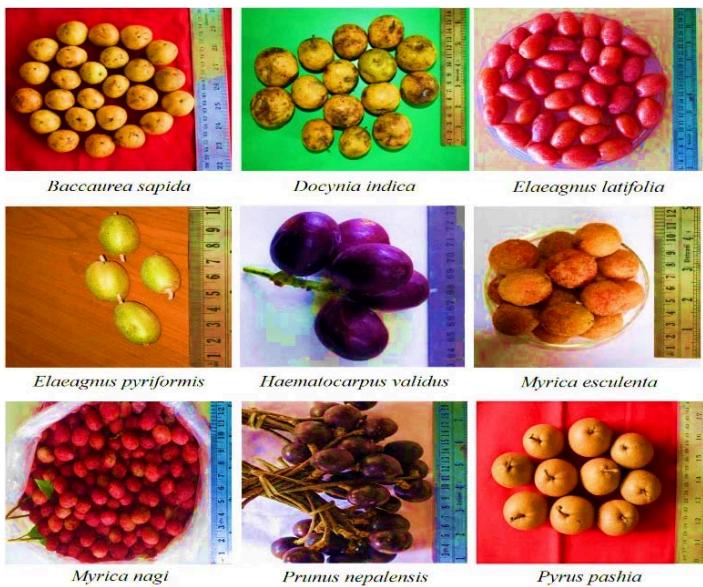
Sources: Sreekumar, V.B., Sreejith, K.A., Hareesh, V.S. et al., 2020. Fig. 3: Fruits of wild edible plants grown in the eastern Himalayas, India.
V. BIODIVERSITY AND CONSERVATION OF TROPICAL FRUIT TREES
Conservation of plant genetic resources is undertaken at genotype, gene pool, species and ecosystem level using diverse approaches. Plant genetic resources conservation is possible using in situ and ex situ approaches wherein each approach extends further options depending on the biological status, propagation method and population size of the species. Vast genetic diversity of underutilized fruits represents varied germplasm of wild, semiwild species, genetic stocks, cultivars, farmers selections etc. requiring application of more than one method of conservation. It is, therefore, emphasized that a complementary conservation strategy (Rao, 1998; Rao and Sthapit, 2013), involving the use of more than one relevant approach (in situ and ex situ) would be the best option for achieving safe conservation of these underutilized fruit species facing severe threat of extinction. There is big challenge to protect and conserve wild and semi-wild species of several major and minor fruits. Most of the wild species of these fruits occur in the protected areas and buffer zones of forest reserves and National parks. More over regeneration capacity and population size of some of the species is highly inadequate which is a matter of further concern and there is a probability of these being pushed to rare and endangered category (Malik et al., 2006). Due to various developmental projects and changing climate these areas have become highly vulnerable and there is an urgent need to protect and collect the existing important plant diversity for safe exsitu conservation. Coordination with forest department and joint programmes with Ministry of Environment, Forest and Climate Change is imminent to collect the germplasm and to ensure suitable in situ conservation measures.
In situ conservation of tropical fruit tree species is one of the most important aspects in the overall conservation of fruit diversity (Dinesh, 2001). It is well known that many of the species of mango, when introduced to other areas do not perform well or die. It is observed that the Mangifera andamanica, M. camptosperma and M. griffithi when introduced to mild tropics could not survive (Prakash, 2001). It is to be mentioned here that inspite of innumerable problems that are faced in the ex situ conservation, it is still advantageous to maintain them in the field gene bank, as it keeps the biodiversity of a particular species safe when plants are destroyed in the wild. Hence, to rationalize the concept of core collection was introduced, which in a limited set represents the genetic spectrum in the whole collections (Brown, 1989). It is proposed that landraces should be preserved for future generations as they harbour a diversity of interesting traits for future breeding work, for developing new farming systems and moreover, reflect the cultural identity of certain groups of people (Altieri and Merrick, 1987).
Until recently, germplasm conservation of crop landraces, as well as of their wild relatives, relied on ex situ methods (i.e., the conservation of biological material outside its natural habitat, UNCED 1992), mostly in germplasm banks. More recently in situ (on-farm) conservation (i.e. the conservation of biological diversity in its natural habitat) has been proposed as a conservation strategy which allows evolutionary processes to continue rather than being halted as occurs in ex situ conservation (Frankel et al., 1995; Maxted et al., 1997). Fragaria (strawberries), Rubus (raspberries, blackberries) Vaccinium (blueberries, cranberries, lingonberries) and Ribes (currants and gooseberries) are important small fruit crop plant genera in temperate climates. They are predominantly woody perennial dicotyledonous angiosperms (Galletta and Himelrick, 1990). Small fruits are generally heterozygous and do not reproduce true-to-type from seeds. The fruits are fleshy, more-or-less edible with very high levels of vitamin C, cellulose, pectin and anthocyanins possession antitumor, antiulcer, antioxidant and anti-inflammatory activities (Wang et al., 1999). They are highly prized for their varying shapes, textures, Flavours and colours. Wide genetic diversity within a species is required for its survival and adaptation to changing environments. As in other crops, domestication in small fruit crops has limited the genetic diversity to useful genotypes, adapted to the needs of humans as well as local growing conditions. It is necessary to develop reliable methods for characterisation of small fruit germplasm and to assess their genetic diversity/relatedness for practical breeding purposes and proprietary-rights protection. Molecular markers such as DNA-based markers, which allow direct comparison of different genetic material independent of environmental influences, are increasingly used in breeding programs of many horticultural crops.
5.1 Mango
Mango is native to India. Mukherjee (1949,1985) opined that this genus might have originated in the region covering Burma, Siam, Indo-China and Malayan peninsula. The genetic diversity of mango available in India is very rich and at present more than one thousand vegetatively propagated varieties exists in the country. Clonal selection, selections from chance seedlings and breeding efforts have resulted in identification of many elite improved varieties of mango for commercial cultivation in the country. All varieties in mango belong to one species Mangifera indica. Apart from indica, India is also reported to be the home of four other species viz., andamanica, M. khasiana, M. sylvatica and M. camptosperma (Mukherjee et al., 1985). The species of Mangifera occur mainly as complex biotic community in tropical humid forests, sub-tropical rain forests and tropical dry forests/woodlands of Indo-Malayan biogeographic realm (Mukherjee, 1985). The Mangifera germplasm can be classified under two categories;
- Seedling races: This group includes both wild and cultivated types. Under this category the cultivated ones come under the monoembryonic types. The polyembryonic types are seen generally in the Western Ghats of Peninsular India.
Sources: Dr., V. Ramanath Rao Fig. 4: Collaboration is the key to effective biodiversity conservation
Horticultural races: They include varieties, which when grown under different agro-climatic conditions and propagated vegetatively from the parent material have given rise to clonal variation Varieties like Alphonso, Dashehari and Langra are noticed to have clones resembling them in some of the morphological characters. Yadav and Singh (1985) opined that mango varieties of Northern and Southern regions belong to two different eco-geographic regions. Centres of mango diversity and distribution in India In India, seven centres of mango diversity have been recognized (Yadav and Rajan, 1993). These are the places where maximum diversity has been noticed for species as well as varietal diversity. They are
-
Humid Tropical region-Manipur, Tripura, Mizoram and S. Assam
-
Chota Nagpur Plateau-Trijunction of Orissa, Bihar and Madhya Pradesh
-
Santal Paraganas in Bihar
-
South Madhya Pradesh adjoining Orissa and Andhra Pradesh Dhar Plateau of Madhya Pradesh adjoining Gujarat and Maharashtra
-
Humid Tropical South Peninsular India
-
Andaman and Nicobar Islands
In India about thousand varieties of mango are grown. Most of these varieties have arisen as chance seedlings. Each mango-growing region in India grows a different variety. Although, there are more than thousand varieties have been documented in India of which only twenty five varieties are cultivated on a commercial scale in different states. Most of the commercial varieties have arisen as a result of selection from seedling types for different fruit characteristics like colour, taste, flavour, size and bearing habit. Although, growth in mango is genetically controlled, the environmental interaction has brought about the change in growth pattern under different agro climatic conditions, which also has contributed for its biodiversity. In India, three main centres contributed to of the diversity of mango i.e., Lucknow -Saharanpur belt of Uttar Pradesh, Murshidabad area of West Bengal and Hyderabad area of Andhra Pradesh. Most of the varieties in these areas have specific fruit? characteristics, require specific climate for optimum performance and have strong regional consumer preference.
5.2. Citrus
The North East hilly region is rich in fruits, vegetables and flowers, especially orchids. It is considered as a centre of origin of Mandarins and few other citrus fruits. Sixteen species of Citrus, 52 varieties, and seven natural hybrids of Assam were described by Bhattacharya and Dutta as early as 1956. They also reported two species of sub genus Eucitrus viz., C. indica and C. assamensis and three species of sub genus of Papeda viz., C. ichangensis, C. latipes and C. microptera which grow at high altitudes. C. indica is considered to be the most primitive species of citrus and probable progenitor of cultivated species. Diverse forms of Pummelo, Sour Orange, Rough Lemon, Sour Pummelo, Adajamir Sweet Lime etc. are found in this region.
Varietal diversity
Mandarin orange is concentrated in Maharashtra (Nagpur, Amaravathi, Wardha and Yavatmal), North East region of India (Assam, Arunachal Pradesh and Meghalaya), limited area of Karnataka (Kodagu), Tamil Nadu (Nilgris, Palani and Shevroy hills) and Kerala (Wynad). Sathpura hills of Madhya Pradesh adjoining Vidharbha region of Maharashtra also grow good quality mandarins. Kinnow Orange, a hybrid of King X Willow Leaf Mandarin has recently spread in North West India, especially in Punjab, parts of Himachal Pradesh, Uttar Pradesh and Rajasthan. Cultivation of introduced varieties/hybrids also add to the varietal diversity by throwing spontaneous mutants over a period. Sweet oranges are adapted well to arid tropics and sub tropics. They are commercially grown in Andhra Pradesh, Maharashtra, Punjab and parts of Tamil Nadu, Rajasthan and Utter Pradesh. in Andhra Pradesh Sweet orange cultivar Sathgudi is grown, whereas in Western and Central India sweet orange cultivar Mosambi is popular. In North Western India the cultivars Malta, Jaffa and Valencia are popular. Acid lime is grown on a commercial scale in Tamil Nadu, Andhra Pradesh, Maharashtra and Karnataka states. Lemons are grown commercially only on a limited scale. Eureka lemon in some regions and Assam lemon in North Eastern India are popular varieties under cultivation.
5.3. Banana
Bananas are one of the ancient fruits cultivated by man. It could be assumed that the fruit has evolved with the civilization (Krishnamurthi and Seshadri 1958) and found in Indus valley as early as in 327 B. C. Apart from its mention in Valmiki's Ramayana, it also finds a mention in Kautilya's Arthshastra and ancient Tamil classic Silappadikaram. These evidences suggested the early existence of banana in India. The wild Musa acuminata occurs in Assam, Burma, Siam, Indo-China, the Malayan peninsula and Archipelago and the Philippines The northeastern region of India - including the states of Assam, Arunchal Pradesh, Tripura and Mizoram, lie at a point where Musa balbisiana from the Indian subcontinent meets Musa acuminata from Southeast Asia.
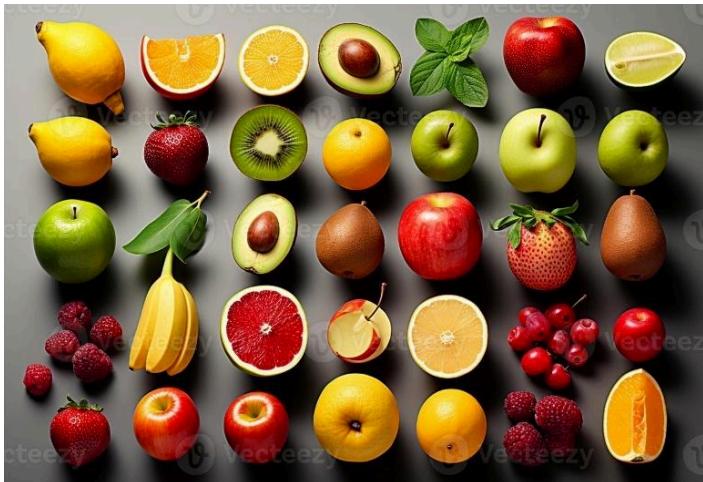 Fig. 5: Diversity of Fruits and their wild relatives
Table 1: Distribution of banana cultivars in India
| Region/ State | Cultivars |
| Andhra Pradesh | Amrit Pani (Rasthali, AAB), Thella Chekkarakeli (AAA), Karpura Chekkarakeli (Poovan, ABB), Monthan (ABB), Robusta (AAA) |
| Assam | Bhimkol, Manohar (ABB), Chini Champa (AB), Malbhog (AAB), Jahaji (AAA), Bor Jahaji (AAA), Kanch Kol (ABB), |
| Bihar | Alpan (AAB), Chini Champa (AB), Basrai (AAA), Kothia/ Muthia (ABB), Bateesa (ABB), Malbhog (Rasthali, ABB). |
| Gujarat | Dwarf Cavendish (AAA), Lacatan (AAA), Harichal (AAA) |
| Karnataka | Dwarf Cavendish (AAA), Robusta (AAA), Poovan (AAB), Rasbale (AAB, Rasthali), Marabale (Pome, AAB), Monthan (ABB), Elekki Bale (AB, Ney Poovan) |
| Kerala | Nendran (ABB, plantain), Palayankondan (AAB, Poovan), Kunnan (AB), Rasthali (AAB), Monthan (ABB) and Red Banana (AAA) |
| Maharashtra | Basrai (Dwarf Cavendish, AAA), Robusta (AAA), Safed Velchi (AB), Monthan (ABB), Rajeli (Plantain, AAB) |
| Tamil Nadu | Virupakshi (Pome, AAB), Poovan (AAB), Rasthali (AAB), Nendran (AAB), Monthan (ABB), Dwarf Cavendish (AAA), Robusta (AAA), Peyan (ABB) |
| Bengal and Orissa | Champa (AAB), Morthaban (AAB, Rasthali), Amrit Sagar (AAA), Giant Grover (AAA), Lacatan (AAA), Monthan (ABB) |
These two species, as well as other wild relatives have mingled to form a distinctive concentration of genetic diversity, occurring in the semi-evergreen, sub-tropical forests of the hill slopes. Further sources of diversity occur in the valleys and plains where bananas are common as a backyard crop. The habitat of wild bananas is shared with tribal groups who practice a form of shithing cultivation. Unfortunately, a growing number of sites where wild bananas once grew are now denuded. Wild species found in North eastern part of India include Musa acuminata, Musa balbisiana, several species from the section Rhodochlamys as well as Ensete glaucum. The diploid and triploid acuminatacultivars were taken by man to the native areas of balbisiana, which resulted in natural hybridization and formation of hybrid progeny with the genomes: AA, AAB, and ABB. It is thought that subsequent dispersal of edible bananas out of Asia was brought about by man. Secondary diversification with-in the groups of cultivated bananas are the result of somatic mutations. Eumusa and Rhodochlamys are found in Assam region of India and Thailand whereas Callimusa and Rhodochlamys in Borneo, its surrounding the species V. vinifera, has not originated in India.
5.4. GRAPE (Vitis spp.)
European grape V. vinifera is considered to have originated primarily between Caspian and Black Sea, and considered a hybrid between two American spp. V. vulpine and V. labrusca. It also resembles V. parviflora and V. lanata which are found in Himalayan region. This region may be considered as a secondary centre of origin. Native spp. resembling Vitis lanata and palmata grows wild in the northwestern Himalayan foothills. Indigenous varieties known as 'Rangspay', 'Shonltu White' and 'Shonltu Red' are grown in Himachal Pradesh even today. Famous Indian medicine scholars, Sushruta and Charaka in their medical treatises entitled 'Sushruta Samhita' and 'Charaka Samhita', respectively, written during 1356-1220 BC, mentioned the medicinal properties of grapes. Kautilya in his 'Arthashastra' written in the fourth century BC, mentioned the type of land suitable for grape cultivation. Cultivated grapes are believed to have been introduced into the north of India by the Persian invaders in 1300 AD, from where they were introduced into the southern parts of India (Daulatabad in Aurangabad district of Maharashtra) during the historic event of changing the capital from Delhi to Daulatabad by King Mohammed-bin-Tughlak. Ibn Batuta, a Moorish traveller who visited Daulatabad in 1430 AD, reported to have seen flourishing vineyards in south India.
Table 2: Distribution of Vitis species in India
| Species | Region | Salient Characters |
| V. riparia | North Westeran Himalayan region | Small berries, purple black in colour, cold hardy, early flowering |
| V. lanata | Himalayan region | Purple black berries known for crack resistance, and plant resistant to diseases |
| V. barbata | Parts of Assam, Khasi hills and Bengal | - |
| V. parviflora | North West Himalayas from Kashmir to Nepal | Small berries, delicately flavoured |
| V. tomentosa | Greater part of Deccan peninsula | - |
5.5. Guava
Guava is an important fruit crop of India. It is said to have originated from tropical America. It is widely distributed all over the equatorial regions of tropical and sub-tropical climate. Guava is reported to have been introduced during Seventeenth century into India. It has gained considerable prominence on account of its high nutritive value, availability at moderate prices, pleasant aroma and good flavour. It is one of the commonest fruits liked by the rich and the poor alike and is popularly known as the 'apple of tropics. At present, it is grown throughout the length and breadth of the country from sea level to 1300 m altitude and is so much acclimatized that it appears to be native to India. The most important guava growing states are Uttar Pradesh, Bihar, Madhya Pradesh and Maharashtra. e genus Psidium of Myrtacease family comprises of about 150 species of small trees and shrubs. About 20 species have edible fruits, of which the most cultivated is the common guava i.e., Psidium guajava L. It has been reported that the value of the wild Psidium species mainly lies in their utility as rootstocks for regulation of vigour, fruit quality and resistance to pests and diseases. Varietal diversity Guava is mainly a self-pollinated crop but crosspollination is also common. This has resulted in large variability in the seedling population from which promising genotypes have been selected in different agro climatic regions of the country. In India different workers in different regions have described guava varieties. The main centre of variability in guava has been the Allahabad area in Uttar Pradesh. The promising cultivars of different states are given as follows;
Table 3: Distribution of guava varieties in India
| State | Cultivars |
| Andhra Pradesh | Allahabad Safeda, Anakapalli Banarasi, Chittidar, Hafsi (Red Fleshed), Lucknow-46, Sardar, Seedless, Smooth Green, Smooth White. |
| Assam | Amsophri, Madhuriam, Safrior payele. |
| Bihar | Allahabad Safeda, Chittidar, Hafsi (Red Fleshed), Harijha, Seedless. |
| Maharashtra | Dharwar, Dholka, Kothrud, Lucknow-24, Sardar, |
| Gujarat | Nasik, Seedless, Sindh. |
| Tamil Nadu | Anakapalli, Banarasi, Bangalore, Chittidar, Hafsi, Nagpur Seedless, Smooth Green. |
| Uttar Pradesh | Allahabad Safeda, Apple Colour, Chittidar, Red Fleshed, Banarasi Surkha, Sardar, Mirzapuri Seedless. |
| West Bengal | Behrampur and cvs. of Uttar Pradesh. |
I In India, due to seed propagation, varietal diversity is seen for guava, but species diversity is not observed.
5.6. PAPAYA
The papaya (Carica papaya L.) is one of the most important fruit crops valued for its rich nutrient content. It is a rich source of Vitamin A (2020 I.U), Vitamin B1 (40 mg), Vitamin C (46mg), protein (0.5%) and mineral matters (0.4%). Papaya is native to tropical America; its place of origin is said to be in southern Mexico and Costa Rica. It was taken to Manila by Spanish in the mid-16th century, reached Malacca shortly the rewards. It was introduced into India during 16th century. It is grown both in tropical and sub-tropical parts of the world. Wild diversity is not reported in India for papaya.
Table 4: Distribution of papaya varieties in India
| State | Cultivars |
| Andhra Pradesh | CO 2, CO 5, Sunrise Solo, Taiwanese lines |
| Bihar | Pusa Dwarf, Pusa Majesty, Pusa Nanha, Pusa Giant, Pusa Delicious and Ranchi |
| Karnataka | Coorg Honey Dew, Washington, Sunrise Solo, CO2, Surya and Taiwanese lines |
| Maharashtra | Washington, CO2, Pusa Delicious, Pusa Majesty, Ranchi and Taiwanese lines |
| Orissa | CO2, Coorg Honey Dew, Washington, Ranchi, Pusa Dwarf and Pusa Delicious |
| Tamil Nadu | Co2, Co3, CO4, CO5, CO6, CO7 and Coorg Honey Dew |
| Uttar Pradesh | Coorg Honey Dew, Pusa Dwarf, Pusa Delicious, CO3 and Barwani Red |
In India, varietal diversity is seen for papaya. The variability seen is more because of the open pollination and wide spread multiplication using these seeds. In papaya there are two basic types of varieties. Those varieties, which are dioecious, produce only female and male plants, and 'gynodioecious' that produce both female and hermaphrodite plants. Some of the varieties that are grown in different states are as follows islands, and Indonesia. Australimusa is largely found in Malayan islands, and Indonesia. It is also found in Assam, Indo-China, Malayan and Papua New Guinea, which is a primary centre of cultivated AA types. M. balbisiana occurred in Ceylon, India, Burma, Siam and Malaya where the AXB hybrid have evolved. 4. GRAPE (Vitis spp.) European grape V. vinifera is considered to have originated primarily between Caspian and Black Sea, and considered a hybrid between two American spp. V. vulpine and V. labrusca. It also resembles V. parviflora and V. lanata which are found in Himalayan region. This region may be considered as a secondary centre of origin. Native spp. resembling Vitis lanata and palmata grows wild in the northwestern Himalayan foothills. Indigenous varieties known as 'Rangspay', 'Shonltu White' and 'Shonltu Red' are grown in Himachal Pradesh even today. Famous Indian medicine scholars, Sushruta and Charaka in their medical treatises entitled 'Sushruta Samhita' and 'Charaka Samhita', respectively, written during 1356-1220 BC, mentioned the medicinal properties of grapes. Kautilya in his 'Arthashastra' written in the fourth century BC, mentioned the type of land suitable for grape cultivation. Cultivated grapes are believed to have been introduced into the north of India by the Persian invaders in 1300 AD, from where they were introduced into the southern parts of India (Daulatabad in Aurangabad district of Maharashtra) during the historic event of changing the capital from Delhi to Daulatabad by King Mohammed-bin-Tughluk. Ibn Battuta, a Moorish traveller who visited Daulatabad in 1430 AD, reported to have seen flourishing vineyards in south India.
5.7. Sapota
Sapota (Achras zapota L.) is a popular dessert fruit belonging to the family Sapotaceae. It is believed to have originated in tropical America, taken to Philippines by the Spanish and from there has spread to other countries (Purse glove, 1968). In India it is grown in the states of Andhra Pradesh, Gujarat, Karnataka and Orissa. About 30 varieties are reported in India at various places. Several locally grown genotypes identified include Bhuri patti, Morabba, Kali patti, Turi patti, Gole patti, Singapuri, Khabari and Chhumukia type. Among these, a genotype identified in Navsari, in Gujarat locally known as 'Morabba' bears fruits of bigger size and superior quality in comparison to Kalipatti, a local genotype grown in about 80% area of Gujarat. It is a selection from graphed plants collected from nursery located in Golwal. It may have originated as bud mutant and is now being propagated vegetatively. Another somatic mutation having desirable characteristics of the fruit was identified in Paria (Rai, 1995). Wild diversity is not observed for sapota, as it has been grown over the years by using graphs. Biodiversity of underutilized units. In India various native fruits, such as aonla (Emblica officinalis), bael fruit (Aegle marmelos), jackfruit (Artocarpus heterophyllus), jamun (Syzygium cuminii), karonda (Carissa congesta), Kokum (Garcinia indica) and phalsa (Grewia subinaequalis) with lot of diversity in a wide range of agro ecological situations throughout the tropics, subtropics and temperate regions, which could be grouped as underutilized. Some of these fruits yield juice with excellent flavour, which can be converted into blended beverages and these could play an important role in meeting the demand for nutritious, pleasantly flavoured and attractive natural food of high therapeutic value. Encouraging local people to produce these fruits can help in uncontrolled harvesting from the wild under check and conservation of various species in their native habitats where they perform best.
5.8. Jackfruit
Artocarpus is a genus of small to large evergreen trees, distributed from Sri Lanka and India to South China and through Malaysia to Solomon Islands. Nine species are recorded in India. The spp, A. heterophyllus Lam. is grown for their edible fruits, and A. chaplasha Roxb., A. hirsutus Lam. and A. lakoocha Roxb., are important timber trees. A. chaplasha Roxb is distributed in the moist deciduous and evergreen forests of the sub-Himalayan tracts from Nepal eastwards to West Bengal, Assam and Tripura. In West Bengal and Assam, it occurs in moist types of mixed deciduous and evergreen forests. In Andaman and Nicobar Islands it is an important constituent of evergreen and deciduous forests A. cummunis J.R. & G. Frost, commonly known as bread fruit is found mainly in Westcoast and Western Ghats, Wynad, in the Nilgris, Lower Plains, the Court Allam hills and the Annamalai's. there are two distinct varieties in this species. One is a seeded type and the other entirely seedless. The seeded types are found in a wild state in its native and are of little economic value. It is not useful in culinary preparations but the seeds, which resemble chestnut, are relished when roasted or boiled. A. heterophyllus Lam. commonly called as jackfruit is one of the most popular fruits of South India. The tree is indigenous to the evergreen forests of the Western Ghatsat altitudes of 450-1200m, but seen growing throughout other hotter parts of India too. Because of seed propagation, the existing population of jack comprises innumerable trees differing from each other in fruit characters of shape, size and quality. A. hirsutum Lam is commonly found in the evergreen forests of Western Ghats from Konkan southwards, is common in North Kanara and Kodagu in Karnataka to Kerala where it is an important tree. It requires heavy rain fall, not less than 174 cm annually and thrives well on lateritic soils at the foot of the Ghats. the tree can stand shade, but thrives best with a fair amount of light. It does equally well in the open and withstands exposure to sun anther the first few years. A lakoocha Roxb, is commonly known as monkey jack. In its wild state it is chiefly found in the moist or deciduous forests along the banks of streams and along the site of moist ravines. It thrives best in deep laterite soils and generally comes to bear anther about eight years. It is commonly cultivated throughout the greater part of India as a shade or ornamental tree. It is perhaps one of the foremost among neglected but useful trees. It is distributed in evergreen, semievergreen and moist deciduous forests upto an altitude of 1800 m in eastern and northern India. On the west coast it is found from Konkan southwards to Kerala, and in Tamil Nadu. It is also found growing in many localities in Andaman Islands.
5.9. Aonla
Aonla or Indian gooseberry (Emblica officinalis Gaertn.) is considered as a wonder fruit for health-conscious population. It is being grown in India for more than 3500 years. Sushruta, the father of ancient medicine (during 1500 BC-1300 BC), has mentioned about its usefulness in 'Ayurveda' in detail. It belongs to family Euphorbiaceae and is one of the important indigenous fruits of Indian subcontinent. In different parts of India, it is known by different vernacular names such as Amla or Aonla in Hindi (Pathak, 2003). The plant and fruit of aonla are regarded as sacred by 'Hindus' and have great mythological significance. The aonla tree is native to tropical Southeast Asia, particularly central or southern India, Pakistan, Bangladesh, Sri Lanka, Malaya, Southern China and to Mascarene Islands. Seedling trees are of common occurrence in the mixed deciduous dry forests of India, ascending from sea level (western and Eastern Ghats, Aravali and Vindhya hills) to 1300 m above sea level, from northwest Himalayas (Jammu & Kashmir, Himachal Pradesh, Uttranchal) to eastern Himalayas in Assam, Meghalaya, Mizoram, Manipur and Tripura (Pathak, 2003). The natural distribution of wild aonla is found on the Himalayas, Chota Nagpur, Bihar, Orissa, West Bengal, North Circars, Deccan, Karnataka and in Western Ghats (Rawat and Uniyal 2003). In India, the homeland of aonla, domestication first began in Varanasi (earlier known as Benaras) district of Uttar Pradesh with the initiative of Maharaja of Kashi. Banarasi, a superior genotype was selected from the wild aonla trees available in large number in the nearby Vindhyan hills. Authentic information regarding its cultivation dates to 1881-82 in the Pratapgarh district of Uttar Pradesh. The wild aonla germplasm is mostly confined in the mixed forests with sloppy topography and sometimes even difficult to approach. A rich genetic diversity of aonla exists in northeastern region of India, particularly in lower Assam, Maghalaya, Mizoram and Tripura (Yadav et al., 2001). Aonla grows abundantly in the forest of Khasi and Garo hills of Meghalaya and locally known as "Sohmylleng" (Pandey et al., 1993). The natural population of aonla in west Khasi hills (Nongkhyllum, Rajaju, Khonjoy area) of Meghalaya warrants in situ conservation, which may even be declared as gene sanctuary for this species (Hore, 1998). Mizoram is homeland of wild aonla and star gooseberry (Phyllanthus acidus), which has potential as dwarfing rootstock for aonla. Wild Star gooseberry trees are found in forests of Kolasib,thingdawl and Champhai in Mizoram. Madhya Pradesh forests have rich diversity of aonla. Jharkhand and adjoining areas of Chhatisgarh have rich diversity of aonla in the native forest. the important sites in Jharkhand are Lali Forest near Ranchi, Dalma range of Jamshedpur, Theo Ghat Forest of West Singhbhoom, Tiamara valley area between Ranchi and Jamshedpur, Ramgarh area of 11. BER Out of the 50 reported species nearly 18 to 20 are native to India. A resume of species Hazaribagh, Parasnath hills of Girideeh, Kodemera and Jaomi areas of Bihar border, Simdega and Netarhat forest areas of Gumla, Belta forest of Daltonganj, Palamu and Garhwa of Jharkhand and adjoining areas of Sarguja and Ambikapur districts of Chha tisgarh and Sahdol district of Madhya Pradesh. The Belta forest (Daltonganj), Netarhat range in Gumla and Dalma range of Jamshedpur has comparatively high plant population of aonla in the natural habitat. In western and eastern ghats, three species of Phyllanthus emblica, Phyllanthus indofisheri and Phyllanthus acidus are of common occurrence. A wild strain of aonla grows in the Himalayas up to an altitude of 1600 m asl. The fruits of wild aonla are relatively smaller. In the mid Himalayas wild aonla is distributed right from western to eastern Himalayas including Nepal (Pathak, 2003).
5.10. Bael
Bael (Aegle marmelos) is native to India and cultivated throughout the South East Asia and East Indian Archipelago. the genus consists of 2 to 3 species. It is found in UP, Bihar and West Bengal. Some important types selected in different regions are UP: NB 1, NB5, NB6: Bihar: Etawah Kagzi, Sewan Large, Mirzapuri and Deoria. availability in different locations in India is given below:
Table 6: Distribution of Bael (Aegle marmelos) varieties in India
| Species | Location |
| Ziziphus apatala, Z. funiculosa, Z. incurva | North-Eastern hills |
| Z. mauritiana, Z. nummularia | All over the drier tracts, particularly in North-West India and UP |
| Z. oenoplia, Z. rugosa | Throughout India except in drier tracts, particularly in Central and Eastern India |
| Z. vulgaris | North-Western Himalayas |
| Z. rupicola | Central and Eastern India |
| Z. xylocarpus | MP and peninsular region |
There are more than 100 named varieties in ber and areas rich in variability have been identified in several places in UP, Rajasthan, Haryana, Gujarat, MP,
5.11. Custard Apple
The genus Annona contains some 120 species originating from warm countries but few important Maharashtra, AP, Karnataka and Tamil Nadu. However, some popular cultivars are Umran, Gola
Reshmi and Illaichi. species became integral part of the Indian culture bearing the names of great heroes of the epic Ramayana. Some important species and their natural distribution are given below:
Table 7: Distribution of Custard Apple varieties in India 5.12. Fig
| Species | Common name | Varieties | Location |
| A. squamosa | Sweet sop, Sharifa, Sitaphal | a) green types: Balanagar, Mammoth, British Guinea, Washington-95, Barbadosse seedling, Arka Sahan, (An F1 hybrid) (b) Red types: Red Sitaphal | Low and medium elevations throughout tropics |
| A. cherimola | Lakshmanphal | Cherimoyar | Cooler places in India |
| A. atemoya | Pinks mammoth, Bradley, Keller, Page, African Pride, Island Gem | Adopted to colder climate and alkali soils | |
| A. reticulata | Ramphal or Bullock's Heart | Used mostly as a root stock | |
| A. glabra | Pond apple | Root stock | Flooded areas |
| A. muricata | Sour soup, Hanuman Phal | Root stock | Mountain regions of India |
| A. mantna | Mountain soursop | Used in breeding programme for quality | |
| A. purpurea | soncoya | Used as resistant source for fruit cracking | |
| A. scleroderma | Eoshto | Used in breeding programmes for thick hard shell |
The original home of origin of fig (Ficus carica) is South Arabia. There are four horticultural types in this crop viz., Smyrna, Capri, Sanpedro and Adriatic. This crop has very narrow range of diversity in India and there is a scope for introducing exotic germplasm. However, there are wild relatives found in India and some of them are given as under:
Table 8: Distribution of Fig (Ficus carica) varieties in India
| Species | Common name | Distribution |
| F. auriculata | Timla | Bihar,Orissa, Khashi hills, Manipur |
| F. benghalensis | Banyan | All over Inedia |
| F. benjamina | ||
| F. carica | Fig | Uttar Pradesh, Rajasthan, Andhra Pradesh, Maharashtra, Karnataka |
| F. elastica | Indian Rubber tree | Assam and Khasi hills |
| F. glomerata | Cluster fig | |
| F. hispida | Throughout India | |
| F. krishnae | Krishna's fig | |
| F. lucescens | North India, MP and W peninsula | |
| F. palmata | N.W India and Rajasthan | |
| F. religiosa | Peepal tree | All over India |
| F. rumphii | Punjab, MP, Assam | |
| F. samicordata | Punjab, Assam, Bengal, Khasi hills and Manipur |
5.13. Syzygium
This genus Syzygium comprises about 1000 species of evergreen trees and shrubs; most of them are tropical in origin. Jamun is found in Western Ghats and very extensively in the tropical region. The diversity found is due to the high heterozygosity and seed multiplication. Some of the species are described below:
5.14. Pomegranate
Pomegranate (Punica granatum) is an ancient fruit, which originated in Persia, Afghanistan and Baluchistan naturalized in Western India very early. Its wild forms are found in lower hills of Himachal Pradesh. Most of the pomegranate types cultivated in India are of seedling origin and thus providing a wide range of variability with respect to fruit shape, size, and mellowness of seed, aril colour, rind colour, sweetness and acidity of juice. Some popular varieties in different regions are furnished below:
Table 9: Distribution of Pomegranate (Punica granatum) varieties in India
| Species | Common name | Distribution |
| S. aqueum | Watery Rose-apple, Fruits edible | A small tree distributed in Assam and Meghalaya |
| S. amottianum | Produces edible fruits | Western Ghats, The Nilgris, Palni and Anamalai hills |
| S. aromaticum | Clove, dried flower buds are of commercial importance | Evergreen trees cultivated in Tamil Nadu and Kerala |
| S. claviflorum | Fruits are acidic and edible | Andamans |
| S. cumini | Java plum, Jamun, Jambu | Throughout India |
| S. fruticosum | Wild Jamnu | Avenue tree |
| S. jambos | Rose-apple | Many parts of India |
| S. mappaceum | Grown as ornamental plant | Assam, Meghalaya, Arunachal Pradesh and Tamil Nadu |
| S. samarangense | Wax Jumbu, fruits edible | Andamans and many parts in India |
| S. zeylanicum | Aromatic fruits are edible | Maharashtra, Karnataka, Orissa, Kerala and Andamans |
Apart from the above-mentioned fruit species, there are several other species of fruits for which considerable diversity exists in the wild and conservation of such fruits needs to be carried out both in situ as well as in ex situ. There is also a need to work out the diversity using molecular means, so that the concept of 'core collection' can be practiced effectively.
VI. GENETIC MARKERS AND DIVERSITY ANALYSIS
Different marker systems have been established at morphological, physiological and DNA levels for the assessment of diversity in small fruit plant populations. Various markers including restriction fragment length polymorphism (RFLP), random amplified polymorphic DNA (RAPD), simple (short) sequence repeat (SSR), sequence characterized amplified region (SCAR), sequence-tagged sites (STS), amplified fragment length polymorphism (AFLP), inter simple sequence repeat (ISSR) and single nucleotide polymorphisms have been used for diversity analysis in crop plants. Reviews of these techniques are available in literature (Mohammadi and Prasanna, 2003; Debnath, 2008). For an accurate and unbiased estimates of genetic diversity and relatedness, factors including (i) sampling strategies, (ii) utilization of various data sets on the basis of the understanding of their strengths and constraints, (iii) choice of genetic similarity estimates or distance measures, clustering procedures and other multivariate methods in analyses of data and (iv) objective determination of genetic relationships are very important (Mohammadi and Prasanna, 2003). A combination of techniques can be used to gather the useful information as it may be difficult to choose the most appropriate technique. This review deals with diversity analysis in small fruit crops using molecular markers.
VII. DIVERSITY ANALYSIS IN SMALL FRUITS USING MOLECULAR MARKERS
To date, RFLP, RAPD, AFLP, ISSR, SSR, expressed sequence tag (EST)-PCR and cleaved amplified polymorphic sequences (CAPS) derived from EST-PCR markers have been used for diversity analysis in small fruit crops (Debnath et al., 2012). While RFLPs and SSRs are codominant markers, AFLPs, RAPDs and ISSRs are only dominant. Although RFLP has been used for diversity analysis in some small fruit crops, they are labour intensive, time consuming and costly (Kesseli et al., 1994), they are more robust than RAPDs. RAPD markers have been extensively used for estimation of relatedness and diversity in strawberry (Harrison et al., 2000; Degani et al., 2001), blueberry (Albert et al., 2005a, b; Debnath, 2005), cranberry (Polashock and Vorsa, 2002; Debnath, 2005; 2007a), lingonberry (Persson and Gustavsson, 2001) and in Rubus species (Graham et al., 1997; Badjakov et al., 2006). Degani et al. (1998) identified 10 RAPD markers that could distinguish 41 strawberry cultivars grown in the United States and Canada. However, RAPDs were unable to discriminate among the four subspecies of F. virginiana L. (Harrison et al., 2000). Working with five cranberry cultivars and 43 wild clones collected from four Canadian provinces, Debnath (2007a) reported a high proportion of genetic variation (90%) revealed by the analysis of molecular variance (AMOVA). A very high proportion of genetic variation (RAPD-based AMOVA) that can be invaluable in a breeding program, was also observed within V. uliginosum L. (96%, Albert et al. 2005a), V. mytrillus L. (86%, Albert et al. 2005b), and V. vitisidaea L. (89%, Persson and Gustavsson, 2001) populations. Debnath (2007a) identified that 10% of total variation was due to geographical distribution in cranberry wild clones. Reasons for the lack of a geographical differentiation might be due to the result of aglacial bottleneck and rapid colonization coupled with autogamous breeding habit of cranberries (Stewart and Nilsen, 1995). RAPD analysis showed positive correlations between geographic and genetic distances for a set lingonberry of populations (Garkava-Gustavsson et al., 2005). RAPDs have also been used to distinguish among Rubus species (Graham et al., 1997). Badjakov et al. (2006) analyzed 28 raspberry genotypes from the Bulgarian germplasm collection including 18 Bulgarian cultivars and breeding lines, eight accessions from outside Bulgaria and two wild species accessions, R. occidentalis and R. adiene. They created a genetic similarity tree with two clusters that corresponded to two pedigree groups among the Bulgarian genotypes. Strawberries have been analyzed for relationship and diversity analysis using AFLP (Degani et al., 2001; Tyrka et al., 2002), ISSR (Arnau et al., 2002; Debnath et al., 2008) and SSR markers (Cho et al., 2007). AFLP was used by Degani et al. (2001) to study genetic relationships among 19 strawberry cultivars from the United States and
Canada. Tyrka et al. (2002) distinguished six strawberry cultivars and 13 salinity tolerant clones using a simplified AFLP assay based on a single cutting enzyme PstI – PstIAFLP. Using AFLPs, Yang et al. (2008) determined sources of the newly founded population and characterized genetic variation of V. membranaceum (black huckleberry). AFLP has also been studied in Rubus species to study genetic diversity among blackberry cultivars and their relationship with boysenberry (Ipek et al., 2009). ISSR markers were used to assess the genetic diversity in 216 accessions of F. chiloensis, which represented the two botanical forms present in Chile (F. chiloensis ssp. chiloensis f. chiloensis and F. chiloensis ssp. chiloensis f. patagonica (L.) Duch.) (Carrasco et al., 2007). High genetic diversity at the species level (polymorphic ISSR loci [P] = 89.6%, gene diversity [h] = 0.24 ± 0.17, Shannon's index [S] = 0.37 ± 0.24) and a lower genetic diversity in f. chiloensis than f. patagonica were observed. The AMOVA showed a moderate genetic differentiation among accessions (fst = 14.9%). No geographic patterns for ISSR diversity were observed. AMOVA, structure, and discriminant analysis indicated that accessions tend to group by botanical form (Carrasco et al., 2007). Arnau et al. (2002) used five ISSR markers to characterize 30 strawberry varieties. With ISSR markers, Carrasco et al. (2007) reported a high genetic diversity at the species level and a lower genetic diversity in F. chiloensis than F. patagonica. Using 17 ISSR primers, Debnath et al. (2008) reported a narrow genetic base among 16 strawberry cultivars and 11 breeding lines developed in Canada, ranging from 63% to 77%. Debnath and Ricard (2009) also reported a high degree of genetic similarity among 10 strawberry cultivars and nine breeding lines ranging from 45% to 73% although a wide genetic diversity was observed among the strawberry genotypes for anthocyanin contents and antioxidant activities. Ge et al. (2013) conducted cluster analysis of 16 strawberry cultivars using the 116 SNPs and concluded that the genetic variation between the cultivars was not much as expected. Gil-Ariza et al. (2009) studied the similarity relationships and structure of 92 selected strawberry cultivars with widely diverse origins using EST-SSR markers. As was reported by Debnath et al. (2008) with ISSR analysis, a limited differentiation of modern cultivars, most probably as a consequence of the methodology of strawberry breeding, was noticed. ISSR markers have been used successfully for diversity analysis of Vaccinium (Debnath, 2007b, 2009; Debnath and Sion, 2009) and Rubus species (Debnath, 2007c, d). Using six ISSR markers, Garriga et al. (2013) reported high levels of polymorphism among ten highbush blueberry (V. corymbosum L.) and three rabbiteye blueberry (V. ashei Reade) cultivars. An ISSR analysis with natural populations of Korean black raspberry (R. coreanus) indicated the association of relationships among populations with geographic location (Hong et al., 2003). In a study with nine ISSR primers, a substantial degree of genetic diversity was found among 48 wild cloudberry clones, collected from four Canadian Provinces, indicating a possibility of use of wild germplasm for cloudberry improvement (Debnath, 2007c). There was no pattern of geographical differentiation among the wild clones which could be due a "glacial bottleneck" and rapid colonisation of cloudberries. A study with SSR markers revealed a high genetic diversity in the outcrossing diploid species, F. nipponica compared to self-pollinating F. iinumae as seen from the heterozygosity values (Ho) (0.4071 vs. 0.1336, respectively) and the number of alleles/locus (10.6 vs. 7.3, respectively) (Njuguna et al. (2011). Using 18 SSR markers, Yoon et al. (2012) identified 101 alleles with an average of 5.6 per locus and 21 specific alleles in 59 accessions of cultivated strawberries from Korea, Germany, United States, United Kingdom, and Japan. Despite its economic value, the polyploid constitution of the strawberry has been a major barrier to the genetic characterization of the cultivated species and limited information on the genome structure has been published. Horvath et al. (2011) studied the genetic structure in strawberry cultivars using 23 SSR markers. The important loss of diversity observed in the modern European cultivars and a trend towards using mainly American cultivars for breeding programmes led to the progressive abandonment of old European germplasm. Badjakov et al. (2006) analyzed the 28 red raspberry accessions with four SSR loci and demonstrated high levels of diversity within the collection Bulgarian red raspberries. Polashock and Vorsa (2002) developed SCAR method for cranberry germplasm analysis. Although
SCAR markers can be employed for identifying closely related genotypes, the inferences of more distant genetic relationships are less certain. ESTs are short DNA molecules (300 - 500 bp) reverse-transcribed from a cellular mRNA population (MacIntosh et al., 2001). Rowland et al. (2003) used EST-PCR and EST-PCR-derived CAPSs markers to differentiate blueberry genotypes. A fair correlation between similarity coefficients calculated from marker data and coefficients of co-ancestry was found. Using EST-PCR and EST-SSR markers, Debnath (2014) investigated the genetic structure and diversity in 36 blueberry genotypes. Wide genetic diversity was evident from high values of expected heterozygosities, Shannon's index and polymorphism information content and from AMOVA. Structure analysis grouped the half-high and highbush blueberries into one cluster which was in agreement with the neighbour-joining clustering and principal coordinate analysis. In a previous study of EST-PCR, Bell et al. (2008) detected variation among 25 genotypes of lowbush blueberries from four commercial fields in Maine, USA. Working with highbush blueberries, Boches et al. (2006) found extremely variable EST-SSR loci are in blueberries. Blueberry population structure using SSR markers has also been studied by Bian et al. (2014) where cluster analysis grouped the accessions in a manner consistent with known information regarding species, ploidy levels and pedigree.
Here are some wild edible fruits you can forage:
-
Wild Grapes (Vitis sp.): Commonly found in many regions, these grapes can be eaten raw or made into jelly.
-
American Persimmons (Diospyros virginiana): Sweet and flavorful when ripe, these fruits are great for eating fresh or in desserts.
-
Crabapple (Malus sp.): While tart, crabapples can be used in jellies and preserves.
-
Prickly Pear (Opuntia sp.): The pads and fruits of this cactus are edible and can be used in various dishes.
-
Black Cherry (Prunus serotina): These cherries are sweet and can be eaten raw or used in cooking.
-
Pawpaw (Asimina triloba): Known for its custard-like texture, pawpaw is a delicious fruit that can be eaten fresh.
-
Passion Fruit (Passiflora incarnata): This fruit has a unique flavour and can be eaten raw or used in drinks.
Additionally, you can explore 50+ edible wild berries and fruits and 40+ edible wild fruits for more options. Always ensure proper identification before consuming any wild fruit.
Table 10: Main centres of diversity for fruits in India
| Region | Species |
| Western Himalayas | Elaeagnus hortensis, Ficus palmata, Fragaria indica, Moms spp., Prunus acuminata, P. cerasiodes, P. cornuta, P. napaulensis, P. prostrata, P. tomentosa, Pyrus baccata, P. communis, P. kumaoni, P. pashia, Ribes graciale, R. nigrum, Rubus ellipticus, R. moluccanus, R. fruticosus, R. lasiocarpus, R. lanatus, R. niveus, R. reticulatus, Zizyphus vulgaris. |
| Eastern Himalayas | Fragaria indica, Morus spp., Myrica esculenta, Prunus acuminata, P. cerasiodes, P. cornuta, P. jenkinsii, P. napaulensis, Pyrus pashia, Ribes graciale, Rubus lineatus, R. ellipticus, R. lasiocarpus, R. moluccanus, R. reticulatus. |
Biodiversity and Conservation of Fruit Crops with their Wild Relatives: A Review
Table 11: Wild relatives of some of the fruit crops
| North-eastern region | Citrus assamensis, C. ichangensis, C. indica, C. jambiri, C. latipes, C. macroptera,C. media, C. aurantium, Docynia indica, D. hookeriana, Eriobotrya angustifolia, Mangifera sylvatica, Musa accuminata/M. balbisiana complex, M. manii, M. nagensium,M. sikkimensis, M. superba, M. velutina, Pyrus pyrifolia, P. pashia, Prunus cerasiodes,P. cornuta, P. jenkinsii, Ribes graciale, Rubus ellipticus, R. moluccanus, R. reticulatus,R. lasiocarpus, Myrica esculenta. |
| Gangetic plains | Aegle marmelos, Cordia myxa, C. rothii, Emblica officinalis, Grewia asiatica, Morusspp.; Phoenix spp.; Syzygium spp.; Zizyphus nummularia and other species andManilkara hexandra (more in north-western plains). |
| Indus plains | Meagre occurrence of Syzygium, rich variation in Carissa congesta. |
| Western peninsular tract | Artocarpus heterophyllus, A. lakoocha, Garcinia indica, Diospyros spp.,Ensete superba, Mangifera indica, Mimosops elengii, Spondias pinnata, Vitis spp.,Zizyphus oenoplia, Z. rugosa, Rubus ellipticus, R. lasiocarpus, R. moluccanus. |
| S. No. | Family | Species | Remarks |
| 1 | Anacardiaceae | Mangifera andamanicaMangifera camptospermaMangifera griffithiMangifera nicobaricaMangifera sylvaticaSemicarpus kurziiSpondias pinnataS. cythereaBouea oppositifoliaDracontomelon daoBuchnania splendons | Possess tolerance to biotic and abiotic stress |
| 2 | Annonaceae | Annona muricata L. (soursop)Annona reticulata L. (bullock's heart) andAnnona glabra L | A. glabra is tolerant to salinity and could be suitably employed as a rootstock for other species of this group |
| 3 | Arecaceae | Areca triandraPhoenix andamanensisP. sylvestris (L.) Roxb.P. rupicola5. | P. paludosa Roxb.All these five species are habitat of seashores |
| 4 | Clusiaceae | Garcinia cowa RoxbGarcinia xanthochymus Hook.fGarcinia microstigmaGarcinia speciosaGarcinia dhanikhariensis S.K.Srivast.Garcinia hombroniana Pierre. Garcinia lancaefolia Roxb. Garcinia andamanica King. Garcinia brevirostris Scheff. Garcinia cadelliana King. Garcinia calycina Kurz Garcinia cornea Linn. Garcinia dulcis (Roxb.) Kurz. Garcinia jelinekii Kurz. Garcinia Kingii Pierre ex Vesque Garcinia Kurzii Pierre Garcinia lanessanii Pierre. Garcinia mangostana Linn. | About 36 species of Garcinia are reportedbe available in India of which 18 Garcinia species are found to exist in Andaman & Nicobar Islands. 6species which are endemic to Andaman & Nicobar Islands?? viz. Garcinia andamanica King. var. andamanica, G. cadeliana, G. dhanikhariensis, G. kingii Pierre ex. Vesque, G. kurzii Pierre. and G. microstigma Kurz. |
| 5 | Dilleniaceae | Dillenia andamanica C. E. Parkinson D. indica L D. pentagyna Roxb | Edible fruits are produced in all the three species. |
| 6. | Ebenaceae | Diospyrous blancoi (velvet apple) D. andamanica | Fruit of Diospyrus blancoi has velvety surface and fragrant, cream-white flesh. |
| 7 | Euphorbiaceae | Baccaurea sapida (sapida) and B. ramiflora (khatta phal) | Fruits of B. ramiflora are rich in vitamin C. |
| 8 | Moraceae | 1. Ficus carica L.
| Artocarpus heterophyllus has 10 diversity centres in India. This is found in all states and it has multiple uses |
| 9 | Musaceae | 1. Musa balbisiana var. andamanica 2. Musa paradisiaca 3. Musa indandamanensis L. J. Singh 4. Musa textilis 5. Musa sabuana | Wild species of banana are rich in carotenoid content however the presence of seeds prevents the wider acceptability of the fruits. |
| 10 | Myrsinaceae | 1. Ardisia solanacea Roxb. (Khaariphal) 2. A. andamanica Kurz. | These species are tolerant to salinity |
| 11 | Pandanaceae | 1. Pandanus andamanensium Kurz 2. Pandanus tectorius Soland. Ex Parkinson 3. Pandanus lerum Jones ex Fontane var. lerum 4. Pandanus lerum var. andamanensium (Kurz.) D.C. Stone | Nicobari tribes extract the flour from the fruits and cake is prepared out of the flour. Pandanus lerum Jones ex Fontane var. lerum, and Pandanus lerum var. andamanensium (Kurz.) D.C. Stone are distributed in the swampy areas and Pandanus tectorius distributed in seashore. |
| 12 | Rhamnaceae | 1. Ziziphus glabrata Heyne 2. Ziziphus oenoplia (L.) Mill var Oenoplia 3. Ziziphus oenoplia var pallens | - |
London Journal of Research in Science: Natural & Formal
| Bhandari & Bhansali | |||
| 13 | Myrtaceae | 1. Syzygium andamanicum2. Syzygium hookeri3. Syzygium kurzii4. Syzygium sanjappaina5. Syzygium manii6. Syzygium claviflorum (wild jamun)7. Syzygium aqueum (watery rose apple)8. Syzygium samarnagense9. Syzygium jambos10. Syzygium malaccensis | - |
| 14 | Myristicaceae | 1. Myristica andamanica Hook.f.2. Myristica glabra Blume3. Myristica glaucescens Hook.f.4. Myristica irya Gaertn.5. Myristica prainii King6. M. elliptica Wall ex. Hook. f. et Thoms.7. Knema andamanica (Warb.) de Wilde ssp.Andamanica | Knema andamanica (Warb.) de Wilde ssp. Andamanica, K. andamanica (Warb.) de Wilde ssp. nicobarica (Warb.) and Myristica andamanica Hook.f are endemic to the |
| 8. K. andamanica (Warb.) de Wilde ssp.nicobarica (Warb.)9. K. andamanica (Warb.) W. J. de Wilde subsp. peninsularis | Andaman Islands. | ||
| 15 | Sapotaceae | 1. Manilkara littoralis - Hindi - Sea Mohwa | Potential rootstock for Sapota |
| 16 | Menispermiaceae | 1. Haematocarpus validus | Recorded from North Andaman. This crop has already been domesticated by a farmer in Diglipur area, North Andaman. The farmer has been identified as the custodian farmer |
| 17 | Vitaceae | 1. Vitis parviflora2. Ampelocissus barbata (Wall.) Planchon3. A. helferi (Lows) Planchon4. A. polystachya (Wall) Planchon | Vitis parviflora is being used in grapes may be used in grape breeding programme as it has got reflexed stamen.Whereas the Ampelocissus barbata is used as a medicinal plant by the tribes of the Island. |
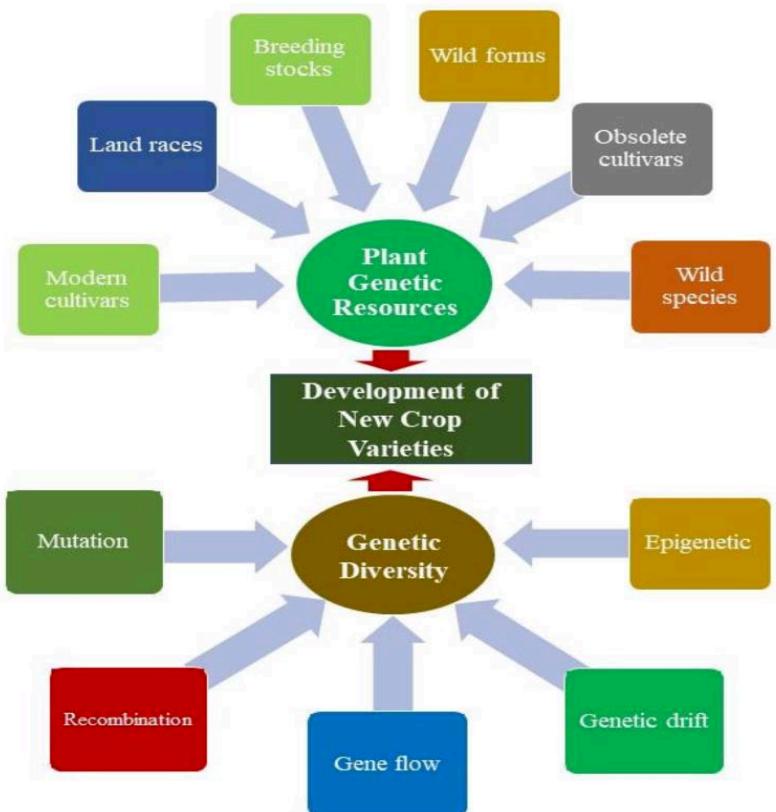
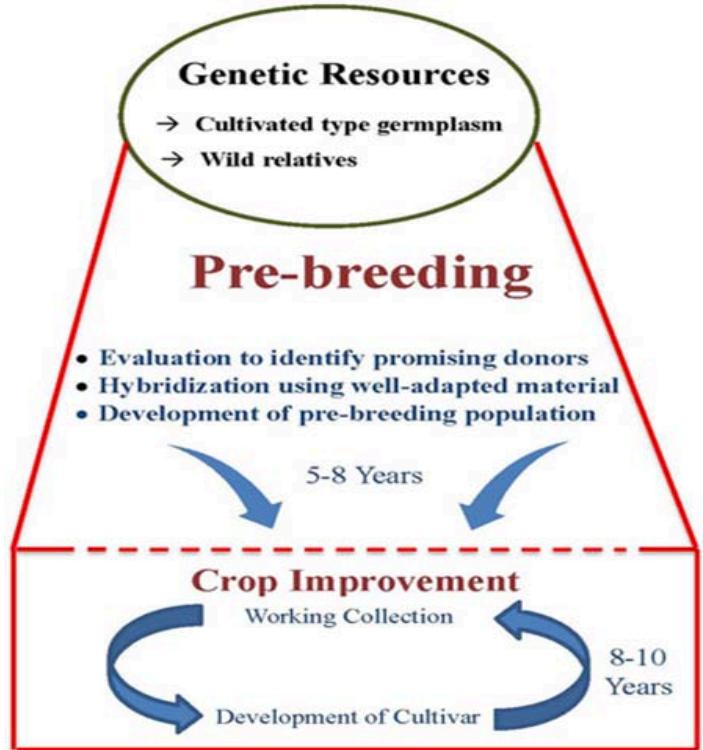
Sources: Romesh Kumar Salgotra and Bhagirath Singh Chauhan, 2021. Fig. 6: Different sources of genetic diversity and their potential utilization in the development of new crop varieties.
VIII. BIODIVERSITY REFERS TO THE VARIETY AND VARIABILITY AMONG ALL GROUPS OF LIVING ORGANISMS AND THE ECOSYSTEM COMPLEXES IN WHICH THEY OCCUR
From the driest deserts to the dense tropical rainforests and from the high snow-clad mountain peaks to the deepest of ocean trenches, life occurs in a marvellous spectrum of forms, size, colour and shape, each with unique ecological inter-relationships. Just imagine how monotonous and dull the world would have been had there been only a few species of living organisms that could be counted on fingertips! In the Convention of Biological diversity (1992) biodiversity has been defined as the variability among living organisms from all sources including inter alia, terrestrial, marine and other aquatic ecosystems and the ecological complexes of which they are a part.
IX. LEVELS OF BIODIVERSITY
Units of biodiversity may range from the genetic level within a species to the biota in a specific region and may extend up to the great diversity found in different biomes.
9.1. Genetic Diversity
It is the basic source of biodiversity. The genes found in organisms can form enormous number of combinations each of which gives rise to some variability. Genes are the basic units of hereditary information transmitted from one generation to other. When the genes within the same species show different versions due to new combinations, it is called genetic variability. For example, all rice varieties belong to the species Oryza sativa, but there are thousands of wild and cultivated varieties of rice which show variations at the genetic level and differ in their colour, size, shape, aroma and nutrient content of the grain. This is the genetic diversity of rice.
9.2. Species Diversity
This is the variability found within the population of a species or between different species of a community. It represents broadly the species richness and their abundance in a community. There are two popular indices of measuring species diversity known as Shannon-Wiener index and Simpson index. What is the number of species on this biosphere? The estimates of actual number vary widely due to incomplete and indirect data. The current estimates given by Wilson in 1992 put the total number of living species in a range of 10 million to 50 million. Till now only about 1.5 million living and 300,000 fossil species have been actually described and given scientific names. It is quite likely that a large fraction of these species may become extinct even before they are discovered and enlisted.
9.3. Ecosystem Diversity
This is the diversity of ecological complexity showing variations in ecological niches, trophic structure, food-webs, nutrient cycling etc. The ecosystems also show variations with respect to physical parameters like moisture, temperature, altitude, precipitation etc. Thus, there occurs tremendous diversity within the ecosystems, along these gradients. We may consider diversity in forest ecosystem, which is supposed to have mainly a dominance of trees. But, while considering a tropical rainforest, a tropical deciduous forest, a temperate deciduous forest and a boreal forest, the variations observed are just too many and they are mainly due to variations in the above-mentioned physical factors. The ecosystem diversity is of great value that must be kept intact. This diversity has developed over millions of years of evolution. If we destroy this diversity, it would disrupt the ecological balance. We cannot even replace the diversity of one ecosystem by that of another. Coniferous trees of boreal forests cannot take up the function of the trees of tropical deciduous forest lands and vice versa, because ecosystem diversity has evolved with respect to the prevailing environmental conditions with well-regulated ecological balance.
X. BIOGEOGRAPHICAL CLASSIFICATION OF INDIA
India's have a different type of climates and topography in different parts of the country and these variations have induced enormous variability in flora and fauna. India has a rich heritage of biological diversity and occupies the tenth position among the plant rich nations of the world. It is very important to study the distribution, evolution, dispersal and environmental relationship of plants and animals in time and space. Biogeography comprising of phytogeography and zoogeography deals with these aspects of plants and animals. In order to gain insight about the distribution and environmental interactions of flora and fauna of our country, it has been classified into ten biogeographic zones (Table 4.1). Each of these zones has its own characteristic climate, soil, and topography and biodiversity.
XI. VALUE OF BIODIVERSITY
The value of biodiversity in terms of its commercial utility, ecological services, social and aesthetic value is enormous. We get benefits from other organisms in innumerable ways. Sometimes we realize and appreciate the value of the organism only after it is lost from this earth. Very small, insignificant, useless looking organism may play a crucial role in the ecological balance of the ecosystem or may be a potential source of some invaluable drug for dreaded diseases like cancer or AIDS. The multiple uses of biodiversity or biodiversity value has been classified by McNeely et al in 1990 as follows: (i) Consumptive use value: These are direct use values where the biodiversity product can be harvested and consumed directly e.g. fuel, food, drugs, fibre etc. Food: A large number of wild plants are consumed by human beings as food. About 80,000 edible plant species have been reported from wild. About 90% of present-day food crops have been domestic cited from wild tropical plants. Even now our agricultural scientists make use of the existing wild species of plants that are closely related to our crop plants for developing new hardy strains. Wild relatives usually possess better tolerance and hardiness. A large number of wild animals are also our sources of food. Drugs and medicines: About 75% of the world's population depends upon plants or plant extracts for medicines. The wonder drug Penicillin used as an antibiotic is derived from a fungus called Penicillium. Likewise, we get Tetracycline from a bacterium. Quinine, the cure for malaria is obtained from the bark of Cinchona tree, while Digitalin is obtained from foxglove (Digitalis) which is an effective cure for heart ailments. Recently vinblastine and vincristine, two anticancer drugs, have been obtained from Periwinkle (Catharanthus) plant, which possesses anticancer alkaloids. A large number of marine animals are supposed to possess anti-cancer properties which are yet to be explored systematically. Fuel: Our forests have been used since ages for fuel wood. The fossil fuels coal, petroleum and natural gas are also products of fossilized biodiversity. Firewood collected by individuals are not normally marketed, but are directly consumed by tribals and local villagers, hence falls under consumptive value. (ii) Productive use values: These are the commercially usable values where the product is marketed and sold. It may include lumber or wild gene resources that can be traded for use by scientists for introducing desirable traits in the crops and domesticated animals. These may include the animal products like tusks of elephants, musk from musk deer, silk from silk-worm, wool from sheep, fir of many animals, lac from lac insects etc, all of which are traded in the market. Many industries are dependent upon the productive use values of biodiversity e.g.- the paper and pulp industry, Plywood industry, Railway sleeper industry, Silk industry, textile industry, ivory-works, leather industry, pearl industry etc. Despite international ban on trade in products from endangered species, smuggling of fur, hide, horns, tusks, live specimen etc. worth millions of dollars are being sold every year. Developing countries in Asia, Africa and Latin America are the richest biodiversity centres and wild life products are smuggled and marketed in large quantities to some rich western countries and also to China and Hong Kong where export of cat skins and snake skins fetches a booming business. (iii) Social Value: These are the values associated with the social life, customs, religion and psycho-spiritual aspects of the people. Many of the plants are considered holy and sacred in our country like Tulsi (holy basil), Peepal, Mango, Lotus, Bael etc. The leaves, fruits or flowers of these plants are used in worship or the plant itself is worshipped. The tribal people are very closely linked with the wild life in the forests. Their social life, songs, dances and customs are closely woven around the wildlife. Many animals like Cow, Snake, Bull, Peacock, Owl etc. also have significant place in our psycho-spiritual arena and thus hold special social importance. Thus, biodiversity has distinct social value, attached with different societies. (iv) Ethical value: It is also sometimes known as existence value. It involves ethical issues like "all life must be preserved". It is based on the concept of "Live and Let Live". If we want our human race to survive, then we must protect all biodiversity, because biodiversity is valuable. The ethical value means that we may or may not use a species, but knowing the very fact that this species exists in nature gives us pleasure. We all feel sorry when we learn that "passenger region" or "dodo" is no more on this earth. We are not deriving anything direct from Kangaroo, Zebra or Giraffe, but we all strongly feel that these species should exist in nature. This means, there is an ethical value or existence value attached to each species. (v) Aesthetic value: Great aesthetic value is attached to biodiversity. No one of us would like to visit vast stretches of barren lands with no signs of visible life. People from far and wide spend a lot of time and money to visit wilderness areas where they can enjoy the aesthetic value of biodiversity and this type of tourism is now known as eco-tourism. The "Willingness to pay" concept on such eco-tourism gives us even a monetary estimate for aesthetic value of biodiversity. Ecotourism is estimated to generate about 12 billion dollars of revenue annually, that roughly gives the aesthetic value of biodiversity. (vi) Option values: These values include the potentials of biodiversity that are presently unknown and need to be explored. There is a possibility that we may have some potential cure for AIDS or can cer existing within the depths of a marine ecosystem, or a tropical rain forest. Thus, option value is the value of knowing that there are biological resources existing on this biosphere that may one day prove to be an effective option for something important in the future. Thus, the option value of biodiversity suggests that any species may prove to be a miracle species someday. The biodiversity is like precious gifts of nature presented to us. We should not commit the folly of losing these gifts even before unwrapping them. The option value also includes the values, in terms of the option to visit areas where a variety of flora and fauna, or specifically some endemic, rare or endangered species exist. (vii) Ecosystem service value: Recently, a non-consumptive use value related to self-maintenance of the ecosystem and various important ecosystem services has been recognized. It refers to the services provided by ecosystems like prevention of soil erosion, prevention of floods, maintenance of soil fertility, cycling of nutrients, fixation of nitrogen, cycling of water, their role as carbon sinks, pollutant absorption and reduction of the threat of global warming etc. Different categories of biodiversity value clearly indicate that ecosystem, species and genetic diversity all have enormous potential and a decline in biodiversity will lead to huge economic, ecological and socio-cultural losses
XII. GLOBAL BIODIVERSITY
Following the 1992 "Earth Summit" at Rio de Janeiro, it became Evi dent that there is a growing need to know and scientifically name, the huge number of species which are still unknown on this earth. Roughly 1.5 million species are known till date which is perhaps 15% or may be just 2% of the actual number. Tropical deforestation alone is reducing the biodiversity by half a percent every year. Mapping the biodiversity has therefore, been rightly recognized as an emergency task in order to plan its conservation and practical utilization in a judicious manner. Terrestrial biodiversity of the earth is best described as biomes, which are the largest ecological units present in different geographic areas and are named after the dominant vegetation e.g. the tropical rainforests, tall grass prairies, savannas, desert, tundra etc. The tropical rainforests are inhabited by teeming millions of species of plants, birds, amphibians, insects as well as mammals. They are the earth's largest storehouse of biodiversity. Many of these species have developed over the time in highly specialized niches and that makes them more vulnerable to extinction when their natural home or niche is destroyed. About 50 to 80% of global biodiversity lies in these rainforests. More than one-fourth of the world's prescription drugs are extracted from plants growing in tropical forests. Out of the 3000 plants identified by National Cancer Research Institute as sources of cancer fighting chemicals, 70% come from tropical rain forests. Very recently, extract from one of the creeping vines in the rainforests at Cameroon has proved effective in the inhibition of replication of AIDS virus. It is interesting to note that the common Neem tree, so popular in tropical India, known for its medicinal properties has now come into lime light even in the western temperate countries. There is an estimated 1,25,000 flowering plant species in tropical forests. However, till now we know only 1-3% of these species. Needless to say, we must try in every way to protect our tropical rainforests. The Silent Valley in Kerala is the only place in India where tropical rain forests occur. You may recall the case of Silent Valley Hydroelectric Project, which was abandoned mainly because it had put to risk our only tropical rain forest biodiversity. Temperate forests have much less biodiversity, but there is much better documentation of the species. Globally, we have roughly 1,70,000 flowering plants, 30,000 vertebrates and about 2,50,000 other groups of species that have been described. There is a stupendous task of describing the remaining species which may range anywhere from 8 million to 100 million.
It is interesting to know that marine diversity is even much higher than terrestrial biodiversity and ironically, they are still less known and described. Estuaries, coastal waters and oceans are biologically diverse and the diversity is just dazzling. Sea is the cradle of every known animal phylum. Out of the 35 existing phyla of multicellular animals, 34 are marine and 16 of these are exclusively marine.
XIII. BIOLOGICAL DIVERSITY AT NATIONAL LEVEL
(Indian Biodiversity): Every country is characterized by its own biodiversity depending mainly on its climate. India has a rich biological diversity of flora and fauna. Overall six percent of the global species are found in India. It is estimated that India ranks 10th among the plant rich countries of the world, 11th in terms of number of endemic species of higher vertebrates and 6th among the centres of diversity and origin of agricultural crops. The total number of living species identified in our country is 150,000. Out of a total of 25 biodiversity hot-spots in the world, India possesses two, one in the north-east region and one in the western ghats. Indian is also one of the 12 mega-biodiversity countries in the world, which will be discussed later.
XIV. REGIONAL OR LOCAL BIODIVERSITY
Biodiversity at regional level is better understood by categorizing species richness into four types, based upon their spatial distribution as discussed below (i) Point richness refers to the number of species that can be found at a single point in a given space. (ii) Alpha ( -) richness refers to the number of species found in a small homogeneous area (iii) Beta ( -) richness refers to the rate of change in species composition across different habitats. (iv) Gamma ( -) richness refers to the rate of change across large landscape gradients. -richness is strongly correlated with physical environmental variables. For example, there are 100 species of tunicates in arctic waters, 400 species in temperate waters and 600 in tropical seas. Thus, temperature seems to be the most important factor affecting -richness of tunicates -richness means that the cumulative number of species increases as more heterogeneous habitats are taken into consideration. For example, the ant species found in local regions of north pole is merely 10. As we keep on moving towards the equator and thus add more and more habitats, the number of species of ants reaches as high as 2000 on the equatorial region.
XV. INDIA AS A MEGA-DIVERSITY NATION
India is one of the 12 megadiversity countries in the world. The Minis try of Environment and Forests, Govt. of India (2000) records 47,000 species of plants and 81,000 species of animals which is about 7% and 6.5% respectively of global flora and fauna.
Endemism: Species which are restricted only to a particular area are known as endemic. India shows a good number of endemic species. About 62% of amphibians and 50% of lizards are endemic to India. Western ghats are the site of maximum endemism. Center of origin: A large number of species are known to have originated in India. Nearly 5000 species of flowering plants had their origin in India. From agro-diversity point of view also our country is quite rich. India has been the center of origin of 166 species of crop plants and 320 species of wild relatives of cultivated crops, thereby providing a broad spectrum of diversity of traits for our crop plants. Marine diversity: Along 7500 km long coastline of our country in the mangroves, estuaries, coral reefs, back waters etc. there exists arich biodiversity. More than 340 species of corals of the world are found here. The marine diversity is rich in mollusks, crustaceans (crabs etc.), polychaetes and corals. Several species of Mangrove plants and seagrasses (Marine algae) are also found in our country. A large proportion of the Indian Biodiversity is still unexplored. There are about 93 majors wet lands, coral reefs and mangroves which need to be studied in detail. Indian forests cover 64.01 million hectares having a rich biodiversity of plants in the Trans-Himalayan, north-west, west, central and eastern Himalayan forests, western ghats, coasts, deserts, Gangetic plains, deccan plateau and the Andaman, Nicobar and Lakshadweep islands. Due to very diverse climatic conditions there is a complete rainbow spectrum of biodiversity in our country.
XVI. HOT SPOTS OF BIODIVERSITY
Areas which exhibit high species richness as well as high species endemism are termed as hot spots of biodiversity. The term was introduced by Myers (1988). There are 25 such hot spots of biodiversity on a global level out of which two are present in India, namely the Eastern Himalayas and Western Ghats (Table 4.4). These hotspots covering less than 2% of the world's land area are found to have about 50% of the terrestrial biodiversity. According to Myers et al. (2000) an area is designated as a hotspot when it contains at least 0.5% of the plant species as endemics. About 40% of terrestrial plants and 25% of vertebrate species are endemic and found in these hotspots. After the tropical rain forests, the second highest number of endemic plant species are found in the Mediterranean (Mittermeier). Broadly, these hot spots are in Western Amazon, Madagascar, North and East Borneo, North Eastern Australia, West Africa and Brazilian Atlantic forests. These are the areas of high diversity, endemism and are also threatened by human activities. More than 1 billion people (about 1/6th of the world's population) most of whom are desperately poor people, live in these areas. Any measures of protecting these hotspots need to be planned keeping in view the human settlements and tribal issues. Earlier 12 hot spots were identified on a global level. Later Myers et al (2000) recognized 25 hot spots as shown in Table 4.3. Two of these hotspots lie in India extending into neighbouring countries namely, Indo-Burma region (covering Eastern Himalayas) and Western Ghats - Sri Lanka region. The Indian hot spots are not only rich in floral wealth and endemic species of plants but also reptiles, amphibians, swallow tailed butterflies and some mammals (a) Eastern Himalayas: They display an ultra-varied topography that fosters species diversity and endemism. There are numerous deep and semi-isolated valleys in Sikkim which are extremely rich in endemic plant species. In an area of 7298 Km2 of Sikkim about 4250 plant species are found of which 60% are endemic. The forest cover of Eastern Himalayas has dwindled to about 1/3rd of its original cover. Certain species like Sapria Himalayans, a parasitic angiosperm was sighted only twice in this region in the last 70 years. Recent studies have shown that North East India along with its contiguous regions of Burma and Chinese provinces of Yunnan and Schezwan is an active center of organic evolution and is considered to be the cradle of flowering plants. Out of the world's recorded flora 30% are endemic to India of which 35,000 are in the Himalayas. (b) Western Ghats: It extends along a 17,000 Km2 strip of forests in Maharashtra, Karnataka, Tamil Nadu and Kerala and has 40% of the total endemic plant species. 62% amphibians and 50% lizards are endemic to Western Ghats. Forest tracts up to 500 m elevation covering 20% of the forest expanse are evergreen while those in 500-1500 m range are semi evergreen. The major centres of diversity are Agastya Alai Hills and Silent Valley—the New Amambalam Reserve Basin. It is reported that only 6.8% of the original forests are existing today while the rest has been deforested or degraded, which raises a serious cause of alarm, because it means we have already lost a huge proportion of the biodiversity. Although the hotspots are characterized by endemism, interestingly, a few species are common to both the hotspots in India. Some common plants include Ternstroemia japonica, Rhododendron and Hypericum, while the common fauna includes laughing thrush, Fairy blue bird, lizard hawk etc. indicating their common origin long back in the geological times has been so severe that thousands of species and varieties are becoming extinct annually. One of the estimates by the noted ecologist, E.O. Wilson puts the figure of extinction at 10,000 species per year or 27 per day! This startling figure raises an alarm regarding the serious threat to biodiversity. Over the last 150 years the rate of extinction has escalated more dramatically. If the present trend continues, we would lose 1/3rd to 2/3rd of our current biodiversity by the middle of twenty first century. Let us consider some of the major causes and issues related to threats to biodiversity. n LOSS OF HABITAT Destruction and loss of natural habitat is the single largest cause of biodiversity loss. Billions of hectares of forests and grasslands have been cleared over the past 10,000 years for conversion into agriculture lands, pastures, settlement areas or development projects. These natural forests and grasslands were the natural homes of thousands of species which perished due to loss of their natural habitat. Severe damage has been caused to wetlands thinking them to be useless ecosystems. The unique rich biodiversity of the wetlands, estuaries and mangroves are under the most serious threat today. The wetlands are destroyed due to draining, filling and pollution thereby causing huge biodiversity loss. Sometimes the loss of habitat is in instalments so that the habitat is divided into small and scattered patches, a phenomenon known as habitat fragmentation. There are many wild life species such as bears and large cats that require large territories to subsist. They get badly threatened as they breed only in the interiors of the forests. Due to habitat fragmentation many song birds are vanishing. There has been a rapid disappearance of tropical forests in our country also, at a rate of about 0.6% per year. With the current rate of loss of forest habitat, it is estimated that 20-25% of the global flora would be lost within a few years. Marine biodiversity is also under serious threat due to large scale destruction of the fragile breeding and feeding grounds of our oceanic fish and other species, as a result of human intervention
XVII. POACHING
Illegal trade of wildlife products by killing prohibited endangered animals i.e. poaching is another threat to wildlife. Despite international ban on trade in products from endangered species, smuggling of wildlife items like furs, hides, horns, tusks, live specimens and herbal products worth millions of dollars per year continues. The developing nations in Asia, Latin America and Africa are the richest source of biodiversity and have enormous wealth of wildlife. The rich countries in Europe and North America and some affluent countries in Asia like Japan, Taiwan and Hong Kong are the major importers of the wildlife products or wildlife itself. The trading of such wild life products is highly profit making for the poachers who just hunt this prohibited wild life and smuggle it to other countries mediated through a mafia. The cost of elephant tusks can go up to $ 100 per kg; the leopard fur coat is sold at $ 100,000 in Japan while bird catchers can fetch up to $ 10,000 for a rare hyacinth macaw, a beautiful coloured bird, from Brazil. The worse part of the story is that for every live animal that actually gets into the market, about 50 additional animals are caught and killed. If you are fond of rare plants, fish or birds, please make sure that you are not going for the endangered species or the wild-caught species. Doing so will help in checking further decline of these species. Also do not purchase furcoat, purse or bag, or items made of crocodile skin or python skin. You will certainly help in preserving biodiversity by doing so
XVIII. THREATS TO BIODIVERSITY
Extinction or elimination of a species is a natural process of evolution. In the geologic period the earth has experienced mass extinctions. During evolution, species have died out and have been replaced by others. However, the rate of loss of species in geologic past has been a slow process, keeping in view the vast span of time going back to 444 million years. The process of extinction has become particularly fast in the recent years of human civilization. In this century, the human impact.
XIX. FACTORS AFFECTING GENETIC DIVERSITY
Genetic diversity changes over time owing to several factors. The main factors responsible for changes in genetic diversity are mutation, selection, genetic drift, and gene flow. Over time, natural and artificial selections play a substantial role in the choosing of superior genotypes, which significantly affects the gene and genotypic frequencies of the population. As per Charles Darwin's theory of evolution, the desired genotypes are selected for and passed onto subsequent generations. However, the domestication of desirable genotypes results from the superior genotypes being selected by farmers and breeders and neglects other undesirable genotypes. This leads to a reduction in inferior alleles over generations. During evolution, various morphological, physiological, and biochemical changes take place in plant species and can take different directions under domestication depending on the part of the plant used. Some plant species lose their sexual reproduction during selection for large size of the tuber or root, which is associated with selection for polyploid types, resulting in sterility. Some polyploid plant species, such as allohexaploid wheat and potato, show diploidization behaviour during sexual reproduction. Some crops have been turned into annuals from their original form of perennials. In the domestication process, the complete genetic transformation of wild species occurs in the development of modern cultivars through natural and artificial selection. After some time, some domesticated cultivars become susceptible to diseases and pests, which can be improved by incorporating genes from wild plant relatives. During the process of domestication, desirable traits have been selected by breeders as per their preferences. However, plant breeders prefer to choose crop varieties with a high yield, resistance to biotic and abiotic stresses, wide adaptation, non-shattering nature, large-sized seeds, early maturing, good quality traits, etc. The main factors affecting genetic diversity will be addressed in the following subsections.
19.1. Mutation
Mutations are sudden heritable changes that occur due to aberrations in the nucleotide sequence of DNA. A mutation is the source of genetic variation impacting the phenotype in crop species. Genetic diversity caused by mutations can have neutral, positive, and negative impacts on various characteristics of a plant species. Genetic variations caused by mutations in DNA are the principal cause of changes in the allele frequencies in a population besides selection and genetic drift. From the beginning, natural or spontaneous mutations have played a significant role in creating the genetic variation that has led to food security. Mutations are the ultimate source of plant evolution when they frequently encounter environmental changes. Mutation rates proceed rapidly in response to environmental changes or even changes in the demographical locations related to the socio-economic conditions of the human population in a geographical area. Stress-inducible mutagenesis has been observed because of the use of different external inputs which accelerate adaptive evolution in plants. During mutagenesis, many kinds of genetic changes have been observed such as insertions, deletions, copy number variations, gross chromosomal rearrangements, and the movement of mobile elements. Earlier plant breeders utilized natural mutations as the main source of genetic variation for improving and developing crop varieties. However, modern technologies have accelerated the process by inducing mutation through mutagenesis The concept of mutation breeding was introduced to create more genetic diversity among crop species to improve traits such as disease and insect pest resistance, tolerance to abiotic stresses, and nutritional enhancement in crop varieties.
19.2. Selection
Natural and artificial selections act on the phenotypic characteristics of the plant species. The phenotypic expression of the plant species depends upon the heritable and non-heritable components in which the genotype–environment interaction also plays a significant role. The selection of superior genotypes depends on the availability of genetic variation present in the plant species. Artificial selection is effective only when sufficient genetic variation is present in the population. The genetic improvement of a genotype depends on the magnitude of genetic variability present in the population, as well as the nature of the association between different components. For example, the level of association of yield traits with other characteristics of the plant species enables the selection of various traits at a time. Plant breeders make effective selection depending on the presence of substantial genetic variation in the population to enhance the maximum genetic yield potential of crop varieties. It also helps in selecting better parents to be used in hybridization programs. Hence, the effective selection of genotypes in a population also depends on the degree of genetic variation in the population.
19.3. Migration
Migration is the movement of alleles from one species to another or from one population to another. It occurs through the movement of pollen and seed dispersal and planting material such as rhizomes, suckers, and other vegetative propagating materials. The rate of migration is affected by reproduction cycles and the dispersion of seeds and pollens. Migration can also occur through the moving or shifting of the germplasm from one area to another, which results in the mixing of two or more alleles through pollen and seeds.
19.4. Genetic Drift
Genetic drift is a mechanism in which the gene and allele frequencies of a population change due to sampling errors over generations. The sampling error changes the allele frequencies by chance, which ultimately changes the genetic diversity over generations. Every pollen grain has a different combination of alleles and can be carried by insects, wind, humans, or other means for hybridization with compatible flowers, largely determined by chance. Thus, in every reproduction cycle, the genetic diversity in crop species is lost at every generation through these chance events.
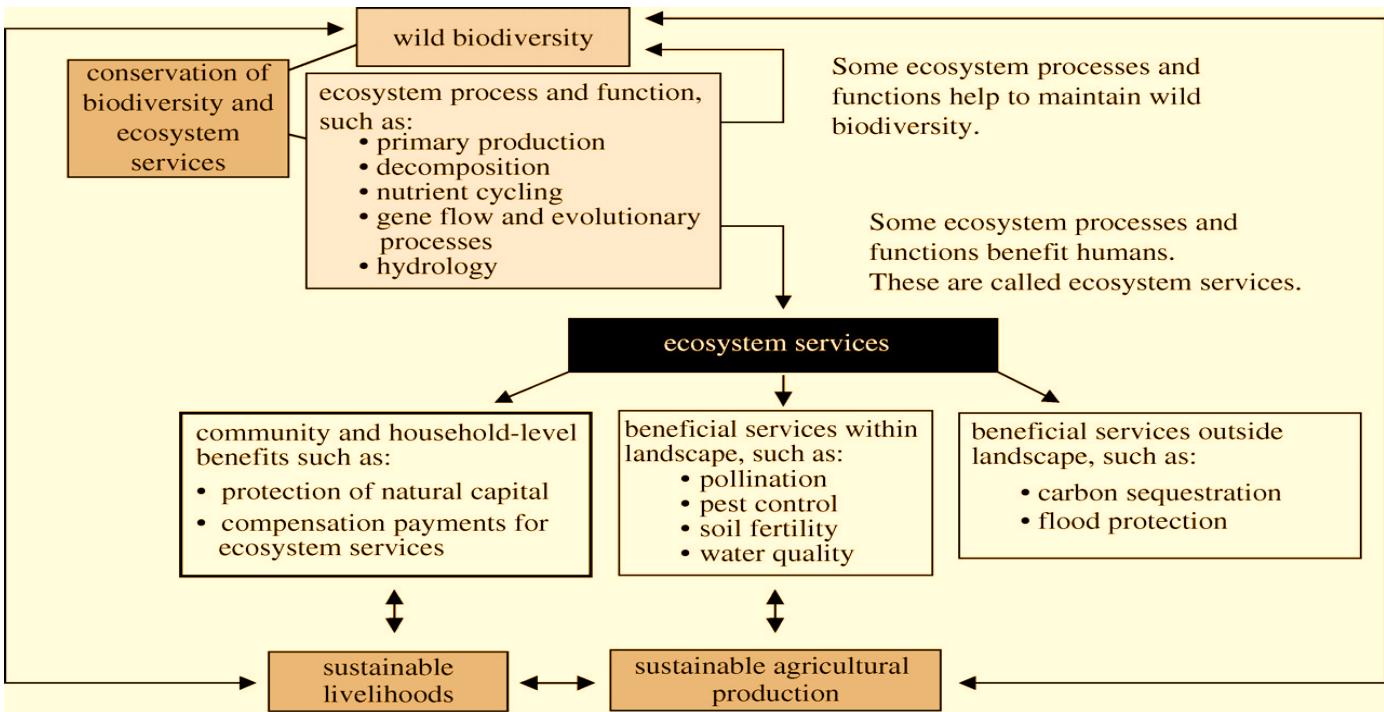
Sources: https://doi.org/10.1098/rstb.2007.2165
Fig. 7: Sketch out the conservation diversity and ecosystems of sustainable Agriculture Systems
XX. INTERNATIONAL TREATY ON PLANT GENETIC RESOURCES FOR FOOD AND AGRICULTURE
The International Treaty on Plant Genetic Resources for Food and Agriculture (ITPGRFA) came into force in 2004. ITPGRFA works in harmony with the CBD for sustainable agriculture and food security. The objective of the treaty is the conservation and sustainable use of plant genetic resources for food and agriculture and the fair and equitable sharing of the benefits arising from their use. The conservation and sustainable use of PGRFA are essential to achieving sustainable agriculture and food security, for present and future generations, and are indispensable for crop genetic improvement in adapting to unpredictable environmental changes and human needs.
20.1. Nagoya Protocol
The Nagoya Protocol, which came into force in 2014, aims to access genetic resources and encourage the fair and equitable sharing of benefits arising from their utilization. The Nagoya Protocol helps in ensuring benefit-sharing, creates incentives to conserve and sustainably use genetic resources, and therefore, enhances the contribution of biodiversity to development and human well-being.
20.2. Svalbard Global Seed Vault
The Svalbard Global Seed Vault situated in Norway safeguards duplicate seed varieties from almost every country in the world. The Seed Vault is owned and run by the Ministry of Agriculture and Food on behalf of the Kingdom of Norway and is established as a service to the world community. The Global Crop Diversity Trust provides support for the ongoing operations of the Seed Vault, as well as funding for the preparation and shipment of seeds from developing countries to the facility. The Nordic Genetic Resource Center (Nord Gen) operates the facility and maintains a public online database of samples stored in the seed vault. It provides insurance against both incremental and catastrophic loss of crop diversity held in traditional gene banks around the world. The Seed Vault offers long-term protection for one of the most important natural resources on Earth. The main purpose is to backup gene bank collections to secure the foundation of our future food supply.
20.3. The Cartagena Protocol on Biosafety
The Cartagena Protocol on Biosafety's goal is to provide safety in the handling of genetic resources, particularly genetically modified organisms. It is an international agreement that aims to ensure the safe handling, transport, and use of living-modified organisms (LMOs) resulting from modern biotechnology that may have adverse effects on biological diversity, while also taking into account risks to human health.
The ever-increasing demand resulting from the explosive growth rate of the human population worldwide, and global warming, have forced world communities to think about the sustainable use of PGRs. The conservation of PGRs, including landraces, obsolete varieties, breeding material, wild species, and their wild relatives, is of utmost importance to secure future food security. The vanishing of valuable genetic resources invoked the world's communities to explore, collect, and preserve PGRs and maintain genetic diversity, as well as sign the CBD event in Rio de Janeiro in 1992. The importance of PGRs and biodiversity conservation was the main international issue discussed at the convention. The CBD was organized with three main objectives: (i) the conservation of biodiversity, (ii) the sustainable use of its components, and (iii) the equitable sharing of benefits arising from the use of genetic resources. There is an urgent need to conserve genetic resources for the welfare of human beings and future food security, and to avoid the loss of valuable novel genes. Effective policies should be implemented to evade the extinction of valuable PGRs. There are various methods to conserve biodiversity, such as (i) in situ conservation, (ii) ex situ conservation, and (iii) biotechnological strategies/approaches (Figure 2). The genetic diversity in PGRs, in situ or on farms/fields, is creating awareness in society at large about the importance of agrobiodiversity. In situ and ex situ conservation are complementary strategies to prevent the mass erosion of genetic resources. The utilization of crop genetic diversity is necessary for the development and release of new, well-adapted, and improved varieties for global food security.
20.4. In-Situ Conservation
In in situ conservation, genetic resources are conserved in their natural habitat, and the species are maintained in their original place. The plant species are conserved where they are found and are maintained in their original location . In in situ conservation, the process of evolution is allowed to occur naturally with minimum interventions from humans. In this system, many wild plant species are conserved, especially forest and wild fruit crops. In situ conservation permits the plant species to evolve so that genetic diversity can be fostered. This process works via two methods: (i) farm/field conservation and (ii) genetic reserve conservation. Though both are concerned with the conservation and maintenance of diversity of genetic resources, on-farm conservation concerns traditional crop varieties or farming systems, while the latter deals with wild species in natural habitats . In genetic reserve conservation, the area is defined by a location where genetic diversity has to be maintained through active and long-term conservation, such as a forest reserve area. In on-farm conservation, locally developed landraces are sustainably managed. Additionally, farmers conserve wild relatives and weedy forms within the existing farming system. Farmers select desirable plants for further cultivation; hence, a continuous process of evolution takes place. The in-situ method of conservation allows the open pollination of different genotypes, and the resultant population of different genotypes possesses several alleles. However, to avoid natural calamities and the adverse effects of climate change, both in situ and ex situ conservation should be adopted complementarily .
20.5. Ex-Situ Conservation
Ex situ conservation is the conservation of different genetic resources outside their natural habitat. It involves the conservation of seed gene banks, plant tissue culture, cryopreservation, greenhouses, etc. It is the process of conserving endangered and overexploited genetic resources outside their natural habitat, which otherwise may experience
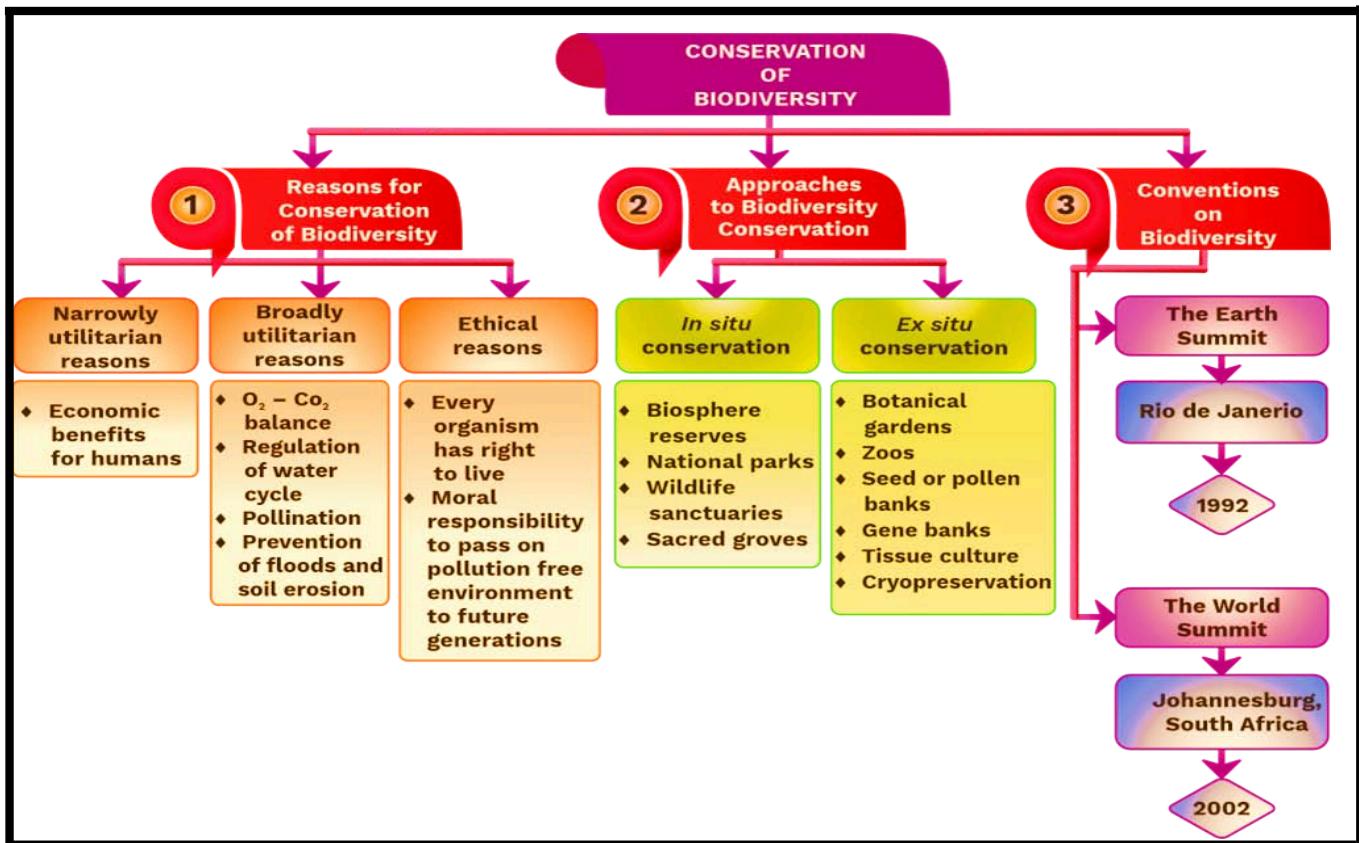
Sources: Biodiversity-and-its-Conservation.pdf
Figure 7: Different strategies used for in situ and ex situ conservation of plant genetic resources.
habitat destruction and degradation, and every PGR may go extinct. Therefore, ex situ conservation is an alternate method of conserving valuable genetic resources. In this method, PGRs are saved from extinction that would result from natural calamities, human interference, climate change, over-exploitation, and overutilization. The collected genetic resources should be well evaluated and characterized to avoid duplication, documented, and conserved under artificial conditions to be safe from external threats. Among the various techniques of ex situ conservation, the seed storage technique is the most convenient and easiest for the long-term storage of seeds. Orthodox seeds of food crops are used for storage as they can tolerate low temperatures and intense dehydration. In ex situ conservation, about 45% of the stored accessions are seed materials of cereal crops such as rice, wheat, maize, oat, triticale, rye, sorghum, and barley, followed by food legumes (15%), forages (9%), and vegetables (7%). Generally, the conservation of collected seeds is carried out in two ways: base collection and active collection. Base collection is the collection and maintenance of seed samples for long-term conservation. In this case, the seed samples are stored for the maximum time of seed viability at -18 to -20 °C. In the base collection method, the moisture content of the seed to be stored should be between 3% and 7%, depending on the species. In the active collection method, the seed samples are stored for immediate use. Seed samples are stored for 10–20 years and should have at least 65% viability. In the active collection method, the moisture content varies from species to species, i.e., between 7% and 11% for seeds with good storability and between 3% and 8% for seeds with poor storability. It also depends on the temperature under which the seed samples are stored. However, depending on the storage duration, these are categorized into three basic types: (i) long-term storage: when the seed samples are stored in facilities of base collection and are maintained at -18 to -20 °C; (ii) medium-term storage: when the period of storage is not more than 5 years, and seed samples are stored at a temperature between 0 °C and 10 °C with a relative humidity of 20–30%; and (iii) short-term storage: where the seed samples are stored for between 1 year and 18 months. For the latter, the temperature ranges between 20 °C and 22 °C, and the relative humidity should be 45–50%, where the seed can be stored for up to two years without losing its viability. For long-term ex situ conservation, seed storage is the most low-cost and widely adopted storage method. It involves the desiccation of seeds and even storage in low-temperature conditions. However, the recalcitrant seeds and vegetatively propagated plant species do not survive under low temperatures like orthodox seeds. This method is significant for the conservation of forest and tree species. Even novel PGRs can be conserved in the home garden for future use in breeding programs.
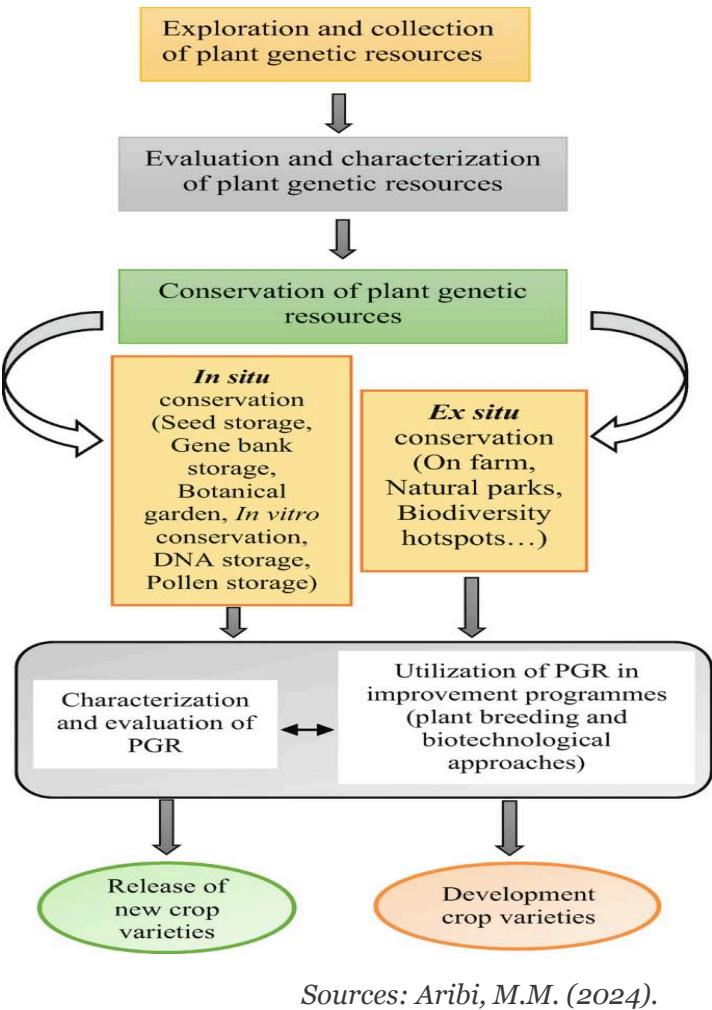
Fig 8: In-Situ and Ex-Situ conservation of Varieties
The ex-situ conservation method enables the conservation of novel genes/alleles and ensures their sustainable use in crop improvement programs. The ex-situ conservation of PGRs was started in the mid-20th century to slow the rapid loss of biodiversity with modern high-yielding crop varieties. The farmers replaced their traditional cultivars with improved ones. This method is also helpful in the protection and conservation of wild relatives. Ex situ conservation methods have been used for conserving important PGRs in several institutes. Collection, characterization and conservation of genetic resources of important tropical fruit?? species such as Mangifera species, Citrus species, Annona squamosa (Custard apple), Aegle marmelos (Bel), Artocarpus heterophyllus, Buchanania lanzan (Chironjee), Capparis decidua (Ker), Carissa carandus (Karonda), wild and semi-wild Citrus species, Cordia myxa (Lasoora), Embolicaofficinalis (Aonla), Garcinia spp., Grewia asiatica (Phalsa), pau Manilkara hexandra (Khirni), Phoenix sylvestris (Date sugar palm), Salvadora oleoides (Pilu), Syzygium cumini (Jamun), Tamarindus indica (Tamarind) and Ziziphus spp. (Ber) has been undertaken. Several underutilized fruit species are propagated through seeds as vegetative propagation methods are hardly available. Presently many ex-situ conservation approaches have been suggested for long-term conservation depending on propagation method and seed storage behaviours of these under-utilized species. Successful cryopreservation protocols have been developed for seeds, embryos and embryonic axes in several non-orthodox difficult-to-store seed species and more than 2000 accessions have been successfully cryo-stored at National Cryo gene bank. However, there is still need to establish and strengthen field gene banks and clonal repositories for conservation and utilization of germplasm and to facilitate farmers with elite planting material of these important indigenous fruits.
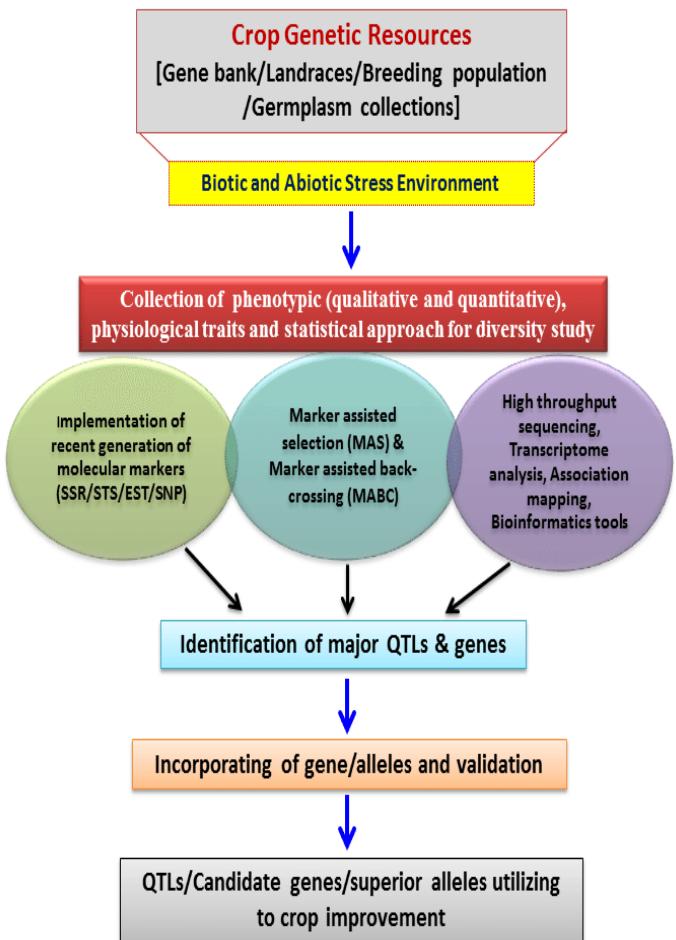
Sources: Mahender Anumalla et al, 2015
Fig. 9: A schematic representation for utilization of plant genetic resources in crop improvement through marker assisted selection (MAS) and advance genomic technologies. Effective Marker–Trait Association (MTA) and Marker Validation. The identification of the new QTL has been increasing tremendously and this was very much clear from the past two decades " publication scenario in Pubmed. Now this involves almost all crop plants and all types of agronomic traits. However, reports of QTL mapping to date have tended to be based on individual small to moderately sized mapping populations screened with a relatively small number of markers, providing relatively low resolution of marker-trait association or MTA. Very few of the QTLs reported have been used for MAS. Most MTA reports to date have been based on segregating populations generated, in most cases, from two inbred lines. Genetic variation detected in the mapping population (particularly recombination patterns in the region of the target gene) may not be shared by other genetic and breeding populations because of allelic diversity. Thus, QTL markers identified using a single mapping population may not be automatically used directly in unrelated populations without marker validation and/or fine mapping. The MTA must be validated in representative parental lines, breeding populations, and phenotypic extremes before it can be used for routine MAS, although this process may be incorporated into genetic mapping programs. In a portion of cases, markers will lose their selective power during.
SUMMARY
India, with its diverse agro-climatic conditions and regional topography, has been considered as the treasure house or botanical garden of plant genetic resources. Hence, India is recognized as one of the world's top 12 mega diversity nations. Our herbal wealth constitutes more than 8,000 species and accounts for around of all higher flowering plant species of India; around of the medicinal plants in the country are spread across the tropical forests of Western Ghats. However, available information shows that 1,800 species are used in Classical Indian systems of medicines. Ayurveda uses 1,200, Siddha -900, Unani -700, Amchi -600, Tibetan-450. The emerging field of herbal products industry holds a great potential to the economic development of the Indian region. Collection, characterization and conservation of genetic resources of important tropical fruit?? species such as Mangifera species, Citrus species, Annona squamosa (Custard apple), Aegle marmelos (Bel), Artocarpus heterophyllus, Buchanania lanzan (Chironjee), Capparis decidua (Ker), Carissa carandus (Karonda), wild and semi-wild Citrus species, Cordia myxa (Lasoora), Embolica officinalis (Aonla), Garcinia spp., Grewia asiatica (Phalsa), pau Manilkara hexandra (Khirni), Phoenix sylvestris (Date sugar palm), Salvadora oleoides (Pilu), Syzygium cumini (Jamun), Tamarindus indica (Tamarind) and Ziziphus spp. (Ber) has been undertaken. Several underutilized fruit species are propagated through seeds as vegetative propagation methods are hardly available. Presently many ex-situ conservation approaches have been suggested for long-term conservation depending on propagation method and seed storage behaviour of these under-utilized species. Successful cryopreservation protocols have been developed for seeds, embryos and embryonic axes in several non-orthodox difficult-to-store seed species and more than 2000 accessions have been successfully cryo-stored at National Cryo gene bank. However, there is still need to establish and strengthen field gene banks and clonal repositories for conservation and utilization of germplasm and to facilitate farmers with elite planting material of these important indigenous fruits.
Author contributions
Ashok Kumar, S.R. Singh, M.C. Yadav, Vijay Kumar Yadav rating original draft, Conceptualization, Writing – review & editing.
Ethics declarations
Ethics approval and consent to participate
Not applicable.
Consent for publication
Not applicable.
Competing interests
The authors declare that they have no competing interests.
Conflict of interest
Author has no conflict of interest for any beneficial, an individual's personal, financial, or other interests could compromise their objectivity, integrity, or conduct of the research.
Author Declaration:
The authors declare that the research was conducted in the absence of any commercial or financial relationships that could be construed as a potential conflict of interest. The authors declared that they were an editorial board member of Frontiers, at the time of submission. This had no impact on the peer review process and the final decision.
Conflict of Interest
The authors declare no conflict of interest.
Ethical Approval
Not applicable
Data Availability
The datasets used in this study are openly available at [repository link] and the source code is available on GitHub at [GitHub link].
Funding
This work did not receive any external funding.
References
Cite this article
Related Research



Special Issue
Launch a focused special issue to highlight research, emerging trends, and expert insights in your academic field.
