




IntelliPaper
Abstract
From the billboard to the byte, from the handshake to the hyperlink, marketing has changed drastically in the vast theater of 21st-century business. This research article explores the dynamic juxtaposition and convergence of conventional and digital marketing and sales techniques, therefore highlighting the tectonic changes in customer involvement, campaign orchestration, and technology mediation. Influencer marketing, CRM automation, and influencer marketing as business ecosystems migrate from the analog inertia of print advertisements and field sales into the turbulent digital storm of AI-driven analytics necessitate not just adaptation but also change from the toolset perspective. This study seeks to outline the philosophical undercurrents, historical background, and technical progress that have collectively rewritten the marketing playbook, therefore acting as a compass for contemporary professionals—an intellectual ready reckoner.
In its golden age, traditional marketing depended on wide brushstrokes—mass communications across stationary media like print, radio, and television. Designed to mesmerize the collective consciousness, the campaign was monologic, one-directional. Newspapers column inches, the famous tagline, the television jingle—they were the currency of credibility. Their philosophy rested on emotional resonance, persuasion, and aspirational identity. These approaches were sometimes castles constructed on sand—grand in intention but precarious in responsibility—limited capacity for feedback, and measures based more on intuition than evidence.
Now enter the digital era, and the marketing landscape changed like molten lava cooling into fresh lines. Digital marketing presented to the customer a mirror—responsive, reflecting, and sharp. The traditional marketing order was disrupted when email marketing, SEO, social media platforms, artificial intelligence-powered analytics, and real-time participation arose. From fixed broadcasts, campaigns changed into dynamic interactions in which algorithms whispered insights and milliseconds evaluated participation. The speech evolved into a discussion, the broad pitch gave way to micro-targeted narrative, and data helped to dethroness intuition.
By use of numerous axes—audience reach, cost structure, engagement philosophy, customization depth, communication dynamics, and technology enablers—this study explores the relative architecture of conventional and digital marketing. It compares the non-linear, convoluted buyer path of today with the once-linear sales funnel. From relationship-centric field sales to digitally fluid social selling, where artificial intelligence scores leads, chatbots foster interest, and predictive analytics anticipate customer needs even before they are expressed, the research questions this viewpoint.
Likewise important is the conceptual framework supporting this transformation of marketing. Rooted in a mass-psychology paradigm influenced by economic models of supply and demand, enhanced by cultural motifs, and driven by aspirational storylines, is traditional marketing. It grew best on monolithic branding and consistent message. Conversely, digital marketing comes out of the hyper-personalisation paradigm—nimble, fractal, and influenced by behavioral psychographics. Here, co-authored by people, carefully chosen in real-time, and sensitive to emotion, narrative is not a script but a mosaic.
From the post-industrial consumption boom to the aspirational consumer of the 20th century, this research also examines the financial, psychological, and sociological elements defining the roots of conventional marketing. It then graphs the emergence of digital disruptors, highlighting events such the release of Google AdWords, the climb of social media, and the inclusion of artificial intelligence into consumer service, content production, and campaign management. Every one of these developments is more of a jump into a marketing multiverse where the buyer's path is nonlinear, multichannel, and always changing than a step forward.
A key part of the article examines how the digital revolution has caused a cognitive and operational rewiring of marketing strategy, therefore transcending simple tool or platform change. Data is now a real-time dashboard driving strategy, innovation, and budget allocation, not a retroactive report card. The article looks at how technologies such CRM systems, artificial intelligence-driven chatbots, AR/VR interfaces, and blockchain-based verification have changed the connection between marketer trust, immediacy, and immersion.
Likewise, the report emphasizes in certain situations—be it rural outreach, premium branding, or experiential campaigns—the ongoing importance of conventional marketing methods. Trade exhibits, direct mailings, in-person presentations, and brand jingles still have impact, particularly in areas or demographics where tactile confidence dominates digital dazzle. The study supports a hybrid paradigm, a symphonic mix in which digital rhythms of automation, scalability, and analytics harmonises with classical virtues of customization, believability, and human touch.
Furthermore, investigated in terms of sales architecture is this hybridisation. With its reliance on human intuition, relationship-building, and verbal persuasion, traditional field sales contrasts with the digital speed of social selling—where value propositions are algorithmically tailored, leads are scored by artificial intelligence, and customer relationships are managed through dashboards. The report suggests a confluence: a sales approach embracing the accuracy of tech-enabled interaction but keeping the subtlety of face-to--face persuasion.
Content ideation and narrative are yet another important question this study begs. Content in old marketing was static, defined by copywriters and distributed via set routes. Content in digital marketing is polyphonic, live, alive. Users create it; algorithms curate it; it runs on blogs and podcasts as well as on Twitter threads, TikHub reels. Now, tools like Canva, Figma, and Lumen5 enable even non-designers to create striking images and films, hence democratizing content production and blurring the line between producer and consumer.
This paper also looks at marketing as an open-ended experience ecosystem rather than as a closed-loop transaction. Omni-channel approaches, user-generated content, and influencer marketing are rewriting the brand-consumer relationship into a cooperative narrative in which relatability outshines glamor and authenticity overcomes perfection. This demands a change in perspective from campaign thinking to community development from ROI to resonance.
By combining these multifaceted concepts, the paper offers a complete framework for contemporary marketers—a pragmatic but philosophical manual that fits strategy with technology, creativity with data, and tradition with innovation. It exhorts marketers to become navigators of paradox: to honor heritage while embracing innovation, to tell tales while crunching figures, and to create connections in a society progressively mediated by code.
This study ultimately supports an adaptable, integrated marketing strategy wherein the canvas of tradition and the brushstrokes of innovation join together to create a masterwork of relevance, authenticity, and effect. In this age of marketing metamorphosis—where brands are both broadcasters and listeners, both symbols and influencers—the marketer is no more just a communicator but a mapper of meaning in a marketplace without boundaries.
Explore Digital Article Text
This study ultimately supports an adaptable, integrated marketing strategy wherein the canvas of tradition and the brushstrokes of innovation join together to create a masterwork of relevance, authenticity, and effect. In this age of marketing metamorphosis—where brands are both broadcasters and listeners, both symbols and influencers—the marketer is no more just a communicator but a mapper of meaning in a marketplace without boundaries.
I. INTRODUCTION
Marketing's evolution, driven by tech and changing consumer habits, demands we rethink business strategies. A look at traditional versus digital methods offers key insights into their intersection in our digital world. This knowledge is crucial for both experienced and new marketers navigating today's complex market. As firms lean into digital, pinpointing elements driving successful marketing becomes essential. This essay will act as a practical guide, tackling important research questions to help practitioners merge traditional and digital sales tactics effectively. The visual in the image highlights Industry 4.0's core parts, bolstering the argument for smoothly linking these diverse marketing fields.
1.1 Context
The marketing terrain is changing significantly in a time marked by fast technical development and changing customer behavior. Once mostly in use, traditional sales techniques are progressively entwined with digital approaches motivated by data, automation, and online interaction. For companies trying to keep relevant and competitive, this convergence presents both possibilities and difficulties. Aiming to investigate how companies may efficiently close the gap between traditional marketing techniques and the needs of a tech-driven market, the current study emerges from this changing backdrop.
1.2 Theme – Marketing in the Digital Age
Examining how conventional sales techniques are being changed by digital integration helps this study fit the theme of marketing innovation in the digital era. < It provides insights on hybrid ways that combine heritage techniques with contemporary digital technologies, therefore directly addressing the difficulties and possibilities organizations have in adjusting to a tech-driven environment.
1.3 Core Content
By means of empirical research and industry case analysis, the paper investigates the confluence of conventional and digital marketing tactics. It points to organizational agility, consumer data use, and platform-based engagement as important factors of effective integration. The study suggests a strategy framework companies may use to negotiate digital transition while keeping basic brand values and market positioning.
1.4 Implications for the Scholarship of Teaching and Learning
The results directly affect marketing education as well as business. The study supports courses stressing adaptive strategy, critical thinking, and cross-platform fluency by showing actual integration of traditional and digital marketing. It argues for teaching students to lead in an increasingly hybrid marketing environment by mirroring industry evolution.
1.5 Definition and Evolution of Marketing and Sales: Traditional vs Digital
1.6 Importance of Understanding the Contrast and Convergence
Modern marketing presents a dual challenge. It's not just about sales evolving but also grasping the subtle differences and overlaps between old-school and digital tactics. Businesses must really understand these unique points to make smarter choices in planning. Understanding these subtle differences and overlaps between old-school and digital tactics simplifies the creation of creative campaigns by combining the best aspects of both approaches. In fact, the idea of contrast adds punch and importance to a design. "Contrast adds drama and depth. It organizes the design and helps establish a visual hierarchy."" (Evan Brown). And this applies to marketing, too, showing how different parts can come together. For example, it shows how combining classic branding with new digital tricks can make customers happier and keep a brand strong. Generally speaking, getting proficient at this "two-sided" approach is key to keeping up in our quickly changing, tech-focused world.
1.7 Objective: Creating a Ready Reckoner for Modern Professionals
Marketing is changing fast because of new technology, and professionals need to keep up by combining old methods with new digital tools. Research shows that hybrid jobs, which mix traditional skills with digital skills, are becoming more common (TOROSYAN et al.). Therefore, professionals must be adaptable in order to remain competitive. Furthermore, organizations are moving away from old-fashioned hierarchies to more adaptable structures that focus deliberately, process, and people. This shift is important for encouraging innovation and inclusivity (Serrat et al.). A helpful guide for professionals should include these ideas, giving them useful tools to adapt to this complex environment. Thinking about this change shows how new technologies support marketing strategies, which makes it a useful guide for understanding today's marketing world.
1.8 Research Questions and Hypothesis
When you're trying to figure out marketing in a world run by technology, you'll need good research questions and hypotheses to help guide your work. Questions like, "Do people think old-school or new digital marketing works better?" can point you towards how marketing is changing. Trying to answer these questions lets you dig into what makes consumers tick, like how comfortable they are with tech and what they like. Like (Francisco et al.) mentions about AI's potential in making new products, using new ideas can really change how people see things and how the market works. Plus, studying how augmented and virtual reality affect whether people stick with a brand (Escal et al.) shows we need to put modern tech into our marketing plans. So, making hypotheses about these new things not only helps focus the research and makes a conversation about how to adapt marketing strategies, like we saw in...
1.9 Overview of the Research Structure
Nowadays, having a structured plan is super important for marketers if they want to handle all the tricky parts of selling stuff, whether it's the old-school way or online. This essay? It's set up for real. The essay is well-structured. First, it starts with an intro that explains marketing's evolution from traditional to digital methods. Thereafter, look closely at the big pieces, like the ideas behind it all, how the strategies are different, and the tech that makes modern marketing work. And get this: when it talks about how to do things and run campaigns, it shows you some cool new tricks like A/B testing and growth hacking. And just so you know, [cited] gives you a quick rundown of the main technologies that are powering Industry 4.0, which ties right into the tech side of things that the essay is all about. Ultimately, this arrangement enables readers to understand the connection between marketing and customer satisfaction, equipping them to make informed decisions in this technologically advanced world edge.
II. PHILOSOPHICAL FOUNDATIONS AND HISTORICAL BACKGROUND
2.1 Origin of traditional Marketing and Sales (Pre-Digital Era)
Before the digital age, how marketing was done really set the stage for what we do now. Back then, the main goal of marketing was to use mass communication to get people interested in buying things. Companies mostly cared about making as much stuff as possible while spending as little money as they could. Because of this, they tried to reach as many people as possible instead of focusing on individual customers. As one source points out, the "production era" got its name because companies were mainly trying to cut production costs. [cited] This meant they cared more about making a lot of stuff than about what customers actually wanted. This time period didn't have a lot of ways to communicate—mainly just newspapers, radio, and TV. The messages were the same for everyone and usually went only one way, so companies didn't really talk back and forth with customers. However, some older methods like direct mail and billboards started to pave the way for the more personalized marketing we see today, setting the stage for how new and old strategies mix together in modern marketing.
2.2 Psychological, Cultural, and Economic Basis of Traditional Marketing
Delving into the bedrock of traditional marketing proves essential, especially when you consider the combined impact of psychological, cultural, and economic elements. Specifically, the psychological piece emphasizes how consumer actions are swayed by feelings and what people think about a brand, pointing out that marketing often relies on sparking trust and faithfulness. On the cultural side, marketing tends to adapt its messages to fit within the values and accepted behaviors of different groups, aiming to strike a chord with a consumer's sense of identity. When it comes to economics, how things are priced and what value people see in them are key; as several academic sources suggest, the role of price in creating value together is definitely something you can't ignore in traditional marketing (Estabrook et al.). This intricate mix means it's vital to connect with customers on both an emotional and logical plane to build lasting relationships with brands. To really see how all this works, Figure 2 offers a pretty useful picture of how emotional connection happens in marketing, making clear the core ideas that still affect what we do today.
2.3 Emergence of Digital Marketing: Milestones (Email, SEO, Social Media, AI) {"image_source":{"path":"images/49e820783ae245ea8a296939e5b27586f019b3ce6321f0d4d70f26b391757380.jpg"},"content":"","chart_caption":[],"chart_footnote":[]}
2.4 Transition from Traditional to Digital: Key Drivers
It's clear that marketers today must adjust to a tech-heavy world, given the ever-changing business scene. What's pushing us from old-school to digital marketing? Well, more data and how consumers are changing are big reasons. Big data now lets us make really specific market groups, so companies can tweak their content and ways of doing things to get people more involved, which is better than the old 'one size fits all' approach (Simkin et al.). Plus, programs like the On Lincolnshire Initiative show how the government can help small businesses go digital, boosting the whole market in this digital era (Atherton et al.). This shift isn't just about using new tools; it's changing how brands and consumers connect, focusing on making things personal and quick to stay ahead. Marketers who get these drivers can combine old methods with new digital plans, making them more useful and relevant. The included image, which shows the path of different industrial stages along with crucial tech elements, really underlines these points, highlighting how innovation and market growth are linked in today's world.
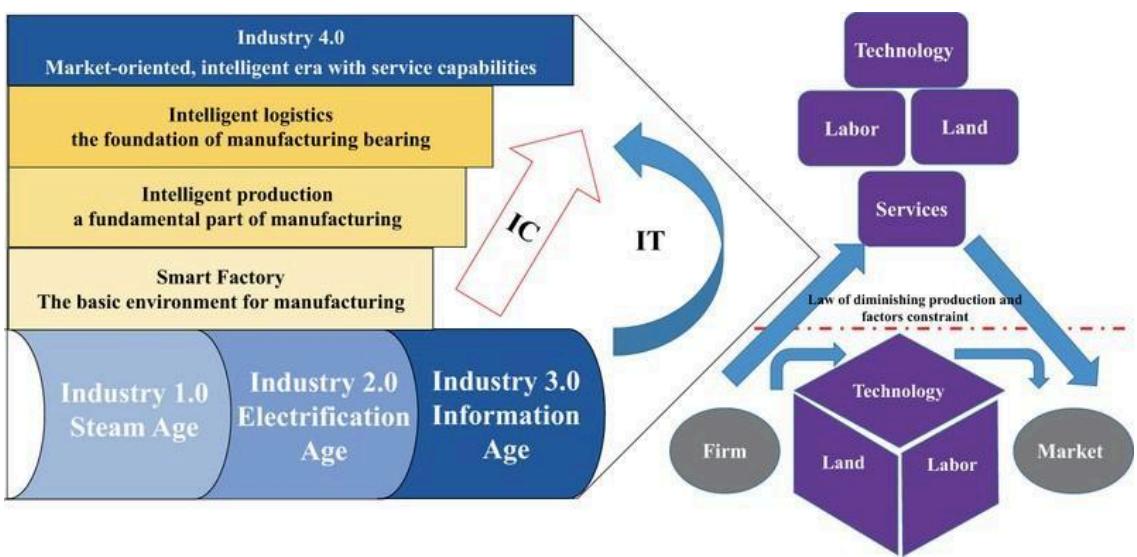
Image 1:. Evolution of Industrial Phases and Concepts of Industry 4.0
2.6 Impact of Technology on Consumer Behavior
Marketing strategies, as businesses well know, have been fundamentally reshaped by the intertwining of technology and consumer behavior. Digital platforms, in particular, have cultivated a consumer culture where immediate access to reviews and recommendations dramatically influences decision-making—in effect, a pivotal shift. Online reviews, studies suggest, often overshadow traditional information sources, significantly changing perceptions and purchasing behaviors (Akacha et al.). Marketers, therefore, face the challenge of adapting to heightened consumer expectations for authenticity and transparency (Caro et al.). As technology-enabled shopping becomes more commonplace, consumers generally tend to favor brands offering personalized engagements, which transforms the marketing landscape into one prioritizing customer needs. Adapting both traditional and digital strategies has thus become vital for businesses looking to prosper in this tech-saturated age, a remarkable metamorphosis in consumer relationship development.
{"image_source":{"path":"images/2bd0138be09623fdb7ae8114170a08b122350ebc419b170ba417e9e9c95167a6.jpg"},"content":"","chart_caption":[],"chart_footnote":[]}
This chart depicts consumer attitudes toward online reviews. It shows that a high percentage of consumers read online reviews before making purchases (95%) and trust these reviews nearly as much as personal recommendations (88%). Additionally, 93% of consumers are influenced by online reviews in their purchasing decisions. However, only 40% suspect fake reviews, particularly those generated by AI, while 72% prefer brands that provide personalized engagements. This highlights the critical role of authenticity and engagement in consumer trust.
III. STRATEGIC DIFFERENCES BETWEEN TRADITIONAL AND DIGITAL MARKETING
The marketing world is changing, and how brands connect with people has shifted from traditional to digital approaches. Old-school marketing mainly used things like newspapers, TV, and radio to reach lots of people, but it often felt like companies were just talking at customers, without really paying attention to what they wanted. Digital marketing, however, uses tech to send specific messages to certain groups, allowing for a back-and-forth conversation that builds stronger relationships. As one expert put it, it's about giving people useful stuff when they actually need it, rather than just interrupting them. These different strategies show how much things have changed because of new technology, like the trends noted in [cited], which shows how digital tools and marketing go hand-in-hand to help businesses do better than their competitors. Marketers need to get these differences to succeed in today's technological era, especially if they want to combine the best parts of both old and new techniques.
| Aspect | Traditional Marketing | Digital Marketing |
| Reach | Limited to local or regional audiences through channels like print media, television, and radio. | Capable of reaching a global audience via online platforms and social media channels. In 2019, there were approximately 2.77 billion global social media users, providing a vast audience for digital marketing efforts. ([digitalmarketinginstitute.com](https://digitalmarketinginstitute.com/blog/traditional-vs-digital-marketing-what-educators-need-to-know?utm_source=openai)) |
| Targeting | Offers broad targeting based on general demographics without precise customization. | Enables precise targeting based on demographics, interests, behavior, and online activities, allowing businesses to reach specific niche audiences and personalize marketing messages. ([theknowledgeacademy.com](https://www.theknowledgeacademy.com/blog/traditional-marketing-vs-digital-marketing/?utm_source=openai)) |
| Cost | Often involves higher costs due to production, distribution, and placement expenses, especially for television and radio ads. ([theknowledgeacademy.com](https://www.theknowledgeacademy.com/blog/traditional-marketing-vs-digital-marketing/?utm_source=openai)) | Generally more cost-effective, with options like pay-per-click (PPC) advertising, social media marketing, and email marketing, allowing businesses to allocate budgets based on needs and measure return on investment more accurately. ([theknowledgeacademy.com](https://www.theknowledgeacademy.com/blog/traditional-marketing-vs-digital-marketing/?utm_source=openai)) |
| Measurability | Measurement of effectiveness is often challenging, with limited tracking capabilities for reach and engagement. | Provides precise measurement tools, tracking metrics like click-through and conversion rates, enabling businesses to assess campaign performance accurately. ([conversionsg.com](https://www.conversionsg.com/post/digital-marketing-vs-traditional-marketing?utm_source=openai)) |
| Engagement | Typically offers limited opportunities for audience interaction, as it is a one-way communication process. ([hikeeducation.com](https://hikeeducation.com/blog/traditional-vs-digital-marketing/?utm_source=openai)) | Facilitates two-way communication, allowing real-time engagement with consumers through social media, email, and other digital platforms. ([hikeeducation.com](https://hikeeducation.com/blog/traditional-vs-digital-marketing/?utm_source=openai)) |
| Flexibility | Campaigns often require longer planning and execution times, with limited ability to adapt once launched. ([hikeeducation.com](https://hikeeducation.com/blog/traditional-vs-digital-marketing/?utm_source=openai)) | Offers greater flexibility, enabling campaigns to be modified and adjusted quickly based on real-time data and performance metrics. ([hikeeducation.com](https://hikeeducation.com/blog/traditional-vs-digital-marketing/?utm_source=openai)) |
Strategic Differences Between Traditional and Digital Marketing
3.1 Audience Targeting: Broad vs. Micro-Targeting
Today's consumers are bombarded with marketing, so deciding between broad and micro-targeting is super important for effective marketing. Broad targeting, think old-school marketing, tries to reach lots of different people but often misses the little things that could make things better and more profitable. On the other hand, micro-targeting uses data to create messages for specific groups, and this can really boost engagement. As was pointed out, micro-targeting—using digital data to target super-specific audiences—is a key way for companies to find new sales opportunities that they would've missed with traditional marketing. Micro-targeting's precision can make marketing way more effective, generally speaking. This move toward personalized messages is really important in fast-changing markets such as Thailand's cosmetics industry, where what consumers do reflects unique cultural situations that broader strategies just can't handle, as we saw in (Rodpan STT, p. 1536-1549). It is a very impactful method in most cases.
{"image_source":{"path":"images/6073dd16641398ea3e3c8fc9b23b59be82377de83088172e91cf92786e39ba71.jpg"},"content":"","chart_caption":[],"chart_footnote":[]}
This bar chart illustrates the significant impact of micro-targeting in marketing strategies. It highlights that a large percentage of marketers believe personalized advertising enhances performance, and it shows a substantial increase in click-through and conversion rates for targeted ads. Additionally, many consumers are willing to share their data for personalized offers. The data emphasizes the effectiveness of targeted marketing approaches.
3.2 Communication Channels: Print, Radio, TV vs. Digital Platforms
Marketing strategies have seen considerable changes, largely due to the shift from traditional to digital communication methods. Traditional channels, such as radio, print, and television, usually involved one-way communication of generalized messages intended for a broad audience. Digital platforms, however, enable a more dynamic interaction, supporting micro-targeting and customized messaging tailored to each consumer. Media studies illustrate this shift, emphasizing the need for companies to adopt multi-screen strategies; Singapore's media policy, for example, encourages innovative distribution methods (Lin et al.). Journalism education research also shows a move toward social media and digital skills, reflecting their significance in contemporary communication structures (Auxier et al.). To improve engagement in our tech-focused world, organizations need to integrate these channels effectively as marketing continues to change. A visual representation of these concepts, for example, effectively summarizes how technology is coming together in modern communication, which reinforces why marketing strategies must be adaptive.
3.3 Message Customization: Uniform Messaging vs. Personalized Messaging
In the dynamic world of marketing, brands often find themselves at a crossroads: should they stick to one message for everyone, or should they tailor messages for each person? This decision is critical for staying relevant and keeping consumers engaged. With technology providing more and more data about consumers, businesses must choose whether to use standardized content for a wide audience or customize messages to suit individual tastes and actions. The latter, which often relies on sophisticated data analysis, tends to create stronger relationships, leading to not just quick sales but also lasting loyalty. Today's consumers generally expect brands to understand and meet their particular needs (R. Balaji et al., p. 133-137), so it's really about balancing consistency with the desire for a personal touch. Companies that get this balance right can truly unlock the potential of their marketing efforts, bridging the gap between old methods and the flexibility needed in today's digital age ((Aldieri L)). This integrated approach is showcased in the overview in, highlighting how technology and personalized messaging work together in modern markets.
3.4 Engagement Approach: One-Way vs. Two-Way Engagement
Marketing's landscape is changing rapidly, and how we engage with people really decides how well our communications work. Businesses are moving from old-school to online methods, so engagement isn't just about businesses talking at people anymore; it's a back-and-forth. Today, consumers expect to interact with brands, looking for experiences tailored to them rather than just passively taking in content. Interactive advertising, which has gradually become the main way we advertise in this new media age, ""Interactive advertising, characterized by interactivity, has become the mainstream of advertising by gradually replacing traditional one-way advertising during the new media era."" (Wanxing Ding), shows this change well. Think about feedback systems and real-time chats (Bolfek-Radovani et al.): this kind of engagement makes a stronger connection with the audience. Generally speaking, brands that use two-way engagement not only improve customer loyalty but also, in most cases, strategically improve their position in a cutthroat market, using consumer insights to make better products (Caro et al.). Take, for instance, a digital scene; it shows how communication has changed, putting tech and user interaction front and center.
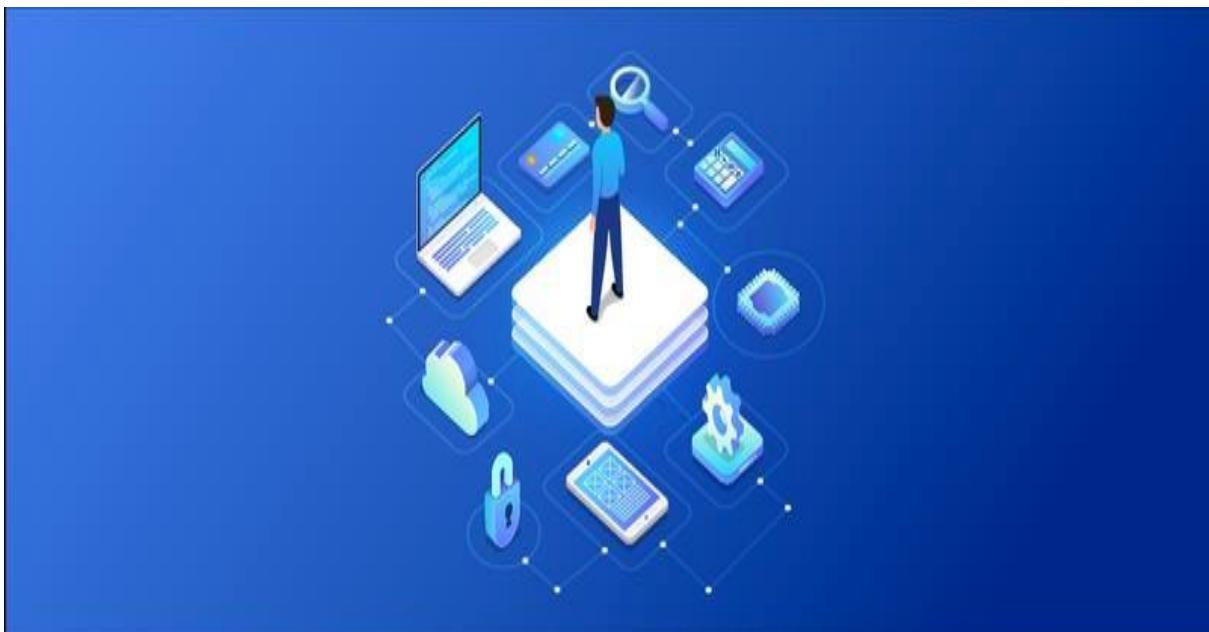
Image 2: Visual Representation of Digital Technology and Security
3.5 Cost-effectiveness: Budget Allocation in Traditional vs. Digital
In today's rapidly changing marketing world, knowing how to best spend your budget between old-school and online methods is super important for making the most of your resources. Traditional marketing, like newspapers, TV, and sponsoring events, usually has pretty set costs, and it can be tough to see exactly how well they're working (Gordon et al.). On the other hand, digital marketing lets you adjust your spending as you go, thanks to data and targeting specific people, giving you more control and the ability to change things quickly. Going digital not only cuts down on wasted money but also helps you connect with customers in a personal way that can change as people react. More and more businesses are making this change, so it's key to look at how Service-Dominant Logic affects things like cost structures and how resources are used (Tenucci A et al.). Looking at how cost-effective things are shows a big change in how budgets are handled, bringing together old and new ways of marketing. The visual illustrates these complexities, giving insights into the multifaceted nature of digital transformation in marketing.
| Marketing Channel | Percentage of Budget Allocation | Cost per 30-second Ad | Effectiveness | Source |
| Digital Marketing | 40-50% | Varies; e.g., YouTube or Facebook ads can start as low as $0.01 per view | Higher effectiveness and efficiency compared to traditional media; digital videos and custom displays have significantly higher ROI than television | LeadFoxy, Journal of Advertising Research |
| Traditional Marketing | 20-30% | Over $100,000 for prime-time television commercials; print ads can cost around $500,000 for a full-page color ad in a popular magazine | Higher retention rates compared to other tactics; however, the impact of some traditional media, such as print and radio, is not statistically significant | Improvado, Journal of Advertising Research |
IV. SALES DYNAMICS: FIELD SALES VS. DIGITAL SELLING
The world of sales is changing, and we're seeing a big move from old-school field sales to digital methods, which makes sense given how much technology is advancing. With field sales, it was all about making connections with people, talking to clients a lot, and getting leads from people you already knew (Caro et al.). But now, because everyone is online so much, digital selling has become a strong option. It uses things like inbound marketing, online presentations, and selling on social media, using data to find the right clients and turn them into buyers (Brutyan et al.). This change means that how people buy things isn't as straightforward as it used to be, and we need to measure sales differently. Instead of just looking at offline results, we need to use real-time data to adjust our strategies as we go. Looking at field sales compared to digital selling gives marketers important information on how to keep up with the changing market, mixing what we used to do with new methods in this tech-focused era.
{"image_source":{"path":"images/e91d80addd520b1bfe7e5524c2f03bcebb9e19b73e525d57b0004226734badfa.jpg"},"content":"","chart_caption":[],"chart_footnote":[]}
This bar chart illustrates the adoption rates of various digital selling tools and preferences among B2B customers and sales professionals. It highlights that a significant majority of B2B customers prefer virtual selling, while a high percentage of sales professionals are utilizing social selling and sales intelligence tools. Video messaging and CRM systems also show notable adoption, indicating a clear shift towards digital selling methods.
4.1 Lead Generation: Referrals, Trade Shows vs. Inbound Marketing, Webinars
In today's tech-heavy market, knowing your lead generation strategies is key for businesses. On one hand, there are classic methods like referrals and trade shows. These are all about building trust and relationships through personal contact. On the other hand, we've got digital methods such as inbound marketing and webinars, drawing in potential clients through content and online interactions. Both have pros: Referrals often have better conversion rates due to that existing trust. Webinars? They can reach more people for less money than in-person events. The thing is, it's a mix of these methods that really makes a difference, something that backs up the idea of needing integrated strategies today (Marbacias M. et al.). Organizations that can blend these approaches well are the ones set to thrive in the ever-changing market (Gupta R, p. 01-06). And to really succeed, organizations need to integrate these strategies effectively, leveraging advancements in technology, reflecting the ongoing marketing metamorphosis.
Lead Generation Effectiveness: Referrals, Trade Shows, Inbound Marketing, and Webinars
| Lead Generation Source | Effectiveness |
| Referrals | 86% of B2B marketers report referrals as a top lead generation source. ([digitalmarketingcommunity.com](https://www.digitalmarketingcommunity.com/indicators/e-mail-marketing-b2b-marketers-live-events-lead-generation/?utm_source=openai)) |
| Trade Shows | 51% of B2B marketers consider live events and trade shows as significant lead generation sources. ([digitalmarketingcommunity.com](https://www.digitalmarketingcommunity.com/indicators/e-mail-marketing-b2b-marketers-live-events-lead-generation/?utm_source=openai)) |
| Inbound Marketing | 59% of B2B marketers believe SEO has the biggest impact on lead generation. ([demandsage.com](https://www.demandsage.com/lead-generation-statistics?utm_source=openai)) |
| Webinars | 73% of B2B marketers consider webinars the most effective method for generating high-quality leads. ([demandsage.com](https://www.demandsage.com/webinar-statistics/?utm_source=openai)) |
4.2 Sales Funnel Architecture: Linear vs. Non-Linear Buyer Journey
Today's marketing world sees a split between how we approach sales: the straight line (linear) versus the more all-over-the-place (non-linear) way. This difference really shows how consumers have changed; thanks to all the tech we use. Old-school sales funnels, the kind where you go step-by-step from knowing about a product to buying it, often miss the mark now. That's because buying isn't so simple anymore; there are tons of different things that can influence a buyer. Digital stuff lets people jump around, go back, or even move sideways in the funnel. They do what they want, based on what they like and what's happening to them. This makes for a journey that's not so straightforward. Understanding this is key for digital plans. We need to change how we do things to give buyers the freedom they want. It's about talking with them and making things personal, not just blasting out the same message to everyone (N/A) (Kantor D et al.). You can kind of see how this works, which shows how tech mixes into both the old and new ways of selling. This really drives home that marketers need to rethink their plans as people change and tech gets better.
4.3 Sales Techniques: Relationship-Building vs. Social Selling, AI Scoring
In the dynamic world of sales, nurturing connections stands tall, notably against the backdrop of social selling and AI-powered scoring. Relationship-based sales hinge on patiently building trust with clients—a subtle art AI finds hard to mimic. It's often said building lasting bonds is key to sealing deals and moving past mere transactions (Lehton et al.), something AI can't do. As companies weave in digital tools for better customer contact, keeping personal links alive is key, enabling richer talks that go beyond just doing business. And, as digital changes impact how customers buy and sellers interact, finding the right mix of machines and human touch is crucial for firms wanting to shine in a tech-heavy market (Sacramento et al.). This shift underlines how vital it is to tweak sales tactics to use both people and tech wisely.
4.4 Metrics & Conversion Tracking: Offline Metrics vs. Real-Time Analytics
The marketing field's constant changes mean that we now see a big difference between old-fashioned offline metrics and the immediate data from real-time analytics. This shift is important, moving us from older methods to a more accurate, digital approach. Offline metrics, like sales reports and surveys, give us useful general trends, but they're slow, making it hard to make quick decisions. But real-time analytics lets marketers watch what customers do as it happens. This helps them change and improve campaigns faster and more effectively, as explained in
(Dinana et al.). This change really shows how important technology is now. Instant feedback helps connect with customers better and target them more precisely. Also, companies using real-time analytics can understand their customers better, boosting sales and customer loyalty. Using an omnichannel strategy, as seen in, helps connect these two areas. It lets marketers work together on different platforms while staying flexible.
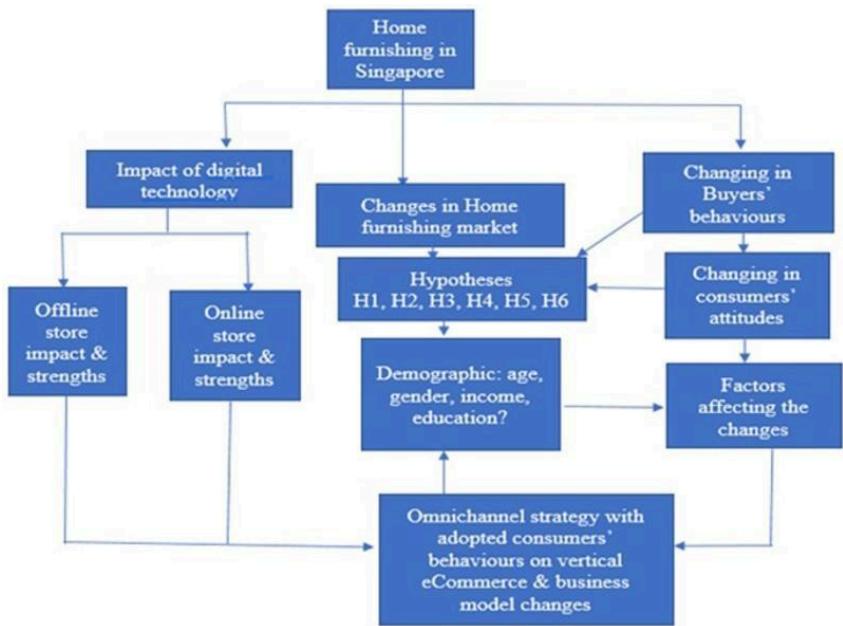
Image 3: Flowchart of Home Furnishing Market Dynamics in Singapore Comparison of Offline and Real-Time Analytics in Marketing Metrics
| Metric | Offline Analytics | Real-Time Analytics |
| Consumer Behavior Tracking | Limited granularity; difficult to track exact consumer actions such as magazine readership or bus ad engagement. | High precision; each ad impression, click, or site visit is recorded, allowing detailed tracking of user behavior. |
| Cost Efficiency | Traditional advertising methods can cost up to 60% more than digital advertising for the same reach. | Digital advertising is generally more cost-effective, with digital ad spending in the US expected to surpass traditional ad spending in 2019. |
| Integration of Data | Challenges in integrating offline data with online data, making it difficult to create a unified customer view. | Facilitates seamless integration of data across channels, providing a holistic view of customer interactions. |
| Measurement Techniques | Common methods include vanity URLs, QR codes, and promo codes, though their effectiveness can vary. | Utilizes advanced tools like Google Analytics, enabling real-time tracking and analysis of digital marketing performance. |
| Impact on Online Sales | Difficult to measure direct impact on online sales; 60% of online purchases involve an offline touchpoint. | Directly measures the influence of digital campaigns on online sales, allowing for immediate adjustments. |
4.5 Customer Relationship Management: Traditional vs. Digital Approaches
Generally speaking, Customer Relationship Management (CRM) has evolved quite a bit, mirroring a significant change in how businesses interact with consumers nowadays, especially given our tech landscape. If you look back, CRM used to be more about direct, in-person
engagement and somewhat generalized advertising, often relying on print and broadcast media. But the digital age has really changed things. Now, companies can use sophisticated analytics and automation for highly targeted marketing. This also allows for back-and-forth communication via things like social media and instant feedback, which are really important for understanding what customers are doing. The integration of technologies such as AI is discussed in [citeX], and it highlights how CRM is changing from a more reactive approach to a proactive strategy that personalizes how companies communicate with consumers, which can improve loyalty and retention. Organizations need to adapt their practices to make the most of these innovative capabilities, such as merging traditional relationship-building tactics with innovative digital capabilities, to thrive in a competitive marketplace, as noted in (Chan CKY et al.) and (Lee S et al., p. 1633-1669). This is something that is necessary for success.
CRM Technology Adoption and Investment by Industry
| Industry | In-house Investment ($ billions) | Outsourced Investment ($ billions) | Total Investment ($ billions) | In-house Investment Intensity (% of sales) | Outsourced Investment Intensity (% of sales) | Total Investment Intensity (% of sales) | Use of CRM Technology (% of firms) | Use of CRM Technology to Collect Customer Information Online (% of firms) | Use of CRM Technology to Provide Online After-Sales Support (% of firms) | Integration Level of CRM Technology Linked to Back-End Systems (% of firms) | Integration Level of CRM Technology Linked to Customers' Systems (% of firms) | Integration Level of CRM Technology Linked to Suppliers' Systems (% of firms) | Outsourcing of CRM Technology Functions (% of firms) |
| Wholesale | 37.85 | 10.8 | 48.65 | 8 | 2.3 | 10.3 | 14 | 10 | 9 | 32 | 15 | 16 | 13 |
| Manufacturing | 13.71 | 17.27 | 30.97 | 2.1 | 2.7 | 4.8 | 15 | 10 | 8 | 23 | 12 | 5 | 13 |
| Finance and Insurance | 11.19 | 6.55 | 17.73 | 4.6 | 2.7 | 7.3 | 16 | 10 | 10 | 36 | 5 | 4 | 7 |
| Retail | 3.19 | 9.68 | 12.87 | 0.7 | 2.3 | 3 | 13 | 9 | 5 | 33 | 3 | 21 | 12 |
| Logistics and Transportation Services | 3.93 | 2.08 | 6.01 | 3.4 | 1.8 | 5.1 | 6 | 4 | 3 | 31 | 23 | 27 | 2 |
V. TECHNOLOGY ENABLERS AND INNOVATIONS
These days, tech's impact on how we market things is huge, basically reshaping strategies. When you put smartphones and tablets together with fancy CRM systems and automation, traditional sales change into a complete digital thing. Think about augmented reality (AR), chatbots, and blockchain—they give you different ways to make customers happier and run things better. They help marketers really target who they're trying to reach and get analytics right away, which means they can quickly change their marketing when customers change their minds. Predictive marketing frameworks highlight how data can help with making smart decisions, which is super important to stay ahead. As e-business tech keeps showing up in how companies work, it's key to get what that means for doing well in the market, especially as the fashion biz uses sustainable circular models as a key part of doing business, showing that tech is important for innovation (Berrangert al.) (Colombi C et al.).
5.1 Devices: Smartphones, Tablets, Smartwatches, Digital Kiosks
The marketing world is changing fast. Devices like smartphones, tablets, smartwatches, and even those digital kiosks you see have really changed how companies talk to customers and how they sell things. These devices help connect old-school marketing with the newer digital stuff, giving businesses all sorts of ways to connect with people. Think about it: digital kiosks can make shopping in a store better with interactive displays that show info and help people decide what to buy, like [cited] shows. Plus, smartwatches and smartphones let companies talk to people in real-time and send personalized ads, which helps build stronger relationships and keeps customers coming back. Studies on how people adapt to new tech say these improvements boost how well a business runs and make customers happier but also warn leaders that ignoring these changes is risky (Gurley et al.). So, it's really important to understand how these devices and marketing strategies work together to get customers involved in this age that's all about technology.
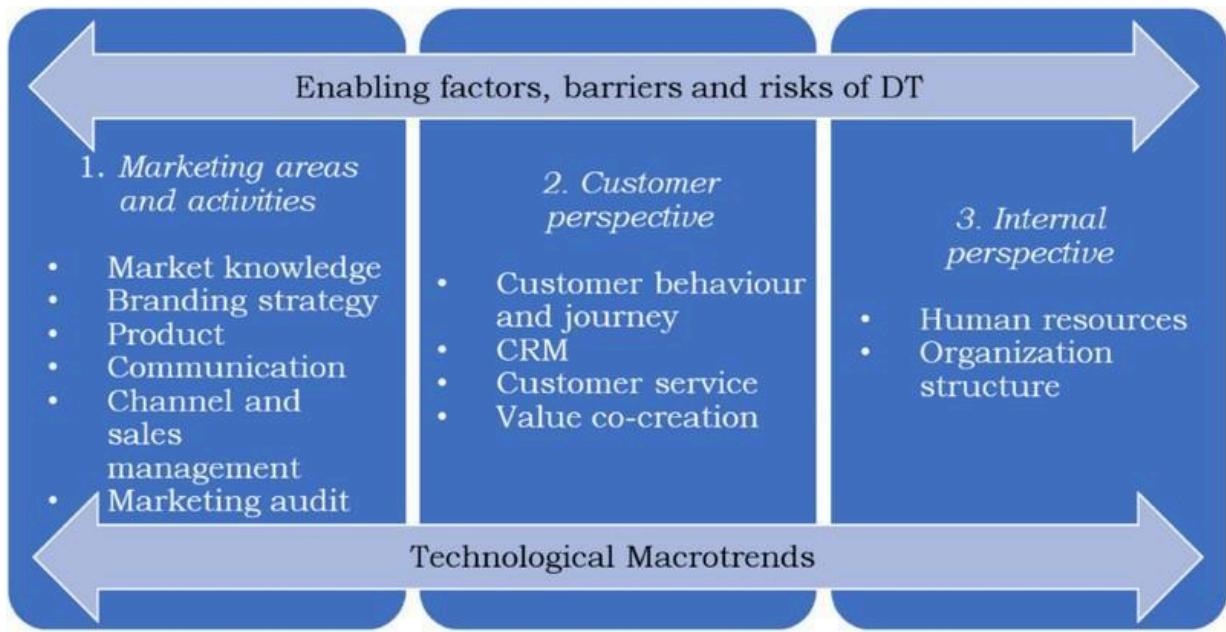
Image 4: Framework for Understanding Digital Transformation Enablers and Risks
5.2 Platforms & Tools: CRM, Automation Tools, Social Media Managers, AI
Generally speaking, today's marketing world demands that advanced tools and platforms work well together. This integration is crucial to connect what's been done traditionally with newer digital strategies. Think of Customer Relationship Management (CRM) systems—they really help streamline how businesses talk to customers, letting them change their approaches to keep customers engaged, which is a big deal for profitability, especially when things get tough (Niemi et al.). Furthermore, automation tools help scale marketing efforts more efficiently. They allow companies to keep their message consistent across many channels but still personalize how they interact with each customer (Marqu Pés et al.). Social media managers also help a brand be seen and help in improving engagement with customers. Add to that the way AI technologies refine strategies using data; it helps marketers figure out what customers might want and do. All these tools show how marketing is changing so that it can work in a tech-heavy era, pointing to a more adaptable marketing approach.
5.3 Innovations: AR/VR, Chatbots, Blockchain, Predictive Marketing
The evolution of marketing orbits more and more around digital strategies, making AR/VR, chatbots, blockchain tech, and predictive marketing not just nice extras but necessities. These innovations don't just change how customers interact with products; they also change the traditional sales game, allowing new and deeper levels of engagement. Think about AR, for example—it can give potential customers virtual "hands-on" time with products, closing the gap left by fewer brick-and-mortar stores. Chatbots can also greatly increase customer service efficiency by instantly answering queries and customizing user interactions. Blockchain builds and strengthens trust, an important aspect of customer relationships, through transparency and tracking (Aal et al.). And predictive marketing? That uses data analytics to guess what customers will do next, letting companies fine-tune their marketing efforts, hopefully boosting engagement and sales. Giving emphasis to these technologies is pretty important for staying ahead in a tech-heavy market (Buhalis et al.). Furthermore, one might analyze the connection between these innovations and time-honored strategies.
5.4 Role of Data Analytics in Shaping Marketing Strategies
Generally speaking, the marketing world is changing fast, and data analytics are now key to making strategies that work for today's consumers. With data analytics, companies can usually learn a lot about what customers do, what they like, and what's trending; this helps them make their marketing better. It also helps with a deeper look into how customers interact, letting them improve segmentation and customize their messages in ways that old-school methods often miss. Recent studies show that keeping things consistent across all customer contact points means marketers need a multichannel approach that merges customer experience seamlessly (Clark et al.). Moreover, because we're now measuring performance online, businesses need to quickly update their analytical tools to stay competitive (Bowie et al.). Strategically using data analytics not only boosts customer interaction but also lets companies make informed choices that connect traditional and digital marketing. A flowchart outlining these connections can be found at... and ultimately fosters sustained growth in our tech-focused era.
5.5 Future Technologies on the Horizon: Implications for Marketing
The marketing world is changing, and new technologies bring exciting possibilities, along with some tough problems. Deploying 5G, for instance, isn't just about faster operations; it's about opening doors for totally new marketing approaches. Telecom companies, generally speaking, are likely to leverage 5G's super-fast response times, which could change how businesses connect with customers and deliver services, potentially even leading to entirely new marketing areas (Cuevas et al.). Plus, looking ahead, cyborg technology might transform frontline service jobs, kind of merging human skills with advanced tech. This melding could revolutionize how we interact with services, making them more user-friendly and tailored to what consumers want (Garry et al.). It all points to a big change in how marketing works, meaning marketers need to adapt and blend old methods with new digital innovations in a world that's becoming more and more tech-focused.
{"image_source":{"path":"images/74e9f7dcad4103fa9fca5174e04ced69031f46c20876888198df42ac3b260891.jpg"},"content":"","chart_caption":[],"chart_footnote":[]}
This bar chart illustrates various aspects of consumer expectations and market dynamics regarding 5G technology. It includes the percentage of smartphone users whose expectations were exceeded, those seeking advanced applications, and the percentage of consumers with 5G capability for the years 2022 and 2023. The chart emphasizes the importance of adapting marketing strategies to meet evolving consumer demands in the 5G era.
VI. CONCLUSION
To summarize, the blending of traditional and digital sales approaches signifies a real change in marketing. It calls for a careful approach that balances what's always worked with new tech. Combining old-school values, like building relationships and keeping a brand honest, with the quickness that digital tools offer lets marketers handle the fast-changing market better. Putting importance on being able to change, using data, and staying quick on your feet—like this paper has been saying—is key to making brand experiences that grab today's customers. When businesses use all sorts of marketing ways, they'll not only get to more people but also build long-term customer loyalty. The road ahead isn't just about swapping old ways for new ones; it's about mixing what we know from both to encourage new ideas and stay relevant in a world that's getting more competitive (Corkt al.)
(Darbishire et al.). Every move we make will help marketing change for the better, boosting ongoing growth and keeping brands strong in this tech age.
6.1 Synthesis of Traditional Values and Modern Agility
For organizations to flourish in today's fast-paced marketing world, balancing time-honored values with modern flexibility is key. Traditional marketing, with its foundation in psychological and cultural understanding, has long built brand loyalty and consumer confidence. However, the rise of digital strategies calls for an agility that traditional methods may not always offer. This necessitates an adaptive approach, one that's responsive to real-time data and consumer engagement trends (Moen et al.). The fusion of these approaches not only boosts efficiency but also strengthens customer relationships through tailored interactions, a vital element in the current market. By combining the basic principles of traditional marketing—like building relationships and maintaining brand integrity—with agile strategies like social selling and AI-powered analytics, companies can effectively manage the complexities of a tech-heavy era while keeping a consistent brand story (Brigas et al.). Generally speaking, this convergence creates a fertile ground for lasting growth and market relevance.
6.2 Marketer's New Mantra: Adaptive, Analytical, Agile
Marketers today face a quickly changing world due to fast-paced technology. To handle this, they need to be agile, focusing on being able to adapt and analyze in order to keep up with how consumers act. One expert, however, notes, Agile marketing focuses on quantity over quality. It's outcomes-driven, allowing marketers to measure success in early intervals and pivot quickly when something's not working. The use of analytics is key because it lets marketers better understand their audience and customize their messages for different platforms (Schiefer et al.). Combining these flexible strategies with analytics helps to connect old-fashioned marketing ideas with new digital methods. This approach not only welcomes new ideas but also fits with what consumers now expect. This shift can be shown through, which demonstrates how technology improves marketing plans for today's market.
6.3 Marketing as the Soul of Brand Experience
As consumer interactions become more intricate, the weaving together of marketing strategies becomes not just important, but really essential—almost like the very heart of what a brand stands for. Brands, therefore, find themselves needing to juggle both older, well-established methods and newer digital tricks to really grab customers' attention and connect with them on different levels. Think about personalized content, for example; it's becoming more and more key to really boosting a brand's clout and building stronger bonds with customers. This lines up with some time-tested psychological ideas about marketing (GOVINDAPPA H et al.).
At the same time, things like automation and AI are constantly getting better, making it easier to analyze data and send targeted messages in real-time. This is changing what customer engagement looks like by encouraging actual back-and-forth conversation (Provasi et al.). By putting all of these pieces together, brands can develop a clear and consistent identity that not only helps them sell more stuff but also builds lasting loyalty, crafting an overall brand experience that really succeeds in today's tech-heavy world, as shown in...
6.4 The Importance of Continuous Learning and Adaptation
The breakneck pace of tech development and the way consumers change their minds mean professionals need to keep learning and changing too. Marketers find themselves in a tricky spot where tried-and-true ways are now mixed with digital stuff. Consider Finnish microbusinesses trying to get into Swedish e-commerce; this shows us how vital it is to tweak things for the local culture if you want to make an impression on a new set of customers (Vesterback et al.). For SMEs, going digital means they really need to be able to bend and flex, embracing strategies based on constant improvements to make use of opportunities from new tech like AI (Hu et al.). It's all about balancing the need to learn new tricks with a promise to come up with fresh ideas, which sets marketers up to do well even as the market keeps changing. A marketing strategy adaptation flowchart shows this well—continuous learning is what keeps businesses growing and ahead of the game.
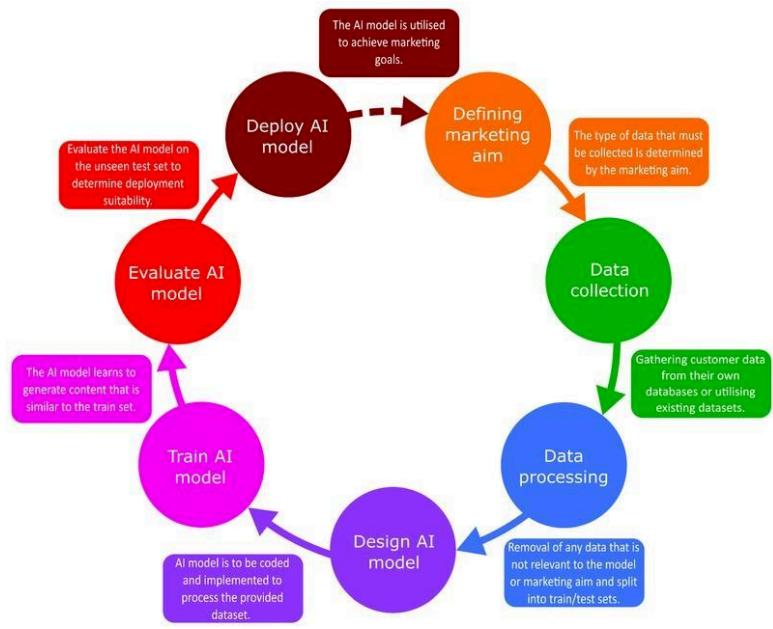
Image 5: Flowchart of AI Model Development for Marketing Objectives
6.5 Final thoughts on the Future of Marketing Strategies
The marketing world keeps changing, and what works in the future will depend on mixing old-school marketing ideas with new digital stuff. It's about using what we already know about keeping customers happy but also being quick to use new technology. Hyper-personalization, as some studies show, is going to be a big deal for getting people interested when everything is online. Plus, it's clear that businesses and tech need to be on the same page, especially if companies want to keep up with customers and do well when things are changing so fast online (F Buttle et al.). Also, there are all these new online tools that can really help us reach different groups of customers (Barr et al.). So, if we can put together the old and the new, marketers can deal with all the confusing parts and still make brands that people care about.
Please Note: This outline provides a structured approach to analyzing the convergence of traditional and digital marketing strategies in the context of a tech-driven age, ensuring a comprehensive exploration of the topic.
The modern commercial world is changing fast, so marketers today really need to look at how old-school and digital marketing come together.
Businesses have to deal with a lot of tech stuff, and it's super important for them to get how these two ways of doing things work if they want to talk to all kinds of people effectively. This is a plan to help understand how they mix, and it's based on what's happened before and what new strategies are out there. When companies check out new tech and what it means for marketing, they can use what they learn from both areas to make plans that really connect with customers and get them involved. Plus, the way different points of contact work together, as shown in [cited], shows why it's important to have a big-picture approach that uses knowledge from both sides to stay ahead. Analyzing this way highlights how important it is to change marketing methods, which is key to doing well in a market that's more and more connected [extracted Knowledge X].
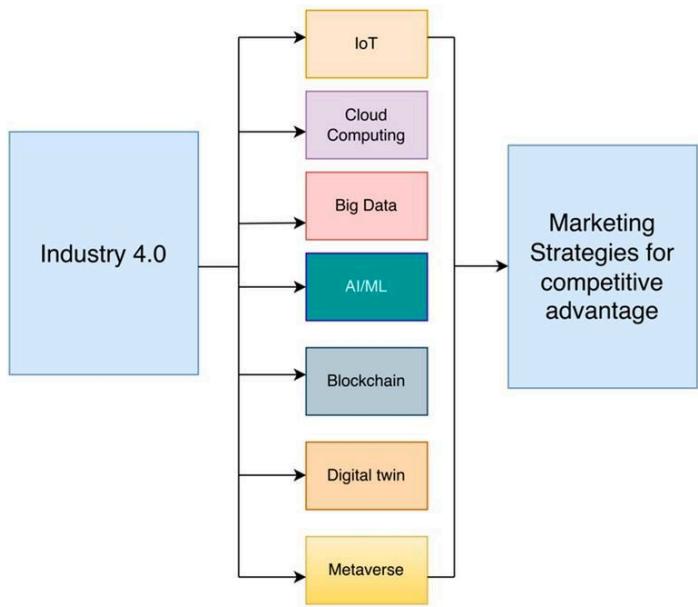
Image 6: Flowchart illustrating the relationship between Industry 4.0 technologies and marketing strategies for competitive advantage. 6. Batt, Rosemary, Christopherson, Susan, Rightor, Ned, Van Jaarsveld, et al.. "NET WORKING: Work Patterns and Workforce Policies for the New Media Industry". DigitalCommons@ILR,2000, https://core.ac.uk/download/5121933.pdf
Conflict of Interest
The authors declare no conflict of interest.
Ethical Approval
Not applicable
Data Availability
The datasets used in this study are openly available at [repository link] and the source code is available on GitHub at [GitHub link].
Funding
This work did not receive any external funding.
References
Cite this article
Related Research



Special Issue
Launch a focused special issue to highlight research, emerging trends, and expert insights in your academic field.
