

Abstract
Erich Kästner's children's literature shaped children's reading and socialisation experiences for decades in Germany. His texts combine vividness with the communication of classic values and promote independent problem-solving strategies. The theatre project presented adapted a Kästner text as reading theatre. The work strengthened creative, linguistic and social skills and confirmed literature as an action-oriented practice for personality and group development. The article describes how classic children's and young adult literature can be used to create a participatory Theatre project that promotes reading, writing, and acting.
Explore Digital Article Text
Introduction
Only those who grow up and remain children are truly human! (quote by Erich Kästner, translated)
The year 2024 marked a double anniversary for Erich Kästner: The German and famous author was born 125 years ago and died 50 years ago. His classic children’s books, such as “Pünktchen and Anton,” “Das doppelte Lottchen/ The Twin Lottchen,” “Emil und die Detektive/Emil and the Detectives,” and “Das Fliegende Klassenzimmer/The Flying Classroom,” continue to delight young readers worldwide to this day. In the bedrooms of past generations, Kästner’s books almost always had a permanent place. The question for reading teachers is: How can language teachers use classic youth literature such as Erich Kästner’s books in modern classrooms?
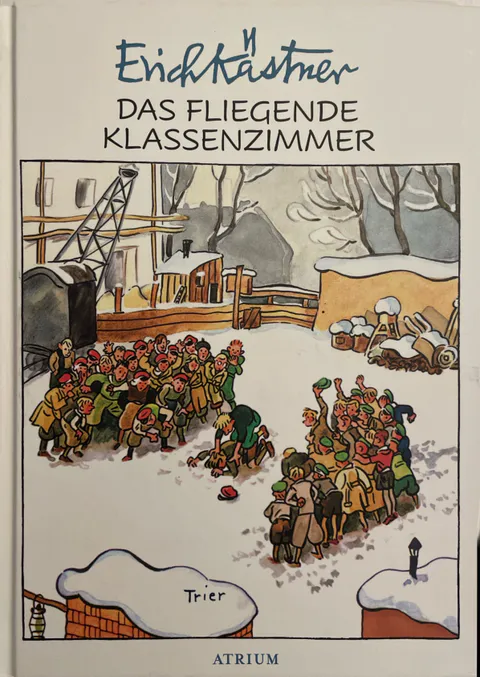
Photo of book “Das Fliegende Klassenzimmer/the Flying Classroom” (Photo: Giera)

Photo of the public venue “Das Fliegende Klassenzimmer/the Flying Classroom” (Photo: Fitzen)
Kästner knew how to convey everyday topics in a child-friendly way without lecturing, bringing classic values like friendship, responsibility, and honesty to life. In this way, children received a “guide” to finding solutions on their own.
The small town of Soltau, nestled in the heart of Germany, also has a special connection to Kästner’s work, as it is home to an actual “Flying Classroom/Fliegendes Klassenzimmer” (see Fig. 2). The roughly 30-square-meter room hovers atop an elevator tower, providing barrier-free access to the “Spielmuseum/Play Museum.” The “Foundation/Stiftung Spiel” brought the construction project to life ten years ago. Since then, the space has served as a creative place for playing, reading, crafting, and hosting small events. The “Kinder seid Kinder” foundation, which is involved in this theatre project, has also been a guest here on several occasions.
Against this backdrop, the idea arose to bring Kästner’s stories into the present day and organize a public reading by children for children in 2024. Through the collaboration of the three authors and other partners in the city, a concept emerged that linked the high school with the youth center (named “YouZe”). Classes were moved to this unique learning space-with a palpable burst of creativity sparked by the unfamiliar surroundings.
The project goal was to turn reading challenges into opportunities to excel on stage, empowering struggling readers like Kästner’s characters in his books. The intended reading project ultimately developed into a staged production. Students selected scenes from the complete works, created contemporary adaptations, and presented these performances to a public audience as reading theatre in the actual “Flying Classroom” and at the “Filzwelt felto” museum. This article aims to explain this exemplary collaboration between the university and the school within the framework of the aforementioned theatre project and to demonstrate how such collaboration can emerge through participatory and collaborative work involving university staff, teachers, social educators, foundation employees, and students in the case community Soltau, Germany.
While Erich Kästner may not be widely recognized internationally, there are traditional authors in every country whose works form an integral part of school curricula. The challenge faced by educators is how to effectively bring these literary traditions into contemporary classroom settings. By doing so, teachers can foster a culture of reading that empowers every student, regardless of their background or familiarity with the literature. Integrating classic works in a modern context encourages engagement, supports reading development, and helps students connect with the values embedded in their national literary heritage.
Our multidisciplinary team-which includes an author, a teacher, and a researcher-aimed to highlight Kästner’s child-friendly philosophy to help every child become a more confident reader.
Theoretical framework
Why the author Kästner? – A textual analysis
As one of the defining authors of many readers’ childhoods and a representative of the “people’s writers” (Reich-Ranicki, 1998b, p. 131, translated) such as Fallada or Tucholsky, he remains relevant to this day: Erich Kästner, born on February 23, 1899, in Dresden (Germany), died on July 29, 1974, in Munich. He was the author of numerous poems, children’s books, essays, and short stories.
Marked by two world wars (see his poem “Jahrgang 1899”) and a childhood in modest circumstances, he developed an optimistic attitude toward people despite all his experiences and processed his longing for the childhood he never had through his writing. “He never wanted to stop believing that people could do better […]” (Reich-Ranicki, 1998b, p. 131, translated). It was precisely from this that his ability arose to provide guidance to children and young people, but also to adults, through his works.
His publications, which were banned during the Nazi era, address central themes of human coexistence and are set in the present: friendship, appreciation, responsibility, honesty, justice, courage, a willingness to compromise, and the ability to accept loss. “He belongs to the moralists who are also entertainers” (Reich-Ranicki, 1998b, p. 131, translated). He manages to captivate readers through the humorous portrayal of his child characters, who do not too often take on the role of educators, as is the case, for example, in “Doppelte Lottchen” or “Pünktchen und Anton”: “And it is not the parents who educate their children, but the children who educate their parents, ultimately bringing them to their senses” (Reich-Ranicki, 1998b, p. 141, translated). Thus, from the children’s perspective, this is a resolution that, while initially appearing humorous, carries a deeper meaning and sparks discussion about hierarchy-based education.
These classic values of Kästner’s, as portrayed in his literature-which are indispensable for a functioning society-are more relevant today than ever (Giera et al., 2025a, Reich-Ranicki, 1998b, p. 135). In his work “Das Fliegende Klassenzimmer/The Flying Classroom” (first published in 1933 and adapted for film multiple times), Kästner envisions a learning environment that did not exist at the time. The story conveys the idea of a practical, independent, and joyful approach to knowledge transfer at a boarding school—a revolutionary concept for its time, which can be found today in modern teaching methods.
The current edition of Kästner’s (2023) “The Flying Classroom” consists of twelve chapters spanning 184 pages (see Fig. 1). The plot highlights the tensions between two groups of students—boarding school students versus secondary school students-through mutual pranks. In particular, the characters “Justus,” the tutor, and the “Non-Smoker,” who lives in a railroad car, serve as role models within the context of the plot. Both combine pragmatism with empathy and place their trust in the boarding school students throughout the narrative.
This attitude strengthens the children’s motivation and self-confidence and becomes the foundation for successful coexistence (Giera et al., 2025a, p. 30). Thus, Kästner’s drama, with its theme of school, also connects to the lived experience of today’s youth.
The literary critic Marcel Reich-Ranicki (1998b, p. 132) places Kästner in the same league as Fontane and Heine (famous authors in the past): “Erich Kästner did not write monumental works” (Reich-Ranicki, 1998b, p. 142, translated), but
“He listened to the people. Like no one before him, he eavesdropped on and captured the everyday language of city children. Seen in this light, this book was nothing less than literature for children’s long-overdue turn toward realistic means of expression as well as verifiable reality.” (translated, Reich-Ranicki, 1998b, p. 142, translated).
Thus, despite the date of its creation, Kästner’s youth drama is a work with contemporary social relevance and is therefore rightly included in the school canon to this day. This teaching project builds on Kästner’s literary work to familiarize students with the play “The Flying Classroom” and to situate it in the present day by adapting individual chapters into theatrical scenes. The year 2024 was a topical and relevant setting due to media coverage surrounding the Kästner Year (see above). The direct link between Kästner’s work and the Soltau performance space (see Photo 2) creates a regional connection to the students’ local environment. Chronologically, the project was tied to a series of lessons within the German curriculum. Consequently, only a selection of learning objectives could be prioritized. The learning objectives for this teaching project are as follows:
Reading and commenting on (using annotations and student discussions) individual scenes from the work “Das Fliegende Klassenzimmer,”
the collaborative and/or cooperative rewriting of selected scenes in working groups,
the audience-oriented and prosodic reading of scenes during rehearsals and public performances, as well as
the weighing and coordinating of decisions within the working groups and with all project participants within the theatre project for the performance.
When these competency goals are considered together, the aim is to promote a holistic approach to reading a literary work, in this case Kästner’s “The Flying Classroom”. The following third chapter explains this in detail.
The development of literacy skills and reading literacy
Literacy is a key competence for educational success and social participation. The UNESCO (2025) sums up:
“Literacy is the ability to identify, understand, interpret, create, communicate and compute, using printed and written materials associated with varying contexts. Literacy involves a continuum of learning in enabling individuals to achieve their goals, to develop their knowledge and potential, and to participate fully in their community and wider society”.
So, the term literacy encompasses the ability to recognize, understand and interpret written language in various contexts and to use it to communicate. Reading literacy is therefore essential for pupils to achieve academic goals, build knowledge and participate actively in social life (Giera, 2025d, p. 1).
However, many pupils struggle to develop adequate reading skills. These challenges are particularly evident in mixed-ability classes, where learners differ in terms of their linguistic background, cognitive abilities and learning conditions. Inclusive education therefore requires teaching approaches that support diverse learners and offer meaningful opportunities to engage with texts (Giera, 2025d, p. 2, OECD, 2023; OECD, 2019).
Participatory and performative approaches in reading instruction have been identified as promising strategies for promoting literacy in inclusive settings. Theatre-based learning activities enable pupils to interact with texts through reading, interpretation and performance. In such contexts, reading becomes an active and collaborative process rather than an individual and passive activity (Giera, 2025d, Cremin & Scholes, 2024; Boyask et al., 2024; Rosebrock & Nix, 2020). By combining reading exercises with creative expression, theatre projects can promote both reading literacy and social interaction among learners (Giera, 2025d, p. 5, Cardol et al., 2025; Freeman & Welsh, 2024; Jónsdóttir & Thorkelsdóttir (2024).
The multi-level model of reading
Reading literacy can be understood through a multi-level perspective (see Fig. 3) that integrates cognitive, individual and social aspects of reading. According to this model, reading processes take place at three interconnected levels: the process level, the content level and the social level (Giera, 2025d, pp. 3–4, Rosebrock & Nix, 2020).
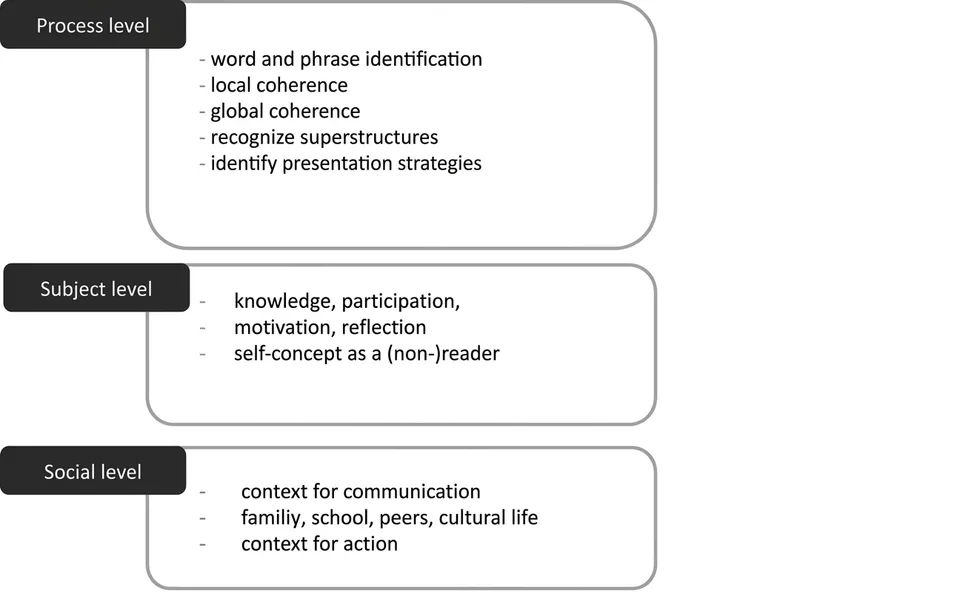
Multi-level model of reading according to Rosebrock & Nix 2020 (Giera, 2025f, p. 32)
At the process level, reading involves cognitive activities such as word recognition, deriving meaning from sentences and understanding the overall structure of a text. Readers must establish coherence within the text in order to interpret its meaning and link different parts of the narrative together (Giera, 2025d, p. 4). The subjective level focuses on the individual reader and encompasses factors such as motivation, prior knowledge, engagement and self-concept as a reader. Pupils who perceive themselves as capable readers are more likely to engage actively with texts and participate in reading activities. In contrast, learners with a negative self-concept may demonstrate lower motivation and engagement when reading (Giera, 2025d, p. 4, Rosebrock & Nix, 2020). The social level highlights the importance of social contexts for reading development. Reading activities take place in social settings such as classrooms, peer groups and families. These contexts influence pupils’ attitudes towards reading and provide opportunities for collaborative interpretation of texts (Giera, 2025d, p. 4, Rosebrock & Nix, 2020).
Together, these three levels illustrate that reading literacy arises from the interplay of cognitive processes, individual motivation and social learning environments. Teaching approaches that combine reading with collaborative activities can therefore promote reading and writing literacy in a holistic manner.
Prior to the start of the project, all students read the entire book in preparation (see Section 3.2 for more project details). During the planning phase for the performance, the class collaboratively reviewed the chapters and discussed which ones they considered most significant and engaging to present on stage. This decision was not made by the teacher, but rather by the students themselves, ensuring that the selection process was democratic and reflective of their interests. The students engaged in literary discussions as a group, applying the social level of the multi-level model of reading. Through this social interaction, they analyzed the text, shared perspectives, and collectively determined which parts of the book would be most impactful for the theatrical performance. This approach fostered both critical thinking and group collaboration, emphasizing student agency in the creative process.
Drama education as an approach to promoting reading and writing
Furthermore, contemporary classrooms require multidisciplinary reading strategies to effectively engage every student in reading. Drama education offers an interactive and participatory method for promoting reading and writing skills. Theatre facilitates alternative approaches to reading and interpreting dramatic texts, thereby supporting the integration of cognitive, emotional, and embodied knowledge (Polido et al., 2025). In drama-based learning environments, pupils transform written texts into staged scenes and dialogues. This process requires repeated reading, interpretation and rehearsal, which supports the development of reading fluency, reading comprehension and expressive reading skills (Giera, 2025d, Scheller, 2023).
Participatory theatre projects encourage pupils to engage actively with texts rather than consume them passively (Boal, 2019; Iser, 1978). Through role-play and performances, learners interpret characters, explore narrative perspectives and collectively construct meaning from the text. This experiential engagement can boost motivation and strengthen pupils’ self-confidence as readers and performers (Scheller, 2023; Giera, 2025d, p. 5).
Furthermore, theatre-based learning promotes communication and collaboration within the group. Pupils must coordinate their roles, rehearse scenes together and make collective decisions about the performance. These processes foster teamwork, dialogue and shared responsibility among participants (Giera, 2025d, p. 5). So, drama as discipline could enhance reading in language classes. This type of engagement necessitated not only superficial interpretation but also thorough understanding and coordinated action among group members. Dramatic literature is capable of fostering an active, interpretive, and socially contextualized reading experience within the framework of collaborative stage production (Boal, 2019; Iser, 1978). The combination of two disciplines, here language education (reading) and drama pedagogy, could support the reading engagement.
Rituals in inclusive reading theatre
In all kind of organizations with humans, rituals are structured, repeated activities that provide stability and significance within group environments (Maheswari, 2025; p. 163):
“Rituals play an integral role in shaping organizational behavior and enhancing employee well-being. They create a structured environment that reinforces values, builds trust, and promotes emotional regulation. By providing employees with a sense of predictability and structure, rituals mitigate stress and uncertainty, which are especially important in high-pressure or rapidly changing environments (Pfeffer, 2018). Rituals also facilitate habit formation, making desired behaviors more automatic and less cognitively demanding, which improves overall organizational efficiency (Duhigg, 2012).When integrated into daily routines, rituals not only improve efficiency and performance but also contribute to a supportive and cohesive work culture.”
In educational contexts, these approaches establish consistent routines and emotional security, allowing learners to engage with increased assurance. Rituals serve as mechanisms for transition, convey social cues, and provide opportunities for reflection or activation (Davidson & McEwen, 2012). In inclusive classrooms, especially those utilizing drama or performance-based instruction, rituals are valuable in facilitating social integration, reducing anxiety, and enhancing group cohesion. Structured protocols and rituals are particularly significant within inclusive theatre projects, as they offer participants stability and guidance—an essential support in diverse learning environments where students possess varying levels of literacy or experience with theatrical activities (Giera, 2025c, p. 87).
In inclusive reading theatre projects, rituals may include regular rehearsal routines, warm-up exercises and shared reflection sessions. These practices help to create a supportive learning environment and establish a sense of belonging within the group. Through recurring activities, pupils become familiar with the structure of the project and feel more confident about participating in the performance process (Schmalenbach et al., 2025; Giera, 2025c, pp. 88–90).
Rituals also contribute to inclusive participation by conveying clear expectations and reducing uncertainty. When activities follow a consistent structure, pupils with different learning needs can more easily participate in the collaborative process of rehearsing and performing theatre scenes (Giera, 2025c, pp. 90–92).
We used drama pedagogy rituals, including warm-ups and structured check-ins and check-outs, to foster an inclusive reading environment. These practices aimed to provide all students with orientation, a welcoming start, and a supportive end to each rehearsal (see Section 3.2).
Theatre projects and social cohesion
Theatre-based educational projects can also promote social cohesion within learning groups. Social cohesion refers to the quality of relationships between members of a group and encompasses elements such as trust, cooperation, participation and a sense of belonging (Chan et al., 2006, as cited in Giera, 2025f, p. 27).
Participatory theatre projects offer learners the opportunity to collaborate on creative tasks and build relationships through shared experiences. By rehearsing and performing scenes together, learners practice communication, negotiation and teamwork. These collaborative activities can strengthen group identity and foster positive social interaction among participants (Giera, 2025f, pp. 3–4). Similarly, Fonseca, Lukosch, and Brazier (2019) emphasize that social cohesion develops through interactions between individuals, communities, and institutions, and is characterized by participation, belonging, and mutual recognition (as cited in Giera, 2025f, pp. 28–29).
Theatre projects that address socially relevant topics can also stimulate reflection on interpersonal relationships and group dynamics. Through role-play and dramatic interpretation, learners explore different perspectives and discuss social situations within a structured learning environment (Giera, 2025f, p. 5).
Inclusive learning communities
The concept of inclusive learning communities provides a broader framework for understanding theatre-based literacy projects. Inclusive learning communities aim to create educational environments in which all pupils can learn and participate together, regardless of their individual backgrounds or abilities (Giera, 2025e, p. 3).
Inclusive education is based on principles such as equity, participation and the recognition of diversity. Educational institutions therefore have a responsibility to design learning programmes that take into account the individual learning needs of pupils and provide appropriate support (Giera, 2025e, pp. 3–4).
Within inclusive learning communities, collaborative projects such as theatre productions can play an important role. These projects enable pupils to share learning experiences, develop social skills and actively participate in creative processes (Giera, 2025e, p. 5).
In our drama project, the students exhibited varied reading competencies (see Section 3.2), and overall, their reading skills were assessed as not being at a high level by the participating reading teacher. Following individual reading support sessions provided by the teacher (see 3.2), the next objective was to involve all students in a unified reading project. Each student was tasked with preparing a scene from Kästner’s book, focusing both on subject comprehension and collaborative training. Additionally, they engaged in small group discussions to analyze their scenes from a literary perspective.
Ultimately, the aim was for the audience to experience more than just fluent reading of dramatic scenes; the performance should captivate through an integration of reading and theatrical elements such as costumes, vocal variation, pacing, use of props, and collaborative staging. Achieving this required more extensive rehearsal processes (as referenced in Section 2.3) than simply reading the book once and answering written questions. This project provided an opportunity to integrate social, subject, and process aspects of reading, thereby enabling all students to advance to higher levels of reading and performance.
(Re)Connection to the Kästner Reading Theatre Project
The theoretical perspectives described above form the basis for the Kästner Reading Theatre Project carried out in this study. In this project, scenes from a literary text are adapted into scripts and performed as a reading theatre. Through repeated reading, rehearsals and performances, the pupils engage intensively with the text and develop their reading skills.
The project integrates the principles of participatory theatre, inclusive learning communities and ritualized rehearsal structures. The pupils work together in groups, take on roles and perform scenes together, which promotes both reading and writing skills as well as social interaction. Rehearsal routines and theatre rituals provide structure and support the inclusive participation of learners with varying reading abilities (Giera, 2025c, Giera, 2025d).
At the same time, the cooperative nature of the theatre project contributes to the development of social cohesion within the learning group. Through joint rehearsals and performances, pupils build trust, cooperate with their classmates and experience a sense of belonging within the group (Giera, 2025f).
Thus, the Kästner Reading Theatre Project combines reading and writing skills, inclusive pedagogy and theatre-based learning within a single educational framework. By integrating reading, performance and collaboration, the project aims to promote both reading skills and social interaction among pupils in an inclusive learning environment.
The Project as a series of lessons
The following section presents the didactic analysis and the instructional implementation of the Kästner project. Finally, this lesson series is evaluated and reflected upon.
The Lower Saxony learning group studied comprises 27 students (11 female, 16 male) in a sixth-grade class who have been taught German by the same teacher since the start of secondary school and are also supervised by her as their homeroom teacher. The class is characterized by a high level of motivation, discipline, and strong social dynamics. High-achieving students work primarily independently, while three students with diagnosed dyslexia and one student for whom German is a second language require additional support (Giera et al., , p. 32).
| Field | Value |
|---|---|
| 11/08/24 | Introduction to the work, students’ wishes, gallery walk, scene selection, group formation |
| 11/16/24 | Voice and speech exercises, movement games, text revision, consultation, feedback, group activities |
| 11/22/24 | Organizational meeting, “Banana Song,” physical exercises, script revision, small-group work, reading aloud, character analysis, reflection |
| 11/29/24 | Scenic implementation, chain story, group work on scenes, presentations, feedback, reflection |
| 12/06/24 | Welcome, mirror and freeze techniques, pantomime scenes, stage work, scene integration, closing song |
| 12/13/24 | Dress rehearsal at the performance venue, props, blocking rehearsals, run-through, feedback, Christmas carol |
| Dec. 17–18, 2024 | Public performances at “Felto” and in the “Flying Classroom,” invitation to parents/public |
1: Overview of the chronological lesson series
Reading proficiency is an essential aspect of development for the class. The teacher used curriculum-based reading tasks to assess reading competence, but did not conduct an empirical baseline assessment—a research limitation (see Section 4). Additionally, qualitative observations by the German teacher over the past few years indicate a declining interest in reading as well as deficits in the students’ text comprehension. Consequently, various support measures were implemented. In addition to reading assignments in regular German class, the German teacher initiated close cooperation with the local library and founded the “Read-Aloud Club,” where reading aloud is systematically practiced. In addition, public readings, reading nights, and appearances at kindergartens and senior centers. According to the German teacher, these measures promoted reading fluency, increased familiarity with reading aloud, and strengthened the culture of feedback within the learning group.
Didactic analysis
According to the OECD (2019), reading literacy is the ability to understand and use texts effectively. It is central to social participation, as the PISA studies from 2018 (OECD, 2019) and 2022 (OECD, 2023) show: Many 15-year-olds lack sufficient reading literacy. Reading models such as that proposed by Rosebrock and Nix (2020) illustrate that weaknesses in reading and writing can hinder educational progress. To foster process-oriented, subjective, and social reading literacy, engaging with plays in a playful manner—for example, by working on text coherence, collaborative creation, and interaction within a peer group—is an effective approach. The theatre stage serves as a performance space for diverse linguistic and non-linguistic forms of expression (Rosebrock & Nix, 2020; p. 15, see Fig. 3; Denk & Möbius, 2017; p. 18).
At the process level of the following multi-level model (see first level in Fig. 3), reading on stage promotes word and sentence identification on the one hand, but through scenic interpretation, it also enhances the local and global coherence of the scene being read. Thus, on the one hand, the characters in the scene must be read and interpreted. Furthermore, decisions must be made regarding where the character stands, what they are wearing (costume), which props are needed for the performance, and how the characters in the scene relate to one’s own character. Not everything can be deduced locally from the text. Plays deliberately offer potential for interpretation (see below for more details).
At the subject level (see Fig. 3), participation is fostered through the planning of a performance and regular rehearsal on stage. Everyone is involved through the embodiment of their character in the scene. Scene work increases reading activity, as the scenes must be repeatedly read, interpreted, read aloud, and acted out in order to embody the roles (see below for more details).
On the social level, a staged performance establishes a context for action (see the third level in Fig. 3). Furthermore, a performance fosters organizational coordination within the theatre team. When performances based on literary source texts are presented to the school community or even to the general public, other school members, parents, and guests can participate in the cultural event as spectators. In summary, it becomes evident that reading plays enables a range of possibilities for action, including performances, and that, leading up to a performance, negotiations regarding the reading process take place within the theatre team in the form of textual interpretations. This will be elaborated upon in the remainder of this chapter.
The selection of the play “Das Fliegende Klassenzimmer,” chosen to coincide with the Kästner Year (Deutschlandfunk Kultur, 2024) in 2024 and firmly established in the school curriculum, is grounded in the learners’ lived experiences, with character discussions and interpretations fostering thematic closeness. At the heart of the theatre project lies a comprehensive engagement with the content of Kästner’s work.
Engaging with literature not only fostered aesthetic and creative skills—from the original text through rewriting and abridging to the staged reading of a scene—but also initiated social and personal learning processes through collaborative writing, reading, and acting. Furthermore, the two planned performances required organizational decisions to be coordinated collectively within the theatre group. Written dramas are particularly well-suited for staged performance and are, in fact, intended for this purpose as a genre, since, according to Scheller (2023; p. 24), dramatic texts reduce the plot to specific excerpts and leave much implied. Students can thus use dramatic texts for a staged interpretation.
“Epic and dramatic texts are transformed into mental images while reading and played out through shifting perspectives. Inspired and guided by the text and its rules, we move imaginatively through scenes in which people act and interact at specific times and in specific places. In doing so, we set accents that consciously and unconsciously follow the principle of self-affirmation: We delight in elaborating on what we like or what we desire, and we reject what we do not like or with which we want nothing to do” (Scheller, 2023; pp. 23–24, translated).
Thus, scope for creative interpretation unfolds for the dramatic adaptation as “interpretive possibilities” (Scheller, 2023; p. 26, see explanation above, translated), which must first be interpreted by the readers and then negotiated within the class collective—that is, moving from the process level of reading to the social level in the dimension of “context for action” (Rosebrock & Nix, 2020; p. 15, see Fig. 3).
The performative engagement with literature not only fosters aesthetic and creative competencies but also initiates social and personal learning processes. theatre-based educational productions in particular open up creative (play) space (Hilliger, 2009, p. 18, translated):
“Amateurs must realize that as a performer on stage, one is always acting and therefore can never step out of the action. Even immobility is an action and must be filled by an inner process (a soliloquy, a story, special attention to another character, or something else).”
Thus, a scene text is not merely read, but is emphasized within the framework of a reading theatre through the use of prosody and the way the body moves in response. “Lesetheatre,” or “reading theatre” as it is known in the Anglo-American world, is an artistic and aesthetic form of presenting a literary text to an audience. The text is thus not simply read aloud, but presented to the audience in a special way as an auditory delight. This requires the performers to use appropriate emphasis and, in some cases, vocal modulations for characters, which can only be achieved if the text’s content has been understood.
Against the backdrop of the internal core curriculum for the sixth grade at a Lower Saxony high school—which includes working on a full-length text and writing reports—a project was launched that combined these two requirements.
Creative rewriting using literary texts from the German core curriculum is a central component of this unit (Nds. KC, 2015, p. 11). Students independently engage with Kästner’s original text and highlight important passages while reading. In the writing workshop, the sub-tasks of planning, writing, and revising—as defined by Hayes (2012) and Flower (1980)—are applied to strengthen process-oriented and metacognitive writing. The focus was on revising individual novel passages for a public audience; individually tailored writing tips supported the small groups in the reworking and time management (Sturm, 2017, p. 267). For instance, some groups sought writing coaching because they felt uncertain about shortening scenes or adapting words and phrases to contemporary youth language. In other groups, it was more challenging to figure out how everyone could contribute to the scene in an organized manner. Thus, the collaborative writing process involving multiple writers was also supported at the organizational level. In this context, for example, scheduling and assigning responsibilities proved helpful.
Thus, a writing task that was nearly “well-defined” (Bachmann & Becker-Mrotzek, 2010, p. 195) that is audience-oriented (a public audience during a theatre production) and requires a collaborative writing process involving phases of rewriting, reading aloud, providing feedback, and revising by the students (Baurmann, 2014, p. 350). In doing so, the students also had to ensure that the rewritten scenes, both individually and in their sequence, build and release dramatic tension (Hippe, 2011, p. 185).
In addition to the collaborative rewriting of the scenes, the following oral competency areas must be taken into account: addressee-oriented and prosodic speech, justifying, discussing, and weighing options, as well as deciding, participating in decision-making, and voting (see observation sheet below). Equally important are explaining, asking questions, and expressing feelings. Furthermore, linguistic competence areas such as presenting, introducing, and reciting (such as staged reading and initial attempts) should be included. Finally, reflection on the impact of language, words, and dialogues also plays an important role (see Fig. 6).
No further guidelines were provided. Nor was there a time limit on the performance’s duration or a predetermined performance date. As a result, the students take on various roles and assume a range of responsibilities, namely as authors, actors, directors, and dramaturgs. The adult project participants—a teacher, an author, and a research assistant—assume only a supportive role, leaving room for interpretive negotiation processes and staging approaches in the scenic implementation from the perspective of the young people, rather than dictating them (Scheller, 2023; p. 45). In this way, theatre projects can unlock potential that would otherwise have remained hidden (Plath, 2014; p. 27).
In the context of didactic and methodological planning, particular attention was paid to ensuring that the students’ varying backgrounds were taken into account. Individualized work phases made it possible to actively involve both high-achieving and students in need of support. Differentiated exercises, conducted individually or in small groups (see below), and targeted assistance ensured that all children could participate in the creative writing and reading process according to their abilities. The “Potsdam Inclusion-Based Teaching Model” (Giera et al., 2025b, pp. 22–25) served as a guide; this model centrally emphasizes both the needs and wishes of the students and the curricular requirements by valuing the potential of all those involved in the learning process.
For example, one student had difficulty reading a text aloud clearly and loudly enough in front of an audience. At this point, exercises such as “projecting one’s voice” (see Chapter 3.2) from the field of theatre education helped her, for instance, to position herself with an engaging posture and check her breathing so that listeners in the back row could understand everything. This student received 10 minutes of one-on-one support. Later, during the performance, she was able to deliver her text loudly and clearly enough, even without a microphone.
Another working group could not agree on who should stand where on the rehearsal stage. This group opted for a 20-minute group support session. First, the scene text was read with assigned roles. Then, for each character in the text, they had to analyze where that character could be positioned within the scene. At the process level, the reading comprehension of individual students (local and global coherence) must be integrated into the working group’s overall understanding, according to Rosebrock & Nix (2020; see Fig. 3). This gives rise to authentic literary discussions that serve to answer the questions: Where does the character stand, and how does the character move throughout the scene? This type of learning support also requires facilitation of problem-solving. Providing the solution in advance is not conducive to learning. Instead, the group should work out a solution for themselves by intensively rereading the scene and either identifying the scene setting and the subsequent scene development locally from the text or interpreting so-called “gaps” or “polyvalences” (ambiguities). This is a typical example of the “interpretive negotiation process” (Plath, 2014; p. 27, see above) that children must engage in during the theatre project.
Particular emphasis was also placed on fostering self-reflection, which was initiated and encouraged through the following measures in the project: First, feedback sessions were established at the end of each project day by asking the following two questions: “What went well today?” and “What do we need to change to ensure our project is successful by the time of the performance?” Second, the students kept individual learning journals in which they could freely reflect on the project days. Third, a continuous exchange in small groups regarding scene development was initiated, both on a technical level and on the level of group organization, for example through the weekly question: “How did the work go today?” With the help of these established self-reflection routines, the students learned to analyze and further develop their own reading and writing habits. The incorporation of peer feedback also supported the development of a culture of respectful communication and thus strengthened the class’s social competence (Plath, 2014; p. 20), as decisions regarding performance development were fed back from the individual level, through the working group, and up to the class level . Care was taken to ensure that all ideas were shared, heard, discussed, and democratically voted on for the performance. For example, not all students wanted to speak in front of the group. Here, the encouragement from the project supervisors helped ensure that all students were still welcome on stage.
A variety of performance opportunities allowed for individualized support, and the students actively helped shape the process. There was no pressure to perform, and no grades were given. theatre education team games and warm-ups (for a selection of the exercises conducted, see Giera, 2025c, pp. 88–89; Boal, 2019) fostered group processes, while reflection sessions and formative feedback continuously accompanied the project.
Implementation in the classroom as case study
Following a presentation and approval by the school administration and subject department, a lesson unit was developed in which the students engaged productively with Erich Kästner’s novel “Das fliegende Klassenzimmer” (see Fig. 1). The goal was to creatively adapt the text and transform it into a staged reading. This required an intensive engagement with the full text, which the students initially worked on independently during the fall break (Giera et al., 2025a, p. 32). The organizational implementation proved challenging: the schedule had to be modified and external spaces had to be secured to enable project-based work in small groups. The classroom was too small for this purpose. Overall, the project offered the participating students both literary learning in line with the core curriculum and the development of creativity, teamwork skills, and social competence (Giera et al., 2025a, p. 33).
In 2024; this creative collaborative project was implemented in a sixth-grade class, in which the students not only read the book “The Flying Classroom” but also adapted it and presented it as a staged reading. The project focuses on developing literary reading comprehension, reading with emphasis at an appropriate speed (reading fluency), and a public performance in the school’s city. The timeline for this lesson series can be found in the following table.
The program was led by a teacher with expertise in German and drama, which allowed for a particularly successful integration of both disciplines. Participants received support in expressive reading aloud and in reworking their texts from an experienced author, who also taught various presentation methods by practicing reading scenes with students individually and in groups. The writing settings were presented in detail in the publication by Giera et al. 2025. Therefore, the methods will not be repeated here.
The project was accompanied from a scientific perspective by Giera. Inclusive strategies for shared reading (choral reading, tandem reading), writing (feedback and revision within peer groups and with individual adults), feedback (individual and informal following support sessions, as well as summative after each project day), discussion (in a democratic sense, exploring multiple solutions with a final vote by all participants), and performance. The procedure was such that, on the one hand, individual students could sign up for one-on-one support or an entire group could sign up for support (see examples in Chapter 3.1). In doing so, the students presented what they specifically wanted to implement prior to a five- to fifteen-minute intervention or consultation. This means that the timing and occasion of the support were determined not by the three adults involved (a teacher, an author, and a research assistant), but by the students themselves. Consequently, the students’ motivation to engage in the support was high.
The entire process, as well as the participation of all involved, was therefore carefully documented on an observation sheet (Giera et al., 2025; see Fig. 5) in order to also record the language skills being developed, such as discussing, reading aloud, and justifying arguments.
Before the project began, the children participating in the class project received a copy of Erich Kästner’s “The Flying Classroom”, sponsored by the “Kinder seid Kinder” Foundation. During the fall break, as they read the book, they marked passages that stood out to them—passages that either puzzled them, made them think, or were particularly exciting. After the break, they brought their books to school and presented their markings, highlighting passages and chapters that made them feel happy, sad, or curious. In the subsequent German class, everyone planned the project together. Suggestions, such as ideas for break activities, workgroup phases, and performance opportunities, were put forward and voted on by a majority of the students. This step can be linked to the “Potsdam Inclusive Teaching Model/PIMODE” as this model also emphasizes mutual agreement between the teacher’s curricular requirements and the students’ wishes. The weekly project sessions took place every Friday from 9:00 a.m. to 1:10 p.m. at the “YouZe” youth club outside the school. This location was chosen because additional educators were available to supervise the active breaks, and the facility offered more spaces for small-group work.
The project days, held every Friday—that is, once a week—were structured around a check-in in a circle, several development phases involving writing, reading aloud, revising, and dramatic reading, a concluding consolidation phase, and an organizational check-out phase. An example schedule is presented below:
9:00 – 9:30 a.m.: Check-in, setting the day’s goals, warm-up
9:30 – 11:00 a.m.: Development phase I
11:00 – 11:30 a.m.: Break with snacks
11:30 a.m. – 1:00 p.m.: Development phase, including short presentations by all working groups II
1:00 – 1:10 p.m.: Reflection on the day, feedback, and wrap-up
The first project day on November 8, 2024; began with a discussion of key aspects of the work. The students’ wishes led them to want to rewrite sections of the chapters as scenes. In a gallery walk, they jointly selected the scenes central to the narrative, commented on them, and engaged in lively discussion about the scene selection for the reading theatre. Subsequently, working groups were formed for each selected scene based on interest. Particular emphasis was placed on reading the scene texts aloud, as well as weighing and coordinating decisions regarding scene selection, scene cuts, rewrites, and scene performance. Engagement was high, and there were no significant areas for didactic improvement (Giera et al., 2025a, p. 34).
The second day of the project, on November 16, 2024; began with playful vocal exercises designed to promote expressiveness and group cohesion. Afterward, the students practiced speaking loudly through a movement game. For example, they “threw their voices.” This is an exercise in which students stand in a circle, hold an imaginary ball in their hands, and speak words that are emphasized in a scene loudly and clearly. As they say the word, their arms simulate a throwing motion.
Subsequently, they revised scenes of their own choosing from Kästner’s work, either individually or in small groups, to adapt them for a public performance. Freedom of choice in collaboration and consultation was a priority: The teachers provided assistance only upon request and encouraged initiative as well as democratic decision-making processes within their working groups. Thus, they were often called upon when a group could not yet reach an amicable agreement. Each group had a team leader selected by the working group. This leader described the coordination issue to the teacher in the presence of the group. Alternatives were then identified, justified, and put to a vote. Proposals that received majority support from the voters were then further developed for the group work.
This does not mean, however, that the participating teachers (in this project, the three authors) remained passive, but rather that they initially gave the students space to present their vision of the production. This balancing act between action and observation poses a particular challenge for teachers when “participation is practiced as a decisive quality criterion for successful theatre instruction” (Plath, 2014, p. 20):
“No matter how ambitious or conceptually demanding theatre work with young people […] may be, the crucial question is whether young people and instructors can communicate with one another during the production process, whether they can find a common language, and whether pedagogical sensitivity is demonstrated” (Plath, 2014, p. 20).
Consultation topics regarding text adaptations for scenes included text cuts, contemporary adjustments, and stage suitability. Each group received text feedback and was involved in the planning. A supportive, open environment allowed equal consultations among a teacher, author, and research assistant as a multidisciplinary team, emphasizing every student's reading potential in class. This trio acts as reading, writing, and drama coaches. During breaks, shared activities such as foosball and billiards strengthened the sense of community and thereby enabled participation without language barriers, which supported cooperative work (Giera et al., 2025a, p. 34).
On the third day of the theatre project, November 22, 2024; there was an active working atmosphere. The students appeared engaged and began with a brief organizational meeting and the “Banana Song” as a humorous warm-up for their vocal cords. This is a song with nonsensical lyrics intended to elicit a smile while singing; when sung loudly and with emphasis (using vocal modulation), it encourages dancing and mimicking the movements, such as picking bananas and eating-arms simulate picking, and the mouth smacks while eating. Posture exercises strengthened presence and helped with reading the new texts aloud in small groups. In the first phase of the workshop, the participants revised their texts-partly based on scenes they had prepared, partly using the original reading material. Each working group approached the task differently. Some groups also met in their free time and typed up the scenes they had adapted. Other groups crossed out passages in the book they deemed unnecessary and added new sentences.
The groups thus worked collaboratively; only one student wrote and performed alone, a decision that was agreed upon during a coaching session with her. She selected a scene, which she rewrote as a retelling. For her, it was an opportunity to bring her own ideas to life. This wish was accommodated, as it became clear during the discussion with the teacher that she preferred to focus on rewriting rather than acting. Individual guidance was provided to all working groups as needed. The school teacher, the foundation’s author, and a university research assistant also took turns serving as potential advisors. The adaptation of the scenes-often into youth slang or in condensed form-promoted language awareness and vocabulary development. After the break, the revised texts from all working groups were read aloud, and the roles were analyzed. A concluding class reflection allowed for self-assessment of participation and feedback beyond the working group, usually also regarding project-related organizational matters. The day concluded with tidying up and taking minutes (see text examples and revision examples in Giera et al., 2025a, p. 36).
On this third day of exercises, the focus was particularly on developing various skills. These included audience-oriented speaking with an emphasis on expressive reading aloud, as well as responding within the context of group processes, for example during voting, discussions about text cuts, or when assigning roles. The group was also encouraged to seek suggestions and feedback from the three “educators”-a teacher, an author, and an academic staff member-as well as to discuss, and weigh potential cuts within the chapter. The group also engaged in commenting on, supplementing, and collectively exchanging ideas regarding rewriting suggestions. Presenting, introducing, and initial attempts at staged readings were further focal points, as was identifying and articulating problems, challenges, and difficulties during the reflection phase. Additionally, reading-aloud skills were practiced, and a reflection on the impact of language, individual words, and dialogues was conducted, including the replacement of outdated lexemes. All these areas were specifically addressed.
On the fourth day, November 29, 2024; the focus was on the staged implementation of the texts developed so far. After a joint introduction, a chain story designed to promote oral storytelling helped the group relax. The groups then worked on their scenes, focusing on voice, expression, and the use of tone for emphasis. After the break, they deepened their work through reading, rewriting, and interpretation. The interim results were presented and demonstrated a variety of approaches. Not only were deletions made, but also rewording that is more appropriate for the present day; the narrative thread of the scenes, however, remained unchanged (for more details on the rewriting, see Giera et al., 2025). The participants received formative feedback on their scenes from feedback providers of their own choosing within the project. These could be the project leaders, but also fellow students. In addition, at the end of each day, every scene was either read aloud or acted out (see daily structure above). As a result, the students also received continuous feedback from the entire project group. Consequently, the students experienced significant development in their scenes. The day concluded with a reflection, the results of which were incorporated into the next project phase (Giera et al., 2025a, p. 38).
The fifth day of the project, December 6, 2024; began with everyone arriving, putting away their luggage, and a brief coordination meeting. This was followed by a welcome and exercises in mirroring and freeze techniques, supplemented by pantomime scenes. Afterward, the groups worked on stage under the guidance of the teachers. Following a break, the groups continued to perform their scenes together. All groups presented their progress, and the sequence of the performance thus became clear to everyone involved. The final scene was rehearsed intensively. The day concluded with everyone cleaning up together.
On this day, the following skills were specifically developed: audience-oriented speech through emphatic reading aloud and initial dramatic performances, presenting and reciting through dramatic reading, and reflection on the impact of language and dialogue, using contemporary vocabulary.
On the last day of the project before the performance, December 13, 2024; the dress rehearsal took place. After addressing the final organizational questions from all students, the group went to the performance venue. Once there, props were set up, and the actors practiced their movements and positioning on stage, marking some areas on the floor with tape. After another run-through, the entire play was performed as a dress rehearsal. Following this, the students and three adult project leaders provided feedback in a circle. Finally, a Christmas carol was spontaneously rehearsed, which was then also presented to the audience as a lighthearted interlude— , an idea from the class. After six Friday project days, the performance took place, showcasing what had been learned.
The public performance days were on December 17, 2024; at “Filzwelt Felto” (see Figs. 4 and 5) and on December 18 in the event room “Fliegendes Klassenzimmer” (see Fig. 2); they were announced in the local daily newspaper and communicated to parents via invitation. Before the Christmas break, the homeroom teacher reflected on the project days with the students. The entire class participated in the performance by acting and reading.
Scene from the eighth chapter before the fall (Photo: Fitzen)
Scene from the eighth chapter after the fall (Photo: Fitzen)
Evaluation and reflection on the lesson series
Field diaries and observation logs
The supervising research assistant kept records to document the project sessions. After each theatre rehearsal, the observation log (see Fig. 6) for the theatre session was transferred from the analog to a digital field journal in order to save the data on the university server. These logs recorded, among other things, the timeline, group tasks, room changes, breaks, and a subjective assessment of the work atmosphere (see daily structure in Section 3.2). For each project session, the field diary therefore documented aspects such as the chronological, content-related, and methodological progression of the session, the competencies fostered during the session, positive aspects of the lesson design, and potential for its optimization (Giera et al., 2025; p. 34).
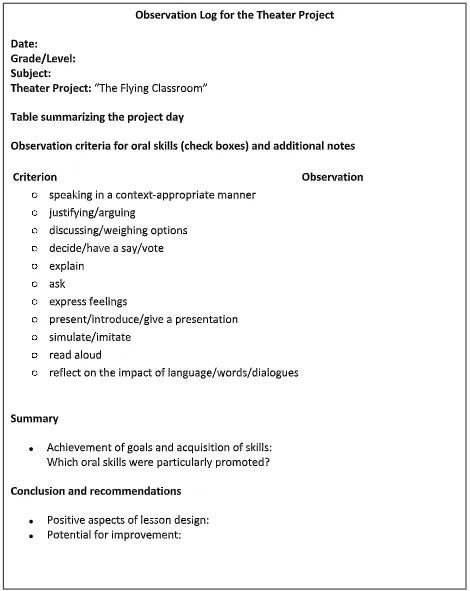
Observation log for the theatre session
During the first four days of the project, the focus was on collaboratively revising the scenes. The students paid particular attention to word choice and compared it with contemporary youth language. Group work fostered feedback and the ability to argue a point; decisions were made democratically. Collaboration worked well thanks to the use of the youth club, as small groups were able to work undisturbed. A clear daily structure with fixed phases and breaks ensured a productive atmosphere and transparency. The high attendance and positive working atmosphere thus contributed to learning success.
Written reflections on the project by all students
On December 20, 2024; following the performance, the class reflected on the theatre project in writing. All students present were asked to reflect anonymously and individually on the project and teamwork from their own perspective. A questionnaire was not used in order to obtain as open and broad a range of responses as possible. On average, one lined A4 page was submitted. Thus, 27 reflections formed the basis for the analysis. Following Mayring (2020); all reflections were first read as part of a qualitative content analysis, and then items mentioned at least twice in the reflections were inductively derived. A total of 16 response items were thus generated.
| Field | Value |
|---|---|
| Item 1 ‘Practised reading aloud’ | 42.9 % |
| Item 2 ‘Rewrote parts of the text’ | 50.0 % |
| Item 3 ‘Practised acting out scenes a lot’ | 42.9 % |
| Item 4 ‘Brought props along’ | 46.4 % |
| Item 5 ‘Had arguments sometimes’ | 28.6 % |
| Item 6 ‘Felt frustrated sometimes’ | 14.3 % |
| Item 7 ‘Coordinated a lot within the group’ | 35.7 % |
| Item 8 ‘Received help’ | 21.4 % |
| Item 9 ‘Received help from the group’ | 35.7 % |
| Item 10 ‘Helped the group’ | 32.1 % |
| Item 11 ‘The performance went well’ | 17.9 % |
| Item 12 ‘YouZe was a great venue’ | 17.9 % |
| Item 13 ‘Felt comfortable in the group’ | 53.6 % |
| Item 14 ‘The project was fun’ | 39.3 % |
| Item 15 ‘I learnt a lot’ | 14.3 % |
| Item 16 ‘Nervous before the performance’ | 17.9 % |
2: Coded items from the class’s written open-ended reflections ()
The results of the qualitative survey show that the theatre project had an impact in many areas. 42.9% of respondents reported on their own initiative that they had specifically practiced expressive reading through the project. An equal number of students (50%) felt they had actively participated in rewriting sections of text, which suggests a high degree of creativity and textual comprehension. Scenic rehearsals also played a central role (42.9%), while 46.4% contributed props, thereby supporting the aesthetic design. Conflicts arose among 28.6% of the group, which provided learning opportunities in the area of social interaction.
Furthermore, 14.3% reported experiences of frustration, which, however, are to be expected in the context of a challenging, cooperative project and can be utilized productively for educational purposes. A positive aspect worth highlighting is that 35.7% emphasized coordination within the group, thereby practicing democratic decision-making processes. Perceived support also played a major role: 21.4% received direct help from the authors, while 35.7% experienced support from the group. Conversely, 32.1% stated that they had actively helped others themselves—an indication of mutual responsibility and cooperative learning.
The performance itself was also reflected positively in the open-ended written feedback: 17.9% reported that the performance was a success. The importance of the out-of-school learning venue “YouZe” was highlighted by 17.9%, underscoring the relevance of alternative learning environments. A sense of belonging within the group was particularly strong (53.6%), as was enjoyment of the project as a whole (39.3%). Learning outcomes were also noted: 14.3% stated that they had learned a lot. Additionally, 17.9% mentioned that they had been very nervous before the performance but that everything had worked out in the end—an indication of increased self-confidence.
Overall, the survey demonstrates that the project extended far beyond literary skills. In addition to training in reading fluency and text analysis, a wide range of social and emotional learning opportunities emerged that had a positive impact on the students’ collaboration, creativity, and self-efficacy. The survey results make it clear that “feeling comfortable in the group” (53.6%) was the highest priority. This result can be understood as an expression of successful social cohesion, which arises within the framework of participatory learning forms and is of central importance for sustainable learning processes.
At 50%, “rewriting text passages” also achieved a top score. This is a classic example of productive text work, as it is anchored in literature pedagogy. The students not only engaged with the text receptively but also creatively transformed it into a new version—a central element of performative literature education.
The use of props (46.4%) points to the aesthetic-performative dimension of the project. Learners took responsibility for the design and staging, thereby enabling aesthetic learning in the sense of an action- and experience-oriented approach.
The items “Expressive Reading” and “Scenic Rehearsal” (42.9% each) also highlight the promotion of oral-performative skills. These are significant not only for literary expressiveness but also for personal development, as they strengthen self-confidence, language awareness, and presentation skills.
Overall, the results confirm that the project combines central principles of contemporary literature pedagogy: reception and production, as well as performative and social learning. It succeeded in translating literary content into an experience-oriented setting that equally fostered the students’ cognitive, creative, and social skills.
Written reflection from the class’s perspective
The students held an open feedback discussion in class about the project. The results were recorded by the class representatives and then summarized into a report for this article:
“After the fall break, Class 6c spent eight weeks working on a project at ‘YouZe.’ Thanks to our German teacher, the class no longer had traditional German lessons but instead took on a fun and exciting project. Over the course of those eight weeks, the class experienced a lot and learned a great deal. In the first few weeks, they spent a lot of time sitting together. They talked a great deal about Erich Kästner’s book and picked out the most important scenes. They walked around the youth club and wrote on the individual slips of paper for each scene whether they found that scene exciting, cool, boring, beautiful, or sad. The class got to choose which scene they wanted to be part of. The class learned not only to use their voices while reading but also to pay attention to their body language. Some groups read the scene exactly as it was written, while others rewrote it in youth slang or even made up the scene entirely.” [No linguistic corrections; anonymization has been applied, translated]
The class’s reflection shows that they rated the project overall as conducive to learning and successful. Above all, they highlighted the collaboration with extracurricular partners and institutions such as the youth club as beneficial. It also becomes clear how collaboratively and democratically they made decisions regarding the staging process, from the initial idea through to the performance.
Conclusion and outlook
The project aimed to implement a participatory theatre project to promote reading, (re)writing, and acting based on Kästner’s “The Flying Classroom,” which, through a productive engagement with Kästner’s work in the form of a staged reading, triggers not only literary but also social learning processes.
Through cooperative and individual work, the students developed both creative competencies and tangible social skills, which were evident in the collaborative work phases, joint discussions, and individual reflections. In this way, the project directly ties in with Kästner’s pedagogical understanding of literature as a school of life (see Chapters 1 and 2). Furthermore, it becomes evident that linking school curriculum content with extracurricular engagement can unlock significant learning potential. Through the collaboration of various educational stakeholders, a space was created in which theory and practice naturally intertwine.
This model opens up perspectives for future educational initiatives, even if structural adjustments to everyday school life are necessary. Thus, project work of this kind offers an opportunity to achieve not only subject-specific but also social learning through a variety of democratic participatory processes. However, this requires collaboration with extracurricular institutions and a flexible class schedule. In the spirit of Kästner, it can be summarized as follows: Lasting impact arises where literary education is combined with lived practice— “There is nothing good except: you do it.” (Erich Kästner in Reich-Ranicki, 1998a, p. 127, translated). In this way, the project underscores the educational theory assumption that literary education goes beyond mere text reception and, as an action-oriented practice, can make a lasting contribution to the development of character and values.
Despite the findings from the Kästner Reading Theatre project, certain limitations should be borne in mind when interpreting the results. The study was conducted within a single school class and involved a relatively small sample of pupils. Consequently, the results cannot be generalized to all educational settings, as different school environments and pupil groups may influence the outcomes of theatre-based reading projects. The duration of the intervention was limited to a short project period. Reading proficiency and social learning processes typically develop over longer periods, meaning that potential long-term effects of reading theatre may not be fully reflected in the results of this study.
A further limitation concerns the assessment of reading competence. Theatre-based learning emphasizes expressive reading, interpretation and cooperative interaction, which are not always captured by standardized reading tests. Some improvements observed during the project were therefore based more on qualitative observations than on purely quantitative measurements (Giera, 2025d). Furthermore, the project focused on a specific literary work by Erich Kästner. The themes of friendship, cooperation and responsibility present in this text may have influenced the pupils’ engagement in the theatre activities. Other literary texts could therefore lead to different learning experiences and outcomes. Future research involving larger sample sizes, longer interventions and a combination of qualitative and quantitative research methods could provide further insights into the potential of reading theatre to promote literacy and social interaction in inclusive educational settings.
The added value of the theatre project presented here, in a global context, lies in the fact that traditional young adult novels often deal with universal themes such as friendship, justice or responsibility, regardless of when they were written. The themes explored in young adult dramas are understandable across cultures and enable learners from different cultural backgrounds to find common ground. When such texts are used in inclusive learning settings, all pupils – regardless of their individual circumstances – can share in literary experiences together. Methods such as reading theatre not only promote reading skills but also cooperation, literary discussions, empathy through identifying with the characters and roles, and cultural understanding. In this way, inclusive work with traditional young adult novels combines literary education with social and cultural learning processes and supports key objectives of global education.
We would like to thank the ‘Kinder seid Kinder’ Foundation for its financial support of the theatre project. We would also like to thank the Soltau youth club for providing the space and for the games and snacks offered during writing breaks. In addition, we would like to thank “Filzwelt felto” and the “Spielmuseum Soltau” for providing the performance venues.
This study was conducted in accordance with the Declaration of Helsinki. Informed consent was obtained from all participants, and confidentiality was maintained throughout the study.
Conflict of Interest
Ethical Approval
Not applicable
Data Availability
Funding
This work did not receive any external funding.
References
Cite this article
Related Research

Special Issue
Launch a focused special issue to highlight research, emerging trends, and expert insights in your academic field.