




IntelliPaper
Abstract
Everyone recognizes the value of information and the significance it represents in various aspects of life, particularly for marginalized or vulnerable groups in special circumstances, such as widowed and divorced women. The current study was conducted to fill a gap left by a lack of adequate research on the informational behavior, search patterns, and needs of Egyptian divorced women. Using a qualitative, exploratory approach guided by grounded theory, data was gathered in December 2024 through focus group interviews with 45 divorced women across different administrative regions in Egypt: North Egypt (Alexandria), Middle Egypt (Cairo), and Upper Egypt (Qena). The findings indicate that the average age of respondents ranged from 40 to 50 years, with a medium to high level of education (51.1% holding a BA degree), and an average monthly income between 1,000 and 2,500 EGP. While 71.1% of the participants successfully identified their information needs, their requirements varied considerably, focusing heavily on health care (73.3%), childrearing/education (53.3%), legal/custody rights, and securing suitable employment (48.9%). To satisfy these needs, the vast majority (84.4%) actively utilized various sources and channels, strongly preferring undocumented oral sources (family, relatives, friends, and peers) via face-to-face communication, mobile phones, or social media platforms (WhatsApp, Facebook, and YouTube), while public, school, and mosque libraries were underutilized. Major barriers to information access included financial and time constraints, lack of digital research skills, computer illiteracy, physical and emotional fatigue, and the persisting social stigma associated with divorce in conservative Egyptian society. This study provides critical insights for policymakers, advocates, and civil society organizations to design targeted information support systems and empowerment programs for divorced women in Egypt.
Explore Digital Article Text
Introduction
Regardless of their beliefs, attitudes, jobs, or living conditions, everyone in this world recognises the value of information and the significance it represents in various aspects of life. Everyone requires information, including those dealing with unusual circumstances and situations, such as widowed and divorced women. Everyone should have access to information so that they can better understand and manage their lives. People can become more aware of various life issues and more involved in their societies as they gain access to information (Mansour, 2017). The right to understand and exist is fundamentally connected to the right to access and utilize information for any purpose. Informed people can substantially enhance the quality of their lives and their communities (Ranawera, 2008). Unfortunately, many studies on various groups of information users in society have been conducted, but few of them on those who are in special situations and situations, such as divorced women and widows, have received insufficient attention, particularly from library and informatics professionals and specialists. Reasonable care and attention should be paid in assessing and understanding these groups’ information needs.
The current study was conducted to fill a gap left by a lack of adequate studies on the informational behaviour and search for various sources of information by Egyptian divorced women, as well as to assess their information needs. In comparison to other topics discussed in other fields of science in general and in the field of library and information sciences in particular, this study is considered novel in terms of the category chosen for the study, which has not been successful in identifying it, especially from an information standpoint, especially since they are a category, like any of the community groups representing a societal interest and a measure of importance. According to Mansour (2017), this category has received no research interest from researchers in the field of libraries and information at any level, whether governmental or academic. The study intends to investigate the needs of Egyptian divorced women in terms of their perspectives, motivations, attitudes, habits, and preferences, as well as the challenges they may face. Any findings from this study may raise awareness of the various circumstances and needs of divorced women, particularly their information needs, among advocates, policymakers, and civil society stakeholders interested in women’s issues in general and divorced women in particular.
The purpose and significance of the study
The purpose of this study is to identify the information needs and information-seeking behaviours of divorced Egyptian women. Despite the small sample size, this qualitative study is the first of its type at the local and regional levels to examine the information needs of Egyptian divorced women, as well as their behaviour in using this information, as well as how they use this information and the factors that affect them. The researcher is curious about this group of information seekers/users because he wants to shed light on people who are going through difficult times, such as divorce. Unfortunately, professionals interested in this field have never studied it in terms of understanding and assessing their information needs, as well as studying their information behaviour.
Study objectives
Derived from its primary objective, the subsequent research objectives are as follows:
To identify the information needs of Egyptian divorced women;
To determine the types of information sources and channels Egyptian divorced women are using;
To profile the information-seeking behaviour of Egyptian divorced women;
To identify the barriers, if any, met by Egyptian divorced women while using information.
Problem statement
Regrettably, experts and practitioners focused on women’s concerns, notably divorce, have insufficiently addressed women’s need for knowledge and tools to assist them in properly managing this challenge, especially if it is their first experience with it. This research aims to understand and assess the informational needs of women, the behaviours they employ to meet these needs, the challenges they may encounter in addressing this issue, and the resources they can utilise to overcome these obstacles.
Limitation of the study
This study examines the needs of divorced Egyptian women and the methods used to meet those needs. It focuses exclusively on Egyptian women, excluding those of other nationalities, particularly those experiencing divorce for the first time. Unfortunately, the small sample size may limit the generalizability of the study’s findings, especially given the unique social circumstances of Egyptian society in general and Egyptian women in particular.
Definition of terms
Divorce
Divorce (also known as dissolution of marriage) is the process of terminating a marriage (Encyclopedia Britannica, 2018).
Information Needs
The concept of information needs is frequently perceived as originating from an indistinct awareness of utilized resources and culminating in the discovery of information that yields insights and significance (Kuhlthau, 1993). Hepworth et al. (2002) see this idea as data; information and knowledge that can help people deal with problems and lead to better management of the condition and a better quality of life.
Information-seeking behaviour (ISB)
According to Boadi and Letsolo (2004), the concept of information seeking is the consequence of a felt information need by a user, who may then make needs upon formal and informal information sources or services to satisfy the needs.
The Arab Republic of Egypt
Egypt is one of the world’s oldest civilizations, with documented history dating back to around 4000 BC. It covers an area of approximately 386,662 square miles and has an estimated population of 107,770,524 (with an annual growth rate of 1.68%) (2022 estimate). Egypt is located in Northeast Africa on the Mediterranean coast, bordered by Libya to the west, Sudan to the south, and the Red Sea to the east (Infoplease, 2025).
Literature review
Divorce (also known as annulment) is the process of ending a marriage (Encyclopædia Britannica, 2018). It typically involves the annulment or reorganization of the legal duties and responsibilities of the marriage according to the law of the state or country involved (Federal Arbitration Act (FAA) and the Application of the Doctrine of Separation in Federal Courts (1968)). As Encyclopædia Britannica (2018) notes, divorce laws vary considerably around the world, but in most countries, divorce is a legal process requiring the approval of a court or other competent authority and may involve matters of property distribution, child custody, spousal support, visitation rights, parental care, child support, and debt division. In most countries, monogamy is required by law, so a divorce allows either former spouse to marry another person.
According to Herre et al. (2025), divorce rates vary considerably globally across geographic regions, cultures, and legal systems. While these rates peaked in the 1990s and have generally stabilized or declined in the Western world, regions such as Eastern Europe, Central Asia, and parts of the Americas still see approximately 40% to 50% of marriages end in legal separation. Divorce rates are typically measured as the “crude rate” (divorces per 1,000 people annually) or as the percentage of marriages ending in divorce over time. North Macedonia has the highest crude divorce rate in the world at 9.6 divorces per 1,000 people, followed by Liechtenstein at 4.9 per 1,000. Portugal, Spain, and Luxembourg also exhibit astonishing rates, with analysts suggesting that between 79% and over 90% of marriages ultimately end in divorce, largely driven by trends favoring cohabitation over marriage. The lowest divorce rates in the world are typically found in conservative societies where marriage is closely tied to culture and law. Sri Lanka has the lowest rate globally, at 0.15 divorces per 1,000 people, followed by India, which is known for its low divorce rate, with less than 1% of marriages ending in divorce. Countries like Vietnam and Guatemala also have extremely low rates, around 0.2 divorces per 1,000 people.
Divorce in Egypt: an overview
Discrimination in Egypt’s divorce system begins long before a woman files for divorce; it begins with the marriage itself. Many women in Egypt are forced into marriage against their will, often before reaching adulthood. While Egyptian marriage contracts may include clauses guaranteeing certain rights and equality in obtaining a divorce, many women are not informed of their right to negotiate these clauses and are often excluded from the negotiation process. Ending her marriage further restricts a woman’s autonomy and choices. While men seeking a divorce are not required to go to court, women must navigate a complex, burdensome, costly, and lengthy divorce system to dissolve their marriages. Ultimately, a woman must choose between a protracted divorce based on proving fault, which allows her to retain her financial rights (the authorities can collect spousal and child support), or a divorce based on relinquishing her rights (khul’). (Human Rights Watch, 2024) Divorce in Egypt is governed by the Personal Status Law, which is based primarily on Islamic Sharia and is regulated mainly by Laws No. 1 of 2000, No. 25 of 1920, and No. 25 of 1929, as amended. Divorce cases are referred to the competent family courts. The two main legal methods for ending a marriage are divorce (initiated by the husband) and khul’ (initiated by the wife). It should be noted that a woman may also file for divorce based on a fault claim.
The Central Agency for Public Mobilization and Statistics reports that Egypt’s divorce rate rose by 83% from 1996 to 2017. The rate was 1.2 per 1,000 marriages from 1996 to 1999 and 2.2 per 1,000 marriages in 2015. Annually, roughly 200,000 married couples dissolve their marriages (Reda, 2019). Research indicates that 40% of marriages terminate within the initial five years. In 2017, divorce rates in Egypt varied between 39.3 and 60.7 percent, contingent upon rural or urban settings.
A divorce case is filed in Egypt every four minutes, according to the Central Agency for Public Mobilization and Statistics (CAPMAS). According to official statistics, Egypt has the highest divorce rate in the world, with more than 250 divorces per day. Among the consequences of family separation are the emergence of over 4 million divorced women and 9 million children. According to the Central Agency for Public Mobilization and Statistics report, the number of divorce cases in the country increased to 18.6 thousand in August 2018, up from 18.1 thousand in the same month of 2017, and there were an additional ten thousand cases of divorce initiated by women in exchange for compensation before family courts in various provinces during the same month.
The economic crises that have affected Egypt and their profound effects on society have resulted in a significant increase in the divorce rate. This has prompted inquiries into the correlation between the divorce phenomenon and the prevailing state of poverty, which has been exacerbated by these crises. The divorce rate in Egypt has increased as a result of poverty, rampant unemployment, inadequate living conditions, elevated prices, and discontent (Ahmed, 2019).
As previously mentioned, there is a lack of definitive literature concerning the population of this study at local, regional, or international levels, rendering this research a pioneering and singular contribution to the field of information-seeking behavior. Although there are several studies concerning divorced women, including the causes and issues related to divorce, no comprehensive study has yet examined these women’s informational needs and behaviors. Consequently, no literature pertinent to this subject was identified.
In a recent study, published by the Egyptian Institute for Studies (EIS) on the frightening spread of the divorce phenomenon in Egypt, Ahmed (2019) stated that reactions to this phenomenon ranged from denial to ignorance to dismissal. Members of the National Council for Women underestimated and marginalised the problem, failing to take any action to address it. In light of the contradictory statements, the House of Representatives (Parliament) received several briefing requests to discuss the divorce figures reported in the media. The political leadership also began to discuss the phenomenon and directed the government to take decisive action against it in order to address the alarming ramifications for Egypt’s conservative society.
Concerning the role of the social safety net in meeting the needs of divorced women in Saudi society, Al-Najai (2017) attempted to clarify the concept of social welfare, including its forms and stages of development in human society, as well as its characteristics, objectives, functions, relationship to social work, and policies in Saudi society. She also classified human needs and investigated the function of social workers in attaining social security. She also discussed the need for government social safety nets for divorced women. The study found that charity groups’ operations have shifted from just providing cash assistance to delivering direct services that foster self-reliance through skill development, education, and training; a phenomenon known as socioeconomic empowerment. These services include training and rehabilitation programs that help people transition from assistance users to productive members of society, as well as family health care by providing medication and therapy and supporting needy families in securing housing and other essentials.
Duffy (1995) attempted to assess the health-seeking behaviour of divorced women who were single parents, as well as the facilitators and barriers to health behaviour. Data was collected from 148 women with children one year after the divorce using a questionnaire and a phone interview. Women lead healthy lifestyles, according to the findings, with nearly half reporting that their health has improved since their divorce. Education was found to be a significant and positive predictor of overall health behaviour scores. The facilitator and deterrent categories of expected healthy behaviour were the amount of stress, control over time, feelings of physical and mental well-being, personal appearance, material resources, and social support.
From 1996 to 2014, Ortega-Diaz (2020) investigated the relationship between individual poverty and marital status (divorced, separated, in free marriage, or legally married) in Mexico. The study found that women exhibit more signs of poverty compared to men, particularly among divorced individuals. This disparity may stem from legal stipulations that assign assets acquired during marriage to the person who works and receives compensation. Since many women are employed in unpaid sectors, men typically retain ownership of these assets. Ignoring these legal realities can result in poverty and perpetuate gender bias following divorce. Additionally, administrative records of marriage and divorce lack crucial information regarding the backgrounds of husbands and children, as well as their employment status before and after marriage. Consequently, these details must be documented to aid lawmakers and decision-makers in addressing gender bias stemming from rigid laws. Ryan and Thomas (2008) conducted a qualitative study to explore the challenges and opportunities for growth faced by divorced women, gaining insights from personal interviews with ten women from similar backgrounds. These interviews highlighted several themes, including reflections on dating, married life, self-perceptions, levels of support, family dynamics, personal emotions, personal growth, and future aspirations. The findings were organized using Mezirow’s (2000) theory of transformational learning to better understand growth during transitional phases.
Data analyses
The researcher conducted an analysis of this qualitative study using grounded theory, which is recognised as the most widely used method and is well-suited to the nature of qualitative research. Grounded theory was developed by Glaser and Strauss (1967) as a methodology for systematically deriving theory from data gathered through social research (Büscher, 2007). In essence, it is a qualitative approach for examining a specific phenomenon or process and formulating new theories based on real-world data collection and analysis. One of the most notable advantages of employing grounded theory is that the final outcome authentically represents real-world situations. Grounded theory is based directly on insights from real-world participants in natural settings, employing methods such as in-depth interviews and observations, which yield more accurate depictions of reality. In contrast, other research methods often occur in less natural environments, such as research laboratories. The researcher concentrated solely on the essential data for analysis, as the focus should be on the most significant information. Consequently, the analysis was restricted to data closely aligned with the research questions, leading to the exclusion of other information, which could constitute half or more of the total data. Following the initial analysis, the data was broken down into numerous small encodings, which were then synthesised into a few larger subjects. This synthesis was achieved by grouping similar or convergent encodings into a single category referred to as a “theme” (Figure 1).
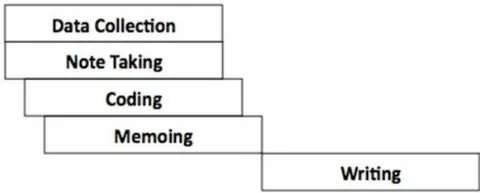
The process of developing a grounded theory
Research questions
Based on its objectives, the following questions were decided:
RQ1. What are the information needs of Egyptian divorced women?
RQ2. What types of information sources and channels are Egyptian divorced women using?
RQ3. What is the information-seeking behaviour profile of Egyptian divorced women?
RQ4. What are the challenges, if any, met by Egyptian divorced women while using information?
Research methodology
Research design
To align with the study topic, a qualitative research methodology (Creswell, 2018; Denzin, 2019) was employed to generate a specific and accurate interpretation of participants’ responses. Creswell (2012) and Gay and Mills (2015) emphasize that the purpose of qualitative research is to gain an in-depth understanding of the situation at hand. This topic is complex, as is the associated data collection tool. Sampling the population, particularly divorced women in conservative societies like those in the East, especially Arab and Egyptian societies, poses challenges. Establishing direct dialogue with these women can be difficult due to societal stigma and the reluctance of many to disclose their social status, which includes their divorce. Divorced women often become subjects of societal “discussion” and “questioning.” To confront this systemic issue, the researcher sought the assistance of a group of female friends and his daughters-in-law, who had connections with divorced women in Egypt.
Research technique
Using the snowball approach, the researcher managed to connect with a relatively small number of divorced women. Due to this reliance on a limited sample size, the study may be characterised as exploratory. To encourage participation among divorced women, particularly those from low-income backgrounds, some in-kind assistance was provided. Following an initial introduction of the research team and the study’s objectives, the researcher organised four focus groups to interview the participants. According to Morgan (1996), focus groups serve as a valuable tool for exploratory research and can help test preliminary ideas regarding research design. This method has been extensively employed to gauge participants’ perceptions in a specific area of study (Chase, 2000). Furthermore, focus groups can uncover many issues that other methods, such as surveys, often struggle to identify accurately. In this study, focus groups were primarily utilised to enable participants to express their opinions freely about their information use.
Sampling
Several training sessions were conducted as a result of the low education levels of many participants and the general lack of awareness among the participants. In order to facilitate the research, the principal investigator employed two female research assistants and three female interlocutors. The study included 45 participants. It was conducted without any governmental or regulatory approval, as participation was voluntary, particularly given the participants’ ages, which ranged from under 25 to 55 years. Participants were divided into four groups of equal size, as far as possible, according to Egypt’s administrative divisions, including two non-contiguous groups in the political capital (Cairo), due to its larger size compared to other Egyptian cities, as shown in Table 1.
| Groups | N |
|---|---|
| Group 1: The North Egypt (Alex.) | 13 |
| Group 2: The Middle Egypt (Cairo) | 11 |
| Group 3: The Middle Egypt (Cairo) | 12 |
| Group 4: Upper Egypt (Qena) | 9 |
| Total | 45 |
The distribution of respondents’ groups
According to Krueger and Casey (2008), the sample size mentioned is appropriate for the study. The number of participants in each group was easily controlled. The interviews took place in December 2024 and lasted between seventy and one hundred minutes. The duration of these sessions, as noted by Gibbs (1997), was reasonable. Additional questions were asked during the personal interviews to clarify any vague responses. The interviews were digitally recorded, and manual notes were also taken.
Findings of the study
The personal dialogue questions posed to the participants formed the foundation for the findings of this study. Additionally, the respondents’ answers were utilised to address the four questions of the study after being filtered. The findings were then presented alongside the extracts provided by the respondents, which were shared without any distortion or modification that could potentially impact the understanding of the findings. The researcher has only revised these excerpts to ensure consistency with the organisation and language of the study. To avoid repetition of the respondents’ extracts, each theme or idea was assigned a distinctive code. This approach was implemented to clarify the beneficiaries’ responses to each of the four study questions while preventing any overlap or confusion.
The researcher then categorized the symbols and codes according to their similar content and meanings, while also identifying those with different content. For example, each participant expressed their opinions and reservations on the topic of “information needs of divorced women.” Although these differences were not significant, the variations in the responses were clear. The researcher utilized the established codes to compile these responses for further analysis. The researchers implemented a thematic approach to categorize the data, as per Braun and Clarke (2006).
Respondents’ demographic characteristics
The average age of respondents fell between 40 and 50 years, as indicated by the demographic profile of the study, which includes factors such as age, education, and income. Generally, respondents reported an average monthly income ranging from 1,000 to 2,500 EGP, categorized as average to above average, along with a medium to high level of education. Figure 2 shows that the age distribution of respondents spanned from under 25 to over 55 years. The age group of 46 to 50 accounted for just over 25% (26.7%) of the population, while 15.6% were aged 41 to 45, and 13.3% were 55 or older.
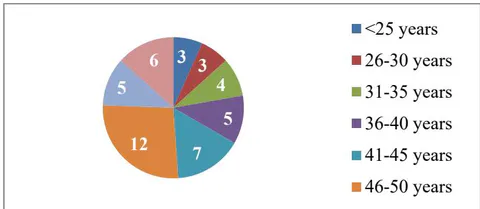
Respondents’ age
The study revealed that the majority of respondents (51.1%) possess a BA degree, as illustrated in Figure 3. This is followed by more than one-quarter (26.7%) of them who have completed high school or a diploma, 11.1% who are uneducated, 6.7% who have completed primary school, and 4.4% who have no formal education.
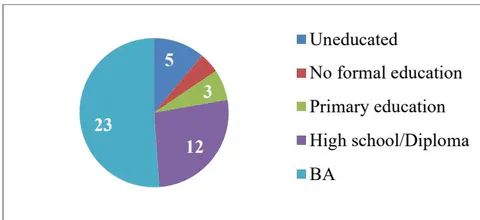
Respondents’ education level
According to the study, respondents’ monthly income ranged from 1000 to 3500 Egyptian pounds (1 USD = 50.23 EGP, based on the January 25, 2025 exchange rate) (Almasder.com, 2025). One-third of respondents (33.3%) earn less than 1000 to 1500 EGP, slightly more than a quarter (26.7%) earn between 1500 and 2000 EGP, and nearly a quarter (22.2%) earn between 2001 and 2500 EGP (Figure 4).
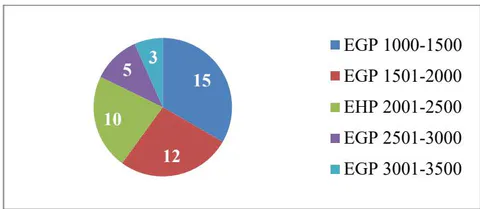
Respondents’ monthly income
Respondents’ assessment of information needs
RQ1. What are the information needs of Egyptian divorced women?
The results of the study suggest that only slightly more than two-thirds (71.1%) of respondents have successfully identified their information needs, while nearly one-quarter (22.2%) are unaware of how to do so. The results also indicate a substantial degree of variation in the information needs of participants, particularly in the context of personal and family matters. Additionally, more than half (53.3%) of the participants expressed a desire for information that could assist them in managing associated costs, as well as in raising and educating their children and supporting them psychologically, socially, and emotionally. In the same vein, numerous participants identified the pursuit of pertinent information as a means of securing suitable employment, with nearly half (48.9%) expressing a desire for a more advantageous position in order to enhance their financial and economic status. Furthermore, over two-thirds (73.3%) of participants expressed interest in their health information requirements, while over one-third (37.2%) desired to broaden their professional networks. Additionally, nearly 25% (26.7%) expressed a desire to participate in organizations that would assist in the defense of their rights and the mitigation of the social stigma they encounter.
“I am uncertain about how to distinguish or separate my needs from one another, as they overlap”.
A divorced woman, aged 46 to 50 years.
“I do not perceive any complications; everything appears to be in order.” I do not actively pursue information to resolve my issues. Consequently, I do not believe that I apply it in a formal manner when addressing these matters.”
A divorced woman, aged 31 to 35 years.
“While searching for information, I primarily seek to obtain legal rights and custody rights.”
A divorced woman, aged 35 to 40 years.
“I intend to satisfy my information requirements, particularly in terms of establishing social connections, through the utilisation of social media platforms.”
A divorced woman, aged 26 to 30 years.
“I require social support.” Consequently, I am in search of online meetings, gatherings, seminars, or awareness lectures that are specifically designed for divorced women, in order to connect with others who are in similar circumstances.”
A divorced woman, aged 46 to 50 years.
“I am in search of information that will help me establish social networks in order to increase my self-assurance and acquire more experience.”
A divorced woman, aged less than 25 years.
“I am in search of job websites to help me locate employment opportunities that will allow me to manage my life and provide for my family, while also alleviating my loneliness.”
A divorced woman, aged 26 to 30 years.
“I am inquiring about organizations that provide assistance to divorced women, advocate for their rights, and strive to alleviate the social stigma associated with divorce.”
A divorced woman, aged 46 to 50 years.
“I do not have a predetermined strategy for my actions or decisions, and I do not believe it is necessary to calculate my needs using paper and pen.”
A divorced woman, aged less than 25 years.
Types of information sources and channels use by respondents
RQ2. What types of information sources and channels are Egyptian divorced women using?
A significant majority (84.4%) of respondents made effective and frequent use of various information sources and channels, according to the study’s findings. This was acknowledged, despite the fact that the researcher observed that the illiteracy of a small number of the remaining respondents (11.1%) impeded their ability to utilise these sources. As a result, this affected the methods by which these resources could be accessed. Electronic platforms, social networking sites, and oral communications with others, such as other divorced women, family members, relatives, friends, neighbours, and occasionally coworkers, were among the most significant sources and channels identified. The study also discovered that three types of libraries—namely, the public library, the school library, and the mosque library—were in use, albeit to a limited extent.
“I frequently consult books on Egyptian personal status laws, with a particular emphasis on those that pertain to divorce and the rights of divorced women”.
A divorced woman, aged 26 to 30 years.
“I rely on electronic information sources for their convenience, speed, and accessibility from any location at any time”.
A divorced woman, aged 26 to 30 years.
“I frequently utilize the Internet to establish connections with individuals and organizations that share my interests, including WhatsApp and Facebook”.
A divorced woman, aged 31 to 35 years.
“I engage in newsgroups and email mailing lists (listservs) that concentrate on the rights of divorced women, including WomansDivorce and GoMomGo”.
“I utilize online forums to acquire extensive information and enhance my social network”
Two divorced women, aged 31 to 35 years.
“I am in search of websites that concentrate on topics that are pertinent to divorced women, such as the National Council for Women and the Egyptian Fatwa House, which offer authoritative legal opinions and rulings in Islamic law. As a divorced woman, I wish to consult and inquire about my rights”.
A divorced woman, aged 41 to 45 years.
“I utilize YouTube videos to locate recreational programs and topics concerning divorced women”.
A divorced woman, aged 26 to 30 years.
“Educational seminars focused on women’s rights, particularly for divorced and widowed individuals, in conjunction with diverse social activities, have facilitated the expansion of my communication network. I aim to enhance relationships with fellow divorced women, as we possess numerous shared interests and challenges”.
A divorced woman, aged 41 to 50 years.
“The public library, which I frequented with my daughter, provided an abundance of resources that enhanced my comprehension of life. I frequently depend on literary and historical texts because of their pertinence to my role as a high school educator”.
A divorced woman, aged 36 to 40 years.
“I occasionally visit my son’s school library, which provides a diverse array of resources and collections to assist him with his homework and school projects”.
A divorced woman, aged 31 to 35 years.
“Despite the mosque library’s limited collection, my association with the mosque as a place of worship and prayer has served as an incentive for me to continue utilizing its resources, particularly for the religious knowledge I wish to impart to my young children”.
A divorced woman, aged 50 to 55 years.
“I am endeavoring to acquire computer skills in order to assist my children with their homework; however, my work schedule presents a challenge.”
A divorced woman, aged 35 to 40 years.
“I am assured in advocating for the utilization of electronic information resources. I acknowledge the necessity to enhance my proficiency in utilizing computers and the Internet”.
A divorced woman, aged 36 to 40 years.
Respondents’ information-seeking behaviour profile
RQ3. What is the information-seeking behaviour profile of Egyptian divorced women?
The findings revealed the extent to which these divorced women valued the role and significance of information in their lives, as well as the profile of respondents’ information-seeking behavior. The primary reason for utilizing this information was to meet basic needs, including food, drink, clothing, and raising children, according to more than three-quarters (82.1%). The study’s results indicated that oral sources were the preferred method of information acquisition for nearly all divorced women. In addition, a substantial number of divorced women (91.1%) concurred that the most significant channels for verbal communication were family, relatives, friends, neighbors, and peers, whether through direct interactions or electronic communications via mobile phones or social media platforms such as WhatsApp.
“I acknowledge the critical role that information sources play in assisting me in addressing my needs as a divorcee”.
A divorced woman, aged 26 to 30 years.
“My objective is to alleviate the challenges of life by providing information, particularly in the form of entertainment, in addition to assisting me in managing them”.
A divorced woman, aged 31 to 35 years.
“I request information regarding fundamental elements of existence, encompassing sustenance, beverages, apparel, education, and health”.
A divorced woman, aged 41 to 45 years.
“I utilize information sources spontaneously. My family, relatives, and neighbors serve as my principal sources of information, especially regarding the essentials of life and the upbringing of my three children”.
A divorced woman, aged 35 to 40 years.
“Among the most prevalent sources of information and channels that I follow are friends and peers”.
A divorced woman, aged 41 to 45 years.
“I favor verbal communication with others to ascertain my informational requirements and disseminate information, both in my personal and professional spheres”.
A divorced woman, aged 51 to 55 years.
“Mobile technology, such as mobile phones, has facilitated my communication with my family, friends, colleagues, and family doctor”
A divorced woman, aged 25 to 30 years.
Respondents’ difficulties in using information
RQ4. What are the challenges, if any, met by Egyptian divorced women while using information?
Respondents encountered numerous obstacles that hindered their capacity to apply the information they were seeking. A number of individuals struggled with limited research skills, particularly in electronic sources, and some exhibited a lack of enthusiasm during the search process. Furthermore, the access and utilization of a variety of information sources by these divorced women were significantly impacted by financial constraints and time constraints. These obstacles resulted in a reduction in their ability to comprehend or appreciate life, as well as a decreased reliance on information for problem-solving. A general lack of understanding regarding the role and importance of information in decision-making and problem-solving, societal perceptions of divorced women, physical exhaustion, and psychological stress were among the other difficulties.
“I lack the energy and enthusiasm that I consider to be essential for the effective search of a variety of information sources”.
A divorced woman, aged 51 to 55 years.
“When I consider and pursue the necessary information, I face a multitude of significant obstacles, including illiteracy, time constraints, and budget constraints”.
A divorced woman, aged 51 to 55 years.
“The capacity to capitalize on these sources is significantly impeded by the imposition of stringent restrictions on movement in order to locate information sources”.
A divorced woman, aged 46 to 50 years.
“The capacity to search for information is impeded by physical exhaustion and work-related stress”.
A divorced woman, aged 35 to 40 years.
“The perception of me as a divorcee and my feelings of frustration influence my utilization of a variety of information sources”.
A divorced woman, aged 46 to 50 years.
“I am unable to devote a significant amount of time to the pursuit of information; instead, I distribute it to my friends and colleagues”.
A divorced woman, aged 31 to 35 years.
“My age presents a challenge for me in terms of conducting my own research and searching for information fluently”.
A divorced woman, aged 51 to 55 years.
Discussion
The importance of information in our daily lives is beyond dispute. Due to the significance of knowledge in decision-making and problem-solving, it is imperative that all individuals, particularly those who are confronted with challenging circumstances or challenges, such as divorced women and widows, have access to information. It is imperative to consult sources that can provide this information when the need arises, taking into account the necessity, availability, and capacity of each source. As Case (2007, p. 333) has observed, “An information need is triggered when an individual perceives a problematic situation or information gap, in which their internal knowledge and beliefs, as well as their model of the environment, are unable to provide a path to achieving their objectives” .
The objective of this study is to examine the diverse information-seeking behaviors that respondents employ to satisfy their unique informational requirements. This qualitative study is the first of its kind at the local and regional levels to investigate the factors that influence such needs and behaviors, to the best of my knowledge, and based on relevant literature. The researcher’s objective is to provide support to individuals in difficult circumstances, particularly those associated with divorce. Therefore, this type of information search is essential. Regrettably, there has been a limited amount of research conducted in this field, as professionals have not been able to adequately identify or assess the information needs of these individuals or analyze their information-seeking behaviors.
Divorce in Egypt is regulated by the Personal Status Law, which is primarily based on Islamic Sharia, and is governed by Laws No. 1 of 2000, No. 25 of 1920, and No. 25 of 1929, as amended, according to Hosny (2021). These laws protect the rights of women, such as deferred dowry (as specified in the marriage contract or verified by witnesses), divorce compensation (approximately equivalent to 24 months’ alimony), and maintenance during the waiting period (approximately equivalent to 3 months’ alimony). Children are granted the following rights when they are involved: the provision of marital housing or a housing allowance for the children, alimony for the divorced mother (in exchange for child custody), a breastfeeding allowance, child support, medical expenses for the children, educational expenses for the children, and costs for summer and winter clothing for the children.
According to the results of this investigation, the respondents’ average age ranged from 40 to 50 years. They had a high to medium level of education, and their average monthly salary was between 1,000 and 2,500 EGP ($19.90 and $49.80 as of January 2025). Given that the demographic characteristics of the majority of respondents indicated a “relatively” high level of education, one-third of them exhibited a remarkable capacity to identify their diverse information requirements. The value and significance of information in their lives were of interest to the majority, with over three-quarters indicating that it was crucial to them to meet basic needs such as food, clothing, and child-rearing. This is consistent with previous research, including that conducted by Orange et al. (2012), which demonstrated a positive correlation between education level and access to information. Almost all divorced women preferred oral sources when seeking information, which are frequently referred to as “informal sources,” verbal sources,” or “non-documented.” Numerous divorced women concurred that the most significant verbal communication channels were family, relatives, friends, neighbors, and peers, whether through direct interactions or electronic communications via mobile phones and social networking sites such as WhatsApp/WhatsApp. Oral communication enables individuals to express their narratives in their own words and voices, which reflects their comprehension. Social contacts and tradition are more conducive to this form of communication than other systems, such as libraries, as per Mohammed’s (2019) research. Several respondents expressed a lack of interest in utilizing libraries for the purpose of acquiring knowledge. The information requirements of Egyptian divorced women were found to be highly variable in this study, particularly in relation to their personal and familial requirements. More than half of the respondents expressed a desire for information to help them in the process of raising and educating their children. Furthermore, a significant number of respondents pursued pertinent information in order to identify suitable employment opportunities. Nearly half of the respondents expressed a desire for careers that would enable them to fulfill their life obligations or participate in social activities and self-actualization. Additionally, over two-thirds of respondents expressed a desire to pursue specialized health care, indicating that health knowledge is a critical information requirement.
The emphasis placed on specific needs by divorced Egyptian women is a result of their perception of the limited access to resources that are typically available to pregnant women. The World Health Organization (WHO) released a substantial study on November 9, 2006, that focused on the health needs and contributions of women. This research underscores the critical role of women in society and emphasizes the health requirements of women. It indicates that prejudice frequently induces feelings of disappointment in women regarding their communities and healthcare systems. Women are more vulnerable to poverty, limited job opportunities, part-time work, or informal sector jobs that lack health coverage, and they bear a greater financial burden than men due to their higher healthcare needs. The objectives of the analysis are to enhance the health outcomes of women by eliminating financial obstacles that obstruct their access to healthcare. Additionally, more than one-third of the respondents who participated in the survey expressed a desire to broaden their social circles and acquaintances. Many respondents frequently and effectively employed a diverse array of information sources and channels. The most significant of these were personal exchanges with others, including fellow divorced women, family members, friends, neighbors, and coworkers, as well as electronic and social networking sites. Additionally, respondents utilized three types of libraries: public, school, and mosque libraries, although to a lesser extent. The study participants encountered a variety of obstacles during their search for information, which impeded their capacity to apply this knowledge. A lack of interest in the research process, limited familiarity with information search skills (particularly in relation to electronic sources), and financial and time constraints were among the most significant obstacles that divorced women encountered when utilizing information. Many divorced women encounter obstacles that reduce their ability to rely on knowledge for problem-solving, life comprehension, or even enjoyment. A lack of awareness regarding the role and importance of information in decision-making, societal stigma surrounding divorced women, physical exhaustion, and psychological stress are additional obstacles. Razak et al. (2024) underscored the fact that the behavior of divorced women is significantly influenced by social and cultural stigmas in this context. In numerous traditional or patriarchal societies, divorced women are at risk of social condemnation, which necessitates them to be extremely cautious when gathering information in order to prevent social shame. Divorced women face a variety of obstacles and challenges, such as social, familial, financial, emotional, and psychological issues, as per Rathi and Pachauri (2018). Research has demonstrated that divorced women who have strong family support encounter fewer challenges than those who do not. Mansour’s research (2015 and 2017) identified time constraints, lack of awareness and education, illiteracy, and financial hardship as the most significant barriers faced by domestic workers and beggars in Egypt when seeking information. These findings are consistent with these findings.
Conclusions and recommendations for further research
This is a rare study, possibly the sole one, that investigates the information-seeking behavior of Egyptian divorced women. This is the inaugural publication of its kind to systematically address this population at the local and regional levels. This is supported by the limited literature identified in the investigation. This study systematically aims to identify the characteristics, needs, and behaviors related to information within this group, as well as the factors influencing its trends and the obstacles hindering the utilization of various information sources for evaluation, ultimately resulting in recommendations for enhancing comprehension and surmounting these barriers. This study determined that the demographics of Egyptian divorced women were diverse. Their average age ranged from 40 to 50 years, they possessed a high to medium level of education, and their monthly income varied between 1,000 and 2,500 Egyptian Pounds (EGP). A significant percentage of divorced women in Egypt reported a lack of awareness regarding their information rights, and most were unable to manage their information appropriately. The study revealed considerable diversity in the informational requirements of divorced women, particularly regarding individual and familial needs, work-related activities, and the pursuit of improved employment opportunities. A significant number of divorced women preferred undocumented oral sources and frequently utilized informal channels of communication with relatives, peers, and employers, whether through direct interaction, face-to-face meetings, or mobile and social media platforms. Divorced women seek knowledge primarily to aid in responsibilities pertinent to their profession. A significant percentage of divorced women preferred oral or informal sources, such as interactions with peers, family, and friends, over written ones. Besides being a crucial resource, divorced women significantly depended on their accumulated experience. The primary issues included time constraints, illiteracy, psychological pressure, a detrimental social image, ignorance of fundamental rights — particularly information rights — insufficient financial resources, inadequate skills and training, and financial obligations. Divorced women constitute a demographic of information seekers/users who have not received adequate research attention, both from pertinent governmental bodies and from scholars focusing on this category of information users. This group of information seekers necessitates comprehensive research. According to the study’s findings and the current literature, further research is necessary to understand how respondents perceive, utilize, and evaluate information. Further research is required to examine the impact of barriers on the information utilization of these seekers. The study’s findings indicate that numerous respondents did not adequately engage with any form of library utilization. Consequently, further investigation is necessary to ascertain the reasons for their hesitance to utilize libraries in their quest for information. This study aligned with Mansour (2017) in advocating for the formulation of appropriate strategies for utilizing traditional and widely used information dissemination channels, including cultural performances and group discussions. Cognitive assistance entities should be developed to optimize the role of information in the lives of divorced individuals and promote their utilization. Undoubtedly, such support aids them in identifying and evaluating their cognitive requirements while fostering a more profound comprehension of life’s diverse challenges. This would also enhance their recognition of the contributions they make to their communities. To effectively manage a demographic and understand their genuine needs, it is imperative to possess current, reliable data and statistics concerning Egyptian divorce. It is recommended that some respondents’ understanding of their information use be bolstered through effective educational and cultural programmes that help them appreciate the importance of information in their lives. Ahmed (2019) asserts that the Egyptian Ministry of Social Solidarity ought to furnish prompt support to divorced women by disseminating specialized booklets addressing familial issues and solutions for married couples within government agencies, centers, hospitals, and other institutions. Moldovan (2014) asserts that divorce is a critical societal issue that requires global public awareness to mitigate its underlying causes. Precise and up-to-date information concerning this event is imperative. Likewise, sufficient information is essential to understand the divorced community and assess their informational requirements with discernment and integrity.
Conflict of Interest
The authors declare no conflict of interest.
Ethical Approval
Not applicable
Data Availability
The datasets used in this study are openly available at [repository link] and the source code is available on GitHub at [GitHub link].
Funding
This work did not receive any external funding.
References
Cite this article
Related Research

Special Issue
Launch a focused special issue to highlight research, emerging trends, and expert insights in your academic field.