

Article in Press
This article is currently in the Just Accepted phase. The final published version may have formatting changes or additional corrections.
Abstract
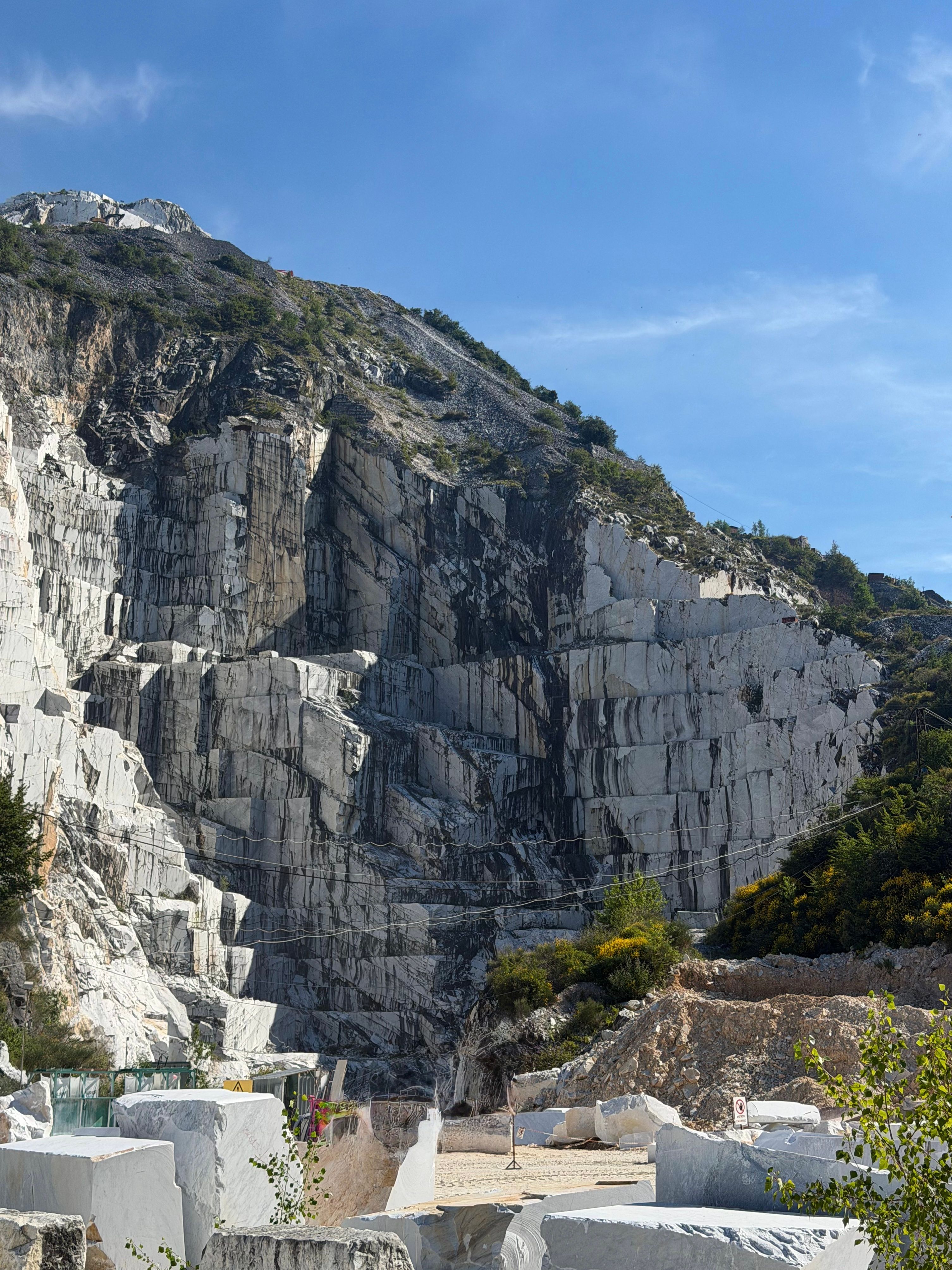
This study provides a comprehensive geological, historical, and architectural survey of the building and ornamental stones extracted from the Caprione Promontory (Ameglia, La Spezia, Italy), focusing specifically on Triassic Punta Bianca marble and the distinctive violet metabreccia known as Pietra del Corvo ("Crow Stone"). Although the marbles of Luni are traditionally associated with the main Carrara quarrying district, petrographic and structural analyses confirm that the Punta Bianca Unit represents an older Triassic carbonate succession. Initial quarrying activity dates to the Roman colonization of Luni, where the material was employed in public architecture, including the amphitheater, the Main Temple, and decorative pavements. Field surveys conducted by the Pro Monte Caprione Foundation demonstrate widespread medieval spoliation and architectural reuse of these lithologies across the Diocese of Luni following the city's decline. Significant occurrences are documented in Sarzana (Piazza Matteotti), the Monastery of Santa Croce at Bocca di Magra, the historic villages of Nicola and Castelnuovo Magra, the parish church of San Martino di Casano in the Parmignola Valley, and Via Guelfa in Carrara. Furthermore, systematic analysis confirms the 19th-century reuse of Punta Bianca marble in the restoration of the Florence Baptistery of San Giovanni following the Fabbricotti donation. These findings elucidate the historical trade, quarrying dynamics, and architectural dissemination of Punta Bianca stone from antiquity through the 19th century.
References
Related Research