

IntelliPaper
Abstract
Spodoptera litura is a serious cosmopolitan polyphagous pest of vegetables as well as pulse crops. Indiscriminate use of chemical pesticides has caused harm not only to non-target organisms, but have developed resistance against this target insect pest which has diverted the use of synthetic pesticides to botanical ones. In the present investigation, the crude solvent extracts of leaves belonging to diverse families were screened and tested for their antifeedant activity against Spodoptera litura by leaf disc no-choice bioassay method for 24, 48 and 72 hours. All leaf extracts tested showed varying degrees of antifeedant activity and maximum feeding deterrence was expressed by the hexane extracts of Vernonia cinerea (73.44%); Cassia fistula (76.48%); and Vernonia cinerea (78.69%) after 24, 48 and 72 hours of exposure respectively. Overall results indicated that, among the solvents tested, it was the hexane which should pronounced activity followed by diethyl ether; and among the plants tested, Cassia fistula, Jatropha curcas, Piper longum, Tephrosia purpurea and Vernonia cinerea were found to be promising with more prominence exhibited by Cassia fistula since all its extracts showed activity above 50%. Antifeedants mode of action were directed at the taste cells and the mechanism of action of antifeedants through which feeding inhibition was established in the present study was by inhibition of feeding through sensory perception, by the phytocompounds of the plant extracts providing an unpalatable taste to insects. Therefore, further studies on isolation and identification of the active antifeedant principle present in the promising plants will emerge as an additional tool for the management of Spodoptera litura.
Explore Digital Article Text
I. INTRODUCTION
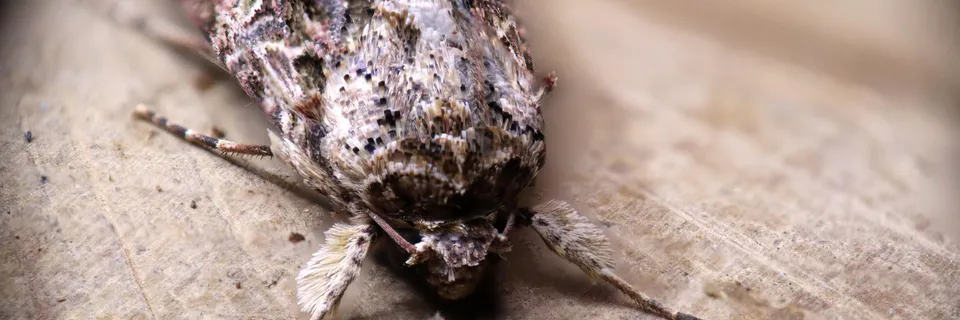
Insect pests and diseases are important limiting factors of agricultural production across the globe. Amongst the insect pests, Spodoptera litura is an important, serious, and dominant, cosmopolitan, polyphagous pest (Sahayraj et al., 2008; Gokulakrishnan et al., 2012), which causes 60% of crop losses worldwide. It is a strong flier and disperses long distances annually and given its migratory nature, it spreads rapidly from one ecosystem to another. Hence the incidences of this pest are seen throughout the year (Atwal and Dhaliwal, 1997). Known by common names like tobacco caterpillar, tobacco armyworm, tobacco cutworm, tropical armyworm, gram pod borer, oriental leafworm moth, cluster caterpillar, and cotton leaf worm, this notorious significant pest is a serious pest of vegetables as well as pulse crops. It affects more than 90 families of cruciferous vegetables, and initially feeds on vegetative parts and subsequently on immature pods and ultimately causes severe loss of production (Gao et al., 2004). It is found throughout the tropical and subtropical parts of the world, Southeast Asia,
Thailand, China, Japan, India (Dinesh et al., 2018; Datta et al., 2019), the Indo-Australian tropics and most Polynesian islands, and has a wide range of host, known to feed on 112 cultivated crops all over the world, of which 44 species are known from India. (Selvaraj et al., 2010). In India, Spodoptera litura feeds on 180 species of cultivated crops, pulses and some wild plants (Rao et al., 2008). The larval stages cause severe damage to a large number of crops including cabbage, castor, cauliflower, chilly, cotton, groundnut, lady's finger, tobacco, tomato, and various cruciferous crops (Chari and Patel, 1983; Niranjankumar and Regupathy, 2001; Rao et al., 2001; Krishnappa et al., 2010).
Indiscriminate use of chemical pesticides has caused harm not only to non-target organisms, and many other components of the environment (Aktar et al., 2009) but have developed resistance against this target insect pest (Dhir et al., 1992; Armes et al., 1997; Niranjankumar and Regupathy, 2001) which has diverted the use of synthetic pesticides to botanical ones. The use of plant extracts has been a part of the indigenous practice for ages. Screening of plant extracts against insects is continuing throughout the world to find out different kinds of effects of botanicals to obtain an ecofriendly biopesticide. Plants store a variety of secondary metabolites that are used in their defense mechanism against insect attack. One category of such defense substance in the plant is antifeedant, which inhibits the feeding behavior of insects by releasing an unfavorable taste to the leaves (food) (Munakata, 1977). Hence, plant extracts have played a vital role in this aspect which was confirmed by the present authors in their earlier works where we screened and tested plant species belonging to diverse families for their antifeedant, developmental indices, morpho- genetic variations, oviposition, and ovicidal property against this treacherous pest (Arivoli and Samuel, 2012, 2013a, b, c). In the present investigation, again, another set of leaf extracts of diverse plant species have been screened, and tested for their antifeedant activity. In addition to it, the mechanism of action by phytoextracts against Spodoptera litura has been highlighted.
II. MATERIALS AND METHODS
2.1 Plant collection and preparation of phytoextracts
Plants belonging to diverse families and genera were collected from Siruvani Hills (10°56'17"N 76°41'14"E), 37Km from Coimbatore, Tamil Nadu, India and utilized for the present study based on the available literature, abundant availability, medicinal and insecticidal properties (Table 1). The taxonomic identity of the plants was confirmed at the Department of Botany, Ayya Nadar Janaki Ammal College, Sivakasi, Tamil Nadu, India. The leaves of the collected plants from the field were then brought to the laboratory, washed with dechlorinated water, shade dried under room temperature, and was powdered individually using an electric blender. Each powdered leaf material was sieved using a kitchen strainer. One kilogram of each powdered leaf material was sequentially extracted with solvents (in the order of polarity) hexane, diethyl ether, dichloromethane, ethyl acetate, and methanol for a period of seventy-two hours and then filtered. The filtered content was then subjected to a rotary vacuum evaporator until solvents were completely evaporated to get the solidified crude leaf extracts. The crude extracts thus obtained were stored in sterilized amber colored bottles maintained at 4°C in a refrigerator. Standard one percent stock solution for each leaf extract was prepared by dissolving 100mg of each crude solvent extract in 100mL of acetone.
2.2 Rearing of Spodoptera litura
Spodoptera litura egg masses collected from the groundnut fields at Vellore and Kancheepuram districts of Tamil Nadu, India were brought to the laboratory at the Department of Zoology, Thiruvalluvar University, Vellore, Tamil Nadu, India. After hatching of eggs, castor (Ricinus communis) leaves were provided for larval feeding till the pupal stage under laboratory condition (28 ±2°C and 80 ±5% R.H.). Sterilized soil was provided for pupation. After pupation, the pupae were collected from the soil and placed inside a separate cage for adult emergence. After adult emergence, the taxonomic identity was confirmed at the Department of Zoology, Thiruvalluvar University, Vellore, Tamil Nadu, India, before rearing and mass culturing. Ten percent honey solution mixed with a few drops of multivitamin was provided for adult feeding to increase the rate of fecundity. Folded filter papers were provided for egg-laying. After egg-laying, egg masses were collected from the filter paper and were allowed for hatching. This process of culture method was repeated, and the culture was maintained throughout the study period.
2.3 Antifeedant bioassay
The experiment was conducted using the leaf disc no choice bioassay method. For the bioassay, the
generation of Spodoptera litura larvae from the culture was used. Fresh castor leaf disc (1350sq.mm) was dipped in 0.1% concentration of each leaf extract. After solvent evaporation at room temperature, the leaf disc was kept in individual petri plate (9cm diameter). A single pre starved third instar larva of Spodoptera litura was introduced in each petri plate. Leaf discs spewed with acetone, and water served as negative and positive control, respectively. The larva was allowed to feed on treated discs for a period of 24, 48, and 72 hours. A total of three trials with five replicates per trial were carried. At the end of the experiment, the unconsumed area of leaf disc was measured with the aid of a leaf area meter, and percent, antifeedant activity was calculated based on the formula of Singh and Pant (1980).
Antifeedant activity x 100
2.4 Statistical analysis
Data were subjected to two way ANOVA (Snedecor and Cochran, 1967) and Duncan's Multiple Range Test (DMRT) HSD posthoc tests (Duncan, 1955) to determine differences in response between the treated bioassays and controls, and the response between extracts of each plant. The differences were considered significant at P=0.05 and P=0.001 level. All statistics were conducted in IBM SPSS Statistics v22 with significance set at 95% confidence (SPSS, 2010).
III. RESULTS
All leaf extracts tested showed varying degrees of antifeedant activity. The total leaf area of castor leaf provided to the third instar larvae at the start of every experiment was 1350sq.mm, and the total area of leaf consumed revealed differences in the degree of variation denoted by signs ranging from (++++) to (-) (Table 2-4). Percent antifeedant activity recorded varied as leaf extracts showed moderate, pronounced, and more pronounced activity, while others did not deter the feeding of Spodoptera litura. The green colored bars in the graphs indicate more than 50%, and the light green indicate more than 75% of feeding deterrence (Figure 1 & 2). After 24 hours of exposure, maximum antifeedant activity was expressed by the hexane extract of Vernonia cinerea (73.44%); and minimum activity by the hexane extract of Oxalis carniculata with 9.36%. Leaf extracts which exhibited more than 50% activity were all the extracts of Cassia fistula (70.79, 66.21, 58.83, 72.18 and 68.22%), hexane extract of Jatropha curcas (70.90%) and Tephrosia purpurea (54.90); and hexane and ethyl acetate extracts of Vernonia cinerea (73.44 and 54.09%). In the case of 48 hours, the same trend followed with values of 76.48, 67.53, 62.44, 74.24 and 70.45; 71.61; 54.97; 74.92 and 56.41% and with the addition of the hexane extract of Piper longum (50.42%) and diethyl ether of Vernonia cinerea (54.51%). The maximum and minimum antifeedant activity was exhibited by the hexane extracts of Cassia fistula (76.48%) and Oxalis carniculata (10.98%) respectively. Whereas after 72 hours of exposure, the activity was revealed in the Cassia fistula extracts (77.41, 68.12, 63.79, 76.12 and 72.49%); hexane and dichloromethane extracts of Jatropha curcas (71.78 and 50.10%); hexane, diethyl ether and dichloromethane extracts of Piper longum (57.52, 54.52 and 56.07%); hexane and diethyl ether extracts of Tephrosia purpurea (58.08 and 59.48%); and hexane diethyl ether and ethyl acetate extracts of Vernonia cinerea (78.69, 55.47 and 59.36%). The respective values of maximum and minimum antifeedant activity were indicated by the hexane extracts of Vernonia cinerea (78.69%) and Oxalis carniculata (12.24%). With respect to controls (-ve and +ve), the percent antifeedant activity after 24, 48 and 72 hours for each solvent (in the order of polarity) were 4.24, 6.31, 6.78; 3.24, 3.98, 5.60; 2.30, 3.12, 4.71; 2.68,
3.42, 3.90; 1.96, 2.74, 4.88; and 2.24, 2.32, 2.34; 2.44, 2.63, 2.86; 1.36, 1.58, 1.86; 2.39, 2.41, 2.42; 1.13, 1.26, 1.85 respectively. Statistical analysis revealed that two way ANOVA, comparing treated and control group, with a significance level established at P=0.05, showed that leaf extracts significantly influenced by exhibiting a reduced feeding rate in the larvae of Spodoptera litura; and within the extracts of leaf, and also between the plant species, some exhibited a significantly reduced feeding rate at P=0.001; and some at P=0.05; whereas some exhibited none (Table 5). Overall results indicated that among the solvents tested, it was the hexane which should pronounced activity followed by diethyl ether; and among the plants tested, Cassia fistula, Jatropha curcas, Piper longum, Tephrosia purpurea, and Vernonia cinerea were found to be promising with more prominence exhibited by Cassia fistula since all its extracts showed activity above 50%.
| Plant species | Family | Common name (English) | Vernacular name (Tamil) | Nature of plant |
| Alangium salvifolium (L.F.) Wang. | Alangiaceae | Sage leaved alangium | Ankolam | Tree |
| Andrographis echioides Nees | Acanthaceae | False water willow | Gopuram tangi | Herb |
| Andrographis lineata Wall. ex Nees | Acanthaceae | Striped false water willow | Periyanangai | Herb |
| Begonia malabarica Lam. | Begoniaceae | Malabar begonia | Rathasoori | Shrub |
| Cardiospermum halicacabum L. | Sapindaceae | Balloon vine | Korravan | Herb |
| Cassia fistula L. | Fabaceae | Golden shower tree | Konrai | Shrub |
| Chenopodium ambrosioides L. | Chenopodiaceae | Indian wormseed | Kattasambadam | Herb |
| Cissampelos pareira L. | Menispermaceae | Velvet leaf | Ponmusutai | Shrub |
| Eclipta prostrata (L.) | Asteraceae | False daisy | Karisalankanni | Herb |
| Indigofera colutea (Buem. F.) Merr. | Fabaceae | Rusty indigo | Kattu tagera | Shrub |
| Jatropha curcas L. | Euphorbiaceae | Physic nut | Amanakku | Shrub |
| Oxalis corniculata L. | Oxalidaceae | Creeping wood sorrel | Paliakiri | Herb |
| Piper longum L. | Piperaceae | Long pepper | Thippili | Climber |
| Rhynchosia minima (L.) DC. | Fabaceae | Burn mouth wine | Kaliyanatuvarai | Climber |
| Sapindus emarginatus Vahl | Sapindaceae | Soapnut tree | Poovan kotti | Tree |
| Sida acuta Burm.F. | Malvaceae | Common wire weed | Palambasi | Shrub |
| Sida rhombifolia L. | Malvaceae | Arrow leaf sida | Karunguruthankanni | Shrub |
| Tephrosia purpurea (L.) Pers. | Fabaceae | Common tephrosia | Kavali | Shrub |
| Trichopus zeylanicus Gaertn. | Dioscoreaceae | Agrimony | Sattithanpatchilai | Herb |
| Vernonia cinerea (L.) Less. | Asteraceae | Purple feabane | Naycitti | Herb |
| Plant species | Hexane | Diethyl ether | Dichloromethane | Ethyl acetate | Methanol |
| Alangium salvifolium (L.F.) Wang. | ++++ | ++++ | ++++ | ++++ | ++++ |
| Andrographis echioides Nees | ++++ | ++++ | ++++ | ++++ | ++++ |
| Andrographis lineata Wall. ex Nees | +++ | +++ | ++++ | ++++ | ++++ |
| Begonia malabarica Lam. | +++ | +++ | ++++ | ++++ | ++++ |
| Cardiospermum halicacabum L. | ++++ | ++++ | +++ | ++++ | ++++ |
| Cassia fistula L. | ++ | ++ | ++ | ++ | ++ |
| Chenopodium ambrosioides L. | ++++ | ++++ | ++++ | ++++ | ++++ |
| Cissampelos pareira L. | +++ | +++ | ++++ | ++++ | ++++ |
| Eclipta prostrata (L.) | ++++ | +++ | ++++ | ++++ | +++ |
| Indigofera colutea (Buem. F.) Merr. | +++ | +++ | ++++ | +++ | +++ |
| Jatropha curcas L. | ++ | +++ | +++ | +++ | ++++ |
| Oxalis corniculata L. | ++++ | ++++ | ++++ | ++++ | ++++ |
| Piper longum L. | +++ | +++ | +++ | +++ | +++ |
| Rhynchosia minima (L.) DC. | ++++ | ++++ | ++++ | ++++ | ++++ |
| Sapindus emarginatus Vahl | ++++ | ++++ | +++ | +++ | +++ |
| Sida acuta Burm.F. | ++++ | +++ | ++++ | +++ | +++ |
| Sida rhombifolia L. | ++++ | ++++ | ++++ | ++++ | +++ |
| Tephrosia purpurea (L.) Pers. | ++ | +++ | +++ | ++++ | ++++ |
| Trichopus zeylanicus Gaertn. | ++++ | ++++ | +++ | ++++ | ++++ |
| Vernonia cinerea (L.) Less. | ++ | +++ | +++ | ++ | +++ |
| Plant species | Hexane | Diethyl ether | Dichloromethane | Ethyl acetate | Methanol |
| Alangium salvifolium (L.F.) Wang. | ++++ | ++++ | ++++ | ++++ | ++++ |
| Andrographis echioides Nees | ++++ | ++++ | ++++ | +++ | ++++ |
| Andrographis lineata Wall. ex Nees | +++ | +++ | ++++ | ++++ | ++++ |
| Begonia malabarica Lam. | +++ | +++ | ++++ | ++++ | ++++ |
| Cardiospermum halicacabum L. | ++++ | ++++ | ++++ | +++ | ++++ |
| Cassia fistula L. | + | ++ | ++ | ++ | ++ |
| Chenopodium ambrosioides L. | ++++ | ++++ | ++++ | ++++ | +++ |
| Cissampelos pareira L. | +++ | +++ | ++++ | ++++ | ++++ |
| Eclipta prostrata (L.) | ++++ | +++ | ++++ | ++++ | +++ |
| Indigofera colutea (Buem. F.) Merr. | +++ | +++ | +++ | +++ | +++ |
| Jatropha curcas L. | ++ | +++ | +++ | +++ | ++++ |
| Oxalis corniculata L. | ++++ | ++++ | +++ | ++++ | ++++ |
| Piper longum L. | ++ | ++ | +++ | +++ | +++ |
| Rhynchosia minima (L.) DC. | +++ | ++++ | ++++ | ++++ | ++++ |
| Sapindus emarginatus Vahl | ++++ | ++++ | +++ | +++ | +++ |
| Sida acuta Burm.F. | ++++ | +++ | ++++ | +++ | +++ |
| Sida rhombifolia L. | ++++ | ++++ | ++++ | ++++ | +++ |
| Tephrosia purpurea (L.) Pers. | ++ | +++ | +++ | ++++ | ++++ |
| Trichopus zeylanicus Gaertn. | ++++ | +++ | +++ | ++++ | ++++ |
| Vernonia cinerea (L.) Less. | ++ | ++ | +++ | ++ | +++ |
| Plant species | Hexane | Diethyl ether | Dichloromethane | Ethyl acetate | Methanol |
| Alangium salvifolium (L.F.) Wang. | ++++ | ++++ | +++ | ++++ | ++++ |
| Andrographis echioides Nees | ++++ | +++ | ++++ | +++ | +++ |
| Andrographis lineata Wall. ex Nees | +++ | +++ | ++++ | ++++ | ++++ |
| Begonia malabarica Lam. | +++ | +++ | ++++ | +++ | ++++ |
| Cardiospermum halicacabum L. | ++++ | ++++ | +++ | +++ | ++++ |
| Cassia fistula L. | + | ++ | ++ | + | ++ |
| Chenopodium ambrosioides L. | ++++ | ++++ | ++++ | ++++ | +++ |
| Cissampelos pareira L. | +++ | +++ | ++++ | ++++ | ++++ |
| Eclipta prostrata (L.) | ++++ | +++ | ++++ | ++++ | +++ |
| Indigofera colutea (Buem. F.) Merr. | +++ | +++ | +++ | +++ | +++ |
| Jatropha curcas L. | ++ | +++ | ++ | +++ | ++++ |
| Oxalis corniculata L. | ++++ | ++++ | +++ | ++++ | ++++ |
| Piper longum L. | ++ | ++ | ++ | +++ | +++ |
| Rhynchosia minima (L.) DC. | +++ | ++ | ++++ | +++ | ++++ |
| Sapindus emarginatus Vahl | +++ | ++++ | +++ | +++ | +++ |
| Sida acuta Burm.F. | ++++ | +++ | ++++ | +++ | +++ |
| Sida rhombifolia L. | ++++ | ++++ | ++++ | ++++ | +++ |
| Tephrosia purpurea (L.) Pers. | ++ | ++ | +++ | +++ | ++++ |
| Trichopus zeylanicus Gaertn. | ++++ | +++ | +++ | ++++ | ++++ |
| Vernonia cinerea (L.) Less. | + | ++ | +++ | ++ | +++ |
| Source of variation | SS | df | MS | F | P-value | F crit |
| 24 hours | ||||||
| Plants (including controls) | 23306.04 | 21 | 1109.811 | 14.07945 | 2.121E-19** | 1.683053 |
| Solvent extracts | 482.9586 | 4 | 120.7396 | 1.531745 | 0.2003907* | 2.480322 |
| 48 hours | ||||||
| Plants (including controls) | 25026.1 | 21 | 1191.719 | 15.75192 | 6.42369E-21** | 1.683053 |
| Solvent extracts | 484.7725 | 4 | 121.1931 | 1.601908 | 0.181402784* | 2.480322 |
| 72 hours | ||||||
| Plants (including controls) | 26392.47 | 21 | 1256.784 | 16.45294 | 1.60806E-21** | 1.683053 |
| Solvent extracts | 430.3233 | 4 | 107.5808 | 1.408373 | 0.23825594* | 2.480322 |
{"image_source":{"path":"images/c801af4ffe3543b2b45db55e85a24f6d98461c0c23b854388082f56229884cf8.jpg"},"content":"","chart_caption":[{"type":"text","content":"Figure 1: Percent antifeedancy of leaf extracts against Spodoptera litura"}],"chart_footnote":[]} {"image_source":{"path":"images/afb2a8ec3d621fcfebf66e74dd7c0e7058a39f5fad454170c20c26848e77db3a.jpg"},"content":"","chart_caption":[{"type":"text","content":"Figure 2: Percent antifeedancy of leaf extracts against Spodoptera litura"}],"chart_footnote":[]}
IV. DISCUSSION
The concept of using insect antifeedants as crop protectants is intuitively attractive as it is a behavior modifying substance that deters feeding through direct action on the taste organs (peripheral sensilla) in insects that taste bad to insects (Isman et al., 1996). Antifeedants, also called 'feeding inhibitors' (Jermy, 1966) or 'feeding deterrents' (Dethier et al., 1960), is a substance that, in some way, stops insects from feeding on plants, without killing them (Ascher, 1970). The first antifeedants were identified already in the 1930s (Metzger and Grant, 1932; Guy, 1936). Antifeedants were originally isolated from plants that were known as being unpalatable for many insect species. Most antifeedants belong to the class of secondary plant chemicals as they play a role in defense of plants against natural enemies or herbivores, host plant selection, evolution of insect-plant relationships, and especially host plant specialization of insect species (Genderen et al., 1996). Isman (2002) documented that antifeedant activity is generally demonstrated through laboratory bioassays involving either choice or non-choice tests conducted over a short period. Researchers have reported that botanicals offer antifeedant activity against Spodoptera litura by no-choice bioassay method (Ulrichs et al., 2008; Sreelatha et al., 2010; Arivoli and Samuel, 2012, 2013). Mikolajczak and Reed (1987) stated that the seed extracts of Trichilia prieureana, Trichilia roka and Trichilia connaraides exhibited high levels of antifeedant activity in leaf disc method against Spodoptera frugiperda. The extract of Adhatoda vasica leaves was found to have feeding deterrent properties when applied on the leaf disc method (Sadek, 2003).
Crude extracts from the leaf, stem, root, and seed of various plant species have been reported to possess antifeedant properties as they often consist of complex mixtures of active compounds (Leatemia and Isman 2004). Hummelbruner and Isman (2001) and Isman (2002) reported that the synergistic effects of complex mixtures of phytochemicals in the crude extracts are important in plant defenses against insect herbivores. In the present study, the decreased feeding rate of Spodoptera litura larvae is caused by the phytocompounds contained in the leaf extract, which hold antifeedant property against this pest, and this was corroborated with the previous reports submitted by the present authors (Arivoli and Samuel, 2012, 2013). In the present investigation, the food consumption of third instar larvae of Spodoptera litura treatment was highly reduced by the extracts of Cassia fistula, Jatropha curcas, Piper longum, Tephrosia purpurea, and Vernonia cinerea. This was verified with reports of previous studies.
Duraipandiyan et al. (2011) who stated the ethyl acetate extract of Cassia fistula and a quinone compound by name rhein showed antifeedant activity against Helicoverpa armigera (76.13%) and Spodoptera litura (56.79%), and Thushimenan et al. (2016) reported that Cassia fistula methanol extracts showed higher antifeedant activity against the larvae of Spodoptera litura with 73.2%. Other species of Jatropha leaves, Jatropha gossypifolia showed activity against Spodoptera frugiperda (Bullangpoti et al., 2012) and Jatropha integerrima ethyl acetate extracts showed promising antifeedant results against the fourth instar larvae of Spodoptera litura and Helicoverpa armigera (Chinnamani, 2018). Another species of Piper, viz., Piper nigrum whose hexane extracts showed a pronounced effect against the second instar of Spodoptera litura (Fan et al., 2011), and were also used to control this pest (Yooboon et al., 2019). Simmonds et al. (1990) assessed the antifeedant activity of Tephrosia purpurea, Tephrosia villosa and, Tephrosia vogelii against larvae of Spodoptera exempta and Spodoptera littoralis, and found the activity related to the presence of flavones and flavanones. Tandon et al. (1998) documented significant antifeedant phytocompounds of Vernonia cinerea extracts against Spodpotera litura based on percent feeding deterrence.
The maximum antifeedant activity was recorded in hexane and diethyl ether whereas minimum in methanol extracts in the present investigation which reduced the feeding rate of Spodoptera litura. This indicated that the active principles present in the plants inhibited larval feeding behavior or made the food unpalatable, or the substances directly act on the chemosensilla of the larva resulting in feeding deterrence. Plants have developed a wide array of chemical defense mechanisms to resist attacks by insects and other herbivores. Recent chemical ecological studies have indicated that many of these secondary metabolites play an important role in plant-insect interactions. Some compounds, either separately or synergistically, confer anti-feeding properties, toxicity, or act as precursors to physical defense systems (Freeman and Beattie, 2008). Among the plant families studied for antifeedant activity, Annonaceae, Asteraceae, Lamiaceae, Leguminosae, Meliaceae, Piperaceae, Rutaceae and, Verbenaceae are the most promising ones (Munakata, 1977; Connolly, 1983; Taylor, 1983; Isman, 2002) since most of their secondary metabolites are antifeedants. Antifeedants are found amongst all classes of secondary metabolites, viz., alkaloids, coumarins, cucurbitacins, flavonoids, lactones, phenolics, phenols, quinines, saponins, sesquiterpenes, sterols, steroids, tannins, terpenes, terpenoids and triterpenes (Salama et al., 1971; Frazier, 1986; Norris 1986; Salama and Sharby, 1988; Lingathurai et al., 2011; Matsuura and Fett-Neto, 2015) and chemically speaking, many well documented insect antifeedants is triterpenoids (Mordue (Luntz) and Blackwell, 1993; Aerts and Mordue (Luntz), 1997).
For most antifeedants, the mode of action is directed at the taste cells. A typical gustatory sensillum in an insect contains receptors selective deterrents. Majority of antifeedants perform by stimulating a deterrent receptor that directs a signal ("do not feed") to the feeding center in the insect's central nervous system. At the same time some are thought to block or otherwise impede with the perception of feeding stimulants, whereas others may cause erratic bursts of electrical impulses in the nervous system, stopping the insect from acquiring appropriate taste information on which it may choose a proper feeding behavior (Isman, 2002). The mechanisms of action of antifeedants through which feeding inhibition can be established are: (i) inhibit feeding through sensory perception, i.e. compounds having an unpalatable taste to insects, and (ii) inhibit feeding by postingestive, toxic effects resulting in sick insects without appetite. During the first decades of antifeedant research, antifeedants were mainly considered to act through sensory perception (Jermy, 1966; Wright, 1967; Chapman, 1974). Later on, it was established that plant compounds can inhibit feeding through postingestive effects as well (Berenbaum, 1986; Mordue (Luntz) and Blackwell, 1993; Frazier and Chyb, 1995; Glendinning, 1996). Therefore, antifeedants can act through one or both of these types of mechanisms of action. In the present study, the first principle has been emphasized.
After having approached a potential food plant, herbivorous insects mostly start palpating the leaf surface, followed by taking some test bites and eventually feeding. In the case of a non-host plant, or when a plant is treated with antifeedants, initiation of feeding stops at some moment during this process because sensory information on the unpalatable food source is received by the brain (central nervous system), where a rejection response is generated. This phenomenon is linked to the taste perception of antifeedants, which was observed in the present study because the taste organs (sense of taste) for many insect species are located in conically formed, hair-like structures called taste hairs on the mouthparts. The chemosensory taste hairs contain sensory taste receptor cells of which the dendrites while feeding, come into contact with plant chemicals. These phytochemicals enter the taste hairs through a small pore at the tip. Upon this, electrical signals are produced by the sensory taste receptor cells. Hodgson et al. (1955) invented a 'tip-recording technique' that made it possible to directly measure the electrical signals through a stimulus solution containing an electrolyte and the plant phytochemicals under investigation. By use of that technique, a sensitivity range of the four taste receptor cells in taste hairs was established for several insect species, wherein, one cell was sensitive to sugars (sugar cell) and a second to inorganic salts (salt cell), although the sensitivity range of these cells differs among species. The sensitivity of the remaining two cells varies considerably between species and is tuned to amino acids or deterrents (deterrent cell). Therefore, according to Schoonhoven (1982), the neural coding of antifeedancy varies considerably among insect species and antifeedants have been shown to affect sensory responses in different ways: (i) stimulation of deterrent cells tuned to diverse plant compounds that deter feeding; (ii) stimulation of receptor cells with a broad sensitivity spectrum that includes secondary plant compounds; and (iii) inhibition of the response of receptor cells that are sensitive to feeding stimulants. Thereafter, the feeding behavior is ultimately directed by the central nervous system where information from not only the chemical taste organs but also from other body parts and environmental factors is processed. Many factors can play a role in the direction of insect feeding behavior, such as developmental state, degree of satiety, food plant on which the insect was reared, temperature or light (Lewis and van Emden, 1986). This means that the behavioural response on antifeedants depends not only on its taste but also on additional factors, which should be considered when comparing the response to an array of antifeedants.
V. CONCLUSION
Screening plant extracts for antifeedant effects on insects is one of the approaches used in the search for current botanical insecticides as secondary plant compounds deter insects from feeding. These phytochemical antifeedants play a major role in the unsuitability of non-host plants as food for insects. Isolation and structure elucidation of these phytochemicals is important not only for understanding the ecological aspects of insect pest relationship but also for their potential in the control of them.
Conflict of Interest
The authors declare no conflict of interest.
Ethical Approval
Not applicable
Data Availability
The datasets used in this study are openly available at [repository link] and the source code is available on GitHub at [GitHub link].
Funding
This work did not receive any external funding.
References
Cite this article
Related Research

Special Issue
Launch a focused special issue to highlight research, emerging trends, and expert insights in your academic field.