





IntelliPaper
Abstract
Background: Work-related musculoskeletal disorders (WRMSDs) poses a major problem among Nurses and Laboratory technicians (LTs) today, affecting the quality of services offered, and may leads to long term disability and job abandonment. Although there is evidence that many Nurses and LTs suffer from WRMSDs, there is no sufficient data on its prevalence, possible risk factors and the coping strategies at the LDHD and NDHD, 4th category hospitals in the city of Douala, Cameroon.
Objective: To determine the prevalence, occurrence of associated factors and the coping strategies of WRMSDs among Nurses and LTs at the LDHD and NDHD.
Methods: This was a cross-sectional study conducted in four 4th category hospital in Douala from February to April 2023. A total of 250 questionnaires were distributed to LTs and Nurses who gave their consents to participate in the study, 155 returned the questionnaires, giving a response rate of 62%. A total of 81 nurses and 74 LTs participated in the study. Data on demographic characteristics, and associated factors were collected using a structured questionnaire while the Nordic questionnaire was used to obtain the prevalence of WRMSDs. Musculoskeletal pain intensity was assessed using the visual analog scale (VAS) where 0 = no pain, 1-4 = mild pain, 4-6 = moderate pain, and 7-10 = severe pain. The data collected was entered into Microsoft excel, verified for consistency then analyzed using SPSS version 23.0. Descriptive statistics was used to present the results on tables and figures, while statistical analysis was set at p < 0.05.
Results: The overall prevalence of WRMSDs among nurses and LTs was 78.7% (122/155). The prevalence of WRMSDS among Nurses and LTs was at 90.1% and 66.2% respectively. The neck upper (31.0%) and lower back (29.6%) were the most affected body regions reported in this study. With respect to the intensity of pain, majority (35%; 55/155) reported having severe pain within the past 7 days. Working above eight hours per day was significantly associated (χ2 = 4.054; p = 0.044) with WRMSDs, while doing repetitive task (80.6 %), one working shift (81.5%), standing for long (75.0%), and sitting for long (75.0%) were common among nurses and LTs, but not significantly associated with WRMSDs in the study. The main coping strategies were; regular exercises (74.2%), praying and believing in God for healings (83.2%), relying on pain pills (57.4%), and taking off days from work (52.3%).
Conclusion: The prevalence of WRMSDs was high among Nurses and LTs practicing in LDHD and NDHD, and nurses were the most affected. The neck, upper and lower back were more affected than other body regions. Working for more than 8 hours a day, doing repetitive task, one working shift and maintaining prolonged positions were identified as associated factors of WRMSDs. Regular exercises, praying and believing in God for divine healings, relying on pain pills, and taking off days from work were the major coping strategies applied.
Explore Digital Article Text
I. BACKGROUND
Work-related musculoskeletal disorders (WRM-SDs) are conditions in which the work environment and performance of work contribute significantly which may persist longer due to work conditions . They cause an alteration in the quality of life, a drop-in productivity at work, early withdrawal from the workplace represent a high cost for the health system .
Musculoskeletal disorders (MSDs) are among the largest contributors of disabilities among health workers [6]. In Europe, out of every five workers, three complain of MSDs [2]. Moreover, they are ranked first among the conditions that lead to prolonged absenteeism from work [5]. The United States estimates that approximately $45 billion is the annual expenditure related to these conditions [5,7]. Approximately 1.71 billion people globally live with WRMSDS [8,9]. WRMSDs are also the biggest contributor to years lived with disability (YLDs) worldwide with approximately 149 million YLDs, accounting for 17% of all YLDs worldwide [8,6]. In developed countries, WRMSDs have been controlled thanks to a better assessment of the nature of work-related risk factors and of protective factors, which has led to good preventive measures, which is not the case with most of Africa, especially Sub-Saharan Africa (SSA) [5]. Sub Saharan African countries are characterized by lack of resources, the little resources these countries have is mainly channeled to fight deathly diseases like malaria and cholera. Therefore, little is done to manage or prevent work-related musculoskeletal disorders among health workers. Furthermore, lack of resources in SSA can be reflected by poor infrastructure and non-respect of work-space ergonomic principles which could predispose nurses and LTs to WRMSDs. Given the challenges related to economic growth, African countries are facing increasingly important prevalence and deleterious effects of WRMSDs among healthcare workers especially in nurses and laboratory technicians. Health professionals are exposed to these disorders which are often manifested with varying intensity of pain or discomfort. Cezar-Vaz et al. [11] reported intense low back pain ( points) on the visual analogue scale in 30.5% of nurses.
According to Jacquier-Bret and Gorce, [10] Africa and Europe have prevalence rates of MSDs three times higher than Asia and America for lower back. In Ghana, the prevalence of WRMSDs among nurses reported was 94% with a significantly higher (p=0.031) prevalence in females (97%) than males (87%) [12]. Similarly, a Ugandan study reported a 12-month period-prevalence of MSD at anybody site of 80.8% among nursing professionals with the most common site of MSD being the lower back (61.9%) [14]. Furthermore, Alwahaibi et al., [13] in Nigeria observed a lower prevalence of 71.1% at anybody parts and most affected body regions were the neck (50.6%) shoulder (49.4%) and lower back 43.4%. In Cameroon, a study among nurses in the Fako division of the Southwest Region reported a prevalence rate of WRMSDs at any given body region of 76.6% and occurred mostly in the lower back (68.2%), neck (54.5%) and the upper back (47.4%). Working in the emergency/accident wards and surgical ward, working for less than five days but more hours in week and not taking enough rest breaks during working shift were seen to be associated with WMSDs [15]. Furthermore, Buh et al., [16] reported a prevalence of WRMSDs among Nurses and physiotherapists of 77.89% and 78.26% respectively with repetitive task (88%) as major risk factors for Nurses and manual therapy (96%) for physiotherapists. Most recently, Meh et al., [17] observed a prevalence of 80.8% and 88.8% among nurses and laboratory technicians respectively, in Douala, Cameroon and working on the same position (90.6%), stressful job (89.6%) and repetitive tasks (85.9%) were the major risk factors.
Despite the fact that several studies have reported coping mechanisms of WRMSDs among nurses (help in handling a heavy patient, modification of nursing procedures and patient/nurse position etc.) [18, 19, 20, 21], most of the studies conducted in Cameroon were limited as they focused on the prevalence and risk factors of MSDs and did not address coping strategies.
Therefore, this study will help identify priority areas for interventions in WRMSDs and will also serve as a baseline for the decision-making processes of musculoskeletal health promotion, work safety measures imple- mentations, and prevention programs at the workplace.
II. MATERIALS AND METHODS
2.1 Study Design, Period, Research Setting and Participants
A cross-sectional study was conducted within a 3-months period from February to April 2023 to assess the prevalence, associated risk factors and coping strategies of WRMSDs among nurses and LTs in three 4th category hospitals in Douala, Cameroon.
This design was chosen because it permits the collection of data on particular subjects in a specific period of time, which is suitable for this study. Participants of the study were nurses and LTs in active service who have been working for at least one year at the LDHD, NDH and NDHD.
These are category hospitals that receive several patients from more than five different neighborhoods, including internally displaced persons from the northwest and southwest regions of Cameroon due to the ongoing crisis.
Due to this, nurses and LTs at the LDHD, NDH and NDHD receive hundreds of patients per day with one or two shifts, and increase workload that may pre-expose them to WRMSDs. These hospitals have the following departments; theater, intensive care, emergency, hospitalizations, medical laboratory, pharmacy, and outpatient departments.
Was included in the study all full-time working nurses and LTs of both sexes at the LDHD, NDH and NDHD with at least 18 years of age and who consented to take part in the study and have been working for at least 12 months. Participants who had not worked for up to 12 months and who did not sign the informed consent forms, students, part-time workers, visiting healthcare workers from other countries or hospitals, having a MSDs before their commitment in to the healthcare profession or recent trauma, injury, surgery, motor vehicle accident, sport related injury in the past two weeks were excluded from this study.
Judgmental sampling was used to select these category hospitals, as they receive many patients and also have a higher number of health workers.
Lorenz's formula was used to estimate the sample size needed, and a prevalence of 88.8% obtained from the study of Meh et al., [17] was used.
N = P (1-P) Where: n = same size, d = 0.05, z = 1.96; Statistical Corresponding level of confidence. After calculations the estimated sample size was n = 152. Finally, a total of 133 participants returned the questionnaires, giving a response rate of 53 %.
A semi-structured questionnaire was employed as the study instrument which was designed to collect socio-demographic data (age, gender, specialty, work experience, academic qualification and marital status) as well as factors associated with WRMSDs and coping strategies. The standardized Nordic questionnaire [22] was used to obtain the prevalence of WRMSDs and consisted of questions referring to nine body areas. These are 03 upper limb segments (Shoulders, elbows, wrists/hands/thumb), 03 lower limb segments (Hips/thighs, knees, ankles/feet), and 3 trunk segments (Neck, upper back and lower back). Musculoskeletal pain intensity was assessed using the visual analog scale (VAS) where 0 = no pain, 1-4 = mild pain, 4-6 = moderate pain, and 7-10 = severe pain.
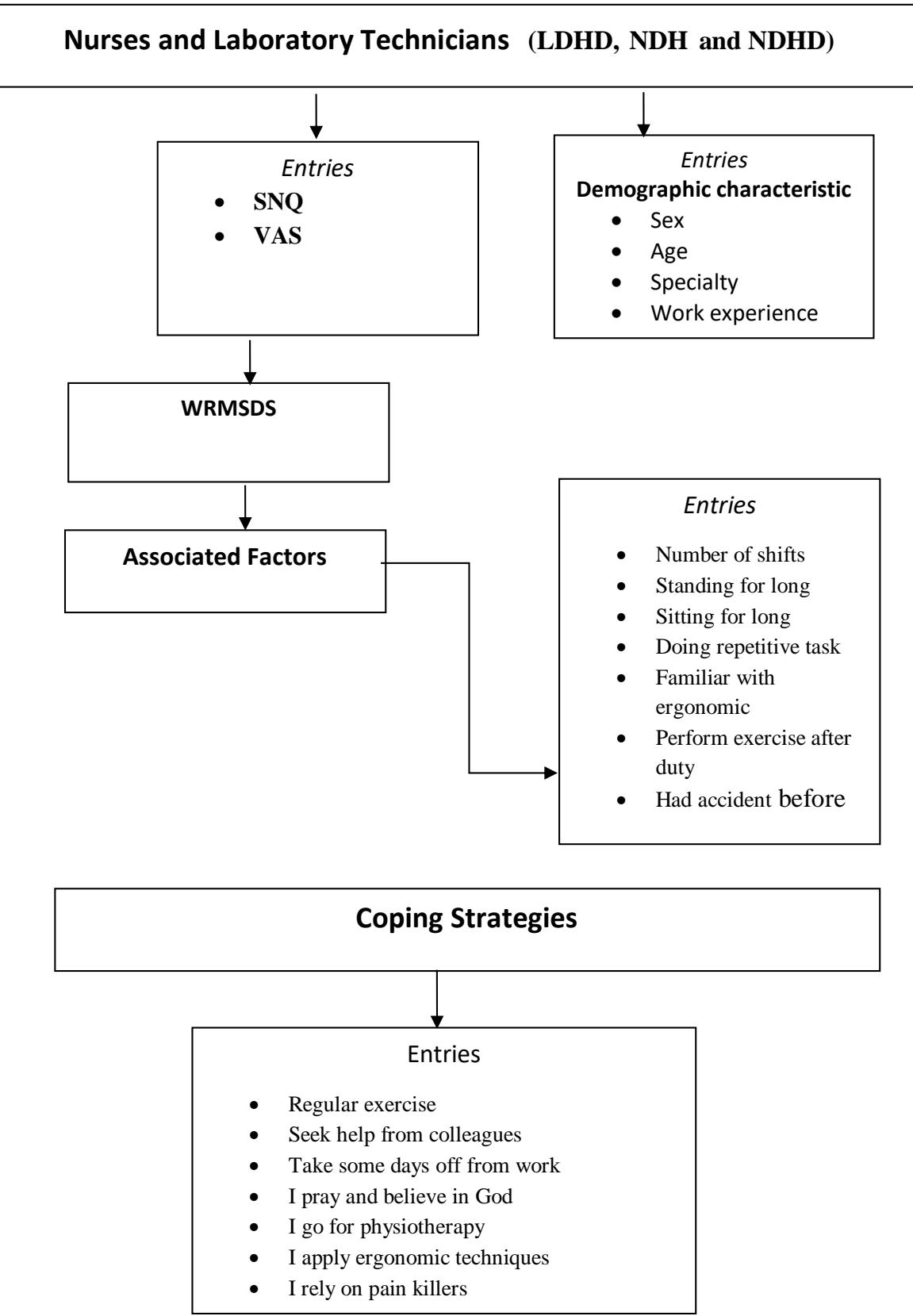
Figure 1: Flow Diagram Showing Data Collection and Instruments
A total of 250 questionnaires were distributed to all the nurses and LTs of the study hospital, but 133 questionnaires were returned yielding a 53% response rate. All the 133 returned answered questionnaires were used for data analysis.
III. DATA ANALYZES
The data collected was entered into Microsoft Excel, verified for consistency and analyzed using SPSS version 23.0. Descriptive statistics was used to present the results on tables and figures, while the Pearson's chi square test was used to determine associations within groups. Statistical significance was set at p<0.05.
Ethical Consideration
Research authorization (0265/AAR/MINSANTE/DRSPL/BCASS) was obtained from the Douala Regional Delegation of Public Health and from the hospital's administration. All the participants gave their signed consent. The fundamental principles of medical research according to Helsinki's Declaration were strictly respected and the names of the hospitals were coded for ethical reasons.
IV. RESULTS
4.1 Socio-Demographic Characteristics of Study Population
Table 1 presents the socio-demographic characteristics of the study population. A total of 250 questionnaires were distributed to all the nurses and LTs of the study hospital, but 133 questionnaires were returned yielding a 53% response rate. Out of the 133 participants recruited into the study, the majority was from the age group of 29-38 years (43.6%), females (76.7%), nurses (63.2%), single (53.4%) and had between 1-5 years (65.4%) of working experience.
Table 1: Socio-Demographic Characteristics of Study Population
| Factor | Variable | Frequency) | Percentage (%) |
| Age range (years) | 19-28 | 30 | 22.6 |
| 29-38 | 58 | 43.6 | |
| 39-48 | 37 | 27.8 | |
| 49 and above | 8 | 6.0 | |
| Sex | Male | 31 | 23.3 |
| Female | 102 | 76.7 | |
| Specialty | Nursing | 84 | 63.2 |
| Laboratory scientist | 49 | 36.8 | |
| Marital status | Single | 71 | 53.4 |
| Married | 62 | 46.6 | |
| Work experience | 1-5 years | 87 | 65.4 |
| 6-10 years | 28 | 21.1 |
4.2 Prevalence of WRMSDs and Pain Intensity
The overall prevalence of WRMSDs among nurses and LTs observed in the study was 69.9 % (93/133) (figure 2). Although the prevalence of WRMSDs was not significantly associated ( ; p = 0.496) with specialty, more laboratory technicians (73.5%; 36/49) experienced WRMSDs in one or more body part compared to nurses (67.9%; 57/84) (Figure 3).
WRMSDs was not significantly associated with sex but more females (70.6%; 70/102)
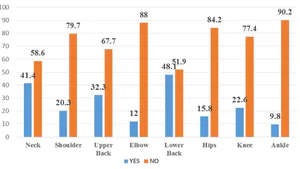
experienced WRMSDs than males (67.7%; 21/31) (figure 4). Also, there was a significant association ( ) of WRMSDs with age group in which, majority of healthcare workers in the age group of 39-48 years (83.8%; 31/37) experienced WRMSDs in one more body parts (figure 5). Findings from the study showed that, within the past 7 days, most of the participants had experienced one or more musculoskeletal disorder at the level of the lower back (48.1%) followed by neck (41.4%) and upper back (32.3%), while the least was at the level hips (9.8%) (Figure 6).
It was revealed that a minority (11.3%; 15/133) of the total population felt mild pain while the majority (42.9%; 57/133) felt severe pain (Figure
7). Furthermore, the intensity of pain was not significantly associated with specialty but LTs (46.9%; 23/49) experienced severe pain more than nurses (40.5%; 34/84) (figure 8).
{"image_source":{"path":"images/b4b9bc6670e95e09e2293f9ab928803ed60a09a39cc3dfebb55142c8108dd6ff.jpg"},"content":"","chart_caption":[],"chart_footnote":[]}
{"image_source":{"path":"images/ad3e266b39ffaec6b081b3174bcac80740c2fcdb882c90e698563b10e19756f7.jpg"},"content":"","chart_caption":[{"type":"text","content":"Figure 2: Overall Prevalence of WRMSDs"},{"type":"text","content":"Figure 3: WRMSDs was not significantly associated with specialty (p = 0.496)"}],"chart_footnote":[]}
{"image_source":{"path":"images/d69321bcb91b5fe2be2af82b92c748d398009f4905455712719d13f043cf04a8.jpg"},"content":"","chart_caption":[{"type":"text","content":"Figure 4: Prevalence of WRMSDs with respect to sex (p = 0.762)"}],"chart_footnote":[]}
{"image_source":{"path":"images/ff471104b624decf69e30fbef56cf56e02d2f6167e9d10e1fecc6df7b91b4049.jpg"},"content":"","chart_caption":[{"type":"text","content":"Figure 5: Prevalence of WRMSDs with respect to age group (p = 0.010)"}],"chart_footnote":[]}
{"image_source":{"path":"images/090834dc753326e59b531c891dbb6a695e1ba490f9e290e582dee128bb246f93.jpg"},"content":"","chart_caption":[],"chart_footnote":[]}
{"image_source":{"path":"images/8d4d44c77fb7d41138f6ab41313eaf15970fa9cca4a4a86e584c28753503c002.jpg"},"content":"","chart_caption":[{"type":"text","content":"Figure 6: Prevalence with Respect to Different Body Regions"},{"type":"text","content":"Figure 7: Intensity of Musculoskeletal Pain within the Past 7 Days"}],"chart_footnote":[]}
{"image_source":{"path":"images/47d304a77f782793004addd54e810f6edf4f19ce44487bf9b6d6d32d62a96889.jpg"},"content":"","chart_caption":[{"type":"text","content":"Figure 8: Intensity of Musculoskeletal Pain within the Past 7 Days With Respect to Specialty"}],"chart_footnote":[]}
4.3 Possible Factors Associated with WRMSDs
The study further evaluated the possible risk factors of WRMSDs and it was revealed that, Sitting for long in the same position ( ; p = 0.027) and doing repetitive tasks (3.871; 0.049) were significantly associated with WRMSDs.
Number of shifts per day (3.148; 0.207), standing for long (0.459; 0.498), s, using vibrating objects (0.011; 0.918) and Stressfulness of job (0.984; 0.787) were not significant risk factors of WRMSDs (Table 2).
Table 2: Possible Risk Factors of WRMSDs
| Factor | Variable | Prevalence of work related musculoskeletal disorders % (n) | Chi-square; p-value | |
| Positive | Negative | |||
| Number of shifts | One | 74.4 (61) | 52.5 (21) | 3.148; 0.207 |
| Two | 59.0 (23) | 41.0 (16) | ||
| Three | 75.0 (9) | 25.0 (3) | ||
| Hours per day | Below 8 hours | 69.7 (23) | 30.3 (10) | 0.001; 0.974 |
| Above 8 hours | 70.0 (70) | 30.0 (30) | ||
| NO | 66.7 (36) | 33.3 (18) | ||
| Standing for long | YES | 71.1 (59) | 28.9 (24) | 0.141; 0.707 |
| NO | 68.0 (34) | 32.0 (16) | ||
| Sitting for long | YES | 78.8 (52) | 21.2 (14) | 4.894; 0.027 |
| NO | 61.2 (41) | 38.8 (26) | ||
| Doing repetitive task | YES | 72.5 (87) | 27.5 (33) | 3.871; 0.049 |
| NO | 46.2 (6) | 53.8 (7) | ||
| Using vibrating objects | YES | 69.4 (34) | 30.6 (15) | 0.011; 0.918 |
| NO | 70.2 (59) | 29.8 (25) | ||
| Stressfulness of job | YES | 69.8 (44) | 30.2 (19) | 0.984; 0.787 |
| NO | 70.0 (49) | 30.0 (21) | ||
4.4 Coping Strategies of WRMSDs
The study further assessed the coping strategies used by nurses and laboratory technicians in coping with WRMSDs, and it was revealed that, regular exercises (51.9%), praying and believing in God for divine healing (51.1%), seek for professional help from colleagues (60.2%), taking some days off from work (88.0%), going for physiotherapy (84.2%) and applying ergonomic techniques (85.0%) were the major strategies used to cope with WRMSDs. Majority (52.6%) of the nurses and laboratory technicians did not rely on pain medications as a means to cope with WRMSDs. (Table 3).
Table 3: Coping Strategies of WRMSDs
| Factor | Variable | Frequency (n) | Percentage (%) |
| Regular exercise | YES | 69 | 51.9 |
| NO | 64 | 48.1 | |
| Seek professional help from colleagues | YES | 80 | 60.2 |
| NO | 53 | 39.8 | |
| Take some days off from work | YES | 117 | 88.0 |
| NO | 16 | 12.0 | |
| Pray and believing in God | YES | 68 | 51.1 |
| NO | 65 | 48.9 | |
| Going for physiotherapy | YES | 112 | 84.2 |
| NO | 21 | 15.8 | |
| I apply ergonomic techniques | YES | 113 | 85.0 |
| NO | 20 | 15.0 | |
| I rely on painkillers | YES | 63 | 47.4 |
| NO | 70 | 52.6 |
V. DISCUSSION
The objective of this study was to determine the prevalence of work-related musculoskeletal disorders, pain intensity, associated factors and coping strategies among nurses and laboratory technicians working in three category hospitals in the city of Douala, Cameroon.
This study revealed that the overall prevalence of WRMSDs for the past 12 months among nurses and LTs at the LDHD, NDH and NDHD was 69.9%, with LTs having a higher prevalence rate (73.5%) compared to nurses (67.9%). With respect to the various body parts, the prevalence was highest at the lower back (48.1%), followed by the neck (41.4%) and upper back (32.3%). These findings are in line with the study carried out by Buh et al., [16], who reported a 12 month prevalence of 77.89% of WRMSDs among nurses working in a category hospital in the city of Douala. Most recently, similar results were also observed in a study by Meh et al., [17], in which nurses and LTs had a prevalence rate of WRMSDs of 80.0% and 88.8% respectively. Furthermore, our findings corroborate with that of Ngunde et al., [15] who revealed a 76.6% prevalence of WRMSDs among nurses in the Fako division of Cameroon, with the lower back (84.4%), neck (54.5%) and upper back (47.4%) being the most affected body parts. The prevalence of WRMSDs was not significantly different with respect to specialty, with LTs (73.5%) experiencing a higher prevalence compared to LTs (67.9%). This finding is in line with that by Meh et al., (17), where the prevalence of WRMSDs in nurses and LTs was 82% and 89% respectively.
This high prevalence among nurses and LTs can be explained by the fact that these professionals often adopt prolonged positions either in standing or sitting, which has been identified as a key risk factor to WRMSDs [17]. WRMSDs was not significantly associated with sex, but more females (70.6%; 70/102) experienced WRMSDs than males (67.7%; 21/31). This corroborates reports in literature, where the female sex is more likely to have musculoskeletal disorders [30].
Also, there was a significant association ( ) of WRMSDs with age group in which, majority of healthcare workers in the age group of 39-48 years (83.8%; 31/37) experienced WRMSDs in one or more body parts compared to the other age groups. This is in line with the recent findings reported by Abla et al., [12] and Meh et al., [17].
Findings from this study show that about 42.9% of the participants had severe pain within the previous 7 days. This is not in line with the result obtained by Bryndal et al., [29] in Poland, where most of the nurses had moderate pain. This higher pain intensity observed in our study may be due to the fact that our study was conducted in a low income setting where little or no preventive measures of WRMSDs and their impact exist, compared to high income countries like Poland where work space exercises and risk identification and management are instituted, thus reducing WRMSDs and its effects among their healthcare workers.
With regards to the factors associated with WRMSDs among nurses and LTs, findings from the study revealed that; sitting for long in the same position was significantly associated ( ; p = 0.027) to WRMSDs. Also, doing repetitive tasks was significantly associated (3.871; 0.049) with WRMSDs. Also, it was shown that; standing for long (72.2%), having only one shift (74.4%), working above eight hours (70.0%) were common among nurses and LTs, but not significantly associated with WRMSDs. This is partly inline to the study carried out by Meh et al., [17] among healthcare workers in the City of Douala Cameroon, who reported that; having only one shift (91.2%), standing for long (87.3%), sitting for long (86.3%), and doing repetitive task (85.9%) were the main non-demographic factors associated with WRMSDs. The slight difference might be due the sample size differences in both studies. The results from this study partially agree with that of Tinubu et al., [18] in Ibadan, South-west Nigeria who found out that 95% of nurses complained that working on the same positions for long periods and treating an excessive number of patients in one day as the most perceived associated factors of WRMSDs among nurses. The sample size and the slight difference of the risk factors assessed in both studies could explain this difference. Our findings are not in line with those of Agrawal et al., [23] among laboratory professionals in Udupi district of Karnataka who reported young age, female professionals, paramedical staff and duration at work as the factors associated with WRMSDs. This difference could be explained by differences in the risk factors assessed and difference of sample size in both studies.
It can therefore be observed that the type of WRMSDs risk factors assessed vary greatly among studies. Therefore, further research taking into consideration both demographics and non-demographics factors, physiological and anthropometric variables using longitudinal study type needs to be implemented to give a more generalized conclusion as concerns the factors associated with WRMSDs among nurses and LTs including other health professionals.
Concerning the coping strategies of WRMSDs used by the study population; Praying and believing in God (51%), regular exercises (51.9%), seeking for professional help from colleagues (60.2%), taking some days off from work (88.0%), going for physiotherapy (84.2%) and application ergonomic techniques (85.0%) were the best coping strategies used by nurses and laboratory scientist in this study.
This study is not consistent with the study of Olutende et al., [25] in Kakamega Kenya where all the nurses (100%) who experience one or more WRMSDs took analgesics drugs during and after work as a means of coping with WRMSDs. The observed differences could be attributed to the difference in the coping strategies evaluated in both studies, including differences in socio-cultural and religious beliefs among the studies populations.
The practice of regular exercise reported in this study as a coping strategy is supported by the study by Kovacevic and Avdic, [26] who reported most physiotherapists performed regular exercises as a means of coping with WRMSDs.
Furthermore, cognitive and behavioral strategies to cope with musculoskeletal disorders at work have been reported . Cognitive strategies included techniques such as; distraction, visualization, self-talk, and blocking thoughts . Seeking-social support, exercise/stretching, exposure management, self or accompanied treatment, eating/drinking were categorized as behavioral coping strategies . This slightly differs with our findings because most of these factors were not assessed. Also, results from this study were in harmony with those of other studies where nurses used ergonomic techniques and modification of the nursing procedures as a coping strategy of WRMSDs .
VI. LIMITATIONS OF THE STUDY
There were a few limitations to the study: the smaller sample size which may not be representative of the general population of nurses and LTs. Also, the different units of work of the nurses were not considered in the analysis. This may be essential as the work structure and work space in all the units are not the same. In future studies, we seek to evaluate these risk factors into categories such as; environmental, work, and personal risk factors; this will permit us to consider almost all factors susceptible to be associated with WRMSDs among nurses and laboratory technicians.
VII. CONCLUSION
The overall prevalence of WRMSDs was high among nurses and laboratory technicians. Laboratory technicians had the highest prevalence of WRMSDs than nurses, and the most affected body parts were the lower back, neck, and upper back. Sitting for long and doing repetitive tasks were significantly associated with WRMSDs, meanwhile maintaining prolonged standing postures, doing repetitive tasks, working only one shift were high in occurrence among the study population who had WRMSDs. In other to cope and manage these WRMSDs, the participants mostly relied on praying and believing in God, regular exercises, seeking professional help from colleagues, taking some days off from work, going for physiotherapy and applying ergonomic techniques. These findings will help to inform National and local healthcare providers on the high prevalence of WRMSDs among nurses and LTs and also on the predisposing factors. Also, the results obtained would help in risk management which will in turn reduce the occurrence of WRMSDs among nurses and LTs. Thus, productivity of these healthcare workers would be improved in Douala, and Cameroon as a whole.
ACKNOWLEDGMENTS
We thank all the participants of this study for all their time and patience, which greatly contributed to the completion of this work. Our gratitude also goes to the administrations of the LDHD, NDH and NDHD for the authorizations to conduct this study in their hospitals. Equally, we thank Madam AKIH Victoire MANG and Mr. MBACHAM FON Harry for proofreading this article and making relevant corrections that have greatly ameliorated the quality of the article.
Declarations
Ethical consideration
Research authorization and clearance (0265/AAR/MINSANTE/DRSPL/BCASS) was obtained from the Douala regional delegation of public health which is in charge of reviewing public health research protocols. Also, administrative authorization was obtained from the different hospital administrators. The names of the study hospital were coded for ethical reasons, and all the participants gave their signed consent. This study respected the ethical principles of the European Union. The fundamental principles of medical research according to Helsinki's Declaration were strictly respected.
Consent for publication
All the authors consented and accepted for this article to be submitted for publication.
Availability of data and materials
Most data generated or analyzed during this study are included in this article. Also, all findings that support the result of this study are included.
Conflict of Interest
The authors certify there is no conflict of interest.
Funding
This research did not receive any grant from funding agencies.
Conflict of Interest
The authors declare no conflict of interest.
Ethical Approval
Not applicable
Data Availability
The datasets used in this study are openly available at [repository link] and the source code is available on GitHub at [GitHub link].
Funding
This work did not receive any external funding.
References
Cite this article
Related Research


Special Issue
Launch a focused special issue to highlight research, emerging trends, and expert insights in your academic field.
