





IntelliPaper
Abstract
The proposed alternative Islamic Rate of Return benchmark (IRR) is intended to address the issue of using backward-looking rates in Islamic finance that are challenging due to the Shariah principle of Gharar, which requires certainty on all fundamental contract terms. The IRR is designed to satisfy both economic and Shariahprinciples and aligns with free market principles by using general equilibrium theory to estimate a fair interest rate based on the opportunity cost (measured by EGR) and market supply-demand dynamics. It takes into account both economic fundamentals and risk considerations by combining two components: the EGR component and the risk premium component. Therefore, the IRR benchmark promotes responsible and sustainable financing or investment practices and supports the development of a robust and inclusive financial system that serves the needs of all stakeholders. However, for IRR to be a viable alternative to interest-based benchmarks, central banks and the banking industry must carefully examine, modify, engage stakeholders, and collaborate to ensure a seamless transition.
Explore Digital Article Text
I. INTRODUCTION
Historically, interest rates have been charged on loans and debts since ancient civilizations such as Mesopotamia and Egypt. Interest rates have evolved over time, influenced by a variety of economic, political, and social factors (Homer &
Sylla, 1996). In the medieval period, usury laws were implemented to regulate interest rates and prevent exploitation. These laws often set maximum interest rates, which varied depending on the type of loan and the borrower's social status (Homer & Sylla, 1996). Interest rates remained relatively low until the 18th century, when the Industrial Revolution led to increased economic growth and higher demand for credit (Homer & Sylla, 1996). The 19th century saw the development of modern central banking, with the creation of institutions such as the Bank of England and the Federal Reserve) Epstein, 2006). Central banks began to use interest rates as a tool for controlling inflation and stabilizing the economy (Woodford, 1998). During this period, interest rates varied widely, with some countries experiencing high inflation and others experiencing deflation (Woodford, 1998 and Bernanke, 2013). The 20th century saw significant fluctuations in interest rates, including periods of high inflation in the 1970s and 1980s. In response, central banks began to adopt more aggressive monetary policies, including tightening credit and raising interest rates (Clarida et al., 1998). This led to a period of relatively low inflation and interest rates in the late 20th century and early 21st century (Taylor, 2014). Today, interest rates continue to be influenced by a variety of factors, including economic growth, inflation, geopolitical events, and monetary policy decisions (Khumalo et al., 2017). Central banks around the world continue to use interest rates as a tool for regulating the economy, with many adopting a low-interest-rate policy in response to the economic challenges of the COVID-19 pandemic (Fischer, 2021).
The London Interbank Offered Rate, or LIBOR, began in the 1960s as a way for banks to lend money to each other in the London interbank market (Wiggs, 2022). At the time, there was no standard interest rate for interbank lending, and each bank negotiated its own rate with other banks (Wiggs, 2022). In 1969, the British Bankers' Association (BBA) began surveying a group of banks to determine the average interest rate at which they were lending to each other. This survey became known as the BBA Libor (later simply "LIBOR"), and it was initially based on rates for five currencies and seven maturities (Hou & Skeie, 2014). Over time, the number of banks involved in the survey grew, as did the number of currencies and maturities covered. By the 1980s, LIBOR had become the dominant benchmark for interbank lending around the world, and it was also used as a benchmark for a wide range of financial products, including mortgages, student loans, and credit cards (Schrimpf & Sushko, 2019). In 2012, it was revealed that some banks had been manipulating LIBOR rates for their own financial gain, leading to a scandal and calls for reform (Bryce, 2012). In response, regulatory bodies began to explore alternative benchmarks, and in 2017 the BBA announced that it would no longer be involved in the administration of LIBOR after 2021 (Manjunath & Augusty, 2021). In 2020, it was announced that LIBOR would be phased out by the end of 2021, and that banks would need to transition to alternative benchmark rates. This transition has been a complex process, with significant implications for financial markets and the wider economy (Klingler & Syrstad, 2021).
As LIBOR is being phased out by the end of 2021, a number of alternative benchmark rates have been developed to replace it. The main alternatives are: i. SOFR (Secured Overnight Financing Rate): This rate is based on the overnight borrowing and lending activity of banks in the U.S. Treasury repurchase market. It is considered a more accurate reflection of market rates than LIBOR, which is based on estimates provided by banks. ii. SONIA (Sterling Overnight Index Average): This rate is based on the average interest rate paid on overnight unsecured loans in the sterling wholesale money markets. It is administered by the Bank of England. iii. SARON (Swiss Average Rate Overnight): This rate is based on the average overnight interest rate for unsecured transactions in the Swiss franc market. iv. TONAR (Tokyo Overnight Average Rate): This rate is based on the weighted average of unsecured overnight call rates in the Japanese money market. v. €STR (Euro Short-Term Rate): This rate is based on the overnight borrowing and lending activity of banks in the euro area. It is administered by the European Central Bank (Federal Reserve Bank of New York, 2021; Bank of England, 2021; Swiss National Bank, 2021; Bank of Japan, 2021; and European Central Bank, 2021).
Each of these rates has its own methodology and characteristics, and some are better suited for certain financial products than others. The transition away from LIBOR to these alternative rates has been a significant undertaking for the financial industry, requiring changes to contracts, systems, and processes. However, alternative risk-free rates (RFRs) have been developed to replace the LIBOR as the benchmark interest rate for financial contracts, as LIBOR is set to be phased out by the end of 2021. While RFRs have some advantages, there are also several weaknesses that could pose challenges for market participants. For example, a.) Limited historical data: Unlike LIBOR, which has been used as a benchmark for decades, RFRs are relatively new and have limited historical data. This lack of historical data makes it more difficult to develop models for predicting future interest rates. b.) Lack of term structure: LIBOR has various maturities (e.g., 1-month, 3-month, 6-month, and 12-month), which allows for a term structure of interest rates. In contrast, most RFRs only have an overnight rate, making it more difficult to price financial instruments with longer-term maturities. c.) Market volatility: RFRs are based on secured lending, which can be affected by market volatility. For example, during times of market stress, the spread between overnight RFRs and longer-term funding rates may widen, leading to increased borrowing costs for market participants. d.) Basis risk: The transition from LIBOR to RFRs may lead to basis risk, which is the risk that the value of a financial instrument changes because of differences between the benchmark rate and the actual funding rate. This basis risk could arise due to differences in the calculation methodology, tenor, or liquidity of LIBOR versus the RFRs (Bos, 2019; and Schrimpf & Sushko, 2019).
1.1 Islamic Finance Benchmarks
The use of Islamic finance benchmarks is relatively new compared to conventional finance, and there are currently several Islamic finance benchmarks available in the market. These benchmarks are designed to comply with Sharia principles, which prohibit interest-based transactions and promote risk-sharing and ethical investments. For example: a) Islamic Interbank Benchmark Rate (IIBR): This rate is based on the average profit rate of participating Islamic banks in the interbank money market.
b) Islamic Overnight Money Market Rate (IOMM): This rate is based on the average overnight rate of the Islamic interbank money market.
c) Islamic Investment Rate (IIR): This rate is based on the returns generated by Shariah-compliant investments (Saiti et al., 2016; Nechi & Smaoui, 2019; Zainol, & Kassim, 2010).
It is worth noting that there is currently no global standard for Shariah-compliant benchmarks, and the use of different benchmarks may vary by jurisdiction and financial product. Furthermore, some experts argue that the Islamic finance industry still relies heavily on conventional benchmarks such as LIBOR or newly alternative RFRs, and that more work is needed to develop robust and reliable Shariah-compliant benchmarks (Azad et al., 2018).
1.2 Problem Statement
The critical difference between RFRs and IBORs, such as LIBOR, is that RFRs are backwards-looking rates based on actual transactions reported to the administrator of the relevant RFR, while IBORs are forward-looking term rates fixed and known at the start of an interest period. IBORs also include credit and liquidity premiums, which are absent in RFRs or other alternative rates such as central bank rates. The use of credit adjustment spreads is one way to deal with any potential transfer of value between the parties. Therefore, it is not simply a matter of substituting an IBOR for a currency with the chosen RFR for that currency. In addition, the use of backward-looking rates in Islamic financing products presents a significant challenge because the Shariah principle of Gharar (uncertainty) requires certainty on all fundamental contract terms. Using LIBOR as a reference rate provides certainty on pricing at the start of any contract or calculation period due to its forward-looking nature, which is not the case with RFRs. To address this issue, alternative arrangements such as using alternative rates, reconciliation payments, and rebates can be used by many Islamic financial institutions. However, these approaches also have limitations, such as the risk of rate changes during the tenor of the contract or calculation period, the introduction of uncertainty, and the potential exposure of either the bank or the customer. Therefore, alternative solutions need to be explored to ensure compliance with Islamic principles while addressing the challenges posed using alternative RFRs. The goal of this research is to introduce an alternative IRR benchmark that satisfies both the economic and Shariah principles as well as serves the needs of all stakeholders.
II. LITTERER REVIEW
The Theory of Interest that developed by Irving Fisher (1930) is considered to be one of the most influential works in the history of economic thought and has had a significant impact on the development of modern monetary theory and macroeconomics (Fisher, 1930). The theory of interest rates is a fundamental concept in economics that explains how interest rates are determined in a market economy. Interest rates are the price that borrowers pay to lenders for the use of funds, and are a crucial factor in determining investment and savings decisions (Paul & Dutt, 1991). The basic principle behind the theory of interest rates is that interest rates are determined by the interaction of supply and demand in the market for loanable funds. This market includes borrowers who are seeking funds to invest in new projects or to finance their current operations, and lenders who have funds available to lend (Mishkin, 2011; and Cecchetti &
Schoenholtz, 2017). The level of interest rates is influenced by a variety of factors, including the time preference of savers and borrowers, the level of investment demand, the productivity of capital, and the level of risk associated with lending and borrowing (Temperton, 1986). In addition to these supply and demand factors, interest rates are also affected by monetary policy, including the actions of central banks and government policies related to inflation, taxation, and fiscal policy (Bernanke & Reinhart, 2004).
Islamic finance operates under the principles of Shariah, which prohibits the charging or paying of interest (riba) on loans and investments. Therefore, interest rate modeling in Islamic finance was discussed and studied by Shariah scholars and researchers to establish a model that can fulfil the Shariah compliance requirements and support economic growth. For instance, the study by Thomson Reuters and Accounting and Auditing Organization for Islamic Financial Institutions (AAOIFI) (2011) introduces the Islamic Interbank Benchmark Rate (IIBR) as a benchmark for Islamic finance. The study provides an overview of the IIBR, which is designed to provide a Shariah-compliant alternative to conventional benchmarks such as LIBOR. The IIBR is based on actual transactions in the interbank market and is calculated using a methodology that is consistent with the principles of Islamic finance. The study highlights the importance of having a robust benchmark for Islamic finance that can support the growth and development of the industry. Similarly, the study by JIBM Discussion Forum (2014) discusses the Thomson Reuters' IIBR and examines whether it is an important step forward for the authenticity of Islamic finance. They argue that the IIBR may not necessarily reflect the true nature of Islamic finance, as it relies on the same underlying principles as conventional benchmarks such as LIBOR. They suggest that the development of a true Islamic benchmark should be based on the principles of profit and loss sharing, and not rely on interest-based models.
In addition, the early study by Ebrahim & Khan (2002) proposed a model for an Islamic convertible mortgage, which can be used to finance infrastructure projects in emerging Muslim countries. The mortgage is designed as a combination of an Islamic credit facility and the inclusion of real warrants to mitigate the agency cost of debt. The authors used numerical simulation to endogenously solve for the rate of return, tenure, and fractional ownership to be conveyed to the financier upon conversion of the facility without resorting to any interest-based (Ribawi) index. They also conducted sensitivity analysis to study the impact of exogenous variables and reconcile with existing mainstream finance literature. In addition, the study by Iqbal (1999) identified a major gap in the development of Islamic financial market operations, highlighting the absence of a well-developed benchmark that could facilitate macro- and micro-level decision making with regards to cost of capital and opportunity cost of investments in comparative projects of similar risk. Islamic financial institutions are currently relying on interest rate-based indices such as LIBOR to make lending decisions, which is unacceptable according to Islamic principles that prohibit a predetermined or fixed rate of capital. The paper proposed a benchmark based on Tobin's q theory of investment, which would be useful for firms, banks, governments, and institutions to make both macro- and micro-level decisions.
The study by Omar et al (2010) aimed to replace market interest rates in Islamic finance with an Islamic pricing benchmark based on the risk profiles of real economic ventures. It proposed an endogenously determined benchmark tied to productivity and profitability of assets, aligning with Shariah principles. The study recognized sectoral differences and identified four macroeconomic variables namely, industry production growth; the money supply changes (M2); the ringgit exchange rate; and the Kuala Lumpur Composite Index returns as predictors of returns. Monte Carlo simulations demonstrated the model's strong predictive ability, and bootstrap simulations confirmed its reliability. A weighted average of sectoral benchmarks was computed to derive a final pricing rate, which was proposed as the Islamic benchmark rate for the overall market. The benchmark was Shariah-compliant, stable, and comparable to conventional rates. The study suggested that other institutions adopt the model for independent Islamic finance in addressing the global economic crisis. Furthermore, this study of Yusof et al (2011) examined the possibility of using the rental rate as an alternative benchmark for pricing Islamic home financing products. The study analysed Malaysian data from 1990 to 2006 and uses econometric time-series analysis to compare the rental rate with lending rate and selected macroeconomic variables that could influence property value. The results indicated that the rental rate is a better alternative than the lending rate for pricing Islamic home financing products. The rental rate is found to be resilient to short-term economic volatility and reflective of economic fundamentals in the long run, making it a fair pricing mechanism for the Islamic home financing product. This study provided empirical evidence for an alternative benchmark for pricing Islamic home financing products and is the first of its kind to do so.
The Ghauri (2015) argued that interest rate benchmarks cannot be used for pricing Islamic financial products since they do not represent real economic activities. The paper took a Shariah perspective and considered ground realities to support its argument. The viewpoint was established through a comparison of conventional and Islamic financial product pricing, as well as a comparison of interest rates with macroeconomic indicators. The paper emphasized that Islamic finance should have its own footing in terms of product development. This paper provided a new perspective on product development in Islamic financial institutions. Additionally, the study by Mirakhor (2017) focused on the development of appropriate benchmarks for Islamic asset pricing. The author explained the importance of benchmarks in financial markets and highlights the issues arising from the use of interest-based benchmarks, such as LIBOR, in the Islamic finance industry. The study established a link between the concept of benchmarking and the doctrine of market price in Islam and argues for the creation of an interest-free benchmark to replace LIBOR. The author also discussed the challenges in developing Islamic benchmarks and suggests potential solutions, such as the use of profit-and-loss-sharing structures and the application of Islamic principles to existing benchmarks. Overall, the study provided insights into the critical role of benchmarks in Islamic asset pricing and the need for appropriate benchmarks to support the growth of the Islamic finance industry.
In their paper Sari et al (2017) argued that Malaysia's current macroeconomic policies are based on conventional risk-transfer and/or risk-shifting paradigm rather than the risk-sharing principles proposed in Islamic finance. To become a global leader in Islamic finance, Malaysia needs to develop an alternative Shariah-based monetary policy framework. One key element is to develop an Islamic Pricing Benchmark (IPB) that is free from interest rates. The paper investigated the use of equity risk premium as an incentive structure for adopting a Shariah-based monetary policy but found that it is not statistically significant. Instead, the paper proposed return on equity (ROE) as a better alternative to replace interest rates in the Islamic monetary policy framework in Malaysia. Moreso, the study by Azad et al (2018) investigated whether Islamic banks can have their own benchmark rate by examining the relationship between the Islamic interbank benchmark rate (IIBR) and its conventional counterpart, the London interbank offer rate (LIBOR). The study found that there are both long-term and short-term dynamic relationships between the two rates, and that the existence of the IIBR-LIBOR spread reflects the cost of funding and profit potential of the participating IIBR rate-setters. The authors argued that the Islamic banking industry is operating in a global context and that it is unlikely that its rates can decouple from global benchmarks. They suggested that arbitrage activities force Islamic rates to converge with global benchmark rates, given the similarity of Islamic and conventional banking products and their risk-return profiles.
The paper by Ahmed et al (2018) proposed the Islamic pricing benchmark model (IPBM) as an alternative to London Interbank Offered Rate (LIBOR) and a practical mechanism to evaluate investment projects for Islamic financial institutions. The IPBM suggested estimating the rate of return for a project based on its expected future cash flows relative to the invested capital, rather than relying on interest-based indicators. The proposed model incorporates Shariah parameters, making it a Shariah-compliant pricing mechanism for Islamic financial products. The IPBM may bring more credibility to the Islamic financial system and contribute to finding an alternative Islamic pricing benchmark. The study provided empirical evidence for the feasibility and practical effectiveness of the IPBM as an Islamic benchmark. Further, the study by Redzuan & Kassim (2018) compared the viability of alternative pricing mechanisms for Islamic home financing products in Malaysia. The study focused on the sensitivity and fragility of the product to financial market volatility and compares the interest-based benchmark with a non-interest benchmark. The non-interest benchmark is the Housing Price Index (HPI) and economic growth is used as the indicator of economic activities. Through correlation analysis, the study found that the non-interest benchmark shows better relationships with macroeconomic variables compared to the interest-based benchmark. The findings suggest that alternative benchmarks, such as HPI, could provide stability for non-interest financing instruments and be a feasible benchmark for Islamic home financing products.
This paper of Nechi & Smaoui (2019) explored the differences between the Islamic Interbank Benchmark Rate (IIBR) and conventional interbank rates in the Gulf Cooperation Council (GCC) countries. The study found that the IIBR, developed by 17 Islamic banks in six countries, is not independently determined and shows a long-term relationship with conventional rates. The paper also suggested that market conditions like oil prices and inflation do not significantly impact the dynamics between the IIBR and conventional benchmarks. Overall, the findings highlighted the interdependence of Islamic and conventional monetary tools in the GCC region. In addition, the study by Rachmawaty (2020) discussed the issues surrounding the use of interest rates as an Islamic Pricing Benchmark (IPB) and provides a literature review of various alternatives proposed by scholars. The paper aimed to achieve three objectives: first, to provide an overview of the literature review on existing alternatives to interest rates as IPBs; second, to present the advantages and disadvantages of using interest rates as IPBs; and third, to propose an alternative IPB based on the nature of business. The proposed alternative IPB would be categorized based on debt financing, equity financing, and combined financing. The paper suggests that adjustments in infrastructure are necessary to implement the proposed IPB, including changes in customer behavior, educating customers, changing the role of banks, and rethinking the cost of statutory reserve requirements in central banks.
The study of Setianingrum (2021) aimed to identify a benchmark for pricing returns in the Islamic financial system that can overcome business cycle in new normal. The researcher used the analytic network process (ANP) method to collect and analyze data from stakeholders and experts in the field through in-depth interviews and questionnaires. The study found that the rate of profit is the most important element for base pricing, and the actual trading index is the benchmark for pricing in the Islamic financial system. The researcher recommended the use of accounting software and big data for better analysis and suggests that the development of an Islamic pricing benchmark index will help in product development in Islamic finance. Moreover, the paper of Tahiri Jouti (2021) aimed to understand the issue of interest rate benchmarking in Islamic financial institutions (IFIs) and assess the relevance of creating a Shari'ah-compliant profit rate benchmark to solve the issue. The paper concluded that conceiving a profit rate benchmark for the Islamic finance industry is not relevant to raising the Shari'ah credibility of the industry. Instead, several adjustments need to be introduced in terms of the business model and economic approach for IFIs to achieve their objectives. The paper challenged the idea that creating a profit rate benchmark is the only solution for the pricing issue in IFIs and suggests a deeper understanding of the situation. The recommendations require the involvement of financial authorities and governments for their implementation.
A recent study by Hassan, Muneeza, and Mohamed (2022) reviews the ongoing financial benchmark reforms affecting Islamic finance, such as the replacement of LIBOR with alternative reference rates. The authors examine the impact of these reforms on financial products and the challenges faced by Islamic finance institutions in adopting new benchmark rates. They propose solutions to address these challenges and highlight the importance of transparency and standardization in the development of new benchmark rates. The study emphasizes the need for collaboration between the Islamic finance industry, regulators, and industry stakeholders to ensure that the new benchmarks align with the principles of Islamic finance. Finally, study by Uddin et al (2022) proposed a basic pricing model that captures the common risks in sukuk returns, identifying sukuk market risk and information asymmetry risk as the two risk factors that require risk premiums. By using these two common risk factors, investment analysts can estimate the fair value of sukuk more precisely than using ad hoc measures like LIBOR or the Islamic interbank benchmark rate.
There have been several studies presenting different models to develop Islamic benchmarks; however, none have succeeded in developing a benchmark that can be applied across all Islamic assets, products, and instruments. In addition, most of these studies are ineffective to define the alternative opportunity cost that is economic-based to replace debt-based such as the risk-free rate. Accordingly, this study proposed an IRR Benchmark that reflects both risks and returns resulting from economic activity, thereby achieving Shariah principles and being generic enough to be used in evaluating and pricing Islamic products, assets, and instruments.
III. PROPOSED AN ISLAMIC RATE OF RETURN BENCHMARK
In Islamic jurisprudence, the market price is a commonly used term to determine a fair price in many situations. The market price is seen as the price that results from the dynamic interaction of supply and demand in a free and competitive market. It is considered to be a fair price because it reflects the value that buyers and sellers place on a particular good or service at a particular time. In Islamic finance, the concept of market price is often used to determine the price of commodities, stocks, and other assets in various transactions such as sale, leasing, and exchange. The market price is also used as a benchmark to determine the fair value of assets for accounting and valuation purposes. Moreover, the use of market prices in Islamic jurisprudence extends beyond commercial transactions to the settlement of disputes. This is especially true in cases where the price of a disputed asset or commodity is contested. Islamic courts and arbitrators often use market prices as a basis for determining a fair settlement, especially when the market price is considered a reliable indicator of the true value of the asset or commodity in question.
There are many hadiths in which the Prophet Muhammad (peace be upon him) refused to set a price for goods or services and left it to be decided by the market. This approach is in line with the Islamic principle of free market competition. It also emphasizes the idea that prices should be determined by the forces of supply and demand rather than by individuals or authorities.
One such hadith is narrated by Abu Hurayrah: "A man came and said, "Messenger of Allah, fix prices." He said, "(No), but I shall pray." Another man came and said, "Messenger of Allah, fix prices." He said, "In fact, it is Allah Who makes [prices] low and high. I hope that when I meet Allah none of you will have any claim against me for any injustice." (Omar et al., 2010).
Another hadith narrated by Anas Ibn Malik: The people said, "Messenger of Allah, prices have shot up, so fix prices for us." Allah's Messenger (peace be upon him) replied: "Verily, Allah [determines the climate of economic affluence and gloom. I do not want to take any action to fix prices because] I do not want to meet Allah with anyone among you demanding redress for wrong done to them regarding property or blood." Omar et al., 2010).
Overall, these and other hadiths reflect the importance of free market principles in Islamic jurisprudence. They also reflect the belief that prices should be determined by market forces rather than by arbitrary or subjective factors.
3.1 The General Equilibrium Theory
General Equilibrium Theory is a widely used economic theory that analyzes the interactions between various economic agents and the prices of goods and services in an economy. It states that in a perfectly competitive market, prices are determined by the forces of supply and demand (Debreu, 1959 and Arrow & Hahn, 1971). This means that the market will eventually reach a state of equilibrium where the quantity supplied equals the quantity demanded at a particular price (Baumol & Blinder, 2015). In the context of Islamic finance, the General Equilibrium Theory can be used to establish an Islamic benchmark for financing, evaluating, or pricing financial products. By analyzing the supply and demand of funds in the market, this theory can help to determine the fair value or price of financial products, instruments or assets. Moreover, the application of General Equilibrium Theory can help to ensure that the financial system is operating efficiently and effectively, with prices reflecting the true value of assets and services. This can lead to greater transparency and fairness in the financial industry, as well as greater confidence among investors and consumers. Overall, the application of General Equilibrium Theory can provide a useful framework for establishing an Islamic benchmark for financing, evaluating, or pricing financial products, and can help to promote greater stability, transparency, and efficiency in the Islamic finance industry.
The application of General Equilibrium Theory in Islamic finance relies on several assumptions. These include:
-
Rationality: Economic agents in financial markets are rational and seek to maximize their utility or profit.
-
Perfect competition: Markets are perfectly competitive, meaning that there are many lenders and borrowers, and no single agent can influence fund prices.
-
Information efficiency: All economic agents have access to perfect information, and prices reflect all available information.
-
No market frictions: There are no transaction costs, taxes, or other market frictions that could distort prices or limit market participation.
-
Homogeneous products: All financial assets are identical, and investors are indifferent between them.
-
No externalities: The actions of one economic agent do not affect the well-being of others in the market.
While these assumptions may not always hold in practice, they provide an effective framework for analyzing the behavior of funds' supply, demand, and prices in financial markets. By understanding the underlying assumptions of the General Equilibrium Theory, Islamic finance practitioners and policymakers can identify potential sources of market failure or inefficiencies. They can also design mechanisms to promote greater efficiency, transparency, and fairness in financial systems. In addition, by using the equilibrium interest rate (that reflects the opportunity cost of funds), Islamic finance can ensure that returns on investment are based on the actual performance of the investment, and that the allocation of resources is based on the potential returns and risks involved.
3.2 Economic Growth Rate, Opportunity Costs and Equilibrium rate of return
The Economic Growth Rate (EGR) is a useful tool in Islamic finance for measuring opportunity costs that reflect the equilibrium rate of return. The EGR is based on the concept of Maqasid al-Shariah, which refers to the objectives of Islamic law. According to this concept, one of the objectives of Islamic law is to ensure the preservation of wealth. The EGR is designed to promote this objective by ensuring that the opportunity costs of financing or investment in Islamic finance are in line with the EGR. Opportunity cost refers to the cost of foregoing the best alternative investment opportunity. In Islamic finance, the opportunity cost is related to the profit or return that could be earned from the next best investment opportunity. The EGR index provides a measure of the opportunity cost of investment in Islamic finance by taking into account the EGR.
The EGR Index is a measure of the annual percentage increase in the gross domestic product (GDP) of an economy. The EGR index is calculated by considering various economic factors, such as inflation, productivity, and investment. The index reflects the equilibrium rate of return (opportunity cost) that is consistent with the EGR. By using the EGR index as a benchmark for opportunity cost, Islamic finance practitioners can ensure that the profit and loss sharing ratios are fair and reasonable and reflect the opportunity costs of investment in Islamic finance. In addition, using the EGR Index as a measure of equilibrium rate of return in Islamic finance can promote transparency, efficiency, and fairness in financial systems. It can ensure that returns on investment are based on the potential returns and risks involved in the investment, rather than on predetermined interest rates. This promotes a more equitable and sustainable financial system that supports economic growth and development while adhering to the principles of Islamic law.
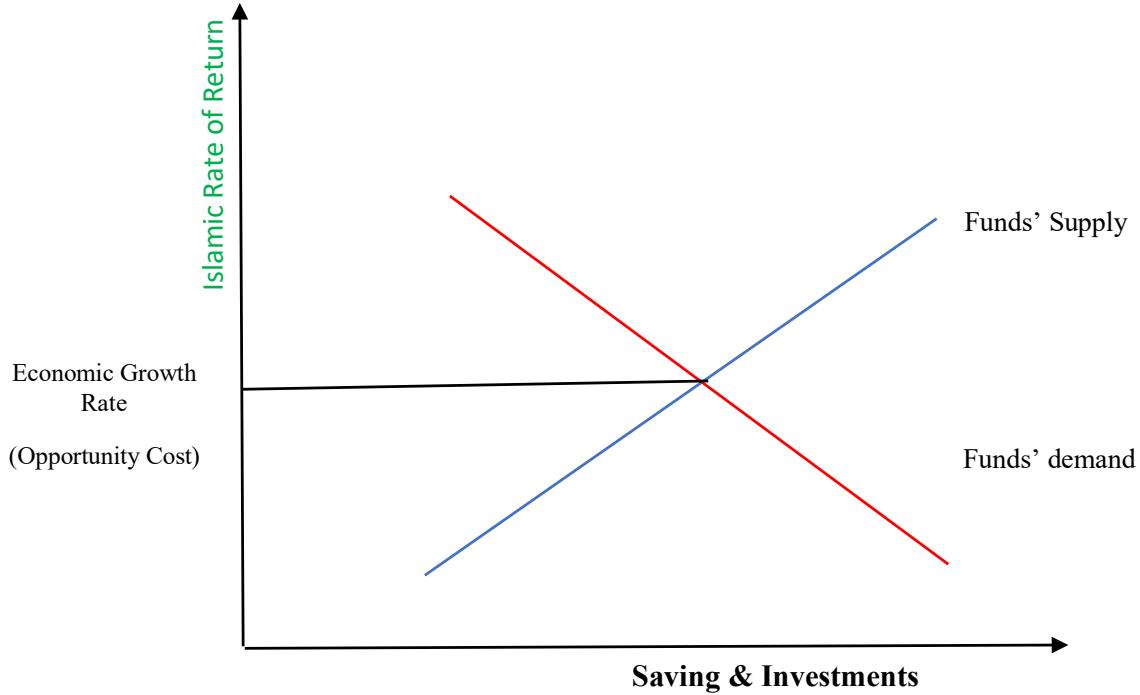
Figure (1): Equilibrium rate of return in Islamic Economy
3.3 Measuring Dynamic Interaction between Funds' Demand and Funds' Supply
Measuring the dynamic interaction between funds' demand and supply is a key component of the General Equilibrium Theory in financial markets. This interaction is captured by the change of equilibrium rate of return level, which represents the rate at which the demand for funds is equal to the supply of funds in the market. The equilibrium rate of return is determined by the intersection of the demand and supply curves for funds.
In particular, demand for funds is typically represented by the investment opportunities available to economic agents in the market. Economic agents seek to invest their funds in opportunities that offer the highest expected returns, given the associated risks. As the expected returns on investment opportunities increase, the demand for funds increases, leading to a higher equilibrium rate of return. The supply of funds is represented by the savings behavior of economic agents in the market. Economic agents seek to save a portion of their income for future consumption or investment opportunities. As the consumption or investment opportunities. As the savings rate increases, t e suppy o un s increases, leading to a lower equilibrium rate of return. The interaction between funds' demand and supply can be measured using various tools and techniques, including econometric models, time-series analysis, and statistical inference. These methods can be used to estimate the demand and supply curves for funds, and to identify factors that affect the equilibrium rate of return, such as changes in economic policy, technological innovation, or shifts in consumer preferences. In Islamic finance, the interaction between funds' demand and supply is influenced by additional factors, such as the principles of risk-sharing and the avoidance of interest-based transactions. These principles can lead to a different equilibrium rate of return than that observed in conventional finance, as they may affect the incentives of economic agents to save an nvest, an t e a ocat on o resources across different investment opportunities. Therefore, it is a necessity to carefully consider the specific context and principles of Islamic finance when measuring the interaction between funds' demand and supply in financial markets.
For the calculation of the IRR, the relationship between funds' supply and demand must be taken into account. As mentioned earlier, the equilibrium rate of return in a financial market represents the point at which the demand for funds equals the supply of funds. Therefore, any change in the supply or demand for funds will have an effect on the equilibrium rate of return level and, subsequently, the price level of funds on the financial market. Mathematically it is calculated using the following formula:
{"image_source":{"path":"images/fa76f04d44f52b8c061154a3a38a172a5347e6d6171879b8e6c62c3cbc1dbd94.jpg"},"content":"","chart_caption":[{"type":"text","content":"Figure (2): Measuring dynamic Interaction between Funds' Demand and Supply"}],"chart_footnote":[]}
3.4 Risk premium measurement
When calculating IRR, it is imperative to consider all the relevant market risk premiums that may influence the pricing of financial contracts and assets in Islamic financial institutions. These risk premiums may include liquidity risk, credit risk, currency risk, and other market risks that may affect the value of financial assets. Liquidity risk refers to the risk that a financial asset cannot be traded quickly enough to prevent a loss or that it cannot be sold at its fair market value. In Islamic finance, the use of profit and loss sharing contracts and the avoidance of interest-based transactions can affect the liquidity of financial assets and may require additional risk premiums to compensate for this risk. Credit risk refers to the risk that the counterparty in a financial transaction will default on their obligation. In Islamic finance, the use of profit and loss sharing contracts may require additional risk premiums to compensate for the uncertainty of the returns generated by the investment and the possibility of losses. Currency risk refers to the risk that changes in exchange rates will affect the value of financial assets denominated in foreign currencies. In Islamic finance, the use of profit and loss sharing contracts may require additional risk premiums to compensate for the risk of currency fluctuations and the potential impact on the returns generated by the investment. Therefore, when calculating the IRR in Islamic finance, all of these market risk premiums must be taken into consideration. This will ensure that the pricing of financial contracts and assets reflects their true economic value. This can help to ensure that the returns generated by Islamic financial institutions are consistent with the principles of Islamic finance and the expectations of investors. This can be expressed mathematically as follows:
Market Risk = liquidity risk + credit risk + currency risk + other market risks
Risk Premium = Market Risks - (EGR *(D/S)).
3.5 Calculation of Islamic Rate of Return (IRR)
The Islamic rate of return is a concept that refers to the return on investment in accordance with Islamic principles, which prohibit charging or paying interest, as well as engaging in speculative or unethical investments. The Islamic rate of return is calculated as the sum of two components: the EGR with funds' demand and supply dynamic changes and the risk premium. Mathematically it is represented by the following formula:
Islamic Rate of Return= Economic Growth Rate * (Funds' Demand/Funds' Supply) + Risk
Premium
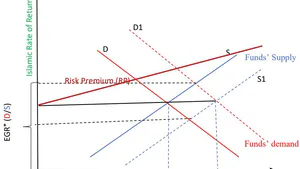
In this formula, the EGR represents the benchmark rate of return that can be earned in the economy, while the funds' demand and supply represent the dynamic change of funds in the financial market that are required for capital investment. The Risk Premium represents the additional return required by investors to compensate them for the risks associated with the investment. However, the calculation of the Risk Premium is not a straightforward task and may involve the consideration of various factors, such as credit risk, liquidity risk, market risk, and other factors that may affect the return on financing or investment. These risk factors may vary depending on the type of financial instrument or investment being considered. By combining these two components, the Islamic rate of return provides a comprehensive measure of the potential return on financing or investment based both on economic fundamentals and risk considerations. As a result of this approach, responsible and sustainable investment practices are promoted, and the development of an inclusive and robust financial system is strengthened. A graphic representation of this IRR estimation is shown in Figure (3) below.
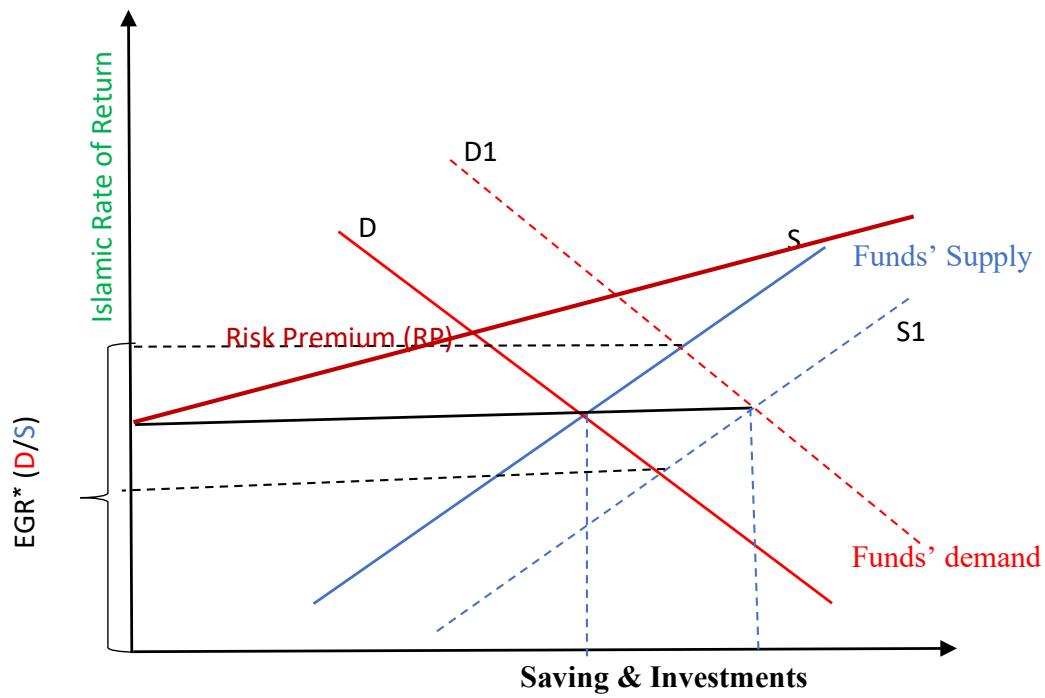
Figure (3): A graphic representation of the IRR estimation
IV. A COMPARISON OF LIBOR
To demonstrate a new IRR model's adequacy and efficiency, we must compare it with alternative interest rate models such as LIBOR and RFRs, and ensure it is satisfied both the economic and the Shariah principles. Among these are opportunity cost based and its measured, time value framework, elements of pricing (risks premium), method of estimating, the level of financing costs, the price determination, the term structure, the financing price or contract costs, the administrator, currency, the level of issue, the level of transparency, and most importantly the achievements of Shariah compliance. In particular, the opportunity cost in IRR is economic-based and measured by EGR, while the opportunity cost in LIBOR and RFRs is debt-based and measured by risk-free rates such as government bond or Treasury bill rates. In terms of time value framework, IRR is determined based on the time value of economic resources, while both LIBOR and RFRs are based on the time value of money. This is due to the fact that Islamic finance and conventional finance differ in their approach to determining return on investment. Islamic finance focuses on the profits generated by the underlying economic activity or asset, while conventional finance considers the time value of money, based on interest rates or discount rates. LIBOR and RFRs are examples of conventional finance that use the time value of money concept to determine the return on investment.
In addition, in terms of elements of pricing, IRR and LIBOR incorporate the elements of pricing through the addition of a risk premium, which is used to adjust the return on investment to compensate for the level of risk associated with the underlying economic activity or asset. This is not the case for RFRs, which do not include a risk premium because they represent the return on a completely risk-free investment such as a government bond. The risk premium in Islamic finance may be included in the profit-sharing ratio between the investor and the entrepreneur. In summary, IRR and LIBOR include a risk premium, while RFRs do not. Furthermore, in terms of method of estimating, the IRR is calculated by adding two components: the EGR component and the risk premium component. The EGR component is determined by multiplying the
EGR by the ratio of funds' demand to funds' supply, which reflects the level of economic activity and the demand for investment capital. The risk premium component is added to adjust the return on investment for the level of risk such as credit risk, liquidity risk, market risk, and other factors. LIBOR is estimated through a survey of banks, where each bank reports the rate at which it could borrow funds from other banks in the interbank market. The reported rates are then averaged to determine the LIBOR rate. While RFRs are estimated based on the formula . This formula reflects the real rate of return on a completely risk-free investment, such as a government bond, adjusted for inflation.
Moreover, in terms of the level of financing costs, it can be said that the level of financing costs differs between IRR, LIBOR, and RFRs. In IRR, financing costs are included in the calculation of the return on investment, which is determined based on the actual profits generated by the underlying economic activity or asset. This means that the financing costs are directly related to the level of economic activity and the demand for investment capital. While LIBOR, which reflects the cost of borrowing funds in the market, and RFRs, which reflect the baseline level of financing costs in the market. In terms of price determination, it can be said that LIBOR operates as a monopoly since it is determined by a panel of only 16 member banks. These member banks submit their estimates of the rate at which they could borrow funds from other banks in the interbank market, and the LIBOR rate is then calculated based on these submissions. This means that the LIBOR rate is not determined through an open market process. On the other hand, RFRs and IRR are determined by each central bank. RFRs are determined based on the rates at which government bonds are issued, while IRR is calculated based on the EGR and the risk premium associated with the underlying economic activity or asset. These rates are determined through an open and transparent process by the central bank and are therefore not subject to the same monopoly concerns as LIBOR.
In terms of the term structure, both IRR and LIBOR offer a term structure with forward-looking tenors ranging from overnight to 12 months. This means that the rates for different maturities are projected into the future and can be used to estimate the expected return on investments with different holding periods. In contrast, RFRs only provide a backward-looking overnight rate that reflects the rate at which funds were lent or borrowed overnight in the past. As such, RFRs do not offer a term structure that can be used to estimate the expected return on investments with different holding periods in the same way that IRR and LIBOR do. Moreover, In terms of the financing price or contract costs due, with the IRR the price is typically determined at the beginning or on the spot of the contract being signed, just like LIBOR. The rate is agreed upon by the parties involved in the transaction and is fixed for the duration of the contract. However, with RFRs are not necessarily determined at the maturity date. While RFRs are backward-looking, they are typically published daily, and the rate for each day is determined by the previous day's overnight interest rate. This means that the rate is not fixed for the duration of the contract, but rather it may fluctuate daily depending on the prevailing market conditions. In some cases, the RFR for a specific maturity may be estimated based on the average of the RFRs for a certain period leading up to the maturity date.
In terms of the administrator, LIBOR was regulated by the Financial Conduct Authority (FCA) and administered by ICE Benchmark Administration (IBA), while RFRs are administered by central banks as they reflect the cost of borrowing overnight funds in a particular currency, and central banks have a key role in controlling the supply of funds in the market. The IRR is typically developed and administered by Islamic financial institutions or regulatory bodies, and it can be administered by central banks as well. Unlike LIBOR, which was susceptible to manipulation due to its reliance on bank submissions, RFRs and IRR are designed to be more transparent and representative of market conditions. Additionally, in terms of currency, LIBOR was evaluated for five major currencies namely the US Dollar (USD), British Pound Sterling (GBP), Euro (EUR), Japanese Yen (JPY), and Swiss Franc (CHF), while RFRs and IRR are evaluated based on the local currency of the country or region. RFRs like SONIA and SOFR are evaluated based on the British Pound and the US Dollar, respectively. Similarly, IRR and other Islamic finance benchmarks are evaluated based on the local currency of the country or region where they are used. For instance, the IIBR is evaluated based on the Saudi Riyal in Saudi Arabia and based on the Malaysian Ringgit in Malaysia. This difference highlights the importance of reflecting local market conditions when evaluating benchmark rates for financial transactions in a specific region or country.
In terms of issue and application level, LIBOR, RFRs, and IRR are all benchmark rates that are used for financial transactions. However, they differ in their issuance and application. LIBOR was an internationally issued benchmark rate, as it was used in financial transactions around the world, especially in the major financial centers of London, New York, and Tokyo. RFRs, on the other hand, are typically locally issued benchmark rates, as they are designed to reflect the cost of borrowing funds overnight in a specific currency and specific geographic region. For instance, SONIA is the RFR for the UK, SOFR is the RFR for the US, and SARON is the RFR for Switzerland. Similarly, the IRR is issued in local currencies and used for financial transactions in Islamic finance markets. However, unlike RFRs, which are specific to one country or region, IRR can also be used internationally, especially in countries with significant Muslim populations or
Islamic finance institutions. In terms of transparency, there are some differences in transparency between LIBOR, RFRs, and IRR. LIBOR was based on the submissions of a panel of banks, and its calculation was not always transparent. This led to concerns about its susceptibility to manipulation, which ultimately led to the decision to phase it out by the end of 2021. RFRs, on the other hand, are typically more transparent than LIBOR. This is because they are based on actual transactions in the underlying market, rather than submissions from a panel of banks. In addition, the central banks that administer RFRs typically provide more information about how the rates are calculated and how any changes are made. As for the IRR, it is typically fully transparent. This is because Islamic finance principles require that financial transactions are based on a transparent and fair exchange of value. Therefore, IRR and other Islamic finance benchmarks are designed to be fully transparent and compliant with Islamic finance principles.
Finally, and most importantly in terms of the achievements in Shariah compliance. LIBOR and RFRs are not designed to be Shariah-compliant, as they are conventional interest-based benchmark rates. In contrast, IRR benchmark is designed to be Shariah-compliant. Islamic finance principles require that financial transactions are conducted in a way that is fair and transparent, and that avoids interest-based transactions. IRR benchmark is designed to reflect this by being based on underlying economic activities, assets or commodities, rather than interest rates.
Table (1): Summary for a Comparison of LIBOR, RFRs, and IRR
| London Interbank overnight Rate (LIBOR) | Risk-Free Rate (RFR) | Islamic Rate of Return (IRR) | |
| Opportunity Cost Measurement | RFR | RFR | EGR |
| Opportunity Cost Based | Debt-Based | Debt-Based | Economic Based |
| Risk Premium (Element of Pricing) | Yes -Risk premium. | No - Risk premium | Yes - Risk premium |
| Time Value Framework | Time value of Money | Time value of Money | Time Value of Economic Resources |
| Calculation Methodology | Survey- based | $\text{RFR} = [(1 + \text{Government Bond Rate}) / (1 + \text{Inflation Rate})] - 1$ | $\text{IRR} = \text{EGR} * (\text{D/S}) + \text{RP}$ |
| Financing Cost (FC) | High | Low | Fair |
| Price Decision | Monopoly - only 16 Members of the panel banks to decide the price. | Free – each central bank | Free – each central bank |
| Term Structure | Term structure with seven different forward-looking tenors, from overnight to 12 months | Backward-looking overnight rates only | Forward-looking tenors, from overnight to 12 months. |
| Financing Cost Due Date | At the beginning | At the maturity data | At the beginning |
| Administrator | Regulated by the FCA and administered by ICE Benchmark Administration | Local Central Bank | Local Central Bank |
| Currency | (USD, GBP, EUR, JPY and CHF) | Local currency | Local currency |
| Issue | International | Local | Local & International |
| Transparency | Exposure to Manipulations | Transparent to such degree | Fully Transparent |
| Shariah-Compliant | Non- Shariah-compliant | Non- Shariah-compliant | Shariah-compliant |
V. CONCLUSION
RFRs and IBORs differ in that RFRs are based on actual transactions, while IBORs include term premiums. However, the use of backward-looking rates in Islamic finance can be challenging because of the Shariah principle of Gharar, which requires certainty on all fundamental contract terms. Although alternative rates, reconciliation payments, and rebates can address this issue, they have limitations. To overcome this challenge and satisfy both economic and Shariah principles, an alternative IRR benchmark was proposed. The General Equilibrium Theory was used in this study to establish and estimate an equilibrium rate of return that reflects the opportunity cost (which was measured by EGR) for an IRR benchmark by analyzing the dynamic interaction of supply and demand of funds in the market. This approach ensures that the pricing of Islamic financial products is aligned with the principles of free market competition and that the return on financing or investment is fair and reflects the true value of the assets and services involved. Then, the IRR was calculated as the sum of the EGR component and the risk premium component, which reflect the potential return on investment resulting from the growth of the underlying economy and the additional return required by investors to compensate for investment loss risks. By combining these components, the IRR provides a comprehensive measure of the potential return on financing or investment based on both economic fundamentals and risk considerations. As a result of this approach, responsible and sustainable investment practices are promoted, and the development of an inclusive and robust financial system is strengthened.
In light of the proposed new IRR benchmark, it is recommended that policymakers, regulators, and industry leaders in the banking sector give consideration to adopting the proposed IRR benchmark. By using IRR, sustainable investment practices aligned with Islamic finance principles can be promoted as an alternative to interest-based benchmarks. However, the adoption of IRR will require significant changes to the financial system and a thorough analysis of its costs and benefits as well as stakeholder engagement process. To ensure a smooth transition and avoid disrupting the market, it is important for central banks and the banking industry to work together, provide guidance and support, update their internal systems and procedures, raise awareness among clients, and maintain transparency and accountability when introducing the new IRR benchmark as a replacement for LIBOR or RFRs.
Conflict of Interest
The authors declare no conflict of interest.
Ethical Approval
Not applicable
Data Availability
The datasets used in this study are openly available at [repository link] and the source code is available on GitHub at [GitHub link].
Funding
This work did not receive any external funding.
References
Cite this article
Related Research



Special Issue
Launch a focused special issue to highlight research, emerging trends, and expert insights in your academic field.
