

IntelliPaper
Abstract
Aging is a multifactorial biological process driven by progressive declines in cellular energy production, hormonal signaling, and immune regulation. While advances in geroscience have identified key molecular hallmarks of aging, translation into practical, clinician-friendly frameworks remains limited. Current medical approaches often address metabolic, endocrine, and inflammatory dysfunction in isolation, which may fail to capture the interconnected biology underlying accelerated aging and chronic disease.
The Longevity Triadis presented as a systems-based clinical framework integrating three interdependent pillars—mitochondrial resilience, hormonal orchestration, and inflammation modulation—to guide precision longevity care. Mitochondria regulate cellular energy availability, redox balance, and stress adaptation; hormonal networks coordinate metabolism, reproduction, and tissue repair; and chronic low-grade inflammation acts as a central accelerator of biological aging. Dysregulation in any one pillar can destabilize the others, creating self-reinforcing feedback loops that promote metabolic decline, immune dysfunction, and reduced physiologic reserve.
This manuscript synthesizes emerging mechanistic and clinical evidence linking the Longevity Triadto established hallmarks of aging and demonstrates its application through case-based clinical examples. Diagnostic strategies including functional metabolic testing, comprehensive endocrine assessment, inflammatory and immune biomarkers, and lifestyle-related exposure evaluation are discussed. Targeted interventions—encompassing lifestyle modification, nutritional and micronutrient support, exercise prescription, and individualized hormonal optimization—are illustrated to show how coordinated, multi-pillar treatment can restore physiologic balance and improve patient-centered outcomes.
The Longevity Triad offers a practical, integrative roadmap for clinicians seeking to move beyond symptom-based management toward systems-level, personalized strategies that support healthy aging, metabolic flexibility, and long-term resilience.
Explore Digital Article Text
I. INTRODUCTION
1.1 Aging as a Systems Phenomenon
Aging is increasingly recognized as a complex, systems-level biological process rather than the linear decline of individual organs or pathways. Chronological aging is accompanied by progressive loss of physiological resilience, impaired stress adaptation, and diminished capacity for cellular repair, ultimately increasing vulnerability to chronic disease, frailty, and functional decline . Rather than arising from isolated defects, these changes reflect the cumulative interaction of metabolic, endocrine, immune, and mitochondrial processes that collectively determine biological aging trajectories .
Advances in molecular biology and translational research have revealed that aging is driven by interconnected cellular mechanisms—including mitochondrial dysfunction, altered nutrient sensing, hormonal signaling changes, and chronic low-grade inflammation—that operate across tissues and organ systems . This systems-based view of aging provides a critical foundation for developing clinical frameworks that address root causes of age-related decline rather than downstream manifestations alone.
1.2 Limitations of Siloed Endocrine and Metabolic Care
Despite growing recognition of aging as a networked biological process, clinical practice often remains fragmented. Endocrine, metabolic, and inflammatory disorders are frequently evaluated and treated in isolation—thyroid dysfunction managed independently from insulin resistance, menopausal transition addressed separately from cardiometabolic risk, and chronic inflammation considered a consequence rather than a driver of disease. This siloed approach may obscure shared upstream mechanisms and contributes to incomplete symptom resolution, polypharmacy, and suboptimal long-term outcomes.
For example, patients presenting with fatigue, weight gain, cognitive complaints, or musculoskeletal pain are often evaluated through single-pathway lenses-thyroid hormone replacement, glycemic control, or anti-inflammatory therapy-without systematic assessment of mitochondrial energy capacity, hormonal network interactions, or immune-metabolic feedback loops. Such reductionist strategies may fail to identify early biological aging processes that precede overt disease and limit opportunities for preventive or restorative interventions [5].
1.3 Geroscience and the Hallmarks of Aging
The field of geroscience has provided a unifying biological framework by identifying conserved mechanisms that drive aging and age-related disease. The "hallmarks of aging," originally proposed in 2013 and expanded in subsequent updates, describe interrelated processes including mitochondrial dysfunction, genomic instability, loss of proteostasis, dysregulated nutrient sensing, cellular senescence, altered intercellular communication, and chronic inflammation [3,6]. These hallmarks are not independent; rather, they form an integrated network in which perturbations in one domain amplify dysfunction in others.
Importantly, many hallmarks are modifiable through lifestyle, nutritional, pharmacologic, and hormonal interventions, suggesting that aging biology is amenable to clinical influence . Mitochondrial health, endocrine signaling, and inflammatory tone emerge repeatedly as central nodes within this network, linking cellular metabolism to organismal aging, resilience, and disease risk. However, translating these mechanistic insights into practical clinical workflows remains a significant challenge.
1.4 Rationale for a Tri-Pillar Clinical Model
To bridge the gap between geroscience and everyday clinical practice, there is a need for integrative frameworks that are biologically grounded, clinically actionable, and adaptable to individual patient phenotypes. The Longevity Triad is proposed as such a model, organizing aging-related biology into three interdependent pillars: mitochondrial resilience, hormonal orchestration, and inflammation modulation.
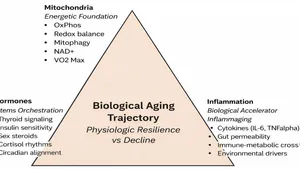
Mitochondria serve as the energetic and metabolic foundation of cellular function, regulating ATP production, redox balance, and adaptive stress responses. Hormonal networks-including thyroid, adrenal, gonadal, and metabolic hormones-coordinate energy utilization, tissue repair, reproduction, and circadian alignment. Chronic inflammation, often described as "inflammaging," acts as a key accelerator of biological aging, disrupting mitochondrial efficiency and hormonal signaling while promoting metabolic and immune dysregulation .
By conceptualizing aging through these interconnected pillars, the Longevity Triad provides a systems-based lens through which clinicians can identify dominant drivers of biological aging, prioritize diagnostics, and implement coordinated interventions. This model moves beyond symptom-based care toward precision strategies aimed at restoring physiologic balance, enhancing resilience, and supporting healthy aging across the lifespan.
II. BIOLOGICAL RATIONALE FOR THE LONGEVITY TRIAD
The Longevity Triad is grounded in converging evidence from geroscience, endocrinology, and metabolic medicine demonstrating that aging is driven by interdependent disruptions in cellular energy production, hormonal signaling, and immune regulation. Mitochondria, hormones, and inflammation represent biologically central and clinically actionable domains that both influence and are influenced by recognized hallmarks of aging. Together, these pillars provide a translational bridge between molecular aging biology and practical clinical care.
2.1 Mitochondria as the Energetic Foundation
Mitochondria play a central role in aging biology by regulating cellular energy production, redox homeostasis, apoptotic signaling, and adaptive stress responses. Oxidative phosphorylation (OxPhos) within the mitochondrial electron transport chain is responsible for the majority of cellular adenosine triphosphate (ATP) generation, enabling energy-intensive processes such as tissue repair, immune regulation, and hormonal signaling . With aging, mitochondrial efficiency declines, leading to reduced ATP output, increased electron leak, and excess reactive oxygen species (ROS) generation .
Redox imbalance resulting from mitochondrial dysfunction contributes to oxidative damage of lipids, proteins, and DNA, accelerating multiple hallmarks of aging including genomic instability and loss of proteostasis . Mitophagy-the selective removal of damaged mitochondria-is a critical quality-control mechanism that preserves mitochondrial integrity. Impairment of mitophagy with age allows dysfunctional mitochondria to accumulate, further amplifying oxidative stress and inflammatory signaling [11].
Clinically, early mitochondrial dysfunction often precedes overt disease and manifests as fatigue, reduced exercise tolerance, metabolic inflexibility, and impaired stress resilience. Biomarkers such as lactate and pyruvate provide insight into shifts toward anaerobic metabolism and redox imbalance, while elevated lactate-to-pyruvate ratios suggest impaired oxidative capacity . Nicotinamide adenine dinucleotide (NAD ) is a central cofactor in mitochondrial metabolism, supporting OxPhos, sirtuin activity, DNA repair, and mitophagy. Age-related NAD decline has been linked to mitochondrial dysfunction and impaired cellular resilience .
Cardiorespiratory fitness, quantified by maximal oxygen consumption ( max), offers a functional, integrative measure of mitochondrial health. max reflects the capacity of mitochondria to utilize oxygen for ATP production and is a strong predictor of cardiovascular and all-cause mortality, often outperforming traditional risk markers [14]. Declines in max may therefore serve as an early indicator of compromised mitochondrial function and accelerated biological aging, even in the absence of diagnosed disease.
2.2 Hormones as Systems Orchestrators
Hormones function as global signaling molecules that integrate energy availability, metabolism, reproduction, circadian rhythms, and tissue repair. Thyroid hormone, in particular, exerts profound effects on mitochondrial biogenesis, oxidative metabolism, and thermogenesis, directly influencing several hallmarks of aging. Triiodothyronine (T3) regulates transcription of genes involved in mitochondrial respiration, antioxidant defense, and lipid and glucose metabolism [15]. Subtle alterations in thyroid hormone signaling—even within reference ranges—may contribute to fatigue, weight gain, cognitive dysfunction, and reduced metabolic efficiency commonly observed with aging [16].
Midlife hormonal transitions further illustrate the role of endocrine signaling in aging trajectories. Perimenopause is characterized by fluctuating and ultimately declining estrogen and progesterone levels, which are associated with changes in body composition, insulin sensitivity, sleep architecture, and inflammatory tone . Estrogen plays a protective role in mitochondrial function, glucose homeostasis, and antioxidant defense; its decline may therefore amplify metabolic and inflammatory stress during aging .
Insulin resistance represents another key hormonal and metabolic inflection point. Impaired insulin signaling disrupts nutrient sensing pathways, promotes mitochondrial dysfunction, and enhances inflammatory signaling, linking metabolic disease to accelerated aging . In parallel, dysregulation of adrenal rhythms—particularly altered cortisol diurnal patterns—can impair mitochondrial efficiency, disrupt sleep and circadian alignment, and exacerbate immune dysfunction .
Collectively, age-related hormonal decline and dysregulation act as signal amplifiers of aging biology. When endocrine coordination deteriorates, mitochondrial inefficiency and inflammation are magnified, accelerating functional decline and reducing physiologic reserve.
2.3 Inflammation as the Accelerator
Chronic low-grade inflammation, often termed inflammaging, is a defining feature of biological aging and a central driver of age-related disease . Unlike acute inflammation, which is adaptive and self-limited, inflammaging reflects persistent immune activation driven by metabolic dysfunction, cellular senescence, mitochondrial damage, and environmental exposures. This sustained inflammatory state disrupts endocrine signaling, impairs mitochondrial function, and promotes tissue degeneration across organ systems .
The gut–immune-endocrine axis plays a pivotal role in modulating inflammatory tone. Age-related changes in gut microbiota composition, reduced microbial diversity, and increased intestinal permeability facilitate translocation of endotoxins such as lipopolysaccharide (LPS), triggering systemic immune activation . These processes directly influence insulin signaling, thyroid hormone metabolism, and sex hormone balance, reinforcing the interconnected nature of the Longevity Triad.
Environmental and metabolic factors further accelerate inflammatory aging. Exposure to endocrine-disrupting chemicals, heavy metals, ultra-processed foods, and excess caloric intake can activate inflammatory pathways and impair mitochondrial and hormonal function . Metabolic inflammation associated with visceral adiposity and insulin resistance increases circulating cytokines such as interleukin-6 and tumor necrosis factor- , which interfere with insulin and thyroid hormone signaling and promote further mitochondrial dysfunction .
Within the Longevity Triad, inflammation functions as a biological accelerator-intensifying dysfunction in mitochondrial and hormonal systems and driving the progression from subclinical imbalance to overt disease. Addressing inflammatory drivers is therefore essential for restoring system-wide resilience and supporting healthy aging. These interconnected biological processes are integrated within the Longevity Triad model, which frames aging as a systems-level phenomenon rather than isolated pathway dysfunction (Figure 1)
III. INTERDEPENDENCE OF THE LONGEVITY TRIAD
A defining feature of biological aging is the interdependence of core regulatory systems, rather than dysfunction within isolated pathways. Mitochondrial energetics, hormonal signaling, and inflammatory regulation operate as a tightly coupled network, with continuous bidirectional communication across cellular, tissue, and organ levels. Within the Longevity Triad, disruption of any single pillar initiates compensatory and maladaptive responses in the others, producing self-reinforcing cycles that accelerate biological aging and disease progression.
3.1 Bidirectional Signaling Across the Triad
Bidirectional signaling between mitochondria, hormones, and the immune system is fundamental to maintaining physiologic resilience. Mitochondria regulate endocrine and immune function through energy availability, redox signaling, and metabolite production. Conversely, hormonal and inflammatory signals directly influence mitochondrial biogenesis, efficiency, and turnover .
For example, thyroid hormone modulates mitochondrial oxidative phosphorylation, mitochondrial DNA transcription, and uncoupling protein activity, thereby influencing basal metabolic rate and thermogenesis . At the same time, mitochondrial dysfunction alters thyroid hormone conversion and signaling, contributing to reduced T3 activity at the tissue level despite normal circulating hormone concentrations . Similarly, proinflammatory cytokines such as interleukin-6 and tumor necrosis factor- impair insulin and thyroid hormone signaling while suppressing mitochondrial respiration, linking immune activation to metabolic decline .
These reciprocal interactions demonstrate that mitochondrial, hormonal, and inflammatory pathways do not operate in parallel but rather as mutually regulatory systems, each shaping the function of the others in real time.
3.2 Feed-Forward Loops and Accelerated Aging
When regulatory balance is lost, bidirectional signaling can evolve into feed-forward loops that amplify dysfunction. Mitochondrial inefficiency increases reactive oxygen species production, which activates inflammatory pathways and promotes cellular senescence . Senescent cells, in turn, secrete proinflammatory cytokines and chemokines-collectively termed the senescence-associated secretory phenotype (SASP)-that further impair mitochondrial function and disrupt endocrine signaling .
Hormonal dysregulation similarly participates in feed-forward aging loops. Declining estrogen levels during perimenopause reduce mitochondrial antioxidant capacity and insulin sensitivity, increasing oxidative stress and inflammatory burden . Insulin resistance exacerbates mitochondrial dysfunction by impairing nutrient sensing and promoting lipid accumulation, which further stimulates inflammatory signaling within adipose and immune tissues . Altered cortisol rhythms may compound these effects by disrupting circadian regulation of mitochondrial metabolism and immune activity .
These reinforcing loops help explain why age-related symptoms often cluster-fatigue, weight gain, cognitive changes, and musculoskeletal pain rarely arise in isolation—and why progression from subclinical imbalance to overt disease can occur rapidly once compensatory capacity is exceeded. When regulatory balance is lost, bidirectional signaling across the Longevity Triad can evolve into feed-forward loops that amplify dysfunction and accelerate aging biology (Figure 2).
3.3 Why Treating One Pillar Alone Fails
Traditional clinical approaches often target a single dominant abnormality-thyroid hormone replacement for fatigue, glucose-lowering therapy for insulin resistance, or anti-inflammatory agents for chronic pain. While such interventions may produce partial or short-term improvements, they frequently fail to restore durable physiologic balance because upstream and parallel drivers of dysfunction remain unaddressed.
For instance, optimizing thyroid hormone levels without addressing mitochondrial insufficiency may not resolve fatigue or exercise intolerance if ATP production and redox balance remain impaired. Similarly, improving glycemic indices without reducing inflammatory burden or restoring hormonal coordination may leave patients vulnerable to ongoing metabolic stress and disease progression . Anti-inflammatory strategies that do not address underlying metabolic dysfunction, gut permeability, or mitochondrial damage may blunt symptoms while allowing aging biology to advance unchecked .
The Longevity Triad framework emphasizes that effective longevity care requires coordinated, multi-pillar intervention. By identifying dominant drivers while simultaneously supporting interconnected systems, clinicians can interrupt feed-forward loops, restore adaptive signaling, and shift the biological aging trajectory toward resilience rather than decline. This integrative approach aligns with geroscience principles and provides a practical roadmap for translating aging biology into clinical action.
IV. CASE-BASED APPLICATION OF THE LONGEVITY TRIAD
To translate the Longevity Triad from conceptual framework to clinical practice, case-based application provides a pragmatic illustration of how mitochondrial resilience, hormonal orchestration, and inflammation modulation interact in real patients. The following cases demonstrate how dominant pillar dysfunction can be identified, prioritized, and addressed while supporting interconnected systems to restore physiologic balance and improve outcomes.
Case 1: Mitochondrial Dysfunction as the Dominant Driver
A 48-year-old woman presented with chronic fatigue, brain fog, and poor exercise tolerance despite unremarkable standard laboratory evaluation. Her history included high occupational stress, disrupted sleep, and a sedentary lifestyle. Thyroid indices were within reference ranges, though free T3 was low-normal, and cortisol rhythm testing demonstrated a mild diurnal flattening.
a) Diagnostics
Given the symptom profile suggestive of impaired cellular energy production, mitochondrial assessment was prioritized. Urinary organic acid testing (OAT) revealed elevations in lactate and pyruvate with reduced Krebs cycle intermediates, indicating a shift toward inefficient oxidative metabolism and redox imbalance . Serum nutrient analysis demonstrated low coenzyme Q10 levels, while cardiorespiratory fitness testing revealed a reduced max for age and sex, consistent with impaired mitochondrial oxidative capacity [14].
Together, these findings supported early mitochondrial dysfunction preceding overt metabolic disease, a pattern increasingly recognized in aging biology [10].
b) Interventions
Interventions focused on restoring mitochondrial efficiency and adaptive capacity. Targeted supplementation included precursors to support redox balance and sirtuin activity, ubiquinol to enhance electron transport chain function, and acetyl-L-carnitine to improve fatty acid transport into mitochondria [13,28]. Exercise was prescribed with an emphasis on gradual progression, incorporating low-intensity aerobic movement and limited high-intensity interval training (HIIT) to stimulate mitochondrial biogenesis [29]. Sauna therapy was added as an adjunctive hormetic stressor shown to upregulate heat shock proteins and mitochondrial adaptive pathways [30].
c) Outcomes
At three-month follow-up, the patient reported marked improvement in energy and cognitive clarity, with resolution of post-exertional fatigue. Objective gains included a meaningful increase in max and normalization of lactate-to-pyruvate ratio, supporting improved oxidative metabolism. This case illustrates how mitochondrial dysfunction may represent an early and reversible driver of biological aging when appropriately identified and treated.
Case 2: Hormonal Dysregulation Amplifying Aging Biology
A 50-year-old woman with known Hashimoto thyroiditis presented with fatigue, weight gain, vasomotor symptoms, mood lability, and declining metabolic resilience during perimenopause. She was receiving stable levothyroxine therapy with thyroid-stimulating hormone (TSH) within reference range but continued to experience persistent symptoms.
a) Diagnostic Considerations
Expanded endocrine assessment revealed thyroid autoimmunity with elevated anti-thyroid peroxidase antibodies, low-normal free T3, and evidence of insulin resistance based on fasting insulin and homeostatic model assessment of insulin resistance (HOMA-IR). Fluctuating estradiol and low luteal progesterone levels were consistent with perimenopausal transition. Given emerging evidence linking estrogen metabolism to gut microbiota, the consideration of estrobolome function and fiber intake was incorporated into the clinical assessment [31,32].
b) Interventions
Therapeutic strategy focused on restoring hormonal coordination while mitigating downstream metabolic and inflammatory effects. Micronutrients with evidence for thyroid and metabolic support-including selenium, myoinositol, and vitamin D-were initiated . Botanical interventions such as diindolylmethane (DIM) and chasteberry were used to support estrogen metabolism and progesterone balance . Insulin sensitivity was addressed through dietary modification, resistance training, and use of insulin-sensitizing nutraceuticals when appropriate.
Hormone replacement therapy (HRT) was discussed as a future option, with emphasis on individualized, low-dose transdermal estrogen combined with micronized progesterone when clinically indicated. Emerging evidence suggests that appropriate sex hormone replacement during midlife may support mitochondrial function, metabolic health, and longevity-related pathways .
c) Clinical Implications
This case demonstrates how hormonal dysregulation acts as a signal amplifier of aging biology, magnifying mitochondrial inefficiency and inflammatory burden. Addressing endocrine orchestration within the Longevity Triad framework allowed for symptom improvement while targeting upstream aging mechanisms.
Case 3: Chronic Inflammation Driving Systemic Decline
A 53-year-old man with metabolic syndrome presented with low energy, central adiposity, joint stiffness, and progressive cardiometabolic risk. Laboratory evaluation revealed elevated hemoglobin A1c, fasting insulin, dyslipidemia, and markedly elevated high-sensitivity C-reactive protein and proinflammatory cytokines, consistent with chronic low-grade systemic inflammation.
a) Diagnostic Findings
Further evaluation highlighted gut–immune axis disruption, including reduced microbial diversity and elevated markers of intestinal permeability. Environmental exposure screening revealed borderline elevations in heavy metals, raising concern for inflammatory and endocrine-disrupting contributors. Chronic inflammation in this context reflected both metabolic dysfunction and cumulative environmental burden .
b) Interventions
Intervention prioritized inflammation modulation while supporting metabolic and mitochondrial recovery. A Mediterranean-style, anti-inflammatory dietary pattern was implemented alongside time-restricted eating to improve insulin sensitivity. Omega-3 fatty acids, curcumin, magnesium, and zinc were prescribed to reduce inflammatory signaling and support immune balance .
Gut barrier repair strategies included probiotics, prebiotic fibers, and targeted mucosal support. Sauna therapy and selected binding agents were used cautiously to assist with toxin mobilization and elimination, alongside lifestyle strategies to reduce ongoing exposures .
c) Outcomes
Within three months, the patient experienced substantial improvement in energy, joint symptoms, and body composition, accompanied by reductions in inflammatory markers and improved metabolic indices. This case highlights inflammation as a central accelerator within the Longevity Triad, capable of destabilizing mitochondrial and hormonal systems if left unaddressed.
d) Clinical Synthesis
Together, these cases illustrate how the Longevity Triad enables clinicians to identify dominant drivers of aging while addressing interconnected pathways. Rather than treating fatigue, weight gain, or metabolic dysfunction in isolation, a tri-pillar approach facilitates interruption of feedforward loops and supports restoration of physiologic resilience.
V. INTEGRATED CASE: APPLYING THE LONGEVITY TRIAD IN CLINICAL PRACTICE
To illustrate the integrative power of the Longevity Triad, an aggregated case example demonstrates how mitochondrial dysfunction, hormonal dysregulation, and chronic inflammation commonly coexist in midlife patients and require coordinated intervention. This case highlights triad mapping, prioritization logic, synergistic treatment design, and measurable outcomes.
5.1 Triad Mapping
Maria, a 52-year-old woman, presented with persistent fatigue despite adequate sleep, progressive central weight gain, cognitive "brain fog," and diffuse joint discomfort limiting physical activity. Her medical history was notable for perimenopausal symptoms and a family history of cardiometabolic disease. Standard laboratory testing had been previously reported as "normal," yet symptoms persisted and progressed.
Using the Longevity Triad framework, diagnostic findings were mapped across all three pillars:
Mitochondria: Reduced max for age and sex, elevated lactate-to-pyruvate ratio, and low serum coenzyme Q10 suggested impaired oxidative phosphorylation and reduced energetic reserve.
Hormones: Elevated thyroid-stimulating hormone with low-normal free T3 and free T4, elevated thyroid peroxidase antibodies, fluctuating estradiol, low luteal progesterone, and elevated fasting insulin indicated thyroid autoimmunity, perimenopausal transition, and insulin resistance.
Inflammation: Elevated high-sensitivity C-reactive protein and interleukin-6, along with reduced gut microbial diversity and increased intestinal permeability markers, reflected chronic low-grade systemic inflammation.
This comprehensive mapping revealed that Maria's symptoms were not attributable to a single abnormality but rather to convergent dysfunction across all three pillars, consistent with accelerated biological aging rather than isolated disease.
5.2 Prioritization Logic
Although all three pillars were impaired, prioritization was guided by identifying dominant drivers and feed-forward interactions. In Maria's case, mitochondrial dysfunction and inflammation were identified as proximal contributors to fatigue and metabolic inflexibility, while hormonal dysregulation functioned as a signal amplifier perpetuating both processes.
Accordingly, early intervention emphasized restoring cellular energy production and reducing inflammatory burden while simultaneously supporting hormonal coordination. This approach aligns with geroscience principles suggesting that improving energetic capacity and inflammatory tone may enhance responsiveness to endocrine interventions and improve overall physiologic resilience .
5.3 Synergistic Intervention Strategy
A coordinated, multi-pillar intervention plan was implemented:
Mitochondrial Support: NAD precursors, ubiquinol, and acetyl-L-carnitine were initiated to support redox balance, electron transport chain efficiency, and fatty acid oxidation. Structured physical activity emphasized daily low-intensity movement with gradual introduction of high-intensity interval training to stimulate mitochondrial biogenesis [24]. Sauna therapy was added as a hormetic intervention to promote mitochondrial adaptation and reduce inflammatory signaling [30].
Hormonal Optimization: Thyroid therapy was titrated with attention to free T3 and free T4 rather than TSH alone, and selenium and myo-inositol were introduced to support thyroid autoimmunity and hormone conversion. Perimenopausal support focused on nutritional strategies, circadian alignment, and discussion of future individualized hormone replacement therapy as symptoms and risk profile evolved. Insulin resistance was addressed through time-restricted eating, resistance training, and dietary protein optimization [17].
Inflammation Modulation: A Mediterranean-style, anti-inflammatory diet rich in polyphenols and omega-3 fatty acids was prescribed. Targeted supplementation included omega-3 fatty acids and curcumin to reduce cytokine signaling. Gut barrier repair strategies incorporated probiotics, prebiotic fiber, and mucosal support nutrients, while environmental exposure reduction and sauna-assisted detoxification were used to lower inflammatory burden [4,5].
Importantly, several interventions-exercise, sauna therapy, nutrient repletion-were intentionally selected for their cross-pillar effects, reinforcing synergy rather than redundancy.
5.4 Objective and Subjective Outcomes
At three-month follow-up, Maria reported substantial improvement in energy, mental clarity, sleep quality, and joint discomfort. Afternoon fatigue and post-exertional crashes resolved, and she resumed regular physical activity without symptom exacerbation.
Objective measures demonstrated parallel improvement, including increased max, normalization of lactate-to-pyruvate ratio, reduced inflammatory markers, improved fasting insulin, and stabilization of thyroid parameters. Waist circumference decreased, and metabolic flexibility improved as reflected by more stable energy levels throughout the day.
5.5 Clinical Insight
This integrated case demonstrates how the Longevity Triad framework facilitates identification of interconnected drivers of aging, guides prioritization without oversimplification, and supports synergistic intervention strategies. By addressing mitochondrial resilience, hormonal orchestration, and inflammation modulation concurrently, clinicians can interrupt feedforward aging loops and shift patients toward improved physiologic reserve and healthier aging trajectories.
VI. CLINICAL WORKFLOW FOR PROVIDERS: OPERATIONALIZING THE LONGEVITY TRIAD
For longevity-focused care to be clinically effective and scalable, conceptual models must translate into structured, reproducible workflows. The Longevity Triad provides a practical framework that integrates intake, diagnostic prioritization, and tiered intervention while preserving individualization. This section outlines a stepwise clinical workflow designed for use in endocrine, metabolic, and integrative medicine practices. A stepwise clinical workflow integrating intake, triad mapping, diagnostic layering, and tiered intervention is illustrated in Figure 3.
6.1 Intake and Risk Stratification
The initial patient encounter emphasizes identification of early aging signals rather than established disease alone. A comprehensive intake focuses on symptoms commonly associated with declining physiologic resilience, including fatigue, sleep disturbance, cognitive changes, weight gain, exercise intolerance, mood shifts, and chronic pain. Detailed personal and family histories assess cardiometabolic, autoimmune, neurodegenerative, and oncologic risk, while lifestyle and environmental exposure histories capture contributors often overlooked in conventional care.
Validated symptom inventories, fatigue scales, and metabolic questionnaires can assist in risk stratification and longitudinal tracking. Early identification of multisystem symptoms may signal accelerated biological aging even when routine laboratory values fall within reference ranges [6].
6.2 Triad Mapping
Following intake, clinical data are mapped across the three pillars of the Longevity Triad to identify dominant and contributory drivers of dysfunction:
Mitochondria: Fatigue, reduced exercise tolerance, metabolic inflexibility, recurrent illness.
Hormones: Thyroid dysfunction, insulin resistance, perimenopausal or andropausal symptoms, adrenal rhythm disruption.
Inflammation: Chronic pain, autoimmunity, cardiometabolic disease, gut dysbiosis, toxin burden.
If dysfunction is identified in two or more pillars, a synergistic, multi-pillar intervention is prioritized. When one pillar predominates, it becomes the initial therapeutic anchor while the remaining systems are concurrently supported to prevent compensatory imbalance. This mapping process provides clarity without oversimplification and allows clinicians to move beyond symptom-based treatment.
6.3 Diagnostic Layering
Rather than indiscriminate testing, diagnostic evaluation is layered based on triad mapping and clinical suspicion. This strategy improves diagnostic yield and reduces patient burden.
Mitochondrial Assessment: targeted metabolic markers such as lactate and pyruvate, nutrient cofactors (eg, coenzyme Q10, carnitine), and functional testing including max or submaximal exercise testing [14].
Hormonal Evaluation: comprehensive thyroid panels (TSH, free T4, free T3, thyroid antibodies), metabolic markers (fasting insulin, HbA1c), sex hormone assessment during midlife transition, and cortisol rhythm testing when indicated [15].
Inflammatory and Immune Markers: high-sensitivity C-reactive protein, cytokines when appropriate, advanced lipid panels, gut permeability and microbiome testing, and selective toxin or exposure screening [5].
This layered approach aligns with geroscience principles by focusing on modifiable aging drivers rather than isolated disease endpoints .
6.4 Tiered Intervention Framework
Interventions are structured into phased tiers to allow progressive restoration of physiologic resilience while maintaining flexibility for individual response.
6.5 3-Month Intensive Phase
The initial phase focuses on stabilization and repletion. Core goals include reducing inflammatory burden, correcting nutrient deficiencies, improving sleep and circadian alignment, and initiating foundational lifestyle interventions. Early mitochondrial support and gentle movement are emphasized to generate rapid functional gains and improve patient engagement.
6.6 6-Month Integration Phase
During this phase, interventions are refined and expanded. Exercise prescriptions progress to include resistance training and targeted high-intensity intervals as tolerated. Hormonal optimization is adjusted based on clinical response and laboratory trends. Gut health, metabolic flexibility, and stress resilience strategies are reinforced to consolidate gains.
6.7 12-Month Maintenance Phase
Long-term maintenance emphasizes durability and prevention. Focus shifts toward sustaining metabolic health, preserving muscle and bone, minimizing inflammatory exposures, and reassessing biological aging markers. Patients are encouraged to transition from intensive support toward self-efficacy and lifestyle mastery.
Tiered care pathways support adherence while acknowledging that longevity optimization is an ongoing, adaptive process rather than a finite treatment course.
6.8 Monitoring and Reassessment Strategies
Monitoring combines objective biomarkers with patient-reported outcomes to assess progress and guide iteration. Reassessment at approximately three months includes repeat symptom inventories, targeted laboratory testing, and functional measures such as exercise tolerance or max when feasible. Six-month evaluations emphasize trend analysis and intervention refinement, while annual assessments support long-term risk reduction and preventive strategy adjustment.
Wearable technologies and self-tracking tools-including heart rate variability, sleep metrics, and glucose monitoring-may provide additional insight into physiologic adaptation and patient engagement [38]. Continuous feedback reinforces adherence and allows timely intervention before decline becomes clinically apparent.
6.9 Clinical Implications
By embedding the Longevity Triad within a structured workflow, clinicians can systematically identify aging-related dysfunction, prioritize interventions, and monitor outcomes across interconnected biological systems. This approach facilitates early intervention, improves durability of results, and aligns clinical practice with the evolving science of healthy aging.
VII. DISCUSSION
7.1 Alignment of the Longevity Triad with Geroscience
The Longevity Triad aligns closely with the foundational principles of geroscience, which posit that aging is driven by a limited number of interconnected biological mechanisms that underlie multiple chronic diseases . The hallmarks of aging framework emphasizes that processes such as mitochondrial dysfunction, dysregulated nutrient sensing, altered intercellular communication, and chronic inflammation do not act independently but form an integrated network that determines biological aging trajectories .
By centering mitochondrial resilience, hormonal orchestration, and inflammation modulation, the Longevity Triad operationalizes these mechanistic insights into a clinically actionable structure. Mitochondrial dysfunction maps directly to impaired energy metabolism and redox imbalance; hormonal dysregulation influences nutrient sensing, circadian alignment, and tissue repair; and chronic low-grade inflammation reflects altered intercellular communication and immune aging. This tri-pillar organization translates complex aging biology into domains that are both measurable and modifiable in clinical practice, thereby bridging the gap between bench science and patient care .
Importantly, the Longevity Triad emphasizes physiologic resilience rather than disease endpoints, consistent with geroscience's focus on extending healthspan rather than lifespan alone [2].
7.2 Advantages Over Single-Pathway Care
Traditional medical models frequently approach age-related symptoms through isolated pathways—targeting glycemia, thyroid function, lipid levels, or inflammatory markers independently. While such approaches may address discrete abnormalities, they often fail to account for upstream drivers and compensatory mechanisms, resulting in incomplete symptom resolution and progressive polypharmacy.
The Longevity Triad offers several advantages over single-pathway care. First, it recognizes bidirectional and feed-forward interactions among biological systems, explaining why interventions targeting only one domain frequently yield limited or transient benefits. Second, it enables prioritization without reductionism, allowing clinicians to identify dominant drivers while simultaneously supporting interconnected pathways. Third, it supports earlier intervention by identifying subclinical dysfunction—such as declining max, mitochondrial inefficiency, or inflammatory burden-before irreversible disease manifests.
This systems-based approach aligns with emerging evidence that interventions targeting fundamental aging mechanisms may yield broader benefits across multiple organ systems than disease-specific therapies alone [7].
7.3 Limitations
Several limitations of the Longevity Triad framework warrant consideration. First, much of the supporting evidence is derived from mechanistic studies, observational data, and case-based clinical application rather than large-scale randomized controlled trials specifically designed to test multi-pillar interventions. While this reflects the current state of geroscience translation, it limits definitive causal inference.
Second, comprehensive triad-based evaluation may require diagnostic tools and expertise not universally available, potentially limiting immediate scalability in all practice settings. Additionally, individualized, multi-domain interventions may increase short-term complexity for both clinicians and patients, emphasizing the need for clear workflows and patient education.
Finally, although the Longevity Triad is designed to be adaptable, it does not replace disease-specific guidelines or standard-of-care therapies but rather complements them. Careful integration with existing clinical standards remains essential.
7.4 Need for Prospective and Interventional Studies
Prospective research is needed to formally evaluate the Longevity Triad as a clinical strategy. Longitudinal studies assessing triad-based diagnostics and interventions could clarify their impact on functional outcomes, metabolic health, inflammatory burden, and markers of biological aging. Pragmatic trials comparing triad-guided care with standard single-pathway management would be particularly valuable in determining effectiveness, cost-efficiency, and patient-centered outcomes.
Additionally, validation of composite outcome measures-integrating functional capacity, symptom burden, and molecular aging markers—would strengthen the evidence base for systems-oriented longevity care [6].
7.5 Future Research Directions
Future research should focus on refining and validating the Longevity Triad across diverse populations and clinical contexts. Key priorities include:
Biomarker development, including integrated panels that reflect mitochondrial function, hormonal coordination, and inflammatory load.
Mechanistic studies examining how targeted interventions within one pillar influence the others over time.
Implementation science, evaluating how triad-based workflows can be efficiently incorporated into primary care, endocrine, and preventive medicine settings.
Interventional trials assessing combined lifestyle, nutritional, and hormonal strategies on healthspan-related outcomes.
As geroscience continues to mature, frameworks such as the Longevity Triad may serve as essential tools for translating aging biology into practical, patient-centered care strategies that prioritize resilience, prevention, and long-term vitality.
VIII. CONCLUSION
Longevity should be understood as a process of biological orchestration rather than isolated optimization. Efforts to correct single laboratory abnormalities or target individual pathways-while often necessary-are insufficient to meaningfully alter aging trajectories when underlying system-level dysfunction persists. The Longevity Triad reframes aging as a dynamic interaction among mitochondrial resilience, hormonal orchestration, and inflammation modulation, emphasizing balance, adaptability, and physiologic reserve as central determinants of healthy aging.
As the science of aging continues to evolve, systems endocrinology is poised to play a critical role in translating geroscience into clinical care. Endocrine networks integrate energy metabolism, immune signaling, circadian rhythms, and tissue repair, positioning hormones as both sensors and regulators of biological aging. When evaluated in isolation, endocrine signals may appear "normal"; when interpreted within a systems framework, they reveal patterns of declining resilience and emerging dysfunction that precede overt disease.
The integration of precision diagnostics with aging biology represents a necessary next step in longevity medicine. Functional metabolic testing, comprehensive hormonal assessment, inflammatory and immune biomarkers, and exposure-aware evaluation allow clinicians to identify early drivers of aging and intervene before irreversible pathology develops. When combined with coordinated, multi-pillar interventions, these tools enable a shift from reactive disease management toward proactive healthspan preservation.
The Longevity Triad offers a practical, clinically adaptable framework for this transition. By aligning mechanistic insights from geroscience with real-world diagnostic and therapeutic strategies, it supports a new model of care-one that prioritizes resilience, coordination, and long-term vitality. As longevity medicine advances, embracing systems-based approaches will be essential to delivering personalized, effective, and sustainable strategies for healthy aging.
Conflict of Interest
The authors declare no conflict of interest.
Ethical Approval
Not applicable
Data Availability
The datasets used in this study are openly available at [repository link] and the source code is available on GitHub at [GitHub link].
Funding
This work did not receive any external funding.
References
Cite this article
Special Issue
Launch a focused special issue to highlight research, emerging trends, and expert insights in your academic field.