

Abstract
Young people are a window of hope and a demographic dividend in many developing countries, including Zimbabwe. As such, societies must be conducive to nurturing a new generation that will spearhead the fourth industrial revolution agenda in the country. However, young people are faced by a myriad of sexual and reproductive health (SRH) problems which include unintended pregnancies and the consequent unsafe abortions.This study aims to assess the prevalence of teenage pregnancies in Manicaland and Mashonaland Central Provinces, identify the factors contributing to teenage pregnancy in these regions, and examine their consequences. The study utilised a triangulation of qualitative and quantitative methods, including surveys, focus group discussions (FGDs), and key informant interviews (KIIs). A survey quantified the magnitude of teenage pregnancies facing young people in Zimbabwe The survey involved 600 female adolescents aged 10-19 years, with the number of participants from each province determined using a probability proportional to size approach. FGDs were undertaken so as to obtain data on community perceptions on teenage pregnancy as well as the socio-cultural and religious beliefs underlying teenage pregnancies in Zimbabwe. The KII provided service provider level information on the challenges faced by young people and key statistics on incidence of teenage pregnancies. They also provided factors underlying teenage pregnancies. Purposive sampling was employed for the selection of participants in the FGDs and KIIs. Quantitative data were analysed using the Statistical Package for Social Sciences (SPSS), while qualitative data were analysed using thematic analysis and NVIVO version 11.The study findings revealed that 16% of the adolescents aged 10-19 years had experienced pregnancy. Various factors were associated with teenage pregnancy, including age, ethnicity, marital status, self-efficacy, knowledge of pregnancy, attitudes towards pregnancy and condom use, orphan hood, religion, religiosity, peer pressure, poverty, socio-cultural practices, sexual abuse, social media, transactional sex and the Internet.Based on the study findings, it is recommended to enhance female adolescent empowerment through life skills initiatives
Explore Digital Article Text
I. INTRODUCTION
Globally, teenage pregnancy continues to be a significant challenge, contributing to both maternal and child mortality, perpetuating a harmful cycle of poor health and poverty. Since the 1994 International Conference on Population and Development, which marked a significant milestone in the discourse on reproductive health by explicitly addressing reproductive health rights, family planning, sexually transmitted diseases, and HIV prevention, discussions on human sexuality and adolescents have evolved. In particular, the ICPD Programme for Action highlighted a significant oversight in addressing the reproductive health needs of adolescents within the existing reproductive health services. It further emphasized that information and services should be accessible to adolescents, aiding their understanding of sexuality and providing protection against unwanted pregnancies and sexually transmitted diseases. Despite great improvements for adolescents to access sexual and reproductive health care, inequalities between and within countries remain and is considered an unfinished agenda for achieving universal access to sexual and reproductive health and rights included in the Sustainable Development Goals 2015–2030 (UNAIDS, 2020). Despite this progress, there is an incessant need to improve the sexual and reproductive health rights (SRHR) needs of people, if the SADC region is to continue to reduce morbidity and mortality, unlock its human development potential, meet the Sustainable Development Goals (SDGs) and the targets of the African Union's Maputo Plan of Action 2016–2030 (SADC Regional strategy, 2019).
This article is the outcome of a study that sought to assess teenage pregnancy in Zimbabwe. This article gives the background to the study and highlights the research problem. Literature gaps will be identified on teenage pregnancy. It also gives an insight into the objectives which provides direction to the study. This article reviews previous literature on teenage pregnancy from global, regional and national levels. Theoretical framework underpinning the study and the methodology employed will be presented. The major findings and discussion will be presented on teenage pregnancy. The article will end by giving the conclusions and recommendations.
II. BACKGROUND TO THE STUDY
Adolescence, according to the World Health Organization, encompasses the age range of 10 to 19 years and is commonly divided into early adolescence (10–14 years) and late adolescence (15–19 years). (Ayanaw Habitu, Yalew, Azale Bisetegn, 2018). Research suggest that more than 16 million adolescent girls experience pregnancies worldwide annually, and 95% of these occurrences take place in low and middle-income countries. (Bellingham-Young and Odejimi, 2016). While the global adolescent birth rates have decreased from 65 births per 1000 women in 1990 to 47 births per 1000 women in 2015, the incidence of adolescent pregnancies has remained unacceptably high in sub-Saharan Africa (Ahinkorah et al., 2021, Ahinkorah et al., 2022)._A recent meta-analysis disclosed that the prevalence of adolescent pregnancy is 18.8% across the entire African continent (Kassa et al., 2018). In Sub-Saharan Africa, the rate is slightly higher at 19.3%, with variations ranging from 21.5% in East Africa to 9.2% in North Africa (Kassa et al., 2018). In certain countries, the incidence of teenage pregnancy reaches alarming levels, such as 44.3% in Congo, 39.4% in Angola, 38% in Gabon, and 38.9% in Liberia (Kassa et al., 2018).
Zimbabwe boasts a youthful demographic, with approximately one-third falling within the 10-24 age bracket. As per the National Population Census of 2012, adolescents aged 10-19 make up 24% of the country's total population. This demographic faces various developmental challenges, encompassing issues like unemployment, restricted educational access, gender-based violence, inter-generational relationships, child marriage, pregnancy, HIV infection, and other adverse reproductive health outcomes. Currently, 22% of women age 15-19 have begun childbearing, with 17% already given birth and additional 5% pregnant with their first child (Zimstat and ICF international, 2016).
Although teenage childbearing has remained unacceptably higher, it has declined slightly from 19% in 2010-11 to 17% in 2015 (Zimstat and ICF international, 2016). Research has revealed significant rural-urban differentials based on the percentage who had begun childbearing, showing that rural adolescent girls were almost three times as likely to become pregnant 27%, compared with 10% among their urban counterparts (Zimstat and ICF international, 2016). The proportion of adolescents who had started childbearing were highest in Mashonaland Central (31%), Matabeleland South (30%) and Manicaland (28%) and lowest in Harare (10%) (Zimstat and ICF international, 2016) In Zimbabwe, the adolescent fertility rate for women aged 15-19 years was 108 births per 1,000 women in 2019 (ZIMSTAT and UNICEF, 2019). Previous research indicated a gradual increase in the adolescent fertility rate from 99 births per 1,000 women aged 15-19 in 2005-06 to 115 births per 1,000 women aged 15-19 in 2010-11. However, it subsequently decreased to 110 births per 1,000 women aged 15-19 in 2015 and further declined to 108 births per 1,000 women in 2019 (ZIMSTAT and UNICEF, 2019; ZIMSTAT and ICF International, 2016). Adolescents in rural areas were twice as likely to give birth compared to those in urban areas (144 vs 71 per 1000). This is a cause for concern given that women who begin fertility at younger ages suffer from several health risks.
Early marriage is a significant immediate factor contributing to teenage pregnancy. Early marriage affects 5% of girls globally and 12% in sub-Saharan Africa (UNAIDS, 2019a). Northern Africa, Western Asia and Southern Asia (particularly India) have witnessed the largest declines in child marriage since 1994. In Southern Asia, a girl's risk of early marriage declined by more than 40%, from 53.3% to 29.9%, in Latin America and the Caribbean, there is no evidence of progress, with a constant 25% of girls affected (UNAIDS, 2019a). The global burden of child marriage is shifting to sub-Saharan Africa where rates of progress need to be accelerated significantly (UNICEF, 2018).
Similar to other Sub-Saharan countries, Zimbabwe still has early marriage practices. Data from ZDHS shows that the proportion of youth who have been married has slightly increased from 19% in 1994 to 20% in 2015 for female youths aged 15-19 years. However, the corresponding percentages for males are lower. This reflects a persistent feature that in Sub Saharan Africa, adolescent women marry older men (Abdool Karim et al., 2017; Abdool Karim, Q., 1992; Barbieri & Hertrich, 2005; Dellar et al., 2015; Mavhu et al., 2017; Remez et al., 2014). This behaviour suggests wide age differences between spouses (often referred to as age mixing) which can lead to power imbalances in marriages and an increased risk of HIV infection for young married women, since older husbands have more years of sexual experience and thus, higher HIV prevalence (Clark, 2004).
Research have demonstrated a strong relationship between age mixing and gender based violence. The National Baseline Survey on Life Experiences of Adolescents revealed that approximately one third of females aged 18-24 years reported having experienced some form of sexual violence (sexual touching, attempted sex, forced sex, or pressured sex) before the age of 18 (ZIMSTAT & CCORE, 2013). Of these, 56% reported that the first incident occurred when they were 16-17 years old, compared to 27% and 17%, who indicated that they were aged 14-15 years old and less than 13 years, respectively (ZIMSTAT & CCORE, 2013). Of those aged 13-17, about 43% had unwanted first sexual intercourse, to mean that, they were either forced, pressured, tricked, or threatened to engage in sexual intercourse (ZIMSTAT & CCORE, 2013).
A study in South Africa has shown that having a partner who is five years older increases one's risk of having sex with an HIV positive man by three times (Maughan-Brown et al., 2014). A study in Zimbabwe also reported that, although young women perceived HIV risk to be higher in older men, they still had unprotected sex with them suggesting that economic incentives outweighed HIV risk (Mavhu et al., 2017). In addition, this undermines the negotiation powers of such young women as some young women reported having sexual relationships with men they knew had high HIV risk due to economic reasons (Mavhu et al., 2017). A study in Zimbabwe among HIV positive young women reported that they had acquired HIV from their husbands or romantic partners (Mavhu et al., 2017).
In Zimbabwe, adolescent marriage is closely related to adolescent motherhood, since embedded traditional values demand that newly married women should strengthen their marriage by giving birth (Chitereka J. and Nduna B., 2010). Since Zimbabwean traditional norms denounce childbirth to unmarried people, teenage pregnancies outside of marriage are generally unplanned (Remez et al., 2014). Unplanned pregnancies can result to furtive and consequently risky abortions. However, because abortion is illegal in Zimbabwe, the magnitude cannot be quantified (Remez et al., 2014).
Paradoxically, despite the high adolescent fertility rates presented in the preceding section, Zimbabwe has a high prevalence of contraceptive use. Zimbabwe had one of the highest contraceptive prevalence rate (67%) in sub-Saharan Africa compared to countries in West Africa (9%), Central Africa (7%), Eastern Africa (22%) and North Africa (45%) (UNFPA, 2013). In the SADC region contraceptive prevalence rates (CPR) vary from a low of 13% in Angola, to a high of 54.6% in South Africa and 66.5% in Zimbabwe (UNAIDS, 2018). As reported by UNAIDS (2018), women facing economic challenges, young women, and those with lower levels of education are less likely to utilize family planning services.
Contraceptive use can prevent unintended pregnancy and early childbearing and their consequences. Modern contraceptive use is higher in high income countries (58%) than in low-income countries (33%) (Woog, Singh and Browne, 2015). In more than two-thirds of African countries, modern contraceptive use is below 20% (Woog, Singh and Browne, 2015). In sub-Saharan Africa more than 60% of adolescents who wish to avoid pregnancy have an unmet need for modern contraception and they account for more than 80% of unplanned pregnancies in this age group (UNFPA, 2013). In Zimbabwe, use of modern contraceptive methods among adolescent women is slowly increasing from 35% in 1999 to 45% in 2015 (ZIMSTAT and ICF International, 2016). Reasons for low uptake of contraception among married adolescents include pressure exerted by tradition that young women should have children (Remez et al., 2014).
Studies have also shown that, high levels of adolescent pregnancy and childbearing in Africa are largely because of lack of adequate information and barriers to accessing and using contraception (Bankole & Malarcher, 2010). In SSA, an estimated 35% of pregnancies among adolescents are unwanted (World Health Organization, 2018). For example, a study in Swaziland reported that due to lack of knowledge, adolescents practised unsafe sex and were not aware that they could be pregnant or are at risk of contracting HIV and AIDS (Remez et al., 2014). According to the Zimbabwe adolescent fertility study of 2016, only 12% of adolescent girls were able to identify the correct period when a girl is most likely to become pregnant during her menstrual cycle (Ministry of Health and Child care (MoHCC, 2016).
Teenage pregnancy is associated with poor maternal and perinatal health outcomes, and also has a major social and economic impact. It is conceivable that factors beyond low contraception use and sexual violence contribute to the increasing fertility rates among adolescent girls in the country. Research indicates that the causes of adolescent pregnancies encompass poverty, peer pressure, alcohol and drug abuse, experimentation, cultural practices, and norms. However, the factors leading to the rise in adolescent pregnancy rates in an environment seemingly conducive to contraceptive use are not well understood. Hence, there is a need for further investigation into adolescent pregnancy, its contributing factors, and the consequences in Zimbabwe. To develop robust and effective interventions for preventing adolescent pregnancy, it is essential to comprehend the national, community, peer, family, and individual factors that contribute to this issue in Zimbabwe.
III. THEORETICAL FRAMEWORK
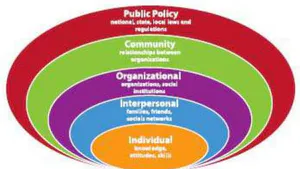
This study employed the Ecological Systems Theory (EST), as conceptualized by Bronfenbrenner in 1979. Bronfenbrenner (1979) acknowledged that human development unfolds within a complex network of interactions between the individual and the broader society. Consequently, he formulated a model delineating four layers of ecological structures, encompassing direct contacts that initiate with social agents and extend to comprehensive institutional systems. The ecological model intricately dissects the factors influencing teenage pregnancy while also providing a framework for investigating associated outcomes. Rather than solely focusing on individual teenage girls, the model delves into five potential levels of determinants: individual, interpersonal, organizational, community, and national/policy levels. These determinants operate concurrently at multiple levels. Factors at the individual level include the girl's socialization and how it shapes her beliefs about pregnancy. On the interpersonal level, family members may compel a girl into marriage. Schools, incorporated at the organizational level, may or may not offer sexuality education, leading adolescents to rely on potentially incorrect information from peers about sexuality, pregnancy, and contraception. At the community level, socio-cultural norms, values, and attitudes may hinder adolescent girls' access to sexual and reproductive health (SRH) services.
On the national level, the model accounts for factors such as policies governing adolescents' access to contraception or the lack of enforcement of laws prohibiting child marriage. The study expands the model to scrutinize the repercussions of adolescent pregnancy across these levels.
{"image_source":{"path":"images/b8e25d2138534cf949f887f04ab2806c0dd0166049a4fd398e49483665329f8e.jpg"},"content":"","chart_caption":[{"type":"text","content":"Adapted from Bronfenbrenner (1979)"},{"type":"text","content":"Figure 1: The Ecological Systems theory"}],"chart_footnote":[]}
IV. MATERIALS AND METHODS
This study aims to assess the prevalence of teenage pregnancies in Manicaland and Mashonaland Central Provinces, identify the factors contributing to teenage pregnancy in these regions, and examine their consequences. This research employed a cross-sectional research design, involving triangulation of both quantitative and qualitative methods. The study utilised a triangulation of qualitative and quantitative methods, including surveys, focus group discussions (FGDs), and key informant interviews (KIIIs). A survey quantified the magnitude of teenage pregnancies facing young people in Zimbabwe The survey involved 600 female adolescents aged 10-19 years, with the number of participants from each province determined using a probability proportional to size approach. Data was collected using mobile devices. Data collection was conducted by trained enumerators. During the training, enumerators were familiarized with the broad objectives of the study, the context in that the study came about and the importance of ethical conduct. A data entry template was developed for the questionnaire using the Census and Survey
Processing System (CSPro) 7.0.1 for windows. Quality assurance mechanisms were developed, including skip patterns and logical checks as well as pre-coding allowable response values. Frequency tables, Cross-tabulations and logistic regression were used for data analysis. FGDs were undertaken so as to obtain data on community perceptions on teenage pregnancy as well as the socio-cultural and religious beliefs underlying teenage pregnancies in Zimbabwe. The FGDs were conducted with homogenous groups in the two provinces which ensured adequate coverage of different age groups and different sexes. The FGDs included parents, female adolescents, and male adolescents aged 10-19 years living in both urban and rural areas of Zimbabwe. The KII provided service provider level information on the challenges faced by young people and key statistics on incidence of teenage pregnancies.
They also provided factors underlying teenage pregnancies. Purposive sampling was employed for the selection of participants in the FGDs and KIIs. Quantitative data were analysed using the Statistical Package for Social Sciences (SPSS), while qualitative data were analysed using thematic analysis and NVIVO version 11.No personal identifying information was collected. All the interviewers were taught on ethical conduct. There was an assurance to adolescents that all the information discussed during the interviews will be kept confidential. Consent was asked to use voice recorders.
IV. RESULTS
The study sought to assess teenage pregnancy focusing on two provinces of Manicaland and Mashonaland Central in Zimbabwe. Findings from 600 youths were presented.
4.1 Socio-Demographic Characteristics of Respondents
The sample is dominated by younger adolescents aged 10-14 years, 52%, while older adolescents aged 15-19 years comprise 48% of the sample. The largest proportion of adolescents, 65%, reported that they were living in urban areas while 35% were living in rural areas. The majority of adolescents, 59%, reported to have completed primary school, while, 40% reported to have completed secondary education. A negligible proportion of adolescents, 1% reported to have completed tertiary education. The majority of adolescents, 82%, reported that they were never married, while 16% reported that they were married or cohabiting. A negligible proportion of adolescents reported that they were divorced and separated respectively, 2% and 1%. A considerable proportion of adolescents, 19%, reported to have some disability of some sort. Christianity was the dominant religion among adolescents, 62%, while 32% reported Apostolic sector as their religion. A negligible proportion of adolescents reported that they were members of Islam and African Traditional Religion respectively, 4% and 2%.
Percentage Distribution of Demographic Socio-Characteristics of the Respondents
| Variable Name | % Respondents | P-value |
| Age | ||
| 10-14 | 52.6 | 0.505 |
| 15-19 | 47.4 | |
| Place of residence | ||
| Rural | 64.9 | 0.512 |
| Urban | 35.1 | |
| Highest Level of Education | ||
| Primary | 58.9 | 0.060 |
| Secondary | 40.3 | |
| College | 0.8 | |
| Marital status | ||
| Never married | 81.9 | 0.041* |
| Married/Co-habit | 15.0 | |
| Divorced | 2.0 | |
| Separated | 1.0 | |
| Living With Disability | ||
| Yes | 18.8 | <0.0001* |
| NoReligion | 81.2 | |
| Islam | 4.0 | 0.737 |
| Christianity | 61.7 | |
| Apostolic Sect | 31.6 | |
| African Traditional | 1.5 | |
| None | 1.0 | |
| Non-Response | 0.2 | |
| Total | 100 |
4.2 Pregnancies
The adolescents were asked about their experience of pregnancies. The proportion of adolescents who reported having experienced pregnancy is, 16%. As expected, older adolescents aged 15-19 years were more likely to report ever having been pregnant, 26%, compared to those aged 10-14 years, 5%. Having ever been pregnant is positively related to education. While 8% of youths who completed primary education reported ever having been pregnant, about 28% of the youths with secondary education reported having the same. As expected, the study revealed that having ever been pregnant is positively related to marital status. While 6% of the adolescents who indicated to have never been married reported having been pregnant, 63% and 100% of the ever having been married and divorced youths respectively reported the same.
It was maintained that more than often, culturally, pregnancy signals marriage. Adolescents maintained that if someone falls pregnant, she is expected to go to the home of the man who impregnated her. In one of our FGDs, a 19 year old young man reiterated this when he said:
Remember when we mentioned our fear of pregnancy during sexual activity? If your girlfriend becomes pregnant, you might find her unexpectedly waiting on the edge of your yard in the dark, accompanied by her aunt. The aunt will inform you that she has brought evidence of your activities in the dark and inquire if you recognize the girl and if you are responsible for the pregnancy. Subsequently, your parents will question whether you know the girl, and if so, they will casually inform you that they are ready to welcome her as their daughter-in-law. The next morning, the aunt departs, and from that moment onward, you find yourself thrust into an unplanned marriage, all stemming from an unplanned sexual encounter and pregnancy.
Falling pregnant is therefore deeply tied to socio-cultural marital practices and beliefs. The issue, as our data shows, is also inextricably linked to religion. Youths who identified themselves as Muslim were the least to report having ever been pregnant, 13%; these were followed by those who identified themselves to be Christians, 15%. Additionally, 24% of those who identified themselves as Apostolic reported having ever been pregnant; this compares to 25% of those from the African Traditional Religions. Adolescent's girls in rural areas were more likely to report having ever been pregnant, 24%, compared to urban youths, 7%.
Percentage Distribution of Youths Who Reported Having Been Pregnant by Socio-Demographic Characteristics
| Name of Variable | % Respondents | P-value |
| Percent | ||
| Age | ||
| 10-14 | 4.4 | 0.055 |
| 15-20 | 25.6 | |
| Highest Level of Education | ||
| Primary | 7.9 | 0.001* |
| Secondary | 27.6 | |
| Marital status | ||
| Never married | 5.6 | <0.0001* |
| Married/Co-habit | 62.5 | |
| Divorced | 100 | |
| Separated | 66.7 | |
| Religion | ||
| Islam | 13.0 | 0.896 |
| Christianity | 15.0 | |
| Apostolic Sect | 24.0 | |
| African Traditional | 25.0 | |
| Place of residence | ||
| Rural | 24.4 | 0.055 |
| Urban | 7.2 |
4.3 Having Ever had Sex
A sizeable proportion of this sample, 19%, reported ever had sex. As expected, there is a positive relationship between age and sexual experience. Older adolescents aged 25-19 years were more likely to report ever having had sex, 31%, compared to those aged 10-14 years, 6%. Sexual activity increases with the level of education. While 27% of adolescents with primary school education reported to have ever had sex, 33% of adolescents who completed secondary school reported the same. As projected, sexual experience is positively related to marital status; for instance, while 30% of the never having married youths reported to have ever had sex, 100% of the married, divorced and the separated reported the same. Consistently, youths in rural areas were more likely to report ever having had sex than their urban counterparts. While 48% youths from the rural areas reported to have ever had sex, about 43% of urban youths reported the same (p<0.023).
Percentage Distribution of Ever Having Had Sex by Demographic and Socio-Economic Characteristics
| Name of Variable | % Respondents | P-Value |
| Age | ||
| 10-14 | 6.5 | <0.0001* |
| 15-19 | 30.5 | |
| Highest Level of Education | ||
| Primary | 21.7 | <0.0001* |
| Secondary | 33.3 | |
| College | 57.2 | |
| Marital status | ||
| Never married | 30.4 | <0.0001* |
| Married/Co-habit | 100 | |
| Divorced | 100 | |
| Separated | 100 | |
| Religion | ||
| Islam | 25.0 | 0.315 |
| Christianity | 48.0 | |
| Apostolic Sect | 41.3 | |
| African Traditional | 33.3 | |
| None | 25.0 | |
| Place of residence | ||
| Rural | 47.9 | 0.301 |
| Urban | 42.5 |
4.4 Source of Information on Contraceptives
The adolescents participating in the study were asked about their sources of information. Based on their responses we observed that the largest proportion of youths, 80%, reported the radio as the most common source of information about.
NGOs were the second most commonly reported source of information reported by 85% of the adolescents. It is also worth noting that health facilities were least reported as sources of information on contraceptives. Less than 1% of adolescents reported healthcare facilities as their source of information. A significant proportion of youths, 38%, reported the church as a source of information. Adolescents maintained that healthcare providers are generally interested in married women, especially those who are mothers. These young people involved in the study bemoaned the stigma often associated with seeking information on contraception in health care facilities. They maintained that health care providers often condemn youths who seek information or access to contraceptives. They argued that health care providers behave in the same manner as their parents. The following remark is noteworthy:
A health provider in our local clinic reported me to my mum that I had been to the clinic seeking condoms. Believe you me, my mother whipped me with a broom. And I learnt that you never visit local clinics for contraceptives or anything to do with sex.
The male youths echoed similar sentiments on the abuse that they face at the hands of health care providers. Another adolescent retorted:
A nurse in our local clinic had the audacity to tell me that she would beat me up first before she reported me to my parents. While she did not give me a beating, she indeed told my father and I got in trouble with my dad. I was not given pocket money for a month as punishment. These old women called "nurses" do not even know that youth have rights. They do not belong in these facilities, I am telling you.
It is also interesting to note, however, that adolescents share the conviction that as young people they must not show the adults that they are sexually active. They maintained that seeking information about contraceptives is a good indicator of them being sexually active. While they supported the report by their two colleagues, they however, maintained that it is not proper for young people to parade before the adults asking for condoms or information on sex and sexuality. One participant in a FGD supported this sentiment by saying:
How on earth can you approach the health providers to ask them about contraception? We would rather buy contraceptives from back-door dealers than approach health facilities. (17-year-old boy, supported in both male and female FGDs).
In essence, young people do not really feel that they have sexual rights which they can ever try to claim. However, they know that they need the information on contraceptives and they need protection because they are sexually active thus, they find themselves in a catch twenty-two situation in the face of healthcare workers' reluctance to give them the necessary information and contraceptives. A health professional who was asked about young people's right to information on sexual and reproductive health responded by saying:
I tell you the truth, I do not trust anyone to teach young people about these issues because it can be dangerous especially because we do not have standard IEC material. I accept our failure. This will be rectified.
The interviewer followed up by asking what the health worker thinks should happen to the youths in as far as this issue is concerned and she responded by saying:
We have faith that one way or another the young people have access to information from varied sources.
The interviewer further asked if the health workers were aware of the information being disseminated and why they find it easy to trust these unknown sources to disseminate the correct information. Her response acknowledge that this is a major weakness on their part and it requires urgent rectification.
Percentage Distribution of Sources of Information and Contraception Ever used
| Variable name | % respondents | P-value |
| Radio | 79.9 | 0.182 |
| Newspaper | 14.9 | 0.313 |
| Church | 38.4 | 0.088 |
| NGOs | 63.7 | <0.0001* |
| Health care facility | 0.8 | 0.814 |
4.5 Attitudes Towards Contraceptives
Results from the FGDs revealed that youths generally harbour negative sentiments towards the use of contraceptives. However, they emphasised the importance of using the condom and morning-after pill. They indicated that the condom is commonly used only for two reasons: to avoid infecting each other with STIs, and to avoid pregnancies. Yet, they youth were quick to share that they were more afraid of getting pregnant than being infected by HIV. With the general support from the other participants' sentiments, one of the participants, an 18 year old female adolescent had this to say:
As young people, we are mostly afraid of getting pregnant because pregnancy is quick to show while HIV is an infection you have to personally struggle with.
This sentiment was also confirmed by a Key Informant pharmacist who deals with High school students on a daily basis. The Key Informant articulated:
Indeed, students are more afraid of getting pregnant than getting sexually transmitted infections. When the schools open, we stock the pharmacy with morning-after pills and we have failed to meet the demand for the past two years, especially at the beginning of each term. This means that they predominantly have unprotected sex.
Adolescents were more concerned with pregnancy issues and so their knowledge of the use of condoms was only in relation to protection against unwanted pregnancies. However, they were against the use of hormonal contraceptives. They maintained that as young people they do not encourage one another to use pills or other hormonal contraceptives because they believed that they would make them sterile. Nonetheless, they maintained that the morning-after pill was more helpful in that it covered the effects of irresponsible unplanned sex, a practice which is common and inevitable to youth sexual behavior.
When asked about their knowledge of other contraceptives, the youth maintained that they read about these methods but they do not care much about them because they consider them as contraceptives for married people. We were told:
The two methods for young people which are condoms and morning-after pills serve our interest as young people. Married people do not need short term methods like a morning-after pill because they can plan their pregnancies and use the long-acting methods. Young people like us do not always plan to have sex, thus, one cannot be on a long-acting contraceptive method. We know about the pills but we also understand that they have a lot of side effects.
4.5 Sexual Violence
It was evident from one in-depth interview with an adolescent girl that failure of the guardians to take proper action when they are presented with some sexual abuse cases is exposing them to series of exploitations and infections. She remarked:
I was sexually abused by my uncle in 2021, and I remember telling my mother about it. However, she did nothing about it since my uncle was the one responsible for school fees which she could not pay herself. After noticing that no action was taken he did the exact same thing in August 2022. Such culprits are supposed to spend the rest of their lives behind bars but cases are swept under the carpet by the very people who should be reporting them.
4.6 Internet
It is important to note that technology is good, but looking at the issue of teenage pregnancy, it has appeared to provide more harm than good because teenagers are now spending most of their time on the Internet searching for sexual videos like pornography. We were told:
We can continue to be in denial, but youngsters are engaging in sexual activity behind our backs and have access to a variety of information thanks to their smartphones, claimed one participant. As parents, it is our responsibility to inform children of the repercussions. Of course, discussing sex is frowned upon due to cultural norms, but we must adapt." It's past time to discuss contraception openly and to involve the government, parents, and local leaders in the process of coming to a consensus."
V. DISCUSSION
The proportion of adolescents who reported having been pregnant was, 16%. Globally, an estimated 21 million girls aged 15–19 years in developing regions become pregnant and approximately 12 million of them gave birth in 2019 (Sully et al., 2020). The levels of adolescent pregnancy reported in this study is consistent with other studies done locally which reported that 17% of girls aged between 15 and 19 have ever been pregnant (Zimstat and ICF international, 2016). In fact, the levels reported in this study are lower than the levels reported among 15-19 year olds reported in the ZDHS of around 30% (Zimstat and ICF international, 2016). The study is contrary to another study carried out in Cote d'Ivoire among adolescents, which reported that only 6% reported that they had experienced teenage pregnancy (Arikawa et al., 2016). As expected, the study revealed that having ever been pregnant is positively related to marital, these high proportions of pregnancy among adolescents who had never been married is anchored in the cultural practice which forces adolescents who become pregnant to join the family of the man who impregnates them. A pregnant girl is not given a choice of whether to get married to the potential father of the child or not, hence, the many divorces among those who report having ever been married. The youths proffered that this is one of the reasons why they fear a pregnancy more than infection. Thus, contextually, the consequences of a pregnancy are more immediate than those of STI infection. The levels of teenage pregnancy in this study indicate the possibility of significant underreporting of pregnancies. This not only hampers efforts to document and understand adolescent pregnancy but also undermines policy interventions aimed at addressing the issue. Nevertheless, focus group discussions (FGDs) involving male and female adolescents, as well as community and key informants, also emphasized that adolescent pregnancy is a national problem.
VI. CONCLUSION
Young people, particularly adolescents must be educated about pregnancy, its prevention and termination. Similarly, they need to be educated about sexually transmitted infections, including HIV, and how to make sex safe. Harmful traditional practices which mitigate upon safe sex should be covered. Consistently, young people must be able to assess their own personal risks and how to avert them. Again, researchers and the communities must co-interrogate these practices and design interventions which can make them safer, or which can eradicate such practices in Zimbabwe.
It is expected that young people who have skills for health and well-being, who understand the different kinds of relationships and how to deal with them for the maximisation of their health, who understand their values, rights, and culture; pregnancy, and how to prevent and terminate it, will no doubt make better decisions which will enhance their sexual and general wellbeing. Furthermore, young people who are economically empowered are more likely to do better than their economically disempowered counterparts. Given that in Zimbabwe, economic empowerment usually falls under a different portfolio, from that of health, it is important that the relevant ministries collaborate to ensure the empowerment of young people for economic development.
Collaborative co-creation of the policy and interventions must come from the grassroots, the people and communities involved, up to the government. Thus, each province should come up with a list of pillars to address the SRH of young people. This list of pillars and the interventions would be drawn from each province in a collaborative manner. The ten separate lists from the ten provinces and interventions would then be merged at national level, refined and shared again at the different levels for validation. Interventions would be implemented at ward levels after careful fine-tuning which would be done again, in a collaborative manner.
It is expected that the family's socialisation would be altered as it is to reflect the new norms and values as articulated in the agreed consolidated interventions. The socialisation would be expected to produce the level four variables. It is the family that socialises and educates children to produce the positive norms that will guide young people to marry at the right ages, pursue education while adopting respective positive religious beliefs and practices. This teaching and socialisation by the family would give rise to the proximate determinants which will minimize young people's experience of the negative SRH issues which include adolescent pregnancy.
Given that young people are socialised first in the family, then in the community where there are secondary socialisation entities such as schools, religious groups and other social groups, the model must aim at reaching all young people and all the different entities in communities. Thus, the target populations must include parents. This is because parents also lack adequate knowledge on the negative effects of some sexual practices. They need to be taught about how to prevent diseases that might be caused, bearing in mind that they might be pushed by economic and religious pressures among other cultural norms and values that perceive early child marriages as a solution.
Another important group are religious and community leaders who are generally respected in their communities and are important in addressing issues of norms and values regarding SRH in this case. Changes in norms and values from this group are more acceptable granted that these groups are perceived as custodians of tradition.
The study recommends multi-pronged approach to address teenage pregnancy aiming to increase community mobilization and support, access to peer groups and clubs, opportunities for gender information and awareness and access to parenting programs for teenagers, pregnant teenagers, and teenage parents.
Research Interests
Sexual and Reproductive Health
Communicable and Non-communicable diseases
Gender
Morbidity and mortality
Migration
Disability Inclusion
Conflict of Interest
The authors declare no conflict of interest.
Ethical Approval
Not applicable
Data Availability
The datasets used in this study are openly available at [repository link] and the source code is available on GitHub at [GitHub link].
Funding
This work did not receive any external funding.
References
Cite this article
Related Research

Special Issue
Launch a focused special issue to highlight research, emerging trends, and expert insights in your academic field.