

IntelliPaper
Abstract
The COVID-19 Pandemic brought to light the racial inequities in the United Kingdom through its disproportionate impact on racialised minority communities. The murder of George Floyd in the hands of people who should have been protecting him reinvigorated the Black Lives Matter (BLM) social movement in the United States of America (USA). Inspired by social media reports and engagements, BLM messages were appropriated and adopted in many countries across the world, including the United Kingdom (UK). The BLM protests in the UK, on the one hand, highlighted the racial inequalities in the UK and reminded the public of the UK's colonial history.
It is not surprising that the BLM protests led corporate entities, foundations and even churches in the UK to commission inquiries to explore their history and potential connections to colonialism, slavery, and indentured labour. Many would later issue statements and commit to investing in initiatives to address racial inequalities. These institutions stated that they were shifting from standing against racism to becoming antiracist. In effect, they were committing to becoming allies in promoting racial equity and addressing the structural challenges standing in the way of racial equity. Allyship is not a new concept; literature has covered allyship polarities ranging from performative to authentic/substantive allyships.
The paper is informed by The Open University's Centre for Voluntary Sector Leadership's research on collaboration and engagement between the leadership of racialised minority networks and service providers in promoting racial equity. The research is complemented by my lived experience as a racialised minority leader engaged in social and political practices geared towards addressing racial inequities. This autoethnographic paper seeks to explore whether, four years after George Floyd's murder, approaches to allyship have changed to embody the commitment to antiracist practices on the one hand and a move away from tokenism and promote emancipatory allyship.
Explore Digital Article Text
I. INTRODUCTION
Two storms hit the United Kingdom (UK) in 2020. They brought to the fore debates on racial inequalities. COVID-19 pandemic and BLM protests raised questions on the representation of racialised minorities and the behaviours of allies in the promotion of racial equity and social cohesion. The disparities in health outcomes for racialised minorities during the early part of the pandemic led public institutions such as the National Health Service (NHS) and local councils to exert extra efforts in their engagements with racialised minority leaders. Although I had not laid any claim to leadership, at the time, of any racialised minority networks, I found myself in demand. I served as a Milton Keynes Council's COVID-19 champion and a member of an ad-hoc COVID-19 committee set up by NHS and Milton
Keynes Council. While I was questioning my positionality on these committees, questions were emerging about tensions between the existing pragmatic racialised minority networks' leadership and the emerging BLM protests' leadership prepared to engage in direct action to underscore their frustrations with the lukewarm commitment to racial equity by many stakeholders.
The appropriation of BLM protests' messages in the UK and beyond was not only underpinned by the inhumanities surrounding George Floyd's death in the United States of America (USA); appalling as the death was, the catalyst for BLM protests in the UK was the ongoing frustrations with the response to call for concerted action in addressing racial inequalities. The connection of racial inequalities with racism and colonialism meant that the UK was a historic stakeholder in what was happening in the USA. It is not surprising that businesses, charities and churches, among other organisations, engaged in reviewing their records to ascertain if they had any connection with slavery, indentured labour and colonialism. The paper will focus on the reviews undertaken by the Church of England and the Joseph Rowntree Foundation on their links to slavery.
The COVID-19 pandemic and BLM protests have led organisations across the UK to change their approach from non-racist to antiracist and to move towards becoming more inclusive. However, the role of "White" allies in building antiracist institutions and, hence, society, is widely acknowledged, in saying that most of the literature on allyship focuses on two polarities. On the one hand, the literature covers performative allyship expressed through symbolic gestures but lacking in substance, and on the other hand, substantive/authentic allyship expressed through an ongoing commitment to racial equity and appreciation of the allies' positionality and privilege. One of the blind spots in allyship literature is who assesses allyship. There is a case for giving more prominence to the beneficiaries of allyship when judging the behaviours of allies. There is also a case for allies stepping back and letting the beneficiaries engage more prominently in promoting racial equity.
In addition to my social practices as a racialised minority leader, I have, over the last four years,1 researched with Centre for Voluntary Sector Leadership (CVSL) colleagues the leadership of racialised minority networks. The research has focused on racialised minority networks' leaders' engagements and collaboration with public service providers. In addition to the standard qualitative research tools – semi-structured interviews, focus groups, and observation, I have been engaging in knowledge exchange activities in the UK and beyond. I have also been working with an illustrator to visually capture my experience with allyship. Through this autoethnographic ("a self-narrative that places the self within a social context" - Reed-Danahay 1997:9) paper, I intend to respond to three crucial questions:
Has "White" allyship changed to underscore the institutions' move to become antiracist and intentionally inclusive?
Should the meaning of allyship be stretched and expanded beyond the polarities of performative and substantive/authentic allyships?
How could allyship empower racialised minorities to become more engaged in shaping 'White' allies' emerging institutional antiracist practices?
II. CONTEXT AND POSITIONALITY
Second, the death of George Floyd in Minneapolis on May 25, 2020, triggered global BLM protests. Although George Floyd's murder took place in the USA, the message underpinning the BLM protests resonated with people miles away. In the United Kingdom, the BLM protests "brought inequalities and institutional bias to the forefront of public consciousness" (Balakumar et al. 2020). Across the UK, in "260 towns and cities, thousands defied lockdown to join largest anti-racism rallies since slavery era" (Mohdin et al. 2020). Number wise, "more than 210,000 people... attended demonstrations around the country, including 10,000 protesters in Brighton, 4,000 in Birmingham, and 3,000 in Newcastle" (Mohdin et al. 2020). The profound question is, what led thousands of people to take to the streets in the UK and go as far as pulling down or threatening to pull down statues and monuments, such as the case of the pulling down of the enslaver Edward Colston statue in Bristol on June 7, 2020. The statue has been displayed in a museum since March 2024, following a survey involving 14,000 Bristolians - 80% agreed that it should be displayed in a museum (Harcombe & Bouverie 2024). Most reasonable people would agree with the survey and the recommendation to put the statue in a museum.
The appropriation and adaptation of United States of America's BLM social movement messages in the UK by thousands (mainly young) of people, as the banners and the slogans suggested, came out of frustration with the state of things about racial equity in the UK. For example, in the policing area, the issue of stop and search disproportionately impacts racial minorities. Stop and search is a policing instrument the Police use when officers, using appropriate legal provisions, reasonably suspect something is wrong. It could be, for example, a Police Officer having a reasonable suspicion that a member of the public is carrying a weapon. On the face of it, stop and search is neutral.
Moreover, in the year ending in March 2021, there was an increase of 24% in stop and search across England and Wales. Home Office figures suggest that "Black, Asian and minority ethnic... males aged 15-19 were searched 208 times for every 1,000 people" (Dodd 2021). In 2021, Black people were seven times more likely to be stopped and searched than White people compared to nine times the previous year. The situation with stop and search has mostly stayed the same since 2020. The data shows that, in the year ending March 2022, there were 516,684 stop and searches in England and Wales, at a rate of 8.7 for every 1,000 people; the ethnicity was not known for 103,221 (20.0%) of stop and searches recorded; there were 27.2 stop and searches for every 1,000 Black people, compared with 5.6 for every 1,000 White people; there were 9.4 stop and searches for every 1,000 people with mixed ethnicity, and 8.9 for every 1,000 Asian people; the Black Caribbean, 'Black Other' and 'Asian Other' ethnic groups had the highest rates of stop and search, out of all 19 individual ethnic groups; the 'Black Other' ethnic group had the highest rate overall with 103 stop and searches per 1,000 people – this group includes people who did not identify as Black African or Black Caribbean or were not recorded as such (GOV.UK 2023[2024])
Policing is one of the many areas where there are disparities in the experiences of racialised minorities in the UK. In the housing and homelessness sector, for example, in 2017/18, in England, 62% of homeless households were White, 14% Black, 9% Asian, 4% from a Mixed ethnic background, and 4% from the Other ethnic group; ethnicity was unknown for 6% of homeless households (GOV.UK 2018). There are disparities in other domains. For example, in the context of looked-after children, in England, "75% of looked-after children on March 31 2017 were
White, 9% mixed ethnicity, 7% Black or Black British, 5% Asian or Asian British and 3% other ethnic groups. Non-White children appear to be slightly over-represented in the looked after children population, in particular children of mixed and Black ethnicity" (Department of Education 2017:5).
Finally, another law-and-order dimension where the disparities are evident is in the prison population; "compared to the population as a whole, [in England and Wales] the [racialised minority] population is over-represented within the prison population. In the prison population, 27% identified as an ethnic minority, compared with 18% in the general population" (Sturge 2023 p. 14). Other areas showing racial inequalities in the UK include housing status (racialised minorities more likely to live in overcrowded accommodation – Butler 2023); employment (there is occupational segregation with racialised minorities overrepresented in insecure and precarious jobs - Institute of Race Relations 2024); unemployment (racialised minority workers are more than twice - 2.2 times, as likely as White workers to face unemployment - Institute of Race Relations, 2024; poverty (more than 26% of those living in poverty are racialised minorities - UK Data Service 2022); among other indicators.
The 2020 was an epoch moment, marked, among other things, by people and some institutions stepping up to support racialised minorities' efforts to challenge racial inequalities. In the paper, I will cover the atypical (not racially similar to beneficiaries) allies – White allies. However, as the UK is a multi-racial society, in some of the institutions stepping up to become allies there are leaders from racialised minority communities. One of the intriguing developments since 2020 has been corporations, foundations, and churches doing reviews on the source of their wealth. For example, in a joint statement by the boards of the Joseph Rowntree Foundation (JRF), the Joseph Rowntree Charitable Trust (JRCT) and Joseph Rowntree Housing Trust (JRHT), the three organisations highlighted that BLM, among other social movements, challenged society to do more to tackle racism and pledged to become antiracist organisations., The statement went further and suggested that "many of the injustices faced by Black and minority ethnic people in the UK are fuelled by attitudes similar to those used during imperialism to justify the worst forms of exploitation" (JRF 2021). The Church of England records "which shows that there was awareness at a very senior level of the horrors of enslavement on... plantations" (Baptiste & Ungoed-Thomas 2024). Consequently, the Church of England set up a fund to atone the damage and take responsibility for the Church's role in slavery. Having initially pledged £100 million, the Church of England committed to work with partners to raise the fund to £1 billion because the initial fund was "small compared to the scale of racial disadvantage originating in African chattel enslavement" (Sherwood 2024).
To conclude, the thrust of the BLM protests was to encourage society to acknowledge that it was not enough to be against racism but vital to work towards becoming antiracist (Otobo 2020, p.2). UK institutions responded, among other things, by setting up Equality, Diversity, and Inclusion (EDI) advisory committees. As Professor Dame Jessica Corner suggests, the appointment of an EDI Expert Advisory Group "presents an exciting opportunity for... [UKRI] to receive the expertise, insight, and challenge required to help define a set of ambitious actions which will enable us to meet those objectives" (UKRI 2023). Setting up EDI advisory was one of the many tools deployed by the institutions to become allies of the racialised minorities. Other initiatives included the recruitment of EDI leads. For example, in 2020, The Open University, appointed a Dean of EDI in 2020 (The Open University 2020).
III. LITERATURE REVIEW
Promoting racial equity is a societal imperative in the UK. Moreover, racial equity is a distal goal that can only be achieved after some time. Progress is only possible if both the racialised minorities and people in positions of power work hand in hand to bring about change. People in positions of power have the ability to drive the change required to promote racial equity. People in power have to play their role as allies of racialised minority communities in opening doors. People in power can facilitate the promotion of racial equity. They can play an active role in addressing racial inequalities exposed by the COVID-19 pandemic and those highlighted in BLM protests in 2020. Literature has highlighted the added value of 'White' allyship. In this paper, we are using the concept of allyship that is more encompassing, and allyship covers both the atypical 'White' allyship and the typical allies (racialised minority leaders in mainstream institutions) who exert power and influence in society.
Allyship is "affirmation and informed action" to support people on the margins of society to improve their situation and get involved in overcoming the challenges they face (Brown & Ostrove 2013; Clark 2019, p.524). Allyship is expressed through adapting "behaviours that actively support and aim to improve the status of marginalised individuals and groups (Brown & Ostrove 2013; Ostrove & Brown 2018; De Souza & Schmader 2022, p.265). Allyship can be reactive and include reflexivity on allies' powers and institutional biases without being interested in systemic change, in contrast to proactive allyship that tends to help the disadvantaged and and make them feel included in promoting racial equity (De Souza & Schmader 2022, p.265). Literature suggests that White allies use their racial privilege to promote racial equity (Goodman 2011; Mio et al. 2009; Erskine & Bilimoria 2019, p.321), and lay the ground for organisational change and resist White colleagues who exhibit hostility to racial equity (Boutte & Jackson 2014; Brown & Ostrove 2013; Case, 2012; Gardiner, 2009; Goodman, 2011; Kivel 2011; O'Brien 2001; Erskine & Bilimoria 2019, p.321). In this paper, allyship is a verb, not a noun; in other words, it involves being an active, lifelong, and consistently reflective ally who seeks to treat marginalised communities as subjects able to play an active part in addressing their marginalisation (Erskine & Bilimoria 2019, p.321). Approaching allyship from a verb perspective means that the value of allyship is based on the beneficiaries' appreciation of allies' actions (Ashforth et al. 2016; PeerNetBC 2016; Erskine & Bilimoria 2019, p.321).
Although in literature there is a focus on two types of allyship: (a) performative and (b) authentic/substantive, a deep dive suggests various types of allyship, including:
Vacuous allyship underpinned by platitude but lacking real action (Hoque & Noon, 2004).
Performative allyship that supports racialised minorities but fails to tackle inequalities (Thorne 2022).
Emancipatory allyship that seeks to actively address systemic inequalities (Sumerau et al. 2021; Erskine & Bilimoria 2019).
Symbolic allyship, often deployed in countries where equality legislation and provisions such as the Public Sector Equality Duty covered in the UK in the Equality Act 2010. Symbolic allyship gestures often are short in terms of substance (Myeza & April 2021).
Authentic/substantive allyship involves meaningful actions promoting racial equity, continual self-learning, and reflections on positionality (Erskine & Bilimora 2019; Thorne 2022, p.1).
Although the literature has flagged five types of allyship, most of the literature focuses on performative allyship and authentic/substantive allyship. There is limited literature on vacuous, symbolic, and emancipatory allyship. Literature, in other words, mentions vacuous and symbolic allyship under performative allyship and emancipatory allyship under authentic and substantive allyship. Literature contrasts self-righteousness under performative allyship with self-learning and self-awareness under authentic and substantive allyship (Erskine & Bilimora 2019; Thorne 2022, p.1). Furthermore, literature suggests that performative allyship can exploit the plight of people on the margins for allies' benefits (Bourke 2020; Nixon 2019; Saad 2020; Oppong 2023, p.7). Some scholars have gone as far as suggesting that performative allyship enables 'White' allies to make Blackness and racism appear and disappear on demand (Hesford 2021, p.241).
In contrast to performative allyship, authentic and substantive allyship involves allies in positions of power taking active roles in influencing change, supporting groups on the margins with a desire to improve their situations and improve their life outcomes (Ashburn-Nardo 2018; Broido 2000; Brown 2015; Brown & Ostrove 2013; Ostrove &
Brown 2018; Radke et al. 2020, p.291). Authentic and substantive allyship requires moving beyond the standard level of concerns and compassion for people on the margins and, instead, calling on the allies to gain knowledge and insight into the intensity of marginalised communities' plight and preparedness to engage long-term and do all that it takes (Warren & Warren 2023, p.792). Authentic and substantive allyship entails supporting, not leading from the front, and using an ally's power, privilege, and other resources to change inequities and move beyond the status quo (Smith et al. 2015; Williams 2020; Williams & Sharif 2021, p.1).
IV. METHODOLOGY
This paper is autoethnographic. Autoethnography has three distinct parts: personal (auto), social (ethno), and a method connecting the personal with the social (graphy) (Chang 2016, p.444). Autoethnography takes many forms, including personal experience narrative (Denzin, 1989); reflective or narrative ethnographies (Tedlock 1991, p.78); autoethnography from below or subaltern autoethnography (Pratt 1992, p.7); and indigenous ethnography (Butz & Besio 2009, p.1668). This article takes a subaltern autoethnographic approach. Subaltern autoethnography is underpinned by transcultural self-representations of the colonised and other subordinated groups (Besio 2005, 2006; Butz 2001, 2002; Butz & MacDonald 2001; Gold 2002; Butz & Besio 2009 p.1668).
Using autoethnography enables me to reflect on my experience in figuring out how to handle my migration struggles in Western Europe, my settlement challenges and overcoming the struggles and challenges to thrive in what on paper seems like a hostile environment (Ellis & Bochner 2006 p.111). Through autoethnography, I connect with the experience of others in similar situations I encountered through my activism and research, with similar and opposite views (Chang 2008, p.26, 2016, p.444). Through the deployment of autoethnography, I actively, systematically, and scientifically reflect on my experience as a racial minority (outsider) and connecting with others, including allies (insiders) and the structures and powers that have generated historic racial inequities (Hughes et al. 2012, p.209). In adapting subaltern autoethnography, I am able to challenge dominant theories and hegemonic paradigms, promote social justice and fight racial inequities (Denzin 2003; Holman Jones et al. 2013; Lapadat 2017, p.589). The scientific approach means constantly thinking about my positionality and reflexivity, which is more than just introspection. Reflexivity covers the "social and political context and [requires me] to question and explore assumptions that have previously been taken for granted" (Freshwater & Rolfe 2001; Alley et al. 2015, p.427).
Subaltern autoethnography offers a pathway to finding a voice and speaking about my experience and the experiences of people with similar backgrounds sometimes denied a voice. For decades in Ireland and the UK, I have done whatever it takes to speak for myself and others whose voices are missing and sometimes suppressed (Butz & Besio 2009, p.1668). I have used action research, knowledge exchange activities and activism to respond to negative portrayal of racialised minorities in the media and political discourses (Pratt 1992, p.7). I stepped into action, especially when the reports and comments did not align with my experience or the experiences of racialised minorities I worked with in my social inclusion and migrants' rights advocacy activities. Using autoethnography has meant being sensible when dealing with interplays between my effort to treat myself as an object of signification on the one hand and, on the other hand, treating my research subjects as agents of signification (Butz & Besio 2009, p.1668).
Although this paper is autoethnographic, it benefited from my involvement in The Open University's Centre for Voluntary Sector Leadership (CVSL) research on the leadership of racialised minority networks. The CVSL's research involved a series of projects, including:
Exploring Black and Minority Ethnic (BME) Leaders' Leadership Development Needs (2020-2021).
Exploring the expansion of the pool of BME leaders that the Police consults, collaborates, and engages with (2021-2022).
Literature review on Hard-to-Reach BME communities (2022).
Preliminary findings from the research projects above informed the content of information shared during knowledge exchange (KE) activities in Milton Keynes and Welsh cities - Swansea, Newport, and Cardiff. The theme of the KE roundtables was Overcoming Reliance on Gatekeepers: Addressing Racial Equity Through Meaningful Partnerships and Collaboration with Black and Minority Ethnic Communities at a Local Level (2022). The CVSL research team includes Prof Siv Vangen, Dr Carol Jacklin-Jarvis, Dr Fidele Mutwarasibo, Amna Sarwer, and Sahil Mathur. The CVSL team conducted 18 semi-structured interviews in 2021 (thirteen racialised minority leaders and five service provider representatives) and in 2022, the team conducted interviews with eight racialised minority leaders and one service provider representative. In addition, the team conducted five focus groups in 2021 (two with racialised minority leaders, two mixed focus groups involving racialised minority leaders and service providers' representatives and one focus group with service providers' representatives) and one mixed focus group in 2022 – involving racialised minority leaders and service providers' representatives. The rich data gathered in the research is currently being analysed and by and large outside the scope of this paper.
This paper is informed by the CVSL research and my social and political practices, some of which are featured in the context and positionality section of the paper. As part of my autoethnographic research, I triangulated and used several tools to gather the data. These tools include
A reflective diary used to capture the critical incidents.
Fieldnotes taken during routine CVSL research activities.
Observation notes capturing both verbal and non-verbal communication in my research practices and social activism.
Conversations with my peers and Andrew Mupenzi, the artist who developed the portraits used in this paper. The portraits emerged through regular discussions and debriefings on the research.
Group interactions with other racialised minority leaders.
Artefacts collected during the research, social practices or those I come across accidentally.
Document analysis, covering reports, newspaper articles, and social media reports about the subject of interest – allyship.
In addition to ongoing dialogue with the illustrator, Andrew Mupenzi, I engaged in ethnographic-theoretical dialog. Ethnographic-theoretical dialog involves continually "bringing theoretical questions into dialog" in my autoethnography (Pink & Morgan 2013, p.357). KE activities referred to earlier in the paper and many more KE activities since were part of the ethnographic-theoretical dialog and the time taken to reflect on the information gathered over a long period, especially the data that resonated with my lived experience.
4.1 Findings
The findings in this paper are grouped in typologies represented by five portraits produced by a professional artist/illustrator (Andrew Mupenzi) based on the interpretation of our regular discussions for over four years. The portraits are visual tools capturing the findings from the data gathered using various research tools. Typology development features qualitative research (Alquist & Breunig 2012; Glegg 2019, p.301) and the portraits in this paper are based on similarities in the narratives shared (Bailey 2011; Glegg 2019 p.301). The paper uses portraits to align with qualitative research traditions such as anthropology and ethnography, where visualisation has historically been used to generate data, in data analysis and in KE activities (Borgatti et al. 2013; Mason 2005; Glegg 2019, p.301).
The findings are covered under five allyship typologies, and in the following section, I go through each typology separately. The five typologies are vacuous, performative, symbolic, substantive/authentic, and emancipatory allyship. The findings from each typology are captured in a portrait. In line with the work of proponents of typologies, such as Audulv et al. (2023, p.3), I used typologies to classify allyship in groups based on similarities (Bailey 1994), used typologies to illustrate differences in allyship practices (Patton 2015); and in this paper allyship typologies are not fixed but used to picture the dimensions of allyship (Macduf 2007).
4.2 Vacuous Allyship
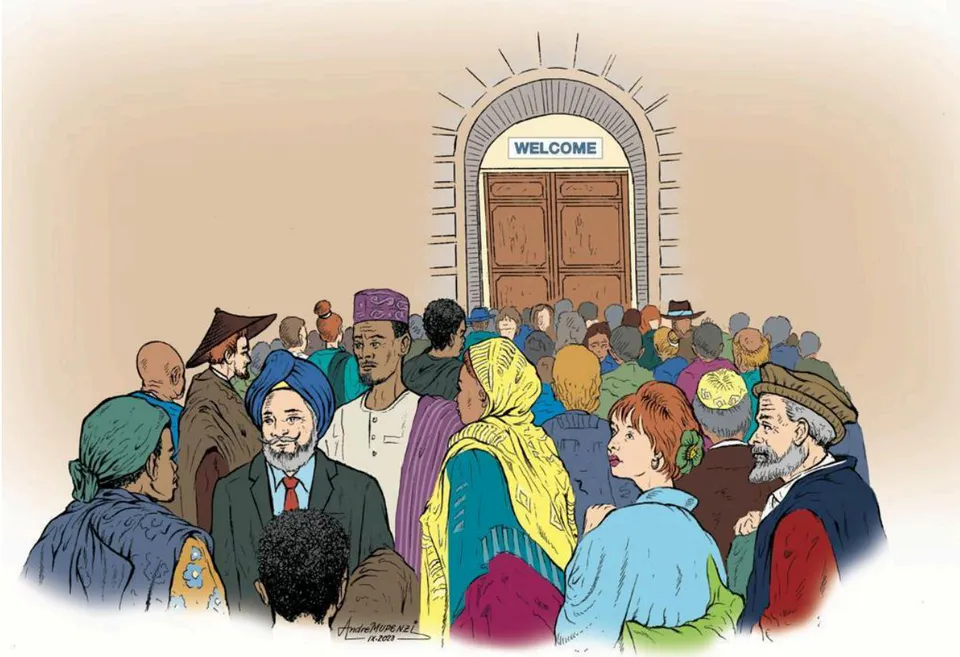
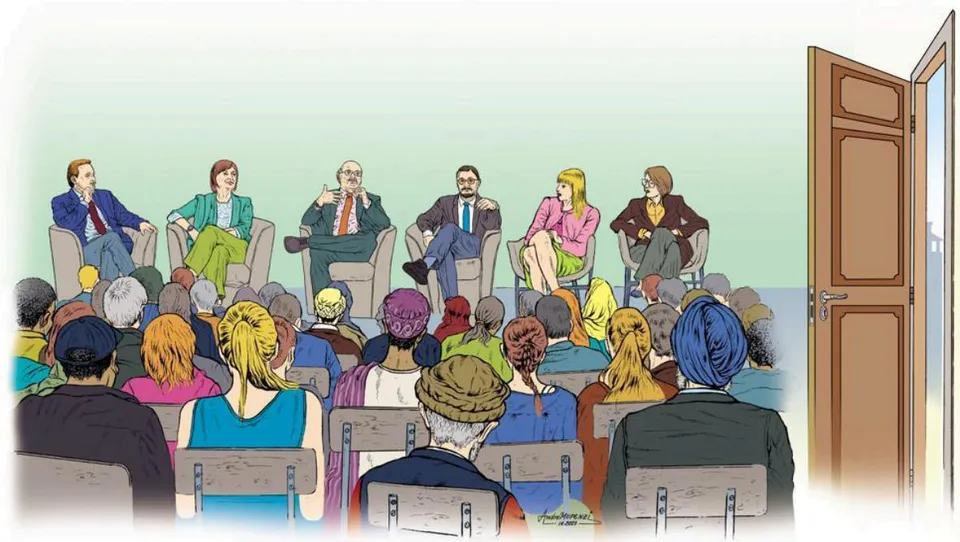
In the aftermath of the 2020 BLM protests, there were moves in many organisations to become antiracist and inclusive. In a focus group held on May 18, 2021, representatives of service providers debated the openness of their services to racialised minorities. One participant suggested their door was open to everyone, triggering interesting debates. The response from other participants was swift, and they argued that having a sign saying that the door is open does not necessarily make it open. The focus group acknowledged that the service providers have minimal contact with some communities and said that more than just opening the door is needed. Participants argued that service providers needed to do more to gain trust and improve access to services for communities and serve all communities equitably.
Participants in the research and KE activities stressed the need to raise awareness on ethnic diversity while at the same time avoiding the trap of labeling some of the communities as hard-to-reach. A participant in the May 18, 2021, focus group, suggested that the service providers, as allies, should be consistent in their inclusion approach and avoid reacting to crises only when the media zooms in and start to ask them questions. As suggested by the participant, structured inclusion is intentional and not just addressed by rhetorical responses such as the door being always open.
In a knowledge exchange roundtable held on September 27, 2022, there was acknowledgement that the door was open to some and closed to other racialised minority communities. During the session, participants argued that service providers look for the low-hanging fruit and engage with the same cohort of racialised minority leaders and in turn expect them to help service providers with access to all racialised minorities. Participants expressed the view that this was an unrealistic task. This point was underscored by a participant in the May 18, 2021, focus group who reminded those in attendance of the importance of acknowledging diversity within diversity. In other words, opening the door to some racialised minorities does not mean it is open to all.
During the May 18, 2021, focus group, a participant recommended that allies ensure they are not unintentionally excluding people while at the same time portraying their doors as open. Other issues flagged in the research and KE activities include allies lacking intercultural communication skills; an inability to engage with people who are not proficient in English; and fetishizing some racialized minority communities can be a barrier and lead to losing their trust. During a focus group held on May 17, 2021, the allies' tendency to speak to racialized minority leaders representing racialized communities with a critical mass (large communities) and ignore communities with smaller populations was identified as a challenge. Using the analogy of the open door may mean allies engaging with some communities and closing the door to other communities. The focus groups and KE activities also suggested that the ally's door seems to be more open for racialized minority faith leaders and middle-aged/middle-class men and less open to the young and women.
As portrait 1 below suggests, vacuous allyship is translated into statements such as the door is open to everyone while, in reality, the door is closed to many. Some of the racialised minorities can go through, but the allies lack the commitment to structural racial equity. Hypothetically, the door is not locked; some racialised minorities can go through the door, but others feel locked out and may not even try to check if the door is open. Vacuous allyship is at the bottom of the allyship pyramid. It may be better than the old window adverts in post-World War II Britain – "No blacks, no dogs, no Irish" (Verma, 2018). However, it makes little difference in challenging the status quo and bringing about lasting change and promoting racial equity.
4.3 Performative Allyship
Vacuous allyship, as outlined above, is at the bottom of the allyship pyramid and has little impact in bringing about and sustaining changes in addressing the racial inequities exposed by the COVID-19 pandemic and vividly captured by the messages that underpinned the BLM protests in the UK in 2020. The next level on the allyship pyramid is performative allyship. Performative allyship looks better on the outside but does little to advance the racial equity agenda.
On September 2, 2021, following an approach by a public institution, I convened a meeting for a facilitator in a public consultation process. The approach by the service provider followed their inability to engage effectively with racialised minorities through the conventional consultative mechanisms. Convincing the facilitator that the consultation session had to take place in the evening was a huddle because they expected it to happen during working hours. The facilitator was oblivious to the fact that the racialised minority networks' leaders engage in such a processes in their free time because they have a work-life to manage, and very few of these networks have money to hire staff who can engage in consultation processes in working hours unlike other from mainstream institutions who get involved in such processes in their paid-time hours. On August 19, 2021, I had a similar conversation in another consultation where I was expected to field a group of racialised minority networks' leaders. I could only secure the participation of a retired racialised minority leader. The irony is that in previous communications with the officials involved, we had raised concerns about the expectations of engagement with racialised minority networks without investment and capacity building and funding for these networks.
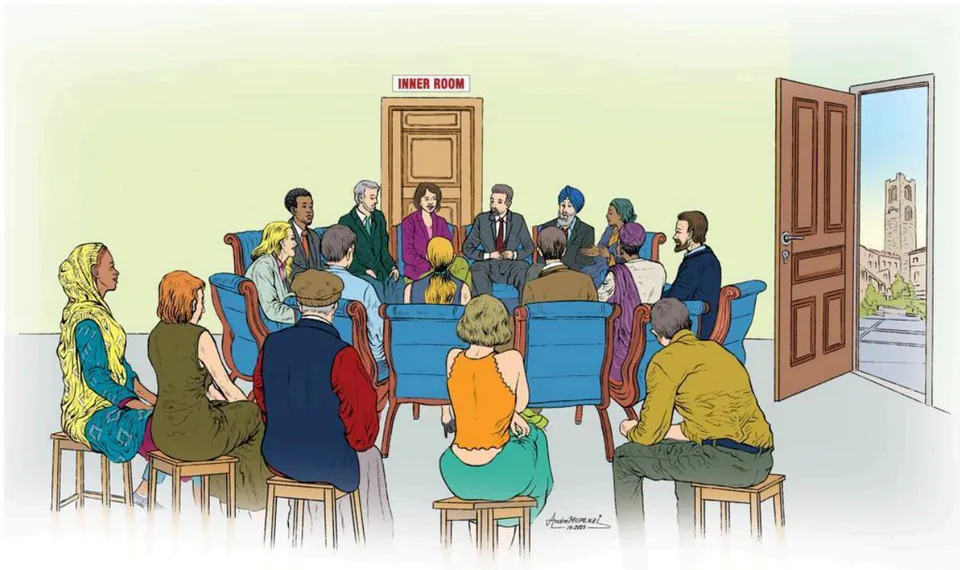
In a phone call with a racialised minority leader on February 6, 2023, I was reminded that following the BLM protests in 2020, there were many performative racial equity initiatives born out of guilt consciousness that were "falling apart before our eyes" and that needed to move to higher levels on the allyship pyramid, if society were to move effectively in bringing about substantive and systemic change. Performative allyship may make some allies feel better, but in the long term, as the 2023 call suggests, performative allyship is just performative and not meaningful. In a meeting with a racialised minority leader on February 8, 2023, I was reminded of performative allies ranking racialised minorities and demonstrating their allyship credentials through their engagement with selected communities. The racialised minority leader went further and argued that colourism (prioritising those with a lighter skin tone) underpins some allies' selection of who they engage with, with "Blacks at the bottom". This conversation followed another conversation with the same leader on December 8, 2022, when, during the announcement section of a meeting, the "White" ally shared dates of the forthcoming racialised minority communities' festivals and failed to mention Black History Month, which was, at the time, around the corner. The experience shared by the leader was reminiscent of my own experience, where I found myself on an ad hoc racial equity advisory committee in 2020 and noted that along with other racialised minority leaders, we were selected because we were members of a particular social group (educated or high public profile) and unlikely to cause trouble and rock the boat. This situation is what led me to start questioning my position and question my racialised minority leader credentials. How many times have I been asked by 'White' allies whom I represent? Consequently, I have been spelling out that I represent my experience, which may not resonate with all racialised minority communities.
As Portrait 2 suggests, when allyship is performative, the door is wide open and racialised minorities are in but, in the main, the racialised minorities are expected to know their space. Performative allies feel good and can tick boxes, but their practices remain the same and there is limited effort in promoting racial equity. For performative allyship to succeed, the allies need a compliant racialised minority communities' representation. Some of the racialised minority leaders may be happy to perform the ladder-pulling and ubiquitous gatekeeper roles in pursuit of their own goals, casting aside the challenges of the communities they claim to represent (Mutwarasibo 2023).
4.4 Symbolic Allyship
In countries with equality legislation like the UK, with public sector equality duty provisions, such as the Equality Act 2010, public institutions are expected to make a concerted effort to demonstrate their commitment to equality. These institutions are also encouraged to consider deploying positive actions. The provisions do not mean affirmative action or positive discrimination. It is not surprising that ladder-pulling racialised minority gatekeepers (Mutwarasibo 2023) thrive in such a context. At a conference held on December 8, 2022, many racialised minority networks' leaders expressed their frustration with symbolic allyship that relies on allies having on their books ladder-pulling racialised minority gatekeepers as cover for their lack of commitment to racial equity. Participants went further and suggested that ladder-pulling racialised minority gatekeepers help 'White' allies in their exclusionary behaviours. This experience came at the foot of a workshop held on September 29, 2022, where participants decried the behaviours of racialised minority ladder-pulling gatekeepers. Participants felt betrayed by racialised minority leaders who sell out and use the racialised minority communities as a steppingstone for their selfish goals.
The behaviours of the ladder-pulling racialised minority gatekeepers and the cover they get from symbolic allies also came up at another workshop held on September 20, 2022. During the workshop participants questioned the motivation of the allies who ignore the complaints about the representation credentials of the racialised minority leaders they engage and collaborate with. Some good initiatives addressing these concerns arose during the COVID-19 pandemic, where some local authorities called for members of public the to apply for the role of COVID-19 champions in the community. Having responded to a call from Milton Keynes Council in 2020, I felt that open calls where candidates are assessed on their merits might help in overcoming allies' reliance on ladder-pulling racialised minority gatekeepers and, in the process, encourage allies to raise their level of engagement on the allyship pyramid. Holding the racialised minority gatekeeper accountable should be on the agenda of the allies. I performed my role as COVID-19 champion and but do not feel that I was not held accountable or asked how much dissemination work I did. As we move on with the typologies and move to the upper echelons of the allyship pyramid, it will be crystal clear that impactful allyship needs constant reviews of the ally's relationships and interactions with the beneficiaries.
In a focus group held on October 6, 2022, allies were reminded to change their approach, move on from symbolic allyship, and prioritise racialised minority networks' leadership development and capacity building. Participants, in other words advocated resourcing racialised minority networks. Such a move, in participants' view, will be vital in overcoming the reliance ladder-pulling racialised minority gatekeepers. Initiatives are taking place in this direction. For example, on November 10, 2021, Milton Keynes Council's representatives spoke at a workshop hosted by the Milton Keynes Intercultural Forum in a drive to recruit racialised minority community representatives to diversify the membership of school governors. This action recognised that previous interventions by allies did not yield an expansion and diversification of the school governors' pool. During the session, there was recognition that although allies had managed to recruit school governors among racialised minority communities, the school governors were not representative of the school population.
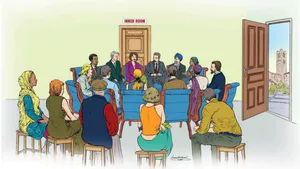
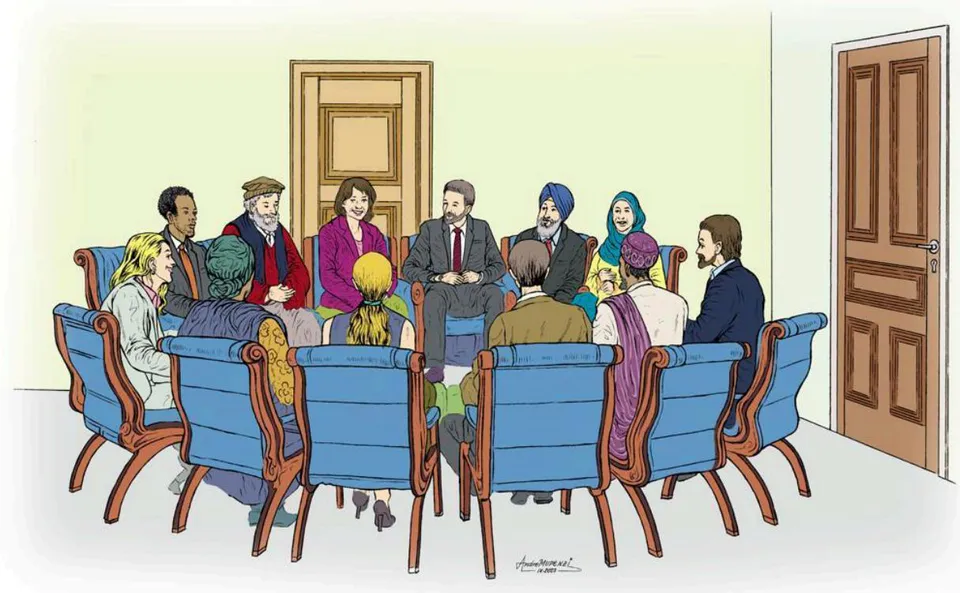
The skepticism of racialised minority leaders about allies' recruitment of tokenistic racialised minority representatives came out at a Milton Keynes Intercultural Forum townhall held on January 18, 2021. Some participants expressed reluctance to join the forum because they thought that the people behind the initiative were creating a new structure to use in order to join the inner room where important consultations take place and overshadow other racialised minority networks' leaders. The skepticism resonates with my experience with symbolic allyship, which, as participants suggest falls short when it comes to the authenticity of allies. In participants' view, allies are happy to engage in tokenism but unwilling to change and become authentic and empathetic partners.
As Portrait 3 suggests, tokenism underpins symbolic allyship. Symbolic allies will keep the door wide open, but not all the racialised minorities who get through the door are treated the same in symbolic allyships. Token racialised minority leaders engage with the allies and get invited to the inner room. Other racialised minorities are not listened to and, at worst, fetishised by the allies. This experience aligns with the comments that came up in the interview with BME1 in 2021, where the participant commented on attending an event with a public institution where instead of getting a hearing on what brought them to meet the allies, the only comment they got was that they were flamboyant and good dancers, as the participant suggested: "there's so much about us than dancing and being flamboyant". Symbolic allyship maintains the status quo with some symbolic allyship gestures that do not have much impact in advancing racial equity.
4.5 Substantive and Authentic Allyship
The penultimate step on the allyship pyramid is substantive and authentic allyship. At a meeting with two voluntary sector leaders on April 24, 2023, two allies condemned tokenism and overreliance on non-representative ladder-pulling racialised minority gatekeepers. The same points were underscored in a public consultation hosted by a public institution on March 18, 2023. The ally who led the session stressed the need for a change of approach in developing relationships with racialised minority communities to sustain the changes needed to address racial inequalities in the long-term.
In a meeting with a voluntary sector ally on February 7, 2023, the racialised minority representation deficit came up and tokenism was condemned. The ally recognised that the need to invest in building the capacity of the racialised minority networks. The voluntary sector ally felt that capacity building and resourcing the racialised minority networks would leverage the power differential between allies and racialised minorities. Without addressing the power differential, the voluntary sector ally suggested that the role of racialised minority networks' leaders in promoting racial equity would remain peripheral. Another ally, in a meeting on February
2, 2022, suggested that the voluntary sector needed to change and move away from symbolic allyship and towards authentic and substantive allyship. This change of approach in effect, would mean not only opening the door to those previously overlooked, sidelining the token racialised minority leaders, sharing power and resources, and treating the racialised minority communities with respect. Another ally, at a meeting on April 6, 2022, recommended allies work with bridge-building racialised minority gatekeepers who, unlike their ladder-pulling counterparts, are willing to share the little power they have with others and hold their allies accountable (Mutwarasibo 2023).
Sharing power and holding allies accountable for their work in promoting racial equity came to the fore in a meeting with two allies representing the third and public sectors held on April 8, 2022. The meeting was initiated by a voluntary sector ally who wanted me to share my research insights. The focus was on racialized minority communities' access to services and their potential role in shaping public service delivery rather than being just users/consumers of these services. The need to build the capacity of racialized minority networks and leverage their power emerged from the meeting as a strategic priority. At the meeting, building the capacity and investing in these networks emerged. The same issues came up at a meeting with an ally representing a foundation providing resources for racialized minority networks on October 22, 2021.
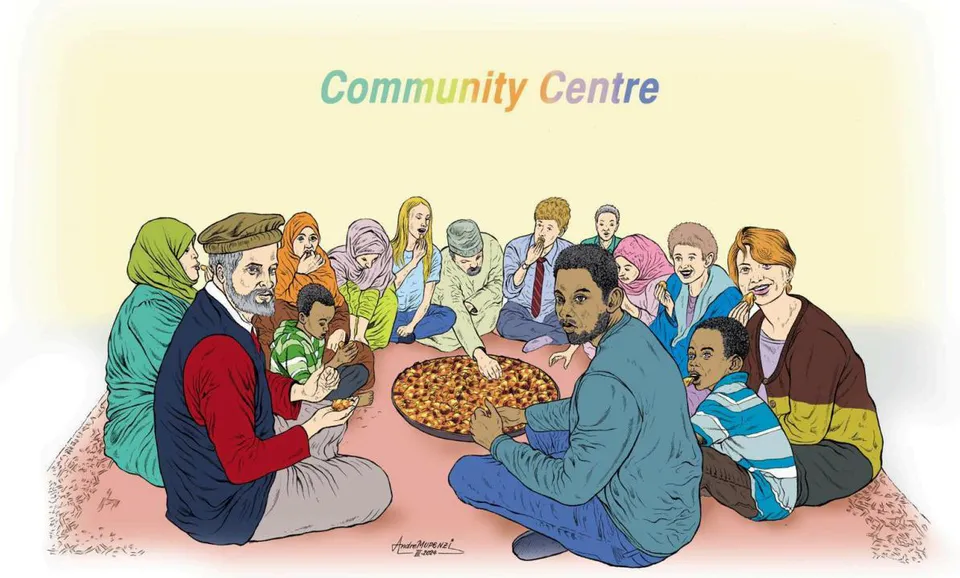
As Portrait 5 suggests, authentic and substantive allyship implies power sharing. In line with the analogy of the open door, substantive and authentic allyship means that opening the door is no longer the issue; there is no longer an inner room, less hierarchy, and the allies are happy to acknowledge the power differential and their privileged position. As the service providers who shared their insights above suggested, the turning point in substantive and authentic allyship is the willingness to engage racialised minority networks in the coproduction of knowledge and designing public service delivery.
4.6 Emancipatory Allyship
The final tier of the allyship pyramid is emancipatory allyship. Building on what allies suggested above concerning authentic and substantive allyship, in a meeting with an ally on October 10, 2022, participants argued for the amplification of the voice of racialised minority communities. This observation followed what two allies told me on October 7, 2022, after acknowledging the behaviour of ladder-pulling racialised minority gatekeepers serving their self-interest and not using their access to allies to promote racial equity. The allies changed their approach to the recruitment of racialised minority representatives to engage and collaborate with, in their work on promoting racial equity. The changes included introducing term limits for membership of advisory committees, and establishing an open recruitment process widely advertised to open expand membership of advisory panels beyond the usual racialised minority gatekeepers.. The same issues came up in two meetings with two allies held on February 3rd and 16th, 2022, where they shared their frustrations with a ladder-pulling racialised minority gatekeeper with a dominating influence on the membership of racialised minority advisory panels. The racialised minority gatekeeper had been doing all they could to restrict membership of an advisory panel to their friends and acquaintances, excluding other worthy candidates. On April 29, 2024, at a KE workshop, a change in the recruitment process for advisory panels to make them more accountable to racialised minority communities came up for discussions. Participants recommended investing in leadership development, capacity building of racialised minority networks and encouraging allies to share some of their powers with racialised minorities.
At a KE event I hosted on March 22, 2022, contributors articulated, among other things, embedding lived experience in grant-making. This suggestion arose because grantmakers have historically neglected lived experience leadership and seldomly seek racialised minority communities' views and insights when reviewing their strategies and approaches to grant-making.
At the meeting participants acknowledged that BLM protests in 2020 were a turning point. There is evidence, according to participants that, things are moving in the right direction. Moreover, there was an acknowledgement more power needed to be ceded to the racialised minorities to enhance their contribution racial equity. I supported two racialised minority leaders in their voluntary work on mental health among the racially minoritised communities, after a while I realised that the service was needed but could not be sustained through voluntary activities. On October 21, 2021, I connected them with a public commissioner to enable them to make their point and make a case for funding. The meeting triggered follow-up engagements that led to securing funding to facilitate their transition from offering voluntary services to remunerated service provision.
Emancipatory allyship also came up at a knowledge exchange I contributed to on March 13, 2024, where a racialised minority leader shared two experiences of emancipatory allyship. These experiences included an ally who passed on an opportunity to attend a high-level leadership course overseas to a racialised minority leader. The ally felt that the racialised minority leader would benefit more from the experience. The ally was also conscious that they would have other opportunities for personal development in the future in contrast to racialised minority leaders with limited leadership and personal development opportunities. Another example shared was an official who ran a vital decision with racialised minority leaders. The decision related to the appointment of a racialised minority to a sensible local post. When the racialised minority leaders outlined the potential impact on the individual, on the one hand, being seen as a spy (snitch) by racialised minority communities and on the other hand, being seen as an intruder (space invader) not worthy of trust by the majority population, the ally changed the decision. In reversing the decision, the ally saved the individual concerned from potential conflicts between the 'White' majority population and their racialised minority counterparts and kept community relations positive.
As Portrait 5 suggests, emancipatory allyship entails shared and distributed power. The allies in this context are prepared to leave their offices and comfort zones and find the racialised minority communities where they are, listen to them, and ensure that the latter are involved in high-level decision-making processes. As outlined above, emancipatory allyship involves the enhanced capacity of racialised minority networks involved, mentoring, and sponsorship. Emancipatory allyship is hence more than opening the door and may involved knocking on the door of racialised minority networks, reverse mentoring, meeting the people where they are and using the allies' privileged position to share power and opportunities.
V. DISCUSSIONS
The findings on vacuous allyship align with the literature (Hoique & Noon 2004). Pointing out that vacuous allyship is an empty shell in literature means that it is the bottom step on the allyship pyramid, which aligns with the research findings. Vacuous allyship does not make a difference in pursuing racial equity. Vacuous allyship has been used in times of crisis by those playing lip service to racial equity. Vacuous allyship should be called out, and those who practice it should be made aware of their behaviours and encouraged to change. The debate has moved on from the post-World War II "No Blacks, No Irish, No Dog" (Verma 2018). There is little evidence to suggest that adopting the vacuous allyship makes any difference in promoting inclusion and, better still, promoting racial equity. Deploying vacuous allyship practices will not adequately address the racial inequalities exposed by COVID-19 and answer the BLM protests' call for racial equality.
The second step on the allyship pyramid is performative allyship. Although it is an extension of vacuous allyship, and its practitioners adopt it to make claims about their commitments as allies, performative allyship makes little difference in progressing the race equity agenda (Thorne 2022). Research findings align with the literature concerning allies who practice performative allyship to make themselves look good and promote their self-interest (Bourke 2020; Nixon 2019; Saad 2020; Oppong 2023, p.7). This literature aligns with my observations of the racialised minority networks' leaders' social and political practices and four years of ongoing research on their leadership. As the research participants suggested, performative allies cannot be trusted to promote racial equity. Their approach is short-term and headline-grabbing and allies need to be committed to systemic change to address the challenges relating to racial equity.
Performative allyship leads smoothly to the third step on the allyship pyramid – symbolic allyship. The research suggests a connection between the equality legislative framework and symbolic allyship. The provisions from the legislation, especially those relating to public sector equality duty, raise expectations for public institutions to engage and collaborate with people and institutions representing the various members of society including racialised minority communities. As the research suggests, symbolic allyship lacks substance (Myeza & April 2021). Research also highlighted that symbolic allyship is abused by ladder-pulling racialised minority gatekeepers who use it to progress their personal agendas (Mutwarasibo 2023) while discarding the bigger picture of racial equity.
As research suggests, what makes substantive/authentic allyship different is the investment allies put in systemically improving the situation with racial inequities (Ashburn-Nardo 2018; Broido 2000; Brown, 2015; Brown & Ostrove, 2013; Ostrove & Brown 2018; Radke et al. 2020, p.291). Research recommends allies to examine their position critically, challenge their peers perpetuating racial inequities, and accept to continuously learn and acquaint themselves with what is going on and what needs improving (Erskine & Bilimora 2019; Thorne 2022, p.1). Research findings align with the literature and offer insights into how authentic and substantive works in practice. One of the practices the authentic and substantive allies need to set aside is tokenism. The allies also must keep an eye on the racialised minority gatekeepers they engage with and especially avoid the ladder-pulling gatekeepers who might derail their racial equity mission.
Finally, emancipatory allyship requires stretching the substantive and authentic allyship practices to level the playing field and deploy genuine power-sharing practices. Changing approaches is critical to bringing about systemic racial equity changes (Sumerau et al. 2021; Erskine & Bilimoria 2019), where racialised minorities are agents and the allies engage in sponsoring, opening locked doors, advocating with, and overall moving from promoter to background supporter. As the research suggests, emancipatory allyship means doing more than just being committed to engaging in practices aimed at promoting racial equity. As highlighted in the findings, it requires sometimes stepping aside and letting the leadership of racialised minority come out and be more prominent. Emancipatory allyship also entails holding the racialised minority leaders accountable and calling out ladder-pulling racialised minority gatekeeping.
VI. CONCLUSIONS AND CONTRIBUTION
In 2020, the COVID-19 pandemic made what may have been invisible racial inequalities apparent. The Murder of George Floyd in the USA on May 25, 2020, triggered the appropriation and adaptation of the Black Lives Matter (BLM) protests' messages worldwide. The BLM protests captured the local racial inequities in the messages underpinning the BLM protests in the UK.
The year 2020 was epoch-making as it triggered soul-searching exercises across all spheres of society. Businesses, churches, public institutions, and philanthropic organisations started reviews of their engagement with racialised minorities. These institutions took a deep look at the overall experience and life outcomes of racialised minorities in the UK. Some, including the Joseph Rowntree Foundation and the Church of England, committed not only to change their approach but also to do more in addressing their connections to slavery. Furthermore many public institutions made concerted efforts to engage with the racialised minorities. Allyship gained prominence as a discourse to capture organisations and individuals' commitment to racial equity.
Allyship has been a subject of research for some time. However, literature has focused on two extremes – performative allyship on the one hand and authentic and substantive allyship on the other. A deep dive into literature picked up more forms of allyship and helped develop a typology that includes – vacuous, performative, symbolic, authentic/substantive, and emancipatory allyship. Research suggests the need to expand research on the types of allyship and review the current focus on performative and authentic/substantive allyship. Research suggests that using a variety of methods would make a difference and expand the literature. The paper has highlighted essential considerations for practicing and promoting racial equity. To name just a few considerations – holding racialised minority gatekeepers accountable, assessment of the value of allyship based on the views of beneficiaries, constantly reviewing allies' positionality, need to invest in racialised minority communities' leadership development and capacity building, ethical business practices to avoid engaging in modern-day slavery practices, avoiding engaging in tokenism, and above all treating all members of society with respect and dignity.
This paper has shed light on the fact that allyship takes many forms and is more than just performative or substantive/authentic. The paper also has highlighted that different types of allyship encourage or deter harmful racialised minority leaders' gatekeeping behaviours, such as ladder-pulling gatekeeping. Performative and symbolic allyships, for example, give cover to ladder-pulling racialised minority gatekeepers. Authentic/substantive and emancipatory allyships are likely to promote the practices of bridge-building racialised minority goalkeepers. Bringing about systemic racial equity changes requires scrutinising power relations and sharing power. Sharing power, by extension, entails ensuring that the racialised minorities' representation plays an integral part in shaping the racial equity agenda. As the research suggests, the ultimate allyship is emancipatory. Emancipatory allyship involves expanding the membership of racial equity decision-making structures to authentic and accountable racialised minority representatives.
Footnotes
Advisory Group (2020-2021); I was EDI trustee with MK Gallery (2020-2023); and an Honorary Vice President with Milton Keynes Community Foundation (from 2018). I am a trustee with Milton Keynes Rose (from 2021) and 5 Dimensions Trust (from 2024). To get more racialised minorities involved in consultation processes, I accepted to serve as a convener for the Milton Keynes Integration Forum (from 2020). The forum's aim is to create an engagement vehicle for local racialised minority networks especially those not currently engaged in public consultations. My social practices build on my social practices in the UK between 2014 and 2020, where I served on the leadership team of Citizens:MK (2014-2018) and was a co-lead of the Citizens:MK's Fight Against Hate Campaign (2017-2019). My experience as a racialised minority leader informed the 2023 paper on racialised minority gatekeepers. In the paper I shared a typology of gatekeeping behaviours ranging from ladder-pulling to bridge-building (Mutwarasibo 2023). This paper picks up from gatekeeping to allyship within the framework of promoting racial equity. (p.5)
Conflict of Interest
The authors declare no conflict of interest.
Ethical Approval
Not applicable
Data Availability
The datasets used in this study are openly available at [repository link] and the source code is available on GitHub at [GitHub link].
Funding
This work did not receive any external funding.
References
Cite this article
Related Research

Special Issue
Launch a focused special issue to highlight research, emerging trends, and expert insights in your academic field.