



Gobernando en nombre del pueblo: Liderazgo democrático, autoridad constitucional y dis- ciplina del poder
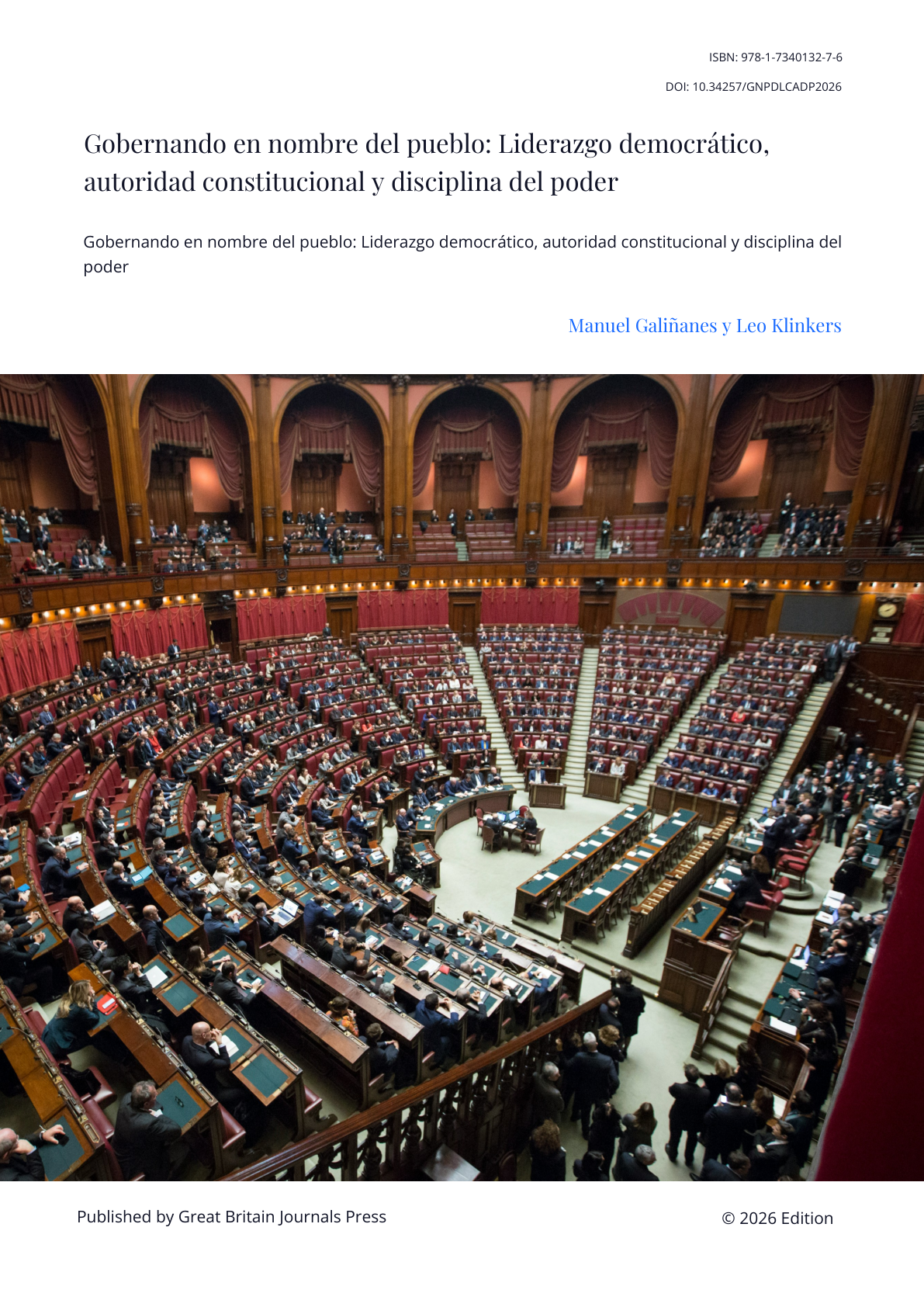
Submitted
11 May 2026
Accepted
15 Jul 2026
Current Edition
2026
24 Jul 2026
IntelliPaper
Abstract
Gobernar en nombre del pueblo: Liderazgo democrático, autoridad constitucional y la disciplina del poder examina por qué las instituciones democráticas no pueden sostenerse únicamente mediante elecciones, leyes y procedimientos constitucionales. Su argumento central es que la democracia también depende de la competencia intelectual, ética e institucional de quienes ejercen la autoridad pública. Los líderes deben comprender no solo cómo obtener el poder, sino también por qué ese poder es limitado, condicionado y responsable ante el pueblo.
El libro recorre la evolución de la soberanía popular desde el pensamiento político clásico hasta las cartas históricas, las revoluciones, el constitucionalismo y el gobierno representativo. Distingue la autoridad legítima del mero control y advierte contra la idea de considerar la victoria electoral, el apoyo mayoritario o el cargo legal como una autorización para ejercer un poder ilimitado. Las limitaciones constitucionales, la supervisión judicial, la separación de poderes, el federalismo, el pluralismo y la oposición política se presentan como componentes esenciales de la democracia, y no como obstáculos para un gobierno eficaz.
Los autores analizan las responsabilidades de los líderes políticos y de los partidos, en particular su deber de seleccionar candidatos competentes, aceptar la derrota electoral, respetar el disenso y resistir los intentos populistas de identificar a un solo líder o facción con "el pueblo". También examinan cómo el miedo, la polarización, la desinformación, la concentración del poder ejecutivo, la inercia burocrática y la fragmentación institucional pueden erosionar gradualmente la rendición de cuentas democrática sin abolir formalmente las estructuras democráticas.
Más allá del diseño constitucional, el libro analiza la gobernanza como un sistema complejo que abarca la formulación de políticas públicas, la administración, la responsabilidad ética, el aprendizaje institucional y la rendición de cuentas por las consecuencias perjudiciales de las decisiones gubernamentales. Incluso las instituciones bien diseñadas pueden fracasar cuando los funcionarios carecen de criterio, coordinación, valentía moral o de la capacidad para corregir debilidades sistémicas.
Las secciones finales proponen una renovación democrática basada en un liderazgo guiado por principios, partidos políticos más sólidos, una mayor participación ciudadana, la deliberación pública, una supervisión institucional eficaz y la evaluación continua del desempeño democrático. En última instancia, el libro sostiene que gobernar democráticamente significa ejercer un poder público temporal con conocimiento, moderación, responsabilidad y fidelidad a los principios constitucionales. La democracia solo conserva su legitimidad cuando líderes, instituciones y ciudadanos trabajan de manera continua y conjunta para disciplinar el poder y proteger la libertad.
English Abstract
Governing in the Name of the People: Democratic Leadership, Constitutional Authority and the Discipline of Power examines why democratic institutions cannot survive through elections, laws, and constitutional procedures alone. Its central argument is that democracy also depends on the intellectual, ethical, and institutional competence of those who exercise public authority. Leaders must understand not only how to obtain power, but why that power is limited, conditional, and accountable to the people.
The book traces the development of popular sovereignty from classical political thought through historic charters, revolutions, constitutionalism, and representative government. It distinguishes legitimate authority from mere control and warns against treating electoral victory, majority support, or legal office as permission to exercise unlimited power. Constitutional limitations, judicial oversight, separation of powers, federalism, pluralism, and political opposition are presented as essential components of democracy rather than obstacles to effective government.
The authors explore the responsibilities of political leaders and parties, particularly their duty to select competent candidates, accept electoral defeat, respect dissent, and resist populist efforts to identify one leader or faction with “the people.” They also examine how fear, polarization, misinformation, executive concentration, bureaucratic inertia, and institutional fragmentation can gradually erode democratic accountability without formally abolishing democratic structures.
Moving beyond constitutional design, the book analyses governance as a complex system involving policy formation, administration, ethical agency, institutional learning, and responsibility for harmful outcomes. Well-designed institutions can still fail when officials lack judgment, coordination, moral courage, or the capacity to correct systemic weaknesses.
The final sections propose democratic renewal through principled leadership, stronger political parties, civic participation, deliberation, institutional oversight, and continuous evaluation of democratic performance. The book ultimately argues that governing democratically means exercising temporary public power with knowledge, restraint, responsibility, and fidelity to constitutional principles. Democracy remains legitimate only when leadership, institutions, and citizens continuously work together to discipline power and protect freedom.
Liderazgo Democrático
Soberanía Popular
Constitucionalismo
Legitimidad Democrática
Renovación Democrática
Separación De Poderes
Sistemas De Gobernanza
Erosión Institucional
Autoridad Pública
Democracia Constitucional
About the Authors

Leo Klinkers
Book Overview
Interactive Book
Prólogo Level 2
This section is included in the book.
Introducción Level 2
This section is included in the book.
PARTE I: FUNDAMENTOS DE LA SOBERANÍA POPULAR Y DE LA AUTORIDAD DEMOCRÁTICA Level 1
This section is included in the book.
La soberanía popular como fuente del poder legítimo Level 2
This section is included in the book.
Revoluciones, cartas e institucionalización del consentimiento Level 2
This section is included in the book.
Miedo, autoridad y la tentación hobbesiana Level 2
This section is included in the book.
Constitucionalismo: vincular el poder a la ley y la rendición de cuentas Level 2
This section is included in the book.
La voluntad democrática: Rousseau, Paoli y los límites del poder popular Level 2
This section is included in the book.
Representación, pluralismo y disciplina del liderazgo democrático Level 2
This section is included in the book.
Los partidos políticos como guardianes democráticos: responsabilidad, oposición y el papel moral de perder Level 2
This section is included in the book.
Verdad, responsabilidad y liderazgo democrático en la era del populismo plebiscitario Level 2
This section is included in the book.
PARTE II: LAS COMPETENCIAS DEL LIDERAZGO DEMOCRÁTICO: COMPRENSIÓN, RESPONSABILIDAD, IMAGINACIÓN Y ESTRUCTURA Level 1
This section is included in the book.
Independencia intelectual y crítica del poder Level 2
This section is included in the book.
Instituciones sin agencia moral: liderazgo, responsabilidad y violencia estructural Level 2
This section is included in the book.
Pensamiento utópico, imaginación democrática y renovación responsable Level 2
This section is included in the book.
Federalismo, subsidiariedad y soberanía estratificada Level 2
This section is included in the book.
PARTE III: ESTRUCTURA CONSTITUCIONAL Y SISTEMAS POLÍTICOS Level 1
This section is included in the book.
Las constituciones como limitaciones vivas bajo presión: poder, manipulación legal y erosión democrática Level 2
This section is included in the book.
Religión, partidos y Estado laico: gobernar el pluralismo sin dominación Level 2
This section is included in the book.
El derecho como instrumento o el derecho como orden moral: por qué fracasa el legalismo sin legitimidad Level 2
This section is included in the book.
Estados unitarios, federales e híbridos: cómo el diseño territorial da forma al poder democrático Level 2
This section is included in the book.
Diseño ejecutivo y responsabilidad democrática: presidencialismo, parlamentarismo y liderazgo colectivo Level 2
This section is included in the book.
Política de coalición, monismo y deriva democrática: cuando los parlamentos se convierten en instrumentos ejecutivos Level 2
This section is included in the book.
PARTE IV: GOBERNANZA, INSTITUCIONES Y CAPACIDAD ÉTICA Level 1
This section is included in the book.
De las instituciones a los resultados: por qué el diseño democrático no es suficiente Level 2
This section is included in the book.
Diseño de políticas y los límites del incrementalismo: cuando el gradualismo se estanca Level 2
This section is included in the book.
La cadena de gobernanza y la coherencia institucional: cuando la política se encuentra con la administración Level 2
This section is included in the book.
Burocracia, racionalidad y patologías institucionales: gobernar a través de sistemas Level 2
This section is included in the book.
PARTE V: COMPLEJIDAD DE GOBIERNO: SISTEMAS, AGENCIA Y RESPONSABILIDAD Level 1
This section is included in the book.
Pensamiento sistémico y gobernanza interdisciplinaria: la democracia como ecosistema Level 2
This section is included in the book.
Instituciones, ética y agencia humana: por qué el carácter sigue siendo importante Level 2
This section is included in the book.
Violencia estructural y responsabilidad democrática: cuando las instituciones dañan Level 2
This section is included in the book.
PARTE VI: RENOVACIÓN DEMOCRÁTICA: LIDERAZGO, INSTITUCIONES Y REGENERACIÓN CÍVICA Level 1
This section is included in the book.
De la deriva democrática a la renovación democrática: recuperar la agencia en una era frágil Level 2
This section is included in the book.
Liderazgo basado en principios en una era de deriva democrática Level 2
This section is included in the book.
De guardianes a instituciones: los partidos políticos y la arquitectura de la responsabilidad democrática Level 2
This section is included in the book.
De la participación a la agencia democrática: deliberación, cocreación y reconstrucción de la confianza Level 2
This section is included in the book.
Rendición de cuentas en democracias complejas: del control electoral al desempeño democrático sistémico Level 2
This section is included in the book.
Epílogo: La democracia en una era de transformación: renovación en condiciones de incertidumbre Level 2
This section is included in the book.
Academic Disclosures
Dedication
A todos los que creen que el poder político emana del pueblo, está limitado por los principios constitucionales y debe ejercerse siempre al servicio del bien común. Que cada generación posea la sabiduría y el valor cívico necesarios para gobernar en nombre del pueblo con justicia, integridad y humildad.
References
- Max Weber. Politics as a Vocation. From Max Weber: Essays in Sociology. 1946.
- Norbert Wiener. Cybernetics: Or Control and Communication in the Animal and the Machine.. 1948.
- Bernard Williams. In the Beginning Was the Deed: Realism and Moralism in Political Argument.. 2005.
- Erik Olin Wright. Envisioning Real Utopias.. 2010.
- Iris Marion Young. Responsibility for Justice.. 2011.
Download Citation
Cite this book
Manuel Galiñanes, & Leo Klinkers. (2026). Gobernando en nombre del pueblo: Liderazgo democrático, autoridad constitucional y dis- ciplina del poder. London Journals Press. https://doi.org/10.34257/GNPDLCADP2026
Copy CitationDownload Citation
