


IntelliPaper
Abstract
present scenario of climate change on agriculture in the form of groundwater depletion, flood, salinity, several new borne species of pathogens, and insect-pests, brings serious attention to developingrice varities with higher resilience. As most of the above-ground plant parts are already explored to combat these situations, now the time came to improve the yield by reshaping the below-ground plant parts. Designing the root system architecture (RSA) in rice is one of the most imperative traits for such conditions, as modification in the root architecture in rice will be the best strategy to improve wateruptake and nutrient acquisition. Many quantitative trait loci (QTLs) and genesplaying the role for RSA have been recognizedto improve the root parameters and the confirmed QTLs can be introgressed through marker-assisted backcross breeding to develop ideal genotypes. The recent advances in molecular plant breeding including genome editing, mutation study and genetic engineering has shown their potency in this direction.Even though most of the root architectural traits in rice are not document properly, the present review will make comfortable to the future researchers on the aspects of molecular mechansms involved in root traits development viz., genesfunctioning for root traits, their development,physiological role for moisture, and mineral-nutrient uptake under stressful environment.
Explore Digital Article Text
Prasanta Kumar Majhi , Kishore Chandra Sahoo , Monika Ray , Subhakanta Samantaray , Sukumar Tudu , Sujata Das , Partha Pratim Behera , Abhishek Nanda , Sarita Pradhan , Gyana Ranjan Mohanty , Sandeep Kumar Mallik & Srimanta Kumar Sahoo
I. INTRODUCTION
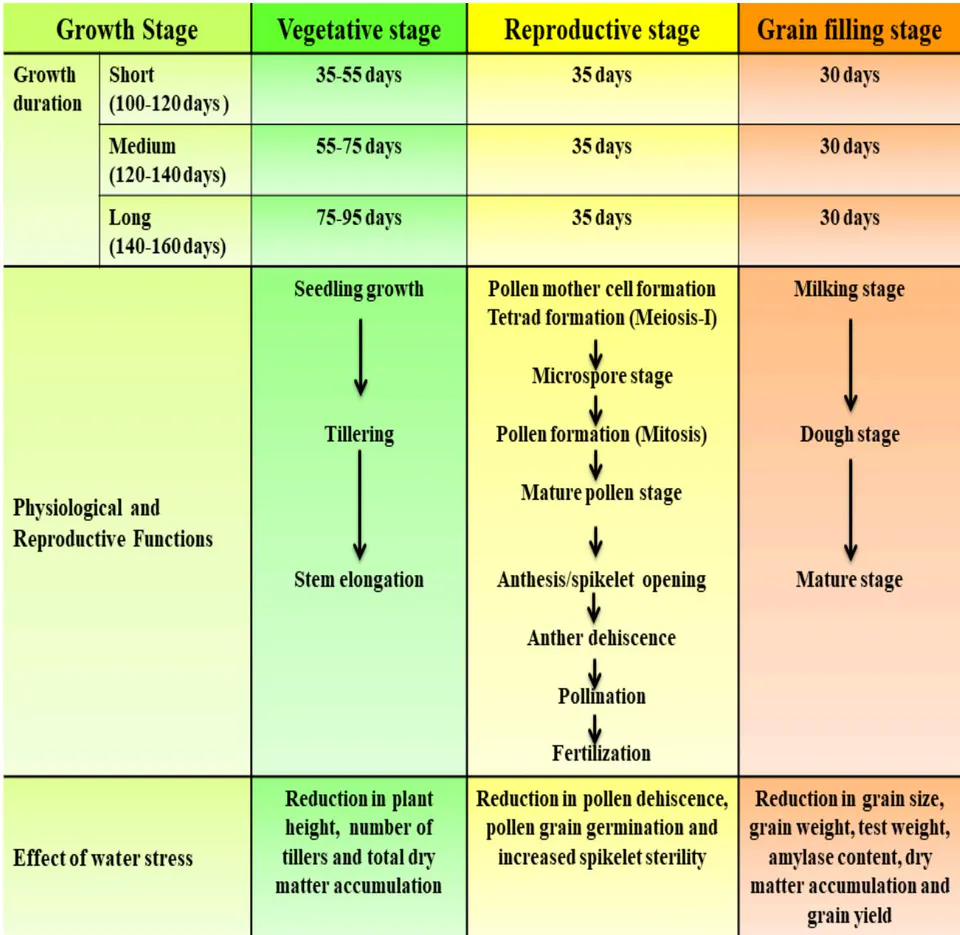
Rice is considered to be the vital crop for billions and got ranked as the second-best significant cereal food in the world after wheat. This crop is being cultivated under various natural climatic conditions (Dokku et al., 2013; Manna et al., 2025; Rasheed et al., 2020). Conversely, the yield potentiality is hindered by several biotic and abiotic factors, including increasing water scarcity, flood, soil salinity and temperature fluctuation (Navea et al., 2017). Asia is contributing maximum rice (90%) to the World's food security, while water scarcity affects around 50% of rice-cultivable land (Khan et al., 2013; Shukla et al., 2024). The reason behind this is that it takes 3000 litres of water to yield one kilogramme of rice. Drought affects the crop at every stage of growth because of its shallow roots and thin cuticle, making it one of the most vulnerable plants (Figure-1), with a potential yield loss of 100% (Oladosu et al., 2019). In the near future, rice could be subjected to more severe challenges, including drought, soil salinization, and a lack of readily available nutrients due to diminished fertilizer or moisture availability (Poot and Lambers, 2008; Shukla et al., 2024). Roots are very essential for crop production and productivity because of their vital functions to the plant, including water uptake, nutrient gain and anchoring into the soil to withstand lodging (Yang et al., 2019). The root system architecture (RSA) is the vital part towards overcoming the environmental complexity and ensuring an ideal response. They also have an impact on their surroundings by inducing physico-chemical and microbiological processes that affect essential factors such as nutrient bioavailability, organic matter cycling, soil mineral weathering, and water quality (Li et al., 2025; Ma et al., 2025). Most of the researchers are generally focused on the above-ground plant parts like leaf, stem, panicle and grain quality to achieve higher yield under stress. However, the root system scattering under ground is the main role performer to improve the above-ground parts. Therefore, more efforts are required to the ground to study the root architectural traits to enhance its capability to absorb sufficient moisture and mineral elements from the ground to boost the yield under diverse climatic conditions. The three-dimensional location of roots in the soil is referred to as a plant RSA, and this encompasses the morphology, topology, and distribution of roots (Li et al., 2025). As a plant grows, its root system undergoes elongation, branching, and spacing changes, all of which affect RSA's ability to maintain its original shape. Root systems can show a high degree of developmental plasticity because of their ability to integrate environmental information into their growth programme (Novoplansky, 2002). In a dynamic, ever-changing environment, plants with root plasticity can adapt their root system's three-dimensional shape to maximise growth. An important part of root stability, as well as hormone biosynthesis and nutrition and water absorption, is the root system's design (Coudert et al. 2010). Specialized root architectures are effective in such conditions for a specific stress-prone environment (Poot and Lambers, 2008; Panda et al., 2021). However, the molecular mechanisms of genes regulating root development and the physiological role (e.g.- nutrient uptake), root plasticity, plant-soil microbial interaction, high-throughput root phenotyping methods are not clearly understood. So it needs further analysis for proper understanding.
Root architecture, lateral root growth, and root symbiosis with host plants are all examples of how water and nutrient uptake rates can be changed to improve survival and production (Figure-1). Mutational analysis is a powerful technique for deciphering these processes and identifying genes that could be used to improve root function. The usage of numerous sorts of mutants will improve genetic studies on the detection of regulatory mechanisms. EST libraries and mutant protein/metabolite profiles, among other genomic and proteomic methods, add a new level to understanding root function (IAEA, 2006). Plant ecophysiology and genetics research should be combined to improve crop tolerance to adverse environments. Designing an optimum root system for a specific edaphic environment through gene mutation is ideal breeding without phenotypic selection (Uga, 2021; Li et al., 2025). Therefore, this is highly essential to identify the unique QTLs or genes families or transcription factors accompanying yield attributing root traits in rice to design high-yielding cultivars. Keeping all the above facts in view, the present review illuminates the understanding of the genetic networks underlying in root-traits development and associated QTLs in rice and breeding innovation in the molecular era to develop an ideal climate resilient genotype thru root architectural trait modification.
II. DEVELOPMENT OF ROOTS IN RICE AND ITS GENETIC BASIS
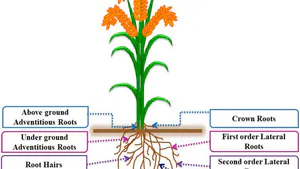
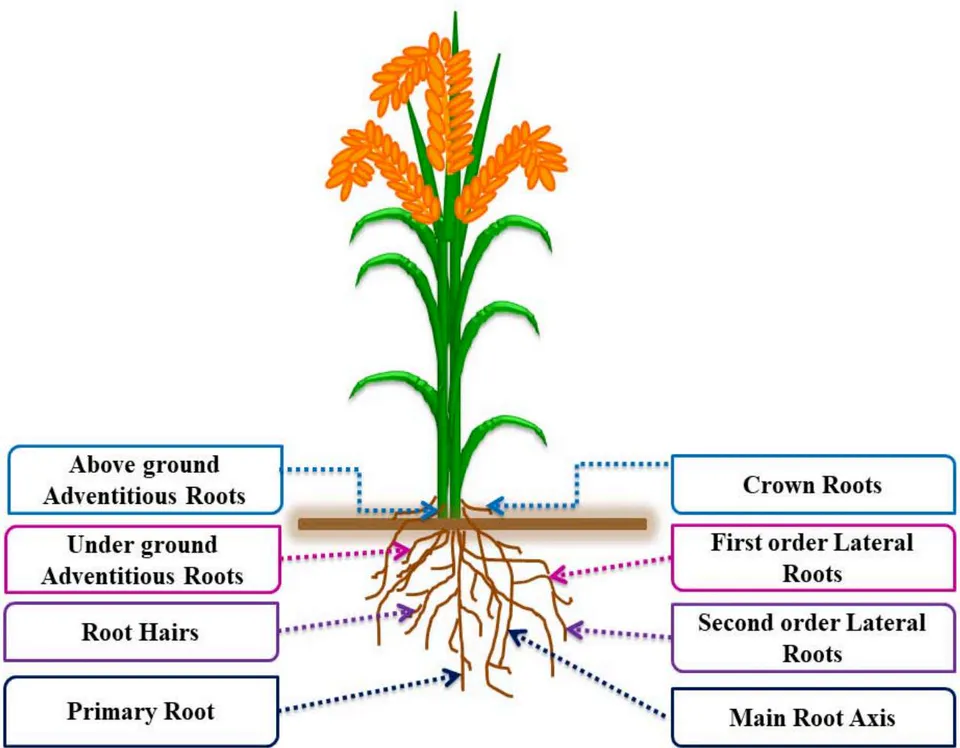
Remarkable progress has been made to identify the genes or QTLs linked to the root traits in rice with the assistance of advanced molecular biology and biotechnology tools especially DNA sequencing technology. Most of the wild relatives of the cultivated crops have sufficient root systems to fight against drought by capturing water from a deeper layer. Therefore, genetic enhancement in the architecture of roots, regarded as an effective methodology to enhance the yield of crops. But, it is time-consuming and more laborious to select the below-ground parts (traits related to root) than aboveground traits. In rice including the wild species, a diverse variation for root characteristics has been observed. Different types of root traits in rice are illustrated in Figure-2 and listed in Table-1, which helps to withstand the plant under stress. The molecular mechanism involved in root improvement in rice has been discovered mostly based on QTL study and this was described by Champoux et al. (1995) for the first time. In rice, a number of QTLs have been found linked with root growth angle, length, thickness and volume, more or less which affect the RSA (Rebouillat et al., 2009). A list of QTLs related to 29 root traits was summarized by Courtois et al. (2009) and many genes for root growth have been cloned in mutant genotypes with unusual root phenotypes (Li et al., 2025; Kong et al., 2024; Wu and Cheng, 2014). Yet, the hereditary mechanisms involved in these genes are understood poorly. Therefore, here, in brief we are discussing the genes/QTLs interrelated to quantitative variations of RSA in rice.
2.1. Genes controlling root Length and root number
Cell differentiation, expansion, and elasticity all contribute to root elongation. The investigation of mutant lines revealed the importance of quantitative trait loci (QTLs) underlying cell wall development, growth, and auxin signalling during root cell differentiation and elongation (Wang et al., 2014). Two QTLs, QUICK ROOTING 1 (QRO1) and QRO2, were identified by Kitomi et al. (2018) as determinants of maximum root length. Transgenic rice overexpressing the OsEXPA8 gene has managed to perform a variety of functions, including increasing crown root, seminal root, and lateral root length. Due to an increase in root and shoot vascular bundles, these also increase plant height, leaf size, and leaf number (Shin et al., 2005). A low auxin concentration is most likely to blame for the short elongation zone. The far more important genomic regions containing QTLs for several traits (root length, root diameter, and root dry weight) were discovered on chromosomes number 1, 4, 9, 11, and 12 (Courtois et al., 2003). Jonathan et al. (2015) discovered a QTL for total lateral root number; TLRN (qTLRN-12) flanked at at the seedling stage (hydroponics system). The gene (qLLRN-12) which was discovered during the vegetative stage, controls lateral root number in rice.
2.2. Genes directing root growth angles
The environmental factors like temperature, light, water potential, and gravity are combined to control the root growth angle (Uga et al. 2015a). In rice, a few QTLs for the root gravitropism reaction have been identified (Manna et al., 2025; Norton and Price, 2009), but the causal genes need to be identified. A significant QTL (DRO1), which plays a role in root development angle and gravitropism, was initially identified (Uga et al., 2013a). Many other researchers have done extensive work on DRO series genes (DRO2, DRO3, DRO4, and DRO5) for growth angle root (Uga et al., 2013b; Uga et al., 2015b; Kitomi et al., 2015). A variety "Kinandang Patong" is a prominent donor for this trait which was studied by the earlier researchers. This can be used as a contributing parent to tailor efficient rice genotypes.
2.3. Genes linked with other root related traits
The marker-assisted selection method was employed to fine-map a QTL (STELE TRANSVERSAL AREA 1; STA1) on chromosome 9 that influences root stele transversal area (Uga et al., 2010). Other genes, such as qRT9 and STA1, are close to DRO1 (16.31 Mb), and the phenotypic roots can be distinguished by the proximity of these associated QTLs. Root plasticity is characterized as the ability of a plant to change the phenotype of its roots in reaction to varying environments (O'Toole and Bland, 1987), and it is critical for plant adaptation. QTLs for soil-surface rooting were reported by Uga et al. (2012) from the RIL populations (Gemdjah Beton × Sasanishiki). The female parent has surface rooting, while the male parent is without. The result confirmed that the QTLs located on chromosomes number 3, 4, 6, and 7 (qSOR, with major effect).
III. DECIPHERING THE ROLE OF ROOT ASSOCIATED QTLS IN IMPROVED NUTRIENT AND WATER ACQUISITION
Modern agriculture system faced major challenges to improve nutrient acquisition properties of crop plants under dynamic environmental conditions. Thus, RSA is an important trait for genetic improvement of nutrient acquisition from nutrient deficient soils (Kong et al., 2014). The upper and lower crown roots, which emerged from each node's upper and lower sections, respectively (Rebouillat et al., 2009). It's been observed that the crown roots closer to the ground are wider than those closer to the ceiling (Abe and Morita, 1994). The root system's vertical distribution is established by the relative growth inclination of the upper and lower crown roots. Roots are more likely to be dispersed in the topsoil when the root growth angle is shallow, and in the subsoil when the angle is steep. Each crown root can only grow so long, limiting the plant's ability to draw moisture and nutrients from the ground (Liu et al., 2023; Ma et al., 2025). Roots that are too short form compact root systems, whereas those that are too long produce vast root systems that are more resistant to lodging. A wide array of quantitative trait loci (QTLs) have been identified and characterized which significantly contribute to enhanced nutrient and water acquisition, especially under suboptimal or stress-prone environments (Table-2). These QTLs govern key root traits such as root length, root depth, root surface area, root hair density, root angle, and biomass allocation, which collectively determine the plant's efficiency in accessing soil nutrients and water.
3.1. QTLs for Nitrogen uptake
The main form of nitrogen under aerobic condition to make available to plants is Nitrate, and is leached by precipitation into subsoil. Therefore, root system architecture greatly affects the acquisition of water and nutrients from soil (Gewin, 2010; Liu et al., 2023). The rice QTL DEEPER ROOTING 1 (DRO1) has been identified from the RIL population derived from the cross between 'IR 64' (lowland cultivar nonfunctional allele of DOR, shallow roots) and 'Kinandang Patong' (upland cultivar with functional allele of DRO1); and reported on the chromosome number 9 (Uga et al., 2011) and has been cloned by Uga et al. (2013a). The yield performance of 'IR64' and Dro1-NIL was compared under upland field conditions with no drought, moderate drought, or severe drought (Uga et al., 2013a). Under moderate drought in comparison with no drought, the grain weight of 'IR64' decreased by nearly half, whereas that of Dro1-NIL was almost the same. Under severe drought, the grain weight of 'IR64' was very low, whereas that of Dro1-NIL was more than of that with no drought. This study suggests that deep rooting induced by DRO1 enhances drought avoidance, resulting in higher grain yield (Uga et al., 2013a). The Dro1-NIL showed about higher grain yield than did 'IR64' irrespective of nitrogen treatment (Arai-Sanoh et al., 2014). Comparison among cultivars with different root and shoot morphologies has suggested that deep roots increase grain yield in paddy (Kawata et al., 1978; Morita et al., 1988). There was no significant difference between IR64 and Dro1-NIL in nitrogen content before heading, but nitrogen uptake was higher after heading in Dro1-NIL than in IR64. The results suggest that deep rooting induced by DRO1 enhances nitrogen uptake from lower soil layers, resulting in better grain filling (Uga et al., 2015a). The QTL NITRATE TRANSPORTER 1.1 has the ability to transport for the first time a functional link between root development, auxin and nitrate availability in soil (Puiga et al., 2012). Low nitrogen (N) availability, in contrast to P constraint, encouraged the elongation of primary and LRs in particular, whereas LR density remained substantially unaltered (Lopez-Bucio et al., 2003; Liu et al., 2023; Gruber et al., 2013). Such RSA alterations are expected to boost the plant's ability to more efficiently forage the soil in quest of hardly available nutrients, or to collect N before it leaches out of the rooting zone, as part of the 'steep, cheap, and deep' root ideotype advocated for maize (Fu et al., 2023; Lynch, 2013).
3.2. QTLs for Phosphorus uptake
Phosphorus (P) is a key inorganic plant nutrient that is required for cell growth and division in living organisms. P fertilizer application for crop development has expanded dramatically in recent decades, yet P-use efficiency has decreased to a low of 10-20% (Wissuwa et al., 1998). Furthermore, much of the applied P has polluted the environment severely. The development of cultivars that are more resistant to P deprivation is thought to be a viable solution to this problem. Rice growth and development are severely hampered by phosphorus shortage. P deficiency can cause plant growth to be stunted, resulting in dark green leaves, reduced root formation, and reduced tillering (Dobermann and Fairhurst, 2000). Under P stress, high sterility, maturity delaying, and plant height reduction are all common. In P-deficient soils, root extension has been reported in a variety of plant species (He et al., 2003; Shimizu et al., 2004). Three primary ways for plants to adjust to low P-deficiency are root P-interception, P acquisition efficiency, and internal P-use efficiency (Ismail et al., 2007). Under P deficit, changes in root architecture are considered an adaptation that improves phosphorus uptake (Lynch, 1995). Much evidence indicates that root hair development is also stimulated in response to (high/low) phosphate (Desnos et al., 2008). Results found that the effect of low phosphate on RSA is opposite to that of low nitrate. Shallow and shorter root architecture with more branches is an ideal trait for immobile resource acquisition such as phosphorus, potassium, iron, and manganese in topsoil. The optimal RSA is also related to the plant's carbon status, air temperature, and planting density (Postma et al., 2014) because the topsoil tends to hold less water but more immobile nutrients such as phosphorus than does the subsoil (Gewin, 2010). Breeders have focused their efforts on developing rice cultivars that are resistant to P deficiency. In practise, P-deficiency tolerance has been determined by directly measuring dry weight or grain yield in low-phosphorus soils (Fageria et al., 1988), or indirectly evaluating relative tiller number and relative dry weight (Fageria et al., 1988; Chaubey et al., 1994). However, previous efforts to generate tolerant high yield varieties have been impeded by the complexity of the characteristics involved in P-deficiency tolerance and the lack of a screening criterion suitable for use in breeding programmes. Several plant features are complicated quantitative qualities in nature that are impacted by many genes and the environment (Li et al., 2003). QTL analysis is a powerful method for understanding the genetic basis of complicated traits like P-deficiency tolerance. In rice, certain QTLs for characteristics linked to P-deficiency tolerance have been discovered (Wu and Ni, 2000; Shimizu et al., 2004, 2008). Using a recombinant inbred line (RIL) population from the rice cross between IR20 and IR55178-3B-9-3 cultivated in P-deficiency and P-sufficiency nutritional solutions, mapped QTLs for relative tillering ability, relative shoot dry weight, and relative root dry weight. Wissuwa et al. (1998) used BC lines cultivated in P-deficient soil to map QTLs for P absorption, internal P-use efficiency, dry weight, and tiller number. On chromosomes 6 and 12, Wissuwa et al. (2001, 2002) identified two QTLs for P uptake. In addition, in the Kasalath Gimbozu population, a QTL for P deficiency-induced root elongation was mapped on chromosome 6 and fine mapped (Shimizu et al., 2004; Shimizu et al., 2008). Using molecular markers to discover genetic factors and incorporate them into a high yield variety is one efficient way to improve rice's adaptability to P deficit. Only a few publications have been published on QTLs for P uptake, P use efficiency, and P-related characteristics (Ismail et al., 2007). The bulk of P-deficiency tolerance genes have yet to be discovered. Furthermore, earlier studies mainly looked at additive QTL, ignoring epistatic effects and QTL-environment (Q × E) interaction effects. As a result, more research is needed to identify genes linked to resistance to P-deficiency and to decipher its complicated genetic architecture. Introgression lines can be used to find QTL, detect hidden genetic variation, evaluate genetic interaction, and provide valuable resources for map-based clone and marker assisted breeding. Under P-deficiency and P-sufficiency circumstances, a report on a set of 271 introgression lines (ILs) was used to assess seedling responses to low P availability and to discover QTLs for root characteristics, biomass, and plant height. P-deficiency inhibited plant height, total dry weight, shoot dry weight, and root number, whereas P-deficiency stress enhanced maximum root length (MRL) and root-shoot ratio (RS). P-deficiency tolerance may be influenced by the two QTL qRN5 (influence root number) and qRDW5 (influence root dry weight) which is consistently expressed to promote trait stability (Anis et al., 2018). Twelve intervals were used to cluster QTLs for P-deficiency tolerance, and one QTL (qRRS8) showed pleiotropic effects on both P-deficiency and drought tolerance, suggesting that these QTLs could be employed in future marker-assisted breeding programmes (Li et al., 2009). In rice, overexpression of PHOSPHORUS-STARVATION TOLERANCE 1 (PSTOL1) enhanced grain yield and P acquisition increased in P-deficient soil through regulation of RSA (Gamuyao et al., 2012). Pup1 (Phosphorous uptake1) having PSTOL1 is suitable in improving the phosphate uptake under rainfed/upland conditions in rice (Shin et al., 2020) and Pup1 was mapped on chromosome 12 of traditional rice variety Kasalath (aus-type) (Wissuwa et al., 2002).
3.3. QTLs for heavy metal stress
Cadmium (Cd) is an extremely poisonous heavy metal that can kill living things. Rice grains containing an excessive amount of Cd pose a major concern to persons who eat rice as a staple food. Chronic exposure to Cd may result in a variety of health issues (Bertin and Averbeck, 2006; Clemens et al, 2013). It is critical to produce premier rice cultivars with minimal Cd accumulation, particularly indica types, which can accumulate more Cd than japonica varieties. Tang et al. (2017) used the CRISPR/Cas9 method to generate a novel indica rice line with minimal Cd accumulation by altering the metal transporter gene NRAMP5. Because this transporter is involved in Cd uptake at the root, mutations in this gene result in a significant drop in Cd concentration. The ninth exon of the gene is targeted by two sgRNAs. The root growth angle influences the efficiency of nitrogen, phosphorous absorption; it might also affect the uptake of other minerals such as heavy metals. In Cd-contaminated soil, the grain and straw Cd concentrations were significantly higher in 'IR64' than in Dro1-NIL (Uga et al., 2015a). Hence, the plants with shallow rooting will capture Cd from top soil layer and the allele occurring shallow rooting is a potential genetic resource for phytoremediation under high Cd accumulation. From food safety point of view, the allele giving deep rooting could be a useful resource to avoid absorbing the bioavailable Cd from topsoil (Uga et al., 2015a).
3.4. QTLs for water uptake under moisture stress
Approximately half of the world's rice production depends on rain water which is grown in aerobic upland and rainfed lowland systems and plants are frequently exposed to unpredictable stages of drought stress (Singh and Chinnusamy, 2008). The plant's root is the primary site to perceive drought stress and to initiate a signaling cascade at the molecular level. Hence, an ideal root architecture with extensive root system is desirable for water stress (drought) condition as they maximizing water capturing ability and supporting shoot growth under drought conditions (Gowda et al., 2011; Khan et al., 2013; Mai et al., 2014; Agrawal et al., 2016). Plants adopt diverse strategies like enhance their water uptake ability by developing their root system (by increasing root density, deep rooting, and root/shoot ratio); improve their water-storage ability in specific organs; reduce their water loss (by leaf rolling and rapid stomatal closure); and accelerate or decelerate the conversion from vegetative to reproductive stage to avoid complete abortion in severe drought conditions to deal efficiently with water stress. The mechanisms of interactions between root system architecture and drought stress in rice would have a noticeable impact on overcoming drought stress (Gowda et al., 2011; Wu and Cheng, 2014). Early seedling vigor can cope with drought stress during the seedling stage, which is mostly determined by the environments of germination, genetic or inheritance pattern, and early seedling vigor (Zhang et al., 2004; Qun et al., 2007; Yang et al., 2015). Sandhu et al. (2014) investigated the seedling vigor under drought stress conditions in rice, and a QTL analysis was performed using genotyping-by-sequencing (GBS) technique. A total of 162 recombinant inbred lines (RILs) of rice derived from the cross of two varieties, Milyang23 and Tong88-7, were subjected to seedling vigor evaluations which are grown under water stress condition for two weeks. A total of 6 main-effect QTLs (M-QTLs) and 21 epistatic QTLs (E-QTLs) associated with root morphological traits were identified on all chromosomes and information will be useful for molecular breeding of drought-tolerant rice with higher seedling vigor Sandhu et al. (2014). Though enhancement in seedling vigor is a promising strategy to overcome the negative effect on plant growth under drought conditions (Rebolledo et al., 2013), the molecular basis for the seedling vigor under drought stress has not been fully explained. Root growth at soil depths below may provide access to critical soil water reserves during drought in rainfed lowland rice. The lines evaluated by Henry et al. (2011) genotype Dular, which facilitate improvement in drought resistance in rice through dehydration avoidance and showed greater drought resistance associated with deep root growth and highest drought response index (less reduction in yield by drought stress). The QTL qRFW9 reported by Price et al. (2002) for root fresh weight was detected only on chromosome 11 in rice and it might be a novel QTLs to develop molecular markers for breeding drought-tolerant rice varieties. To design new root ideotypes to adapt under diverse environmental stresses, amelioration of ideotype breeding with root trait QTLs through marker-assisted selection is a requirement (Coudert et al., 2010). For this, updated understanding of the genetic mechanism associated with root system architecture, information on gene networks involved in root formation has been accumulated (Coudert et al., 2010; Rebouillat et al., 2009). The identified QTLs advancing the rice breeding technology by understanding molecular biology and with the help of DNA sequencing technology.
IV. MOLECULAR APPROACHES TO REDESIGN THE UNDERGROUND HALF OF RICE
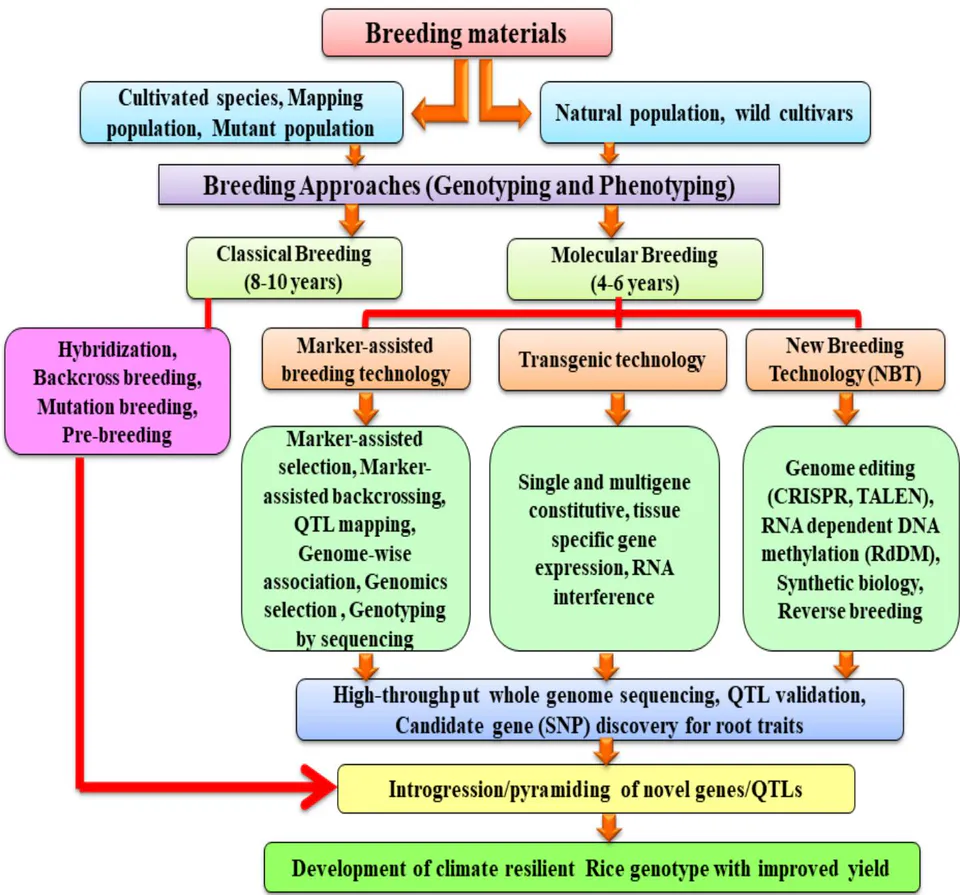
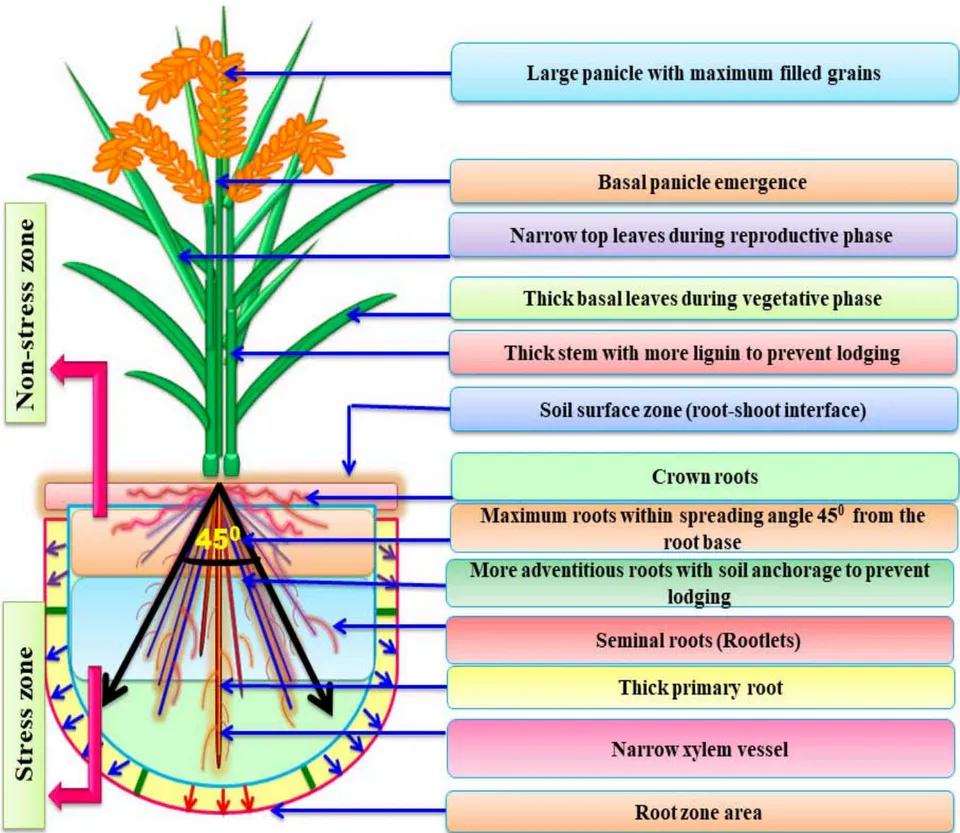
Roots are vital organs that help plants capture water and nutrients from the soil. The extent of the zone of the soil where water and nutrients can be obtained is determined by root system architecture (RSA). Because roots are front-line organs in the response to abiotic stresses such as drought, flooding, and salinity stress, it will be critical to improve belowground plant parts as well as aboveground plant parts as global climate change increases. However, because roots are hidden underground, conventional breeding focused on phenotypic selection makes it difficult to choose breeding lines with potential RSAs for abiotic stress adaptation. Design-oriented breeding of RSA without phenotypic selection is possible thanks to recent advancements in modelling, molecular biology and biotechnology (Holz et al., 2024; Uga, 2021). Integrated breeding strategies for developing climate-resilient rice genotypes with improved yield and root traits are highlighted in Figure-3. Improved root systems are critical for greater water and nutrient uptake, especially in systems with limited water supply, such as aerobic farming (Kharb et al., 2015; Meister et al., 2014). Increased water extractions are linked to the ability of roots to vary their response developmentally and functionally, and it is usually recognised as a key component feature for yield and adaptation during variations in soil moisture (Catolos et al., 2017; Phule et al., 2019). The findings implies that plants' ability to acquire mineral elements is linked to their root systems' ability to investigate the soil. Mutants with root systems that better utilise the soil, acquire more mineral elements, and produce higher yields on depleted soils can be created (White et al., 2009). Most root features for increasing yield in water-stressed situations are complicated in nature, making them difficult to incorporate into traditional breeding strategies (Jalil et al., 2018; Sandhu et al., 2019). Breeding for aerobic cultivars could be accelerated by finding Quantitative Trait Loci (QTL) related to features for aerobic adaptation using Marker-Assisted Selection (MAS). Therefore an hypothetical ideal root model is illustrated in Figure-4.
4.1. Mutation breeding to identify novel mutants
Using high-throughput genotyping, the populations are screened for mutations in genes of interest, and phenotypic changes are calculated (reverse genetics). Induced mutations for desirable features, such as root properties, provide a quick way to improve elite adapted germplasm for crop improvement. The creation of structured mutant populations for forward and reverse genetics aids mutant exploitation. These take advantage of the growing amount of sequence data available to confirm gene function. For model species like Arabidopsis, Medicago truncatula, Lotus japonicus, and rice, mutation grids or 'TILLING' populations have been produced, but agricultural plants like barley and wheat are also being developed (IAEA, 2006). As more sequencing data becomes available, this list will be expanded to include other species. Argentina (wheat), Australia (lupins), Belgium (annual plants), Brazil (wheat), China (soybean), China (wheat), Cuba (wheat), Germany (maize), Israel (annual food plants), Poland (barley), South Africa (Vigna unguiculata and Vigna subterranean), Turkey (barley and chickpea), United Kingdom (barley) are among the countries working on specific crops (IAEA, 2006). In comparison to control plants, overexpression of O. sativa ROOT ARCHITECTURE ASSOCIATED 1 (OsRAA1) increases the quantity of crown and lateral roots (Ge et al. 2004). OsRAA1 is an anaphase-promoting complex/cyclosome (APC/C)-targeted protein that stops the cell cycle from entering anaphase (Han et al. 2008). Although crown root initiation proceeds normally, a mutation in rice CULLIN-ASSOCIATED AND NEDDYLATIONDISSOCIATED 1 (OsCAND1) causes a deficiency in the development of crown root primordia (Wang et al. 2011). In Arabidopsis thaliana, CAND1 is a SCFTIR1 E3 ubiquitin ligase involved in the degradation of Aux/IAA proteins in response to auxin (Chuang et al. 2004; Feng et al. 2004). OsCAND1 is required for auxin signalling in the crown root meristem to maintain the G2/M cell cycle transition and, as a result, crown root emergence (Wang et al. 2011). The rice gene AUXIN RESISTANT 1 (OsAUX1), which is evolutionarily related to the auxin influx carrier gene family AUX1/LIKE AUX 1 (LAX), has T-DNA insertion mutations that lower the number of lateral roots (Zhao et al. 2015). The nal2 and nal3 double mutant (nal2/3) produces fewer lateral roots than the wild type due to mutations in two identical OsWOX3A/OsNARROW SHEATH (OsNS) genes on chromosomes 11 and 12, respectively (Cho et al. 2013). The decreased number of lateral root initiation in nal2/3 appears to be due to a problem with endogenous IAA distribution mediated by changes in OsPIN1 and OsPIN2 expression (Cho et al. 2013).
4.2. Genetic engineering of root traits
4.3. Mapping of major effect QTLs for root architectural traits
Roots are important for crop yield maintenance, which is critical when plants are grown in soils with insufficient water or nutrients (Bengough et al., 2011), and roots are one of the primary sites for stress signal perception, which triggers a cascade of gene expression responses in response to water deficit (Rabello et al., 2008). Previous research has shown that plant growth is mostly dependent on the severity of the stress; a slight water deficit inhibits the growth of leaves and stems, but roots can continue to extend (Peng et al., 2006). Furthermore, root architecture is an important characteristic for separating genotypic variants in rice responses to water shortages (Henry et al., 2011). To increase rice varieties' adaptability to aerobic conditions, a better understanding of the underlying physiological and molecular mechanisms is required. Upland rice's long and deep root system, the ratio of root weight to shoot weight, and root penetration ability contribute considerably to drought tolerance, according to Price and Tomos (1997). Several of the QTL discovered for root length are consistent among mapping populations (Courtois et al., 2009), and shared genomic areas for root thickness, root penetration, and stomatal behaviour have been identified across populations and even species (Zhang et al., 2001). In lowland and irrigated rice, progress has been made in finding large effect QTL conferring drought tolerance (Price and Tomos, 1997; Serraj et al., 2011). For both upland and lowland rice, many QTL for grain yield under drought stress have been identified (Bernier et al., 2007; Venuprasad et al., 2009). Sandhu et al. (2013) found 35 QTL related with 14 traits on chromosomes 1, 2, 5, 6, 8, 9, and 11 in the MASARB25 Pusa Basmati 1460 population and 14 QTL associated with nine traits on chromosomes 1, 2, 8, 9, 10, 11, and 12 in the HKR47 MAS26-derived population in their study. Three large-effect stable QTL for improved yield under aerobic settings, as well as QTL for various root-related features that are likely to boost water and nutrient intake under aerobic conditions, were discovered. Coexisting QTL for root and yield-attributing traits reveal a mechanism associated with better yield of promising lines under dry direct-seeded circumstances, indicating resource movement during grain filling (Sandhu et al., 2013).
4.4. Speeding up QTL introgression thru marker-assisted backcross (MABC) breeding
Four QTLs for root characteristics were introduced into an upland rice cultivar using marker-assisted backcross breeding. The QTLs have previously been discovered in a different genetic background under experimental conditions. The introgressed lines and the recurrent parent were grown for 6 years in highland areas in Eastern India by resource-poor farmers, and yields were reported. Under generally favourable field conditions, the QTLs improved yield by 1 t.ha when combined. Due to increased variation in soil-water availability in very low yielding conditions and resulting yield variability, the QTL effects were not identified in less favourable trials (Steele et al., 2013). Introgressing QTL clusters into advanced backcross-derived lines and testcrosses resulted in an increase in grain yield, providing direct proof for the feasibility of boosting grain output by modifying root systems (Li et al., 2015). Deep Rooting 1 (DRO1), a significant locus influencing root development angle, was found in a bi-parental population of two rice lines with different drought tolerance by Uga et al. (2011). When DRO1 was cloned and characterised, it was found to play a role in producing a steep root angle and, as a result, boosting drought tolerance and grain yield when introduced into the susceptible parent's genetic background (Uga et al., 2013). Furthermore, using a specific allele of the PHOSPHORUS STARVATION TOLERANCE 1 (PSTOL1) locus in rice or sorghum, a clear genetic relationship between root length and P acquisition as well as yield performance in phosphorus-deficient soil has been shown (Gamuyao et al., 2012; Hufnagel et al., 2014). Developing novel crop cultivars with improved root systems has the potential to improve resource use efficiency and plant adaptation to unstable climates when taken together. In the experimental population IR64 × Kinandang Patong, the locus Deep Rooting 1 (DRO1) has been demonstrated to be a major factor for root angle (Uga et al., 2013). Its orthologous gene in barley (MLOC 3895.5, 48.38 cM) was expected to be on Chr 5H (MLOC 3895.5, 48.38 cM) and mapped near an RSA QTL (qRSA13, Chr 5H, BOPA2 12 10899, 43.76 cM). SCARECROW (SCR) is a transcription factor that is expressed in the stele but moves out to govern endodermal development in Arabidopsis. It is activated by the transcription factor SHORTROOT (SHR), which is expressed in the stele but moves out to regulate endodermal differentiation (Cui et al., 2007). Short roots are caused by mutations in either gene. OsSCR1 and OsSHR1 in rice have the same functional purpose as in Arabidopsis (Kamiya et al., 2003; Cui et al., 2007; Mai et al., 2014).
4.5. Genome-wide association study (GWAS) and Identification of Candidate Genes
The development of emerging high-throughput genomic technology will allow harnessing the genetic diversity (Varshney et al., 2014) for several agro-morphological traits to improve the yield under dry-DSR through genomics-assisted breeding (Kang et al., 2016). As the whole-genome sequence is available, high-density SNP arrays allow for the identification of genetic markers, quantitative trait loci, and significant relations between marker traits via GWAS (Zhu et al., 2008). A GWAS study designed for a total of 39 traits was conducted on a complex mapping population. A total of ten substantial marker-trait associations (MTAs) were discovered, as well as 25 QTLs associated with 25 traits (Sandhu et al., 2019). Subedi et al. (2019) discovered 15 MTAs that are associated with root hair, root length density, nodal root, and culm diameter. A positive association of grain yield was noticed, related to root-morphological traits, seedling establishment traits, grain yield attributing traits, and nutrient uptake traits, with phenotypic variance ranging from to . According to the findings of this study, several root phenotypical traits are related to grain yield under dry-DSR conditions were reported (Sandhu et al., 2019). Liu et al. (2020) conducted a GWAS study with 208 numbers of accessions in rice to identify polymorphic markers (SNPs), that are expressively allied with mesocotyl length. Ten of the sixteen distinct loci corresponded to known quantitative trait loci (QTL) or genes, while the remaining six were potentially novel loci (Liu et al., 2020).
4.6. Genome Editing: to identify the allelic variation
To meet food supply demands and support sustainable development, it is critical to reduce genetic erosion and improve the yield of modern rice cultivars. Hu et al. (2019) used the clustered regularly interspaced short palindromic repeats (CRISPR)/CRISPR-associated protein 9 (Cas9) genome editing technique to edit Semi-Dwarf1 (SD1) and Photosensitivity5 (SE5) in the elite landraces Kasalath and TTP (TeTePu), which contain many desirable agronomic traits such as low phosphorous tolerance (Gamuyao et al (Singh et al., 2012). The results demonstrated that specific targeting of SD1 for gene editing in Kasalath or TTP produced in new lines with a semi-dwarf plant architecture, which is desirable in modern rice varieties, while retaining most of its progenitors' desired agronomic features (Hu et al., 2019). Using gene editing on existing landraces, researchers can quickly boost genetic variety and create new kinds that meet current production needs. Plant development is negatively impacted by phosphorus deficiency. Phosphatic fertilisers could help to alleviate phosphorus deficiency, however rice varieties' low use efficiency of available phosphorus is a bottleneck that could have negative environmental repercussions. When breeding new rice varieties, it is critical to use landraces that possess genes for high phosphorus usage efficiency. Pup1 (also known as Pstol1), a key quantitative trait locus for phosphorus deficit tolerance, was discovered in Kasalath (Gamuyao et al., 2012). Nipponbare does not have this gene. We conducted phenotypic analyses of Kasalath, sd1-3Kas, and sd1-5Kas in nutrient solution with low P (0.5 mg/L), CK (10 mg/L), and high P (25 mg/L) hydroponics solution over 18 days to see if the sd1 mutation in Kasalath affects phosphorus consumption efficiency. In comparison to Kasalath, the root lengths and surface area of sd1-3Kas and sd1-5Kas rose under low P, but decreased under CK and high-P concentration. These findings showed that in Kasalath mutants with low P, the sd1 mutation has no effect on PSTOL1 function (Hu et al., 2019). Semi-Dwarf1 (SD1) in the elite landraces Kasalath and TeTePu (TTP), which contain many desired agronomic traits such as tolerance to low phosphorous and broad-spectrum resistance to several diseases and insects, was edited using the clustered regularly interspaced short palindromic repeats (CRISPR)/CRISPR-associated protein9 (Cas9) genome editing system. SD1 mutations result in shorter plants with improved lodging resistance (Hu et al., 2019).
V. CONCLUDING REMARKS AND FUTURE OUTLOOK
Roots have been a neglected topic of research since they are difficult to examine because they are underground. Functional genomics and proteomics are providing powerful tools to help the scientific community examine root function and structure, ushering in a new age in root research. Roots information is directly relevant to agricultural/environmental issues including crop production with little environmental effect and crop production in low-input and stressed conditions. The Crop Root Research Consortium (CRRC) was formed in response to the recent spike in interest in roots. The CRRC's purpose is to coordinate the research activities of an ever-increasing number of research groups working on root screening methodologies, molecular marker creation, root architecture modelling, genetic potential evaluation, environmental effect, and plant breeding. The CRRC platform aims to expand and facilitate information and material exchange, promote concerted development of new resources (populations/libraries), and foster collaboration through voluntary networking within thematic sub-consortia, as well as joint research proposal submission under bi-lateral or multilateral cooperation. Screening for features and finding genes/QTLs to improve the acquisition of N, P, Zn, and Mn, enhancing the uptake and efficient use of water, and minimising the entry of harmful components into the food chain are among the current root-related research efforts on rice. Knowledge of the genes that influence mineral acquisition can be used to develop genotypes of other common crops that can be used in extreme environments to improve their ability to grow on resource-poor soils, increase mineral accumulation for animal nutrition, and reduce toxic element accumulation. These results should improve population health by boosting nutritious content and minimising harmful substances in food ingested, as well as increasing the sustainability of agriculture on both a subsistence and industrial level. However, understanding and being able to manipulate components of signalling networks and transduction pathways that respond to translocated signals, both of which occur before physiological adjustment, would allow for intervention at a far earlier and more essential stage of the response. Such knowledge, as well as the genes that control signal flow, would be new and strong weapons in the arsenal of plant breeders. Recent advances in forward and reverse genetic approaches including; Next-generation mapping (NGM), MutMap, Targeting Targeting Induced Local Lesions in Genome (TILLING), Eco-TILLING, and Clustered Regularly Interspaced Short Palindromic Repeats mediated genome editing (CRISPR/Cas), have enabled successful demonstration and isolation of casual mutation sites, genes, or QTLs accompanying with the specific trait of importance. Improvement in the high-throughput root phenotypic screening method coupled with automated data analysis can resolve some major issues which are faced during manual root screening. The characterization of root traits and identification of QTL for rot related traits are not much successful with the biparental mapping populations (e.g. RILs) which show segregation in subsequent generations.
Table-1: Genes/QTLs controlling root traits development in Rice
| Sl. No. | Root Traits | Genes/ QTLs | Position on Chromosome | Reference |
| 1. | Root Length | QRO1 | 1 | Kitomi et al. (2018) |
| QRO2 | 2 | |||
| OsEXPA8 | 8 | Shin et al. (2005) | ||
| 8 | Qu et al. (2008) | |||
| 8 | Qu et al. (2008)Sandhu et al. (2013) | |||
| 9 | Qu et al. (2008) | |||
| 2. | Root number | qTLRN-12 | 12 | Jonathan et al. (2015) |
| qLLRN-12qRN5 | 125 | |||
| Anis et al. (2018) | ||||
| 3. | Root growth angles | DRO1 | 9 | Uga et al. (2013a) |
| DRO2 | 4 | Uga et al. (2013b); Uga et al. (2015); Kitomi et al. (2015) | ||
| DRO3 | 7 | |||
| DRO4 | 2 | |||
| DRO5 | 5 | |||
| 4. | Root hair density | 1 | Sandhu et al. (2015) | |
| 5 | ||||
| 5. | Root hair length | 1 | Sandhu et al. (2015) | |
| 6. | Root volume | 2 | Bernier et al. (2007) | |
| 7. | Root lodging resistance | SCM3 | Ma and Yamaji, (2006) | |
| 8. | Root stele | STA1 | 10 | Uga et al. (2010) |
Table-2: QTLs linked with improved Nutrient and Water Acquisition
| Sl. No. | Nutrient and Water Acquisition | Genes/QTLs | Position on Chromosome | Reference |
| 1. | Nitrogen uptake | 9 | Uga et al. (2011); Uga et al. (2013a); Arai-Sanoh et al. (2014) | |
| 1 | Puiga et al. (2012) | |||
| 2. | Phosphorous uptake | qRN5 | 5 | Anis et al. (2018) |
| qRDW5 | 5 | |||
| qRRS8 | 5 | Li et al. (2009) | ||
| PSTOL1 | 12 | Gamuyao et al. (2012) Shin et al. (2020) | ||
| Pup1 | 12 | Shin et al. (2020) Wissuwa et al. (2002) | ||
| 3. | Heavy metal tolerance | NRAMP5, OsLCD1 | 7 | Tang et al. (2017) |
| Dro1-NIL | - | Uga et al. (2015a) | ||
| 4. | Water uptake | qRFW9 | 11 | Price et al. (2002) |
| DRO1 | 9 | Uga et al. (2013a) |
Conflict of Interest
The authors declare no conflict of interest.
Ethical Approval
Not applicable
Data Availability
The datasets used in this study are openly available at [repository link] and the source code is available on GitHub at [GitHub link].
Funding
This work did not receive any external funding.
References
Cite this article
Related Research

Special Issue
Launch a focused special issue to highlight research, emerging trends, and expert insights in your academic field.