


IntelliPaper
Abstract
Which one should be your priority?- This is a question that the majority of women still face whenever they decide to do something beyond their homes. Even after 54 years of Bangladesh's independence, a large portion of the population still firmly holds onto socio-cultural norms and beliefs. This male-dominant society still believes that women's first and only responsibility should be to take care of their families. However, people are now slowly realizing that women's entrepreneurship can not only improve the family's financial stability but also strengthen the country's overall economy. Modern technologies are creating new opportunities for women to become successful entrepreneurs. However, they are still fighting for access to capital, overcoming social and religious norms, dealing with the pressure of family responsibilities, and lacking training and education, among other challenges, on their way to their dreams. This study analyzes the constraints and future prospects of women's entrepreneurship in the digital age using the case study method. Developing policies that consider the proper use of modern technologies, the proper implementation of existing policies, easing capital management, eliminating socio-cultural hindrances, and ensuring stable political conditions are some of the significant ways to take women entrepreneurship to the next level, thereby increasing its contribution to national GDP.A
Explore Digital Article Text
I. INTRODUCTION
In Asia and the Pacific, women's economic empowerment and equality could be achieved through entrepreneurship, which is one of the main pathways and thus becomes a multiplier effect on family welfare, poverty reduction, and sustainable economic growth. Creating innovative connections between technology and ensuring easy financing are considered for catalyzing women's entrepreneurship. Catalyzing women's entrepreneurship, which is directly relevant to economic empowerment and would help achieve the Sustainable Development Goals, especially SDG 5 on gender equality and the empowerment of all women and girls.
Entrepreneurship could be an effective way to empower women and create employment. Promoting women's entrepreneurship can empower women within the family and the wider community (ILO, 2008).
According to the Global Entrepreneurship Monitor Report (2023-2024), entrepreneurship is referred to as any initiative at a new venture or new business innovation, such as a new business, self-employment, or the expansion of an existing business, by an individual, a group of members, or an established company (GEM, 2024).
According to the Global Gender Gap Report 2024, Southern Asia has achieved 63.7 percent gender parity, ranking second-lowest among the eight regions. In the last five years, Economic gender parity has been weakened vigorously over the previous five years, leaving Bangladesh with a wider gender gap to close. In 2024, Bangladesh's economic parity score of 31.1% was the lowest since 2014 and the lowest ranking globally in the 2024 index (Pal et al., 2024).
Bangladesh has made significant progress in improving women's status and empowerment over the years. Women have made substantial progress across various fields globally, including education, healthcare, and political and economic representation. Bangladesh has made incredible strides in recent years in terms of economic development, women's empowerment and societal integration as contributing citizens. The percentage of women who are in the labor force has risen steadily; from 2021 to 2022, it climbed by 32.4% to 42.7% (BBS, 2024). Recognizing the crucial role that women play in advancing sustainable development, the nation has put forward groundbreaking programs to empower women, advance gender equality, and tap into their economic-growth potential. The work in Bangladesh provides evidence that supporting women can yield major socioeconomic gains (USAID, 2023). Women's empowerment through entrepreneurship can significantly advance gender equality by enabling women to participate in economic activities, gain financial independence and reduce gender disparities in income and decision-making. Women-owned businesses can stimulate economic growth by creating jobs, increasing productivity, and fostering innovation. Understanding their role in Bangladesh's economy is crucial for sustainable development.
For attaining different United Nations Sustainable Development Goals (SDGs), such as SDG 1: "End poverty in all its forms everywhere"; • SDG 8: "Promote inclusive and sustainable economic growth, employment and decent work for all"; • SDG 10: "Reduce inequality within and among countries", the challenges must be highlighted related to women entrepreneurship. Traditionally, it has been found that men are more involved in entrepreneurial activities than women. So, increasing female participation in entrepreneurship is a very important agenda for different countries while establishing policy objectives (UN, 2024).
A study by (Rahman & Raihan, 2016) explored that whenever women become financially empowered, they become a genuine human resource for the country, which ultimately lowers household poverty. Again, it indicated that all formal credit and financial institutions require tangible collateral when giving loans to men, but it is very unfortunate that the same institutions show ignorance toward women borrowers, even if they have tangible collateral.
A study by (Shoma, 2019) found that in Bangladesh, women are primarily involved in the apparel and leather sectors. They are contributing both as workers in production and also as women entrepreneurs. This study also revealed three types of women entrepreneurs in Bangladesh. Firstly, those born with economic privileges are given the opportunity to become highly educated with family support. Secondly, women who face society's negative mindset but still choose entrepreneurship as their dream. Thirdly, the women who are being forced to start entrepreneurship activities due to a family financial crisis. A study conducted by (Ahmed, 2014) shows that there is a positive relationship between women's entrepreneurship and Bangladesh's economic development. The study also indicates socio-cultural hindrances, educational and legal barriers, the exclusion of women from access to markets, technology, and finance as problems hindering the development of women entrepreneurship. (Shoma, 2019) mentioned that many women entrepreneurs in Bangladesh, face various problems in businesses that include unavailability of raw materials, lack of marketing opportunities, lack of capital, delay in loan processing, insufficient experience, difficulties in attainment of skilled workers and challenges of account keeping, harassment of law enforcing agents, problems involved in production, freedom of movement, male dominated social structure, non-cooperation of the wholesalers and irregular cash payments hampering the smooth running of their business. A joint report on women's entrepreneurship in Bangladesh by the Asian Development Bank (ADB) and the Australian Government found that women's entrepreneurship can increase family income and thus contribute to poverty reduction (ADB, 2012).
In a study (Sultana et al., 2022), it was found that women entrepreneurs start businesses with insufficient capital, limited market knowledge, managerial skills, and confidence. Besides these, they also face various challenges, such as a lack of confidence, a lack of capital, a limited understanding of the market, limited managerial skills, an unavailability of skilled workforce, time management between family and business, and difficulties in obtaining raw materials. The social norms and customs are not suitable for women entrepreneurs in Bangladesh because they have to spend more time at home to fulfill family responsibilities, family members do not like or accept entrepreneurship, and there is a lack of sufficient funding support for business, which was found as a barrier in the study. Besides family barriers, women face community disapproval, negative impressions towards women entrepreneurship, irregular payment of products, additional charges, gender discrimination and religious superstition as social barriers.
According to the 2022 Labor Force Survey, the total employed population in Bangladesh was 70.47 million, of which 45.61 million were male, and 24.86 million were female. The male labor force participation rate declined slightly in 2022 (80 per cent) from 2010 (82.5 per cent). But the labor force participation rate for women has risen from 36 per cent in 2010 to 42.77 per cent in 2022, and the gap between men and women is wider in Bangladesh (ILO, 2023).
Globally, women's entrepreneurship is considered a crucial initiative for economic growth through job creation, and according to the International Finance Corporation, in East Asia and the Pacific, women own 50 percent of microenterprises and 59 percent of small and medium-sized enterprises. In South Asia, women own 10 percent of microenterprises and 8 percent of small and medium-sized enterprises. In a hostile business environment, which is a key limitation on women's empowerment, the key approach is to promote dialogue between the Government and women's organizations. To promote women's entrepreneurship, ADB's strategy is to provide grant funding to chambers of commerce to address the lack of networking (ADB, 2012).
Day by day, our world, including Bangladesh, has been introduced to new technologies. Not only our lives, but also our jobs and businesses are adapting to these new technologies very rapidly. In this digital age, women's entrepreneurship can take a new shape by adapting to these new technologies. Women in Bangladesh have also begun to realize the importance of adapting to these new technologies. In this study, we have tried to understand how the digital age is helping women make a footprint in entrepreneurship, the challenges they face, and the opportunities in women's entrepreneurship in this digital era.
II. METHODOLOGY
This study is qualitative in nature and is based on information regarding the challenges and opportunities women entrepreneurs face in the digital space. The case study method was followed, as it is widely used to collect in-depth information about the study problems. The purposive sampling technique was applied in this study, which is a form of non-probability sampling. By using the purposive sampling technique, 20 cases were taken from the Dhaka and Sirajganj districts of Bangladesh. Interviews, observations, and document analysis were used as data collection techniques. Data were analyzed using thematic analysis techniques, which included identifying codes and searching for themes from respondents' verbatim responses, and reviewing and establishing specific names for themes. Then, the identified themes were reviewed and linked to the research objectives to explore the study problems in depth. Along with these primary data, secondary data was collected from journals, books, published research reports, census records, periodicals, research monographs, dissertations, & international reports.
III. CONSTRAINTS OF WOMEN ENTREPRENEURSHIP IN BANGLADESH
3.1 Getting Family Support
The first challenge that the majority of potential women entrepreneurs face is obtaining family support for starting their entrepreneurial activities. Although families are becoming more liberal in encouraging women in business, many families still hold the belief that women should not be engaged in outside activities. They still prefer the traditional beliefs, social norms, & religious aspects over the financial freedom of the women. They still believe that women's responsibility is only to take care of the family (Agrawal et al., 2023). As this is a male-dominated society, women face an extra layer of difficulty in getting support from male members.
Many men still believe that if women contribute to the family, people will laugh at them. People will mock them, saying they are not capable enough, so they drive their women into business. However, over time, people are realizing that to cope with the rising cost of living, it is ideal to support women in entrepreneurship. Especially in urban areas, it is challenging to run a family on the income of male members only. Therefore, gradually, people are understanding that the involvement of women not only helps women financially, but both the family and society can benefit from this (ADB, 2018). Again, family members are concerned about the woman's security and safety. As women might need to travel to different places and meet different people for business purposes, they become worried about their safety, especially in the volatile political conditions of Bangladesh. Many of the respondents in this study reported that they had difficulty convincing their families to support them before starting their businesses, but ultimately, family members provided support. Opportunities of Entrepreneurship in digital platforms play a vital role here. As digital platforms allow women to conduct various activities from home, family members feel more comfortable with this. One of our respondents, who graduated from Dhaka University and started her online-based clothing business, mentioned the same experience,
"Initially, my father was not happy with my business decision...In our family, no woman had ever run any business...So he was concerned about what my relatives would say and also my safety...But when I assured him that I would run my business through a social media page, he was convinced... Later, he also supported me in finding different clothing vendors for me."
Another respondent who started her online-based Henna and Makeup item business got the support from her husband after convincing him, "When I shared my business idea with my husband, he was in a dilemma....he was worried that I would have to face different people...but as my business would be social media-based, so he was convinced...He also realized that my income can help the family too...later, he supported me in many ways, and now I can earn 40,000 to 50,000 BDT monthly on average."
3.2 Balancing between Work Life & Family Life
For decades, it has been believed that the primary responsibility of women is to take care of family members, especially husbands, parents, children & elderly people (Agrawal et al., 2023). Although families nowadays support women in starting their entrepreneurial businesses, that doesn't mean women are free from their family duties. Male members can go outside to do their job and return home; they are not bound to household duties, but women are bound to household activities along with their business or job activities. In our study, most respondents reported receiving family support for their businesses, but with one condition: continuing their family duties. Sometimes it becomes tough for women to manage both work and family life. If they focus more on their work, then family members become upset with them. Again, if they focus more on the family, they cannot grow their business despite having opportunities. Again, due to a lack of formal care settings in Bangladesh, women are bound to provide care, especially to their children and elderly members of their families. A practical and sufficient formal care system might help the women grow their businesses. One of our married respondents started her online-based leather item shop 10 years ago. Now she has a physical retail store in Dhaka. She expressed that,
"I have been doing business for the last 10 years... both my online and offline stores have got the reputation...but despite having the opportunity, I could not open more outlets in Dhaka, because I need to spend a minimum of 4 to 5 hours for my home duties....If I could get more support from my husband and in-laws in doing household duties, I might have opened at least 2 more outlets."
Another unmarried graduate who started an online-based electronic gadget store a few years ago is facing difficulties in managing both work and family life. While studying at Dhaka University, Sajida's father passed away, leaving her in charge of her family. Her mother is seriously ill with different diseases. She uttered that,
"I am doing well with my business...my customers are happy, but along with managing all my business activities, I need to do maximum household duties too...I have a helping hand at home, but my mother needs my support for her day-to-day activities...I feel that if I had given more time to my business, I could have achieved higher growth...I become exhausted by managing both...but it's ok...taking care of my family is also my duty."
3.3 Managing Capital
Usually, a large proportion of women from lower socioeconomic classes engage in entrepreneurial activities to provide financial support for both their families and themselves but, one of the significant challenges that women face is managing initial capital to start their businesses (Rahman et al., 2024), (Agrawal et al., 2023), (Dana et al., 2023), (DC, 2019).
Most respondents in this study reported the same problem. It becomes very easy for women if they get a business loan from financial institutions at lower interest rates. But in the context of Bangladesh, women face different difficulties in obtaining bank loans. Although the Government and Bangladesh Bank have issued different policies and guidelines for financial institutions so that women entrepreneurs can get loans more easily, women still face a variety of hardships in obtaining business loans. In our study, we found different issues related to different financial institutions for women entrepreneurs, such as, seeking for collateral obligations, increased collateral obligations, lack of loan guarantor, bank asking for mortgage documents, high interest rate, demand for transaction in a bank account, women get lack of proper information regarding the rules regulations of loans, lack of adequate knowledge regarding the banking system, many women entrepreneurs do not have any business plan, difficulties for getting loan for widows or divorced women, facing non-cooperation and harassment in the banks, lack of information of denying a loan, asking for guarantors' documents, respective officers in the bank showing lower interest deal with prospective women borrowers, higher service charges, and lacks in proper knowledge regarding the banking system (Raman et al., 2022). Because of all these issues, women try to manage their capital by taking loans from relatives, friends, & personal savings, which may not always be enough. Sometimes, potential women entrepreneurs cannot even manage loans from family and friends, which leads them to drop their dreams. One of the respondents, who is currently an undergraduate student and started his online-based gift items selling store, shared her experience in such a way,
"My father died while I was in year in University...I felt that my family needs financial support from me...But I had no savings, not even any fixed assets against which I could take business loans from banks...Even I didn't find any suitable NGO from where I could take a loan.... Banks were not interested in giving even a small amount of loan without any collateral or guarantor...Later, I took small loans from my different friends and started my page."
3.4 Facing Socio-Cultural Issues
Different socio-cultural factors, such as traditional practices, religious misinterpretation, cultural deprivation, social taboos, gender discrimination, male domination in society, etc., are creating obstacles in the road of women's entrepreneurship. Although with the passing of time, men are becoming less rigid about the financial activity of women, a good portion of society still believes that women should not be involved in business or jobs. A few misinterpretations of religious values and practices also create obstacles for women. Again, in this male-dominated society, women face different gender discrimination or harassment while doing their business activities (Rahman et al., 2024), (Dana et al., 2023), (Sarkar, 2024), (ADB, 2012), (Raman et al., 2022), (ADB, 2018)
Different respondents shared their experiences in this regard. One of our respondents started her online-based clothing store after her marriage. She both imported and bought clothes from local suppliers. She shared her experience in this way,
"Initially my in-laws were not agree with my business initiative...they seriously opposed with it...they believed that daughter-in-law should not do any business activities with association of different male people...but my husband supported me and convinced his parents...even while bargaining with the suppliers, sometimes they tried to deceive me, I feel because I am a women... that's why"
3.5 Having Lack of Training & Proper Education
Due to the easy availability of social media platforms, many women nowadays start an online business page without proper knowledge or education about their business. Also, there is a lack of training programs in entrepreneurship, digital marketing, skill development, etc. In this study, we found different challenges like lack of formal education, lack of entrepreneur education, low education and work experiences, less training and development facilities, lack of entrepreneurial skill, lack of management skill, lack of knowledge regarding product marketing, lack of knowledge about e-marketing and digital platforms, lack of proper understanding of handling man management, which are creating obstacles in successful entrepreneurship activities for women. To become successful in entrepreneurship, having an entrepreneurship management degree, a digital marketing degree, and an e-commerce degree helps women a lot (Sarkar, 2024), (Agrawal et al., 2023), (Cardella et al., 2020).
However, opportunities to avail of this type of degree are low in Bangladesh. A very few private universities offer this type of degree or course, but it requires a good amount of money. So, not all women can afford these expensive degrees. Alternatively, skill development training or courses can help the women, too. Although different NGOs, government agencies, and a few private institutions are providing various training programs to develop skills, these are not sufficient. Our respondents reported that, without or with little knowledge of digital marketing, they have started their businesses on digital platforms. One of our respondents, who runs an online page-based business selling birthday cakes and gift items, started her business by making her first posts on a Facebook page managed by Dhaka University students, such as "DU Business Community". She expresses that,
"Initially, I felt that I didn't need any training....but after a few days, I realized there are a lot of competitions in my business...I don't have any idea how to attract customers... or even how to boost my page...I took help from my friends who know about page boosting....Later, I realized it would have been better if I had taken an entrepreneurship course, especially for digital marketing."
A few respondents expressed the need to attend different training programs to become experts in their fields at local training centers. One of our respondents took training on parlor services, she uttered that,
"The knowledge and skills I acquired from this course significantly refined my abilities in the beauty and makeup sector... This led to an increase in orders and positive reviews from my customers, contributing to the enhanced credibility and success of my business."
3.5 Managing Digital Platforms, Networking, and Marketing
Although digital platforms offer great opportunities for women to start and grow their businesses, women face various obstacles in managing them. Many of our respondents express that they face cyberbullying or harassment in social media, deliberate bad reviews on online platforms from competitors or some potential customers without any genuine reason, negative responses from customers for a situation which is beyond control, aggressive online behavior of business competitors such as spreading misleading and false information; writing bad things in the review panel; spying on the prices and models of the products; counterfeiting the new ideas; spreading rumors about personal lives of business owners, women entrepreneurs sometimes face hacking of their social media pages, imposed social media page restrictions because of false reporting, etc. (Rahman et al., 2024), (Agrawal et al., 2023), (DC, 2019) Because of these hurdles, women face difficulties in growing their businesses smoothly. Sometimes, they need to hire specialized personnel who can handle these negative issues on digital platforms, which increases their costs. One of our respondents operates a clothing business that primarily sources 85% of its products from local suppliers in Bangladesh and 15% from vendors in India. Her product range includes sarees, panjabis, three-piece suits, and various other clothing items. She expressed that,
"I genuinely import different clothing items from India and sell on my online page...but a few of my competitors constantly spread the rumors that my imported clothes are duplicates...my customers got misled by these...Once, I also got a restriction on my social media page because of false reporting."
One of the crucial factors for success in an online business is the proper delivery of goods to customers. However, many women respondents pointed out that they face various problems regarding delivery, such as an inexperienced delivery person hired by the delivery company, rude behavior by delivery personnel toward customers, delays in payment settlement, mishandling or damage to products due to a lack of sincerity, etc. Again, a few suppliers don't trust women or cannot rely on the sincerity and intelligence of women entrepreneurs. Sometimes, just because of gender, suppliers charge higher prices and require full advance payment from women, which is not usually applicable to male business owners. One of our respondents, who makes and sells pastry cakes and bakery items, shared one bad experience related to delivery,
"Despite taking extra charge for cake delivery, sometimes, because of negligence of delivery persons, my cakes are being damaged... Customers get damaged cake, so they return it, which is obvious...delivery companies also don't want to take the responsibility...so I need to bear the loss".
Again, women entrepreneurs face hurdles due to difficulties staffing good employees with a strong command of digital platforms, limited access to information, a lack of skilled, trained manpower to promote the business, and bureaucratic rules and regulations. One of our respondents expressed that, "When I started my shop, it was a highly competitive market environment....lack of consistent and reliable product supply and effective management was another challenge for me...I faced another problem of adjusting to rapidly changing consumer demand and market trend...during conducting business page management, page promotion, advertisement strategies, I had to face difficulties."
3.6 Embracing Volatile Political Situations
The volatile, unrestful political situation in Bangladesh seriously affects the growth of women entrepreneurs in their businesses. Usually, women entrepreneurs face extortion by local leaders, goons, and a few corrupt law enforcement officials. Many of our respondents, especially those with physical stores, face this type of extortion on a regular basis. One of the respondents, who runs a small restaurant, selling rice, curry, and snacks for the last four years, expressed her experience in this way,
"The traffic police sometimes engage in extortion, even two to three times a day. These issues are prevalent in this area, and local political leaders and goons occasionally disrupt my business by claiming territory. This situation keeps me in constant fear."
Again, different political unrest situations, people's movements or strikes over various issues, and road blockages create serious problems for women entrepreneurs. These situations hamper their delivery system and supply chain management badly, which causes the cancellation of orders, customer dissatisfaction, product damage, etc. (Rahman et al., 2024)
IV. FUTURE PROSPECTS OF WOMEN ENTREPRENEURSHIP IN BANGLADESH
In a country like Bangladesh, where women were deprived of engaging in entrepreneurial activities due to social taboos, religious restrictions & social norms for decades, technological innovation has created a strong pathway for women to take strong steps into entrepreneurship. Whenever women have started entrepreneurial activities, people in Bangladesh, especially men, have recognized the significance of their contributions not only in their families but also in the overall economy. As a least developed country, Bangladesh gets the chance to have new technologies a few years later compared to developed countries. After 2020, a boom in women's entrepreneurship has been observed in Bangladesh as new technologies such as digital social media platforms, artificial intelligence, and digital banking have emerged. These technologies have not only created opportunities for educated urban women but also for rural and uneducated women. They don't want to confine themselves to the walls of their home; they want to explore their hidden talents and contribute financially to their family, which ultimately helps the economy as well.
Women's entrepreneurship in Bangladesh primarily involves small and Medium Enterprises (SMEs). There are approximately 7.8 million SMEs in Bangladesh, of which women entrepreneurs account for 7.8%. The total SME sector contributes around 20-25 per cent of Bangladesh's GDP (Chowdhury, 2025). It clearly indicates that greater involvement of women in entrepreneurship activities can increase the country's GDP.
With the help of digital platforms, women have an excellent opportunity to expand their market not only within the country but also beyond borders.
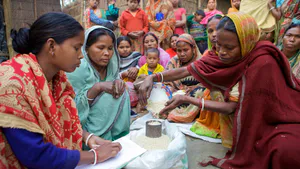
If they get the right platform and other facilities, they can start exporting their products globally. Even women entrepreneurs from rural areas can expand their markets in city areas if they are properly trained. One of our respondents mentioned that, when she started her homemade food delivery business, her helping hand helped her a lot. Gradually, the helping hand showed interest, invested her savings, and became her partner. Seeing her, other women from her village have started selling their dairy products on social media. This one example strongly suggests to us that these illiterate rural women have a dream too; they just need proper training and support from society.
These digital platforms not only give women the opportunity to start a business from home, but also don't require any physical infrastructure, and the startup cost is minimal. Rural women need basic knowledge of how to operate these digital platforms, access to a smartphone, and an internet connection to start their business. Even mobile banking is giving women the chance to conduct financial transactions with their customers and suppliers without a bank account. They can get mobile banking support from their home. Financial institutions just need to develop their systems more diversely so that these women can be better served.
Nowadays, various AI-generated software and applications are helping women develop their marketing strategies. They can easily create compelling images, videos, reels, posters, and designs to promote their products. They can even analyze the market data by using these AI tools. But very few women know how to properly leverage these AI tools. So, women need proper training on AI programs.
These digital media are also enabling women to teach other entrepreneur aspirants how to start their businesses online. One of our respondents, who runs her cake and pastry business, also takes online classes on how to prepare cakes. Although she takes charge, these online classes can still help other women learn more easily. They don't need to be engaged in any formal training institutions.
It can be mentioned that access to finance, development of skills, and networking can provide expanded opportunities for enhancing entrepreneurship. Along with access to global markets and a proper supply chain can strengthen the connections to domestic and global markets (WB, 2024).
Now, the world knows that women's empowerment and gender equality, which are the core of sustainable development, can create an inclusive work environment by fostering women's entrepreneurship. Economic participation and involvement of women in paid and unpaid work through entrepreneurship could make significant contributions to the global economy. It is a great opportunity to realize the 2030 agenda for sustainable development through women entrepreneurship, including goal 5- achieve gender equality and empower all women and girls, and goal 8- promote sustained, inclusive and sustainable economic growth, full and productive employment and decent work for all, and goal 10-reduce inequalities within and among countries (WB, 2024).
V. ACTIONABLE INSIGHTS
Bangladeshi women are no longer confined to the home; instead, they have begun to explore the digital world. In this online world, they have found an excellent opportunity to become financially independent and understand their true value, without giving up their responsibilities to their family and society as women. They now just want to fly as high as possible. Thus, they just need guidance and a proper platform to fulfill their dreams. Based on the findings of this study, we have identified potential actions that our policymakers and various financial and non-financial organizations can take to develop women entrepreneurship and improve the overall economy.
The central bank of Bangladesh has initiated a refinance scheme under which all commercial banks are encouraged to provide loans to female entrepreneurs at lower interest rates and easier terms for their SME businesses. But women are still having difficulty taking loans from these commercial banks. Also, the Bangladesh government established the Women Entrepreneur Development Unit (WEDU) at all branches of the Bangladesh Bank. This unit operates the Small Enterprises Refinance Scheme to provide low-cost funds. This unit is also responsible for promoting women's entrepreneurship and supporting women entrepreneurs. But these are not as effective as they should be. The Government, commercial banks, and other financial institutions have to understand that investing in women's SMEs is now highly worthwhile, because with the help of digital platforms, women are changing the definition of business success. Developing mobile banking outlets in every village, providing financial literacy training, especially to the rural illiterate women, by which they will get confidence to access and use the financial services efficiently, creating women-focused investment funds, reforming the policy which will eliminate discriminatory lending practices, and supporting equal property rights can help the women entrepreneurs to expand their dream. Again, WEDU can create a financing platform where interested individual lenders are available, and women entrepreneurs can borrow funds from them. This will bypass the hassle of taking loans from institutions and also save time. WEDU will work as a middleman and evaluate both lenders and borrowers before allowing them to join this financing platform (Noman, 2025), (BB, 2024), (BB, 2025).
Under the Bangladesh Technical Education Board (BTEB), there are almost 206 public technical and vocational education and training (TVET) institutions, including 49 polytechnics and 64 Technical Schools and Colleges (TSC). But the irony is that, except for basic computer training, there are no such training programs associated with learning digital media, artificial intelligence, the use of financial services in business, or entrepreneurship. It is high time these institutions should start free training programs, considering the requirement of women entrepreneurship in this digital age. These free trainings will help the women, especially the rural illiterate women, and they will get confidence and ideas to start their businesses (BTEB, 2025). In the upcoming budget, the Bangladesh govt. must ensure funding for developing these free training programs.
Eastern Bank Limited recently explored opportunities for women entrepreneurs through the introduction of an online training program. It introduced a financial literacy and entrepreneurial development training program for the empowerment of women entrepreneurs, providing practical knowledge, assessments, and certification to enhance their business success. Entrepreneurship development certification presents various videos on business management, entrepreneurship know-how, and digital marketing to enhance women's understanding (EBL, 2025). Like them, other commercial banks and NGOs can start similar training programs, which will ultimately help the women to increase their knowledge in diversified fields like risk management, cost management, revenue models, procurement, offline-online marketing, business documentation, and bank loans, etc. (EBL, 2025).
According to the National Industrial Policy 2022, the Government has decided to give priority to women in the service industry. Different training arrangements, special loan arrangements, banker motivation programs for financing women entrepreneurs, and product fairs would be organized to enhance the capacity of women entrepreneurs. Other programs include incentives by Bangladesh Bank to establish women in cottage, micro, small, and medium enterprises; short-and long-term training programs by the SME Foundation; expanding the scope of collateral-free loans; and the formation of the National Women Development Forum, etc. But, apart from a few isolated programs, this policy is still not vigorously implemented. It is high time the Government should take strict action so that concerned authorities must implement the policies. On the other hand, there is also a requirement for the amendment of this policy by including the focus on women's development on the utilization of social platforms, AI platforms, digital banking on entrepreneurship (GOB, 2022), (WWB, 2024).
Apart from those, policy measures should be taken to address supply-side challenges, thereby motivating more women to take on business leadership positions within the financial ecosystem, promoting alternative sources of collateral, and providing technical assistance and capacity-building for financial institutions. All of these initiatives would reduce the challenges relevant to the supply side, including misalignment of financial products with the needs of women entrepreneurs, prejudicial discrimination, statistical discrimination, and higher unit costs of administering smaller loans (OECD, 2025).
Policy measures could also be taken on the demand side, including lower levels of entrepreneurial skills among women, limited business networks, lower levels of available collateral, lack of financial history, and a tendency toward smaller projects and lower productivity. Demand-side initiatives include developing entrepreneurial skills by identifying adequate funding opportunities, increasing eligibility for financial services, raising knowledge and awareness of financial instruments, and connecting with sources of finance for businesses. As entrepreneurship occurs within a socioeconomic context, religion, culture, and social norms impact the attitudes and behavior of women entrepreneurs. To foster favorable cultural attitudes, policy should address broader structural inequalities, increase public awareness of the positive social and economic impact of women's participation in the labor market, establish platforms for building networks, and create a supportive business environment that enhances the social and financial inclusion of women entrepreneurs. Policy initiatives should take into consideration the following issues: arranging workshops and training, improving digital financial awareness and skills, incorporating financial literacy education, and increasing collaboration and partnerships with financial and educational institutions to enhance women's financial literacy, especially in rural areas. Microfinance could be an essential tool for facilitating access to startup financing, which may reduce difficulties in accessing traditional banking and lending markets for women entrepreneurs.
Last but not least, women also cannot overlook their responsibilities towards their elderly and their children. Bangladesh lacks a formal care system, which is actually creating obstacles for women entrepreneurs. Policymakers must take the initiative to build a strong formal care system where both the elderly and children can receive care, ensuring more free time for women for their entrepreneurship activities. Again, in this study, many respondents stated that volatile political conditions and extortion by political figures are among the significant challenges they face. For the growth of women entrepreneurship, the Government must ensure stable political conditions, and law enforcement agencies must take strong steps, with a zero-tolerance policy, against all illegal activities that affect women entrepreneurs.
VI. CONCLUSIONS
Women entrepreneurship can not only enhance the financial independence of women, alleviate poverty and social improvement, but also can be a significant contributing sector to the national GDP of Bangladesh. Modern technologies are opening new & facile paths for women's entrepreneurship, which needs to be backed by strong policies and social support on a large scale. Only then, women can overcome the major challenges like financial barriers, the burden of work-family responsibilities, lack of knowledge and education, and religious and cultural hindrances on the way to success in entrepreneurship. This study has revealed some opportunities, such as expanding entrepreneurship in the global market and major contributions by rural illiterate women with the help of modern technologies. If all the stakeholders of the country can think in a broader sense and provide an obstacle-free pathway for women, then these visionary women entrepreneurs can change the face of the country's overall economy.
Conflict of Interest
The authors declare no conflict of interest.
Ethical Approval
Not applicable
Data Availability
The datasets used in this study are openly available at [repository link] and the source code is available on GitHub at [GitHub link].
Funding
This work did not receive any external funding.
References
Cite this article
Related Research

Special Issue
Launch a focused special issue to highlight research, emerging trends, and expert insights in your academic field.