

IntelliPaper
Abstract
The following article summarizes implications that extend from research of a positive youth development afterschool program into one Kindergarten teacher’s classroom in a public elementary school. The teacher was mentored and supported through implementing physical activity with mathematics and literacy activities in their classroom, intentionally framed by culturally relevant pedagogy and the teaching personal and social responsibility model. The case study was meant to explore and understand the nature of prioritizing physical movement and holistic development in a classroom setting along with promoting academic literacies with fidelity to school standards. Data samples included the teacher’s activities including classroom activity videos, images, observation notes, survey feedback, and two semi-structured interviews. Our data analysis and professional development with the teacher reveal three themes related to the combination of these frameworks and physical activity into instruction with multiple literacies including opportunities for: overcoming obstacles with creative adaptations, balancing optimization with engagement, and honoring holistic authenticity and relevance. These findings illuminate significant possibilities for strategic partnerships and connections in youth development. Holistic frameworks that elevate physical, sociocultural, and academic facets can be inclusively and strategically supported in programs, schools, and classroom contexts to promote equity and access in youth development rather than keeping these aspects distinct and isolated.
Explore Digital Article Text
Introduction
This article details a case study of one Kindergarten teacher’s instructional practices during her second year of teaching. It builds on previous research conducted with youth in an afterschool physical activity program initially implemented at a university literacy center. It was designed to investigate integration of physical activity (PA) with mathematics and literacy instruction through multimodal practices and culturally relevant pedagogy (CRP) (Ladson-Billings, 1995). Our initial afterschool program utilized the Teaching Personal and Social Responsibility Model (TPSR), a sports-based youth development approach (SBYD) (Balague, 2016) and intended to promote academic success, cultural competence, and critical consciousness through PA sessions that included mathematics and literacy activities. These program sessions then led to training local elementary teachers in the frameworks and format to investigate and explore preliminary applications from the PA program in a typical classroom context. The Kindergarten teacher was trained and provided with grant-funded multimodal and PA resources to use in her classroom.
Culturally relevant pedagogy has been a widely researched and cited framework for educational practice and research (Ladson-Billings, 2014). Though some research on CRP within physical education settings exists, we have endeavored to integrate novel perspectives in implementing CRP through multimodal literacies and physical activity in diverse contexts. Through multiple iterations of research studies in afterschool programming, preservice teacher education, and elementary classrooms, we have investigated the plausibility of integrating academic success, cultural competence, and critical consciousness outlined in CRP with PA. We also assert that these combinations are vital for holistic youth development and overall health. (Fredrick et al., 2020; Pinkerton & Craddock, 2024).
It is important to clarify for the purposes of our research in youth development that contemporary literacy research frequently uses the terms “literacies” or “literacy practices” to include a broad range of text-based, oral, physical, written, and reading practices that occur within multiple contents, contexts, and modes. Thus, drawing a math diagram, writing a sentence, using student bodies to count and move, or gesturing and speaking while imitating phonemic sounds, all represent valid “literacy practices” or “multimodal literacies.” These conceptualizations of literacies are especially relevant to our frameworks and research. At the same time, the term “literacy” is often used and recognized in educational contexts and classrooms to denote text-based and content-related reading and writing. This was also a focus of development for youth throughout our research studies with more traditional practices of spelling, phonics, and text-based reading and writing.
To promote these nuanced, novel combinations of literacy learning and PA, we draw from a framework already used in positive youth development (PYD) programs known as TPSR, which utilizes PA and an asset-based approach to promote life skills and comprehensive youth development (Hellison, 2011). These life skills include respect for self and others, self-control, effort, caring, and helping others. The goal was to investigate whether our frameworks from an afterschool activity program could be incorporated into a public classroom setting with more rigid curriculum, limited resources, and potential barriers. In exploring these possibilities and challenges we hope to build from our current research and model, capitalizing on key tenets of CRP and TPSR as related frameworks for cultivating holistic health while promoting academic achievement alongside physical, social, and emotional well-being in various contexts.
Subsequently, we detail the findings of this kindergarten teacher’s applications in an ongoing research study exploring these questions:
What is the nature and/or role of physical activity in facilitating CRP and multiple literacies in an elementary classroom?
- In what ways does physical activity with culturally relevant instruction provide opportunities for engaging with multiple literacies in an elementary classroom?
We proceed by reviewing theoretical frameworks in youth development through TPSR and CRP; we also briefly review pertinent and seminal literature grounding the multimodal and disciplinary literacies utilized in our activity programming. This is followed by an overview of our methodology including study design and data sources, followed by emerging themes from the data analysis. Finally, we end with broader implications and significance of these findings in the field for youth development.
Theoretical Frameworks and Literature Review
The culturally relevant pedagogy framework consists of three key tenets which include (1) academic success, (2) cultural competence, and (3) critical consciousness (Ladson-Billings, 1995). The notion of academic success includes holistic development and success of youth beyond (but not discounting) school grades and assessments (Ladson-Billings, 2014). Cultural competence describes a capacity to bridge cultural dissonance between both students and teachers, creating relevant content for students that fosters engagement and interest. Lastly, critical consciousness utilizes intentional pedagogy to cultivate constructive conversations and problem-solving toward social inequities (Ladson-Billings, 1995). Overall, CRP embodies an integrative developmental approach to youth in educational settings.
Positive youth development is a holistic framework for youth development sometimes used in educational settings. PYD prioritizes strengths-based or asset-based applications to holistic youth development (Damon, 2004). Many PYD programs take place before, after, or out-of-school, sometimes applied to sports or PA programs. One specific model that employs a PYD application to contexts involving sports, PA, and physical education is TPSR. This model was originally created in a physical education setting serving marginalized youth. TPSR embraces a values-based or life-skills approach while also instilling these same values into program leaders. TPSR assumes the leader believes in prioritizing youth, human decency, and holistic self-development (Hellison, 2011; Walsh & Wright, 2016). TPSR programs embed instruction related to respecting the rights and feelings of others, effort, cooperation, self-direction, leadership, and transference of skills outside the activity context (Ivy et al., 2018).
Though the general design of Teaching Personal and Social Responsibility aligns with culturally relevant pedagogies, there can be notable shortcomings when they are integrated (Pinkerton & Martinek, 2022), often because considerations for race, multiculturalism, and ethnicity are generally missing from PYD models (Benson et al., 2006; Fredricks & Simpkins, 2011). In uniquely combining these frameworks, we explore and suggest ways to comprehensively support and provide access to otherwise underrepresented youth in diverse aspects vital to their overall development. Ideally, these program efforts provide inclusive opportunities for youth to foster development in academic literacies and their social, mental, and physical health.
Multimodality describes how individuals represent, communicate, or make meaning through multiple modes including speech, text, gestures, images, colors, sounds, signs, numbers, video, and symbols (Stein, 2008). Thus, PA, mathematics, and literacy instruction are each inherently multimodal (Arzarello & Robutti, 2010; Chandler-Olcott, 2017; Daher, 2014; Freeman et al., 2016). Similarly, early literacy learning that occurs in classrooms like our kindergarten case study necessitates multimodal and tactile instruction. Nonetheless, not all educators recognize the value and/or nature of multimodal literacies and their capacity for cultivating CRP (Taylor, 2018). Likewise, though multimodal literacies can be used for interdisciplinary instruction, the combination is largely unexplored in PA (Hill, 2014).
Researchers have applied cultural responsiveness (Gay, 2018) and culturally relevant pedagogies to physical literacy (Flory & McCaughtry, 2011). This blended view toward multimodality and CRP in PA engenders a framework joining disciplinary and social literacy perspectives. Physical literacy, text-based literacy, and mathematics use specific multimodal literacies germane to their disciplines and contexts, so exploring their discourses involves sociocultural perspectives (Shanahan & Shanahan, 2017). In other words, the multimodal register of each cannot be separated from social and cultural ways they are enacted (Kress, 2010). Additionally, despite recent policy shifts related to science of reading that can prioritize phonics instruction, sociocultural lenses and multimodal representations in early literacy learning should not be neglected (Compton-Lilly et al., 2023).
Equally important is the need to incorporate holistic health and physical activity for youth (Physical Activity Alliance, 2022). Since youth spend most of their days in school, it is a potential context for valuable PA. Unfortunately, many states do not mandate gym or recess to be offered to youth every day; moreover, funding of such programming tends to be an issue. This leads to increased needs for investigating novel ways elementary instruction and teacher education can reflect and incorporate both physical activity and CRP. In sum, through multiple years and studies, various implementations of our programmatic elements in diverse contexts of student participants have led to multiple emerging models (Craddock & Pinkerton, in press; Pinkerton & Craddock, 2024). These help us frame the interactions and the holistic development we are hoping to provide (see Figure [fig:image1]).
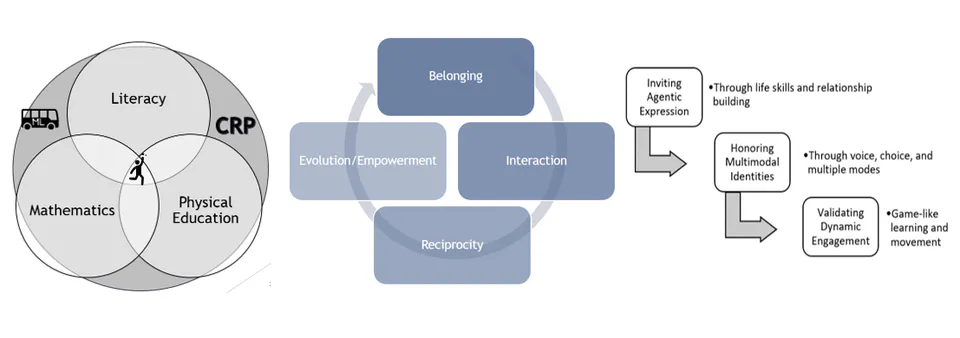
Iterations of Holistic Youth Development Framework
Methodology and Program Design
We engaged in qualitative research, positioning ourselves and participants as central to investigating the problem in practice (Glesne, 2016). We identify separately as first, a professor in Kinesiology, and second, a professor in Teacher Education with expertise in mathematics and literacy. Our action research design of “inquiry as stance” emphasizes researcher reflexivity, critical inquiry, and multiple sources to ensure trustworthiness (Cochran-Smith & Lytle, 2009). We engaged with the Kindergarten teacher as a qualitative case study to gain a natural, holistic perspective of social context in practice (Creswell, 2014; Glesne, 2016).
The research took place in an urban Title I elementary school in the southeast United States. The school was also classified as having an International Baccalaureate (IB) program which meant teachers and students were consistently encouraged to recognize and incorporate ten IB attributes into instruction and activities (these will be depicted in data source examples). As co-researchers, we trained school administration, the IB coordinator, and participating teachers about the framework, model, and sample activities through professional development (see Appendix A for portions of professional development and curriculum training materials). Though teacher participants showed interest during training, our selection for a case study represents a convenience sample since, in candor, she was the primary respondent who followed up with our communication requesting additional materials, agreeing to interview, and completing observation checklists. Accordingly, after the training, one Kindergarten teacher implemented and adapted the activities with fidelity as time allowed in her schedule and curriculum. Significantly, our considerations for this instruction involve prioritizing movement while integrating literacy practice but also accounting for student abilities, needs, voices, choices, and identities. Thus, flexible differentiation is stressed as a key aspect of integrating TPSR and CRP in activity designs. In a previous study, (Mines et al., 2024), we published research detailing how we ensured fidelity to both academic instruction and TPSR simultaneously in our initial physical activity program. We introduced the kindergarten teacher to this framework and helped track this implementation through classroom visits, completion of observation tools and checklists, and discussing numerous activity ideas and examples she tried during our interviews. Our study occurred when she had just begun her first year of teaching at the school where we obtained IRB permission, which was the start of her second year as a certified educator.
This study’s iteration of the framework included observational meetings and field notes, photos and videos of the activities in use, and interviews with the teacher during and ending the school year. The teacher participant was also asked to conduct observations of their students based on a provided observation/reflective survey in addition to engaging in the semi-structured interviews. Through periodic meetings and check-ins with the teacher, we aimed to foster interactions and discussion of experiences, perceptions, feedback, engagement, and suggestions in dialogue.
As part of the partnership, materials were obtained for multiple teachers in the building to attempt to implement activities related to our professional development. Specifically, the kindergarten teacher was provided with a curriculum and samples of activities that integrate multimodal literacies to be implemented in their classroom. The PA used multimodal equipment including colorful bean bags, ropes, and poly spots with numbers, letters, character traits, and physical motions that could be combined into creative games, team building exercises, and repetitions or sets. Through the grant funding, the teacher also requested additional resources like puppets, costumes, life-sized ten frames, parachutes, and colorful scarves. These requests were her creative adaptations to incorporate age-level appropriate literacy, mathematics, and physical activity tasks using similar multimodal practices and CRP.
We aimed to partner with the school’s IB priorities as well as their recent funding and attention toward health development through a state initiative. This created an ideal setting to explore opportunities for providing equitable access for youth to engage in culturally responsive physical activity while empowering them with agency to engage in mathematics and literacy instruction.
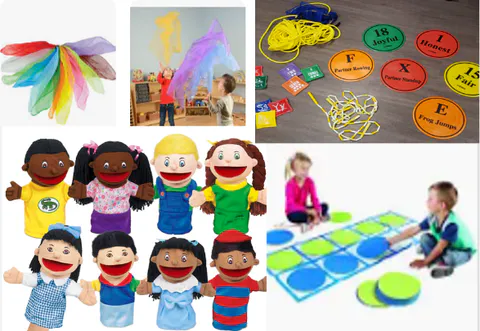
Examples of Multimodal Materials Provided
Participants and Data Sources
The case study participant was a white, female who will be referred to as “Cam” (pseudonym). The classroom where she taught included 14 students who were identified as six boys and eight girls. Of those students, one was white, one was Latinx, and the remaining students were Black. The demographic composition of the classroom mirrors the school’s demographics in that 98% of the student body at the time of the study was Black. According to Public School Review (2025), this elementary school was described as being in the bottom 50% of all schools in the state. 10-14% of the students achieved proficiency in math and 10-14% of students achieved proficiency in reading/language arts. However, this school has one of the lowest student-teacher ratios in the state (Public School Review, 2025).
As data sources, we collected an observation tool completed by the teacher to record an example activity she implemented, along with the IB and TPSR attributes she felt correlated with the activity (See Figure [fig:image3]).
Cam also provided periodic photos and videos of students and classroom setup of materials related to certain activities she created as time allowed in her schedule. We conducted pre and post interviews lasting over 60 minutes toward the middle and then end of her school year for transcription and coding. Finally, researchers conducted a member check with Cam at the completion of the manuscript draft to confirm validity of interpretations and findings..
| Data Source | Format of Data | Number of Sources |
|---|---|---|
| Teacher Observation Form | Written text, Printed text | 1 |
| Participant Classroom Artifacts/Observations | Written text, Videos, Images | 3 |
| Participant Pre- and Post-Interviews | Audio recording, Transcript | 2 |
Data Sources Collected
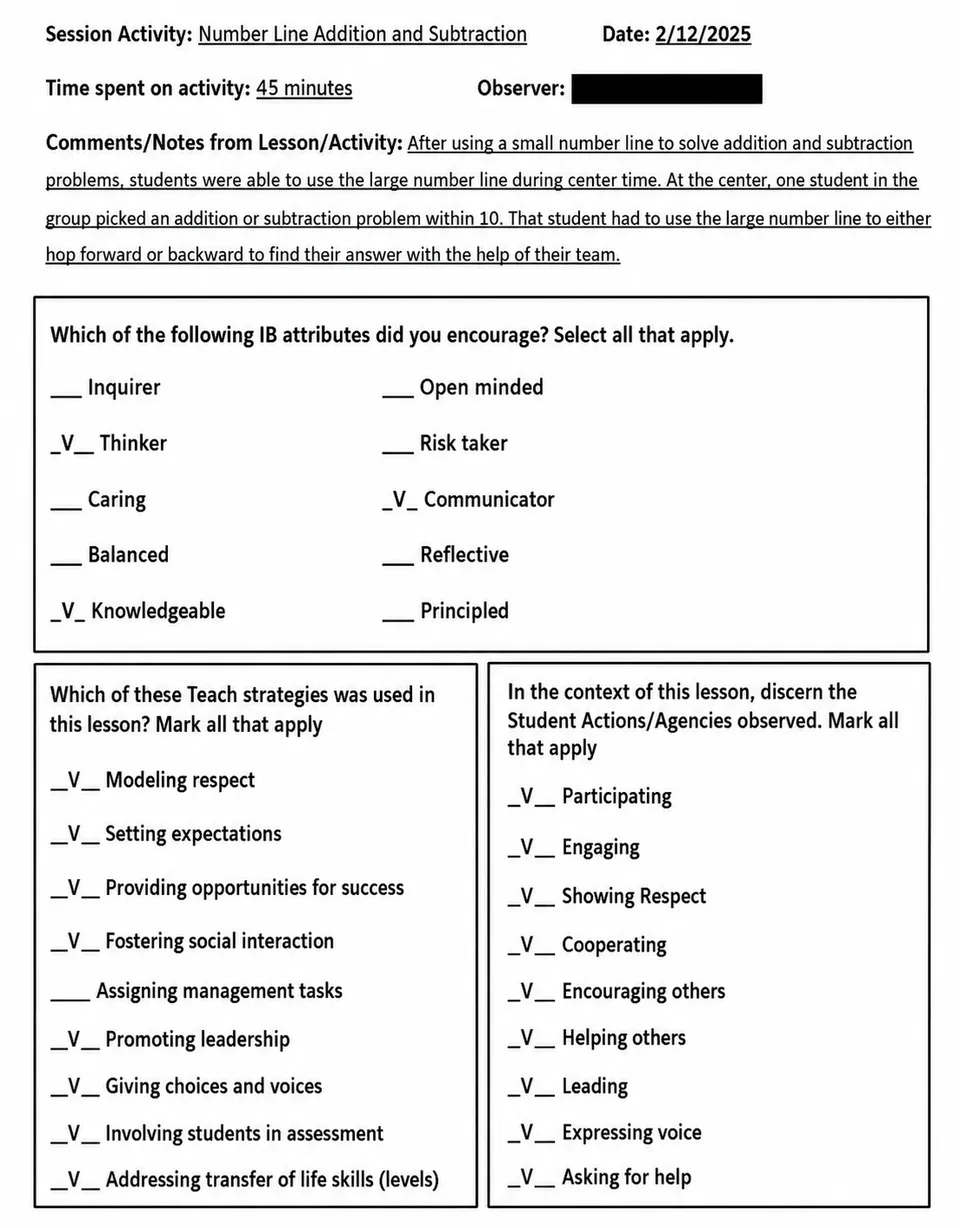
Examples Page of Teacher Observation Tool
Data Analysis
We analyzed data from the observations, notes, interviews, and visuals through a social semiotic multimodal framework according to social context (Kress, 2010). We incorporated multimodal analysis suggested by Kim and Kim (2016) who utilized Halliday and Hasan’s (1989) analysis of language according to field, tenor, and mode. With field, tenor, and mode as a frame, we analyzed and coded all data sources including participants’ images, interactions, field note observations, surveys, and discussions. Codes were generated using an inductive approach, leading to a second cycle of coding, ultimately suggesting three pervasive themes (Saldaña, 2009).
True to the study’s methodology and approach, we used multimodal tools in NVivo related to our codes to represent these emerging themes and findings in our process. Figure [fig:image4] illustrates a visual grouping of the most common codes in a multimodal display with the size and emphasis or words in the circle related again to their percentage frequency of coded text.
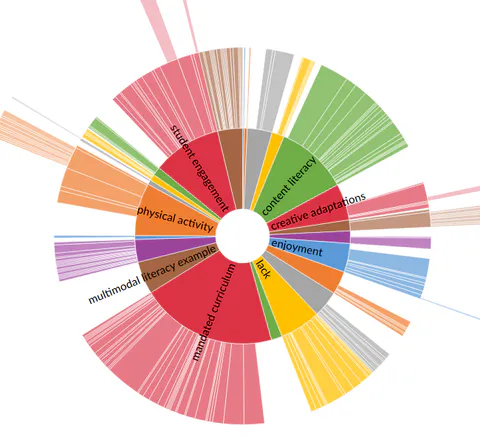
Data Coding Frequency
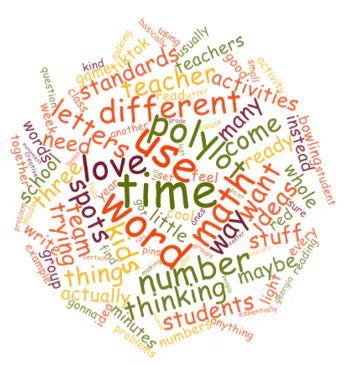
Data Word Frequency Cloud
Similarly, Figure [fig:image5] displays the most frequent words present in interview transcripts.
Findings
Our analysis led to three key themes in response to our research questions including multimodal movement as the creative mechanism for overcoming obstacles; work smarter, play harder where multimodal engagement is learning in motion; and holistic development honoring students’ minds, bodies, and spirit. Each will be briefly discussed with supporting evidence from data sources.
Multimodal Movement: The Creative Mechanism for Overcoming Obstacles
Cam frequently discussed the challenges she faced related to demands on her time and schedule. Though her administration was supportive of her and our ideas in terms of implementing physical activity into lessons and incorporating the provided materials, there were also expectations for using mandated curriculum that included iReady testing. This assessment had requirements for weekly time spent on the digital assessment, along with required lessons from early literacy, phonics, and science of reading materials known as Heggerty and Fundations. Lessons were also supposed to incorporate IB attributes which were meant to be posted in the classrooms and implemented routinely into instruction. Finally, curriculum for kindergarten math standards were provided in a scope, sequence, and timeline that were assessed through separate standardized, digital assessments. Cam noted the math assessments were misaligned due to changes over time with their new standards.
Despite these apparent obstacles, each time we spoke about examples of instruction that included physical activity or the various equipment provided, she was able to create and engage students with activities or centers that still aligned to these standards and met the literacy and mathematics objectives. She often lamented the amount of time it might take for her to plan, create, and then use these activities and pieces. She was especially mindful when developing instructional materials as to whether she would be able to reuse them more than once. This meant at times she opted for brief detours or demonstrations during lessons rather than extended plans using them. See example images in Figure [fig:image6].
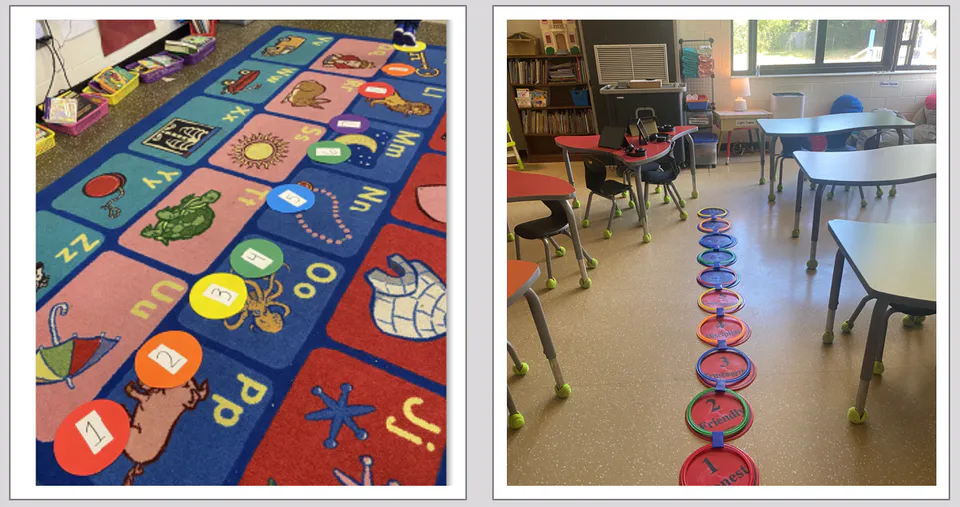
Teaching Math Standards with Movement
She also felt pressured about “taking time” from the scripted curricula, schedule, and assessments she was provided:
What bothers me is the time it takes away from being able to do those fun activities. It is time-consuming I think, though once you get started you just can't stop seeing ideas. It's just the energy of executing them in the time [constraints]… And because I tend to do things more like planning it on the weekend before while I'm setting up my daily itinerary for the week–I will think about what hands-on activities could I do with that?
Ultimately, her ability to think creatively in order to side-step these obstacles without ignoring the requirements meant she was intentionally integrating standards with movement in tactful ways. She would routinely take opportunities to create adapted activities that she felt were best practice for her students’ literacy learning and development.
Work Smarter, Play Harder: Multimodal Engagement Is Learning in Motion
Relatedly, Cam’s ability to overcome the obstacles and adapt also meant she considered the optimal times and ways to do this that would prioritize her own schedule, the instructional schedule, and unique student learning and developmental needs. Our interviews and her activity ideas demonstrated these calculated choices within the reasonable constraints that did not sacrifice student engagement:
Because of the lesson plans that [the] County is having us all do, it's more focused on standards, unfortunately. We also have to do a collaborative planning document—don't get me started. We have to record what we did and it's incredibly long, so I'm basically writing my lesson plan twice… But, yeah, I keep all of my more hands-on things next to my desk so I can access them quickly.
Since burnout and fatigue were frequently mentioned at the beginning and end of our interviews, this optimization was important to Cam so she did not waiver in her passion and commitment to teaching her students while also maintaining realistic balance for what she could create and implement.
Like literally I'm known for—my classroom being extremely loud from like just doing crazy stuff… I'm not extremely loud, but you know—I gotta close my door that connects our rooms. 'Cause, I feel like my kids are always up and doing something that's loud. As long as they're doing something they like, [then] they enjoy it… They always are having fun.
This overall awareness for how to nurture and empower her students’ developmental identities, along with her own, was notable and frequent. The movement-based activities she implemented were ones which created space for these possibilities without sacrificing learning goals nor requiring unrealistic amounts of time to plan or use them.
Holistic Development: Honoring Students’ Minds, Bodies, and Spirit
Cam planned lessons in a mindful manner to address both standards and diverse student needs while also catering to her priorities of making learning fun despite time limitations. Thus, these behaviors demonstrate how Cam addressed an intentional recognition of holistic learning. She facilitated authentic engagement and relevant multimodal practices all while navigating the previously mentioned curricular discrepancies:
I mean with Fundations. it's so boring… [and] Haggerty… It'd be so boring. Like, I'll make up funny stuff like sniff your armpit…for the graphemes in the word…anything to get them to pay attention. Or else they don't care and I don't blame them. They have, we call them secret hand gestures. Like H is hat—so they have to hear—they have to feel the hair on their head. And then we're doing our blends and L blends…we have a certain way we blend words. And that way their mind and body connects.
Adding movement or kinesthetic learning to what traditionally may have been purely text-based and auditory instruction fostered inclusivity and holistic learning. Figure 6 demonstrates one instance where Cam created a brief activity/center in this format to incorporate modeling and movement while teaching the students a math counting standard. Her feedback demonstrates that the instruction was effective in facilitating the objective and CRP, all while being something that was replicable and enjoyable for her and the students.
As researchers, we spoke repeatedly with Cam about lesson planning and idea generation. Cam shared what resources she uses in order to generate these relevant and authentic ideas in practical and functional ways, particularly multimodal social media-based sites like Facebook groups, TikTok, and YouTube. These contemporary familiar sources were the most common way for her to gain ideas that were free and offered in a short digestible manner. This differed from other resources she mentioned that may have drawbacks such as paywalls, like Teachers Pay Teachers. Her fellow teachers also served as a resource for lesson development, but they tended to lean on worksheets and mandated/scripted curriculum resources that were provided. She noted during interviews that these tended not to elevate multimodal literacies, physical activity and movement, or cultural relevance to the students.
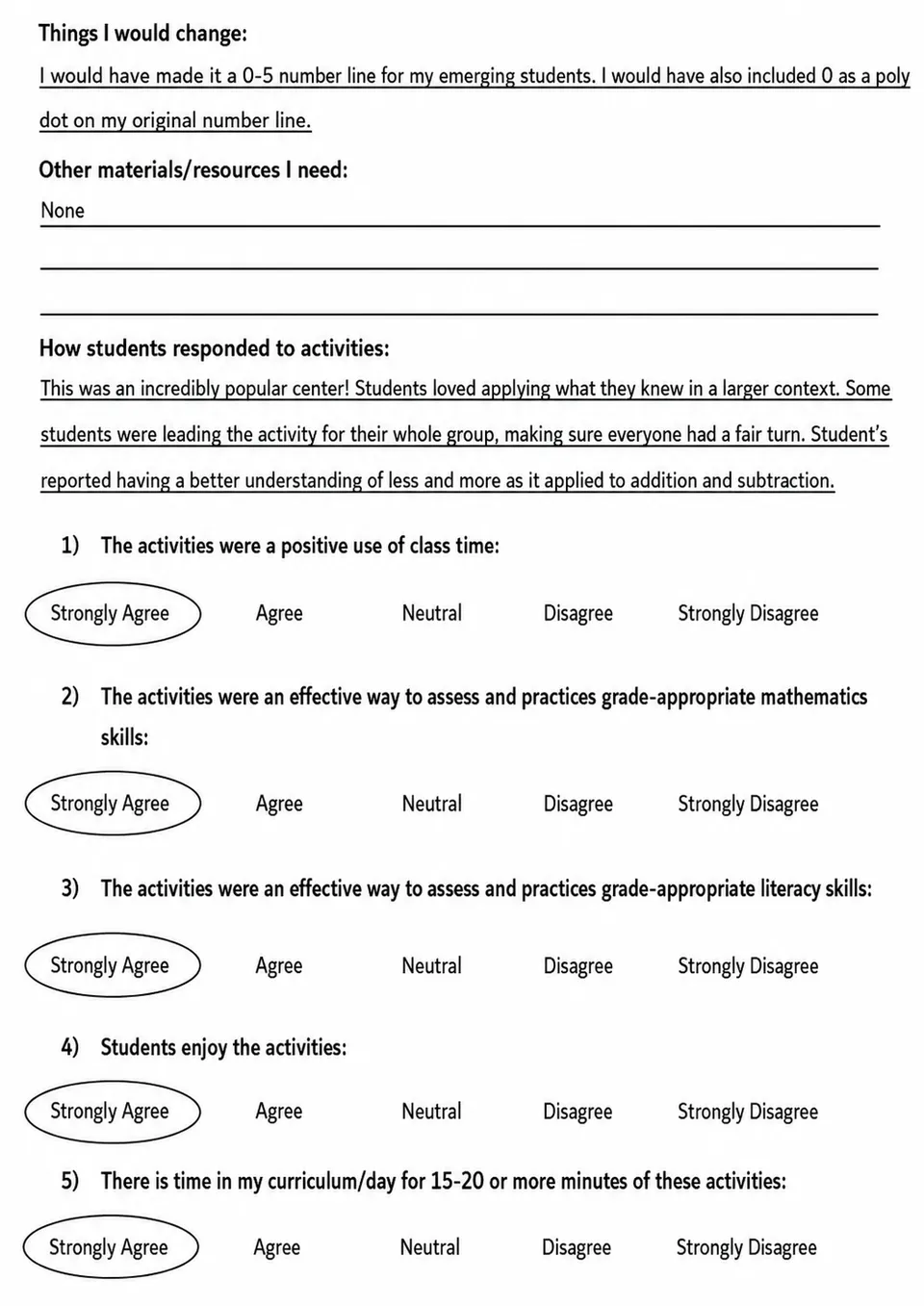
Example survey on teacher observation tool
Discussion and Implications
Through this case study, we sought to explore the possibilities for providing equitable access through full classroom instruction in a public school using the frameworks we initially developed in afterschool settings. The themes in our findings illustrate the potential to support both teachers and students with examples of inclusive instruction that prioritize cultural relevance, social construction of knowledge, multimodal literacies, and embodied learning while also maintaining fidelity to curricular standards. The unavoidable thread throughout the findings confirmed multimodal activity and dynamic movement as not only plausible possibilities in this teacher’s setting, but foundational to her instructional considerations.
These adaptations and opportunities were also feasible without extreme demands in terms of monetary resources, though there was a continual challenge of navigating limitations of time. It is noteworthy that Cam experienced support in terms of some new resources, our encouraging dialogue and supplemental ideas as practitioner researchers, and administrative support in her attempting new ideas with us in the school. However, we often discussed crafty ways to find and reuse cheap materials like plastic cups or colorful construction paper in place of pre-made polyspots or bean bags. More importantly, we also contend that embodying the spirit behind TPSR in terms of reflective, adaptive, culturally responsive activities prioritizes students’ minds and bodies being engaged in dynamic and creative ways that relate to academic standards. Small steps toward this framework are feasible and worthwhile one activity or idea at a time even if they are not used as the primary instructional mechanism. Something as simple as getting students out of their seats to step on a number or word or phrase rather than simply hearing, saying, or writing can add engagement, buy-in, and therefore retention.
Notably, while exploring these concepts in someone else’s classroom, particularly with kindergarten students, our desired emphasis and attention toward key components of CRP and TPSR like cultural competence, critical consciousness, or social responsibility were less explicit. We acknowledge this as a limitation of this study in its first attempt, one that we hope to emphasize and explore further given more classroom opportunities. We are hopeful from our first exploration that this teacher’s ability to push back on systemic norms and restrictions while also acknowledging boundaries, taking ownership of opportunities, and empowering diverse, underrepresented students, is still a beginning indicator of space for all aspects of these frameworks: in other words, it is possible to honor and embrace sociocultural youth identities and holistic learning even in more sanctioned, controlled classroom settings. However, our studies repeatedly illuminate that such a framework requires commitment, buy-in, and networking of multiple community stakeholders including guardians, administrators, teachers, and support staff to be successfully implemented.
Ultimately, we endeavor to continually investigate opportunities for this type of instruction in multiple grade levels of classrooms to discover teachers’ realistic applications of such a model. In this way, school settings could be potential sites of holistic youth development that honor the intricate complexities and interwoven nature of their academic, physical, mental, social, and emotional development through instructional practices that are intentional and agentic.
Conflict of Interest
The authors declare no conflict of interest.
Ethical Approval
Not applicable
Data Availability
The datasets used in this study are openly available at [repository link] and the source code is available on GitHub at [GitHub link].
Funding
This work did not receive any external funding.
References
Cite this article
Related Research

Special Issue
Launch a focused special issue to highlight research, emerging trends, and expert insights in your academic field.