



IntelliPaper
Abstract
The present study investigates an invariant property of the class of population survival functions that characterize the dynamics of population systems. Building on our previous group-theoretical analysis, we establish that the set of all monotonic survival functions is closed under the operations of translation (shift), rotation by an angle \(\pi\), and the transformation \(1 – \alpha(z)\), thereby forming the group \(K \times G\). It is shown that this group admits a representation in the form of the group \(SM(3, R)\), which provides a constructive description of the corresponding transformations. Within this framework, it is proven that an arbitrary monotonic survival function can be represented as α(z) = a₂₃ + a₂₂ exp(−|a₁₁z(t) − a₁₃|), taking into account the elements of the transformation group \(SM(3, R)\). The obtained results suggest the existence of a universal invariant property of the class of population survival functions, which is preserved irrespective of species identity.
Explore Digital Article Text
Introduction
Survival of individuals within a population constitutes a fundamental quantitative measure of an organism’s ability to maintain viability under environmental pressures, uncertainty, and potential threats. In ecology, biology, and evolutionary theory, survival is widely employed as a key metric for assessing adaptive capacity and reproductive success. Formally, survival may be defined as the probability that an organism remains viable over a specified time interval under given environmental conditions.
As a core characteristic of population systems, survival plays a central role in shaping population dynamics and structure, while also determining the evolutionary success of species.
This parameter is determined by a combination of factors, including:
(1) Environmental conditions, such as the availability of food resources, shelters, water sources, and climatic characteristics;
(2) Competition, including both intra- and interspecific interactions for resources and habitat;
(3) Trophic interactions, notably the effects of predation and parasitism contributing to population decline;
(4) Adaptive capacity, i.e., the ability of individuals to respond effectively to environmental changes;
(5) Reproductive success, reflecting the efficiency of reproduction and determining the long-term viability of the species.
Survival analysis is of fundamental importance for understanding ecosystem functioning, population dynamics, and the mechanisms of natural selection. The combined influence of environmental conditions, intra- and interspecific competition, predation and parasitism, together with adaptive capacity and reproductive performance, constitutes a system of ecological factors governing survival processes.
In this context, the concept of invariance is of central importance and is understood as the property of a mathematical expression to preserve its characteristics under a specified class of transformations. Invariance thus reflects the structural stability of an object with respect to dynamic changes in the external environment. A classical manifestation of this principle in physics is provided by the conservation laws of energy, momentum, and angular momentum, which remain unchanged under space–time transformations.
The invariance proposed here does not imply the existence of a single physiological mechanism common to all species. Rather, it reflects a more general principle: different adaptive mechanisms may give rise to survival functions belonging to the same symmetry class.
The study of invariance plays a fundamental role across multiple scientific disciplines, as it enables the resolution of several key problems:
(1) Identification of fundamental regularities: invariants capture essential, persistent properties of systems or phenomena that remain unchanged under variations in external conditions;
(2) Optimization of analysis and modeling: the use of invariants facilitates the simplification of complex systems by isolating their key characteristics and abstracting from secondary factors.
Thus, the concept of invariance constitutes an effective methodological framework for the study of dynamical systems, enabling the identification of stable patterns and the development of predictive models.
Material and Methods
At the core of both natural (physical and biological) and anthropogenic (e.g., agroecosystem) phenomena lie processes of interaction among ecological factors. Ecological factors may be interpreted as a set of natural influences; accordingly, their interactions can be viewed as the result of the interplay of corresponding natural forces. The formalization and analysis of these interaction mechanisms have led to the development of a class of survival functions for biological species (Gulamov, 1982, 1986, 1989, 1994; Gulamov & Pasekov, 1985; Gulamov & Fayziev, 1990, 1992; Gulamov & Khoshimov, 1997; Gulamov, 2006, 2012, 2021).
According to this definition, an ecological factor can be regarded as a dynamical force that varies according to specific regularities and functions as a condition or component of the environment capable of exerting direct or indirect effects on a living organism at any stage of its ontogeny (Gulamov, 2021).
Survival is understood as the ability of an organism or population to maintain viability under the influence of environmental factors. This measure is typically quantified as the proportion (or percentage) of individuals that remain viable within a population. The survival function provides a formalized quantitative description of this process, characterizing the extent of the impact of an ecological factor on the population (Gulamov, 2021):
Ecological factors are commonly classified as density-dependent and density-independent. In what follows, a generalized ecological factor—encompassing both density-dependent and density-independent components—will be denoted by Z.
The qualitative behavior of the survival function (1) with respect to the factors of this group is shown in Fig. 1.
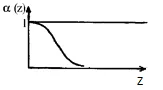
Survival function α(z).
In the work of Gulamov and Fayziev (1992), as well as in a series of earlier studies (Gulamov, 1989, 1994, 2012a, 2021; Gulamov, 2025; Gulamov & Fayziev, 1990), the diverse nature of survival functions and their transformations was systematically investigated. The analysis of the population survival function (1) demonstrates that it can exhibit six qualitatively distinct forms (Fig. 2).
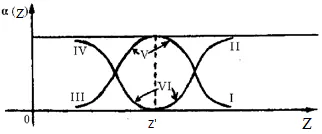
Six qualitatively distinct forms of the survival function α(z).
The analysis demonstrates that all variants of the survival function (Fig. 2) can be interpreted as distinct modifications of the following function:
Where is a slope coefficient, and z=Z(t) represents the ecological factor evaluated at time t.
The choice of the exponential function is motivated by its ability to adequately capture the characteristic patterns of variation in population survival under the influence of ecological factors. A detailed justification for this functional form, including comparative analyses with alternative models and the corresponding theoretical considerations, was provided in the author's earlier works (Gulamov, 1989, 1994).
All survival function curves (Fig. 2) are obtained from the base form (Fig. 1) through the successive application of a group of transformations, including translation along the Z-axis, rotation by an angle about an -axis perpendicular to the plane and passing through a fixed point (Fig. 2), and the transformation .
The group-theoretical analysis shows that the above transformations form a group . In terms of generators and defining relations, this group can be expressed as follows (Gulamov & Fayziev, 1992; Gulamov, 1994):
The analysis of the behavior of the group elements (3) reveals that each of its generators gives rise to a cyclic subgroup:
Consider the following subset of elements of the group (3):
where (here and throughout the group relations denotes the set of positive integers, while Z and Z2 denote the corresponding cyclic subgroups), (Gulamov & Fayziev, 1992; Gulamov & Khoshimov, 1997). The analysis shows that, for the following relation holds:
Moreover, the subgroup of the group coincides with its center, i.e. . It follows that is a normal subgroup of the group:
Taking into account the properties of the subgroup , the structure of the group (3) can be represented in the form:
- Abelian;
, where group type и , , .
Results
The analysis of the structure defined by relation (4) reveals the following: first, the group is structurally simpler than the group ; second, . This allows one to subsequently analyze the group in place of the original group .
With respect to the generators of the group (4), we assume the following: let denote a translation ; let denote a reflection with respect to an axis perpendicular to the plane and passing through points on the abscissa axis; and let denote a reflection with respect to a horizontal line (parallel to the abscissa axis) passing through the midpoint of the interval [0,1] on the ordinate axis. In other words .
These transformations can be represented in a more general form as transformations on the projective plane, defined as follows:
The matrix representation of such a transformation takes the form:
Let the elements of the transformation matrix satisfy the following conditions: . Then, one obtains the matrix corresponding to a translation along the -axis (Fig. 2). This matrix takes the form:
The notation indicates that the origin of the coordinate system is shifted to the point along the abscissa axis (Fig. 2). The symmetric transformations and corresponding to matrix (7) take the form:
Here, the matrices - represent elements of the group (4), respectively. The analysis shows that these matrices form a group under the standard operation of matrix multiplication. Let us denote this group as follows:
The elements of the group satisfy all the group axioms , namely . It follows that . The obtained results make it possible to express . This result is consistent with the formulation of the problem presented above.
In what follows, it is assumed that in (2) . For this purpose, equation (2) is rewritten, taking into account the coefficients of the transformation matrix (6), in the following form:
Thus, the survival functions can be transformed under the action of the elements of the group as follows:
The superscripts of these survival functions characterize the action of the group elements on the function of the form (2) in accordance with law (9). Such transformations determine the resulting forms of the survival functions (Gulamov & Khoshimov, 1997).
Taking into account the values of the survival functions within the optimal intervals of the corresponding ecological factors, a specific type of survival curve can be selected; for example:
(1) For the optimal interval , where corresponds to and the transformation ;
(2) For the optimal interval , where corresponds to and the transformation ;
(3) At the origin, where corresponds to and the transformation ;
(4) At the origin, where corresponds to and the transformation .
The four types of transformations described above are sufficient to determine the values of the survival function for all types of ecological factors.
Discussion
It should be emphasized that the introduced transformations do not have a direct physiological or ecological interpretation. Rather, their role is to generate the complete family of admissible survival functions from an underlying base relationship. Accordingly, these transformations are viewed as mathematical operators giving rise to different types of population responses to variations in environmental conditions.
The biological significance lies not in the group operations themselves, but in the invariant classes of survival functions that they generate. In this sense, the group-theoretical framework serves as a mathematical tool for the classification and construction of possible forms of ecological relationships.
In summary, it should be noted that within the framework of the group SM(3,R), there always exists a transformation that allows one form of the survival function to be obtained from another. Thus, the group-theoretical approach determines the class of admissible survival functions and their structural properties, whereas the parameterization of models for specific biological systems requires empirical data.
In this sense, the proposed theory plays a role analogous to that of symmetry theories in physics: it specifies the admissible class of survival functions and their invariant properties without predetermining the particular values of the parameters, which must be established on the basis of observations and experimental data.
In this context, invariance should be understood as the preservation of the mathematical structure of the corresponding relationship across different groups, species, or environmental conditions.
Next, we provide an interpretation of formula (9) and clarify what exactly constitutes the invariant within it. Formula expresses the following:
• : the resulting quantity characterizing the intensity of the survival process;
• : the baseline level (background), representing the value of survival that remains invariant with respect to the influence of the factor z;
• the term : a key component describing the deviation of the current state of the factor z(t) from its optimal value ;
• the exponential factor (): reflecting the decaying influence of this deviation; as the ecological factor z(t) approaches its optimal value, the contribution of this term is maximized, whereas deviations from the optimum lead to an exponential decrease.
Therefore, the invariant object in the present theory is not a particular set of parameter values, but the functional form of the survival law itself, i.e., the class of survival functions defined by equation (9), which is invariant under the action of the group SM(3,R).
Invariance
In the present context, invariance is understood as the preservation of the functional structure of the population survival law, as expressed by formula , under variations in ecological conditions and system characteristics.
This property manifests itself in the following aspects:
• Universality of the functional form
Regardless of the population or species under consideration, the survival process is described by the same functional dependence. Only the parameter values () vary, while the structure of the equation remains unchanged.
• Stability of the system response
The biological system exhibits an invariant mechanism of response to external ecological factors. In particular, there exists an ecological optimum, and deviations from this point in either direction lead to systematic and predictable changes in the survival function.
Biological interpretation
The foregoing analysis implies that, once the survival function is specified for a given ecological factor, the corresponding survival functions for other factors can be systematically derived through the action of the transformation group . In this sense, defines a universal transformation law governing survival functions across different ecological contexts. Importantly, this law is invariant with respect to the nature of the ecological factors, thereby providing a unified framework for their description.
From a broader perspective, this invariance indicates that biological systems are governed by a common mathematical structure underlying survival processes. This structure remains stable under substantial variations in environmental conditions, suggesting the existence of a fundamental organizing principle that transcends species-specific and factor-specific differences.
Invariance (symmetry)
The invariance (symmetry) of the functional form of the survival function across different ecological factors indicates that abiotic, biotic, and anthropogenic factors are structurally equivalent with respect to their associated survival functions. In other words, they may be viewed as distinct realizations of a single underlying functional dependence, reflecting an intrinsic consistency and coherence among ecological factors.
In this framework, symmetry is understood as invariance under a class of transformations whose action does not alter the form of the underlying physical or biological laws.
Principles of symmetry (invariance) are commonly classified into geometric and dynamical types. Geometric symmetry refers to transformations that admit a direct visual interpretation, such as spatial rotations, temporal shifts, and translations. In contrast, dynamical symmetry is formulated in terms of the laws of nature and pertains not to geometric transformations per se, but to the structure of interactions and their representation within physical or biological theories. Group-theoretical transformations provide a canonical example of dynamical symmetry.
In this regard, Sonin (1987) noted: “Thus, in classical mechanics, symmetry has lost its intuitive geometric meaning. It now appears in an abstract form as a condition under which the equation describing a given physical law remains invariant. Moreover, these conditions must form a group in the mathematical sense”.
Conclusion
The survival function is a quantitative representation of the survival of organisms or individuals within a population, characterizing the influence of an ecological factor.It is defined as a monotonic function mapping onto the interval , i.e.,
Given the survival function for a particular type of ecological factor, the corresponding survival functions for other ecological factors can be derived through the action of the transformation group . Thus, the group serves as a transformation law governing survival functions associated with ecological factors. Moreover, this transformation law remains valid irrespective of the type of ecological factors considered.
In this context, invariance is understood as the preservation of the survival law itself, as expressed by formula .
The invariance of the survival function manifests itself in the preservation of the analytical structure of the dependence , whereby the response of a biological system to variations in an ecological factor is described by an exponential decay (or growth) determined by the magnitude of deviation from the ecological optimum. The obtained results suggest the existence of a universal invariant property of the class of population survival functions, which is preserved irrespective of species identity.
Accordingly, ecological factors exhibit structural equivalence with respect to the survival function, reflecting an intrinsic consistency in the description of biological systems and pointing to a universal law underlying their response to external influences.
In order to adequately situate biological systems within the natural environment and to ensure consistency with the broader dynamics of nature, many problems in applied ecology should be addressed from the perspective of analyzing interactions among ecological factors and across their different types (abiotic, biotic, and anthropogenic).
These considerations lead to an alternative conceptualization of ecology: ecology may be defined as the science of interactions among physical, chemical, biological, and anthropogenic factors, as well as among their various types.
References
[1] Gulamov, M.I. (1982). On a simulation model of the host–parasite type. Proceedings of the USSR Academy of Sciences, Biological Series, 6, 836. (in Russian)
[2] Gulamov, M.I. (1986). Simulation model of the host–parasite system (parasite–winter cutworm). Author’s abstract, 24 p. (in Russian)
[3] Gulamov, M.I. (1989). Qualitative analysis of survival mechanisms in insect populations. Proceedings of the Academy of Sciences of the Tajik SSR, Biological Sciences, 4(117), 39. (in Russian)
[4] Gulamov, M.I. (1994). On the interaction of ecological factors. Tashkent: FAN, 97 p. (in Russian)
[5] Gulamov, M.I. (2006). On a method for calculating interactions among ecological factors. Scientific Bulletin of Bukhara State University, 1, 93. (in Russian)
[6] Gulamov, M.I. (2012a). Theory of interaction of ecological factors. LAP LAMBERT Academic Publishing, 94 p. (in Russian)
[7] Gulamov, M.I. (2012b). A group-theoretical approach to the study of ecological factor interactions. Environmental Chemistry, 21(1), 1–9. (in Russian)
[8] Gulamov, M.I. (2021). Algebra of Ecology. Rostov-on-Don, 64 p. (in Russian)
[9] Gulamov, M.I., & Pasekov, V.P. (1985). Simulation model of the host–parasite system (parasite–winter cutworm). Moscow: Computing Center of the USSR Academy of Sciences, 44 p. (in Russian)
[10] Gulamov, M.I., & Fayziev, V.A. (1990). Study of group properties of survival coefficients in insect populations. In: Mathematical Problems of Ecology (Proceedings of the 3rd School, July 2–7, Chita), p. 52. (in Russian)
[11] Gulamov, M.I., & Fayziev, V.A. (1992). Group-theoretical study of survival coefficients in insect populations. Proceedings of the Academy of Sciences of the Republic of Tajikistan (Physical-Mathematical and Chemical Sciences), 1(1), 20. (in Russian)
[12] Gulamov, M.I., & Khoshimov, Sh.Kh. (1997). On the theory of symmetry of survival coefficients. Reports of the Academy of Sciences of the Republic of Uzbekistan, 4, 16. (in Russian)
[13] Gulamov M. (2025). Algebra of Ecology//London Journal of Research in Science: Natural & Formal. Great Britain Journals Press Volume 25 | Issue 3| Compilation 1.0. P. 61-104. https://journalspress.com/journal-issue/ljrs-volume-25-issue-3/
Conflict of Interest
The authors declare no conflict of interest.
Ethical Approval
Not applicable
Data Availability
The datasets used in this study are openly available at [repository link] and the source code is available on GitHub at [GitHub link].
Funding
This work did not receive any external funding.
References
Cite this article
Related Research

Special Issue
Launch a focused special issue to highlight research, emerging trends, and expert insights in your academic field.