


IntelliPaper
Abstract
As an important part of urban infrastructure, the subway not only meets the needs of transportation, but also undertakes the function of urban cultural communication. Based on the theory of semiotics as the research framework, combined with the space environment of Wuhan subway, from the perspective of visual symbol system, this paper analyzes the role of subway visual image design in shaping urban cultural symbols, enhancing public communication and enriching emotional experience. Through field research and case analysis, this paper combs the visual strategies of Wuhan Metro in the creation of three kinds of spatial atmosphere of art, humanities and science and technology, and summarizes the specific paths of visual language system construction, thematic space shaping and future narrative guidance. The research results show that the symbolic visual design improves the cultural recognition and citizen 's sense of belonging of Wuhan Metro, and expands the cultural expression of public space. This paper hopes to provide theoretical support and practical reference from the perspective of semiotics for the construction of visual image of urban rail transit, and help to enhance the cultural soft power of Wuhan
Explore Digital Article Text
I. INTRODUCTION
As an important infrastructure of modern cities, urban subway has become a key carrier of urban cultural communication. It not only bears the function of meeting the daily traffic needs of urban residents, but also shoulders the important mission of spreading the cultural image of the city. In the era of intelligent communication, the sensory experience of the visual image of urban subway is deeply integrated with the process of cultural communication. The interaction between subway passengers and the spread of urban subway culture is no longer a simple one-way process, but a dynamic interaction process shaped by multiculturalism. In the field of urban subway cultural image building, with the help of the theory and method of artistic semiotics, it can interact with the dynamic subway visual image carrier and blend with each other, so as to improve the travel experience of subway passengers in an all-round way. In view of this, it is of great significance to study how to use semiotic theory to deeply explore the unique regional cultural elements of Wuhan city and construct a subway visual image system with distinct regional characteristics for shaping the unique urban subway space atmosphere, improving the cultural recognition of Wuhan urban subway and enhancing the sense of belonging and identity of citizens.
II. SEMIOTICS THEORY AND WUHAN CITY SUBWAY SPACE OVERVIEW
2.1 Semiotics Theory
Semiotics is a discipline that studies the law of symbol and its meaning generation. It focuses on the relationship between 'signifier' and 'signified'. Swiss linguist Saussure put forward the theory of binary structure of signs, emphasizing that the combination of signifier and signified in linguistic signs is arbitrary. On this basis, the American philosopher Peirce further proposed the ternary structure theory, that is, 'object-symbolexplanation'. He believed that the meaning of symbols came from the process of interpretation. French scholar Roland Barthes put forward the theory of mythological symbol system, which regards symbols as an important tool for cultural communication. In the field of design, these theories are widely used in the construction of visual systems such as brand, packaging, and space, helping designers create more connotation and depth of visual language.
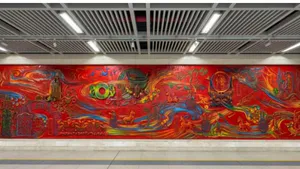
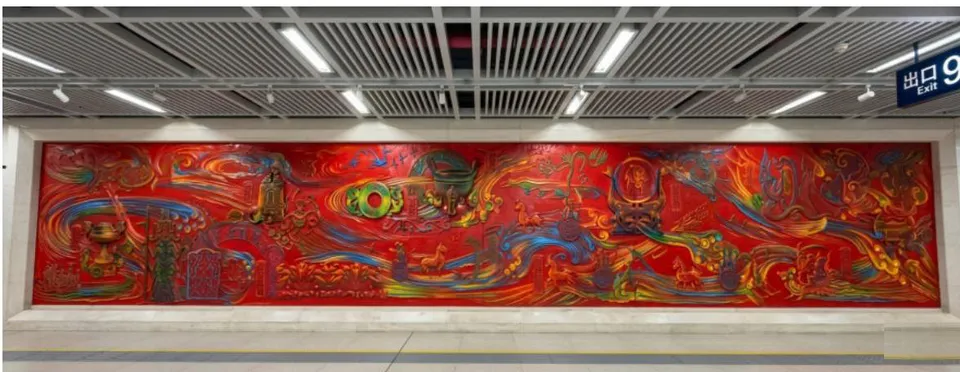
22 The Relationship between Semiotic Theory and Visual Image of Wuhan Subway As an important carrier of the city image, the composition of the Wuhan Metro is rich and diverse, covering a series of visual elements such as the guide system, space decoration, advertising media and cultural installations. These elements not only bear the basic practical functions, but also shoulder the important mission of conveying urban cultural information imperceptibly. From the perspective of semiotics, elements such as "Yangtze River," "Yellow Crane Tower" and "Jingchu Culture" in Wuhan's regional culture can be transformed into identifiable visual symbols to enhance the cultural recognition of subway space and strengthen urban memory. As a 'signifier', visual symbols convey the historical context and humanistic spirit of Wuhan through form and material. Wuhan subway system refines regional cultural symbols and strengthens urban cultural expression through visual elements such as color, graphics, text and installation art. As a 'city card', the public transport subway space refines and solidifies the cultural image of the city into a visual symbol that is easy for the public to understand, so as to facilitate the window publicity function of urban culture . Wuhan 's Hankou North Station takes commercial culture as the theme, Chuhe Hanjie Station takes cultural and creative industries as the basis, forming distinctive subway space signs. Wuhan Hongshan Square Station (shown in Figure 1) uses red and black tones with relief murals to interpret Jingchu cultural heritage, and uses symbolic language to reproduce urban memory, so that passengers can subtly feel the weight and charm of urban culture during their commute.
III. THE VALUE ANALYSIS OF SEMIOTICS THEORY IN THE VISUAL IMAGE DESIGN OF WUHAN URBAN SUBWAY
3.1 The Construction Value of 'City Symbol' in the Visual Image of Subway
As the core city of central China, Wuhan not only has a long history and profound cultural accumulation, the unique charm of Jingchu culture, the magnificent geographical characteristics of the confluence of the two rivers, and the far-reaching influence of major historical events such as the Wuchang Uprising; it has jointly built a unique Wuhan city symbol system. The visual image of Wuhan urban subway can skillfully use visual elements such as colour, graphics, text and installation art to refine and display regional cultural symbols and effectively strengthen the spread of urban culture. For example, the subway station of Hubei Academy of
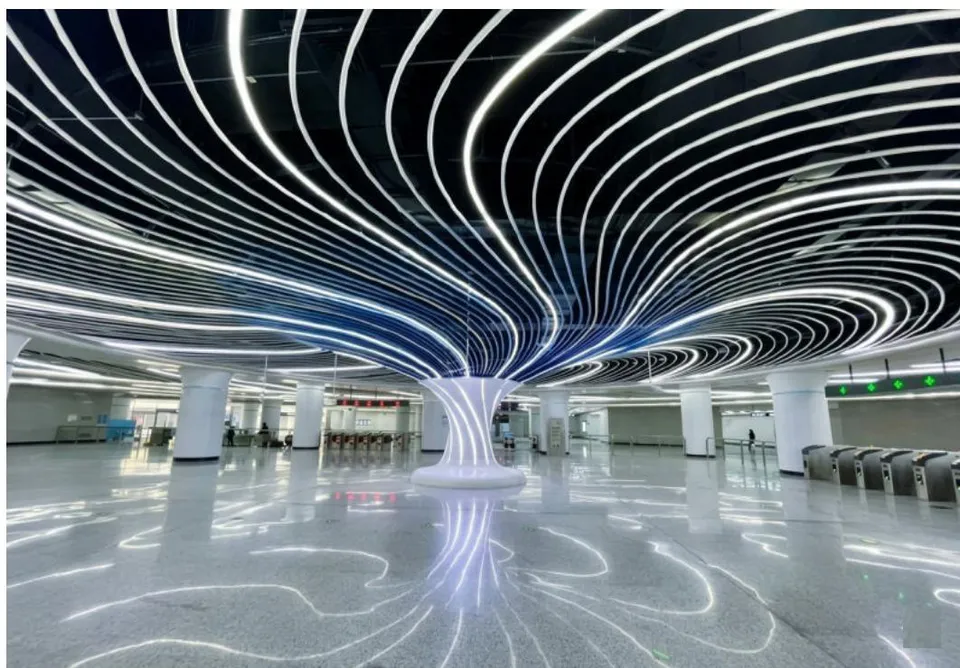
Agricultural Sciences (shown in Figure 2) is located on the waterfront of the scenic South Lake. The theme of the station is 'tree shade into a kind', which extracts two design elements of plants and science and technology to highlight the cultural connotation. The Gedian South Station of Wuhan Metro, fully considering the regional culture, has six themes: Gehong's search for medicine, Wudu Echeng, Zhu ink painting, ecological livability, airport new port and industrial city. Under the trend of art entering the station space in an all-round way, more and more art station spaces in China have appeared. In the stage of station construction and decoration planning, it is bold to integrate the overall planning of art into the space design, which can create a complete and systematic station visual effect .
3.2 The Value of Public Media Communication in the Subway Visual Image System
As a public medium used frequently by people, subway space has strong communication efficiency. With the clever visual narrative strategy, the subway space can efficiently convey the spirit of the city, and then shape the passengers' emotional identity to the city. Wuhan Metro is unique in space design and attaches great importance to the ingenious implementation of cultural narrative. For example, Jianghan Road Station is like a three-dimensional historical picture scroll. Through exquisite reliefs and lifelike murals, it vividly reproduces the historical scene of Wuhan's port opening period, so that passengers feel the magnificent historical years as if they crossed time and space; with the theme of science and technology, the Optics Valley Plaza
Station fully demonstrates the unique image of Wuhan as an innovative city through modern design elements and creative display methods, highlighting the vigorous scientific and technological vitality of the city. This symbolic design method can not only effectively enhance the subway passengers 'perception of urban culture, make urban culture appear in an intuitive and vivid way in front of people, but also further promote the wide spread of urban spirit and cultivate passengers' sense of identity and belonging to the city.
Through the perfect combination of visual symbols and spatial narrative, Wuhan Metro has successfully constructed a cultural symbol system with distinct local characteristics, realized the visualization and wide-area dissemination of urban culture in public space and made every passenger a disseminator and witness of urban culture. For example, as the first subway line in Wuhan, there are a total of 21 stations on Metro Line 2, which are decorated with simple modern style and personalised style respectively. Among them, there are 13 stations with modern standard style, and there are 6 stations that can show the characteristics of personalised Jiangcheng culture. The Hankou Railway Station, with the theme of 'Yellow Crane Return', uses the 'River City Impression' glass mosaic to splice out the art sculptures and regional grounds such as 'Crane shape, lotus leaf and lotus canopy, highlighting the hospitality culture of Wuhan city. In order to show the image of the city's green lung, Zhongshan Park Metro Station uses murals with the theme of 'Happy Wuhan' for cultural contrast [3].
3.3 The Emotional Design Value in the Visual System of Subway Space
Emotional design is an important embodiment of semiotics applied to urban subway space design. Compared with function-oriented infrastructure construction, emotional design pays more attention to the emotional link between symbols and people. Through the delicate processing of colour, material and shape, it gives space, temperature and memory. The emotional design of Wuhan Metro has also been explored. The warm-tone lighting system, combined with poetry elements and local cultural symbols, has created a cordial and warm ride experience. For example, the use of warm colours such as orange and yellow lights in the winter station space reduces the sense of coldness; local poems are introduced into the wall decoration of some stations, such as the poem "Yellow Crane Tower" in Zhongjiacun Station of Wuhan Metro Line 6, which triggers the cultural and emotional memory of passengers with text symbols. Through the embedding of emotional symbols, Wuhan Metro has transformed the urban traffic space from a cold channel to a warm, emotional and memorable urban life scene, which further strengthens the humanistic care and cultural temperature of urban public space. The use of modern science and technology, especially the use of lighting control technology, has greatly enriched the cultural connotation and visual effects of public art in subway space, and created a unique artistic atmosphere for passengers .
IV. THE APPLICATION STRATEGY OF SEMIOTICS IN THE VISUAL IMAGE DESIGN OF WUHAN URBAN SUBWAY
4.1 Constructing the Symbol Visual Language System of Regional Characteristics
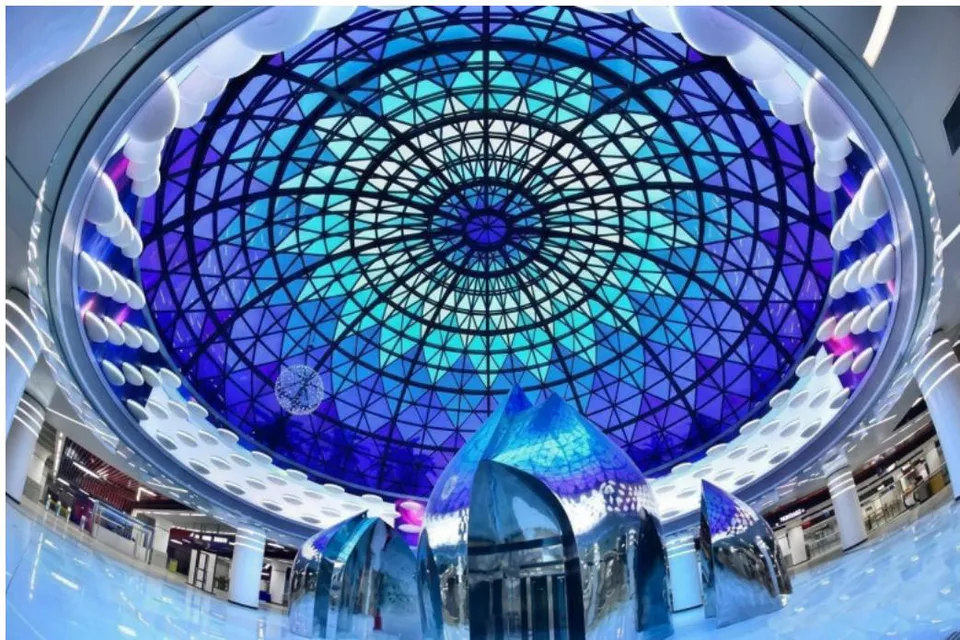
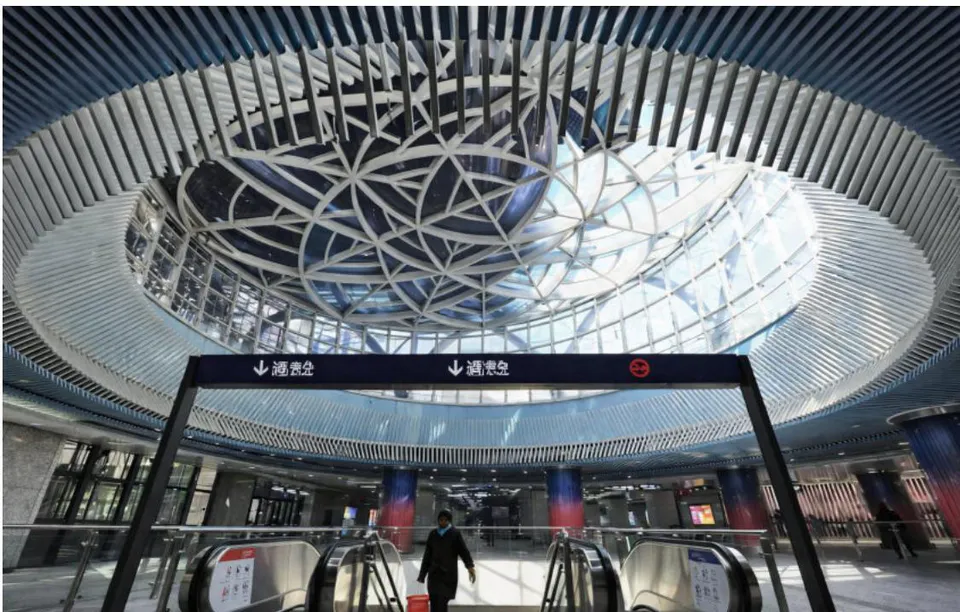
Wuhan Metro can build a visual symbol system from two aspects: 'cultural excavation' and 'visual transformation'. First of all, the core images are extracted from the regional culture, such as the Yellow Crane Tower, the Yangtze River Bridge, the cherry blossoms of Wuhan University, etc., so as to build a concrete symbol library; then, using abstract graphics, style colours and decorative patterns to recreate these images, and then unify the style of the visual system. For example, the business district station of Wuhan Metro Line 7 (shown in Figure 3), above the station hall, is a dome device with a blue main tone, which is spliced by geometric glass. The color gradually changes from the center of the dome to the outside, from shallow to deep, like a flowing digital ocean, and like an information network that continues to spread outward in the era of science and technology. The dome structure is rigorous and rhythmic. The grid composed of triangular steel frames not only enhances the overall structural stability, but also creates a beauty of order full of a sense of future. The sculpture device under the station hall is unique, showing a delicate shape similar to water droplets or crystals. The surface of its material has a very high reflectiveness. When the light falls on it, it mirrors and echoes each other with the dome color above, creating an intoxicating immersive visual experience. Whether it is the careful selection of color or the ingenious combination of shape and material, it accurately reflects the profound response to the site positioning of 'Technology City'. Compared with other subway stations that focus on showing regional culture or telling humanistic stories, the business district subway station is more like a fantastic visual imagination of the future urban form. Actively explore diversified forms of expression, widely introduce the display means of the integration of art and science and technology and give higher artistic texture and scientific and technological charm to the space . This expression of the combination of art and structure not only shapes the city 's impression through visual language, but also allows Wuhan passengers to feel the changes brought about by technology and art in their daily travel.
4.2 Create A Visual Image of 'One Stop, One Theme'
Wuhan Metro can implement the strategy of 'one station, one theme culture'. For example, Tanhualin Wushengmen Station takes 'Yilin Danqing' as the design theme, breaking the traditional framework. On the top of the station, hand-painted art paintings create a visual feast, combined with indirect lighting, running through the entire station hall space. Refining the typical architectural elements of Tanhualin block, transforming them into visual graphic language, combining them with the scattered composition in traditional Chinese painting, fully demonstrating the historical and cultural essence of Tanhualin and the strong artistic atmosphere of the block. The subway station of Hubei University of Traditional Chinese Medicine takes 'sailing' as the design theme, which means sailing up and standing up bravely, reflecting the spirit of students' eagerness to learn and progress. The mid-span of the station is designed as a circular combination, and the sail tension structure is designed to increase the space height. The top surface adopts a highly scientific and technological spray-painted aluminium plate pattern, showing the vitality and tension of youth. The implementation of visual culture can create a unique cultural atmosphere for the subway station, enhance the cultural experience and emotional resonance of passengers, and convey the cultural connotation and image of the city through these cultural symbols and symbols .
4.3 Create A Digital Immersive Visual Interactive Experience
With the continuous development of artificial intelligence technology, the visual image design of Wuhan urban subway has ushered in a new opportunity. It can fully integrate cutting-edge technologies such as augmented reality (AR), interactive screen, and multimedia projection to enhance the interaction between subway space and passengers, while enhancing its information carrying capacity. For example, the 'AR interactive wall of urban culture' can be set up and passengers can watch the wonderful animation of Wuhan's historical evolution by scanning the code on their mobile phones. It is as if they have experienced the vicissitudes of the city through time and space; the LED screen is used to create a dynamic poetry display area, so that ancient poetry can be presented in front of passengers in a flexible manner, giving more levels and more charming cultural content to the urban space. By skillfully integrating symbols and media, we can create an immersive Wuhan subway cultural scene, so that Wuhan urban culture can be presented to the public in a more intuitive and vivid way, thus enhancing the visibility and participation of urban culture, so that passengers can deeply experience the unique charm of urban culture.
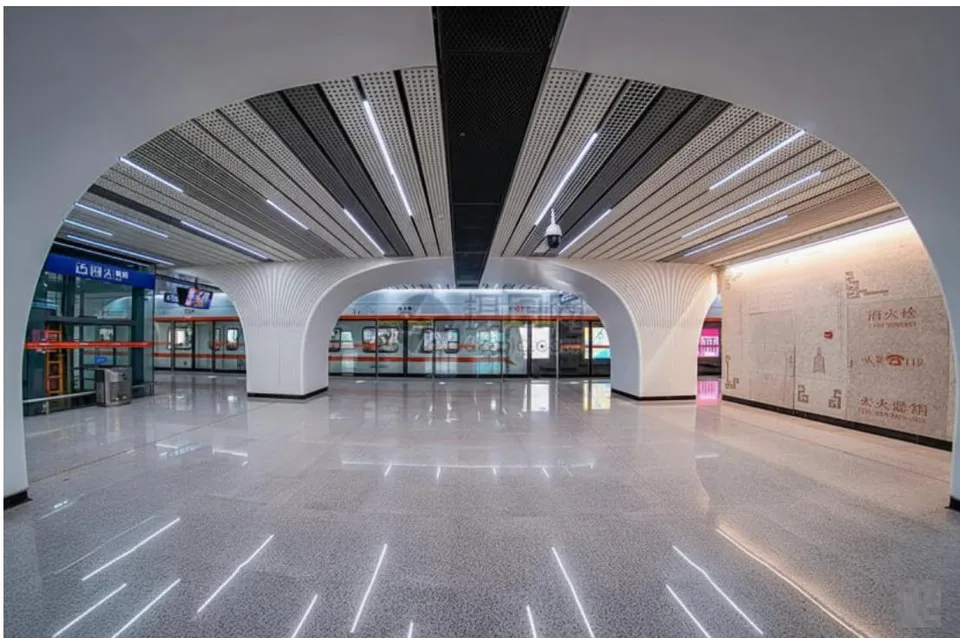
In the field of site space design, Wuhan urban rail transit is gradually introducing the 'immersive' oriented visual language. This measure not only accurately responds to the core demands of the city's "innovative" development orientation, but also fully demonstrates the positive and important role played by the subway in the process of Wuhan city image construction. Taking Xujiapeng station (as shown in figure 4), Zhuyeshan station (as shown in figure 5) and other stations as typical representatives, these stations have unique ingenuity in structural layout, material selection keeps up with the trend of the times, and the design of lighting system is unique, which reflects distinct technology and future sense everywhere. They together constitute a representative digital technology aesthetics sample in the Wuhan subway system, bringing unprecedented travel experience to passengers.
V. THE APPLICATION STRATEGY OF WUHAN SUBWAY SPACE DESIGN
The subway is not only the basic support system for the normal operation of the urban function, but also a very active medium in the field of cultural communication. With its high-density personnel carrying and high-flow operating characteristics, the subway naturally has the advantage of 'visual symbol cluster'. From the perspective of semiotics, the scope of Wuhan Metro is not only limited to the selection of materials, color matching and graphic structure at the design level, but also related to a 'meaning generation mechanism' - that is, how the visual elements in the subway jump from the neutral function state to the carrier of cultural discourse, act as emotional media and become identity symbols.
5.1 Constructing the Visual Impression of Urban Culture
In the underground public space of Wuhan city, the subway station is the key to break its monotonous shortcomings, and the public art design of the subway station is an important entry point to decorate the subway station. From the psychological point of view, passengers will naturally become the recipients of public art in subway stations when they are waiting for the train. The systematicness of visual language is the basic guarantee for the continuous cultural tension of urban public space. A mature visual symbol system does not depend on a single graphic or surface decoration, but should realise the transition from physical space to cultural space through the chain logic of 'cultural image-symbol extraction-structural integration'. In this system, the 'cultural sense' station of Wuhan Metro shows a distinct visual hierarchy and profound cultural narrative depth.
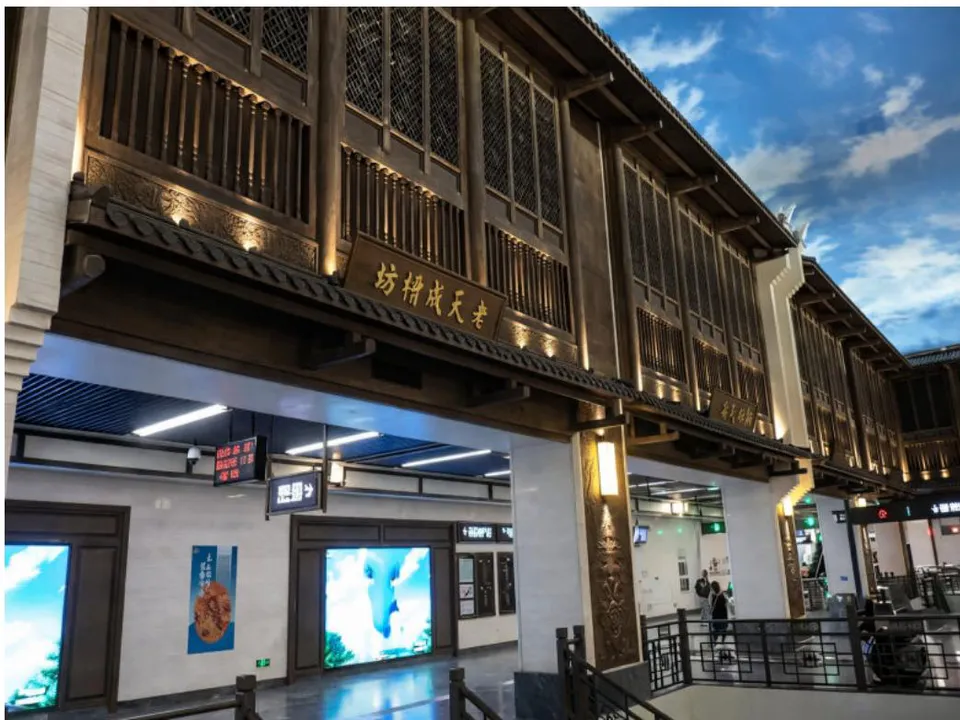
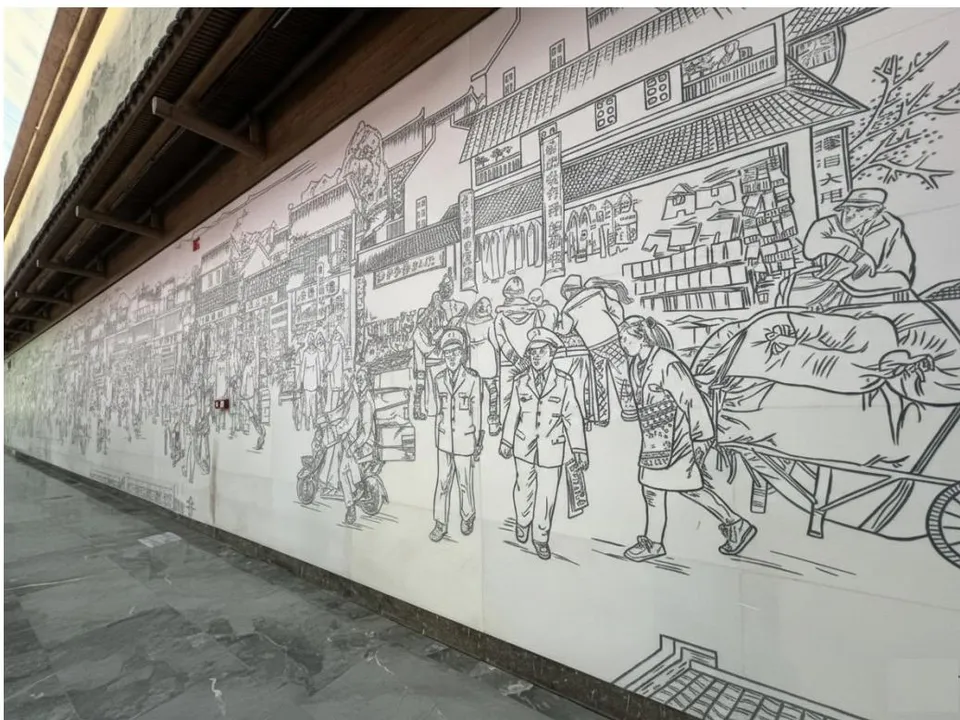
Wuhan Hanzheng Street subway station is the first subway station in the country to imitate outdoor scenes indoors. It uses antique wooden structures, overhanging streets, and old-fashioned signs as basic elements to reproduce the commercial vitality and market memory of 'Old Hankou'. Therefore, the abstract regional culture is presented in a metaphorical and concrete way, creating a highly visual tension of the subway space and a strong cultural atmosphere, so that passengers passing through it can deepen their impression of different regional cultures in imagination and understanding (as shown in Figures 6 and 7).
5.2 Shaping the Urban Humanistic Space Scene
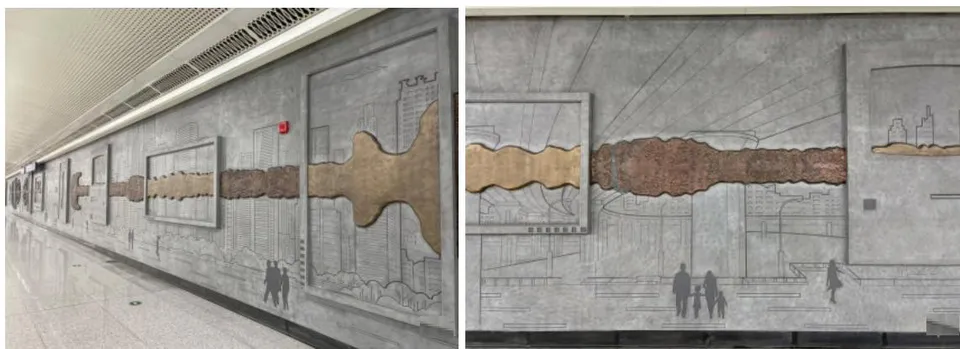
In the context of the new era, the construction of urban culture in the subway station space is not a simple continuation of the context, but a subway culture that can reflect the people, space and culture as a whole . The cultural subway station emphasises the 'historical dimension' of the city, while the humanistic subway station is more like the 'social dimension' in space, which resorts to the visual reconstruction of emotional temperature, public life and daily experience. The city subway station realises the perceptual bonding between the city and the people by clarifying the theme, contextual semantics and friendly visual strategies. For example, the decoration of Wuhan Jiedaokou subway station (as shown in Figs. 8 and 9) draws inspiration from its development history, it abstracts the old name of Jiedaokou's 'key' and the new label 'computer city' into two elements: 'key' and 'computer display'. On the art wall of Jiedaokou station, through the dislocation relationship of computer display screen in different periods, a visual aesthetic effect is formed. Four copper keys are arranged in a line with computer display screens of different ages to create a unique sense of rhythm and rhythm for the picture. Four copper keys, linked to a computer monitor in the street story entrusted with the past, present and future of the street good memory and outlook. The continuous upgrading of computer display screens has not only witnessed the development of street crossings in time, but also witnessed the process of street crossings towards prosperity. The screens of different computer monitors are equipped with images that record the bustling streets, thus confirming the yesterday and today of the streets, and at the same time reminding of a beautiful tomorrow and future. In the whole design scheme, there are four copper keys: one symbolises the record of a beautiful history yesterday, one represents the opening of the street and the door of modern civilisation today, one means the opening of the street and the world stage tomorrow, and one is the vision of the prosperity of the street. From the perspective of humanities, it avoids the excessive accumulation of redundant information. still, it adopts the method of 'blank-motion-structure segmentation', giving the rhythm of the picture and the flexibility of scene switching, which is closer to the source of life.
5.3 Manufacturing Urban Subway Visual Technology Experience
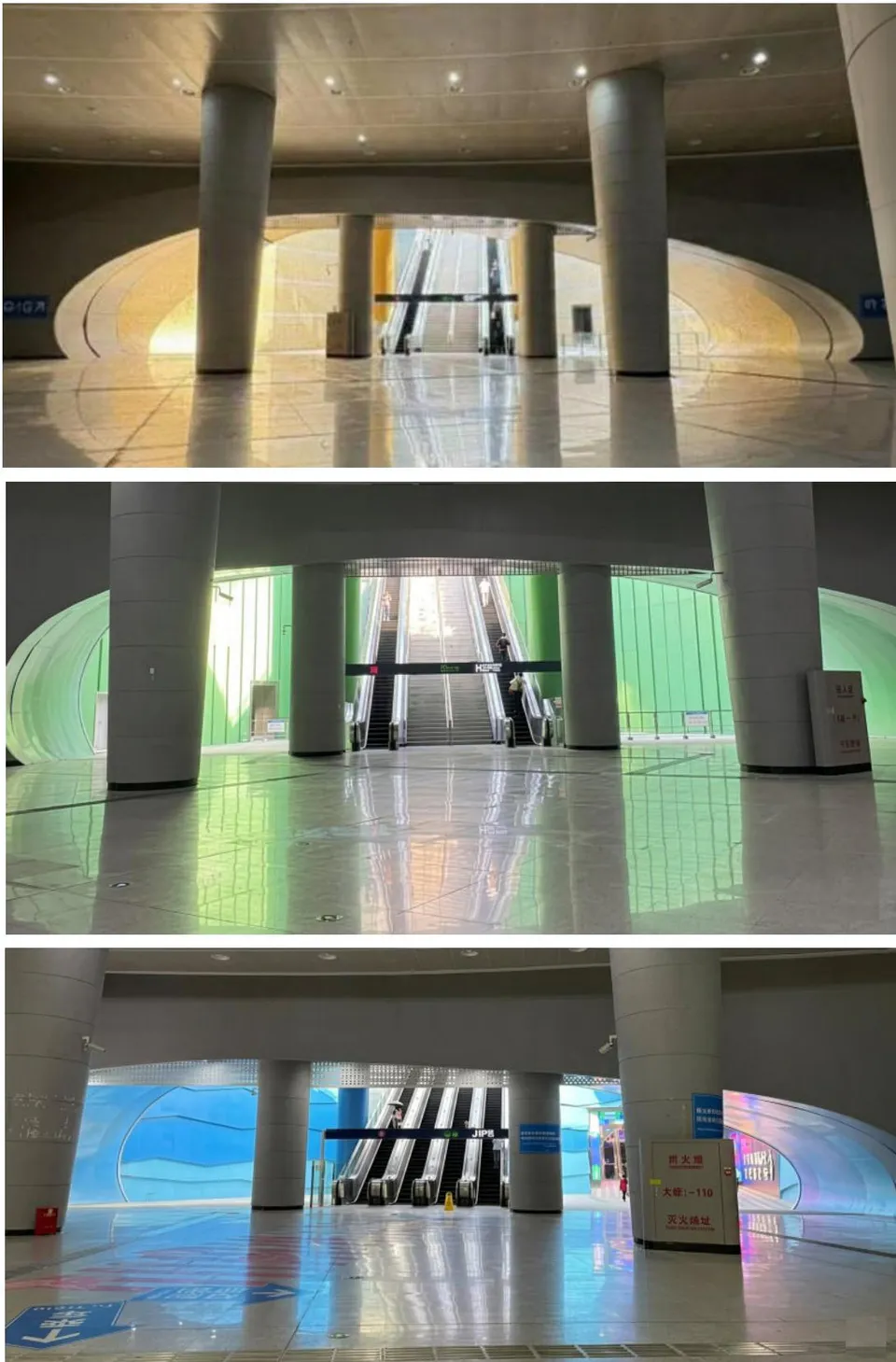
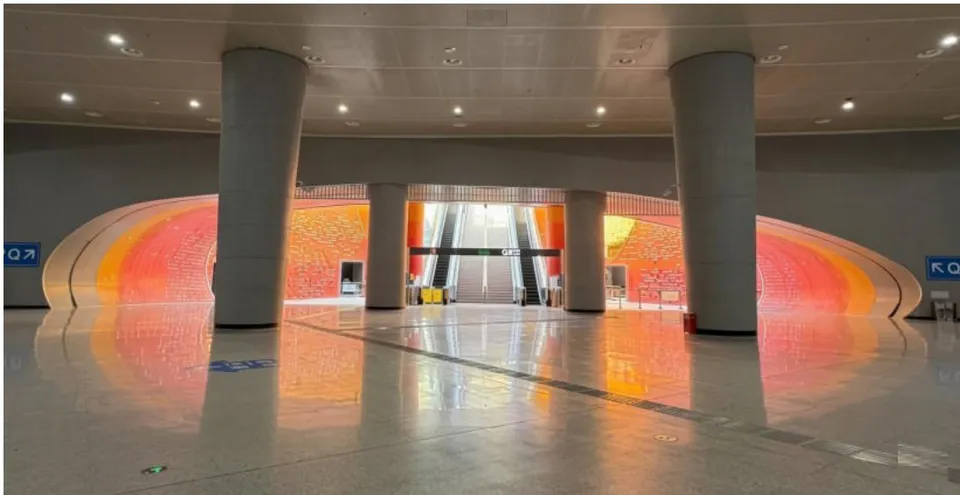
Urban subway visual technology is the most symbolic discourse of "future tendency" in urban space semantics. In the Wuhan subway system, if the cultural shaping is to build the 'past of the city' and the humanistic construction is to respond to the 'current needs of the citizens', then the scientific and technological presentation shoulders the visual construction task of 'depicting the future picture'. Its core point is to create a truly perceptible future experience for people through non-figurative visual forms. For example, Wuhan Optics Valley Square subway station (as shown in Figures 10, 11, 12, 13), the station uses a 360-degree circular station hall design. In the positioning method, the degree positioning method is innovatively used, and the color and five elements are combined to help passengers locate, which not only enhances the convenience of direction recognition, but also improves the aesthetics of the subway station hall. Its five main entrances and exits (G, H, J, Q, R) take the five elements of gold, wood, water, fire and earth as the core design concept, skillfully integrate Chinese traditional philosophy and modern aesthetics and create a subway space with both practical functions and artistic atmosphere. Specifically, the G mouth corresponds to 'gold' and is decorated in yellow, symbolizing wealth and cohesion; h mouth corresponds to 'wood', with green as the main color, symbolizing vitality and education; j port corresponds to 'water', and blue is used to symbolize mobility and commercial vitality. Q port corresponds to 'fire', using red, symbolizing hope and technological innovation;
the R port corresponds to the 'soil' and is brown, which symbolizes the foundation and regional development.
VI. CONCLUSION
Wuhan Metro is like a cultural carrier that surges at high speed in the urban context. It takes the semiotic theory as the framework. It constructs the internal logic of the visual image of Wuhan Metro from the three dimensions of art, humanities and science and technology. In the process of building the visual system of the subway, Wuhan subway skillfully uses symbol extraction, image translation and cultural narrative to successfully establish a deep urban identity mechanism. In terms of space scene construction, it makes the original cold subway space overflow with warmth and temperature by virtue of delicate emotional rendering and accurate semantic embedding. It can be seen that the visual image of Wuhan subway is fully integrated into the local regional cultural symbols, creating a unique urban subway space, which not only satisfies people's yearning for a better life in the city, but also enhances people's sense of identity and belonging to Wuhan.
Conflict of Interest
The authors declare no conflict of interest.
Ethical Approval
Not applicable
Data Availability
The datasets used in this study are openly available at [repository link] and the source code is available on GitHub at [GitHub link].
Funding
This work did not receive any external funding.
References
Cite this article
Related Research

Special Issue
Launch a focused special issue to highlight research, emerging trends, and expert insights in your academic field.