



IntelliPaper
Abstract
Our doctoral dissertation demonstrates that the export-oriented pastoral agro-industry in Brazil began growing in the 1920s, shaped by two continuous and interconnected trends. Exogenously, it stemmed from transformations in the global economy following the late nineteenth century, particularly the expansion of capital exports and consolidation of monopolies in core countries. On the other hand, it was also propelled by the diversification of investments originating from large coffee capital. As shown in the dissertation, the Brazilian agro-export model produced an economy marked by dependence, association, and subordination. We have examined the political mediation exercised by the Rural Society in shaping and advancing the national development project that ultimately materialised through the alliance between major domestic capital and international capital.
In this vein, our research examines the First Republic—particularly the 1920s—by analysing the political mediation exercised by the period’s most influential agrarian employers’ association, the Brazilian Rural Society (SRB), and its role in shaping the national project for Brazil’s export-oriented livestock agribusiness. To do so, the scope of inquiry must be widened beyond Brazil’s borders to consider the international networks forged by the SRB across the Southern Cone, particularly its interactions with counterpart organisations such as the Argentine Rural Society (SRA) and the Rural Association of Uruguay (ARU). We have conceptualised the SRB as an agrarian interest group—an arena of power and consensus-building that articulated economic, political, and ideological interests. By positioning the SRB as a central actor in the development of the export-oriented livestock complex, we have advanced a novel interpretation of the political economy of the First Republic.
Explore Digital Article Text
I. INTRODUCTION
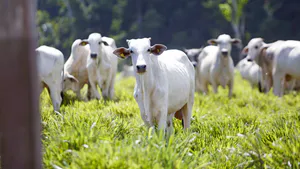
In the contemporary scenario of the global economy, Brazil has become the world's largest exporter of processed beef, surpassing Australia, the United States, India, and Argentina, among others. However, the hegemonic power of the Brazilian export-oriented pastoral agro-industry was developed starting in the early 20th century. In this article, we present a brief description of the historical context of the formation of this agro-export complex, and thus, the political economy of the period, featuring the leading role of the Brazilian Rural Society (Sociedade Rural Brasileira - SRB). In this sense, we present a small fragment of our doctoral research, pointing toward new investigations. This historical research focuses on the political mediations of the Rural Society in the formation of the national project for the export-oriented pastoral complex during the First Republic (1920–1930). This project was linked to an agro-export economic model of a dependent, associated, and subordinated nature, within the framework of the international division of labor (Marini, 2005). According to our research, the Rural Society developed both the coffee export complex and the incipient export-oriented pastoral complex in parallel. The Rural Society exercised strong hegemony in the field of different agrarian employers' associations during this historical period, to the point of incorporating two influential associations with the restricted State of São Paulo: the Sociedade Paulista da Agricultura (SPA) and the Liga Agrícola Brasileira (LAB).
Therefore, we wish to affirm the importance of historical investigations into the associations of dominant fractions, particularly those linked to the rural universe, due to their prominence throughout the country's republican history in interfering with various public policies. Our questions concern the political power of agrarian employers' associations, their different constitutions, programs, institutional profiles, and political mediation, among others. For this undertaking, it is necessary to develop historical research on the hegemonic power of these employers' associations. The relevance of such investigations is in line with the capacity to intervene historically in the destinies of Brazilian politics and economy, exercising political mediations within/with the restricted State (executives and parliaments), within civil society (with other agrarian employers' associations) and in the world market (particularly in the Southern Cone).
Our investigation aims to contribute to the development of research on agrarian employers' associations, representatives of the different dominant agrarian fractions, both in Brazil and in Latin America. We focus on a historical period (1920-1930) of extreme relevance for the interpretation of the foundations of Brazilian political economy and the development of the agro-export model. We offer a historical interpretation of the most influential agrarian employers' association of the First Republic, founded in the city of São Paulo in 1919, but which, throughout its trajectory, acquired a national and international character in the process of developing the agro-export economy and constructing a specific national project in Brazil: the export-oriented pastoral agro-industry. We consider this project to have been instigated by major international capital via the Southern Cone.
Therefore, our research is situated in the field of Agrarian History, especially the Brazilian political economy of the 1920s. To allow the reader to identify the dimension of the process and its impacts on the Brazilian economy, we present the distinct segments of the export complex under development in the 1920s, based on different segments of large capital, both national and international. We consider the most significant to be: 1) large properties for breeding and fattening (national/ international capital); 2) industrialization, with large international meatpacking plants (which we consider the generating nucleus); 3) transport, such as railways, ports, roads, communication routes, among others (private/state capital); 4) livestock credit, through private and state banks (national/international); 5) production of inputs and fertilizers, such as large alfalfa-producing properties; 6) export trade (international meatpackers) and import trade (international companies importing fine livestock); 7) scientific development, vaccines, and medicines. This entire productive, commercial and financial chain under development had, as owners and directors, distinct leaders and members of the Rural Society during the investigated period.
Specialized literature frequently identifies the Rural Society as an agrarian employers' association that represented the interests of coffee capital, farmers of São Paulo, and coffee producers, as a response to the strengthening of the São Paulo state apparatus, thus acting as pressure on the São Paulo executive, primarily of a regional nature and opposed to industrialization. However, the sources researched indicate that its socioeconomic constitution did not consist solely of farmers or coffee producers from São Paulo or the coffee elite. Large international capital was present, especially from the export-oriented pastoral industry, with directors from the large international meatpackers Anglo, Swift, Continental Products, Wilson, and Armour. Its leaders and members were not only from São Paulo; since its foundation and throughout the first decade, its socioeconomic constitution was formed by members from different localities and regions. In addition to those from São Paulo (paulistas), there were members from the United States, Mato Grosso, Rio Grande do Sul (gaúchos), Argentina, Uruguay, England, and Minas Gerais, among others (RSRB, 12/1929). This reality conferred upon the association a regional, national, and international character in the development of agro-export complexes.
In this vein, our research presents the different political mediations of the Rural Society with the Brazilian restricted State and the world market, mainly with the international processed meat market. Our research seeks to contribute to the development of studies on agrarian employers' associations of the First Republic. Particularly regarding the Rural Society as a political actor and organizer of the national project for the export-oriented pastoral complex within the process of internationalization of the Brazilian economy. This project materialized through the association of large national capital (primarily coffee) with large international capital (specifically the meat processing industry).
II. CONCEPTUAL FRAMEWORK AND WORKING HYPOTHESES
Our research encompasses the period of the First Republic, especially from 1920 to 1930, based on historical research and interpretation of the most influential agrarian employers' association of the period, the Rural Society. Therefore, we propose a new interpretation of the Rural Society, its foundation, institutional profiles, organizational model, programs, projects, and political mediations, among others, in the process of developing the agro-export economy and constructing a specific national project in Brazil.
For our interpretation of Latin America's relations with central countries during this period, Marini (2005) describes:
"It is from this moment that Latin America's relations with European capitalist centers become part of a defined structure: the international division of labor, which will determine the meaning of the region's future development. In other words, it is from this point that dependency is configured, understood as a relationship of subordination between formally independent nations, within which the production relations of subordinate nations are modified or recreated to guarantee the expanded reproduction of dependency. The consequence of dependency cannot, therefore, be anything other than greater dependency, and its overcoming necessarily presupposes the suppression of the production relations involved in it (p.05)."
According to the author, this conjuncture of the international economy, specifically the export of capital from central powers, subordinated the development process of large national capital and its integration into the world market. In this sense, we consider that this process was reinforced by the arrival of the international processing industry in the country, in particular the export-oriented pastoral industry. The dependency theory developed by Marini (2005) presents the assumptions of center-periphery relations, subordination, and association. Thus, it helps us reflect on the character of the Brazilian economy's integration within the framework of the world market, allowing for a historical interpretation of the entry of the international processing industry into Brazil. The foundation of the Rural Society was a result of this context of international relations and the expansion of the dominance of large international capital presented by Marini (2005). Its program and socioeconomic composition demonstrated the ongoing process of association between large national capital and large international capital.
To interpret the impacts of this new international conjuncture on the Brazilian economy, we use the concept of the Extended State (Estado Ampliado), substantiated by Gramsci (1991). As Mendonça (1998) states:
"As a Social Relation, that is, the condensation of social relations present in a given society. In this new perspective, the State is traversed by all existing social relations in a given social formation, incorporating, within itself, the conflicts that prevail in the social formation (p. 20)."
Therefore, we consider that in the capitalist State, the political mediation of different fractions of the dominant class, organized in representative class associations, constitutes an element of the development of capital itself. According to Mendonça (2014):
"The concept of the extended State makes it possible to verify the close correlation between forms of organization of wills (singular and, above all, collective), action, and consciousness in itself (civil society)-always rooted in socioeconomic life-and the specific institutions of the State in its restricted sense (political society). Gramsci overcomes the dualism of analyses that differentiated and contrasted the base from the superstructures, integrating political society and civil society into a single totality, in constant interaction, within what he considered superstructures (p. 34)."
The distinct dominant fractions would seek, through their private associations, to inscribe their demands and projects into the restricted State with the aim of building hegemony, through which these same specific interests are incorporated by other class fractions, as they are enunciated as universal. As Gramsci (1991) points out:
"The State is conceived as the organ of a fundamental social group destined to create favorable conditions for the maximum expansion of that group. But this development and expansion are conceived and presented as the driving force of a universal expansion, of a development of all 'national' energies. The dominant group coordinates specifically with the general interests of subordinate groups, and state life is conceived as a continuous formation and overcoming of unstable equilibria (within the scope of the law) between the interests of the fundamental group and the interests of the subordinate groups; equilibria in which the interests of the dominant group prevail to a certain extent, excluding the economic corporate interests (p. 50)."
The Gramscian concept of the extended State is extremely relevant for analyzing this conjuncture of the participation of agrarian employers' associations in the construction of a specific national project. This is because it goes far beyond interpretations that attribute to the State the role of a subject, autonomous, hovering above classes, or an object, such as a committee or instrument of bourgeois domination in capitalist societies. Gramsci advances by presenting that in the capitalist State, the function of social domination is exercised not only through repressive apparatuses but also by the articulation between these apparatuses and the private apparatuses of hegemony. For our research, the concept of the Extended State presents itself as a fundamental methodological instrument for identifying the relations between the Rural Society (its leaders and members) and the Brazilian restricted State (state agencies, executives, and parliaments). It allows for the interpretation of the development of Brazilian political economy in the First Republic, situating the distinct connections between political society and civil society in the process of inscribing the demands and projects of dominant fractions within the State.
Therefore, we must emphasize that this relationship of unity and distinction between the restricted State (political society) and civil society is always organic, as the distinction is merely methodical and didactic. In historical-social reality, they form part of the same process in the interpretation of the State as a totality. In research on the Rural Society, especially in the 1920s, we can identify this close correlation and integration, in the sense that its board of directors and members acted both in civil society, together with other agrarian employers' associations, and in the world of production-especially in agro-export complexes-as well as in different executive branches and parliaments.
Our periodization focuses on the 1920s, at the moment of the expansion of the Brazilian capitalist State, which resulted in a significant increase in agrarian employers' associations. It is a historical interpretation of the Rural Society, from its foundation to the development of the export-oriented pastoral complex, directed by its political mediations with the restricted State at municipal, regional, and national levels (Villaça, 2024). Therefore, we interpret the Rural Society as a claimant (reivindicativa) agrarian employers' association, as a space of power and consensus-building, consulting, formulation, and execution of public policies. It acted as a supra-association articulated between economy, politics, and ideology in the process of expansion of the Brazilian capitalist State. In this sense, we interpret the political economy of the period, especially the 1920s. According to Carini (2016), citing Acuña:
"(...) when studying the bourgeoisie as a political actor, he defended the need to articulate at least three dimensions. The author's gaze lingers on processes that operate from below and correspond to a structural-economic dimension; while actions developed from above correspond to a political-institutional and ideological sphere; and finally, that which observes phenomena from within constitutes the organizational-institutional dimension (p. 09)."
In this sense, we conducted a systematic investigation of its role in the planning and implementation of different economic policies of interest to the agro-export economy. Therefore, we interpret that the Rural Society was a claimant employers' association which, in addition to representing and disseminating collective wills before civil society and political society, often assumed a role commonly attributed to the State. Regarding the concept of claimant associations, Carini (2016) describes:
"(...) it is characterized by having as a fundamental objective the integral defense of (all) the interests of a collective, being universalist in the nature of the ends they pursue and the activities they develop, and having a discourse with a strong ideological component, constructed based on the values assumed by their leaders and the ways in which they interpret the problems of their social base (p. 10)."
For a better interpretation of its political mediation as a claimant association, it is necessary to use the concept of institutional profiles. According to Carini (2016):
"We start by considering those aspects that refer to both the internal structure of the entity and the external one. The former are constituted, for example, by its organizational model, its roles and functions, its degree of formality and the discourses implemented within the entity; while the latter are those manifested in the entity's practices, discourses and strategies transferred to the outside, especially manifested in the relational dynamics between different state and agrarian actors. Both dimensions of analysis become visible if the historical trajectory of the entity is studied" (p. 10/11).
Therefore, both concepts assist in the interpretation of the trajectory of the Rural Society and its nature as a political actor, always seeking to inscribe the interests of large coffee capital and large pastoral capital in the state agencies of the Brazilian State within the conflictive arena-of precarious equilibrium-of relations between State and Society. The objective was to enhance capital accumulation and the development of a national project strictly linked to the agro-export economy. Due to the magnitude of the coffee and pastoral economy, we consider historical research on the relations between State and Society to be significant. There are several questions we can address for the interpretation of the political mediations of this agrarian employers' association in the construction and development of export complexes: its different projects, its role in the formulation of public policies, the registration of its claims before executives (municipal, state, and national), representations before civil society, with other employers' associations (including international ones) and relations with its counterparts in the Southern Cone, such as the Argentine Rural Society (SRA) and the Rural Association of Uruguay (ARU), among others.
The research intends to contribute to the development of Latin American Agrarian History insofar as it proposes a new interpretation of the Rural Society, representative of the association of large coffee capital with large international pastoral capital in the process of capital export from central powers. In this sense, our research developed a survey of the objective material bases of its leaders and members to identify the different interests at stake in the process of socioeconomic domination by large coffee capital and large pastoral capital. Therefore, we mapped the participation of its leaders and members in various state institutions, such as ministries, secretariats, and agencies, as well as in Parliament, mainly through performance in the Republican Party of São Paulo (PRP).
The research is inserted in the field of Economic-Social History, under the perspective of interpreting the different sociocultural and political dimensions with new questions, regarding the historical interpretation of the projects, demands, and interventions of the Rural
Society inscribed in the restricted State (political society) and the world market. Based on the investigation of the historical trajectory of the Rural Society and its political mediations in leading the development of the agro-export model, we present the interests and projects of the world of the economy, particularly of the agro-export complexes, in the institutional political arena.
According to the investigated sources, the national project of the export-oriented pastoral complex was developed through the joint action of the Rural Society with different executives and parliaments. For example, with the federal executive in the person of General Rondon, a member of the association , as well as by the Minister of Agriculture. With the federal, provincial and municipal parliaments, through the performance of its leaders and members as parliamentarians. With the executive of Mato Grosso, in the person of the State President, Dom Aquino Corrêa, a member of the association, and with the State of São Paulo, in the joint action of planning and executing public policies. In this process, the Rural Society also developed relations with international capital based in Mato Grosso, specifically in the person of Mr. H. Walter Ford, director of The Miranda Estancia Company Limited (British capital), with large holdings of quality cattle for export and a founding member of the Rural Society; as well as Mr. Burr, director of The Brasil Land and Cattle Co. (US capital), with an extensive property of quality cattle for export, who was very close to the Rural Society.
In this sense, the executive of the State of Mato Grosso allocated several concessions of large portions of vacant lands (terras devolutas) for the incorporation of the State into the national economic circuit, for connection with the large international meatpacking plants based in São Paulo . For this enterprise, roads, highways, railways, ports and other infrastructure were built. This involved political mediations with the executive and parliament of São Paulo for the occupation and colonization of the Pontal do Paranapanema region, in the extreme west of the State, with the appropriation of extensive vacant lands for the transit and fattening of animals coming from Mato Grosso, as well as in the formulation of economic policies by the executive and parliament of São Paulo for the development of the project.
This conjuncture allowed us to identify that the Rural Society was not a regional character association as affirmed by the literature, but rather a regional, national, and international association. For the reader's knowledge, the content of the published editions of the association's official magazine presents a new type of agrarian employers' association-a supra-association-at the moment of the complete insertion of the Brazilian economy into the framework of the international division of labor, particularly in the association of large national capital (especially coffee) with large international capital (pastoral). In the different editions from 1920 to 1930, we can identify its claimant profile and its institutional profiles as a formulator and executor of public policies at municipal, regional, and federal levels, as well as a spokesperson for different executives in the publication of various official data (municipal, state and federal).
In the distinct editions, we can identify the trajectories of its leaders and members, from members of economic segments (mainly coffee and livestock export complexes) to their interventions with the restricted State as mayors, ministers, secretaries, deputies, and senators at municipal, regional, and national levels. The performance of leaders and members in the process of occupation and colonization of the Pontal do Paranapanema region, SP-mostly vacant lands essential for the development of the export-oriented pastoral complex as a region for animal transit and fattening-is evident. In this sense, we consider that this region was a true laboratory for the execution of the national project, represented and led by the Rural Society , for the incorporation of the territory of Mato Grosso into economic circuits and for the diversification of investments by large coffee capital.
Based on the investigation of the historical trajectory of the Rural Society and its political mediations to enable the development of the agro-export model, we interpret the interests and projects of the world of the economy, particularly the agro-export complexes, in the institutional political field represented by the association. Our research uses different primary sources, both of a private nature, such as those generated by the Rural Society and those produced by different state agencies, alongside complementary literature, particularly on the political economy of the predominant agro-export model of the coffee complex, the occupation and colonization of the Pontal do Paranapanema region, among others. The fundamental primary sources are the institutional publications produced by the Rural Society itself, in particular the official magazine, from 1920 to 1930. Initially called Annaes da Sociedade Rural Brasileira (ASRB) and, from 1922, Revista da Sociedade Rural Brasileira (RSRB). This collection, unfortunately little explored by academia, is found in the Library of the Rural Society headquarters in the capital, São Paulo.
Regarding academic research with institutional press and periodicals, Carini (2016) describes:
"The analysis of this type of source is relevant, as it is a habitual means of mediatization of rurality while presenting itself as a symbolic space that supposes the reproduction of representations of agrarian sectors. These supports constitute selections of data from reality, which are organized in a particular way to say, make understood, and make known, and consequently, are a privileged element both for the study of the discourses and representations of entities and for knowing their institutional practices." (p. 19)
This consultation allowed us to identify a national project in gestation for the export-oriented pastoral complex. The magazine is replete with information on this process, with sections on the Pastoral Industry, market quotations, government actions, cattle improvement, large international capital meatpackers, as well as reports, articles, and information on this industry developing in different states of the federation (such as Mato Grosso, Rio Grande do Sul, Minas Gerais, among others) and in other countries (such as Argentina, Uruguay, the United States, England, among others).
The researched editions, plus complementary literature, allowed us to identify the socioeconomic characteristics of the social bases and their leaders. In particular, the performance of leaders and members as organic intellectuals acting from within the restricted State as representatives of agro-export complexes, both national and international. The different trajectories of these leaders and members range from members of distinct economic segments, mainly the coffee and pastoral agro-export complexes, to their interventions in the restricted State as mayors, ministers, secretaries, directors, deputies, and senators at municipal, regional, and national levels.
The intervention of the Rural Society as a political mediator of the represented interests, together with different businessmen and politicians, allowed for the development of the export-oriented pastoral complex in the country and, at the same time, organized the diversification of investments by large coffee capital. This role materialized through actions of different magnitudes by the entity's leaders and members. In this way, the Rural Society sponsored different events, from conferences and journalistic reports to meetings with other associations and representatives of large pastoral capital. A fundamental role was played by Dr. Paulo de Moraes Barros, president of the association (1920–1923), who organized the interests of the incipient export-oriented pastoral industry together with the federal government and the states of Mato Grosso and São Paulo. Therefore, the president of the association was a central actor in reinforcing the need to incorporate the extensive territory of the State of Mato Grosso (at the time practically unknown to Brazilian authorities) through the organization and realization of different expeditions sponsored by the Rural Society and the federal government. The committees of these expeditions, dating back to the early 1920s, were in the charge of the Minister of War, General Calógeras; the president of the Rural Society, Dr. Paulo de Moraes Barros; and the entity member, General Rondon. In this process, articulations were made with the government of Mato Grosso, in the person of the State President, Reverend Dom Aquino Corrêa, and with representatives of international capital based in this territory. It is worth citing the relevant role of director Colonel Arthur Diederichsen and the association member,
Colonel José Soares Marcondes, a politician and businessman, who tried to accelerate as quickly as possible the occupation and colonization of the entire Pontal do Paranapanema region, starting with the arrival of the railway to the city of Presidente Prudente (on the border with Mato Grosso) in 1921, as well as the promulgation of Land Law No. 1844 of 1921 of the State of São Paulo.
As mentioned earlier, the socioeconomic composition of the founding members of the Rural Society reveals the presence of interests and demands that exceeded those of the coffee complex. Some of these leaders and members were representatives of the main global meat processing companies, both chilled and frozen, from central countries. Among them were the meatpacking companies Armour, Swift, Wilson, and Anglo. The presence of these large meatpackers was not a novelty in Latin America, given that their operations had been recorded since the 1880s, mainly in the chilled and frozen meat export market in the Argentine Republic. In Brazil, investments began at the end of World War I, in 1917, when the Anglo meatpacker (British and US capital) was installed in Rio de Janeiro. In the same year, the Armour meatpacker settled in Rio Grande do Sul and later in São Paulo in 1920, when it inaugurated the largest meatpacking plant in South America.
Suzigan and Szmrecsányi (1996) draw attention to the process of concentration of the meat processing industry in the country during the First Republic. This reveals the massive entry of international capital into the manufacturing industry for export to the international market, especially to the US and European markets. The authors (1996) describe:
"To the point that, in the mid-1930s, they possessed 95% of the national cattle slaughter and processing capacity and 87% of pigs and sheep. (p. 269)" In this process, according to the authors (1996): "Thus, the large leading companies of the processing industry of central capitalist countries, which had been internationalizing since the last decades of the 19th century, began to include new areas, such as Brazil, in their geographic expansion strategies, whether with a view to occupying internal markets or for the exploitation of local sources of raw materials. (p. 266/267)."
In this context, according to specialized literature, the nascent export-oriented pastoral industry in the country was developed by the diversification of investments by large coffee capital, which seems coherent. However, it does not explain the entire process, nor the presence of representatives of international companies as directors of the Rural Society. As presented in the dissertation, the foundation of the Rural Society was the result of endogenous socioeconomic transformations, but fundamentally, it was a consequence of the export of capital from central powers (Villaça, 2024). However, in addition to representing the diversification of investments by large coffee capital, its foundation and program were linked to the interests of large international pastoral capital. Therefore, the Rural Society was the organizer of the formation and development of the incipient export-oriented pastoral complex.
Finally, we highlight the need for the development of new research on the formation of the export-oriented pastoral agro-industry, especially because the international origin of the project appears to us to be fundamental. This national project, for which we have some evidence, was generated by large international pastoral capital from central powers, especially US and British capital.
In this sense, we consider it important to highlight the international relations of the Rural Society in the Southern Cone, with its counterparts: the Argentine Rural Society (SRA) and the Rural Association of Uruguay (ARU). The association's relations with its Southern Cone counterparts were fundamental to the success of the national project, insofar as we consider the national project as part of an international project, a direct consequence of capital exports from central powers. Therefore, we consider that large international pastoral capital, associated with large capital from countries in the Southern Cone region, gave rise to the development of the export-oriented pastoral agro-industry-an economic model of an associated, dependent, and subordinated nature, within the framework of the international division of labor. Initially in Argentina and Uruguay and, subsequently, in Brazil.
To illustrate what we are presenting, below is a very striking intervention by the founding director of the Rural Society, Mr. Eduardo F. Cotching:
"In this order of ideas, the Society long ago began its work in the Platine Republics, in agreement with the Argentine Rural Society and the Rural Association of Uruguay. However, to give full value to this work, it was necessary to provide foreign breeders interested in sending their products to Brazil with all information regarding the provisions and regulations governing the importation of breeding stock here, and especially regarding the many valuable favors that the Government grants to these imports. For this reason, I requested the Society to act within the Ministry of Agriculture, requesting the sending of complete information on all measures and aid currently in force regarding the improvement of our Pastoral Industry."15
This fragment evidences the international articulations in the Southern Cone, as well as those developed together with the Brazilian restricted State, for the formation of the exportoriented pastoral agro-industry. It also highlights the historical trajectory of the association, involved in distinct institutional spaces, from the world market to state agencies, executives, and Brazilian parliaments. Therefore, we consider that our current investigation can contribute to the development of research in Agrarian History of Latin America, especially on two themes: the political economy of the First Republic in Brazil and the development of the export-oriented pastoral agro-industry in the Southern Cone, having as the object the agrarian employers' associations as political actors.
BIBLIOGRAPHICAL REFERENCES
Conflict of Interest
The authors declare no conflict of interest.
Ethical Approval
Not applicable
Data Availability
The datasets used in this study are openly available at [repository link] and the source code is available on GitHub at [GitHub link].
Funding
This work did not receive any external funding.
References
Cite this article
Related Research

Special Issue
Launch a focused special issue to highlight research, emerging trends, and expert insights in your academic field.