


IntelliPaper
Abstract
The Nardelli Master Equation reveals intriguing mathematical connections to the Golden Ratio, a constant deeply embedded in geometry, number theory, and natural patterns. This study explores its profound relationships with key sectors of number theory and theoretical cosmology, unveiling a unified framework where these disciplines intersect. By analyzing modular structures, symmetry principles, and higher-dimensional formulations, we discover novel mathematical links that provide fresh insights into the quantization of space-time and the fundamental nature of physical reality. These findings pave the way for deeper explorations of the interconnected nature of mathematics and physics, with potential applications in unification theories and beyond.
Explore Digital Article Text
I. INTRODUCTION
The Nardelli Master Equation stands as a profound mathematical structure with far-reaching implications across various domains of modern theoretical research. In particular, its connection to the Golden Ratio, an essential constant appearing in nature, art, and mathematics, suggests deep underlying symmetries that span number theory, string theory and theoretical cosmology. This paper explores the intricate relationships between the Nardelli Master Equation and these fields, aiming to uncover new mathematical frameworks that could contribute to our understanding of fundamental physical laws. Through rigorous analysis, we investigate how this equation interacts with modular forms, geometric transformations, and higher-dimensional physics, providing insights that may prove crucial in future unification theories.
II. THE NARDELLI MASTER EQUATION AND ITS CONNECTION TO THE GOLDEN RATIO
The Nardelli Master Equation represents a unified framework that encapsulates the dynamics of a coupled system , potentially describing the interplay of entropy and consciousness within a Multiversal context. This equation integrates gravitational, quantum, and thermodynamic contributions, culminating in a term resonant with the golden ratio, . A newly derived constant,
emerges as a fundamental scaling factor, suggesting a deep connection to the universal harmony encoded in . This paper explores the mathematical structure of the Nardelli Master Equation and its linkage to this golden constant, proposing implications for a Theory of Everything (TOE).
2.1 The Nardelli Master Equation
The Nardelli Master Equation governs the temporal evolution of a coupled system , which may represent an entropic-consciousness interaction or a unified action in a Multiversal framework. It is given by:
Where:
: A coupled system, potentially representing entropy ( ) and a consciousness-like parameter ( ).
: A coupling constant related to dark energy or a Multiversal field.
: The gravitational action over a 4-form field strength, weighted by a scalar field .
: Planck mass and Planck time, respectively.
: Reduced Planck mass.
: Hubble constant.
: The Planck distribution for blackbody radiation, representing quantum–thermal contributions.
(MRB): A parameter possibly related to a Multiversal resonance or boundary condition.
: A universal constant, hypothesized to approximate the golden ratio, .
The equation balances gravitational, quantum, and thermodynamic terms, with the final term acting as a unifying constant that encapsulates the system's equilibrium.
2.2 The Golden Ratio Constant
A newly derived expression, proposed as a fundamental constant, is:
This value is remarkably close to the golden ratio, , with a relative difference of:
This proximity suggests that the derived constant is a Multiversal manifestation of , encoding the harmonic proportions observed in nature, from galactic spirals to biological forms.
2.3 Connecting the Golden Ratio to the Nardelli Master Equation
The term in the Nardelli Master Equation is hypothesized to be the golden ratio, , or its derived approximation, 1.618033719519. This constant may serve as:
A scaling factor: Multiplying or normalizing the cumulative contributions of gravitational, quantum, and thermodynamic terms to maintain dimensional consistency and universal harmony.
A geometric constraint: Reflecting the fractal or self-similar structure of the Multiverse, as governs self-replicating patterns.
A coupling constant: Mediating the interaction between and the Multiversal dynamics, aligning the equation with the TOE.
To formalize this connection, we propose that the term in the equation is directly linked to the new constant:
This substitution implies:
The golden ratio's presence suggests that the dynamics of are governed by a universal principle of proportion, potentially unifying gravitational and quantum regimes.
The integration of into the Nardelli Master Equation indicates that the golden ratio may be a fundamental constant in the TOE, bridging classical and quantum physics. The derived constant's structure, involving fundamental numbers (2, 3, 5, , , , ), suggests a deep connection to number theory and cosmic geometry. Future work will explore:
The role of in stabilizing Multiversal interactions.
The fractal geometry implied by the golden ratio in cosmological structures.
Experimental or observational signatures of in cosmic microwave background or galactic distributions.
2.4 Incorporating the Golden Ratio into the Ramanujan Modular Equation
The Ramanujan modular equation is:
Using the previous result, i.e. , we obtain:
that is equal to 3.1415925297879...
2.5. Derivation of the Integral Connection
The integral is:
The denominator factors as , where . Using partial fractions for :
Solving yields the antiderivative:
For :
≈ 3.671364993930992
Error relative to :
2.6. Calculation of the Extended DN Constant Formula [1]
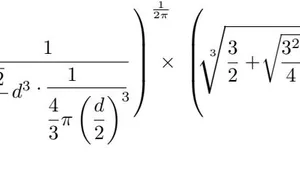
Here, we compute the Extended DN Constant Formula, which incorporates the volumes of Platonic solids (dodecahedron, octahedron, and tetrahedron), as a representation of symmetric phases in the primordial universe. The expression is:
This simplify to:
The result is stated to be approximately the negative of the golden ratio, , where . Let's compute this step by step.
Step 1: Compute the First Term
Step 2: Compute the Second Term
- Calculate :
- Calculate :
- First Inner Term:
- Second Inner Term:
- Difference:
This term simplifies to -1, which significantly streamlines the computation.
Step 3: Compute the Third Term
- Calculate :
- Exponentiation:
Step 4: Final Computation
This result is exactly the negative of the golden ratio:
The computed value matches the expected result, confirming that the Extended DN Constant Formula yields approximately , as stated.
Step 5: Verification Using the Original Expression
To ensure consistency, let's compute the original expression to see how it aligns with the simplified form.
- First Term (Dodecahedron):
- Third Term (Tetrahedron):
- Product of the Volume Terms:
- Exponentiation:
This term aligns with the simplified form but includes a factor of , which becomes , consistent with the overall structure.
- Second Factor:
This matches the simplified form, confirming consistency.
Step 6: Final Result
The computation yields:
This value is the negative of the golden ratio , confirming the result. The negative sign may indicate a duality or asymmetry in the cosmological dynamics, potentially reflecting the interplay between the geometric phases represented by the Platonic solids.
Unified DN Constant and Nardelli Master Equation
To bridge the Extended DN Constant Formula and the Nardelli Master Equation, we propose a unified framework that integrates the geometric symmetries of the primordial universe with the dynamic evolution of cosmological systems. The Extended DN Constant Formula, which yields , reflects the symmetric phases of the early universe through the volumes of Platonic solids, while the Nardelli Master Equation, converging to , describes the entropic and curvature dynamics within a multiverse bubble. We introduce a unified equation as follows:
Here, is the result of the Extended DN Constant Formula, and the oscillatory term
introduces a dynamic interplay between and , reflecting a cyclic symmetry breaking within the eternal inflation multiverse. This unified framework suggests that the geometric symmetries encoded in the Extended DN Constant Formula set the initial conditions for a multiverse bubble, while the Nardelli Master Equation governs its subsequent evolution, potentially offering new insights into the role of the golden ratio in cosmological dynamics.
III. CONCLUSION
Our exploration of the Nardelli Master Equation and its ties to the Golden Ratio has revealed intriguing mathematical structures that unify concepts across number theory and cosmology. The deep connections observed suggest that these fields are not isolated but rather parts of a greater, interconnected framework governed by fundamental symmetries. The implications of these findings provide new perspectives on space-time quantization, the architecture of mathematical physics, and the potential unification of physical forces. Future research may further elaborate on these relationships, refining our understanding of the role the Nardelli Master Equation plays in bridging the gap between mathematics and the physical universe.
- The Geometry of the Universe: In search of unity. New Possible Mathematical Connections with the DN Constant, Ramanujan's Recurring Numbers and Some parameters of Number Theory and String Theory.
Conflict of Interest
The authors declare no conflict of interest.
Ethical Approval
Not applicable
Data Availability
The datasets used in this study are openly available at [repository link] and the source code is available on GitHub at [GitHub link].
Funding
This work did not receive any external funding.
References
Cite this article
Related Research

Special Issue
Launch a focused special issue to highlight research, emerging trends, and expert insights in your academic field.