




IntelliPaper
Abstract
The intersection between institutional evaluation and strategy is an underexplored field in scientific literature, characterized by the lack of studies deeply investigating this relationship. This article aims to fill this gap, identifying the critical variables that restrict the participation of the Self-Assessment Commissions (CPAs) in the strategic anticipation process in higher education institutions. The literature review covers the main authors who discuss the practice of foresight and those who analyze the relationship between evaluation and strategic planning in academic environments. Using a mixed-methods approach, focusing on descriptive statistics and the coding proposed by Grounded Theory, this study highlights the lack of incentive for the strategic participation of CPAs - the main quality assurance in Brazilian higher education - on the part of the investigated institutions. The conclusions highlight theoretical and practical contributions, especially by pointing out the critical conditions that can be used by institutions to improve the strategic training.
Explore Digital Article Text
I. INTRODUCTION
Institutional Evaluation and the practice of Foresight, also defined in the literature as strategic anticipation, emerge as relevant topics in the context of Brazilian Higher Education Institutions (HEIs). Both concepts, although distinct, share a common characteristic: they serve as essential tools for the strategic management of these institutions. However, the current literature presents a gap in the relationship between these two topics, especially concerning the participation of Internal Evaluation Committees (CPAs) in the strategic anticipation process in HEIs.
In the context of these discussions, few studies have addressed this topic, and over nearly 20 years of the current National Higher Education Evaluation System, much has been reflected upon, although little has been published, regarding the relationship between the evaluation process results and the construction of strategic scenarios. This article aims to fill this gap by exploring the integration between Institutional Evaluation and the practice of Foresight, seeking to identify the critical variables that may limit CPAs' participation in the strategic anticipation process. To this end, we use the framework proposed by Bradfield et al. (2005), Eriksson and Weber (2008), Aven (2011), Ramirez et al. (2015), and Rohrbeck and Kum (2018), applying mixed methods to analyze five critical dimensions: engagement, methodology use, risk analysis, strategic learning, and strategic team management.
In this study, considering mixed methods as a research approach, we aim to investigate how HEIs have encouraged (or not) the engagement of CPAs in the strategic anticipation process, based on dimensions and capacities related to this process. This aims to recommend alternatives that can provide a broader understanding of the importance of CPAs in the strategy-building and strategic management process of Brazilian HEIs, considering, as a basis for expanding this debate, contexts where there is experience in developing activities related to higher education evaluation and regulation. Thus, this article seeks to contribute both to the academic literature, filling a gap in understanding the relationship between Institutional Evaluation and strategic anticipation, and to management practice in HEIs, offering a critical analysis that can help enhance CPAs' participation in strategic management.
This article is organized into five sections. The first section, the introduction, provides objective indications for understanding the study, followed by the literature review that highlights the most relevant topics for understanding the study. The third section presents the methodology contributing to understanding the results, which are detailed in the fourth section. Finally, the conclusions are presented, with some recommendations and suggestions for future work.
II. LITERATURE REVIEW
This section presents the concepts that address the relationship between strategic anticipation and institutional evaluation, considering the contributions of the main authors who deal with these topics.
2.1 The Challenges of Foresight and its Methodological Contributions to The Strategic Foresight Process
The current scenario, complex and competitive in various business models, has driven reflection on the strategic anticipation process, known in the literature as Foresight. Various studies have been conducted over the years, and multiple pieces of evidence have been presented to guide strategy professionals in the well-founded application of this set of methodologies. Slaughter (1995) addressed this movement, highlighting its systematic nature and application in developing prospective scenarios to explore the future, identifying opportunities and challenges in the strategic management of specific businesses. The literature also highlights other events that underpin this construct.
As a methodology, Foresight is understood as an organizational capability and, thus, part of an organization's strategic culture, preparing it to analyze uncertain but strategic scenarios, as they present objective issues allowing the assessment of risks and uncertainties faced by the organization. Anticipating these scenarios enables the identification of available resources, directing investments, implementing strategic alternatives, and introducing cultural elements that rationally guide decision-making in moments that demand greater strategic resilience. Voros (2003), Dator (2009), Glenn and Gordon (2009), and Hines (2015) suggest that this approach should be systemic, reflective, and exploratory, aiming to anticipate and address changes and trends impacting business strategy.
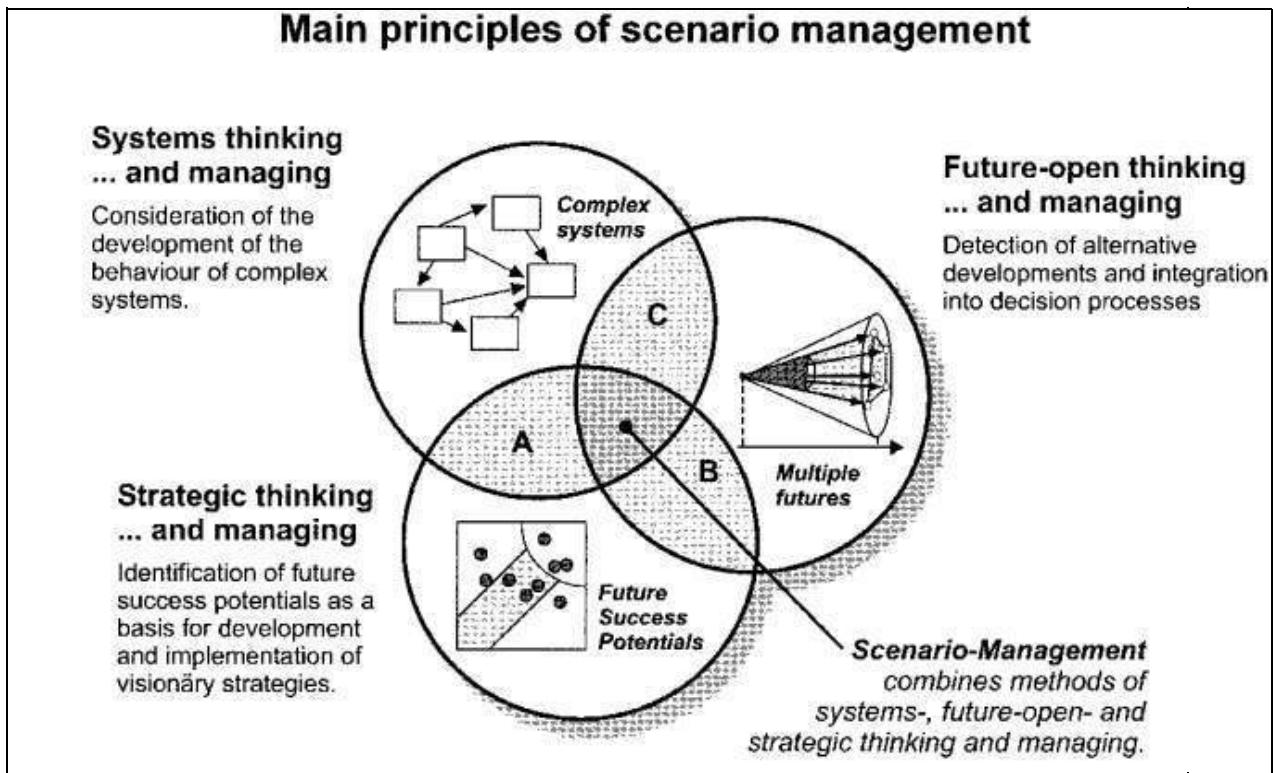
Fink and Schlake (2000) began a discussion expanded by Fink et al. (2005), Hines (2006), Van der Laan (2008), Hadridge (2008), Bezold (2010), and Hines, Bishop, and Slaughter (2015), highlighting lessons learned from Foresight practice. When applied to strategic thinking, this approach contributes by improving the quality of data collected in strategic processes, broadening an organization's cultural knowledge. The authors also emphasize the challenges in large-scale implementation, using a "universally accepted" methodology. This leads to adopting organizational practices that legitimize the approach, adapting existing strategic thinking techniques, and introducing mechanisms to adequately communicate the results of this movement. Therefore, Foresight promotes strategic knowledge assets for the organization, contributing to a virtuous cycle of understanding and managing scenarios, as illustrated in Figure 01 below.
According to the authors, analyzing complex scenarios enables the construction of various potential futures, allowing companies to understand their chances of success in different contexts. This contributes to developing innovative projects linked to organizational strategy, encouraging competitive advantages and resilient behaviors, considering opportunities and threats related to companies' strategic challenges. From this perspective, and considering the contributions of Spaniol et al. (2019), Greenbolt et al. (2019), Gordon, Rohrbeck, and Schwarz
(2019), Scobic (2020), Pinto and Medina (2020), and Mastion and Dovey (2021), the practice of Foresight requires guidelines applicable to future investigation, using an exploratory approach to understand strategic-cultural scenarios relevant to organizational intentions. Furthermore, the authors highlight the diversity of methodologies and applications, which should promote a culture of knowledge sharing, like the "BA" environment proposed by Nonaka and Takeuchi (1991), applied to the knowledge creation process.
 Source: Fink and Schalke (2000, p.2)
Figure 01: Principles of Scenario Management
Foresight is an approach that stimulates the application of strategic foresight mechanisms in organizations, assisting in the management of strategic resources applicable to the development of contingencies or competitive advantages. It prepares companies to adopt strategic thinking as part of the organizational culture and establishes a culture aligned with prospective and innovative work. The challenges of Foresight include the need for adaptable techniques and contextual approaches that foster knowledge creation, the exploration of possible futures, and resilient behavior. These challenges are thus centered on the cultural and methodological issues of organizations.
Considering the studies by Carvalho and Augusto (2004) and Almeida and Andrade (2020), Foresight contributes to identifying future opportunities, improving strategic planning and organizational performance. Moreover, it promotes resilience and conditions to face changes resulting from various contextual impacts affecting organizational performance, collaborating with strategic positioning and organizational intelligence.
2.2 Institutional Evaluation and Strategic Anticipation in Brazilian Higher Education: Some Evidence from the Literature
The strategic anticipation process, also described as foresight in the literature, has been discussed from various perspectives, mainly in international literature, contributing to the articulation of the theme with diverse research scenarios. According to Saritas and Aydin (2016), Hsu and Sandström (2017), and Rohrbeck and Kum (2018), the approach has gained space in discussions about organizational competitiveness and innovation, highlighting various challenges found within this discussion, such as methodological issues and the insertion of this paradigm in the cultural context of organizations. Nevertheless, the conclusions indicate the opportunity to expand studies on the process and practice of strategic anticipation to make organizations more enduring, sustainable, and innovative.
In this sense, in attempting to relate one of the structuring elements of the competitiveness of higher education institutions - institutional evaluation - with the strategic anticipation process, it is possible to perceive a scarcity of studies. This demonstrates that there is room to expand this discussion, as these are two elements that have the potential to make higher education institutions more efficient and, above all, more aligned with future perspectives that systematically impact their competitive actions. Thus, it is important to highlight some evidence that may position the opportunity to expand the relationship between these two processes.
From an international perspective, some studies have delved into this relationship. Keenan and Poper (2019), Aoun (2020), García and Sanz-Menéndez (2021), and Cervantes and Guellec (2022) understand this relationship as essential for developing quality higher education, viewing foresight as an important tool that contributes to developing an institutional evaluation process that is strategic, applied to scenario prospecting that allows for the development of institutional policies consistent with the perspectives presented in a given scenario. The authors also emphasize that the relationship between institutional evaluation and strategic anticipation constitutes a combination that generates innovations, adaptability, and resilience capacity for these institutions, which depend on political, economic scenarios, and other uncontrollable variables to remain competitive. Another important point, from the authors' perspective, is the possibility of promoting knowledge about relevant changes that align with quality and regulation standards, directing more sensitive investments in strategic aspects, sustainability, and quality assurance as a strategic resource.
Other studies, still from an international perspective, have highlighted the relationship between foresight and institutional evaluation to build and consolidate a World Class University. Contributions from Wright and Bradfield (2018), Torres and Vásquez (2020), and Salmi and Saroyan (2021) highlight that it is essential to integrate the practice of foresight with institutional evaluation to ensure a strategic planning process articulated with a deep analysis of the institutions' operating environment. The authors also highlight that international studies indicate that the practice of foresight is an essential component to qualify institutions, enhance competitiveness, and guide relevant decisions that consider pedagogical and administrative aspects. The authors conclude that the relationship with institutional evaluation makes foresight a necessary trend for the success, sustainability, and relevance of institutions in a globally competitive environment.
In a national context, considering studies addressing higher education in Brazil, the scarcity of studies on the topic is reiterated, and those that touch on this relationship objectively address institutional evaluation, with an implicit approach to foresight. Dias Sobrinho (2010), Gomes (2011), and Barreyro and Rothen (2016) mention institutional evaluation as a complex process that applies to the production of knowledge about the higher education environment and aims to ensure the quality of institutions in more complex scenarios. The authors do not mention the practice of strategic planning but indicate that institutional evaluation is a mechanism that applies to the sustainable and competitive direction of institutions, contributing to quality assurance and sustainability.
A distinct point mentioned by the authors indicating the relationship between evaluation and strategic anticipation is the possibility that evaluation promotes for the institution to create and use the necessary knowledge to operate in an intensive regulatory environment, as is the Brazilian context. In this sense, institutional evaluation gains contours of strategic utility as it contributes to developing new practices, methodologies, and academic operations, making institutional evaluation relevant for the strategic positioning of Brazilian institutions. The work of Trindade and Diniz (2013) also contributes to this reflection, indicating that the relationship between institutional evaluation and strategic management is essential for defining the future of institutions.
Furthermore, considering that the Internal Evaluation Committee (CPA) is the body responsible for quality assurance actions in a higher education institution, as found in the works of Arruda and Melo (2018) and Santiago and Soares (2019), this article aims to expand this reflection by identifying the critical variables that limit CPAs' participation in the strategic anticipation process in higher education institutions.
III. METHODOLOGICAL PROCEDURES
The discussion on foresight has opened the opportunity to expand the horizons of the concept and application of strategy in various business models, allowing discussions about scenario building and evaluation to become an essential movement for developing competitive advantages for various organizations. Anchored in this reflection, this article aims to identify the variables that confirm the leading role of CPAs in the strategic anticipation process in higher education institutions. Based on Fink (2000) and Fink (2005), it is possible to establish a data collection instrument based on the main variables that direct the strategic anticipation process and practice, allowing them to be compared with the perceptions of those representing the activities of the Internal Evaluation Committees. According to the authors, it is essential to understand engagement, planning, evaluation of participation results, competencies, communication of strategic anticipation results, and the ways in which CPA involvement occurs in this process.
In this investigation, the constructivist paradigm is adopted based on the proposition of Johnson and Onwuegbuzie (2004), Creswell and Plano Clark (2011), Lin and Creswell (2012), Mertens and Cram (2014), and Sedlacek, Lundeberg, and Peters (2016), which indicate the relevance of organizing movements that interpret phenomena from complex social realities, expanding the condition for using research methods that deepen paradigms contributing to elucidating complex social phenomena requiring theoretical-empirical reinforcement. Therefore, a mixed methods approach is adopted as advocated by Creswell (2014), as there is the possibility of expanding the understanding of the strategic anticipation phenomenon from various perspectives in a valid, reliable, and flexible manner, where it is also possible to overcome the limitations of using a single approach.
Regarding technical procedures, the research adopts descriptive statistics by Greene, Caracelli, and Graham (1989) and Creswell and Clark (2011) to explore quantitative data, allowing it to be done based on the characteristics of the surveyed sample. The authors also state that, in conjunction with exploratory analysis of quantitative data using descriptive statistics, opportunities emerge for the researcher to assume a more complete view of the investigated phenomenon. Considering the definitions of Cohen, Manion, and Morrison (2018) and Creswell and Creswell (2018), the researchers in this article adopt intentional sampling, as it allows the generalization of results within a population of interest and is suitable for research adopting mixed methods. Additionally, by reducing biases, this choice allows for greater reliability in a specific context.
Thus, representatives of Internal Evaluation Committees from various institutional models and didactic-pedagogical characteristics were surveyed to promote a broad reflection on this group's participation in the strategic anticipation process and scenario building, considering their respective representations in the CPAs. The participants were selected from existing discussion groups, which are informal spaces for exchanging ideas and knowledge among these agents. From the return of the instruments, which had over 300 participants, 14 were chosen for results analysis, considering that all have been in the CPA for over 10 years and have been working with institutional evaluation activities at least since 2005. Additionally, the CPA is chosen as the locus of discussion due to its leading role, at least under regulatory guidance, in the institutional evaluation and quality assurance processes within Brazilian HEIs, as established by Law No. 10.861, of April 14, 2004. Of the participants, 100% represent technical-administrative and teaching segments, indicating more intense involvement with the process and practice of institutional evaluation within an HEI.
For data collection, the proposal by Saris and Satorra (1992) and Gaskell (1995) is followed, which indicates the relationship between open and closed questions to increase result accuracy. A questionnaire was applied to the participants, with questions segmented into five blocks, seeking to understand the committee's participation in the strategic anticipation practice, with closed questions and three open questions. The instrument was applied between April and May 2023 and was constructed based on the logic proposed by Bradfield et al. (2005), Eriksson and Weber (2008), Aven (2011), Ramirez et al. (2015), and Rohrbeck and Kum (2018), which indicate the main dimensions that should be observed in the strategic anticipation process.
Still considering the authors, the treatment followed exploratory analysis of quantitative data and coding, within the proposal of Strauss and Corbin (1998). Statistical data are presented through graphs, processed in Microsoft Excel spreadsheets, while qualitative data were presented through the coding process, analyzed with an algorithm developed in Python. The network of relationships is presented, considering the terms that appear with greater intensity, and the central category is described at the end of the analysis section. Furthermore, it is worth noting that, as indicated by authors advocating mixed methods, represented by Creswell and Plano Clark (2011), there are limitations that should be highlighted. Among them are complexity, related to quanti-qualitative operations, possible selection biases, and challenges related to integrating results fr
IV. PRESENTATION OF RESEARCH RESULTS
This section is dedicated to presenting the research results, considering the outcome of the instrument's application and the work applied to the tabulation of results. The analyses will be segmented by the dimension of the strategic anticipation process, where quantitative and qualitative data will be presented based on the applied methodological procedures. Quantitative data will be presented using the recommended graphs, while qualitative data will be presented in a specific section, based on the results of the applied coding processes. When necessary, respondents will be indicated as "participants," abbreviated as "P," for each contribution in the open-ended questions.
4.1 CPA and Engagement with Strategic Thinking
One of the pillars of the strategic thinking process, according to Fink (2000) and Fink (2005), is engagement, which represents a group's capacity for active participation in a scenario-building movement that influences the development of competitive advantages in a particular business model. At least five conditions are analyzed in this dimension, which are presented in Table 01 below, with data related to the average and median distribution of each:
| Engagement | ||
| Capacities | Mean | Median |
| Regular Communication | 4.00 | 4.00 |
| Protagonist Participation | 3.21 | 4.00 |
| Strategic Appreciation | 3.50 | 4.00 |
| Collaborative Action | 3.29 | 4.00 |
| Strategic Influence | 3.21 | 3.00 |
From the analysis of the research data, it can be observed that, regarding the Engagement dimension, the capacities most developed in the context of the surveyed HEIs are those related to "Regular Communication" with the top management of the institutions and "Strategic Appreciation," which relates to the perception of the role and dynamics of the CPA in the institutional context. However, the results demonstrate irregular behavior in the development of capacities, with major limitations in the consolidation of "Protagonist Participation," "Collaborative Action," and "Strategic Influence."
Source: Prepared by the authors (2023)
The following Graph 01 illustrates the distribution of the development of these capacities, confirming that, in the respondents' view, these seem to be the capacities most developed by HEIs to enhance CPA participation in strategic anticipation processes. Additionally, Graph 01 also shows that strategic influence appears to be one of the capacities receiving limited attention from HEIs, as there seems to be little attention from HEIs to CPA's indications for strategic decision-making, which is confirmed by qualitative data where one respondent highlights that "The committees failed to generate robust work or create a sense of collectivity within the academic community" (P5).
{"image_source":{"path":"images/9f60462bab5b13096cde5c696d859049be0ade10f06cad08bb164b4893b7c88a.jpg"},"content":"","chart_caption":[{"type":"text","content":"Source: Prepared by the authors (2023)"},{"type":"text","content":"Graph 01: Distribution of Capacity Development"}],"chart_footnote":[]} From the perspective of Graph 01, the challenges found in the development of capacities necessary for CPA's participation in the strategic anticipation process are in fostering actions that enhance the committee's ability to play a leading role and in collaborative action, as participants indicate that these elements do not seem to be valued by HEIs. Considering the participants' experience, this suggests that the CPA has a role more aligned with bureaucratic functions, which may limit the Committee's empowerment in the scenario-building process.
It presents a scenario aligned with this development, as in the view of each participant, the presented challenges confirm the gaps in developing capacities for "Protagonist Participation," "Collaborative Action," and "Strategic Influence." Regular Communication and Strategic Appreciation are the capacities most encouraged by HEIs; however, a point raised by participant "P6" reveals a sensitive aspect, as the CPA's relevant actions are mainly related to information transmission and regulatory issues, which are poorly understood by managers.
This results illustrates the engagement dimension of Internal Evaluation Committees (CPAs) within Higher Education Institutions (HEIs), evaluating capacities such as Regular Communication, Protagonist Participation, Strategic Appreciation, Collaborative Action, and Strategic Influence. The data indicate that Regular Communication is the most developed capacity, reflecting consistent and effective dialogue with top management, as emphasized by Fink (2000, 2005). Strategic Appreciation also scores highly, showing that CPAs are recognized for their strategic value, aligning with the insights of Eriksson and Weber (2008).
However, there are significant gaps in Protagonist Participation, Collaborative Action, and Strategic Influence. These areas are crucial for CPAs to play a leading role in strategic foresight processes, as highlighted by Ramirez et al. (2015) and Rohrbeck and Kum (2018). The limited impact of CPAs on strategic decision-making underscores the need for enhanced empowerment and central involvement, consistent with the findings of Aven (2011) and the recommendations of Keenan and Poper (2019).
In conclusion, while some capacities like Regular Communication and Strategic Appreciation are well-developed, others require attention to fully leverage CPAs' potential in strategic anticipation. Addressing these gaps will enable HEIs to better navigate uncertainties and foster sustainable competitive advantages, as advocated by Bradfield et al. (2005) and Ramirez et al. (2015). This will contribute to more robust and future-ready institutions, enhancing their strategic foresight capabilities and overall performance.
4.2 Cpa and Methodologies for Scenario Building
The process of strategic anticipation demands the use of appropriate methodologies for scenario building, based on analyses derived from contextual data. As recommended by Keenan and Poper (2019), Aoun (2020), García and Sanz-Menéndez (2021), and Cervantes and Guellec (2022), effective scenario building methodologies, when applied to concrete data, allow for an accurate reading of the environment, facilitating strategy development and the creation of competitive advantages. Table 02 presents a snapshot of the research results related to the "methodologies" dimension, highlighting how CPAs engage with methodologies applied to scenario building.
Table 02: Data on the Methodologies Dimension Source: Prepared by the authors (2023)
| Methodologies | ||
| Mean | Median | |
| Participation in Strategic Planning | 3.29 | 4.00 |
| Strategic Alignment | 4.07 | 4.00 |
| Applied Results | 4.07 | 4.00 |
| Participation in Preventive Studies | 3.79 | 4.00 |
| Shared Vision | 3.93 | 4.50 |
Regarding the methodologies dimension, the data indicate that CPAs participate in the strategic planning process, albeit with some limitations, which also apply to the development of preventive studies. This suggests a reactive stance of the Committee due to its regulatory role. The shared vision, aligning with literature, is structured as a movement contributing to the creation of a shared future vision, aiding in trend reading, future scenario identification, and innovative solutions. Authors like Fink (2000) and Fink (2005) highlight the importance of creating conditions to identify trends, engage stakeholders, and develop future scenarios to inform strategic thinking. A participant, P10, notes that the CPA "only participates in the process because it is a regulatory requirement. There is a need for management to listen more to what the CPA has to say about the future of the HEI."
The following Graph 02 presents the distribution of capacity development related to the "methodologies" dimension by HEIs, considering CPA participation in the strategic anticipation process:
{"image_source":{"path":"images/3fb0380194b526e24bc364db7879a7552b19cfda950776aa6e4548025747a1cc.jpg"},"content":"","chart_caption":[{"type":"text","content":"Source: Prepared by the authors (2023)"},{"type":"text","content":"Graph 02: Distribution of Capacity Development in Methodologies"}],"chart_footnote":[]}
The data suggest that while CPAs are involved in strategic planning and preventive studies, their role often remains constrained by regulatory compliance rather than proactive engagement. The high mean and median values for Strategic Alignment and Applied Results indicate that when CPAs do engage, their contributions are well-aligned with institutional strategies and yield practical outcomes. This supports the notion posited by García and Sanz-Menéndez (2021) that scenario methodologies, when effectively implemented, enhance strategic coherence and actionable results.
However, the relatively lower ratings for Participation in Strategic Planning and Preventive
Studies underscore a need for a more integrative and forward-looking approach. Fink (2000) and Fink (2005) argue that fostering a shared vision and proactive stakeholder engagement are critical for the successful implementation of foresight methodologies. This aligns with the qualitative feedback from P10, emphasizing the need for greater managerial receptivity to CPA insights on the institution's future directions.
In summary, the findings highlight the strengths and weaknesses in the application of foresight methodologies by CPAs within HEIs. While there is evidence of effective strategic alignment and application of results, the process is often hindered by a regulatory focus and limited proactive participation. Enhancing CPA engagement in strategic planning and fostering a shared vision can significantly improve the effectiveness of scenario methodologies, leading to more robust and future-ready institutions, as advocated by Keenan and Poper (2019) and Aoun (2020).
Upon identifying the movement of capacity development around this dimension, the data confirm that the participation in strategic planning by the CPA appears to be the limiting factor in this context. This involvement influences the construction and development of all other indicators within the dimension. The distribution of capacity development aligns with the observations of participants "P3" and "P8", who emphasize that participating in the planning process often seems like a formality because "regulation will demand it eventually" (P8).
The data underscore the importance of creating alternatives to enhance the CPA's ability to engage in prospective projects, allowing the committee to participate in activities related to trend identification and stakeholder engagement. This would broaden the CPA's legitimacy to operate in a strategic, competitive, and proactive context, emphasizing the commission's role in institutional development.
Regarding the methodologies dimension, while there is a perception of strategic alignment and proper application of results, it is essential to note that qualitative data confirm limitations related to participation, involvement in preventive studies, and shared vision. This highlights the constraints faced by the CPA in the strategic anticipation process.
The findings suggest that the CPA's involvement in strategic planning is crucial yet insufficiently realized, impacting the overall capacity development in strategic anticipation. This aligns with Keenan and Poper (2019), who stress the importance of active participation in foresight to foster strategic coherence. Aoun (2020) further emphasizes that effective foresight practices enhance institutional adaptability and competitive advantage. Fink (2000, 2005) and García and Sanz-Menéndez (2021) highlight the necessity of engaging stakeholders and developing shared visions for successful foresight implementation. The data indicate that while strategic alignment and applied results are recognized strengths, the CPA's proactive engagement in planning and preventive studies remains a significant area for improvement.
To harness the full potential of CPAs in strategic anticipation, HEIs must foster an environment that encourages active and meaningful participation in strategic planning. This involves addressing the identified limitations and empowering CPAs to contribute effectively to foresight activities. Such efforts will enhance the CPA's role in shaping strategic directions, ultimately leading to more robust and future-ready institutions.
4.3 Cpa and the Risk Analysis Dimension
Risk analysis is an essential exercise for practitioners of strategic anticipation, as it contributes to developing a set of actions that enable the understanding of the pathways leading to the construction of strategic scenarios. According to Spaniol et al. (2019), Greenbolt et al. (2019), Gordon, Rohrbeck, and Schwarz (2019), Scobic (2020), Pinto, and Medina (2020), this process allows the emergence of experts in strategic environmental analysis and mechanisms that guide data-based external environmental analysis movements. In this dimension, Table 03 presents a summary of the quantitative data, highlighting the absence of scenario specialists within the CPAs.
Table 03: Data on the Risk Analysis Dimension Source: Prepared by the authors (2023)
| Risk Analysis Capacities | ||
| Mean | Median | |
| Prospective Dissemination of Results | 3.71 | 4.00 |
| Participation in Trend Analysis | 3.14 | 3.00 |
| Institutionalization of Preventive Actions | 3.14 | 3.00 |
| Involvement in Strategic Anticipation Exercises | 3.71 | 4.00 |
| Presence of Specialists | 1.79 | 1.00 |
Within the analyzed capacities, and considering the data proposed by authors discussing the strategic anticipation process, especially Pinto and Medina (2020), it is evident that the CPAs in this study do not include scenario specialists. This suggests that the committee either does not anchor its activities in strategy or maintains limited involvement with strategic planning activities, as evidenced by the low presence of individuals engaged in scenario construction. Additionally, the data show in Graph 03 that committee members do not participate extensively in trend analysis or preventive actions, further limiting the CPA's involvement in strategic actions and scenario-related decisions in HEIs.
{"image_source":{"path":"images/3869a7d7b1a50518307a731eace611a4c3e22a02d3baab638a650e54ba8824b4.jpg"},"content":"","chart_caption":[{"type":"text","content":"Graph 03: Distribution of Capacity Development in the Risk Analysis Dimension"},{"type":"text","content":"Source: Prepared by the authors (2023)"}],"chart_footnote":[]}
The lack of scenario specialists within CPAs is a significant finding, indicating a critical gap in expertise necessary for effective strategic anticipation. Spaniol et al. (2019) and Greenbolt et al. (2019) emphasize the importance of having specialized knowledge to interpret strategic environmental data and construct robust scenarios. The absence of such specialists likely impairs the CPA's ability to engage in proactive strategic planning, aligning with Gordon, Rohrbeck, and Schwarz (2019), who highlight the need for skilled professionals to navigate complex strategic environments.
The data also reveal that CPAs are minimally involved in trend analysis and the institutionalization of preventive actions. This aligns with the insights of Scobic (2020) and Pinto and Medina (2020), who stress that effective foresight requires active participation in trend monitoring and the establishment of preemptive strategies. The limited engagement in these areas suggests that CPAs may not fully leverage their potential in guiding HEIs through uncertain and dynamic contexts, as also noted by Pinto and Medina (2020).
In conclusion, the findings highlight a significant gap in the presence of scenario specialists and the proactive engagement of CPAs in risk analysis and strategic anticipation activities. To address this, HEIs must prioritize the inclusion of specialized professionals within CPAs and foster a culture of active involvement in trend analysis and preventive actions. This will enhance the CPA's ability to contribute to strategic foresight, ultimately leading to more resilient and forward-thinking institutions. As suggested by Spaniol et al. (2019) and Gordon, Rohrbeck, and Schwarz (2019), such efforts are crucial for developing robust strategies and navigating the complexities of the educational environment.
4.4 Cpa and the Culture of Strategic Learning
Strategic learning is a crucial element for the development of the strategic anticipation process, often referred to in the literature as foresight. Greenbolt et al. (2019) and Gordon, Rohrbeck, and Schwarz (2019) highlight the necessity of focusing on these aspects, as it is within this dimension that the culture of strategic anticipation can be expanded. From the data analyzed, based on the contributions of the respondents, it is evident that the CPAs participating in this research lack this culture. The respondents' perception indicates that HEIs do not develop the required capacities for consolidating this dimension. Table 04 below presents the quantitative data from the research.
Table 04: Data on the Strategic Learning Dimension Source: Prepared by the authors (2023)
| Strategic Learning Capacities | ||
| Média | Mediana | |
| Competencies for Strategy | 2.64 | 3.00 |
| Training for Strategic Activities | 2.07 | 1.50 |
| Capacities to Interpret Trends | 2.14 | 2.00 |
| Continuous Education | 3.07 | 3.00 |
| Relevant Learning | 2.64 | 3.00 |
In line with Graph 04 below, it is clear that HEIs must improve conditions for CPA training in the strategic process. The data show that few HEIs invest significantly in training CPA members to understand the concept and application of strategy, which also impacts their formation and learning. This is confirmed by the contribution of "P2," who states that "the training is predominantly to understand legislation and not to make decisions. Changing this culture is important because the CPA needs to be strategic."
{"image_source":{"path":"images/25a13c191c2872d0c06904cc399a57c36e56236c2fef8ab26ad8d2f04e60aa1b.jpg"},"content":"","chart_caption":[],"chart_footnote":[{"type":"text","content":"Source: Prepared by the authors (2023)"}]}
Graph 04: Development of Capacities in the Strategic Learning Dimension
The lack of strategic learning within CPAs is a significant limitation that hinders their ability to engage effectively in strategic foresight activities. Greenbolt et al. (2019) and Gordon, Rohrbeck, and Schwarz (2019) emphasize that fostering a culture of strategic anticipation is essential for building robust foresight capabilities. The data indicate that competencies for strategy, training for strategic activities, and capacities to interpret trends are notably underdeveloped within CPAs, suggesting that HEIs do not prioritize these areas sufficiently.
The median values for competencies for strategy and relevant learning are relatively higher, indicating some recognition of the need for strategic skills. However, the low mean values for training for strategic activities and capacities to interpret trends highlight a gap in ongoing educational efforts. This gap is further underscored by the qualitative feedback from respondents, such as "P2," who points out that the focus of training is on legislative understanding rather than strategic decision-making. This aligns with the observations of Gordon, Rohrbeck, and Schwarz (2019), who argue that without a strategic learning culture, CPAs are unlikely to contribute effectively to institutional foresight.
To enhance the strategic learning culture within CPAs, HEIs must invest in comprehensive training programs that go beyond legislative understanding to include strategic decision-making and trend interpretation. Such initiatives will empower CPAs to engage more effectively in foresight activities, contributing to the institution's overall strategic capacity. This aligns with the recommendations of Greenbolt et al. (2019) and Gordon, Rohrbeck, and Schwarz (2019), who stress the importance of strategic learning in fostering a proactive and anticipatory institutional culture.
4.5 cpa and the Strategic Management Dimension
Among the authors discussing the practice of strategic anticipation, Bezold (2010) and Hines, Bishop, and Slaughter (2015) emphasize that one of the critical dimensions is the strategic management of teams. This is confirmed by other referenced texts in this research. Greenbolt et al. (2019) and Gordon, Rohrbeck, and Schwarz
(2019) identify several key capacities for this dimension: strategic reflections, strategic communication, decision-making influence, strategic dissemination, and participative collaboration. These capacities are essential for empowering CPAs to engage in strategic activities, opening dialogues with strategic activities, encouraging participation in strategic decision-making, publicizing CPA activities, and expanding participation spaces within HEIs. Table 05 below presents the research data, indicating capacities that require greater attention from HEIs.
Table 05: Data on the Strategic Management of Teams Dimension Source: Prepared by the authors (2023)
| Strategic Management of Teams Capacities | ||
| Média | Mediana | |
| Strategic Reflections | 3.86 | 4.00 |
| Strategic Communication | 4.07 | 4.00 |
| Decision-Making Influence | 4.36 | 5.00 |
| Strategic Dissemination | 4.07 | 4.00 |
| Participative Collaboration | 3.36 | 3.00 |
Analyzing the data, it is evident that the gaps in this dimension are related to the lack of encouragement from HEIs regarding strategic reflections. This indicates insufficient support for activities related to the commission's participation in strategic meetings with other sectors of the HEI. The lack of participative collaboration is highlighted by "P5," who notes that the CPA "does not have the due space in NDEs, and many do not even know how we can help." Another area requiring attention is strategic influence, which seems to exist but is often driven by regulatory pressure, as "P7" mentions in the qualitative data. The analysis of Graph 05 below illustrates these trends, showing significant variation, especially in the development of strategic collaboration. This suggests that CPAs have varying levels of support within HEIs, reinforcing the observation that there is a deviation in the commission's prominence.
{"image_source":{"path":"images/de1be1b8a1e314012186e2205390a7dd70d0c671d6e8579ec33ba2d3928f6ae8.jpg"},"content":"","chart_caption":[{"type":"text","content":"Source: Prepared by the authors (2023)"},{"type":"text","content":"Graph 05: Development of Capacities in the Strategic Management Dimension"}],"chart_footnote":[]}
The data highlight several key points regarding the strategic management dimension. Bezold (2010) and Hines, Bishop, and Slaughter (2015) argue that strategic management of teams is crucial for effective foresight. The findings show that strategic reflections and participative collaboration are notably underdeveloped. This lack of support for strategic reflections aligns with the observations of Greenbolt et al. (2019), who emphasize the need for HEIs to foster environments that encourage strategic thinking and active CPA participation in strategic processes.
The data also reveal that while decision-making influence is relatively high, this influence is often driven by regulatory requirements rather than proactive strategic engagement. This observation is supported by Gordon, Rohrbeck, and Schwarz (2019), who stress that genuine strategic influence should come from empowered and proactive participation, not just regulatory compliance.
To strengthen the strategic management dimension, HEIs need to provide more support for strategic reflections and participative collaboration. This involves creating more opportunities for CPAs to engage in strategic meetings and fostering a culture of active participation. By doing so, CPAs can become more integral to strategic processes, enhancing their ability to contribute effectively to institutional foresight and strategic planning. This aligns with the recommendations of Bezold (2010) and Hines, Bishop, and Slaughter (2015), who underscore the importance of strategic management in fostering robust and forward-thinking institutions.
4.6 The Contribution of Qualitative Data
For the treatment of qualitative data, the coding procedures highlighted by Strauss and Corbin (1998) were applied, involving three main steps. Open coding was the initial stage, where data were examined in detail to elucidate emerging categories, resulting primarily in a list of categories with their definitions. From the qualitative data analysis, the most consistent codes derived from the analyzed terms were "data," "CPA," and "management," which seem to have an important relationship with self-evaluation results. This indicates that enhancing the CPA's participation in strategic anticipation requires creating objective and systematic alternatives for the CPA to take a leading role in constructing institutional solutions based on evaluation data, as confirmed by "P4," who noted, "often the data are only relevant to us. They must be relevant in the eyes of management, and planning these interventions is crucial."
Axial coding was then performed, resulting in the central category of "data management and strategic planning," indicating the CPA's need to manage data and plan for the creation of strategic scenarios as a central element of the institutional evaluation process. As an integral part of the institution, the CPA plays a crucial role in collecting, analyzing, and managing data related to institutional evaluation and strategic decision-making. Through content analysis of qualitative data and the identification of the category "Data Management and Planning," it is possible to infer that the CPA can have a significant role in the strategic anticipation process by providing valuable information about the institution, helping to identify trends, future scenarios, and contributing to strategic decisions based on reliable data. This is corroborated by "P9," who indicated that the CPA needs to seek and appropriate autonomy that allows it to build and implement its strategic plan to foster actions that legitimize its role in scenario building.
Consequently, selective coding was developed, establishing a basis for what could be a theory guiding the CPA's participation in the strategic anticipation process. Although there is no intention to create a substantive theory, the qualitative data suggest that the central qualitative category that can guide the development of actions for the CPA's inclusion in strategic anticipation is the challenge of: Increasing CPA participation in the strategic-institutional context by promoting incentives for developing capacities that make the committee proactive, autonomous, and politically legitimate, with adequate resources and empowerment spaces. Through content analysis of qualitative data, it is evident that the most consistent codes related to this category are 'data,' 'CPA,' and 'management,' indicating that enhancing CPA participation in strategic anticipation requires the objective and systematic use of evaluation data. The CPA plays a significant role in collecting, analyzing, and managing these data, contributing to strategic decision-making and fostering actions that legitimize its role in scenario construction. "P6," "P8," and "P10" reinforce these aspects, highlighting the need for HEIs to encourage and promote CPA strategic planning.
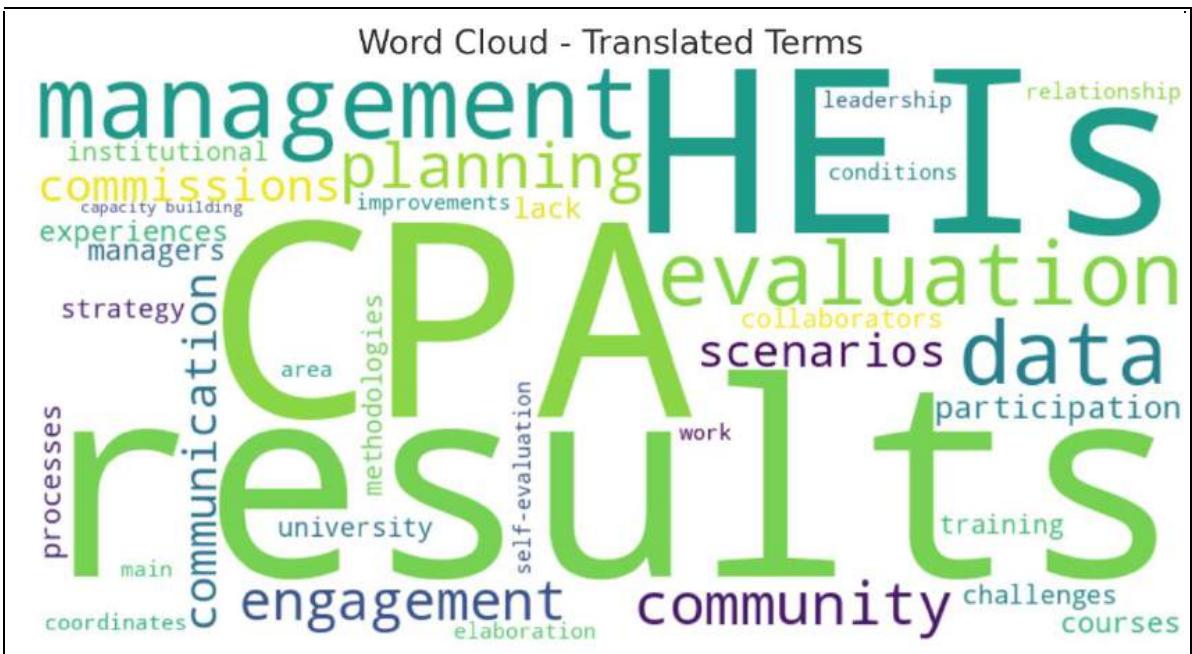 The context of emerging codes is highlighted in Figure 01 below.
Based on the analysis, the main conclusions will be presented below, highlighting contributions to enhance the incentives for promoting conditions that foster CPA participation in the strategic anticipation activities of HEIs.
V. FINAL CONSIDERATIONS
Institutional Evaluation is one of the challenges historically perceived as strategic in the context of Brazilian higher education institutions, especially due to the impacts of developing a complex system like SINAES. Considering the importance of evaluation as a strategic management tool for such institutions, this article sought to connect two themes that seem to complement each other in university management discussions. Therefore, institutional evaluation and strategic anticipation—also known in the literature through the practice of foresight—are phenomena discussed in this article to expand the debate on two related themes that are scarcely addressed in the literature.
Given this scenario, this article aimed to identify the critical variables that limit the participation of CPAs in the strategic anticipation process in higher education institutions. Based on the framework proposed by Bradfield et al. (2005), Eriksson and Weber (2008), Aven (2011), Ramirez et al. (2015), and Rohrbeck and Kum (2018), the instrument applied, utilizing mixed methods, sought to identify the critical variables limiting the participation of institutional quality assurance commissions in the strategic anticipation process of HEIs, which should be prioritized in the training actions of the agents responsible for institutional evaluation. From the analysis of the five dimensions, some considerations can be highlighted.
Regarding the engagement dimension, it is evident that HEIs have not sufficiently encouraged collaborative actions or the promotion of strategic influence, limiting the proactive participation of Commission members in scenario building. This reinforces the bureaucratic and administrative role of the Commission, highlighted in studies on the subject, which limits its political legitimacy. This limitation also impacts the lack of incentives for proactive participation in strategic planning processes and preventive studies, leading to a disconnect between the CPA and institutional management's perspectives on phenomena affecting institutional evaluation and governance of the HEI.
Both quantitative and qualitative data show that there is virtually no incentive for CPA participation in risk analysis activities. The data indicate a lack of encouragement for the prospective dissemination of results, limited participation of scenario and management specialists in the Commission, likely due to political-institutional reasons. Additionally, there are no indications of the Commission's involvement in fostering preventive actions or participating in the strategic trend analysis movements of HEIs. Consequently, there is a limitation in the learning process, preventing the CPA from building relevant knowledge on strategy and hindering the sustainable development of teams. Thus, it can be concluded that HEIs' incentives for CPAs to participate in the strategic anticipation process appear limited, reinforcing the researchers' position that the Commission is more bureaucratic and administrative than strategic.
From a theoretical perspective, this study highlights the potential to expand the research space aligning institutional evaluation with the strategic management process in higher education institutions, a topic with limited representation in national and international literature. Practically, the article offers dimensions and capacities that can be developed to enhance, strengthen, and consolidate CPA participation in strategic scenario building and, consequently, in the strategic management of HEIs. Finally, for future studies, it is suggested to investigate similarities and distinctions in the strategic management practices of CPAs from various HEI models.
Conflict of Interest
The authors declare no conflict of interest.
Ethical Approval
Not applicable
Data Availability
The datasets used in this study are openly available at [repository link] and the source code is available on GitHub at [GitHub link].
Funding
This work did not receive any external funding.
References
Cite this article
Related Research



Special Issue
Launch a focused special issue to highlight research, emerging trends, and expert insights in your academic field.
