




IntelliPaper
Abstract
Every day, thousands of women and children are trafficked. India is a country that is both a transit and a destination in the broader context of trafficking in South Asia. There is some trafficking from India to the Gulf States and Southeast Asia, in addition to a significant amount of trafficking within the country. Within the nation, there is also the sale of children and their trans-state transit. A report released by the National Human Rights Commission of India claims that 11,000 children go missing out of 40,000 kidnappings annually. According to non-governmental organizations, every year, the sex trade involves the trafficking of between 12,000 and 50,000 women and children into the country from adjacent countries. National Commission for Women declared in 1997 In Bombay alone, 40 000 girls between the ages of 10-16 years were selling their bodies from their doorsteps. MAITI Nepal published in September 1999 that there are about 1 to 2 lakh Nepali girls in Indian brothels alone, with about 5-7 thousand being sold every year. Another report suggests that more than 40,000 girls in the Calcutta Sonargachhi red light area are Nepalese. But all these figures are related to prostitution; very little information is available on the other forms of trafficking. According to ILO estimates, 21 million people are enslaved or forced into employment. Among them, one in four are said to be younger than eighteen. It is believed that 5.5 million children are trafficked globally. They experience abuse, exploitation, and violence, which leads to forced labour, prostitution, begging, and armed recruitment. Approximately one in six of the over 28,800 children that were reported to NCMEC in 2023 were probably the victims of child sex trafficking.
Aim: The primary focus of this article is the many purposes for which children are trafficked from India, as well as the criminal crimes associated with this issue. Overall, the majority of minors are abducted for sexual offences and sold to wealthy individuals across international criminal networks. Recommended eradicating the nation's black scars related to child abuse and trafficking.
Explore Digital Article Text
I. INTRODUCTION
Children are the nation's greatest human resource, and their well-being health, education, safety, happiness, and access to opportunities is a barometer of the socioeconomic progress of the nation. The article begins by outlining the POCSO Act and its goals, which was introduced in 2012 in response to an increase in crimes against children [23]. According to NCRB data, out of the over 47,000 missing children in India, are girls. Since 2018, there has been a mainly upward trend in the number of reported missing children. According to police and campaigners, the first 24 hours are critical in investigating such situations. Based on the most recent statistics available, the National Crime Records Bureau (NCRB) in India has reported over 47,000 missing children, of whom are underage girls. The NCRB data for the five years leading up to 2022 likewise demonstrates a generally increasing trend in the number of missing children, with a notable increase of 7.5% in 2022 over 2021, a notable spike of 30.8% in 2021 over 2020, a decline of 19.8% in 2020 over 2019 and again an increase of 8.9% in 2019 over 2018 and of 5.6% in 2018 over 2017. Numerous missing children have also been located or tracked down by state officials, but the disparity in the numbers is still unresolved. The NCRB's 2022 annual report, "Crime in India," was made public on December 3. 83,350 children (20,380 male, 62,946 females, and 24 transgender) were reported missing in the previous year, according to the data.
II. TYPES OF CHILD TRAFFICKING
The transportation, recruiting, transfer, harbouring, and receiving of people by compulsion, threats, or force are all included in the category of human trafficking. The primary aim of these acts is to take advantage of these people for a variety of demeaning uses. This kind of exploitation can take many different forms, such as forced labour, slavery, prostitution, organ trafficking, and sexual exploitation. Human trafficking is a global problem, but it is especially prevalent in some areas, such as Sub-Saharan Africa, Central Asia, and South Asia.
The exploitation of children for a variety of reasons constitutes child trafficking, a grave violation of children's rights. Among the various forms of child trafficking are:
-
Human Trafficking
-
Forced Marriage
-
Organ Harvesting
-
Bonded Labour
-
Servitude
-
Sex Trafficking
-
Slavery
-
Child Soldiers
-
Sexual Exploitation
-
Debt Bondage
-
Begging
-
Human Trafficking: Trafficking in human beings is the exchange of people for the purposes of forced labour, sexual slavery, or commercial sex. Both domestically and internationally, people can be trafficked. Different from people smuggling, which requires the consent of the individual being smuggled, is this one.
-
Forced Marriage: A forced marriage occurs when one or more people are wed against their will or without their consent.
-
Organ Harvesting: The criminal practice of medically taking a victim's organs against their will is known as "forced organ harvesting." They are taken out with force. As an illustration, consider victims who are abducted and have an organ forcibly removed.
-
Bonded Labourer: When someone is forced to work as collateral for a loan, they are considered bonded labourers. After that, the person is duped or forced to labour for little or no remuneration. According to Articles 21 and 23 of the Constitution, bonded labour is illegal in India.
-
Servitude: Slavery or anything that resembles it is called servitude. In colonial America, every Black person was enslaved to a permanent labour force.
-
Sex Trafficking: The majority of the time, child sex traffickers kidnap or otherwise forcibly remove their victims. Adults, especially parents, should be alert to strangers who are looking to take advantage of children. Some young people with questionable morality end themselves in the sex trade. They shouldn't be a concern for us.
-
Slavery: The act of one person owning another and denying them access to the majority of liberties is known as slavery. One way to describe it is institutionalized exploitation. Any circumstance in which a person is coerced into labour or exploited for financial or other personal advantage falls under the broad category of "modern slavery." Forced labour, forced marriage, debt bondage, human trafficking, and the sale and exploitation of minors are a few instances of contemporary slavery. Roughly 25% of the 49.6 million individuals who live in modern slavery are minors, according to the 2022
Global Estimates of Modern Slavery. The act of apprehending, obtaining, or getting rid of someone to enslave them is known as the slave trade.
-
Child Soldiers: In the global battles that are raging, boys and girls as young as eight years old are being recruited and utilised for more purposes than just combat, such as sexual exploitation. Not only is this a serious infringement on children's fundamental human rights, but it also signifies the untimely end of childhood. Children everywhere deserve so much more. The attack on children must end.
-
Sexual Exploitation: Sexual exploitation is the act of taking advantage of someone sexually or invading their privacy without permission. seeing or allowing others to watch one or more people participating in sexual or intimate activity without their consent, such as taking a shower, changing, or using the loo.
-
Debt Bondage: People who are obliged to work to pay off debts are subjected to debt bondage, also known as bonded labour or debt slavery. In portions of Western and Southern Africa as well as South Asia, it's a common practice.
-
Begging: Begging is the act of pleading with someone to do you a favour, usually in exchange for money, with little or no prospect of return favours. A beggar or panhandler is someone who engages in such behaviour. Beggars may be found in public areas including marketplaces, parks, and transportation corridors.
III. TYPES OF CHILD ABUSE
3.1 Prevalence of Child Abuse
Child abuse is the term used to describe a variety of actions and behaviours that cause harm to children [26]. These actions and behaviours can be.
-
Physical Abuse (PA)
-
Emotional Abuse (MA)
-
Sexual Abuse (SA)
-
Neglect
According to a study, there are concerningly high rates of child maltreatment in India.
3.2 Psychological Effects of Child Abuse
The psychological effects of child abuse are severe and long-lasting, frequently resulting in a wide range of emotional and behavioural difficulties that continue into adulthood for the victims . The widespread effects of child maltreatment on mental health and well-being are illuminated below.
-
Post-Traumatic Stress Disorder (PTSD)
-
Depression and Anxiety (DA)
-
Low Self-Esteem and Self-Blame (LSESB)
-
Impaired Interpersonal Relationships (IIR)
-
Substance Abuse and Risky Behaviours (SARB)
3.3 Social Factors Associated with Child Abuse
The frequency and continuation of child abuse are frequently impacted by larger cultural causes, rather than being purely the product of individual actions . The prevalence of child abuse is largely influenced by several socioeconomic factors, a few of which are indicated below.
-
Socioeconomic Status (SES)
-
Cultural and Social Norms (CSN)
-
Gender Inequality (GI)
-
Substance Abuse and Mental Health (SAMH)
-
Legal and Child Protection Systems (LCPR)
3.4 Gender Relations and Abuse of Children
Research continuously shows the disproportionate impact of abuse on girls and the intricate relationships between gender norms, power dynamics, and vulnerability [26]. These results show how closely gender dynamics and child abuse are related.
-
Prevalence of Gender-Based Violence
-
Cultural Norms and Patriarchal Structures
-
Effect on Mental Health and Well-being
-
Barriers to Reporting and Support
3.5 Economic Context and Child Abuse
Research demonstrates the intricate interactions between poverty, inequality, and vulnerability.
The economic environment greatly influences the frequency, dynamics, and outcomes of child abuse [26].
-
Poverty and Stress
-
Getting Resources and Assistance
-
Intersections with Other Forms of Inequality
-
Effects on the Growth and Welfare of Children
IV. OBJECTIVES OF THE STUDY
Understanding the type and scope of child abuse and trafficking in India is the aim of this paper. The research looks at the several criminological factors that contribute to child trafficking and establishes the best course of action in cases of child abuse. It is the responsibility of the government and the relevant authorities to put an end to these unlawful actions within the nation.
V. LITERATURE REVIEW
In 2021, there were 60,96,310 recorded crimes countrywide, consisting of 36,63,360 crimes under the Indian Penal Code (IPC) and 24,32,950 crimes under Special and Local Laws (SLL). The yearly crime rate has reduced by 7.65% from 66,01,285 in 2020 to 445.9 in 2021 (per 100,000 people), which is still much higher than the 385.5 rate in 2019 . Of all IPC crimes that could be prosecuted in 2021, crimes against property accounted for 20.8%, crimes against the human body for 30%, and other crimes for 29.7% [5].
The percentage of all cases that the police have dismissed, annulled, or withdrawn is known as the investigation rate. In India, 64.9% of IPC crimes were investigated in 2021 [8]. The charge-sheeting rate is the proportion of all cases resolved after an investigation in which accusations were made against the accused. In India, 72.3% of IPC crimes were charged with a charge sheet in 2021. The percentage of all instances where the accused was found guilty by the court following the trial was known as the conviction rate.
In India, the IPC offence conviction rate in 2021 was 57.0% . Police were looking into 51,540 homicides in 2021; 26,382 charges had been prepared for these cases; 46,127 rapes were the subject of police investigations; 26,164 charges were framed for these cases. Of the 2,48,731 homicides that were on trial in 2021, 4,304 resulted in a conviction; similarly, of the 1,85,836 rapes that were on trial in 2021, 3,368 resulted in a sentence. In 2021, the conviction rate for murder was 42.4%, while the conviction rate for rape was 28.6%.
VI. PRIMARY CAUSES OF CHILD TRAFFICKING IN INDIA
In India, several reasons contribute to child trafficking, such as:
6.1 Demand for cheap labour and commercial sexual exploitation
Child labour is needed for construction, agriculture, and domestic work, among other industries. This demand also exists for commercial sexual exploitation, which fuels the trafficking of victims.
6.2 Social injustice and prejudice
The effects of child trafficking are disproportionately felt by marginalised groups and individuals who experience social prejudice.
6.3 Poverty and a lack of employment opportunities
Poor families are frequently tricked by human traffickers into believing their kids will have better lives than they do.
6.4 Illiteracy and ignorance
People and communities are vulnerable when there is a lack of knowledge and awareness of the risks associated with human trafficking.
6.5 Religious and Cultural Practices
In some areas, the custom of selling children to brothels facilitates child trafficking and upholds religious and cultural practices like Jogin and Devadasi, in which young girls are offered as offerings to gods.
6.7 Major Crimes in India and Cities 2023
6.6 Criminal Syndicates or Ventures
After narcotics and firearms, child trafficking is now the third-most lucrative criminal sector globally. For criminal syndicates, it is an appealing venture because of the promise of large financial returns with little initial outlay[22].
Table 1: Major Crimes in India and Cities. Sources: NCRB Annual Report
| No | Crimes | At National Level | In Indian Cities | % in Cities |
| 1 | Crime Against Children | 1 62 449 | 20 550 | 12.65 |
| 2 | Crime Against Women | 4 45 256 | 48 755 | 10.94 |
| 3 | Kidnapping and Abduction | 1 07 588 | 13 984 | 12.99 |
| 4 | Murder | 28 522 | 2 031 | 7.12 |
| 5 | Crime against senior citizens | 28 545 | 3 996 | 13.99 |
The bulk of the offences in this table, as seen in Table 1, are specifically directed towards children for the different reasons that they have been eaten by human animals and they have been harvested for their abnormal behaviours maybe dunked and drugged. The crimes should be punished, and the offenders must be sentenced to death by the respective jurisdictional authorities no one cannot stop this illegal trafficking.
VII. RULES AND LEGISLATION PRODUCED BY THE INDIAN GOVERNMENT
The Indian government has acted against child trafficking and given children legal protection by passing several laws and regulations. A few important laws include.
7.1 SITA ACT - Suppression of Immoral Immoral Traffic in Women and Girls Act 1956
In 1956 India passed the Suppression of Immoral Traffic in Women and Girls Act, 1956 (SITA). The act was further amended and changed in 1986, resulting in the Immoral Traffic Prevention Act also known as PITA.
The All India Suppression of Immoral Traffic Act (SITA) was passed in 1956 for the prohibition of human trafficking. It was later rives in 1986 and the Immoral Traffic (Prevention) Act was passed.
7.2 Immoral Traffic (Prevention) Act, 1956 (ITPA)
This law offers provisions for victim rescue, rehabilitation, and repatriation while outlawing trafficking with the intent to exploit people for commercial sex.
7.3 Bonded Labour System (Abolition) Act 1976
The outlaws bonded labour, which is frequently connected to child trafficking.
7.4 Prohibition and Regulation of Child Labour Act 1989
This legislation forbids the employment of minors in dangerous jobs and governs the working conditions of minors employed in non-hazardous jobs. Its goals include preventing child exploitation and promoting the moral, mental, and physical development of children. Additionally, through education, job training, and other support services, the act requires the rehabilitation and social integration of child labourers.
7.5 Right to Education Act 2009 or The 2009 RTE Act
Up until the age of 14, this act gives every kid the right to free and compulsory education. It seeks to guarantee that all people have access to high-quality education and to remove obstacles to education, such as social exclusion, poverty, and discrimination. The RTE Act requires that all children, regardless of socioeconomic background or level, get free and compulsory education and forbids the employment of minors under the age of 14.
7.6 The Protection of Children from Sexual Offences (POCSO) Act of 2012
It is a piece of legislation that addresses sexual offences against minors and offers safeguards for their safety throughout the investigative and legal processes .
The Protection of Children from Sexual Offences (POCSO) Act of 2012 deals with sexual offences against those who are younger than 18 and are therefore regarded as minors by law. The Act establishes definitions for "sexual harassment," "penetrative sexual assault," and "sexual assault." If an offence is committed by a police officer, public servant, or employee at a jail, prison, hospital, school, protection or observation home, or by a member of the armed forces or security forces, the offence is more serious. With its associated rules, the Act, which has been in effect since November 14, 2012, is a comprehensive law designed to shield minors from sexual assault, harassment, and pornography. Establishing child-friendly procedures for reporting, gathering evidence, conducting investigations, and expediting trials through the appointment of Special Public Prosecutors and designated Special Courts, also guarantees that the child's interests are protected throughout the legal process. The Act includes kid-friendly processes for reporting, documenting, looking into, and prosecuting offences [22] [23].
7.7 The National Policy for Children 2013
To safeguard, advance, and ensure that children's rights are fulfilled in India, this policy offers a thorough framework. It highlights how different needs and obstacles that children face must be addressed through a multi-sectoral approach involving government agencies, civil society organisations, and other stakeholders. To accomplish these aims, the policy outlines methods and action plans and gives priority to topics such as child survival, health, education, protection, and participation.
7.8 The Juvenile Justice (Care and Protection of Children) Act, 2015
It is a piece of legislation that addresses the protection, rehabilitation, and care of minors. It also includes measures to prevent and control child trafficking.
VIII. REMEDIES TO STOP CHILD ABUSE AND CHILD TRAFFICKING
8.1 Law Number 21 of 2007 concerning the Eradication of the Crime of Human Trafficking
This law is specifically designed to combat human trafficking. It covers various aspects, including the definition of human trafficking, related criminal offences, victim rights, and the legal consequences for perpetrators of human trafficking, as outlined in Article 2 paragraph (1).
8.2 Government Regulation Number 44 of 2008 concerning the Protection of Victims, Witnesses, and Reporters
This regulation aims to provide additional protection for victims. This protection includes identity confidentiality, physical security, and legal assistance during and after the judicial process. This legal protection ensures that victims of these crimes not only receive protection from the exploitation they have experienced but also receive rehabilitation services for their physical and psychological recovery .
8.2.1 REmedies for Child Abuse
1. Ten Actionable Steps to Stop Child Abuse
-
Give your time: Engage in community parent activities. Assist families with children who are at risk. Start a playgroup.
-
Raise your children with appropriate self-control and mindful consideration: Never correct a child when you're angry. Allow yourself some time to relax. Do not forget that discipline is a method of teaching your child. Use time-outs to help your youngster regain control and privileges to reward good behaviour.
-
Examine your behaviour: Abuse is not only physical. Deep, permanent hurts can be caused by both words and deeds. Have a loving role as a parent. Demonstrate to kids and adults alike that disagreements can be resolved amicably without violence or abuse.
-
Educate both people and you: The most effective strategy to stop child abuse may be to provide parents and kids with basic support. Among the many strategies to protect kids from danger are after-school programs, parent education courses, mentorship programs, and temporary relief from childcare. Speak up in your community in favour of these initiatives.
-
Teach children their rights: Children are less likely to believe that abuse is their fault and are more willing to report an abuser when they are taught that they are unique and have a right to safety.
-
Support prevention programs: Too often, abuse reports are the catalyst for intervention. More money must be put into initiatives that have been shown to prevent abuse before it starts, like family counselling and home visits by nurses who support new parents and babies.
-
Understand to know about what constitutes child abuse: Maltreatment includes not just sexual and physical abuse but also failure on the part of parents or other carers to provide food, clothing, and other necessities for a kid. Rejected, chastised, or persistently alone children can also be emotional abuse.
-
Recognise the symptoms: Abuse can manifest in ways other than only unexplained injuries. Depression, aversion to a particular adult, trouble forming friendships or trusting people, abrupt alterations in eating or sleeping schedules, inappropriate sexual behaviour, poor personal hygiene, concealment, and antagonism are frequently indicators of family issues and may point to the neglect or physical, sexual, or emotional abuse of a child.
-
Report any mistreatment or abuse: Notify your state's child protective services agency or the local police if you observe signs of abuse or see a child being hurt. When discussing abuse with a child, pay close attention, reassure them that reporting the incident to an adult was the correct thing to do, and reassure them that they are not to blame for what occurred.
-
Invest in children: Advocate for community leaders to show support for families and children. Request family-friendly work settings from your employers. Encourage lawmakers in your community and at the federal level to support laws that will enhance the lives of and better safeguard our children [28].
2. Ways to Prevent the Shaken Baby Syndrome
-
Speak with the Family Help Line: A national, toll-free emergency helpline for children in need of care and protection. The number is 1098 and is available 24 hours a day. To obtain the "What to Do When the Baby Cries" checklist. When the baby cries, consult the checklist that you've posted on the refrigerator. Upon completing the checklist, you'll feel like a super parent who has done everything in your power to support your child!
-
Recall the 10-foot rule: Make sure the baby is in a safe area before you become extremely agitated or furious. After that, keep your distance from the child at least ten feet until you have cooled down. Parents say their lives have been transformed and their kids have been kept safe by this small rule.
-
"I am a good parent" list: Put down three or more reasons why you make an excellent parent. When you're having one of those days where you can't take it anymore, pull out the list and consult it.
-
Indeed, babies cry: Remind yourself that all newborns cry and that occasionally parents weep as well! Babies use crying as a stress-reduction and communication tool. It's not intended to give you a negative parenting image.
-
Sing your tension away: Pick up a lullaby to sing. No matter how good you are at singing, babies like it. You can soothe the baby and yourself by repeatedly singing a family song!
-
I'm in love with my baby: List your top five favourite aspects of your child. Take note of your baby's distinct characteristics already. What makes your infant giggle? What gives your infant a rush? Place the list on display so you can consult it when things get tough.
-
Not the baby but grab the phone: List three contacts or locations you can contact if the burden of parenting is getting to you. Most of the time, all it takes is ten minutes of talking to someone who listens.
-
Move and take a breath: Exercise is an excellent way to decompress after a tough day. When you're outside, wrap up the infant. Draw in deep breaths. Make your way around the block. Stress can be reduced even by spending a short while outside the home.
-
Never forget to laugh: Laughing is a fantastic way to decompress. Post amusing jokes or cartoons that make you laugh. Have your favourite toys close at hand. Invest in a book or film that you can watch whenever you want to laugh. Make a call to your funny friend. A sense of humour is essential for parents!
-
Take a Break: Every day, give yourself a minimum of 20 minutes to engage in an enjoyable activity. Raising a child demands a lot of labour. Whatever relieves tension and revitalizes you—listen to music, read, or take a hot bath—should be done. You'll become a better parent every day and you deserve it! [28].
3. For Suicide Prevention
Warning Signs
-
A previous suicide attempt.
-
Current talk about suicide or making a suicide plan.
-
Strong wish to die, preoccupation with death, giving away prized possessions.
-
Serious depression, moodiness, expressions of hopelessness.
-
Withdraws from friends and/or social activities.
-
Increased alcohol and/or other drug use.
-
Changed eating or sleeping patterns.
-
Severe drop in school performance.
-
Takes unnecessary risks.
-
Recent suicide attempt by a friend or family member.
Intervention Tips
-
Offer help and listen. Encourage depressed youth to talk about their feelings. Listen, don't lecture.
-
Be direct. Talk openly and matter-of-factly about suicide.
-
Trust your instincts. If it seems that the situation may be serious, seek prompt help. Break confidence, if necessary, to save a life.
-
Offer hope that alternatives are available but do not offer glib reassurance.
-
Take action. Remove means, such as guns or stockpiled pills.
-
Get help from persons or agencies specializing in crisis intervention and suicide prevention.
8.2.2 Remedies for Child Trafficking
Around the world, child trafficking is a horrifying reality. According to NCRB (2018), girls make up more than 80% of the victims of human trafficking, with children making up 51% of all victims. This statistic draws attention to the growing issue of child trafficking in India, which needs to be addressed. It's a pervasive problem that calls for cooperation from people, groups, and communities [29].
-
Raising Awareness & Educating People About Child Trafficking: The reality of child trafficking is often not well understood, which contributes to its covert existence. We can enable communities to recognize and report possible cases by disseminating information about the strategies employed by traffickers, warning indicators, and the terrible outcomes. To inform communities about the value of education and the risks associated with child trafficking, CRY India organises awareness campaigns and demonstrations.
-
Aiding Families that are at Risk: Families who experience financial troubles, lack of economic possibilities, or poverty are more vulnerable to the deceptive promises of improved lives made by traffickers. However, granting families access to social safety nets, vocational training, and sustainable livelihoods can empower them and end the despair that traffickers prey on. Through a variety of government initiatives, CRY India helps parents in poor communities find work, easing the financial strain that could otherwise result in child maltreatment.
-
Enforce Child Protection Legislation: Laws must make forced labour, sexual exploitation, and domestic slavery, among other forms of child exploitation, illegal. This is because focusing on assisting victims and enforcing strict penalties for traffickers can put an end to this horrible crime. In addition to pushing for stricter child protection laws, CRY India works with government organizations to rescue and ensure the rehabilitation of trafficked children.
-
Assist Victims of Trafficking: Survivors of child trafficking frequently experience severe trauma, abuse, and exploitation; therefore, they need extensive help to heal and reintegrate into society. Thus, they can recover and take back their life with the aid of safe havens, trauma therapy, medical attention, educational possibilities, and legal assistance. To assist trafficked children in overcoming their terrible experiences and gaining access to educational possibilities, CRY India provides counselling and rehabilitation programs.
-
Encourage to promote Moral Conduct: To stop child exploitation, companies and organisations need to embrace corporate social responsibility and ethical standards. Businesses may end the market for inexpensive child labour and help fight child trafficking by putting in place reliable monitoring systems, carrying out audits, and guaranteeing fair work practices. CRY India promotes business alliances that put human rights, environmentally friendly methods, and child safety first.
-
Engaging the Community to Raise Awareness and Spread Other: Local communities can be empowered to identify indicators of human trafficking and take preventative action by being involved in awareness campaigns, workshops, and community-led projects. Additionally, community-based watchdog groups and reporting systems can bolster the effort to combat human trafficking. By organising awareness campaigns highlighting the value of education and being vigilant against the strategies used by traffickers, CRY India empowers community-based initiatives to save children.
-
Work Together with An Organisation: Non-governmental organisations (NGOs), who collaborate closely with victims, communities, and authorities, are at the forefront of the fight against child trafficking. Volunteering, advocating for these organisations, and providing financial assistance can strengthen their influence and help find long-term solutions. CRY India is a well-known non-governmental organisation that works to stop the trafficking of children. It aggressively tackles this problem and welcomes partnerships and collaborations to support its efforts.
-
Public Policy and Advocacy: To prevent child trafficking at a systemic level, advocates for tighter legislation, enforcement practices, and resource allocation must influence public policy. NGOs, civil society organizations, and concerned citizens can interact with legislators, law enforcement, and other relevant parties to support child-friendly legislation and guarantee its efficient execution. CRY India vigorously promotes legislative modifications, the distribution of resources, and cooperative initiatives aimed at shielding susceptible children from human trafficking [29].
8.2.3 Remedies for Sex Trafficking
To safeguard citizens against sex trafficking, India has several laws and organizations, such as:
-
The National Commission for Women (NCW): To assist in enhancing the capabilities of Anti-Human Trafficking Units (AHTUs), the NCW has established an anti-trafficking unit.
-
Anti-Trafficking Unit: An Anti-Trafficking Cell inside the Ministry of Home Affairs advises states and union territories on how to handle law enforcement's reaction to human trafficking. The cell collaborates with various ministries and takes part in regional, national, and worldwide gatherings.
-
Laws: Article 23 of the Indian Constitution forbids the trafficking of persons (1). One important piece of legislation that deals with trafficking for commercial sexual exploitation is the Immoral Traffic (Prevention) Act, of 1956 (ITPA). The Bonded Labour System (Abolition) Act of 1976, the Child Labour (Prohibition and Regulation) Act of 1986, the Juvenile Justice Act of 2000, the Goa Children Act of 2002, the Prohibition of Child Marriage Act of 2006, and the Protection of Children from Sexual Offences (POCSO) Act of 2012 are additional laws that deal with human trafficking.
-
SELF-DEFENCE: It is illegal to use someone for commercial sex, which is known as "sex trafficking." Governments, businesses, communities, and non-governmental organizations may all work together to prevent it. The following are some strategies for preventing sex trafficking:
-
Recognise the danger indicators: To determine if you or someone you know is in danger, be aware of the telltale indicators of human trafficking.
-
Configure your privacy settings: To prevent information about you from being seen by traffickers, keep your social media accounts private.
-
Friends Request: Only accept friend requests from people you know, therefore exercise caution while accepting them.
-
Avoid suspicious ads: Be aware of employment ads that appear too good to be true, such as high compensation for little work. Stay away from dubious ads.
-
Notify authorities of any suspected activity: Notify the authorities of any suspicious pages or actions.
-
Help yourself: Free, private resources and helplines are available if you or someone you know is in danger or has been the victim of human trafficking.
-
Awareness: Make a statement by donning blue. Human Trafficking Awareness Day is observed on January 11. Recognize the risk factors. Recognize what to do and who to report it to. Increase awareness in the neighbourhood. Recognize the effects on disadvantaged groups.
IX. RECOMMENDATIONS TO GOVERNMENT AND JUDICATORIES
A few recommendations to the respective state and local government and Judicatories to eradicate the nation's black scars related to child abuse and child trafficking. The respective national and jurisdictional authorities are to take immediate action against child trafficking and child abuse.
RECOMMENDATION
1. Recommendation to National Government
Article 23 (1) of the Indian Constitution forbids the trafficking of persons. The primary statute against trafficking for the purpose of commercial sexual exploitation is the Immoral Traffic (Prevention) Act, of 1956 (ITPA). Measures to combat human trafficking are outlined in Sections 370 and 370A of the Indian Penal Code, which are part of the Criminal Law (Amendment) Act of 2013. People trafficking is included in Section 370 of the Indian Penal Code (IPC) of 1860, and the Bharatiya Nyaya Sanhita (BNS) of 2023 contains a section that corresponds to this section. In legal references, the IPC has been superseded by the new criminal legislation, the BNS. Trafficking is defined as the act of enlisting, transferring, harbouring, receiving, or recruiting someone with the intention of exploiting them by Section 370 of the IPC. A corresponding part of the BNS addresses human trafficking.
The Act of 2012, Protecting Children from Sexual Offences (POCSO): Children are shielded from sexual exploitation and abuse by this statute. Each state's legislative assembly establishes a distinct cell to combat child abuse and trafficking, and the federal government, along with all state governments, takes the necessary measures to pass these laws.
-
IPC 302: Used to refer to Murder: Section 302 of the Indian Penal Code (IPC) was changed to Section 103 of the Bharatiya Nyaya Sanhita (BNS).
-
304 (A) IPC: Causing death by negligence is equivalent to 106 BNS
-
304 (B) IPC: Dowry death is equivalent to 80 BNS
-
306 IPC: Abetment of suicide is equivalent to 108 BNS
-
307 IPC: Attempt to murder is equivalent to 109 BNS
-
309 IPC: Attempt to commit suicide is equivalent to 226 BNS
2. Recommendation for Jurisdiction Authorities
This BNS has lots of contravention in new laws. They have changed the laws and sections, but these are not suit for Legislators, because legislative authorities are not aware of the laws and don't worry about the future and the public. Most of the public or petitioners are only affected by these BNS. The supremacy of the Jurisdictional authority asks the appropriated State CJs' of the High Court and constitute a new committee. The superior can form a committee and then get approval from all state High Court CJs through respective state bars. There is no use to changing the laws of IPC's. The legal practitioners were now confused, and the government made fools of all. Without any approval from the Justice Department, they are implementing these kinds of laws. The Supreme must stop these kinds of activities in this process and it will affect in Indian constitution also. So Supreme can take the right direction and stop these kinds of activities. The Changing of law looks like an old man painted with a new colour. The colour will fade within a couple of days and the paints are made with chemicals. The nature of the chemical reaction is to peel the old man's skin after that the old man is affected by an uncountable disease and flies and swarms are automatically created and spoil the flesh within days the stocky small will come out but the man lives with bad small and everyone in that surrounding area breath that trucking small and they also will affect. This disease spoils the public and spreads from one to another. The Jurisdictional authorities avoid approving the accused petition for bail. The petitioner should deposit the primary amount as per the new state laws TVPA of Rs 1-5 Crores. In case the petitioner is not able to deposit the primary amount the court must check their property and seize it by the special police protection team order directed by the court. The proper direction must be made by the court before seizing the accused property.
3. Recommendation to State Government
-
Trafficking Victims Protection Acts (TVPA): Respective State governments pass a new rule through their MLAs' approval against Child abuse and child trafficking, the Trafficking Victims Protection Act (TVPA) [30] which one may integrate with POCSO and under the POCSO Act. The Act of Law helps trafficking victims with some of their needs subject to 1-5 Crore to make up for the harm the accused caused. The creation of the police special team TVPA and their assistance special assessment make up for the extra life imprisonment on the accused. The victim assistance and all enforcement investigations into human trafficking and child abuse are funded by the special assessment money 50% by the State Government and 50% must be collected from the accused and deposited in the TVPA [30] Account directly under the Court Screening Committee. This applies to Commercial sex workers also in case they are affected by the accused or involved in trafficking by another commercial gang.
-
Special TVPA Protection Police Force: The State Government to provide special training to the Special TVPA Protection Police Force to avoid this kind of activity from the public and to raise awareness among school to college level students' government employees, public rural to city and importance and advantages with disadvantages of the TVPA ACT. The state government does not allow these TVPA Police Force to any other government or other police department activities. They should do their duties related to the TVPA and submit awareness programmes in every nock and node.
-
Cradle Baby Scheme: The "Cradle Baby Scheme" was initially implemented in all districts to end female infanticide and rescue girl children from the grips of death. The program was expanded to include all districts of each state. as these areas were known to practice female infanticide. Adoption programs have allowed children saved by the Cradle Baby Scheme to receive rehabilitation with a different family. Both in India and abroad, the creative Cradle Baby Scheme has received praise. Benefits of Cradle Baby Scheme: For a variety of socioeconomic causes, the 2011 census predicted an alarming decline in the child sex ratio in the districts of Cuddalore, Ariyalur, Perambulur, Villupuram, and Thiruvannamalai. To address this detrimental trend, the Cradle Baby Scheme was expanded to these districts in 2011 after being made aware of it [27].
My Citational View & Comparison about New BNS
-
Human Body – Indian Constitution.
-
BNS New Laws – IPCs painted by BNS
-
Skin- IPCs Transferred by New BNS Section
-
Disease-Spoil the Flesh, BNS spoil all IPC Section
-
Stocky small-Destroy the blood vessels and organs
-
Flies and Swarms- Automatically disarm the whole body to death. The constitution will be disarmed by someone.
-
Breath: After a breath, the stocky small will generate a new disease vs will spread to other laws. Right to death.
Final: Collapse all and form a new constitution against Citizens and the Indian Constitution. Disarm the Old Indian Constitution. Treat to public as slaves because the New Education Policy (NEP) was also implemented on a compulsory basis by all state Governments. These are against fundamental rights. The BNS is the stepping stone to disarm the Indian Constitution. The government is not a single manpower. The MLA & MPs have been nominated by the Citizens of India. But this election had lots of malpractices by Voting machines. The Election Commission of India is run by the politicians, not by the Commissioner. Now Judicators also involved directly favour the politicians. For 2012 12 years most politicians only eat the girl's children and raped them from the street to the temple and destroyed the children to medical and media persons. Political influences have been occupied in all sectors. Most of the accused are from political backgrounds and utilized that political colour to rap the children in various places and groups of people. The Judiciary must stop these kinds of illegal sexual abuse by the laws which one already been implemented and use the Sevier action only death against Child trafficking and child abuse-related activities. There is no further action needed. The judiciary takes necessary and mandatory action against the offender, otherwise, the Judiciary directly supports sexual abuse and child trafficking also overrules the laws and violations.
These are some suggestions and recommendations to stop child trafficking and child abuse. Otherwise, no one can stop these kinds of activity. Once it is implemented one can get to know the punishment and disadvantages of TVPA.
X. DATA ANALYSIS
- Children missing in India: In this figure, one easily accesses the statistical data from 2015 to 2022. This period starting from 2015 has reflected it at a low level. But in this digital environment, it shows that it is very high 83,350.
{"image_source":{"path":"images/9af7c34462c7eae509d6084106e940f886520f4c25743a4bd1066a388746c670.jpg"},"content":"","chart_caption":[],"chart_footnote":[{"type":"text","content":"Sources: Statista "},{"type":"equation_inline","content":"^{1}"}]}
Fig 1: No. of missing children in India from 2015 to 2022
Over 83000 children in India went missing in 2022. There were substantially more missing children in the nation this year than there was the year before. There was probably a strong connection between child labour and human trafficking in several of these situations.
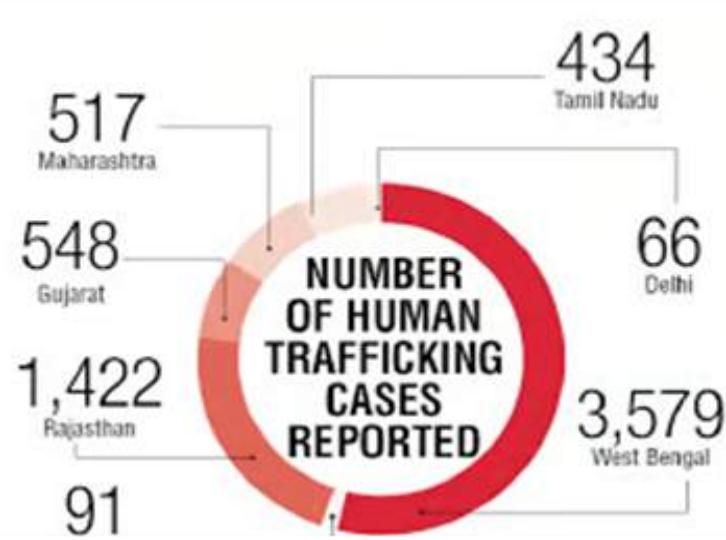
- Human Trafficking: In 2022, the number of human trafficking cases per million population in India was 1.63. It was an increase compared to the values recorded a year before. In the last few years, the occurrence of this severe offense has gone down significantly [9]. Fig no 3 shows that, State-wise data on human trafficking cases reported (watchdogs, activists, and police believe the actual numbers are much higher).
{"image_source":{"path":"images/de3a538c9aa44e2ac8f6f021002a6cf2d0c9c7d53367c38b8f2c8b0ab3abfa57.jpg"},"content":"","chart_caption":[],"chart_footnote":[{"type":"text","content":"Sources: Statista"}]}
Fig 2: No. of human trafficking cases in India from 2015 to 2022 (per million Population)
 Fig 3: State Wise human trafficking cases
- Forced Marriage: A sizable fraction of all women who are forced into marriage are little girls. According to Figure 3, the proportion of minor girls among all women abducted and kidnapped for forced marriage was 39% in 2017 (11431 minor girls out of 29 082 total victims). This percentage slightly increased to 40% (13429 minor girls out of 33 458 total victims) in 2018. But in 2019 it increased by nine percentage points to 49% (15 437 minor girl victims out of 31 781 total victims), and in 2020 it decreased by 33% points (11 638 minor girls' victims out of 25 359 total victims). Every second lady in our nation who was forced into marriage against her will and permission was a kid in 2021 when 45% of victims of forced marriage were minors.
{"image_source":{"path":"images/f2e5ac0d10d553ebd4f855ee5f3d5e8d13d1ee582e0c40f2c9536f8ede83af35.jpg"},"content":"","chart_caption":[],"chart_footnote":[{"type":"text","content":"Sources: Satyarthi "},{"type":"equation_inline","content":"^{10}"}]}
Fig 4: Percentage of minor girls amongst total women victims of forced marriage between 2017-2021 - Organ Harvesting: "Despite a legislative prohibition on kidney sales, they discovered ample evidence of impoverished individuals in India selling kidneys. Over 300 people who had sold a kidney were easily identified and interviewed in just one month. Selling a kidney was linked to a reduction in health status and did not provide the seller with long-term financial gain [11]. In 2002, 305 kidney dealers from Chennai were the subject of a study [12], with an average age of 35 years old and of the sellers being female. For 47 individuals, both partners had sold their kidneys. In 70% of the instances, middlemen were involved in the kidney trade. 96% of them had to sell their kidneys to pay off obligations related to marriage, food, rent, and other household and medical needs. The average money obtained for selling a kidney was 1,070 USD (range: 450-2,660 USD), compared to the amount promised of 1,410 USD (450-6,280 USD). At the time of the survey, 216 (74%) of the 292 individuals who had sold a kidney to pay off obligations were still in debt.
{"image_source":{"path":"images/5715d95896e1c2c52176610193204c21fe8e6cb00d8d84a09dd9c22eb7a2744d.jpg"},"content":"","chart_caption":[],"chart_footnote":[{"type":"text","content":"Source: CBCI"}]} {"image_source":{"path":"images/27d3541caf0dcddb1fd491d08b30fbf1bac61b9a9f6dd4504081fd4c71ff54ba.jpg"},"content":"","chart_caption":[{"type":"text","content":"Fig 5: Financial Aspects of Organ Trafficking"}],"chart_footnote":[]}
{"image_source":{"path":"images/33f21895a09eca1da249b236e872bd496472d7cce6f7c61c64490d7dff407b15.jpg"},"content":"","chart_caption":[{"type":"text","content":"Study conducted on 305 kidney sellers from Chennai in 2002"}],"chart_footnote":[{"type":"text","content":"Source: CBCI"}]}
Fig 6: Financial Aspects of Kidney Sellers of Organ Trafficking - Sex Trafficking: The third-biggest illicit sector in India is sex trafficking, a billion-dollar industry that is only growing. Twenty million people work as commercial sex workers in India; sixteen million of them are victims of sex trafficking (Reuters). There are more than 500 of these "placement agencies" in Delhi alone, according to the police, and they entice tribal women from Chhattisgarh and Jharkhand by marketing them as "black diamond" beauties.
According to the NCRB, a young girl in MP goes missing every 55 minutes; in 2021 alone, 9,407 girls and 36,000 women were reported missing. According to the NCRB, 41,621 women in Gujarat went missing between 2016 and 2020. According to Legal Services India, 3 out of 4 girls in India are forced into sex work every hour [13].
{"image_source":{"path":"images/fffce33a439a044da73fdea03ee5f08c2e04840725383f7f0edbb4d9cc6c88fc.jpg"},"content":"","chart_caption":[{"type":"text","content":"Types of Trafficking Cases"}],"chart_footnote":[{"type":"text","content":"Sources: NHTH "},{"type":"equation_inline","content":"^{14}"}]}
Fig 7: Types of Trafficking Cases. Venues for Sex Trafficking Fig 8: Venues for Sex Trafficking
| Residence-Based Commercial Sex | 618 |
| Online Ad, Venue Unknown | 185 |
| Illicit Massage/Spa Business | 182 |
| Escort/Delivery Service | 143 |
| Hostess/Strip Club-Based | 43 |
| Truck Stop-Based | 36 |
| Tourism | 5 |
| Other | 3,233 |
Agencies now have a harder time finding the operators because of the way that technology is changing sex trafficking and making it harder to track. Seldom are the traffickers' masterminds apprehended. According to advocates, the billion-dollar industry of human trafficking has become stronger in India over the past ten years.
- Sexual Exploitation: Women and children have been known to become victims of sexual assault. An estimated 50% of children in India experience some kind of sexual abuse, with 20% experiencing more severe forms, while 8.5% of women aged 15 to 49 experience some kind of sexual assault. Every youngster is impacted by violence. The children who are most at danger are those who are disabled or living with HIV/AIDS, those who are extremely poor, girls and boys receiving care in institutions, and children who are either separated from their families or who are in transit as migrants, refugees, or asylum seekers. Children who identify as members of marginalised social or ethnic groups, regardless of their sexual orientation or gender identity, are also more likely to experience violence. Even with these serious repercussions for their physical and mental health, the great majority of child victims never ask for or get treatment for their recovery. Furthermore, a new generation of victims is produced when children who see violence as they grow up are more likely to perpetrate it themselves as young adults and carers. Some incidents and natural things also about the children's exploitation are given below: 1. Violence in school 2. Violence in online 3. Direct Sexual violence 4. Child sexual exploitation and abuse in COVID-19.
- Child sexual abuse and exploitation in time of war 6. Sexual abuse in tribal areas. [15].
Almost one in three students in the 13–15 age range globally are victims of bullying.
One in four children under five, roughly 176 million live with a mother who has experienced intimate partner abuse. Approximately 300 million children, or 3 out of 4 children, are routinely subjected to physical discipline by their carers between the ages of 2 and 4.
{"image_source":{"path":"images/09f9da8b6f9269cc98b302a9ab57980594a7576117272deef0671f09820a9b73.jpg"},"content":"","chart_caption":[],"chart_footnote":}
Fig 9: No. of rape cases reported in India from 2005-2022
Over thirty-one thousand incidences of rape were reported in India in 2022. In comparison to the prior year, there was a minor decline in the number of rape cases. Even though there are a lot of rapes that go unreported in the nation, the topic frequently hits the headlines and occasionally sparks demonstrations in the streets. Even if there have been more complaints of rape in recent years, the victim—rather than the offender—continues to feel ashamed of the act [16]. According to Kant and Tiwary, tribal girls and women are typically trafficked by other members of their own tribes who have already made their way to the city and whom they blindly trust. They continued by saying that these victims almost never have the resources to report the harm they endure. Activist Gupta claimed, "They are frequently told that these traffickers paid their families a huge sum for them, but they don't know the local language and have never been to a big city." "They believe that they must
Fig.10: Venues for labour trafficking
| Domestic Work | 248 |
| Restaurant/Food Service | 122 |
| Illicit Activity | 35 |
| Begging Ring | 33 |
| Landscaping Service | 30 |
| Health Care | 22 |
| Housekeeping/Cleaning Service | 22 |
| Health & Beauty Services | 18 |
| Traveling Sales Crew | 17 |
| Arts & Entertainment | 16 |
| Professional/Scientific/Tech Services | 14 |
| Peddling Ring | 13 |
| Hostess/Strip Club | 6 |
| Mining, Quarrying, Oil/Gas Extraction | 4 |
| Other | 617 |
XI. DISCUSSION
In honour of Human Trafficking Awareness Month in January, NCMEC is thrilled to inform parents, guardians, and young people about child sex trafficking, including its definition, signs, and prevention techniques. According to our research, child sex trafficking occurs in every state, affecting children of all racial and gender identities. It is frequently carried out by loved ones, acquaintances, and even rivals who the child knows and trusts. Let's discuss what we see at NCMEC based on the over 19,000 complaints of potential child sex trafficking we received in 2022. Sadly, a lot of incorrect information is being circulated (2023) .
Vulnerable people are frequently the targets of human trafficking. Opportunists with a keen eye for seeing unfulfilled wants in young people are traffickers. Do you need to connect? amour? Was your sexual orientation or gender identity a reason for expulsion or rejection? Are you homeless and in need of food or housing? By establishing connections based on false trust, traffickers take advantage of these situations and vulnerabilities. "I spent the majority of my childhood being moved from foster home to foster home," one survivor stated. Initially, my trafficker was the one who enquired about me, and my aspirations, and he paid attention. It was the first time I felt like I was being truly noticed by anyone. What can you do to keep the young people in your life from experiencing this? Talking to people honestly and openly about who they are talking to, whether in person or online, is a crucial first step. Treat these discussions with kindness, inquisitiveness, and impartiality. NCMEC provides resources such as Netsmartz to initiate online and interpersonal safety dialogues. To help you learn more, we also provide free online CST 101 courses via NCMEC Connect. Every government can enable youth to thrive by meeting them where they are and teaching them how to recognize safe people and wholesome relationships. Every child is entitled to a safe childhood.
In Murajhar, in the Hojai district of Assam, six people—among them a BJP leader—have been taken into custody on suspicion of human trafficking, authorities announced on Wednesday. The major suspect, Parbina Begum, Bilal Uddin, Afzal Uddin, Nasir Hussain, BJP leader Abdul Karim, and Ajmal Hussain have all been identified as the individuals who were arrested.
After being presented at the Sankardev Nagar district court in Hojai, the arrested were incarcerated. The other four were taken to judicial detention for additional interrogation, while Begum and her brother Ajmal Hussain were placed under two days of police custody. Representative sex worker soliciting at a car window. Three of the four young women entering sex work in India every hour are doing so against their will. [18].
Undoubtedly, Madhya Pradesh holds a prominent position in the list of states with significant trafficking incidence. Ironically, My Home is a hotel/bar that was raided in December 2019 by Ruchi Vardhan Mishra, the DIG (administration) of Bhopal, along with a team of police officers. Jitu Soni, a local goon, and his son Amit Soni were in charge of it. According to Mishra, "We were able to rescue 67 women, girls, and seven small boys who had been brought there from West Bengal, and I suspect some of them were from Bangladesh." In front of potential buyers, the women were forced to dance while wearing skimpy attire. These girls were being videotaped by Soni's goons, who threatened to reveal them to their relatives in the countryside if any of them attempted to flee." In their judging and traditional environment, this would be considered social suicide.
There are a lot of young females in West Bengal who are also drawn into prostitution. 8,478 girls went missing in the state in 2021, according to the NCRB. Unfortunately, when these girls disappear, the police do not report these cases under Section 370 of IPC as cases of trafficking, according to Rishi Kant, whose NGO Shakti Vahini has been actively involved in rescuing trafficked girls for over 20 years. They file them under the Missing Persons and Kidnapping Sections 363 and 366 of the Indian Penal Code. West Bengal only recorded 15 incidents of women being trafficked in 2021, but the real number is likely much higher.[18]
The Bombay High Court, in refusing bail to an individual detained for the abduction of a 10-month-old infant, declared that child trafficking is among the most egregious and severe types of exploitation, endangering not just the child and their family but also the fundamental foundation of society. In August 2021, as the infant was sleeping with her mother on a pavement in the Bandra suburban area, she was abducted. The police claim that Parandam Gudenti, the accused, sold the infant for Rs 1.05 lakh to a Telangana couple without children.
On March 14, a single bench led by Justice Anuja Prabhudessai observed that those who live on pavements, especially homeless children, are the most marginalised and vulnerable members of society and are therefore more likely to be victims of abuse and exploitation. "Child trafficking is one of the most serious and heinous forms of exploitation, which not only impacts the child and the family but threatens the very fabric of the society," the court added.
The court stated that, given the seriousness of the offense, it was hesitant to grant the accused bail.[19]
The Minister of State in the Ministry of Health and Family Welfare (SMT. ANUPRIYAPATEL) should respond to (a) through (e). The Transplantation of Human Organs and Tissues Act, 1994 stipulates that each State shall designate a suitable authority to investigate any allegation or violation of any of the act's or its rules' regulations. State subjects are "Health" and "Law & Order." Therefore, taking action to prevent and restrict organ trafficking, as well as to monitor it, is essentially the responsibility of the State Government and UT Administration. According to the Code of Civil Procedure, 1908 (5 of 1908), the State Appropriate Authority will have all the authority of a civil court to hear a lawsuit for this legislation. The concerned State or UT is notified of any complaints about organ trafficking that this Ministry receives so that necessary action can be taken. This Ministry no longer keeps the relevant data means the data in this regard is not maintained in this Ministry.[21]
Hypothesis
India is thought to be a center for human trafficking, yet the Indian government may not give the issue any attention. To prevent the trafficking and sexual exploitation of women and children, the Immoral Traffic Interference Act was first updated in 1956. Nevertheless, the Act does not provide a precise definition of "trafficking." The International Organisation Convention against Multinational Gangland was implemented in 2003 by an Asian nation. The Convention includes three protocols, one of which is the Protocol to Stop, Suppress, and Penalise Trafficking in Persons, Particularly of Girls and Children.
: In India, there are no appropriate laws and regulations in place to stop child trafficking.
: Stateless People are more likely to be exploited because they are less competent than citizens in solving issues and resolving (legal) conflicts.
: Stateless people are more likely than citizens to have root causes of human trafficking, which makes them more likely to become victims of the trafficking network.
: Perceived corruption can be used by corrupt traffickers as a means of victim recruitment and control. Because they have personally encountered or heard of corruption in their native countries, victims might not examine these threats.
: Although it is frequently linked to forced prostitution, human trafficking can also happen in other industries, including construction, tourism, agriculture, domestic work, transportation, and meat processing.
: The hypothesis proposed a relationship between victim blaming score and human trafficking myth, belief, and correlation.
: Sexual assault can result from any offense and because women frequently identify crimes with sexual assault, fear of sexual assault can account for high levels of fear of crime among women. The "shadow of sexual assault hypothesis" is the term for this concept.
XII. CONCLUSION
Child trafficking is a rapidly expanding network that must be eradicated. The government must design, assess, and put into effect legislation and other measures to deter crime with the assistance of NGOs. It is the exploiters who need to pay the price, not the abused. The Act of 2012, Protecting Children from Sexual Offences (POCSO): The purpose of this act is to safeguard minors who have committed sexual offenses against adults during the investigative and legal processes. Abolition of the Bonded Labour System Act of 1976: This law forbids bonded labour, which is frequently connected to the trafficking of children.
In India, child trafficking is a horrifying reality that results in many children being abused and exploited. The main causes of child trafficking include social injustices, poverty, ignorance, the need for inexpensive labour, and sexual exploitation. The Indian government has acted against this horrible crime by passing laws and regulations. Laws and initiatives may exist, yet the frequency of crimes related to human trafficking is concerning. Increasing awareness of this issue and improving community-based connections are imperative. It is necessary to act by implementing programs for community-based rehabilitation and reviewing the current legislation to close any gaps. To combat child labour caused by poverty, additional job possibilities for families must be created, allowing kids to attend school. Technical aid and cooperation must be improved to safeguard victims, bring criminals to justice, and promote international cooperation. Good data interchange is essential between governments at home and agencies like the police and non-governmental organisations and other countries. In general, strengthening the capacities of law enforcement organisations and non-governmental organisations involved in this field is essential to counter the menace of human trafficking effectively. India's child population suffers long-term and several reasons to the effects of abuse. A safer and more encouraging environment for vulnerable children can be created by stakeholders working together to adopt a holistic approach that integrates policy advocacy, intervention, and prevention. It is feasible to lessen the effects of child maltreatment and preserve each Indian child's rights and dignity by working together.
Conflict of Interest
The authors declare no conflict of interest.
Ethical Approval
Not applicable
Data Availability
The datasets used in this study are openly available at [repository link] and the source code is available on GitHub at [GitHub link].
Funding
This work did not receive any external funding.
References
Cite this article
Related Research



Special Issue
Launch a focused special issue to highlight research, emerging trends, and expert insights in your academic field.
