




IntelliPaper
Abstract
Purpose of study: to study the possible relationship between in vitro fertilization, the use of ovulation stimulation drugs and the risk of developing uterine cancer in women with infertility.
Material and methods: literature search for a systematic review was carried out in the bibliographic databases Medline, ClinicalKey, Google Scholar, Embase, The Cochrane Library, eLIBRARY for the period 1999-2022. Publications were searched using keywords defined according to the PICO principle (P = population or patients, I = intervention, C = comparison and O = outcomes): female, women, infertility, infertility treatment, in vitro fertilization, IVF, assisted reproductive technologies, ART, ovarian stimulation, ovarian hyperstimulation, clomiphene citrate, hCG, hMG, tamoxifen, uterine, endometrial, cancer, carcinoma neoplasm, uterine neoplasms. The following SQL operators were used during the search: AND, OR.
Results: As a result of the search, 37 representative publications were found, during the selection process 8 studies were selected for meta-analysis.
Conclusion: A systematic review and meta-analysis has demonstrated the ambiguity of the design and results of studies on the possible relationship of uterine cancer and methods of assisted reproductive technologies published to date. The problem is very relevant due to the high incidence of infertility and the increase in the incidence of cancer of the female reproductive organs. The conducted studies confirm the impossibility to evaluate in isolation the carcinogenic effect of ovulation inducers or in vitro fertilization methods without adjusting for the infertility factor, as well as risk factors for uterine cancer. There remains a high need for more research as well as for the safety profile of infertility treatments in relation to long-term cancer risks.
Explore Digital Article Text
I. INTRODUCTION
In recent years, infertility has become one of the most important problems affecting young couples around the world . In our country, the incidence of infertility in marriages ranges from 17.2% - 24%, depending on the region . In 25.2% - 42.3%, the cause of infertility is uterine factor. In the structure of diseases of this group in Russia, chronic endometritis prevails, its prevalence is 2 times higher than that of other pathologies, and in patients with unsuccessful attempts at in vitro fertilization (IVF), its frequency is the highest (52–67.7%) . Almost 10% of the population or one in seven couples in developed countries face difficulties in conceiving naturally and are forced to resort to infertility treatment methods using assisted reproductive technologies (ART) . Since 1995, the National Register of ART results has been maintained in Russia, according to which in 2003, 1830 children were born through ART (0.12% of all births), in 2011 - 14,533 children (0.81% of all births), in 2014 - 24,707 children (1.27% of all births); in 2015 - 30,039 children (1.5% of all births) [6]. By 2017, there had been more than 160,000 such children in Russia, and their number is steadily growing [10]. Worldwide, the number of children born with the help of assisted reproductive technologies reaches seven million [11]. The main factor contributing to this growth is the postponement of childbearing due to the desire for a successful career and other socio-economic factors, such as the financial and educational level of people trying to conceive [1, 12-13].
As a result of studying the dynamics of detection of uterine corpus cancer (UCC) in Russia, the following was found: in the period 1991 – 2007, the absolute number of newly diagnosed cases increased from 11,300 to 18,300 cases, and the proportion in the incidence structure increased from 5.8% to 7.1% [14]. In the dynamics of subsequent years (2007-2017), the incidence of UCC increased from 24 per 100,000 to 33.1 per 100,000 women. According to 2017 data, uterine cancer is in third place (7.8%) [15]. From the very beginning of the use of ART, there has been constant discussion among the scientific community about the long-term effects of infertility treatment and, mainly, about their potential impact on the subsequent risk of developing cancer [12-13].
Many of the etiological factors in the development of reduced fertility, such as genetic predisposition, environmental, physiological factors, as well as obesity, excessive smoking, anovulation, endometriosis, and the absence of childbirth, in addition to showing a confident trend towards spread, are also independent factors of carcinogenesis . Moreover, it is known that assisted reproductive technologies also involve the use of pharmacological drugs and procedures that have a damaging effect on the main hormone-producing organ - the ovaries. Such trauma during oocyte retrieval and induction of ovulation leads to an increase in the level of sex hormones such as estrogen, progesterone and gonadotropins . The role of hormonal status in the development of malignant neoplasms of the female reproductive system described in the literature suggests an assessment of the significance of this factor as an integral part of assisted reproductive technologies [7]. Thus, in view of the increase in the prevalence of oncological diseases of the female reproductive system around the world, as well as the global scale of the problem of reduced fertility, it is extremely relevant today to study the possible relationship between various ART methods and the development of oncological diseases in women [17].
II. PURPOSE OF STUDY
To evaluate the existence and nature of the association between infertility treatment, including in vitro fertilization and ovulation inducers used, and the development of endometrial cancer through a systematic review and meta-analysis of retrospective studies.
III. MATERIALS AND METHODS
The review was written according to the PRISMA checklist.
This work was carried out in accordance with the Preferred Reporting Items for Systematic Reviews and Meta-Analyses (PRISMA) principles. Literature search was carried out in the bibliographic databases Medline, ClinicalKey, Google Scholar, Embase, The Cochrane Library, eLIBRARY. The estimated publication period covered 24 years (1999-2022). Publications were searched using keywords defined in accordance with the PICO principle (P - population or patients, I - intervention, C - comparison and O - outcomes): female, women, infertility, infertility treatment, in vitro fertilization, IVF, assisted reproductive technologies, ART, ovarian stimulation, ovarian hyperstimulation, clomiphene citrate, hCG, hMG, tamoxifen, uterine, endometrial, cancer, carcinoma neoplasm, uterine neoplasms. The following SQL operators were used during the search: AND, OR. The search was based on the titles and texts of the works. Among the works found, the "related articles" tool was used, as well as the analysis of bibliographic references of related works. According to the search algorithm, 37 representative publications were found during the reporting period and 8 studies were selected for meta-analysis during the selection process (Fig. 1).
The review included all comparative studies of groups with and without in vitro fertilization. Works that did not contain data on the development of malignant neoplasms of the uterine body were excluded from the study; data on the development of malignant processes of other localizations, including the cervix, were also excluded.
Data extraction was performed according to the following structure: year of publication, first author's initials, study design, study groups, cancer rate. Information from the studies, if available, was also extracted and evaluated pertaining to parity (parous/nulliparous), IVF features: number of cycles, ovulation induction.
The main outcome assessed was the development of cancer of the body of the uterus, endometrium in groups with and without IVF.
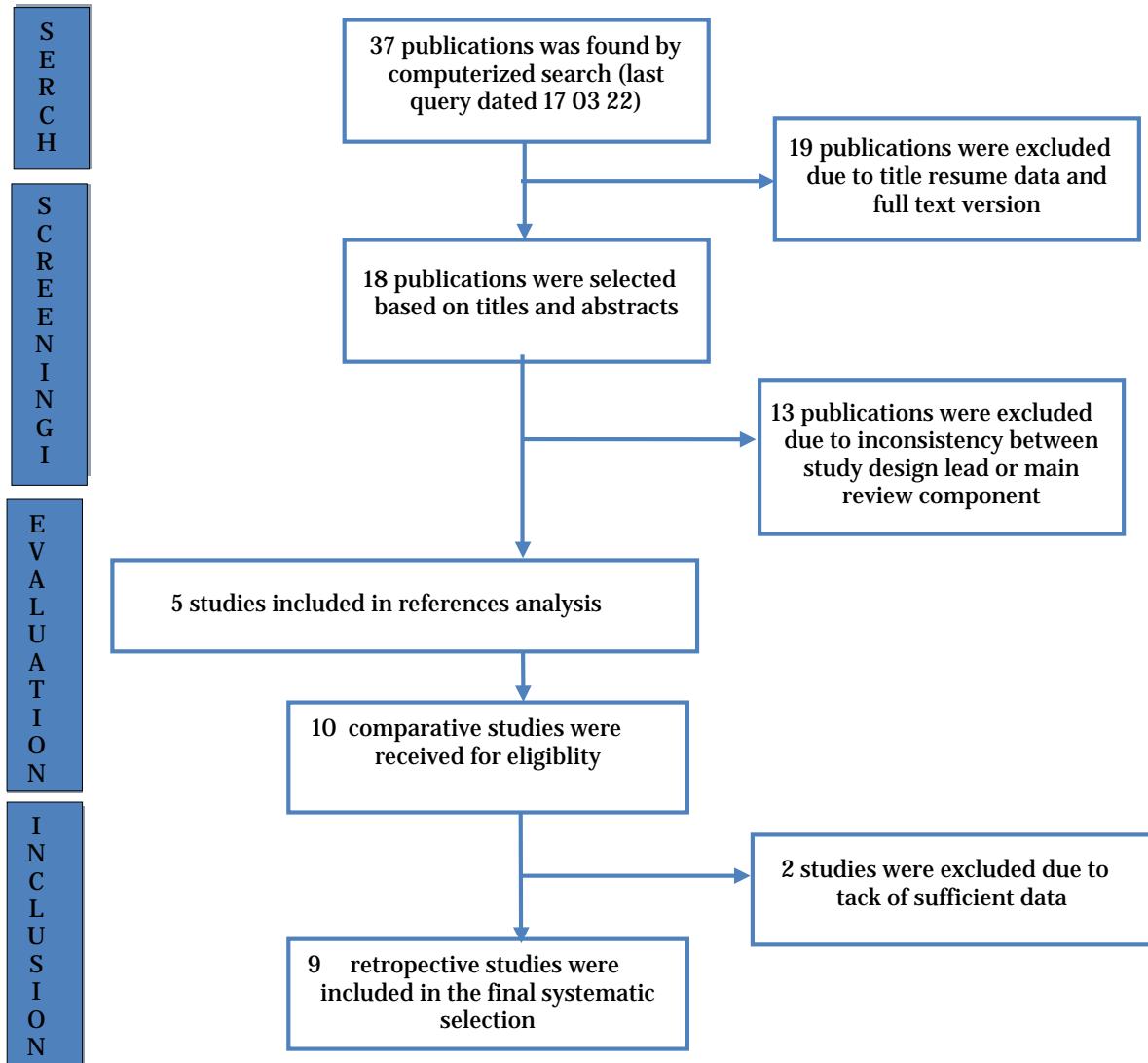 Fig. 1: Methodology for Searching and Selecting Studies for Meta-Analysis
III. RESULTS
Most of the studies examining the risk of developing endometrial cancer in the IVF group of females did not find a significant increase in risk . For example, Brinton L.A. et al. report no association between fertility treatment and endometrial cancer risk (relative risk, RR = 1.25, 95% confidence interval, CI (0.55–2.84)). Subgroup analysis revealed a slight increase in this risk in the cohort of patients with 1–3 IVF cycles (RR = 1.94, 95% CI (0.73–5.12)). Moreover, there were no significant associations for the risk of EC development due to the use of a gonadotropin-releasing hormone analogue (GnRH) (RR = 1.39, 95% CI (0.54–3.55)), clomiphene (RR = 1.01, 95% CI (0.42–2.42)) or progestogen (RR = 1.24, 95% CI (0.53–2.87)) [18]. Similar conclusions were reached by Kristiansson P. et al., who, when comparing groups of patients with and without IVF (647,704 females), assessed the carcinogenesis of the organs of the female reproductive system and mammary glands of patients in the aggregate, and also presented data on the development of malignant tumors of the uterine body. They summarized that, in accordance with the results, it is impossible to declare a significant increase in the risk of developing malignant neoplasms, including the endometrium, in postmenopausal women who gave birth using IVF [19].
Williams C.L. et al. present follow-up data (mean 8.8 years) of 255,786 women who underwent in vitro manipulations with human oocytes, spermatozoa or embryos in order to achieve reproductive function. In a subgroup of patients with malignant tumors of the uterine body, their morphological characteristics were determined in 92% as epithelial, and in 70% as endometrioid. The authors concluded that the risk of developing uterine cancer is not increased compared to the calculated expected value for this population (standardized incidence rate (SIR) - 1.12, 95% CI (0.95 - 1.30)). However, an increased risk of cancer of this localization is associated with ovulation disorders, while multiple births, on the contrary, significantly reduce this risk. In this study, the number of IVF cycles did not show a significant correlation with the risk of developing uterine carcinoma, as well as age at the time of using the ART method and long-term consequences [20]. Yli-Kuha, A.N. et al. report 4 and 2 cases of uterine cancer among 9175 patients in the IVF group and 9175 patients in the control group, respectively, which also indicates the absence of a significant association [24].
Reigstad M.M. et al. conducted a study among 1,353,724 patients included in this study, showed that the risk of endometrial cancer was slightly increased in women who had a history of childbirth and underwent ART in the volume of controlled ovarian hyperstimulation with a further IVF procedure, which, however, was not supported by statistically significant results (1.62; 95% CI (0.70 - 3.85)). There was no increased risk among women with no history of delivery (0.39; 95% CI (0.15 - 1.03)). The protocols for controlled ovarian hyperstimulation in the patients of this study varied markedly, but mainly included the following three drugs: GnRH analogs (agonists or antagonists), gonadotropins (follicle-stimulating hormone or human menopausal gonadotropin), and human chorionic gonadotropin (hCG). The results of the study also demonstrate that the risk of endometrial cancer is increased in women receiving clomiphene citrate (2.91; 95% CI (1.87 - 4.53)), while the risk level peaked in nulliparous women (4.49; 95% CI (2.66-7.60)) (p = 0.04). In the group of women who had childbirth, with more than 6 cycles of ovulation stimulation (4.68; 95% CI (1.74 - 12.6)) the statistical significance of the risk was especially high [12]. At the same time, according to Kessous, R. et al., in patients with a history of IVF, the incidence of ovarian and uterine cancer was significantly higher compared to patients in the ovarian stimulation group or without infertility treatment at all [25].
IV. META-ANALYSIS
The meta-analysis of studies was conducted on three outcome measures depending on the study design: 1) the incidence of uterine cancer in the IVF and non-IVF groups 2) the standardized incidence rate (SIR) of uterine cancer in the IVF group 3) the hazard ratio score (HR) development of endometrial cancer in the IVF group.
Total (95% CI)
| Study or Subgroup | ЭКО | Без ЭКО | Weight | Risk RatioM-H, Fixed, 95% CI | ||
| Events | Total | Events | Total | |||
| Kessous, R. 2016 | 3 | 1149 | 55 | 104882 | 21.6% | 4.98 [1.56, 15.89] |
| Yli-Kuha, A. 2012 | 4 | 9175 | 2 | 9175 | 36.2% | 2.00 [0.37, 10.92] |
| Kristiansson, P. 2006 | 1 | 8716 | 87 | 640059 | 42.3% | 0.84 [0.12, 6.06] |
| Total (95% CI) | 19040 | 754116 | 100.0% | 2.15 [0.90, 5.17] | ||
{"image_source":{"path":"images/6e67a1fc8bf6764c74467a89f167d45bddcf25b02e58afaaedadd98a2932b480.jpg"},"content":"","chart_caption":[{"type":"text","content":"(∃KO - IVF, 6e3 ∃KO- non-IVF)"},{"type":"text","content":"Fig. 2: Tree Diagram. Comparative Analysis of the Incidence Of Uterine Cancer In The Ivf Group And The Group Without Ivf In Studies 1999-2022"}],"chart_footnote":[]} In total, according to the pooled data from all three studies (Fig. 2), the incidence of uterine cancer was 0.04% (8 out of 19040) in the IVF group and 0.19% (144 out of 754116) in the non-IVF group. In accordance with the Cochran Q-test, the data are homogeneous (p>1), the I indicator shows a moderate degree of heterogeneity. Based on the data, a fixed effect model is used. According to the results, in general, there were no statistically significant differences in the incidence of uterine cancer in both groups - RR 2.15 [0.90, 5.17].
| Study or Subgroup | SIR | SE | Weight | IV, Random, 95% CI |
| Williams, C.L. 2018 | 1.12 | 0.0867 | 41.1% | 1.12 [0.95, 1.29] |
| Luke, B. 2015 | 0.76 | 0.0969 | 39.3% | 0.76 [0.57, 0.95] |
| Venn, A. 1999 | 1.09 | 0.3265 | 12.4% | 1.09 [0.45, 1.73] |
| Tsafrir, A. 2019 | 1.12 | 0.4592 | 7.2% | 1.12 [0.22, 2.02] |
| Total (95% CI) | 100.0% | 0.97 [0.71, 1.24] | ||
| Heterogeneity: Tau2 = 0.04; Chi2 = 7.93, df = 3 (P = 0.05); I2 = 62% | ||||
| Test for overall effect: Z = 7.33 (P < 0.00001) | ||||
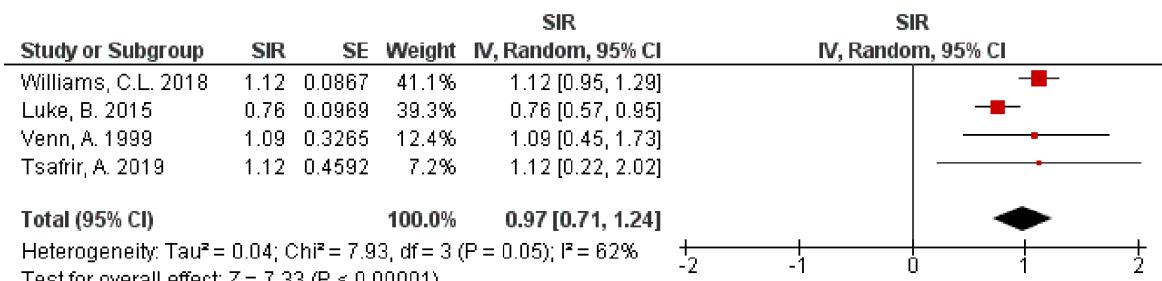
{"image_source":{"path":"images/09e13fde5fdfcaec99cf9b9c39ac0a8daa1c538eaf250274020f92a2b85229b0.jpg"},"content":"","chart_caption":[{"type":"text","content":"Fig. 3: Tree Diagram Comparative Analysis of the Standardized Incidence Rate (SIR) for Uterine Cancer in the IVF group in Studies 1999-2022"}],"chart_footnote":[]}
This analysis combined the results of four studies (Fig. 3), the standardized index of detection (SIR) of malignant neoplasms of the uterine body after IVF was used as the estimated indicator. Overall, the scores from the various individual studies were close to parity for the overall risk of malignant neoplasms of the uterine body.
Heterogeneity: , df = 1 (P = 0.13);
According to the Cochran Q-test, the data are heterogeneous (p\<1), while the index shows a significant degree of heterogeneity ( ). According to the data, a random effects model is used. The pooled analysis showed no statistically significant differences, SIR 0.97 [0.71, 1.24].
{"image_source":{"path":"images/154d1e7e5a09e8e7f9bfdfb8b6ab1acb58a1f4346901df400b6cade9f1cb6c23.jpg"},"content":"","chart_caption":[],"chart_footnote":[]}
Figure 4: Tree Diagram Comparative Analysis of Hazard Ratio (HR) Indicators of Endometrial Cancer Development in the IVF Group in Studies 1999-2022 In total, according to the combined data of the Cochran Q-test, the data are heterogeneous two studies (Fig. 4), in accordance with the data of , the indicator shows a significant degree of heterogeneity ( ). In this case, according to the accepted methodology, it is necessary to take into account, first of all, the data of the Chi-square test; accordingly, a model with a fixed effect is chosen. According to the results obtained, in general, there were no statistically significant differences in the hazard ratio (HR) of endometrial cancer development in the case of IVF - HR 2.15 [0.90, 5.17].
V. INTERPRETATION
Common fertility treatments may include the use of antiestrogen drugs to induce ovulation, such as clomiphene citrate or tamoxifen, either alone or as part of IVF cycles. Commonly used drugs also include human menopausal gonadotropins, recombinant follicle-stimulating hormone, and human chorionic gonadotropin. In a comparative cohort study involving 19,000 females, after a 17-year follow-up period, data were obtained in favor of the safety of the IVF method. The risk of developing endometrial cancer after ovarian stimulation according to IVF protocols was comparable with other methods that are used to treat infertility (SIR=1.41; 95% CI=0.77-2.37, p>0.05) [8]. Studies on the effect of these drugs on the incidence of endometrial cancer when used alone and as part of assisted reproductive technologies provide conflicting data, and study designs often do not allow us to speak with sufficient accuracy about the clinical structure of developing neoplastic processes, as well as about the representativeness of the data due to the small number and heterogeneity of the examined cohort of patients [8, 13, 25-30]. For example, some works found by the authors, unfortunately, do not structure the data obtained in accordance with the histological classification of uterine tumors, limiting themselves to division into neoplasms of the body and cervix. Limiting factors were also a small number of outcomes, short follow-up and early withdrawal of patients from the study.
Thus, the study of a possible relationship between the treatment of infertility in women and the development of malignant neoplasms of the endometrium is extremely relevant for further study, taking into account the shortcomings of studies that are available for evaluation today [29]. Complicating the analysis of the situation is the fact that even infertility itself is associated with an increased risk of developing endometrial cancer (odds ratio, OR = 1.22; 95% CI: 1.13–1.33), as well as the absence of childbirth in history is a risk factor for the development of cancer of this localization (OR = 1.76; 95% CI: 1.59–1.94) [30].
Definitely, changes in hormonal status are considered as an important risk factor for EC. It is hormone-dependent type I endometrial carcinomas that are more common. [8,31]. In view of the similarity of the chemical properties of clomiphene citrate and tamoxifen, various authors actively discuss their pathogenetic relationship with endometrial cancer [26, 27]. However, opinions differ, and the data obtained do not allow us to speak unambiguously about the presence of an association.
Thus, several cohort studies have demonstrated an increase in the incidence of endometrial cancer among patients treated with clomiphene citrate . Moreover, it is discussed that the risk depends on the dose of the drug, the number of cycles of stimulation, the incidence of malignant neoplasms of the endometrium was significantly higher among women who used clomiphene citrate for six cycles or more .
It was also found that the risk of endometrial cancer was significantly higher in women treated with clomiphene citrate and human menopausal gonadotropin compared with the general population (SIR=5.0, 95% CI=2.15-9.85, p\<0.05) [32]. In contrast, most studies have not confirmed these results and have not demonstrated a significant increase in the incidence of subsequent endometrial cancer in women treated in the past with clomiphene citrate, gonadotropins and IVF [31, 26.27]. In a retrospective study of 12,193 infertile women over a full 26 years of follow-up, there was no significant difference in risk of endometrial cancer with gonadotropins (RR = 1.34, 95% CI = 0.76). -2.37, p>0.05), clomiphene citrate (HR=1.39, 95% CI=0.96-2.01, p>0.05) or co-administration (HR=1.77, 95% CI=0.98-3.19, p>0.05) compared with the control group [18]. In addition, according to a large cohort study of 29,700 women, the incidence of uterine cancer was not higher than expected in women in the IVF group compared to the group of women who did not receive fertility treatment (SIR = 1.09, 95% CI = 0.45-2.61, p > 0.05) [21]. Due to the fact that the control group, which is women of the general population, may not be representative for comparison, it is legitimate to consider patients with infertility who do not plan pregnancy as controls [13, 27]. Interesting data is provided by a meta-analysis of five studies (776,224 women with infertility) that did not reveal an increased risk of developing endometrial carcinoma between groups of women, after treatment and without infertility treatment. In accordance with the data obtained, it is assumed that drug therapy for infertility can reduce the incidence of malignant neoplasms of the uterus from 2.22% to 0.14%. It was also found that the incidence of uterine neoplastic processes was statistically reduced in the group using IVF protocols (OR = 0.38; 95% CI = 0.30-0.47, p < 0.05) [33]. A meta-analysis combining 15 studies using the general population as a control group demonstrated a 1.8-fold increase in the risk of endometrial cancer in 1.7 million patients who underwent ovulation stimulation [27]. On the other hand, in the same systematic review, when the study group was compared with an untreated cohort of patients with infertility, there was no definite association between uterine malignancies and exposure to any drug [27].
Thus, the literature data make it possible to consider the ambiguous results of assessing the risk of developing endometrial cancer in patients in the IVF group. The structure of studies in the vast majority of cases does not allow accurately stratifying patients into subgroups depending on the therapy, dosage of drugs and the number of stimulation cycles and therefore determining the contribution of the pharmacological effects of drugs to the overall structure of the incidence of uterine cancer. There are a number of studies focused on assessing the direct impact of various pharmacological methods of infertility treatment on the risk of developing oncological processes in the organs of the female reproductive system, however, outside the context of in vitro fertilization methods, which is beyond the scope in Buryat republic. Fundamental and Clinical of our study. Studies containing information on the available factors of infertility (male factor, female: pathology of the fallopian tubes, ovaries, endometriosis, etc.), for the most part, present these data as an introductory descriptive characteristic, which does not allow assessing the contribution of these factors to oncological risk.
VI. CONCLUSION
The data presented by various studies are heterogeneous and ambiguous. The structure of the conducted studies in some cases does not include detailed information about the study groups and does not allow us to speak accurately enough about the clinical structure of developing malignant neoplasms. The results of using various approaches to infertility treatment, protocols of assisted reproductive technologies described by the authors indicate the presence of certain risk factors in this category of patients, and the status of reduced fertility in itself is associated with an increased risk of developing malignant neoplasms of the uterus. Further research will allow clarifying and stratifying the risk of developing uterine cancer in the context of the complex structure of applied infertility treatment protocols, including in vitro fertilization, with an assessment of the specific contribution of each ovulation inducer individually or in combination with other methods that are used to overcome female infertility.
Funding: The study was performed without external funding.
Conflict of interest: The authors declare no conflict of in-terest.
Compliance with patient rights and principles of bio ethics. All patients gave written informed consent to participate in the study.
All authors made a significant contribution to the study and the article preparation, as well as read and approved the final version before its publication.
Conflict of Interest
The authors declare no conflict of interest.
Ethical Approval
Not applicable
Data Availability
The datasets used in this study are openly available at [repository link] and the source code is available on GitHub at [GitHub link].
Funding
This work did not receive any external funding.
References
Cite this article
Related Research



Special Issue
Launch a focused special issue to highlight research, emerging trends, and expert insights in your academic field.
