





IntelliPaper
Abstract
In Brazil, it is estimated that 2 million people live with dementia syndromes, with a tendency to triple by 2050, according to the Global Burden of Disease. At the same time, Vigitel found that 20.8% of the population will consume alcohol excessively in 2023. In view of this, it is important to elucidate the relationship between alcohol and dementia in the elderly. This study aims to assess the relationship between alcohol consumption throughout life and the impact on neurocognition in the elderly. Using the descriptors "aged", "dementia" and "ethanol" with the operator AND in the PubMed, VHL and Cochrane databases, associated with the inclusion criteria of publication in the last 20 years, availability in full and English, Portuguese or Spanish language, 9 studies were selected, after excluding duplicates and analyzing titles and abstracts. Of the studies reviewed, 4 found an association between light to moderate alcohol consumption and a lower risk of developing and progressing dementia, while 2 had inconclusive findings.
With regard to high consumption, 3 studies found no statistically significant relationship with dementia, and 4 associated this amount of alcohol with a higher risk of developing and progressing the condition. This review suggests that light to moderate alcohol consumption may be associated with a lower likelihood of developing or progressing to dementia, while findings on the effects of high consumption are divergent, yet most recent evidence points to the pathological role of this amount of alcohol consumption on cognition. The need for more research is highlighted, especially with samples from the Brazilian population, since none of the studies found were Brazilian.
Explore Digital Article Text
In Brazil, it is estimated that 2 million people live with dementia syndromes, with a tendency to triple by 2050, according to the Global Burden of Disease. At the same time, Vigitel found that 20.8% of the population will consume alcohol excessively in 2023. In view of this, elucidating the relationship between alcohol and dementia in the elderly is relevant. This study aims to assess the relationship between alcohol consumption throughout life and the impact on neurocognition in the elderly. Using the descriptors "aged", "dementia" and "ethanol" with the operator AND in the PubMed, VHL and Cochrane databases, associated with the inclusion criteria of publication in the last 20 years, availability in full and English, Portuguese or Spanish language, 9 studies were selected, after excluding duplicates and analyzing titles and abstracts. Of the studies reviewed, 4 found an association between light to moderate alcohol consumption and a lower risk of developing and progressing dementia, while 2 had inconclusive findings. With regard to high consumption, 3 studies found no statistically significant relationship with dementia, and 4 associated this amount of alcohol with a higher risk of developing and progressing the condition. This review suggests that light to moderate alcohol consumption may be associated with a lower likelihood of developing or progressing to dementia, while findings on the effects of high consumption are divergent, yet most recent evidence points to the pathological role of this amount of alcohol consumption on cognition. The need for further research is highlighted, especially with samples from the Brazilian population, since none of the studies found were Brazilian.
In Brazil, it is estimated that 2 million people live with dementia syndromes, with a tendency to triple by 2050, according to the Global Burden of Disease. At the same time, Vigitel found that 20.8% of the population will consume alcohol in excess in 2023. In view of this, it is important to clarify the relationship between alcohol and dementia in the elderly. This study aims to assess the relationship between alcohol consumption throughout life and the impact on neurocognition in the elderly. Using the descriptors "aged", "dementia" and "ethanol" with the operator AND in the PubMed, VHL and Cochrane databases, associated with the inclusion criteria of publication in the last 20 years, availability in its entirety and English, Portuguese or Spanish language, 9 studies were selected, after excluding duplicates and analyzing titles and abstracts. Of the studies reviewed, 4 found an association between light to moderate alcohol consumption and a lower risk of developing and progressing dementia, while 2 had inconclusive results. With regard to excessive alcohol consumption, 3 studies did not find a statistically significant relationship with dementia, while 4 associated this amount of alcohol with a higher risk of developing and progressing the disease. This review suggests that light to moderate alcohol consumption may be associated with a lower likelihood of developing dementia or progressing to it, while the findings on the effects of high consumption are divergent, although the most recent evidence points to the pathological role of this level of alcohol consumption on cognition. There is a need for further research, especially with samples of the Brazilian population, since none of the studies found were Brazilian.
I. INTRODUCTION
Dementia is a clinical syndrome characterized by the progressive decline of cognitive functions, affecting memory, language, executive functions, abstraction, judgment and other essential skills for everyday life (12).
In Brazil, it is estimated that around 2 million people live with some form of dementia, while globally, this figure rises to 55 million, and the WHO estimates that by 2050, there will be 139 million people living with this syndrome(9). In this context, ReNaDe 2023(3), a Brazilian report on dementias, reiterates the importance of the issue and provides new information on the Brazilian context. This report indicates that only 20% of dementia cases in Brazil are properly diagnosed, which is a challenge even for wealthier countries, and may be related to factors such as: lack of knowledge among the general population, lack of training on the subject among health professionals, and lack of existing services that adequately meet the needs of people with dementia and their caregivers.
At the same time, excessive alcohol consumption was found in 18.4% of the Brazilian population in 2021 by Vigitel, with a dose of alcohol considered to be 14g of pure ethanol, and alcohol abuse from 4 doses on the same occasion for women and 5 for men. In addition, the Vigitel 2023 report shows a worrying increase in alcohol abuse in Brazil, especially among women. In the general population, the rate rose from 18.4% to 20.8% between 2021 and 2023. Among men, the increase was from 25% to 27.3%, while among women, the increase was even greater, from 12.7% to 15.2%. Comparing 2023 with 2010, there is a significant increase in abusive consumption among women, while among men there is a more stable scenario. This growth among women is mainly responsible for the general increase in consumption over the period and deserves special attention (4).
The 2022 Demographic Census showed a significant increase in the Brazilian population aged 65 and over, equivalent to 10.9% of the country's total population, corresponding to an increase of 57.4% compared to 2010 (2). This change, driven by a fall in fertility and an increase in life expectancy, has transformed the country's age pyramid, with fewer children and young people and more adults and elderly people. This increase has been observed more rapidly in the South and Southeast regions of the country (2).
In this context, elucidating the relationship between alcohol and dementia in the elderly is a highly relevant issue for public health. Therefore, the question to be clarified is whether alcohol consumption throughout life is a predisposing factor and/or a worse prognosis for dementia in the elderly population, whether by increasing, reducing or not interfering in the development of the disease.
In short, the aim of the study was to assess the relationship between alcohol consumption throughout life and its impact on neurocognition in the elderly.
II. METHODOLOGY
A literature review was carried out on January 28, 2024, using the descriptors "Aged", "Dementia" and "Ethanol" with the Boolean operator AND in the PubMed, VHL and Cochrane databases, resulting in 67 articles. The inclusion criteria adopted were publication in the last 20 years, availability in full and the language being English, Portuguese or Spanish, and after excluding duplicates, 17 publications remained. After analyzing the titles and abstracts, 6 studies were selected that were appropriate to the topic. Three articles used in the Mewton et. al (2022) meta-analysis, found by the previously described research, were subsequently added to the review.
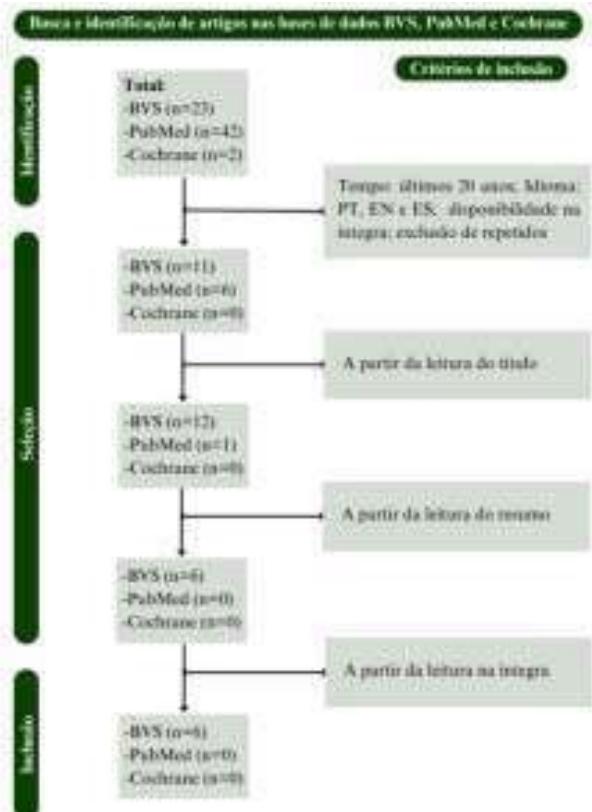 Source: Prepared by the authors Figure 1: Flowchart of the Methodology
III. RESULTS AND DISCUSSION
3.1 Results on Light to Moderate Alcohol Consumption
Table 1: Summary of Findings on Light to Moderate Alcohol Consumption
| Light to Moderate Alcohol Consumption | ||
| Relation to increased risk of developing or progressing dementia | Lower risk of developing or progressing dementia | Inconclusive findings |
| Mewton et. al (2022) | Topiwala et. al (2018) | |
| Liu Y, et. al (2019) | Rao et. al (2015) | |
| Solfrizzi et. al (2007) | ||
| Ilomaki, J et. al (2015) | ||
Among the studies analyzed, regarding the amount of alcohol associated with protective or harmful effects on the nervous system, MEWTON, L. et. Al (2022) pointed out that in dose-response analyses, moderate consumption of up to 40 g/day was associated with a lower risk of all-cause dementia when compared with lifelong abstinence as well as in former drinkers. Among current drinkers in the general population, there was no consistent evidence to suggest that the amount of alcohol consumed later in life was significantly associated with the risk of dementia. This study does not provide evidence on the relationship between the risk of dementia and excessive alcohol consumption or alcohol use disorders, which are relatively rare in the general population. The results on the alcohol-dementia relationship were similar when the sample was stratified by sex but showed substantial heterogeneity when analyzed at the continental level.
SOLFRIZZI V. et. Al (2007) states that patients with mild cognitive impairment who consumed alcohol in moderate amounts (less than 15g of alcohol/day) had a slower progression to dementia than those who did not consume alcohol, yet patients whose moderate consumption was specifically wine (1 glass/day) had an even slower progression to dementia.
There was no statistically significant relationship between high alcohol consumption (>15g of alcohol/day) and the rate of progression to dementia when comparing patients who did not consume alcohol and those who consumed alcohol moderately. The level of alcohol consumption also had no relevant relationship with the incidence of mild cognitive impairment.
LIU, Y. et. Al (2019) states that the association between alcohol consumption and dementia syndromes showed that the difference between occasional and daily alcohol consumption was statistically significant in men (1.12, 95% CI 1.02-1.23), but not in women (0.97, 95% CI 0.85-1.10). Relative risk values remained significantly lower in men and women with alcohol consumption ≤2 units/day, occasionally, as well as daily. No significant association was observed in either sex for alcohol consumption >2 units/day, occasionally or daily.
In agreement, ILOMAKI, J et. al (2015) found in a systematic review, in which 45 studies on light to moderate consumption were incorporated, a reduced risk of dementia compared to not drinking. There was no clear risk in light or moderate consumption, nor was the study population separated into men and women. What was found was that drinking less than 21 units of alcohol per week (where 1 unit of alcohol = 10 mL or 8 g of pure alcohol) may be associated with a lower risk of dementia.
TOPIWALA, A. et. Al (2018) found that the information related to moderate consumption was conflicting, and the reason given by the authors themselves for this finding was that the definition of "moderate consumption" varied greatly between studies.
3.2 Results on High Alcohol Consumption
Table 2: Summary of Findings on High Alcohol Consumption
| High Alcohol Consumption | ||
| Relation to increased risk of developing or progressing dementia | No significant impact on the development or progression of dementia | Inconclusive findings |
| Topiwala et. al (2018) | Aho L et. al (2009) | |
| Rao et. al (2015) | Liu Y, et. al (2019) | |
| Livingston et. al (2020) | Solfrizzi et. al (2007) | |
| Piumatti, G et. al (2018) | ||
As for the prevalence of the onset of dementia among alcohol consumers, according to TOPIWALA, A. et. Al (2018), it was found that the data found regarding chronic and heavy alcohol consumption reached the same or very similar conclusions among the studies reviewed, highlighting the increased risk of developing dementia and cognitive decline and the establishment of various damages to brain structures.
RAO, R. et al. (2015) found that alcohol misuse complicates primary dementia by increasing cognitive decline, caused by neurotoxicity or stroke. This study also found that individuals with brain damage due to alcohol misuse perform less well in visuospatial activities when compared to people with other neurological disorders. However, the exact amount of alcohol consumption that triggers the onset of brain damage in older people has not been determined, and there is a higher prevalence of studies involving younger people compared to those using older people as a sample. Another counterpoint is that the commonly used diagnostic test (Mini Mental Examination) for amnesic syndromes does not assess the function of the frontal lobe, which is more susceptible to the long term effects of excessive alcohol consumption, nor the impaired consolidation of long term memories in this type of comorbidity.
In contrast to the above, AHO, L. et. Al (2009) demonstrated a higher prevalence of both micro and macroscopic neurological lesions in patients with ACA (high alcohol consumption). It was also found that in 34% of ACA samples, type II Alzheimer's astrocytes were present in the putamen and severe white matter rarefaction.
However, there was no significant difference between the groups and genders in terms of beta amyloid aggregation or vascular lesions. In short, there was no statistically significant influence of alcohol in the post-mortem samples, suggesting that the relationship between alcohol and dementia has a different pathogenesis from the most common degenerative disorders. It was also concluded that chronic and severe alcohol consumption has no influence on the production or accumulation of B-amyloid protein, nor is it related to the hyperphosphorylation of Tau protein. However, the control group also included patients who consumed alcohol lightly, so it was not possible to study the effects of moderate consumption on the brain.
Other studies researched beyond the search of the databases used also revealed contradictory results. According to LIVINGSTON et. Al (2020), a French longitudinal study, with a 5-year follow-up and a study population of around 31 million people admitted to hospital, concluded that alcohol consumption disorders (harmful consumption or dependence, as defined in the ICD) were associated with an increased risk of dementia. During the study stages, specific analyses were carried out for men and women (women HR 33, 95% CI 33-34, men 34, 33-34), where the association between dementia and alcohol use disorders was found, and was specifically notable in early onset dementias (age under 65), where 56.6% had an alcohol use disorder noted in their records (n=57,353; 5.2% all dementias).
Corroborating the excerpt above, PIUMATTI, G. et. Al (2018) carried out a 5-year follow-up of 13,342 men and women volunteers from the UK biobank aged between 40 and 73 who consumed alcohol, in which it was found that those who drank more than 12 doses of alcohol per week decreased their reaction time slightly more in a perceptual matching task than those who drank less, however, few heavy drinkers were included and abstainers were not analyzed. Piumatti et. al also points out that, in another study in Whitehall in the UK, with 23 years of follow-up, in which 9,087 participants aged between 35 and 55 were observed at the start of the study, it was seen that drinking more than 21 units a week was associated with a 17% increase in dementia compared to drinking less than 14 units, to the point that consuming more than 14 units also showed a correlation with atrophy of the right hippocampus in the MRI procedure.
IV. CONCLUSION
This review found data supporting the hypothesis that there is a relationship between light to moderate alcohol consumption throughout life and a lower probability of developing or progressing dementia syndromes. On the other hand, the findings about high consumption being related to a worse prognosis differed, so that evidence suggesting alcohol as an etiological element of dementia ended up coexisting with studies that found no significant relationship between high consumption of this substance and cognitive worsening. Even so, the evidence pointing to the pathological role of alcohol consumption is greater and more recent, so that the hypothesis of a deleterious relationship between alcohol and cognitive ability becomes more robust and probable.
A barrier was found regarding the amount of alcohol in grams that would be related to a better or worse prognosis of dementia syndromes, since no study has been able to quantify the exact threshold at which alcohol loses its possible protective factor and becomes pathogenic. The limited availability of literature and the inconclusiveness of some of the findings highlight the need for more research in this area, especially those aimed at using the Brazilian population as a sample, since none of the studies found were Brazilian.
Conflict of Interest
The authors declare no conflict of interest.
Ethical Approval
Not applicable
Data Availability
The datasets used in this study are openly available at [repository link] and the source code is available on GitHub at [GitHub link].
Funding
This work did not receive any external funding.
References
Cite this article
Related Research


Special Issue
Launch a focused special issue to highlight research, emerging trends, and expert insights in your academic field.
