




IntelliPaper
Abstract
The article intertwines different themes: indigenous cultural resistance, indigenous spirituality, and urban neo-shamanism. Its central nucleus is a reflection on a relational experience - over ten years old - between representatives of an Indigenous people from the Northeast of Brazil, the Fulni-ô, whose territory is located in the municipality of Águas Belas, inland part of the State of Pernambuco, and non-indigenous members of three Rio de Janeiro associations, Casa de la Coruja Branca (House of the Owl) , Parati ONG (Para ti, For You), Casa da Aguia (House of the Eagle), whose aim is to defend indigenous cultures and, at the same time, maintain shamanic traditions. This 10-year-old experience is significant as it provides a long-term perspective on the dynamics of the relationship between these groups. One of the two authors is, at the same time, active in the ParatiGuest House.
Explore Digital Article Text
I. INTRODUCTION
These associations may be included in the cultural movement of the New Age. However, in Brazil, the global phenomenon of the New Age, originating in the Western world, has assumed specific characteristics. Scholars who have worked on it speak, in fact, of Brazilian Popular New Age (Oliveira, 2011) , which has incorporated different elements of the Afro-Brazilian religions, namely the Umbanda, and the indigenous traditions. The article is part of a more extensive research on neo-shamanism and the role of Indigenous populations' preservation of traditional rituals and their adaptation to new audiences.
"Neo-shamanism is syncretism based on a reinterpretation of traditional shamanic practices and is sometimes practiced in urban areas. The practice attempts to tether some of its expression to ancestral traditions (mainly Pan-Indian movements), all the while remaining centered on the individual who seeks modified states of consciousness. Neo-shamanism uses a set of heterogeneous modalities — often for therapeutic purposes — among which we can mention: fumigations, songs, meditations, collective trances, and drumming." (Raz M, 2019). The neo-shamanic practices start from the traditional, then move away from the traditional focusing on the individuals and adapting their expression to the many needs of the modern world. Neo-shamanism has faced and is facing many critics. Among these, the denunciation of stereotypes and false perception associated with indigenous cultures; cultural reappropriation and reinventing the traditions while failing to honor the roots; contrast between the scope of the rituals and the individualistic approach of neo-shamanic practices. The readaptation of shamanic rituals for the use of non-indigenous individuals has been especially questioned for what concerns the "mystic tourism" or "spiritual tourism" in Peru or Brazil -travel for the purpose of using ayahuasca for spiritual awakening through some forms of altered states of consciousness. Scholars, such as for example the French anthropologist Jean-Loup Amselle , argue that neo shamanic practices would represent a new form of depoliticization of individuals, normalization of the subjects, religion of capitalism.
We can share some critical points about these practices. However, the micro-reality that we describe in this paper through an ethnographic approach suggests that this readaptation is perceived by the participants as an intercultural exchange on an equal level, where the Fulni-ô Indigenous people and their "irmaos" (brothers) from the Casa da Coruja Branca, Parati Guest House, and Casa da Aguia are helping each other in a shared journey to reach their reciprocal aims: the Fulni-ô are reinforced in their identity, experiencing how their spirituality is valued; the non-Indigenous experience a contact with the sacred/divine in order to respond to life dilemmas. Religious techniques for producing unusual experiences and states of consciousness are found in all cultures, but they have become rarer in contemporary societies. The interest in shamanism in urban contexts responds to this absence. Moreover, the intercultural exchange between Indigenous and non-indigenous has ethic goals: through harmonizing indigenous traditions with Western ones, they all seek to go towards a more spirituality-oriented and environmentally responsible future for human beings.
These intercultural encounters are, in fact, part of a more general trend: the appreciation (valorization) of Indigenous knowledge among large groups of non-indigenous populations in search of spirituality and sensitivity to ecological issues. Indigenous knowledge represents, in fact, a "civilizational" discourse situated in a dimension that is different from Western modernity. While non-indigenous groups get closer to indigenous culture, it is important to note that Indigenous people are neither "naïf" or passive. They are fully aware of the Western political-institutional organization, where they have become active players. Their horizon goes far beyond Brazil, towards the global world. They make a large use of Western technological instruments: both Indigenous tribes, as a group, and individuals use the internet, and they are active on social networks, such as Facebook or Instagram, where they present videos and photos of their art crafts products and cultural expressions (dancing, painting skin, etc...).
The ethnographic method uses multiple data collection techniques, including participant observation (during the shamanic ceremonies and the everyday life of the Indigenous people), interviews, focus groups, and textual analysis (there are several PhD works on the topic), to construct a holistic and contextual view of neo-shamanism in the urban area of Rio, providing a comprehensive understanding of this cultural phenomenon.
Over the years, we have conducted several interviews with Fulni-ô people in Rio de Janeiro and Aguas Bellas. Here, we refer to four interviews with Tafquea (a name that in Portuguese means Mandi Fish), Fkydwa, Fakho, Xumayà: These three men in their forties and fifties and one in his thirties. They were all chosen because each of them has responsibility as guide or leader for the ceremonies. We will quote sentences from their interviews, without precising their specific names, considering that they represent the collective voice of the Fulni-ô. The article focuses on the intercultural relationships developed through the Fulni-ô trips to sell art crafts. The description of the readaptation of shamanic ceremonies doesn't enter the mystical experience. Therefore, the double position of Lidia
Urani as activist (and practitioner) and observer doesn't represent an issue.
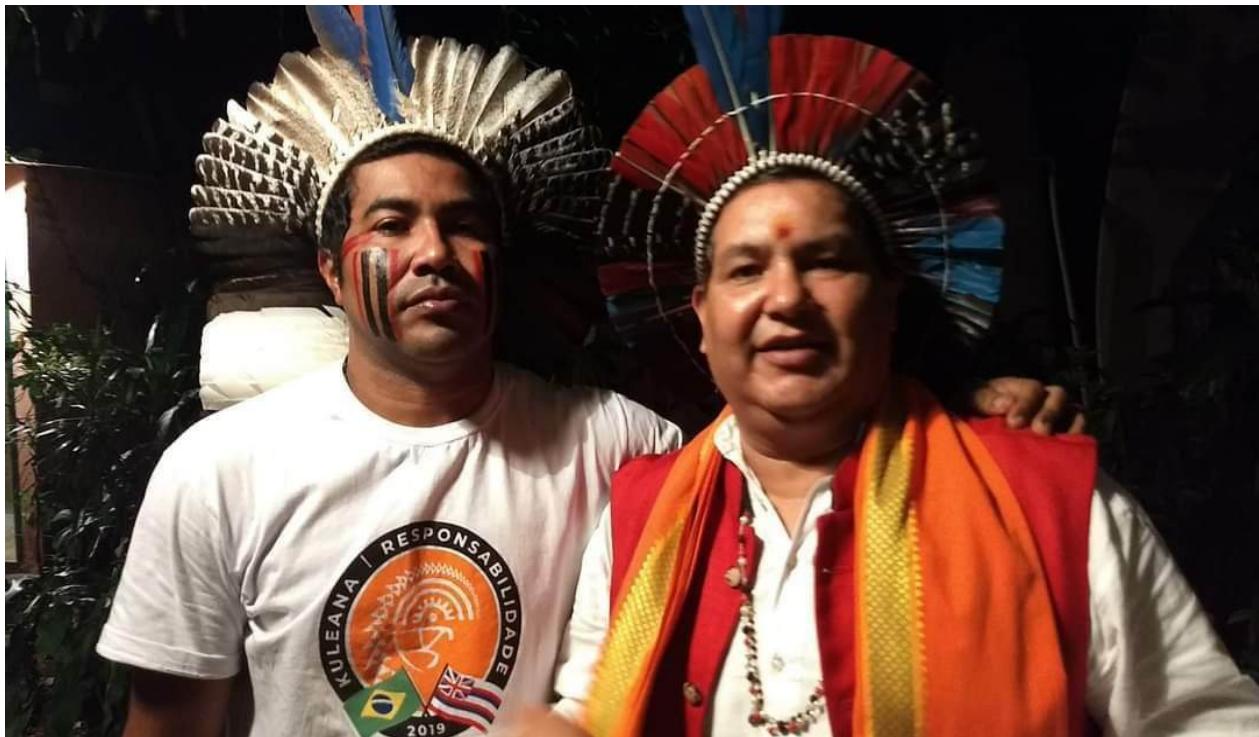 Tafquea (a name that in Portuguese means Mandi Fish), Fkydwa, photo of Lidia Urani
At the 2022 census, in the Fulni-ô indigenous territory that includes Aguas Bellas and Itaiba , there were 26,300 inhabitants; approximately 5,000 of them were indigenous (not all the Fulni-ô declared themselves indigenous). Other sources speak of about 8000 . For centuries, the territory has been at the center of conflicts between Indigenous and non-indigenous. The Fulni-ô still practice hunting and fishing, but these activities are almost extinct due to deforestation and pollution of the region's rivers. The survival of the indigenous families is guaranteed by subsistence farming, small-scale cattle and pig farming, and, mainly, selling artisanal products. However, at the local market the demand for indigenous artisanal products is scarce. Overall, the Indigenous tribe of the Fulni-ô can be defined as a 'society of scarce resources' (Reesnik, Reesnik, 2007).
The Fulni-ô interviewed have all explained that the local resources are not sufficient for their families to live. They have to travel throughout the country, to sell their handicrafts at fairs or in more favorable markets, to perform their songs and dances, and more recently shamanic ceremonies. These periplus of "comitivas" of three , four, five people, mainly male, have started about twenty five years ago: "In order to survive, in April, when there are the celebrations of the Indian Day, April 19, the Chief (cacique) determines which Indians go to the cities," "In the old time, the land gave enough families to live...to our ancestors. Now we must exchange art crafts, ceremonies and medicine with our brothers."
Since the 1990s, the Fulni-ô have traveled all over the country, reaching the states of Paraná, Rio Grande do Sul and Santa Catarina in the Southern part of Brazil, but the main places of destinations are the big cities, Rio de Janeiro and Sao Paolo. During these trips, in addition to selling artisanal products (from headdresses, bows, necklaces and bracelets), they started to organize dance shows and songs shows (maybe dance and singing shows), making their culture known to a large public. These performances have also taken place in Universities , with the support of anthropologists and sociologists . Furthermore, after about ten years, during their travels to Rio and Sao Paulo, they started to perform shamanic ceremonies with herbs baths, fumigations, and the use of medicinal herbs (rapé jurema), having got permission from the pajé . This has been possible thanks to the support of non-indigenous people who were interested in the theme of shamanism, "irmaos" (the brothers)" to whom they refer. The intercultural encounters between the Fulni-ô and the "irmaos" (brothers), have reconfigured shamanic rituals in urban environments. This practice is not unique of the Fulni-ô; it concerns different Brazilian Indigenous tribes.
The article is divided in four parts: the first one deals with the Brazilian New Age cultural trends, to which belong Casa da Coruja Branca, Parati Guest House, and Casa da Aguia; the second one focuses on the Indigenous movement in Brazil; the third one describes the Fulni-ô tribe from Pernambuco. The last part of the article is dedicated to the readaptation and reconfiguration of the shamanic rituals in the urban context.
II. POPULAR NEW AGE AND NEO-SHAMANISM IN BRAZIL
The New Age, with its roots in the countercultures of the 1960s, emerged as a global phenomenon, originating in the USA and England and other Western European countries (Heelas 1996, p.42) . It challenged the prevailing behavioral, moral, and religious norms, marking a significant shift in societal values.
The term New Age itself signifies a significant historical shift. According to some astrologers, we currently reside in the Age of Pisces, dominated by Christianity, which the New Age of Aquarius will supersede at the dawn of the third millennium. The Age of Aquarius is pivotal in the New Age movement, influenced by theosophy, spiritualism, anthroposophy, and their esoteric predecessors. The New Age is a syncretic structure that incorporates diverse elements, allowing people to connect based on shared interests or bonds to varying degrees and at different levels of commitment. Many of the trends, practices, and attitudes associated with the New Age are a profound and easily identifiable reaction against the dominant culture, accompanied by the search for "alternatives" to mainstream society. In this sense, the term 'movement' applied to the New Age is not out of place. However, the New Age is not a unified movement, as it includes a diverse range of people who align with its main aims, but vary significantly in their involvement and understanding of specific issues. What they have in common is the fact they express their yearning for a change, not just in the world itself, but in our culture and our relationship with it, and champion the concept of a new vision of life.
While the New Age circuit was initially restricted to Anglo-American and Western European countries, the phenomenon began to gain visibility in the second half of the 20th century, especially in the 60s and 70s, and even more so after the 80s in Latin America and Brazil (Magnani; 2000). In Brazil, some groups were formed with the arrival of religions from India, among them the Hare Krishna movement (Guerriero, 2000) in 1978 and the Rajneesh movement (Guerriero 2003), transcendental meditation (Prandi 1991), and the creation of alternative rural communities of a spiritualist nature, such as the ones in Alto Paraíso, Goiás (Maia 2018) . "During the eighties there were (...) many changes in the Brazilian social lifestyle. It was a period of re-democratization. Since 1979, a cultural effervescence surged in many different ways, including artistic manifestations. The alternative movements from the previous decade became fashionable. There was a body worship movement, the use of healthy foods, martial arts, etc. All of those "alternative lifestyles" became relevant in the context of Brazilian society." (Silva Adami, Silva da Silveira, 2015, p. 240)
The cultural effervescence of the eighties not only encouraged the spreading of the New Age in Brazil but also led to a new configuration of the movement. While the genesis of the New Age in Brazil initially mirrored discourses and practices developed in its original spaces, especially the European and North American contexts, a significant shift occurred from the 1980s and 1990s onwards. A new reading of the New Age emerged, one that incorporated elements of Brazilian religiosity and spirituality. Popular Catholicism, spiritualism, Afro-Brazilian religions, and indigenous shamanism were revived and articulated with the New Age discourse. This cultural fusion is evident in Brazilian medium and large cities, where: " (...) it is pervasive to come across yoga centers, spaces for meditation and personal growth, bookstores for self-help, and study centers focused on the millenary pearls of wisdom of traditions such as Buddhism, Hinduism, Esotericism, and also traditional indigenous peoples." (Stern, Guerreiro, 2022, pag.136) This integration of local spiritual practices with the New Age movement creates a unique and diverse cultural landscape in Brazil.
This process is not surprising as Brazil is a country of cultural and religious syncretism par excellence. Catholicism and African religions went through a syncretic process; later it was the case of Kardecism , a doctrine coming from France, syncretized with afro-brazilian and indigenous spiritualities. No surprise that the New Age follows the same path. The articulation between the discourses of the New Age, as initially conceived, and such elements, reflects the entry of new social actors into this symbolic universe (Oliveira, 2011): the New Age is no longer exclusive to an educated middle class; other classes have begun to access such symbolic goods. Having observed this process of re-elaboration of the New Age, scholars such as Oliveira propose, as an analytical category, the idea of Popular New Age. This concept, representing a new moment in the movement's evolution, is marked by a conceptual rupture in relation to the practices experienced previously. To this end, it is important to highlight Oliveira's definition of Popular New Age, which would be the following: "a new reinterpretation, based on a specific social context, of cultural practices and traditions originating in Brazil and abroad – including Umbanda, elements of popular religiosity, Kardecist spiritualism and, mainly, popular Catholicism – in the typical New Age mold, which recreates cultural aspects – such as rituals, mainly those of possession, of popular religions in Brazil, in addition to the aesthetic aspect – which until then had not been emphasized by the movement. (Oliveira, 2011, p.39)
Among the new social actors that entered the Popular New Age symbolic universe, the Indigenous people did certainly play an important role, joining their fight for preserving their traditions with New Agers' search for worldvisions that would represent an alternative to Western modernity. Neo-shamanism is at the same time a matrix and a product of the New Age. As a modern adaptation of traditional indigenous practice,eo-shamanism arises in an urban and globalized context, where people of different cultural origins seek to reconnect with nature and spiritual aspects of their lives. Unlike traditional shamanism, which is rooted in a specific culture, neo-shamanism is a synthesis of various traditions, reinterpreted and adapted to the contemporary context. Juan Scuro and Robin Rodd (2015) have given a comprehensive definition: "Neoshamanism is a set of discourses and practices involving the integration of indigenous (especially American) shamanic and psychotherapeutic techniques by people from urban, Western contexts. It has emerged, like other New Age modes of spirituality, in opposition to the materialism and positivism of European modernity. It presents as central the idea of reconnecting pan-indigenous ancestral knowledge that people of the West had purportedly forgotten. It results in large measures from the circulation of literature on shamanism, altered states of consciousness (often, but not always, involving the use of psychoactive drugs), and the possibility of generating new psychotherapeutic modalities." (Scuro and Rodd, 2015)
The origins of neo-shamanism are blurred with the beginning of the New Age: they can be traced back to the North American counterculture of the Sixties. It was during this time that writers such as Carlos Castaneda and Michael Harner published books that suggested a new reading on shamanic practice, paving the way for neo-shamanism. The predominance of Native American rituals marked the first phase of neo-shamanism. The Brazilian founders of Casa da Coruja Branca and Casa da Aguia lived their first neo shamanic experiences in the USA among Native Americans. In the early Nineties, the mentor of the Casa da Coruja Branca was adopted by an indigenous elder of the Cheyenne tribe, named Nelson Turtle, who came to Brazil several times and introduced Native American traditions including the "sweat lodge" ritual. The Csa da Coruja Branca offers physical and spiritual healing through the "red path" (native shamanism) . The name Casa da Aguia was given in honor of Dennis Banks, leader of the Chippewa Indians of South Dakota and of the American Indian Movement (IAM). Dennis Banks passed away in 2017 when, during a shamanic work, he saw an eagle flying in space.
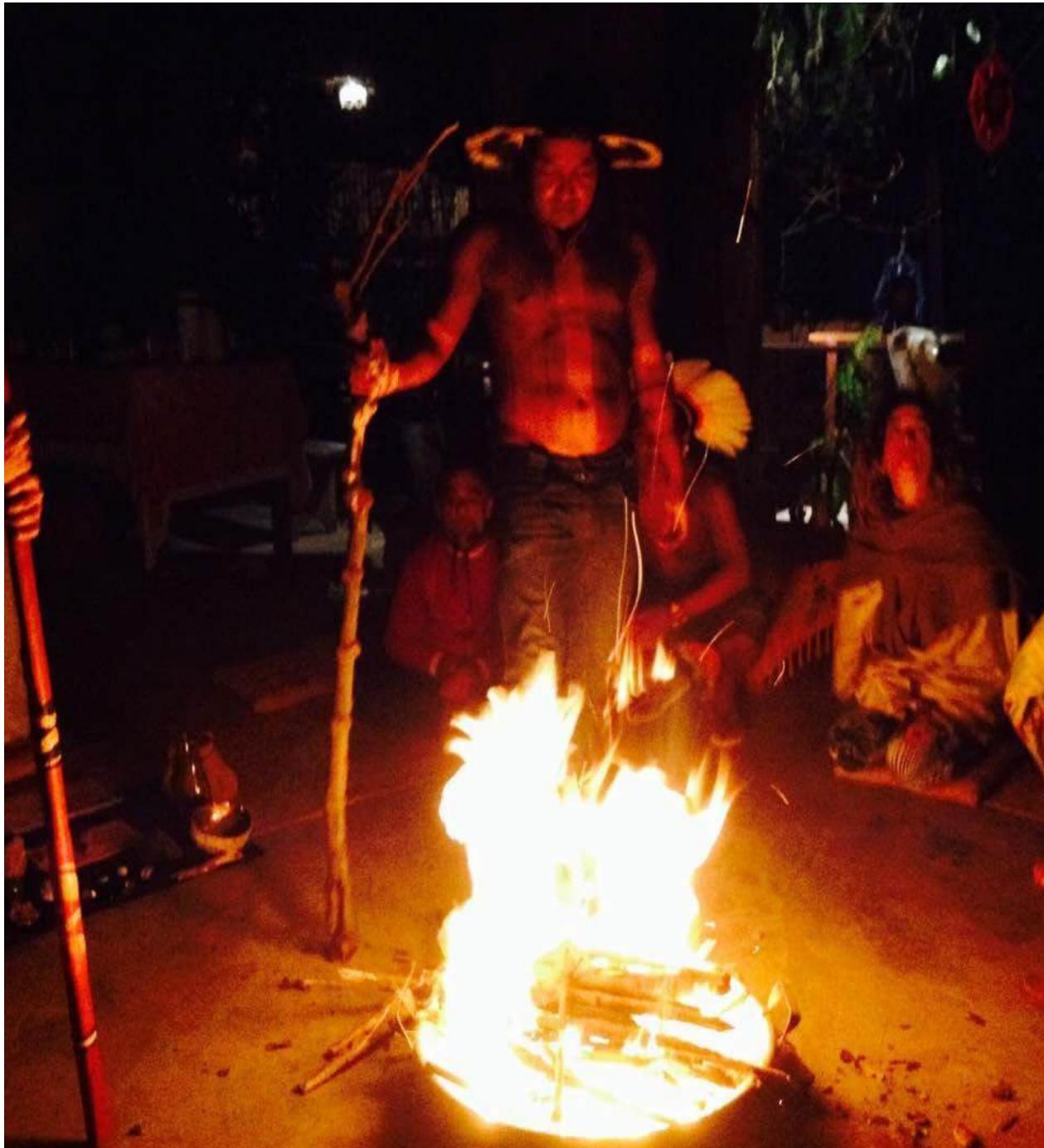 Shamanic ceremony of the fire at the Casa da Aguia, photo of Lidia Urani In the last twenty years, the Brazilian Indigenous people began to organize cultural meetings, conferences and workshops for non-indigenous people – University students, teachers, artists, foreigners, or just curious members of the urban middle class, – both in their villages and in large cities. These activities were part of the movement to valorize their culture. The reproduction of traditional rituals followed, responding to new cultural and political trends where the paths of indigenous and non-indigenous groups crossed. The growing use of the entheogen plants as the ayahuasca by non-indigenous has undoubtedly played a role in this trend. The Indigenous perception of the use of these plants is very different from the Westerners. For example, the Fulni-ô are very proud of their medicine that they call the forest medicine They consider the knowledge of forest medicine as a core element of their culture and they are happy to share it with the "irmaos", if this can help them in moments of difficulties, sorrows, or just to better "see" the reality. "Medicine, forest medicine means many things. Forest medicine is extremely important for us...all that comes out from the forest...it is part of the indigenous life...and guides the path for us. We are happy to share it with the "brothers" "During July, we organize two days in the village to present all our herbal medicines to non-indigenous people who are interested.""Every village has its own medicine, and has different rituals with them...medicine cannot always be taken. Only in specific moments. There are times to take the medicine." "Nowadays ayahuasca is known all over the world, but ayahuasca may have very different force...according to the time, to whom gives it...". These are the words of the Fulni-ô that have the task to celebrate rituals in the three places (Casa da Coruja Branca, Parati ONG and Casa da Aguia). In these three places they do not do ceremonies with ayahuasca, only with jurema and rape. On the basis of our ethnographic work, neo-shamanism is not only a purely Western construction of a fictional "indigenist" world, but is a practice that Indigenous people accept in order to make their culture known and appreciated.
III. INDIGENOUS CULTURES AND CIVILIZATIONAL DIMENSION
If, as David Junior de Souza Silva writes, indigenous resistance in Latin America is as old as the conquest, it is from the 1970s and 1980s that indigenous peoples mobilized in an original political movement to demand: "ethnic recognition, recovery of traditional territory and self-determination." (Silva, 2016, p. 162). This is a process, also called "re-ethnicization (or re-indigenization or ethnogenesis)" of Latin America (Silva 2016) that has brought indigenous populations out of invisibility and has led to the progressive increase in the number of people who identify as indigenous, as evidenced by the censuses of many countries.
In 2007, four million Peruvians identified themselves as Indigenous. In 2017, there were almost six million who identified themselves as Indigenous peoples and formed about 25.75% of the total population (https://en.wikipedia.org/wiki/Indigenous_peoples_of_Peru).
In the 2022 census, a total of 1,693,535 indigenous persons lived in Brazil, which represented 0.83% of the total population. The 2010 Census counted 896, 917 thousand indigenous persons, or 0.47% of the total number of residents in the national territory. That means this figure has increased by 88.8% since the previous Population Census. That significant expansion may also be a consequence of methodological changes, but it is a clear sign that more people identify themselves as indigenous.
The indigenous peoples of Latin America form a great diversity of human societies: for this reason, the indigenous movement, constituted by a system of political mobilization networks that advance indigenous claims, carries out different forms of struggle depending on the local, regional and national contexts of the continent. Analyzing the Brazilian case, we might better understand how the collective and local movements are articulated. Therefore, beyond the differences, it is possible to identify a common struggle platform, whose central claims are self-determination and control of their lands, including natural resources, through the "official recognition and institutionalization of interculturality, indigenous autonomy, territorial autonomy, education, health and indigenous justice" (Bruckmann, 2011, p.335), in the perspective of overcoming the centrality of national states. New concepts have emerged, such as that of a plurinational state (Bolivia) or differentiated citizenship (indigenous and national) (Brazil) (Luciano, 2006).
Although the claim to territory is central, the indigenous movement presents a multiplicity of cultural and political demands. The movement is situated in what might be called a "civilizational" level or sphere, claiming to represent the Indigenous civilization, the long-established native culture of the populations living in the American continent before the European colonization. It is the indigenous civilization of Abya Yala, the expression used to define the American continent in the decolonial thought. Abya Yala is increasingly used as symbol of identity for the "Indigenous communities, peoples and nations (...) which, having a historical continuity with pre-invasion and pre-colonial societies that developed on their territories, consider themselves distinct from other sectors of the societies now prevailing on those territories, or parts of them." (United Nations, 2004)
The ethnic nature of Indigenous movements implies the confrontation/opposition - of a cultural/civilizational type - not only with the model of the national state (in Bolivia the concept of a multinational state was introduced), but more generally with Western modernity, which is represented, in the movement's discourses, as an expression of a capitalist rationality, which promotes the excessive exploitation of human beings and nature. The anthropologist Viveiros de Castro writes: "The "indigenous" are (...) people who do not join, whether by force or voluntarily, in the unilinear march of "progress", and who are believed to be imprisoned in the past of the species. Differently from the Western modernity, the indigenous worldview is a system based on belief and spirituality. Indigenous societies are spiritually oriented, organized around rituals. We can add two other characteristics: the sacredness of the land and the fact that human beings are not the masters, the dominators of the earth. On the contrary, they are not the most important beings.
We have spoken of a "civilizational" dimension of the indigenous movement: The importance of recognizing the cultural and spiritual wealth of indigenous populations, much more sophisticated and refined than what Western arrogance has believed and made us believe - is today supported not only by anthropologists, but also by a series of important intellectuals, Latin American, North American, European. Let us cite, for example, the French linguist Jon Landabaru and the Colombian writer Willian Ospina, the latter of whom argues that "before the crisis of values of modern societies, before the torpor of industrial culture in its relation to nature, before the growing desacralization of the world through the gaze of positivism, through formal logic and the merely quantitative analysis of reality, these discrete and strongly united communities on earth, (...) could help our societies to recover a little the balance of the gaze and the tenure towards the world:" (Ospina, 2013, p.256). In recent years, the number of indigenous intellectuals who have access to the media to make known the objectives of the struggle and indigenous philosophical thought is increasingly numerous.
The confrontation/opposition with modernity, manifested in various forms of resistance, is, as already underlined, ancient, since, for centuries, indigenous peoples have found themselves, against their will, immersed in socio-political and cultural systems that are foreign and external to them, created and defined on the European and Western model. As a result of this forced immersion, indigenous peoples have been forced to acquire knowledge on the functioning of non-indigenous societies and political systems, demonstrating, in many cases, a great capacity for adaptation and adopting new forms of social and political organization structures.
Today, the Indigenous movement is characterized by the combination of specific ethnic claims, to preserve their identity, and strategies to influence the totality of social and political processes of their respective countries: the result is a significant impact on culture and political structures.
The transformations - cultural and institutional - that occur through the indigenous movement, see the participation of non-indigenous actors, such as NGOs, politicians, parliamentarians, famous people and intellectuals who are publicly aligned in defense of indigenous peoples and become an integral part of the various struggles. Ascenso (2021, p. 51) states that Indigenous movements can be conceived: "as a set of networks that also include non-indigenous people, with the expressed horizon of building an indigenous protagonism". Indigenous protagonism is therefore built through a network of relationships both internal and external to the indigenous world, for a broader social transformation: "The attention that has generated the indigenous movements in Latin America from the finals of the eighties is based on the profound interests that arouse their reproofs and demands that affect not only the communities indigenous peoples and their respective national states until they also pose a transversal and universal basis: the care of the environment, the effective fulfillment of human rights, the application of sustainable development policies, reflections on concepts as important as citizenship and autonomy, el also to consolidate pluricultural and pluriethnic states, etc." (MIR, 2008) There is a harmony between indigenous movements and the concerns and demands of large segments of Western populations, which are expressed in social movements in search of the balance of vision and compassion towards the world – from environmentalists to the New Age galaxy in search of new spiritualities. Communication between these groups is now favored by social networks, particularly Instagram, a tool for spreading activities promoting indigenous cultures, and WhatsApp. Through. Internet and social media Indigenous peoples around the world are taking advantage of the opportunities offered by globalization to avoid, resolve or even attempt to eliminate the conflicts it presents to them.
IV. THE INDIGENOUS MOVEMENT IN BRAZIL
According to the IBGE (Brazilian Institute of Geography and Statistics), the 2022 demographic census revealed that Brazil has almost 1.7 million Indigenous people, a contingent present both inside and outside indigenous localities, equivalent to 0.83% of the country's total population (203.1 million). Brazil has a population of approximately 203 million inhabitants. As already reminded, this number is 88.8% higher than that recorded in the 2010 census, which counted 896.900 people. 180 indigenous languages are spoken in the country and there are 305 different ethnic groups . Only five of the 180 indigenous languages spoken in Brazil have more than 10,000 speakers, according to data from the IBGE. The survey, which included people over 5 years of age who use the language in their own homes, found that the most commonly used indigenous languages in the country are Tikuna (with 34,000 speakers), Guarani Kaiowá (26,500), Kaingang (22,000), Xavante (13,300) and Yanomami (12,700). Many languages are spoken only by a few people.
Despite this great sociocultural diversity, which is as broad as the three hundred and fifty indigenous peoples, the Indigenous Movement, which dates to the 1970s, is capable of combining, without contradiction, dynamism and freedom of action to pursue, the one hand, local and regional aims, unity of action and strategic research for a national agenda, the other hand. The origins of the Brazilian indigenous movement were originally conceived in April 1974, when the first "Assembly of Indigenous Chiefs" of the Indigenous Missionary Council – CIMI was created. "In April 1974, amid the "Brazilian miracle", the leaden years of the military dictatorship, two dozen indigenous people gathered under some mango trees, in Diamantino (MT). It was April. A different celebration. A fact that would profoundly mark the struggle of indigenous peoples in Brazil. The seeds of a new indigenous movement were planted in the country. In the following ten years, there were another 50 Indigenous Assemblies throughout the country. "(Heck, 2014) . The Indigenous movement was born as a response of the Indigenous peoples to the logic of environmental destruction orchestrated by the military government that responded to the demands of an economic model, based on the scorn of all its costs. During the Military Dictatorship, compelled integration manifested itself through ambitious infrastructure projects in the unpopulated interior. Notable among these major projects were the establishment of the Transamazon Highway in 1972, the planning of the Belo Monte Hydroelectric Plant in 1975, the construction of the Itaipu Hydroelectric Plant in 1975, and the completion of the Northern Perimetral Highway in 1973." (Gonçales et al., 2023)
These endeavors engendered a profound transformation in the socio-cultural fabric of indigenous communities, heralding a substantial shift in their way of life, but it also led to the awakening of consciences and the formation of a movement that managed to overcome differences and build a unifying character for different peoples to lead joint struggles. This articulation, because of overcoming rivalries between different peoples, has been understood by Matos (2006) as a "supra-ethnic" identity, in which peoples who were historically rivals or previously unknown to each other have managed to establish articulations and are coming together in common struggles. This articulation – which Matos (2006) calls a pan-indigenous movement, that is, one that aims to involve all peoples – has only been possible through constructing this supra-ethnic identity. In this necessary understanding of the differential nature of the configuration of the indigenous movement, we emphasize the importance of not conceiving it as uniform in its organization. Each Indigenous tribe establishes an internal dynamic and organization, either because its culture already has this form, or because it adapts to current times. Thus, the well-known figure of the cacique "chief", for example, is not found in all peoples with the same role or does not even exist, but has "its place" occupied by councils and assemblies which are expressions of an organization that will be reflected in the organization of the Indigenous Movement .
If the initial theme of the movement was the issue of territorial protection and demarcation of these territories, the Indigenous Movement soon became broader, more diverse and more active in all spaces of power. As Bicalho (2010) writes, the Brazilian Indigenous Movement includes regional organizations as well as professional associations. "There are associations of teachers, women, chiefs, tuxás (um povo especialmente ativo nas lutas indígenas), healers, midwives, so this is part of the same Movement." (Bicalho, 2010. p.414) The emergence of the indigenous movement and the spread of formal indigenous organizations, have produced a change in the power relationship between Indigenous peoples and the Brazilian State. Bicalho (2019) reminds us that the Civil Code of 1916 included Indigenous people in the group of people with "relative civil incapacity" and adds: "the inhabitants of the forest will be subject to the guardianship regime, established in special laws and regulations, which will cease as they adapt to the civilization of the country." (Bicalho, 2019, p. 137). Guardianship was questioned, and the assimilationist approach was finally abandoned with the promulgation of the 1988 Constitution that bestowed historical recognition on Indigenous peoples giving them the right to organize themselves and directly implement their claims. The Constitution was gradually implemented with the New Civil Code – Law No. 10,406 of January 10, 2002. The relationship of the State with indigenous peoples was organized ".through the creation of different bodies in various ministries that work with Indigenous peoples, "breaking the hegemony of FUNAI (Fundacao National dos Povos Indigenas) " (LUCIANO, 2006, p. 73). The Brazilian State Legitimizes the political organization of Indigenous peoples, whose demands focus on the official recognition and institutionalization of interculturality, in the form of recognition of indigenous autonomy, self- determination, territorial autonomy, indigenous education, health and justice.
The Fulni-ô people have actively participated in the Indigenous movement and strongly supported the moovement's claims.
V. THE TERRITORY OF THE FULNI-Ô IN AGUAS BELLAS PERNAMBUCO
The tribe's history began when the Portuguese arrived in Brazil and conflicts arose with the "white men", as our interviewees call the nonindigenous people. "In the past, in the time of our ancestors, the Indians occupied a large area and, as time went by, we became trapped in an increasingly smaller space. Look..." Fulni-ô means "o povo da beira do rio", the people of the river but today our land is 300 km from the closest river, the Ipanema River...they have taken so much of our land..."
It is difficult for the Indigenous people to give a chronological history of their confrontation with the white people that dates back to the XVIII century and the progressive loss of their land. Events of a long time ago are presented as they occurred yesterday or at a relatively close time: for example, the fact that the land was officially given to the Fulni-ô by Princess Isabel, for their participation in the Paraguayan War (1864-1870). However, this formal recognition did not have any practical effect. Nowadays the Fulni-ô are the legitimate owners of an area of 11,505 hectares (115.5 km2), but the indigenous reserve is almost entirely occupied by non-Indigenous especially in the urbanized part. Aguas Belas was founded in the colonial era in the middle of the Fulni-ô territory and, today, is like an island located within the lands of the indigenous reserve.
Most Fulni-ô live in the main village commonly called Aldeia Grande, the "large village", as a way of differentiating it from other two villages, that of Xyxyaklá (which means many "catingueiras" in Yathê) and Ouricuri (lower village - place of Fulni-ô religious rituals) . The old Indigenous
Post of the National Indian Foundation (FUNAI) and the Antônio José Moreira Bilingual School (Indigenous School) are in the Aldeia grande that is physically integrated with he city of Aguas Bellas. In fact, the Aldeia Grande is located in the middle of the urban area of Aguas Bellas, so close to the city that an unsuspecting visitor could leave the city and enter the village without realizing it. We have already mentioned the survival difficulties of the Fulni-ô, despite being the owners of their land. Over the years, the land was divided into lots that were given to each Fulni-ô family, but they were not used to agricultural work and to own the land individuallyTherefore, today, few Fulni-ô cultivate the land or have livestock. While most of them lease their land to non-Indian farmers and ranchers. Few Fulni-ô have a specialized profession.. There are FUNAI employees, who live relatively well, some traders of essential goods, service providers, such as shoemakers, bricklayers, etc. Most, however, live by making handicrafts out of seeds, wood, and, especially, straw. Straw crafts, however, have declined considerably, and their survival is even threatened, as the typical palm tree of the region, used as raw material, ouricuri (cocos coronata), is believed to be in danger of extinction due to the unregulated deforestation. In addition to tools, such as brooms, mats, fans, bags, and baskets, the Fulni-ô also make decorative indigenous artifacts, which compensate for the reduction of the straw objects. The decorative crafts products are colored with lines and designs that seem typical of the Fulni-ô. Industrial aniline is used where previously dyes from various native plants that are now extinct were used, such as genipap, the fruit of the genipap tree (Tocoyena formosa) and urucum, the fruit of the annatto tree (Bixa orellana).
Almost all people in the village make crafts, but not all of them sell them or travel to cities. Some Fulni-ô play the role of "middleman". They collect the products from small artisans and resell them, in the village, to visiting tourists, at the city fair, or in the Brazilian cities where they travel.
Today, another way to sell their crafts is through the Internet, especially Instagram.
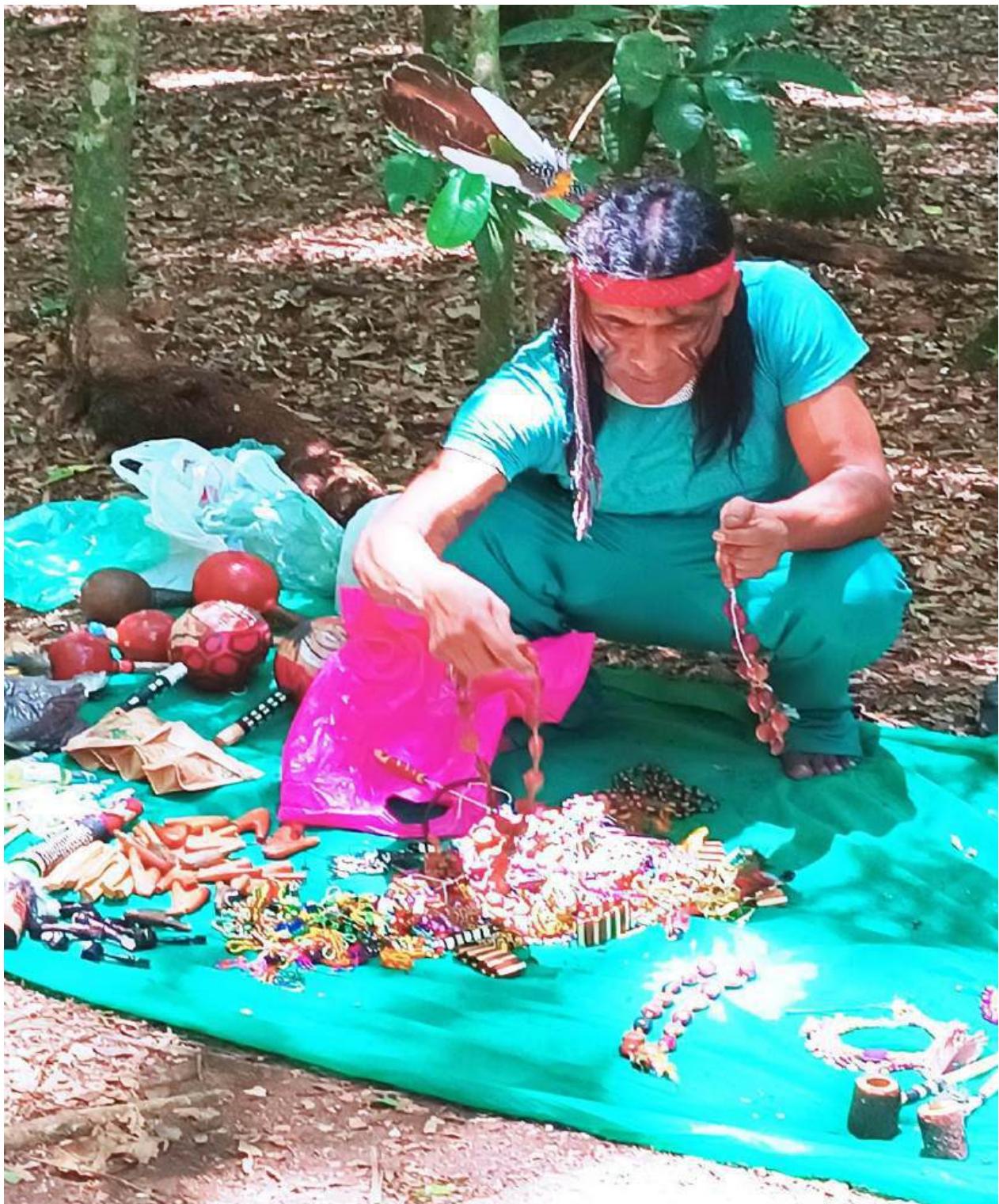 Fulni-ô man selling art crafts after a ceremony- photo of Giovanna Campani
VI. AN EXTENDED INTERCULTURAL CONTACT AND A SPECIFIC SYSTEM OF RESISTANCE. THE RITUALS
- The different anthropologists who have studied the Fulni-ô, as Arruti (2004), Hernandez Diaz (1993, 2015) Reesink M and Reesink E. (2007), Reesink E(2016) , Bittencourt (2022) have all pointed out their capacity to reject assimilation and preserve their identity, mainly through language and religious systematic rituals: "The Fulni-ô, despite some racial miscegenation, and dispossessed of their ancient lands by local politicians, preserve the language and customs of their ancestors, as well as their social cohesion" (Arruti, 2004, p. 237). According to Reesink and Reesink, during four centuries of 'cultural contact', the Fulni-ô, have developed ways of adapting and obtaining resources in a 'society of scarce resources' (Reesnik. Reesnik, 2007).
The Ya-tê language is very important: speaking Ya-tê, is an essential attribute for auto. defining as Fulni-ô. The Ya-tê allows them to differentiate from the white population and the other Indigenous tribes. Parents insist that children learn Ya-tê in the Indigenous school that has existed in the village for about twenty years (in the past the public school just taught Portuguese). The teaching of Ya-tê is oral. Only recently, Marilena Araújo, responsible for teaching Yathê at the Antônio José Moreira Bilingual School for almost 20 years, created the Yathê alphabet and wrote a school textbook to help children in the process of reading and writing the language.
The other form of resistance that allowed maintaining their identity are the rituals that, as the Fulni-ô believe, are not just a form of resistance, but also the cornerstone of their social life. They assert: "Indigenous people live with rituals, rituals are the centre of life, rituals are first...they are the most important thing in our lives. The rest comes after." The cycle of life is organized around these rituals, playing a crucial role in ensuring social cohesion within the community. The Fulni-ô rituals, which involve dancing and singing, using various instruments, such as the maraca – tsaka – and the cowrie shells – khitxaka, are a testament to the strong sense of community that these rituals foster.
The traditional music of the Fulni-ô is known as cafurnas. The songs speak of daily life, the struggle to maintain identity and, above all, evoke spirituality, considered a fundamental element for mental and physical healing . In the Aldeia Grande the performance of the cafurnas is accompanied by dances inspired by animals from the Pernambuco backlands. Children, as the future representatives s of Fulni-ô culture, learn these dances when they are very young and perform them in the Indigenous school, thereby ensuring the continuity of these traditions.
Singing cafurnas and dancing are rituals that can be opened to foreigners: they are performed in front of tourists visiting the Aldeia or in events organized during the trips all over the Brasil. According to Bittencourt (2022), these performances cannot be seen just as folkloristic, as the Fulni-ô send a powerful message to the tourists: "In these indigenous tourism activities, the Fulni-ô, through their cafurnas and other cultural expressions, tell, sing and dance their ethnohistory, dramatizing indigenous life and providing pedagogical ways of teaching the "tourists" by highlighting how the indigenous people survived during years of invisibility. It is in this way that the Fulni-ô show that there are indigenous people in the Northeast of Brazil with a living language (yaathe) and plural models of exercising territorial autonomy." (Bittencourt, 2022) The anthropologist concludes that canfurnas, crafts and corporal paintings are shamanic ways for the Fulni-ô to present their tradition. The shamanic rituals for the "outside" world are separated from the internal rituals to which only they are admitted, as the Ouricuri.
It is a cultural norm among the Fulni-ô not to discuss the Ouricuri, the ritual that holds the key to their cultural identity. They believe that those who disrespect this conduct meet an untimely fate. This strict adherence to secrecy is a means of preserving the sanctity and mystery surrounding the traditional customs involved. As a result, only a portion of the ritual is accessible to the public. In the final weeks of August, preparations commence for the transition from the Aldeia Grande to the village Ouricuri, the site of the ritual, approximately 6 kilometers away. The Indigenous people gather in the aldeia Ouricuri, known as "the sacred place" – kexatkalya from [kexa] "place," [tka] "small" [ya] "sacred" – the small sacred village. From a spatial perspective, Aldeia Ouricuri, "the sacred place" – kexatkalya, is a small village in a more or less circular shape, where all the paths converge to the central courtyard, in front of which is the men's courtyard, the place where they retreat at nightfall. There, from September to November of each year, the members of the group "live like Indigenous" and only use the native language, Yaathe. During the ritual, the production of handicrafts is intensified, as the occasion is suitable for harvesting and handling the ouricuri straw. The participants' isolation also provides a place for gathering and exchanging knowledge between the elders and the new generations of Fulni-ô, ensuring the continuity of their cultural practices. During the ritual, the young Fulni-ô men are socialized in the knowledge and practices of Ouricuri, thus ensuring the perpetuation of their cultural heritage.
The Ouricuri ritual represents the religion of the Fulni-ô. While some Fulni-ô practice certain Catholic religious conventions, such as marriage and baptism, their primary religion is the Great Spirit. However they don't reject some aspects of Catholicism: for example, they hold respect for the Virgin Mary, whom they refer to as Asklan and have dedicated some songs to her.
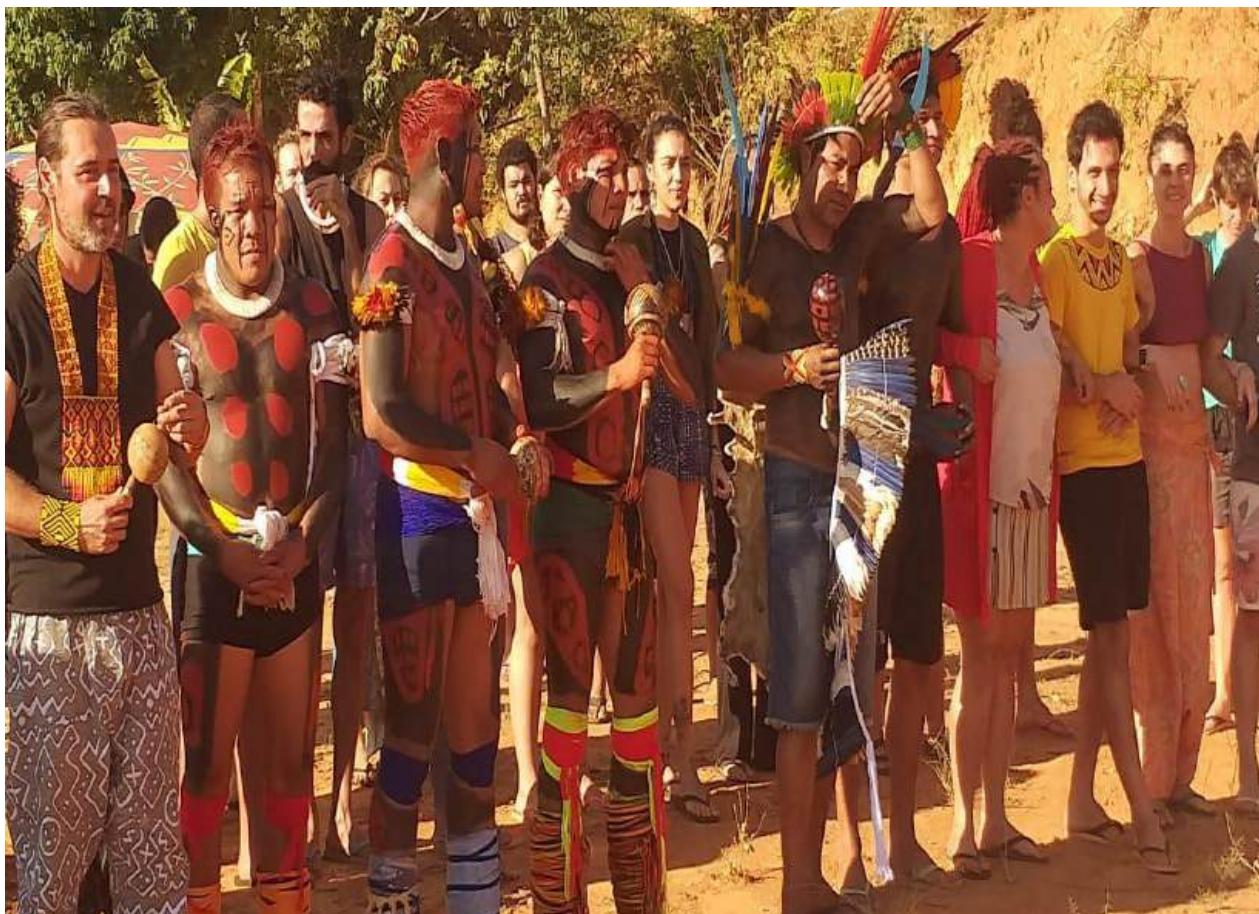 Fulni o dances with turists, photo of Lidia Urani
VII. FROM THE ART CRAFTS TO THE CEREMONIES
"Indigenous live of rituals, of ceremonies..." There is in fact an overlap between activities such as telling stories about the tribe, teaching how to make handicrafts or to sing, and the shamanic rituals. However, the rituals that use the forest herbs -jurema and rape- to connect with the ancestors, the nature energies, the invisible world, need a special preparation. Tafquea, Fkydwa, Fakho, Xumayà, who organize the forest herbs ceremonies explain how they have been trained for a long time and then authorized by the "masters", namely the pajes of the Aldeia Grande. The training is especially important for the ritual of the jurema, a sacred drink made from plants (mainly Mimosa tenuiflora, previously called Mimosa Hostilis Benth). Considered as an entheogen, the jurema has a transformative power, and may lead to states of mystical transformation. The jurema ritual is ancient: a document written in Recife, and dated 1739, deals with its use by the indigenous people of the Paraíba missions.
Once they have got permission from the pajé, Tafquea, Fkydwa, Fakho, Xumayà didn't immediately perform the ceremonies, as they have to feel ready to do it in an environment that is not the village, and this takes time: "At the beginning, I was not prepared at all...I had the permission, but I was not prepared...the "irmaos" gave me the energy to do the ceremonies." In order to do the ceremony, they need a special relationship with the non- indigenous that collaborate locally and find a ritual space with positive energy. The ritual space is generally found in one of the houses, but it can also be found outside, for example in the forest of Tijuca, more rarely by the sea. "Here (in Rio) the Jurema ceremony is different than in the village. In the village is one thing, here is another one...but... if you mentalize, if you really concentrate...you feel the energy of the ancestors even here...and if there is a good energy, you can do it. Here in the house of the Parati ONG, I feel much energy, much good energy."
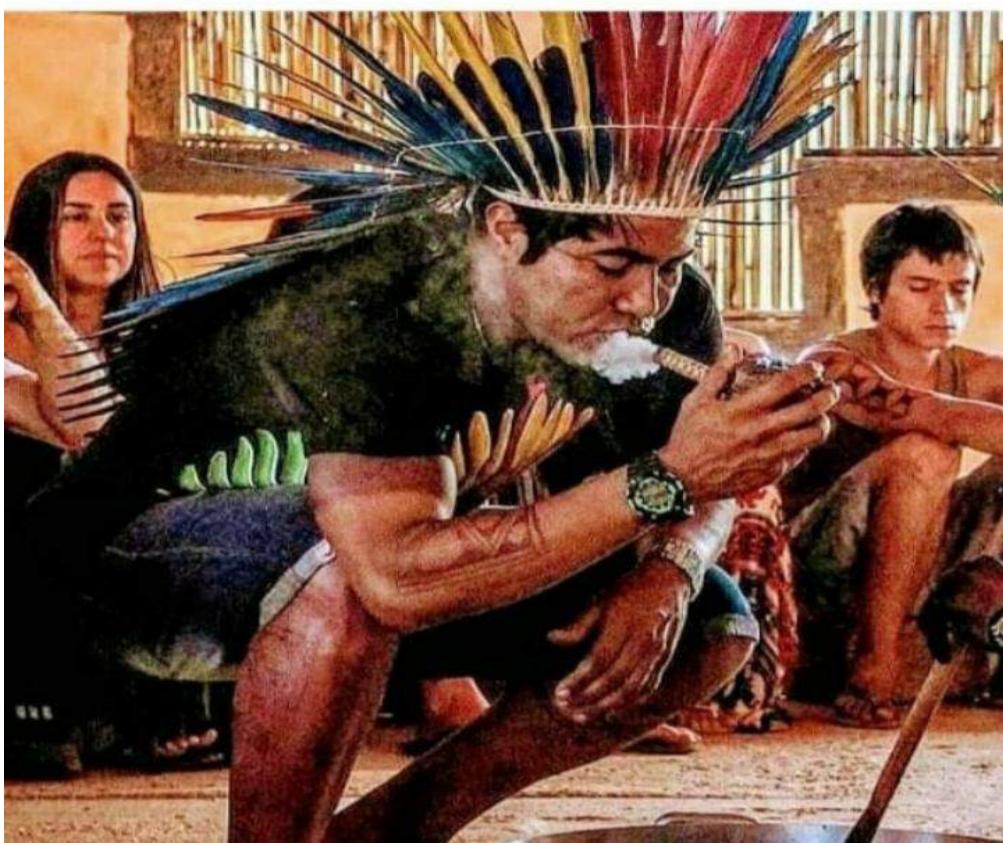 Ceremony at the Parati ONG, photo of Lidia Urani Spiritual Resistance and Cultural Exchange: The Fulni-ô of Aguas Bellas in an Intercultural Context
Tafquea, Fkydwa, Fakho, Xumayà, insist that the strong relationship with the "irmaos" is good for having ceremonies in the case of the Casa da Aguia, the Casa da Coruja Branca and the Parati ONG. They speak of "irmaos de verdade" – that means that, in their case, the separation between indigenous and whites doesn't exist.. This special relationship has encouraged the readaptation of the ceremonies in an urban setting. The responsible of the Casa de la Coruja Branca taught the Fulni-ô that he considers his spiritual children () the North American shamanic traditions of the red path and especially the presence of the drum, whose beat represents the heartbeats and, depending on the speed, creates moments of intensity, opening the heart of the participants during the ceremony. He also taught fumigation with the eagle feather. Similar exchanges have taken place at the Parati Ong, whose responsible is trained to perform ceremonies. Still,Tafquea, Fkydwa, Fakho, Xumayà consider that Indigenous are able to establish stronger connections with the sacred world, because they have a different energy, compared to the white, when they perform shamanic ceremonies. They insist that shamanism is an indigenous ritual, not a thing of the whites..."The medicine has more force when the indigenous gives it...it is just like this...there are such mysteries..."
The Jurema ceremony performed in Rio de Janeiro is a fusion of the traditions of the Fulni-ô with other traditions, namely from Native Americans, elaborated in the New Age culture. The ceremony starts with the fumigation, then there are different songs. During the ceremony, the Jurema is offered with a time interval and up to 3 doses can be administered (small glass). This readapted ceremony can be defined as a sort of "bricolage". The critical approach to these practices, would suggest that the "bricolage" would correspond to a sort of market of spirituality. We would prefer to talk of a process of syncretism between the Indigenous traditions and the New Age movement in its multiple forms of spirituality. The narratives that define the purposes of the ceremonies, shared by Indigenous and non-Indigenous, announce a transformative process where the they are all involved: "Here in the civilization, the white men is like a son, a child, he has the possibility of having a nice life from the material... good life...but...he is not formed to spirituality, lacks the formation to spirituality...he is not capable of fighting the hazards of life. The difficulties arrive....He loses a job, money...and he gets depression...this is so stupid...he doesn't know any more the important things...connecting with the Great Spirit, connecting with the ancestors, our ancestralidade (ancestors), give value to the things of nature...of the earth...this is important...".The Indigenous tradition can contribute to change the white men model of life. The comments of the non-indigenous people involved in the ceremony go in the same direction: "We have to understand their spirituality. It is important for us. For example, the ceremonies in their village called Ouricuri are a moment of total concentration in the Great Spirit. For them it is important to spend three months concentrating in God...this is unthinkable in the Western world...today...but it was possible in the past. We have lost spirituality. That's why they say that they have to heal the white man, who has completely forgotten spirituality. For them the white man has to enter slowly into the energy of the Indigenous."
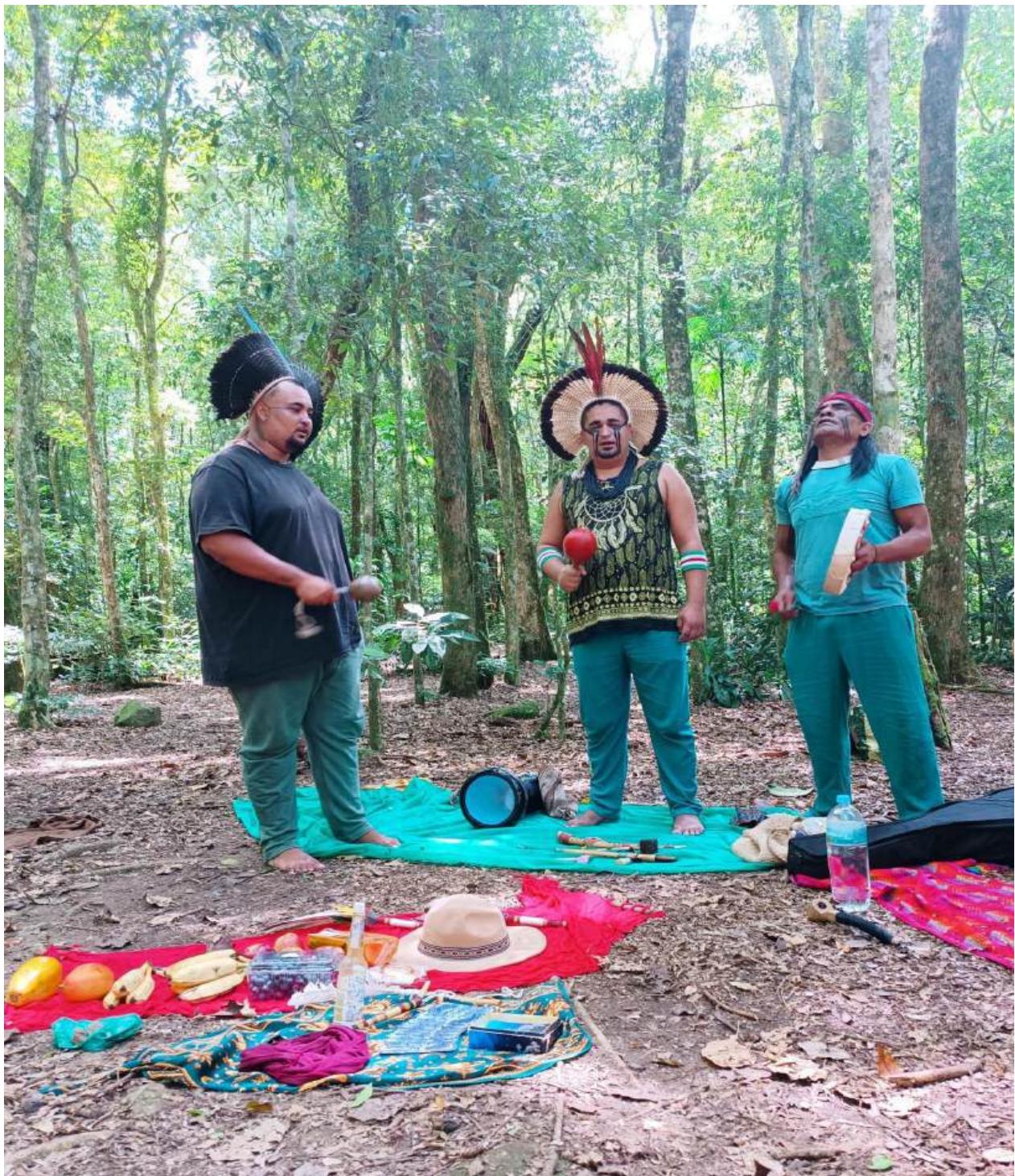
 "Comitiva" of Fulni O doing a ceremony in the forest of Tijuca, photo by Giovanna Campani
VIII. CONCLUSIONS
A critical point of view or approach may consider the readaptation of the Fulni-ô shamanic ceremonies in Rio de Janeiro as an exoticization of indigenous life and a form of bricolage. Our ethnographic work suggests a more complex view:, first of all, we highlight the cultural dynamism of the Fulni-ô who have demonstrated, over the centuries, an incredible spirit of resistance, for preserving their language and spiritual traditions thanks to their powerful rituals. They have resisted assimilation, even if they have gone through experiences -as the military – that normally play n important role of assimilation. They have resisted Christianization (and they still resist. No evangelical groups are in the Aldeia). The specificity of their rituals ensures cohesion and defines the separation from the "white men" and other indigenous groups.
Nevertheless, they have been able to find forms of compromise and exchange with the "white men", Brazilian society, while keeping the essential elements of their identity. Readapting to the reality that is external to the group is part of their history. Given the scarce resources of their land, they have developed several survival strategies based on the interaction with the "white men", the Brazilian society. Selling art crafts, performing dances and singing, is a way to earn the necessary resources for their survival: on one side they use their identity for marketing, but, on the other side, they show proudly their history of resistance to the non-indigenous.
As Reesink (2016) argues, the Fulni-ô have been able to keep their identity over the centuries through practices that demonstrate a 'continuity in transformation'. In the case of the shamanic ceremonies, we can talk of 'continuity in transformation:' moreover, readaptation is the result of an exchange with a group of non-indigenous people, who are questioning the materialistic aspects of modernity. being as well in a process of 'continuity in transformation'. In the case of the readaptation of the shamanic ceremonies, we are not facing an exoticization of the Indigenous, but moments of intercultural exchanges where the Indigenous discuss spiritual healing together with the "irmaos" and how to bring the core message of their spirituality to non-Indigenous groups. At the same time, the Fulni-ô learn how their rituals can be brought outside the village and verify their effectiveness in different settings, discovering the universality of their religion of the Great Spirit. While, selling their identity is suitable for the market, the readaptation of the ceremonies is beyond the market exchange: it is a search shared with non-Indigenous for a medicine that is good for life- everywhere, in the aldeia, in the Brazilian cities, in the whole world, for the relationship with the sacred and the nature. The outcome is the creation of a new form of syncretism, where indigenous shamanism becomes part of a new spirituality that is shared by large groups of people, independently from their origins.
- Scuro Juan, Rodd, Robin. (2015) Neo-Shamanism, Encyclopedia of Latin American Religions, 2015, Springer Link. (p.7) ↩
- A psychoactive, hallucinogenic substance or preparation (such as psilocybin or ayahuasca) especially when derived from plants or fungi and used in religious, spiritual, or ritualistic contexts Entheogen is a neologism to designate psychoactive substances employed in culturally sanctioned visionary experiences in ritual or religious contexts.—Carl A. (p.8) ↩
- Spiritual Resistance and Cultural Exchange: The Fulni-ô of Aguas Bellas in an Intercultural Context (p.8) ↩
- P. Ruck Scholars of religion often call them entheogens, from the term "god within."—Jeremiah Creedon. https://www.merriam-webster.com/dictionary/entheogen. (p.9) ↩
- “Comitiva”, the traveling group, is the term used for the Fulni O group. (p.4) ↩
- January 2004) THE CONCEPT OF INDIGENOUS PEOPLES, Background paper prepared by the Secretariat of the Permanent Forum on Indigenous Issues. (p.10) ↩
- These numbers generated debates and explanations from the technical bodies about differences in data collection methodologies. Data from Iphan - National Institute of Historical and Artistic Heritage, which, in 2010, carried out the INDL - National Inventory of Linguistic Diversity. (p.11) ↩
Conflict of Interest
The authors declare no conflict of interest.
Ethical Approval
Not applicable
Data Availability
The datasets used in this study are openly available at [repository link] and the source code is available on GitHub at [GitHub link].
Funding
This work did not receive any external funding.
References
Cite this article
Related Research



Special Issue
Launch a focused special issue to highlight research, emerging trends, and expert insights in your academic field.
