





IntelliPaper
Abstract
This scholarly investigation delves into the personal journeys of three remarkable first-generation Mexican American women who pursued a Ph.D. despite the many obstacles they faced. While two of these women have already achieved tenure, the third is currently in her first year of doctoral studies. Throughout the ups and downs of their academic pursuits, these women frequently experienced self-doubt and struggled to compete with peers who had greater access to scholarships and grants. Nevertheless, they chose to embrace this once-in-a-lifetime opportunity and were unwavering in their determination to make the most of it. Each has a unique story of what motivated them to persevere, but one common thread is the reward of earning a PhD ultimately exceeded any hardships they encountered along the way. Their incredible life experiences can inspire others to aim high and pursue their dreams. By utilizing analytical lenses grounded in ethnography and constructivist theory, this study provides valuable insight into the social dynamics and personal experiences of first-generation college students who aspire to complete a doctoral program.
Explore Digital Article Text
I. INTRODUCTION
Although the transition into a college environment can be challenging for all students, it can be particularly challenging for students who are the first in their families to attend college (i.e., first-generation college students; FGCS).
FGCS experience many barriers, including financial hardships (Arocho, 2017), lack of college preparedness (Castañón-Ramirez, 2020), racial disparities (Cuadraz, 1993), lack of family support (Flores, 2023), and decreased self-esteem (Davis et al., 2021). In higher education, most of the 89% of FGCS that drop out within six years without obtaining a degree also identify as low-income (Glass, 2022).
Conversely, among FGCS who do graduate represent 30% of all doctoral candidates (Glass, 2022). Moreover, students of color are less likely to get a doctoral degree, as approximately 40% drop out of college during their bachelor's degree (T. Banks & Dohy, 2019). While student demographics keep shifting on campus, FGCS confront unfamiliar academic and social landscapes, need more familial guidance and knowledge about their college experience, and often need help with financial constraints while doubting their abilities (Norman, 2023). Specifically, FGCS of color reality on campus includes fragments of social support, academic teacher expectations (Davis et al., 2021), academic preparation (Chang et al., 2020), and resource access (Bahack & Addi-Raccah, 2022; Ma & Shea, 2021).
From 2018–2019, just 8.8% of Latinas earned a doctoral degree compared to 63.6% of White women, 13.1% of Asian/Pacific Islander women, and 10.9% of Black women (National Center for Education Statistics, 2019). The data highlights a gap in persistence and degree attainment at the doctoral level based on racial or ethnic status. Otherwise, exploring the factors that contribute to gender disparity, particularly for Hispanic and Black males pursuing a doctorate within predominantly white institutions, it is essential to consider the overall campus climate, as noted by Espino (2014), Pifer & Baker (2014), and Williams (2002).
Studies that examine first generation (FG) graduate students' agency during their socialization in their field of practice, Perez et al. (2020) highlight oppressive or invalidating experiences that stir up FGCS to conserve psychological and emotional energy for creating a space that fosters identity-conscious scholarship and practice. Given that racialized incidents are bound to happen directly in person (Garcia et al., 2020; Ramirez, 2014) and vicariously without a clue (Truong et al., 2016), FGCS are filtering out racism to keep a space necessary for a cultural bond. It is within this context of inequality that I designed this study to address dehumanizing aspects—remnants of colonization. The intention is to further examine how structural inequity mutes FG graduate students' voices to maintain the status quo despite efforts for inclusion in a learning environment. A comprehensive overview of what is known about FGCS is encumbered in the literature review. FGCS research conducted within the field of education helps guide the primary research question: How do FGCS identifying as students of color overcome barriers when explaining how they could access and complete a doctoral degree?
II. LITERATURE REVIEW
To understand FG doctoral students, I raise awareness of recent scholarship on racism and their experiences of predominantly White institutions, emphasizing Students of Color, including military veterans. The importance of understanding how race matters lies in existing literature that highlights imposter syndrome (Dueñas, 2021; Holden et al., 2024). Imposter syndrome occurs when students experience anxiety and self-doubt, causing them to undervalue their talents, competence, and self-efficacy levels throughout their educational experiences (Lee et al., 2022). This literature review highlights the nontraditional college experiences of marginalized doctoral-level students defying the odds.
2.1 FG Doctoral Students
African American women's PhD student journeys, especially in predominantly White institutions, mark the importance of mentorship (Colclough, 2023). Kniffin (2007) viewed any proposal to address accessibility for marginalized students as calling authorities to ask who can initiate or support change. Faculty mentoring requires care and commitment because a casual or strictly business approach is inefficient in helping marginalized students (Brown et al., 1999, as cited in Young & Brooks, 2008). Regarding Latinx doctoral students' lived experiences and realities (Cuadraz, 1993; Espino et al., 2010; Fernandez, 2019, 2020; Gándara, 1993, 1995; González, 2006), there is one thing missing: an analysis of mentorship experiences specifically with faculty of color. However, Santa-Ramirez (2022) finds marginalized students may have one identifying characteristic: racial compatibility with faculty of color.
If race is a significant factor in determining the academic success of FGCS, faculty of color are essential for students beyond academia. Rodriguez et al. (2021) found Mexican American college students were affected by racism due to ignorant perceptions of their cultural backgrounds. However, these students often leaned on their families for support in attempting to overcome racial matters (McCallum, 2017; Rendon, 2015). In foresight, students of color, including Latinx and Hispanics, are diverse and exhibit family dynamics, sometimes estranged with complicated social issues (Brown et al., 2020; Consoli, 2016). Living circumstances perceived as dysfunctional lead students of color to move away from their families to attend school (Blackwell & Pinder, 2014). Otherwise, students who are unable to receive physical support from their families due to relocation build their own families with friends at their academic institution (Green et al., 2016; Johnson, 2022).
2.2 FGCS Who Get a Shot to Earn a PhD
People who are successful and high achieving but believe they have attained success because of luck more than their talent and effort are more likely to think they are imposters (Slank, 2019). Imposters are a form of fraud (Haggard, 2019; Tao & Gloria, 2019). Research conducted in the past on the imposter phenomenon revealed that women were more prone to experience it; however, more recent studies demonstrated the incidence of the imposter phenomenon is equal among men and women (Feenstra et al., 2020; Joshi & Mangette, 2018). The imposter phenomenon affects a wide variety of people, including students, business entrepreneurs, artists, nurses, and lawyers (Feenstra et al., 2020; Joshi & Mangette, 2018). Likewise, FGCS's sense of dissonance with their own identities, combined with their unfamiliarity with their new surroundings, contributes to their imposter complex and gives them the feeling that they are pretending to be someone else (Conchas & Acevedo, 2020; Ramirez et al., 2023). In fact, FGCS status was associated with higher feelings of being an imposter among Black and Hispanic undergraduate students (Haggard, 2019; Nadal et al., 2021). Consequently, research on whether college students' feelings that they are imposters change throughout their academic careers has produced conflicting results on the subject (Elliot, 2022; Zanchetta et al., 2020). Nevertheless, socioeconomic, racial, gender, and ethnic minority status can mediate the relationship between FGCS and the imposter phenomenon (Price & Viceisza, 2023; Welbeck et al., 2023). Otherwise, not all minority students experience the same struggles when transitioning into higher education (Townsend, 2022).
III. THEORETICAL FRAMEWORK
Ethnographic research is qualitative research that aims to understand people's ideologies, identities, attitudes, values, perceptions, and emotional experiences. To achieve this, researchers use thick descriptions, as described by Geertz (1973). The outcome of ethnographic research is an interpretive story, reconstruction, or narrative about a group of people, such as a classroom community (LeCompte & Schensul,2010). Per Peñuelas (2023), many White academics experience privilege within this academic context, leading to what DiAngelo (2018) terms "White equilibrium," defined as "a cocoon of racial comfort, centrality, superiority, entitlement, racial apathy, and obliviousness, all rooted in an identity of being good people free of racism. Challenging this cocoon throws off our racial balance (p. 113). Using ethnographic methods such as semi-structured interviewing (Seidman, 2019) to look at how doctoral students of color disrupt a cocoon in academia (Dely et al., 2020; Sabnis et al., 2023) uncovers a hidden curriculum that perpetuates systemic inequities. Most scholarly literature on doctoral student writing and intellectual development focuses on White middle-class and international students. Despite expanding higher education access, barriers exist for some groups, such as FGCS. These systemic obstacles prevent marginalized individuals from fully realizing the potential of higher education, festering self-doubt as implied by the imposter syndrome (Gardner & Holley, 2011).
This study aims to shed light on the social processes between systemic barriers and first-generation college students (FGCS). To achieve this, a Constructive Grounded Theory (CGT) approach is deemed appropriate. The study investigates a topic that has not been adequately researched, which is how first-generation students of color overcome systemic obstacles when enrolling in and completing a doctoral program. The intrinsic and extrinsic motivations that drive their decisions to pursue a doctorate are of great importance. According to Grimes (2023), Black men's affinity for learning, exploring, seeking out challenges connected to their interests, serving as role models, strong perseverance, greater social mobility, and connecting communities all served as intrinsic and extrinsic motivators that underpin socialization.
CGT identifies the factors contributing to success and achievement in doctoral studies by examining interactions as a social process from the student's perspective. For example, Lang who is an author cited by (Dews & Law, 1995) noted he overcame many social class barriers during socialization and became at home in academia. If the socialization process is successful, it is the goal all students will feel this way and be able to make connections to professors and peers after some time in the program. However, if this is not the case, students may find this part of the socialization process especially difficult. Lang (1995) also noted he felt part of his success was due partly to his White male status. CGT guides our understanding of the complex nature of higher education by focusing on students' primary concerns. Considering the social nature of learning, human beings are hard-wired to connect. People can only reach their full potential once they have a healthy connection with others (Feinberg, 2023; Murphy, 2015; Ryan & Deci, 2000). Yet, what happens when marginalized students are placed in a classroom environment where white values and assumptions predominate their own values and cultures of origin are often misunderstood, belittled, or ignored (J. Banks, 2001; Feinberg, 2023; Valencia, 1997). This results in students of color internalizing negative messages.
IV. METHODOLOGY
As part of this study, I used ethnographic methods and a grounded theory approach to investigate how first-generation students of color handle issues such as racism and the need for support in doctoral programs and society. As a firstborn male with a Mexican American heritage, I have a sense of entitlement that upholds a double standard against female relatives. However, I understand such double standards limit the full potential of women (Arciniega et al., 2008; Valdez et al., 2023;) In the same way, FGCS often operate in educational spaces where they feel unwelcome (Gasman et al., 2008; Holley & Gardner, 2012). This is due to historical and educational policies and practices that have embedded racism and created structures that fail to address the unique challenges faced by first-generation students of color (Achor & Morales, 1990; González, 2006). By examining the lived experiences of FGCS, we can better understand the impact of racism on their doctoral experiences and reflect on the importance of studying leadership in the context of social justice.
To fully grasp the importance of social interaction, I adopted a critical social constructivist approach that focuses on marginalized students' experiences. This approach allowed me to navigate multiple realities, balancing assimilation into dominant white culture with preserving my own cultural identity (Anzaldúa, 2015). Despite being a male heterosexual firstborn, I recognize the issue of double standards transcends culture and is a troubling problem in our society. Anzaldúa (2015) notes that academia has long been dominated by privileged individuals, mainly white, heterosexual, cisgender males, who perpetuate their privilege for future generations (Garrison et al., 2021; Stewart & Nicolazzo, 2018). In essence, higher education was not designed with marginalized students in mind. However, I understand that academia often challenges and undermines my research and service. To combat this, I blended grounded theory and ethnography with an interpretative phenomenology design, which more thoroughly examines social phenomena from the participant's perspective (Maxwell, 2013). More importantly, scholars are enabled to gain knowledge privy to confidential experiences of participants. I also incorporated ethnographic methodology and theoretical concepts to recognize the importance of culture when reviewing the daily realities of FGCS. By examining participants' experiences and their interpretive practices, we can better understand their world and work towards transforming it (Denzin & Lincoln, 2018).
The benefit of grounded theory and ethnographic methods is to illuminate how first-generation students of color navigate systemic racism. I place emphasis on the various forms of capital that communities of color possess, including cultural, linguistic, navigational, resistant, familial, and social capital, as described by Yosso (2005). My ultimate goal is to shift the focus from students' perceived limitations to their valuable assets by recognizing and highlighting their unique talents, strengths, and experiences in the college environment. Failure to acknowledge and appreciate the cultural wealth of marginalized communities only perpetuates a system that favors individuals from dominant social groups while excluding and disenfranchising those already at a disadvantage. This notion of a false meritocracy, which assumes that individual effort is the sole driver of success, ignores the deeper issue of racism that underlies our society (Fuhrer, 2023).
In this vein of thought, it is important to consider how historical educational policies and practices embedded in racism have created structures that fail to adequately address how access and preparedness for graduate programs exclude the challenges FGCS have faced throughout their educational socialization. According to Grimes (2022), much of what motivated Black men in the pursuit of a doctorate degree was silencing imposter syndrome—to prove they belong and quiet their fears of failure. Likewise, I want to know how others silence the noise.
V. DATA COLLECTION
The sample for this study centered on students of color FGCS who had completed a doctoral program. This study used convenience sampling for the selection of three participants, each residing in the United States and enrolled in or finished a doctoral program. Convenience sampling allowed the researcher to choose participants based on the qualities or experiences required for the study (Bradshaw et al., 2017). Ensuring the participants met the criteria was necessary, as the data collected aligned with how FGCS pursuing a doctorate navigate adversity to better understand social complexity when overcoming significant odds. For students of color being the first in their families to pursue a doctorate, it can be difficult to find support and guidance because their experiences are not common. By conducting individual interviews, valuable data emerged about their life experiences, revealing the struggles they faced and the support they received from their community (Campbell et al., 2020).
The primary data source for this study relied on information obtained during in-depth interviews conducted via Zoom (Moustakas, 1994). Each interview was both audio and video recorded to provide observational data from the interview. Once the participants confirmed their willingness to participate, I sent a link via Zoom. The Zoom link provided a convenient way for the participant to find a convenient time for their interview. I was permitted by the participants to audio and video record each of the three interviews conducted via video conferencing and expeditiously transcribed the interview for the participant to review; the Otter.ai app served for audio transcription. As I collected data, I recorded observations and reflections in a researcher journal. The interview transcripts, audio recordings, and researcher journal were data sources for data analysis, and I conducted member checks. While member checking is a form of respondent validation in qualitative research, I procured trustworthiness by receiving feedback as part of this writing process. (Merriam & Tisdell, 2016; Maxwell, 2013).
Before conducting any interviews, I received timely feedback from a professor to revise the interview questions to be interactive. Next, I completed the field interviews featuring three exceptional females with similar cultural traits who identified as Mexican Americans.
Sample
The featured three participants interviewed on campus include tenured distinguished Mexican
American females. Two participants are highly visible on campus as advocates for diversity, equity, and inclusivity that upholds an antiracist learning environment. Each person is labeled separately for anonymity as Red, Maroon, and Blue. Red earned her bachelor's in human development from the University of California (UC) Davis and a teaching credential from California State University (CSU) Sacramento with bilingual authorization. Afterward, she attended Stanford University and earned a master's in linguistics and a Ph.D. in curriculum studies and teacher education. Maroon earned a bachelor's in Spanish literature and theater from UC Berkeley and UC San Diego. Her PhD in performance studies comes from Stanford University. Blue is a first-year graduate student pursuing a doctorate in education (EdD) in social justice leadership. She holds a full-time administrative position on campus that covers tuition.
All participants are full-time employees as part of the faculty or staff where this study unfolded, referred to as University A, a private university in California. University A strives to develop an inclusive, multicultural range of services to ensure student differences are respected and valued. The impact of race appears upon the university's admission efforts to identify promising candidates who will do multiple things like (a) excel in their academic pursuits and (b) share institutional values and commitment to making the world more just and humane.
VI. DATA ANALYSIS
The problem statement served as the driving force behind the data analysis. This study focused on the systemic difficulties faced by FGCS of color while accessing and completing a doctoral program. Additionally, the gap in the literature guided the exploration of how three Mexican American women dared to pursue an opportunity of a lifetime without conforming to the status quo. The study's analytical approach followed the six steps Smith et al. (2009) outlined for interpretative phenomenological analysis to inform the research question. These steps include 1) reading and re-reading, 2) initial noting, 3) developing emergent themes, 4) searching for connections across emergent themes, 5) moving to the following cases, and 6) looking for patterns across issues. Since the study involves analysis without predefined analytic categories, Yin (2014) suggests multiple attempts to make sense of individual experiences will be required to identify emergent themes. As Bevan (2014) suggests, setting aside expectations and potential biases before they emerge in the participants' experiences is essential.
According to Smith et al. (2009), the existing literature on IPA analysis must provide a definitive approach or method for working with the data. The interpretive process captures a set of processes that involve (a) moving from the particular to the shared (Smith et al., 2009), (b) moving from the descriptive to the interpretative (Smith et al., 2009), (c) focusing on personal meaning-making in a specific context (Vagle, 2014), and (d) a commitment to the understanding the participant's point of view (Smith et al., 2009; Vagle, 2014). Otherwise, the author reflects on who benefits from this study and why. These questions force him to consider strategies that produce legitimate knowledge based on the colonization of knowledge (Tuck & Yang, 2014).
The following sections describe the six steps for data analysis as outlined by Smith et al. (2009), who suggest that due to the inductive nature of IPA, Steps 1 and 2 are nearly indistinguishable, making it difficult to understand precisely where one step begins and the other ends. Appendix A shows a depiction of Steps 1 and 2. As outlined by Smith et al. (2009), I read and re-read transcripts while listening to the audio recording of the interview, noting the voice tone, body language, and emotions behind the participants' words. Next, I examined the transcript for content and language on an exploratory level. During this phase, I made notes related to (a) body language and voice tone, (b) contradictions, (c) situations where the individual appears to be describing what she believes is the correct answer, and (e) sharing painful memories, hopes, dreams, and goals.
As Smith et al. (2009) described, each case gets coded and analyzed independently. Therefore, following the process depicted in Figure 1, I created codes for each transcript's critical segments with a descriptive phrase or word to depict its meaning within the case. The alignment of the initial coding from Step 2 to emergent themes and subsequently superordinate themes, including frequencies, is located in Appendix B.
This step involved identifying emergent themes for each case from exploratory comments. This process began by focusing on discrete segments of the transcript before moving to the next section of the interview. This process represents the first of the hermeneutic circle, where the whole interview becomes a set of individual parts (Smith et al., 2009). The analytic process for each case included (a) completing a word cloud to determine the most frequently appearing words in the transcript, (b) examining the most frequently mentioned words in the context of the actual transcript, (c) looking for linked phrases, thoughts, and trends, (d) looking for contradictions, and (e) examining the parts in relationship to the whole (Smith et al., 2009).
The third step entails identifying connections across emergent themes within an individual case. A key focus at the analysis stage was to examine emergent themes about the research questions and involved four approaches. The first approach involved numeration, which considered the frequency of a theme (Smith et al., 2009). The second approach utilized abstraction, grouping similar emerging themes (Smith et al., 2009). A third approach involved polarization, which involves determining if one statement is different or oppositional to another (Smith et al., 2009). The fourth analytic approach at this stage involved contextualization, which involves understanding how the participant's personal life influenced parts of the interview (Smith et al., 2009). Figure 3 in Appendix C depicts identifying connections across emerging themes within a singular case. The result of all four of these approaches in Step 4 resulted in clustering emerging themes into subordinate themes, as illustrated in Table 4 (Appendix C).
Step 5 involves moving from individual to subsequent cases. The primary challenge with this step is to maintain analytic independence from the previous cases. I used bracketing for each case to ensure the individuality of each case. Bracketing is a technique to suspend the researcher's assumptions about the world to maintain a stance of neutrality (Smith et al., 2009; Sorsa et al., 2015). I used the same analytical process for each case to maintain the independence of each case, as described in Step 4 (See Appendix C, Figure 3). Second, I attempted to maintain analytic objectivity from case to case by avoiding analyzing more than one case in one working session. I accomplished this by blocking my calendar for two periods per day, one case in the morning and the other in the early evening, until I had analyzed all three cases.
Step 6 involves looking for patterns across cases. The approach used in this step was to create a Microsoft Excel spreadsheet that listed each case with all the emergent themes with the corresponding transcribed text and the cluster themes, as identified in Step 4. An examination of the individual cases resulted in the identification of 231 initial codes. The research questions directed multiple attempts to organize emergent themes into superordinate themes. The researcher analyzed emergent themes listed on the spreadsheet by examining words and critical phrases across multiple cases. The following five superordinate themes emerged from this analysis: moderate emotion, effective leadership, situational awareness, different expectations, and authenticity. A superordinate theme is an experiential statement captured from data the participant considers meaningful. For example, a moderate emotion was described by Blue in reference to what is driving her to complete a doctorate program: "I am not entirely sure if I want to focus primarily on BIPOC students and their needs, or how staff can better support our BIPOC students' mental health needs." Red suggested effective leadership requires the ability to influence decision-making. As a tenured professor, Red stated, "I would love to be in a position where I have power-making and decision-making power and can utilize and use the lens of social justice to inform the decisions being made for the betterment of students, staff, and faculty." For situational awareness, Maroon recognized people who paved the way for her success, as evidenced by saying, "I learned a lot starting from age 16. I went to UCSD for my undergrad and had a great mentor in Jorge Huerta, a behemoth in Latinx Theatre. He taught me how to teach, direct, and make things happen." Similarly, Maroon knew different expectations from professors require resistance to traditional academic pedagogy. Maroon recalled a professor once criticized a paper on Chicano versus Spanish Golden Age theater, which was hurtful. She deferred because that's European theater. In reality, Spanish and Southwest theater are two very different things.
One is mainly political by design. The other one is re-instilling many of these Christian values. Later, he apologized and became supportive, realizing his comments were short-sighted. Lastly, authenticity appeals to embracing the wholeness of a person's identity. Blue reflected on growing up, she had to toughen up and make do with very little. But she always believed there was a brighter side to look forward to in pursuit of a doctorate, regardless of the odds. In Appendix D, there is an example of the analysis that helped identify emergent or sub-themes.
Validity
The research aims to present the data in a way that portrays the validity of the analysis. Given the research question focuses on understanding how students of color who are FGCS describe their school experience, the author implies that barriers are inevitable. Indeed, graduate school is not easy, nor a walk in the park for anybody. However, each person interviewed demonstrates a tenacity to start and finish a doctorate program unfazed by the odds yet summoned to prove doubters concerned about their competency and talents as shortsighted educators.
Prominent qualitative scholars such as Giorgi (2009) and Lincoln and Guba (1985) asserted qualitative research does not view validity and reliability independently. According to Lincoln and Guba (1985), credibility is the primary term for qualitative studies' validity. Further,
Maxwell (2013) stated the study is credible in qualitative research when the researcher presents forthright accounts of the interpretations of the phenomenon under study. Considering participants' lived experiences in college readiness programs designed for underserved, marginalized students like FGCS, having access to such a support network is a game changer.
Findings
In this section, I present the results of the thematic data analysis based on the emerging themes of imposter syndrome, perseverance, and familial support. During the analysis, I asked reflective questions like, "How do you know what you know?" and "What is meaningful in the narrative?" I also explored the possibility of something happening that the individual may be less aware of. However, Smith et al. (2009) pointed out the existing literature on IPA analysis needs to provide a definitive approach or method for working with the data. Despite this, the IPA process generally involves moving from the particular to the shared, from the descriptive to the interpretative, focusing on personal meaning-making in a specific context, and committing to understanding the participant's point of view. Specifically, the inductive and iterative approach to IPA includes strategies like a line-by-line analysis of the participants' claims, concerns, and interpretations (Smith & Osborn, 2015).
Theme 1: How Did You Even Get Here?
The first theme from the dataset included the participants discussing how they had experienced and were affected by imposter syndrome. Although race demographics are explicitly invincible in conversations, participants implicitly understand that FGCS represents a low-income, disenfranchised group at risk of dropping out of the revolving cycle of poverty. All participants recalled being frustrated when they realized their peers had access to information about funding and fellowships when they did not. They blamed themselves and felt different, questioning their place in graduate school and their worthiness in terms of the aspirational capital they received from family and social circles. Each participant contributed to this theme, as they were able to discuss specific situations where they felt like an imposter on their college campuses. For example Red discussed that to overcome feelings of imposter syndrome, she reflected on her beliefs on the equality of educational access for everyone. Red stated:
So, I had a lot of experiences like that. And there weren't very many, you know, students of color at all, like PhD students, there were very few of us. So immediately, you know, we gravitated towards each other. We created our own little spaces, but it was around feeling like we didn't belong, right? Because we were different from typical Stanford students.
Participants made statements such as, "I had to figure it out on my own," a sentiment that comes from a lack of navigational tools. In other words, participants did not know how to access support, nor did they even know support was available to them. Maroon also described how she experienced imposter syndrome, which is the plight of the graduate student. She perceives imposter syndrome shaped her experience:
You know, academia is not necessarily made for anyone who's not a cisgender White male. There were moments when I didn't want to use or didn't want to if I had an idea for a paper, a project, or an argument in class; I felt conflicted because I didn't want to use the same bastions of philosophy. That would have never been considered in my study area; I felt disingenuous to use Dysart to discuss the disruptive nature of a Feminist Collective in Mexico City. Distrito is not necessarily concerned, nor was he ever concerned with BIPOC communities. But it wouldn't matter unless I could connect it to these bastions of philosophy. So, it was like sometimes I felt I was trying to fit a square peg through a round hole.
Blue relayed a similar experience when navigating graduate studies. Blue thinks imposter syndrome is always present in her mind, though less poignant. Blue stated:
It's challenging. But imposter syndrome is always at play. But it's constantly telling myself, Don't listen, that's just the voice in the back of your head that's always been there. But give it less power. And so, I have been over it as I continue into this program.
These responses required multiple readings and careful consideration on the researcher's part to ensure an understanding of whether the participant had perceived being a minority FGCS as contributing positively or negatively to their experiences in graduate school. Factors perceived negatively included feeling different or isolated, additional pressure from their community and society, and lacking overall knowledge of the graduate school experience. Factors that were perceived positively included pressure to succeed for their families and pride in being first in their families to attain college degrees. Samples of these responses appear in Appendix D.
Responses for these questions get deductively coded into social and aspirational capital themes. Additionally, these responses created a need for an overarching theme for first-generation college students, as many were a general commentary on the effects of being FGCS and did not fit neatly into ascribed deductive codes. Nevertheless, ethnographic observation aims to explore hidden layers of cultures. In this aspect, my experience as a FGCS adds perspective.
Given that participants essentially felt out of place on campus, their narrative reflects the existing power and privilege, established hierarchies, and resistance to dominant White patriarchal ideology that was in play during their doctoral experience. As Mexican American female scholars immersed in academia, the imposter syndrome represented a part of the challenge they faced but did not stop them from reaching their goals.
Theme 2: Why Am I Going Through the Work, Effort, and Struggle?
The second theme that emerged from the dataset included the participants discussing how they overcame barriers in their educational experiences by persevering. The participants shared their stories of setbacks and challenges during graduate school, some of which were not directly a result of their minority FGCS status. The interview yielded varied responses regarding perseverance. Red discussed how the importance of education was ingrained into their life at an early age, which assisted them when it came to experiencing barriers to keep going through the process. Red stated:
My parents didn't attend college, high school, or middle school. They finished, I think, in fourth or fifth grade. My mom and dad are from the state of Michoacan, Mexico. So, it was a big knowledge gap for me and them about what schooling was right in the United States. The gap explains why I was in a lot of these college readiness programs for minorities. I knew I wanted to go to college, probably since before middle school. Similarly, Maroon reflects on the significance of being part of a strong support network that endorsed her candidacy for a PhD program. Maroon gained inspiration from a college readiness program that genuinely bolstered self-esteem:
As a graduate student, I was a part of the DARE program. DARE stands for diversifying the academy and recognizing excellence. So, it's geared towards bringing in more historically marginalized communities into the folds of academia. They talked about the difficulties, including unwritten expectations of maybe being the only representative for your community or communities and a department and how that would mean a demand not necessarily in the job description, right? And then I became a professor. Blue's main struggle came from her own doubts; she relied heavily on positive feedback from her social circles and cohort that would give her positive feedback on professional matters. Blue recalls a major turning point from having a private discussion among several peers from her class cohort by saying the following:
I've always paved the way for myself and had to figure things out independently. That is challenging, but at the same time, I have colleagues in my cohort who are a year ahead of me in this program, I am able to ask them questions and get advice from them. And so, everyone is just like, we all feel this way, you're not alone in that. And I think being able to have that kind of vulnerability, and those discussions with cohort members have helped me get questions answered.
The study's results indicated that the participants had access to resources that helped them persevere in graduate school. Specifically, they described using familial capital for support and perseverance. The interview responses showed that navigational and perseverance tools were closely linked, and sometimes the themes overlapped. Many participants mentioned that their parents and community members were role models of strength and perseverance. These role models provided navigational tools, showing them how to navigate new and unfamiliar situations with determination. Additionally, they offered the resistant capital necessary to persevere in the face of adversity and inequality, which the participants often experienced in graduate school.
Theme 3: Growing up, we Toughened up to Power Through.
The third theme from the dataset included the participants reporting that they overcame barriers to access education through family encouragement. The interview participants' answers were closely linked, explaining how their parents' aspirations for them became theirs. Participants stated their parents had aspirations for them that served as the catalyst for their interest in continuing their education. An additional theme among the responses of these participants was that they all said that while their parents impressed upon them the importance of going to college, they did not offer guidance as to what to go to college for. Red stated, "I can focus more on my family life. My brothers, sister, parents, and, right now, cousins. And that is important because I had to focus so much on my academics." Red worked harder than other students due to limited resources throughout her pre-tenure years until recently. Red explains how pursuing a PhD affects the people she cares about the most, as evidenced by saying, "I'm turning 40 in January, and it's making me reflect on whether I prioritized my education and career over personal relationships. Maroon draws inspiration from parents who are farmworkers.
According to Maroon a small-town farming community sparked a passion for dramatic theater:
I attended Arvin High School, a small migrant and immigrant community of about 16,000 people, mostly Mexican American in Kern County, California. Although there wasn't much emphasis on theater, a powerful performance depicting our stories and histories on stage inspired me to change my situation. I had an excellent drama teacher who still inspires me to this day. I worked in the fields alongside my parents, but the theater opened my eyes to new possibilities.
Maroon also mentioned her parents didn't understand why she wanted to pursue something without guaranteeing success. However, she believes it's better to do what you love than settle for a job or degree just because it's safe. As a professor, some of her students have faced difficulties with their parents not supporting their choice of major. To address their concerns, she would give a talk on campus to help first-generation students and their parents understand the value of a theater or arts degree. Maroon knows from experience how hard it can be to explain your passion to those who don't understand, and she wants to help those who are struggling.
Overall, participants recalled their families offering emotional support, even when they did not understand the process or expectations of graduate school. Blue's family finds her education interesting because they know she's studying again but don't fully understand why it's important. While they know she has always been in school, they only have a basic understanding of her field of work. Also, since her grandmother mainly speaks Spanish, explaining what she does for a living is challenging. Nowadays, Grandma thinks Blue is a school principal due to working in education for a long time. Although it's very different from what she does, that's close enough. Regardless, her sister, mother, and cousins who graduated from college understand better. Blue can't afford to let fear stop her from doing things; she wouldn't be this far today. In light of how significant is Blue's mother to fuel her PhD aspirations, she stated:
My mother raised my sister and me independently and worked hard to support us.
Despite harsh times, we made it through. My mother was a role model and taught me that I shouldn't let fear stop me from achieving my goals and dreams. I always strive to succeed and won't accept failure as an option. I know I will face challenges but am determined to overcome them.
VII. DISCUSSION
This qualitative phenomenological study investigated how students of color identifying as FGCS described barriers and the support experienced when accessing and completing a doctoral degree. This study was necessary and relevant because much of the research on first-generation college students has been conducted at the undergraduate level (Nguyen & Nguyen, 2018; Tate et al., 2015; Yuma et al., 2016), not at the doctoral level. Specifically, three Mexican American first-generation college students unveil moments during their graduate studies. Red explains more in-depth the relevance of this cultural background in relation to her doctoral studies. Red stated,
So, I feel coming from this background, I knew things would be hard. Never even question it. I knew everything I would do academically would be more challenging for me than for others. So, I was just ready for it, never a surprise. I didn't slow down. I always had a plan, and this is what I want to do.
VIII. LIMITATIONS OF THE STUDY
This study had several areas for improvement and limitations. Besides time constraints and a small sample size, my positionality created biases. For instance, the research question on barriers initially focused on a deficit framework. I assumed systemic problems were detrimental. Although challenges existed for these participants, I found three individuals who have had academic success given their ability to navigate their imposter syndrome, persevere, and have the support of their families. Examining how FGCS utilized supports using a different theoretical model might yield different information. Bean's (1980) Student Attrition Model accentuates the importance of background characteristics, socioeconomic status, student satisfaction, and the influence of peers on student retention. Understanding FGCS perseverance from various angles helps develop more effective support programs that detect more than satisfactory behavior.
8.1 Implications for Practitioners
Based on the findings of this study, there are some implications for practitioners that require discussion. The first implication is that colleges and universities can work to better support FGCS by understanding imposter syndrome, how they experience perseverance, and how relatives influence their educational journey. The first recommendation for practitioners is to create a space that values FGCS at their college institution that addresses imposter syndrome.
Whereas most of the research on imposter syndrome occurs at the undergraduate level, FGCS at the graduate level continues to face challenges unique to that stage in education (Cunningham & Brown, 2014; Vasil & McCall, 2017). However, participants in this study exhibit ferocious perseverance in graduate studies. This growth mindset has broad implications for disenfranchised communities who need more representation in fields such as healthcare, academia, and politics, most of which require advanced degrees for leadership roles (A. Banks & Hicks, 2015; LaRochelle & Karpinski, 2016). Ongoing qualitative research is needed to investigate the sources of support necessary to stoke FGCS perseverance and to inform policymakers and stakeholders of the need to increase retention and graduation.
8.2 Implications of Findings for Future Research
Future researchers should consider comparing the differences between male and female FGCS needs.
While the female participants cited familial and social capital as the most critical factors to their success, the hyper-focus on achieving goals somewhat hampered personal dating relationships. This ordeal for Mexican American female scholars determined to reach the highest pinnacle of education amounts to a serious romantic cost. Although the Latina student may not face direct pressure from her family, she often feels alone in balancing her responsibilities at home, work, and doctoral studies (Flores, 2023). The gains of earning a PhD degree include dismantling cultural beliefs that subordinate women in Latin America. Otherwise, Latinas feel obligated to repay their parents by providing support and assistance. In this case, how does the absence or presence of a suitable life partner enrich a meaningful life that's fulfilling onward? Future qualitative research can implement more disenfranchised groups, as this study only explored the experiences of Mexican American able-bodied folks. Because of cultural homogeneity, different underserved populations are invincible. It is beneficial for stakeholders to understand how members of diversified groups access support. This way, generalizations do not enlarge stereotypes or promote prejudices. Another step onward is to examine how recent immigrants in Latinx communities experience graduate studies when compared to Latinx individuals whose families have been in the United States for longer than one generation. In this case, assimilation, acculturation, and resistance to the status quo are noteworthy.
IX. CONCLUSION
Despite an increase in earned graduate degrees, minority students continue to lag behind their White counterparts (NCES, 2017). Particularly, first-generation doctoral students face even higher attrition rates, with approximately 30% failing to complete their degrees (Roksa et al., 2018). Gender and ethnicity also play a critical role in degree persistence and completion rates. According to the U.S. Census Bureau (2019), Latinas comprised only 0.6% of women who obtained a doctoral degree. Unfortunately, few studies focus on Latinas' experiences pursuing doctoral programs (Arocho, 2017; Kohler, 2023).
However, available studies often combine the experiences of male Latino students, White graduate students, and students from other racial groups. Also, the identity terminology of "Hispanic or Latino" refers to a person of Cuban, Mexican, Puerto Rican, South or Central American, or other Spanish culture or origin, regardless of race (United States Census Bureau, 2021). Clearly, female and minority students, especially first-generation students, have a higher inclination to pursue a doctorate degree, according to a study by Hoffer et al. in 2003. They are motivated to excel academically due to the challenges faced by their parents, which include relocating to the U.S., working tirelessly, and grappling with the English language, as reported by Easley et al. (2012). However, interviews from these participants suggest their experiences are shaped by perseverance, which goes beyond a narrative of lack of resources. This study attempts to contribute to advancing research on factors that have influenced FGCS students of color who dared to start a PhD program; some have achieved tenure-track positions. It shows that despite imposter syndrome feelings, their efforts and support networks led them to success.
APPENDIX A
Figure 1 depicts the steps for data analysis for Steps 1 and 2, starting with listening to the data, reading, and re-reading data on an exploratory level. An example of the types of notes made related to the segments of the transcript appears after in Table 1.
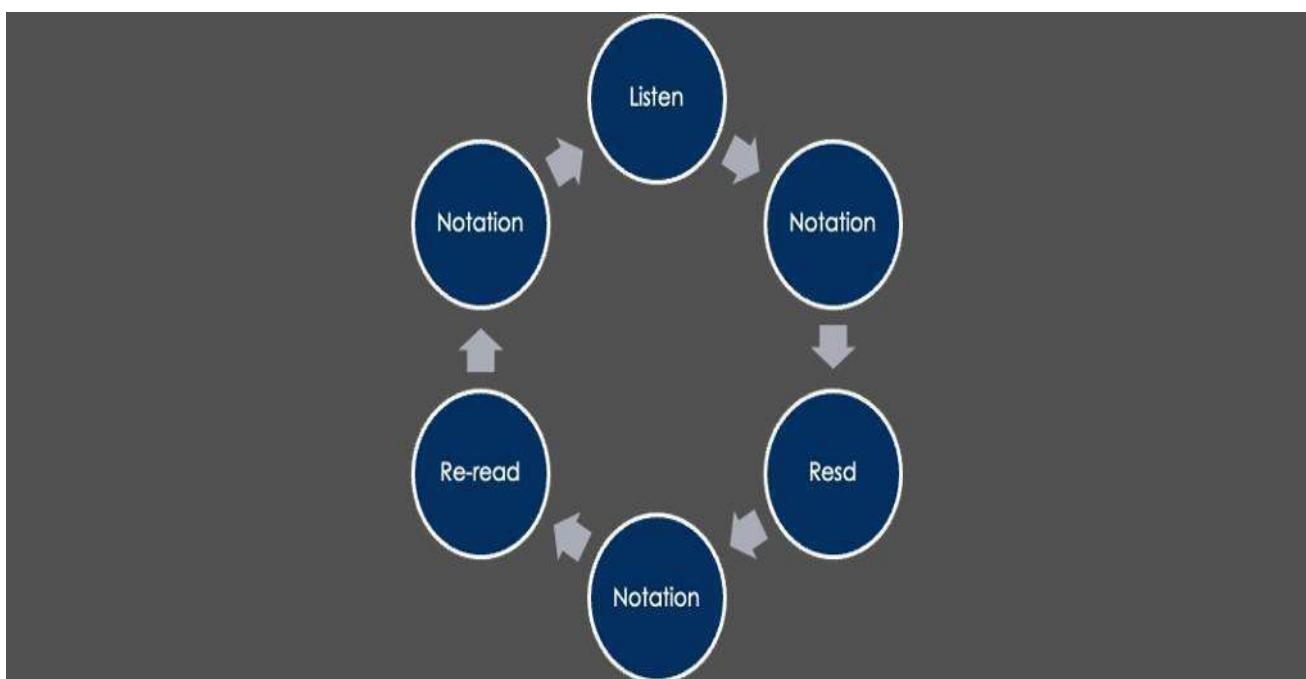 Figure 1: Case by Case Analysis: Steps 1 and 2
Notes: Depiction of the data analysis for Steps 1 and 2 in a circulation formation beginning with listening, notation, read, notation, re-read, and notation. The data for this representation came from interviews with top women leaders, which depicts Steps 1 and 2 of Smith et al.'s (2009) description of interpretative phenomenological data analysis.
Table 1: Example of Step 2-Participant 1
| Original Transcript D | Researcher's Notes |
| I didn't stop long enough to allow that fear to come in me. I was like you want to do this. This is what this is, what it takes. This is the first step, you know. If it works, it works. If it doesn't, you try again later, if you want to, and if not, you still figure something else out. So, I feel like with a lot of people that sometimes don't end up taking those steps is because you stop too long to question whether or not it's the right choice. | Sounds like her life experiences made her persevere.Mentoring had a significant role in her perseverance.This was a big deal to her. I notice eyes of a tiger. |
APPENDIX B
| Code System | Memo | Frequency |
| First Generation College Student (FGCS) | ||
| Imposter Syndrome | ||
| Perseverance | ||
| Family | ||
| A person whose parents did not complete a 4-year | ||
| A person whose parents did not complete a 4-year 3 college or university degree, or high school | ||
| Feeling Different | 22 | |
| Keep going. Step up | 22 | |
| Aspiration to create a better future | 15 |
APPENDIX C
Figure 3 depicts identifying connections across emerging themes within a singular case. The result of all four of these approaches in Step 4 resulted in clustering emerging themes into subordinate themes, as illustrated in Table 4.
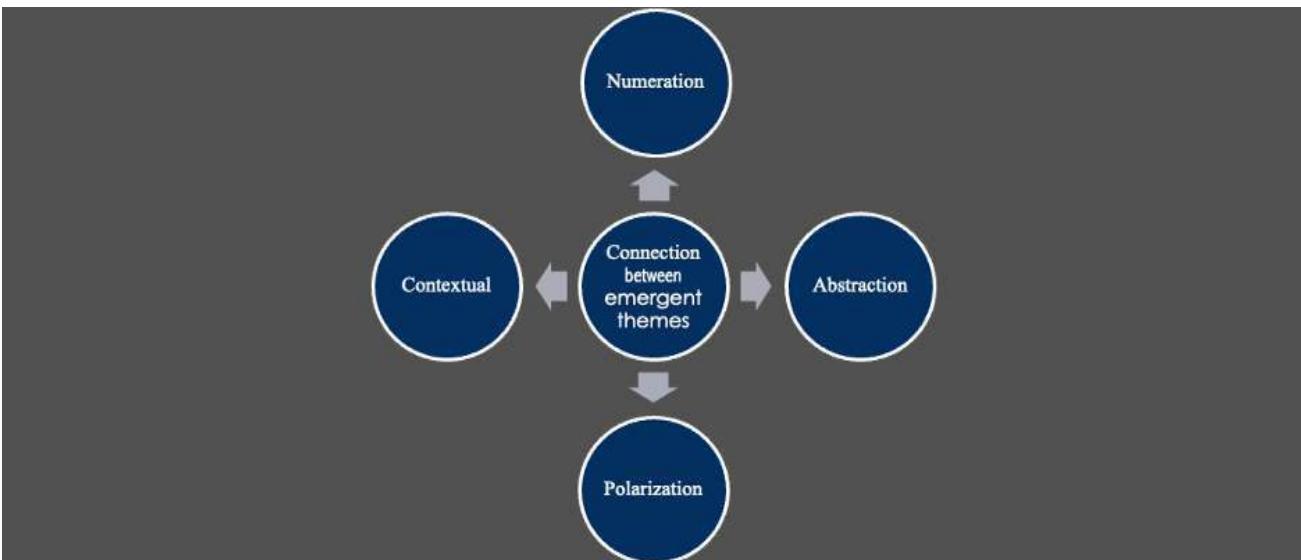
Note: Depiction of data analysis for Steps 4 and 5, which involved analysis within a singular case. Analysis at this stage began with numeration, abstraction, polarization, and contextualization to identify the connection between emergent themes. This figure was prepared by Saundra D. Schrock, researcher, as a representation of Steps 4 and 5 of data analysis for an interpretative phenomenological study described by Smith et al. (2009). The emergent themes coming to the surface include perseverance, family support, and the imposter syndrome.
| Emergent Theme | Original Transcript | Superordinate Theme |
| Perseverance | I didn't stop long enough to allow that fear to come in me. I was like you want to do this. This is what this is, what it takes. This is the first step, you know. If it works, it works. If it doesn't, you try again later, if you want to, and if not, you still figure something else out. So, I feel like with a lot of people that sometimes don't end up taking those steps is because you stop too long to question whether or not it's the right choice. | Mentored into PhD level |
APPENDIX D
Code Examples
| Thematic Category | Subcategory | Content Description |
| Overcoming Barriers when Accessing and Completing a Doctoral Degree | Imposter Syndrome | Resistance to conformity impacts future motivation, even though specific structural conditions enlarge imposter syndrome to explain how FGCS enrolls in and completes a Ph.D. program. |
| Perseverance Family Encouragement | Historical evidence shows that minorities have developed the ability to endure years of oppression. They have learned to withstand racism, classism, and genderism that can make them feel undeserving of leadership positions. Bernal (1998) says a community's collective memory shapes individual experiences. For Chicanas and Latinas, ancestors and elders pass down knowledge via legends, storytelling, behavior, Chicano Studies scholarship, and Mexican folk ballads about conquest, land loss, and segregation. |
APPENDIX E
Figure 2 depicts the start of the hermeneutic circle and the process for data analysis used in Step 3. The main goal at this stage is to turn notes into concise and pithy statements of emerging themes. These themes reflect the participant's original narrative and the researcher's interpretation of those words (Smith et al., 2009). Table 3 illustrates the relationship of the emergent theme to the original transcript and the researcher's notes.
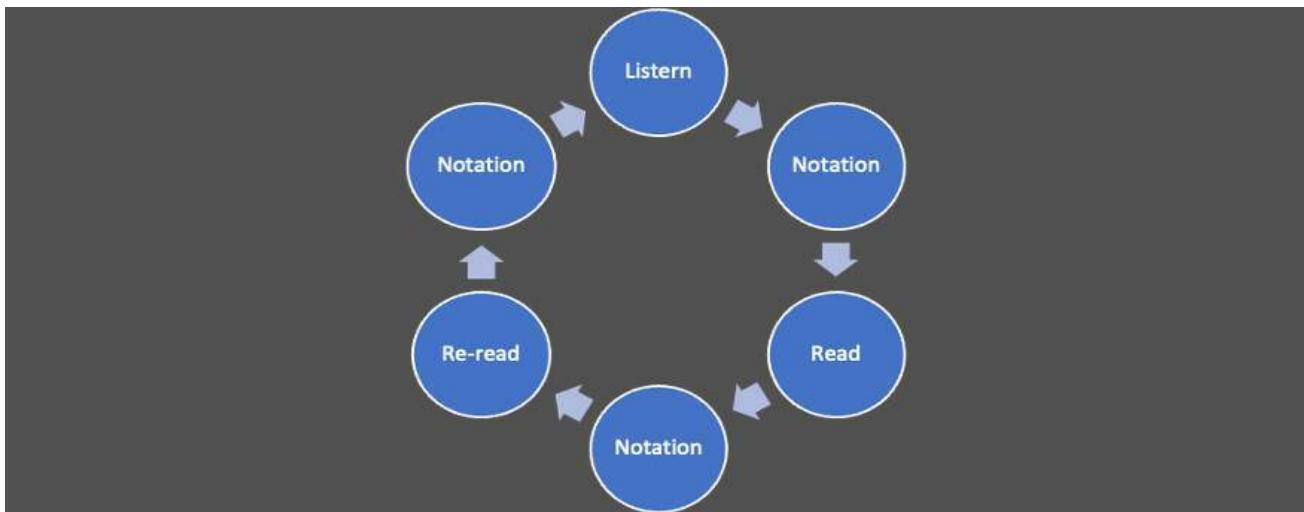 Figure 2: Case by Case Analysis: Step 3
Note: Depiction of the start of the hermeneutic in a circular process beginning with a word cloud, frequency of words in context, linked phrases, thoughts, trends, contradictions, and parts to the whole. The figure above is a representation of Step 3 of data analysis for an interpretative phenomenological study as described by Smith et al. (2009).
Table 2 demonstrates the linkage from initial codes to emergent/subthemes and, finally, the linkage to superordinate themes. Table 2 demonstrates the linkages from Steps 1 and 2, which involved taking notes before proceeding to Step 3, where emergent themes were identified.
Otherwise, Table 3 shows an example of the analysis process described in Step 3 of the analysis.
Table 2: Code Book Summary
| # cases | # Codes/Descriptions | #Emergent Themes | # Superordinate Themes |
| 3 | 21 | 5 | 2 |
Table 3: Example of Case by Case Analysis Step 3: Case 1
| Emergent Theme | Original Transcript | Researcher's Notes |
| Perseverance | I didn't stop long enough to allow that fear to come in me. I was like you want to do this. This is what this is, what it takes. This is the first step, you know. If it works, it works. If it doesn't, you try again later, if you want to, and if not, you still figure something else out. So, I feel like with a lot of people that sometimes don't end up taking those steps is because you stop too long to question whether or not it's the right choice. | ● Sounds like her life experiences made her persevere.● Mentoring had a significant role in her perseverance.● This was a big deal to her. I sense gratitude. |
APPENDIX F
Figure 3 depicts identifying connections across emerging themes within a singular case. The result of all four of these approaches in Step 4 resulted in clustering emerging themes into subordinate themes, as illustrated in Table 4.
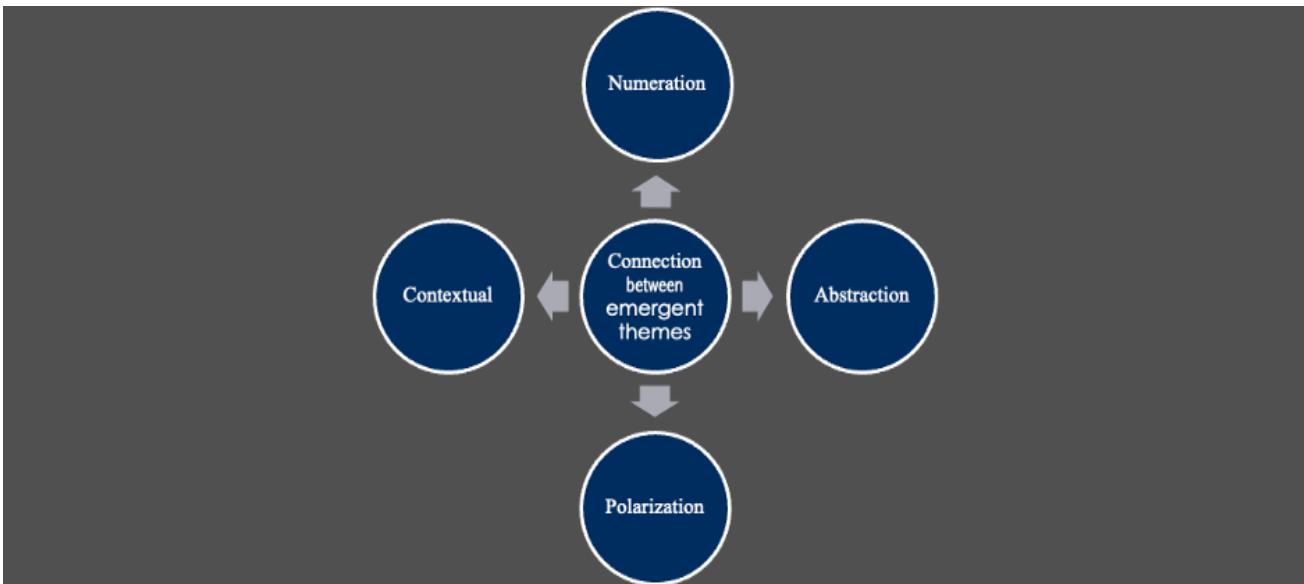
Note: Depiction of data analysis for Steps 4 and 5, which involved analysis within a singular case. Analysis at this stage began with numeration, abstraction, polarization, and contextualization to identify the connection between emergent themes. This figure was prepared by Saundra D. Schrock, researcher, as a representation of Steps 4 and 5 of data analysis for an interpretative phenomenological study described by Smith et al. (2009). The emergent themes coming to the surface include perseverance, family support, and the imposter syndrome.
| Emergent Theme | Original Transcript | Superordinate Theme |
| Perseverance | I didn't stop long enough to allow that fear to come in me. I was like you want to do this. This is what this is, what it takes. This is the first step, you know. If it works, it works. If it doesn't, you try again later, if you want to, and if not, you still figure something else out. So, I feel like with a lot of people that sometimes don't end up taking those steps is because you stop too long to question whether or not it's the right choice. | Mentored into PhD level |
APPENDIX G
Table 5 presents a cluster of superordinate themes and their distribution across the three cases. The superordinate themes were identified after reading and re-reading the emergent themes. I selected each superordinate theme by counting the occurrence of an individual's experience as a single case. This way, I considered what is meaningful for each personal experience during a doctorate program. The percentage number for each case marks the prevalence of the imposter syndrome narrative, participants must diffuse to succeed.
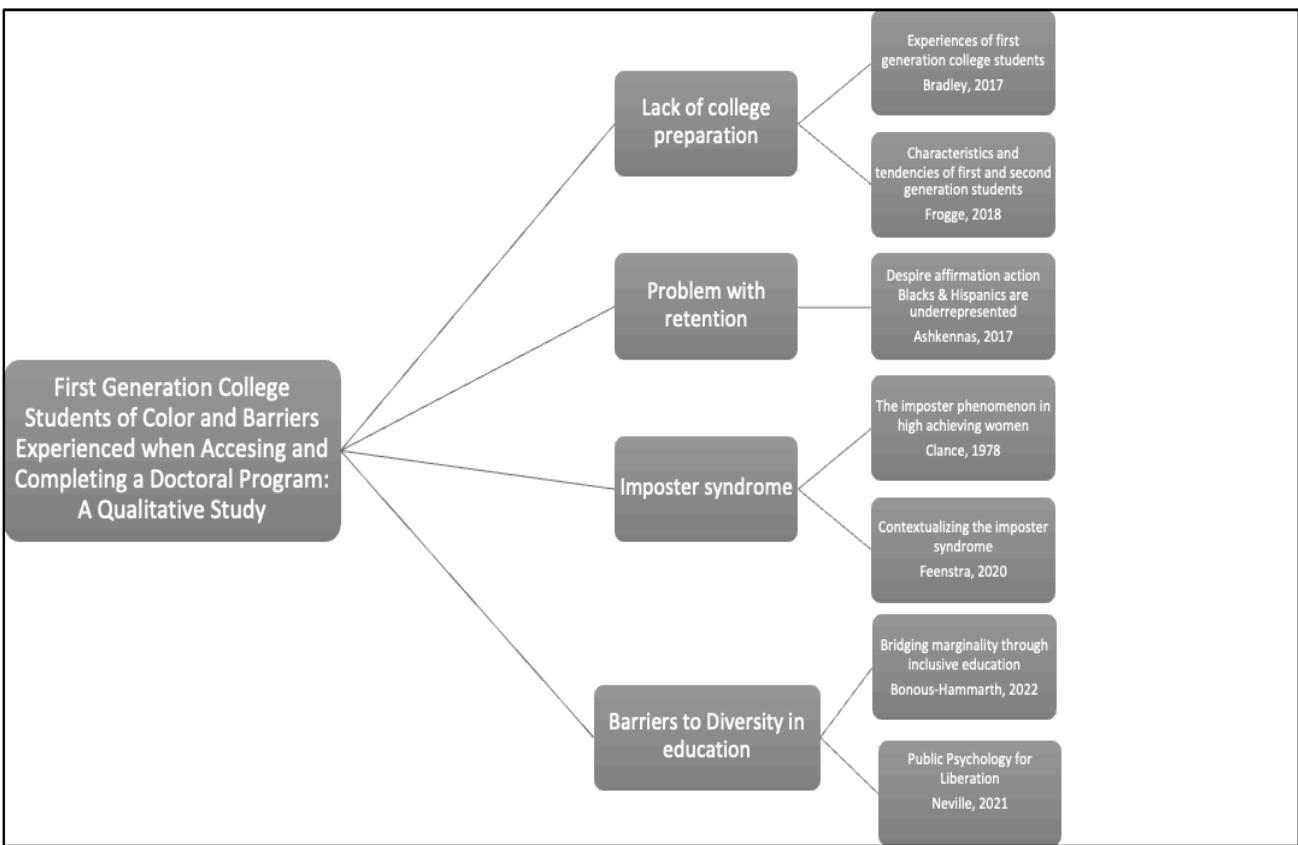
A Literature Map of the Research Table 5: Distribution of Themes APPENDIX H
| Cluster/Superordinate Theme | # Cases | % Cases | # Subthemes |
| Imposter Syndrome | 3 | 92% | 4 |
| Perseverance | 3 | 88% | 2 |
| Familial Support | 3 | 88% | 3 |
APPENDIX I
Interview Protocol
Demographic Questions
-
Age
-
Gender
-
Race/Ethnic Background
-
Type of Doctoral Program
-
Number of Years in Doctoral Program
Semi Structured Interview Questions
-
Tell me why you decided to pursue a doctoral degree.
-
Tell me about your experiences when first studying as a FGCS.
-
What barriers did you feel you experienced when studying as a FGCS.
-
Tell me how your university supported you as an FGCS.
a. What were some of the most effective supports?
-
How did you overcome any barriers or obstacles when studying as an FGCS?
-
Is there anything else you would like to tell me about studying as a FGCS?
Conflict of Interest
The authors declare no conflict of interest.
Ethical Approval
Not applicable
Data Availability
The datasets used in this study are openly available at [repository link] and the source code is available on GitHub at [GitHub link].
Funding
This work did not receive any external funding.
References
Cite this article
Related Research



Special Issue
Launch a focused special issue to highlight research, emerging trends, and expert insights in your academic field.
