



IntelliPaper
Abstract
The participatory action research strategy based on community involvement (PAR) involved 65 incoming nutrition students at the National University of Entre Ríos and 7 graduating high school students with culinary arts degrees. The project was developed in an atypical course format in 2023, under the premise that "The Argentine food system must be changed, and young people can do it," empowering them to become agents of sociocultural change. The city of Gualeguaychú, Argentina, and a public policy implemented within its territory, provided the context for this initiative.
An initial awareness-raising effort among the students and outreach to local leaders, undertaken by the teaching team, allowed us to implement the strategy. This strategy was primarily developed outside the classroom, through ongoing interaction with others and using a dialogue methodology that was either spontaneous or initiated with key stakeholders in the local food system.
The farmers' markets and fairs in the town squares, showcasing local fruit and vegetable production as part of the municipal public policy, along with a recently opened community-run biopark on public land, provided the ideal setting for students to conduct research using primary sources and through unplanned conversations with consumers and/or producers.
A raffle for a bag of freshly picked, seasonal vegetables, and the challenge of preparing meals to share with peers during each visit to the markets, allowed the young people to experience the organoleptic qualities of these vegetables firsthand. This motivated them to make dietary changes throughout the year and encouraged others to participate in the experience.
The participatory action strategy between the two educational levels culminated in the Soup Festival at the university, where the convergence of knowledge was put to the test with a variety of colorful and flavorful soups.
Explore Digital Article Text
Introduction
La estrategia de investigación-acción participativa basada en la comunidad (IAPBC) involucró a 65 estudiantes universitarios ingresantes de la carrera de Nutrición en la Universidad Nacional de Entre Rios y a 7 estudiantes egresados como técnicos en gastronomia de una escuela secundaria, se desarrolló bajo una cursada atipica en el año 2023, con la consigna de “Hay que cambiar el sistema alimentario argentino los jóvenes pueden hacerlo”, convirtiéndose en agentes de cambio sociocultural.
La ciudad de Gualeguaychú, en Argentina y, una politica pública desarrollada en su territorio, nos permitió conducir la propuesta.
Una primera sensibilización del estudiantado un acercamiento a referentes del territorio, por parte del equipo de cátedra, nos permitió abrir juego a la estrategia que se desarrolló fuera del aula fundamentalmente interactuando con otros en forma permanente y usando la metodologia de diálogos que fueron o bien espontáneos o bien provocados con actores claves del sistema alimentario local.
Las ferias en las plazas y mercado de comercialización de la producción frutihorticola local que forman parte de la politica pública municipal y un bioparque recientemente estrenado para laboreo comunitario, en tierras fiscales, dieron el marco ideal para la investigación desde fuentes primarias por parte de los estudiantes y en diálogos no planificados que ellos mismos mantuvieron con consumidores y/o productores.
Un sorteo de un bolsón de verduras frescas de estación, recientemente cortadas y, el desafio de elaborar con ellas comidas que debian ser compartidas entre pares, en cada ocasión de visita a las ferias; permitió a los jóvenes comprobar las bondades organolépticas de estas verduras motivando a generar cambios en su alimentación durante el transcurso del año e invitando a otros a acercarse a la experiencia.
La estrategia de acción participativa entre los dos niveles educativos culminó con el Festival de las Sopas, en dependencias universitarias, donde la confluencia de saberes se puso en juego en la mesa con un abanico de coloridas y sabrosas sopas.
La metodologia IAPBC permitió en un mapa parlante final confluir ordenando y sistematizando lo realizado bajo el formato de fotografias, videos, y diálogos en distintos soportes.
Visitar para conocer, dialogar para indagar, actuar para comprobar, fue la metodologia escogida. Destacamos la participación de los dos niveles educativos interactuando cada uno desde su perspectiva; la cursada fundamentalmente fuera del aula; la investigación desde fuentes primarias recolectando datos directamente en el territorio y el beneficio para la comunidad toda al confluir en la propuesta la sabiduria de los agricultores y el compromiso de los consumidores, compartida con nuestros jóvenes y estos más tarde como agentes de cambio sociocultural entre sus pares y miembros de su familia, transformando prácticas que pudimos efectivamente comprobar y compartir.
La estrategia escogida nos permitió incluso volver al territorio una vez más para devolver en forma de acción, propuestas de consumo de alimentos que los mismos productores no conocian y aventurar futuras lineas de Investigación acción sobre datos que entre todos concluimos.
TIEMPO Y LUGAR
La estrategia de investigación acción participativa basada en la comunidad tuvo lugar durante el año 2023 en la ciudad de Gualeguaychú, provincia de Entre Rios, Argentina.
Gualeguaychú, con aproximadamente 130 mil habitantes, según el último censo poblacional, tiene dimensiones de una ciudad intermedia y se define particularmente como una ciudad de frontera. Fronteriza con la provincia de Buenos Aires por un lado y, separada por el rio Uruguay, con la República Oriental del Uruguay.
La existencia de una política pública municipal desde hacía varios años en esta ciudad, el programa de alimentación sana, segura y soberana, destinada a promover la producción de alimentos de forma agroecológica; el apoyo a los pequeños productores locales de alimentos y, estrategias de comercialización en ferias en plazas públicas y mercados, dieron el marco ideal para la realización de la propuesta que presentamos. Además, la creación de un bioparque, espacio destinado a la producción de tierra adecuada para abono, plantines de hortalizas y bioinsumos para proveer a huertas comunitarias, acordadas en el mismo predio a grupos diversos, permitieron desarrollar la propuesta durante la cursada ese año.
Quienes Intervinimos
Tuvo como intervinientes a un grupo de jóvenes estudiantes de los niveles secundario, técnico con orientación en gastronomía y universitario, estudiantes de nutrición quienes, convocados bajo el lema. Hay que cambiar el sistema alimentario argentino y los jóvenes pueden hacerlo, se conocieron, convocados por la cátedra de Problemática Nutricional de la Licenciatura en nutrición, de la Universidad Nacional de Entre Rios.
Cómo la llevamos a cabo?
Organización, Sensibilización y Marco Teórico del Cual Partimos
La estrategia comenzó con una sensibilización de los dos grupos de estudiantes en el aula. Se procuró valorar muy especialmente el rol de los estudiantes de gastronomía, incentivándolos a poner en juego sus saberes y prácticas. Nuestro grupo de ingresantes a Nutrición contaba también con dos jóvenes egresadas de aquella escuela secundaria, con lo que entendimos que el camino a recorrer sería más fácil.
Fue la ocasión donde además presentamos una somera idea del sistema alimentario argentino y en particular focalizamos en la ciudad de Gualeguaychú y un recorte de aquel sistema poniendo el foco en la producción de hortalizas, actividad que en la ciudad se viene haciendo y que nos permitiría llegar a los productores y comercializadores de tales alimentos y los consumidores de tales productos.
Ahora si, la Investigación-Acción Participativa basada en la Comunidad.
Cómo ibamos a llegar al territorio? La estrategia utilizada fue ubicar a los estudiantes en el mapa de la ciudad (puntos amarillos y violetas) según la cercanía de sus residencias con las plazas donde se realizan semanalmente las ferias de comercialización de la producción verde local. Se trata de las ferias en las plazas Gardel, Belgrano y San Martín, ubicadas en puntos suficientemente distantes entre sí.
Fotografía:María Clara Melchiori
La erateedeul percor eistenceert ortalizas prou ca pre venta, productores y consumidores.
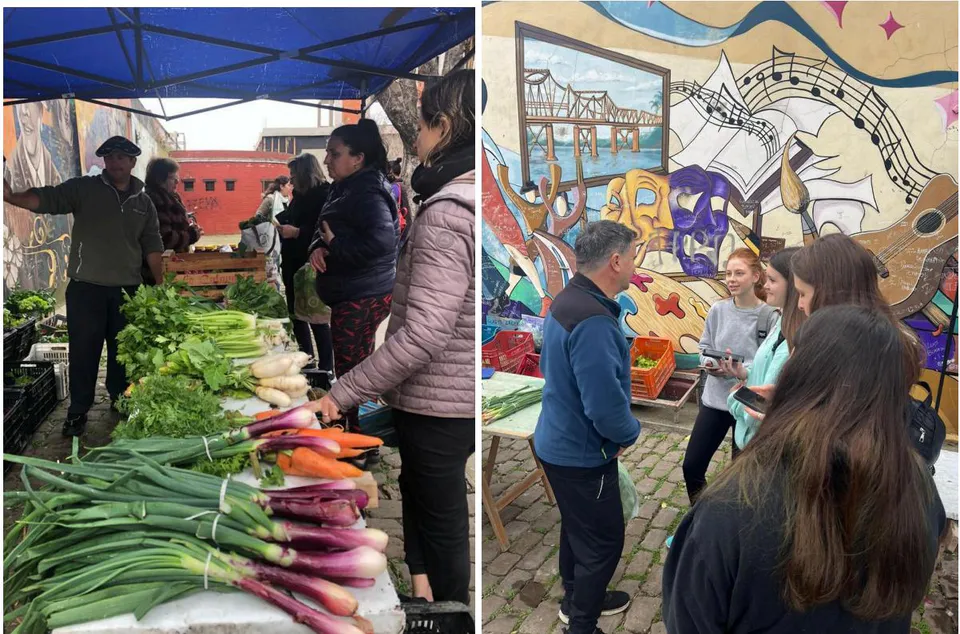
Esto nos permitió continuar el trabajo ya fuera del aula, visitando durante varias semanas estos lugares donde se provocaron y realizaron diálogos espontáneos con productores/ comercializadores y consumidores de estos alimentos.
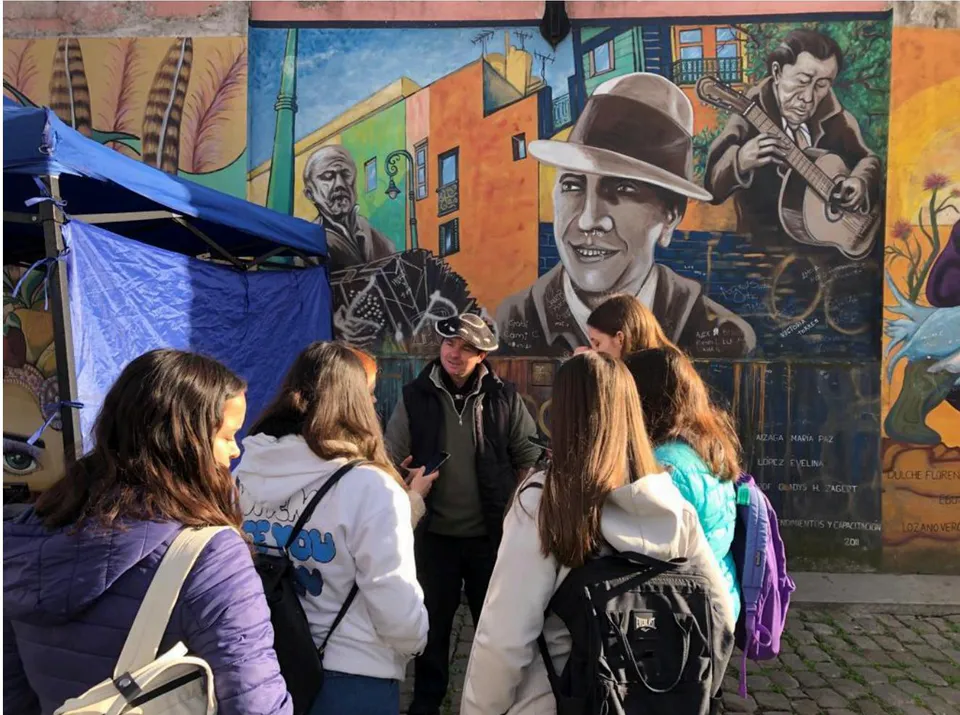
Fotografía:María Clara Melchiori
Diálogos espontáneos con productores/comercializadores frutihorticolas locales.
Los estudiantes conocieron en terreno que se produce en la estación de la primavera argentina (meses de septiembre a diciembre); el precio de comercialización de las hortalizas; las características de cultivo; la incidencia del cambio climático en la producción y cómo sortean dificultades los productores; las características de los consumidores habituales que llegan a las ferias, que compran, cuánto compran, usos que le dan a esos alimentos y decisiones de elección.
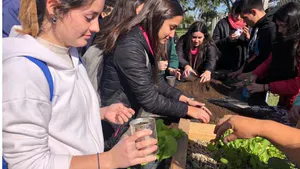
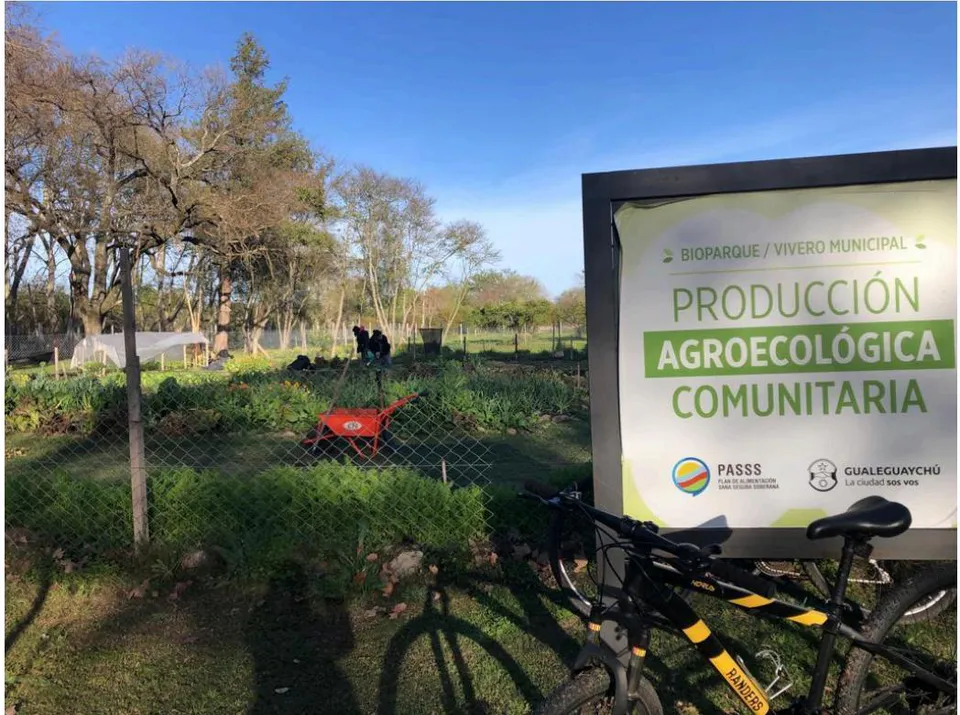
Los estudiantes pudieron recabar datos sobre la producción de plantines y de huertas comunitarias en el bioparque municipal. Contactar a los trabajadores de la tierra y conocer su rol como así también quienes llevaban a cabo tareas de producción en huertas comunitarias y el destino de los alimentos que obtenían en ellas, varios de ellos para comedores comunitarios.
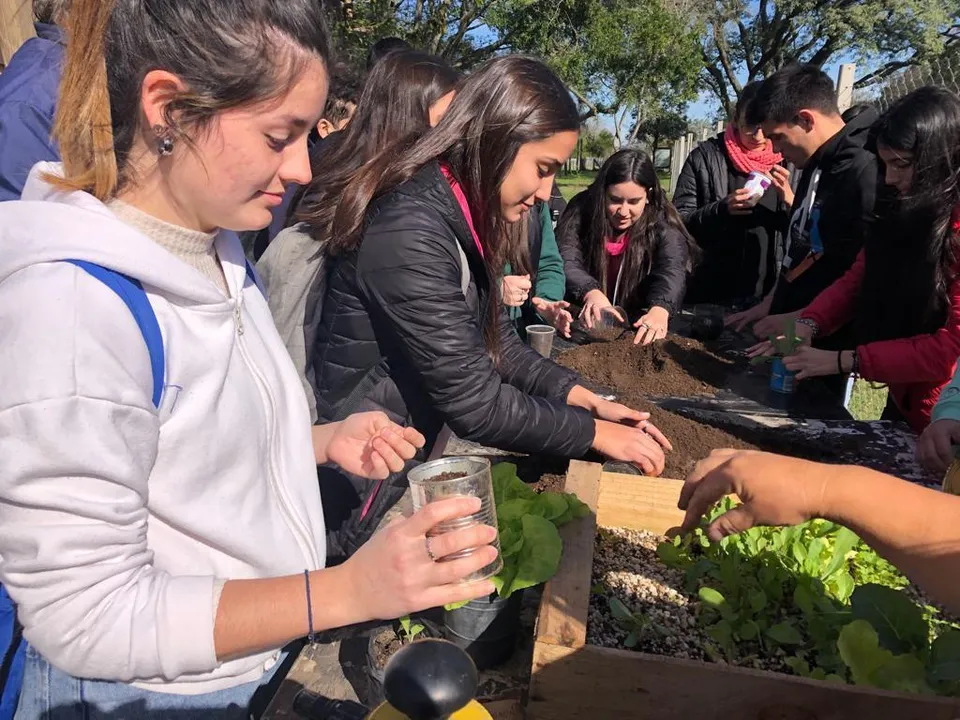
Fotografía:María Clara Melchiori
Conocer acerca de la producción de plantines de hortalizas, visita al bioparque municipal
Cómo se incentiva a los productores, cómo se les facilita semillas, herramientas y técnicas para producir. Qué resultados obtienen de tales ensayos y que repercusión se obtiene en los consumidores de esos alimentos.
Estas fueron las fuentes primarias de datos que dieron cuerpo a la investigación. La recopilación y análisis posterior de estos datos permitió conocer el perfil de los productores de hortalizas locales y de los consumidores de alimentos concurrentes a las ferias de cercania.
iQue Encontramos Entre Productores y Consumidores?
Los productores/ comercializadores locales de hortalizas son fundamentalmente hombres, de entre 30 y 50 años, aunque también existen mujeres. Suelen provenir de familias que, anteriores a ellos, también producian la tierra. Trabajan generalmente con ayuda de algún integrante de la familia, no con empleados.
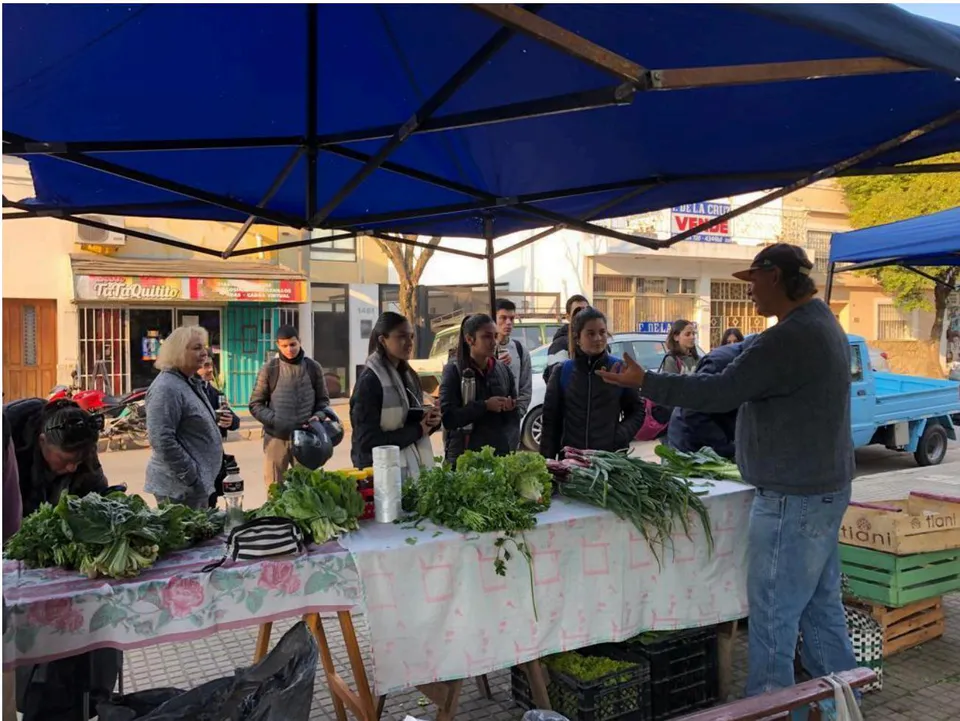
Fotografía:María Clara Melchiori
Diálogos espontáneos con productores/comercializadores frutihorticolas locales.
Los consumidores de estos alimentos locales suelen ser mujeres mayores, que aprecian las caracteristicas organolépticas de las hortalizas. Entre los hombres consumidores encontramos jóvenes padres que compran para alimentar saludablemente a sus hijos y valoran especialmente la producción agroecológica y el cuidado del ambiente.
El comprar para apoyar a los productores locales es caracteristico del grupo de consumidores quienes van comprar desde hace tiempo cada semana y compran no solo para el dia, sino para conservar y poder tener alimentos frescos, de cercania cada semana hasta la próxima feria
Una segunda parte del trabajo fue realizada mediante diálogos ya programados por el equipo de cátedra con referentes del sistema alimentario local, especialmente invitados.
Dichos encuentros e intercambios fueron desarrollados en diversos escenarios tales como, el mercado y el bioparque municipal recientemente inaugurado, como así también en la propia universidad y abordaron distintas aristas de la temática tales como:
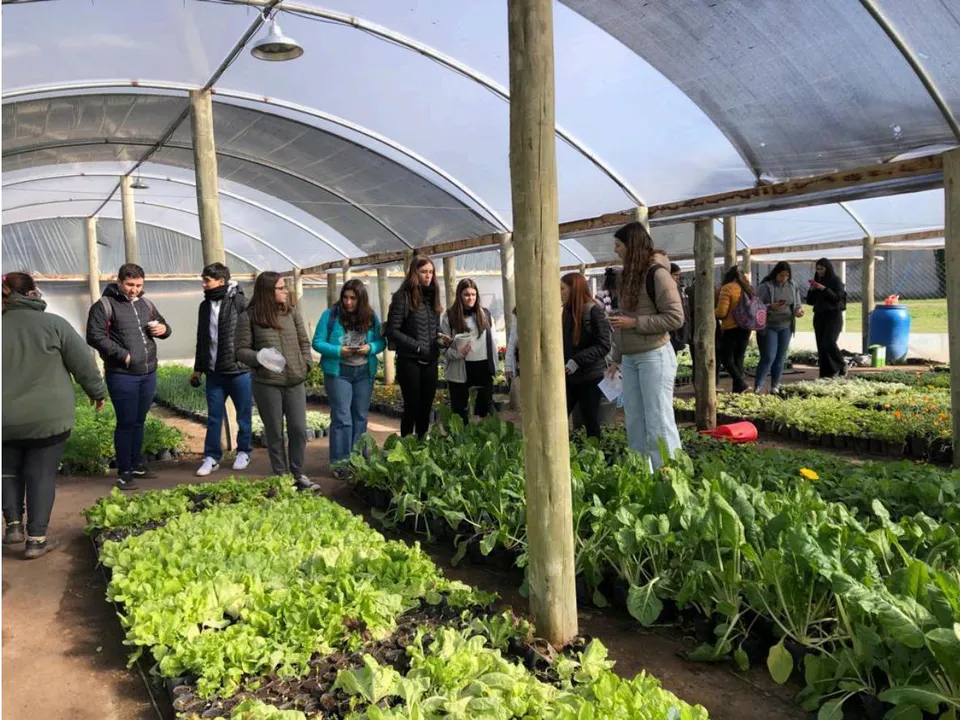
Fotografía:María Clara Melchiori
Visita al bioparque municipal, intercambio con diversos actores del Sistema alimentario local
Fotografía:María Clara Melchiori
Visita intercambiode experincias en el marcode la polii pblica local,el programde alimentain sana segura y soberana (PASSS)
Con Juan Cruz Demicheli, investigador del área de la economia agraria hablamos de su interés en estudiar el abasto alimentario de nuestra ciudad y del por qué cree él esta ciudad pudo crear y sostener por tantos años una politica pública tendiente a garantizar alimentos sanos, seguros y de calidad para su población.
Con Betina Londra, ingeniera agrónoma y con Valeria Negro, facilitadora grupal ambientalista, ambas del Instituto nacional de tecnologia agraria, INTA, dialogamos sobre cómo trabajaron grupalmente con los productores locales la introducción del zapallo Cabutiá las batatas Gen entre sus cultivos. Ambos productos se comercializan desde hace años ya en la zona y son muy codiciados entre los consumidores habituales.
Con Alberto Pérez Gont, intercambiamos sobre cómo y desde qué áreas municipales se promovió y se sostuvo el plan de alimentación sana, segura y soberana del municipio de Gualeguaychú.
y por último con Maximiliano Nissero, joven productor agropecuario, supimos cómo se aventuró a producir granos de cereales y legumbres de forma agroecológica y cómo buscó formas de introducirlas entre posibles consumidores locales de alimentos. Cómo dio valor agregado a las mismas produciendo además harinas con esos granos más tarde.
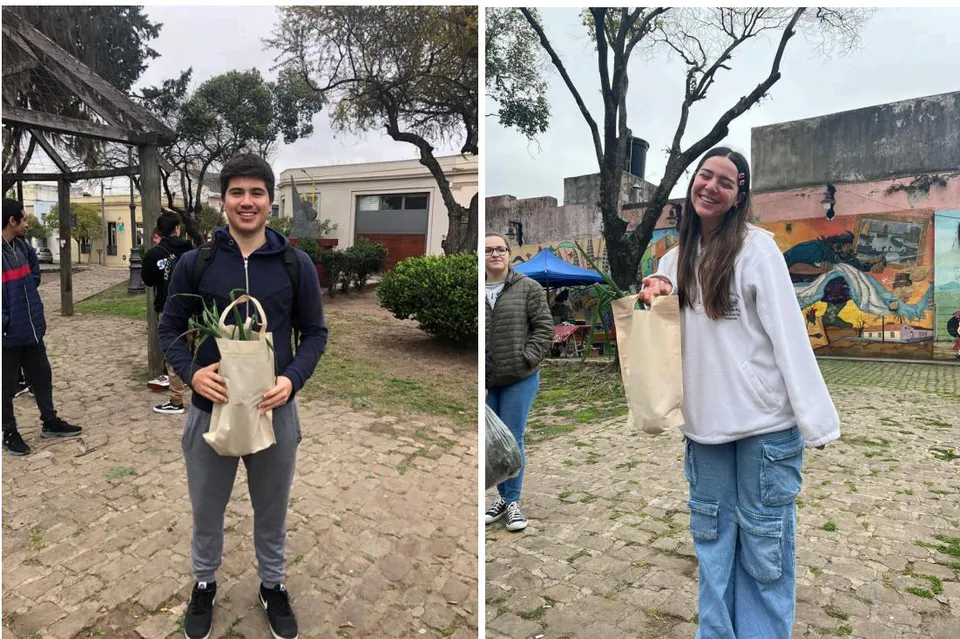
Provocar para la acción, para la transformación En cada visita a las ferias el equipo de cátedra sorteó un bolsón de verduras frescas allí ofrecidas entre el estudiantado. La o el estudiante ganador debía luego elaborar con esos alimentos una comida y compartir la receta utilizada con sus compañeros en una estrategia que procuró que los propios jóvenes consumieran las verduras agroecológicas y pudieran ellos mismos apreciarlas, llevándolas a sus casas y dándolas a conocer en su propia familia.
Fotografías:María Belén Parodi
ntiv nortalizaetac eno eiantiortlsóveu
1.2 cada ocasión de visita a las ferias de comercializacion.
La estrategia implementada de acción-participativa fue sumamente valorada por el estudiantado. No solo porque conocieron sobre la producción local de alimentos y pudieron valorar la calidad sensorial de las mismas en sus preparaciones, sino porque la estrategia sirvió para vincularlos mejor entre ellos y así lo testimoniaron al culminar el año.
Habiendo investigado entonces qué verduras pertenecientes a la estación de primavera se producian localmente, se motivó al grupo de estudiantes de gastronomía del nivel secundario a utilizarlas en la preparación de sopas.
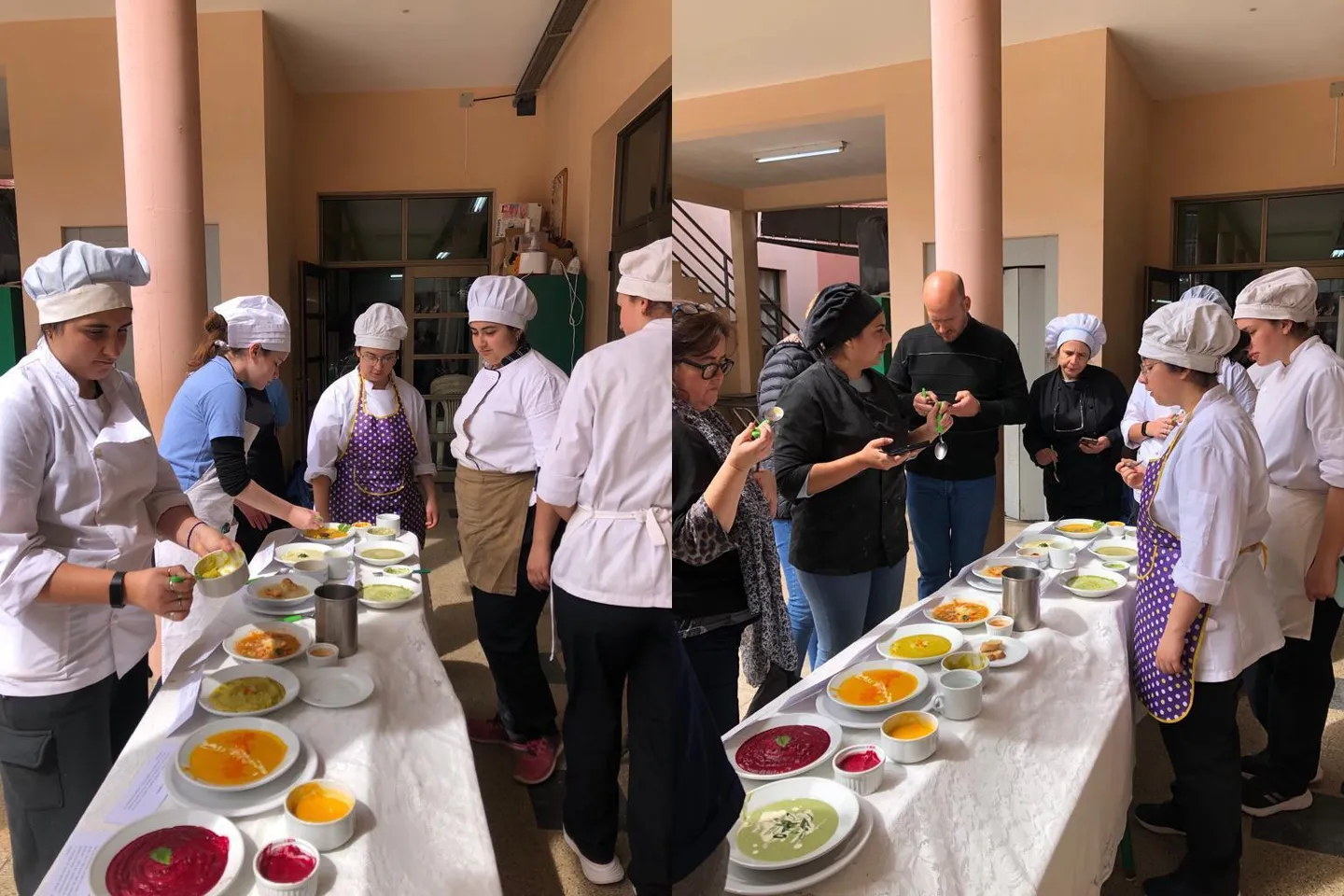
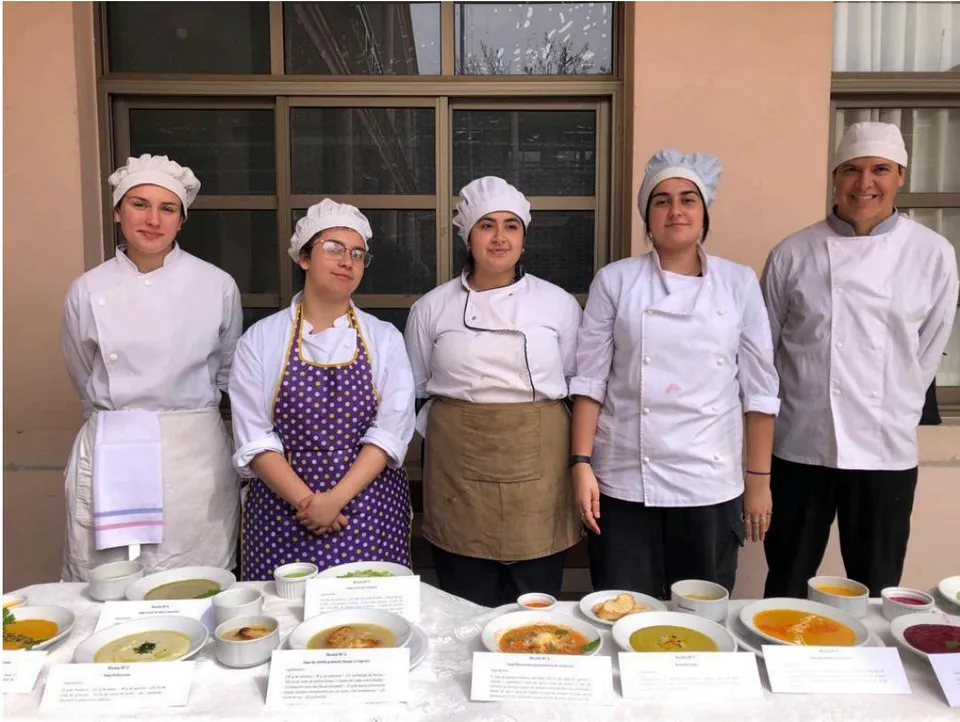
Una primera práctica gastronómica y evaluación de la aceptabilidad de las sopas tuvo lugar en dependencias de la Escuela Técnica Nro. 1 “Alferez de Navío José María Sobral”, de la ciudad. Allí, los 7 estudiantes y su profesor elaboraron y presentaron para degustación un total de 10 preparaciones diferentes.
Fotografía:María Clara Melchiori
Los estudiantes de gastronomía poniendo en juego saberes en la cocina: elaboración, servido, degustación y evaluación de sopas elaboradas con verduras de estación
Colores, sabores y texturas diferentes fueron puestas a consideración de la evaluación sensorial de docentes y estudiantes del propio establecimiento educativo. Esta evaluación permitió escoger las mejores preparaciones que fueron más tarde elaboradas ya en dependencias de la universidad, en una instancia de intercambio en el laboratorio de cocina con los estudiantes de nutrición.
Fotografía:María Clara Melchiori
Los estudiantes secundarios con especialidad en gastronomía y su profesor
El festival de las sopas, así denominado ese encuentro, fue la instancia de mayor intercambio
y conocimiento de roles que cada estudiante puso en juego.
MENU FESTIVAL
Sopadd SOPAS
Sopa Vicchyssoise
Sopa de cebolla
gratinada
Sopa crema de
espinacas
Sopa de zanahoria y
jengibre MIERC
Sopa de remolachas 27/9 8al2 2023 am
Sopa sorpresa de Laboratorio de Cocina
arvejas acultad de Bromatologia - UNER
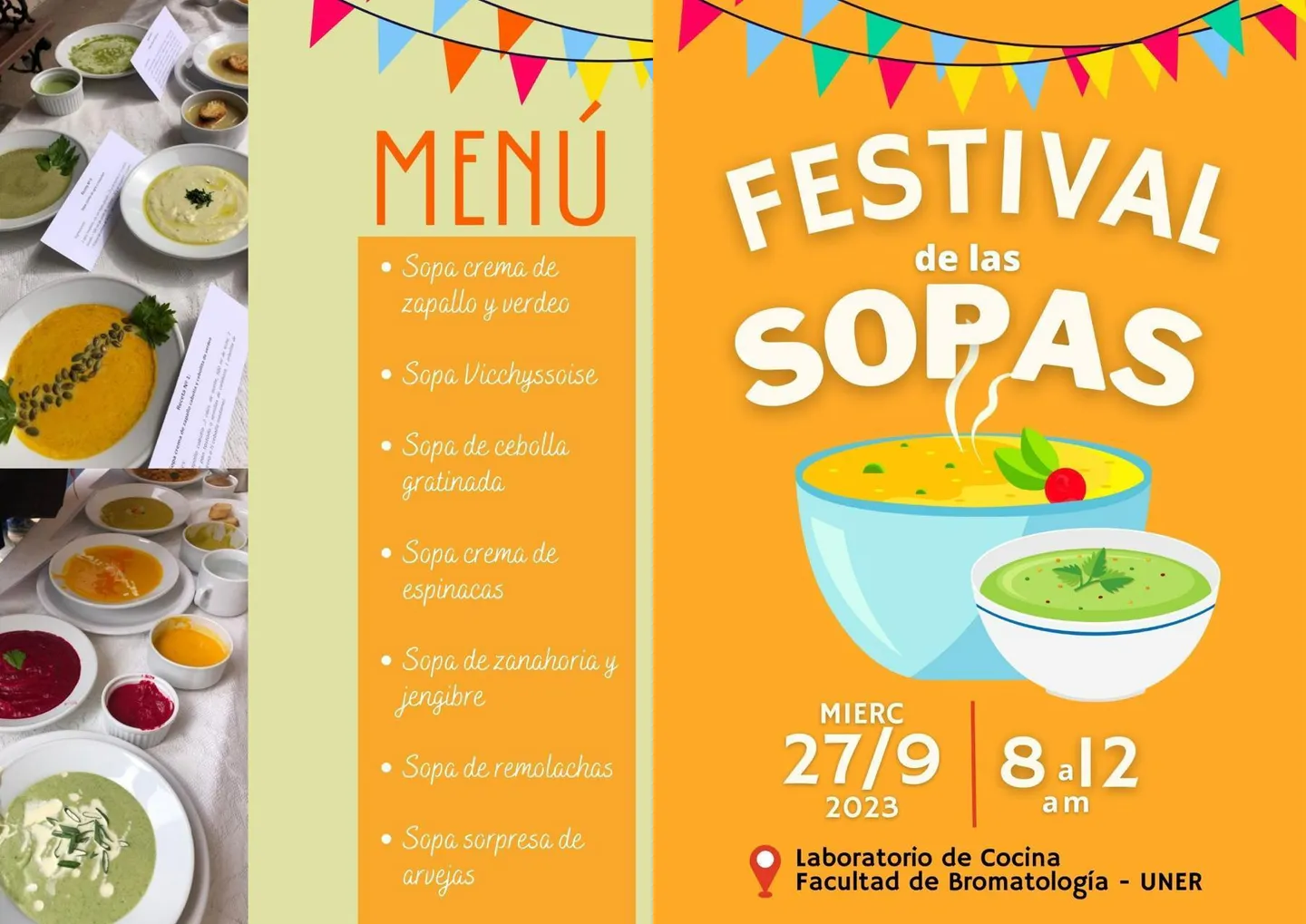
Diseños:María Belén Parodi
ilspnsanaltmesverstiv en nutrición
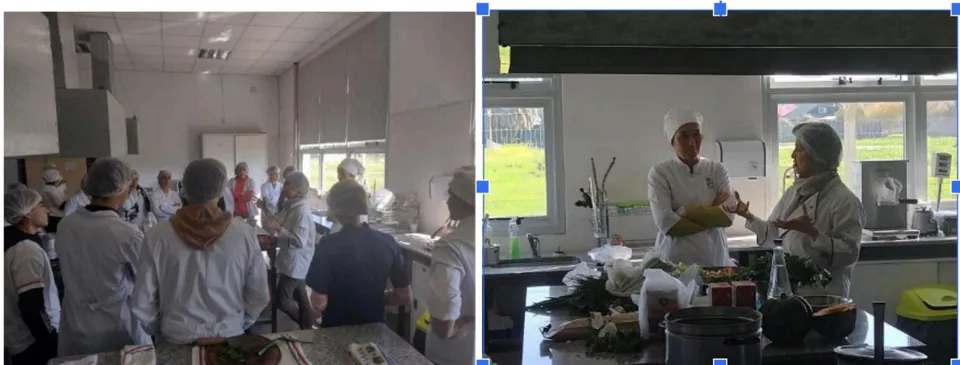
Fotografía:María Clara Melchiori
Instanc teambiupal enteesudiante etriciegstroía e el laboatorio coci Facultad de Bromatología, Universidad Nacional de Entre Ríos, Argentina.
Intercambio de saberes entre estudiantes de gastronomia y nutrición
Las reflexiones vertidas por los estudiantes al culminar la cursada revela que la investigación acción participativa basada en la comunidad es una estrategia indicada para involucrarse y que permitió a los jóvenes estudiantes ser agentes de cambio ya que, como ellos mismos indican, pudieron a partir de ella modificar hábitos, recapacitando sobre prácticas que habitualmente desarrollan y provocar efectos multiplicadores en su entorno familiar y de amistades, tendientes a efectivamente cambiar el sistema alimentario argentino vigente.
La metodología utilizada fue: visitar para conocer, dialogar para indagar, actuar para comprobar y confluye en la realización de este mapa parlante ordenando y sistematizando lo realizado bajo diferentes formatos tales como fotografias, videos y diálogos en distintos soportes.
Valoramos sobre todo;
el trabajo fuera del aula que motiva y permite el intercambio con otros.
la investigación desde fuentes primarias mediante diálogos espontáneos fundamental- mente, pero también aquellos programados con referentes del territorio, todos actores relevantes del sistema alimentario local.
•El nexo entre estudiantes de diversos niveles y con diferentes formaciones en un espacio común.
• A los jóvenes cómo propulsores/agentes de cambios modificando sus propias prácticas y convirtiéndose en multiplicadores de las acciones.
Cómo Concluimos? qué Reflexionamos?
A modo de finalización de la estrategia volvimos al territorio y como devolución de lo vivido compartimos con los trabajadores del bioparque municipal un almuerzo en terreno.
El almuerzo permitió valorar sobre el plato el rol del que trabaja la tierra indispensable para la producción de los plantines, el que cuida la huerta hasta el momento de la cosecha y el que valora ese alimento utilizándolo en una rica comida compartida.
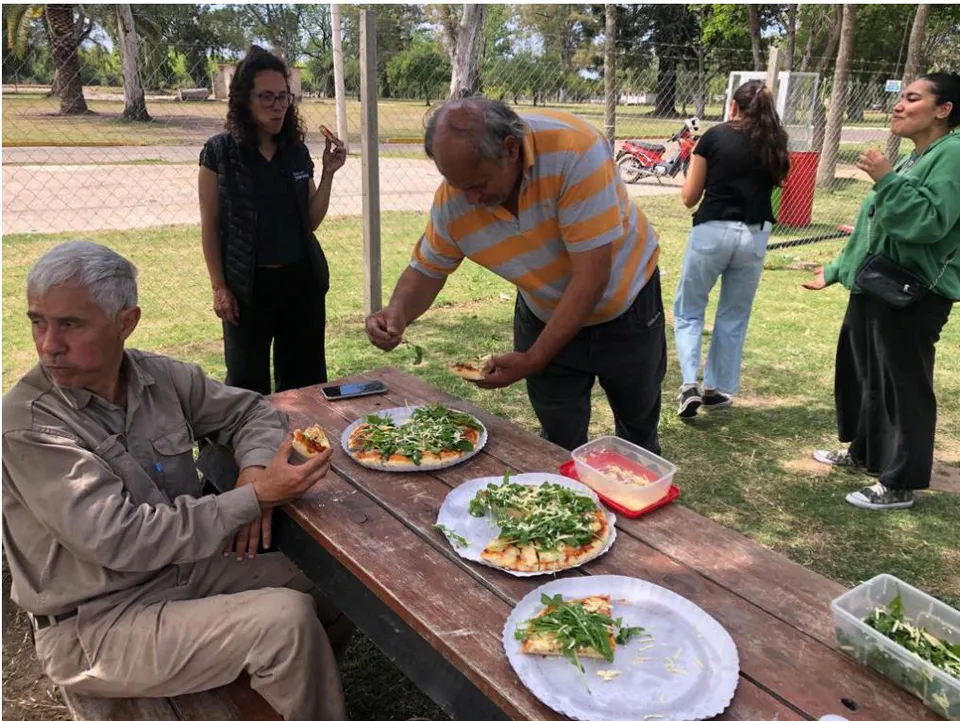
Fotografía:María Clara Melchiori
Todos somos actores de los sistemas alimentarios: desde el que trabaja la tierra, el que hace plantines y transplanta en la huerta, el que cosecha, el que elabora comidas y el que consume las mismas.
La ocasión permitió además conversar sobre futuras lineas de investigación que nos permitieran avanzar sobre lo recabado por ejemplo en materia de evitar pérdida y desperdicios de alimentos y la necesidad de sostener la política pública local que valoramos como muy adecuada y pertinente para alcanzar un sistema alimentario sostenible y sustentable.
En cuanto a reparos éticos de la investigación: todos los intervinientes prestaron su consentimiento para poder divulgar imágenes, audios y formas de participación.
La experiencia contó con el patrocinio del profesor Luis D’elia de la Universidad de Alberta, Canadá, quien nos motivó a presentarnos en la conferencia híbrida de ARNA 2024.
Conflict of Interest
The authors declare no conflict of interest.
Ethical Approval
Not applicable
Data Availability
The datasets used in this study are openly available at [repository link] and the source code is available on GitHub at [GitHub link].
Funding
This work did not receive any external funding.
Cite this article
Related Research

Special Issue
Launch a focused special issue to highlight research, emerging trends, and expert insights in your academic field.