



IntelliPaper
Abstract
Getting a grasp of the psycho-affective processes and social anomie leading to counterproductive work behaviour (Fox & Spector, 2006) represents a major challenge for researchers and organisations. The Cameroonian context is characterised by widespread impoverishment, which incites some officials to divert the objectives of the prescribed work to their personal interest, with no regard to the damage caused to either the organisation or its members (Nyock Ilouga et al., 2018). This study examines the mediating role of emotions in the relationship between empowering leadership and counterproductive work behaviour. 156 civil servants of both sexes were selected to complete a questionnaire which includes both the Empowering Leadership Questionnaire (Arnold et al., 2000) and the Job Affective-relative Work questionnaire (Van Katwyk et al., 2000). Our results suggest that the emotions felt by employees mediate the effect of perceived empowering leadership on the counterproductive behaviour that employees engage in at work
Explore Digital Article Text
I. INTRODUCTION
Counterproductive work behaviour is a complex and dynamic phenomenon. The study of such behaviour requires the consideration of various factors: emergence factors, vulnerability factors and moderating factors (Jauvin & al., 1999). In recent decades, the prevention of deviant behaviour and the promotion of well-being have become the major concerns of public and private companies (Bernaud & al., 2016). This concern becomes alarming in Cameroon where workers evolve in a context characterised by the collapse of the value placed on work, boredom, dissipation, vacuity, apathy and disloyal behaviour (Nyock Ilouga & al., 2018). An investigation by the Cameroonian Ministry of Finance reveals that the country lost nearly 6,000 billion CFA francs between 2012 and 2017 as a result of embezzlement of public funds, desertion at work and unreported deaths (Biaga, 2019). In a bid to identify the causes and eventually find solutions to this phenomenon, researchers pay particular attention to the organisational disinvestment caused by long breaks, repeated absences, presenteeism (El Akremi, 2006), theft, aggression or sabotage (Le Roy, 2010) or any other form of disloyal practice aimed at harming a client, a colleague or the organisation itself (Buss, 1961). The psychodynamic perspective suggest that, these various types of behaviour often reflect a sort of revenge displayed by employees in response to a perceived frustration or injustice (Dejours, 2001). This situation is usually the root of interpersonal conflicts at work (Bies & TRipp, 1996; Kim et al., 1998; Aquino et al., 1999; Le Roy, 2010).
The interest in the psycho-affective mechanisms that precede counterproductive work behaviour stems from an attempt to overcome the obvious limitations of behaviourism, which overlooks the interiority of individuals. However, as El Akremi (2006) points out, the first reaction to frustration is emotional and attitudinal. It is therefore appropriate to admit that the external stimuli for this behaviour is transmitted by psychological mechanisms. In the same vein, this study examines the mediating role of emotions, expressed as resentment, in the relationship between perceived empowerment leadership and counterproductive work behaviour. Resentment refers to a memory of injustice (or frustration) experienced repeatedly, causing negative emotions which, combined with a feeling of powerlessness, drives the victim into taking revenge (Fleury, 2020). The Cameroonian work environment is dominated by an erratic mode of operation enforced by line managers. Workers must comply with operating rules from hierarchical structures that are rigid and poorly adapted to operational objectives and constraints (Tamekou, 2008). This increases formalism and submission to the detriment of autonomy and creativity. Such a situation is the antithesis of so-called empowering managerial practices and can be a source of frustration for employees.
As a matter of fact, the steps taken by the Cameroonian authorities are barely able to considerably reduce counterproductive behaviour at work. Most of these legal and administrative measures - derived from the situational prevention model in criminology (Clarke, 1980) - focus on prevention, control and repression. It is accepted from a behaviourist point of view that negative reinforcement contributes to the gradual reduction of unwanted behaviour (Skinner, 1938). However, the persistence of counterproductive behaviour in the Cameroonian context leads to a closer look at some of the deeper psychological processes involving emotions and resentment, which motivate the willingness to violate organisational norms and harm stakeholders.
Based on an analysis of leadership practice in some Francophone African countries, Shu (2013) suggested that non-formal socio-cultural criteria such as: dowry, solidarity and the strong involvement of traditional power should be considered when designing and implementing management practices in African organisations. This reality hinders the ambitions of many employees in need of autonomy and a large degree of decision-making latitude in the practice of their professions. This frustration also affects many workers who, due to this managerial difficulty associated with the lack of resources, are bored at work.
1.1 Frustration and negative emotions at work
Based on current knowledge in the field, we know that the increase in counterproductive work behaviour is a structural and systemic problem, rooted in social, economic, organisational and cultural factors (Chappell & Di Martino, 2000; Mayhew & Quinlan, 1999). Several individual, organisational and social factors are associated to it. Some are not work related (personality, family tensions) while others are directly related to work (incomprehension of tasks, impoverishment of workers, boredom and vacuity, perceived leadership). The emergence of counterproductive work behaviour may result from a combination of multiple, interrelated and accumulating factors. According to the explanatory models formulated, emotions play an important role. We can regard emotion as a mental state that triggers one to react in an impulsive and irresponsible manner. As such, emotion remains an intrinsic component of our action insofar as it is integrated in our beliefs and desires. Emotion is a particular state of a being mobilised under well-defined conditions (a so-called emotional state) accompanied by a subjective experience and somatic and visceral manifestations (Doron & Parot, 2004). Whether pleasant or unpleasant, emotions have the common characteristic of not being purely cerebral but rather being accompanied by somatic and physiological modifications. Some theories consider the cognition of emotional sequence as the perception and evaluation of the significance of an event for a person's well-being (Christophe, 1998). These cognitive approaches to appraisal also assume that the nature of emotion is determined by a cognitive evaluation ("appraisal") in which the criteria of usefulness or harmfulness to the organism of a transaction with the environment occupy a central position. Emotion is a temporal process that includes various psychological mechanisms through which an event, a situation will become an emotional stimulus and give rise to an evaluation. In other words, counterproductive work behaviour results from the negative evaluation of an event that is emotionally perceived as harmful to the person's well-being. The frustrating event gives rise to emotions such as rage, anger, revenge and betrayal although reactions can vary over time and are intimately related to the subjective meaning given by the individual to the event (Fineman, 2008).
In the view of Berkowitz (1998), strong emotions can lead to impulsive reactions. In this light, Fox and Spector's (1999) study clearly links frustration to the increase in counterproductive work behaviour. These authors consider frustration as the main trigger for revenge. What role do stable emotional tendencies play in the expression of the response to a frustrating event? Based on the frustration-aggression model (Dollard et al., 1939), Berkowitz (1989) highlights the role of negative emotions in the relationship between frustration and aggression. From this author's view, aggressive behaviour is a function of the individual's evaluation of a situation and the intensity of negative emotions. Emotion is an adaptive response to environmental stimuli (Plutchik, 1989) that gives way to the formulation of intentions to either engage or not in certain behaviour (Bies & al., 1997).
Following the Stressor-Emotion Model (Spector & Fox, 2005), negative emotions do not only result from an unforeseen blockage in the quest for a goal; but also emerge in response to any stressful organisational situation. As such, based on the Stressor-Emotion Model, when an employee experiences a frustrating or stressful situation at work, he or she develops negative emotions and feelings and eventually adopts anti-social behaviour. Empirical studies indicate that high work demands, organisational injustice, conflicting relationships with superiors and interpersonal injustice are important sources of frustration that lead to negative emotions in the employee, such as depression, sadness and anger (Bruk-Lee & Spector, 2006; Fox & Spector, 1999; Fox et al., 2001; Miles et al., 2002; Spector & Fox, 2002, 2005. Similarly, a study by Fox et al. (2001) points out that negative emotions are linked to certain stressful variables in organisational settings such as conflict (r=.45), organisational constraints (r=.47), distributive justice (r=.38), procedural justice (r=.44).
The frustration-aggression dynamic model (Dollard et al., 1939) emphasises that counterproductive behaviour is generally used to reduce the tension created by frustration. In this perspective, the individual will only resort to revenge if he or she does not have the right and legitimate means to repair a frustration (or injustice) incurred. The feeling of powerlessness then appears as an indispensable mediator in the relationship between frustration and revenge. As a matter of fact, Bies (2001) point out that negative emotions felt repeatedly form hostile scripts. As such, once the stressful and frustrating situation is felt, negative emotions settle in the individual and a primary and secondary evaluation follows according to the cognitive aspect (arousal of hostile thoughts, memory and affective scripts); the affective aspect (recurrence of hostile and angry feelings) and the conative aspect (transfer of arousal, willingness to engage in hostile behaviour). From the elaborated hostile schemas, the interpretation of ambiguous events feed the feeling of powerlessness resulting to resentment (Fleury, 2020).
1.2 Understanding the dynamics of resentment
Resentment is defined as a memory of injustice that arouses negative emotions accompanied by a desire for revenge. It is a form of resentment fostered by repeated instances of injustice experienced by man in his environment (Fleury, 2020). Resentment in individuals always results from an injury, violence suffered, frustration or trauma to which the victim cannot react directly, due to powerlessness. He therefore ponders his revenge, which he cannot carry out and which torments him incessantly to the point of "explosion".
Schematically, an employee experiences frustration or injustice as a result of a belief in a right that he or she is denied (Greenberg, 1996). This situation can expose the employee to the ordeal of resentment if he or she lacks the possibility of obtaining redress. As Fleury (2020) points out, the mechanism of resentment is based on "mental rumination", which is a characteristic of bitterness related to the uncomfortable situation experienced and maintained on a daily basis in the psyche with the desire to take revenge; this revenge is not only aimed at repairing the harm incurred, but also to get rid of the negative emotions associated with it.
According to Leventhal (1979), Lang (1985) and Bower (1980), the schematic process of emotions starts from the different components (circumstances, perceptual conditions, expressive, psychological, subjective, behavioural responses) of each particular emotional experience which are represented together in the episodic memory. The recurrence of these emotional experiences with similar elements then leads to the formation of a prototype (generalized pattern) of this class of emotion. Whether manifest or dormant, if this class of emotion is associated to feelings of powerlessness, the individual will be exposed to resentment. Once resentment sets in, the undefined address of the response broadens the target of revenge. This situation helps to deal with a reality that could not be tolerated because it is deemed unfair, unequal, humiliating, unworthy of the merit that one attributes to oneself. (Scheller, 1970).
1.3 The test of empowering leadership in an entropic context
In their analysis, Pinder and Harlos (2001) note that maintaining a culture of perceived unfairness and frustration in a company (with strong control, ambiguous rules, weak evaluations) often makes employees silent, so that they choose to not express their views. Yet leadership needs are constantly evolving to accommodate the fact that workers are the main resources for organisations to thrive in the knowledge economy (Davenport, 2010). Adopting an approach that helps to maximise organisational performance and human capital well-being has become an imperative that forces many organisations and managers to review their leadership practices. Considered as a process of power sharing by line managers, empowering leadership enhances the autonomy, potential, meaning and impact of employees and work teams (Kirkman & Rosen, 1999). Empowerment is a process of enhancing feelings of self-efficiency among organisational members by identifying, eliminating disempowering conditions, increasing resources, expanding room for manoeuvre and empowering people through formal and informal organisational practices of sharing useful information (Conger & Kanungo, 1988). Empowering leadership generally gives rise to prosocial behaviour since it requires formal leaders to encourage subordinates to express their opinions, promote collaborative decision making and support information sharing and teamwork (Arnold, Arad, Rhoades, & Drasgow, 2000; Chen, Bih, Zih, & Tsung, 2011; Pearce, Sims, Cox, Ball, & Smith, 2003). However, Cameroonian workplaces go through a leadership crisis which seems to have abandoned to the workers the responsibility for inventing their functioning mode. This leadership crisis is rooted in the difficulty, already chronic, of moving from bureaucratic and authoritarian style to manage by objectives and control (Nyock Ilouga & Moussa Mouloungui, 2019). In reality, the networks of solidarity in charge of the organisation of professional circles in Cameroon disable the control mechanisms, which are indispensable in management by objectives. Nevertheless, some of the empowering leadership behaviour identified by Arnold and al. (2000) seem to have taken root in this context. These are: 1) management by example, which reflects the leader's commitment not only to his work, but also to that of his team members; 2) coaching (autonomy) which is a set of behaviour aimed at empowering team members; 3) participatory decision-making, which comprises the inclusion of ideas and opinions of team members into the decision-making process; 4) consideration (interaction with collaborators) which is a set of behaviour that promotes the well-being of team members; and 5) information sharing which is the dissemination of important information such as information concerning the mission and philosophy of the organisation. These observations suggest the hypothesis that perceived empowering leadership reduces the expression of resentment in employees. This reduction is amplified by the control of negative emotions .
II. THEORETICAL RESEARCH MODEL AND DATA ANALYSIS STRATEGY
Baron and Kenny (1986) clarified the roles of the variables involved in a triangular relationship in which one variable (the mediator variable) plays an intermediary role between two other variables (the independent variable and the dependent variable) all involved in an explanatory model. The figure of their mediation model is similar to the following figure:
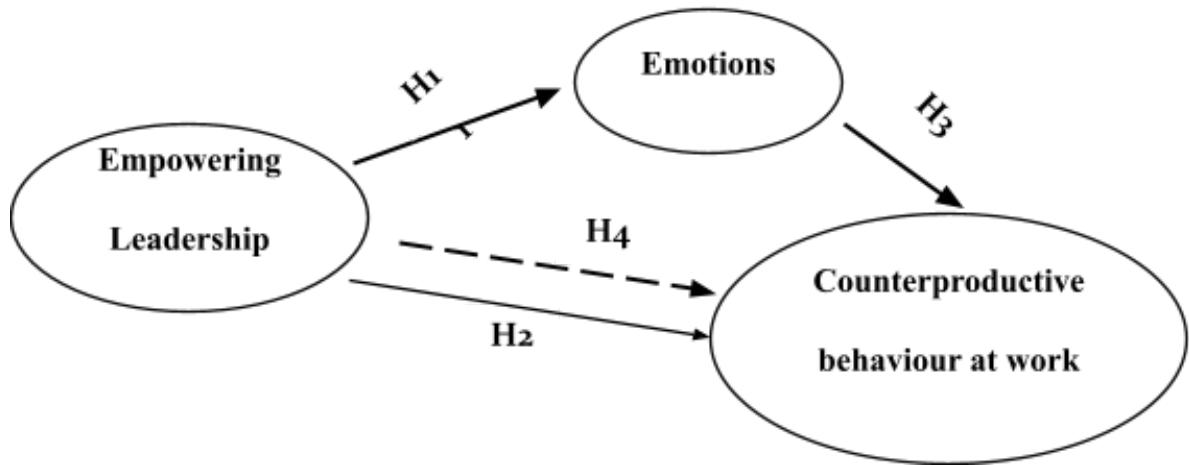 Figure 1: The conceptual framework of the research
This model has three variables, of which it is assumed that the interaction between two (empowerment leadership and emotions), rather than the underlying components, causes the third (counterproductive work behaviour). This structure involves a system of three linear regression equations that enables the materialization of the direct impact of the independent variable on the mediator and on the dependent variable , but also the residual effects of the independent variable and the mediator variable on the dependent variable when and are introduced simultaneously in the same linear least squares regression equation.
If represent the three linear least squares equations, denote the intercept of each of the three equations; with c' the total effect of X on Y; the direct effect of X on
M; the residual effect of X on Y and b the residual effect of M on Y.
Yzerbyt and al. (2018) recently showed that: when all three conditions are met, mediation is effective if and only if the total effect (c) of the independent variable X on the dependent variable is greater in absolute value than the residual effect (c') of the independent variable X on the dependent variable . In other words, assuming that all three equations are correctly estimated, the mediation model has an underlying equality that can be formulated through the following fundamental equation: . It appears that the difference between the direct effect (c) and the residual effect (c') of X on Y is equal to the product of the direct effect (a) of X on M and the residual effect (b) of M on Y.
In this conception, rather than focusing on the direct benefits of empowering leadership and the role of emotions, Baron and Kenny (1986) mainly focus on the effect of their interaction. There is therefore a high risk of inflation in multicollinearity when the effects of the independent variable and the mediator on the dependent variable are jointly estimated . As a result, the independent variable could have a smaller coefficient when it predicts the dependent variable (c) on its own and a larger coefficient when it acts simultaneously in the same equation with the mediator , but the larger coefficient will not be significant while the smaller coefficient would be. In the case where the value of is reduced to zero, we have strong evidence of a single dominant mediating variable, whereas, if this same residual effect of X on Y is non-zero, then several mediating factors are involved. In order to reduce the risk of multicollinearity inflation and to ensure the significance of the mediator effect, the use of the factorial approach suggested by Yzerbyt et al. (2018) is recommended. This approach proceeds to the demonstration that the two coefficients that form the product between the direct effect of X on M (a) and the residual effect of M on Y (b) are simultaneously significant.
2.1 Hypotheses
Emotions arise from the stimuli perceived by the individual in his or her environment. This evaluation is further intensified when combined with issues of perceived organisational justice. In a given organisational context indeed, emotions are not always entirely similar in nature, although Rein et al. (1995) concede that negative affect tends to be retained in memory longer than positive affect. Thus, whether positive or negative, the two categories of emotions do not specifically appear in isolation, though agreed that one may dominate the other. Beaud and Pialoux (1999) have noted that even in the most constrained organisations, the most hostile to any form of emergence of worker subjectivity, laughter, humour, joy, anger, hostility or affection are present everywhere. In this vein,
H1: Empowering leadership determines the emotions of employees at work.
The studies of de Arnold et al. (2000) reveal that empowering leadership practices tend to increase pro-organisational behaviour. It is however important to study the effect of this variable on counterproductive work behaviour.
H2: The practice of empowering leadership reduces the occurrence of counterproductive work behaviour.
Following the logic of the stressor-emotion model (Spector & Fox, 2005), the employee's emotional state is expected to determine his behaviour at work (H3).
In other words, an employee with negative emotional experiences shows more CWB while the expression of positive emotions will likely show less.
H4: The employee's emotions mediate the relationship between perceived empowering leadership and CWB.
Based on the studies of Van Katwik and al. (2000) who distinguish negatives emotions from positives emotions at work, the following sub-hypotheses are formulated:
H4a) Positive emotions mediate the relationship between empowering leadership practices and CWB. This hypothesis
H4b) Negative emotions mediate the relationship between empowering leadership and CWB.
III. METHODOLOGY
3. 1 Participants
This study was carried out with a snowball sample of 156 civil servants from the central administration (78 men and 78 women), serving in different government ministries in Yaoundé, Cameroon. Following the code of ethics and professional conduct for university research, we presented the objectives of the study to the participants and assured them that their anonymity as well as the confidentiality of their answers would be maintained. According to the implied consent method (Fortin et al., 2006), participants who expressed their consent to participate in the study should complete and return the questionnaire freely. In order to better describe the nature of the sample, the socio-demographic data of the 156 participants are presented in Table 1. It appears majority of the sample is made up of teachers, 33.3%; engineers represent 23.7%; work inspectors represent 14.7%; 11.5% of senior technicians; 15.4% health personnel and 1.3% civil administrators. The average age is 36.1 years and the average professional experience is 7.73 years.
Here is a characteristic of the population dominated by youths under 40, where the youngest is 20 years old and the oldest is 59. This age distribution reflects the population of the country, and perhaps of the African continent, which is made up of a large cohort of youths with a low life expectancy and which presents major challenges in terms of employability, health, nutrition etc. (Nyock Ilouga & al. (2018).
Table 1: Sample description
| Frequency | Percentage | ||
| SEX | Men | 78 | 50.0 |
| Women | 78 | 50.0 | |
| AGEM= 36.10 years | 20-40 | 109 | 69.9 |
| 40-60 | 47 | 30.1 | |
| PROFESSIONAL CATEGORIES | teachers | 54 | 34.4 |
| Health personnel | 24 | 15.4 | |
| engineers | 55 | 35.2 | |
| Inspectors (postal, work, treasury) | 23 | 14.7 | |
3.2 Material
This research took place within the month of January 2022. Participants were asked to complete a paper-and-pencil questionnaire structured in four main parts.
The first part deals with personal information (age, gender, occupation, work experience).
The second part deals with the Empowering Leadership Questionnaire (ELQ) developed by Arnold et al. (2000). This scale provides 38 items distributed into five dimensions. Example: "to what extent does your superior stimulate high performance through his/her behaviour"? Respondents were asked to give their opinion on a five-point Likert-type scale ranging from 1. Never to 5. Always. Items 1-5 measure management by example ( ); 6-11 measure participatory decision-making ( ); 12-22 measure autonomy ( ); 23-28 measure information sharing ( ); 29-38 measure interaction with collaborators ( ). The overall value of Cronbach's (0.97) confirms a good internal consistency of this scale.
In the third part, the evaluation of emotions was based on the scale of Van Katwyk et al. (2000). This scale (Job Affective-relative Work Scale-JAWS) provides 20 items (Ex: My job irritates me) and measures 10 negative ( ) and 10 positive ( ) emotions encountered at work. Respondents were asked to express their opinions on a five-point Likert scale ranging from 1) never to 5) very often.
The fourth section measuring counter-productive work behaviour comprises the Counter-productive Work Behaviour Check list (CWB-C) by (Spector et al., 2006). This scale was designed using the compilation of certain items from previous scales (Fox & Spector, 1999; Hollinger, 1986; Neuman & Baron, 1998; Robinson & Bennett, 1995; Spector, 1975). Since this study measures the probability of occurrence of CWBs as a result of the employee's feelings, we opted for the actor's (aggressor's) perspective and respondents were asked to rate their frequency of CWBs observation using a five-point Likert scale ranging from 1) never to 5) every day. Example: Verbally abusing a colleague or client.
3.3 Process of data analysis
Internal consistency tests (Cronbach's alpha) were used to assess the internal consistency between the items of the tools used. Descriptive analyses (means and standard deviations) were also used to summarise the information collected on each variable. To test our different hypotheses, the linear least squares technique was used to solve linear regression equations (Baron & Kenny, 1986).
IV. RESULTS
4.1. Descriptive analysis
The descriptive statistics on the variables show that the average level of positive emotions expressed (M=3.54) by the Cameroonian civil servant is relatively higher than the level of negative emotions (M=2.29). The values of the standard deviations are low, which reflect a high concentration of respondents' opinions around the means of the different variables of the study. As regards the dimensions of empowerment leadership, the mean scores obtained are very close to each other and slightly above the theoretical mean on the Likert scale. There are equally very low standard deviations. Nevertheless, it appears that the average score of counter-productive behaviour against individuals (M=1.73) remains relatively lower than the average score for counterproductive behaviour against the organisation (M=2.47). It therefore shows that the context of the Cameroonian public service is strongly dominated by counter-productive behaviour targeted against the organisation such as theft and misappropriation of state property as mentioned in the National Anti-Corruption Commission report published in 2020. The analysis of the correlation matrix reveals, on the one hand, very significant links between the different dimensions of empowerment leadership (IV) and, on the other hand, very significant links between these dimensions of the IV and counterproductive work behaviour. It appears that positive emotions are negatively related to CWB while negative emotions are positively related. All these significant correlations show that all our three variables (IV, MV and DV) are jointly related when combined in pairs.
Table 2: Correlation between variables of the research.
| Variables | M | SD | 1 | 2 | 3 | 4 | 5 | 6 | 7 | 8 |
| ME | 3.791 | 1.00 | 1 | , | ||||||
| DECISION T | 3.29 | 1.00 | ,659** | 1 | ||||||
| AUTO | 3.35 | 1.08 | ,622** | ,802** | 1 | |||||
| INFO S | 3.30 | 1.08 | ,504** | ,665** | ,821** | 1 | ||||
| INTERAC | 3.18 | 1.06 | ,510** | ,729** | ,806** | ,668** | 1 | |||
| NEG EMOT | 2.49 | 0.88 | -,338** | -,498** | -,531** | -,558** | -,462** | 1 | ||
| PO EMOT | 3.54 | 0.80 | ,331** | ,323** | ,378** | ,406** | ,333** | -,547** | 1 | |
| CWB O | 2.47 | 1.05 | -,366** | -,455** | -,487** | -,509** | -,393** | ,551** | -,434** | 1 |
| CWB P | 1.73 | 0.96 | -,317** | -,409** | -,464** | -,474** | -,359** | ,566** | -,357** | ,671** |
4.2. Hypothesis tests
The results of the relationship hypothesis test from the linear regression analysis indicate that all dimensions of perceived empowerment leadership have a statistically significant effect on employees' emotions. Multiple regression analysis was carried out on SPSS to estimate the direct effects of empowerment leadership dimensions on counterproductive behaviour. These results equally reveal the respective contributions of each empowerment leadership crisis dimensions in the explanation of the variance of the scores obtained during the evaluation of counterproductive behaviour.
Overall, it appears that empowering leadership is a predictor of counterproductive behaviour against the organisation and the effect of information sharing remains significant . However, the effects of other dimensions are insignificant, i.e., management by example , interaction with the supervisor , autonomy and participation in decision making . Concerning counter-productive behaviour against individuals, the analyses carried out show that empowering leadership practices represent an explanatory factor with a significant effect . Among the empowerment leadership dimensions, only the effect of information sharing remains significant . The effects of other dimensions are insignificant. Namely, management by example , interaction with the supervisor , autonomy and participation in decision making . The result of this analysis indicates that empowering leadership contributes to a significant reduction in counterproductive work behaviour; this observation confirms our first hypothesis . Similarly, the effect of empowering leadership practices on employees' emotions turned out to be significant. Empowering leadership specifically helps increase positive emotions in employ- yees. The effect of the information sharing dimension is significant . The effects of management by example as well as other dimensions remained insignificant. No significant indirect effects were observed with manage- ment by example ; participatory decision making ; interaction with the supervisor information sharing and autonomy .
In terms of negative emotions, it appears that empowering leadership contributes to a significant decrease in negative emotions in employee ( ). With a significant effect for information sharing (.β = 0,217; p = 0,06)). Regarding management by example (β = 0,071; p = 0,476); participative decision making (β = -0,164; p = 0,222); interaction with the superior (β = -0,042; p = 0,725); autonomy (β = 0,079; p = 0,637)). These results reveal that potential effects produced by the different dimensions of the leadership crisis may favour the multiplication of counterproductive behaviour against individuals. However, not all the potential effects observed here are statistically significant. In other words, all dimensions of the empowering leadership crisis are involved in explaining this type of behaviour. This result goes in line with Hypothesis 2. The analysis of the effect of emotions on counterproductive work behaviour carried out revealed that emotions felt by employees explain their adoption of counterproductive work behaviour against organisations ( ), while the negative emotions expressed tend to favour their multiplication (β = 0,539; t = 5,655; p = 0,000), the positive emotions felt rather contribute to their reduction ( ). This result indicates a need for leaders to multiply actions that generate positive emotions while avoiding those that may cause negative emotions in employees. This would significantly reduce aggressive behaviour towards their organisations. Furthermore, our analyses revealed that employees' emotions account for their engagement in aggressive acts against people ( ). In fact, it appears that the expression of negative emotions significantly increases CWBP ) while positive emotions slightly contribute to their reduction ( ). This result confirms the third hypothesis of this study.
4.3. The mediation Analysis
To establish the relationship between the three main variables of this study, a mediation analysis was applied. Structural equation modelling was used to ensure the validity of the proposed models. The objective of the structural model test is to evaluate the fit level of the study's model to the data, in order to assess the relationship between each latent variable and the overall model. The goodness of fit of the structural model is verified via the evaluation of the absolute, incremental and parsimony indices.
As such, the results of this analysis, implemented using JASP software under Windows, show satisfactory incremental indices (CFI, TLI, NFI) and parsimony indices (RMSEA and SRMR) for the first model (Table 3).
Table 3: Psychometric parameters of model 1
| Fit index of the causal model | Normed chi-square | Chi-square | SRMR | RMSEA | NFI | CFI | TLI |
| Value | 1.939 | 34.910, ddl=18 | 0.032 | 0.078 | 0.96 | 0.98 | 0.97 |
Statistics in Table 3 indicate a very good fit of the data to the structural model (Shermelleh-Engel & al., 2003). This suggests that the structural model is valid and can be applied to the study population for an explanation of the CWBs.
Since the saturation coefficients of the manifestations of each construct are high and significant, it thus appears that each construct is well informed by its dimensions which represent the different manifestations at the same time. This allows us to test the postulated mediating effect.
4.4 The mediating role of negative emotion
The objective of this analysis is to examine the mediating role of the negative emotions (M) in the relationship between empowering leadership (X) and counterproductive work behaviour (Y). A causal path analysis was used following the structural equation modelling technique (Alger & De Boeck, 2017). The guidelines of Baron and Kenny (1986) were followed in order to verify the respect of the basic postulates of a mediation effect.
Table 4: Multiple regression for model 1
| Negative emotions as Mediator | Direct Effect (β) | Indirect Effect (βi*βj) | Total Effect | Effect | Conclusions |
| EL → NE → CWB | -.44** | -.37 ** (-.76*.49) | -.81** | Full Mediation | Hypothesis accepted |
Firstly, these authors mention that, in order to conclude a mediation effect, the independent variable must be related to the mediating variable. This first condition was met, as the regression equation shows that:
-
Empowering leadership significantly contributes to explaining the variance in negative emotion scores, adjusted a = -0.761, z = -6.566, p <.001.
-
Secondly, it is necessary for the independent variable to be significantly related to the dependent variable. This second condition was equally met. The regression equation reveals that:
-
Empowering leadership contributes significantly to explaining the variance in scores obtained from the assessment of counterproductive work behaviour, adjusted ; z = -3.635, p <.001. Thirdly, the mediating variable must be related to the dependent variable. This third condition was met, as the regression equation reveals that:
-
Negative emotions significantly contribute to explaining the variance in scores obtained from the assessment of counterproductive work behaviour, adjusted ; b = 0.486, z = 5.648, p <.001.
Finally, according to Baron and Kenny (1986), perfect mediation is observed if the independent variable no longer has an effect on the dependent variable when the mediating variable is controlled. Conversely, if the relationship between the independent and dependent variable decreases but remains significant when the mediating variable is controlled, then a partial mediating effect can be concluded. However, Yzerbyt and al. (2018) have shown that: when the three conditions are met, mediation is effective if and only if the total effect (c) of the independent variable X on the dependent variable Y is greater in absolute value than the residual effect (c') of the independent variable X on the dependent variable Y . In other words, assuming that all three equations are correctly estimated, the mediation model has an underlying equality that can be formulated through the following fundamental equation: . It appears that the difference between the direct effect (c) and the residual effect (c') of X on Y is equal to the product of the direct effect (a) of X on M and the residual effect of M on Y.
- Since the final condition was also met, the fundamental equity can be evaluated as follows: By simultaneously including the independent variable (empowering leadership) and the mediator (negative emotions) in the same regression equation, the regression coefficient estimating the residual effects of empowering leadership ( ) remains significant as predictors of counterproductive work behaviour and .
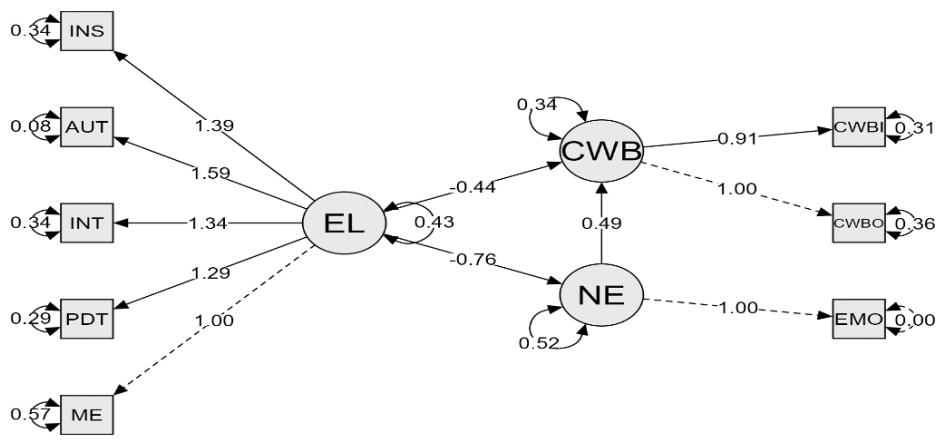
Figure 2: Model 1. Note: EL= Empowering leadership, CWB = Counterproductive work behaviour, AUT = Autonomy, INS=Information Sharing, INT = Interaction with the supervisor, PDT = Participative decision-taking, ME = Management by example, NE (EMO) = Negative Emotion, CWBI= Counterproductive work behaviour towards individuals, CWBO = Counterproductive work behaviour towards organisations.
It appears that 45.09% of the effect of empowering leadership on counterproductive work behaviour occurs through negative emotions. This result validates our hypothesis .
Concerning the second model, the incremental and parsimony indices presented in Table 4 below are quite satisfactory.
Table 5: Model 2 parameters
| Fit index of the causal model | Normed chi-square | Chi-square | SRMR | RMSEA | NFI | CFI | TLI |
| Value | 1.896 | 34.143, ddl=18 | 0.031 | 0.076 | 0.96 | 0.98 | 0.97 |
Statistics in Table 5 indicate a very good fit of the data to the structural model (Shermelleh-Engel & al., 2003). This makes it possible to apply it to the study population for an explanation of the CWBs. Since the saturation coefficients of the manifestations of each construct are high and significant, it thus appears that each of the three constructs (empowering leadership, positive emotion and CWB) is well informed by its dimensions which represent the different manifestations at the same time. The test of the postulated mediator of the positive emotion effect is carried out through a multiple regression analysis and the results are presented in the table below.
4.5 The mediating role of positive emotions
The objective of this analysis is to examine the mediating role of the positive emotions (M) in the relationship between empowering leadership (X) and counterproductive work behaviour (Y). Following the approach outlined above, the first step is assured and reveals that:
Table 6: Multiple regression for model 2
| Positive emotions as Mediator | Direct Effect (β) | Indirect Effect (βi*βj) | Total Effect | Effect | Conclusions |
| EL — PE — CWB | -.68** | -.16 **(.49*-.33) | -.84** | Partial Mediation | Hypothesis accepted |
Empowering leadership significantly contributes to explaining the variance in negative emotion scores, adjusted .
Secondly, it is required that both the independent variable and the dependent variable are significantly related. This second condition was equally met and reveals that:
Empowering leadership significantly contributes to explaining the variance in scores obtained from the assessment of counterproductive work behaviour, adjusted ; ; z = -5.194, p <.001.
Thirdly, the mediating variable must be related to the dependent variable. This third condition was met, as the regression equation reveals that:
Positive emotions significantly contribute to explaining the variance in scores obtained from the assessment of counterproductive work behaviour, adjusted ; b = 33; z = -3.629, p <.001.
Finally, as prescribed by Yzerbyt et al. (2018), the last condition was also met thus evaluating the following fundamental relation: . By simultaneously including the independent variable (empowering leadership) and the mediator (positive emotions) in the same regression equation, the regression coefficient evaluating the residual effects of empowering leadership ( ) remains significant as predictors of counterproductive work behaviour and
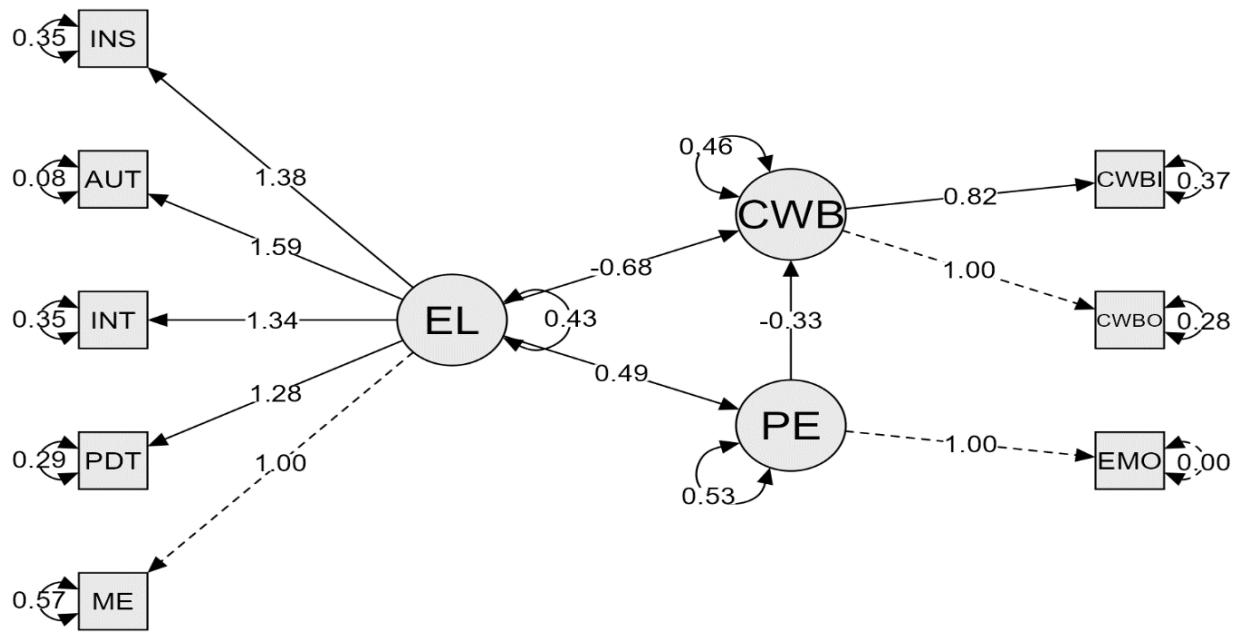
Figure 3: Model 2. Note: EL= Empowering leadership, CWB = Counterproductive work behaviour, AUT = Autonomy, INS=Information Sharing, INT = Interaction with the supervisor, PDT = Participative decision-taking, ME = Management by example, PE (EMO) = Negative Emotion, CWBI= Counterproductive work behaviour towards individuals, CWBO = Counterproductive work behaviour towards organisations.
It appears that 19.29% of the effect of empowering leadership on counterproductive work behaviour occurs through positive emotions. This result validates our hypothesis .
From the analyses carried out, it appears that the emotions felt by employees mediate the effect of perceived empowering leadership on the counterproductive behaviour that employees engage in at work. Furthermore, the mediation of positive emotions significantly reduces CWBs, while the mediation of negative emotions contributes to increasing them. Hence, the severity of transgressions may increase as the discomfort of negative emotional sanctions is intensified. However, empowering leadership practices contribute to increasing positive emotional feelings in employees while reducing negative emotions and CWB.
V. DISCUSSION
The result of this study highlights that in a context where employees experience more positive than negative emotions, they are tempted to engage in very few counterproductive behaviour, although the studies of Rein et al. (1995) acknowledge that negative effect tends to be retained longer in memory longer rather than positive effect. Following this logic, positive emotions can significantly counteract aggressive tendencies. However, if positive emotional sequences occur in a context where employees are dominated by negative emotions, there will be an increase in CWBs against the organisation and individuals. This result is in line with Berkowitz's (1969) model which notes that any unpleasant event (provocation, frustration, unpleasant stimulus...) causes a negative effect, which induces a temporary activation of various thoughts, memories, reactions and physiological responses, making the individual more likely to later act aggressively. It is therefore clear that, out of frustration, civil servants will react directly to the crisis of empowering leadership by adopting counterproductive behaviour against the organisation or individuals, probably when the intensity of the frustration is high. This observation goes in line with the Stressor Emotion Model (Spector & Fox, 2005).
The Stressor-Emotion Model establishes a linear causal relationship between lack of autonomy, negative emotions and CWBs. This reflects the need to emphasise employees' autonomy and access to information in order to reduce their tendency to engage in theft, embezzlement, corruption, etc., which are rife in the public service today. In his study model, Kelley (1992) points out that in leadership practice, the best followers are committed subordinates who are able to courageously state their views. However, in order to achieve this, managers need to create a framework that enables them to become "exemplary employees". This can only be possible if the manager sets an example and is a role model for the employees.
Bies and his collaborators have found that employees generally also expect managers to treat them with respect, honesty, courtesy and politeness, to care about their rights and well-being and to observe certain moral standards of interpersonal behaviour (Bies & Moag, 1986; Bies, 2001). In this case, the superior appears as a relational partner whose level of respect for the principles of interpersonal behaviour constitutes a criterion for employees to judge his or her fairness (Bies, 2001) and loyalty (Tyler & Degoey, 1996). Moreover, Erhart and Klein (2001) observed in a study that employees would prefer to work with a relationship-oriented leader, as opposed to a charismatic or task-oriented leader.
Previous studies have shown that empowering leadership leads to the development of positive effect and prosocial behaviour at work. This form of leadership is based on a process of power sharing by formal leaders that improves the autonomy, potential, purpose and impact of employees and work teams (Kirkman & Rosen, 1999). This study follows this trend by noting that the crisis of empowering leadership activates negative emotions in employees and leads them to adopt counterproductive work behaviour in response, which may be targeted either against the organisation that employs them, or against individuals working there (authorities and colleagues) or who attend for a service needed (customers).
This study encourages managers to focus more on empowering employees in order to stimulate positive emotions, which are one of the key factors of commitment and prosocial work behaviour. More importantly, these leadership practices help to avoid tensions and resentments within the organisation which can lead to revenge (Fleury, 2020) or counterproductive behaviour (Spector & Fox, 2005).
Similar to previous studies on the model, the emotions felt by the employee are addressed in this study as processes through which certain identified variables contribute to the development of counterproductive work behaviour. Nonetheless, Fida and al. (2015) noted the importance of moral disengagement in the process of an employee violating an organisational norm. Bandura (2016) defines moral disengagement as a set of ways in which individuals rationalise their wrong (unethical) actions. It is the propensity of an individual to use cognitions that allow them to restructure their unethical actions so that they appear less cruel, while mitigating the distress that would result from the harm they cause others. Future research could further explore this relationship by including this mediating variable to better explain anti-organizational behaviour.
Author's contribution and conflict of interest
-
Nyock Ilouga Samuel was responsible for the Conceptuals aspects, data analysis and Discussion of the results;
-
Djigou Jacques was responsible for redaction, littérature review and data collection;
-
Moussa Mouloungui Aude Carine was responsible for the forms issue, ethical considerations and references.
Declaration of Conflicting Interests
The author(s) declared no potential conflicts of interest with respect to the research, authorship, and/or publication of this article. Funding: the author(s) received no financial support for the research, authorship, and/or publication of this article.
Conflict of Interest
The authors declare no conflict of interest.
Ethical Approval
Not applicable
Data Availability
The datasets used in this study are openly available at [repository link] and the source code is available on GitHub at [GitHub link].
Funding
This work did not receive any external funding.
References
Cite this article
Related Research



Special Issue
Launch a focused special issue to highlight research, emerging trends, and expert insights in your academic field.
