



IntelliPaper
Abstract
he main purpose of this paper is to contrast the realizations of elements – processes, participant roles and circumstances in the English and Myanmar transitivity configurations following the network developed within the framework of Systemic Functional Linguistics. It is found that: English and Myanmar show similarity in the realizations of processes as verbal groups, participant roles as nominal groups, nominalization, adverbial groups, prepositional phrases, embedded clauses, and circumstances as nominal groups, adverbial groups, or prepositional phrases. However, they differ in that processes are also realized by copulas and participant roles by adjective/adjective groups in English, while processes are also realized by compound verbs, reduplicated verbs, or attributive verbs and circumstances by qualifying reduplicated adverbs or embedded clauses in Myanmar. The findings are rooted in the functional and typological prominences of the two languages, which may further shed light on a new perspective on the research of transitivity system for Systemic Functional Linguistics. This study also makes an important contribution to further studies of contrasting the realizations of elements in the transitivity configurations of Myanmar and other languages.
Explore Digital Article Text
I. INTRODUCTION
Many linguists and scholars are especially interested in the way how to treat meaning in grammar. According to Halliday's (1985, 1994/2000) functional grammar, there are three types of meaning conveyed by the clause, namely experiential meaning, interpersonal meaning and textual meaning. Among them, experiential meaning has to do with the ways how language represents our experience of the external world and the inner world of our thoughts and feelings through clauses. In other words, our experience of happening, doing, sensing, meaning, being and becoming are turned into meaning and into wording. This experiential meaning is realized through transitivity system comprising three main components: by process, participant(s) in the process and circumstance(s) associated with the process. In other words, transitivity system is the representation of the experience of the world as different types of processes.
In recent years, the contrastive studies of transitivity systems between/across languages have grown significantly as macro linguistics. The previous studies cover the comparison of transitivity systems in English and other languages – Spanish, Chinese and Vietnamese (Lavid and Arus, 2002; Yuli and Yushan, 2012; Phan and Nguyen, 2015; and the like). In the literature, there are a scant number of contrastive studies of English and Myanmar from the Systemic Functional perspective. This study aims to contrast the realizations of elements in English and Myanmar transitivity configurations focusing on He et al.'s (2017) version of the transitivity system of English and Lai Yee Win's (2021) transitivity system of Myanmar. Contrary to previous studies, this study adopts He et al.'s (2017) modification of the English transitivity system rather than Halliday's because He et al. (2017) makes a much more detailed description of the transitivity system of English in the realization of participant roles and the classification of participants from circumstances than Halliday (1985, 1994/2000, 2004, 2014).
This study uses two main qualitative research methods: descriptive method and explanation of the findings from the transitivity analysis of different genres of English and Myanmar texts, especially novels and news reports. The transitivity analysis of Myanmar clauses is provided with a systematic description of Myanmar script, IPA phonetic transcription, glosses and a word for word English translation. Being an empirical study, this study predominantly deploys the qualitative method of contrastive analysis. The data used in the study are taken from authentic texts.
II. PREVIOUS STUDIES OF CONTRASTING TRANSITIVITY SYSTEMS BETWEEN/ACROSS LANGUAGES
So far there have been a growing number of studies on the descriptions of transitivity systems in world languages. However, the studies on typological studies on transitivity systems and their realizations across languages are scant (e.g. Caffarel et al., 2004). The transitivity systems of French, German, Japanese, Tagalog, Chinese, Vietnamese, Telugu and Pitjantjatjara are proposed by Caffarel (2004), Steiner and Teich (2004), Teruya (2004), Martin (2004),
Halliday and McDonald (2004), Thai (2004), Prakasam (2004) and Rose (2004) respectively in Caffarel, Martin, and Matthiessen (2004). It is suggested in Halliday (1985, 1994/2000) and Matthiessen (1995) that transitivity systems across languages simultaneously realize different domains of experience and different modes of participating in the process (Caffarel et al., 2004:135).
Based on Halliday's six major processes, Yuli and Yushan (2012) conduct a comparative study of English and Chinese transitivity systems in order to deepen the understanding towards the two languages from a new aspect and give insight on E-C translation. The findings of their research indicate that the six processes of the English and Chinese transitivity systems are semantically the same in E-C translation although there is process transfer in certain circumstances. It is obvious that the components and sentence structures of the verbal process, behavioral process and existential process of the two languages are typically the same, whereas the distinctions of the passive voice and habitual usages exist in the material process, mental process and relational process due to their complexities. Therefore, the former three processes can remain unchanged in E-C translation, while the latter ones can experience process transfer in E-C translation.
Lavid and Arus (2002) undertake a contrastive functional study of nuclear transitivity in English and Spanish by means of the application of the transitive/ergative distinction developed by Davidse (1992) to material processes, mental processes and relational processes in both English and Spanish. A model of nuclear transitivity consists of three simultaneous systems: (1) a system of agency which is concerned with the presence or absence of the feature Agent, (2) a system of process type which is concerned with the semantic type of process involved, and (3) a system of causation which is concerned with the variable of instigation. The transitive and ergative systems in English and Spanish possess different grammatical properties which are realized by different lexical verbs. There is the transitive/ergative distinction between the semantically related verbs of English and Spanish. In such cases, the same process is expressed transitively in one language and ergatively in the other.
Al-Janabi (2013) carries out a contrastive study of transitivity analysis in English and Arabic short narrative texts. He analyzes the processes of transitivity used in two narrative short texts of English and Arabic based on Halliday's theory of transitivity. He highlights the role of these processes in portraying the features of the characters in such literary texts. The findings and results of the analysis indicate that the processes of transitivity are semantically the same in English and Arabic in spite of appearing in different frequency.
Kaffashi et al. (2015) conducts a contrastive study of English and Persian narrative texts in terms of manner of expressing of relational attributive clauses based on Halliday and Matthiessen (2004). Accordingly, it investigates the possible similarities and differences regarding three components of Halliday's “transitivity process”, namely: the process, participants and circumstances based on a corpus of 400 clauses: 200 from English and 200 from Persian. There are some differences in manner of expressing, the position and number of participants, and the kind of processes.
Phan and Nguyen (2015) make a comparison between English and Vietnamese Behavioral Clauses from the perspective of Halliday's transitivity system. Based on a corpus of English and Vietnamese literary work of the late 20th century and the early 21st century, Phan and Nguyen (2015) explore the relations between human behavior and language and identify English and Vietnamese verbs that realize behavioral process in terms of descriptive method and functional analysis. Phan and Nguyen (2015) characterize four subtypes of behavioral processes: material-behavioral processes, verbal-behavioral processes, mental-behavioral processes and behavioral processes in English and Vietnamese literary genre within the systemic functional framework of Martin, Matthiessen and Painter (1997), Bloor and Bloor (1995) and Eggins (1994).
ĐĂNG THỊ CÂM NGỌC (2015) investigates the similarities and differences between the linguistic features of material processes in English and Vietnamese based on the total number of 1640 samples related to material processes from “Perfect Spy” by Larry Berman and its Vietnamese translational equivalent Điệp Viên Hoàn Hảo translated by Đỗ Hùng. Findings indicate that in some cases the obligatory Actor in English clauses is omitted in Vietnamese translated clauses and it is similar to Goal. Sometimes the absence of Actor or Goal will be found out when being translated into Vietnamese. It is also investigated that the verbs in Material processes of English are translated into the Verbs of Relational processes of Vietnamese.
NGUYÊN PHAN CÂM TÚ (2011) carries out the comparative study of the semantic and syntactic features of participants in the processes in English and Vietnamese from the perspective of Halliday's transitivity system. Descriptive and comparative methods are used in her study. The results of her study show that English and Vietnamese have the same kinds of process with the same numbers of participant in each. They are realized by the same configuration: Participant + Process + (Participant) + (Participant).
Most of these contrastive studies between languages mentioned above are conducted in terms of Halliday's (1985, 1994/2000, 2004, 2014), Matthiessen's (1995) and Davidse's (1992) theories of transitivity. These theories of transitivity adopted in previous contrastive studies cannot make a specification of process types and participant roles. To fill this gap, the present study will adopt He et al.'s (2017) modified version of the transitivity system of English based on Halliday's (1985, 1994/2000, 2004, 2014) and Fawcett's (1980, 1987, forthcoming) hypotheses about transitivity. Based on He et al.'s (2017) transitivity system of English and Lai Yee Win's (2021) transitivity system of Myanmar, this study contrasts the realizations of processes, participant roles and circumstances in English and Myanmar transitivity configurations.
III. COMPARISON OF REALIZATIONS OF PROCESSES, PARTICIPANT ROLES AND CIRCUMSTANCES IN ENGLISH AND
Transitivity system construes our experience of the world around us and inside us. It shows the experiential meanings of the language at the semantics level. According to Halliday and Matthiessen (2004: 175), there are three main components in transitivity structures. They are a process unfolding through time, the participants involved in the process and circumstances associated with the process. In the semantic configuration, the process is the pivotal element and participants are inherent in the process. However, circumstantial elements are optional in the clause; they are not directly involved in the process (Halliday and Matthiessen 2004: 176). In the MOOD grammar processes function as Predicator realized by a verbal group; participants function as Subject or Complement, and they are structurally realized by nominal groups; circumstances map onto Adjuncts realized by adverbial groups or prepositional phrases. Halliday and Matthiessen (2004: 177) express the typical experiential functions of group and phrase classes as in Table 3-1.
Table 3-1: Typical experiential functions of group and phrase classes (Halliday and Matthiessen 2004: 177)
| Type of Element | Typically Realized By |
| process | verbal group |
| participant | nominal group |
| circumstance | adverbial group or prepositional phrase |
3.1 Comparison of realizations of processes in English and Myanmar transitivity configurations
As the transitivity system has been defined as the reflection of human experience, there is something in common in all languages. In the two languages studied in this study, it has been discovered that the main classifications of processes are similar. See Figure 3-2.
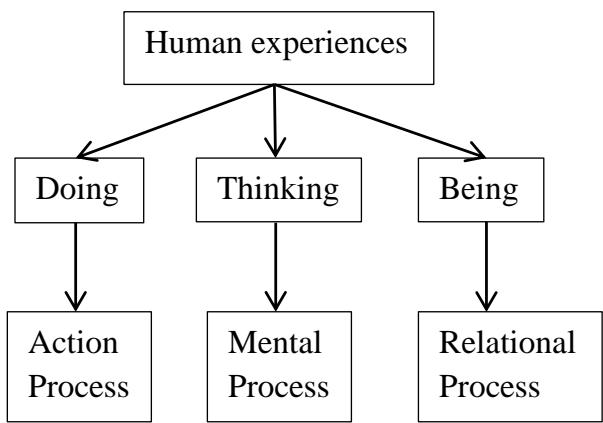
Figure 3-2: The transitivity processes represent universal human experiences
From Figure 3-2, it can be seen that human experiences can be divided into doing, thinking and being, which can be described by material, mental and relational processes respectively on the basis of Halliday's model. However, in this study, the processes of doing are labeled as action processes rather than material processes following Fawcett (1980) and He (2022). Thus, it is observed that languages, though with large typological distinction, at a very general level, present relatively similar structures of types of processes, principally the three main processes with the aim of reflecting human activities universally. The action, mental and relational processes can be said to be universal due to the common feature of human beings: they do something; they think, feel and perceive, and they have relations with others. However, referring to the subdivision of each process, there occur clear differences. In this study, we can see the differences of realizations of processes in two languages. As it will be described in detail, in English, the mental processes are divided into three subtypes: perception, affection and cognition; the relational processes include three subtypes as attributive, identifying and symbolizing, while in Myanmar, the behavioral process is subsumed under the category of action process; the communicative process which is analogous to Halliday's verbal process under the category of mental process, and the existential process under the category of relational process. Lai Yee Win (2021) claims that in Myanmar transitivity system, the action processes are categorized into four types: happening, doing, creating and behaving; the mental processes into five categories: emotive, desiderative, perceptive, cognitive and communicative processes, and the relational processes into seven types: attributive, identifying, locational, directional, possessive, correlational and existential processes. The following will investigate similarities and differences in the English-Myanmar translation of processes. First of all, we will see the similarities and differences in realizations of action processes in English and Myanmar translated clauses.
3.1.1 Realizations of action processes in English and Myanmar transitivity configurations
English and Myanmar show the same potential realization of autonomous happening action process as verbs concerning the change of a state or weather condition such as ἐμοδρό: /thaysonn/ 'die', ὢρόμο: /phyitpwarr/ 'happen/take place', ὢρόστοση /myinttet/ 'rise', ὢσσός /satin/ 'begin', ὢσύσε: /pyeesonn/ 'finish/end', ὢμι /kya/, ὢρ /ywar/ 'fall', υς /pwint/ 'open', ὢμίς /kyoe/ 'be broken', ωρόση /taik/ 'blow', ὢρύση /mye/ 'ring', and so on. For example, the English verb die realizes autonomous happening action process in English transitivity structure (1a). As shown by Example (1b), the Myanmar lexical verb ἀρό: /sonn/ which has the same semantic meaning as die in English realizes the same process of autonomous happening action in Myanmar transitivity structure.
(1) a. autonomous: happening action
| Mg Pyone has died. | |
| Affected | Process |
| b. autonomous: happening action | |
| ### | ### |
| maunpyonn sonn-shar-bye. | |
| Mg.Pyone die-COMP-PFV.DECL.SENTSUF | |
| Affected | Process |
‘Mg Pyone has died.’
‘Mg Pyone has died.’ However, there are some differences in realizations of influential happening action processes in English and Myanmar transitivity structures. The Myanmar autonomous happening action process clause (1b) is transformed into influential process (2b) by suffixing the causative marker -∞∞ /zay/ to the happening process realized by the verb die which is influenced by an external instigator, the Agent. The Myanmar clause (2b) is translated into English with a change of lexical verb kill which realizes autonomous doing action process by changing the semantic process as in (2a) because an English autonomous happening action process like Mg Pyone has died does not alternate with an influential one such as Someone has made Mg Pyone die. Instead, we normally say Someone has killed Mg Pyone by changing the process in English although the Myanmar verb 600 /thay/ 'die' can be employed in both autonomous and influential happening action processes.
| Sunlight | can kill | germs. |
| Agent | Process | Affected |
b. influential: happening action
b. autonomous: doing action
| nayyaunche-the sunlight-SBJMARK | yawgarpoe-myarr-go germ-PLMARK-OBJMARK | thay-zay-nain-the.die-CAUS-CAPAMOD.PRS-DECL.SENTSUF |
| Agent | Af[[Affected | Process]] |
Autonomous doing action process realizes an action initiated by the Agent (He et al. 2017: 33). In some cases, that action can extend to the second participant, the Affected or the Range or the Manner. In an autonomous doing action process clause, there is a process of doing and a participant inherent in that process, the Agent realized by nom.gp-the/ga/hmar. When the second participant is involved in this process, it may be the Affected realized by nom.gp-go or the Range realized by nom.gp or the Manner realized by adv.gp. both English and Myanmar show the same potential of realization of autonomous doing action process as doing action verbs such as /htain/ 'sit', /phat/ 'read', /yaik/ 'beat', /sarr/ 'eat', /thauk/ 'drink', /that/ 'kill', /phyetsee/ 'destroy', /gazarr/ 'play', and so on. Autonomous doing action process can be conflated with another process such as autonomous directional relational process, and become a compound process, i.e. the autonomous doing action and directional relational process. This compound process is realized by lexical verbs such as /lannshauk/ ‘walk’, /thwarr/ ‘go’, /lar/ ‘come’, /hlet/ ‘turn’, etc. in the same way in English and
Myanmar transitivity structures. Nevertheless, in English, there are some lexical verbs which have the same spellings but different semantic meanings to realize different processes. For example, the English verb open can realize both autonomous happening action process and autonomous doing action process as in (3a) and (3b). Contrary to English, in Myanmar transitivity structures, autonomous happening and doing action processes are realized by different lexical verbs: ♀/pwint/ and ♀/phwint/ respectively as in (4a) and (4b).
(3) a. autonomous: happening action
| Juana’s were open too. eyes | ||
| Affected | Process | |
| Kino | opened | his eyes | in the darkness. |
| Agent | Process | Affected | Circumstance |
| autonomous: happening action | |||
| ungfɔnti | ungfɔnti:ung:ung: | ungfɔnti | |
| hwarnar-i | myetlonn-myarr-le | pwint-naybye. | |
| Juana-GEN | eye-PLMARK-ADDCONN | open-PFV.DECL.SENTSUF | |
| Affected | Process | ||
| ‘Juana’s eyes were open too.’ | |||
| The glass broke | |||
| Affected | Process | ||
| b. autonomous: doing action | |||
| He broke the glass in anger. | |||
| Agent | Process | Affected | Circumstance |
| a. autonomous: happening action | |||
| $\text{###}$ phankhwet kwe-thwarrbye. | |||
| glass break-PFV.DECL.SENTSUF | |||
| Affected | Process | ||
| ‘The glass broke.’ | |||
| b. autonomous: doing action | |||
| $\text{###}$ thue 3SG.NOM | phankhwet-go glass-OBJMARK | dawtha-hnint anger-COM | yaik-khwe-laiki hit-break-PFV.DECL.SENTSUF |
| Agent | Affected | Circumstance | Process |
| b. autonomous: doing action | ||||
| ### | ### | ### | ### | ### |
| keno-the | Ahmaun-htetwin | thue-i | myetlonn-myarr-go | phwint-kyi-laiki. |
| Kino-SBJMARK | dark-LOC | 3SG-GEN | eye-PLMARK-OBJMARK | open-look-PFV.DECL.SENTSUF |
| Agent | Circumstance | Affected | Process | |
Similarly, the English verb break can realize both autonomous happening action process and autonomous doing action process as in (5a) and (5b). However, different lexical verbs realize these two processes in Myanmar translation from (5a) and (5b). As shown in examples (6a) and (6b), the lexical verbs /kwe/ and /khwe/ realize autonomous happening action process and autonomous doing action process respectively.
(5) a. autonomous: happening action
‘Kino opened his eyes in the darkness.’
The following examples (7) and (8) illustrate similarities and differences in realizations of influential doing action processes in English and Myanmar transitivity structures. As shown in examples (7a) and (7b), English and Myanmar show the same potential of realizations of the influential process and the doing action process influenced by an external instigator in spite of their different transitivity structures.
7) a
‘I encouraged her to do this job for the Minister.’ (Journal Kyaw Ma Ma Lay 1957: 55) On the other hand, we can find out different realizations of influential process in examples (8a) and (8b). Contrary to English, influential process is realized by postverbs such as ∞∅ /zay/ and [∅c: /khainn/ in Myanmar transitivity structures.
| I encouraged her to do this job for the Minister. | |||||
| Agent | Process | Af[[Agent | Process | Affected | Circumstance]] |
| influential: doing action | |||||
| ### | ### | ### | ### | ### | ### |
| kyama | thu-go | de-aloke | loke-phot | wingyee-atwet | taiktunn-yade. |
| 1SG.F.NOM | 3SG-OBJMARK | DEM-job | do-INF | Minister-PURP | encourage-DECL.SENTSUF |
| Agent | Af[[Agent | Affected | Process | Circumstance]] | Process |
8) a
| I asked her to clean the floor. | ||||
| Agent | Process: influential | Af[[Agent | Process: doing action | Affected]] |
| influential: doing action | ||||
| ### | ### | ### | ### | ### |
| kyama | thu-go | kyann | taik-khainn-khet-de. | |
| 1SG.F.NOM | 3SG-OBJMARK | floor | clean-ask-PST-DECL.SENTSUF | |
| Agent | Af[[Agent | Affected | Process]] | |
Autonomous creating action processes realize the experience of bringing objects into being (He et al. 2017: 39). These processes are realized by creative action verbs such as /mwaye:/ 'give birth to', /yaye:sat/ 'compose', /phoke/ 'bake', /sauk/ 'build', /tehtwin/ 'invent', and so on in English and Myanmar transitivity structures. Consider the following examples.
(9) a autonomous: creating action
| Ma gave birth to the at the time when I passed the first year at Aye first university. |
| Phyu baby son |
| Age nt | Proce ess | Proce ss Exten sion | Proce ss Exten sion | Creat ed | Circumstance |
b autonomous: creating action
| ### | ### | ### | ### | ### | ### | ### | ### |
| ### | ### | ### | ### | ||||
| kyan or | takatho | pahta ma-hnit | aun=t hi | ach ein | maaye:p hyue | tharr-ue:-galaye:-go | phwarrmyi n-the. |
| 1SG | university | first-year | pass=REL | time | Ma.Aye.Phyu | son-first-DIM-OBJMARK | give.birth.t o(PST)-DECL.SENTS UF |
| Circumstance | Agent | Created | Process |
As Examples (9a) and (9b) describe, the Myanmar process of creating action is realized by the verb /phwarrmyin/ which has the same semantic meaning as the English creating action verb phrase give birth to. The English creating action process clause (9a) can be transformed into passive structure where the creating action process is realized by the verb be with the Process Extension born. See the example (9c). However, we cannot make any changes in realization of Myanmar creating action process as the verb /phwarrmyin/ and its transitivity structure in (9b).
| Created | Process | Process Extension | Agent | Circumstance |
The different realizations of influential creating action processes in English and Myanmar transitivity structures can be seen in examples (10a) and (10b). In English transitivity structure of influential creating action process clause (10a), the influential process through which the outside participant, the Agent (the teacher) instigates a creating action process is realized as a separate verb ask to, whereas in Myanmar transitivity structure (10b), the influential process performed by the Agent is realized as a postverb /khainn/ 'ask to' which is suffixed to the creating action verb /yaye:/ 'write'.
(10) a. influential: creating action
| The teacher asked the students to write an essay. | ||||
| Agent | Process: influential | Af[[Agent | Process: creating action | Created]] |
| influential: creating action | ||||
| ### | ### | ### | ### | ### |
| sayar-ga | kyaunntharr-myarr-go | atsaye:-da-boke | yaye:-khainn-khet-de. | |
| teacher-SBJMARK | student-PLMARK-OBJMARK | essay-one-CLF | write-ask.to-PST-DECL.SENTSUF | |
| Agent | Af[[Agent | Created | Process]] | |
Autonomous behaving action processes construe human behavior, including mental and verbal behavior out of processes of consciousness and physiological states (He et al. 2017: 127). He et al. (2017) classifies behavioral process as a separate one, not as a subtype of the action process. But in terms of He's (forthcoming) new model of Chinese transitivity system and Lai Yee Win's (2021) description of the transitivity system of Myanmar, behavioral process is subsumed under the category of action process. Behaving action processes are realized by lexical verbs with the grammatical features of action processes such as /chaunnsoe/ 'cough', /athetshue/ 'breathe', /hnarsaye:/ 'sneeze', /thann/ 'yawn', /thetpyinncha/ 'sigh', /pyonn/ 'smile', /ye/ 'laugh' and /ngo/ 'cry', mental processes such as /kyi/ 'look', /saikkyi/ 'stare', /narrhtaun/ 'listen', and verbal processes such as /zagarrpyaw/ ‘chatter’, /atinnpyaw/ ‘gossip’, /nyeenyue/ ‘moan’ and /toetoepyaw/ ‘murmur’ in English and Myanmar transitivity structures. These two languages show the same potential of realization of autonomous behaving action process despite different realizations of influential processes as in examples (11) and (12). As (11a) and (11b) illustrate, the behaving action process is realized by a single verb screamed in English transitivity structure, while it is realized by a compound verb in Myanmar transitivity structure. As shown in examples (12a) and (12b), despite the realization of English influential process as a separate verb make, the Myanmar influential process is realized as a postpositional causative affix /zay/ to the behaving action process /tonye/ ‘shiver’ influenced by an external instigator, the Agent /kyaukmetphweyar athan-gyee-ga/ ‘frightenig sound’.
(11) a. autonomous: behaving action
| Coyotito | screamed | with pain | in his box. | |
| Behavior | Process | Circumstance | Circumstance | |
| autonomous: behaving action | ||||
| ### | ### | ### | ### | ### |
| coyoteetoe- | narkyin- | pakhetthittar- | orhit | ngokywaye:- |
| garr | lunn=thaphyint | htehmar-bin | hlyetshilaythe. | |
| Coyotito- | painful- | box-LOC-EMPMARK | scream | cry- |
| SBJMARK | AUG=CAUS.CONJ | PROG.DECL.SENTSUF | ||
| Behaver | Circumstance | Circumstance | Process | |
(12) a. influential: behaving action
‘Frightening sound made Mary shiver.’ (Journal Kyaw Ma Ma Lay 1957: 189)
| Frightenig sound made | Mary | shiver. | |
| Agent | Process: influential | Af[[Behaver | Process: behavingaction]] |
| influential: behaving action | |||
| e̵̸̶̴̸̵̸̸̸̸̸̸̸̸̸̸̸̸̸̸̸̸̸̸̸̸̸̸̸̸̸̸̸̸̸̸̸̸̸̸̸̸̸̸̸̸̸̸̸̸̸̸̸̸̸̸̸̸̸̸̸̸̸̸̸̸̸̸̸̸̸̸̸̸̸̸̸̸̸̸̸̸̸̸̸̸̸̸̸̸̸̸̸̸̸̸̸̸̸̸̸̸̸̸̸̸̸̸̸̸̸̸̸̸̸̸̸̸̸̸̸̸̸̸̸̸̸̸̸̸̸̸̸̸̸̸̸̸̸̸̸̸̸̸̸̸̸̸̸̸̸̸̸̸̸̸̸̸̸̸̸̸̸̸̸̸̸̸̸̸̸̸̸̸̸̸̸̸̸̸̸̸̸̸̸̸̸̸̸̸̸̸̸̸̸̸̸̸̸̸̸̸̸̸̸̸̸̸̸̸̸̸̸̸̸̸̸̸̸̸̸̸̸̸̸̸̸̸̸̸̸̸̸̸̸̸̸̸̸̸̸̸̸̸̸̸̸̸̸̸̸̸̸̸̸̸̸̸̸̸̸̸̸̸̸̸̸̸̸̸̸̸̸̸̸̸̸̸̸̸̸̸̸̸̸̸̸̸̸̸̸̸̸̸̸̸̸̸̸̸̸̸̸̸̸̸̸̸̸̸̸̸̸̸̸̸̸̸̸̸̸̸̸̸̸̸̸̸̸̸̸̸̸̸̸̸̸̸̸̸̸̸̸̸̸̸̸̸̸̸̸̸̸̸̸̸̸̸̸̸̸̸̸̸̸̸̸̸̸̸̸̸̸̸̸̸̸̸̸̸̸̸̸̸̸̸̸̸̸̸̸̸̸̸̸̸̸̸̸̸̸̸̸̸̸̼̮̯̪̳̲̦̯̪̮̜̯̪̪̪̅̅̅̅̅̅̅̅̅̅̅̅̅̅̅̅̅̅̅̅̅̅̅̅̅̅̅̅̅̅̅̅̅̅̅̅̅̅̅̅̅̅̅̅̅̅̅̅̅̅̆̅̅̅̅̅̅̅̅̅̅̅̅̅̅̅̅̅̅̅̅̅̅̅̅̅̅̅̅̅̅̅̅̅̅̅̅̅̅̅̅̅̅̅̅̅̅̅̅̅̉̅̅̅̅̅̅̅̅̅̅̅̅̅̅̅̅̅̅̅̅̅̅̅̅̅̅̅̅̅̅̅̅̅̅̅̅̅̅̅̅̅̅̅̅̅̅̅̅̅̅̅̅̅̅̅̅̅̅̅̅̅̅̅̅̅̅̅̅̅̅̅̅̅̅̅̅̅̅̅̅̅̅̅̅̅̅̅̅̅̅̅̅̅̅̅̅̅̅̇̅̅̅̅̅̅̅̅̅̅̅̅̅̅̅̅̅̅̅̅̅̅̅̅̅̅̅̅̅̅̅̅̅̅̅̅̅̅̅̅̅̅̅̅̅̅̅̅̅̅̅̅̅̅̅̅̅̅̅̅̅̅̅̅̅̅̅̅̅̅̅̅̅̅̅̅̅̅̅̅̅̅̅̅̅̅̅̅̅̅̅̅̅̅̅̅̅̅̅̅̅̅̅̅̅̅̅̅̅̅̅̅̅̅̅̅̅̅̅̅̅̅̅̅̅̅̅̅̅̅̅̅̅̅̅̅̅̅̅̅̅̅̅̅̅̅̅̅̅̅̅̅̅̅̅̅̅̅̅̅̅̅̅̅̅̅̅̅̅̅̅̅̅̅̅̅̅̅̅̅̅̅̅̅̅̅̅̅̅̅̅̅̅̅̅̅̾̅̅̅̅̅̅̅̅̅̅̅̅̅̅̅̅̅̅̅̅̅̅̅̅̅̅̅̅̅̅̅̅̅̅̅̅̅̅̅̅̅̅̅̅̅̅̅̅̅̎̅̅̅̅̅̅̅̅̅̅̅̅̅̅̅̅̅̅̅̅̅̅̅̅̅̅̅̅̅̅̅̅̅̅̅̅̅̅̅̅̅̅̅̅̅̅̅̅̅̅̅̅̅̅̅̅̅̅̅̅̅̅̅̅̅̅̅̅̅̅̅̅̅̅̅̅̅̅̅̅̅̅̅̅̅̅̅̅̅̅̅̅̅̅̅̅̅̅̅̅̅̅̅̅̅̅̅̅̅̅̅̅̅̅̅̅̅̅̅̅̅̅̅̅̅̅̅̅̅̅̅̅̅̅̅̅̅̅̅̅̅̅̅̅̅̅̅̽̅̅̅̅̅̅̅̅̅̅̅̅̅̅̅̅̅̅̅̅̅̅̅̅̅̅̅̅̅̅̅̅̅̅̅̅̅̅̅̅̅̅̅̅̅̅̅̅̅̅̅̅̅̅̅̅̅̅̅̅̅̅̅̅̅̅̅̅̅̅̅̅̅̅̅̅̅̅̅̅̅̅̅̅̅̅̅̅̅̅̅̅̅̅̅̅̅̅̅̅̅̅̅̅̅̅̅̅̅̅̅̅̅̅̅̅̅̅̅̅̅̅̅̅̅̅̅̅̅̅̅̅̅̅̅̅̅̅̅̅̅̅̅̅̅̅̅̅̅̅̅̅̅̅̅̅̅̅̅̅̅̅̅̅̅̅̅̅̅̅̅̅̅̅̅̅̅̅̅̅̅̅̅̅̅̅̅̅̅̅̅̅̅̅̅̅̅̅̅̅̅̅̅̅̅̅̅̅̅̅̅̅̅̅̅̅̅̅̅̅̅̅̅̅̅̅̅̅̅̅̅̅̅̅̅̅̅̅̅̅̅̅̆̅̅̅̅̅̅̅̅̅̅̅̅̅̅̅̅̅̅̅̅̅̅̅̅̅̅̅̅̅̅̅̅̅̅̅̅̅̅̅̅̅̅̅̅̅̅̅̅̅̅̅̅̅̅̅̅̅̅̅̅̅̅̅̅̅̅̅̅̅̅̅̅̅̅̅̅̅̅̅̅̅̅̅̅̅̅̅̅̅̅̅̅̅̅̅̅̆̅̅̅̅̅̅̅̅̅̅̅̅̅̅̅̅̅̅̅̅̅̅̅̅̅̅̅̅̅̅̅̅̅̅̅̅̅̅̅̅̅̅̅̅̅̅̅̅̆̅̅̅̅̅̅̅̅̅̅̅̅̅̅̅̅̅̅̅̅̅̅̅̅̅̅̅̅̅̅̅̅̅̅̅̅̅̅̅̅̅̅̅̅̅̅̅̆̚\text{influential:} | |||
| Agent | Af[[Behaver | Process]] | |
3.1.2 Realizations of mental processes in English and Myanmar transitivity configurations
Mental processes are the processes of sensing. They construe the experience of the world of our own consciousness (He et al. 2017: 65). He et al. (2017) describe four subtypes of mental processes, namely emotive, desiderative, perceptive and cognitive mental processes in their description of transitivity system of English. However, in He's (2022) new version of transitivity system of Chinese and Lai Yee Win's (2021) description of transitivity system of Myanmar, there are five subcategories of mental processes, namely emotive, desiderative, perceptive, cognitive and communicative mental processes. Each process can be either autonomous or influential. Although He et al. (2017) describe communicative process as a separate one, it is taken as a subtype of mental process in He's (2022) Chinese transitivity system and Lai Yee Win's (2021) Myanmar transitivity system.
Autonomous emotive mental processes realize our feelings or emotions. This subtype of mental process is realized by the like type of verbs such as ὀμπόμη /kyaik/ ‘like’, ὢσεδομη /hnitthet/‘like’, ὁμρύφο /chit/ ‘love’, ὁμεσός: /monn/ ‘hate’, ὁμυρήσιξ/pyorshwin/ ‘rejoice’, ὁστώμη /gonyue/ ‘exult’, ὁμποστομήσιξ/kyaukywunt/ ‘dread’, ὁσθοσομη: /wannne/ ‘grieve’, ὢσ̈σ̈/antaw/ ‘marvel’, ὁσσɔːσ̈: /laye:zarr/ ‘admire’, ὁσσσόσσιξ/naundaya/ ‘regret’, and the please type of verbs
such as /swesaun/ ‘attract’, /chaukhlant/ ‘startle’, /taiktunnarrpaye:/ ‘encourage’, /hnittheik/ ‘comfort’, /seikwinzarrzay/ ‘interest’, /hteiklantzay/ ‘shock’, /soeyeinpuebanzay/ ‘worry’, ( \delta\nu\nu\nu\nu\nu\nu\nu\nu\nu\nu\nu\nu\nu\nu\nu\nu\nu\nu\nu\nu\nu\nu\nu\nu\nu\nu\nu\nu\nu\nu\nu\nu\nu\nu\nu\nu\nu\nu\nu\nu\nu\nu\nu\nu\nu\nu\nu\nu\nu\nu\n u\nu\nu\nu\nu\nu\nu\nu\nu\nu\nu\nu\nu\nu\nu\nu\nu\nu\nu\nu\nu\nu\nu\nu\nu\nu\nu\nu\nu\nu\nu\nu\nu\nu\nu\nu\nu\nu\nu\nu\nu\nu\nu\nu\nu\nu\nu\nu\nu\nu\nU emotive process is realized by the verb be. However, in its Myanmar translated clause, the emotive process is realized by the like type of emotive verb ὁμομμό /kyaynat/ ‘be satisfied’ as in (13a). Example (13b) is an influential emotive mental process in Myanmar, where there is the causative postverb ὁμο /say/ through which the Agent influences an emotive process to come into view. The influential emotive mental process ὁμομμό/kyaynatsay/ in Myanmar transitivity structure is translated into English as the please type of emotive verb satisfy which realizes an autonomous emotive mental process in English
(13) a. autonomous: emotive mental
| thue-the3SG-SBJMARK | thu-kyoezarrhmu-yalat-hnintpatthetpyee3SG.GEN-hard.work-result-concerned.with | kyaynat-te.be.satisfied.PRS-DECL.SENTSUF |
| Emoter | Phenomenon | Process |
| ‘He is satisfied with the result of his hard work.’ | ||
| b. influential: emotive mental | ||
| thu-kyoezarrhmu-yalat-ka3SG.GEN-hard.work-result-SBJMARK | thue-go3SG-OBJMARK | kyaynat-say-de.be.satisfied-CAUS.PRS-DECL.SENTSUF |
| Agent | Af[[Emoter | Process]] |
Autonomous desiderative mental processes realize our desires. This subtype of mental process is realized by lexical verbs that indicate our desire for something such as ὅ/lochin/ ‘want’, ὁ/hmyorlint/ ‘hope’, ὁ/loat/ ‘require’, ὁ/tannta/ ‘long for’ and so on in English and Myanmar transitivity structures.
Autonomous perceptive mental processes realize our senses: sight, feeling, hearing, smell and taste. These processes are realized by lexical verbs such as /myin/ 'see', /khanzarrmi/ 'feel' or 'perceive', /kyarr/ 'hear', /anantya/ 'smell', /myeekyi/ 'taste', /phyatkhanekyi/ 'glimpse', and so on in English and Myanmar transitivity structures.
Autonomous cognitive mental processes realize mental abilities and processes concerning knowledge such as memory, judgment, evaluation, attention, reasoning, comprehension, etc. (He et al. 2017: 83). These cognitive mental processes are realized by verbs expressing cognitive meanings such as ( \text{◦} / \text{thi}/ \text{‘know’}, \text{◦} / \text{htin}/ \text{‘think’}, \text{◦} / \text{yonkye}/ \text{‘believe’}, \text{◦} / \text{narrle}/ \text{‘understand’}, \text{◦} / \text{thichinmi}/ \text{‘wonder’}, \text{◦} / \text{thanthayaphyit}/ \text{‘doubt’}, \text{◦} / \text{narrlethabawpauk}/ \text{‘realize’}, \text{◦} / \text{seikkue}/ \text{‘imagine’}, \text{◦} / \text{khanthmann}/ \text{‘guess’}, \text{◦} / \text{thadiya}/ \text{‘remember’}, \text{and so on in English and Myanmar transitivity structures.}
Autonomous communicative mental processes realize the experience of exchanging information through language. This communicative mental process is realized by lexical verbs such as ɔːʊəʊ /pyaw/ ‘tell’, ɔːəʊ:ɔːsɜː /swaye:nwaye:/ ‘discuss’, ɔːvəʊ /phorpya/ ‘state’, ɔːðiŋʃɔːðəʊ /aseyinkhantinpya/ ‘report’, ɔːðɔːðəʊ: /thadipaye:/ ‘warn’, ɔːmɒðəʊ: /akyanpaye:/ ‘advise’, ɔː/maye:/ ‘ask’, ɔːðɔːðəʊ /shinnpya/ ‘explain’, ɔːðɔːðəʊ: /cheekyue:/ ‘praise’, and so on in English and Myanmar transitivity structures.
English and Myanmar show the same potential of realization of autonomous mental processes as the lexical verbs which have the same semantic meanings in both languages. Examples (13a) and (13b) illustrate autonomous perceptive mental process type structures in which the Myanmar and English realizations closely resemble each other, where the perceptive mental processes in English and Myanmar transitivity structures are realized by English verb ‘hear’ and Myanmar verb /kyarr/ which are the same in meaning. However, in the examples (14a) and (14b), different lexical verbs with different semantic meanings realize cognitive mental process in English and Myanmar transitivity structures. In English cognitive mental process clause (14a), the process is realized by the verb remember. But this clause is translated into Myanmar by changing the lexical verb with different meaning /htinthe/ ‘think’ which realizes the same process as English clause as in (14b). Moreover, the realizations of processes as different lexical verbs realizing different processes can also be seen in English-Myanmar translation (15a) and (15b).
(13) a. autonomous: perceptive mental
Kino heard the little splash of morning waves on the beach. (John Steinbeck 1945: 2)
| Perceiver | Process | Phenomenon | ||
| autonomous: perceptive mental | ||||
| ###:### | ###:### | ###:### | ### | ###:### |
| kannchay- dot-hma | nannetkhinn | hlainn-pokethan- galaye:-myarr-go | keno | kyarr-yathe. |
| beach- PLMARK- ABLMARK | morning | wave-sound-DIM- PLMARK-OBJMARK | Kino | hear- PRS.DECL.SENTSUF |
| Phenomenon | Perceiver | Process | ||
| ɔŋ | 撫撫撫撫撫撫撫撫撫撫撫撫撫撫撫撫撫撫撫撫撫撫撫撫撫撫撫撫撫撫撫撫撫撫撫撫撫撫撫撫撫撫撫撫撫撫撫撫撫撫撪撫撫撫撫撫撫撫撫撫撫撫撫撫撫撫撫撫撫撫撫撫撫撫撫撫撫撫撫撫撫撫撫撫撫撫撫撫撫撫撫撫撫撫撫撫撫撫撫撫撅撫撫撫撫撫撫撫撫撫撫撫撫撫撫撫撫撫撫撫撫撫撫撫撫撫撫撫撫撫撫撫撫撫撫撫撫撫撫撫撫撫撫撫撫撫撫撫撫撫撯撫撫撫撫撫撫撫撫撫撫撫撫撫撫撫撫撫撫撫撫撫撫撫撫撫撫撫撫撫撫撫撫撫撫撫撫撫撫撫撫撫撫撫撫撫撫撫撫撫撩撫撫撫撫撫撫撫撫撫撫撫撫撫撫撫撫撫撫撫撫撫撫撫撫撫撫撫撫撫撫撫撫撫撫撫撫撫撫撫撫撫撫撫撫撫撫撫撫撫撬撫撫撫撫撫撫撫撫撫撫撫撫撫撫撫撫撫撫撫撫撫撫撫撫撫撫撫撫撫撫撫撫撫撫撫撫撫撫撫撫撫撫撫撫撫撫撫撫撫撮 | |||||
| thue | noe=naykhaik | hwarnar-myetlonn-myarr | hmeikhtarr-the-go | keno | ma-myin-bue:-khet=hu | htin-the. |
| 3SG | awaken=when.CONJ | Juana-eye-PLMARK | close-DECL.SENTSUF-OBJMARK | Kino | NEG-see-NEGDECL.SENTSUF-PST=COMPL | think-DECL.SENTSUF |
(14). a autonomous: cognitive mental
| Cognizant | Process | Phenomenon | Circumstance |
| Ph | Pro: auto cog men | ||||
| Ph | Per | Pro: auto | |||
| c | perc men | ||||
| Cir | Af | Pro: auto do act | |||
‘Kino thinks that he has not seen Juana’s eyes closed when he awakened.’ (Htin Lin 1999: 13)
| She | was looking | at | him | as she was always looking |
| . | at him when he awakened. |
| Behavior | Process | Process Extension | Range | Circumstance |
| ### | ### | ### | ### | ### |
| keno | noelar=dainn | hwarnar-the | keno-arr | kyi-hlyet-thar |
| Kino | awaken=whenever.CONJ | Juana-SBJMARK | Kino-OBJMARK | look-PROG-EXCL |
| Circumstance | Phenomenon | Process | ||
b autonomous: perceptive mental
Compared to English transitivity, influential processes are rarely used in Myanmar. English influential processes are typically transformed into Myanmar autonomous processes by changing the causer Agent into a circumstance in English-Myanmar translation. Compare the examples (16a) and (16b).
(16). a influential: cognitive mental
| For Nan Aung, | when these flowers bloomed, | it | made | her | miss | her father | very much. |
| Circumstance | Circumstance | Agent | Process: influential | Af[[Cognizant | Process: cognitive mental | Phenomenon | Circumstance]] |
b autonomous: cognitive mental.
| φφ:φφ: | θφ:φφ: | γφ:φφ: | 3αφφ: | 3αφ:φφ:φφ:φφ: |
| πφφ: | φφ | |||
| nannaun-gadort | warzo-panndway | pwint=yin | aphayt-go | ayann-thadiya-de. |
| Nan.Aung-SBJMARK | waso-flower-PLMARK | bloom=COND.CONJ | father-OBJMARK | AUG-remember-PRS.DECL.SENTSUF |
| Cognizant | Circumstance | Phenomenon | Process: cognitive mental |
(http://sealang.net/burmese/bitext.htm)
3.1.3 Realizations of relational processes in English and Myanmar transitivity configurations
The significant difference in realizations of autonomous attributive relational processes in English and Myanmar transitivity structures lies in that in English transitivity structures, the English attributive verb ‘be’ is employed to realize the attributive process for representing both the quality and the status of the Carrier as in (17a) and (17b), whereas in Myanmar transitivity structures, the attributive process for representing the quality of the Carrier is realized by attributive verbs such as /kyannmar-thanswann-the/ 'be healthy and strong', while the process for representing the status of the Carrier is realized by the Myanmar copula verb /phyit-the/ 'be' as in (18a) and (18b).
(17) a. autonomous: attributive relational
| Kino is healthy and strong. | ||
| Carrier | Process | Attribute |
| b. autonomous: attributive relational | ||
| Kino is a young man. | ||
| Carrier | Process | Attribute |
| a. autonomous: attributive relational | ||
| keno-the kyoannmar-thanswann-the Kino-SBJMARK healthy-strong-PRS.DECL.SENTSUF | ||
| Carrier | Process | |
| ‘Kino is healthy and strong.’ (Htin Lin 1999: 17) | ||
| b. autonomous: attributive relational | ||
| keno-the ngeywe-thue phyit-the.Kino-SBJMARK young-person COP.PRS-DECL.SENTSUF | ||
| Carrier | Attribute | Process |
| ‘Kino is a young man.’ (Htin Lin 1999: 17) | ||
Autonomous identifying relational processes construe the symbolization or identity of an entity. This identifying relational process is typically realized by the copula verb /phyitthe/ 'be' in Myanmar transitivity configurations. In English, there are definite and indefinite articles: the and a/an which can be used in nominal groups to distinguish the attributive processes from the identifying processes. However, as there is no definite article the in Myanmar, we can distinguish attributive processes from identifying processes by means of the reversibility of the positions of two participants. The positions of the Token and the Value can be reversible in identifying processes, whereas the positions of the Carrier and the Attribute in attributive processes cannot be reversible. In an identifying clause, the two participants, named Token and Value, stand in a symbolic relation, in which the Token is identified as the Value. The typical Myanmar identifying verb is /phyitthe/ 'be' which is analogous to English copula verb be.
Other Myanmar verbs such as /amyepaye:/ 'name', əʊˈɔːpəʊ/ solo/ 'mean' and /adeikbephwintso/ ‘define’ realize identifying process in Myanmar transitivity structures. Since the two participants are equated with each other, the order of the participants may be either Token^ Value^ Process as in (19a) or Value^ Token^ Process as in (19b).
| Token | Value | Pro: auto iden rel | |
| ‘Yangon is the commercial city of Myanmar.’ | |||
| b. | |||
| myanmarpye-i | seebwarryaye:-myotdor-hmar | yangon-myot | |
| Myanmar-GEN | commercial-city-SBJMARK | Yangon-town | |
| Value | Token | Pro: auto iden rel | |
Autonomous locational relational processes realize the relationship between one entity and its location (He et al. 2017: 111). Autonomous directional relational processes realize the static direction of an entity (He et al. 2017: 111). Directional relational processes are realized by processes of movement such as /ywaytsharr/ 'move', /lar/ 'come', /ue:te/ 'lead', /pyanthnant/ 'spread', and so on. Autonomous possessive relational processes realize the relationship between two entities in terms of possessing. These possessive relational processes are realized by lexical verbs such as /ya/ 'get', /shi/ 'have', /painsain/ ‘possess’ or ‘own’, ὅλοξ /parwin/ ‘contain’, and so on. Among them, the most general and representative verb which realizes the ‘possessive’ process in Myanmar is ἐ/shi/ ‘have’. Autonomous correlational relational processes realize the relationship between two entities. Correlational processes are realized by lexical verbs representing the connection between two people or two things or two entities such as ὁσμόσμό /lethtat/ ‘marry’, ὁσφοδ/ saytzat/ ‘be engaged with’, ἐ/hnainnshin/ ‘compare’, ὁ/laikphet/ ‘match (with)’, and so on. Autonomous existential relational processes realize the existence of an entity in a certain location. They
| Possessor | Possessed | Pro: auto possessive rel |
relate an entity to the fact of its existence. Existential process in Myanmar transitivity structures is typically realized by lexical verbs ṅ/shi/, ὁρύροσε: /tehtarr/, ὁρύρος/teshi/ ‘exist’, while existential process in English transitivity structures can be realized by the verb be and many other verbs that construe static meanings such as exist, lie, remain, arrive, enter, spring up, rise, stand, emerge, and so on (He et al. 2017: 146). In Myanmar, the verb ṅ/shi/ may also realize a possessive process where it has the semantic meaning ‘have’. In Myanmar the existential verb ṅ/shi/ can be interpreted either as existential when the Existent and the Location appear as participants or as possessive when it has two participants: Possessor and Possessed, like the verb 'have' in English. In Myanmar existential construction, there exist two participants named Existent and Location, and the typical realization of this kind of process by verbs such as ṅ/shi/, ḥρομοσό: /tehtarr/ and ḥρομοσό /teshi/ which has the semantic meaning exist. The common optional semantic configurations of existential processes are Existent^Location^Process and Location^Existent^Process. See Examples (20) and (21).
| (20) | myot-the town-SBJMARK | myitwa-kye-i estuary-broad.MOD-GEN | kann-portwin beach-on.LOC | tehtarr-the. lie.PFV-DECL.SENTSUF |
| Existent | Location | Pro: auto existential rel | ||
| ‘The town lay on a broad estuary.’ (Htin Lin 1999: 33) | ||||
| (21) | ein-i house-GEN | myethnazar-twin front-LOC | myetkhinnpyin lawn | shi-the. exist.PRS-DECL.SENTSUF |
| Location | Existent | Pro: auto existential rel | ||
The Myanmar lexical verb ♂ /shi/ convey two semantic meanings: exist and have.
Therefore, it can realize two processes: existential relational process and possessive relational process in Myanmar transitivity structures. The realization of possessive process by the Myanmar verb /shi/ which has the same semantic meaning as has in English can be seen in the example (22).
'A bicycle has two wheels.'
3.2 Comparison of realizations of participant roles in English and Myanmar transitivity structures
Following He's (2022) new model of Chinese transitivity system, the Myanmar transitivity system is described as distinguishing between three major process types. These are the ‘action’, ‘mental’ and ‘relational’ process types. Each process type has its own subtypes. Action process is divided into four subtypes: autonomous and influential happening, doing, creating and behaving action processes. Mental process is classified into five subtypes: autonomous and influential emotive, desiderative, perceptive, cognitive and communicative mental processes. Relational process is categorized into seven subtypes: autonomous and influential attributive, identifying, locational, directional, possessive, correlational and existential relational processes.
(22) ഉོན་ཎི་ལྟན ഉི་ཐོད་མི། ഉི་བྱི
setbeinn-twin beinn-hna-beinn shi-the.
They are structurally realized as configurations of a Process and the participants. Syntactically, a participant role can be conflated with the Subject or the Complement which is typically realized by a nominal group.
3.2.1 Realizations of participant roles in English and Myanmar action processes
Autonomous happening action process contains only one participant, the Agent only and the Affected only. It is structurally realized as configurations of a Process and a participant of Agent + Process and Affected + Process in English and Myanmar. There is no such configuration of It/There + Pro + Af in Myanmar but in English. We can study the similarities and differences in realizations of participants in English and Myanmar autonomous happening action processes in the following examples.
bicycle-LOC wheel-two-CLF have.PRS-DECL.SENTSUF
| Possessor | Possessed | Pro: auto possessive rel |
'A bicycle has two wheels.'
| Subject | Finite/Predicator |
| Affected | Pro: auto happening action | |
| Subject | Finite | Predicator |
saunnue:-thot yauk-larbye-phyiti.
autumn-OBJMARK come-PFV-DECL.SENTSUF
| Affected | Pro: auto happening action |
| Subject | Finite/Predicator |
The process types in (1a) and (1b) are both autonomous happening action, so the structural configuration is Agent + Process in both English and Myanmar. In English happening action clause (1a), the Agent (a cool breeze) is conflated with Subject and is realized by a nominal group. In Myanmar happening action clause (1b), the Agent ɔɔʒə: [ˌɒʃɛcɔːn ɔɔɛʊəðʒ]
/aye:myathaw laythit-the/ ‘cool breeze’ is conflated with Subject and is realized by a nominal group in nominative case marked by a postpositional nominative case marker -€0/$ /the/. In (1a)
and (1b), there is generally a strong tendency towards a one-to-one relation between participant roles and syntactic functions, where the realization of participants as a nominal group is similar in English and Myanmar.
The process types in (2a) and (2b) are both autonomous happening action, so the structural configuration is Affected + Process. In English happening action clause (2a), the Affected (autumn) is conflated with Subject and is realized by a common noun. In Myanmar happening action clause (2b), contrary to English, the Affected ὁσοσός:δε/saunnue:-thot/ ‘autumn’ is conflated with Subject and is realized by a common noun with objective marker -εδ/that/.
The simple participant roles involved in autonomous doing action process are Agent, Affected, Range and Manner. The simple PR Agent is the doer of the action described by the Process. The Affected is the PR affected by the Process. Contrary to the Agent and the Affected, the Range is a special PR that describes the range or scope of the process. It stands as a second participant of the process. Typically, Agent, Affected and Range are realized by a nominal group. The Manner is the PR which is expected by the Process realized by verbs such as behave and act, without which the meaning of the clause is not complete. The PR of Manner expresses how the Agent behaved. In contrast to Agent, Affected and Range, the Manner is structurally realized by an adverbial group. We can compare the realizations of participants in autonomous doing action processes in English and Myanmar in the following examples.
(John Steinbeck 1945: 15) (3) a. At the gate the servant opened the door a trifle.
| Circumstance | Agent | Pro: auto doing action | Affected | Circumstance |
| Adjunct | Subject | Finite/Predicator | Complement | Adjunct |
| b. | ɔ (£:ɔŋəl:ɔʊŋ£ | ɔəʊðɔʊŋ | ɔŋəl:ɔŋ | ɔəφɔŋ:ɔʊŋʌŋ | ɔɒŋɪŋʌŋ |
| winndagarrwa- | asaykhan-the | dagarr-go | anengehmya- | ha-laiki. | |
| twin | thar | ||||
| gate-LOC | servant- | door- | a.little-only | open- | |
| SBJMARK | OBJMARK | PFV.DECL.SENTSUF | |||
| Circumstance | Agent | Affected | Circumstance | Pro: auto doing action | |
| Adjunct | Subject | Complement | Adjunct | Finite/Predicator | |
The process types in (3a) and (3b) are both autonomous doing action, so the structural configuration is Agent + Process + Affected in English, and Agent + Affected + Process in Myanmar. In English doing action process clause (3a), the Agent (the servant) is conflated with Subject, while the Affected (the door) is conflated with Complement. Structurally, they are realized by nominal groups. On the other hand, in Myanmar doing action process clause (3b), the
Agent 3000/16:0000 /asaykhan-the/ 'the servant' is conflated with Subject and is realized by a common noun 3000/16:0000 /asaykhan/ 'servant' in nominative case marked by a nominative case marker -6000/the/, while the Affected 0000:0000/dagarr-go/ 'the door' is conflated with Complement and is realized by a common noun 0000: /dagarr/ 'door' in accusative case marked by an objective suffix -0000/go/. Therefore, we can see that case realizes the syntactic functions of participants in Myanmar transitivity structures.
(4) a. My son will read the books. (John Steinbeck 1945: 33) b. පྱི་མོ། දྱེ་བྱི་འབྱི་ දྱེ་སྐྱི།
| Agent | Pro: auto doing action | Range | |
| Subject | Finite | Predicator | Complement |
nga-tharr-ga saroke-dway-go phat-hmar. 1SG.GEN-son-SBJMARK book-PLMARK-OBJMARK read-IRR.ASS
| Agent | Range | Pro: auto doing action |
| Subject | Complement | Finite/Predicator |
(Htin Lin 1999: 56)
In English doing action process clause (4a), the Agent (My son) is conflated with the Subject and is realized by a nominal group; the Range (the books) is conflated with the Complement and is also realized by a nominal group. In Myanmar doing action process clause (4b), the Agent c :nga-tharr-ga/ 'my son' is conflated with Subject and is realized by a nominal group in nominative case marked by a nominative suffix -/- /ga/; the Range /saroke-dway-go/ 'the books' is conflated with Complement and is realized by a nominal group in accusative case marked by an objective suffix -/- /go/. Besides the realization of the PR Range in doing action process as a nominal group, it can also be realized as a prepositional phrase in English and Myanmar as in (5a) and (5b).
(5) a. The children climbed to the top of the hill.
| Agent | Pro: auto doing action | Range |
| Subject | Finite/Predicator | Complement |
b. ഉོང་སྒྱི་བཅིན། ഉོང་སྒྱི་བཅིན། ഉོང་སྒྱི་བཅིན། ഉོང་སྒྱི་བཅིན།
khalaye:-myarr-the taunkonn-hteik-thot tet-khet-gya-the.
child-PLMARK-SBJMARK hill-top-ALL climb-PST-PLMARK-DECL.SENTSUF
| Agent | Range | Pro: auto doing action |
| Subject | Complement | Finite/Predicator |
(6) a. Her stepmother treated her cruelly.
| Agent | Pro: auto doing action | Affected | Manner |
| Subject | Finite/Predicator | Complement | Complement |
| Agent | Affected | Manner | Pro: auto doing action |
| Subject | Complement | Complement | Finite/Predicator |
The construction in (6a) and (6b) is accounted for as a kind of autonomous doing action process with three participants: Agent, Affected and Manner. In English autonomous doing action process clause (6a), the Agent (her stepmother) is conflated with Subject and is realized as a nominal group; the Affected (her) is conflated with Complement and is realized as a pronoun; the Manner is another Complement which is realized as an adverb. In Myanmar autonomous doing action process clause (6b), the Agent the Manner also functions as Complement and is realized as an adverb.
The Agent, Affected and Range in processes of doing action show the same potential of realization as a noun or nominal group, and the
Manner as an adverb or adverbial group in English and Myanmar. The significant difference in realization of participants in processes in English and Myanmar is that case (nominative, dative and accusative) marks the syntactic functions of Subject and Complement elements in Myanmar construction by means of suffixes: -∞/the/, -∞/ga/, -∞/hmar/ for nominative, -∞/go/, -∞/thot/, -∞/arr/ for objective case, whereas there is no case marker to realize the syntactic functions of participants in English construction.
Autonomous creating action process may include one or two participants. If there is one participant involved in this process, it is the Created. If there are two participants involved in it, there are the Agent and the Created. The PR Agent is typically animate, whereas the Created can be either animate or inanimate. The Agent and the Created in processes of creating in English and Myanmar show the same potential of realization as a noun or nominal group as in (7a) and (7b).
| Agent | Circumstance | Pro: auto creating action | Created | Circumstance |
| Subject | Adjunct | Finite/Predicator | Complement | Adjunct |
| b. | ### | ### | ### | ### |
| hwarnar-the | nannetsar-atwet | pyaunnsanmont | phoke-laytshithe. | |
| Juana-SBJMARK | breakfast-PURP | corncake | bake-PRS.DECL.SENTSUF | |
| Agent | Circumstance | Created | Pro: auto creating action | |
| Subject | Adjunct | Complement | Finite/Predicator |
The process type in (7a) and (7b) is autonomous creating action process, so the structural configuration is Agent + Process + Created in English and Agent + Created + Process in Myanmar. In English creating action process (7a), the Agent (Juana) is conflated with Subject and is realized as a proper noun; the Created (corncakes) is conflated with Complement and is realized as a common noun. In Myanmar creating action process (7b), the Agent /hwarnar-the/ ‘Juana’ is conflated with Subject and is realized as a proper noun in nominative case marked by nominative suffix -the/; the
Created: /pyaunnsanmont/ 'corncake' is conflated with Complement and is realized as a common noun.
Autonomous behaving action process may contain one or two participants. If there is one participant involved in this process, it is the Behaver. If there are two participants involved in it, there are the Behaver and the Range. The PR Behaver is typically animate, whereas the Range can be either animate or inanimate. The Behaver and the Range in processes of behaving in English and Myanmar show the same potential of realization as in (8a) and (8b).
(8) a. Kino dreamed that Coyotito could read.
| Behavior | Pro: auto behaving action | Range |
| Subject | Finite/Predicator | Complement |
(John Steinbeck 1945: 48)
| b. | ### | ### | ### | ### | ### |
| keno-the | eikmet-htehnaik | koyoteetoe | sarphat-tat-the=hu | myinmet-i | |
| Kino-SBJMARK | dream-LOC | Coyotito | read-CAPAMOD-DECL.SENTSUF=COMP | dream-DECL.SENTSUF | |
| Behavior | Circumstance | Range | Pro: auto behaving action | ||
| Subject | Complement | Finite/Predicator | |||
The process type in (8a) and (8b) is autonomous behaving action process, so the structural configuration is Behaver + Process + Range in English and Behaver + Range + Process in Myanmar. In English behaving action process (8a), the Behaver (Kino) is conflated with Subject and is realized as a proper noun; the Range (that Coyotito could read) is conflated with Complement and is realized as a finite clause. In Myanmar behaving action process (8b), the Behaver /keno-the/ ‘Kino’ is conflated with Subject and is realized as a proper noun in nominative case marked by nominative suffix -60p5 /the/; the Range 799900:00:000000000000000000000000000000000000000000000000000000000000000000000000000
Table 3-3: A comparison of realizations of participants in action processes in English and Myanmar configurations
| Process type | Subtype of action process | Participant | Realization of participant in English configurations | Realization of participant in Myanmar configurations |
| happening | Agent | pronoun, proper noun, common noun, nominal group | pronoun, proper noun, common noun, nominal group with nominative case marker: -ɔɔɔ̃/the/, -ɔ̃/ga/ or -ɔ̃/hmar/ | |
| Affected | pronoun, proper noun, common noun, nominal group | pronoun, proper noun, common noun, nominal group with objective case marker: -ɔ̃/go/, -ɔ̃/thot/ or -ɔ̃ɔ̃/arr/ | ||
| Agent | pronoun, proper noun, common noun, nominal group | pronoun, proper noun, common noun, nominal group with nominative case | ||
| action | doing | marker: -∞ρδ /the/, -∞ /ga/ or -φο /hmar/ | ||
| Affected | pronoun, proper noun, common noun, nominal group | pronoun, proper noun, common noun, nominal group with objective case marker: -∞/go/, -∞/thot/ or -∞εος /arr/ | ||
| Range | pronoun, proper noun, common noun, nominal group | pronoun, proper noun, common noun, nominal group with objective case marker: -∞/go/, prepositional phrase | ||
| Manner | adverb or adverbial group | adverb or adverbial group | ||
| creating | Agent | pronoun, proper noun, common noun, nominal group | pronoun, proper noun, common noun, nominal group with nominative case marker: -∞ρδ /the/, -∞ /ga/ or -φο /hmar/ | |
| Created | pronoun, proper noun, common noun, nominal group | pronoun, proper noun, common noun, nominal group with objective case marker | ||
| behaving | Behaver | pronoun, proper noun, common noun, nominal group | pronoun, proper noun, common noun, nominal group with nominative case marker: -∞ρδ /the/, -∞ /ga/ or -φο /hmar/ | |
| Range | nominal group, finite clause | nominal group, finite clause |
3.3.2 Realizations of participant roles in English and Myanmar mental processes
According to He's (2022) new model of Chinese transitivity system, mental processes are divided into five subtypes: autonomous and influential emotive, desiderative, perceptive, cognitive and communicative mental processes. The two major participants involved in autonomous emotive mental process are Emoter and Phenomenon. The Emoter is the PR which represents the one who feels, so it can be a human or an animate being. The Phenomenon is a thing or an act or an event or a fact targeted by the feeling process (He et al. 2017: 67). There are some differences in realizations of participants in emotive mental processes of English and Myanmar as in the following examples.
| Emoter | Pro | PrEx1 | PrEx2 | Phenomenon |
| Subject | Finite/Predicator | Complement | ||
| (John Steinbeck 1945: 69)b. ഉིསྟན་ അོརྩོན་ അུང་ ഉིསྟན་ ഉིསྟན་ | ||||
| thue-the myethnaseinn-myarr-go kyauk-the.3SG-SBJMARK stranger-PLMARK-OBJMARK fear-PRS.DECL.SENTSUF | ||||
| Emoter | Phenomenon | Pro: auto emotive mental | ||
| Subject | Complement | Finite/Predicator | ||
The Emoter and the Phenomenon in processes of emotion in English and Myanmar indicate the same potential of realization as in (9a) and (9b). In English emotive mental process clause (9a), the Agent (he) is conflated with Subject and is realized as a pronoun; the Affected (strangers) is conflated with Complement and is realized as a nominal group. In Myanmar emotive mental process clause (9b), the Agent 6060/thue-the/ 'he' is conflated with Subject and is realized as a pronoun in nominative case marked by nominative suffix -€o/the/; the Affected /myethnaseinn-myarr-go/ 'strangers' is conflated with Complement and is realized as a nominal group in dative case marked by objective suffix -°/go/. However, we can see the difference of the realization of the Phenomenon in processes of emotion in English and Myanmar as in (10a) and (10b).
| Emoter | Pro | PrEx1 | PrEx2 | Phenomenon |
| Subject | Finite/Predicator | Complement | ||
b. ɔŋ ɔɔːə:ɡ̇ ɔːŋ:ʃɔːəṅ ʃɔːŋ:ʒɛṅɔːṅ
thue sarmaye:pwe kyashonn-hmar-go soeyein-khet-the.
3SG.NOM exam fail-IRR-OBJMARK worry-PST-DECL.SENTSUF
| Emoter | Phenomenon | Pro: auto emotive mental |
| Subject | Complement | Finite/Predicator |
In English and Myanmar emotive mental process clauses (10a) and (10b), the Emoter /thue/ 'he' is conflated with Subject, representing the same potential of realization as a pronoun in both languages. However, the Phenomenon in process of emotion in English is realized as a non-finite clause as in (10a), whereas the Phenomenon in process of emotion in Myanmar is realized as a finite clause with an objective suffix as in (10b). The elements of structure (10b) can easily change position without information about syntactic function being lost, as in example (10c). Different from elements in process of emotion in Myanmar, those in English cannot change position without changing the meaning of the process. See Example (10d).
(10) c. ഉོང་པེད་པའིན་པརྒྱིན་པོད་པའིན་པརྒྱིན་པའིན་པརྒྱིན་པའིན་པརྒྱིན་པའིན་པརྒྱིན་པའིན་པརྒྱིན་པའིན་པརྒྱིན་པའིན་པརཟན་པའིན་པརྒྱིན་པའིན་པརྒྱིན་པའིན་པརྒྱིན་པའིན་པརྒྱིན་པའིན་པརྒྱིན་པའིན་པལྟན་པའིན་པརྒྱིན་པའིན་པརྒྱིན་པའིན་པརྒྱིན་པའིན་པརྒྱིན་པའིན་པརྒྱིན་པའིན་བྱོད་པའིན་པའིན་པརྒྱིན་པའིན་པརྒྱིན་པའིན་པརྒྱིན་པའིན་པརྒྱིན་པའིན་པརྒྱིན་པའིན།
sarmaye:pwe kyashonn-hmar-go thue soeyein-khet-the.
exam fail-IRR-OBJMARK 3SG.NOM worry-PST-DECL.SENTSUF
| Phenomenon | Emoter | Pro: auto emotive mental |
| Complement | Subject | Finite/Predicator |
(10) d. Failing in the exam upset him.
| Phenomenon | Pro: auto emotive mental | Emoter |
| Subject | Finite/Predicator | Complement |
The two main PRs involved in autonomous desiderative mental process are Desiderator and Phenomenon. The Desiderator is the PR which represents the one who wants something, so it can be a human or an animate being. The Phenomenon is a thing or an event targeted by the desiderative process. These participants show the same potential of realization in English and Myanmar as in (11a) and (11b).
| Desiderator | Pro: auto desiderative mental | Phenomenon |
| Subject | Finite/Predicator | Complement |
maunlueaye:-the luebyogyee loke-naymye=hu sonnphyat-htarrkhet-i.
Mg.Lu.Aye-SBJMARK bachelor do-IRR.ASS=COMP decide-PST-DECL.SENTSUF
| Desiderator | Phenomenon | Pro: auto desiderative mental |
| Subject | Complement | Finite/Predicator |
The process type in (11a) and (11b) is autonomous desiderative mental process. In English desiderative mental process clause (11a), the Desiderator (Mg Lu Aye) is conflated with Subject and is realized as a proper noun, while the Phenomenon (to be a bachelor) is conflated with Complement and is realized as a infinitival clause. In Myanmar desiderative mental process clause (11b), the Desiderator /maunlueaye:-the/ 'Mg Lu Aye' is conflated with Subject and is realized as a proper noun in nominative case marked by nominative affix -/the/, while the Phenomenon /luebyogyee /luhyoyee loke-naymye=hu/ will do as a bachelor' is conflated with Complement and is realized as a finite clause. Therefore, although the Desiderator in processes of desideration in English and Myanmar describes the same potential of realization as a pronoun or nominal group, the Phenomenon shows different realizations as in (11a) and (11b).
Autonomous perceptive mental process consists of two main participants: Perceiver and Phenomenon. The Perceiver is the PR which represents the one who perceives something, so it is a human or an animate being. The Phenomenon is a thing or an event targeted by the perceptive process. Typically, the Perceiver and the Phenomenon in processes of perception in English and in Myanmar indicate the same potential of realization as a nominal group. Moreover, they can also be realized as finite or non-finite clause. Consider the following example:
| Perceiver | Pro: auto perceptive mental | Phenomenon | |
| Subject | Finite/Predicator | Complement | |
| (John Steinbeck 1945: 95)b. Φηροή Φωσεξιμμυρμηθηθηθηθηθηθηθηθηθηθηθηθηθηθηθηθηθηθηθηθηθηθηθηθηθηθηθηθηθηθηθηθηθηθηθηθηθηθηθηθηθηθηθηθηθηθηθηθηθηθη | |||
| thuedot lar-nay-gya-the-go | thue | myin-yathe. | |
| 3PL come-PROG-PLMARK-DECL.SENTSUF-OBJMARK | 3SG | see-PRS. DECL.SENTSUF | |
| Phenomenon | Perceiver | Pro: auto perceptive mental | |
| Complement | Subject | Finite/Predicator | |
The process type in (12a) and (12b) is autonomous perceptive mental process, so the structural configuration is Perceiver + Process + Phenomenon in English and Phenomenon + Perceiver + Process in Myanmar. In English perceptive mental process clause (12a), the Perceiver (he) is conflated with Subject and is realized as a pronoun, while the Phenomenon (them moving along) is conflated with Complement and is realized as a nominal group. In Myanmar perceptive mental process clause (12b), the Perceiver /thue/ ‘he’ is conflated with Subject and is realized as a pronoun, while the Phenomenon /thuedot lar nay-gya-the-go/ ‘that they are coming’ is conflated with Complement and is realized as a finite clause in accusative case marked by objective affix - /go/. Therefore, although the Perceiver in processes of perception in English and Myanmar describes the same potential of realization as a pronoun, the Phenomenon in perceptive processes shows different realizations as a nominal group in English and as a finite clause in Myanmar as in (12a) and (12b).
(John Steinbeck 1945: 95)
The two principal participants involved in autonomous cognitive mental process are Cognizant and Phenomenon. The Cognizant is the PR which represents the one who thinks, knows and understands something, so this PR is a human or an animate being. The Phenomenon is a thing or an event targeted by the cognitive process. Structurally, the Cognizant is typically realized as a nominal group in both languages: English and Myanmar. The Phenomenon can be realized as a nominal group or a finite or non-finite clause. Consider the following examples.
| They knew the doctor. | ||
| Cognizant | Pro: auto cognitive mental | Phenomenon |
| Subject | Finite/Predicator | Complement |
(John Steinbeck 1945: 11)
| b. | ### | ### | ### |
| thuedot-the | sayarwin-go-le | thi-gya-the. | |
| 3PL-SBJMARK | doctor-OBJMARK-ADDCONN | know-PLMARK-PRS.DECL.SENTSUF |
| Cognizant | Phenomenon | Pro: auto cognitive mental |
| Subject | Complement | Finite/Predicator |
(Htin Lin 1999: 26)
Example (13a) is an English cognitive mental process clause in which the Cognizant (they) is realized as a pronoun and the Phenomenon (the doctor) is realized as a nominal group. Example (13b) is a Myanmar cognitive mental process clause in which the Cognizant 60060/thuedot the/ 'they' is realized as a pronoun in nominative case marked by nominative affix -60/the/ and
c. எடுடுக்கீடுக்கே:
the Phenomenon əʊpɛðm/ sayarwin-go/ ‘the doctor’ is realized as a nominal group in dative case marked by objective affix -m/ go/. Like German, since syntactic functions are overtly marked by case in Myanmar, elements of structure can easily change position without information about syntactic function being lost as in (13c).
| Phenomenon | Cognizant | Pro: auto cognitive mental |
| Subject | Complement | Finite/Predicator |
| Cognizant | Pro: auto cog mental | Phenomenon |
| Subject | Finite/Predicator | Complement |
(Science Mg Wa 1998:16)
| b. | ### | ### | ### | ### |
| thuedot | bardway-phyit-nay-the-go | thue | thi-the. | |
| 3PL | what-happen-PROG-DECL.SENTSUF-OBJMARK | 3SG | know-PRS.DECL.SENTSUF |
| Phenomenon | Cognizant | Pro: auto cog mental |
| Complement | Subject | Finite/Predicator |
The Cognizant in process of cognition in (14a) and (14b) shows the same potential of realization as a pronoun, while the Phenomenon represents different realizations as a wh-clause in English and as a finite clause in Myanmar cognitive mental process clause.
Autonomous communicative mental process contains three participants: Communicator, Communicatee and Communicated. This communicative process is analogous to Halliday's verbal process including three participants: Sayer, Receiver and Verbaige. The Communicator is the PR which represents the one who delivers the message; the Communicatee is the one who receives the message; the Communicated is the content of the message. The realizations of these three participants in communicative process can be studied in the following example.
| (15) Mg Lu Aye replied his parents that he wants to stay a.peacefully alone. | |||
| Communicator | Pro: auto communicative mental | Communicatee | Communicated |
| Subject | Predicator | Complement | Complement |
| b. ἐμαδερεσε:μυρίδι: μαυλημα:μα:μα:μα:μα:μα:μα:μα:μα:μα:μα:μα:μα:μα:μα:μα:μα:μα:μα:μα:μα:μα:μα:μα:μα:μα:μα:μα:μα:μα:μα:μα:μα:μα: | |||
| Mg.Lu.Aye-ADDCONN | peacefully-stay-POLREQ=COMP | mother-father-PLMARK-ALL | letter-reply-PFV.DECL.SENTSUF |
| Communicator | Communicated | Communicatee | Pro: auto, communicative mental |
| Subject | Complement | Complement | Predicator |
The Communicator and the Communicatee in communicative processes of English and Myanmar show the same potential of realization by a proper noun or a nominal group as in (15a) and (15b). Contrary to the Communicator and the Communicatee, the Communicated can be realized not only by a pronoun or a proper noun or a nominal group but also by a finite or non finite clause. For instance, in English and Myanmar communicative mental process clauses (15a) and (15b), the Communicated is conflated with the Complement and is realized by a relative clause. Table 3-4 illustrates a comparison of realizations of participants in mental processes in English and Myanmar.
Table 3-4: A comparison of realizations of participants in mental processes in English and Myanmar configurations
| Process type | Subtype of mental process | Participant | Realization of participant in English | Realization of participant in Myanmar |
| mental | emotive | Emoter | pronoun, proper noun, nominal group | pronoun, proper noun, nominal group with nominative case marker: -ɔɔɔð /the/, -ɔɔ /ga/ or -ɔɔ /hmar/ |
| Phenomenon | pronoun, proper noun, nominalization, nominal group, finite or non-finite clause | pronoun, proper noun, nominalization, nominal group, finite or non-finite clause with objective case marker: -ɔɔ /go/ | ||
| desiderative | Desiderator | pronoun, proper noun, nominal group | pronoun, proper noun, nominal group with nominative case marker: -ɔɔɔð /the/, -ɔɔ /ga/ or -ɔɔ /hmar/ | |
| Phenomenon | pronoun, proper noun, nominalization, nominal group, finite or non-finite clause | pronoun, proper noun, nominalization, nominal group, finite or non-finite clause with objective case marker: -ɑɔ /go/ | ||
| perceptive | Perceiver | pronoun, proper noun, nominal group | pronoun, proper noun, nominal group with or without nominative case marker | |
| Phenomenon | pronoun, proper noun, nominalization, | pronoun, proper noun, nominalization, nominal | ||
| nominal group, finite or non-finite clause | group, finite or non-finite clause with objective case marker: -°/go/ | |||
| cognitive | Cognizant | pronoun, proper noun, nominal group | pronoun, proper noun, nominal group with or without nominative case marker | |
| Phenomenon | nominal group, finite or non-finite clause | nominal group, finite or non-finite clause with objective case marker: -°/go/ | ||
| communicative | Communicator | pronoun, proper noun, nominal group | pronoun, proper noun, nominal group with nominative case marker: -°/the/ or -°/ga/ | |
| Communicatee | pronoun, proper noun, nominal group | pronoun, proper noun, nominal group with objective case marker: -°/go/, -°/thot/ or -°/arr/ | ||
| Communicated | pronoun, nominal group, finite or non-finite clause | pronoun, nominal group, finite or non-finite clause |
3.3.3 Realizations of participant roles in English and Myanmar relational processes
According to He's (2022) new model of Chinese transitivity system, relational processes are divided into seven subtypes: autonomous and influential attributive, identifying, locational, directional, possessive, correlational and existential relational processes. The two major participants involved in autonomous attributive relational process are Carrier and Attribute. The Carrier is typically realized by a noun or a nominal group. The PR Attribute is the PR which expresses the class type of an entity, so it is realized by a nominal group. In some attributive processes, the Attribute is covert when the verb described by the process realizes the quality of an entity. The following examples provide a comparison of realizations of participants in autonomous attributive relational processes of English and Myanmar.
(16) a. Kino is a brave man.
| Carrier | Pro: auto attri rel | Attribute |
| Subject | Finite/Predicator | Complement |
| (John Steinbeck 1945: 69) | ||
| b. | ### | ### | ### |
| keno-the | yeyint-thue | phyit-the. | |
| Kino-SBJMARK | brave-man | COP-PRS.DECL.SENTSUF |
| Carrier | Attribute | Pro: auto attri rel |
| Subject | Complement | Finite/Predicator |
| Carrier | Pro: auto attri rel | Attribute |
| Subject | Finite/Predicator | Complement |
b. སྭྱི་ལྟེ་བཅན་གིམ་ཉིང་ དའབས་བྱིད། དབོན་ལྟེ་བཅན་གིང་
ue:phoethaunn-i-thamee mahlatin-the chitsaphwekaunn-i.
U.Pho.Thaung-GEN-daughter Ma.Hla.Tin-SBJMARK be.lovely-PRS.DECL.SENTSUF
| Carrier | Pro: auto attri rel |
| Subject | Finite/Predicator |
(Science Mg Wa 1998: 20)
The process type in (16a) and (16b) is both attributive relational in which the Carrier and the Attribute show the same potential of realization by a proper noun or a nominal group in English and Myanmar. In English attributive relational process clause (17a), the Carrier (U Pho Thaung's daughter, Ma Hla Tin) is conflated with the Subject and is realized by a nominal group, and the Attribute (lovely) is conflated with the Complement and is realized by an adjective which represents the quality of the Carrier. On the other hand, in Myanmar attributive relational process clause (17b), there is no PR Attribute, and the attributive process is realized by a verb 'be lovely'; the Carrier /ue:phoethaunn-i-thamee mahlatin-the/ 'U Pho Thaung's daughter, Ma Hla Tin' is conflated with the Subject realized by a nominal group in nominative case with a nominative affix -60p5 /the/.
The two main PRs involved in autonomous identifying relational process are the Token and the Value in terms of He's (forthcoming) new model of Chinese transitivity system. The structural configuration of this subtype of relational process in English is Token + Process + Value (or) Value + Process + Token, while that of relational process in Myanmar is Token + Value + Process (or) Value + Token + Process. The position of the Token and the Value is reversible. The realizations of the Token and the Value by a nominalization, a nominal group or a finite or non-finite clause in autonomous identifying relational processes of English and Myanmar can be seen as in (18a) and (18b).
a. necessities for the development of a country (https://www.burmalibrary.org/sites/burmalibrary.org/files/obl/mal_14.3.19.pdf)
| Token | Pro: auto idenrel | Value | |||||
| Subject | Finite/Predicator | Complement | |||||
| ### | ### | ### | ### | ### | ### | ### | ### |
| ### | ### | ### | ### | ### | ### | ### | ### |
| ### | ### | ### | ### | ||||
| nain | phwintphyo | ayaye:pa | loetchet | luetharra | arrkaunnthehteta | pyulo | phyit- |
| ngan | etoetetyaye: | rzonntha | -ta-yet- | yinnahne | rrkaunn-aun | ke- | the. |
| -ta- | -atwet | w | hmar | e-go | nain- | ||
| nain | yaye:- | ||||||
| ngan | bin | ||||||
| coun | development | most.imp | necessit | Human.C | develop.more.an | make- | COP- |
| try- | t-for.PURP | ortant | y-one- | apital- | d.more-INF.PURP | CAPAM | PRS.DEC |
| one- | CLF- | OBJMARK | OD- | L.SENTS | |||
| CLF | SBJMARK | NMLZ- | UF | ||||
| EMPM | |||||||
| ARK | |||||||
| Token | Value | Pro: auto iden rel | |||||
| Subject | Complement | Finite/ | |||||
The same potential of realization of the Token by a nominal group in identifying relational process can be observed in English and Myanmar. For instance, in English identifying relational process clause (18a), the Token (one of the most important necessities for the development of a country) is conflated with Subject and is realized as a nominal group, while the Value (being able to make Human Capital develop more and more) is conflated with Complement and is realized as a non-finite clause. On the other hand, in Myanmar identifying relational process clause (18b), the Token ( /nainnganta-nainnganphwintphyoetoetetyaye:-atwet ayaye:parzonnthaw loetchet-ta-yet-hmar/‘one of the most important necessities for the development of a country' is conflated with Subject and is realized by a nominal group in nominative case marked by a nominative suffix - /hmar/, while the Value 060:324:325:326:327:328:329:330:331:332:333:334:335:336:337:338:339:340:341:342:343:344:345:346:347:348:349:350:351:352:353:354:355:356:357:358:359:360:361:362:363:364:365:366:367:368:369:370:371:372:373:374:375:376:377:378:379:380:381:382:383:384:385:386:387:388:389:390:391:392:393:394:395:396:397:398:399:400:401:402:403:404:405:406:407:408:409:410:411:412:413:414:415:416:417:418:419:420:421:422:423:424:425:426:427:428:429:430:431:432;luetharrayinnahnee-go arrkaunnth- htetarrkaunn aun pyulokenain-yaye:/ 'being able to make Human Capital develop more and more' is conflated with Complement and is realized by a nominalization. In (18a) and (18b), although the Token in English and Myanmar identifying relational processes shows the same potential of realization by a nominal group, the Value is realized differently as a non-finite clause in English and as a nominalization in Myanmar.
The two main participants involved in autonomous locational relational process are Carrier and Location. Structurally, the Carrier is typically realized by a noun or nominal group which is either animate or inanimate; the Location is typically realized by a prepositional phrase. Consider the following example.
(19) a. The town lay on a broad estuary.
| Carrier | Pro: auto loc rel | Location |
| Subject | Predicator | Complement |
(John Steinbeck 1945: 17)
b. སྭྱི་བཅུ
ལྟན་གྱུང་སྐེ། མམོ་ཞུའུརྣམ་ཆེ་སྐོད་སྐོད་ཡོ།
myot-the myitwakye-i kann-portwin tehtarr-the.
town-SBJMARK estuary-GEN bank-on.LOC lie.PFV-DECL.SENTSUF
| Carrier | Location | Pro: auto loc rel |
| Subject | Complement | Finite/Predicator |
The two main participants involved in autonomous directional relational process are Carrier and Direction: Source/Path/Destination. Structurally, the Carrier is typically realized by a noun or nominal group which is either animate or inanimate; the Direction: Source/Path/Destination is typically realized by a prepositional phrase. Consider the following example.
(20) a. The smoke came from those brush houses.
| Carrier | Pro: auto dir rel | Direction: Source |
| Subject | Predicator | Complement |
| Direction: Source | Carrier | Pro: auto dir rel |
| Complement | Subject | Finite/Predicator |
The two main participants involved in autonomous possessive relational process are Possessor and Possessed. Structurally, the Possessor and the Possessed are typically realized by a noun or nominal group which can be either animate or inanimate. Consider the following example.
(21) a. Kino has got the Pearl of the World.
| Possessor | Pro: auto possessive rel | Possessed |
| Subject | Predicator | Complement |
| b. | ### | ### | ### |
| keno-the | ayyarma-pale-gyee-go | yahtarr-the. | |
| Kino-SBJMARK | great.MOD-pearl-AUG-OBJMARK | get.PFV-DECL.SENTSUF |
| Possessor | Possessed | Pro: auto possessive rel |
| Subject | Complement | Finite/Predicator |
The two main participants involved in autonomous correlational relational process are Correlator1 and Correlator2. Structurally, the Correlator1 and the Correlator2 are typically realized by a noun or nominal group which can be either animate or inanimate. Consider the following example.
(22) a. The greenish yellow matches with her golden skin.
| Correlator1 | Pro: auto cor rel | PrEx | Correlator2 |
| Subject | Finite/Predicator | Complement | |
| Correlator1 | Correlator2 | Pro: auto correl |
| Subject | Complement | Finite/Predicator |
The two main participants involved in autonomous existential relational process are Existent and Location. Structurally, the Existent is typically realized by a noun or nominal group, while the Location is typically realized by a prepositional phrase. These participants show the same potential of realization as in (23a) and (23b).
| Location | Pro: auto existential relational | Existent |
| Subject | Predicator | Complement |
Table 3-5 illustrates a comparison of realizations of participants in relational processes in English and Myanmar configurations.
| b. | ###:###:###:###:###:###:###:###:###:###:###:###:###:###:###:###:###:###:###:###:###:###:###:###:###:###:###:###:###:###:###:###:###:###:###:###:###:###:###:###:###:###:###:###:###:###:###:###:###:###:### | ###:###:###:###:###:###:###:###:###:###:###:###:###:###:###:###:###:###:###:###:###:###:###:###:###:###:###:###:###:###:###:###:###:###:###:###:###:###:###:###:###:###:###:###:###:###:###:###:###: | ### |
| chontannwinntarr-i-ta-phet- twin | acharr-thitkhette-myarr | shi-the. | |
| brush.fence-GEN-one-side-LOC | other-brush.house- PLMARK | exist-PRS.DECL.SENTSUF | |
| Location | Existent | Pro: auto existential relational | |
| Subject | Complement | Finite/Predicator |
Table 3-5 A comparison of realizations of participants in relational processes in English and Myanmar configurations
| Process type | Subtype of relational process | Participant | Realization of participant in English | Realization of participant in Myanmar |
| relational | attributive | Carrier | pronoun, proper noun, nominal group | pronoun, proper noun, nominal group with nominative case marker: -∞/the/, -∞/ga/ or -∞/hmar/ |
| Attribute | nominal group, adjective | nominal group | ||
| identifying | Token | a nominalization, a nominal group or a finite or non-finite clause | a nominalization, a nominal group or a finite or non-finite clause | |
| Value | a nominalization, a nominal group or a finite or non-finite clause | a nominalization, a nominal group or a finite or non-finite clause | ||
| locational | Carrier | a noun or nominal group | a noun or nominal group with nominative case marker: - ωρδ /the/, -ω /ga/ or -φɔ /hmar/ | |
| Location | prepositional phrase | prepositional phrase | ||
| directional | Carrier | pronoun, proper noun, nominal group | pronoun, proper noun, nominal group with or without nominative case marker: -ωρδ /the/, -ω /ga/ or -φɔ /hmar/ | |
| Direction: Source/Path/Destination | prepositional phrase | prepositional phrase | ||
| possessive | Possessor | pronoun, proper noun, nominal group | pronoun, proper noun, nominal group with nominative case marker: -ωρδ /the/, -ωδ /twin/ or -φɔ /hmar/ | |
| Possessed | a noun or nominal group | a noun or nominal group | ||
| correlational | Correlator1 | pronoun, proper noun, nominal group | pronoun, proper noun, nominal group in nominative case marked by nominative affix | |
| Correlator2 | pronoun, proper noun, nominal group | pronoun, proper noun, nominal group | ||
| existential | Existent | a noun or nominal group | a noun or nominal group | |
| Location | prepositional phrase | prepositional phrase |
3.4 Comparison of realizations of circumstances in English and Myanmar transitivity structures
Circumstance or circumstantial element is the third component of the transitivity system that expresses an experiential meaning and closely associated with the processes. Different from processes and participants, circumstances are always optional elements rather than obligatory components of the clause, normally providing necessary information to make the meaning expressed by the clause more complete.
Structurally, circumstances are realized by circumstantial Adjuncts which contribute to the experiential meaning of the clause. They tell us when, where, how, or why a process takes place. Experiential Adjuncts realize Circumstantial Roles of time, which can be further classified into time position, duration, repetition, periodic frequency and usuality, and other Circumstantial Roles expressing place, accompaniment, instrument, comparison, concurrent state, subsequent state, manner, method, body part, degree and process manner (He et al. 2015: 48). In accordance with Fawcett (2008: 168), these circumstantial Adjuncts are filled by units such as nominal groups (e.g. the day after tomorrow and here), prepositional groups (e.g. in the park), quality groups (e.g. very slowly) and quantity groups (e.g. very much).
Adjuncts expressing quasi-experiential logical relationships express cause, ground, purpose, concession and condition. In addition, Adjuncts may also express validity, affective, interpersonal, inferential or discoursal meaning. Both English and Myanmar circumstantial elements can be similarly realized by Halliday's (1994:151) nine main types of circumstantial elements: (1) Extent (distance or duration), (2) Location (spatial or temporal), (3) Manner, (4) Cause, (5) Contingency, (6) Accompaniment, (7) Role, (8) Matter, (9) Angle.
The spatial and temporal circumstantials of Extent and Location form a four-term set as shown in Table 3-6.
Table 3-6: Circumstantials of Extent and Location
| Spatial | Temporal | |
| Extent (including interval) | Distance $\text{###} / \text{semainlauk/ ‘for ten miles’}$ | Duration $\text{###} / \text{atankyarbye/ ‘for a long time’}$ $\text{###} / \text{khanatar/ ‘for a short time’}$ Frequency $\text{###} / \text{hnakyein/ ‘two times’}$ usuality $\text{###} / \text{amyedann/ ‘always’}$ |
| Location | Place $\text{###} / \text{kyanokedot nayhtain=thaw taik-shayt luethwarrlann-baye:hnaik/ ‘by the walk in front of our apartment}$ | Time $\text{###} / \text{nyanay-dainn/ ‘every evening’}$ |
| building‘ $\text{###} / \text{taw-htehnaik/ ‘in the forest’}$ |
Extent construes the extent of the unfolding of the process in space-time: the distance in space over which the process unfolds or the duration in time during which the process unfolds. The interrogative forms for Extent are how far?, how long?, how many times? The typical structure of the Circumstantial expression of Extent is a nominal group with quantifier, either definite, e.g. ten miles, five days, or indefinite, e.g. many miles, a long time; this occurs either with or without preposition for (Halliday and Matthiessen 2014:315).
There may be no Adjuncts, or one or more Adjuncts in a clause. The position of Adjuncts in English and Myanmar clauses is flexible. In English clauses, Adjuncts may come after Complements, before the Subject, between the Operator and the Main Verb, or between the Main Verb and the Complement. However, in Myanmar clauses, Adjuncts may come before and after the Subject and the Complement. As shown in (24a) and (24b), the circumstantial element expressing time duration which is realized by a prepositional phrase /atankyarbye/ ‘for some
time' appears in the same position, after the Main Verb, at the end of English and Myanmar clauses. In English clause (24a), the circumstantial element expressing time duration which is realized by a prepositional phrase for some time comes after the Main Verb. Similarly, in Myanmar clause (24b), the circumstantial element expressing time duration which is realized by an adverbial group /atankyarbye/‘quite long’ also comes after the Main Verb.
(24) a. The roosters had been crowing for some time.
| Agent | Pro: auto doing action | Circumstance |
| Subject | Predicator | Adjunct |
| Nominal group | Verbal group | Prepositional phrase |
b. kyetpha-dot tun-naythehmar atankyarbye.
rooster-PLMARK crow-PROG.DECL.SENTSUF quite.long
| Agent | Pro: auto doing action | Circumstance |
| Subject | Finite/Predicator | Adjunct |
| Nominal group | Verbal group | Adverbial group |
However, the positions of Circumstantial Roles of Extent and Location expressing Distance and Place respectively in (25a) and (25b) are different. In English clause (25a), Circumstantial Roles of Extent and Location which are conflated with Adjuncts and are realized by prepositional phrases come after the Main Verb, while in Myanmar clause (25b), they come between the Subject and the Main Verb.
| Geologists | had to walk | about ten miles | in the forest. |
| Agent | Pro: auto doing action | Circumstance | Circumstance |
| Subject | Predicator | Adjunct | Adjunct |
| Nominal group | Verbal group | Prepositional phrase | Prepositional phrase |
b. ഉོངསྟན་བྱིན་ཆེ་བྱིན། കབཅེ་ནོག་ ഉུམ་རྒྱིན་ཆེ་བྱིན།
buemibaydapyinnyarshin-
dot-the
geologist-PLMARK-SBJMARK
forest-in.LOC
se-main-lauk
ten-mile-
about.ABLMARK
དཀྱོང་ཆེ་བྱིན་ཆེ་བྱིན།
lannshauk-khet-gya-
the.
walk-PST-PLMARK-
DECL.SENTSUF
| Agent | Circumstance | Circumstance | Pro: auto doing action |
| Subject | Adjunct | Adjunct | Finite/Predicator |
| Nominal group | Prepositional phrase | Prepositional phrase | Verbal group |
There are three Circumstantial Roles of usuality, place and time involved in English clause (26a), where they are conflated with Adjuncts and the Circumstantial Roles of usuality are realized by adverbial groups (e.g. always); the CRs of time are realized by nominal groups (e.g. /nyanaydainn/ ‘every evening’), prepositional phrase (e.g. /linnkharneeahmaun-twin/ ‘in the near dark’), adverbial groups (e.g. /akhulaye:din/ ‘just now’) or adverbial clauses (e.g. 6:60/thue noe-naykhaik/ 'when he awakened'), and the CRs of place are realized by a prepositional phrase (e.g. along the river bank). There are two Circumstantial Roles of place and time involved in Myanmar clause (26b), where they are conflated with Adjuncts and the Circumstantial Role of time /nyanay-dainn/ 'every evening' is realized by a nominal group and the Circumstantial Role of place /myit-kannhnaphue:-twin/ 'along the river bank' is realized by a prepositional phrase
| Agent | Circumstance | Pro: auto doing action | Circumstance | Circumstance |
| Subject | Adjunct | Predicator | Adjunct | Adjunct |
| Pronoun | Adverbial group | Verbal group | Prepositional phrase | Nominal group |
The circumstantial element of Manner expresses Means, Quality, and Comparison. Halliday (2000: 154) states that means represents the means whereby a process takes place. Means basically answers the question 'What with?' and 'How?' It is typically realized by a prepositional phrase with the preposition by or with in English and /phyint/ 'by' or /hnint/ 'with' in Myanmar, for instance, /meeyahtarr-phyint/ 'by train' and /myinnhle-hnint/ 'with horse-cart'. This subtype of circumstance is also realized by an adverbial clause in both languages. The circumstantial element of quality whose interrogative is 'How?' in English transitivity structures is expressed by an adverbial group in a calmer tone in He said in a calmer tone, too much in He ate too much, or by -ly adverb heavily in It is raining heavily. The circumstantial element of quality in Myanmar transitivity structures is also expressed by an adverbial group /wannthararryahnint/ 'joyfully', or by an adverb /pyorpyorparrparr/ 'happily'. This subtype of circumstance is also realized by a prepositional phrase or an adverbial clause in both languages. Therefore, the circumstantial element of quality shows the same potential of realization in English and Myanmar transitivity structures. The
interrogative of a circumstantial expression of Comparison is ‘What...like?’ Comparison is expressed by a prepositional phrase with the preposition like or unlike in English, for example, like a cat’s lips in Her lips drew back from her teeth like a cat’s lips, and ὡδεδ/ketthot/, εοβω /thaphwe/, /pamar/ 'like' in Myanmar as in the following example (27). This subtype of circumstance is also realized by an adverbial clause with as if in English and Myanmar transitivity structures.
| (27) | అంశాస్ | శరిటాశాస్ | అంశాస్ | భిష్ణాస్ | ఇమిష్ణాస్ | జంశాస్ |
| పు | ఉ | |||||
| hwarnar | nethmauntha | myetlonn- | shonnlettha | kye-yeik- | ayaunhtwet-the. | |
| -i | w | myarr- | w | myarr-thaphwe | ||
| hma | ||||||
| Juana- | dark.MOD | eye- | shiny.MOD | star-reflection- | glitter- | |
| GEN | PLMARK- | PLMARK-CMPR | PRS.DECL.SENTSU F | |||
| ABLMARK | ||||||
| Carrier | Circumstance | Pro: auto attri rel | ||||
| Subject | Adjunct | Finite/Predicator | ||||
| Nominal group | Prepositional phrase | Verbal group | ||||
The circumstantial element of Cause contains three subcategories: Reason ('Why? / As a result of what?'), Purpose ('What for?') and Behalf ('Who for?'). A circumstance of reason provides the reason for which a process takes place (Halliday 2000: 155). It is typically realized by a prepositional phrase with through, of, because of, as a result of, thanks to, etc. A circumstance of reason can also be realized as an adverbial clause with because or as in We have to be there early as it is Friday. Similarly, in Myanmar transitivity structures, a circumstance of reason is realized by a prepositional phrase with the preposition /gyaunt/ 'because of' or by an adverbial clause with /gyaunt/ 'because'. As in (28a) and (28b), a circumstance of reason, the sub-category of cause in English and Myanmar transitivity structures is conflated with Adjunct and is realized by an adverbial clause with because.
(28) a. Because the story has been it has taken root in every man's mind. told so often,
| Circumstance | Existent | Pro: auto existential rel | PrEx | Location |
| Adjunct | Subject | Predicator | Complement | |
| Adverbial clause | Pronoun | Verbal group | Prepositional phrase | |
| b | ### | ### | ### | ### | ### | ### |
| . | ### | ### | ### | ### | ### | |
| e-akyaunn- | makyarkhan | pyaw-gya- | lue- | seikaryon- | amyittwehlyetswemye | |
| go | a | thaphyint | dainn-i | htewe | -naythe. | |
| DEM-story- | often | tell- | person- | mind-in.LOC | root-PRS.DECL.SENTSUF | |
| OBJMARK | PLMARK- | every- | ||||
| CAUS | GEN |
| Circumstance | Location | Pro: auto existential rel |
| Adjunct | Complement | Finite/Predicator |
| Adverbial clause | Prepositional phrase | Verbal group |
A circumstance of purpose whose interrogative is ‘What for?’ represents the intention for which a process takes place. It is typically realized by a prepositional phrase with for, for the purpose of, for the sake of, in the hope of, etc. For example, for in Let’s eat out for dinner. It is also realized by an infinitival clause; for example, in order to in Study hard in order to pass the exam. A circumstance of purpose indicates the same potential of realization as a preposition phrase or an infinitival clause in both English and Myanmar. As (29a) and (29b) show, a circumstance of purpose shows the same potential realization as an adverbial clause, i.e. an infinitival clause in English and Myanmar transitivity structures.
| (29) a. The early pigs were already beginning their ceaseless turning of twigs and bits of wood to see whether anything to eat had been overlooked. | |||
| Agent | Pro: auto doing action | Affected | Circumstance |
| Subject | Predicator | Complement | Adjunct |
| Nominal group | Verbal group | Nominal group | Infinitival clause |
| b | ### | ### | ### | ### | ### | ### | ### | ### |
| . | ### | ### | ### | ### | ### | ### | ### | ### |
| ### | ### | ### | ### |
| sawsa | wet- | thitgai | htinnchaunn- | sarrzayar- | yalo | mayatma | htoehlan- |
| w- | myarr- | nn- | myarr- | akyanakywi | ya- | narr | sharphway- |
| noe- | the | myarr, | aukhnaik | nn-laye:- | nyarr | hlyetshi-gya- | |
| nay=t | myarr | bye. |
| Agent | Circumstance | Circumstance | Pro: auto doing action |
| Subject | Adjunct | Adjunct | Finite/Predicator |
| Nominal group | Adverbial clause | Adverbial group | Verbal group |
A circumstance of behalf whose interrogative is 'Who for?' represents a person on whose behalf or for whose sake the action is undertaken. It shows the same potential of realization by a prepositional phrase with the preposition for, for the sake of, in favor of, on behalf of in English and ərəʊŋ/ atwet/ 'for' in Myanmar. In addition, in Myanmar transitivity structures, a circumstance of behalf is realized by a nominal group, for example, ɔːrəʊŋ/ /hlahla-kozarr/ 'on behalf of Hla Hla'.
Circumstantials of Contingency whose interrogative is ‘If what?’ include three subcategories: Condition, Concession, Default. Circumstantials of condition are realized by a prepositional phrase with in case of, in the event of or by an adverbial clause with if, in case in English transitivity structures, whereas they are realized by an adverbial clause with ἐρομίς /hlyin/, ὅξ/ yin/ ‘if’ in Myanmar transitivity structures. Concession circumstantials are realized by a prepositional phrase with the preposition in spite of, despite or by an adverbial clause with although, unless in English transitivity structures. However, they are realized by an adverbial clause with ἐρομίς /thorle/ ὅρυψ/ paymet/ ‘although’ in Myanmar transitivity structures.
Circumstantial expressions of default are typically realized by a prepositional phrase with a complex preposition such as in the absence of and in default of in English transitivity structures. On the other hand, circumstantial expressions of default in Myanmar are realized by an adverbial clause.
A circumstantial expression of accompaniment whose interrogative is ‘Who/ What else?’ and ‘Who/What with?’ is distinguished into two subcategories: comitative and additive. A comitative circumstantial is expressed by a prepositional phrase with the preposition with for positive aspect and without for negative; for example, with in She is coming to the theatre with her sister. An additive circumstantial is typically realized by a prepositional phrase with the preposition besides, as well as for positive aspect and instead of for negative; for example, instead of in You probably picked up my keys instead of yours. Similarly, in Myanmar transitivity structures, comitative circumstantials are realized by a prepositional phrase with the prepositions 'with' or hnintatue/ 'together with', and additive circumstantials are also realized by a prepositional phrase with the preposition 'besides'.
A circumstance of Role has two subcategories: Guise and Product. The interrogative of a circumstance of Role is 'What as?' and conveys the meaning of 'be' (attribute or identity) in the form of a circumstance (Halliday 2000: 157). A circumstantial expression of Role is typically realized by a prepositional phrase with the preposition as or other complex prepositions such as by way of, in the role of, in the form of, in the shape of and in the guise of; for example, in the role of in He is coming back here again in the role of detective. Another small sub-category of Role, product circumstantial answers the question 'What into?', construing the meaning of 'become'. This circumstance of Product is realized by a prepositional phrase with the preposition into as in They've turned the house into an office. Circumstantials of Role are realized by a prepositional phrase with the preposition 3a/aphyit/ 'as', 'into' in Myanmar transitivity structures in the same way as English.
According to (Halliday 2000: 157), a circumstance of Matter is closely associated with verbal processes; it is the circumstantial equivalent of the Verbiage, the content of the message. The interrogative of this category is 'What about?', and the circumstantial element of matter indicates the same potential of realization as a prepositional phrase in English and Myanmar transitivity structures. The common prepositions expressing matter in English are about, concerning, of and with reference to, while those in Myanmar are ἀνασμοστός /akyaunn/ 'about' and ὢྲུབཞབྱིད་/hnintpaththetywayt/ 'concerning'.
A circumstance of Angle which corresponds to the interrogative ‘From what point of view?’ is realized by a prepositional phrase with the preposition according to, in accordance with, in terms of, in the view/opinion of, from the standpoint of. Similarly, the circumstance of Angle also shows the same potential of realization as a prepositional phrase with the preposition 32q /aya/ ‘according to’ in Myanmar transitivity structures. Typically, most circumstances in English and Myanmar transitivity structures are realized by prepositional phrases. But prepositional phrases do not always function as circumstances. In Myanmar, as in English, the correspondence established between the semantic category of circumstance and its realization as a prepositional phrase is misleading. There are some universally recognized exceptions. See Example (30) where a prepositional phrase takes the participant role of Range in behavioral process because it is an integral element without which the meaning is odd in the clause.
‘And then he looked at the hanging box where Coyotito slept.’ (Htin Linn 1999: 12)
| (30) | ### | ### | ### | ### | ### | ### |
| ### | ### | ### | ### | ### | ||
| ### | ### | ### | ### | |||
| htotnaukt | amoe- | twelaunnswechahta | koyoteet | pakhetthitt | hlannkyi- | |
| win | hma | rrthaw | oe-i | ar-sethot | laikthe. | |
| then | roof- | hanging | Coyotito | box-ALL | look- | |
| ABLMA | -GEN | PFV.DECL.SEN | ||||
| RK | TSUF | |||||
| (Behr) | Range | Pro: autobehavingaction | ||||
| (Subject) | Complement | Finite/Predicator | ||||
| Prepositional phrase | Verbal group |
The structure of prepositional phrase in English is preposition + nominal group, while the structure of prepositional phrase in Myanmar is nominal group + preposition. The traditional mapping from prepositional phrases to Adjunct to circumstance is rather unsatisfactory for analyzing the transitivity status of prepositional phrase in Myanmar. Prepositional phrase of place for example, are often obligatory from both a syntactic and semantic viewpoint and relegating them to the outer ring as circumstances ‘merely attendant on the process’ does not reflect this integral role. It would also seem essential to draw clear distinctions between the various levels of analysis (semantic, syntactic and pragmatic). Some prepositional phrases, whilst optional from a syntactic viewpoint, are nevertheless strongly bound to the process because they carry an important information load. For example, the prepositional phrase onto the table plays a participant function as a Direction: Destination in action process clause She put her bag onto the table. Most prepositional phrases expressing place and direction takes the participant roles of locational and directional processes, but not the circumstantial roles in English and Myanmar transitivity structures.
Circumstances in English and Myanmar transitivity structures are also realized by nominal groups (e.g. ὁδέσερος: /tanaytlonn/ ‘all day’), adverbial groups (ἐξεξ: /mayatmanarr/ ‘ceaselessly’), adverbial clauses with because, if, although, when and infinitival clauses. Table 3-7 summarizes the realizations of circumstances in English and Myanmar transitivity configurations
Table 3-7: Realizations of circumstances in English and Myanmar transitivity configurations
| Type of Circumstance | English | Myanmar | |||||||
| Nominal group | Prepositional phrase | Adverbial group | Adverbial clause | Nominal group | Prepositional phrase | Adverbial group | Adverbial clause | ||
| Extent | Distance | + | + | + | + | + | |||
| Duration | + | + | + | + | + | + | + | ||
| Location | Place | + | + | + | |||||
| Time | + | + | + | + | + | + | + | + | |
| Manner | Means | + | + | ||||||
| Quality | + | + | + | + | |||||
| Comparison | + | + | + | + | |||||
| Degree | + | + | |||||||
| Cause | Reason | + | + | + | + | ||||
| Purpose | + | + | + | + | |||||
| Behalf | + | + | + | ||||||
| Contingency | Condition | + | + | ||||||
| Concession | + | + | + | ||||||
| Default | + | + | + | ||||||
| Accompaniment | Comitative | + | + | ||||||
| Additive | + | + | + | ||||||
| Role | Guise | + | + | ||||||
| Product | + | + | + | ||||||
| Angle | + | + | |||||||
Accompaniment Comitative Additive Role Guise Product Angle
Extent construes the distance in space and the duration in time of the unfolding of the process (Halliday and Matthiessen 2014: 264). As Table 5-6 indicates, circumstantials of distance in English transitivity structures are realized by a prepositional phrase or an adverbial group; for example, the prepositional phrase for miles in You can see for miles from here and the adverbial group about four miles in That night they went about four miles. On the other hand, circumstantials of distance in Myanmar transitivity structures are realized by a prepositional phrase, an adverbial group or an adverbial clause. The realization of the circumstantial of distance as an adverbial clause can be seen in Myanmar transitivity structures but not in English. Consider the following example.
| (31) | అంపంకేయిక్రి | ఆథాంచం:ఒటి:ఒటి:ఒటి | ఎమిటిఖరపసంచం:భాపిక్రిఖరి | ఒటి | ఎయాపసిణశం | ఎభిక్రంకోక్క | ఒటియాపిక్రి | భాించం | ఒటి | ఒటి:కోక్క | ఎయాపసిణశం:ఒటి:ఒటి:ఒటి | ||
| patwinnkyin-shi | ayar-arrlonndot-the | kwepyaukthwarr-gyagon=hlyet | h1a | shauk-nay=thaw | myaynelann=hnint | hla-tharhlyin | e-lawkagyee-hnaik | shi=gar | tathetpatlonn | ma-sonn-nain-aun | shauk-naylaikchinmi-the. | ||
| surrounding-LOC | thing-all-SBJMARK | disappea r.PFV-PLMARK=CONJ | H1a | walk-PROG=REL | path=and.CO NJ | Hla-EXCL | DEM-world-LOC | exist=CONJ | whole.life | NEG-end-CAPAMOD-INF | walk-OPT.PRS-DECL.SE NTSUF | ||
| (Ag) | Cir: Concurrent State | Cir: Concurrent State | Cir:Duration | Cir:Distance | Pro:action | ||||||||
| (Subject) | Adjunct | Adjunct | Adjunct | Adjunct | Finite/Predicator | ||||||||
| Adverbial clause | Adverbial clause | Nominal | Adverbi | Verbal group | |||||||||
| group | alclause | ||||||||||||
‘All the things in the surroundings had disappeared and Hla wanted an endless walk for the whole life, thinking as if there were only Hla and the path where she was walking in the world.’ (Htin Lin 1999: 16) Circumstantials of duration in English transitivity structures are realized by a nominal group with definite or indefinite quantifier (e.g. all day in They sat silently all day in the darkness of the house), a prepositional phrase with preposition for (e.g. for some time in The roosters had been crowing for some time), an adverb of time (e.g. usually in They usually go for a walk; immediately in Sam immediately offered to help) or an adverbial clause (e.g. until she had finished speaking in He waited until she had finished speaking). However, circumstantials of duration in Myanmar transitivity structures are realized by a nominal group with definite or indefinite quantifier, an adverb of time or an adverbial clause. Unlike English, the realization of the circumstantial of duration as a prepositional phrase cannot be found out in Myanmar transitivity structures. Consider the following examples.
| (32) | thuedot-the | tanaytlonn | ein-i | ahmaunbainntwin | htain-nay-gya-the. |
| 3PL-SBJMARK | all.day | house-GEN | darkness-LOC | sit-PROG-PLMARK-DECL.SENTSUF |
| Agent | Cir: duration | Cir: place | Pro: action |
| Subject | Adjunct | Adjunct | Finite/Predicator |
| Pronoun | Nominal group | Prepositional phrase | Verbal group |
(33) ഉོ་ཉི་ཉ ഉོན་ལྟེ་ཞ ഉོི་ ഉོབསྐའ ഉོགྱི་ཤེ་ཤེ་ ഉོམོང་མོ། ഉོར་ཆུང་ནུང་ཆུང་ཆུང་ཆུང་ཆུང་ཆུང་ཆུང་ཆུང་ཆུང་ཆུང་ཆུང་ཆུང་ཆུང་ཆུང་ཆུང་ཆུང་ཆུང་ཆུང་ཆུང་ཆུང་ཆུང་ཚོད་ཆུང་ཆུང་ཆུང་ཆུང་ཆུང་ཆུང་ཆུང་ཆུང་ཆུང་ཆུང་ཆུང་ཆུང་ཆུང་ཆུང་ཆུང་ཆུང་ཆུང་ཆུང་ཆུང་ཆུད་ཆུང་ཆུང་ཆུང་ཆུང་ཆུང་ཆུང་ཆུང་ཆུང་ཆུང་ཆུང་ཆུང་ཆུང་ཆུང་ཆུང་ཆུང་ཆུང་ཆུང་ཆུང་ཆུང་ཆཿད་ཆུང་ཆཿད་ཆཿད་ཆཿད་ཆཿད་ཆཿད་ཆཿད་ཆཿད་ཆཿད་ཆཿད་ཆཿད་ཆཿད་ཆཿད་ཆཿད་ཆཿད་ཆཿད་ཆཿད་ཆཿད་ཆཿད་ཆཿད་ཆཿད་ཆཿར་ཆཿར་ཆཿར་ཆཿར་ཆཿར་ཆཿར་ཆཿར་ཆཿར་ཆཿར་ཆཿར་ཆཿར་ཆཿར་ཆཿར་ཆཿར་ཆཿར་ཆཿར་ཆཿར་ཆཿར་ཆཿར་ཆཿར་ཆཿད་ཆཿད་ཆཿད་ཆཿད་ཆཿད་ཆཿད་ཆཿད་ཆཿད་ཆཿད་ཆཿད་ཆཿད་ཆཿད་ཆཿད་ཆཿད་ཆཿད་ཆཿད་ཆཿད་ཆཿད་ཆཿད་ཆཿན་ཆཿན། ഉླབསྐའ ഉླབསྐའ ഉླབསྐའ ഉླབསྐའ ഉླབསྐའ ഉླབསྐའ ഉླབསྐའ ഉླབསྐའ ഉླབསྐའ ഉχανསྐνསྐνསྐνསྐνསྐνསྐνསྐνསྐνསྐνསྐνསྐνསྐνསྐνསྐνསྐνསྐνསྐνསྐνསྐνསྐνསྑνསྐνསྐνསྐνསྐνསྐνསྐνསྐνསྐνསྐνསྐνསྐνསྐνསྐνསྐνསྐνསྐνསྐνསྐνསྐνསྜος ഉླབསྐའ ഉླབསྐའ ഉླབསྐའ ഉླབསྐའ ഉླབསྐའ ഉླབསྐའ ഉླབསྐའ ഉླབསྐའ ഉལྟནམསྒནམསྒནམསྒནམསྒནམསྒནམསྒནམསྒནམསྒནམསྒནམསྒནམསྒནམསྒནམསྒནམསྒནམསྒནམསྒནམསྒནམས
kinnmee aseiksue: ahm naukph taphyaunhtesh chetchinn korthtaun- kauk-i parthaw ee- et-twin i=thawle sothalo pyitlaikthe.
scorpion stinging tail- behind be.straight=alt in.a.flash. whip.up- -GEN SBJM hough.CONJ of.time PFV.DECL.SEN TSUF
ARK
| (Ag) | Cir: Concession | Cir: duration | Pro: action |
| (Subject) | Adjunct | Adjunct | Finite/Predicator |
| Adverbial clause | Adverbial group | Verbal group |
'His stinging tail was straight out behind him, but he could whip it up in a flash of time.'
(Htin Lin 1999: 19)
(33)
ma-pyanphyit-thehmar ta-la-kyor-thwarrbye.
NEG-return-DECL.SENTSUF one-month-over-PFV.DECL.SENTSUF
| (Ag) | Pro: action | Cir: duration |
| (Subj) | Finite/Predicator | Adjunct |
| Verbal group | Adverbial clause |
Location construes the place and time of the unfolding of the process (Halliday and Matthiessen 2014:265). Circumstantials of place shows the same potential of realization by a prepositional phrase in English and Myanmar transitivity structures as in (34a) and (34b).
(34) a. Outside the door he squatted down.
| Cir: place | Agent | Pro: action | PrEx |
| Adjunct | Subject | Finite/Predicator | |
| Prepositional phrase | Pronoun | Verbal group | |
(John Steinbeck 1945: 3)
b. ഉོན་མོད་བྱི་སྐྱི་གྱི་སྐྱི་གྱི་སྐྱི་གྱི་སྐྱི་གྱི་སྐྱི་གྱི་སྐྱི་གྱི་སྐྱོ།
| dagarr-apyinbetwatwin | thue-the | sauntgyaunhtain-laiki. |
| door-outside | 3SG-SBJMARK | squat.down-PFV.DECL.SENTSUF |
| Cir: place | Agent | Pro: action |
| Adjunct | Subject | Finite/Predicator |
| Prepositional phrase | Pronoun | Verbal group |
However, the significant difference in the realization of the circumstance of place between English and Myanmar is that the circumstance of place is realized by an adverbial clause in Myanmar transitivity structures, but not in English.
| Cir: place | Agent | Pro: action |
| Adjunct | Subject | Finite/Predicator |
| adverbial clause | Proper noun | Verbal group |
Manner has four subcategories: Means, Quality, Comparison and Degree. Circumstance of Means shows the same potential of realization by a prepositional phrase with prepositions such as by, through, with, by means of, out of and from in English and Myanmar transitivity structures. The realization of the circumstance of means as a prepositional phrase with prepositions such as /phyint/ and /hnint/ 'by', 'with' in Myanmar transitivity structure is illustrated by Examples (36) and (37).
(36) ഉོན་མིན་པོད། ഉུང་སྒྱེ་རྣམ་ཆུང་བཅིག་ཀྱིང་ལྟན་གྱིང་འབྱིན་གྱིང་འབྱིན་གྱིང་འབྱིན་གྱིང་འབྱིན་གྱིང་འབྱིན་གྱིང་འབྱིན་གྱིང་འབྲོད་གྱིང་འབྲོད་གྱིང་འབྲོད་གྱིང་འབྲོད་གྱིང་འབྲོད་གྱིང་འབྲོད་གྱིང་འབྲན་གྱིང་འབྲན་གྱིང་འབྲན་གྱིང་འབྲན་གྱིང་འབྲན་གྱིང་འབྲན་གྱིང་འབྲན་གྱིང་ལྟན་གྱིང་འབྲན་གྱིང་འབྲན་གྱིང་འབྲན་གྱིང་འབྲན་གྱིང་འབྲན་གྱིང་འབྲན་གྱིང
thetthet-the chinetnet-athan-galaye:-phyint pyaw-nay-the.
Thet. Thet-SBJMARK weak-voice-DIM-INS speak-PROG-DECL.SENTSUF
| Communicator | Cir: means | Pro: auto communicative mental |
| Subject | Adjunct | Finite/Predicator |
| Proper noun | Prepositional phrase | Verbal group |
'Thet Thet is speaking in a weak voice.'
(37) നྟྱོད་ ഉིནུང་ལོང་ལྟི། ഉིནུང་ལོང་ལྟི། ഉིནུང་ལོང་ལྟི།
hla-the myetyay-myarr-go let-hnint putthoke-laikthe.
Hla-SBJMARK tear-PLMARK-OBJMARK hand-INS wipe-PFV.DECL.SENTSUF
| Agent | Affected | Cir: means | Pro: action |
| Subject | Complement | Adjunct | Finite/Predicator |
| Proper noun | Nominal group | Prepositional phrase | Verbal group |
‘Hla wiped tears with hand.’
(38) ప్రయంచ్రిండు: వే:వే:అ:అ: జోణాలుడు జోణాలుడు
okeawthan-the-le soesoewarrwarr atawmathat ue-nayze-bin.
alert.sound- badly continuously ring-PROG-DECL.SENTSUF
SRIMARK ADDCONN
| Affected | Cir: quality | Cir: quality | Pro: auto happening action |
| Subject | Adjunct | Adjunct | Finite/Predicator |
| Nominal group | Adverbial group | Adverbial group | Verbal group |
‘The alert sound is ringing badly and continuously.’
| Carrier | Cir: quality | Pro: auto attri rel |
| Subject | Adjunct | Finite/Predicator |
Circumstance of Quality shows the same potential of realization by an adverbial group or an adverbial clause in English and Myanmar transitivity structures. Consider the following examples.
| (39) | thu-myetlonn-myarr-hmar | chinthaytma-i | myetlonn-myarr-pamar | aye:setmarkyawhla-i. |
| 3SG.GEN-eye-PLMARK- | lioness-GEN | eye-PLMARK-CMPR | cold- |
| Carrier | Cir: comparison | Pro: auto attri rel |
| Subject | Adjunct | Finite/Predicator |
| Nominal group | Prepositional phrase | Verbal group |
| (40) | ### | ### | ### | ### | ### | ### | ### | ### | |
| hwarnar-the | kyaukla nt-chinn | ma-shi=t haw | myetlonn-pyue:-gyee-myarr-phyint | thoe-nge-ga | tharrthatth amarr-go | kyi-thalo | keno-arr | kyi-naylaythe. | |
| Juana-SBJMA RK | fear-NMLZ | NEG-have=REL | eye-wide.MOD-AUG-PLMARK-INS | sheep-DIM-SBJM ARK | butcher-OBJMARK | look-CMPR | Kino-OBJMAR K | look-PROG.DECL.S ENTSUF | |
| Behr | Cir: means | Cir: comparison | Ph | Pro: auto | |||||
| behaving action | |||||||||
| Subje ct | Adjunct | Adjunct | Comple ment | Finite/Predi cator | |||||
| Proper noun | Prepositional phrase | Adverbial clause | Proper noun | Verbal group | |||||
Circumstance of Comparison shows the same potential of realization by a prepositional phrase with prepositions such as [ʃɔ/ pamar/, ɒðəˈketthot/, ɛɔʃɔʊs /thaphwe/, ɛɔɔŋ̄/ thalo/ ‘just like’ or an adverbial clause with ɛɔɔŋ̄/ thalo/ ‘as if’ in English and Myanmar transitivity structures. Consider the following examples.
(41) ന മ മ മ മ മ മ മ മ മ മ മ മ മ മ മ മ മ മ മ മ മ മ മ മ മ മ മ മ മ മ മ മ മ മ
pale-gyee-ga tortor kyee-de.
pearl-AUG-SBJMARK considerably big-PRS.DECL.SENTSUF
| Carrier | Cir: degree | Pro: auto attri rel |
| Subject | Adjunct | Finite/Predicator |
| Nominal group | Adverbial group | Verbal group |
Cause has three subcategories: Reason, Purpose and Behalf. Circumstance of Reason shows the same potential of realization by a prepositional phrase with prepositions such as because of, as a result of, thanks to, due to, for want of, for, of, out of and through or an adverbial clause with because in English and Myanmar transitivity structures. Consider the following examples.
(42) axgagcngg
30:00:
ede-ngway-gyaunt arrlonn dokekhayauk-naydarport.
DEM-money-because.of all be.in.trouble-PRS.DECL.SENTSUF
| Cir: reason | Affected | Pro: auto happening action |
| Adjunct | Subject | Finite/Predicator |
| Prepositional phrase | Nominal group | Verbal group |
‘Everyone is in trouble because of money.’ (http://sealang.net/burmese/bitext.htm)
| Ag | Cir: reason | Dir: Des | Pro: auto doing action and dir rel |
| Subject | Adjunct | Complement | Finite/Predicator |
| Pronoun | Adverbial clause | Prepositional phrase | Verbal group |
Circumstance of Purpose shows the same potential of realization by a prepositional phrase with prepositions such as or, for the purpose of, for the sake of and in the hope of or an adverbial clause with infinitive in English and Myanmar transitivity structures.
Circumstance of Behalf in English transitivity structures is realized by a prepositional phrase (e.g. on behalf of all students in He gave a speech at the ceremony on behalf of all students). On the other hand, circumstance of Behalf in Myanmar transitivity structures is realized by a nominal group or a prepositional phrase.
Contingency has three subcategories: Condition, Concession and Default. Circumstance of Condition shows the same potential of realization by an adverbial clause with , ‘if’ in English and Myanmar transitivity structures; for example, if it rains in We’ll stay at home if it rains.
Circumstance of Concession in English transitivity structures is realized by a prepositional phrase with complex prepositions such as in spite of and despite (e.g. in spite of his efforts in He failed the exam in spite of his efforts). On the other hand, there is no realization of the circumstance of Concession as a prepositional phrase in Myanmar transitivity structures. We can see the same potential of realization of this circumstance as an adverbial clause with /thorle/ 'although' in both languages.
Circumstance of Default in English transitivity structures is realized by a prepositional phrase with the preposition without or complex prepositions such as in the lack of, in the absence of and in default of. On the other hand, the circumstance of Default in Myanmar transitivity structures is realized as an adverbial clause with Ⓗ...€ò /ma...be/ ‘without’ as in (44a) and (44b).
(John Steinbeck 1945: 4) (44) a. Kino could see these things without looking at them.
| Perc | Pro: auto perc men | Ph | Cir: Default |
| Subject | Predicator | Complement | Adjunct |
| Proper noun | Verbal group | Nominal group | Prepositional phrase |
b. ഉིན་ཞེ་མོང་མོང་མོང་མོང་མོང་མོང་མོང་མོང་མོང་མོང་མོང་མོང་མོང་མོང་མོང་མོང་མོང་མོང་མོང་མོང་མོད་མོད་མོད་མོད་མོད་མོད་མོད་མོད་མོད་མོད་མོད་མོད་མོད་མོད་མོད་མོད་མོད་མོད་མོད་མོད་མོར་མོར་མོར་མོར་མོར་མོར་མོར་མོར་མོར་མོར་མོར་མོར་མོར་མོར་མོར་མོར་མོར་མོར་མོར་མོར་མོད་མོད་མོད་མོད་མོད་མོད་མོད་མོད་མོད་མོད་མོད་མོད་མོད་མོད་མོད་མོད་མོད་མོད་མོད་མོབསྐབསྐབསྐབསྐབསྐབསྐབསྐབསྐབསྐབསྐབསྐབསྐབསྐབསྐབསྐབསྐབསྐབསྐབསྐབསྐབསྒྱལ།
hto-achinnayar-arrlonn-go keno-the ma
DEM-thing-all-OBJMARK Kino-SBJMARK without
| Ph | Perc | Cir: Default | Pro: auto perc men |
| Complement | Subject | Adjunct | Finite/Predicator |
| Nominal group | Proper noun | Adverbial clause | Verbal group |
Accompaniment has two subcategories: Comitative and Additive. Circumstance of Comitative shows the same potential of realization by a prepositional phrase with prepositions such as or 'with' and 'together with' in English and Myanmar transitivity structures; for example, with you in I will go with you.
| (46) | thuedot-go-le | myanma-thamainn-twin | thueyegaunn-myarr-aphyit | gabyeetinhtarr-khet-gya-bar-the. |
| 3PL-OBJMARK-ADDCONN | Myanmar-history-LOC | hero-PLMARK-ESS | inscribe-PST-PLMARK-POLMARK-DECL.SENTSUF |
Circumstance of Additive shows the same potential of realization by a prepositional phrase with prepositions such as /apyin/ ‘besides’ and /asarr/ ‘instead of’ in English and Myanmar transitivity structures, for example, besides Nyi Nyi in Many boys besides Nyi Nyi were late and instead of ham in Could I have tuna instead of ham? Moreover, the circumstantial of additive is also realized by an adverbial clause with /asarr/ ‘instead of’ in Myanmar transitivity structures as in (45).
| (45) | ### | ### | ### | ### | ### |
| thue-the | e-nayyar- | htain-ya-myi-asarr | hto-nayyar- | htain-the. | |
| twin | hnaik | ||||
| 3SG- | DEM-place- | sit-OBLG-DECL.SENTSUF- | DEM-place- | sit-PRS. | |
| SBJMARK | LOC | instead.of | LOC | DECL.SENTSUF |
‘He sat there, instead of here.’ (http://sealang.net/burmese/bitext.htm) Role has two subcategories: Guise and Product. Circumstance of Guise shows the same potential of realization by a prepositional phrase with prepositions such as as, by way of and in the role/shape/guise/form of in English and Myanmar transitivity structures; for example, in the form of TV advertising in People are bombarded with information in the form of TV advertising. The realization of the circumstance of guise as a prepositional phrase with the preposition 3a/aphyit/ 'as' in Myanmar transitivity structure can be seen as in (46).
| Agent | Cir: additive | Cir: place | Pro: action |
| Subject | Adjunct | Adjunct | Finite/Predicator |
| Pronoun | Adverbial clause | Prepositional phrase | Verbal group |
| Affected | Cir: place | Cir: guise | Pro: action |
| Complement | Adjunct | Adjunct | Finite/Predicator |
| Pronoun | Prepositional phrase | Prepositional phrase | Verbal group |
Circumstance of Product shows the same potential of realization by a prepositional phrase with the preposition into in English transitivity structures; for example, into logs in Father uses a saw to cut the tree trunk into logs, whereas this circumstance is realized by a nominal group or an adverbial clause with infinitive in Myanmar transitivity structures as in (47) and (48).
| (48) | ayp#e# | a#c#: | #d#e#e# | #d# | #d# |
| chekhin-go | alonn | phyit-aun | kyanoke | lonn-mye. | |
| yarn-OBJMARK | ball | become-INF | 1SG.NOM | wind-IRR.ASS |
(47) ఎప్రపు మేంచ్టిక్రి ఏంద్రి ద్వస్యాని
thue-the keikmont-go laye:-zeik seik-khet-the.
3SG-SBJMARK cake-OBJMARK four-piece divide-PST-DECL.SENTSUF
| Agent | Affected | Cir: product | Pro: action |
| Subject | Complement | Adjunct | Finite/Predicator |
| Pronoun | Nominal group | Nominal group | Verbal group |
| Affected | Cir: product | Agent | Pro: action |
| Complement | Adjunct | Subject | Finite/Predicator |
| Nominal group | Adverbial clause: infinitival | Verbal group |
According to He (forthcoming), circumstance of matter is classified into a participant role of Communicated in autonomous communicative mental process. For example, in the communicative process clause We generally talk of Africa, We is taken as the Communicator Communicatee and Africa is taken as the Communicated. This study follows He's (forthcoming) new model of the transitivity system of Chinese, we will not discuss the circumstance of matter in this thesis because it plays a participant function, not a circumstantial role in our discussion.
Circumstance of Angle shows the same potential of realization as a prepositional phrase with the preposition /aya/ or /alaik/ 'according to' in English and Myanmar transitivity structures. See the following example.
(49)
asegasegase:asegase
ayeachinn-alaik
qualification-
అంమ్రుశి:ంం
ంపురు
htaukpantkyaye:-
paye:-de.
dway
stipend-PLMARK give-
according.to.ABLMARK
PRS.DECL.SENTSUF
| (Ag) | Cir: Angle | Af-Posd | Pro: action |
| Adjunct | Complement | Finite/Predicator | |
| Prepositional phrase | Nominal group | Verbal group |
| Abbreviations | 3SG third person singular |
| Special abbreviations | ABLMARK ablative marker |
| ACC accusative | |
| Af Affected | ADDCONN additive connective |
| Af-Ca Affected-Carrier | AFFMARK affectionate marker |
| Af-Posd Affected-Possessed | ALL allative |
| Af-Posr Affected-Possessor | ANA anaphoric |
| Ag Agent | APPEL appellative |
| Ag-Ca Agent-Carrier | ASSOC associative |
| Ag-Cog Agent-Cognizant | CAPAMOD capability modality |
| At Attribute | CAUS causative |
| Behr Behaver | CLF classifier |
| Ca Carrier | CMPR comparative |
| Cir Circumstance | COM comitative |
| Cir: Pl Circumstance: Place | COMP complementizer |
| Cir: TP Circumstance: Time position | COMPA compassion |
| Cog Cognizant | CONJ conjunction |
| Comd Communicated | CONN connective |
| Comee Communicatee | COP copula |
| Comr Communicator | DAT dative |
| Cor1 Correlator1 | DECL.SENTSUF declarative sentence suffix DET determiner |
| Cor2 Correlator2 | |
| Cre Created | DIM diminutive |
| Des Destination | DU dual |
| Desr Desiderator | EMPMARK emphatic marker |
| Dir Direction | EXCL exclusive |
| Em Emoter | EXPER experiential |
| Ext Existent | F female |
| Loc Location | FUT future |
| Perc Perceiver | GEN genitive |
| Ph Phenomenon | INCL inclusive |
| Posr Possessor | INF infinitive |
| Posd Possessed | INS instrumental |
| PR Participant Role | INT.SENTSUF interrogative sentence suffix |
| Pro Process | LOC locative |
| Ra Range | M male |
| So Source | MOD modifier |
| Tk Token | NEG negative |
| Vl Value | NEGDECL.SENTSUF negative declarative sentence suffix |
| Abbreviations also found in the Leipzig Glossing Rules | NOM nominative |
| 3PL third person plural | OBJMARK object marker |
| 1SG first person singular | OBLG obligation |
| 2SG second person singular | OPT optative |
PFV perfective
PLMARK plural marker
POLMARK polite marker
POSTDECL.SENTSUF positive declarative sentence suffix
PROG progressive
PRS present
IV. CONCLUSION
The study contrasts the realizations of elements in English and Myanmar transitivity configurations under the light of Systemic Functional Grammar introduced by Halliday (1985). This study investigates the similarities and differences in the English and Myanmar realizations of participants as SFPCA elements that represent the functions and positions of Subject (S), Finite (F), Predicator (P), Complement (C), and Adjunct (A). Typically, in the English and Myanmar transitivity configurations, the participant is realized by a nominal group; the process by a verbal group, and the circumstance by a prepositional phrase or an adverbial group. English and Myanmar exhibit similarities in how they express processes through verbal groups, participant roles through nominal groups, nominalization, adverbial groups, prepositional phrases, embedded clauses, and circumstances through nominal groups, adverbial groups, or prepositional phrases. However, they differ in that English uses copulas for expressing processes and adjective/adjective groups for participant roles, whereas Myanmar employs compound verbs, reduplicated verbs, or attributive verbs for processes and qualifying reduplicated adverbs or embedded clauses for circumstances. The results of this research add valuable insights to future investigations that compare how elements are expressed in the transitivity configurations of Myanmar with those in other languages.
Conflict of Interest
The authors declare no conflict of interest.
Ethical Approval
Not applicable
Data Availability
The datasets used in this study are openly available at [repository link] and the source code is available on GitHub at [GitHub link].
Funding
This work did not receive any external funding.
References
Cite this article
Related Research


Special Issue
Launch a focused special issue to highlight research, emerging trends, and expert insights in your academic field.
