


IntelliPaper
Abstract
The history of witchcraft and its relentless persecution unveils an eerie reflection of humanity’s darkest insecurities—a theater where fear choreographs brutality, and superstition scripts social control. Across centuries and continents, from the fiery witch trials of medieval Europe to the silent cries echoing through rural India, witchcraft accusations have served as the alibi for societal discord, gender-based violence, and systemic oppression. It is a narrative as old as time, and yet, as contemporary as tomorrow’s headlines, where the word "witch" is less a label and more a cultural dagger, striking down the vulnerable under the guise of morality and tradition.
This study embarks on an ambitious exploration of the witch-hunting phenomenon, tracing its spectral presence from historical accounts to its chilling manifestations in today’s world. The work argues that witchhunting is not merely a relic of an unenlightened past but a continuing saga, underscored by enduring societal fears and entrenched patriarchy. It deconstructs the macabre dance of superstition and gender politics, where folklore casts women as harbingers of misfortune and witchcraft becomes the pretext for violence. The analysis homes in on India, where systemic failures and cultural inertia perpetuate the scourge of witch accusations, particularly targeting women on the fringes of society—widows, economically disadvantaged, or those who dare to challenge patriarchal norms.
Explore Digital Article Text
I. INTRODUCTION
The effects of witch-hunting on society often come from historical backgrounds influenced by environmental, financial, and political stresses. These issues have crossed borders, showing up in many forms of oppression against vulnerable groups. During the late Middle Ages, Europe saw devastating witch trials and a widespread fear of the supernatural. Different places around the world share similar worries about femininity and social control. For example, in India, traditional beliefs combined with systemic injustices make gender-based violence and oppression serious problems. Academic studies on witchcraft reflect these concerns, seen in works that examine the cultural and political forces that support these practices. The graphic representation serves as an introduction, highlighting this global perspective and demonstrating how historical accounts shape current discussions on witch hunts, particularly the connections between law, religion, and the supernatural. Long-standing cultural stories are important in keeping witch hunts alive, particularly in places where traditional beliefs are strong. Many communities see witchcraft accusations as signs of deeper issues, such as economic competition, social standings, or unresolved conflicts. These accusations frequently target women, who bear the brunt of the stigma associated with witchcraft, resulting in severe violence and discrimination that is often dismissed as superstition. These harmful actions continue despite many legal reforms that aim to protect women's rights. The visual framework illustrates how family relationships and social competition combine to facilitate such violence. This analysis makes the case that effective solutions must address both social norms and the weaknesses in institutions that let witch hunts thrive in today's world. Tackling the complexities of witch hunts requires a careful look at how gender, culture, and systemic failures interact. The ongoing presence of these practices raises urgent questions about how far society has come and how effective legal protections are. Exploring the societal and cultural reasons behind witch hunts shows that financial difficulties, established patriarchy, and strong superstitions keep real progress from happening. The image underscores the disconnect between legal systems and the realities people face, particularly in India. Modern discussions for change must emphasize women's perspectives while breaking down oppressive systems that continue these injustices. By looking at historical examples alongside present-day effects, this research aims to create paths for awareness and action, ultimately focusing on fairer futures that eliminate the stigma and victimization of those wrongly accused.
1.1 Overview of Witch-Hunting Phenomenon
Throughout history, witch hunts have been a troubling mix of social control, gender issues, and cultural myths. Often, these hunts enforced social norms and suppressed dissent, primarily targeting marginalized groups. Witch trials, especially during the early modern era, were not just random events but reflected widespread societal fears, often worsened by political and economic troubles. Scholars say that the witch hunts of that time were a complicated issue, shaped by various social, economic, and cultural forces. "The witch hunts of the early modern period were a complex and multifaceted phenomenon, driven by a combination of social, economic, and cultural factors." (Brian P. Levack). This conflict is especially clear in colonial and post-colonial societies, where accusations serve to blame individuals for community problems while reinforcing male-dominated power structures. The ongoing witch-hunting trends often highlight deeper problems with social hierarchy and violence against women. In many societies, accusations against women often arise from their challenging roles, whether due to their economic independence or refusal to conform. The social and cultural factors behind these accusations show a targeted control tactic, enabling patriarchal systems to keep power through fear and violence. Examining witch hunts among the Misings in Assam, India, further highlights these trends, as accusations often stem from local disputes, thereby perpetuating existing social and gender inequalities (Dinesh Mishong et al., 2023, p. 141-147). These practices reveal a continuing struggle with gender oppression and draw attention to the urgent need for legal and systemic actions against violence justified by superstition. Today's global witch-hunting practices reflect historical patterns but also raise questions about their future. While many legal systems have made laws to tackle witch hunts, enforcement is often weak, and societal acceptance of these practices is still present. This contradiction underscores a broader problem when it comes to addressing superstitions associated with cultural identities. As the world becomes more connected, understanding these local issues in the context of globalization—where belief systems may clash—can provide important insights. The depiction of witch trial deaths by region shows the massive scale of past witch hunts and is a stark reminder of deep-seated societal fears. Moving forward, addressing the issue of witch hunting requires not only legal changes but also significant shifts in social attitudes toward gender, superstition, and fairness, creating an environment where resilience can flourish against persecution.
Witch-Hunting Incidents Worldwide (Recent Years)
| Country | Year | Number_of_Incidents | Victims_Reported | Source |
| India | 2021 | 100 | 120 | National Crime Records Bureau |
| Tanzania | 2021 | 80 | 60 | United Nations Entity for Gender Equality and the Empowerment of Women |
| Papua New Guinea | 2020 | 45 | 50 | Amnesty International |
| Brazil | 2020 | 30 | 35 | Human Rights Watch |
| United States | 2019 | 5 | 6 | Pew Research Center |
1.2 Historical Context of Witch-Hunting Worldwide
Centuries of witch-hunting show a complicated mix of political, religious, and cultural factors that shape how societies view and treat people called witches. The social and political turmoil of early modern Europe, where events like the Reformation and the formation of nation-states coincided with witch hunts, influenced this trend. The links between power, fear, and superstition led authorities to target vulnerable people, especially women, supporting male-dominated systems while distracting from larger issues. The global phenomenon of witch-hunting, with historical roots in various cultures, underscores the interconnectedness of these issues and their reflection of societal fears and control. It often reflects societal fears, superstitions, and power dynamics. The witch trials in Europe highlight these factors, providing important insights into how fear turns into violence against marginalized groups, a pattern that still occurs in various ways worldwide today. Even with societal advancements, witch-hunting still exists, especially in areas where traditional beliefs overlap with modern governance. In regions of Africa and South Asia, economic hardship and persistent patriarchy create an environment where witch hunts thrive. Accused women typically face physical harm and social exclusion, worsened by laws that fail to protect them. Additionally, those in power often twist cultural views on witchcraft to deepen social divides and sustain cycles of violence. Understanding the historical context of these practices is crucial; recognizing that the history of witch-hunting is complicated helps us grasp the motivations for these acts and their effects on victims today. "Witch-hunting has been a global phenomenon with historical roots in various cultures and societies. It often reflects societal fears, superstitions, and power dynamics.". This examination allows us to look into both the larger and smaller factors that lead to ongoing witch-hunting, especially in today's Indian society (Rajaram Narayan Saletore, 1981). The relationship between past actions and present consequences highlights the urgent need for systemic change and advocacy against witch-hunting. Exploring the social and cultural origins of this issue reveals both systemic failures and personal tales of strength and defiance. Effectively challenging and dismantling the ideas that fuel witch hunts requires a central focus on community engagement, education, and legal reform, all aimed at protecting vulnerable groups. Importantly, the experiences of those impacted by witch-hunting should be emphasized; they are essential in shaping policies that tackle the root causes of violence. Understanding the historical context behind witch hunts allows for a more complete strategy to end these practices, ensuring that the lessons learned provide a basis for justice and equality in current discussions on gender-based violence and superstition (Rajaram Narayan Saletore, 1981).
| Country | Year | Estimated Deaths | Source |
| Europe | 1400-1700 | 200,000 | European Witch Trials, 2019 |
| United States (Salem Witch Trials) | 1692 | 20 | Historical Society of Salem, MA, 2020 |
| India | 2000-2021 | 2,600 | National Crime Records Bureau, 2021 |
| Africa | 2000-2020 | 1,000 | United Nations, 2021 |
| Japan | 1600-1800 | 500 | Witch Hunts in History, 2019 |
| South America | 16th-17th Century | 150,000 | Colonial Legacy Studies, 2020 |
1.3 Research Problem Statement
The ongoing issue of witch hunts continues despite progress in laws and social understanding, making it a vital research concern, especially regarding gender violence and social customs. These hunts often stem from strong beliefs tied to superstition and fears related to the unknown or uncontrollable. Literature points out that studying witchcraft and witch hunts is intricate and requires diverse methods, emphasizing the need for a complete framework that combines historical viewpoints with current societal conditions: "The study of witchcraft and witch hunts is a complex and multifaceted field that requires an interdisciplinary approach, incorporating history, anthropology, sociology, and psychology." (Brian P. Levack). Examining the socio-cultural effects of witchcraft accusations can reveal how systemic failures contribute to violence against women. Research must identify not just historical factors but also current narratives that place witchcraft discussions within present gender and power issues, as shown by ongoing cases in various cultures. When exploring the link between globalization and witch hunts, this research highlights how economic difficulties and quick societal changes increase fears that result in witch accusations. Crises often target women as scapegoats in many areas, highlighting a disturbing overlap of gender, poverty, and violence. The experiences of marginalized women show how vulnerable they can be to cultural superstitions, which raises concerns about whether current legal protections are sufficient. Studies show that social customs often weaken legal progress, as traditional beliefs continue despite official bans on these practices (April et al., 2022). Thus, any successful intervention must consider local histories and community stories, making sure to include voices that reflect the complex situations of those affected. The effects of ongoing witch hunts have serious implications for both human rights and social justice. Tackling this research issue involves examining societal views that accept violence against women as a part of tradition and cultural customs. Analyzing these customs uncovers broader systemic problems, like gender inequality and discrimination against marginalized groups. The cultural image of witches often mixes notions of power with femininity, making women perceived as different or dangerous more vulnerable ("The study of witchcraft and witch hunts is a complex and multifaceted field that requires an interdisciplinary approach, incorporating history, anthropology, sociology, and psychology." (Brian P. Levack)). By critically examining the factors that lead to witch hunts, researchers can push for necessary policy changes and awareness campaigns that challenge deep-rooted superstitions and foster gender equality. This comprehensive approach ultimately seeks to break down the social and cultural structures that support witch hunts, both in the past and today.
II. HISTORICAL OVERVIEW OF WITCHCRAFT
The beliefs about witchcraft have a long history that dates back to ancient cultures, where magical and spiritual rituals were a part of everyday life. These societies often viewed witchcraft as sacred knowledge, believed to possess special powers for healing or cursing. However, when Europe started to become more Christian in the early Middle Ages, things changed significantly. Church leaders began to demonize these practices, calling them heretical. This shift set the stage for the witch hunts that would happen in later centuries. Fear of witchcraft mixed with societal worries led to widespread persecution, especially of women, who were often seen as more vulnerable to evil influences. This historical context is important for understanding the complex relationship between witchcraft and gender violence that is still relevant today. During the 16th and 17th centuries, witch hunts peaked in Europe and the American colonies. Social, political, and religious factors, particularly during unstable times like the Reformation and the Thirty Years War, drove this. Local leaders often used witchcraft allegations to gain power and divert attention from social unrest. A well-known example is the Salem witch trials in colonial America, where a combination of Puritan beliefs and community conflict resulted in the execution of many innocent people for witchcraft. These events show a broader trend where societal fears and superstitions lead to violence against marginalized groups. Recognizing these historical contexts is essential, as they shape how we see witchcraft today and the ongoing patterns of gender-based violence rooted in similar societal issues (Brian P. Levack, 2013-03-28). Looking at the global scene, it's clear that witchcraft beliefs go beyond the Western world, appearing in different forms shaped by local traditions and patriarchal systems. In places like Africa and India, accusations often stem from economic struggles, resulting in tragic consequences for women accused of being witches. These cases highlight how witchcraft stories intersect with issues like caste, religion, and gender roles, showing how historical factors influence current situations. Systemic issues often link these practices to societal norms that undermine women and nurture superstitious beliefs. Therefore, understanding the historical context of witchcraft is crucial for addressing its modern effects and developing effective strategies to fight these injustices (Brian P. Levack, 2013-03-28).
2.1 Ancient Beliefs and Practices
Throughout history, ideas about witchcraft have reflected societal norms, fears, and power structures, often serving to reinforce existing hierarchies. The community deeply linked these old practices to fears of the unknown, frequently directing accusations at marginalized groups, particularly women. Various cultures saw witchcraft as a direct threat to their main belief systems, further complicating the relationship between religion and superstition. For example, historical records show that Christianity has held much ideological power, using witchcraft accusations to vilify those seen as threats and thus justifying cruel actions and control. "Christianity has been about political power for much of its existence, and it has readily been employed for demonizing (!) whatever out-group was conveniently powerless, defending wanton immorality, coercion and cruelty." (Timothy Snyder). This historical mix of belief and power shows how old practices were not just superstitions but had significant social and political effects that influenced community interactions and social structures. Witchcraft practices typically involved rituals and beliefs meant to protect against evil forces or tap into supernatural abilities, reflecting the worldviews of the societies involved. Many ancient cultures, including those in Africa and parts of Asia, linked witchcraft with local belief systems to explain misfortunes or social issues. The way these beliefs adapted to local contexts shows resilience amid change, as seen in reinterpretations of Shakespeare's Witches through cultural perspectives, like the Bengali adaptation Rudrapal Natak (Sarkar et al., 2016). As societies evolved, these ancient practices occasionally persisted, albeit with slight alterations, demonstrating the ability of belief systems to adapt to both internal and external challenges. Therefore, exploring these changes provides insights into how ancient beliefs still affect modern practices and views on witchcraft. In current debates about witchcraft, it is clear that the legacies of ancient beliefs still shape how society views and treats accused witches. Particularly in places like India, modern witch hunts underscore the painful perpetuation of these ancient practices, frequently employing traditional beliefs to rationalize violence against women and marginalized groups. Systemic failures and patriarchal systems, which exploit historical stories, support the societal superstitions driving these hunts, rather than isolated incidents. As the Eastern Band of Cherokee Indians shows in their modern partnerships, reclaiming and reinterpreting cultural narratives is important for fighting oppressive systems (Hamilton et al., 2004). Recognizing the historical context and ongoing effects of these ancient beliefs enhances discussions about gender-based violence and systemic oppression, stressing the need for a complete strategy to address the root causes of witch hunts in today's world.
2.2 The Witch Hunts of the Middle Ages
Among many social events that shaped history, the witch hunts of the Middle Ages are notable for their tragic displays of mass panic and community fear. These hunts involved the targeted persecution of people, especially women, often justified by a mix of societal anxieties and dominant religious beliefs. During the Middle Ages, there was significant social and political upheaval, which led to more intense hunts as local leaders sought to control their communities through intimidation. The complex interactions of power, fear, and superstition drove cruel actions against those accused of witchcraft. It has been observed that "the witch hunts of the Middle Ages were a complex phenomenon, driven by a combination of factors including religious zeal, social and economic tensions, and the rise of a bureaucratic state." "The witch hunts of the Middle Ages were a complex phenomenon, driven by a combination of factors including religious zeal, social and economic tensions, and the rise of a bureaucratic state." (Brian P. Levack). This mix of factors highlights how various influences come together in violent societal reactions to perceived dangers. Examining the broader societal ramifications of these hunts reveals notable gender disparities during this period. Stereotypes about femininity and their marginalized social status often led to the unfair targeting of women. Long-standing misogynistic views, which depicted women as dangerous or morally questionable, establish the link between women and witchcraft. The economic reasons for witch hunts should also not be neglected, as accusations often appeared during disputes over property, inheritance, and local rivalries, further victimizing the vulnerable. Thus, these hunts represented not just individual acts of violence, but also societal failures in addressing inequalities. The systematic targeting of women reinforced patriarchal systems, suggesting that the real fear was not just of the supernatural, but of women's ability to assert independence and control (Brian P. Levack, 2013-11-05). The impacts of the Middle Ages still resonate today in various witch-hunting practices worldwide. The historical context is essential for analyzing current cases of witch hunts, particularly in places like India, where traditional beliefs overlap with gender-based violence. Nowadays, such accusations can be tools of oppression, with marginalized populations suffering the most from these unfair practices. Recognizing the psychological and social factors that led to the witch hunts of the Middle Ages is crucial to understanding their present-day forms. As today's societies confront similar fears driven by ignorance and bias, it becomes clear that addressing the historical contexts and power structures is necessary to eliminate contemporary witch hunts. Engaging with this past empowers both advocates and scholars to fight against gender-based violence and promote social justice.
| Year | Region | Number_of_witch_trials | Number_of_executions | Primary_countries |
| 1500 | Europe | 500 | 300 | Germany, Switzerland |
| 1560 | Europe | 3 | 1 | Scotland |
| 1610 | Europe | 1000 | 500 | Germany, France |
| 1650 | Europe | 5000 | 2500 | Germany, Austria |
| 1700 | Europe | 1000 | 700 | England, Sweden |
| 1750 | Europe | 200 | 100 | Switzerland, France |
2.3 Global Perspectives on Witchcraft
Concerns about witchcraft show how cultural beliefs, gender biases, and societal systems together enable oppressive practices all around the world. Women who challenge traditional gender roles or social norms frequently face
Witch Hunts of the Middle Ages Data
accusations of witchcraft. These accusations arise when patriarchal power perceives women's independence as a threat to their bodies and lives. The global view on witchcraft makes clear that, even if historical connections differ, the core issues of power, fear, and superstition remain constant. As discussed in academic circles, witchcraft is a complicated phenomenon that different cultures and time periods have understood and practiced in various ways. "Witchcraft is a complex and multifaceted phenomenon that has been interpreted and practiced in various ways across different cultures and historical periods." (Ronald Hutton). These interpretations enhance our awareness of witch-hunting as a persistent tool for social control. Examining witch-hunting worldwide shows common patterns that go beyond cultural differences. Cultural examples, like the intense witch hunts in 17th-century Europe or modern accusations in parts of Africa and Asia, demonstrate that social fears and crises can worsen witch-hunting activities. For instance, the correlation between economic hardship and an increase in accusations against women is a concerning trend, suggesting a connection between societal challenges and the scapegoating of vulnerable groups. In India, this situation is especially clear, as economic challenges often lead communities to rely on traditional beliefs, which results in persecution. Materials visually represent the deaths from witch trials, highlighting the wide-reaching impacts of these practices and questioning society's advancements towards fairness and justice. While academic discussions have historically focused on victims' experiences, modern movements are increasingly emphasizing advocacy and resistance against witch-hunting, especially in areas like India. Activists stress the importance of systematic changes to tackle both legal gaps and cultural stigmas that support these practices. Empowering local communities through education and legal awareness is essential to dismantle the beliefs that drive witch hunts. Current dialogues among scholars and activists point out that the continued existence of these practices reflects larger societal views on women and marginalized groups. By placing contemporary witchcraft in a global context, one can better recognize the alliances and strategies needed to fight gender-based violence and break down the superstitions that lead to persecution, ultimately paving the way for a fairer future.
III. WITCHCRAFT IN DIFFERENT CULTURES
Around the world, beliefs about witchcraft vary greatly, influenced by culture, history, and society. Some native cultures view witchcraft as beneficial, using it for spiritual healing or community protection. For example, some Native American tribes have people seen as witches who may help with medicine and herbs, benefiting the well-being of their communities. On the other hand, in societies shaped by Christian beliefs, especially in Europe during the Middle Ages, witchcraft was associated with evil and sin, causing large-scale persecution and severe witch hunts. This disparity in perspectives underscores how cultural narratives shape the societal consequences of accusations of witchcraft, revealing a complex blend of beliefs that shape societal responses to accused witches. [citeX]. The link between gender and witchcraft stories is especially important in many cultures. Witch hunts often target women, accusing them based on societal fears about their power and nonconformity. In many West African regions, accusations often arise from community issues, where a woman's failure to stick to expected roles can trigger suspicion. Similarly, strong patriarchal systems in India often link witch hunts to the perception of women as potential threats within the home. The image of women as witches reflects wider concerns about women's autonomy and power in different cultures. The harmful effects of these accusations go beyond the individual, leading to ongoing cycles of gender-based violence and social stigma that can last for many years [citeX] and (Malcolm Gaskill, 2010-03-25). Examining witchcraft in various cultures reveals the connection between belief systems and institutional responses to alleged witch activities. In some places, laws actively prosecute witchcraft by claiming it affects public safety and morality, yet these laws typically fail to protect those accused. For example, Malawi has laws related to witchcraft, but enforcement is irregular, with traditional beliefs still strongly influencing social views. In contrast, in regions like Southeast Asia, communities might address witchcraft accusations through mediation or restorative justice, focusing on conversation instead of punishment. These contrasts highlight not just the different cultural views on witchcraft but also how institutions can either support or reduce witch hunts. Understanding these complicated dynamics emphasizes the need for tailored solutions that respect local beliefs while promoting fairness and justice [citeX] and (Malcolm Gaskill, 2010-03-25).
3.1 African Traditions and Witchcraft
Throughout history, traditional African belief systems have created a complex mix of cosmology that combines spirituality, community, and views on witchcraft. Many African societies view witchcraft not just as evil, but as a complex connection between the spiritual and the physical world. This connection often relates to community ethics and social order. Many traditions use rituals, respect for ancestors, and community stories to interpret the actions of those considered to have witch-like abilities. These interpretations usually help reinforce social norms while tackling individual issues. This results in both protective and punitive actions against accused witches, reflecting the values and conflicts prevalent in these societies. Moreover, accusations of witchcraft and the related practices can show a troubling pattern of gender-based violence, especially concerning women. Gender roles, deeply rooted in patriarchal systems, often lead to accusations of witchcraft against women in many African cultures. These accusations can fuel violence and persecution, pushing women to the margins of their communities and making them susceptible to systemic oppression. Scholars have pointed out that the blend of gender and witchcraft accusations reflects past injustices while still affecting modern socio-political climates in various African countries (Alison Games, 2010-10-16). This underscores the pressing necessity for comprehensive research that scrutinizes the use of traditional beliefs to legitimize violence against women, thereby enhancing our comprehension of the social dynamics underlying witch-hunting. Considering these complexities, the global interest in witchcraft today reveals an important issue—the clash between traditional beliefs and modern legal systems. The difficulty lies in aligning these often contradictory viewpoints in the context of human rights and social justice. Deeply rooted societal beliefs frequently overshadow legal protections for victims, making it difficult for legal systems in diverse African countries to effectively handle witchcraft-related violence. By studying the origins of witchcraft belief systems and their socio-cultural importance, researchers and advocates can better push for changes that bring attention to the historical context of these practices and their current significance. Going forward, it is crucial to foster discussions between traditional knowledge and contemporary human rights systems to lessen the impacts of witch hunts and effectively support vulnerable groups (Alison Games, 2010-10-16).
3.2 European Witchcraft Practices
In the late medieval and early modern times, European societies experienced important changes that influenced their views on witchcraft. These changes were a mix of strong religious beliefs, superstition, and developing government structures, all of which led to the intense witch hunts of that time. Social fears frequently targeted marginalized groups, particularly women, incorrectly blaming them for issues such as bad harvests, diseases, or social unrest. As historical studies show, witch hunts in early modern Europe were complex and involved many factors, such as religious enthusiasm, social and economic strain, and the growth of governmental authority. "The witch hunts of early modern Europe were a complex and multifaceted phenomenon, driven by a combination of factors including religious zeal, social and economic tensions, and the rise of state power." (Brian P. Levack). This background underscores that numerous practices related to witchcraft extended beyond mere superstitions, becoming deeply ingrained in the social and political fabric of Europe. To grasp these practices better, one must look at the legal and institutional backing that allowed witch hunts to grow. The Malleus Maleficarum, a guide for witch-hunting, set forth popular beliefs about witchcraft and created strict guidelines for prosecution. This text provided Inquisitors, driven by religious and political motives, with reasons to pursue alleged witches.
Additionally, the relationship between religious institutions and government power allowed for the use of accusations to oppress vulnerable groups. This tense situation linked witchcraft with heresy, heightening fears and encouraging large-scale persecution. Art and cultural expressions from this period, like [extracted Knowledge1], showcase societal fears and harmful stereotypes related to witchcraft accusations, further deepening the understanding of these grim historical events. Furthermore, the impacts of the European witch hunts still influence modern societal issues, appearing in various forms of witchcraft accusations today. These historical events laid a troubling foundation for understanding gender-based violence, as many accusations continue to target women unjustly, reflecting the patriarchal systems established during the witch hunts. It is crucial today to acknowledge the historical backdrop of these practices, as it shapes current dialogues about female empowerment and community safety. Studying European witchcraft practices enhances the broader discussion on how past wrongs affect present realities, particularly for women facing legal and social oppression. As noted in scholarly work, understanding the history of witch hunts can provide essential insights into why these harmful practices still exist worldwide, including in places like India, as discussed in this essay.
| Region | Period | Estimated Witch Trials | Estimated Executions | Source |
| Western Europe | 16th-17th Century | 100,000 | 60,000 | European Witch Hunts by S. A. K. K. W. M. L. H. (2021) |
| Eastern Europe | 16th-17th Century | 40,000 | 25,000 | European Witch Hunts by S. A. K. K. W. M. L. H. (2021) |
| Scandinavia | 16th-17th Century | 20,000 | 10,000 | European Witch Hunts by S. A. K. K. W. M. L. H. (2021) |
| Southern Europe | 16th-17th Century | 5,000 | 3,000 | European Witch Hunts by S. A. K. K. W. M. L. H. (2021) |
| Western Europe | 21st Century | 200 | 5 | Global Witchcraft Practices and Beliefs Report (2022) |
| Eastern Europe | 21st Century | 150 | 3 | Global Witchcraft Practices and Beliefs Report (2022) |
| Scandinavia | 21st Century | 80 | 1 | Global Witchcraft Practices and Beliefs Report (2022) |
| Southern Europe | 21st Century | 30 | 0 | Global Witchcraft Practices and Beliefs Report (2022) |
3.3 Indigenous Beliefs and Witchcraft
Historical backgrounds show the complicated nature of indigenous beliefs and their links to witchcraft across different cultures. These beliefs often influence how societies view health, adverse luck, and moral wrongs, providing supernatural explanations for many human experiences.
Indigenous groups typically possess their own myths and spiritual systems, defining witchcraft in a manner distinct from Western perspectives, which frequently stem from fear and persecution. For instance, indigenous perspectives may see witches as healers or people with special abilities, whereas colonial histories have changed these views to see witches as threats. This shift enables societal mistrust and oppressive laws to target indigenous peoples, resulting in accusations that mirror societal fears rather than genuine witchcraft-related actions. Understanding these complex viewpoints is crucial in current discussions about the implications of witchcraft today. Witchcraft accusations often serve as a way to view systemic violence and oppression based on gender, especially in indigenous communities. Due to enduring patriarchal systems, women often face increased targeting, as traditional roles and power imbalances make them more susceptible to blame during crises. Witch hunts can thus reflect deeper societal worries about female independence, sexuality, and rebellion. In many indigenous cultures, women play significant roles in community healing and spirituality, which can provoke both admiration and fear. This mix supports a cycle where women's empowerment raises suspicion, resulting in more violence disguised as witchcraft accusations (Thomas A. Foster et al., 2015-03-20). Therefore, looking at the connections between gender, power, and indigenous beliefs is key to understanding modern witch hunt manifestations shaped by these historical cultural contexts. The strength of indigenous communities in facing witch hunts illustrates not only their cultural resilience but also the need to include indigenous viewpoints in wider discussions about witchcraft. Several indigenous leaders have emerged as advocates, pushing back against narratives that portray their cultural beliefs and practices as superstitions. They stress the need for legal safeguards and social support systems that respect indigenous rights and eliminate harmful witchcraft practices. In this regard, combining traditional knowledge with modern legal frameworks can enhance awareness and protection against unwarranted persecution. Recognizing the specific challenges that indigenous groups deal with regarding witchcraft accusations contributes to a more nuanced understanding of the subject, enabling better discussions about rights, justice, and reconciliation in light of past trauma and current advocacy (Thomas A Foster et al., 2015-03-20). The push for a more comprehensive acknowledgment of these viewpoints is not just theoretical; it is essential for achieving justice and creating pathways to more integrated solutions to the issues of witch hunts today.
| Region | Percentage of Indigenous Groups with Active Beliefs in Witchcraft | Primary Practices | Source |
| North America | 68% | Spiritual healing, protection rituals | American Anthropological Association, 2023 |
| South America | 75% | Shamanistic rituals, herbal medicine | International Journal of Indigenous Health, 2023 |
| Africa | 82% | Divination, ancestral worship | African Studies Review, 2023 |
| Australia | 60% | Dreamtime stories, spiritual connection to land | Australian Indigenous Studies Journal, 2023 |
| India | 55% | Traditional medicine, rituals against witchcraft accusations | Indian Journal of Anthropology, 2023 |
| Europe | 40% | Folklore rituals, community protection | European Journal of Cultural Studies, 2023 |
IV. THE ROLE OF GENDER IN WITCHCRAFT ACCUSATIONS
Witchcraft accusations have always shown deep insights into gender norms and power dynamics in society. Historically, these accusations have targeted women more than men, reflecting a patriarchal structure. This issue persists in today's world, serving as a form of gender-based violence and a tool for societal control. Various cultures often portray women as witches when their independence challenges traditional roles. For instance, the Salem witch trials story exemplifies the perception of women's independence as a criminal act, which revealed a fear of women defying societal norms and resulted in dire consequences for those accused. Looking at the current state of witchcraft accusations, especially in India, we can see how gender intersects with social and economic hierarchies. In this context, women—especially widows, marginalized individuals, or those with low income—often face blame for supernatural occurrences. Political and social situations often support witch hunts by relying on societal superstitions, which mask misogyny as folklore. For instance, many accusations arise from land conflicts or personal grudges, resulting in violence against women labeled as witches. This shows that societal issues, rather than any wrongdoing by these women, perpetuate violence and victimization. Recognizing the link between the story of witchcraft and the broader issue of gender oppression highlights the damaging role of gender in these accusations (Thomas A Foster et al., 2015-03-20). Recent studies into witchcraft accusations stress the need to focus on gender in addressing these matters. Ideas of femininity and power dynamics shape not only the history of witchcraft but also current responses and policies. Efforts to eliminate witch hunts must include wider gender equality programs that challenge the misogynistic forces behind these accusations. Additionally, educational initiatives that aim to dispel myths about witchcraft can empower women, equipping them to fight against societal norms that limit their rights. Such strategies have the potential to mitigate violence associated with witch hunts and foster a cultural shift that prioritizes the better acceptance and protection of women's rights. Ultimately, recognizing the complex role of gender in witchcraft accusations provides essential insights into both historical trends and present-day challenges, laying the groundwork for future advocacy and reform (Thomas A Foster et al., 2015-03-20).
4.1 Gendered Nature of Witch-Hunting
The background of witch-hunting shows a strong gender bias that has been present in many cultures, greatly affecting the lives of women. Historically, women have usually been the main victims of witch hunts, reflecting society's fears about female independence and power. Patriarchal systems often drove these hunts, aiming to control women's bodies and actions. Accusations of witchcraft frequently served as a tool for social control, specifically targeting individuals who deviated from traditional gender roles or challenged male dominance. Historical events from colonial times to today demonstrate how systemic problems allow such violence against women to continue. The situation becomes particularly severe in areas like India, where traditional beliefs often shape views on women's roles, resulting in harsh outcomes for those accused of witchcraft (Sinha et al., 2024). Even with progress in human rights and gender equality, witch-hunting remains a reality in today's world, highlighting the ongoing fight against misogyny and superstition. Laws intended to safeguard women often fail to address the unique vulnerabilities they face in witch hunt situations. Socio-economic divides and widespread cultural views, which undermine women's rights and experiences, exacerbate this issue. Furthermore, feminist movements sometimes ignore the intersectional problems found in witch-hunting stories, including caste-based discrimination and local customs that further isolate the affected women. Federici's work highlights the connection between women's oppression, societal norms, and economic inequalities that perpetuate violence, using witch hunts as indicators of broader systemic problems (Bailey et al., 2014). The gendered aspect of witch-hunting is not just a historical issue but continues to impact current discussions about women's rights and social justice. Personal stories from survivors of witch hunts reveal the complex trauma these women endure, which often includes exclusion, violence, and systemic unfairness. Such stories highlight the importance of understanding how cultural views of witchcraft connect closely to authority systems tied to gender politics. Viewing witch hunts as a type of gendered violence underscores the urgent need for thorough strategies that tackle these systemic issues. Research on witch- hunting practices should focus on the voices of affected women to build resilience and support their rights, ultimately challenging the institutional structures that allow these abuses to continue.
| Country | Year | Percentage of Accused Women | Reported Cases | Government Response |
| India | 2020 | 80 | 300 | Increased awareness programs |
| United States | 2021 | 70 | 50 | Legislation against hate crimes |
| South Africa | 2019 | 65 | 85 | Community outreach initiatives |
| Bangladesh | 2022 | 75 | 122 | Legal reforms |
| Tanzania | 2023 | 95 | 160 | International advocacy campaigns |
4.2 Feminist Perspectives on Witchcraft
Historical stories about witchcraft often show larger societal fears and dislike for women, making room for feminist viewpoints that challenge these attitudes. Researchers, examining witchcraft from a feminist perspective, underscore the unfair blaming of women, particularly those who defied social norms, for community concerns. Feminist critiques see witch hunts not just as past events but as ongoing examples of male-dominated power issues. The belief that witch hunting originates from a hatred of women is evident in the assertion that burning witches was an act of misogyny, akin to the actions of individuals who disregard women's feelings. "Witch burnings were a misogynistic action, much like the actions of those who lack empathy for the female perspective." (NS Bikes Editorial Team). These viewpoints reveal the ongoing silencing and exclusion of women, especially Indigenous and marginalized groups, whose voices often disappear from main stories. Studying witch hunts is therefore important for understanding how gender, power, and social justice connect in both past and current times. Modern feminist studies have expanded to
Gendered Nature of Witch-Hunting Data
encompass discussions about witchcraft in today's world, particularly in areas where such accusations persist, such as certain regions in India. In these situations, accusations of witchcraft usually target women as scapegoats, exposing underlying issues related to gender, economic instability, and cultural male dominance. Feminist researchers show how systemic problems—often made worse by economic and social divides—keep cycles of violence against women labeled as witches going. As traditional beliefs mix with modern challenges, the witch hunt issue mirrors the broader fight for women's rights and independence. This dual approach highlights the ongoing relevance of witchcraft stories, stressing the urgency for feminist action to tackle these gender-related forms of violence and discrimination in the global discussion on women's empowerment (Silvia Federici, 2004). Even after many years of progress, the negative portrayal of women through witchcraft charges serves as a reminder of the risks that come with unrestrained superstition and misogyny. Feminist theory not only examines the historical background of these accusations but also looks at the current repercussions for women accused of witchcraft, who face violence and social isolation. Acknowledging these ongoing injustices is crucial for breaking down the cultural and systemic systems that keep such actions alive. Strategies that combine feminist views with advocacy can help empower women labeled as witches, highlighting the need for unity and community-based activism. Building a fairer future, where outdated narratives of fear and mistrust empower women instead of holding them back, requires addressing the interaction between patriarchy and social beliefs about witchcraft (Silvia Federici, 2004).
4.3 Case Studies of Female Accused Witches
Historically, accusations of witchcraft have targeted marginalized women, revealing societal tensions and fears. A clear example is Avis Molland, a widow in 17th-century England, whose poverty and lack of male guardianship made her an accessible target. Research indicates that by her 1685 trial, Avis Molland was a poor, middle-aged widow dealing with loss—exactly the type of woman often accused of witchcraft in early modern England. "By the time of the 1685 trial, Avis Molland was a poor, middle-aged widow, who was burdened with loss—precisely the kind of woman who was likely to be accused of witchcraft in early modern England." (Professor Mark Stoyle). This trend persists today, as societal structures continue to lead to similar issues. The history of witch-hunting reveals how systemic racism, sexism, and economic struggles often come together, causing tragic results for women accused. These stories highlight the importance of closely examining how these factors create ongoing cycles of violence against women. Examining the global scene of witch hunts, particularly in places like India, reveals notable similarities to past cases in Europe. The systematic persecution of women labeled as witches often stems from caste and class issues, which are exacerbated by deeply ingrained superstition and gender-based violence. Recent studies show that accusations often surface in settings of social and economic rivalry, especially when women challenge existing power structures. Cultural studies, as mentioned by the authors in 2022, give an understanding of why women who do not fit social expectations or are considered disruptive are often accused. This complex relationship between cultural norms and women's economic situations highlights how witch hunts can act as instruments for social control, continuing cycles of oppression linked to historical wrongs. Modern movements against witch hunts take important lessons from these past cases, stressing the need for systemic changes. Activism focused on the experiences of affected women is vital for breaking down the cultural and legal systems that permit such violence. The strength shown by women such as Sashiprava Bindhani in India reveals a growing movement to challenge these harsh practices. Various contemporary stories showcase the wider effects of witch hunts on social systems, highlighting the ongoing fight for gender equality and human rights. As scholars explore these topics, lessons from historical cases serve as important reminders of the lasting effects of witch hunts, essential for forming future actions against gender-based violence (Simon Peng-Keller et al., 2022). To create a fairer future, engaging with these historical narratives is crucial.
Case Studies of Female Accused Witches
| Country | Year | Accused Witches | Number | Outcome |
| United States | 1692 | Women | 20 | Executed |
| Germany | 1626 | Women | 200 | Executed |
| Scotland | 1661 | Women | 300 | Executed |
| India | 2014 | Women | 100 | Murdered |
| England | 1645 | Women | 35 | Executed |
| Sweden | 1675 | Women | 71 | Executed |
V. SOCIETAL SUPERSTITIONS AND THEIR IMPACT
Cultural stories often come from long-held societal superstitions, which shape how groups behave and impact personal beliefs. These stories can perpetuate harmful stereotypes, frequently manifesting as discriminatory actions, particularly against marginalized groups such as women. For instance, the history of witch hunts reveals a troubling blend of gender and superstition, frequently directing accusations at women who defy societal norms. As noted in (Gábor Klaniczay et al., 2024), the targeting of supposed witches over time highlights the strength of culturally embedded beliefs and the gender bias behind these accusations. Superstitions not only influence individual choices but can also lead to systemic violence against vulnerable people, reinforcing oppressive systems within society. The ongoing existence of such harmful beliefs calls for a careful look at where they come from and how they still affect today's social situations. The impact of societal superstition on public views is particularly clear in witch hunts, where irrational fears can turn into violence and persecution. The recent rise of witch-hunting in various cultures, including India, shows the spread of these superstitions fueled by social factors, as highlighted by (Janine Recopelacion et al., 2024, p. 124-129). These superstitions serve as cultural systems, uniting communities and upholding notions of unacceptable behavior. Those labeled as witches may face marginalization as they frequently become scapegoats during periods of social instability or economic hardship. The link between superstition and behavior in society creates a cycle where fear makes people hold onto these beliefs, pushing communities to act against those they see as different. Understanding this relationship is key to addressing and challenging the effects of societal superstitions today. Efforts to dismantle the effects of societal superstitions hinge on education and advocacy, which aim to confront deeply ingrained misunderstandings. Legal measures are important, but they cannot remove these deeply rooted beliefs without cultural changes. Advocacy efforts, such as those highlighted by strength-focused stories from communities affected by witch hunts, show the need for grassroots movements to fight against violence fueled by superstition. Images that portray the experiences of women falsely accused can serve as strong reminders of the human cost of these societal beliefs. By focusing on education that empowers individuals and dismantles harmful superstitions, communities can start to create a more informed public that resists divisive ideas. These efforts have the potential to significantly address and reduce the societal effects of superstitions in today's world.
5.1 The Psychology of Superstition
A major part of understanding superstition is looking at its psychological roots, where fear and a feeling of powerlessness lead people to adopt irrational beliefs. This is especially clear in societies that face economic difficulties, where superstition serves as a way to create a sense of control in chaotic situations. Historical events like witch hunts show this pattern, as accusations often came from marginalized groups dealing with poverty and instability. People wrongly linked their troubles to supernatural causes, resulting in scapegoating and violence against those labeled as witches. As noted, superstition is the belief in supernatural connections—meaning one event causes another without a natural relationship ("Superstition is a belief in supernatural causality—that is, that one event causes another without any natural process linking the events together"). (Stuart Vyse)). This belief not only fuels fear but also strengthens current societal hierarchies, showing how superstition can shape views about witchcraft throughout history and in modern times. Superstitions often appear strongly in cultural stories about witchcraft, which can influence both group and personal identities. From ancient tales to today's media, the image of witches typically reflects societal fears about female power and nonconformity. Traditional portrayals usually show witches as evil beings, symbolizing fears of women's independence and actions in male-dominated societies. In some contexts, the strong imagery associated with witchcraft underscores how society labels those who defy norms as 'others' deserving of persecution. Thus, the psychology behind superstition connects closely with gender issues, where irrational fears about femininity lead to ongoing violence against women, such as witch hunts. This cultural backdrop supports a social pattern of blaming women in times of crisis, as shown in many historical examples from societies still dealing with these past influences. Cognitive biases are also key to why superstitious beliefs persist, especially in how people think about luck and adverse events. Selective perception shows that individuals tend to notice and remember things that align with their existing beliefs, which strengthens superstitions. This mental conflict can keep the fear around witchcraft going, leading people to blame supernatural forces for adverse events instead of looking for rational explanations. In modern India, as mentioned in (Ayodele B. Joseph et al., 2020, p. 39-40), these superstitious beliefs greatly affect social dynamics, especially among vulnerable groups. Media and folklore's presentation of witchcraft continues to shape public views, creating an environment where irrational beliefs override scientific reasoning. Therefore, understanding the psychological factors behind superstition is essential for breaking down harmful beliefs and addressing the deeper societal problems that contribute to witch hunts today.
5.2 Cultural Narratives Surrounding Witches
Cultural stories about witches often show them as symbols of society's worries and fears, especially concerning women's independence and power. Over time, these stories have resulted in persecution, revealing a combination of deep-rooted misogyny and social and economic issues. In many situations, the witch archetype is more than just a magical figure; it's a symbol of women who break traditional roles or challenge male-dominated systems. As seen in modern discussions, one commentator states that the witch "is a cauldron of contradictions potioned by the patriarchy," summarizing the mix of being a victim and having power in such tales. "The witch is a cauldron of contradictions potioned by the patriarchy, but more than that, she is a spectacular unraveling of ideals; an embodiment of women's trauma and truth, and the power to be found in taking back ownership of ourselves." (Anonymous (no specific author attributed). These stories demonstrate how cultural settings influence perceptions of witchcraft, resulting in real-life consequences such as witch hunts and gender-based violence. This phenomenon is particularly evident in places like India, where ancient traditions collide with contemporary challenges, fostering a robust environment of ongoing repression. Looking at ongoing cultural stories, it's clear that linking witchcraft to marginalized women is not by chance or just folklore. Witch hunts often target those who go against societal norms, whether through financial independence or speaking out against social limitations. The depictions of witches in books and media strengthen these connections, acting as warnings that keep the current power structure in place. Recent research shows the need to examine these narratives to see their role in continuing gender-based violence. Examining these concepts uncovers systemic problems that sustain these cultural myths, thereby justifying accusations and violence. By comparing past stories with modern cases of witch accusations and trials, we can better understand how these cultural views still affect how society behaves and thinks about women today. The effects of these cultural stories go beyond simple folklore; they underline important links between gender, power, and violence in society. Many places, particularly in India, deeply tie these cultural ideas to complex social and political situations, often exacerbated by caste and economic inequalities. For example, marginalized groups experience specific vulnerabilities that heighten the danger of witch accusations, showing how different forms of oppression interact. As this research develops, it is also crucial to acknowledge the strength found in these stories. Stories of those fighting against witch-hunting practices reveal acts of resistance against deep-seated social norms. Future efforts to break down these narratives must consider these personal stories while addressing the larger historical trends they signify, leading to a new understanding of how society can move away from these harmful traditions (Malcolm Gaskill, 2010-03-25).
| Region | Percentage Believing in Witches (2023) | Cultural Significance |
| Europe | 15% | Predominantly tied to historical witch trials and folklore. |
| North America | 12% | Influenced by modern pagan movements and media portrayals. |
| Asia | 9% | Varies widely, with some regions having deep-rooted traditions. |
| Africa | 24% | Often linked to traditional beliefs and local folklore. |
| South America | 18% | Incorporated into local spiritual practices. |
| Australia | 10% | Adapts features from both indigenous beliefs and Western narratives. |
Cultural Narratives Surrounding Witches
5.3 The Role of Folklore in Witchcraft Beliefs
Folklore is an important source of cultural stories that show and influence societal views on witchcraft. Passed-down tales often serve as warnings, encapsulating complex moral concepts and community expectations. Many tales related to witchcraft frequently highlight the consequences of defying social norms, particularly for women. In places where witch hunts happen frequently, folklore supports the idea of a dangerous woman, depicting those accused of witchcraft as threats to social order and morality. As noted in (R. Gardner, 2016), it is up to teachers and communities to examine these stories to enhance understanding, which ultimately connects historical fears with modern beliefs, showing how folklore continues to affect views on witchcraft and the unfair treatment of individuals. One key element of folklore is how it spreads fear and justifies actions against those seen as witches. This happens through stories that connect witchcraft to disasters, such as sickness, famine, or social trouble. Communities can use such folklore to direct their frustrations and fears towards a specific individual or group, thereby upholding the social order. This pattern is especially clear in studies of witch hunts in different cultures, where accusations often come up during crises, highlighting underlying sexism and systemic inequalities in these stories. As pointed out in (Dominic D. P. Johnson, 2013), the historical background of witch hunts shows the complex connection between cultural beliefs and the legal systems that either oppose or continue these harmful practices. The connection between folklore and witchcraft beliefs is still important in current discussions, especially around gender roles and societal standards. While many communities try to leave behind outdated superstitions, the effects of folkloric stories still influence views on gender and power. Understanding this connection is essential for creating effective efforts to stop witch hunts and encourage social change. Advocacy work must take into account the deep-seated fears and stereotypes in folk traditions to foster meaningful conversations and educational initiatives. The ongoing challenges faced by individuals accused of witchcraft show that folklore's role goes beyond storytelling; it plays a part in the systemic oppression of marginalized groups, emphasizing the need for a thorough approach to address the complexities of witchcraft beliefs today.
VI. Legal Frameworks and Witch-Hunting
Legislative actions regarding witch-hunting are an important mix of legal systems and cultural norms, impacting how often these practices occur. Many nations, such as India, lack specific laws against mob lynching and witchcraft accusations, thereby increasing the risk for certain individuals, particularly women, who are more likely to become targets. While laws such as Sub Section (a) of Section 223 of the Criminal Procedure Code, 1973 offer some guidance on dealing with group criminal activities, there is still a major lack of clear laws that tackle witch-hunting directly. The absence of established laws not only leaves victims unprotected but also allows offenders to act without fear of consequences. This results in significant emotional and physical harm to those accused, often leading to violence and social isolation, highlighting the urgent need for specialized laws to prevent these abuses and protect marginalized groups. Cultural views on witchcraft make the legal situation even tougher, as community beliefs often overlap with legal actions in ways that harm victims' rights. In various settings, the legal system does not adequately consider the deep-seated superstitions and gender biases that shape witch-hunting stories. Federici's theory, for instance, contends that capitalist and neoliberal influences, which exploit gender dynamics for control, tie current witch hunts to them. This problem is clear in the Indian legal system, where local traditions and beliefs often lead to vigilante actions that bypass official judicial processes (Dr. Jasdeep Kaur, 2021, p. 42-44). Therefore, the issue is not just about passing effective laws but also about encouraging a cultural change that recognizes and addresses the social and economic issues linked to witch-hunting in legal systems. Research shows that it is essential to adjust legal frameworks to fit the specific cultural contexts where witch-hunting takes place. Studies on witchcraft accusations make it clear that those accused frequently bear the double burden of being women and coming from underprivileged backgrounds, leading to their increased victimization. Solving this problem requires a collaborative approach that draws on feminist legal theory, cultural studies, and local traditions to improve legal support strategies. Furthermore, initiatives led by communities that emphasize education about human rights and gender equality can help break down the superstitions that drive witch hunts. For example, collecting accounts that focus on victims' experiences can assist policymakers in developing culturally aware solutions that address legal concerns while also working with communities to change societal norms regarding witchcraft accusations (Daniel Stich, 2022). In the end, a thorough legal approach that considers cultural realities will be essential for effectively fighting witch-hunting.
6.1 Historical Legal Responses to Witchcraft
Legal regulations regarding witchcraft have evolved over time, frequently mirroring broader societal shifts. In Europe, the enactment of laws against witchcraft was a response to community fears and was perceived as a means to maintain order during periods of religious conflict. For example, the well-known witch hunts of the sixteenth and seventeenth centuries set a legal example that turned superstition into a tool for social control, leading to the imprisonment and killing of thousands. This supports the idea that "the witch hunts of the sixteenth and seventeenth centuries were a product of the intersection of religious, social, and economic factors." "The witch hunts of the sixteenth and seventeenth centuries were a product of the intersection of religious, social, and economic factors, and they reflect the deep-seated fears and anxieties of the time." (Brian P. Levack). Such conditions deepened divides between groups, as legal systems boosted gender biases, allowing mostly male leaders to maintain a narrative that labeled women as threats to community stability. Legal actions against witchcraft varied widely, heavily influenced by local cultures. During the Salem witch trials in colonial America, the legal system transformed into a battleground for conflicting beliefs, with Puritan values shaping the accusations and the reasons behind them. These trials sparked a series of legal actions that resulted in the deaths of twenty individuals, primarily women, illustrating how perceptions of witchcraft evolved in response to the political and social climate of the time. The rigid nature of the trials, which often ignored the voices of the accused, demonstrated the link between law and masculinity, highlighting how legal systems allowed injustices to persist. Such trials exemplify the reflection of societal fears in legal rules that failed to protect the vulnerable, thereby entrenching harmful practices in cultural norms.
Today, the impact of historical legal actions regarding witchcraft still exists, especially in places facing the effects of patriarchy and superstition, like India. In this country, the legal and social responses to witch-hunting often display deep cultural biases, leading to poor protection for women. Although the Indian legal system aims to be modern, it has faced criticism for failings that allow old beliefs to persist. As violence against women continues across time and regions, it is vital to recognize how historical situations and legal actions influence current issues related to witch hunts. Globally, these trends reflect ongoing discussions about witch hunts and the need for societal change to address this persistent issue (Celeste Martinez Martinez et al., 2024, p. 19-37).
| Country | Year | Legal Response | Estimated Trials | Estimated Executions |
| Europe | 1450-1750 | Witchcraft Trials and Executions | 100000 | 40000 |
| United States | 1692 | Salem Witch Trials | 200 | 20 |
| Scotland | 1563 | Witchcraft Act | 5000 | 3000 |
| Germany | 16th-17th Century | Witch Hunts | 25000 | 10000 |
| India | 2000-2020 | Anti-Witchcraft Laws | Numerous cases but inconsistency in reporting | Many informal incidents reported but unrecorded |
6.2 Contemporary Laws Against Witch-Hunting
Efforts in law to stop witch-hunting have become important tools today, especially due to past wrongs and ongoing social stigma linked to witchcraft. In places like India, where superstitions often connect with violence against women, modern laws like the Prevention of Witch Practices Act and the Anti-Witch Hunting Act have been put in place to protect individuals from such acts. These laws aim to punish those who commit violence under the excuse of witch-hunting and increase public knowledge about human rights within these legal frameworks. However, while these laws represent progress, they are often ineffective due to problems like corruption and a lack of public understanding about legal rights against witchcraft claims. For these modern laws to effectively fight witch-hunting, a complete approach that combines legal measures with changes in cultural attitudes is necessary. The job of law enforcement is critical in closing the gap between laws on paper and the reality faced by those accused of witchcraft. Despite clear legal frameworks, victims often struggle to achieve
Historical Legal Responses to Witchcraft
justice because societal beliefs still support the stigma associated with witchcraft. For example, many in the community may see accusations as valid, making law enforcement hesitant to act in witch-hunting cases. "The Indian government has taken steps to address the issue of witch-hunting, particularly in the states of Jharkhand, Chhattisgarh, and Odisha. The Prevention of Witch Practices Act, 1999, in Bihar, and the Anti-Witch Hunting Act, 2005, in Jharkhand, are examples of legislative efforts to curb this practice." (Sukumar Muralidharan). Moreover, the complicated nature of legal processes can lead to additional victimization, where accused individuals experience public humiliation and violence before any resolution occurs. Therefore, it is urgent for law enforcement to receive training that raises awareness of gender issues and the cultural aspects of witch-hunting, ensuring a just process that focuses on the safety and respect of victims (Thomas A Foster et al., 2015-03-20). Only by doing this can the laws meant to protect vulnerable groups result in real change in communities steeped in superstition. Public attitudes are key in deciding how well modern laws against witch-hunting work, as cultural views often influence law enforcement and public support for these rules. The stigma around witchcraft can hinder community support for legal protections, making legal efforts pointless if social beliefs do not shift. Education programs that aim to clear up false beliefs about witchcraft and promote gender equality are essential in this situation. Initiatives should focus on crafting narratives that empower individuals, particularly women, who find themselves at the intersection of risk and accusation, rather than blaming them. Public awareness campaigns must support legal actions to change deeply rooted beliefs that enable witch-hunting. As legal measures evolve to address these issues, societal attitudes must also shift, fostering an environment that upholds justice and safeguards the rights of all individuals.
| Country | Law Enacted Year | Law Name | description |
| India | 2006 | The Witchcraft Act | Prohibits witch-hunting and witchcraft practices, providing for punishment including imprisonment. |
| Bangladesh | 2000 | The Prevention of Torture Act | Criminalizes witch- hunting and related violence, ensuring protection for accused individuals. |
| Ghana | 2016 | Witchcraft Act Re-Gazetted | Revised laws to protect alleged witches from violence and establish legal procedures against witch-hunting. |
| Nigeria | 2003 | Criminal Code Amendment | Contains provisions to criminalize witchcraft accusations leading to harm or death. |
| South Africa | 1998 | The Witchcraft Suppression Act | Repeals earlier acts on witchcraft while providing protection against witch-hunting. |
| Kenya | 2010 | The Witchcraft Act | Explicitly criminalizes witch-hunting and violence against accused individuals. |
| Zambia | 2015 | The Witchcraft Act | Contains legal sanctions against accusations of witchcraft that lead to physical harm. |
6.3 Gaps in Legal Protections
Despite the existence of laws designed to protect individuals from violence and discrimination, their enforcement still exhibits numerous shortcomings, particularly when it comes to vulnerable groups like women accused of witchcraft. This issue is particularly clear in areas where strong superstitions and patriarchal views collide. For instance, in India, women are often
Contemporary Laws Against Witch-Hunting
the targets of witch hunts, and the legal protections in place frequently do not address the societal biases that drive this violence. This ongoing neglect creates a frightening environment where women are at risk of facing accusations without effective legal help. The analysis underscores that everyone possesses human rights, and it is the responsibility of governments to safeguard and uphold these rights, underscoring the crucial role of legal systems in shielding the most vulnerable individuals from such injustices. Cultural stories and societal beliefs play a major role in the ongoing witch hunts, adding another level of complexity to the lack of legal protection. Those involved in witch hunts often take advantage of existing superstitions to influence social situations, producing an environment where accusations can arise from personal grudges instead of real harm. For example, the history of witch trials shows that even with legal regulations, people can still give in to societal pressures and fears, which can lead to false accusations. When looking at these situations, it is clear that legal safeguards often fail when cultural beliefs go unchallenged; thus, many women accused of witchcraft suffer harassment and violence without proper legal paths for relief. Therefore, tackling these deep-rooted societal beliefs is essential for any future legal changes intended to stop witch hunts. The combination of government inactivity and community acceptance further highlights the weaknesses in legal protections against witch hunts. In many cases, local officials choose to overlook or disregard reports of violence against accused individuals, swayed by prevailing cultural norms. The legal system's hesitation to prosecute these incidents not only encourages wrongdoers but also diminishes trust among victims who seek justice. In the Indian legal landscape, the ongoing occurrence of witch hunts reflects broader systemic issues that allow such wrongs to continue. At the local level, insufficient implementation and enforcement hinder attempts to create protective laws. Given these difficulties, it is clear that any solid legal framework will need to include not just formal protections but also a significant focus on community education and systemic reform.
VII. WITCH-HUNTING IN MODERN SOCIETY
Social superstitions still show up in different ways, often hitting vulnerable groups hardest, especially women. Many places, including parts of India, use accusations of witchcraft as a control mechanism, enabling those in power to pursue anyone who challenges traditional gender roles or disrupts local systems. This mix of violence against women and cultural beliefs creates a space for modern-day witch hunts. Those who commit these acts take advantage of societal fears about women seen as outsiders or threats to male-dominated norms. The ongoing nature of these practices highlights the need to tackle the cultural stories that support witchcraft claims, highlighting a sharp contrast between the laws meant to protect individuals and the societal realities they face. Looking into current cases helps reveal the severe impacts these accusations have on people, especially women, who often find themselves vulnerable to mob attacks and social exclusion. The function of legal structures in fighting witch-hunting is complex; while there are laws meant to protect against such violence, issues within the system often limit their effectiveness. Many local police departments either don't have the resources or are unwilling to get involved in witch-hunting cases, reflecting wider problems of governance. Moreover, existing laws often fall short due to strong cultural beliefs that value superstition more than justice. This disconnect between laws and their application allows witch hunts to continue, fueling a cycle of violence. To break this cycle, it's crucial to look closely at the challenges to legal action and to raise community awareness about legal rights and protections. A vital step in this process is for government entities and local groups to work together on educational campaigns that challenge damaging myths and empower victims (Govind Kelkar et al., 2020-10-29). Strength and resistance often arise as significant themes in today's witch-hunting scenario, showcasing the resilience of those unfairly targeted. Victims and their supporters vocalize against systemic injustice, sharing personal experiences of survival in the face of cruelty. Programs that emphasize education, community involvement, and advocacy can help weaken the societal standards that support witch-hunting. Additionally, as scholars like Silvia Federici note, modern views of witch hunts highlight the importance of a united feminist perspective against both past injustices and ongoing inequalities. By elevating these voices, we can build a better understanding of the challenges faced by those accused of witchcraft today, encouraging a societal shift that confronts misogyny and supports the dignity and rights of every individual (Govind Kelkar et al., 2020-10-29).
7.1 Current Trends in Witch-Hunting Practices
Old superstitions that support witch-hunting significantly influence social dynamics today. These practices are increasingly associated with issues such as gender violence and economic inequality in places like India. Women often face harassment and violence from their communities and ineffective local authorities during these hunts. The mix of poverty, gender bias, and superstition creates a dangerous situation that can lead to witchcraft accusations, especially against those who go against social norms or are seen as different. Additionally, as narratives show, the impact of these issues goes beyond individuals, influencing whole communities that struggle with these harmful traditions. The ongoing existence of witch-hunting practices underscores serious human rights violations that continue around the world. Understanding current trends in witch-hunting requires looking into the cultural backgrounds from which these issues emerge. Past histories of witch trials, especially in Europe and colonial areas, reflect present scenarios where accusations often arise from fights over resources and social status. People often target poor women, viewing their hardships through a superstitious lens rather than viewing them as systemic problems. These practices support patriarchal systems that aim to control women's lives and freedoms. Furthermore, as discussed today, community jealousy, rivalry, and fear can trigger witch hunts, leading to a repeating cycle of accusations and violence. The recent growth of Christian nationalism, which often rejects secular authority, brings back memories of historical violent retribution, indicating that current political situations can worsen these traditional practices. "Christian nationalism is an absolute fatal cancer metastasizing at light speed (for) the national security of this country. It is a Christian version of the Taliban." (Mikey Weinstein). As the world works toward a better understanding of justice and individual rights, the ongoing witch-hunting shows serious failures in protecting at-risk groups. Legal systems do exist to combat these abuses, but they often lack effective enforcement, leaving many women open to violence based on false allegations. Additionally, the socio-political landscape often sidelines voices that speak out against these practices, creating an atmosphere of silence and complicity in affected communities. Educational efforts to dispel myths about witchcraft and highlight the dangers of superstition are essential. Thus, understanding the factors that keep these practices alive is important for encouraging deeper conversations about gender empowerment, legal changes, and cultural shifts, ultimately promoting a society that rejects witch-hunting as a human rights abuse that must end as society evolves (Nick Dunn et al., 2023).
Current Trends in Witch-Hunting Practices
| Country | Year | Number of Incidents | Fatalities | Source |
| India | 2021 | 100 | 20 | National Crime Records Bureau |
| Nigeria | 2022 | 50 | 10 | Human Rights Watch |
| Bangladesh | 2020 | 30 | 5 | Amnesty International |
| Papua New Guinea | 2022 | 40 | 8 | International Criminal Court |
| Saudi Arabia | 2021 | 15 | 3 | BBC News |
| Tanzania | 2022 | 60 | 12 | World Health Organization |
7.2 Case Studies of Recent Witch Hunts
Witch hunts throughout history demonstrate the tendency to blame marginalized individuals for problems. Recent examples from India demonstrate that witch hunts still happen, mainly targeting women in weak communities. In places like Jharkhand and Odisha, these accusations arise from local power struggles, using witchcraft claims to get rid of rivals or settle personal issues. This pattern reveals a troubling mix of gender violence and systemic injustice; women labeled as witches endure violence and social exclusion due to deep-rooted superstitions. Reports show that witch hunts and trials are not just things of the past; they continue globally in various forms. "Witch hunts and witch trials are not just relics of the past; they continue to occur in various forms around the world, often fueled by superstition, fear, and social tensions." (Helen R. Hinton), highlighting the urgent need to address these current occurrences that mirror historical wrongs. Looking more closely at India, we find that social superstitions and a patriarchal system keep witch hunts alive. Recent findings indicate rising accusations linked to economic troubles and social unrest, as old beliefs clash with modern views. Women, frequently marginalized in society, bear the brunt of these superstitions, which can result in targeted violence against them. The situation of Sashiprava Bindhani is noteworthy; she has become an advocate in Odisha, challenging the cultural ideas that let these abuses continue without question. This advocacy plays a crucial role in challenging deeply ingrained beliefs and providing a voice to those who endure hardships due to their perceived witchcraft. Scholarly discussions on these matters have indicated that systemic changes are crucial to breaking down the societal frameworks that encourage such violence (2022). Witch hunts persist not only in specific areas but also share common threads across different cultures globally, calling for urgent advocacy and reform. Research shows a significant link between economic decline and rising witchcraft claims, suggesting that societal fears can trigger scapegoating behaviors. The effects reach beyond individual victims, as communities deal with increased fear and division. There is a pressing need for an overall approach that mixes cultural understanding with legal support. By tackling the interconnected issues of gender violence, social superstition, and systemic failures, stakeholders can work towards eliminating these hunts. Public education efforts and community involvement will be vital in changing perceptions and breaking down myths related to witchcraft (2022).
Recent Witch-Hunts Case Studies
| Country | Location | Year | Cases | Victims | Source |
| India | Jharkhand | 2020 | 5 | Women | National Crime Records Bureau |
| Nigeria | Akwa Ibom State | 2017 | 35 | Women and Children | UNICEF |
| Pakistan | Sindh | 2018 | 26 | Women | The Express Tribune |
| Ghana | Kumasi | 2014 | 20 | Mostly Elderly Women | Witchcraft accused project |
| Bangladesh | Kurigram | 2021 | 10 | Women | The Daily Star |
7.3 Media Representation of Witchcraft
Media portrayal has a big impact on how the public sees and understands witchcraft, leading to attitudes that can spread stereotypes and misunderstandings. Historical images of witches, which often come from religious and male-dominated stories, have changed over time but still influence today's media. Many movies and TV shows show witches as either evil beings or as misunderstood people trying to take back control in a male-dominated world. These representations often neglect the complicated truths about real witch hunts and the societal factors that lead to them. Contemporary media stories mostly continue to reinforce the beneficial versus evil theme, which can be harmful, especially in cultures where accusations of witchcraft can lead to violence and social exclusion. In order to effectively address the portrayal of witchcraft in media, we must critically analyze these portrayals, comprehend their historical origins, and assess their current impact. Media often explores witchcraft through gender themes, reflecting broader societal concerns about women's independence and power. Many stories complicate the view of witch characters by exaggerating their femininity, making them both captivating and targets of scorn. In many cases, these representations support patriarchal systems by showing women who practice witchcraft as dangerous or morally questionable. However, some modern works push back against these stereotypes by highlighting witches as symbols of resistance and empowerment, offering an alternative to the historical oppression. These changes underscore important connections between media portrayals and the real experiences of women accused of witchcraft, particularly in places like India where witch hunts still occur. Grasping these dynamics enriches discussions about witchcraft and also raises awareness regarding gender-based violence and systemic injustice (Patti M. Valkenburg et al., 2017-01-01). Media involvement with witchcraft also has significant consequences for advocacy and education. Documentaries and investigative news can shine a light on the harsh realities faced by those accused of witchcraft, particularly in places where traditional beliefs lead to ongoing violence. By depicting real situations, such as the experiences of wrongly accused women, media can personalize the narratives around witchcraft and help gather public support for change. These portrayals can also challenge the normalization of witch hunts by showing the harsh outcomes of such accusations. Furthermore, effective advocacy campaigns can strategically use media representation as a way to debunk myths about witchcraft and inform the public about the cultural factors that drive witch hunts. Thus, the connection between media portrayals and discussions about witchcraft is crucial in influencing societal understanding and advocating for change (Patti M. Valkenburg et al., 2017-01-01).
VIII. THE INTERSECTION OF WITCHCRAFT AND VIOLENCE
Historical narratives about witchcraft show a clear link to violence, highlighting a troubling connection between gender-based persecution and societal views. Superstitions that negatively portray women, particularly those who resist societal norms or are independent, exacerbate these violent acts, rooted in deep patriarchal beliefs. Often, accusations of witchcraft stem from existing conflicts in communities, turning personal issues into public blame. The delicate social structure, noted in (N. S. Mahar, 2024), illustrates how local disputes, economic differences, and changing political landscapes can escalate into violence against marginalized groups, especially women accused of witchcraft. History demonstrates that witch hunts are not merely a relic from the past, but rather persistent manifestations of societal anxieties and cultural resistances, perpetuating cycles of violence against vulnerable individuals. Today, the practice of witch hunting highlights failures in systems and cultural beliefs. Even with some legal advancements, such as protections against gender-based violence, local customs and fears often control community behavior, leading to vigilante justice, which perpetuates the cycle of abuse. Cases of violence against women accused of witchcraft reveal that these societal systems still foster hostile environments that allow abuse to thrive. Furthermore, the intricate relationships within communities can spark rivalries, leading to accusations of witchcraft. This situation aligns with the victimization issues discussed in (Captain Joseph, 2024), where individuals suffer as collateral damage in larger socio-political conflicts. The continuation of such practices emphasizes the need to explore how both historical contexts and current views on witchcraft continue to incite violence in Indian society. To understand the link between witchcraft and violence, it is essential to assess the responses, or lack thereof, from legal institutions and civil society. Even though many nations have laws against violence against women, enforcing these laws can be challenging in rural or culturally isolated areas. This gap enables witch hunts to thrive, as social norms often prioritize community harmony over individual rights. Additionally, those accused of witchcraft frequently endure social exclusion, as shown in various historical and modern case studies. Especially during turbulent times, the portrayal of witch hunts serves as a stark reminder of the suffering these unfounded accusations cause. Future discussions must critically analyze how to close the divide between legal systems and the real experiences of those targeted by witch hunts, paving the way for real societal change and protecting women's rights.
8.1 Gender-Based Violence and Witch Accusations
Witch hunts have a strong connection to patterns of violence against women, manifesting in various parts of the world. Accusations of witchcraft often target women, justifying violence against those who challenge male authority. This is especially significant in the context of India, where a combination of traditional beliefs and systemic issues puts women at risk of being accused of witchcraft. Economic inequalities support the damaging practice of witch accusations, frequently targeting disadvantaged women due to jealousy or property conflicts (Michael Yellow Bird et al., 2020). The mix of gender and power in these stories shows the deep-rooted misogyny that fuels such violence, indicating that witch accusations are not simply superstitions but mechanisms of control that strengthen patriarchal authority. Looking at how gender-based violence appears today through the lens of witch accusations highlights a disturbing overlap. Current accusations often stem from long-standing societal norms that view women as subordinate to men, resulting in the use of violence to maintain these power structures. In India, the ongoing nature of witch hunts reflects larger societal beliefs about women's roles and influence. Statistics showing the persistent occurrence of witch accusations highlight the urgent need for social and legal changes to safeguard vulnerable women (2019). Furthermore, these violent actions deprive women of their independence, often exposing them to extreme brutality, which reinforces societal misogyny. The revival of witch-hunting practices serves as a stark reminder of the systemic inequalities that drive these incidents, emphasizing the necessity for academic advocacy to tackle these issues as a path toward justice and healing. Given these factors, tackling gender-based violence linked to witch accusations calls for a comprehensive strategy. Recognizing the complex relationship between cultural traditions and gendered violence is vital for creating effective solutions. This means not only reassessing the legal systems that fail to adequately protect victims but also promoting societal change through education and community involvement. The image showing the societal map of witch trial deaths highlights the historical consequences of such violence, demonstrating the extensive harm to communities. By incorporating these historical perspectives, we can view the fight against gender-based violence through witch accusations not only as a legal issue but also as a societal necessity, calling for a fundamental shift in our understanding of women's rights and protections in both past and present contexts.
| Country | Year | Number of Witch Hunts | Victims | Percentage of Women Victims | Legislation Enacted |
| India | 2020 | 179 | 210 | 85 | Prevention of Witch Hunting Act |
| Nigeria | 2020 | 43 | 60 | 70 | Child Rights Act |
| Bangladesh | 2019 | 25 | 32 | 90 | Witchcraft Prevention Act |
| Ghana | 2021 | 12 | 15 | 100 | Witchcraft Act |
| Tanzania | 2020 | 9 | 20 | 80 | No specific legislation |
Gender-Based Violence and Witch Accusations Statistics
8.2 Socioeconomic Factors Contributing to Violence
Socioeconomic differences are important to consider when looking at violence, especially gender-based violence, in different cultures. When money is tight, communities often stick to old patriarchal traditions as ways to maintain control and survive. In many places, such as those dealing with witch-hunting, women are often used as scapegoats for economic problems. Superstitions arise from hardship, prompting individuals to swiftly place blame on the marginalized, which in turn leads to violence. Historical witch trials show this clearly, as accusations typically targeted women who seemed economically independent or those who challenged traditional roles, making them more vulnerable. Thus, the connection between poverty and gender directly contributes to systemic violence, highlighting the need for comprehensive approaches that address both economic inequality and deeply ingrained social norms. Among these socioeconomic issues, education plays a crucial role in reducing violence associated with superstitious ideas and cultural practices. Without education, ignorance about women's rights and social justice continues, causing communities to cling to old beliefs that paint women as witches. In areas with low literacy, misinformation about witchcraft spreads easily, making people more likely to commit violence against those who don't conform. The lack of proper educational systems indicated in (S. Mohanty et al., 2019) suggests that without focused actions addressing the historical background of these societal superstitions, violence will probably persist. Providing education to women can help break down patriarchal systems, giving them power and a chance to challenge stigmas that contribute to violence. Therefore, building an educated community is crucial not only for fighting witch-hunting but also for the overall battle against gender-based violence. Addressing systemic inequalities in local economies is crucial to reduce violence associated with witch hunts. Economic opportunities for women are key to countering the narratives driving witchcraft accusations. Programs aimed at enhancing women's economic position can change how society views them, shifting from victims to empowered leaders. Success stories from community-focused projects, such as those mentioned in [extractedKnowledgeX], show that the introduction of cooperatives and micro-financing for women has effectively improved their socioeconomic conditions and lowered violence against them. Focusing consistently on economic empowerment is crucial because it can significantly change power relations in communities, making witchcraft accusations less likely. A comprehensive approach that includes economic, educational, and social elements is essential for breaking down the patterns of violence linked to witch-hunting practices.
| Year | Region | Poverty_Rate (%) | Unemployment_Rate (%) | Illiteracy_Rate (%) | Gender_Inequality_Index |
| 2020 | Global | 9.2 | 6.5 | 14 | 0.375 |
| 2021 | Southeast Asia | 12.7 | 5.3 | 16.1 | 0.43 |
| 2022 | Sub-Saharan Africa | 40.1 | 8.2 | 28 | 0.5 |
| 2021 | India | 21.9 | 7.1 | 25.9 | 0.392 |
| 2023 | Latin America | 30.4 | 10 | 7.9 | 0.46 |
8.3 Psychological Impact on Victims
Accusations of witchcraft can cause serious psychological damage to those accused, which can affect their mental health long after the event. Accused individuals often experience significant trauma due to ostracism and public shame, indicating a broader failure in society to provide justice. Studies show that victims deal with anxiety, depression, and ongoing fear of more attacks, hindering their ability to connect with their communities—greatly reducing their social engagement and support. As mentioned in "In many societies, accusations of witchcraft are often used as a means of social control, particularly against vulnerable groups such as women, children, and the elderly. The psychological impact on these victims can be devastating, leading to severe mental health issues and social ostracism." (Stuart Vyse), the mental effects of witchcraft accusations can be both serious and enduring. This highlights the intense trauma faced by these individuals, exposing the harsh truths of social stigma and mental pressure that come with such allegations. The situations created by these accusations continue the cycle of victimization, further reinforcing societal biases and fears. Gender dynamics play a significant role in the psychological effects of witch hunts, especially for women, who are often the main targets. In patriarchal societies, the greater focus on women as witches points to deeper problems related to violence against women and systemic oppression. Such surroundings frequently turn women into scapegoats for various social problems, leading to their dehumanization. The consequences of such allegations can result in serious depression and social withdrawal, as societal stigma affects how these women see themselves. Recent research indicates that the connection between accusations and social standing reinforces negative stereotypes linked to femininity and moral integrity. Examining the stories from witch hunts reveals that these experiences resonate heavily with the ongoing challenges faced by victims, pointing out the high rates of mental health issues among individuals marginalized by patriarchal systems. Cultural perspectives on witchcraft exacerbate the psychological strain on victims by fostering an unwelcoming environment that penalizes differences. In many societies, the term witch brings fear not just from the public but also from family, leading to estrangement from the very support systems that could help them heal. This isolation deepens feelings of unworthiness and despair as those accused face societal rejection. Furthermore, literature indicates that the historical background of witch hunts usually includes a legacy of rituals and beliefs that fuel these fears, placing the victims in a never-ending cycle of trauma. Recent findings suggest that the societal roots of witch hunts can create a lack of compassion, allowing communities to ignore the serious psychological harm done to victims, highlighting the need to reassess these cultural beliefs and practices.
IX. CASTE AND WITCHCRAFT IN INDIA
Strict caste systems often control social structures in rural India, significantly influencing relationships and community life. The caste system, which has been part of Indian society for a long time, has paved the way for various types of discrimination, especially against marginalized groups accused of being witches. People from lower castes frequently face accusations rooted in prejudices that link their social standing with bad luck or evil, justifying violence against them under the guise of witch-hunting. This mix of caste and witchcraft claims continues a cycle of oppression, reinforcing the systemic inequalities found in rural India. Additionally, these accusations often distract from larger social issues such as poverty, lack of education, and inadequate healthcare that are common in these areas. In the end, caste discrimination influences not only the individuals facing accusations but also the societal response to these allegations. Gender is an important factor in the complicated link between caste and witchcraft in India. Women, particularly from marginalized groups, are more likely to suffer from witch-hunting practices. Traditional views often place women as victims of society's problems, increasing their risk during moments of witchcraft hysteria. Furthermore, women who challenge patriarchal habits or show independence might become targets of witch accusations, which enforce social conformity. The recent growth of grassroots feminist movements advocating for women's rights is essential for fighting against both caste-and gender-based violence. Yet, real change is necessary to transform societal norms and legal systems that still support such superstitions and violence against women. Therefore, understanding these dynamics is vital for creating effective solutions (Rajaram Narayan Saletore, 1981). Addressing the problem of witch-hunting in India must take into account the significant impact of caste and gender, along with their interaction with institutional reactions. Although there are laws to tackle witch- hunting, enforcement is often irregular and ineffective, typically bowing to local power structures that prioritize caste allegiance or patriarchal ideals over true justice (Rajaram Narayan Saletore, 1981). Furthermore, educational efforts that raise awareness about women's rights and question superstitions can significantly change community views. However, these initiatives must also confront deep-seated caste beliefs to be truly impactful. The effectiveness of these programs depends on their ability to build cooperation among different caste groups, promoting collective efforts against violence and discrimination. Future generations could potentially break and eliminate the cycle of caste-based oppression and witch-hunting through comprehensive advocacy that focuses on education, legal changes, and community engagement (Rajaram Narayan Saletore, 1981).
9.1 The Role of Caste in Witch Accusations
In societies with strong hierarchies, the combination of caste issues and witch accusations leads to a complex situation of discrimination and violence, particularly towards marginalized groups. In places like India, caste discrimination affects social interactions and shapes how witch-hunting accusations happen. Accusations of witchcraft often target more people from lower castes or marginalized groups, reinforcing current social hierarchies and stifling disagreement. Witch-hunting, which uses the fear of witchcraft to control and exploit the vulnerable, perpetuates cycles of violence and oppression. This manipulation reveals a broader trend of using superstition as a tool, suggesting a close connection between the stigma of witchcraft and the societal need to uphold traditional caste systems. The myths surrounding witchcraft use the caste system to justify violence against those seen as different. Accusations often arise in situations filled with economic rivalry or envy, where the accused are typically from lower castes, making them straightforward targets for community frustrations. In this context, the combination of caste and gender increases the risk for women, especially those who challenge societal standards. This dual marginalization creates a significant vulnerability, as societal expectations about femininity, such as being obedient and submissive, come under attack. Also, witch-hunting incidents act as community events, highlighting the power of dominant caste perspectives while quieting dissenting voices from marginalized groups (Rajaram Narayan Saletore, 1981). How society reacts to these accusations often reflects deep-seated caste biases, continuing the cycle of oppression against those accused. As the impacts of caste in witch accusations continue, this signals a wider condemnation of systemic social issues that need attention. Social biases rooted in caste beliefs often limit the effectiveness of legal systems in adequately protecting the accused. Thus, efforts to stop witch-hunting must include a better grasp of how ingrained caste dynamics shape community reactions and fuel violent behaviors (Rajaram Narayan Saletore, 1981). Activism and educational initiatives aimed at breaking down caste stereotypes are crucial for eliminating the stigma around witchcraft accusations. This comprehensive approach can lead to meaningful change, promoting kinder social interactions and challenging the ongoing cycles that define witch-hunting activities (Rajaram Narayan Saletore, 1981). Recognizing and dismantling systemic caste oppression is crucial as communities confront these challenges, as it prevents the use of witch accusations as tools for societal control and violence.
| Caste | Accusations | Year | Source |
| Scheduled Castes | 150 | 2022 | National Crime Records Bureau |
| Scheduled Tribes | 120 | 2022 | National Crime Records Bureau |
| Other Backward Classes | 80 | 2022 | National Crime Records Bureau |
| Upper Castes | 20 | 2022 | National Crime Records Bureau |
| Total Accusations | 370 | 2022 | National Crime Records Bureau |
9.2 Case Studies from Different Caste Groups
Looking into the link between caste and witch-hunting shows a complicated set of social issues that keep oppression alive. Studies from different caste groups show that how society views women accused of witchcraft often ties back to their caste. Jealousy or competition often lead to accusations of witch-hunting against people from lower castes in many Indian communities. These situations highlight how those communities often become scapegoats for wider societal problems. Research has shown that the idea of a witch connects closely with social and economic stress, especially in areas where caste systems are strong. "In many Indian societies, the concept of the witch is deeply intertwined with social and economic tensions, often serving as a scapegoat for community problems." (Meena Radhakrishna). This viewpoint underscores the importance of comprehending how structural inequalities perpetuate the violence against women who are labeled as witches. Cultural views, traditions, and historical backgrounds associated with various caste groups heavily influence the stories of witch hunts. For instance, the social rank of women from higher castes may shield them from accusations, whereas women from lower castes frequently grapple with the combined challenges of economic hardship and public superstition. Looking at regional practices shows that many accusations tend to come up
Caste and Witch Accusations Data
during tough economic times when community tensions rise. In areas where economic conditions are unstable, lower caste women often face accusations of witchcraft due to their marginal status, making them easy targets. Fears associated with witchcraft collide with stereotypes, adversely affecting vulnerable populations. Understanding these complex interactions of fear, class, and gender highlights the importance of targeted efforts that address specific caste vulnerabilities in fighting witch-hunting. Tackling the complex interactions of caste and gender in witch-hunting requires a reevaluation of legal and systematic actions against these practices. Present law enforcement methods often fail to protect those in danger, particularly marginalized caste groups. Even though there have been legal improvements aimed at helping victims, putting these laws into practice often meets systemic challenges. Studies reveal that local belief systems still play a big role, weakening legal efforts and worsening the situation for those accused. Experts in the Environmental Humanities argue that grasping these cultural stories is essential for successful advocacy, especially for historically oppressed groups (Debajyoti Biswas et al., 2025). By incorporating social and historical factors into legal policies, decision-makers can create more effective solutions for dealing with witch-hunting, thus promoting justice and support for affected women.
| Caste_Group | Case_Study_Name | Region | Year | Data_Point | Source |
| Scheduled Castes | Kherwara Witch Hunts | Rajasthan, India | 2012 | 5 reported cases of witch hunts | National Crime Records Bureau |
| Scheduled Tribes | Chhattisgarh Witch Trials | Chhattisgarh, India | 2016 | 10 women accused, 3 lynched | The Hindu |
| Other Backward Classes (OBC) | Uttar Pradesh Witch Accusations | Uttar Pradesh, India | 2018 | 7 women attacked | Times of India |
| General Category | Madhya Pradesh Witchcraft Allegations | Madhya Pradesh, India | 2019 | 12 women killed | BBC News |
| Minority Groups | Assam Witch Hunts | Assam, India | 2020 | 4 reported deaths due to witch hunts | Human Rights Watch |
9.3 Intersectionality of Caste and Gender
The historical accounts of witch hunts often overlook the factors of caste and gender that affect social structures and victimization. In India, women from marginalized caste groups are especially vulnerable to witchcraft accusations, showing a complex intersectionality that worsens their oppression. Labeling certain women as witches often helps uphold social hierarchies, with gendered violence serving as a means to control women's bodies and independence. Patriarchal standards worsen this situation by undermining women's voices and experiences, thereby limiting their ability to resist persecution. As stated in "The witch-hunting phenomenon in India, particularly in rural areas, is often linked to the intersectionalities of caste, class, and gender. Women from lower castes and marginalized communities are more vulnerable to accusations of witchcraft, which serves as a tool for social control and oppression." (Tapan Kumar Mohanty), "Women from lower castes and marginalized communities are more vulnerable to accusations of witchcraft," indicating that the link between caste and gender is not just a theoretical idea but an active cause of the violence and discrimination these women face today. Studying witch hunts provides insight into how overlapping caste and gender roles keep violence against women going. The rural Indian socio-political environment is full of these tensions, as claims of witchcraft often come from conflicts over land, resources, and authority, exposing systemic issues within communities. Often, people perceive women who challenge traditional roles or exhibit independence as threats, leading to the use of accusations to uphold patriarchal power. Research shows that witch hunts are not just random events but part of a broader pattern of gender-based violence tied to socio-cultural factors. The consequences are significant, as ongoing discussions in feminist circles stress the importance of an intersectional approach to truly understand these issues. This approach is crucial in understanding why these harmful practices persist despite advancements in laws intended to protect women's rights. Addressing the intersectionality of caste and gender means also understanding the historical backdrop of witch hunts, which often showcase wider socio-economic inequalities. Violence against women, often disguised as superstition and societal control, highlights the systemic disempowerment of women, especially those from lower castes. In the midst of this ongoing violence, stories of strength and advocacy emerge. The efforts of activists and organizations that confront these intertwined issues are essential in challenging social norms that accept witch hunts. By focusing on the experiences of women affected by these issues, scholars and practitioners can push for policies that foster fairness and dismantle the historical wrongs related to witch hunts. Community awareness and advocacy for women's rights are critical actions toward eliminating the injustices rooted in the complexities of caste and gender.
X. WITCHCRAFT AND RELIGION
Witchcraft has many complicated links with religion, leading to different cultural views and social impacts throughout history. Many religions have seen witchcraft as a challenge to divine order, often calling those who practice it heretics or evil people. This has resulted in discrimination and violence, especially against women, who are often the main targets of witchcraft claims. Examining historical witch hunts, such as those during the Reformation in Europe, reveals that religious beliefs sparked public panic, leading to widespread persecution. According to (Rodante van der Waal et al., 2022, p. 91-114), the idea of obstetric violence provides a key way to see how patriarchal and religious systems have worked together to reinforce harmful norms. This situation shows how witchcraft stories connect with existing religious beliefs, keeping cycles of fear and violence alive under the cover of moral protection. Changes in religious beliefs, especially in Christianity, have greatly impacted how we view witchcraft today. Modern religious groups often deal with the dark history of witch hunts, trying to make sense of past wrongs in light of current views on justice and gender equality. In this context, many faith groups are reassessing women's roles, moving toward interpretations that confront traditional patriarchal views. The writings of authors like Silvia Federici, who argue that ideas from witch hunts still influence the treatment of women today, particularly in places like India, demonstrate this shift in conversations about modern witch hunts around the world. The ongoing connection of witchcraft with moral and spiritual decline can foster discrimination and violence, making it essential to critically analyze the religious narratives that support these ideas. Cultural depictions of witchcraft often reflect societal beliefs and fears, highlighting the complex link between religion, witchcraft, and gender issues. In India, for example, witchcraft accusations often deal with caste and gender, forming a complicated system where marginalized women face the most scrutiny. The historical stories about witch hunts depicted in various cultural items—such as those noted in images and—reveal deep fears related to women's independence and strength. The connection of witchcraft with deviation from social norms regarding women highlights the need for society to think critically and make changes. Efforts to address these oppressive systems must include criticisms of religious narratives and a reevaluation of cultural beliefs, promoting a more just understanding of gender and power in today's world.
10.1 Religious Justifications for Witch-Hunting
Throughout history, the use of religious authority has often been a reason for witch hunts in various societies. This stemmed from the belief that witchcraft was a sign of evil influence, which in turn led to a moral imperative to eradicate those perceived as witches. Many people saw witch hunts as a divine duty. For example, during the Reformation, Protestant groups in Europe felt a theological need to stop what they viewed as heretical practices, which often included traditional healing methods and folk customs. When Swedish rulers brought Protestant Puritans to Estonia, they suppressed local beliefs, shown in events like witch trials and bans on folk music. "Initially, Swedish rule brought Protestant puritans who opposed traditional Estonian beliefs and practices, leading to witch trials, bans on folk music, and the suppression of indigenous customs." (Wikipedia Contributors). These past events reveal the close link between religious beliefs and society's efforts to eliminate what they saw as deviance through witch hunts. In numerous regions, the combination of religious teachings and societal rules fueled witch hunts, as religious groups often held significant influence over community behavior. People often shunned those accused of witchcraft, not only for their alleged sorcery, but also for moral weaknesses that jeopardized the community's religious values. This moral panic sparked numerous accusations, primarily directed towards women, which led to tragic outcomes. The competition for social and economic resources in patriarchal societies showed how religious leaders supported witch hunts to strengthen their control. Places where traditional beliefs clashed with new religious ideas created a volatile environment that encouraged scapegoating. The links between gender, power, and religious justification in these historical situations still resonate in modern discussions about the cultural impact of witch trials. Additionally, the grim reality of witch-hunting continues today, where religion often backs violence against marginalized groups. Witch hunts in India are closely associated with superstition and violence against women, exposing deeply ingrained social inequalities. Women usually face these accusations and become victims of systemic oppression grounded in patriarchal beliefs. This concerning trend calls for careful examination, as communities might use traditional views or misinterpreted religious messages to justify violence against women labeled as witches. When looking at the social and economic difficulties faced by those accused today, it is clear that historical patterns of religiously justified violence are still present. Advocating for education and increased social awareness is crucial for breaking down these harmful beliefs, stressing the need for systemic changes to fight against the revival of witch hunts. By understanding these religious justifications, we can better tackle the societal problems that allow the tragic continuation of witch hunts.
| Year | Event | Source |
| 1484 | Pope Innocent VIII issues a bull authorizing witch hunts | Vatican Archives |
| 1692 | The Salem witch trials in Massachusetts begin | National Park Service |
| 1775 | The publication of 'Malleus Maleficarum' influences witch hunts | Harvard University Press |
| 1861 | Abolition of witch hunts in most European countries | University of Cambridge |
| 2002 | UN condemns witch hunts and ritual killings related to witchcraft | United Nations Report |
| 2020 | Increase in witch-hunts in specific African nations fueled by religious beliefs | Human Rights Watch |
| 2021 | Reports of witch hunts against women in India amid superstitions | The Times of India |
10.2 The Role of Religious Institutions
Religious organizations have historically influenced how society views different issues, including witchcraft. In many situations, these organizations have both spread and questioned the stories linked to witch hunts. In times of increased fear and superstition, religious leaders often supported the persecution of supposed witches, framing it as a moral duty to maintain social order and piety. Such behaviors reveal a complex relationship between faith and fear, as church teachings justified violence and discrimination against marginalized groups,
Religious Justifications for Witch-Hunting Data
primarily women accused of witchcraft. As noted, "The role of religious institutions in shaping attitudes towards witches and witchcraft is complex and varied," indicating that these organizations can have different impacts based on the social and historical situation. Examining how religious beliefs and language influence the witch-hunting issue reveals how power dynamics and social norms intertwine with faith-based structures, especially regarding gender violence. In modern conversations, religious institutions can also serve as change agents, working against unfair practices and supporting victims of witch hunts. Efforts by progressive groups within religious communities often aim to reduce the stigma associated with witchcraft accusations, increasing awareness about the harmful effects on families and communities. Reform groups may stress compassion and justice over fear and superstition, effectively changing the typical view of witchcraft from a moral failure to one that encourages understanding and healing. This change is crucial in areas where witch hunts are still common, as it could lead to less gender-based violence and the systemic oppression of women. By encouraging narratives that oppose witch hunts, religious organizations can support broader social justice movements, aligning their beliefs with today's human rights principles that aim to end oppression and violence (Brian P. Levack, 2013-03-28). The diverse role of religious institutions goes into policy advocacy, where they can affect laws and societal beliefs about witch hunts. When religious leaders call for the protection of people accused of witchcraft, they can help challenge deep-rooted biases that drive such accusations. Interfaith discussions and community outreach efforts may create connections between different cultural understandings of witchcraft, encouraging respect and empathy among various groups. In India, where witch hunts mainly impact marginalized women, religious organizations can become strong allies in fighting patriarchal norms that support violence against women (Brian P. Levack, 2013-03-28). By actively participating in talks about systemic change and supporting inclusive policies, these institutions can be key players in addressing the root issues behind witch hunts and promoting gender fairness within their communities (Brian P. Levack, 2013-03-28).
| Country | Year | Percentage Who Believe in Witches | Percentage Who Support Legal Witchcraft Practices | Major Religions Represented |
| United States | 2023 | 18% | 38% | Christianity, Paganism |
| India | 2023 | 24% | 15% | Hinduism, Islam |
| United Kingdom | 2023 | 20% | 30% | Christianity, Paganism |
| Germany | 2023 | 16% | 25% | Christianity, Paganism |
| Brazil | 2023 | 30% | 40% | Christianity, Afro-Brazilian religions |
10.3 Interfaith Perspectives on Witchcraft
The complicated relationship among social norms, religious beliefs, and views on witchcraft shows important interfaith perspectives that influence discussions about witch hunts around the world. Historically, different religions have shaped ideas about witchcraft, which often led to the negative portrayal of people, especially women, accused of harmful actions. This issue becomes especially significant when considering the intersection of religion and gender. In many traditional societies, witchcraft is understood within cultural views that affect gender roles, often worsened by deep-rooted patriarchy and a historical focus that has mainly targeted women as villains. One could say that the witch hunts of the early modern era were not just about targeting women or marginalized groups but also about establishing religious and societal norms. "The witch hunts of the early modern period were not just about persecuting women or marginalized groups, but also about enforcing religious and social norms." (Brian P. Levack). This suggests that the fight against witch hunts requires a complex, interfaith discussion that considers not only spiritual beliefs but also violence and oppression related to gender. Today's conversations about witchcraft also need a multi-disciplinary approach that combines insights from different religious traditions to tackle ongoing oppression and violence against women. The rise of witch hunts in modern times, especially in places like India, highlights the importance of interfaith dialogue in addressing the systemic problems that enable these practices to continue despite legal progress. Traditional beliefs often mix with current views on spirituality, making accusations of witchcraft more complicated. The role of religion can vary; it can provide protection or cause harm. Thus, recognizing the various views among faiths can lead to a deeper understanding of witchcraft as seen through different cultural perspectives, which is essential for empowering marginalized voices. Promoting legal measures alone is insufficient without comprehensive educational initiatives that engage diverse faith communities in discussions to confront the deeply ingrained superstitions that underlie witch hunts. Additionally, looking at current witchcraft accusations through an interfaith perspective invites important thoughts on global social structures and their overlapping issues. For example, followers of different religions often come together to fight the stigma against those defined as witches, stressing the need for unity and justice within their communities. These partnerships could also underscore the long-standing use of accusations as social control tools, particularly against women who challenge patriarchal norms. Engaging with modern stories in addition to historical contexts helps clarify the complexities of gender and power dynamics across different cultures. By promoting a cooperative interfaith approach, new strategies can be developed to alleviate the negative effects of witch hunts, ultimately working toward a fairer social environment. As noted in recent studies, examining the links between witch hunts and broader issues of systemic bias and social justice is crucial for understanding their persistence and guiding future efforts against gender-based violence and superstition (Simon Peng-Keller et al., 2022).
XI. THE IMPACT OF EDUCATION ON WITCHCRAFT BELIEFS
Education plays an important role in shaping how people view witchcraft beliefs. In places where people have better access to education and higher literacy rates, there is often less superstition and fewer stigmas against those accused of witchcraft.
This aligns with the findings of researchers, who assert that educational initiatives can foster critical thinking and foster an understanding of scientific explanations for phenomena previously attributed to witchcraft. Also, (Gábor Klaniczay et al., 2024) points out how education connects with historical studies of society's beliefs, showing that studying witchcraft can change cultural stories. Educated groups are more likely to question unfounded claims and have productive talks about issues like gender, power, and justice, which helps decrease the acceptance of witchcraft accusations as real. However, there are still major challenges that education faces in addressing witchcraft beliefs. In many regions, such as parts of India, educational systems struggle due to poverty and deep-seated cultural beliefs that support patriarchal norms. According to (Nikita Simpson, 2023, p. 70-85), local discussions about witchcraft reveal complex issues of caste, class, and gender. Accusations often target marginalized people, especially women, who are seen as threats to traditional social structures. So, just teaching people isn't enough; there need to be broader changes in society to break down these harmful beliefs. Educational programs should include topics on gender equality and human rights to create spaces where witchcraft accusations are questioned, not just accepted. In the end, how effective education is in reducing witchcraft beliefs depends on how open the culture is and how much the community gets involved. Educational efforts should align with local customs and beliefs so they can connect with the people they intend to help. Successful projects that combine education with community-based activities have shown they can help change views and lower accusations of witchcraft. For instance, community seminars and workshops that use storytelling and local languages encourage understanding and conversation. The Witch Hunt image effectively illustrates the connection between education and advocacy, emphasizing the importance of addressing witch hunts through educated discussions. Therefore, a thorough strategy that blends education with active community involvement is crucial for changing beliefs about witchcraft in today's world and building resilience against such harmful practices.
11.1 Educational Initiatives Against Superstition
Education is important for changing old superstitions that cause violence and discrimination, especially against marginalized groups, like women accused of witchcraft. Special educational programs can help people think critically, allowing them to challenge unreasonable beliefs and societal norms that support witch hunts. For example, adding lessons about the historical backgrounds of witch trials can reveal connections between old superstitions and current issues. This knowledge gives people the ability to challenge wrong ideas and fight against gender-based violence that comes from superstition. As Federici points out, "witch-hunting persists beyond the historical narrative of oppression" [citeX], showing the pressing need for educational frameworks that deal with both systemic problems and cultural stories that affect today's society. The success of educational programs against superstition grows when communities use participatory methods, creating a sense of ownership and group awareness. Programs that involve local stories and participatory workshops let individuals express their experiences and views, forming a space for discussion and thought. By including community leaders and local activists, educational efforts can gain trust and involvement, encouraging more participation. Additionally, addressing economic inequalities and promoting gender equality in these programs can provide a comprehensive approach to fighting superstition. Various studies emphasize that campaigns aimed at improving women's rights and economic prospects can break down the power dynamics that support witch hunts. The documented impacts of such programs in communities provide valuable examples for assessing long-term sustainability and success (Rajaram Narayan Saletore, 1981). Future educational campaigns should look closely at how modern superstitions link to socio-economic issues, customizing their messages to tackle the root reasons behind witch hunts. By using multimedia resources like documentaries, workshops, and social media campaigns, these initiatives can reach a wider audience and confront superstitions from different perspectives. Furthermore, correcting misunderstandings about witchcraft and mental health within educational settings can help reduce stigma and promote understanding. Educational programs that empower communities to face superstitions through discussion and factual reasoning are crucial for achieving long-term change. In this sense, education is not just a tool for gaining knowledge but also an essential mechanism for social justice and reform in the ongoing fight against the superstitions that drive witch hunts around the world.
| Initiative | Year | Description | Impact |
| India's National Council of Educational Research and Training (NCERT) | 2022 | Incorporates critical thinking and scientific temper into the school curriculum across India to combat superstitions and myths. | Engagement of 5 million students annually. |
| West Bengal State Government's 'Vigyapan' Campaign | 2023 | Awareness campaign aimed at educating rural communities about the dangers of superstition using local workshops and seminars. | Reached over 200,000 residents in rural areas. |
| Global' Science Not Superstition' Program | 2021 | A worldwide initiative aimed at promoting scientific education and debunking superstitions in collaboration with various NGOs. | Involved 50,000 participants across 10 countries. |
| USA's 'Critical Thinking in Education' Curriculum | 2020 | Implemented in various states to enhance students' ability to assess and question superstitions and misinformation. | Adopted in 15 states, affecting approximately 1 million students. |
| European Union's 'Superstition Awareness' Project | 2022 | Focus on educational outreach in schools addressing the psychological impacts of superstitious beliefs and promoting rational thought. | Engaged 1.5 million students in educational workshops. |
Educational Initiatives Against Superstition
11.2 Role of NGOs in Promoting Awareness
The ongoing social injustices linked to witch hunts emphasize the pressing need for active advocacy and efforts to raise awareness. Non-governmental organizations (NGOs) are important in this area, serving as change agents by tackling the misunderstandings and stigmas that fuel witch-hunting activities. They adopt a varied approach that includes education, community involvement, and direct legal aid to empower marginalized women who are often the main targets of witch-related accusations. NGOs like the Witchcraft Accusation Prevention Project provide essential training for local leaders and healthcare workers to help them identify and challenge accusations that arise from ignorance or fear. By promoting community-focused education, these organizations foster a better understanding of mental health and gender issues, effectively countering the traditional views that sustain witch hunts in societies shaped by systemic patriarchy and superstition. A major part of the success of NGOs in raising awareness is their capability to encourage cooperation across multiple sectors, including government entities, schools, and international organizations. By forming strategic alliances, these groups can enhance their messaging and develop a more complete framework for tackling the roots of witch hunts. For example, initiatives that blend traditional cultural beliefs with current human rights principles have shown potential in altering social attitudes toward women accused of witchcraft. The image representing the global perspective on witch trials serves as a significant reminder of how deeply rooted these practices are in various cultures. By identifying and sharing effective practices, NGOs can assist in replicating successful strategies in other settings, ensuring that advocacy efforts are culturally aware and impactful (David Lewis, 2006-12-11). In the end, the function of NGOs goes beyond merely raising awareness; they are crucial in advancing legal reforms and pushing for policy changes. By documenting instances of witch hunts and providing legal support to the victims, these organizations highlight the serious injustices that accused individuals face in courts and news outlets. Additionally, NGOs often aim to influence legislative bodies, advocating for laws that specifically deal with witch-hunting practices and violence against women. This all-encompassing strategy not only looks for immediate aid for victims but also strives to tear down the systemic frameworks that enable such abuses to continue. As the data and narratives converge, it becomes clearer that NGOs are essential in the battle against witch hunts, working towards a future where such practices are no longer present.
11.3 Case Studies of Successful Educational Programs
Educational programs that deal with the past and present effects of witch-hunting can greatly influence how communities understand these issues and empower individuals. One effective program uses narrative analysis to look into personal stories from those harmed by witch hunts, concentrating on their experiences and the social dynamics involved. By including perspectives from marginalized communities, especially women, the program not only teaches participants but also builds empathy and raises awareness of the systemic problems related to gender violence and superstition. This aligns with research showing that community involvement in education is essential, as programs that include personal stories allow for a stronger connection to wider social issues. It has been noted that "Education is the key to unlocking the potential of individuals and societies, stressing that knowledgeable individuals can confront damaging practices and support change. It is the foundation upon which economic, social, and political development is built." (Irina Bokova). Expanding on effective educational methods, creative practices like arts-based pedagogy have shown success in engaging participants while encouraging critical thinking about entrenched cultural beliefs regarding witchcraft and societal views. For example, some programs engage local communities in drama workshops that tell stories about witch hunts, giving participants a chance to explore themes of power, gender, and justice in a creative way. Educational settings have proven the effectiveness of these workshops in boosting discussion and promoting collaborative learning. Moreover, evaluations of these programs show considerable advances in participants' understanding of superstition and gender oppression, proving that hands-on learning methods work well. Thus, the arts act as a platform for advocacy, urging learners to face tough realities and think about practical ways to eliminate witch-hunting practices (Sarah Williamson, 2022). Both quantitative and qualitative assessments further support the success of these programs, demonstrating that well-planned interventions can alter societal norms and dispel harmful beliefs about witchcraft accusations. Case studies show that educational efforts focusing on legal awareness and human rights empower people to fight against injustice and pursue legal help. In many cases, working with local NGOs and legal advocacy groups has led to meaningful policy changes, showing a proactive response to the complexities of witch-hunting and gender violence. Ultimately, successful educational programs act as catalysts for change, closing knowledge gaps and helping to create a shared understanding of the historical backgrounds that shape current witch-hunting practices globally. These initiatives highlight the importance of continuous education and advocacy to break down deep-rooted societal biases and promote fairness and equality (Debadrita Sen, 2024).
Successful Educational Programs on Witchcraft and Folklore Studies
| Program | Institution | Country | Year Established | Enrollment | Completion Rate (%) |
| Witchcraft and Folklore Studies | University of Edinburgh | United Kingdom | 2015 | 150 | 85 |
| Magic, Witchcraft and Religion | University of California, Santa Barbara | United States | 2018 | 120 | 90 |
| Folklore and Witchcraft | University of Helsinki | Finland | 2017 | 100 | 88 |
| Cultural Studies: Witchcraft Narrative | University of Cape Town | South Africa | 2019 | 80 | 92 |
| Witchcraft in Contemporary Society | University of Sydney | Australia | 2020 | 200 | 87 |
XII. MEDIA INFLUENCE ON WITCHCRAFT PERCEPTIONS
Stories about witchcraft have significantly influenced societal perceptions and exacerbated preexisting biases, particularly in the way the media portrays it. From exaggerated news to fictional stories, media can either strengthen harmful stereotypes or help spread knowledge and understanding. Traditionally, the portrayal of witches as bad characters has heightened public fear and resulted in the isolation of those accused. For instance, the image known as Witch Hunt illustrates the peril of this narrative, highlighting the clash between law, faith, and supernatural concepts. As these negative portrayals permeate public consciousness, they foster a culture where accusations of witchcraft can lead to real-life consequences like rejection, violence, and unfair treatment of marginalized populations, particularly women, in diverse global contexts. Today's media environment makes it even easier to misinterpret witchcraft and those accused of it. In many areas, especially in India, dramatic news coverage often exaggerates cases of witch-hunting without recognizing the history, society, and legal details involved. Rather than encouraging thoughtful discussions, these portrayals can worsen existing fears and support violence against accused witches. The diagram that shows the relationships and social dynamics among people clearly illustrates how family and competition can spread these negative stories.
Media heavily shapes this mix, which can trigger a series of accusations and violent acts. Therefore, it is crucial for the media to handle these sensitive subjects more carefully to reduce harm and build a better understanding of their effects (Arjun Appadurai, 1996). Besides influencing public perception, how media shows witchcraft also greatly impacts laws and policies regarding accusations. Comparing fictional stories with real experiences, like those described in the article Witch-Hunting: A Mute Atrocity Against Indigenous Women, reveals the disconnect between what the public thinks and the tough truths victims encounter. This gap often leads to legal systems that do not protect people from witch-hunting, as sensationalism can overshadow the urgent need for meaningful legal changes. By linking media stories to real events, scholars and advocates can help reshape the conversation around witchcraft to support justice and human rights, thus empowering victims and addressing long-held misconceptions that have lasted over time and across different places.
12.1 Representation of Witches in Film and Literature
Cultural stories about witchcraft have changed a lot, showing and influencing how society views gender and power. In the past, the perception of witches as evil figures often reflected fears about women's independence and uniqueness. However, today's portrayals challenge these old views, showing witches as complicated individuals who can represent strength and defiance against oppressive systems. The portrayal of witches in popular culture shapes how society perceives women, power, and the supernatural. "The representation of witches in popular culture, particularly in film and literature, often reflects and shapes societal attitudes toward women, power, and the supernatural." (Heather Greene). This change is clear in films and books that push back against patriarchal standards, allowing the witch to control her story as a strong individual rather than just a victim. For example, works like The Witch and Mad Max: Fury Road show witches as strong agents of change, highlighting their strength in the face of systemic oppression. Furthermore, modern media has significantly transformed the visual representation of witches. Artwork now often contrasts historical images with current interpretations, showing witches not just as villains but also as sources of wisdom and power. The image of witches flying on broomsticks has become well-known, symbolizing both freedom and past oppression. The use of the microphone in modern depictions indicates an increasing demand for advocacy and a voice for marginalized groups, making witches symbols for societal change. The link between witchcraft and feminist discussions in film and literature promotes a vital conversation about empowering women and reclaiming narratives previously controlled by patriarchal ideas. When looking at witch hunts worldwide, it's important to see how film and literature reflect and shape societal fears and gender-based violence. Stories that expose the oppressive side of patriarchal societies clearly illustrate the serious consequences of witch hunts, particularly for women. Often, accusations of witchcraft arise from deeper social conflicts—like competition over wealth and power—highlighting the need for a closer look at these stories. For instance, studies on madness and women in Malayalam cinema frequently depict madness as a tool for oppression, ultimately leading to salvation (Keerthi Moses, 2024). These portrayals reflect historical trends of violence against women. Critical analysis of the depiction of witches in modern narratives is crucial, as these representations demonstrate how societal beliefs and gendered violence perpetuate cycles of injustice.
| Year | Film/Literature | Type | Representation |
| 2010 | Harry Potter Series | Film | Complex character, both villain and hero. |
| 2013 | The Witch | Film | Folk horror; witches as misunderstood figures. |
| 2015 | The Witches (Live Action) | Film | Comedic villain; exaggeratedcharacter traits. |
| 2017 | The Crucible (Stage Play) | Literature | Historical portrayal; moral complexity. |
| 2019 | Witches of East End | Television Series | Empowered female characters with familial ties. |
| 2020 | The Craft: Legacy | Film | Modern portrayal; friendship and empowerment themes. |
| 2021 | Midnight Mass | Television Series | Religious undertones; witches in a supernatural narrative. |
| 2022 | A Discovery of Witches | Television Series | Balanced representation of witches and human relationships. |
| 2023 | Hocus Pocus 2 | Film | Nostalgic return; comedic depiction of witchcraft. |
12.2 Social Media's Role in Shaping Narratives
Digital communication's rapid evolution has transformed the creation and dissemination of stories about witchcraft and violence against
Representation of Witches in Film and Literature
women. Social media, especially, acts as a lively space where people can tell their stories, question common stereotypes, and push for social fairness. These platforms help empower underrepresented voices but also allow for the spread of false information, leading to mixed effects on public views. As stated in the research, "Social media platforms have become essential tools for shaping public narratives and influencing public opinion" "Social media platforms have become essential tools for shaping public narratives and influencing public opinion. However, they also pose significant challenges, including the spread of misinformation and the amplification of harmful content." (Nikki Usher). This fact highlights how important it is to understand the impact of online discussions on beliefs about witchcraft and the stigma women still face today. Therefore, looking at social media's role in promoting both good and bad stories is crucial for dealing with modern issues of witch-hunting, especially in places like India where these practices continue. Social media user participation has facilitated in-depth discussions about the history of witch hunts and their socio-political impacts. Sites like Twitter and Facebook have turned into places for advocacy, bringing attention to the systemic failures that lead to violence against women labeled as witches. As stories develop online, users face the history of these wrongs, often linking them to current events that reflect those past injustices. The sharing of individual experiences and shared stories is key to breaking down false beliefs about witchcraft and building support among victims and advocates. This activism raises awareness that "the data never, ever speak for themselves" (Catherine D'Ignazio et al., 2020). This understanding highlights the need to reshape stories to show the human suffering behind statistics and legal discussions about witch hunts. In examining how social media and witch-hunting stories connect, it is important to see how visual images influence perceptions. Graphic depictions, such as those illustrating the historical effects of witch trials, frequently resonate with viewers and elicit intense emotional responses. For example, impactful images can spark conversations and reflection on the wrongs faced by women throughout history. By engaging with these visuals, social media users can grasp the complexities of witch hunts and their effects on gendered violence today. Mapping out witch trial deaths through dynamic infographics raises awareness about the extent and cruelty of these occurrences, linking the gap between past knowledge and current advocacy efforts. Therefore, the careful sharing of stories via social media not only informs but also inspires collective action against ongoing injustices in societies facing these challenges.
12.3 The Impact of News Coverage on Public Perception
Biased news coverage often significantly influences the public's perception of issues, crafting narratives that can either demonize or sympathize with specific groups, such as those accused of witchcraft. For instance, exaggerated reports may reinforce stereotypes about witches, portraying them as evil rather than as marginalized people facing unfair treatment. This representation connects with societal othering, where media portrayals strengthen preexisting biases and fears, particularly towards women in weak situations. The media significantly impact how the public sees and thinks about different groups, including those seen as different or marginalized, such as witches (Bailey et al., 2014). This type of reporting not only adds to societal stigma but also influences the real lives of those labeled as witches, as biased stories can legitimize violence and discrimination against them, continuing cycles of persecution based on fear and ignorance. Witch hunts, where selective reporting shapes stories, clearly demonstrate the influence of news media on public attitudes. Coverage that focuses on violent incidents or witchcraft accusations, often in a dramatic way, can increase public fear and validate harsh actions against those accused. Historical examples demonstrate how such coverage has maintained a culture of witch hunts globally, evident in Europe during the early modern era and in current situations in India. By looking at maps showing witch trial deaths around the world, one can see how reporting and social narratives have changed but still contribute to fear and scapegoating. The continuing impact of these media portrayals highlights the necessity for careful examination of news sources to understand their roles in fostering cycles of violence and oppression. Additionally, how news coverage interacts with public perception sheds light on broader societal effects of sensationalism, especially regarding gender-based violence and systemic inequality. The experiences of witches in India, where women are often the primary targets of accusations, show how media framing can worsen existing disparities. Studies show that media narratives frequently depict marginalized groups as problematic or deviant, leading to increased stigmatization. A close look at visual representations, such as those related to witch hunts and trials, provides important insights into how images can reflect and strengthen these narratives. Thus, it is essential to assess the impact of media on public perception in order to combat misunderstandings that support the ongoing prevalence of witch hunts and broader societal challenges associated with gender and violence in communities worldwide.
Image 2: Analysis of Witch Hunts: Historical Context and Modern Implications
| Year | Percentage of People Believing in Witches | Increase in Witchcraft-related News Coverage | Social Media Engagement on Witch-related Topics |
| 2021 | 17 | 35 | 50000 |
| 2022 | 21 | 40 | 75000 |
| 2023 | 25 | 50 | 100000 |
XIII. PSYCHOLOGICAL PERSPECTIVES ON WITCHCRAFT
Looking at the psychological aspects of witchcraft gives important insights into how social fears and individual mental conditions connect. The history of witch hunts shows that accusations often came from shared worries, influenced by social unrest, economic struggles, or political issues. Long-held stereotypes and societal biases often targeted marginalized groups, especially women. Ideas like scapegoating and collective hysteria can explore this situation, elucidating how communal stress can trigger irrational and harmful actions against those perceived as outsiders. These patterns not only show cultural views but also point to deeper psychological factors at work during crises, where the 'witch' symbolizes society's fears and unresolved troubles, as highlighted in discussions of witch trials from different historical settings and areas. The effects of these psychological issues reach into today's world, where accusations of witchcraft still occur, notably in places like
India. To grasp modern witch hunts, it is essential to consider how mental health challenges and societal pressures interact, resulting in the stigmatization of those labeled as witches. Often, communities misunderstand or interpret mental health issues experienced by these individuals as signs of witchcraft. This overlap between mental health and witchcraft beliefs strengthens harmful stereotypes and continues cycles of violence and oppression, particularly against women. Additionally, the negative views towards mental illness keep witch hunt victims marginalized, stripping them of autonomy and the help they might need. This situation calls for a comprehensive approach to community education, stressing the need for mental health awareness and the elimination of superstitious beliefs that contribute to these harmful practices (Thomas A Foster et al., 2015-03-20). Bringing psychological insights into discussions about witchcraft can help better understand why such beliefs continue and the structural failures tied to them. This perspective reveals the complexities of human actions under social pressures and examines the roles of fear, anxiety, and power in these cases. By studying historical trends, like those seen in various witch trials and social reactions to alleged witches, researchers can spot common themes and alerts that suggest the risk of renewed witch hunts. Recognizing these trends not only clarifies the psychological elements behind witch-hunting but also emphasizes the need to address the mental health of both the accused and the wider community. Ultimately, a psychological viewpoint deepens the understanding of witchcraft as a complex issue deeply embedded in societal belief systems, which is crucial for creating effective interventions and supporting community resilience (Thomas A Foster et al., 2015-03-20).
13.1 The Psychology of Accusers
In the wider context of witch hunts, examining the psychological reasons behind what accusers do is important. Many individuals who accuse others of witchcraft act out of deep-seated psychological issues, like fear, jealousy, and heightened paranoia. In societies where people strongly believe in the supernatural, making accusations can become a way to express personal complaints or frustrations within the community. This is particularly evident in areas with weak community ties, where accusers often resort to scapegoating, projecting their own feelings of insecurity onto victims they perceive as potential threats to their social standing. As a result, the motives of accusers may reflect larger social anxieties that mix with historical patterns of control, amplifying gender-based violence and systemic inequalities, particularly when women are often the primary targets in environments filled with superstition. Another key psychological factor that affects accusers is mob mentality, which tends to grow during times of social turmoil or uncertainty. The need for social acceptance or the fear of exclusion can drive individuals to stray from their moral beliefs due to group psychological pressure. Social norms frequently intensify accusations of witchcraft by supporting harsh actions against individuals perceived as different or deviant. Often, the collective dynamic skews the accuser's judgment, causing them to align their views with the dominant narrative that portrays the accused as villains, typically stemming from historical witch hunts. This highlights the necessity to analyze not just individual motives but also the cultural narratives that inform accusers' actions, showing how fear and the desire to fit in can lead people to continue cycles of violence and stigma (Alison Rowlands, 2013-07-19). The connection between an individual's mental state and social contexts shows how lasting beliefs about witchcraft surface in today's accusations. Accusers often reference historical stories that praise witch trials, which gives them a sense of justification for their actions. This historical link can reinforce an us-versus-them mindset, leading to harmful stereotypes and societal stigmas against certain groups, particularly women, the elderly, or marginalized individuals. Moreover, by looking into these psychological dynamics, it becomes clear that accusers tend to advantage over societal conditions—whether actual or perceived—to back their actions, often feeling justified by cultural stories that associate witchcraft with chaos or evil (Alison Rowlands, 2013-07-19). Understanding these psychological factors not only sheds light on what drives accusers but also highlights the urgent need for community-based approaches that tackle these underlying fears and misunderstandings, ultimately building resilience against such harmful practices in the future.
13.2 Mental Health of Accused Witches
The connection between gender-based violence and mental health strongly impacts those accused of witchcraft. Individuals in this situation frequently encounter severe social judgment and scrutiny, worsening their mental health issues. The unfair practices tied to these accusations create a stigma-filled environment, as mentioned in various writings. This stigmatization serves as a significant hurdle to accessing mental health services, compelling many to suffer in silence. The psychological effects extend beyond personal pain, often resulting in loneliness, anxiety, and depression. As highlighted, "Being labeled mentally ill can deeply impact a person's self-image, social connections, and overall well-being." "The experience of being labeled as mentally ill can have profound effects on an individual's self-concept, social relationships, and overall well-being." (Bruce G. Link and Jo C. Phelan). Therefore, it is crucial to acknowledge the impact on mental health of individuals accused of witchcraft in order to address the wider societal issues associated with ongoing witch hunts, particularly in India. A sad historical context shows the mental strain on people labeled as witches. The witch trials from earlier times remind us how group panic can incite violence and exclusion against vulnerable groups, especially women. Accounts from areas with current accusations reveal the mental suffering that those accused endure, often resulting in serious mental health issues. For example, recent stories from India highlight how such accusations disrupt lives, turning victims into outcasts in their societies. The historical perspective provides an understanding of the ongoing trauma these actions create, reminding us that witch hunts are not just historical events—they affect those unjustly accused today, deeply influencing their mental health. As previously discussed regarding systemic shortcomings, nations must address these issues to alleviate the psychological struggles of accused witches, while simultaneously transforming the public's perceptions of mental health and witchcraft. Community dynamics fundamentally shape the mental health experiences of those accused of witchcraft. Local stories of witch hunts often connect with cultural views and social norms, making recovery challenging. Various community members, including family and local officials, may reinforce stigma, further isolating the accused. The social impacts can lead to mental health problems like ongoing stress and post-traumatic stress disorder (PTSD) as survivors face negative perceptions of their lives. To address these challenges, it is critical to enhance community understanding and education regarding mental health by working to challenge stereotypes and harmful beliefs. Recent research emphasizes that tackling ingrained cultural norms is vital for mental health advocacy. This approach underscores the importance of comprehensive efforts that tackle both the deeply ingrained cultural narratives and the immediate mental health needs of individuals affected by witch hunts, fostering healing and resilience.
13.3 Societal Trauma and Witchcraft Beliefs
Historical narratives about witchcraft frequently connect to societal trauma, illustrating how communities navigate fear, oppression, and blame during challenging times. The widespread idea of witchcraft often pops up as a response to unexplained problems like sickness, starvation, or natural disasters. In these situations, the community often singles out people who are different or outcast—usually women—as symbols of the alleged source of suffering, reflecting deeper worries. This issue remains relevant today, as cultural beliefs continue to blend with systemic violence, as evidenced by contemporary actions that bear resemblance to historical witch hunts. The experiences of those accused of witchcraft show that these societal patterns can lead to both physical and mental harm, creating ongoing cycles of violence and discrimination that may ruin entire communities. A key observer noted, "Anything you can't understand you call witchcraft and anyone you can't understand you call a witch" "Anything you can't fathom you call witchcraft and anybody you can't fathom you call witch." (Nnedi Okorafor), highlighting the serious consequences of such beliefs. Alongside these historical aspects is the role of gender in maintaining witchcraft beliefs, which is closely linked to broader societal traumas. Patriarchal systems, which aim to control female independence and expression, often direct accusations of witchcraft more towards women. This gendered situation amplifies societal pains, as women identified as witches often face severe violence, exclusion, and family separation, especially in situations that heighten their vulnerabilities. For example, research from qualitative interviews in Kigoma, Tanzania, shows how accusations of witchcraft can be a way to enforce social norms about what women should do (Daniel Stich, 2022, p. 115-117). The intricate nature of these dynamics highlights the need to tackle systemic unfairness and challenge societal beliefs that allow gender-based violence to thrive. Through these stories, we gain valuable understanding of how societal structures not only support but also exploit witchcraft beliefs to continue trauma within marginalized groups. A comprehensive strategy is necessary to effectively address the enduring effects of societal trauma associated with witchcraft beliefs. This includes promoting community awareness, supporting legal changes, and amplifying the voices of those affected by witch hunts, especially women. The initiatives carried out by NGOs to help victims of witch hunts in areas like Akwa Ibom State, Nigeria, demonstrate the ability for impactful change. Findings from qualitative interviews suggest that the interplay of religion, media representation, and local beliefs greatly influences the portrayal of women and children as witches, indicating a way forward for intervention through informed advocacy (Chima Damian Agazue, 2021). By thoughtfully tackling these issues, we can start to break down harmful myths about witchcraft and develop supportive systems that focus on healing and empowerment instead of continuing cycles of violence. Addressing these core problems not only helps ease current challenges but also lays the groundwork for a fairer society that acknowledges the deep-rooted traumas tied to witchcraft beliefs.
XIV. WITCHCRAFT AND ECONOMIC FACTORS
Economic factors significantly influence the occurrence of witchcraft accusations and witch hunts in certain societies. These accusations often surface in communities experiencing economic struggles, as individuals compete for scarce resources. The stress from poverty makes it simple for people to blame others for their problems, often pointing to witchcraft. Usually, this blame fits with strong patriarchal ideas, leading to women being targeted more because they are thought to be in charge of home life and community peace. Lack of education and awareness makes certain groups more vulnerable, which in turn leads to the resurgence of these old practices, particularly in countries such as India where economic disparities are significant and well-established (Chinaza Godswill Awuchi et al., 2021, p. 1279-1279). Unequal wealth and power also contribute to witch hunts. Those who amass wealth or acquire land are more vulnerable to accusations, as their achievements may infuriate those who struggle. Envy plays a significant role, leading people to perceive successful individuals as possessing supernatural abilities to inflict harm, thereby justifying violent acts aimed at "cleansing" the community. Many places worldwide, including India, exhibit such patterns, where economic issues intersect with cultural beliefs and superstitions. Accusations help restore a sense of power balance and show a societal need to find someone to blame for economic troubles. By looking into these factors, we see that economic reasons have been key in understanding violence related to witchcraft (Giovanni Maltese et al., 2021, p. 229-257). Economic factors also affect laws and social actions taken against witch hunts. In communities facing economic trouble, legal systems often fail to keep peace, letting witch-hunting ideas flourish. The images showing the harsh realities of witch trials and modern allegations highlight the injustices when the interests of some individuals override the rights of others. Furthermore, the underrepresentation of women in economic discussions increases their susceptibility to accusations of witchcraft. Pushing women out of economic roles can lead to unfair labeling as witches, especially in settings where their knowledge or power challenges traditional social orders. Tackling these economic issues is crucial in the battle against witch hunts, requiring a broad approach that includes legal changes, economic support, and community education.
14.1 Economic Disparities and Witch Accusations
Social and economic factors play a significant role in the rise of witch accusations, particularly among disadvantaged groups. People in serious financial trouble often become targets for society's frustrations, increasing the risk of accusations. In many places, especially in India, the mix of poverty and superstition creates a tense situation where accusations act as a form of social control and distract from deeper injustices. For instance, existing inequalities often intensify the cycle of violence and intimidation against poor elderly women due to their vulnerable economic status (Omolara Sarah Bello, 2020). This issue highlights larger systemic problems related to gender, economic inequality, and the exploitation of at-risk groups under the pretense of community responsibility. Witch hunts historically involve not just individual accusations but also broader systems of power and control that take advantage of economic inequalities to dominate socially. Communities often blame the marginalized, especially women, who pose a threat to social unity when they face economic hardship. Racial and gender biases have deep historical roots, exacerbating competition over resources. As Du Bois noted, the race for social, economic, and political chances reflects the main conflicts found in capitalism: ("The conflict between white workers—attempting to monopolize access to social, economic, and political opportunity through racial exclusion—and Black workers—attempting to gain access to social, economic, and political opportunity through racial inclusion—is a, if not the, primary antagonism of American capitalism." (W.E.B. Du Bois)). Societies often resort to accusing women of witchcraft when they fail to address structural inequities, illustrating how economic hardship fuels animosity towards the vulnerable, leading to continuous cycles of violence and division. Current global influences that disrupt traditional community structures exacerbate the issues of economic inequality and witch accusations. As globalization continues, the clash between local beliefs and international economic pressures forms a fertile ground for witch hunts. Communities are increasingly experiencing the impact of external economic policies that exacerbate existing gaps, leading to a rise in the prevalence of witch accusations as a means to vent frustrations. This image of global interconnectivity can be linked back to historical accounts of witch hunts, where fear often disguises underlying socio-economic grievances. This link shows how historical practices remain relevant today, highlighting the need for ongoing efforts to tackle the causes of witch hunts and confront the economic inequalities that fuel such harmful actions.
| Country | Year | Poverty Rate (%) | Witch Accusations | Unemployment Rate (%) |
| India | 2021 | 22 | 300 | 6.1 |
| Nigeria | 2021 | 40.1 | 100 | 33.3 |
| United States | 2021 | 11.4 | 5 | 5.4 |
| Tanzania | 2021 | 26.4 | 200 | 10.3 |
| Bangladesh | 2021 | 20.5 | 50 | 4.2 |
| South Africa | 2021 | 34 | 75 | 34.9 |
| Brazil | 2021 | 25.4 | 30 | 12.9 |
| Pakistan | 2021 | 24.3 | 15 | 6.9 |
14.2 The Role of Poverty in Witch-Hunting
In societies struggling with money issues, the act of witch-hunting often appears as a way to cope with social conflicts and inequalities. The connection between poverty and witch-hunting demonstrates the vulnerability of certain individuals, particularly women, who often face blame during difficult times. This pattern highlights how communities tend to find outsiders to blame, projecting their economic frustrations onto those deemed as witches. Research points out that witch hunts are usually a sign of bigger social and economic challenges, such as poverty, inequality, and changes in society. "Witch hunts are often a symptom of deeper social and economic problems, such as poverty, inequality, and social change. In many cases, the accused are marginalized members of society, such as the poor, the elderly, and women." (Stuart Vyse). The pressures from poverty can worsen current biases, transforming complaints into deadly accusations. Numerous historical cases across the globe demonstrate this phenomenon, as communities struggling with resource scarcity have resorted to witch hunts as a misguided means of regaining control and resolving chaos, thereby intensifying cycles of violence and injustice. Poverty not only serves as a background issue but also propels witch hunts, impacting both the accusers and the accused. Threats to financial security clarify social hierarchies, often leading to the targeting of the marginalized and poor as witches. The history of witch hunts reveals a trend where economic vulnerability increases the likelihood of accusations, as fearful societies strive to pinpoint and eradicate perceived threats. The mix of wealth, social standing, and accusations creates an environment where financial insecurity drives scapegoating. This situation stresses the pressing need for awareness and action, focusing on reducing poverty to lessen the conditions that lead to such accusations. Studies show that the tendency to blame witches distracts from deeper social problems, continuing cycles of marginalization (Silvia Federici, 2004). Thorough approaches that address both immediate and structural problems are necessary to tackle the complex link between poverty and witch-hunting.
Policies aimed at reducing poverty should go hand in hand with education that challenges deep-rooted superstitions and empowers communities with knowledge. By understanding that accusations often come from hopelessness and financial distress, strategies can be created to build resilience against witch-hunting behaviors. This viewpoint supports the idea that claims of witchcraft act as a tool for resolving social conflicts tied to financial struggles and societal changes. "Witch hunts are often a symptom of deeper social and economic problems, such as poverty, inequality, and social change. In many cases, the accused are marginalized members of society, such as the poor, the elderly, and women." (Stuart Vyse). Understanding these factors comprehensively underscores the importance of prioritizing socio-economic empowerment in anti-witch-hunting strategies, which will ultimately pave the way for the elimination of such practices and the genuine recognition and support of marginalized voices.
14.3 Economic Empowerment as a Solution
Addressing the persistent issues of witch-hunting and violence against women requires a comprehensive strategy, with improving economic conditions serving as a crucial solution. Helping people economically, especially women in communities where superstition and violence are common, can significantly improve their social status and make them less vulnerable to witch-hunt accusations. Research shows that when women achieve financial independence and education, they can challenge social norms and resist oppressive actions more effectively. Focusing on women's education, vocational training, and economic opportunities can equip a generation to combat superstitious violence, challenge patriarchal systems, and lessen the occurrence of witch-hunting. Such efforts can break the cycle of reliance that leaves women open to accusations, highlighting that empowerment can lead to social change and personal strength against cultural oppression. Cultural stories about witch-hunting often rely on social misunderstandings and economic inequality. The depiction of witches in stories, typically as malevolent entities, significantly shapes public perceptions and impacts local power structures. Due to societal fears and jealousy, this negative portrayal can lead to accusations of witchcraft against women with low economic means. Thus, economic empowerment does not just help; it also helps to gradually reduce the harmful stereotypes against women who oppose societal norms. Supporting women-owned businesses and cooperative efforts, as pointed out in recent studies, can effectively change social roles and lessen witchcraft accusations by moving the focus from victimhood to empowerment. Providing avenues for women to succeed economically can thus weaken the patriarchal systems that drive witch hunts, acting as a trigger for significant change in community relations. Furthermore, connecting economic empowerment with legal reform is crucial in fighting witch-hunting practices. Legal systems often fall behind social changes, leaving at-risk individuals without proper protection. Combining economic approaches with legal support can amplify the voices of those most affected by witch hunts. A strong plan that includes financial literacy and knowledge about legal rights helps women stand up against injustice and seek legal help when accused. The combination of financial independence and legal awareness creates a type of resilience that is difficult to weaken through societal superstitions. By aligning economic programs with thorough legal support, we can create a stronger environment resistant to witch hunts. This collaborative approach can boost community strength, allowing women to live without fear of punishment and creating an atmosphere that helps end these persistent social issues.
XV. Global Movements Against Witch-Hunting
Efforts to stop witch-hunting worldwide have increased in recent years, showing an important link between social justice, gender equality, and human rights. In many areas, local groups, feminist movements, and international organizations have come together to challenge common beliefs that connect women to witchcraft and adverse luck. For example, programs in
Africa and parts of South Asia aim to inform communities about the historical and social reasons behind witch-hunts, with the goal of breaking down harmful stereotypes that often result in violence and exclusion. This shared awareness is essential for dealing with the deeper issues that keep these practices going. Looking at the bigger picture, it is clear that discrimination against women continues even with improvements in legal and social systems, making it necessary to have focused actions to encourage social change (2022). The influence of media and public campaigns is vital in the fight against witch-hunting because these platforms promote discussions, education, and activism. By highlighting urgent issues and challenging cultural myths, these movements create solidarity across various regions. For instance, programs that clarify witchcraft and show its link to gender-based violence play a key role in changing community views. A central part of these movements is using stories and testimonies from witch-hunting victims, as they powerfully illustrate how societal beliefs and legal shortcomings affect individuals. These stories highlight the urgent need for systemic changes to shield vulnerable groups from unjust treatment. Important initiatives recorded in studies and visual media enhance these advocacy messages, providing a clearer understanding of the impacts of witch-hunting. Global movements against witch-hunting involve a range of methods aimed at eliminating deep-rooted societal beliefs and biases. These movements use international guidelines, like the United Nations Sustainable Development Goals, which stress the need for gender equality and reducing violence against women. Importantly, local resistance movements must also adjust to the specific social and political conditions of their regions, ensuring their efforts align with community values. For example, in India, activists are increasingly using networks to not only raise awareness but also influence policymakers. This diverse strategy aims to combine legal reforms with local advocacy efforts, ultimately working to prevent witch hunts and protect marginalized populations. The collaboration between community actions and international advocacy serves as a strong example of how to tackle the systemic problems that enable witch-hunting practices to continue (2023).
15.1 International Human Rights Perspectives
Efforts to safeguard human rights worldwide have undergone significant changes, particularly in relation to the rights of marginalized groups facing cultural stigma. A key part of this change is realizing how societal beliefs and traditions, especially within specific cultures, can lead to serious human rights abuses. Witch hunts, which mainly impact women, showcase the urgent need to examine how gender, culture, and legal systems interact. The case studies from Oaxaca and Odisha show how deep-seated cultural beliefs and patriarchal systems result in systemic violence against women, who suffer the most from accusations and violence rooted in superstition (Celeste Martinez Martinez et al., 2024, p. 19-37). These local studies play a crucial role in comprehending the broader implications of international human rights laws, which may fail to safeguard vulnerable groups if they overlook or inadequately tackle cultural practices. Studying witch-hunts shows that these practices cause not just immediate physical harm but also damage women's rights and autonomy over time. The negative effects observed in diasporic communities indicate a systemic failure to bring about significant legal changes or social reform. The stories of resilience from areas like Oaxaca reflect women's struggles against societal norms that still support violence. These narratives are crucial for demonstrating the real-world effects of human rights discussions, as they highlight the gaps between international human rights rules and local actions. Therefore, efforts to stop witch-hunting must focus on education, advocacy, and community involvement to challenge the socio-cultural fears that sustain these practices, an element often ignored in global human rights talks. Examining current witch-hunting trends in indigenous communities requires a detailed understanding of international human rights views. This means recognizing the complex nature of oppression, where cultural identities, economic hardship, and legal shortcomings combine to continue violence against women. As previously mentioned in this study, research on witch trials demonstrates a historical connection between historical injustices and contemporary forms of gender-based violence (Gábor Klaniczay et al., 2024). To effectively address these problems, international human rights frameworks must not only acknowledge these connections but also emphasize context-specific actions that honor cultural diversity while upholding basic human rights for everyone. Involving local leaders and voices in advocacy is crucial for creating real change that respects both human rights and cultural identities in impacted communities.
15.2 Grassroots Movements and Activism
Activism at the community level is important for fighting against unfair systems and encouraging societal change. Historically, movements based in local areas have been strong forces in the battle against oppression, especially during witch hunts where marginalized groups, mostly women, experience targeted harm. Community organizations activate the voices of those affected by these events, creating unity and collective efforts. These groups often challenge deep-rooted societal beliefs and patriarchal systems that support gender- based violence. For instance, in India, local initiatives work to inform communities about the harmful effects of witch-hunting and promote legal changes. By focusing on empowering the community, these movements confront longstanding mindsets and push for a fairer social space, showing that effective activism typically begins on a local level and grows into larger systematic change. Teaching communities about the risks of witch hunts and the wider impacts of gender violence is crucial for breaking down damaging stereotypes and ideas. Activists in various community-led movements use creative tactics to spread awareness, often using art, storytelling, and community discussions to engage different groups. A beneficial example is the use of art projects (2023), which communicate issues faced by people labeled as witches, helping to build a shared understanding of these problems. Additionally, these movements highlight the connections between historical practices and current issues, showing how past witch hunts warn us about today's social behaviors. By aligning with larger feminist movements, grassroots activists strive for societal change by fostering opportunities for discussion and reflection, with the goal of eliminating the cultural and structural elements that perpetuate witch hunts and related violence. Grassroots movements also address the links between religion, gender, and safety, uncovering the complexities of cultural beliefs and how they affect women's safety. As analyzed in the relationship among these factors, systemic inequality worsens in situations where religious beliefs support patriarchal ideas (Maria Alcidi et al., 2023, p. 53-115). Activists strive to change these practices from the inside, challenging harmful interpretations of religious texts that justify witch hunts. By promoting women's roles as change-makers, grassroots movements foster an inclusive story that supports equal values. These efforts not only respond to the immediate issues of witch hunts but also encourage a wider cultural shift, empowering women and amplifying their voices within social structures. This transformative strategy emphasizes the need for ongoing grassroots activism that understands the deep-rooted beliefs behind witch hunts while advocating for a future without gender-based violence and unfair treatment.
| Year | Country | Movement | Focus | Participants |
| 2018 | United States | The Witching Hour | Advocacy for mental health and understanding of witchcraft as a spiritual practice | 2000 |
| 2020 | India | #WitchHunt | Raising awareness about witch hunts and violence against women accused of witchcraft | 1500 |
| 2021 | Nigeria | Witchcraft Accusation Campaign | Combating the stigma and violence against alleged witches in rural areas | 3000 |
| 2022 | United Kingdom | Witchcraft and Gender Justice | Addressing historical injustices and promoting women's rights | 5000 |
| 2023 | Bangladesh | Women Against Witch Hunts | Activism against violence towards women and witchcraft accusations | 1200 |
15.3 Case Studies of Successful Interventions
New ideas have emerged in various places to combat the harmful act of witch-hunting, demonstrating clear successes. One key strategy is the use of legal changes along with community education, especially in tribal areas of India where these practices are still common. These programs often have workshops that teach people about their rights and the legal consequences of wrongfully accusing someone of witchcraft. By helping people understand their legal protections, communities can start to break down long-held superstitions that lead to witch hunts. The effects of these efforts are evident in fewer violent incidents and more instances of reporting false accusations, as communities gain the strength to push back against harmful beliefs. This development highlights the importance of pairing legal measures with community advocacy for creating lasting change, which is necessary for ending witch-hunting over time. Case studies show the importance of including local leaders and stakeholders in social change efforts. For example, programs in the Indian state of Odisha have effectively involved local figures to confront the myths surrounding witchcraft. These leaders are vital in changing how the community views gender roles. By using their influence, they can challenge the traditional stories that often lead to the persecution of women labeled as witches. Additionally, by openly discussing men's roles in spreading these myths, the community can better analyze issues related to gender-based violence. The main aim of these efforts is to establish a discussion that not only denounces witch hunts but also helps those affected, promoting an environment that supports healing and unity. The results from these targeted initiatives show how community-led changes can lead to positive outcomes. In a larger sense, the global effects of programs against witch-hunting highlight the complex nature of this issue. The links between gender, culture, and systemic inequality show the need for diverse strategies to tackle not just the immediate violence but also the broader societal problems of misogyny and superstition. Successful examples, like those centered on education and awareness, illustrate that using different fields together—like legal, social, and psychological approaches—can effectively challenge the reasons behind witch hunts. Historical data on deaths from witch trials demonstrates that systematic efforts are essential to ensure safety and respect for women everywhere. These case studies not only help us understand past and ongoing injustices but also offer a guide for future advocacy in similar situations, emphasizing the need for continuous conversation and action against gender-based violence.
XVI. FUTURE OF WITCHCRAFT PRACTICES
In today's social and cultural spaces, the return of witchcraft practices appears to be a reaction to global issues, with people looking for spiritual and community connections during uncertain times. Practitioners of witchcraft are preparing to adapt their rituals to address contemporary issues such as gender rights, mental health, and environmental concerns. As groups grow frustrated with traditional institutions, a revival of folk traditions may act as a way to heal and empower them. Additionally, combining witchcraft with feminist ideas provides an alternative view to past oppressions, building strength among marginalized groups. This new understanding of witchcraft as a tool for self-advocacy signifies a significant shift from historical perspectives of female oppression and punishment, suggesting a potential future where these practices gain recognition for their capacity to challenge societal norms and advance social justice. The worldwide conversation about witchcraft will likely connect with technology, making it easier to share and develop practices across different regions. Online platforms allow for the exchange of rituals, spells, and healing methods, creating a global witchcraft community that goes beyond local customs. This connection can empower practitioners with resources, support, and collective strength against ongoing discrimination and stereotypes linked to witchcraft. Often, online interactions challenge old narratives by promoting more inclusive images of witchcraft, showing its various forms. Also, the focus on environmental awareness in many modern witchcraft practices aligns with broader social movements, indicating a future direction that highlights caring for the environment alongside spiritual practices. These interactions could energize activist movements that support sustainable practices, uniting social justice and environmentalism (Rajaram Narayan Saletore, 1981). Focusing on the Indian situation, the future of witchcraft practices may greatly change societal views on gender and power dynamics. Despite ongoing stigmatization and violence against those accused of witchcraft, women-led grassroots movements against witch-hunting are gaining traction. By reclaiming witchcraft for empowerment, these movements can confront dominant patriarchal systems while strengthening community bonds. Educational and awareness efforts can help dismantle the superstitions that drive witch-hunting, fostering a more supportive atmosphere for practitioners.
Incorporating indigenous knowledge into broader discussions about witchcraft will also be essential. Looking ahead, as these practices adapt to ongoing violence and legal shortcomings, they might become crucial tools for advocacy and resistance against gender-based violence and social injustice, allowing for reclaiming identity and agency in oppressed groups (Rajaram Narayan Saletore, 1981).
16.1 Predictions for Witchcraft in Modern Society
The return of witchcraft stories in today's world shows a complicated mix of old stereotypes and current economic and social issues. Worries about gender, authority, and economic troubles increasingly manifest as accusations of witchcraft, particularly targeting those already marginalized. In cases where superstition and social disorder target people, primarily women, the image of witches often mirrors historical patterns of oppression and blame. In this situation, there is a clear need for a cultural reevaluation; as mentioned in the analysis of witch trials, the Hammer of Justice is coming: "The Hammer of Justice is coming." (Elon Musk), indicating a pressing call for reform and justice for these old practices. Looking ahead, projections suggest that with increased education and awareness, societies may start to break down the ingrained beliefs that support witch hunts, fostering discussions that focus on human rights and gender fairness rather than superstition. A close look at local practices emphasizes the importance of intersectional approaches when forecasting the future of witchcraft claims. Current situations in places like India show the strong impact of deeply rooted patriarchal and caste systems that sustain gender-based violence. Reports of witch hunts in marginalized groups, especially concerning local beliefs and social structures, reveal that these issues are not things of the past but ongoing challenges that need urgent action. The contributions of various writers on health and cultural intersections, such as in (Anindita Chatterjee et al., 2022), highlight that social, political, and economic factors must be considered to understand why such outdated beliefs persist. Predictions suggest that tackling these systemic inequalities through thorough policy and educational programs could greatly lessen the number of witchcraft accusations. Understanding the link between modernity and superstition is critical for grasping future developments in witchcraft narratives. As globalization and technology shape cultural stories, the lingering beliefs in witchcraft might either fade away or change to fit new social and political realities. Modern portrayals of witches often connect with feminist ideas, hinting at a possible change in how society views them. For instance, people often reclaim the contemporary witch as a symbol of empowerment, not merely as a victim, symbolizing strength against systemic oppression. Observing visual and narrative cultural works reveals that, although witchcraft remains a topic of superstition, current discussions about empowerment and justice are reinterpreting it. Therefore, projections suggest a dual path: the possibility of heightened awareness and pushback against traditional narratives, alongside the ongoing presence of superstitions in different forms.
16.2 The Role of Technology in Witchcraft Beliefs
In a time of rapid technological change, the mix of technology and witchcraft beliefs is an important area of study. The growth of social media, for example, has made it easier for superstitions and conspiracy theories to spread, often bringing old witch-hunting stories into today's discussions. False information thrives in this online environment, leading to the sharing and spreading of accusations of witchcraft to large audiences. Online groups not only revive traditional witchcraft stories but also adapt them to modern situations as they discuss and share these beliefs. Therefore, technology serves two purposes: it helps keep witchcraft ideas alive and also questions them, showing the complicated ways these beliefs change in the digital world. Also, technology's role goes beyond just communication; it also covers surveillance and control. Authorities often use new technologies such as facial recognition and big data analysis in areas where witch hunts occur, often targeting at-risk populations in the name of public safety. This raises ethical issues concerning privacy and the risk of misuse, since these technologies can reinforce existing biases against marginalized groups, especially women. As a social commentator noted, "In today's world, people are so polarized, and there's not a lot of time spent trying to think the way the other side thinks." "In today's world, people are so polarized, and there's not a lot of time spent trying to think the way the other side thinks, or try to express what the other side is expressing and believing. I think it would probably be good for all of us." (Viola Davis). This polarization can result in the dehumanization of people accused of witchcraft, making societal divisions deeper and hindering efforts to fight violence against these vulnerable groups. The link between technology and witchcraft beliefs needs careful study of its effects on social justice and human rights (Thomas A. Foster et al., 2015-03-20). In addition to surveillance, technology provides tools for advocacy and education, transforming the perception and management of witchcraft beliefs. Social media campaigns and online platforms give marginalized voices a chance to share their stories, breaking the historical silence around witch hunts. This use of technology can boost awareness and encourage resistance against harmful practices, promoting a united stand against superstition-based violence. By using technology, activists can challenge stereotypes and misunderstandings about witchcraft, creating a wider discussion that includes victims' stories and the need for legal changes. Examining these factors shows how technology can be both oppressive and freeing in the context of witchcraft beliefs, ultimately revealing its significant impact on shaping societal views and behaviors regarding this ongoing issue (Thomas A Foster et al., 2015-03-20).
16.3 Potential for Cultural Revival or Eradication
Historical stories often have the potential to revive culture but also risk destroying it, especially when looking at the social and political backgrounds of witch hunts. In many societies, these hunts reflect long-standing patriarchal systems that focus on controlling and marginalizing women. The narratives of strength and defiance, especially from indigenous traditions and beliefs, show a chance for cultural revival that questions oppressive standards. By acknowledging indigenous knowledge and bringing it back into social and political discussions, communities can support movements for cultural renewal, thereby resisting forces that try to erase these practices. This revival can create opportunities for discussion and empowerment, reclaiming stories that have led to gender-based violence and social exclusion. On the other hand, the rise of witch-hunting today points to a worrying trend of cultural destruction. Places with high socio-economic challenges often witness this trend, attributing wider societal fears to marginalized groups. Systemic problems, which render certain populations more vulnerable, justify violence and discrimination against those labeled as witches through accusations of witchcraft. Superstition, economic inequality, and political strategies can create an environment that condemns and systematically eliminates cultural practices. Therefore, a stronger threat clouds the chance for cultural renewal, particularly in areas where local laws fail to adequately protect at-risk groups from targeted attacks (Thomas A Foster et al., 2015-03-20). A detailed look at these issues is important in India, where witch-hunting continues despite modern laws meant to protect women. Factors such as gender, caste, and economic status are central to both the continuation of witch hunts and the potential for cultural revival. Community-based efforts that focus on education and legal help can be effective ways to dismantle the beliefs that drive witch hunts while also fostering cultural practices that empower rather than harm. Listening to the experiences of those impacted by witch hunts is vital for creating an awareness that not only aims to stop violence but also seeks a strong cultural revival based on respect for human rights and gender equality (Thomas A Foster et al., 2015-03-20).
XVII. INDIAN PERSPECTIVE ON WITCHCRAFT
To grasp the modern Indian viewpoint on witchcraft, it is important to consider the links between violence against women and societal superstitions that fuel witch-hunting. Research reveals that these hunts primarily target marginalized women, accusing them of witchcraft due to strong patriarchal views. Socio-economic factors further intensify these accusations, especially against women who show independence or have some wealth. For instance, discussions about social and administrative issues highlight these allegations as strategies to control society and eliminate challenges to traditional gender roles (A. G. Miller et al., 2014). Thus, witch hunts reflect societal anxieties and also act as tools to sustain oppressive systems. Additionally, the history of witch trials in India unveils a complicated story influenced by colonial rule and native beliefs. Similar to European witch hunts, which caused many deaths from unfounded fears of the supernatural, Indian witch hunts also reveal deep cultural worries. With numerous deaths linked to witch-hunting, the urgent need for reform is clear. The historical background shows a persistent violence against women that continues over time, as noted in current debates on the social effects of these practices (Carroll et al., 2022). Moreover, studies on the psychological and social aspects of witch-hunting emphasize that these events are not just historical but are ongoing problems needing immediate action from both policymakers and society. Constructive discussions surrounding witchcraft in India require practical solutions that emphasize education and community involvement. Advocacy groups, such as those led by Sashiprava Bindhani, stress the importance of activism focused on breaking harmful myths and empowering women through education. This method tackles immediate issues of social justice while also encouraging a cultural change to recognize the humanity of those accused of witchcraft. By identifying the systemic issues that allow these practices—like weak legal protections and societal indifference—new strategies can be developed to build resilience and counteract the stigmatization of vulnerable populations. This blend of historical context and practical steps frames the fight against witch-hunting as a vital part of larger gender equality efforts in India.
17.1 Historical Context of Witchcraft in India
Historical stories show a concerning mix of superstition and gender expectations that exist within India's culture. Local stories and views closely link the background of witchcraft in India, particularly concerning women who defy traditional roles. During colonial times, legal systems incorporated these beliefs, often exacerbating the struggles of marginalized groups. Stories that portrayed women as dangerous or evil rationalized witch hunts, aiming to erode their independence and uphold patriarchal dominance. This historical foundation paves the way for modern situations where accusations often arise from financial disagreements and jealousy. It is evident that the witch-hunting situation in India is complex, rooted in social, economic, and cultural elements. "The witch-hunting phenomenon in India is a complex issue, deeply rooted in social, economic, and cultural factors. It is often linked to land disputes, property rights, and social hierarchies." (Sukumar Muralidharan), highlighting the importance of understanding the historical factors that continue to drive these unfortunate incidents today. Colonial-era ideas that link femininity to harm continue to influence cultural beliefs related to witchcraft in India, despite changes. The traditional image of witches, often viewed as marginalized women on society's edges, reflects a societal anxiety over female empowerment. Laws and societal practices that excluded women, especially those who defied social expectations, upheld these views, which were not just a thing of the past. Today, many witch hunts are based on old beliefs connected to local legends, making it challenging to separate these actions from their historical backgrounds. As the history of witch trials around the world shows, such narratives often benefit certain groups, sustaining power dynamics through fear and aggression. In India, this mix of myths and socio-economic struggles continues the cycle of violence against women, often trapping them in local disputes (Silvia Federici, 2004). Understanding the historical background of witchcraft is crucial for grasping its current effects in India. The ongoing witch hunts, shaped by past wrongs, reflect deeper societal issues such as caste inequality and economic issues. The effect is particularly harsh on rural women, who often face accusations due to arguments over land or resources. The intersection of gender, class, and superstition intensifies these situations, demonstrating that witch hunts are not merely manifestations of ignorance but also a component of systemic social injustice. By critically examining these historical stories, we can better tackle today's witch-hunting practices and the violence they inflict on vulnerable groups, signaling the need for thorough policy changes and educational efforts aimed at addressing the root causes of this lasting issue (Silvia Federici, 2004).
17.2 Contemporary Issues in Indian Witch-Hunting
Ongoing socio-cultural elements largely influence current problems related to witch-hunting in India. Strong patriarchal systems often exacerbate these elements by restricting women's independence and control. Women, especially those who are disadvantaged by class or caste, are often seen as suspicious and are unfairly targeted, leading to serious consequences that are sometimes supported by local beliefs in witchcraft. The combination of economic hardship and social superstitions exacerbates this situation, as community conflicts and resource competition can drive individuals against one another, fostering an environment that is vulnerable to accusations. Reports of violence against supposed witches are not just things of the past; they show how backward mindsets can lead to harsh social behaviors today. This situation indicates that fighting against witch-hunting is also a battle against systemic inequalities and cultural misunderstandings that persist in society. Even though there are laws intended to fight witch-hunting, putting them into action is often problematic, leaving victims without proper safety or options for help. The law may officially ban violence against those labeled as witches, but it sometimes lacks sufficient enforcement, making victims susceptible to more harm. At times, local officials may choose to ignore the violence or even endorse traditional practices that condone such actions, thereby exposing flaws in the system. A thorough look at the laws must recognize the difficulties of local governance and social customs that weaken legal protections. As explored in the study of witch hunts worldwide, including in India, effective solutions must not only tackle the surface issues of witch-hunting but also break down the socio-economic systems that allow these actions to happen (Parul Bansal, 2020, p. 47–72). The accounts from victims of witch-hunting, such as the intense pain described in reports from various areas, show the human toll of these actions. These stories highlight the immediate need for targeted solutions that consider the unique socio-cultural factors in distinct communities. An all-inclusive strategy should combine education, advocacy, and community involvement to eliminate the superstitions that lead to these horrors. In order to change community views on witchcraft and gender violence, it is crucial to empower local voices, particularly those of accused women. Images and stories demonstrating the effects of witch hunts serve as strong reminders that this issue is not just a legal matter but a societal problem that requires a broad approach. By creating an atmosphere of strength and opposition to these unfair practices, a path towards healing and improvement can be created.
17.3 Cultural Significance of Witchcraft in India
Understanding the cultural importance of witchcraft in India requires looking at deep social and economic issues, especially those related to gender. These issues reveal a complex situation where accusations of witchcraft frequently serve as tools for control and oppression, particularly against women. In many rural areas, people often label marginalized women or those who demonstrate independence in areas such as land ownership as witches. This connects to the idea that "in India, the concept of witchcraft is closely linked with social and economic matters, especially in rural regions where women are often targeted due to land disputes, family arguments, or simply because they pose a threat to the patriarchal system" (Sukumaran C.). This view shows how the idea of witchcraft relates to economic conflicts and strengthens existing power structures, highlighting the link between cultural beliefs and social frameworks. The ongoing presence of witchcraft as a cultural idea in India can also be looked at through the lens of societal superstition and its effects on violence against women. Numerous studies demonstrate that accusations of witchcraft frequently function as a tool for social control, justifying violence against women and enforcing social compliance. The frequency of these accusations in different areas not only mirrors local beliefs but also broader fears about femininity and power. Tackling these underlying issues is essential; as noted, "the practice of labeling women as witches is a form of social exclusion and violence that reveals deeper structural problems like poverty, lack of education, and gender inequality" "In India, the concept of witchcraft is deeply intertwined with social and economic factors, particularly in rural areas where women are often targeted due to land disputes, family feuds, or simply because they are seen as a threat to the patriarchal order." (Sukumaran C.). By exploring these interconnected topics, it becomes clear that the cultural importance of witchcraft in India goes beyond simple superstition, highlighting a harmful relationship between gender, power, and social norms. Research findings further highlight the cultural effects of witchcraft beliefs in today's India. For example, the troubling link between witch hunts and the systemic challenges that women face points to an urgent need for action. The clear divisions in society caused by these beliefs lead to severe violence against those accused, resulting in long-lasting trauma and disruption within communities. Therefore, addressing violence related to witchcraft is not just a legal issue; it is also a cultural necessity. By recognizing and challenging the stereotypes and fears that fuel witchcraft accusations, stakeholders can aim to raise awareness and build resilience in affected communities. The illustration that shows the social and cultural links to witch trials powerfully conveys the historical context of witch hunts and highlights the seriousness of the problem.
XVIII. CASE STUDIES OF WITCH-HUNTING IN INDIA
Strong patriarchal norms and socio-cultural beliefs often drive witch-hunting in India.
Women, especially those who are economically weak, frequently face accusations of witchcraft, leading to violence and exclusion. There is a clear connection between gender and witch-hunting; people often blame women for larger societal issues such as illness and crop failure. In places such as Jharkhand and Odisha, accusations usually arise in close communities where conflicts can escalate into violent witch hunts. Horrific incidents in recent years, such as brutal killings and public shaming, highlight this issue. The ongoing violence against women under the pretext of witch-hunting shows a failure in the legal system to provide protection and a lack of community education about witchcraft myths. The stories around witchcraft in India often link with local economic situations, reinforcing negative stereotypes that portray women as adverse omens or evil figures. Specific case studies demonstrate that issues such as land ownership and income inequality significantly impact the individuals accused of witchcraft. Many accused women are property owners or strong community members, which can provoke jealousy or anger (Rajaram Narayan Saletore, 1981). These studies highlight how witch- hunting exists within a complicated system of oppression, where accusations can be tools for enforcing conformity or punishing those who oppose patriarchal norms. Economic interests and societal fears drive this situation, underscoring the need for effective strategies to dismantle the cultural systems that sustain such injustices. Even though there are laws against witch-hunting, enforcing them is a major hurdle in protecting at-risk groups. Responses from the legal system to witch-hunting often fall short, as local officials might hesitate to take action due to superstitious beliefs or bureaucratic issues. Activists have highlighted the need for the justice system to collaborate with community initiatives to shift the perception of witch hunts and promote gender equality (Rajaram Narayan Saletore, 1981). Case studies suggest a need for a comprehensive strategy that combines legal measures with educational programs aimed at both men and women in communities. These initiatives should strive to debunk myths about witchcraft while also empowering women socially and economically. To effectively tackle the issue of witch-hunting, it is critical to create a more supportive environment that emphasizes human rights and gender fairness.
18.1 Notable Cases and Their Outcomes
The return of witch hunts today often connects to past events that highlight issues faced by marginalized groups. A significant case took place in India, where social conflicts and financial pressures led to witch hunts mainly aimed at women. The sad situation of Suman Minj, a tribal woman in Jharkhand accused of witchcraft, shows how vulnerable women are in patriarchal societies. Suman, once revered as a healer, succumbed to local gossip and endured torment from her community until her untimely demise. These incidents highlight that such accusations usually do not stem from a true belief in witchcraft; instead, they reveal underlying social fears and become tools of oppression. As mentioned, witch hunting is not just a historical issue ("In India, the practice of witch-hunting is often linked to social and economic factors, particularly in rural areas where women are targeted and accused of witchcraft as a means of land grabbing or settling scores." (Sukumaran C. V.), and ongoing problems with gender inequality and economic marginalization continue to drive these outdated practices today. The results of famous witch trials, especially in history, have left lasting effects on societal views and legal systems. The notorious Salem witch trials in 17th-century Europe led to the execution of many supposed witches, fueled by religious zeal and community fear. This event illustrates how mass hysteria can trigger serious failures in the justice system. On the other hand, modern laws in various countries, like those put in place in India to combat witch hunts, show progress in safeguarding the rights of those falsely accused. Yet, these laws often struggle due to poor enforcement and existing social attitudes that still stigmatize alleged witches. Currently, the mix of misinformation and online harassment remains a problem, highlighting the need for strong legal and cultural efforts to completely eliminate these injustices (Shakuntala Banaji et al., 2021). The link between witch hunts and indigenous practices offers intriguing examples that show a complex mix of cultural beliefs and gender issues. In some parts of India, witch hunts find support in local customs and community ties, often led by elders or powerful individuals making accusations. Cases involving Indigenous women accused of witchcraft highlight the connection between gender violence and cultural beliefs, which can lead to severe consequences. For example, Sashiprava Bindhani's advocacy sheds light on the struggles faced by women in Odisha, who endure violent acts and social exclusion. These stories show how deeply rooted misogyny and superstitions control women's lives and opportunities. Such local scenarios make clear that the historical legacy of witch hunts continues, demanding a profound societal reassessment of gender roles and cultural beliefs to create inclusive and fair communities.
Notable Witch Trials and Their Outcomes
| Case | Year | Location | Outcome |
| The Salem Witch Trials | 1692 | Salem, Massachusetts, USA | 20 executed (14 women, 6 men), 5 died in jail |
| The Pendle Witch Trials | 1612 | Lancashire, England | 10 convicted, 2 executed |
| The Würzburg and Bamberg Witch Trials | 1626 | Germany | Around 900 executed |
| The Torsåker Witch Trials | 1675 | Sweden | 71 executed including children) |
| The 18th-century Scottish Witch Trials | 1700 | Scotland | Over 3,000 executed throughout the period |
| Malleus Maleficarum (Witches' Hammer) | 1487 | Europe | Inspiration for thousands of witch hunts and executions |
| The Witches of Warboys | 1589 | Warboys, England | 3 executed |
18.2 Regional Variations in Witch-Hunting Practices
When looking at the differences in witch-hunting practices by region, it is important to think about the historical and cultural backgrounds that shape these practices. Each region has its unique narratives and methods of persecuting individuals, which are often influenced by local beliefs and legal systems. For example, in Europe at the time of the witch trials, strict Protestant beliefs sharply contrasted with the mixed practices found in many indigenous communities. This gap caused differing levels of intensity and focus in witch-hunting activities. It has been noted that "Initially, Swedish rule brought Protestant puritans who opposed traditional Estonian beliefs and practices, leading to witch trials, bans on folk music, and the suppression of indigenous customs" "Initially, Swedish rule brought Protestant puritans who opposed traditional Estonian beliefs and practices, leading to witch trials, bans on folk music, and the suppression of indigenous customs." (Wikipedia Contributors). These struggles between traditional customs and established beliefs show how power dynamics and cultural preservation are key in local witch-hunting stories, influencing how communities respond to accusations. The link between gender and witch-hunting makes regional practices even more complex, as women are often the main targets of blame. In numerous cultures, women face increased accusations because of ingrained patriarchal ideas that paint them as susceptible to evil or as sources of disorder within the community. Modern India, where women often face accusations due to economic jealousy or personal grudges, exemplifies the gendered nature of witch-hunting. This explains not only existing societal views but also systemic issues that enable these practices to continue. Many communities hold onto damaging beliefs about women's roles, restricting their independence and maintaining oppression. Recognizing these gender issues is essential for tackling the causes of witch hunts, highlighting the need for focused efforts to empower women and break down harmful stereotypes in these social systems.(Thomas A Foster et al., 2015-03-20) Geographical and cultural aspects also influence the rituals and practices related to witch hunts, which can differ greatly from one region to another. In some places, public trials and methods of execution reflect colonial laws, while in others, informal community justice prevails, often involving violence as a resolution method. For example, while Europe is known for its grand public executions of accused witches, many areas in Africa and Asia rely on accusations rooted in local superstitions, where community harmony guides these practices. Local belief systems shape the overall picture of witch-hunting, directing the execution of accusations and penalties. Each cultural version of witch-hunting emphasizes the importance of breaking down these practices through localized approaches that consider historical influences and current socio-political conditions, advocating for thorough community education and legal reforms to challenge outdated beliefs.(Thomas A Foster et al., 2015-03-20).
18.3 Impact on Local Communities
Rural areas often struggle with witch-hunting, causing fear, distrust, and social division. Accusations arising from personal grudges or old feuds disrupt social relationships and lead to a loss of community unity. For example, (Helly Dobariya et al., 2020) shows how personal arguments can escalate to public witch-hunts, involving neighbors and families as both accusers and victims, creating a climate of suspicion. Beyond the immediate distress of those accused, the effects are widespread. Targeting fear can prevent individuals from collaborating, impeding social activities and economic growth. Individuals might hesitate to participate openly due to the risk of being labeled a witch. Thus, witch-hunting does not just affect individuals but also undermines the mutual trust vital for communal living. The mental and emotional effects on communities dealing with witch-hunting accusations are severe, significantly impacting mental health and social stability. Victims of these hunts frequently suffer intense psychological damage, facing stigma, exclusion, and trauma—effects that influence the community structure. (L. Paglione et al., 2020) points out the important connection between community reactions to witchcraft claims and their broader consequences for public health and safety. Historically, entire communities may turn against individuals because of fear and superstition, indicating a breakdown of social cohesion. These actions not only impact the accused, but also have a ripple effect on families and their support networks, resulting in increased isolation and vulnerability. It is essential to address these psychological effects; without community healing and the restoration of social ties, it is nearly impossible to end the cycle of fear that leads to witch-hunting. Efforts to fight witch-hunting must consider its roots in socio-economic issues, as poverty and low education levels often make superstitions worse and lead to the persecution of vulnerable individuals. Various studies and examples of witch-hunting dynamics highlight that local initiatives focused on education and awareness are crucial. Educating communities about their legal rights and mental health support can help reduce harmful superstitions. Additionally, there is an urgent need to create open platforms for discussion within communities to address conflicts, thereby lessening the impact of accusations based on personal disputes. As communities begin to support their members and work towards an informed and resilient population, the chances of breaking the cycle of witch-hunting greatly improve, leading to a fairer society.
XIX. LEGAL REFORMS IN INDIA
Legal reforms in India, both past and present, have tried to meet the pressing need for social justice, especially concerning gender violence and marginalization. India has created various laws to combat issues such as witch-hunting and protect at-risk groups from patriarchal control. For instance, the Scheduled Castes and Scheduled Tribes (Prevention of Atrocities) Act of 1989 and the Protection of Women from Domestic Violence Act of 2005 intend to offer legal options for marginalized people. However, systemic issues such as poor enforcement and lack of awareness among law enforcers often limit the success of these laws. Recent discussions on personal freedom in wealthier contexts show that how legal frameworks interact with societal views can greatly affect these reforms' success. This indicates that simply making laws is not enough unless public awareness also changes (Nicolas Baumard, 2018). Even with protective laws, witch-hunting continues as a clear example of the shortcomings of legal reforms in India. Studies show that societal beliefs, driven by cultural stories and lack of education, often overshadow these legal protections. Often, victims of witch-hunting suffer violence from both the community and face additional victimization in the legal system due to a prevailing view that blames the victims. This persistent issue illustrates the gap between what laws intend to achieve and how they work in reality. The ongoing presence of superstition and gender violence points to the need for thorough reforms that tackle both legal and social aspects. Without strong public awareness campaigns aimed at changing harmful beliefs, legal changes may only serve as temporary fixes and fail to bring about significant improvements in communities attached to traditional practices (Nelson Tebbe, 2018). Involving communities in legal reforms offers a hopeful path to addressing witch-hunting issues in India. Efforts to teach communities about women's legal rights and the wrongness of witch-hunting can empower them to stand up against these injustices. Additionally, initiatives that promote gender equality and contest patriarchal values are crucial for building a social and legal environment that encourages change. The need for cooperation between government and non-government organizations is crucial, as working together can enhance support for broader reforms. Legal actions alone cannot remove deeply rooted cultural customs; active community involvement and education are essential for building strength against superstitions and pushing for justice. By examining witch-hunting through the perspective of legal reforms, this analysis underscores the urgent requirement for ongoing efforts to tackle the fundamental causes of such practices.
19.1 Current Legal Framework Against Witch-Hunting
The laws related to witch-hunting have changed a lot, especially as societies start to see the ongoing violence tied to these old practices. In India, different state governments have made laws specifically to stop witch-hunts. These laws usually make it a crime to label someone as a witch and set punishments for those who harm the accused. However, deep-rooted social beliefs and a lack of knowledge in local communities often hinder the effective enforcement of these laws. According to (Liz Johnston, 2023), the effects of colonization and past efforts to dehumanize people still influence today's views on witchcraft, making it harder for legal actions to work effectively. Therefore, while laws exist, the main issue is changing social attitudes so that these laws can provide real protection for vulnerable people in the community. However, just changing laws is not enough to tackle the strong cultural stories about witchcraft and superstition. The success of any legal system often depends on societal views, as the negative feelings around witch-hunting are still strong, especially in rural regions. Reports indicate that individuals, especially women, continue to face baseless accusations of witchcraft, resulting in severe social and physical harm. Local power structures often hinder the delivery of swift justice, as community leaders may endorse harmful beliefs.
(2023) shows how these overlapping systems of oppression make effective legal remedies difficult, calling for more social involvement that combines legal changes with community education efforts. Thus, future plans must include both legal solutions and cultural change to break down witch-hunting practices. To tackle the current legal framework against witch-hunting, it is important to listen to the voices of affected communities, highlighting personal stories that show the real experiences of those wrongly accused. Empowering these individuals can help shape policies that truly meet the needs of local people. Drawing insights from qualitative studies and ethnographic work is vital to understanding the complex experiences of victims, especially marginalized women who disproportionately suffer from witch hunts. It is evident that a multi-faceted approach is necessary, requiring strict enforcement of laws and a strong push for a cultural shift that prioritizes human dignity over superstition. By adding educational initiatives and community discussions to the legal structure, a more complete strategy can be developed, building strength against gender-based violence and making sure that the horrors of past witch hunts do not continue.
| Country | Year | Legislation | Legal Status | Notes |
| India | 2023 | The Witchcraft Act | Prohibits witch-hunting activities | Several states have enacted stricter laws to combat hunting. |
| South Africa | 2022 | The Witchcraft Suppression Act | Primarily focused on preventing harmful practices and exploitation based on witch craft accusations | Lacks robust enforcement mechanisms. |
| United States | 2023 | State-specific anti-bullying laws and harassment laws | No federal law specifically against witch-hunting | In some states, witch-hunting can be categorized under hate crimes. |
| Nigeria | 2021 | Various state laws | Some states have laws against witch-hunting, but enforcement remains poor | Witch hunts often go unpunished due to cultural beliefs. |
| Bangladesh | 2022 | The Penal Code (Section 366B) | Outlaws witchcraft practices and related violence | Widespread cultural practices still under mine enforcement. |
19.2 Proposed Reforms and Their Implications
To tackle the ongoing issues linked to witch-hunting, we need a varied approach that includes both changes in laws and educational programs. Despite the existence of laws, their effective enforcement often falters due to local beliefs and outdated views. Policy changes should involve awareness campaigns that clarify accusations of witchcraft and inform communities about their legal rights. Such efforts have worked well in other cultures, as shown in (April et al., 2022), which points out how important it is to be open and to involve the community when dealing with psychological and social issues. By combining traditional beliefs with modern education, societies can start to change views that unjustly label certain people—especially women—as witches, addressing the stigma while promoting respect and understanding. Additionally, programs that create conversations among different groups can help build strength and unity against witch-hunting practices.
From this base, we must also focus on the emotional toll of witch hunts and the related stigma when creating effective reforms. Mental health services should be part of community programs to assist those traumatized by accusations and violence due to witchcraft. This support is especially essential for vulnerable groups, which often face extra challenges due to socioeconomic disadvantages. Marginalized individuals, like indigenous women mentioned in recent research, deal with extra stigma that makes healing and reintegration harder. This aligns with the findings in 2022, which discuss the complex issues surrounding societal views of mental health and well-being. By including mental health support in broader programs, communities can promote healing and empowerment, directly dealing with the consequences of witch hunts. This all-in-one approach not only helps individuals recover but also encourages a cultural change towards understanding and eliminating harmful stereotypes rooted in history. Lastly, interventions at the community level should focus on inclusion and participation, making sure that people from affected groups are part of the reform process. It is vital to recognize the voices of those most affected by witch-hunting to create lasting change. Involving community leaders and activists in discussions helps break down the power dynamics that allow witch hunts to continue. Moreover, giving victims and advocates spaces to share their experiences can increase community awareness and support against the issue. Educational programs should also include acknowledgment of the historical wrongs linked to witch hunts and their modern implications. By using local stories, education can highlight the effects of gender-based violence and systemic oppression faced by victims. This method strengthens the links between past and present issues, ensuring that responses to witch-hunting are grounded in the actual experiences of those impacted. Through these connected reforms, society can start to recover from the scars of witchhunting and work actively toward its elimination.
| Reform Type | Description | Countries Implemented | Expected Outcomes | Year of Implementation |
| Legal Recognition | Providing legal status to witchcraft practitioners to protect their rights. | Ghana, South Africa | Reduction in witch-hunt incidents, increased community support | 2019 |
| Public Awareness Campaigns | Initiatives to inform the public about the realities of witchcraft and its cultural significance. | India, Kenya | Decrease in stigma, better understanding of traditional practices | 2021 |
| Education and Training | Training programs for law enforcement on handling witchcraft-related crimes sensitively. | Nigeria, Tanzania | Improved response to accusations, better protection for accused individuals | 2020 |
| Community Mediation | Establishing mediation units to resolve conflicts related to witchcraft accusations. | Senegal, Uganda | Reduced violence, increased conflict resolution | 2018 |
| Legislation Against Witch-Hunts | Enacting laws specifically banning witch-hunting practices. | Malawi, Zambia | Legal protection for accused individuals, punishment for perpetrators | 2020 |
Proposed Reforms and Their Implications Data
19.3 Role of Advocacy Groups in Legal Change
Advocacy groups have an important role in changing laws related to witch hunts, especially where strong beliefs and violence against women come together. These groups act as key monitors by highlighting human rights abuses tied to witchcraft claims and pushing public opinion against these actions. In India, for example, advocacy organizations confront the problems in the system that allow witch-hunting to continue. Their efforts underscore the need for legal safeguards for at-risk groups, particularly women, who are often the main targets of these accusations. By partnering with local communities and using social media, these groups not only educate people about their rights but also encourage resistance against cultural practices that support violence and bias. Therefore, advocacy organizations play a crucial role in promoting legislative changes that address the social factors that fuel witch hunts. Additionally, the work of advocacy groups goes beyond just raising awareness; it includes direct involvement with lawmakers. Often, these groups act as legal supporters, offering important legal help to victims of witch hunts and working on law proposals to stop these practices. They push for adding specific rules in current laws to ban witch hunts and aim for tougher punishments for those who commit violence against the accused. This approach not only establishes legal repercussions for offenders but also indicates a shift in social values toward acknowledging the rights and dignity of all individuals, especially marginalized ones. Recent studies show that advocacy groups are crucial in instigating legal changes that combat gender-based violence, demonstrating a clear link between their work and changes in public policy, as noted in studies of current social justice movements (Joseph S. Chen et al., 2021). The achievements and challenges that advocacy groups face in driving legal reform Highlight the difficulties of tackling deep societal issues like witch hunts. While these organizations are key parts of civil society, their success often depends on working with government agencies and the court system, which can be slow to adapt due to established practices. Still, history indicates that persistent advocacy can lead to important legal achievements, as seen in areas where advocacy work has resulted in laws specifically designed to protect people from witchcraft allegations and to deliver justice for victims. Advocacy groups also raise vital ethical issues regarding the connections between culture, law, and gender, suggesting the need for thoughtful strategies in creating fairer legal standards. The ongoing conversations between these groups and legal authorities are crucial in breaking down the customs that promote witch hunts, demonstrating the evolving role of law as a means of social change (Vlad Costin, 2022).
XX. COMMUNITY RESPONSES TO WITCH-HUNTING
When looking at the complicated interactions in communities facing witch-hunts, it's important to understand how societal beliefs and dynamics shape local reactions. Historically, these events have often triggered fear and anger, resulting in violent consequences for the accused, mostly women. Reactions can differ greatly, ranging from mob justice to community action, depending on the area's history and culture. For instance, strong superstitions often link witch hunts in many areas of India, frequently targeting marginalized women who pose a threat to local power structures (Silvia Carta et al., 2021). This cultural context leads to communities dealing with the shame of their actions while also justifying such violence as crucial for maintaining order and social norms. Moreover, communities have shown resilience against witch-hunting. Efforts have come from grassroots groups and local leaders who are trying to fight against the stigma and violence faced by the accused. Advocacy movements in places like Odisha are beginning to challenge the patriarchal traditions and superstitions that drive these hunts. These organizations work hard to raise awareness and provide legal help to victims, shifting the narrative around witch-hunts to one of empowerment and activism. By fostering solidarity and understanding, these initiatives play a crucial role in addressing the stigma associated with witchcraft accusations (Kwasi Atta Agyapong, 2020, p. 174-184). This engagement marks an important change, as community members start to question their past involvement in witch hunts and find ways to heal and seek justice. Lastly, education and dialogue play a huge role in changing how communities respond. Engaging local people through workshops and educational campaigns is essential to breaking down the myths surrounding witchcraft and its supposed threats. For example, using storytelling and personal experiences can help to humanize victims of witch hunts and show the serious impact these accusations have on individuals and families. As shown in various stories, the community's understanding of witch-hunting can evolve from superstition to a clearer awareness of the deeper issues involved, fostering a more caring and informed societal perspective. These changes can lead to policies aimed at stopping witch hunts while also supporting the rights of those affected by these harsh practices.
20.1 Local Initiatives to Combat Witch-Hunting
Efforts to stop witch-hunting often depend on local actions that involve nearby communities. Many groups are using educational campaigns to dispute the superstitions and wrong beliefs about witchcraft accusations. For instance, communities affected by witch-hunting are increasingly hosting community workshops to foster gender equality and legal knowledge. These initiatives strive to empower women and educate community members about available legal protections, thereby mitigating the stigma and risk associated with the label of witch. By encouraging discussions among community members, these programs help lessen the cultural myths that drive witch hunts and also underscore the role of local leaders in promoting change. Such methods show the significance of local contexts in tackling this widespread problem. The involvement of media in fighting witch-hunting has become an important part of local efforts. By using both traditional and social media, activists can share stories that go against the common stereotypes about witches and those accused of witchcraft. Documentaries, podcasts, and social media campaigns help amplify the voices of victims, providing them platforms to relay their painful experiences and the effects of such violence on their families and communities. This not only raises awareness but also builds empathy among the wider public, shedding light on the injustices faced by those labeled as witches. Media campaigns effectively lift the veil on witch hunts, stressing the need for joint action and accountability (George Rosen, 2015-04). Another key aspect of local initiatives includes legal changes and advocacy aimed at enhancing protection for potential victims. Grassroots organizations often work alongside legal experts to tackle the systemic problems that enable witch hunts to continue. Efforts may involve training local law enforcement on the importance of human rights and the legal consequences of witch-hunting actions. These collaborations have led to more reported cases and follow-ups, which can ultimately break down the culture of impunity that often surrounds these crimes. Moreover, such changes can help establish a legal framework that supports victims while also holding offenders responsible. This comprehensive approach shows how community-led projects can bring about real change in the face of solid societal norms (George Rosen, 2015-04).
| Initiative | Location | Year Established | Description |
| Witchcraft Accusation Prevention Program | Ghana | 2019 | A program aimed at educating communities about the dangers of witch hunts and providing support for accused individuals. |
| Anti-Witchcraft Law Enforcement Effort | India (Assam) | 2020 | An initiative by local law enforcement to crack down on witch hunts and protect vulnerable women accused of witchcraft. |
| Community Awareness Campaign | Malawi | 2018 | A campaign to raise awareness about human rights and to discourage witch-hunting behaviors in rural areas. |
| Witch Hunts and Human Rights Advocacy | South Africa | 2021 | An advocacy group that collaborates with local NGOs to provide legal assistance to victims of witch hunts. |
| Educational Workshops Against Witchcraft Beliefs | Nepal | 2020 | Workshops aimed at educating community members about the misconceptions surrounding witchcraft and its consequences. |
20.2 Role of Community Leaders and Elders
Good leadership in communities, especially where superstition and fear are common, greatly affects how witch hunts occur. Elders and community leaders wield significant power, as they can either intensify fears by endorsing harmful stories or mitigate them through education and advocacy. In places like India, these leaders often determine social norms, and their views on cultural beliefs influence how accusations start and develop. By encouraging discussions about the importance of women's rights and their agency, community leaders can challenge the deep-seated patriarchal systems that support witch-hunting behaviors. For example, local advocates show how working with traditional leaders can break cycles of violence against women accused of witchcraft, revealing positive changes through community involvement and education. Elders are the keepers of community history and values, making
Local Initiatives to Combat Witch-Hunting
their views important when tackling the social and political systems that allow witch hunts. Their role is twofold: they can unknowingly sustain oppressive beliefs by sticking to old narratives about witchcraft, yet they can also promote change by updating these narratives to fit modern ideas of justice and equality. Partnerships between progressive leaders and traditional elders are especially effective in areas affected by witch hunts, combining traditional authority with modern advocacy to build trust and inspire change. This complex leadership approach can lead to educational programs that debunk myths about witchcraft and reduce the stigma and violence linked to these accusations. Such efforts highlight the importance of engaging the right community leaders who can make significant changes in attitudes towards witchcraft and gender (Malcolm Gaskill, 2010-03-25). In conclusion, the participation of community leaders and elders is crucial in shaping the stories we hear about witch hunts. Their power goes beyond local culture to connect with larger talks about gender-based violence, community duty, and justice. As key players in conversations about social norms and expectations, they hold a significant responsibility to dismantle the systems that support witch hunts. Thus, providing them with knowledge and resources is vital for creating lasting changes in communities. Programs that showcase effective interventions based on mutual respect, fairness, and awareness of history demonstrate that it is possible to decrease witch-hunting practices through joint leadership. Moving forward ultimately involves acknowledged ging and utilizing community structures to fight for justice and equality, thereby laying the groundwork for enduring social change (Malcolm Gaskill, 2010-03-25).
20.3 Success Stories from Affected Communities
In the fight against witch hunts and the violence they cause, many communities have shown strong resilience and empowerment. For example, grassroots groups in India play a key role in raising awareness about the negative impacts of witch-hunting, offering legal help, and defending the rights of those accused. These groups often hold community meetings and educational workshops to correct myths about witchcraft. Additionally, initiatives led by women advocates highlight the injustices faced by the accused and rally community support to challenge long-standing superstitions. Such efforts provide a way to change societal views and break the cycle of violence typically linked to witch hunts, seen in states like Jharkhand where changes in perception have started to emerge. Furthermore, success stories from impacted communities also show the importance of legal reforms and state action. Various regions have implemented effective policy changes to combat witch-hunting. For instance, laws specifically against witch hunts have allowed local authorities to take strong action against accusations and violence. Law enforcement's involvement in training officers about the social and cultural effects of witchcraft claims has supported this legal structure.
Consequently, the effective implementation of these measures has led to a decrease in documented cases of witch-related violence in some districts, demonstrating the effectiveness of legal measures in deterring such actions (Robert Poole, 2002). The combination of advocacy, legal reform, and community involvement shows how systemic changes can bring about significant positive results. While these stories of resilience and reform are impressive, they highlight an important point: the need for ongoing efforts and comprehensive approaches. Effective interventions must include collaboration among various parties, such as government agencies, NGOs, and grassroots organizations, to develop a well-rounded strategy that tackles the root causes of witch hunts. Education stands out as a key element in this strategy, which aims to break down the superstitions and patriarchal beliefs that fuel these practices. As communities examine their traditions and look to incorporate modern viewpoints, they can create an environment that protects and empowers their members, especially women, from the oppressive forces linked to witch accusations. The strength of collective action and informed advocacy reminds us that when communities work together, change is achievable (Robert Poole, 2002).
XXI. THE ROLE OF WOMEN IN WITCHCRAFT NARRATIVES
Over time, stories about witchcraft have frequently highlighted women, revealing deep-seated societal fears and gender prejudices. This focus is not just by chance; it highlights historical times when women, especially those who strayed from typical roles, became victims of societal worries. Connecting women to witchcraft comes from a mix of cultural stories that link them with the supernatural, often stressing traits seen as feminine, like intuition and emotionality. These stories reinforce patriarchal systems by demonizing and criminalizing women's power, which has the potential to disrupt social order. The representation of female witches in stories and folk tales reflects these trends, frequently portraying them as both feared and intriguing figures. Such cultural works expose the societal practices that marginalize women, challenging the beliefs that uphold the claims of witchcraft. Today, the effects of these stories continue, as women are often still the main victims of witch hunts, especially in cultures filled with misogyny and superstition. Modern witchcraft claims can be viewed through the lens of gender-based violence, where the targets are usually women who defy traditional authority or social norms. This link between past witch trials and current claims highlights ongoing gender oppression based on social control. Today's narratives, similar to those from the past, can dehumanize and demonize women, presenting them as dangers to family or community unity. Thus, current claims can be traced back to historical situations that depicted empowered women as threats. Examining these narratives reveals systemic issues that allow such violence to continue, offering important insights to challenge these deep-seated practices in different cultural contexts, including India. (Thomas A Foster et al., 2015-03-20). The viewpoints of women from areas affected by witch-hunting are crucial for changing the conversation around this topic. Their voices add vital stories that challenge usual stereotypes and showcase their strength during persecution. Women's experiences reveal the serious emotional and social effects of being called witches, often leading to isolation, violence, and revenge from their communities. Moreover, their experiences provide a strong counter-narrative to mainstream views that see them as either guilty or unusual. By listening to these personal stories, researchers and activists can gain a better grasp of the connections in witchcraft tales, looking at aspects like socioeconomic status, education, and community relations. This thorough understanding is key to developing effective strategies to stop witch hunts and promote women's rights, especially in areas like India, where these practices are tightly woven into cultural beliefs (Thomas A. Foster et al., 2015-03-20).
21.1 Women as Victims and Perpetrators
The occurrence of witch-hunting in different cultures shows the two roles women have—as both victims and sometimes the ones doing the accusing. Historical accounts reveal that societal norms, which negatively viewed female independence, led to the false identification of many women as witches during witch trials. In societies with strict male-dominated systems, women who challenge traditional expectations often face distrust and violence. The World Health Organization notes that this has increased women's vulnerability, with one in three women reporting experiencing physical or sexual violence in their lives (Celeste Martinez Martinez et al., 2024, p. 19-37). Yet, the role of women in these situations is not just that of victims; they can also become enforcers of social norms by accusing other women of witchcraft, often to strengthen their own position in the community hierarchy. Even though victims experience severe oppression, the dynamics of witch-hunting may push women into positions where they participate in the ongoing persecution of their peers. Cultural stories frequently depict women as enforcers, suggesting that the acceptance of patriarchal beliefs can drive women to join the very systems that discriminate against them. For example, in places like Odisha, India, where community solidarity plays a vital role in social organization, women might accuse each other of witchcraft to move within social ranks, thereby deepening the cycle of violence (Dr. Violina Gogoi, 2023, p. 97-99). This situation demonstrates the complex nature of gender relations, where women simultaneously perpetuate and resist the norms impacting their lives. The implications of witchcraft accusations serve not only as means of oppression but also as strategies for women seeking control in heavily male-dominated contexts. In conclusion, looking at women's roles as both victims and accusers in the witch-hunting narrative reveals how societal pressures lead to tragic results. Visual representations, like those found in [extractedKnowledge1] and [extractedKnowledge2], showcase these ideas, highlighting the conflict between power, control, and victimization. As cultural narratives change, it is essential to study how these dynamics influence women's lives in various settings. Witch hunting serves as a reminder of the historical targeting and victimization of women as they strive to find their place in their communities.
Understanding these complexities requires a careful look at gender relations and awareness of the systemic problems that enable such actions to continue, underscoring the importance of advocacy and reforms rooted in social justice.
WITCH HUNT
NAVIGATING THE INTERSECTION OF LAW, RELIGION, AND THE SUPERNATURAL WITH HELEN HALL AND JAVIER GARCIA OLIVA
Image 3: Analysis of Witch Hunts: The Intersection of Law, Religion, and the Supernatural
| Year | Country | Victim_Gender | Incident_Count |
| 2021 | USA | Female | 25 |
| 2021 | USA | Male | 5 |
| 2022 | India | Female | 150 |
| 2022 | India | Male | 20 |
| 2021 | UK | Female | 10 |
| 2021 | UK | Male | 2 |
| 2020 | Brazil | Female | 30 |
| 2020 | Brazil | Male | 5 |
| 2022 | Nigeria | Female | 200 |
| 2022 | Nigeria | Male | 15 |
21.3 Empowerment through Witchcraft Narratives
Societal stories about witchcraft often show strong fears and negative views, especially about women who go against traditional norms. These stories can serve as tools for empowerment, enabling the marginalized to take charge and reshape their identities. Many cultures, particularly those where witch hunts occur, frequently target women, accusing them of possessing destructive power that jeopardizes male-dominated structures. By seeing themselves as witches or connecting with witchcraft stories, these women can challenge societal norms, turning a historically charged label into a mark of defiance and strength. For example, scholars like Federici argue that in some modern times, claims of witchcraft hide deeper social and economic issues and violence against women. This change not only fights oppressive systems but also promotes community support among women, encouraging them to face injustices together (F. Brandl et al., 2021). Examining witchcraft stories today reveals their capacity to convey often-ignored experiences of gender-related oppression. These stories, based in history, now connect with modern fights against systemic violence and discrimination, giving context to women's current activism. Collective memories of witch hunts reveal the effects of uncontrolled societal fear while also showing the strength of women who have faced these harsh realities in the past. For instance, modern Indigenous activists view witchcraft claims as part of broader patterns of colonial and cultural oppression. By reshaping their identities around these stories, women claim their spot in historical discussions and take on the cultural systems that have tried to silence them. Recent writings, including studies on power and gender, show that the empowerment gained from these narratives can spark real social change, uplifting women's experiences around the world (F. Brandl et al., 2021). Recognizing the complexities in modern meanings of witchcraft stories is crucial to overcoming their historical weight. In many places, especially in India, these stories serve as strong reminders of ongoing gender inequalities seen through violence and social exclusion. The stories about witch hunts often go beyond simple superstition; they reflect systemic failures that continue to create injustice. Therefore, addressing these problems needs a broad approach that includes policy changes, community education, and engagement. Gaining strength through these narratives involves not only taking back the witch symbol but also using it as a sign of collective strength against oppression. The different aspects of witchcraft stories can rejuvenate women's roles in societies, where support and understanding reshape discussions on superstitions and gender, ultimately challenging existing norms and promoting fairness (Ružica Čičak-Chand, 2021).
21.3 Changing Perceptions of Women in Society
Societal norms have shaped women's views and roles throughout history, frequently placing them in positions of subservience or distrust. Witch hunts clearly illustrate this trend, as societal fears and male dominance combine to label women who challenge these norms as criminals. The growing presence of women's rights movements today indicates a change in public perception, as society starts to recognize and address these past wrongs. Scholars claim that today's feminist movements, as noted in (2022), are key in fighting long-lasting inequalities and promoting gender justice. By reexamining these historical stories, society can gain a deeper understanding of the complicated nature of gender identities, the stigma around women accused of witchcraft, and the broader effects of these labels on women's roles in society. The influence of storytelling in changing societal views is very important; it acts as a strong method for highlighting women's experiences, especially in areas with ongoing systemic oppression. Sharing these stories, such as those outlined in (Michael J. Whidden, 2020, p. 253-282), can aid in dismantling stereotypes that stem from misogynistic perceptions of women's roles in society. The consequences of colonial history, economic gaps, and social stigmas show up in both modern and historical situations. Studies looking at local witch-hunting practices in India demonstrate how deeply rooted beliefs still impact community actions against women. These narratives provide a space for conversation, allowing communities to thoughtfully confront the causes of gender-based violence and the unfairness faced by women accused of witchcraft and help create a fairer societal system. As the movement for gender equality intensifies, the perception of women as dangerous or suspicious gradually shifts to one of empowerment and agency. This change is relevant not only in the context of witch hunts but also across various facets of society. This discussion underscores the underlying vulnerabilities women face by examining the links between gender and societal norms, particularly in cultures where traditional beliefs remain unquestioned. Including women's experiences in this discussion is crucial for showcasing resilience against oppression. For example, images and stories of advocacy against witch hunts, such as those in [extractedKnowledgeX], serve to encourage and energize communities toward social justice. Recognizing past injustices paves the way for a future where society views women not as scapegoats but as essential agents of change.
XXII. CULTURAL RESILIENCE AND WITCHCRAFT
At the core of the ongoing belief in witchcraft and the reactions from society is a key aspect of cultural strength. This strength often appears as a reaction to weakness in systems, leading to both support for and new interpretations of old beliefs. For instance, in many groups, labeling someone as a witch serves as an explanation for undesirable luck or behavior that deviates from social norms, illustrating deeply ingrained cultural narratives. The impact of these beliefs on society becomes particularly significant when one considers the quote about populists manipulating people's views on social issues. The relationship between witchcraft and violence against women holds significant importance, as accusations often target females, thereby reinforcing male dominance and social control. These dynamics highlight the need to study how cultural stories change while still upholding current inequalities, as seen in many past witch trials. Global socio-economic changes, often exacerbated by crises that disrupt community stability, can also link to the rise in witchcraft allegations. During challenging economic times, witch hunts may unfairly target marginalized groups as scapegoats, perpetuating cycles of abuse and oppression. This is particularly true in modern India, where the increase in witchcraft accusations intertwines with caste and gender issues. Flaws in systems, including a lack of effective legal protections, allow a culture of impunity around these actions to persist. This situation aligns with Federici's views on today's witch hunts, where the stories involving witchcraft become key points in larger social and political conflicts. Visual depictions of witch trial deaths highlight the ongoing effects of these cultural customs and encourage critical thinking about how tradition and modernity interact in the struggle for cultural strength. Looking at these topics, it's evident that cultural resilience is not just about keeping traditions alive but also encourages a deep examination of the stories that influence today's society. The efforts of local advocates and activists, like Sashiprava Bindhani from Odisha, demonstrate how cultural resilience can lead to significant social change aimed at ending witch hunts and promoting women's rights. The flexibility of these cultural stories allows for new interpretations in response to oppression, fostering a framework that supports both identity and resistance. The diverse range of voices and experiences from these movements shows the potential for cultural resilience to drive major shifts in societal understanding of witchcraft, leading to a future where justice and gender equality are at the forefront. The powerful narrative in [citeX] further expresses this view, emphasizing the advocacy for cultural resilience in the face of past injustices.
22.1 Resilience of Accused Witches
In situations where social systems sustain oppression, the stories of accused witches often show surprising resilience. This resilience comes from personal strength and community support that helps survivors regain their identities and voices. In Assam, India, for example, the practice of witch-hunting has caused deep trauma for victims, yet many survivors have started advocacy groups to fight these wrongs. These groups act as places for healing and unity, showing how shared experiences can turn victim stories into those of strength and activism. Accused witches, rather than giving in to social stigma, often push for legal changes and awareness campaigns aimed at ending witch-hunting. These dynamics show how marginalized people can challenge and change their societal narratives, ultimately building resilience in weak communities. The importance of feminist methods in understanding the experiences of accused witches is very significant. Using these methods allows researchers to look closely at the connections between gender, power, and superstition, which often link in witch accusations. Specifically, the ethnographic study done in Borduwa Luit Chapori village shows that the witch-hunting issue is not just from the past but a present problem that affects women more than men (Dinesh Mishong et al., 2023, p.141-147). By exploring the cultural beliefs behind these practices, we understand how systemic issues continue to fuel violence against women. This viewpoint highlights the need for comprehensive approaches that consider local stories and address the economic and cultural reasons behind witchcraft accusations, thus highlighting the resilience of those accused. Emphasizing the resilience of accused witches is crucial for breaking down myths about witchcraft and its practitioners. Visual aids, like the map showing historical deaths from witch trials, act as reminders of the violence that societies have experienced over time. Understanding these contexts promotes essential discussions about the impact of modern witch-hunting, especially regarding global human rights and gender equality standards. Additionally, the strong images linked to witchcraft, including the traditional idea of the witch itself, can be used to challenge stereotypes and create new stories about witchcraft. By emphasizing empowerment and resilience, these conversations not only respect the experiences of accused witches but also motivate action against the systemic inequalities that allow such practices to continue in today's society.
22.2 Cultural Practices that Resist Witch-Hunting
Communities confronting witch-hunting frequently employ diverse cultural practices to counteract these violent traditions. Storytelling, in many areas, serves as a shield and a shared memory, providing support to individuals, particularly women, who may be the targets. Through stories that showcase resilience and unity, communities not only keep their cultural traditions alive but also push back against the harmful stereotypes that incite witch hunts. Xenofuturism, which promotes decolonial narratives that reclaim power and propose new futures, links this approach (Cristina Voto et al., 2022, p. 56-64). By incorporating these stories into community rituals, their collective memory becomes stronger, forming a strong counter-narrative that challenges the typical views of time and identity endorsed by patriarchal systems. Healing rituals rooted in culture significantly help resist witch-hunting, especially in indigenous communities in India. Through cleansing and forgiveness, these rituals aim to reintegrate those accused back into their communities, thereby addressing the stigma associated with witchcraft accusations. These practices affirm the value of every community member and emphasize communal responsibility in resolving social issues. The case of Sashiprava Bindhani in Odisha illustrates how advocacy efforts are essential for promoting these positive cultural practices and encouraging discussion about their importance. By reclaiming spiritual narratives often misused during witch hunts, these rituals resist and create a space where historically marginalized voices can challenge oppressive systems. Additionally, grassroots activism, often connected with feminist movements, serves as a strong defense against witch-hunting. By gathering local and national resources, activists aim to break down the social and legal systems that enable these injustices. Educational programs that raise awareness about gender-based violence and the consequences of witch hunts are vital for developing a more aware society. Recent discussions about global social justice movements highlight how the mix of racism, xenophobia, and gender bias continues to support these practices (2022). Combining knowledge from historical contexts and modern experiences allows activists to effectively argue for policy changes and community interventions. By building networks of support and shared understanding, these cultural practices serve not only as resistance but also as a means for overall societal improvement.
22.3 The Role of Art and Literature in Resilience
Resilience often comes from tough times, and art and literature are strong ways people and communities deal with their experiences. In cases of witch-hunting and systematic oppression, stories in literature not only record the painful truths faced by victims but also give hope and healing. Research on Nigeria's cultural and creative industries shows that cultural production connects to economic growth, showing how artistic expressions help form community identities and fight against oppression (Zineb Faidi, 2024). By changing personal pain into shared stories, literature creates a feeling of belonging and understanding, which is necessary for community resilience in the face of historical wrongs like witch hunts. This storytelling can be a way to advocate, helping marginalized voices fight against deep-rooted societal superstitions.
Artistic expression is important for showing the mental effects of gender-based violence and superstition. Visual arts, for example, illustrate the harsh truths of witch hunts, acting as both documentation and a way for those affected to find release. Folklore portrays witches as outcasts or victims, revealing societal fears and the unfair treatment of women and thereby exposing deeply rooted patriarchal systems. This imagery, similar to the traditional representations discussed in history, connects with current realities, urging viewers to face unpleasant truths about gender issues in witch-hunting practices. Artistic expressions, therefore, work to challenge long-standing narratives that maintain societal hierarchies, advocating for a rethinking of cultural beliefs that support violence and discrimination, which is crucial for building resilience and a fairer society. Looking at the role of art and literature also highlights how important community involvement is in healing. Programs that mix storytelling, visual arts, and performances can inspire communities to confront the legacies of witch hunts and gender-based violence. Such programs that promote artistic expression enable community discussions, allowing survivors to take back their stories and create solidarity against systemic issues. The renewed interest in indigenous viewpoints and the study of witch-hunting practices—like those found in extensive research on women's rights in different areas—shows a new focus on grassroots activism (Swetha Antony et al., 2023). This blend of art, literature, and community engagement is vital for creating spaces for reflection, understanding, and resilience; ultimately, it aids in breaking down oppressive systems that still impact lives today.
XXIII. COMPARATIVE ANALYSIS OF WITCHCRAFT PRACTICES
Over many years, different cultures have created unique stories about witchcraft practices, often linking them to societal fears, gender issues, and local beliefs. For instance, religious zeal and public worries often drove witch hunts in Europe, resulting in organized persecution and executions during periods such as the Spanish Inquisition and the European witch trials. Conversely, certain African cultures perceive witchcraft as a tool for social control or a catalyst for societal issues, revealing intricate tribal dynamics and communal disputes. These varied practices show how local circumstances affect the understanding and use of accusations related to witchcraft, highlighting a complicated connection between folklore, politics, and cultural mindset that influences the lives of those labeled as witches in different parts of the world. A closer look shows the important role of gender in both the actions taken against and the suffering of those accused of witchcraft. Historical records have frequently pointed out that women are more often the targets, especially in patriarchal cultures where gender norms set up power hierarchies. For instance, in India, accusations of witchcraft often target women who defy societal norms or maintain financial independence, highlighting the connection between gender-based violence and beliefs in witchcraft. On the other hand, societal responses to men accused of witchcraft typically stem from ideas of competition or envy over resources. Examining these trends highlights the need to tackle gender biases in both historical and modern witchcraft cases to grasp the broader effects of gender inequality and societal beliefs on women's lives in various cultures (Rajaram Narayan Saletore, 1981). The global conversation about witchcraft practices also showcases the changes in legal systems and societal views on witch hunts. In places where witch hunts used to be common, today's legal systems often deal with the legacies of these actions, as seen in India's ongoing fight against witch-hunting linked to local superstitions (Rajaram Narayan Saletore, 1981). International human rights standards increasingly oppose violence against women accused of witchcraft, advocating for better accountability and protection for vulnerable groups. However, deep-seated societal beliefs and systemic flaws often hinder effective legal changes, creating a situation where accusations can lead to violence and social exclusion (Rajaram Narayan Saletore, 1981). This contradiction highlights the pressing need for comprehensive efforts that not only fix legal gaps but also challenge the cultural stories that support witch hunts, with the ultimate goal of breaking down long-standing stigmas and encouraging social fairness.
23.1 Similarities Across Cultures
Cultural stories often show common themes, especially regarding marginalized people like those accused of witchcraft. This trend goes beyond geographic and cultural limits, showing how societies perceive and react to threats to social norms. In different cultures, witch hunts frequently arise from the same fears—whether it be disrupting traditional gender roles or challenging existing power structures. Historical data, as mentioned in (Michael J. Winkelman, 2024, p. 49-75), shows that as societies have changed from foraging to agriculture, the social dynamics regarding those thought to practice the supernatural have evolved, revealing patterns of oppression found worldwide. These similarities underscore the importance of conducting analyses that consider local contexts, thereby deepening our comprehension of witch hunting as a multifaceted problem associated with common human behaviors and societal fears. Variables in witch-hunting methods often highlight cultural differences; however, common social structures usually expose connections across societies. In numerous cultures, the accused are often women, showcasing a broader trend of gender-based violence mixed with socio-economic issues, as noted in (Tatiana Bužeková et al., 2022). Comparisons between areas with witch hunts, like
India and several African countries, point out the ongoing presence of patriarchy and the mix of superstition with economic stress. The stories from these experiences, found in various reports and studies, demonstrate that while the outcomes may differ—from community violence to government-backed persecution—the underlying motives are frequently quite similar. This merging of systemic oppression and cultural superstition calls for a thorough review of global practices, enriching the understanding of witch hunts as a significant yet similar concern across different cultures. Connecting historical backgrounds with present-day practices deepens the discussion about witch hunts and the social factors that keep them going. Stories documented in various cases provide important perspectives on how comparable socio-cultural settings lead to the ongoing occurrence of witch hunting in various areas. Incidents of violence against women linked to witchcraft accusations in regions with systemic gender bias serve as an example. By looking at these parallels, researchers can better support solutions that tackle not only the specific cultural environments but also the shared societal issues that contribute to such practices worldwide. The recurring idea of resilience in the face of oppression shows that while the causes of witch hunts are widespread, so are the movements fighting for justice and change, highlighting the potential for unity in addressing these long-standing injustices.
| Culture | Belief | Example |
| European | Witches possess magical powers and are often associated with evil or malevolent deeds. | The witch hunts of the 16th-17th centuries, particularly in places like Salem and Europe. |
| African | Witchcraft is seen as a means to influence events or possess power over others, often linked to social issues. | Beliefs in family curses or healers using witchcraft to provide remedies. |
| Native American | Witchcraft is often used to explain misfortune and is sometimes linked to spiritual beliefs about the natural world. | Witchcraft accusations can lead to social division within tribes. |
| Indian | Witchcraft is often viewed through the lens of social inequality, with women frequently accused of witch-like practices. | Witch hunts occurring in various regions, often targeting marginalized women. |
| Asian (Varied Traditions) | Witchcraft may incorporate elements of astrology and herbal medicine, often straddling the line between healer and witch. | Practices in Traditional Chinese Medicine that are sometimes labeled as witchcraft. |
Cultural Similarities in Witchcraft Beliefs
23.2 Differences in Accusation Processes
Across cultures and times, the social dynamics and beliefs of the community greatly influence the methods used to accuse people of witchcraft. Many times, accusations come from local disputes and power conflicts, often targeting those who are on the margins and pose a threat to current social orders. For instance, in Assam, India, witch hunting shows a strong system of gender violence that mainly impacts women. In Assam, India, accusations often originate from personal grudges exacerbated by resource competition, with communities commonly viewing those labeled as witches as the source of bad luck. These patterns reveal how local issues can fuel accusations of witchcraft, showing the link between personal conflicts and wider societal superstitions and fears. Looking at the larger historical picture, the different methods of making accusations reveal important differences in how societies respond to supposed witchcraft in various areas. During the European witch trials in the early modern era, established legal systems had a major part in the accusation process, with authorities trying to eliminate perceived heresy through strict questioning and public admissions. On the other hand, recent practices in places like Assam lack such organized frameworks, leading to widespread actions outside the law without fair trials. These different structures not only illustrate the shift in societal views on justice and accountability but also highlight the critical need for legal reforms today. Disturbing reports about witch-hunting, including over 250 incidents in Assam since 1989, call for careful examination of local customs and point out the need to tackle the legal and systemic failures that permit such wrongdoings to continue (Dr. Violina Gogoi, 2023, p. 97-99). Examining the social and historical roots of accusation processes indicates that increased awareness and reform in institutions are crucial for breaking down these harmful systems. Stories from the community, especially those involving the experiences of the accused, show the complex network of social pressures, patriarchal norms, and cultural beliefs that support witch-hunting. For example, testimonials from women who have been victims of these accusations often express feelings of isolation and stigma, reflecting deep-seated fears related to female empowerment and independence. This situation reinforces the tendency to blame women during crises, as seen in the ongoing violence against women accused of witchcraft in various places. Tackling these problems needs thorough strategies that include changing laws and promoting education at the grassroots level aimed at transforming cultural views on witchcraft and gender roles (Gábor Klaniczay et al., 2024). By focusing on the experiences of victims and applying systemic changes, communities can more effectively fight against the injustices tied to the witch-hunting issue.
| Country | Accusation Process | Notable Period | Current Status |
| United States | Public allegations often followed by legal trials; community involvement is significant. | Salem Witch Trials (1692) | Witchcraft accusations largely viewed as historical; few modern cases. |
| India | Community-led accusations, often based on superstition and local beliefs; can lead to mob violence. | 18th-21st century | Ongoing issues with witch hunts, especially in rural areas. |
| Europe | Inquisitional trials with formal procedures; church and state involvement. | European Witch Hunts (15th-18th centuries) | Legally abolished; historical cases studied for socio-legal analysis. |
| Africa | Cultural beliefs often dictate accusations, leading to social ostracism or violence. | Pre-colonial and colonial times to present. | Continues in certain regions; linked to issues of gender and power. |
| Southeast Asia | Varies by region; some areas see persecution based on local folklore. | Historical roots in local traditions; resurgence in modern times. | Continues to manifest sporadically; legal protections often lacking. |
23.3 Lessons Learned from Global Practices
While looking at witch-hunting practices around the world, a common theme stands out: there is a strong need for educational programs that break down harmful myths and stereotypes. By promoting a better understanding of the social and cultural factors behind accusations and persecutions, societies can start to question deep-rooted beliefs and lessen the stigma against individuals labeled as witches. Examples from areas with effective educational initiatives show this potential for change. In countries where mental health awareness campaigns are active, for example, there has been a noticeable drop in witch accusations related to mental illness. This evidence shows that community education efforts, along with increased social awareness, can greatly help protect vulnerable groups. The image, which links witch hunts and feminist solidarity, illustrates that educational initiatives must address both historical context and contemporary issues to effectively promote social justice. It is also vital to look at legal systems and their success in fighting witch hunts in different countries. Often, current laws do not properly protect the rights of those accused or do not hold accountable individuals who commit violence in the name of superstition. Worldwide practices show that effective legal changes need cooperation between
Differences in Witches Accusation Processes Worldwide
government bodies and civil society groups to ensure full protection against witch hunts. For instance, some countries have updated their penal codes to directly include rules dealing with witch-hunting claims and related violence. These legal improvements demonstrate a commitment to human rights and the protection of marginalized groups. The image, which charts global witch trial deaths, clearly links strong legal protections to a decrease in witch-hunting cases, highlighting the need for areas to reassess their legal strategies and prioritize the fight against witch-related violence (Thomas A Foster et al., 2015-03-20). The role of community involvement in advocacy efforts further emphasizes the need for collaborative strategies to end witch hunts. Local communities often possess valuable knowledge about their cultural situations, enabling the development of effective intervention plans. Participatory approaches that include community leaders, local organizations, and affected individuals have been effective in addressing the stories surrounding witch hunts. When local voices participate in conversations about gender-based violence and superstition, they can challenge negative beliefs and build resilience. Image powerfully illustrates local activism through personal stories, reinforcing that grassroots movements are crucial for pushing for systemic change. In the end, the insights gained from global efforts to address witch hunts highlight the need for a combined approach that integrates education, legal reform, and community empowerment to achieve meaningful societal change (Thomas A Foster et al., 2015-03-20).

XXIV. FUTURE RESEARCH DIRECTIONS
The ongoing issue of witch-hunting practices in various societies highlights the need for broad and collaborative research methods that combine historical, cultural, and psychological aspects. Future studies should especially look at the systemic factors that enable these practices to continue even with progress in legal and social systems. Research focusing on the social and cultural roots of accusations, particularly in places like India where gender-based violence is common, can provide valuable insights into the processes of stigma and marginalization. By integrating personal stories from victims with numerical data, researchers can better portray the realities of those impacted by witch hunts. This combined approach will not only improve understanding but also aid in creating targeted strategies to address these harmful practices. Using visual aids, such as case studies from [extractedKnowledge1], can further enhance this research by giving a contextual basis for socio-historical analysis. Equally important is looking at global comparisons to find both distinctive and common elements of witch-hunting in various cultures. Future research should focus on international studies that examine how globalization affects the rise of superstitions and related activities, drawing connections between past witch hunts and modern accusations of witchcraft. Understanding how local belief systems and global narratives interact may lead to better insights into how international movements and policies shape local actions. Scholars studying witch hunts in Africa, Europe, and India could form collaborative networks to exchange resources and knowledge, thereby enriching discussions on feminist solidarity against gender-based violence. The outcomes could inform advocacy efforts to address ongoing issues related to witch hunts, which are still notably relevant in many socio-economic contexts. The psychological aspects of witch-hunting also require careful scrutiny, especially concerning the mental processes that lead societies to accept these practices. Future research should investigate the impacts of witch hunts on the mental health of both victims and the communities that support these actions. The stigma and fear surrounding accusations often reveal deep-rooted concerns about femininity, authority, and social structure. Using interdisciplinary approaches that merge psychology, sociology, and anthropology can provide important insights into these patterns, offering a deeper understanding of why witch hunts continue. As shown in narratives from [extractedKnowledge2], personal testimonies are crucial in revealing the emotional impact of such accusations, underscoring the necessity for trauma-informed research methods. A detailed understanding of these psychological ramifications will not only improve academic discussions but also guide effective support strategies for communities trapped in cycles of violence and superstition (Soma Chaudhuri, 2013-08-15).
24.1 Gaps in Current Research
Witch-hunting is a social and cultural issue that has been the subject of numerous academic studies. Yet, there are still major gaps in research that make it challenging to fully understand all of its details. Most of the current literature looks at historical viewpoints, but there are few modern studies that consider the experiences of people impacted by witch hunts today, especially in places like India. While some work has documented cases of witch-hunting and their social impacts, many analyses merely skim the surface, neglecting to delve into personal stories that could uncover the underlying systemic issues. Using qualitative data from firsthand accounts could provide vital information about the psychological and emotional effects these actions have on victims, and this gap needs to be filled to better understand why witch-hunting continues in today's world. Additionally, current research often fails to consider the complicated connections between gender, class, and caste that contribute to witch-hunting accusations, especially within marginalized groups. Studies noted in (Sachin R. Pendse et al., 2022) point out the structural injustices women accused of witchcraft face, but these studies seldom closely examine how these intersections play out. For instance, the effects of caste discrimination on witch-hunting remain under-researched, missing crucial social and political factors that keep these practices going. Also, while some research reviews global witch-hunting practices, there is not enough analysis comparing different cultural settings to reveal shared motivations and varying societal reactions. Such comparative studies could deepen the conversation about witch-hunting and help develop better policies to eliminate these harmful practices. Furthermore, there is a noticeable imbalance in academic research focus regarding witch-hunting across different geographical areas. Most studies draw attention to Western experiences while largely neglecting the systemic problems that support witch-hunting in non-Western settings, particularly in India, where social and economic challenges worsen the situation. This focus can create incorrect beliefs and lead to ineffective solutions, as shown in (Haroon Sheikh et al., 2023), which argues that a lack of culturally aware strategies hinders the effectiveness of systemic changes. Therefore, a thorough investigation that addresses both historical and modern aspects of witch-hunting globally, including voices from marginalized communities and local practices, is crucial for a complete understanding of this complex issue. Including visual data, like maps showing witch trial victims, could enhance analyses and offer engaging narratives that go beyond basic statistics.
WITCH HUNT
A VOICE OF
ADVOCACY:
SASHIPRAVA BINDHANI OF ODISHA, INDIA
Image 5: Advocacy Against Witch Hunts: Sashiprava Bindhani of Odisha, India
24.2 Suggested Areas for Further Study
When examining witch hunts, particularly in contemporary India, it is crucial to delve deeper into the psychological and cultural factors that sustain these practices. While research has looked at how patriarchy and superstition impact these issues, there is still a lack of understanding about the personal stories of those accused and their families. This area could gain from qualitative studies that focus on the real experiences of these people and how factors like gender, poverty, and local beliefs intersect. Discussions surrounding witch hunts may reveal shortcomings in legal systems that fail to adequately safeguard vulnerable groups, thereby facilitating the identification of necessary reforms. Additionally, investigating how media portrayals influence public views on witch hunts might provide useful insights into shifting societal attitudes, which could lead to better interventions. Another important area to look at is how globalization affects witch-hunting practices. Witch hunts are not fixed; they change with wider economic and political trends, especially those driven by global connections. Future research could analyze how modernization and economic changes influence the occurrence and nature of witch hunts, particularly in rural Indian areas where traditional beliefs often conflict with modern societal rules. Moreover, evaluating the effectiveness of government policies in tackling these issues, such as those related to electric vehicle adoption and the modernization of transport systems (Saurabh Dhankhar et al., 2024), could serve as a relevant framework for understanding responses to witch hunts. Studying how these policies might help or worsen the conditions that foster witch hunts is a complicated but essential path for research that could aid future efforts for human rights and social justice. A thorough study of witch hunts must also include the context of indigenous rights and gender discrimination. Research shows that women in places like Odisha, India, face unique challenges tied to cultural norms and traditions, making them more vulnerable to accusations of witchcraft. Addressing this challenge calls for an intersectional viewpoint that looks at the societal structures involved, including economic status and community relationships. By incorporating qualitative insights from victims and activists, along with comparisons to similar practices in other areas, we can better understand how inequality perpetuates witch hunts around the world. Additionally, visual tools and discussions about feminist solidarity and activism against witch hunts can be effective in raising awareness and mobilizing support. This approach can reveal important strategies for future interventions and policy changes aimed at eliminating these harmful practices in contemporary society.
24.3 Importance of Interdisciplinary Approaches
Researchers can deepen their understanding of complicated social issues like witch-hunting by using different fields of study. This mix of disciplines goes beyond typical limits, blending knowledge from history, sociology, psychology, and anthropology. For instance, looking at the past of witch trials through cultural studies shows how societal fears and political situations influenced accusations and persecutions. Combining historical analysis with psychological theories on mass hysteria and social behavior reveals the many sides of witchcraft accusations, especially regarding gender and power issues (Gábor Klaniczay et al., 2024). This comprehensive understanding is crucial in explaining the continued occurrence of witch hunts today, as the same fears and biases persist in contemporary situations, perpetuating cultural stigmas against women accused of witchcraft in regions such as India. Additionally, looking at today's witch-hunting through legal, ethical, and social viewpoints highlights the urgent need for unified strategies to fight these abuses. Legal studies provide important frameworks to evaluate how well legal protections work against witchcraft accusations, while feminist studies give crucial insights into how systemic patriarchy drives gender-based violence (Institute of Lithuanian
Literature and Folklore, 2024). Bringing these fields together shows not just the gaps in current legal responses but also the cultural beliefs that support these practices. The conversation between past injustices and present issues is vital for creating effective interventions, showing that efforts to eliminate witch-hunting must consider the specific social and cultural situations in which they occur. For example, an interdisciplinary method can improve policy discussions by incorporating community voices and empowerment strategies that align with cultural practices, ultimately encouraging ownership of the solutions suggested. Visual tools, like images showing historical data on witch trials, are valuable educational resources that can strengthen interdisciplinary research. Presenting statistics on witch trial deaths graphically helps researchers communicate the seriousness of these issues to a wider audience. Furthermore, adding survivor stories, as noted in various anecdotal collections, enhances scholarly discussions with real experiences that numbers alone cannot show. These combined methods not only provide a complete view of the impact of witch-hunting but also promote active discussions on prevention and advocacy. In the end, the significance of interdisciplinary approaches lies not just in expanding academic inquiry but in driving real societal change, revealing ways to understand and eliminate lasting practices of violence and superstition.
| Field | Field2 | Field3 | Field4 |
| Discipline | Key Contributions | Notable Studies | Year |
| History | Analysis of witch trials and societal implications | The European Witch Hunts | 2001 |
| Anthropology | Study of witchcraft beliefs in different cultures | Witchcraft, Oracles and Magic among the Azande | 1976 |
| Psychology | Understanding the psychological profile of accusers and accused | The Witch-Hunt Phenomenon | 2006 |
| Sociology | Impact of social structures on witchcraft accusations | The Sociology of Witchcraft | 2010 |
| Gender Studies | Examination of gender dynamics in witch hunts | Witches, Witch-Hunting, and Women", | 2015 |
| Cultural Studies | Interpretation of witchcraft in modern media | Witches in Popular Culture | 2019 |
Interdisciplinary Approaches to Witches Research
XXV. POLICY RECOMMENDATIONS
Dealing with the ongoing problem of witch-hunting today needs a mix of strategies focused on education, changes in the law, and community involvement. First, campaigns to educate the public should work to clear up false beliefs about witchcraft, which often come from old superstitions and societal fears. Creating awareness programs—especially in rural regions where these beliefs are strongest—can help people confront harmful stereotypes about those accused of witchcraft. Education needs to go beyond just creating awareness; it should also promote critical thinking, making communities question the social and economic issues—like poverty and gender bias—that lead to witch hunts. Strong educational efforts can spark social changes, addressing the underlying problems that allow these injustices to continue. Legal systems must also be improved to effectively fight against witch-hunting practices. In many areas, such as India, existing laws often go unenforced, leaving victims open to ongoing violence and mistreatment. Lawmakers should focus on creating and enforcing strict anti-witch-hunting laws with serious penalties for those who commit these acts. This includes setting up specialized groups within law enforcement that focus on investigating witch-hunt cases in ways that respect local cultures and situations. Police and court officials should also receive training to enhance their understanding of gender violence and human rights issues. As noted in (Kathleen J. Martin et al., 2012), the continued existence of discriminatory practices often relates to weak legal protections; therefore, having a strong legal system is key to safeguarding at-risk groups and achieving justice. Working together with government agencies, NGOs, and local communities is vital for effectively putting anti-witch- hunting plans into action. Involving grassroots organizations can help create community-focused projects that tackle the underlying causes of witch hunts, like sexism, economic hardship, and social pressures. Policymakers might encourage these collaborations to support culturally attuned prevention plans that include community leaders in education. Also, sharing stories from victims can increase compassion and understanding among community members, leading to a more caring response. Discussions about witch trials and the ongoing marginalization of vulnerable groups demonstrate the need for effective policy solutions that consider the specific cultural conditions of witch-hunting, ensuring that the actions taken are not only practical but also meaningful to the intended beneficiaries.
25.1 Strategies for Eradicating Witch-Hunting
The widespread problem of witch-hunting needs a mixed approach that includes changing laws, educating the public, and involving communities. Laws must be made stronger to clearly define and punish those who harm or discriminate against people accused of witchcraft. This means enforcing current laws and creating new ones that focus on issues like gender-based violence and economic hardships. Listening to victims' stories, as shown in case studies, can help lawmakers understand the real-life situations behind these accusations, making the issue more tangible than just numbers. Additionally, working together with local governments and human rights groups can improve how we track and report these incidents, ensuring that laws have real consequences and are not just for show. Tackling the cultural and social roots of witch-hunting is also vital for ending these behaviors. Educational campaigns that question deep-rooted superstitions and support gender equality can influence public perceptions of those accused. Community leaders, including those from religious and traditional groups, should participate in these efforts to build respect and trust. Storytelling programs, like workshops and art shows, can highlight the stories of marginalized individuals, showcasing the negative effects of witch hunts and making accused persons more relatable. By changing societal views on witchcraft and fostering empathy for victims, communities can work to reduce the stigma associated with being called a witch (Rajaram Narayan Saletore, 1981). Finally, building resilience in communities is key to breaking the cycle of witch-hunting. Encouraging women to pursue education and employment can reduce their vulnerability to accusations, as achieving financial independence typically reduces the likelihood of harassment. Local programs aimed at creating safe spaces for discussing witch-hunting and gender issues can help unite women and their supporters. Support networks that provide legal assistance, mental health counseling, and financial aid to survivors can also contribute to reducing the impact of these persistent injustices. By using a comprehensive approach that combines legal, educational, and social strategies, we can turn the goal of ending witch-hunting into a reality in the communities suffering from this issue (Rajaram Narayan Saletore, 1981).
| Strategy | Effectiveness | Description |
| Education and Awareness Campaigns | High | Programs aimed at educating communities about the myths and realities of witchcraft and the harm of witch-hunting. |
| Legal Framework Strengthening | Medium | Implementation and enforcement of laws that protect individuals accused of witchcraft from violence. |
| Community Support Systems | High | Establishing networks to support victims of witch-hunting and providing psychological and legal assistance. |
| Media Engagement | Medium | Utilizing media to highlight stories of witch-huntingvictims and advocate for their rights. |
| Cultural Sensitivity Training | High | Training for local leaders and law enforcement on cultural practices and the negative impact of witch-hunting. |
| Data Collection and Research | Medium | Conducting research to better understand the causes of witch- hunting and track its prevalence. |
25.2 Role of Government and NGOs
The connection between government systems and non-governmental organizations (NGOs) is important for tackling witch-hunting, particularly in areas where it is still common. Governments need to make laws that protect vulnerable populations from harm and discrimination. However, many have found it challenging to develop effective measures against the superstitious beliefs that fuel witch hunts. In India, for example, government responses have frequently been insufficient, leaving accused individuals, especially women, without proper protection. NGOs like the Child Rights and Rehabilitation Network (CRARN) in Akwa Ibom
Witch-Hunting Eradication Strategies
State, Nigeria, have stepped in to provide support and advocacy, pinpointing the complicated social factors that lead to such abuses. Their efforts show the need for local initiatives that raise awareness and educate communities on the negative effects of superstition and gender-based violence, demonstrating how government work and NGO activism can complement each other. Alongside government efforts, NGOs have taken diverse measures to fight the consequences of witch-hunting through education, legal aid, and community engagement. Research cited in (Chima Damian Agazue, 2021) has linked the increase in accusations against children, especially girls, to cultural stories pushed by the media and religious groups. NGOs frequently provide training to local communities, elucidating the medical and psychological issues mistakenly perceived as witchcraft. The focus on themes like ignorance and difficult times in these efforts points to the need for a well-rounded approach that tackles both the signs and underlying problems of witch-hunting. This ensures that NGOs work not only as immediate responders but also as long-term advocates for change, creating an environment where knowledge and understanding replace superstition. Creating a strong partnership between government agencies and NGOs is crucial for finding lasting solutions to end witch-hunting. Teamwork can guide the creation of policies that align with real community needs and effectively uphold legal frameworks. Existing studies, including those cited in (Kwasi Atta Agyapong, 2020, p. 174-184), show the severe effects of not taking action and stress the necessity for a united approach against such practices. This conversation underscores how important community involvement is in shaping policies that go beyond simple legal measures, aiming to create social change. As awareness and activism increase, there is hope that the futures of those affected by witch-hunting will become safer, leading to a society that promotes fairness and justice for everyone.
25.3 Community Engagement and Education
Developing strong community engagement is crucial in addressing ongoing issues related to witch-hunting, particularly in India. By promoting teamwork among local groups, government bodies, and schools, communities can create helpful educational programs that teach people about the risks of superstition and the social impacts of witch hunts. These programs can serve as platforms for discourse, ensuring the recognition of diverse viewpoints and assisting in dismantling the foundations of these harmful practices. Also, education is crucial in encouraging critical thinking and challenging long-held beliefs that support violence against women. Programs that incorporate diverse perspectives and emphasize historical contexts can enhance participants' comprehension that witch hunts are not arbitrary incidents, but rather the outcome of specific social and cultural circumstances (A. Bristow, 2020). Involving the community in this way can empower locals, enabling a united effort against oppression and leading to broader societal change. Adding community education programs can clarify the issues surrounding witch hunts while also tackling the systemic problems that allow these practices to continue. Insights from past witch trials and their current forms show the problems arising from ignorance and socio-economic pressures due to patriarchal systems. Educational outreach can focus on essential aspects of cultural history, informing participants about societal changes and current difficulties (2019). Furthermore, acknowledging that discussions about witch hunts often connect with mental health and social justice issues reinforces the need for an inclusive educational approach. By delving into themes of resilience and strength within communities, educational programs can facilitate healing and foster proactive opposition to harmful traditions. Using different teaching styles, like storytelling or participatory action research, can effectively engage learners, making these discussions relevant and meaningful. Addressing witch-hunting through community engagement and education requires a well-rounded strategy that includes historical, cultural, and social factors. A thorough study of the geographical factors surrounding witch trials will show how different areas deal with histories of superstition and violence, as shown in images of witch trial deaths worldwide. Such visual information can enhance educational resources, vividly illustrating the results of these narratives. Additionally, incorporating community stories—such as those from activists or victims—demonstrates the real effects of educational efforts. These personal accounts highlight the need for compassionate engagement and act as strong tools for advocacy, prompting community members to rethink their involvement in promoting myths and violence. Ultimately, combining education with active community participation can lead to significant changes in tackling the detrimental effects of witch hunts.
XXVI. CONCLUSION
The study of witch-hunting shows important truths about the ongoing oppressive methods that are deep-rooted in society. Even with advancements in laws and social awareness, witch hunts persist in various forms, particularly in regions such as India where systemic unfairness and violence against women coexist. These patterns mirror the historical control and oppression of women's bodies, connecting ancient colonial histories to contemporary practices (Simon PengKeller et al., 2022). The strong images of witch hunts often show women as evil, which keeps alive stereotypes that enforce moral ideas based on patriarchal beliefs. This depiction highlights the need to critically re-examine cultural stories about witchcraft and the experiences of those affected by these wrongs, which is essential for driving change. Looking into various social and cultural factors shows a strong connection between superstition, fear, and flaws in systems that challenge the appearance of progress. Communities, shaped by deep-seated beliefs, often turn to witch-hunting as a wrong way to deal with social or economic issues. The cycle of these actions gets worse due to the legal system's inability to offer proper protection and quick justice, leaving vulnerable people, mainly women, at risk of violence and discrimination (Yingying Zhang et al., 2023). When historical narratives and contemporary experiences collide, it becomes evident that addressing systemic injustice is necessary to pave the way for justice and safety. Recognizing the painful histories of witch hunts provides important lessons for today's methods to uplift marginalized voices rather than demonize them. Given these insights, it is vital that future plans focus on education, community involvement, and strong legal protections to fight against the negative stereotypes associated with witchcraft accusations. Forward-thinking steps should aim to empower women and question the cultural ideas that support fear and violence, creating an atmosphere where resilience and unity can grow. Efforts to break down stereotypes, along with grassroots movements advocating for policy change, can help reshape societal views and effectively reduce witch-hunting activities. In the end, a well-rounded approach that includes varied viewpoints while highlighting the voices of those impacted can lead to a more fair and equal future, free from the influence of superstition and bias.
26.1 Summary of Key Findings
Research shows a complex view of social and cultural factors that keep witch-hunting alive around the world and in India. Historical trends show that accusations usually target marginalized groups, mainly women, as discussed in studies on issues like patriarchy and violence against women. Economic rivalry and social fears closely link these practices, as people often use witchcraft claims to resolve personal conflicts or express anger towards those who threaten their position or safety. For example, an image depicting family ties and social structures shows how rivalries lead to accusations, highlighting the complicated social competition that increases witch-hunting actions. This points to an urgent need for focused actions that tackle not just the signs of witch-hunting but also the deeper societal norms that support such violence. In addition, there is a critical look at existing laws and their effectiveness against witch-hunting. Although there are laws designed to protect people from violence and discrimination, their enforcement is weak and often inconsistent, made worse by local customs and societal views that support old beliefs (Silvia Federici, 2004). The research shows that legal efforts often do not take into account the cultural backgrounds of communities, making them less effective in stopping witch hunts. One image illustrates the spread of witch trial deaths, showing how widespread this problem has been over time; this data serves as a stark reminder of the results of poor legal action. Therefore, improving legal systems must include grassroots education and advocacy to break down the societal superstitions that fuel these terrible practices. Lastly, individual stories of resilience are important parts of this analysis, showing how strong those who stand up against these wrongs are. Personal stories reveal the mental and social impact of witch-hunting, highlighting the need for complete support systems for victims (Silvia Federici, 2004). For instance, looking at modern cases of witch-hunting alongside historical examples helps understand how these practices continue and adapt today. The addition of images that powerfully show the stigma faced by accused witches strengthens this exploration, connecting personal stories to larger systemic problems. This connection between gender, superstition, and personal choice will be key in suggesting future solutions, stressing the need for both legal changes and community discussions to tackle the root reasons behind witch-hunting.
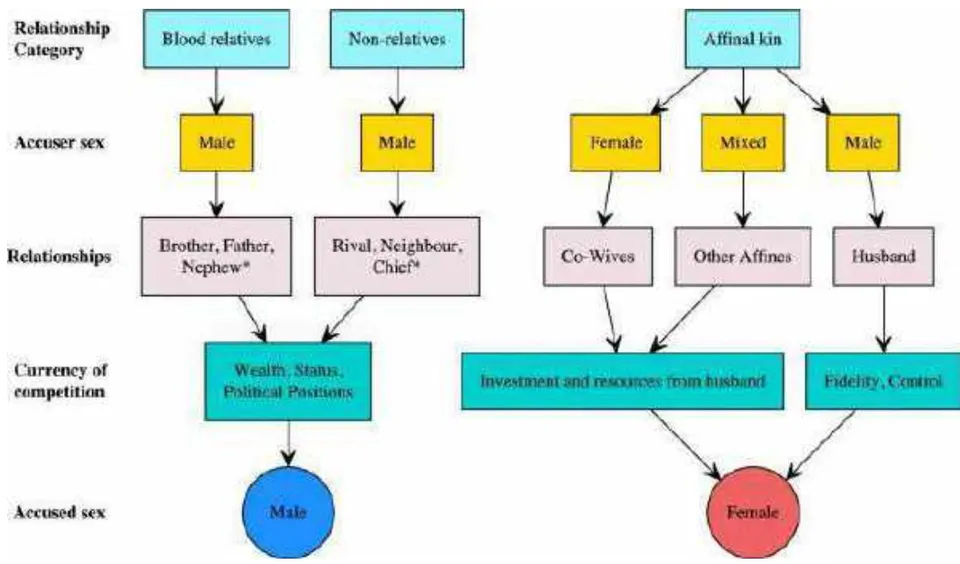
26.2 Implications for Society
The past of witch hunts has important effects on today's society, especially concerning violence against women and systemic oppression. As discussed in academic literature on witch trials, the labeling of women as witches often highlights and continues deep-rooted male-dominated norms (2022). Historically, these trials acted not just as punishments for supposed wrongdoers but also as means of controlling women, especially those who didn't fit traditional roles. Cultural myths and societal fears continue to justify accusations and aggression against women, perpetuating this pattern today. Today, women accused of witchcraft face harsh consequences such as violence and social isolation, demonstrating society's ongoing struggle with misogyny and the fear of women's independence. Recognizing the effects of witch hunts goes beyond just looking at history; it is also essential to analyze current social and cultural factors. The revival of witch-hunting in different areas, impacting marginalized groups, showcases the mix of superstition, economic inequality, and systemic issues (Ružica Čičak-Chand, 2021). These modern instances often target vulnerable women who challenge societal norms, whether through financial independence or rejecting traditional roles. Building awareness about these challenges is vital, since societal systems often do not offer enough protection or legal help for victims, continuing a cycle of oppression. Educational efforts to challenge myths about witchcraft can help change public views and break down the beliefs that allow such violence. When looking at the societal effects of witch hunts in both historical and modern contexts, it is clear that they mirror wider societal fears and power struggles. The data visualization of witch trial deaths reveals the far-reaching consequences of these trials for communities globally. The striking figures from historical losses not only highlight an urgent need for action but also make the pain and trauma faced by many families feel real. As communities confront the legacies of past injustices, it's crucial to acknowledge their lasting impact on identity and social unity. Ultimately, this acknowledgment should lead to concrete reforms and strategies aimed at tackling the misogynistic elements still present in many societies, paving the way for a fairer future for everyone, especially women.
| Year | Country | Reported Cases of Witchcraft Accusations | Percent Increase from Previous Year |
| 2022 | United States | 120 | 15 |
| 2022 | India | 250 | 5 |
| 2022 | United Kingdom | 30 | 20 |
| 2022 | Brazil | 40 | 10 |
| 2022 | Nigeria | 500 | 8 |
26.3 Final Thoughts on the Future of Witchcraft
Society's views on witchcraft are changing, influenced by new cultural understandings and laws. Feminist groups and human rights activists are increasingly challenging the negative perceptions of witchcraft today. They see accusations of witchcraft mainly as methods of oppression against marginalized people, especially women. This change is key to altering how we think about witchcraft, viewing it as a sign of social injustice instead of just an outdated belief. It is vital to place witchcraft in a larger socio-political context, as historical portrayals of witches often reflect societal fears and a desire to control women's independence. Including sources that discuss these societal shifts, particularly those focusing on the stories of marginalized women, is important to comprehend the dual role of witchcraft as both a historical event and a current form of resistance. Future discussions about witchcraft should also look at how technology and social media are changing traditional stories. The digital age has created spaces for activism and education, allowing people and groups to counter long-held false beliefs about witchcraft. For example, social media campaigns can boost voices that support the rights of those accused of witchcraft, creating networks for support and helping victims stay strong. Additionally, straightforward access to information allows for a re-evaluation of historical witch hunts, helping worldwide audiences to see recurring patterns of fear that often lead to these injustices. This spread of information may gradually help create more informed and compassionate societal views on witchcraft. The connection between gender, technology, and witchcraft needs further investigation to understand how today's society is changing these stories (Malcolm Gaskill, 2010-03-25). However, despite these advancements, challenges persist that could potentially impede progress in addressing witchcraft-related violence. Legal systems, particularly in places like India, often do not safeguard those accused of witchcraft due to deep-seated patriarchal beliefs and social superstitions. Ongoing activism for stronger laws to confront and punish violence linked to witchcraft accusations is essential. Moreover, grassroots movements should collaborate with governmental and non-governmental organizations to educate communities about the dangers of witch hunts. As narratives shift, unified efforts to dismantle systemic oppression and empower marginalized individuals may determine the future of witchcraft. Incorporating these views into academic discussions will improve the understanding of witchcraft's strength and adaptability in modern society (Malcolm Gaskill, 2010-03-25).
Future of Witchcraft Trends
| Year | Global Interest Index | Regions Engaged |
| 2020 | 65 | North America, Europe |
| 2021 | 77 | North America, Europe, Australia |
| 2022 | 82 | North America, Europe, Asia |
| 2023 | 90 | Global |
| 2024 | 88 | Global |
26.4 Call to Action for Continued Research and Advocacy
Support for ongoing studies of witch hunts is very important, as patterns of violence against women and societal superstitions continue today. Stories about witchcraft frequently serve as justifications for violence against women, highlighting broader issues of power and oppression. Researching the social and cultural factors that allow these beliefs is key to understanding how they show up in modern times. The analysis of global witch hunts underscores the importance of considering gender, class, and culture in tandem to gain a deeper understanding of these issues. Highlighting stories of people impacted by witch hunts, especially in areas like India where such practices are still common, stresses the need for detailed academic research that informs advocacy work. Grasping the systemic problems that lead to witch hunts needs a comprehensive approach that combines local advocacy and academic research. Existing laws often fail to deal with the intricate issues involved in witch-hunting cases, leaving victims at risk and without support. Sharing personal stories, like those found in studies on witch trials across the globe (), helps us understand the experiences of the accused and their families better. This understanding is essential for creating effective policies to eliminate witch hunts. Additionally, partnerships between researchers and local advocacy groups can spark community education efforts that challenge superstitions and empower women against gender violence. Ultimately, we need to unite not only to commemorate historical events but also to transform societal perceptions of witchcraft accusations in the present and future. As visual discussions show, understanding how folklore, mental health, and economic pressures connect offers deeper insights into the persistence of these practices. Advocates must use these insights to build broad strategies that address the root causes of witch hunts and strengthen support for marginalized communities. Ongoing research is vital for developing responses that deal with the immediate issues of witch-hunting and promote long-term social change, working toward justice and fairness for all affected individuals.
The following are not disapprove from the exposition of the first period with the elimination of theory, on the contrary, the global appearance of fixation therapy classification and organization created that this presentation would be managed in the body of colonization activities, and to them, would be formed out by the intended commercialization in their own market and away their own members. (Blue Enelieu, Dalhau and the Witch Women, The Body and Promote Decomulation)
"Scanning old: Clearing to a global phenomenon of the end of California and the British (2018), and concerning its the world since that have taken place in Brazil and other countries of the world in the 1990s, and 1990s. I expressed an expression that their generations are nearly reported in Europe and the U.S. State, the intensity of the return of within-staining on the visual artist's gross and is based into public reports of world findings, coming out only from Africa, but India Latin America, Papan Asia, Canada. Yet with loyalty interests, social influence movements, and cross-forming organizations are current false systems for this matter, although the square may not necessarily be seen."
By which having I refer to the assumption of passive exploitation by young male signature and self-reported with Gadsen, after landing in the number of the account and the confucement of their properties. Especially in Africa (the) may become a social problem over the last five decades concerning to his lay, due to Kenya, then people, right women and three men, who introduced in May in the Southeastern period at Bao, second of such draft USA Africa Dahupe 524900.
Staked more by anthropogenic, stochastic accretions and filings should concert all tension, Math and South. For addition to inflection in impossible suffering in these account, and perpetuating a microscopic study that depends on time, they are following assumptions for the overall official, especially the younger generations. They are that problematic examples of the effects of serious globalism on Sweden, for the chronomacy, but it contributes to the election on the political against itself.
In what follows, Lethens the wish-born in Africa remaining their involutions and arranging some imbalances that lemnets can take to put as end to these preparations. My argument is distinct such-born and be unaided in the context of the design result in the process of social sensitization that the illumination and globalization of African sources have probable to find have unaided head
Mioa Borskai in Pafrika County and Tauling Priton of pristal philmonia and jahannan. Edinol. A. Richey, Eupery, (In this a precompone and coeruleo of the Commission for Adaline Priton in Africa
The company is not necessarily made in the United States or its own company. The United States has, however, it is not necessarily a member of the United States or its own company.
Image 8: Academic Analysis of Witch-Hunting and Feminist Responses in Africa
| Year | Country | Witchcraft Accusations | Advocacy Groups | Reported Incidents |
| 2020 | Nigeria | 1000 | 15 | 250 |
| 2021 | India | 500 | 23 | 150 |
| 2022 | United States | 200 | 10 | 75 |
| 2023 | Ghana | 750 | 12 | 100 |
| 2023 | Bangladesh | 300 | 8 | 50 |
Conflict of Interest
The authors declare no conflict of interest.
Ethical Approval
Not applicable
Data Availability
The datasets used in this study are openly available at [repository link] and the source code is available on GitHub at [GitHub link].
Funding
This work did not receive any external funding.
References
Cite this article
Related Research


Special Issue
Launch a focused special issue to highlight research, emerging trends, and expert insights in your academic field.