





IntelliPaper
Abstract
Quality by Design (QbD) is a systematic approach used to develop, produce, and control high-quality products. The review article aims to provide a concise overview of the QbD approach employed in the formulation, development, and evaluation of Fixed-Dose Combination (FDC) tablets. This will buttress on the essence of the usage of this approach by pharmaceutical companies and healthcare providers to plan and achieve desired products for effective treatment and meet patients’ needs. In view of this, the review paper highlights the general concepts of QbD and discusses some approaches that are employed to formulate fixed-dose combination/bilayer tablets. The current review also highlights some challenges that might impede the patronage of QbD approach. It is established that the utilization of QbD methodology has proven to have impacted positively and helped in the optimization of the quality of fixed- dose combination/bilayer tablets. QbD is a regulatory requirement for product development in all regulated markets, and its implementation leads to an improvement in product safety, quality, and patient compliance. Despite the challenges associated with its implementation, the benefits are numerous, and it is an essential tool for producing high-quality pharmaceutical products.
Explore Digital Article Text
I. INTRODUCTION
The concept of quality by design was succinctly summarized by the quality expert, Joseph Moses Juran in his trilogy published in 1992 [1]. He believes that a product's quality can be carefully planned in advance, and any issues with the product's quality can be traced back to the planning process. In other words, if a product is planned out effectively, it is more likely to turn out as originally intended, with high quality standards [2][3]. The Quality by Design (QbD) methodology is a systematic approach to development that is based on scientific evidence and quality risk management. It involves setting predefined objectives and takes into consideration the understanding and control of both the product and manufacturing process. The QbD approach emphasizes the importance of designing a design space that allows for adjustments to be made during the production process [4]. During the 21st century, the FDA introduced Quality by Design (QbD) and Process Analytical Technology (PAT) principles in 2003 with the goal of improving the quality of drug products from the very beginning of the development process. These principles are outlined in the International Council for Harmonisation of Technical Requirements for Pharmaceuticals for Human Use (ICH) Q8, Q9, and Q10 guidance documents[5]. A decade ago, the traditional Quality by testing (QbT) approach was used to ensure the quality of drug products by checking them against regulatory specifications. It has been realized that quality must be built into the drug from the beginning rather than tested after it is manufactured [6]. In the pharmaceutical industry, two approaches for ensuring product quality are Quality by Testing (QbT) and Quality by Design (QbD). QbT involves testing finished products to ensure they meet preestablished standards. On the other hand, QbD involves focusing on the critical quality attributes of the product and manufacturing process from the outset of development and production to ensure the product meets its intended quality and performance standards. The key principle of QbD is that quality should be integrated into the product from the beginning, rather than being tested at the end[7].
QbD can be applied in developing fixed-dose combination drugs to achieve the desired quality and therapeutic effect on patients . Studies have shown that fixed-dose combination drugs can have drug interactions as well as issues with how the drug moves through the body and how the drug affects the body . Despite these challenges, fixed-dose combination drugs offer several benefits, such as reducing the number of pills patients need to take, lowering the risk of adverse reactions when compared to higher doses of monotherapy, and also being more effective . When developing a drug, various factors such as drug substance, excipients, container closure system, production processes, and quality control tests all play important roles in determining the quality of the final product. To ensure that the quality is up to standards, critical formulation attributes and process parameters are typically defined and regulated. This is an important responsibility in the drug development process . The aim of this review is to provide a comprehensive and in-depth overview of the Quality by Design (QbD) approach for the formulation, development, and evaluation of Fixed-Dose Combination (FDC) tablets. This review is unique in that it specifically focuses on fixed-dose combination/bilayer tablets. It is intended to assist pharmaceutical companies and health service providers in planning FDCs to achieve their desired products, ensure efficient treatment, and meet patients' demands.
II. OVERVIEW OF THE QUALITY BY DESIGN METHODOLOGY
The Quality by Design (QbD) methodology is a structured approach used in pharmaceutical research and development to improve the quality of new drugs. It achieves this by integrating analytical and risk management methods throughout the design, development, and manufacturing stages . QbD enables pharmaceutical manufacturers to accumulate knowledge throughout the drug substance or product's lifecycle, which allows them to proactively mitigate potential errors and manufacturing issues. This method enables them to take proactive measures in identifying and fixing potential errors and manufacturing issues. . Quality by Design (QbD) is a versatile approach that can be applied to optimize most of the pharmaceutical unit operations . QbD and QbT are two important concepts in pharmaceutical development and manufacturing. While they share the common goal of ensuring the quality of pharmaceutical products, they differ in their approach to achieving this goal. Understanding the differences between these two concepts can help pharmaceutical companies choose the most appropriate approach for ensuring the quality of their products. Table 1 highlights some of the key distinctions between quality by testing and quality by design.
Table 1: Differences between Quality by Testing and Quality by Design [15]
| Quality by Testing (QbT) | Quality by Design (QbD) |
| Based on trial, error and understanding approach | Based on a systematic approach |
| Performance is guaranteed by product testing and validation | Quality is constructed in the robustness and reproducibility of the method built-in method development stage |
| The method is based on batch trial and validation report | Based on method performance to ATP criteria |
| The method is frozen and discourages changes. | The method is flexible and allows continuous improvement. |
| A rigid process that avoids changes; causing a burden to the FDA. | A flexible process that accepts changes within the design space; not required to add supplements to FDA. |
Although a promising approach for producing desired products, QbD has also got shortcoming which are summarized in Table 2.
Table 2: Advantages and Disadvantages of QbD
| Advantages of QbD | Disadvantages of QbD |
| It offers a higher level of assurance regarding the quality of the medication product | Implementing it can be costly, as it requires additional resources, such as trained personnel, specialized software, and equipment |
| It gives the pharmaceutical business cost savings and efficiency | QBD is a detailed and time-consuming process that involves identifying key factors that affect quality, verifying that the design meets the standards, and monitoring and controlling the quality of the final product or process |
| It creates transparency, reason, and predictability in the scale-up, validation, and commercialization processes | It is a structured and systematic approach, which can limit flexibility and creativity in product development. This can be a disadvantage when dealing with new or innovative products. |
| It makes the pharmaceutical manufacturing process more efficient and lowers production costs and product rejects | It is not suitable for every product or process. It is mainly applied to products or processes that are relatively stable, consistent, and well-understood |
| It also gets rid of batch failures | It requires a lot of data collection and analysis to assess the impact of changes. This can be difficult when dealing with complex processes or systems. |
| It lowers the CMC supplement and encourages continual improvement | It relies heavily on data to make decisions and identify areas for improvement. If the data is inaccurate or incomplete, it can lead to incorrect conclusions and ineffective solutions |
| It improves chances for approval during the first cycle | It requires a lot of documentation, which can be time-consuming and difficult to maintain. This can lead to delays and errors |
III. ELEMENTS OF QUALITY BY DESIGN
The fundamental components of QbD encompass several crucial elements, namely, the Quality target product profile (QTPP), Critical quality attributes (CQAs), Risk assessment, Design of experiments (DOE), Process analytical technology (PAT), and Control strategy as summarized in Figure 1 [14].
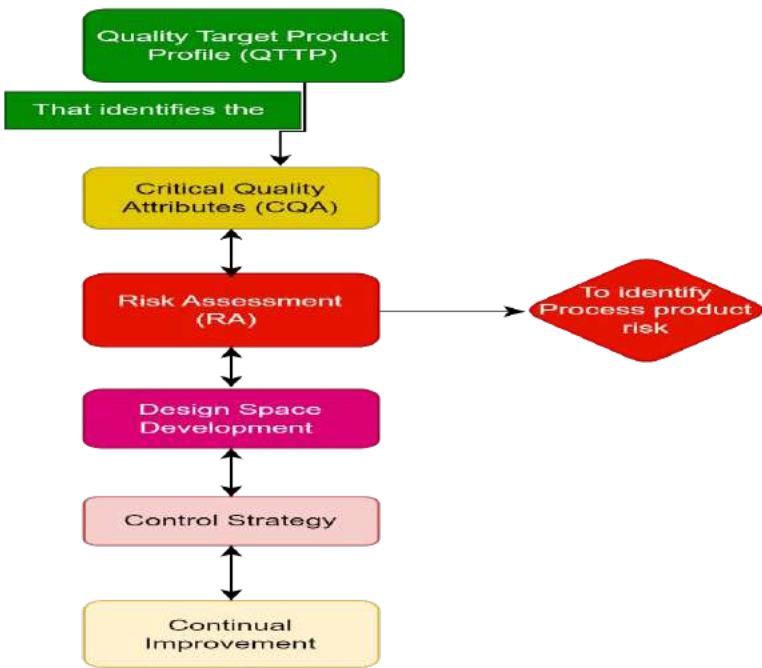 Figure 1: Flowchart Showing the key Elements of QbD and How they Relate
The quality target product profile (QTPP) is a prospective summary of the quality attributes of a drug product that should be taken into consideration to assure the intended quality, safety and efficacy[16]. To ensure high-quality drugs, the qualities are established based on feedback from pharmacists, physicians, and patients. This approach takes into consideration both the pharmaceutical equivalent and bio-equivalent factors[17]. Additionally, the drug's quality target product profile aligns with the QTPP template outlined in the USFDA guidance document for fixed-dose combination tablets[18].
The identification of Critical Quality Attributes (CQAs) is done through risk assessment as per the ICH guidance Q9. CQAs are generally associated with the drug substance, excipients, intermediates (in-process materials), and finished drug products. They are summarized on the basis of quality attributes identified as a target along with the justification for being so. The identification and understanding of Critical Quality Attributes (CQAs) is crucial in drug development. For drug products, CQAs include physical attributes, assay, content uniformity, drug release/dissolution, degradation products, and impurities, while critical material attributes of drug substances are based on physical, chemical, and biological characterization[19]. Excipient functionality and material qualities such as salt, solid forms, particle size, and morphology can also influence CQAs. Raw materials, starting materials, reagents, solvents, processing aids, intermediates, packaging, and labeling materials are used. Material qualities can be quantified and fixed, but they may also change throughout processing, including impurity profile, porosity, specific volume, and sterility[20].
In quality by design, refers to a range of operating conditions where a process or product can perform as intended and meet quality standards . It is defined by input variables such as temperature, pressure, and composition, which produce consistent product quality.
Understanding the underlying processes, experimentation, and risk assessment help identify key process parameters (KPPs) and critical quality attributes (CQAs) to define the design space. Systematic exploration of the design space optimizes the process of product design, reducing variability and increasing quality. Knowledge of the design space enables the implementation of appropriate process controls to ensure product performance within the defined limits .
IV. TOOLS USED IN THE QBD APPROACH
There are several tools and techniques used to ensure that the final product or process meets the desired quality standards. Some of the most commonly used tools include. This is summarized in Table 3.
Table 3: Tools used in the QbD Approach
| Tool | Purpose | Key Features |
| Design of Experiments (DOE) | Determine critical elements that influence a process/product's quality | Systematic varying of inputs to assess their influence on output, exploration of design space to find elements with the biggest influence on product quality |
| Prior Knowledge (PK) | Incorporate existing knowledge about process/product into design process | Includes information about materials, equipment, and manufacturing processes, as well as data from previous studies or experiments, used for risk management |
| Risk Assessment (RA) | Systematic identification and assessment of potential risks related to a product/procedure | Hazard identification and risk characterization to assess the likelihood and seriousness of hazards, implementation of risk mitigation strategies such as process/product design changes or testing |
| Mechanistic Models (MM) | Mathematical representation of a process/system that details underlying physical and chemical processes | Used to enhance understanding of underlying processes and to optimize the design of the process or product, can simulate behavior and identify important process parameters and relationships |
| Process Analytical Technology (PAT) | Collection of tools and techniques for understanding, controlling, and optimizing manufacturing processes in real time | Enables continuous monitoring and control of manufacturing process, real-time monitoring of critical quality attributes, identification of key process parameters and relationships, definition of design space |
V. FIXED DOSE COMBINATION (FDC) DRUGS
The Food and Drug Administration, USA defines a combination product as a product composed of any combination of a drug and a device or a biological product and a device or a drug and a biological product or a drug, device, and a biological product [23]. They are also known as single-pill combinations [24]. FDCs can be grouped into three (3) types based on the number of drugs present in the product. However, there are both therapeutic and non-therapeutic benefits (table 5) and drawbacks to the FDC drugs [25]
Table 4: Types of FDC Drugs Based on the Number of Constituent Drugs Present Table 5: Therapeutic and Non-Therapeutic Benefits of FDCs
| Type of FDC drugs | Examples |
| Two dose combination | Augmentin = Amoxicillin (250 mg) + Clavulanic acid (125 mg)Co-trimoxazole = Sulphamethoxazole (800 mg) + Trimethoprim (160 mg) |
| Three dose combination | Rinizide = Isoniazed (100 mg) + Pyrazinamide (375 mg) + Rifampicin (150 mg) |
| Four dose Combination | Sinarest = Paracetamol (500 mg) + Phenylephrine hydrochloride (10 mg) + Chlorpheniramine maleate (2 mg) + Caffeine (30 mg) |
Therapeutic advantages of FDC products
| Advantage | Description |
| Synergistic effect | Combining two or more drugs in a single FDC product can provide a synergistic therapeutic effect that is more effective than the individual drugs administered separately. |
| Enhanced effectiveness | Certain drugs can be more effective when combined with other agents, leading to enhanced therapeutic outcomes. |
| Mitigating drug abuse and resistance | FDC products can help mitigate drug abuse and prevent the development of drug-resistant bacteria. |
| Improved patient compliance | FDC products can improve patient compliance by reducing the number of dosing units and simplifying medication regimens. |
| Enhanced safety and tolerance | Certain FDC products can improve safety and tolerance by reducing side effects and adverse reactions. |
Non-therapeutic advantages of FDC products:
| Advantage | Description |
| Improved patient compliance | FDC products can improve patient compliance, especially in third-world countries, due to decreased dosing burden and lower costs. |
| Lower manufacturing costs | FDC products have lower manufacturing costs compared to producing separate items. |
| Maintaining product pipeline | FDC products provide pharmaceutical companies with an opportunity to maintain their product pipeline when the market for blockbuster medications slows. |
VI. QBD DESIGN APPROACH IN THE DEVELOPMENT OF SELECTED FDC/BILAYER TABLETS
Since its inception, Quality by Design (QbD) has been used to develop fixed-dose combination tablets, including bilayer tablets .
A bilayer tablet with a high-dose sustained release layer of metformin HCl and a low-dose immediate release layer of evogliptin tartrate was developed using a QbD approach . The Design of Experiment (DOE) methodology was employed to optimize the high-risk bilayer tableting process parameters, which were identified through risk analysis, in order to implement the QbD approach. The DOE allowed for optimization of the tableting conditions for pharmaceutical products to meet the predetermined Quality Target Product Profiles (QTPP). To confirm the uniformity of the low-dose evogliptin tartrate content in the optimized bilayer tablet produced on a large scale, at-line transmittance Raman spectroscopy was used as a process analytical tool. In vitro drug release and in vivo pharmacokinetic studies established the bioequivalence of metformin HCl and evogliptin tartrate in the bilayer tablet to that of the corresponding reference drugs. The tablet's physicochemical stability was also confirmed during storage under extended and accelerated conditions. The study concluded that implementing the QbD approach is an effective strategy for developing a new FDC bilayer tablet that is easy to scale up for successful commercialization.
Additionally, to improve patient compliance, Kanwal and his colleagues[28] created a differential release fixed dose matrix tablet of amlodipine besylate (AML-B) and simvastatin (SIM) using the wet granulation method. To ensure quality, a risk assessment approach using failure mode and effect analysis (FMEA) was adopted instead of traditional quality control methods. The tablet's quality target product profiles (QTPPs) and critical quality attributes (CQAs) were selected based on the desired characteristics. Potential risk factors that could affect tablet quality were identified using the FMEA method and ranked according to their Risk
Point Number (RPN) score. Those with an RPN score above 15 underwent further evaluation. The formulation factors of the FDC were chosen based on the preliminary study. However, the study revealed that while AML-B exhibited continuous release, SIM did not achieve the desired eight-hour release profile after FDC administration. This implies the approach help improved the release time.
Moreover, in a study conducted by Lee et al. [29], a bilayer tablet called Telmiduo® was developed through a Quality by Design (QbD) approach using a high shear wet granulation method. The researchers used primary knowledge and target values of a control tablet called Twynsta® to determine control and response factors. The bilayer tablet was optimized using a numeric optimization technique and then evaluated against the control tablet through various physical evaluations and in vivo pharmacokinetic parameters. The results demonstrated that the bilayer tablet containing telmisartan and amlodipine besylate can be produced in a more cost-effective and simpler manner than Twynsta®. Based on their findings, the researchers concluded that QbD is a suitable approach for effective pharmaceutical product development.
VII. RISK ASSESSMENT AND ANALYSIS IN THE QBD METHODOLOGY
In Quality by Design (QbD), risk assessment is essential to identify and evaluate potential risks associated with a product or procedure. The goal is to ensure that the product meets quality requirements and is safe for its intended use. Risk assessment also helps in implementing appropriate risk mitigation strategies, such as process or product design changes, testing, or monitoring, and establishing the design space for optimal performance. According to a research conducted by Prajapati and colleagues [30], risk assessment and analysis begins with the identification of method risk parameters. They identified about 20 method risk parameters, listed and grouped them into method, materials, instrumental, environment, analyst, and measurement using the cause-effect diagram. The risk assessment was then done using the Risk Priority Number (RPN) ranking and filtering as indicated in ICH Q9 guidelines for QRM [31]. Risk assessment is vital and widely used for formulation development of tablets. It was used for the development of a chromatographic method for the analysis of FDC products of anti-diabetic drugs[32]. The study demonstrated a quadratic correlation between CMPs and CMAs, and the developed method was highly accurate, precise, and specific. The assay results were found to be in good agreement with the labeled claim.
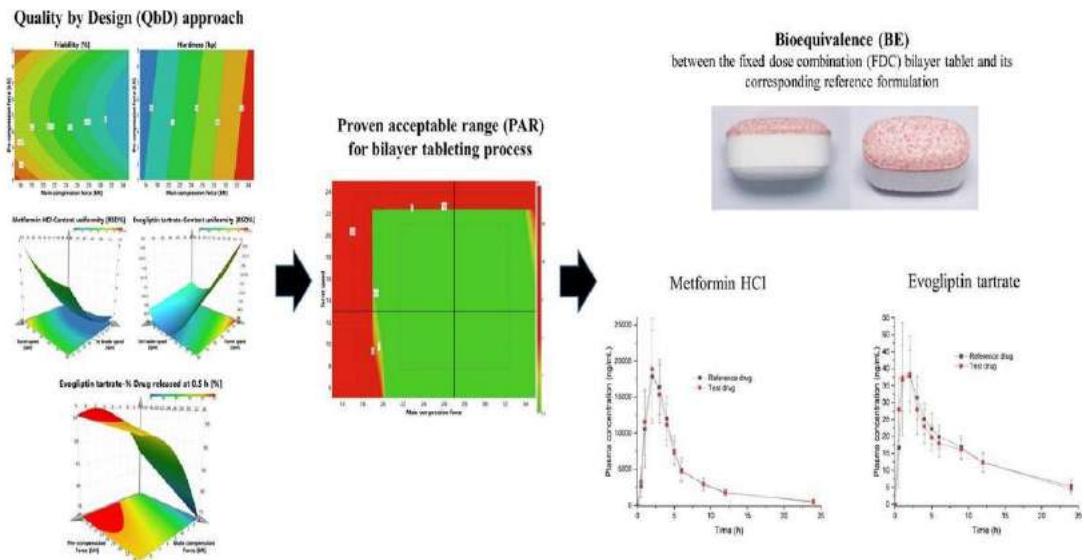
{"image_source":{"path":"images/7b3f70827c58211521b08039ad9faf514dc776a397067ec9b6fd42c304602594.jpg"},"content":"","chart_caption":[{"type":"text","content":"Figure 2: A new FDC bilayer tablet consisting of 1000 mg metformin HCl in a SR layer and 6.87 mg evogliptin tartrate in an IR layer was developed based on the QbD approach. Won, D. H., Park, H., Ha, E. S., Kim, H. H., Jang, S. W., & Kim, M. S. (2021). Optimization of bilayer tablet manufacturing process for fixed dose combination of sustained release high-dose drug and immediate release low-dose drug based on quality by design (QbD). International Journal of Pharmaceutics, 605, 120838. https://doi.org/10.1016/J.IJPHARM.2021.120838."}],"chart_footnote":[]} {"image_source":{"path":"images/abc6f704c3d44ad6e0487c83d45e50f0543230536a7126c752970cb42986568d.jpg"},"content":"","chart_caption":[],"chart_footnote":[]}
{"image_source":{"path":"images/966a87b54e6d32619feee7006172830ca3b616a25dc95d877029fb9db26ee39a.jpg"},"content":"","chart_caption":[],"chart_footnote":[]} {"image_source":{"path":"images/c35b7ba1fe48c8ed388801a4a2b88a815673a2c6842ece89dfa3d2185a741533.jpg"},"content":"","chart_caption":[{"type":"text","content":"(b)"},{"type":"text","content":"Figure 3: A bilayer tablet that consisted of telmisartan and amlodipine besylate was formulated based on the QbD approach. Lee, A. R., Kwon, S. Y., Choi, D. H., & Park, E. S. (2017). Quality by Design (QbD) approach to optimize the formulation of a bilayer combination tablet (Telmiduo®) manufactured via high shear wet granulation. International Journal of Pharmaceutics, 534(1–2), 144–158. https://doi.org/10.1016/J.IJPHARM.2017.10.004."}],"chart_footnote":[]}
VI. CHALLENGES OF THE QBD APPROACH
Quality by Design (QbD) is a methodology that has been gaining momentum in the pharmaceutical industry in recent years. However, despite its numerous advantages, the implementation of QbD is not without challenges.
One of the primary barriers to QbD implementation is a lack of knowledge about the pharmaceutical process. Mostly, the end result has been more important to pharmaceutical companies than the scientific understanding of the process involved [33]. Another challenge with QbD is reaching agreement on how to address it through collaboration and cooperation between field inspectors and the FDA review and compliance sectors[34]. While QbD has been embraced by the FDA, it can be difficult to apply in practice, especially when there are differing opinions on what constitutes quality. Again, many pharmaceutical companies believe that more concrete instructions on how to adopt QbD are necessary. For example, companies have requested clarification from the FDA on QbD terminology, approved procedures, criteria for selecting and deselecting important quality attributes, standards by which to appraise the sufficiency of controls, and criteria for analytical method substitution. Again, for the effective application of QbD, there is a need for more collaboration across numerous disciplines inside the organization, including process development, production, and quality control. This can be challenging when each department has its own priorities and goals. Finally, some pharmaceutical companies believe that QbD may prolong the time it takes to submit an application for approval or may give the regulatory body unneeded information that could pose a barrier to the approval process [35].
IX. CONCLUSION
The implementation of Quality by Design (QbD) in pharmaceutical development is crucial for ensuring high-quality products that perform consistently as expected. Although there are challenges associated with QbD, its use is required in all regulated markets such as the United States and Europe. The implementation of QbD can improve product safety and quality, as well as patient compliance. For QbD to be successful, the necessary infrastructure, training, and resources must be provided, and it should be viewed as a continuous process of monitoring, analyzing, and improving the product and manufacturing process. A cross-functional approach involving R&D, manufacturing, regulatory, and quality teams is essential for effective QbD implementation. Ultimately, the use of QbD tools and principles will help ensure that the pharmaceutical industry continues to produce safe and effective products that benefit patients.
Author contribution statement
All authors listed have significantly contributed to the development and the writing of this article.
Data availability statement
No primary data was used for the research described in the article.
Competing Interests
The authors declare that no competing interests exist. This review is not funded by any organization or body.
Funding
This study did not receive any funding in any form.
Conflict of Interest
The authors declare no conflict of interest.
Ethical Approval
Not applicable
Data Availability
The datasets used in this study are openly available at [repository link] and the source code is available on GitHub at [GitHub link].
Funding
This work did not receive any external funding.
References
Cite this article
Related Research


Special Issue
Launch a focused special issue to highlight research, emerging trends, and expert insights in your academic field.
