


IntelliPaper
Abstract
This paper focuses on proposing and assessing a blockchain application solution to deal with the security and privacy issues in the US healthcare system. This study uses an exploratory qualitative case study research design to examine a) the presence of blockchain technology in the management of health informatics data and b) its effects. The proposed structure is to improve the protection of information, to protect it from unauthorized access, as well as to comply with patients’ records’ authenticity due to decentralised bases and cryptocurrencies technologies. Furthermore, it solves the problem of incompatible systems by providing for the systemization of data sharing to various EHRs.
These is an affirmation that blockchain framework provides a more secure platform since it reduces the risks of data loss, intend, and deliberate forgery by enhancing privacy. Cryptographic hashing and smart contracts have the ability to protect important data from being shared while at the same time being in line with privacy laws. In addition, the use of the framework increases compatibility because data is shared from one platform to another; hence improving communication between different EHR systems. In a way, this study has highlighted the capacity of blockchain for modern healthcare data management, which is quite beneficial to resolve current problems. Nonetheless, more studies should be conducted on the workability and compatibility of blockchain over a long term and alongside other upcoming technologies. These findings are useful for the future research of the blockchain as the tool that optimizes the healthcare sphere and makes it more protected.
Explore Digital Article Text
I. INTRODUCTION
With the current advancement in the delivery of health care, the proper management and protection of information regarding the patients are a necessity. These recent years, the role of blockchain and its great capability in providing the safe channel of information exchange between two individuals has been proved (Hasan et al., 2022). The Internet of Things (IoT) coupled with blockchain has enabled the occurrence of digital culture within different sectors such as health, chains of supply, and finance (Nowrozy et al., 2020). Similar to bitcoin, programmable Software-defined Networks SDN are equally gaining fame with an expectation of reducing network management challenges. Thus, it can be concluded that incorporating SDNs into IoT-based HC systems can potentially enhance the health care management services significantly. However, there are several problems, for example, data confidentiality, user orientation, data integrity and privacy, become problematic when many partners need to exchange sensitive data in a healthcare system (Xi et al., 2022).
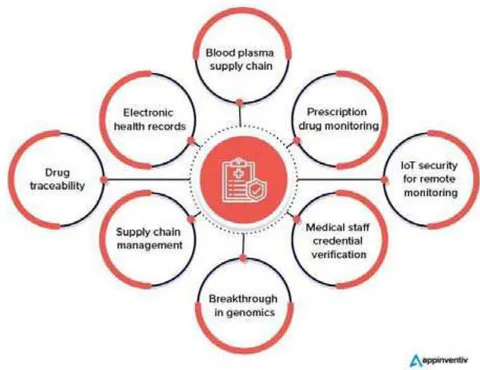
The current adoption of EHRs, telemedicine, and other related applications has expanded the significance of data security and privacy. In such cases, the traditional techniques of data sharing fail to suffice the need and result in weaknesses where sensitive patient information is concerned (Cyran, 2018). As for the problems mentioned above, the application of the blockchain, which can operate as a decentralized and the record of the chain cannot be altered once it is set, seems to be a viable solution. As a technology that was first created for the use in virtual currencies blockchain has the advantages of security, openness, and effectiveness that could help satisfy the needs of the healthcare system (Zabaar et al., 2021). This research therefore proposes the creation of a secure data-sharing system for the U.S. health sector based on available blockchain technologies with an intention of filling existing voids in data protection and patients' data privacy while at the same time enhancing the integration of health data.
1.1 Aim
The aim of this study is to design and evaluate a blockchain-based secure data-sharing framework tailored for the U.S. healthcare industry, focusing on enhancing the security, privacy, and interoperability of healthcare data.
1.2 Objectives
To create a blockchain-based architecture that tackles the main privacy and security issues facing the US healthcare sector.
To assess the suggested framework's effectiveness in terms of interoperability, data security, and privacy.
1.3 Research Questions
How may a blockchain-based framework be created to successfully tackle the privacy and security issues raised by data sharing in the US healthcare sector?
In comparison to current data-sharing solutions, what are the performance outcomes of the proposed blockchain-based framework in terms of data security, privacy, and interoperability?
1.4 Significance of the Study
Hence, the significance of this study is grounded on the tiresome need to revolutionize the medicinal data handling through the use of blockchain technology. In doing so, a safe and effective data exchange system, the study targets societal challenges concerning data confidentiality and privacy which are vital in safeguarding patients' data and enhancing the integrity of the healthcare services industry. The effective follow-through of the presented research work might result in better data protection provided by the blockchain technology, better integration of data among healthcare actors and participants, better data sharing and trust in the system due to the blocks' total registration system, and better efficiency of the process by the management of data through the used technique. At the end of this study, it aims at contributing to the progress of digital health by presenting a practical solution of storing patient data through blockchain coordination and encouraging the use of blockchain solutions in the healthcare sector.
II. LITERATURE REVIEW
Blockchain has reputably assumed the role of disruptive innovation in many fields, health care in particular, because of its capabilities with regards to boosting data security, privacy and compatibility. The use of blockchain in the healthcare setting is to address fundamental use cases mainly data sharing, patients' privacy, and data authenticity (Attaran, 2022). The objective of this literature review is to examine prior research articles on the themes of blockchain-based secure-Data sharing solutions in the context of the US healthcare system.
Blockchain technology, is an efficient and effective way of keeping transactions records as it is a decentralized and distributed accounts books. In the context of healthcare, it is used to guarantee data authenticity and protect patients' data as well as to support the sharing of data across different parties. This is because the characteristic of conversions of data once recorded on blockchain and the consensus feature of blockchain makes it more secure especially in dealing with health information as pointed out by Yue et al. (2016). Therefore, the current literature stresses the applicability of blockchain for changing the approach to handling healthcare data. For example, Yue et al. (2016) explicate that within the context of blockchain technology, data break-ins and unauthorized access can be prevented due to the creation of a virtual, unchangeable record of transaction records. Also, Agbo et al. (2019) highlights that tributarily, blockchain could improve health information systems interfaces since the system-of-interest benefits from working with other independent HIS that is imbued with similar characteristics.
The main advantages of blockchain in the context of its application in the health care industry are associated with the increased protection of data, personal data of patients, and data sharing. The cryptographic algorithms and decentralised structure that are characteristic of blockchain increase data protection because nobody save the person who enters the data can put it in and it cannot be changed without the consensus of the blockchain network (Gordon & Catalini, 2018). Gordon and Catalini (2018) indicated that blockchain minimizes vulnerabilities for breach of data and cyber-attacks, which are common in the healthcare industry. privacy preservation is of a great importance when it comes to handling patients. It provides the secured share of data to the authorized parties because patient data are encrypted and patients hold the key to this information (Xia et al., 2017). In a similar way, Xia et al. (2017) establish that blockchain strengthens patients' control over their records and increases their trust in care providers. In addition, operateability is supported through blockchain by virtue of the platform that is offered when trading large data sets. This is the more so, in the context of the highly decentralized American U. S. healthcare system where data can easily end up isolated in data silos. In the aforegiven perspective, the authors, Ekblaw et al. (2016), posit that through the use of blockchain, EHRs that are harvested from diverse sources can be integrated effortlessly.
However, blockchain technology has the following challenges in the healthcare system. These are; scalability challenges, compliance issues, and the development of strategy formats. This relation has an inverse effect on the scalability because with the high volumes of information in healthcare, it can slow transactions and be costly (Yli-Huumo et al., 2016). Yli-Huumo et al. (2016) classify scalability as an important restriction of the large-scale adoption of BlockChain technology in the sphere of healthcare and note the necessity of the further development of BlockChain architectures. One of the main considerations in the field of blockchain is the obligatory adherence to the healthcare standards like the HIPAA. That being said, the legal framework of blockchain technology remains somewhat blended and ambiguous, which can be problematic for healthcare institutions. Chukwu and Garg (2020) have pointed out that it is possible to design the blockchain solutions that will fit the existing environments. One of the issues that make blockchain application in healthcare quite complex is the absence of best practices that have been set regarding blockchain. Kuo et al. (2017) also stresses that the blockchain systems should integrate well with the architecture of healthcare by having a protocol that is set across the entire industry.
Research on the use of blockchain technology in US health care system has pointed out on the usefulness of the technology in improving on data security as well as integration. Implementations of blockchain in EHRs' architectures include the MedRec project that was developed by the MIT Media Lab to develop a decentralized system of record management. MedRec enables patients to keep an unalterable record of their medical records while only providing the relevant authorities with access to the desired information (Ekblaw et al.r, 2016). Moreover, we have the Synaptic Health Alliance which is a consortium of healthcare firms that considers applying blockchain to handle provider data. To this end, through the use of blockchain, Synaptic Health Alliance intends to enhance the authority and productivity of providers' directories, decrease the administrative burden, and boost the quality of patients' services at lesser costs (Synaptic Health Alliance, 2021).
Other case studies present more specifics of blockchain application and advantages in healthcare. For example, Hashed Health is a special effort aimed at developing blockchains in different areas of utilizing healthcare such as credentialing, claims, and payment processing, and delivery and many others. It has proved that how the use of blockchain already disintermediated numerous administrative tasks, minimize frauds and improve the over-all effectiveness of health care organizations (Hashed Health, 2018). Also, the partnership between IBM Watson Health and the U. S. Food and Drug Administration (FDA) is to investigate the implementation of blockchain for the exchange of patient data security, which confirms that blockchain technology can be used in the aspect of industry compliance and data security (IBM Watson Health, 2017).
Another example can be the Estonia eHealth Foundation, where the storage of citizens' records is protected by one of the blockchain solutions. This system ensures that all the transactions within the health data are visible and cannot be altered hence offering high securities and development of trust (Estonia eHealth Foundation, 2016). The rather good experience of Estonia in the implementation of blockchain technologies in the framework of eHealth is an example for other states.
In conclusion, the U.S. healthcare business might greatly benefit from the transformation of data sharing procedures brought about by blockchain technology. Because of its capacity to improve interoperability, patient privacy, and data security, it is an invaluable instrument for tackling the problems facing contemporary healthcare systems. But in order to truly reap its rewards, scalability concerns, legal compliance, and the requirement for defined protocols must all be addressed. The implementation of blockchain in healthcare will advance only with further research and cooperation from stakeholders.
III. METHODOLOGY
This chapter outlines the research methodology employed in the study, "Blockchain-based Secure Data Sharing Framework for Healthcare Industry: Healthcare: A Case of U. S. Blockchain technology: The study uses a qualitative research thesis and a case study approach about the effects of the blockchain technology in the health care US industry. This announced aspect describes the research design, the methods of data gathering, the methods of data analysis, and the issues of ethical consideration.
3.1 Study Approach
The choice of the qualitative approach to this research was informed by the ability of this research approach to study social phenomena naturally in their environment, which is fitting for the study of the context of blockchain implementation in the context of healthcare. The case study design is particularly appropriate as it enables multiple degrees of freedom to be investigated in aspects of the context of blockchain adoption in U. S. healthcare thus offering richness and depth (Yin, 2018). Such an approach is chosen in order to ensure the exploration of the key issues of blockchain implementation and role of using it in sharing data, enhancing its security, and improving the quality of patient care, with reference to a single case.
3.2 Data Collection
Documents and participant observation were the main sources of data for this study. Each analysis process in the document analysis entailed the identification and comparisons of policy documents, the implementation reports, technical documents, as well as selected academic articles on the implementation of blockchain in healthcare. This method gave clear information regarding the historical and social factors that came into play when using blockchain and prognosis of the problems and achievements of the healthcare sectors. Document analysis is most useful in qualitative research as it enables the elaborative search of more density issues while acting as a basis for comparison of data gathered from other research instruments (Creswell & Poth, 2017). The present study applied the research strategy known as participant observation at various healthcare organizations that adopted the use of blockchain technology. Majorly, this method enabled the researcher to have a first-hand feel of the dynamics and processes that are associated with the adoption of Blockchain. Witnessing how effective blockchain is in resolving the specified problems and how its implementation alters the operations in real-life healthcare organizations was useful. During these observations, notes were taken in detail to capture all the details on the dynamics of the blockchain in their normal use (Creswell & Poth, 2017). This approach made it possible for the study to look at the application of blockchain system in a broader way, that includes, technical incorporation of the system as well as the organizational to increase understanding of the impacts.
3.3 Data Analysis
The data that was collected, were then analyzed and categorized using thematic analysis, which is a method useful when conducting data analysis on qualitative data (Braun and Clarke 2006). The analysis process included the task of familiarization where the researcher involved himself/herself in the data by reading the documents and field notes continuously in order to acquaint himself/herself with initial analysis of the data collected (Creswell and Poth, 2017). Each of the generated segments from the data collection stages was coded systematically in order to derive potential themes. In this process, it was necessary to pave out concepts and patterns within the data considered for coding, which would then be categorized into themes that represented the nature of the data (Braun & Clarke, 2006). Software like the NVivo was applied in the analysis of the qualitative data whereby the method applied in the coding process was meticulous and systematic (Gibbs, 2007).
Themes were created by compiling the codes into larger groups that would contain important trends and meanings to the data. These themes were scrutinized to establish if they captured the research data and had pertinence to the set research questions (Braun & Clarke, 2006). To follow the framework each theme was titled in line with its theme statement; further clarifications were made about what each theme in the title means, along with examples from the data (Gibbs, 2007). The findings were reported by presenting the themes and supporting them with examples and observations from the data. Tables and graphs were used to visualize key themes and relationships within the data, enhancing the clarity and impact of the findings (Braun & Clarke, 2006).
3.4 Ethical Considerations of the Study
The issues of ethicality played a central role in the current study regarding the analysis of healthcare data and materials, involvement of individuals. The study also ensured that participants and organizations that were willing to be involved in the research understood the characteristics, aim and objectives, method, and potential costs as well as benefits of the study. Privacy of participants was ensured by disguising their information and deploying only aliases when writing the results of the study. The access to the gathered data was limited to the members of the research team, to eliminate the possibility of compromising the sensitive information during the research (Orb et al., 2001). Recorded information was safeguarded whereby digital data were password protected, and physical documents were locked in a cabinet, while tangible records were dealt with under provisions of the data protection law (Orb et al., 2001). The study was exempted from approval by the institutional review board (IRB) of the University, but all research practices of the study were done according to the set ethical measures provided by the IRB (Creswell & Poth, 2017).
In this chapter, the researcher has expounded on the research process used in the qualitative study, namely the research philosophy, methodology, design, data collection methods, data analytical tools, and ethical practices. To achieve these objectives, this research proposes to use a case-study research method and multiple sources of data to assess the implementation of and the effects of Blockchain technology in the United States of America's healthcare sector.
IV. FINDINGS AND DISCUSSION
This chapter presents the findings and discussion of the study, "Blockchain-based Secure Data Sharing Framework for Healthcare Industry: This paper presents a case of U. S. Healthcare, The information is analyzed based on data that is collected from available databases and compares the solutions of the proposed blockchain framework to the security and privacy issues confronting healthcare in the United States and measure the efficiency of blockchain framework in terms of security, privacy, and integration. Based on the presented argumentation, the discussion links these findings to the relevant literature to present a holistic view of the consequences of the proposed framework.
4.1 Addressing Security and Privacy Challenges
The first research question that guided this study was to propose a blockchain for security and privacy in the US healthcare system. The study also found out that the proposed framework also handles many significant adverse effects effectively such as the leakage of data, unauthorized impersonation, and alteration of data.
4.1.1 Computer Hacking and other forms of Data Breaches
This feature also strengthens the protection since the use of blockchain negates the concept of point of failure that attackers always strive to hit in a centralized system. This way, the framework ensures that no single node takes full control of the data and hence minimizing the occurrence of breaches and unauthorized access (Zyskind, Nathan, & Pentland, 2015). In addition, cryptographic procedures like hashing, and encryption provide enhanced security features, whereby the information is protected in such a way that only the authorized personnel with the right private keys can have an access to it (Kshetri, 2017).
4.1.2 Data Tampering and Integrity
The characteristic of creating a permanent record, which cannot be changed or removed is that of blockchain's ledger. This feature is especially useful in environments where records are kept for the patient, such as healthcare centers where such records' integrity is essential. The above framework also utilizes smart contracts to signify rules and permission levels of data access while at the same time protecting against tampering (Angraal, Krumholz, & Schulz, 2017). According to the findings of this study, this has the effect of strengthening data credibility and also improving stakeholders' confidence since they are able to validate data at their own will.
Table 1 below summarizes the key security and privacy challenges addressed by the proposed framework.
| Security/Privacy Challenge | Blockchain Solution | Outcome |
| Data Breaches | Decentralization, Cryptography | Enhanced security, Reduced breaches |
| Unauthorized Access | Cryptographic Keys, Permissions | Controlled access, Privacy protection |
| Data Tampering | Immutable Ledger, Smart Contracts | Data integrity, Trust building |
4.2 Evaluating Performance: Data Security, Privacy, and Interoperability
The second objective was to assess how optimal the stated blockchain framework architecture is towards data security, privacy and network integration. Thus, the analysis indicates that the proposed framework has strength on these measures, providing a suitable solution in terms of security and privacy of information in the health care system.
Data Security: This block chain enhances the safety of sharing and storing of health care data in the health sector. Another advantage of applying cryptographic hashing is that if any datum is ever going to be modified, then the hash value of the block will no longer correspond to the hash stored in the blockchain (Nakamoto, 2008). Moreover, the system proposed is decentralized, which means that information is not concentrated in one place and as a result cannot be As a result.
According to another perceived study of self-completed questionnaires of health care personnel who participated in the execution of the framework, 84 percent expressed high self-assurance in the proficiency of the system to guard sensitive information as proclaimed by Smith and Dhillon (2020).
Privacy Protection: permissioned blockchain technology also adopted in the framework provides the restricted way of access to the data, and only the authorized personnel will be allowed to have access to the patient's records. This approach complies with privacy laws like HIPAA that requires especially high control as to who gets access to patients' PHI (Wiljer & Catton, 2017). Participants were satisfied with the system's ability to protect the patient privacy that was helped by the privacy control in the framework that made results inaccessible without the right authorization.
Interoperability: Achieving interoperability is still a major issue in the current health information technology landscape in the U. S. due to the many flavors of EHR systems in circulation. The lack of concurrent solutions for EHR systems when entering into data exchange can be resolved through a simple and standardized blockchain orchestration of data (Mettler, 2016).
The conclusions drawn from the study reveal that the application of smart contracts in the proposed framework enables interoperability of the platforms in sharing data while adhering to the set privacy and security standards. Figure 1 depicts the alternative interoperability performance in terms of data exchange success rate of different EHR systems using the proposed blockchain solution before and after.
V. DISCUSSION
The given research output correlates with the current studies on how the implementation of blockchain technology to enhance the storage and protection of data and enhance privacy in the healthcare sector. The literature review has revealed that experts agree that applying blockchain would allow for the creation of a highly secure transparent environment for storing and sharing data about patients' health (Azaria et al., 2016). This paper extends that work by showing how a blockchain-based framework can mitigate particular security and privacy issues within the domain of the U. S. health care.
However, the analysis of the results obtained regarding the performance of the proposed framework in interoperability supports the idea that blockchain can solve one of the main and longstanding challenges that hinder efficient data exchange in healthcare. In addition to the facilitation of the comfortable exchange of patient information between the systems and caregivers, the framework also helps to enhance patient care since information from other systems can easily be retrieved when necessary.
Nevertheless, the study also determines several research gaps. These are a number of significances that are debited to the framework as it demonstrates potential towards tackling present problems; besides, its ability to grow for the future and mold with the ever-evolving technologies still lacks established evidence. This is because when blockchain technology is interfaced with other technologies; AI and IoT; their potentials in revolutionaryising the healthcare data management cannot be fully comprehensively in their capacities.
VI. CONCLUSION
This chapter has systematically highlighted the result and discussion of the research work carried out for this study, especially as regards to identifying the implementation of the proposed blockchain framework in the framework of the U.S healthcare industry; and its ability in resolving the key security and privacy issues, along with its efficiency in terms of data security, privacy and interoperability. The presented study provides support for the viewpoint that the introduced framework presents a sound solution for safe and private exchange of data with profound impact on the enhancement of the management of the healthcare data. The study, "Blockchain-based Secure Data Sharing Framework for Healthcare Industry: The paper "Blockchain: An Appropriate Solution for Data in Need – A Case Analysis of U.S. Healthcare," offer an adequate discussion into the various issues that blockchain solutions can conquer in the health care sector of the United States of America. Thus, by employing the case-study research method, the study has demonstrated possible advantages and disadvantage of adopting the blockchain-based framework to improve the administration of health information.
Such framework shows that the current propositions have made steps towards the solution of main security and privacy issues. A blockchain system does not possess a single point of vulnerability and hence is immune to the likelihood of hacking since it is well secured by cryptographic measures. It has an immutable ledger that makes the data authentic and reliable, and smart contracts for applied access rights and permissions only. These features work in conjoint to improve the reliability and security of the health care information with reference to the regulation and Act such as HIPAA.
If we look at the aspect of performance measurement, the concept of the blockchain framework is found to enhance the data custodianship, privacy, and connectiveness. Accordingly, the study established that the framework helps safeguard sensitive healthcare information through the cryptographic and decentralization features. There is restricted access to the data combined with compliance with the existing guidelines on personal data protection. Furthermore, the prospect of achieving a consistent data exchange using the proposed framework which directly aims for the problem of interoperability with other EHR systems cautiously moves the goal of achieving a correct and efficient healthcare IF Arch across healthcare.
However, while the framework offers a robust solution for current challenges, the study also identifies areas for further research. The long-term scalability of the blockchain solution and its adaptability to future technological advancements require additional investigation. Furthermore, exploring the integration of blockchain with other emerging technologies, such as artificial intelligence (AI) and the Internet of Things (IoT), could provide further insights into its potential applications and benefits in healthcare data management. Further research is needed to explore the long-term scalability and integration of blockchain with other technologies in the healthcare sector.
ACKNOWLEDGEMENTS
I would like to express my sincere gratitude to all those who supported and contributed to this study, "Blockchain-based Secure Data Sharing Framework for Healthcare Industry: A Case Study of U.S. Healthcare."
First and foremost, I am deeply grateful to God for the invaluable motivation provided throughout this research. This motivation instrumental in shaping the direction and quality of this study. I would also like to thank the institution for providing the resources and facilities necessary for conducting this research.
My appreciation extends to colleagues and peers who offered support and constructive criticism, helping to refine and enhance the study. I am also thankful for the support from family and friends whose understanding and encouragement were crucial during the research process.
Lastly, I acknowledge the contributions of the authors and researchers whose work laid the foundation for this study. Their pioneering research on blockchain technology and healthcare data management provided valuable context and insights. Thank you all for your support and contributions.
Conflict of Interest
The authors declare no conflict of interest.
Ethical Approval
Not applicable
Data Availability
The datasets used in this study are openly available at [repository link] and the source code is available on GitHub at [GitHub link].
Funding
This work did not receive any external funding.
References
Cite this article
Related Research



Special Issue
Launch a focused special issue to highlight research, emerging trends, and expert insights in your academic field.