


Abstract
Introduction: Liposuction is the most commonly performed plastic surgery, aimed at improving both the physical appearance of patients and their self-esteem. However, like any surgical intervention, it can present complications. One of the most frequent is contour irregularity, which, although not usually severe, has both physiological and aesthetic implications for the patient.
Objective: The general objective of the research is to observe the histological and clinical changes in the abdominal skin of five women who developed fibrosis as a complication of an abdominal liposuction performed more than two years ago, following a single application of recombinant enzymes. This will be done by describing these changes, analyzing the relationship between clinical and histological findings, and comparing the results before and after the enzyme application.
Methods: The study is a descriptive longitudinal one, conducted on 5 women between the ages of 33 and 60 with post-liposuction fibrosis, without previous treatments except for massages and radiofrequency. The cases were selected through simple random sampling. Both photographic records and biopsies were taken before and after the enzyme application.
Results: The results showed significant clinical improvement in skin quality and texture, with a reduction in lumpiness and contour regularization. Histologically, a decrease in collagen basophilia and inflammatory response was observed, as well as a decrease in fragmented elastic fibers and an increase in intact elastic fibers. Regarding collagen fibers, greater integrity and homogeneity were noted.
Conclusion: The application of recombinant enzymes resulted in significant clinical and histological improvements. This treatment proved to be safe, reliable, and easy to apply, with high patient satisfaction, suggesting its potential to replace more invasive treatments in the management of post-liposuction fibrosis.
Explore Digital Article Text
I. INTRODUCTION
Liposuction is one of the most commonly performed surgical procedures worldwide and, according to the International Society of Aesthetic Plastic Surgery (ISAPS), it was the most frequently performed procedure globally in 2022. In Colombia, liposuction accounted for 17.1% of all surgical procedures performed in the country in 2022 [1].
Although liposuction is a widely performed procedure for aesthetic enhancement, it is not devoid of medical concerns. Severe complications exist, although they are uncommon, while less severe post-surgery complications, such as hematomas, hyperpigmentation, and contour imperfections, may occur more frequently . Wu et al. pointed out that contour irregularity is the most common complication of liposuction. Up to 9% of patients may report soft tissue depressions or elevations, fibrosis, skin panicles, folds, or wrinkles, with also loss of elasticity . Another study indicated that the least severe and most prevalent complication was irregular contour, observed in 12% of 50 patients who underwent liposuction with an "abdominal etching" design.
The surface irregularities condition results from an inflammatory process leading to abnormal scarring, characterized by skin and subcutaneous tissue (SCT) hardening due to an imbalance in collagen production or fat necrosis. This complication can be caused by excessive liposuction, superficial suction, pre-existing adhesions and fibrosis, redundant skin or inadequate compression or posture . Patients with pre-existing cellulitis, poor skin elasticity, and scarring are more prone to suffering from this problem and they should be forewarned about the risk for contour irregularities and suboptimal skin contraction.
The shift in aesthetic perception of the human body has promoted advancements in surgical techniques among physicians [9]. This has led to the incorporation of various technologies in liposuction, which, in one way or another, may contribute to the development of this complication.
Postoperative approaches, such as massage, lymphatic drainage, and the use of ultrasound or radiofrequency , are among the treatments that may help prevent this complication. Several scientific studies have demonstrated the use of recombinant enzymes in the treatment of various dermo-aesthetic conditions, which fibrosis was involved . However, no data is available in the literature regarding histological changes in the skin following treatment with recombinant enzymes.
This study aims to visually assess changes in patients with surface irregularities after a liposuction and analyze the associated histological modifications to validate and support the observed clinical modifications after applying a pbserum HIGH recombinant enzymatic cocktail.
II. MATERIALS AND METHODS
This is a descriptive longitudinal study where 5 patients aged between 33 and 60 were included. These patients had a history of liposuction performed more than two years prior, specifically in the abdominal area, and presented fibrosis, retractions, induration, surface irregularities, and skin discoloration of the abdomen as secondary complications of the procedure. All participants were healthy, non-smokers, not pregnant, and had not previously undergone treatments with injected substances. However, they may have previously cared for their skin with moisturizers and/or sunscreens, or mechanical procedures, such as massages or radiofrequency.
Participants were fully informed about the purpose, risks, and benefits of the study, as well as their rights. They signed an informed consent form for biopsy collection, product application, photographic documentation, data treatment, and authorization for publication of data and photos. All data was handled confidentially. Participants had the autonomy to decide their participation and were free to withdraw at any time.
Prior to the application of the recombinant enzymes, an initial photographic record was taken. A skin biopsy was then collected from the suprapubic region using a N4 punch, with aseptic procedures and local anesthesia with 1% lidocaine without epinephrine.
Thirty minutes before pbserum HIGH injections, a topical anesthetic was applied to the area to be treated. A strict antiseptic control was performed, washing the area with 3-minute surgical chlorhexidine soap before the procedure began.
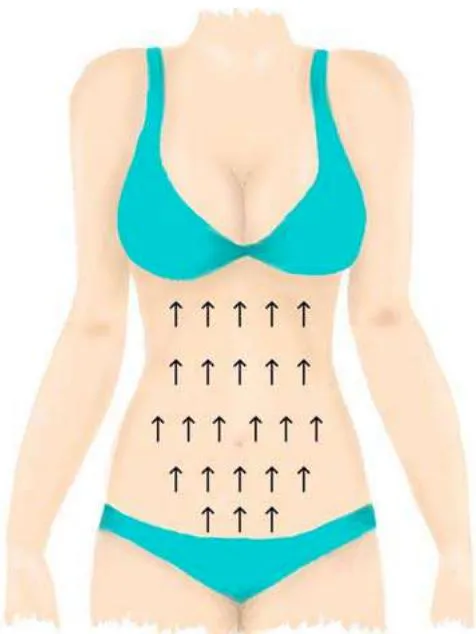
The product studied was pbserum HA 2.0 HIGH (supplied by pbserum Proteos Biotech S.L.) which consists of a 1.5 ml syringe of 0.1% sodium hyaluronate, obtained from Streptococcus equi subsp. zooepidemicus. A vial contains 3 recombinant bacterial enzymes: collagenase PB220, lipase PB500 and lyase PB72K; lyophilised and in different proportions. There is a vial of saline solution. The enzymes were reconstituted with the sodium hyaluronate, and the amount of saline solution required for the area to be treated and with the addition of 0.5 cc lidocaine 1% without epinephrine. For product injection, 3 cc syringes with 30G x 1 hypodermic needles were used, and the solution was administered subcutaneously as well as in fat deposits following a cephalic vectorization technique recommended by the authors, as shown in Figure 1.
Five days after the application of pbserum HIGH, a radiofrequency session was performed. After 45 days, the patients were recalled for a second photographic recording and biopsy collection from the same area as the initial sample. All photos were taken by the same individual using an iPhone 15 Pro camera without flash and without any retouching.
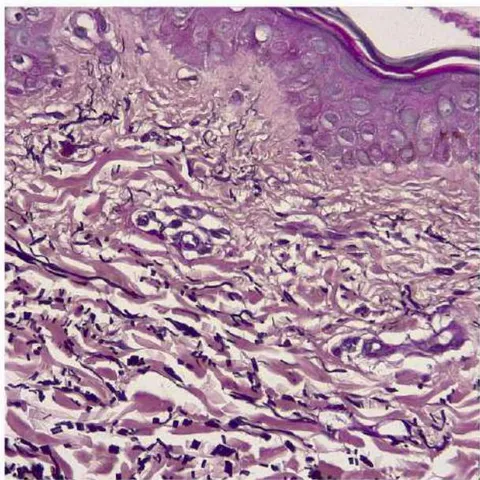
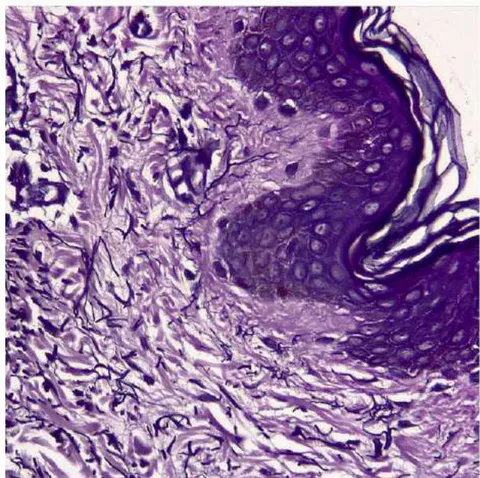
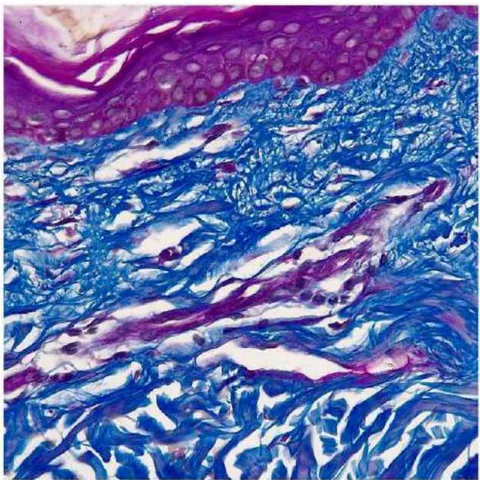
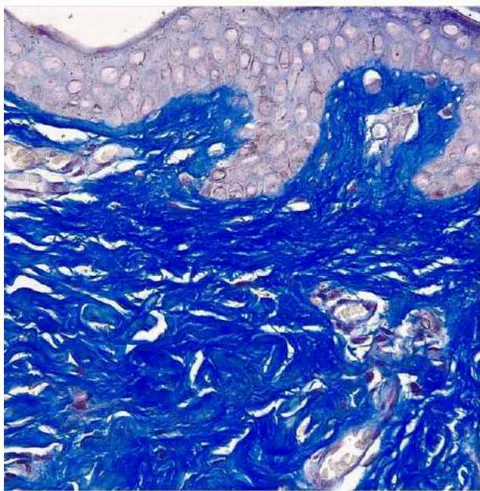
The biopsies were immediately placed in containers with 10% neutral formalin at a ratio of 10 parts formalin to the volume of the sample and sent to the pathology laboratory. All samples were processed and analyzed within 24 hours of biopsy collection. The samples were fixed for at least 6 hours and then conventionally processed automatically for 12 hours in formalin, alcohol, xylene, and paraffin. Subsequently, they were embedded in paraffin blocks and sectioned at 3 microns using a microtome, followed by staining with (i) hematoxylin and eosin (H&E); (ii) trichrome stain for collagen, elastin and muscle visualization; it is specifically used to visualize fibrotic tissue; and (iii) elastic stain for better visualization of elastic fiber fragmentation and integrity. The sections were examined by the same pathologist, who compared the findings from the H&E, trichrome, and elastic stains in the biopsies taken before and after the recombinant enzyme application.
After the application of the enzymes, patients were instructed to maintain proper hydration and avoid any form of anti-inflammatory therapy, including cold applications, medications, or massages. In the event of ecchymosis, they were advised to camouflage these signs with makeup and sunscreen only. Patients were also instructed to refrain from physical activity for 48 hours and could resume their daily activities the day after the procedure. Each patient was informed about the potential adverse effects or discomfort they might experience following the procedure.
III. RESULTS
3.1 Visual Clinical Changes
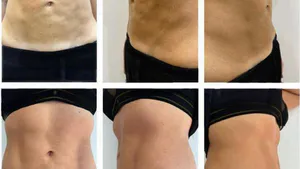
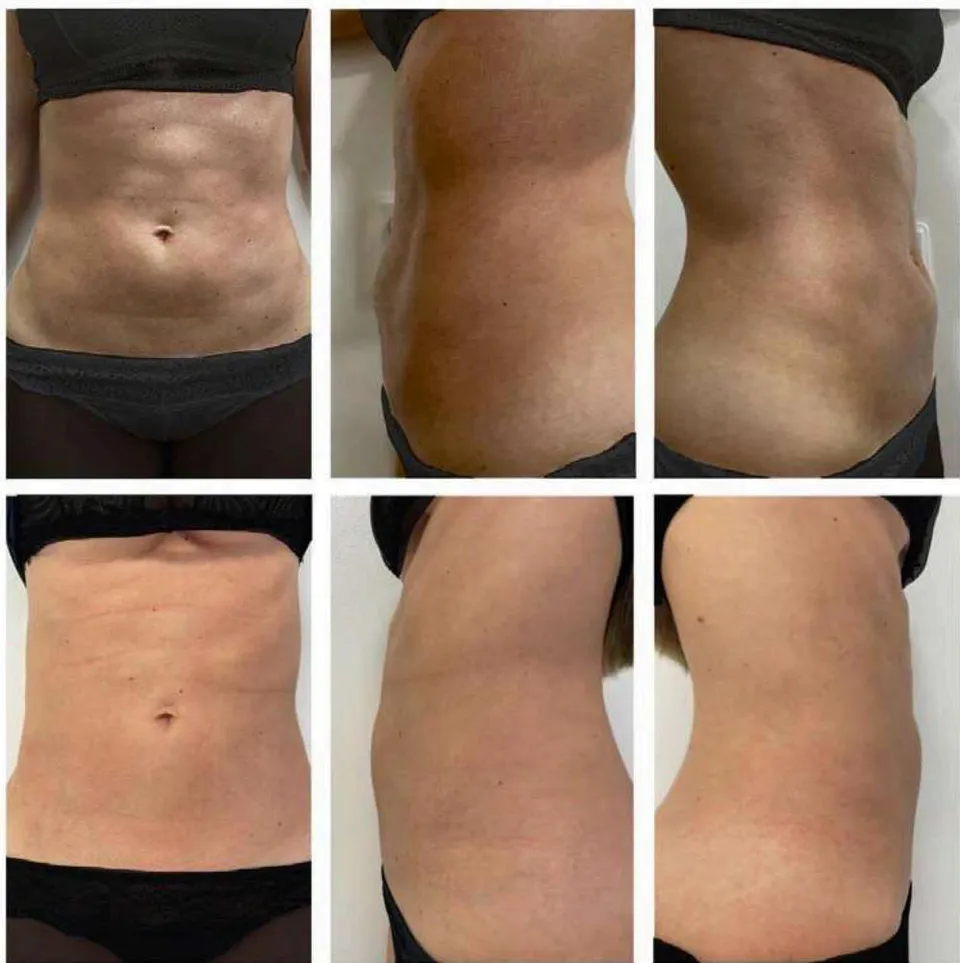
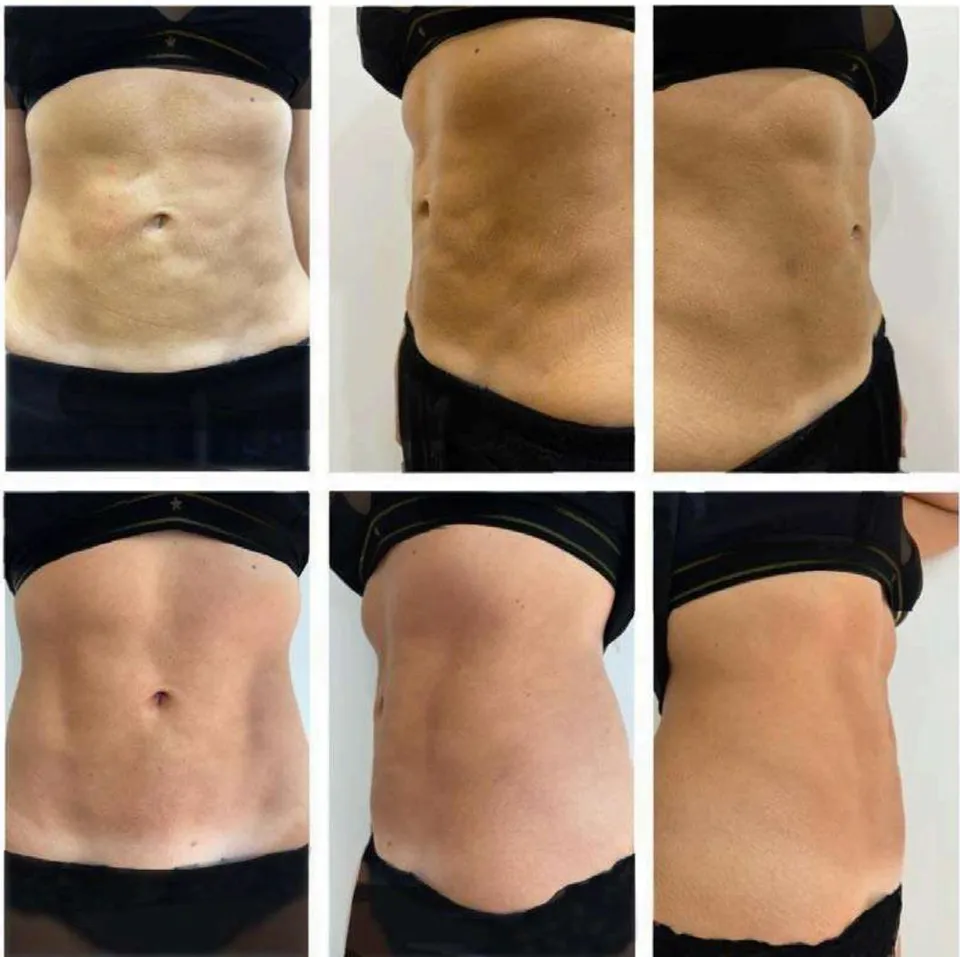
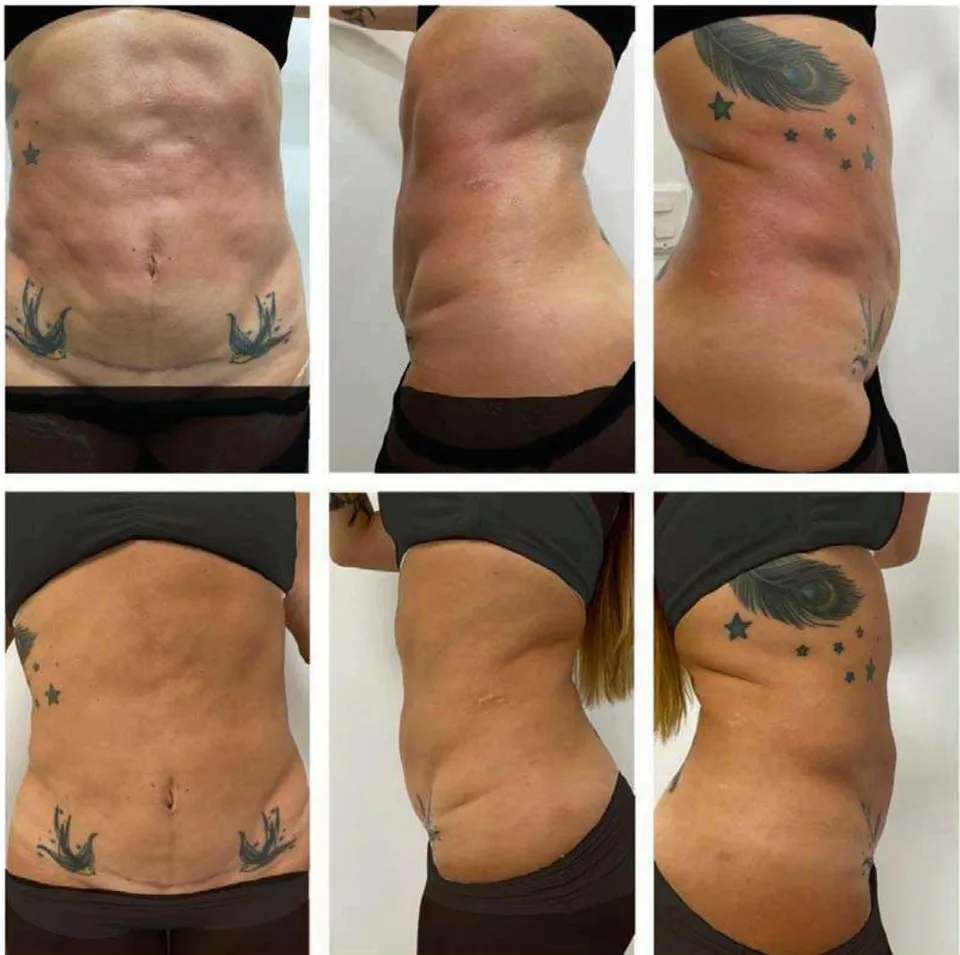
The patients were evaluated 45 days after a single application of pbserum HIGH to the skin of the abdomen affected by this condition. Significant improvements were observed in the quality, texture, and coloration of the skin, as well as a marked reduction in the thickening and regularization of the contour.
It is important to note that the changes were perceived by the evaluators as well as reported by the patients themselves.
3.2 Histological Findings Prior to the Application of Recombinant Enzymes
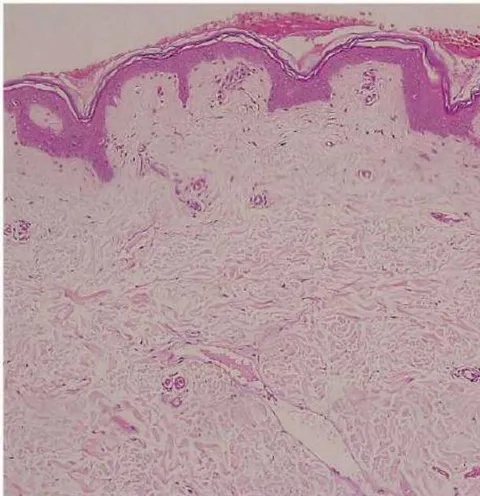
In the H&E-stained slides, where skin samples from the abdomen were evaluated prior to the application of recombinant enzymes, normal-thickness squamous epithelium was observed in 4 patients (80%), hyperkeratosis with parakeratosis in 4 patients (80%), dermal fibrosis in 1 patient (20%), and collagen fragmentation in the dermis in 2 patients (40%).
In the elastic-stained slides, elastic fiber fragmentation throughout the dermal thickness was observed in 4 patients (80%).
In the trichrome-stained slides, fragmented dermal collagen with aggregation was observed in 4 patients (80%).
3.3 Histological Findings After the Application of Recombinant Enzymes
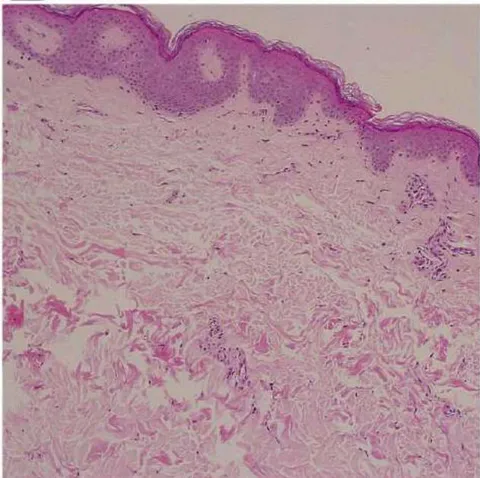
In the H&E-stained slides, where abdominal skin samples were evaluated after the application of recombinant enzymes, normal-thickness squamous epithelium was observed in 4 patients (80%), dermis with minimal basophilic collagen changes in 3 patients (60%), dermis with no basophilic collagen changes in 1 patient (20%), and sparse superficial mononuclear inflammatory infiltrate in 4 patients (80%).
In the elastic-stained slides, neoformation of elastic fibers was observed in 4 patients (80%).
In the trichrome-stained slides, the presence of new collagen bands was observed in 4 patients (80%).
IV. DISCUSSION
Liposuction has gained significant relevance in aesthetic medicine and in the perception of body image, as it offers a quick solution to improve body harmony and proportion. Liposuction is an aesthetic surgical procedure aimed at selectively removing localized fat deposits from different areas of the body through assisted suction. This procedure offers the advantage of enhancing body contour with minimal scarring. Traditionally, subcutaneous fat aspiration is performed in a deep plane, as there is concern that superficial liposuction may be associated with higher complication rates, including contour irregularities, seroma formation, hyperpigmentation, chronic induration, and fibrosis .
Contour irregularities compromise the aesthetic result of surgery and are a major technical challenge. It is mostly accompanied by fibrosis, as a local complication, which is defined as the abnormal scarring of tissues, resulting from the excessive production of collagen during the healing process, leading to thickening of the surrounding tissues and hardening of the affected area. One of the causes of fibrosis is fat necrosis, which occurs due to the trauma caused by liposuction [15].
Fibrosis is a common complication; however, it is important to note that most statistics, both global and local, are not highly reliable due to the significant amount of underreporting. In a study conducted in the city of Cali between 1983 and 2008, which included 26,259 liposuction procedures using different techniques, the incidence of fibrosis was 2.3% [16]. In a study of 417 patients, transient nodular fibrosis was found in 81 patients (19.42%) and permanent fibrosis in 2 patients (0.47%) [13]. Early compression, lymphatic drainage, and radiofrequency for two weeks in the postoperative period are recommended to prevent this complication [13].
While the therapeutic management of skin alterations has been addressed through various invasive and non-invasive treatments , the arrival of the recombinant enzymes has opened a new perspective for the treatment of the previously mentioned postoperative complication. The collagenase enzyme has also been successfully used for the treatment of different pathologies where there is an accumulation of fibrotic tissue, such as Dupuytren's disease, arthrofibrosis and Peronie's disease , achieving approval from the EMA and FDA for these conditions .
The cocktail of the recombinant enzymes pbserum HIGH contains the following enzymes: Collagenase PB220, Lipase PB500, and Lyase PB72K. It is important to highlight that this enzymatic system contains a higher concentration of collagenase.
When the enzymes are injected into the skin, collagenase breaks down the peptide bonds in collagen, degrades loose and non-functional fibers, and stimulates the production of a new collagen network, thereby improving skin appearance and texture . Lipase hydrolyzes triglycerides within adipocytes, reducing their size and thereby diminishing localized fat deposits without damaging surrounding tissue . Lyase degrades polysaccharides in the extracellular matrix, reducing inflammation and enhancing the penetration of other enzymes into the tissues .
With the application of a single session of the recombinant enzymes pbserum HIGH, we observed clinical and histological evidence of improvement in the quality and texture of the skin on the abdomen, as well as a notable reduction in the induration and contour regularization. These results are consistent with those obtained in other studies on the application of enzymes in fibrotic alterations .
When comparing the findings from biopsies taken before and after the application of recombinant enzymes, it can be concluded that after application of pbserum HIGH there is a decrease in the basophilia of the collagen, hyperkeratosis with parakeratosis, and the inflammatory response. Additionally, regeneration and neogenesis of elastic and collagen fibers were observed, with a decrease in the number of fragmented elastic and collagen fibers and their conglomerates, showing greater homogeneity.
Based on the visual and histological findings, we could recommend the use of pbserum HIGH enzymes in the early postoperative period (4-6 weeks) to prevent the onset of this significant complication in patients undergoing liposuction.
The use of recombinant enzymes was safe for all patients. And they experienced a rapid recovery. The level of patient satisfaction was remarkably high, as the improvements were both perceived and reported by the patients themselves, leading all study participants to request a repeat treatment.
Beyond its efficacy, safety, and high patient satisfaction, the procedure was straightforward to perform, requiring only a short learning curve for its application. Proper use of recombinant enzymes has the potential to replace other dermatological treatments, such as radiofrequency, ultrasounds, lasers, and device-based procedures. This is due to its ease of application, low risk of complications, and rapid recovery, allowing patients to return to their daily routines with minimal downtime.
V. CONCLUSION
A single dose of pbserum HIGH produced an improvement in skin quality and texture, and a notable reduction in the induration and contour regularization in abdomen, which has previously post-liposuction surface irregularities with associated fibrosis. This is the first study to present histological data regarding the use of recombinant enzymes in addressing this abdomen complication. The analysis of the biopsied tissues supported the visual results. Pbserum HIGH injections were safe, and easy-to-apply treatment and it achieved high levels of patient satisfaction. More studies are needed to get a better understanding of the effect of the recombinant enzymes visual and microscopically.
ACKNOWLEDGMENTS
The authors are deeply grateful to their patients for their trust and willingness, without whom this research would not have been possible. We are also grateful to Dr. Estefanía Hurtado Gómez for her work in reviewing the writing of the article.
Financial Support and Sponsorship
This study received funding from the company Meditek. Ergo SAS.
Conflicts of Interest
Dr. Giraldo Mesa, Dr. Matute Turizo and Dr. Vieira Ríos declare they do not have conflict of interest. Dr. Kopytina and Dr. López-Berroa are employees of Proteos Biotech.
Conflict of Interest
The authors declare no conflict of interest.
Ethical Approval
Not applicable
Data Availability
The datasets used in this study are openly available at [repository link] and the source code is available on GitHub at [GitHub link].
Funding
This work did not receive any external funding.
References
Cite this article
Related Research

Special Issue
Launch a focused special issue to highlight research, emerging trends, and expert insights in your academic field.