


IntelliPaper
Abstract
The introduction of the New Tax Regime in India aimed to simplify tax compliance while offering lower rates and limited deductions. With significant changes announced in Budget 2025–26, taxpayers face a complex choice between the traditional Old Regime and the simplified New Regime. This paper integrates a comparative tax liability analysis (for incomes ranging from ₹5 lakh to ₹25 lakh) with insights from recent studies on investor behaviour towards tax planning. Findings indicate that the New Regime offers clear advantages for low- and middle-income taxpayers without significant deductions, while the Old Regime continues to benefit high-income earners who can claim substantial exemptions. Behavioural factors, including awareness, investment habits, and risk appetite, strongly influence regime selection. Policy recommendations emphasize the need for financial literacy initiatives and tailored advisory support.
Explore Digital Article Text
I. INTRODUCTION
Taxation is widely acknowledged as a fundamental mechanism for mobilizing resources and sustaining public expenditure in modern economies (Bora, 2024). In India, income tax serves as a primary source of revenue, financing critical functions such as infrastructure development, education, health services, and social welfare (Government of India, 2025). Effective tax planning enables individuals to optimize their liabilities within legal frameworks, thereby fostering financial stability and encouraging long-term savings (Kaushik & Mahato, 2021).
The Indian income tax system is governed by the Income Tax Act, 1961, which provides for a progressive structure of tax rates and deductions. Historically, the Old Tax Regime allowed taxpayers to reduce taxable income through a variety of exemptions and deductions, including contributions to provident funds, life insurance premiums, home loan interest, and health insurance under Sections 80C, 80D, and 24(b). While this system incentivized disciplined savings, it often required complex documentation and planning.
To simplify compliance and widen the tax base, the Government of India introduced an optional New Tax Regime via the Union Budget 2020, later enhanced by amendments in the Budget 2025–26 (Government of India, 2025). The New Regime offers reduced tax rates across multiple slabs, along with a standard deduction of ₹75,000 for salaried individuals, but eliminates most exemptions and deductions. Consequently, taxpayers must weigh the trade-off between simplicity and potential tax savings.
Recent research highlights that regime selection is not solely a matter of arithmetic but is influenced by behavioural factors such as financial literacy, risk perception, and preference for liquidity versus long-term investment (Deshpande & Rakshe, 2025). High-income taxpayers with substantial eligible deductions often favour the Old Regime, whereas middle-income earners and self-employed individuals are more inclined towards the New Regime due to its transparency and lower compliance burden (Bora, 2024; Deshpande & Rakshe, 2025).
This study seeks to provide a comprehensive understanding of tax planning under India's dual-regime framework for Financial Year 2025–26. By integrating a comparative analysis of tax liabilities across income brackets with behavioural insights from prior literature, the paper aims to guide policymakers, practitioners, and taxpayers in making informed decisions that align with both fiscal objectives and individual financial goals.
The remainder of this paper is organized as follows. Section 2 presents a comprehensive review of the literature on income tax regimes and taxpayer behavior. Section 3 describes the data sources and methodological framework employed in the study. Section 4 offers a detailed analysis, integrating tax liability computations with qualitative insights into taxpayers' decision-making processes. Section 5 concludes with key findings and discusses implications for policymakers, practitioners, and taxpayers.
II. REVIEW OF LITERATURE
A growing body of literature has examined the implications of India's dual income tax framework and its impact on taxpayer behavior. Deshpande and Rakshe (2025) employed a case study approach to investigate how individuals choose between the Old and New Tax Regimes. Their findings suggest that high-income earners with substantial deductions—such as contributions under Section 80C, housing loan interest, and health insurance—prefer the Old Regime, while middle-income earners and self-employed taxpayers gravitate towards the New Regime due to its simplicity and favorable rates.
Prasad Patil & Sanket Gharat (2025) Explored awareness and taxpayer preference between the regimes using a primary survey of over 100 respondents. found that taxpayer choices depend on income level, investment habits, and the ease of compliance, rather than slab rates alone. Recommended better decision-support tools and educational campaigns to address gaps in financial literacy and enhance compliance.
(Rao et al., 2025) Found that the old regime is advantageous for taxpayers with substantial deductions under 80C, 80D, HRA, while middle-income earners or those with few deductions benefit more from the new regime because of lower tax rates with fewer deductions. This behaviour not only lowers tax liability but also indirectly contributes to national savings and capital formation. Conversely, the New Regime's simplified structure, with reduced emphasis on tax-linked investments, was found to encourage liquidity and discretionary spending rather than compulsory savings.
Bora (2024) compared the two regimes from the perspective of salaried individuals and highlighted that the Old Regime promotes long-term investment habits through deductions, whereas the New Regime enhances liquidity by offering lower tax rates without requiring savings-based compliance. Ranka (n.d.) further argued that taxpayers' reluctance to transition to the New Regime often stems from familiarity with traditional deductions, indicating a behavioural bias in tax decision-making.
Singh and Kaur (2023) have argued that the behavioural shift introduced by the New Regime could alter household saving patterns in the long run. While simplification reduces compliance costs, the absence of incentives may discourage individuals from investing in secure financial products, particularly among middle-income groups.
G., Balaji et. al. (2023) analysed the impact of changes made to the new tax regime under the Union Budget 2023. Emphasized that the new regime is now the "default" option for taxpayers, yet the old regime remains unaltered. The paper weighs which regime is more advantageous for taxpayers' post-reforms and is based on secondary data from various credible sources.
Kaushik and Mahato (2021) explored efficient tax-saving management strategies, emphasizing that optimal planning under the Old Regime depends on timely investments in eligible instruments. Their analysis demonstrated that taxpayers who systematically utilize deductions achieve higher effective savings compared to those who adopt an ad hoc approach.
Policy-oriented literature, including reports by the Government of India (2025), underscores the rationale for introducing the New Regime: simplifying compliance, reducing administrative burdens, and encouraging voluntary participation. However, these studies also caution that the absence of deductions in the New Regime may discourage long-term savings, potentially affecting capital formation in the economy.
Overall, the existing research highlights a trade-off between simplicity and incentives in India's income tax design. While the New Regime aligns with global trends favoring streamlined tax systems, the Old Regime continues to be relevant for individuals seeking to combine tax efficiency with structured savings. The present study builds on this discourse by combining updated tax computations for Financial Year 2025–26 with behavioral insights, offering a holistic perspective on income tax planning.
III. DATA AND METHODOLOGY
This study adopts a mixed-method research design to provide an integrated understanding of income tax planning under the Old and New Tax Regimes in India for the Financial Year 2025–26. The principal aim is to investigate how taxpayers evaluate their liabilities under the two systems and how behavioral considerations shape their choices. Specifically, the research seeks to: (i) analyze the tax liabilities of salaried, self-employed, and business taxpayers across different income levels; (ii) explore behavioral drivers, such as awareness, saving preferences, and risk attitudes, that influence regime selection; and (iii) synthesize empirical and qualitative evidence to formulate practical guidance for taxpayers and policymakers.
The data set for this analysis was compiled from both documentary and secondary sources. Tax slabs, rebates, and deductions applicable to Financial Year 2025–26 were drawn from the
Union Budget and the Income Tax Act, 1961 (Government of India, 2025). To capture behavioral dimensions, the study utilized findings from published literature, including Deshpande and Rakshe (2025), Bora (2024) and Kaushik and Mahato (2021), which provide insights into investor awareness, regime preferences, and planning strategies. These references were complemented by structured tax computations prepared by the authors, reflecting the most recent statutory provisions on exemptions and standard deductions.
Methodologically, the research combines quantitative and qualitative approaches. Quantitative analysis involves the computation of tax liability for seven representative income categories ranging from ₹5 lakh to ₹25 lakh. Under the Old Regime, calculations incorporate deductions typically available to taxpayers, such as investments under Section 80C, house rent allowance (HRA), home loan interest, and health insurance premiums under Section 80D. The New Regime calculations consider applicable rebates and the enhanced standard deduction of ₹75,000 for salaried individuals. Qualitative analysis draws on behavioral studies to interpret how financial literacy, investment culture, and compliance attitudes affect regime choice. The integration of these strands allows for a nuanced understanding of tax planning decisions.
| Component | Description | Source |
| Income tax slabs, rebates, and deductions | Official provisions under Union Budget 2025–26 and Income Tax Act, 1961 | Government of India (2025) |
| Comparative tax computations | Structured calculations for incomes between ₹5 lakh and ₹25 lakh under Old and New Regimes | Authors' analysis |
| Behavioral insights | Evidence on awareness, preferences, and planning from prior research | Deshpande & Rakshe (2025); Bora (2024);Kaushik & Mahato (2021) |
| Analytical approach | Mixed-method design combining liability estimation with interpretation of behavioral evidence | Present study |
By embedding tax computations within a behavioral framework, this methodology captures both the fiscal and psychological determinants of taxpayers' decisions. Such an approach is consistent with emerging research in fiscal policy, which argues that policy outcomes are enhanced when quantitative modelling is integrated with evidence on taxpayer attitudes and incentives (Deshpande & Rakshe, 2025).
IV. ANALYSIS
This section presents an integrated assessment of the Old and New Tax Regimes for Financial Year 2025–26, combining tax computations with insights from the literature on taxpayer behavior. The objective is to determine the relative advantages of each regime across income categories and to interpret how individual preferences, awareness, and saving habits influence regime selection.
The quantitative component involved calculating tax liabilities for seven representative income levels: ₹5 lakh, ₹7 lakh, ₹10 lakh, ₹12 lakh, ₹15 lakh, ₹20 lakh, and ₹25 lakh. Under the Old Tax Regime, deductions were incorporated for investments and allowances such as Section 80C contributions, house rent allowance, housing loan interest, and health insurance premiums. For the New Regime, the calculations reflected the enhanced standard deduction of ₹75,000 for salaried individuals and the applicable rebates announced in the Union Budget 2025–26. These numerical results were interpreted in the light of behavioral findings reported by Deshpande and Rakshe (2025), Bora (2024), and related studies.
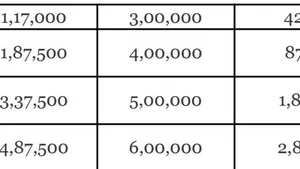
| Income (₹) | Tax under New Regime | Gross Tax under Old Regime | Maximum Deductions (Old) | Net Tax after Deductions (Old) | Preferred Regime |
| 5,00,000 | 0 | 12,500 | 1,50,000 | 0 | New (zero-tax threshold) |
| 7,00,000 | 0 | 25,000 | 1,50,000 | 0 | Either (New simpler) |
| 10,00,000 | 0 | 78,000 | 2,50,000 | 28,000 | New (lower burden) |
| 12,00,000 | 0 | 1,17,000 | 3,00,000 | 42,000 | New (tax-free) |
| 15,00,000 | 45,000 | 1,87,500 | 4,00,000 | 87,500 | Depends on deductions |
| 20,00,000 | 1,20,000 | 3,37,500 | 5,00,000 | 1,87,500 | Old (high deductions) |
| 25,00,000 | 2,25,000 | 4,87,500 | 6,00,000 | 2,87,500 | Old (max deductions) |
(Source: Author's representation)
The analysis indicates a clear segmentation of taxpayers based on income and capacity to claim deductions. For incomes up to ₹12 lakh, the New Regime provides a complete tax exemption, making it the optimal choice for low- and middle-income groups, particularly for those who do not actively invest in tax-saving instruments. For incomes between ₹12 lakh and ₹20 lakh, the selection depends on whether the taxpayer maximizes deductions. Taxpayers with substantial contributions to provident funds, insurance, or housing loan repayments often achieve greater savings under the Old Regime, while others benefit from the lower rates and administrative simplicity of the New Regime. At income levels above ₹20 lakh, the Old Regime remains advantageous if the individual can fully utilize the available exemptions and deductions.
While quantitative calculations offer an objective comparison of tax liabilities, understanding why taxpayers choose between the Old and New Tax Regimes requires an examination of behavioral and contextual factors. The qualitative dimension of this study draws upon evidence from prior research (Deshpande & Rakshe, 2025; Bora, 2024) and interprets the patterns revealed in tax liability computations through the lens of financial literacy, savings orientation, and compliance preferences.
A prominent theme in the literature is the role of financial literacy in shaping regime selection. Taxpayers with higher awareness of rebate provisions, deduction limits, and the long-term implications of tax planning demonstrate a greater ability to align their choices with financial goals. Deshpande and Rakshe (2025) observed that financially literate individuals were more likely to evaluate the total cost–benefit trade-off between regimes, considering not only immediate tax savings but also the incentive structures embedded in deductions such as Section 80C, health insurance premiums, and housing loan interest. By contrast, individuals with limited tax knowledge often adopted a default position—either remaining in the Old Regime out of habit or switching to the New Regime based solely on lower nominal rates—without fully exploring the implications for net savings.
Another significant determinant is investment behavior and savings culture. The Old Regime historically encouraged disciplined savings through instruments like PPF, ELSS, National Pension Scheme, and insurance policies. For taxpayers who prioritize long-term wealth accumulation and retirement planning, these deductions remain attractive despite the higher headline rates. Bora (2024) highlighted that such taxpayers view deductions not merely as tax-reducing tools but as mechanisms that foster structured financial security. Conversely, the New Regime appeals to individuals who value liquidity and flexibility in their cash flows, particularly younger earners or those engaged in entrepreneurial activities who prefer to deploy surplus funds in business expansion or market-linked investments rather than in tax-sheltered schemes.
Compliance burden and administrative simplicity further influence choices. Business owners and self-employed professionals frequently cite the reduced record-keeping and documentation under the New Regime as a compelling reason for adoption (Deshpande & Rakshe, 2025). Salaried employees, on the other hand, often have ready access to employer-facilitated investment declarations and payroll deductions, making the Old Regime more manageable for those with structured benefit packages. However, the literature also suggests that procrastination in submitting investment proofs or deciding on a regime leads to hurried and sometimes inefficient selections close to the filing deadline.
Behavioral economics concepts such as status quo bias and loss aversion provide additional insight into taxpayers' hesitancy to transition to the New Regime. Ranka (n.d.) notes that individuals accustomed to availing deductions perceive a shift to a regime without exemptions as a potential loss, even if the net liability may be lower. This psychological attachment to deductions underscores the importance of clear communication from policymakers and tax advisors regarding the real monetary benefits of each option.
Finally, qualitative evidence points to differentiation by income group and occupational category. Salaried professionals in the ₹7–15 lakh range often opt for the New Regime due to the enhanced standard deduction and rebate provisions, especially when their portfolios of deductible investments are modest. In contrast, high-income earners and those with significant commitments such as home loans or insurance portfolios maintain a preference for the Old Regime, which rewards comprehensive tax planning. Among entrepreneurs and professionals, the New Regime is seen as aligned with modern business practices, allowing them to focus on operational efficiency rather than extensive compliance formalities.
Taken together, these insights suggest that regime selection is a multidimensional decision that intertwines statutory incentives with personal finance strategies and cognitive tendencies. Encouraging informed decision-making therefore requires not only transparent tax structures but also targeted educational initiatives that enhance taxpayers' understanding of how their income profile, savings objectives, and administrative preferences interact with the available tax regimes.
V. CONCLUSION AND IMPLICATIONS
The qualitative exploration of taxpayer behavior, when combined with evidence from comparative tax computations, underscores that the choice between India's Old and New Tax Regimes in Financial Year 2025–26 is not purely an arithmetical exercise but a complex decision shaped by literacy, habits, and attitudes toward risk and savings. Taxpayers with disciplined investment practices and significant deductible expenditures derive tangible benefits from the Old Regime, which rewards long-term financial commitments through targeted exemptions. Conversely, individuals seeking simplicity, flexibility, and reduced documentation costs—particularly young earners, entrepreneurs, and professionals with modest deductible investments—find the New Regime more compatible with their economic priorities.
From a policy standpoint, these findings highlight several implications. First, improving financial literacy is essential to enable taxpayers to weigh the true costs and benefits of each regime. Awareness programs should emphasize not only current liability calculations but also the broader financial outcomes of deductions and exemptions. Second, there is a need to design communication strategies that reduce the cognitive biases associated with regime choice, such as status quo bias and loss aversion. Simplified tools, illustrative case studies, and digital calculators could empower taxpayers to make timely, evidence-based decisions. Third, policymakers should periodically review deduction structures and standard deduction thresholds to ensure that both regimes remain aligned with broader economic goals—encouraging savings and investment while fostering voluntary compliance.
For practitioners and tax advisors, the study underscores the importance of tailoring guidance to individual profiles. Effective advisory support should integrate quantitative calculations with an assessment of behavioral preferences, occupational circumstances, and liquidity requirements. By adopting a client-centered approach, advisors can help taxpayers optimize their post-tax income while sustaining prudent savings habits.
Overall, the evidence affirms that a balanced tax system requires not only clear and equitable statutory provisions but also an appreciation of the behavioral realities faced by taxpayers. Aligning fiscal design with the diverse needs and cognitive tendencies of the population will strengthen compliance, promote informed decision-making, and support the twin objectives of revenue generation and financial well-being.
Conflict of Interest
The authors declare no conflict of interest.
Ethical Approval
Not applicable
Data Availability
The datasets used in this study are openly available at [repository link] and the source code is available on GitHub at [GitHub link].
Funding
This work did not receive any external funding.
References
Cite this article
Related Research

Special Issue
Launch a focused special issue to highlight research, emerging trends, and expert insights in your academic field.