



IntelliPaper
Abstract
Quilombola communities in Brazil have been interacting with Public and private sectors to develop carbon offset projects. However, governance in these initiatives faces structural challenges due to the technical jargon used in formal written documents and one-sided decision-making models. Issues like these conflict with the oral tradition, collectivity, and cultural practices of these quilombola communities, barring the exercise of their rights and hindering their development. This article analyses how the use of Legal Design techniques help to strengthen the political autonomy and self-management capacity of quilombola communities. By removing language barriers from carbon offset agreements that help the development of quilombola communities, these communities may reach higher levels of understanding of the project’s governance, and result in better agreements for the community.
Explore Digital Article Text
I. INTRODUCTION
"Governance" means "to steer" or "to lead," especially in the context of navigation . Just as in the command of a ship, where a structure (the vessel) is managed for the sake of common goals, in modern society, the term "governance" refers to the instruments and models of self-management through which a group of people regulates its relations . Historically, we have moved from simpler structures of power to highly robust, political and bureaucratic systems.
Despite this definition, there is no single model that is universally applicable to all groups of people, given that governance is directly influenced by factors such as the historical, economic, political, and cultural context in which it will be applied . Thus, these elements shape the mechanisms through which management will occur, resulting in different models of governance that vary according to the social organisation and needs of each group.
In Brazil, quilombola communities are ethnic groups that define themselves based on their relationship with the territory, their ancestry, and their own cultural practices1 . The lands occupied by these communities are protected by federal law and are part of a historical and political reparation, in order to preserve their own culture2 .
Inside these communities, oral tradition and symbolism persist in their cultural and organisational manifestations. However, they are not segregated from the current economy. Therefore, they have to enter into governance structures and documents that are not natural to the quilombola tradition. Most of these government documents assume that its readers will have a high level of technical education to understand the legal terms. Meanwhile, the illiteracy rate in quilombola communities is 2.7 times higher than the average for the general Brazilian society, according to the 2022 Demographic Census . In this context, the application of a governance model that is not familiar to quilombolas and makes excessive use of technical jargon represents a significant obstacle to the internalisation of legal concepts in these communities. Thus, the difficulty in understanding this content can be an obstacle to the exercise of quilombola rights and hinder the integration of the community with other subjects of law.
At the same time, concerns about the comprehension of legal documents have led to the creation of new methodologies within the law, in order to incorporate knowledge from other areas into this science. Research conducted around the world has already found out that most people face challenges understanding legal terms and documents . In this context, legal design emerged as a technique of creating legal documents according to the users needs by using design principles3 .
In this sense, a question emerges: in quilombos, where oral tradition is highly valued, could it be possible to combine law and design to increase transparency about governance and facilitate the integration of this kind of community with other subjects of law?
The hypothesis is that the intersection is possible due to the techniques and resources present in design. By its nature, Legal Design has the ability to translate complex information into more understandable formats. Thus, the combination of visual, audiovisual, and narrative resources can assist in the construction of structured governance and foster these communities' right to understanding.
Therefore, this article aims to examine the extent to which design, through audiovisual resources, can support the understanding of quilombola communities' governance by its own members and decision-makers. To this end, we will conduct a literature review of topics related to this research. In addition, we will analyse its application in a specific case, in which the private sector negotiates carbon credits with quilombola communities.
II. QUILOMBOLAS AND GOVERNANCE IN CARBON OFFSET PROJECTS
Quilombola communities are Afro-Brazilian settlements that originated in the 16th century, primarily in the northeastern region of Brazil. These communities were formed by escaped slaves (quilombolas) who resisted the transatlantic slave trade and the oppressive regime of slavery in Brazil.
During the transatlantic slave trade, millions of enslaved Africans were forcibly brought to Brazil. Many of these enslaved individuals resisted their captivity, and some managed to escape to remote regions, such as forests, mountains, and swamps. These escaped slaves, known as quilombolas, formed their own settlements, called quilombos. The quilombos became autonomous communities, often with their own systems of governance, agriculture, and cultural practices.
Brazil abolished slavery in 1888, with the signing of the Lei Áurea (Golden Law) by Princess Isabel. However, the abolition of slavery did not lead to significant changes in the social and economic structures of the country, and quilombola communities continued to face significant challenges, including land expropriation, violence, and marginalisation.
In the 20th century, quilombola communities faced increasing pressure from government policies aimed at modernising agriculture, expanding infrastructure, and promoting economic development. Many quilombola lands were expropriated, and their inhabitants were forced to migrate to urban areas, where they faced racism, poverty, and social exclusion.
The 1988 Brazilian Constitution recognised the rights of quilombola communities to their ancestral lands , marking a significant turning point in the struggle for quilombola rights. Article 68 of the Constitution states that "quilombola communities are entitled to the definitive ownership of their lands, and the state shall ensure their protection and the protection of their cultural heritage."
Since then, several government agencies and non-governmental organisations (NGOs) have worked to support quilombola communities, including the creation of the National Programme for the Sustainable Development of Quilombola Communities (Programa Nacional de Desenvolvimento Sustentável das Comunidades Quilombolas, or PNDSCQ) in 2003.
These traditional communities are important vectors in the protection of tropical forests . Roveda and Suruí point out that "recognising the value of forests is also recognising the rights of the peoples who have protected them for centuries" . Thus, several initiatives have emerged through public-private partnerships with these communities in order to find viable alternatives to protect the environment. These possibilities include carbon projects, which assign economic value to environmental conservation, promote income generation for traditional communities, and strengthen their autonomy in managing their territories.
Focusing on the particular case analysed by this article, the AWA REDD+ Project aims to use the resources generated by the sale of carbon credits to finance activities that protect forests and develop the quilombola communities of Gurupá, in Pará.
The AWA Project is a partnership between the Association of Remaining Quilombo Communities of Gurupá – Pará (ARQMG), which owns the territory, and Carbonext, a company that implements and manages carbon projects by providing technical support, monitoring emissions and facilitating the sale of carbon credits generated.
To ensure efficient and transparent management of resources, the governance of the AWA Project was collectively structured by quilombo leaders through two community organisations, which divide the proceeds from the sale of carbon credits equitably: ARQMG and the Agroextractivist Cooperative of the Remnants of Quilombos Defenders of the Forest of Gurupá (COOPAWA). Each of these institutions has its own responsibilities, but they converge towards the ultimate goal of the Project.
Among the various materials inherent to the project, a Governance Manual was created to serve as a guiding tool in complying with the rules for the use of financial resources. In addition, other materials were used to support the leaders' decisions and explain how carbon credits would be traded, as well as the rights and duties of those involved.
Despite significant advances in forms of communication, from radio programmes to social networks, maintaining a constant understanding of the project and updating information is imperative for the success of the partnership. Projects that do not have transparent and clear communication with such groups run the risk of "reproducing inequalities, reinforcing power asymmetries, and even compromising the credibility of carbon markets ". In analysing the challenges faced by REDD+ projects, Roveda points out that, in order to build something assertive and permanent, such initiatives must be led by the communities themselves .
Protecting the forest begins with protecting the right of indigenous peoples to fully understand the projects that impact their lives and territories. Only then can the dialogue between indigenous and non-indigenous knowledge promote a true balance between economy, culture, environment, and social justice.
In this regard, within quilombola communities, oral tradition plays a central and structuring role. It is an ancestral system that allows for the transmission of knowledge, the negotiation of conflicts, the legitimisation of authority and the building of collective consensus. Legitimacy is not based on written rules, but on social ties, reputation, community recognition, and experience. Meetings, conversation circles, celebrations, and assemblies are deliberative spaces in which important decisions are discussed, experiences are shared, and collective memory is preserved.
Given this scenario, could it be possible to enhance the results of carbon projects through governance that is widespread and understood by the quilombolas? Can audiovisual resources be allies in the quilombola community's understanding of this governance? These are some of the points that will be analysed in the following sections of this article.
III. THE TURNING POINT: FROM WRITTEN TEXT TO VISUAL NARRATIVE
The documents used to structure governance are based on legal frameworks that follow a comprehensive reading pattern for those who are not accustomed to their language . So, how can this legal content be brought closer to the quilombolas in a way that facilitates its assimilation?
The proposal of legal design is precisely to combine user experience and design to build documents, narratives, and resources that are intuitive, useful, and engage the end user . To this end, the expectations and characteristics of the audience that will receive the message are taken into account .
There are several cases around the world that already demonstrate the power of this methodology for democratising legal and overly technical content. In 2016, Robert de Rooy created comic book contracts so that illiterate fruit pickers in South Africa could understand the terms of the contracts they were signing . To this end, he used cultural elements characteristic of that community, both to bring the content closer to the reader and to facilitate its absorption .
With the support of Carbonext, Bits Legal Design accepted the challenge of using simple reading elements and graphic resources to facilitate the understanding of the governance of the AWA Project by the quilombola communities of Gurupá – Pará. Understanding governance in a quilombola community requires, among other analyses, a special focus on community communication, in order to ensure indigenous peoples' right to self-determination and participation in decisions that affect their lives. In other words, recognising the ancestry, autonomy and deliberative citizenship of these peoples.
From cooperatives and associations to traditional committees and leaders, different organisations coexist in the territory. The community association and the cooperative have fundamental and different institutional roles in the economic and political development of the community, but they remained misunderstood by a large part of the local population. There is therefore a need to fill a gap in the definition of responsibilities in the day-to-day management of the community.
The absence of visual narrative mechanisms in the traditional governance of the project created obstacles to the exercise of rights and understanding of content. Among the possible communication strategies, the audiovisual format was chosen for its greater compatibility with the communication practices of quilombola communities, in which oral tradition and visual resources play a central role in the transmission of knowledge and collective organisation.
Initially, we sought to map the level of local understanding of governance in order to identify gaps in the community's perception of the topic. We observed that formal documents were read and interpreted by few, and for the vast majority, the vocabulary caused confusion and doubts. The use of technical terms and jargon created a disconnect between the normative content and the community's everyday experience, sometimes taking on a tone of authority that reinforced mistrust and widened the gap between what was formally envisaged and what was actually practised in the local context.
The low level of understanding of issues related to quilombola community governance directly affects the community's autonomy and participation in decision-making, leading to confusion about institutional roles, a lack of identification with positions, and dependence on third parties to interpret rules.
In developing the legal design project, rather than simply interpreting the community's culture, we sought co-authorship between the community, Carbonext, and Bits. The legal design application process occurs in two major stages: reformulation of the text and application of the design to the content. Initially, the script was developed, with the organisation of information and application of techniques such as plain language and UX writing (user-focused writing). Next, a preliminary version of the video was produced, used to validate the narrative and communication elements, which later culminated in the delivery of the final version. All stages were conducted collaboratively, with continuous exchanges with Carbonext, especially through the contributions of Jeronimo Roveda and Andressa, who helped align the material with the reality and dynamics of the quilombola community.
The video was conceived using the design thinking methodology, i.e., based on three pillars: empathy, collaboration, and experimentation, to generate a user-centred experience. The methodology is not only convenient but necessary, given the cultural and comprehensive barriers caused by the historical marginalisation of these people, who need to be placed at the centre of the narrative.
Design thinking applied in the context of indigenous peoples has already proven effective in other instances. One example is a study conducted by three researchers from the Federal University of Western Pará (UFOPA) that investigated how design thinking could strengthen female entrepreneurship in a traditional community in the Tapajós National Forest (FLONA) in Pará. The results show that design thinking contributed to adding value to bio-businesses, increasing income generation, strengthening female leadership and traditional knowledge .
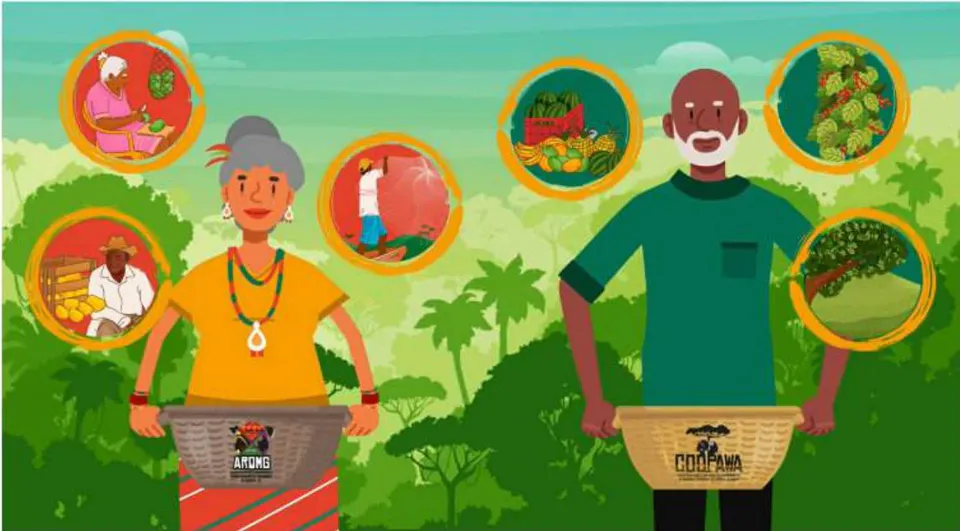
Thus, the audiovisual structure was built with simple oral language, close to community speech, visual metaphors representing institutional roles, a soundtrack corresponding to local cultural elements, characters inspired by the community itself, scenes that show "how it works" and not just "what it is," and narration in a human voice with a characteristic accent.
The prototype stage is essential for collectively validating the audiovisual material. This makes it possible to assess the level of understanding of the message, as well as the degree of identification and representativeness of the content with the audience, enabling adjustments in communication, the identification of information gaps, and the guarantee of cultural legitimacy. As a result of this participatory process, direct contributions from the community were incorporated, such as the inclusion of local statistical data in the script.
With the completion of the prototyping, the actual audiovisual production begins, incorporating footage of real scenes from everyday community life, the use of regional soundtracks to generate identification, and a combination of real scenes with animations based on the iconography validated in the prototype to generate a hybrid pedagogical effect. Audiovisual production transforms texts that were initially difficult to understand into a methodological bridge that recognises the quilombola community and transforms the community's relationship with rules and management, that is, it becomes a tool for the autonomy of a people. In this way, the community's understanding of the content was not an end in itself, but a means to strengthen collective organisation and the cohesion of the group as a whole.
IV. RESULTS: UNDERSTANDING AS A FORM OF AUTONOMY
As explained above, the transition from overly technical content to audiovisual content seeks to redefine the way of communicating in institutional documents within the quilombola community, arising from a diagnosis of the limits of understanding in relation to governance and the community's engagement with carbon projects.
The results of using these audiovisual resources in carbon credit projects should be understood as medium- and long-term processes, especially in community contexts marked by their own cultural dynamics. Considering that the project analysed is still in the early stages of implementation, it was not possible, at the time of completion of this research, to quantitatively measure its impacts in a systematic way. The consolidation of these participatory practices requires a broader time horizon for observing their effects.
Even so, the qualitative evidence observed during and after the presentation of the audiovisual material reveals significant receptivity on the part of the community. Participants demonstrated greater clarity regarding institutional obligations, the roles played by the different organisations involved, as well as the decision-making flows and implications of the carbon credit project. Spontaneous reports indicated that the audiovisual content contributed to reducing previously existing doubts and bringing formal governance concepts closer to the everyday reality of the community.
These initial signs, although tentative and not statistically measured, are relevant from a methodological and analytical point of view, as they indicate the capacity of audiovisual resources to enhance understanding of the rights and obligations involved in the governance of these projects. Improved understanding of governance mechanisms tends to have a positive impact on community participation, decision-making autonomy, and the internal legitimacy of institutional structures over time. Thus, preliminary results indicate that the use of audiovisual resources can have broader and more lasting effects on the consolidation of governance that is understood, participatory, and culturally aligned with quilombola communities.
V. CONCLUSION
The present research aims to analyse the extent to which the application of legal design, especially through audiovisual resources, can contribute to the understanding of governance in quilombola communities involved in carbon projects, strengthening their political autonomy and self-management capacity. It started from the recognition that governance is not limited to a set of normative techniques, but constitutes a sociocultural practice, deeply influenced by the modes of organisation, communication and production of meaning in each community.
In this sense, the intersection between governance and legal design proved to be viable and relevant for the creation of communication resources capable of translating complex legal structures into accessible narratives aligned with the quilombola oral tradition. The initial results show that legal design is not restricted to aesthetics or textual simplification, but operates as a methodology for the systemic reconstruction of legal communication, repositioning community members at the centre of the decision-making process.
The experience analysed demonstrates that understanding governance instruments is an indispensable condition for the exercise of autonomy. Understanding institutional roles, decision-making flows and responsibilities is not a secondary step, but a prerequisite for democratic participation and the internal legitimisation of collective decisions. The use of visual and audiovisual narratives pointed to a scenario that can contribute to strengthening community engagement in these projects and reducing dependence on external intermediaries for the interpretation of rules.
Finally, the quilombola experience presented in this study offers an important reference for the construction of more inclusive public policies, for the development of participatory models of governance in traditional communities, and for the consolidation of new legal epistemologies that break with colonial paradigms of documentation and authority. By integrating law, design, and culture, this work points to possible paths toward a more accessible, democratic law that is committed to the self-determination of traditional peoples.
Footnotes
Conflict of Interest
The authors declare no conflict of interest.
Ethical Approval
Not applicable
Data Availability
The datasets used in this study are openly available at [repository link] and the source code is available on GitHub at [GitHub link].
Funding
This work did not receive any external funding.
References
Cite this article
Related Research

Special Issue
Launch a focused special issue to highlight research, emerging trends, and expert insights in your academic field.