


Abstract
Suicide is figured as a public health problem, complex and multicausal in nature, with a significant individual and collective impact. This study aimed to outline the epidemiological profile of suspected suicide victims in the Metropolitan Region of Belém, between 2019 and 2023, based on data from the Renato Chaves Forensic Medical Institute. This is a documentary, quantitative, and retrospective study that analyzed 480 autopsy cases performed during the period. The results indicated a higher prevalence among male individuals (76.66%), with a focus on the 18 to 30 age group (30.83%). Single individuals were the most affected group in terms of marital status (65.83%). A concentration of cases in certain geographical areas and the influence of socioeconomic factors were also observed. The findings reinforce the need for targeted public policies and prevention strategies focusing on the identified vulnerable groups.
Explore Digital Article Text
I. INTRODUCTION
Suicide is one of the oldest and most complex issues related to individual health, remaining to this day shrouded in stigma and prejudice. It is a multi-causal phenomenon, with both individual and collective impact, affecting people of different backgrounds, sex, cultures, social classes, and ages.
It's important to highlight that the Brazilian Ministry of Health1 classifies suicide as a public health issue of great relevance, given its high incidence and the aggravating increase observed in recent decades1.
The severity of the global suicide situation can be seen in the report "Suicide Worldwide in 2019," in which suicide remains among the leading causes of death worldwide, even surpassing the number of deaths from HIV, malaria, breast cancer, wars, and homicides. In 2019, more than 700,000 people died by suicide, which is equivalent to one in every 100 deaths recorded globally. WHO also highlights that, among young people aged 15 to 29, suicide is the fourth leading cause of death, which underscores the urgent nature of the issue.[2]
In the Brazilian context, the situation also presents worrying rates. Brazil ranks among the Latin American countries with the highest absolute number of suicide cases. Furthermore, a gradual and consistent increase in suicide mortality rates is observed in several regions, with the Metropolitan Region of Belém being one of the areas that deserve special attention. Despite the seriousness of the national data, there is still a scarcity of epidemiological studies that include a detailed regional analysis, which highlights a significant gap in the scientific literature.
The scarcity of local data is an obstacle to the formulation of effective public policies, hindering the planning of preventive strategies appropriate to the socioeconomic and cultural specificities of the population. In this sense, conducting studies that describe the epidemiological profile of suicide victims in regions such as the Metropolitan Area of Belém is fundamental to support public health actions, especially in a scenario marked by underreporting and difficulty in accessing consolidated information.
This article's primary objectives aims to outline the epidemiological profile of suspected suicide victims in the Metropolitan Region of Belém from 2019 to 2023, based on the analysis of data from the Renato Chaves Forensic Medical Institute. In addition, as secondary objectives, it aims to contribute to regional scientific production, seeking to provide support for the development of more effective public policies aligned with the local reality, considering the magnitude and complexity of the problem.
II. METHODOLOGY
This study is characterized as an observational, documentary, epidemiological, and retrospective research, with a quantitative and comparative approach to the data collected. The time frame considered the period from 2019 to 2023, with the objective of outlining the epidemiological profile of victims suspected of suicide in the Metropolitan Region of Belém, state of Pará.
The inclusion criteria encompassed all suspected suicide victims who underwent autopsy at the Renato Chaves Institute of Legal Medicine and Dentistry (IML-PA) within the established period and who resided in the municipalities that comprise the Metropolitan Region of Belém. On the other hand, the exclusion criteria included indigenous victims, cases of victims who were not autopsied at the IML-PA, and those who did not reside in the geographical area delimited by the study.
The data collection process was carried out through the quantitative analysis of reports provided by the Scientific Police of Pará, based on records from the PericiaNet system. This system consolidates information related to the number of records originating in the Metropolitan Region of Belém, specifically those referring to autopsy examinations associated with suicide cases autopsied at the Renato Chaves Forensic Medical Institute.
For the organization and analysis of the information, the collected data were entered into electronic spreadsheets using Microsoft Excel software. This systematization allowed for the construction of descriptive tables and graphics, aiming for better visualization and interpretation of the findings.
Furthermore, to estimate the number of cases not confirmed as suicide, a comparative analysis was conducted between the total number of suspected suicide cases subjected to autopsy and the number of cases officially reported in the Mortality Information System (SIM). This methodological strategy allowed the calculation of the difference between the cases examined by the Forensic Medical Institute and the official suicide records, contributing to a more accurate understanding of the magnitude of the problem.
Regarding ethical aspects, all stages of the research followed the guidelines established by Resolution No. 466/2012 of the National Health Council (CNS). The study ensured respect for the privacy, anonymity, and confidentiality of the information collected. It should be emphasized that the identifying data from the victims' medical records were not accessed at any stage, considering only the variables relevant to the proposed objectives.
The researchers adopted rigorous measures to protect the integrity and security of the data. The information was stored in password-protected electronic folders and is scheduled to be destroyed after the publication of the results, in accordance with the ethical commitment made. The potential social risk was also considered, avoiding the public exposure of information that could cause embarrassment or suffering to the victims' families.
This is also important to emphasize that the expected benefit of this research is to provide consistent and relevant data to support public policies for suicide prevention, contributing to the planning of more effective actions tailored to the specific characteristics of the Metropolitan Region of Belém.
III. RESULTS
This study analyzed cases of suspected suicide victims that occurred in the Metropolitan Region of Belém, from 2019 to 2023, totaling 480 autopsies performed at the Renato Chaves Forensic Medical Institute.
Initially, the data revealed the distribution of cases by victim's sex. A prevalence of deaths was observed in males, totaling 368 cases , compared to 111 cases in females and 1 case with unspecified sex during the evaluated period. This difference was evident throughout all the years of the historical series. Regarding the years analyzed, a decrease in the number of cases stands out in 2021, a period that coincided with the peak of the COVID-19 pandemic.
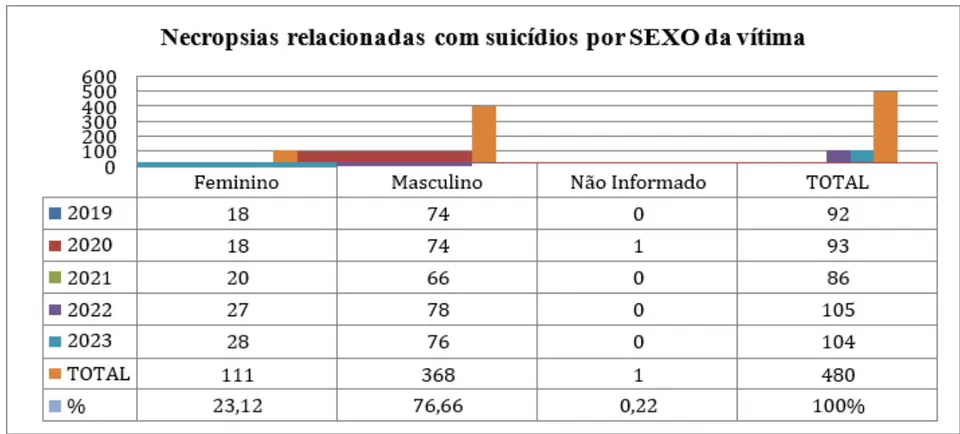
Graphic 1: Autopsies related to suicide, by sex of the victim (Female, Male, Non-Informed)
Regarding the distribution by age group, the highest concentration of cases was observed among young adults aged 18 to 30 years, corresponding to of the total cases. Following this, the age brackets of 31 to 40 years , 41 to 50 years , and over 60 years stood out. Age groups under 17 years showed a lower prevalence .
Necropsias relacionadas com suicidios por FAIXA ETÁRIA da vitima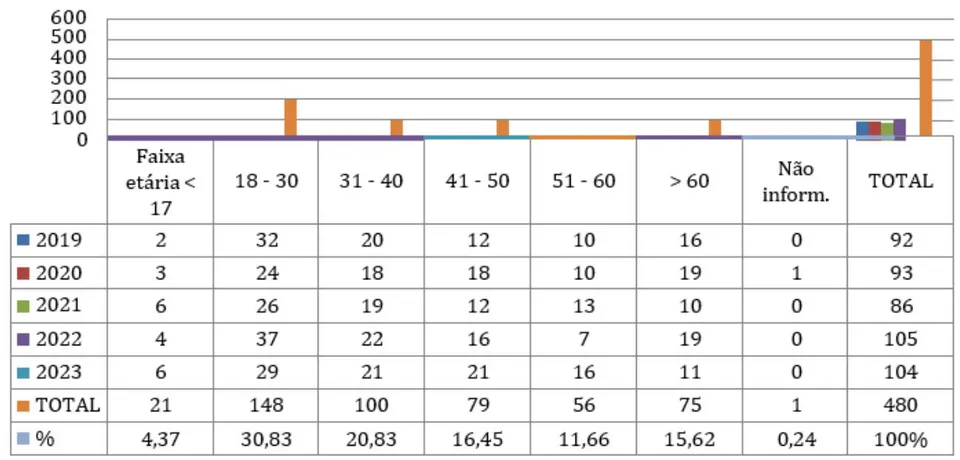
Source: Scientific Police of Pará, Forensic Intelligence Center, 2023
Graphic 2: Autopsies related to suicides by age brackets of the victim
Regarding marital status, single individuals were the most affected, representing of the occurrences. They were followed by married individuals and those in common-law relationships (12.5%). The other marital statuses presented significantly smaller proportions, such as divorced (4.16%), widowed (1.04%), and separated (0.2%).
Necropsias relacionadas com suicidios por ESTADO CIVIL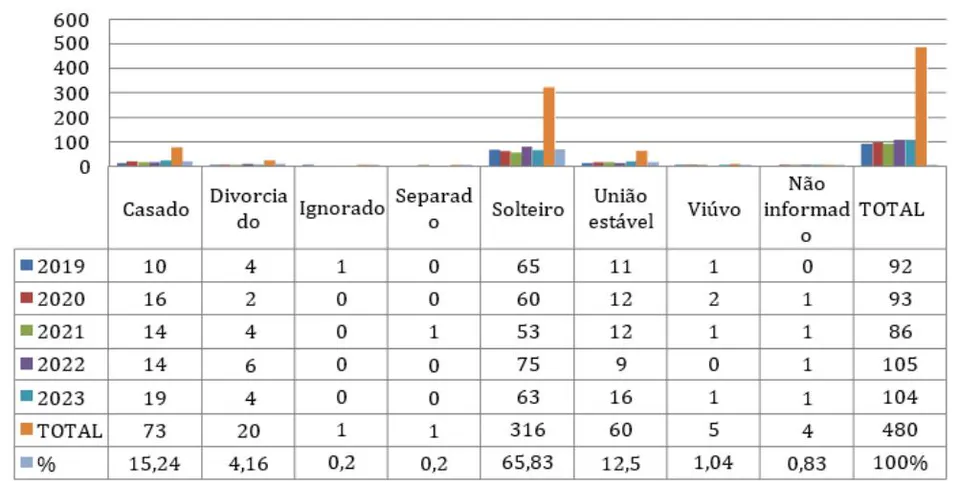
Source: Scientific Police of Pará, Forensic Intelligence Center, 2023
Graphic 3: Autopsies related to suicides by marital status of the victim (Married, Divorced, Ignored, Separated, Single, Common-Law Marriage, Widowed, Non-Informed)
The analysis by profession revealed that the majority of cases were categorized as "other unspecified professions," encompassing of the victims. This was followed by students, with 17.7% of the cases, and drivers, with 3.375%. Other occupations showed much lower incidences, distributed among various professional categories.
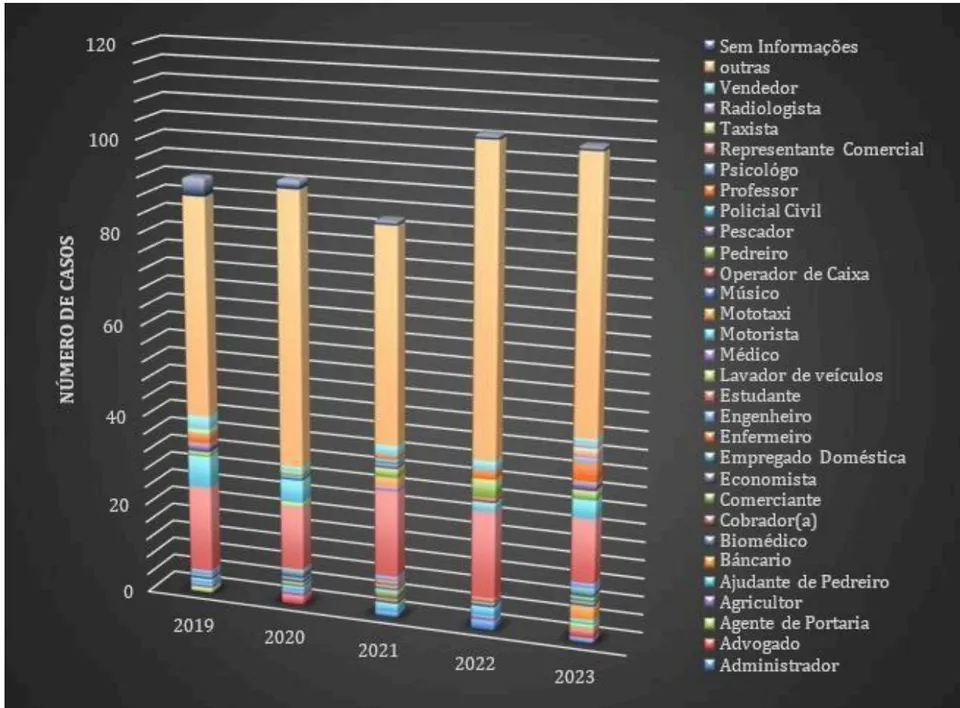
Source: Scientific Police of Pará, Forensic Intelligence Center, 2023 Graphic 4: Autopsies Related to Suicides, Categorized by the Victim's Profession, with Highlight to Others Causes, Students and Drivers
Regarding the location of the incidents, the data were stratified by Integrated Public Security Areas (AISPs), distributed between the capital (Belém - RISP 1) and the Metropolitan Region (RISP 2: Ananindeua, Marituba, Benevides and Santa Bárbara do Pará).
In the capital, the neighborhoods with the highest number of reported cases were those belonging to AISPs 2, 9, and 12. In the Metropolitan Region, AISP 18, which includes neighborhoods such as Cidade Nova, Guajara, Icui-Guajara, Icui-Laranjeira, Jiboia Branca and 40 Horas, in the municipality of Ananindeua, stood out with the highest number of cases. (11.67% of the total victims). Necropsias relacionadas com suicidios por AISPs de 2019 a 2023, Belém e Ilhas.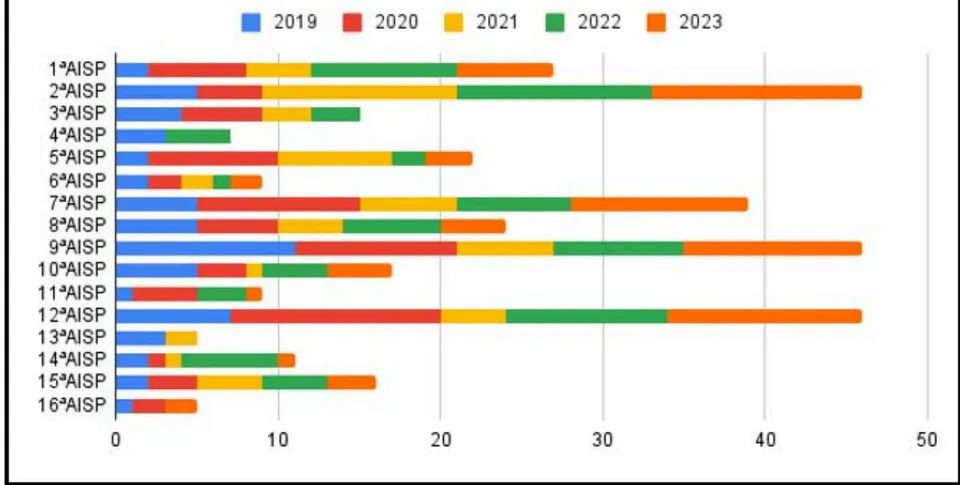
Source: Scientific Police of Pará, Forensic Intelligence Center, 2023
Graphic 5: Autopsies related to suicides by AISP from 2019 to 2023 - Capital (Belém and islands)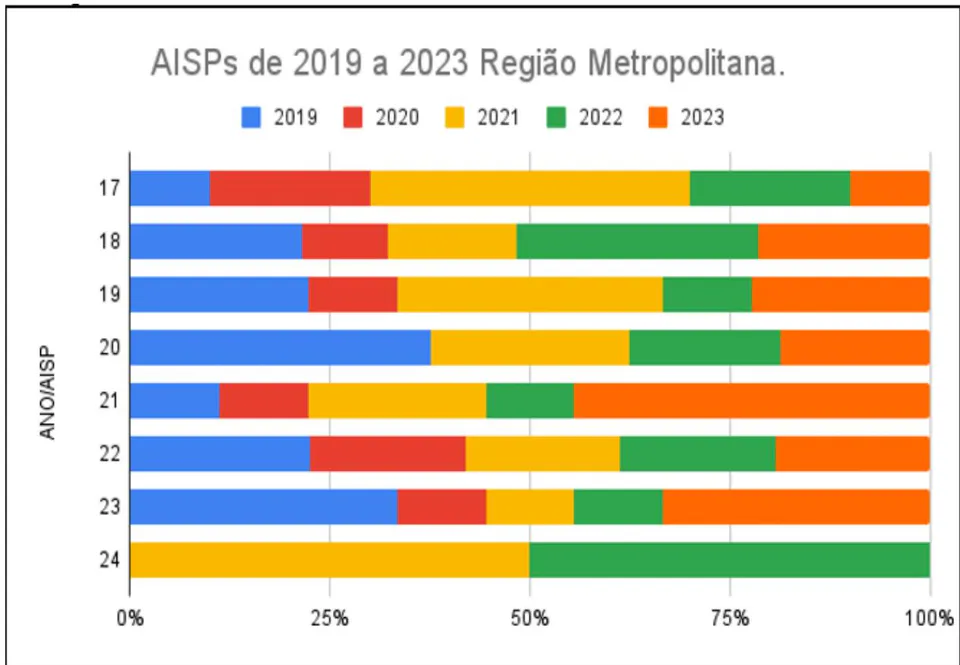
Source: Scientific Police of Pará, Forensic Intelligence Center, 2023
Graphic 6: Autopsies related to suicides by AISP – Metropolitan Region (2019 – 2023)
As AISP com maior incidência de suicídios Capital e Região Metropolitana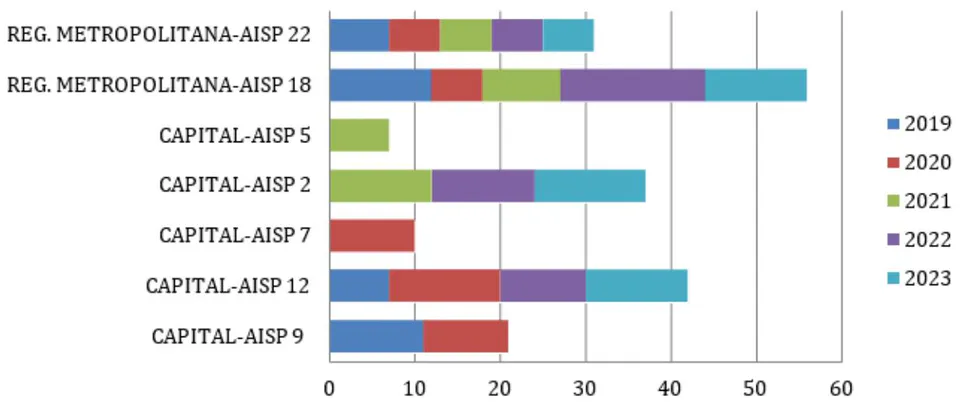
Source: Scientific Police of Pará, Forensic Intelligence Center, 2023
Graphic 7: Comparison of the main AISPs with the highest number of cases – Capital and Metropolitan Region
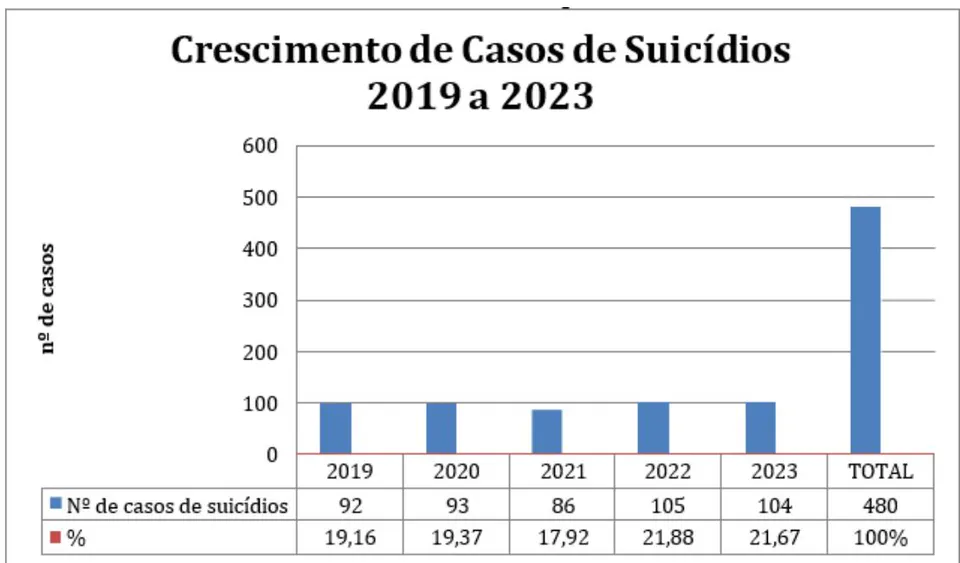
The temporal analysis of cases, distributed annually, indicated a progressive increase in the number of occurrences between 2019 and 2023. The percentage of cases, year by year, was in 2019, in 2020, in 2021, in 2022, and in 2023. Despite the reduction in 2021, possibly related to the direct and indirect effects of the pandemic, the data showed a resumption of the increase in the following years.
Source: Scientific Police of Pará, Forensic Intelligence Center, 2023
Graphic 8: Increase in suicide cases in the Metropolitan Region of Belém (2019 to 2023)
Finally, when comparing the data obtained with the records from the Mortality Information System (SIM), a considerable difference was observed between the suspected cases that underwent autopsy and those officially confirmed as suicide. This discrepancy can be attributed to underreporting, inadequate classification of causes of death, and a lack of integration between death registration systems.
IV. DISCUSSION
This study conducted a detailed analysis of the epidemiological profile of suspected suicide victims in the Metropolitan Region of Belém, from 2019 to 2023, based on autopsy records from the Renato Chaves Forensic Medical Institute. The data reveal that the number of victims autopsied with suspected suicide reached 480 cases, representing a significant annual average for the region. This number reinforces the relevance of the topic and the need for the implementation of effective public policies aimed at suicide prevention, especially in historically vulnerable regions.
Regarding the sex of the victims, the results showed a significant predominance of males, who accounted for of the cases analyzed. This data is consistent with national and international literature, as pointed out by Palma3, who highlight that men are more prone to committing suicide due to cultural, social, and biological factors. Among the aspects emphasized by the authors are greater male impulsivity, men's resistance to seeking psychiatric help, the effects of testosterone, and high alcohol consumption. The epidemiological bulletin of the Brazilian Ministry of Health1 also confirms that, in Brazil, males lead the suicide statistics, presenting a rate three times higher than that observed among women.
The predominance of males may also be associated with the use of more lethal methods. Palma3 highlight that men tend to employ means with a greater potential for lethality, such as firearms and hanging, which reduces the chances of intervention after the attempt. This fact was corroborated by the findings of this research, which showed hanging as the main method used, followed by firearms and poisoning with chemical substances.
Regarding age group, the data revealed that the highest number of cases were concentrated among individuals aged 18 to 30 years, representing of the occurrences. This result reinforces the warning from the World Health Organization (2021), which identifies suicide as the fourth leading cause of death among young people aged 15 to 29 worldwide. The research by Abasse et al. also shows that adolescents and young adults form one of the groups most vulnerable to suicidal behavior, which is aggravated by factors such as family conflicts, financial difficulties, instability in the job market, and undiagnosed mental disorders.
In the analysis by marital status, the study showed a significant prevalence of single victims, representing of the cases. Married individuals accounted for , and those in common-law relationships for . These data align with the findings of Arruda5, who, when analyzing suicidal behavior in Brazil, observed that single individuals comprise the group most affected by suicides. According to Batista et al.6, social isolation and the absence of emotional support may be determining factors for this epidemiological pattern.
Another relevant aspect concerns the victims' professions. It was observed that the category "other unspecified professions" was the most frequent, with of cases, followed by students, who represented . This high participation of students in the total number of cases raises concerns about the mental health of young people, especially in urban contexts. Batista et al.6 highlight the importance of special attention to children and adolescents in school environments, emphasizing the need for public policies that address mental health in educational settings.
Regarding geographical distribution, the research indicated that of the cases occurred in the state's capital city, Belém, while the municipalities of the Metropolitan Region, such as Ananindeua, Marituba, Benevides, and Santa Barbara do Pará, accounted for of the occurrences. Among the most affected police districts (AISPs) in Belém, AISP 2, AISP 9, and AISP 12 stood out. In the Metropolitan Region, AISP 18, located in Ananindeua, concentrated of the cases. Rodrigues et al. had already identified these regions as areas of greater vulnerability in a previous study on suicides in Belém.
The highest concentration of cases in the capital can be explained by factors such as higher population density, accelerated urbanization, and precarious socioeconomic conditions. On the other hand, the progressive increase in cases in the Metropolitan Region since 2021 highlights the need for special attention to these territories, considering the lack of mental health services and the increase in social inequalities in these areas.
The temporal analysis of the cases revealed a increase in the number of reported cases between 2019 and 2023. Although the year 2021 showed a reduction, possibly due to mobility restrictions and social isolation measures adopted during the COVID-19 pandemic, the years 2022 and 2023 showed a recovery and a significant increase in the number of cases. This trend is consistent with national data published by the Brazilian Public Security Yearbook8, which indicated a increase in suicide cases in Brazil between 2020 and 2021.
The pandemic brought with it a series of psychosocial impacts that may have contributed to the worsening of the population's mental health, such as increased unemployment, social isolation, collective grief, and financial difficulties. Barbosa9 emphasizes that the emotional consequences of the pandemic may last for years, requiring the implementation of effective and integrated public policies.
In addition to the sociodemographic analyses, the study highlighted the methods used in suicide cases, with hanging leading the statistics, followed by the use of firearms and chemical poisoning. This data is consistent with what was pointed out by Krug (2002), who identified hanging as the most common method in developing countries. Palma3 also reinforces that men tend to choose more lethal methods, which may explain the higher male suicide rate.
A critical point observed was the discrepancy between the data from the Forensic Medical Institute and the official records of the Mortality Information System. This difference can be attributed to problems of underreporting, incorrect classification of causes of death, and limitations in the information systems. Other researchers had already pointed out these weaknesses in the national databases on suicide mortality. This underreporting compromises not only the true scope of the problem, but also the development of public policies for prevention and psychosocial care. The lack of accurate data prevents the creation of more effective strategies, hindering the allocation of resources and the targeting of actions towards the groups at greatest risk.
Another factor that deserves emphasis is the influence of social determinants of health on suicidal behavior. The Pan American Health Organization2 highlights that factors such as unemployment, low educational attainment, income inequality, and insufficient public mental health policies contribute directly to the increase in suicide rates. These aspects are particularly critical in the Metropolitan Region of Belém, marked by historical socioeconomic inequalities2.
Considering the results obtained, the need to strengthen the Psychosocial Care Network (RAPS) in the region becomes evident, with the expansion of mental health services, training of professionals, and integration among the various sectors involved in addressing suicide. Programs such as "Vidas Preservadas" (Lives Preserved), developed in the Brazilian state of Ceará and cited by the Pan American Health Organization2, can serve as a model for the implementation of intersectoral actions that encompass everything from restricting access to lethal means to community awareness campaigns.
Furthermore, it is fundamental to ensure the improvement of death registration and notification systems in order to guarantee more reliable data for planning preventive actions. The integration between the Forensic Medical Institute, the Mortality Information System (SIM), and public health services is an essential measure in this process.
Regarding the limitations of the present study, it is important to highlight the use of secondary data, which are subject to errors in completion and classification. Furthermore, the research only considered cases referred to the Forensic Medical Institute, which may have excluded victims who were not subjected to a post-mortem examination. These limitations, however, do not invalidate the relevance of the findings, which offer a consistent and unprecedented overview of the epidemiological profile of victims suspected of suicide in the Metropolitan Region of Belém.
In light of all that has been presented, the results of this research reinforce the need for a multidimensional and intersectoral approach to addressing suicide. Understanding the profile of the victims, as well as the associated risk factors, is a fundamental step in developing more effective public policies aimed at reducing suicide rates and promoting mental health in the region.
V. FINAL CONSIDERATIONS
This study aimed to analyze the epidemiological profile of suspected suicide victims in the Metropolitan Region of Belém, from 2019 to 2023. The data obtained from autopsies performed at the Renato Chaves Forensic Medical Institute revealed a worrying reality, highlighting the magnitude and complexity of suicide as a public health problem in the region. The high incidence of cases, especially among young, single men and students, underscores the urgency of implementing public policies for suicide prevention, considering the sociodemographic and geographical aspects identified.
The predominance of males in the statistics, the most affected age group (18 to 30 years), the prevalence of single marital status, and the most frequently used method (hanging) are consistent with the profile described in national and international studies. This data reinforces the need for specific actions aimed at these more vulnerable groups. The concentration of cases in AISPs 2, 9, and 12 in Belém, as well as in AISP 18 in Ananindeua, indicates that prevention strategies need to be localized, taking into account the socioeconomic peculiarities of each locality.
Furthermore, the gradual increase in the number of cases throughout the analyzed period, especially after the most critical period of the COVID-19 pandemic, suggests that the psychosocial effects caused by the health crisis continue to impact the mental health of the population. These findings reinforce Barbosa's warning about the long-term consequences of the pandemic on increased suicide rates, especially in regions with lower coverage of mental health services.
The methodological limitations of the study must be acknowledged. The use of secondary data from the PericiaNet system and the analysis of cases only of victims who underwent autopsies represent a partial view of reality. There is also the aggravating factor of underreporting, already widely discussed in the literature, which compromises the accuracy of the data available in official mortality registration systems. This reality reinforces the need for improvements in the quality of information on deaths, especially those related to suicide.
The results of this study highlight the importance of strengthening the Psychosocial Care Network (RAPS) in the Metropolitan Region of Belém. Expanding services, increasing the supply of trained mental health professionals, and implementing preventive actions in the most affected areas are urgent measures. Furthermore, intersectoral policies that integrate health, education, social assistance, and public security should be prioritized in order to mitigate the risk factors associated with suicidal behavior.
deepen the understanding of the social, cultural, and psychological determinants involved in suicide. Strengthening databases, improving reporting processes, and integrating information among the different responsible agencies are essential measures to ensure that future interventions are more assertive and effective.
Conflict of Interest
The authors declare no conflict of interest.
Ethical Approval
Not applicable
Data Availability
The datasets used in this study are openly available at [repository link] and the source code is available on GitHub at [GitHub link].
Funding
This work did not receive any external funding.
Cite this article
Related Research

Special Issue
Launch a focused special issue to highlight research, emerging trends, and expert insights in your academic field.