





IntelliPaper
Abstract
Today's healthcare administrators are not just managers; they are innovators operating within a dynamic and creative environment. Their approaches elevate the healthcare management sector and significantly contribute to social security by acting as vital knowledge partners in transformational initiatives. The training programs are designed as an effective blend of academic rigor and industry-relevant insights, providing a critical understanding of corporate culture and amplifying the importance of healthcare managers in the evolving job market.
In response to the rapidly changing landscape, new skill sets identified include communication, collaboration, change management, team leadership, motivation, analytical thinking, and logical reasoning, have emerged that emphasize the need for ongoing learning, unlearning, and relearning. The curriculum is shaped by comprehensive competency mapping, ensuring alignment with the demands of modern healthcare.
Explore Digital Article Text
I. INTRODUCTION
Future healthcare administrators play a crucial role in enhancing social security within the healthcare management sector by acting as knowledgeable partners in the ongoing transformation of healthcare systems (Tsey et al., 2018). One of their primary responsibilities is to ensure seamless communication among stakeholders, care providers, and patients. A comprehensive communication skills training module has been developed to support this, focusing on adaptability within a dynamic and social environment. This training is essential for improving patient care outcomes.
From the patient's perspective, it's vital that communication is clear and not overly predictive. Healthcare administrators must ensure that they meet the communication needs of patients effectively. This goes beyond just the clinical aspects of care; it involves understanding the socio-cultural and psychological dimensions that influence patients' experiences. By grasping these needs, administrators can deliver information in a more meaningful and impactful way.
The implementation of training and development initiatives is designed to align skill sets with the organizational goals and standards. This proactive approach also encompasses risk assessment and mitigation strategies to maximize benefits for end users. The communication processes must be both precise and structured to achieve the overarching objectives of the healthcare service industry.
The training framework combines academic knowledge with practical insights from the industry, which strengthens future administrators' understanding of corporate culture and enhances their significance in the healthcare management landscape (John, 2009). Additionally, the emphasis on defined skill sets prepares them to engage in negotiations from multiple perspectives, including those of patients, healthcare providers, and suppliers involved in the hospital supply chain (Isbouts et al., n.d.). By fostering these competencies, future healthcare administrators will significantly contribute to more effective and empathetic healthcare delivery.
A troubling gap has been identified between the skill sets future healthcare administrators bring and the essential patient-centered quality of care that must be delivered daily. The urgency to develop soft skills has become increasingly apparent.
This study utilized an interventional design featuring both qualitative and quantitative analyses through stratified sampling. A panel of 24 expert committee members (12 from academia and 12 from industry) offered invaluable guidance for verifying the efficacy of the training programs and interventions. The training program engaged 125 participants enrolled in the MBA – HHM program, focusing on their development as future hospital administrators.
Prior to full implementation, the training program underwent standardization, supported by a pilot study with 25 participants that informed course module preparation. Pre- and post-test scores were compared, which revealed a significant difference in outcomes of 32% enhancement. The impressive enhancement demonstrated the training program's tangible effectiveness. Evaluative measures—both subjective and objective—were applied, with feedback reflecting a remarkable 91% of participants deeming the program excellent, translating to a score of 113.75 out of 125. Statistical validations confirmed these results, with a P value of P<0.0001. Cumulatively, scores rose from 41% to 73%, a substantial 32% improvement that underscores the training's impact.
The training methodology is considered a pre-and post-test tool of subjective and objective measurements to assess participants' skill set enhancements effectively. Feedback was solicited using a range of targeted questions, reinforcing that the training significantly influenced knowledge, attitudes, and practices. The chosen pragmatic model of training and development stands to benefit organizations significantly.
The scope of the training module provides essential insights and opportunities for reflective learning, which is crucial for advancing participants' professional growth. Moreover, the evaluation of the communication training element demonstrates a direct linkage to improved quality of care within healthcare settings. The vital skill sets identified include communication, collaboration, change management, team leadership, motivation, analytical thinking, and logical reasoning. Together, these competencies are foundational to cultivating effective future healthcare leaders. For further development, the pragmatic model as soft skills training program can be imparted in other university colleges for health care administrators for adding value as competency development and for mentoring health care leaders.
II. AIM AND OBJECTIVES
2.1 Aim
- To identify the soft skill competencies that are required for enhancing communication skills for future health care administrators in the health care sector and to develop, validate, and implement a training module by assessing the effectiveness in improving soft skill competencies for future health care administrators in the hospital sector.
2.2 Objectives
To identify the soft skill competencies that are required for enhancing the communication skills of future healthcare administrators in the hospital sector.
To develop and validate a module for training health care professionals in enhancing their soft skill competencies for the future health care administrators in the hospital sector.
To implement and assess the effectiveness of the module in improving soft skill competencies
1. Key research gaps
Research gaps in the literature on identifying the soft skill competencies that are required for enhancing the communication skills of healthcare professionals in the hospital sector.
The research review concepts provide an overview of indigenous research which is relevant for the research study performed for soft skill competencies for health care professionals. The literature search mainly consists of research articles and web-based publications, reviewing the research models, and also reviewing the existing relevant research materials. Subsections also include researched material based on the nature of the work in the healthcare domain. Specific research material on training for soft skills is utilized. The variables and also their relationship is reviewed for training need identification. There is a combination of tables, graphical representations, and diagrammatical presentations that are taken for research model preparation.
Research gaps in the literature on implementing and assessing the effectiveness of the module in improving soft skill competencies for health care professionals.
- Through a thorough literature search on relevant websites, several specific skill sets have been identified as crucial for improvement in the healthcare management sector:
a. Identification of Competencies as Soft Skills: Competencies serve as essential tools for training and development, enhancing the experience for participants. They are pivotal in improving the quality of care within healthcare management. Various techniques for developing soft skills can be applied to enhance care delivery, treatment, and communication (Mayer et al., n.d.). By creating realistic scenarios for both routine operations and emergencies, organizations can foster process improvements. Effective communication, as a skill set, is instrumental in enhancing healthcare quality and patient safety, yielding measurable outcomes (Mayer et al., n.d.).
b. Importance of Healthcare and Patient Safety: In today's landscape of evidence-based medicine, mapping competencies, and enhancing skills have become tools that significantly contribute to delivering quality care. This approach not only extends training and development opportunities but also facilitates continuous improvement in technical skills. The integration of soft skills introduces a patient-centric approach within healthcare settings. With effective strategies in quality improvement programs, the utility of soft skills is expanding, serving as value-added activities for medical professionals, allied health workers, and para-medical personnel (Pronovost et al., 2017). The adoption of these skills among healthcare management students and future administrators establishes a defined working culture and creates a conducive environment for effective communication. A multidisciplinary approach, reinforced by repeated training, enables a comprehensive understanding of healthcare processes.
c. Significance of Quality in Healthcare: Clinical care priorities focus on patient safety and quality through effective communication. Training techniques can transform the knowledge, skills, and attitudes of healthcare professionals. By identifying risks and addressing them through quality assurance processes, we foster patient-centric approaches. Ongoing risk assessment and management can uncover system flaws and promote continuous improvement. Recreating training scenarios adopts a multifaceted approach to enhance healthcare quality (Tartaglia Reis et al., 2018). These training tools serve various functions to refine daily operations and elevate service quality, likely leading to increased patient visits and reduced healthcare costs. This, in turn, contributes to improved service delivery and heightened patient satisfaction, enhancing the profitability of healthcare organizations. Ultimately, better communication leads to a stronger value proposition from a business perspective.
d. Necessity of Healthcare Teams: A multidisciplinary team structure, including core clinical teams alongside contingency, coordinating, ancillary, support services, and general administration teams, is essential for delivering high-quality patient care (Lamé and Dixon-Woods, 2018). When these teams collaborate effectively, improved outcomes are achieved. Implementing evidence-based practices, honing technical skills, and fostering soft skills are vital for enhancing communication (Markides, 2011), monitoring situations (Opinion, 2010), mutual support (Bridges et al., 2014), and cultivating innovative leadership styles (Vohra, Rathi, and Bhatnagar, 2015).
By understanding the unique needs and requirements of healthcare organizations, training sessions can be systematically planned and executed. Aligning individual needs with the departmental mission and the overall organizational goals is critical. A structured action plan with well-defined strategies can aid management in effectively implementing these initiatives.
Variation in Competency Identification: While several studies suggest specific soft skills critical for healthcare professionals, there is a lack of consensus on which competencies should be prioritized. More empirical research is needed to establish a standardized set of soft skills that aligns with varied roles within the healthcare spectrum, including clinical, administrative, and support positions.
Effectiveness of Soft Skills Training Programs: Although some programs claim effectiveness in enhancing soft skills among healthcare professionals, rigorous assessment methodologies are often lacking. Research needs to examine long-term outcomes and the actual impact on patient care and safety metrics. Randomized control trials and cohort studies could provide more definitive evidence regarding the effectiveness of different training modalities.
Integration of Soft Skills into Curricula: Current literature highlights the importance of embedding soft skills training within healthcare education. However, there is little information on best practices for curriculum design that effectively merges soft skills development with technical training. Research that investigates how to balance soft and hard skills in training programs is necessary.
Cultural and Contextual Differences: Most studies focus on homogenous populations, failing to address how cultural differences affect the perception and implementation of soft skills in healthcare. Investigating these variances can lead to enhanced training programs that are sensitive to the diverse environments in which healthcare professionals operate.
Measurement Tools for Soft Skills Competency: While measuring soft skills presents challenges, existing tools may not adequately evaluate competencies in a healthcare context. Future research should explore the development of robust and reliable assessment tools specifically designed for measuring soft skills in healthcare settings, taking into consideration factors like teamwork, communication, and empathy.
Sustainability of Skills Development: The literature lacks a focus on how to sustain soft skills development over time after training. Research could explore mechanisms for continuous learning and reinforcement of skills in daily healthcare practice, potentially integrating technology such as e-learning platforms or mobile applications.
Impact of Soft Skills on Organizational Culture: While several studies link soft skills training to improved patient care, there is insufficient research exploring how these skills influence broader organizational culture and teamwork dynamics within healthcare settings. Understanding the relationship between individual competencies and team effectiveness could highlight the broader implications of soft skills training.
Linking Soft Skills to Patient Outcomes: Although there is a perceived connection between improved soft skills and better patient outcomes, direct evidence remains scarce. Future studies should strive to quantify this relationship, possibly through tracking patient satisfaction, clinical outcomes, and error rates pre-and post-training.
Role of Leadership in Soft Skills Development: The influence of leaders in fostering a culture that encourages soft skills is underrepresented in the literature. Research investigating how leadership styles affect the adoption and success of soft skills training initiatives could yield insights into effective program design and implementation.
Cross-disciplinary Approaches to Soft Skills Training: Given the collaborative nature of healthcare, there is a need for research exploring cross-disciplinary training programs that serve to unify various healthcare professionals in the development of soft skills. Studies could evaluate the effectiveness of combined training programs that include doctors, nurses, administrators, and support staff.
In conclusion, while the importance of soft skills in healthcare is increasingly recognized, addressing these research gaps will be essential to enhance their implementation and assessment. Focusing future studies on these areas can lead to more effective training programs and ultimately improve patient care quality and safety outcomes.
III. SIGNIFICANCE OF THE STUDY
There exists a considerable gap between the skills that future healthcare administrators are adopting and the management practices required to deliver patient-centered quality care in hospitals and healthcare organizations (Mayer et al., n.d.).
This study is critical for several reasons:
To identify essential soft skills, especially in communication.
To understand the delivery of healthcare services and the vital role of quality communication training programs.
To emphasize the significance of high-quality care in healthcare systems.
To highlight the necessity of effective healthcare teams.
To stress the importance of documentation as a key training module.
There is a pressing need for soft skills competencies and dedicated training programs for upcoming hospital administrators to align with stakeholders' expectations for exceptional quality care. By centering our focus on the patient perspective, we can ensure that the development of skill sets is both relevant and impactful (Shenoy, 2021).
Aligning these educational needs is vital for establishing benchmarking in training programs and integrating best practices in the hospital and healthcare sector, which is fundamentally a service industry. Thus, structured training programs focused on soft skills and competencies become indispensable. To ensure excellence in these training initiatives, standardization of training modules is essential. Implementing evidence-based decision-making and high-performance standards within these training frameworks is crucial.
In today's rapidly evolving hospital and healthcare environment, the crux of the matter lies in effectively training soft skills and understanding their impact on patient care. When we discuss the quality of care from the patient's perspective, specific elements must be acknowledged as essential for robust service delivery in the hospital sector (Reblando, 2018).
The STEEEP framework—Safe, Timely, Efficient, Effective, Equitable, and Patient-Centered—serves as a robust foundation for elevating healthcare services. Reflecting on our training model reveals critical insights that will shape our future approaches to healthcare management:
Key Learnings from the Training Model: The healthcare administrators are able to learn to integrate rigorous safety protocols and enhanced patient engagement strategies. By recognizing and addressing diverse learning styles, healthcare administrators can create tailored educational experiences that truly meet participant needs.
Innovating Daily Management Practices: As we step into future administrative roles, our focus will shift towards fostering collaborative decision-making, actively involving frontline staff, and leveraging data-driven insights. This proactive approach will cultivate a transparent culture of ongoing improvement.
Measuring Competency Changes: It's imperative to evaluate shifts in knowledge, attitudes, practices, and skills consistently. Regular assessments and reflective practices will enable us to gauge the impact of training initiatives and pinpoint further areas for enhancement.
Integrating Soft Skills and Managerial Tools: By blending soft skills with managerial tools, we unlock the potential for a highly relevant training program. Collaborations between industry and academia can pave the way for a more integrated educational experience that drives results.
Maximizing System Effectiveness and Efficiency: Establishing clear metrics to evaluate training effectiveness is vital. Gathering data on patient outcomes, staff performance, and operational efficiencies will demonstrate the tangible benefits of training programs in enhancing service delivery.
Implementing Rapid Feedback Mechanisms: Quick feedback loops can drastically improve skill development. By fostering a culture of multidimensional feedback among program participants, we can continuously refine our training initiatives and promptly address any issues that arise.
Redefining Change as Meaningful Improvement: Change should be a catalyst for improvement, not merely a shift in practices. By diversifying our training methods—incorporating simulations, workshops, and e-learning—we can foster a richer learning environment that allows for effective benchmarking.
Learning from Best Practices: Adopting proven best practices from the healthcare industry is essential for process enhancement. By analyzing successful strategies from leading organizations, we can adapt these approaches to optimize our operational frameworks and improve patient care.
Through this research, the questions that can be answered as reflective learning were:
What did we learn from the training model?
What would we do differently in the day-to-day management of hospitals as future health care administrators?
Testing the change in knowledge, attitude, practices, and skill sets.
Understand the wider system, can we adapt the soft skills and managerial tools in a blended manner? Can Industry and academia consortium be a possibility in a pragmatic model of the training program.
Can we make systems effective and efficient? Can the training program outcomes be measured for effectiveness?
Can quick feedback help and impact the wider skill development to work better? Can multidimensional feedback from the participants add value for continuous improvement purposes for the training program?
Change is an improvement and not just a change!? Rather than the conventional teaching and training program, can the training program be a culmination of a variety of methods of training and learning modalities that can be adapted for benchmarking?
Can the best practices of the healthcare industry be adapted for process improvisation? In summary, reflecting on these questions enables us to cultivate a more effective healthcare system. By applying the STEEEP principles, we can ensure that our training programs are impactful and aligned with the overarching goals of safe and equitable patient care.
IV. REVIEW OF LITERATURE
The research methodology employed in this study encompassed a comprehensive approach to gather and analyzing data from various sources, ensuring a robust foundation for the findings.
a) Literature Review: The literature research involved using targeted keywords in reputable search engines and databases, focusing primarily on articles published in esteemed journals recognized both nationally and internationally (Sonnino, 2016). This process aimed to identify key themes and insights relevant to the study's focus.
b) Documentary Search: A thorough documentary search was conducted, drawing from a variety of training manuals, standard operating procedures, and specific training articles that healthcare management organizations consider best practices. This involved not just collecting documents but engaging in systematic document analysis through several approaches:
Qualitative Research Method: This approach allowed for an in-depth exploration of qualitative data, focusing on understanding themes and narratives within the documents.
Mixed Method: Utilizing both qualitative and quantitative data, the mixed method enabled a more comprehensive understanding of the topic by integrating insights gleaned from various sources.
Qualitative Research Method: The documentary analysis required repeated reviews and deep evaluations of the collected data. Researchers developed clear concept-based questions, leading to the identification and exploration of specific research inquiries. By interpreting the data, meaningful insights were derived, contributing to a deeper understanding of the subject matter.
Mixed Methodology: In addition to the documentary analysis, insights gained from focused group interviews were instrumental in shaping the research. Observations made during these discussions, coupled with targeted surveys, provided a multifaceted view of the issues at hand. This triangulation of data—combining documentary evidence, interviews, and observations—allowed for comprehensive data synthesis, minimizing bias and enhancing the reliability of findings. The resultant data informed the development of a pragmatic model for training and development within the healthcare context.
By employing these varied methodologies, the research aimed to construct a solid framework that would inform training and development initiatives in healthcare management, ultimately supporting the growth of competent future leaders in the field.
- By conducting a literature search on reputable websites, the learning outcomes have been established:
Literature Review: Communication holds significant importance in various fields. Understanding communication's essence is crucial; as a renowned quote states, "The way we communicate with others and with ourselves ultimately determines the quality of our lives." Communication is defined as the transmission of information from one person to another using some form of medium. The literature review provides valuable insights into training modules designed to enhance quality metrics, ensuring that service delivery in healthcare becomes both safe and efficient. In the healthcare management sector, there is substantial potential for improvement through the analysis of issues using communication skills as a modeling approach, which helps identify effective solutions (COMMUNICATION DEFINED, n.d.). These skills significantly empower managers in the healthcare sector to achieve cost containment.
IIV. PATIENT CARE AND HEALTHCARE SECTOR
In promoting healthcare as a comprehensive system, communication is not just critical—it is essential, instrumental, desirable, and purposeful. The process of sharing information is a well-structured and planned endeavor (Song et al., 2015). To foster effective communication, the delivery process must be systematic and appropriate (Ang et al., 2013). The audience or receiver must fully grasp the message, just as the sender should be clear and concise in their communication (M. Biglu - Communication Skills of Physicians and Patients' Satisfaction, n.d.). In the context of preventive healthcare (II. Important Specific Contexts for Incorporation of Prevention Concepts, n.d.), healthcare professionals often experience burnout (Communication Skills a Preventive Factor in Burnout Syndrome in Health Professionals, n.d.). During stressful situations, healthcare providers—including doctors, nurses, and information technology officers—struggle to deliver solutions effectively, often facing challenges related to time, resources, and the necessary communication skill set (P. Vermeir - Communication in Healthcare: a Narrative Review of the Literature and Practical Recommendations, n.d.). Being aware of and addressing gaps in delivering the optimum care that patients deserve hinges on effective communication (Lisa Whitehead & Kirk Walker, 2019). Communication plays a vital role in various aspects, including history-taking, examinations, data collection, rapport-building, negotiation, decision-making, partnerships, counseling, and the development of interpersonal skills (Chichirez & Assistant, n.d.). The primary objective of communication skill training is to evaluate effectiveness and foster behavioral change (Functional Communication Training: A Review and Practical Guide, n.d.) among the health care personnel(Ngigi & Busolo, 2018). Research studies indicate that effective communication training for healthcare professionals' hinges on several key components. First, the duration of the training must be established to ensure meaningful learning outcomes. Additionally, it is critical to evaluate the value of the training programs to determine their benefit to healthcare professionals and to assess the frequency of these sessions to guarantee clinically measurable results (Evaluating the Impact of an Assertiveness Communication Training Programme for Japanese Nursing Students, n.d.).
In the realm of curative healthcare, effective communication is integral, as the social environment influences the dynamics of patient care. Both non-verbal and verbal communication play a vital role in fostering better understanding and encouraging patients' health and well-being (Živanović & Sf Nurs Heal, 2017; Wanko Keutchafo et al., 2020; Wahyuni, 2018). Effective communication skills enhance treatment processes, significantly impacting the emotional states of patients, and ultimately leading to improved health conditions (The Hearing Journal, 2016).
In rehabilitative healthcare, skillful communication is paramount, as it fosters greater sensitivity to patients' needs. Multiple strategies have been identified to enhance effective communication skills (Lucca, 2006; Kárpáti, n.d.; PRACTICE MANAGEMENT, 2017). Practicing reflective awareness in personal communication with patients is essential (Koshy et al., 2017; Nurani et al., 2020). Training in communication skills should effectively bridge theoretical knowledge with practical application (Ruler, 2018). Evidence-based reflections can be drawn from training sessions, possibly through the use of e-training portfolios to support continuous learning and professional development.
Reflective learning emerges as a valuable tool for assessing strengths and weaknesses in communication as a skill set. Self-reflection aids personal development and fosters self-directed learning, which can motivate healthcare professionals and enhance the quality of care provided (Pratibha, 2017; An Online, Self-Directed Curriculum of Core Research Concepts and Skills, n.d.; Geng et al., 2019). Furthermore, careful analysis of situations and consideration of alternative approaches are critical for adapting practices in healthcare settings (Straková et al., 2018).
In summary, the integration of communication training within healthcare education necessitates a structured approach, focusing on evaluation and reflection to bring about significant improvements in both patient interactions and overall care outcomes.
Reflection is a valuable practice that enhances confidence and helps synthesize various concepts (Mortari, 2015). By critically reviewing and adapting methods, individuals can improve their practices in specific situations through effective communication (Rashad Yazdanifard et al., 2012). Engaging with peers and seniors not only enriches the reflective process but also fosters essential confrontations that can be integrated into daily routines (Blok, 2010). When reflection is used as a communication tool, it becomes a catalyst for career advancement (Mulhall, 2014) and enhances the skill set of healthcare providers (Ranjan et al., 2015).
V. RESULTS
Results of pre and post-test of the training program: All precautions were taken to avoid the skewing of data and to avoid data bias, and random sampling techniques were utilized for assessing the questionnaires. The scores were as follows:
Table. No. 1: Results of Pre-test score and Post-test score of 125 participants along with percentage enhancement. Data was found to be normally distributed. So Paired T-test was applied.
| For sample size of 125 participants | Pre-test | Pre-test% | Post-test | Post-test% | % enhancement | |
| Knowledge-based | Question 1 | 425 | 68% | 550 | 88% | 20% |
| Attitude based | Question 2 | 300 | 48% | 475 | 76% | 28% |
| Practice-based and attitude based | Question-3 | 300 | 48% | 450 | 72% | 24% |
| Skill based | Question-4 | 125 | 20% | 400 | 64% | 44% |
| Skill set based and outcome of training | Question-5 | 125 | 20% | 400 | 64% | 44% |
| Cumulative score comparison of 125 participants | Total scores | 1275 | 41% | 2275 | 73% | 32% |
Table. No. 2: Data of pre-test and Post-test core along with Standard deviation and paired T-test P-Value for each question.
| pre-test | post-test | Paired T test p-value | |||
| mean | SD | mean | SD | ||
| q1 | 3.4 | 1 | 4.4 | 1.2 | p <0.0001 |
| q2 | 2.4 | 0.6 | 3.8 | 0.8 | p <0.0001 |
| q3 | 2.4 | 0.8 | 3.6 | 1 | p <0.0001 |
| q4 | 1 | 0.2 | 3.2 | 0.9 | p <0.0001 |
| q5 | 1 | 0.2 | 3.2 | 0.8 | p <0.0001 |
Usage of statical Software for calculation:
Med-calc online statistical software was used. The results of paired t-test were as follows.
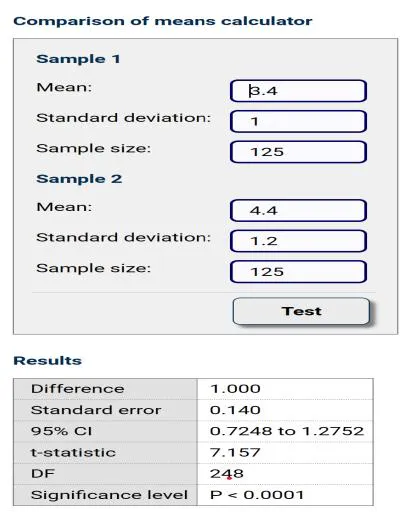
Question number 2.

Question number 3.
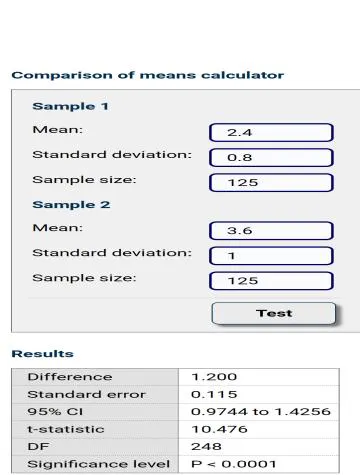
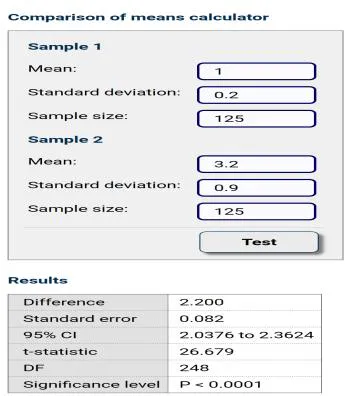
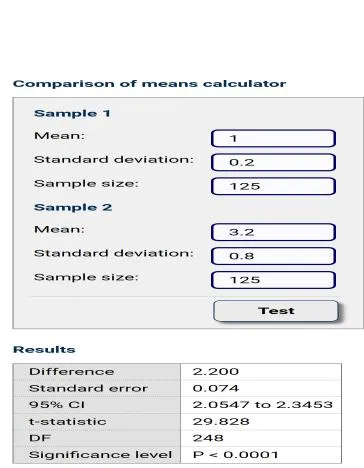
Post intervention Results: Participants were divided into a dichotomous group. One group consists of the participants who showed improvement in their post test scores whereas patients whose scores didn't show improvement consisted another group. Logistics Regression was used to determine the significant factors affecting the improvement in Knowledge, Attitude and Practice score.
It was found that the participants who had the prior exposure to the prerequisites had significantly three times higher odds of improvement in attitude score as compared to those who didn't have the prior exposure (O.R-2.9584, 95% C.I-1.46-5.98, P-value=0.003). Furthermore, the participants who had picked relevant additional topics through concurrent study had higher chances of improvement in attitude score (O.R- 1.0016, 95% C.I- 1.05-2.04, P-value=0.049). It was also noted that the exposure to the background material led to higher odds of improvement in attitude with odds ratio of 3.41, 95% C.I-1.58-7.37. Participants who found the Training information delivery of advanced level had more than twice odds of improving their attitude score post-test as compared to those who found the information delivery of graduate level (O.R- 2.4509, 95% C.I- 1.22-3.93, P-value=0.031). Moreover, participants who reported that the Emphasis on fundamentals and relevance was excellent were again found to have higher odds of improving their attitude score. The remaining variables, such as the mode of course delivery (synchronized or asynchronous), prior experience with the course, and syllabus coverage, did not show significant effects (P-value >0.05) on attitude improvement.
| Variable affecting the improvement in Attitude | Odds ratio | 95% CI | P-value | |
| Percentage of classes attended | Synchronized mode | 1 | ||
| Asynchronized mode | 1.3306 | 0.7066 to 2.5057 | 0.376 | |
| Participants had undertaken this course earlier | No | 1 | ||
| Yes | 0.7669 | 0.4014 to 1.4654 | 0.422 | |
| Participants had prior exposure to the prerequisites | No | 1 | ||
| Yes | 2.9584 | 1.4634 to 5.9810 | 0.003 | |
| Participants had pickup relevant additional topics through concurrent study | No | 1 | ||
| Yes | 1.0016 | 1.0492 to 2.0359 | 0.049 | |
| Exposure to the background material | No | 1 | ||
| Yes | 3.4094 | 1.5766 to 7.3728 | 0.002 | |
| Training information delivery | Graduate level | 1 | ||
| Advance level | 2.4509 | 1.2188 to 3.9294 | 0.031 | |
| Coverage of syllabus | Good/Very Good | 1 | ||
| Excellent: | 0.9967 | 0.9750 to 1.0189 | 0.769 | |
| Organization of course | Poor | 1 | ||
| Others | 0.9992 | 0.9838 to 1.0148 | 0.917 | |
| Emphasis on fundamentals | Very Good | 1 | ||
| Excellent | 1.3628 | 0.5489 to 3.3834 | 0.505 | |
| Emphasis on fundamentals and relevance | Good/Very Good | 1 | ||
| Excellent | 2.4591 | 1.0248 to 5.9006 | 0.044 | |
| Coverage of modern/advanced topics | Others | 1 | ||
| Excellent | 6.3002 | 0.4646 to 85.4259 | 0.166 | |
| Availability of textbooks/study materials | Others | 1 | ||
| Excellent | 1.1558 | 0.8464 to 1.5784 | 0.362 | |
Using Logistic Regression, it was found that the Participants who had prior exposure to the prerequisites had 3.36 times higher odds of improving their knowledge (OR = 3.36, 95% CI: 1.43–7.88, p = 0.0053). Participants who engaged in concurrent study of additional relevant topics had 1.55 times higher odds of knowledge improvement (OR = 1.55, 95% CI: 1.06–2.25, p = 0.0231). Those who had exposure to background material had 3.42 times higher odds of improving their knowledge (OR = 3.42, 95% CI: 1.38–8.48, p = 0.0079). Participants who rated the emphasis on fundamentals as excellent had almost 3 times higher odds of knowledge improvement (OR = 2.98, 95% CI: 1.06–8.36, p = 0.0376). A focus on core concepts and their clarity appears to be crucial for improving knowledge. The odds of improving knowledge were 2.46 times higher for those who rated the emphasis on fundamentals and relevance as excellent (OR = 2.46, 95% CI: 1.02–5.90, p = 0.0439). This underscores the importance of both fundamental concepts and their practical relevance for knowledge enhancement. Participants who rated the coverage of modern or advanced topics as excellent had 0.65 times lower odds of improving their knowledge (OR = 0.65, 95% CI: 0.44–0.94, p = 0.0222). This suggests that while advanced topics are important, they might not contribute as strongly to knowledge improvement in this case.
Those who had excellent access to textbooks and study materials had 5.39 times higher odds of improving their knowledge (OR = 5.39, 95% CI: 1.69–17.20, p = 0.0045). This indicates that the availability of high-quality resources significantly enhances knowledge gain. Mode of Course Delivery, Previous Experience with the Course, Training Information Delivery, Syllabus Coverage, Course Organization, etc. were found to be non-significant factors (P-value >0.05) affecting the knowledge improvement.
| Variable affecting the improvement in Knowledge | Odds ratio | 95% CI | P-value | |
| Percentage of classes attended | Synchronized mode | 1 | ||
| Asynchronized mode | 0.6506 | 0.2921 to 1.4487 | 0.2926 | |
| Participants had undertaken this course earlier | No | 1 | ||
| Yes | 0.5163 | 0.2304 to 1.1569 | 0.1083 | |
| Participants had prior exposure to the prerequisites | No | 1 | ||
| Yes | 3.36 | 1.4327 to 7.8804 | 0.0053 | |
| Participants had pickup relevant additional topics through concurrent study | No | 1 | ||
| Yes | 1.5457 | 1.0616 to 2.2505 | 0.0231 | |
| Participants had no exposure to the background material | No | 1 | ||
| Yes | 3.4222 | 1.3805 to 8.4837 | 0.0079 | |
| Training information delivery | Graduate level | 1 | ||
| Advance level | 0.6551 | 0.2814 to 1.5252 | 0.3266 | |
| Coverage of syllabus | Good/Very Good | 1 | ||
| Excellent | 0.9996 | 0.9970 to 1.0023 | 0.7812 | |
| Organization of course | Poor | 1 | ||
| Others | 1.1037 | 0.4689 to 2.5976 | 0.8213 | |
| Emphasis on fundamentals | Very Good | 1 | ||
| Excellent | 2.9836 | 1.0644 to 8.3629 | 0.0376 | |
| Emphasis on fundamentals and relevance | Good/Very Good | 1 | ||
| Excellent | 2.4591 | 1.0248 to 5.9006 | 0.0439 | |
| Coverage of modern/advanced topics | Others | 1 | ||
| Excellent | 0.6454 | 0.4435 to 0.9392 | 0.0222 | |
| Availability of textbooks/study materials | Others | 1 | ||
| Excellent | 5.3871 | 1.6875 to 17.1977 | 0.0045 | |
Availability of textbooks/study materials Excellent 5.3871 1.6875 to 17.1977 0.0045
Participants who had undertaken the course earlier had 0.34 times lower odds of improving their practice score compared to those who hadn't (OR = 0.34, 95% CI: 0.16–0.72, p = 0.0054). Participants with exposure to background material had 5.67 times higher odds of improving their practice scores (OR = 5.67, 95% CI: 2.43–13.22, p = 0.004). Those with excellent availability of textbooks/study materials had 4.14 times higher odds of improving their practice scores (OR = 4.14, 95% CI: 1.25–13.75, p = 0.0203). Mode of Delivery, Prior Exposure to Prerequisites, Concurrent Study of Additional Topics, Training Information Delivery, Syllabus Coverage, Course Organization, Emphasis on Fundamentals, Emphasis on Fundamentals and Relevance, and Coverage of Modern/Advanced Topics were found to be non-significant factors influencing the improvement in practice (P-value >0.05).
As there were systems in place, after post-training, a gap time of 15 days was provided for the participants to dwell in reflective learning, complete the documentation of assignments, and be insightful in the EI concepts to change their behavior, habits, and attitudes.
The quantitative analysis had questions pertaining to the quality assurance perspective: The parameters were structured in detail and the participants had to use the tick boxes provided for user friendly ways of utilizing the feedback for the reply. For each of the questions, the parameter was provided and there were subjective and objective questions with relevance. There were questions regarding the expectations from the course.
The qualitative analysis had questions pertaining to the quality control perspective: The participants had to write replies in their own words for the questions provided. Since these were subjective types of questions, all forms were collected and analysed in detail.
The data was collected online mode by email. As these participants were a focused group, Numerical-based data was collected. Primarily, the data is based on the subjective feelings a opinionsactive opinion of the participants. The research feedback is involved on the open-ended questions to focused group individuals for a range of 125 participants, to provide feedback. The questionnaire was simple, straightforward data being collected with a series of questions, about open-ended and close-ended, related to the subject and the methodology of training adapted. The respondents get a series of questions to answer in the tick boxes provided. Since it's a combination of both data which is quantitatively and qualitatively performed, it has its uniqueness and innovative methods. This method of data being collected, it encompasses the usage of innovative methods, by enhanced participation and empowered capability of individuals and groups. Also, it is a combination of subjective, objective responses and addressing the sensitive subjects that are related to knowledge, attitude, and behaviors which alter/change in behavior, habits, and attitude of participants.
Benchmark of scores:
Benchmark of the scores Fig.No.5: Benchmarking scores and remarks.
| Points | Remark |
| 100 to 125 | Good, Doing well |
| 75 to 99 | Caution Could Do Better |
| <75 | Concern, Minimal Efforts |
This overall rating of the training program is considered for benchmarking purposes. When 91% of the participants say the training program is excellent, it implies that 113.75 is the score for 125 points.
This score comes in the range of 100 to 125 points as per the benchmark of scores. The remarks for this range as per the benchmark score are: Good and doing well. This overall test score and comparing with the benchmark value is conclusive that the training program is within the range of effectiveness. As the desired process is achieved, from the learner's perspective in the controlled environment, the training program for soft skill competencies is considered effective. As a pragmatic model, this approach has raised the bars of the training program for soft skill competencies and also satisfied the training objectives. The score of 113.75 for 125 points implies that the training program is valued to be good and the desired process is effective.
Inference: By benchmarking scores and by adopting best practices, the effectiveness of the module in improving soft skill competencies for health care managers is proved to be good.
What benefit you derived from the program {"image_source":{"path":"images/fff273c4b5ba962d04d354430561fc293aeb98ab60d59805c76a62218adde73b.jpg"},"content":"","chart_caption":[{"type":"text","content":"Fig.No.7: Pie chart: Benefits derived from the training program."}],"chart_footnote":[]}
Inference of the data: Regarding the benefits derived from the training program are:
78% of the participants said excellent.
13% of the participants said Very Well.
6% of the participants said Good.
3% of the participants said poor.
Interpretation
Most of the participants, about 78% said that they derived benefits from the Excellent training program.
A few of the participants, about 13% of them said that they derived benefit from the training program was Very Good.
A few of the participants, 6% replied to the feedback, that they derived benefit was good from the training program.
A very few of the participants, 3% replied that the derived benefit from the training program was poor.
VI. DISCUSSION
1. Health Care Teams and Patient Care
To successfully integrate healthcare systems, strategies should be educational, beneficial to organizations, economically sustainable, and environmentally supportive. These strategies aim to improve behavior and create conducive living conditions for health and well-being. However, several challenges hinder the provision of integrated healthcare. Key issues include a shortage of skilled workers, inadequate medical equipment, unavailability of medications, low health literacy among patients, and the lack of standardized operating procedures. Additionally, many healthcare professionals tend to prioritize curative approaches over preventive and promotive care. Addressing these barriers can facilitate the integration of preventive, promotive, and curative health services. Communication plays a pivotal role in this integration, encompassing a network of individuals who relay messages, mediate technology, and adhere to organizational frameworks. This communication can range from straightforward face-to-face interactions to more complex exchanges that utilize advanced technologies, such as video conferencing or digital messaging systems, particularly in critical care environments.
2. Health Care Administrators and Patient care
To enhance patient care in hospitals, it's essential to draw insights from existing literature and theoretical models, adapting them into practical applications and interventions that improve the quality of care. A key strategy is to integrate communication models and technologies that streamline business processes and link various stakeholders within the healthcare ecosystem. This integration aims to deliver high-quality healthcare to patients while keeping costs manageable. The primary goal of healthcare services is to reduce the major causes of mortality and morbidity, which requires predicting the behaviors of healthcare providers to plan effective interventions. This involves facilitating the exchange of information between healthcare providers (health promoters) and their target audience, which can include individuals, groups of patients with similar diagnoses, or the larger community from a public health perspective. The success of any communication process in healthcare relies on several factors, including the content of the message, the relationship between the provider and the audience, the effectiveness of the message transmission, and the attitudes, beliefs, perceived knowledge, and values of the receiver. Healthcare administrators play a crucial role in shaping the communication patterns within healthcare organizations. Effective communication is essential for enhancing patient care processes and ensuring patient safety, as all work-related communication is strategically planned and executed to support these objectives.
VII. CONCLUSIONS
Competencies for Health Care Administrators for Patient Care:
- The influencing factors for better communication:
To advocate for changes in behavioral aspects within the healthcare sector, it's crucial to address the persistent gap between evidence-based research and the practices that are implemented. This disconnect often results from insufficient communication and the lack of clear outcome-based indicators to evaluate the effectiveness of chosen interventions. A viable solution is to integrate the best practices currently established in the healthcare industry with the latest technological advancements. In today's context, it becomes essential to leverage these best practices, while also focusing on evidence-based practice and practical approaches to implementation. Emphasizing a technology-driven methodology that is also cost-effective can lead to more optimal and logical outcomes in healthcare utilization. By fostering an environment that prioritizes these elements, we can enhance patient care and improve overall health outcomes.
2. Models and Theories related to patient care
In health care service, communication theories and models serve as essential tools for planning, executing, implementing, and evaluating processes. These theories can be categorized into several distinct elements: theory, theoretical framework, concepts, conceptual framework, theory-based model, and practical approaches. Their integration aims to enhance decision-making, facilitate behavior change, and function as educational resources, ultimately leading to improved healthcare practices. Implementing an effective communication framework is fundamental, as it serves as a foundational theory adaptable to various variables, making it a practical approach.
For communication concepts to be truly effective, they must possess flexibility, realism, timeliness, and subjectivity. They should also be intentional, user-friendly, socially adaptable, and influential, incorporating points of leverage to facilitate understanding and engagement. Overall, the evolution and application of these communication models are crucial in striving towards better health care outcomes.
Conflict of Interest
The authors declare no conflict of interest.
Ethical Approval
Not applicable
Data Availability
The datasets used in this study are openly available at [repository link] and the source code is available on GitHub at [GitHub link].
Funding
This work did not receive any external funding.
References
Cite this article
Related Research


Special Issue
Launch a focused special issue to highlight research, emerging trends, and expert insights in your academic field.