


IntelliPaper
Abstract
Artificial Intelligence (AI) refers to the utilisation of computers and advanced technologies to simulate intelligent behaviour and critical thinking comparable to that of humans. The term was first described by John McCarthy in 1956 as the science and engineering of creating intelligent machines. [1,2]. Previously considered a concept of science fiction, AI is now a tangible reality and is widely represented within academic discussion and mainstream applications. Machine Learning (ML), which is a subset of AI, enables machines to learn from patient data and generate predictions by pattern recognition, thereby empowering healthcare providers in delivering better care through accurate diagnosis and treatments. Although current technologies and AI models have not yet advanced to a stage where they may replace a doctor, they hold considerable promise as valuable diagnostic tools in healthcare. [1,3] While the likelihood of AI assuming a significant role in healthcare seems imminent, its evolution is currently tempered by concerns regarding ethical challenges and patient safety. This literature review aims to examine the contemporary applications of AI in healthcare, its potential advantages for both patients and healthcare professionals, and the existing challenges and limitations that may hinder its continued progression. [1,2]
Explore Digital Article Text
I. INTRODUCTION
Artificial Intelligence (AI) is defined as the utilisation of computers and advanced technologies to emulate intelligent behaviour and critical thinking comparable to that of human beings. [1,13] The term "artificial intelligence" was first conceptualised by John McCarthy in the 1950s, and he later defined AI as the science and engineering of creating intelligent machines. Alan Turing, a pioneer in the fields of contemporary computing and artificial intelligence, in his 1950 essay "Computing Machinery and Intelligence" introduced the "imitation game", now known as the Turing Test [1,5], which hypothesised that a computer may be considered intelligent if it is able to achieve human-level performance in cognition-related tasks. [1,20] The 1980s and 1990s witnessed a surge in interest in AI, which ushered in the introduction of artificial intelligence methodologies within different clinical settings in healthcare, and by 2016, healthcare applications represented the predominant share of spending in AI research relative to other sectors. [1,3]
The Historical Journey of Artificial Intelligence
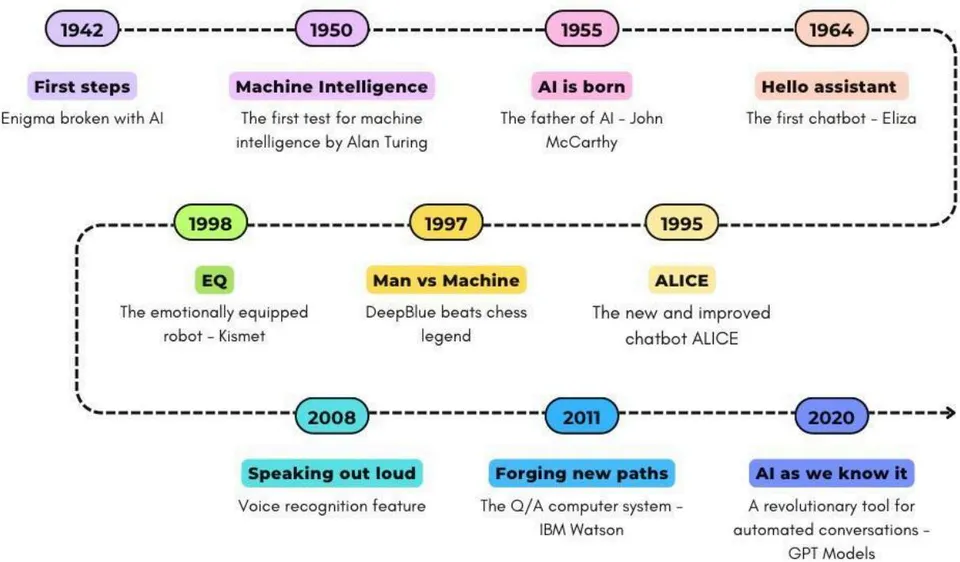
The application of AI in medicine can be broadly classified into two categories: virtual and physical. While the virtual part encompasses applications such as electronic health record systems to neural network-based guidance in treatment decisions , the physical elements deal with robot-assisted surgeries and smart artificial limbs that utilise AI to enhance movement, comfort, and control for individuals with limb loss .
Understanding the different Subsets of AI
AI is a broad field that includes anything related to making machines smart
NLP (Natural Language Processing) is the branch of AI focused on teaching machines to understand, interpret, and generate human language
ML (Machine Learning) is a subset of AI that involves systems that can learn by themselves
DL (Deep Learning) is a subset of ML that uses models built on deep neural networks to detect patterns with minimal human involvement
{"image_source":{"path":"images/503356cc571b516f3e295d00650799e7dee4b552bec8cb4991ed7d6b21268ad0.jpg"},"content":"","chart_caption":[{"type":"text","content":"Figure 2"}],"chart_footnote":[]}
Evidence-based medicine relies on establishing clinical correlations by identifying causal connections and trends from existing repositories of information. [1, 14]. Two broad approaches have been used to model computer-assisted diagnosis by AI models, namely flowchart-driven systems and the database or deep-learning approach. In the former, the process of history taking is formalised as a sequence of questions and branching rules that map symptom constellations to arrive at a differential diagnosis [1, 2, 3]. Implementing such systems typically entails feeding large volumes of data and clinical information into machine-based cloud networks so as to accommodate the breadth of signs and symptoms encountered in clinical settings [1, 22]. Despite the breadth of their knowledge and questions, these systems remain constrained by their inability to pick up on subtle and context-dependent cues that clinicians extract during an in-person consultation, which limits their diagnostic performance in real-world clinical settings [1, 26].
On the other hand, a database approach is based on deep learning and pattern recognition. This process involves training a computer via iterative algorithms to identify certain groups of symptoms or particular clinical or radiological findings. [1, 33]. A frequently cited illustration is Google's "artificial brain" project (2012), in which an unsupervised system exposed to approximately ten million YouTube frames progressively improved its ability to detect cats; after five days of training, it achieved 75% accuracy on that task [1, 42]. The effectiveness of database approaches, however, is limited by the representativeness and labelling fidelity of training data.
II. REVIEW OF LITERATURE
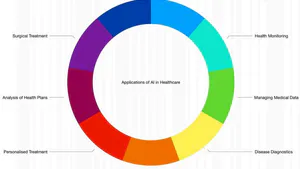
The incorporation of Artificial Intelligence (AI) into the health sector is expected to majorly impact every aspect of primary care. AI-enabled computer applications could allow primary care physicians to effectively identify patients who require additional attention and formulate tailored protocols for each individual. [1,32] Furthermore, physicians can utilise AI in clinical documentation for transcribing notes, analysing consultations with patients, and automatically feeding necessary information into the systems. [1, 25] These applications can gather and analyse patient data, hence providing primary care providers with in-depth insights into patients' medical needs. [1, 41] A study conducted in 2016 reported that physicians spend only 27% of their office day on direct clinical face time with their patients, while 49.2% of their office day is spent on electronic health records (EHR) and other tasks. In a nutshell, it was found that physicians utilising documentation help, such as dictation assistance or medical scribe services, interacted more directly with patients compared to those who did not employ these services. [1, 37]
{"image_source":{"path":"images/46c4de9518070686dd5b49fc1577ac86a83a1e6952e0aa528998bdc84086fa3f.jpg"},"content":"","chart_caption":[{"type":"text","content":"Figure 3"}],"chart_footnote":[]}
Research and development of pharmaceutical agents for specific diseases through clinical trials typically requires many years and substantial financial investment . To quote an example, AI has been employed to screen existing medications with potential efficacy against the Ebola virus menace, a task that would have otherwise taken years using traditional methods. With the help of AI, we will be able to embrace the new concept of "precision medicine". Several research studies have shown instances whereby AI technology was able to outperform dermatologists in correctly classifying suspicious skin lesions because an AI system can synthesise evidence from an exponentially large data set of patient images within minutes, which is more than a doctor could assess in a lifetime. AI-based decision-making methodologies could be utilised in situations characterised by expert disagreement, and a notable example of this has been in the identification of pulmonary tuberculosis on chest radiographs, with some AI-powered tools demonstrating high sensitivity and specificity. [1, 31]
The emergence of AI in healthcare settings has elicited a balanced response of both optimism and scepticism. While its proponents highlight its potential to revolutionise healthcare; many current and aspiring medical professionals express concern over a possible reduction in job opportunities due to increased automation .
Although machines can simulate certain aspects of human behaviour and reasoning through logical and analytical processing, they still fall short of replicating inherently human traits, such as emotional intelligence, imaginative thinking, and interpersonal relationships. [1, 15]
A notable example illustrating the limitations of AI in medicine is the Digital Mammography Dream Challenge (2016). This extensive study used several computer networks in order to create an AI algorithm that analysed 640,000 digital mammograms. [1, 21] The best-performing model achieved a specificity of 0.81, a sensitivity of 0.80, and an area under the receiver operating characteristic (ROC) curve of 0.87. These results corresponded to the performance level of the bottom of radiologists. [1, 40] This fact underscored that while AI shows promise, it is unlikely to replace physicians entirely in the near future. [1, 47]
Among the medical specialities, radiology has been the most proactive in adapting to new technologies. [1,34] Initially, computers were utilised for administrative tasks such as image acquisition and storage. However, their role has expanded significantly with the advent of Picture Archiving and Communication Systems (PACS), making them an essential part of the radiological workflow. [1, 28] The application of Computer-Aided Detection (CAD) in screening mammography is well documented. Nevertheless, recent studies suggest that CAD has limited diagnostic value, particularly in terms of its sensitivity, specificity, and positive predictive value. [1, 18] Moreover, high rates of false positives can lead to unnecessary follow-ups, potentially distracting radiologists and increasing workload. [1, 30]
Nevertheless, emerging research indicates that AI could offer substantial support in radiology. Beyond merely flagging abnormal cases, AI systems could expedite the review of negative studies-such as CT scans, X-rays, and MRIs-especially in high-volume clinical settings or hospitals with limited staffing. This dual capability could significantly enhance efficiency and resource allocation in diagnostic imaging departments. [1,12]
The University of Massachusetts developed a decision support system known as DXplain in
1986. Based on complex symptom inputs, it generates a list of probable differential diagnoses and serves as a popular educational tool for medical students. [1, 29] Similarly, Germ Watcher, developed by the University of Washington, is a system designed to detect and investigate hospital-acquired infections, helping improve infection control in healthcare settings. [1, 44]
In the UK, an online application called Babylon enables patients to consult doctors online, check symptoms, receive medical advice, monitor their health, and order test kits. This tool exemplifies the increasing integration of AI into accessible patient care. [1, 50]
Beyond diagnostics, AI is also playing a role in therapy. AI Therapy is an online course developed from a programme at CBTpsych.com at the University of Sydney. It uses the cognitive behavioural therapy (CBT) approach to help patients manage and treat social anxiety. [1, 19]
The Da Vinci Robotic Surgical System, developed by Intuitive Surgical, has revolutionised the field of surgery, particularly in urology and gynaecology. Its robotic arms mimic a surgeon's hand movements with extreme precision, allowing for smaller, more accurate incisions. [1,49]
The National Institutes of Health (NIH) has developed the AiCure app, which uses smartphone webcams to monitor patients' medication intake. This helps reduce non-adherence and ensures better treatment outcomes. [1, 35]
Wearable technology has also made major improvements. Devices like Fitbit, Apple Watch, and other health trackers can now monitor heart rate, activity levels, sleep patterns, and, in some models, even detect ECG changes, expanding their role in preventive healthcare. [1,43]
All of these new developments can help the doctor better understand the patient's condition and notify the user of any variations. In order to prevent needless hospital stays, the Netherlands uses AI for healthcare system analysis, identifying treatment errors and workflow inefficiencies. [1,
38] In addition to existing technologies, certain advances in different stages of development have made physicians better doctors; IBM's Watson Health exemplifies this capability, since it is proficient at efficiently identifying symptoms of heart disease and cancer. [1, 46] A program called AI Assisted Care (PAC) is being developed at Stanford University, which possesses an advanced senior well-being support system and smart ICUs, which can identify any behavioural alterations in elderly people residing alone and ICU patients. This technology extends into intelligent hand hygiene support and healthcare conversational agents. Hand hygiene support uses depth sensors, refining computer vision technology to achieve perfect hand hygiene for clinicians and nursing staff, reducing hospital-acquired infections. Healthcare conversational projects examine how Siri, Google Now, S Voice, and Cortana respond to medical health, interpersonal violence, and physical health. [1, 50]
III. DISCUSSION
All previously mentioned might be viewed as a developing substitute for human labour, particularly in the areas of reasoning and decision-making. [1, 3] This capability can revolutionise the application of AI in medicine by effectively assuming the cognitive skills typically performed by a doctor. [1, 48] Due to certain and obvious safety risks, the unattended use of AI in conventional medicine may not become a possibility, at least in the near future. However, it might assume the majority of the workload associated with non-invasive and diagnostic aspects of medical practice, which is theoretically estimated to improve with the widespread implementation of AI. [1,36]
The exponential growth of data and the training of AI require active use of computers, which leads to increased efficiency in medical practice compared to traditional pen and paper systems; furthermore, improved outcomes over time may demonstrate the reliability of AI and its necessity in medicine. [1, 3]
3.1 Role of AI in Clinical Research
There are several clinical and educational applications of AI programme development in teaching hospitals. AI's ability to process vast amounts of data with precision, reduce human errors, and automate repetitive tasks makes it indispensable for cataloguing and highlighting multiple pathologies based on their features, which can lead to numerous breakthroughs in clinical research. [1, 2] Beyond decision-making, more specific applications of computer vision include research undertakings such as examination of patient cohorts, as well as longitudinal studies through image-based analysis. [1, 3]
3.2 AI in Predictive and Preventive Medicine
Electronic health records may be analysed by AI algorithms to predict readmission risks, disease progression, and patient outcomes.
Some examples of the same include early warning systems, which using AI can predict sepsis several hours before clinical manifestation. Another example is cardiac arrest assessment, where AI-enhanced ECG interpretation can predict atrial fibrillation and myocardial infection risk with high sensitivity. [1, 4]
Predictive AI tools also aid in outbreak monitoring, such as AI systems used during the COVID-19 pandemic to forecast disease spread and allocate resources. [1, 6]
3.3 AI in Surgical Practice
AI enhances robot-assisted surgeries by offering real-time navigation, image guidance, and haptic feedback. Systems like the da Vinci Surgical System are evolving towards semi-autonomous capabilities. [1,40] AI can evaluate surgical techniques by analysing video feeds, providing objective feedback, and enabling skill development. The use of AI in highly technical surgeries such as neurosurgery in the form of robotics and technologies can assist in minimally invasive surgery and reduce negative patient outcomes. [1, 10]
3.4 Drug Discovery and Personalised Medicine
AI has been utilised to develop vaccines and pharmaceuticals, and this process is expected to be expedited, as evidenced during COVID-19 vaccine development. [1,39] AI can also be advantageous in clinical trials as well as during pharmacotherapeutic research. With ever-evolving AI systems through the upcoming years, there is a future possibility for AI to integrate and analyse patient details to generate their "digital twins", which can serve as virtual subjects for evaluating drug and treatment safety and efficacy. [1,46]
3.5 Virtual Health Assistants and Clinical Decision Support
Chatbots and AI-powered virtual assistants, such as Babylon Health and Ada, help with appointment scheduling, patient triage, and symptom checks. Clinical decision support systems powered by AI examine patient data to identify abnormal lab results or provide diagnostic recommendations. [1] An early example was IBM Watson, which provided cancer therapy alternatives based on evidence and clinical guidelines. [1, 9]
3.6 Hospital and Administrative Applications
AI optimises hospital workflow by predicting bed occupancy, automating documentation and coding, and managing supply chain logistics. [1,24]
3.7 Challenges
Some limitations currently prevent a broader use of AI and its subfields, despite the increasing interest surrounding AI, its substantial integration in healthcare, and its advantages in patient management. [1,7] There are certain challenges to the practical and sustainable use of AI, such as financial and maintenance issues that also require training of staff as well as doctors. It has been found that doctors are apprehensive about the imminent integration of AI into their careers. [1, 11]
Optimal operation of this technology in generating appropriate responses and performing certain tasks necessitates a large amount of data input, including hospital records and medical reports.[1, 8]Providing a significant chunk of data, which may include confidential information and patient particulars, to train and create the algorithms may provide challenges. Moreover, the AI algorithms employed to train them can introduce bias stemming from the interpretations of available data, potentially influencing critical clinical and surgical decisions in the future.[1, 5]
Another frequently cited limitation of AI in clinical practice is the 'black box' phenomenon, which refers to when algorithms offer interpretations and conclusions with little or no accompanying rationale. [1, 3] The lack of definitive data establishing a cause-and-effect relationship between the variables renders individuals hesitant to trust the technology.
To overcome this, clinicians should acquire foundational literacy in AI methods and collaborate closely with data scientists and engineers to deploy tools that support precise assessment of patient risk and surgical decision-making. [1, 3] Moreover, it is pertinent to periodically update models with new data to counteract distributional shift and to maintain calibration over time [1, 49]. To evaluate and, where appropriate, contest machine-generated decisions, clinicians must understand in broad methodological terms how these systems operate; this presupposes multidisciplinary engagement between clinicians and informaticists, engineers, and other technical experts. [1, 16]
Ethical Considerations
High-quality data is foundational to the safe integration of artificial intelligence within clinical practice. However, errors may be introduced at the point of data capture, whether through human mislabelling, inconsistent documentation, or automated ingestion and preprocessing. This can inadvertently generate systematic bias that propagates through model training and inference, ultimately manifesting as skewed outputs that may be experienced by patients as a lack of empathy or substandard care . These risks foreground ethical concerns regarding the susceptibility of AI systems to corruption and bias. This is illustrated in facial recognition technology, wherein disparate error rates across certain racial groups underscore the potential for discriminatory harm, risks that would be especially consequential in disciplines such as plastic surgery that rely on image-based assessment and planning . Additionally, the high volume of data required can also pose a risk to patient consent and privacy. Use of AI on patient data demands strict adherence to data protection laws, for example, HIPAA, GDPR, et cetera. There are also risks such as cyberattacks on AI frameworks as well as the evolution of bias in the complex aftermath of the massive digital network that may not be resolvable by simplistic methods.
IV. CONCLUSION
AI is rapidly revolutionising the healthcare landscape across multiple specialities. Emerging trends suggest that AI technologies have the potential to enhance patient care by not only strengthening existing clinical pathways but also fostering innovation in practice and surgery. The rapid expansion of AI is evident in its widening application across screening, diagnosis, treatment, and disease prevention, ultimately contributing to reductions in both mortality and morbidity. Nevertheless, continued research is essential to ensure the optimal and equitable implementation of AI and to address ongoing challenges such as limitations in data representativeness and generalisability, insufficient AI training, human resistance, automation bias, ethical considerations, and concerns regarding workforce stability.
AI: Artificial Intelligence,
EHR: Electronic Health Record,
CAD: Computer-Assisted Diagnosis
Conflict of Interest
The authors declare no conflict of interest.
Ethical Approval
Not applicable
Data Availability
The datasets used in this study are openly available at [repository link] and the source code is available on GitHub at [GitHub link].
Funding
This work did not receive any external funding.
References
Cite this article
Related Research

Special Issue
Launch a focused special issue to highlight research, emerging trends, and expert insights in your academic field.