

IntelliPaper
Abstract
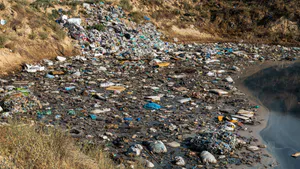
Lake Tshangalele is a reservoir formed in 1930 from the Lufira River in the south-east of the Democratic Republic of the Congo for the construction of the Mwadingusha Dam. This lake is very rich in fish. Unfortunately, for several decades, it received mining waste from the metallurgical plants in the cities of Likasi and Kambove.
To assess the health risk associated with the consumption of Lake Thangalele, fish samples were taken from the lake at the site of the locality of Kapolowe-Mission (n=21). And samples of reference fish were taken in a upstream of any mining activity of the Panda and Kasungwe rivers as well as of the Congo River at the level of the sections located near their sources (n=11). Then, after the sampling, a survey was carried out among 148 permanent inhabitants of Kapolowe-Mission which made it possible to understand the average quantity of fish that each of these 148 interviuwed people consumed per day in their family. Then, of these 32 samples, 11 TMEs, namely Al, As, Cd, Co, Cu, Mn, Ni, Pb, Se, U and Zn, were assayed by Inductively Couple Plasma Mass Spectrometry (ICP-MS) at the Catholic University of Leuven in Belgium and by Inductively Couple Plasma Optical Emission Spectroscopy (ICP-OES) at the laboratory of the Congolese Control Office (OCC) in Lubumbashi in Democratic Republic of Congo. And finally, for 5 trace metal elements, namely Cd, Cu, Ni, Pb, Zn, the health risk was evaluated, which is expressed by the DQ hazard quote. This is calculated for the oral route on the basis of the formula DQ=FxQx0.208xC/ADI x P. If DQ is greater than 1, it means that there is a good chance that it has been harmful to the health of the consumer. On the other hand, if the DQ value is less than 1, it means that there is no potential health risk associated with the consumption oh fish.
This study showed us that the fish from Lake Tshangalele is not suitable for human consumption since by consuming this fish 81,7% of adults and 1OO% of children have a high risk of suffering the potental of harmful effects of only 5 trace metal elements studied, which are Cu, Ni, Pb, Zn and Cd, without taking into account the other possible pollutants non measured. It showed also that when humans consume fish from an aquatic ecosystem polluted by mining waste, they are likely to suffer the potential harmful effects of all possible pollutants carried by the mining waste and having contaminated the fish, given that their potental harmful effects tend to add up.
Explore Digital Article Text
I. INTRODUCTION
Lake Tshangalele is a reservoir of the Lufira River formed in 1930 for the construction of the Mwandingusha dam. For several decades it has received effluents from the Shituru hydrometallurgical complex in Likasi via the Likasi, Buluo and Panda Rivers, and wastes from the Panda Electric Smelter in Likasi also via the Panda River. And finally, it receives waste from the Kambove Concentrator via the Kabambakola, Mura and Panda Rivers (Kalenga et al., 2005). However, the effluents from the Shituru hydrometallurgical complex in Likasi contain metal trace elements (MTE) at their outlet from the plant with very high average concentrations such as Al (aliminium) with 215 g/L, As (arsénic) with 3,9 g/L, Cd (cadmium) with 9,9 g/L, Co (cobalt) with 1285,1 g/L, Cu (copper) with 816 g/L, Mn (manganese) with 1934,8 g/L, Ni (nickel) with 18,9 g/L, Pb (lead) with 20,13 g/L, Se (selenium) with 21 g/L, U (uranium) with 8,5 g/L et Zn (zinc) with 120 g/L.
And yet, Lake Tshangalele is very rich in fish and provides a significant portion of fish consumed by the population of Likasi and Lubumbashi regions. We can therefore say that the fish of Lake Thangalele bathe in an aquatic environment heavily polluted with trace metal elements. Metal elements are necessary for life in small doses; but, they can be very harmful in excessive quantities. However, some MTEs are not necessary for life and are harmful in all cases, such as lead, cadmium and antimony. (Denayer, 2000; Miquel, 2001). Metal Trace Elements accumulate in living organisms and have short- and long-term toxic effects. Their toxicity develops through bioaccumulation (Miquel, 2001). Food remains the major source of contamination of humans with Metal Trace Element (Derache, 1986; Gérin 2003). This is why monitoring the quality of fish and its aquatic environment, in accordance with Decree N° 038/2003 (2003) of March 26, 2003 relating to Mining Regulation in its article 462, is of great importance for the protection and preservation of the health of the population who regularly consumes fish. In addition, with a view to protecting the environment, the Law N° 11/009 on the protection of the environment (2011) in its article 49, prohibits the discharge of wastewater, mine discharges, or any other contaminant into surface water. Unfortunately, despite the fact that the congolease population of the South-East of the Democratic Republic of Congo consumes fish from rivers polluted with mining waste, which is otherwise untreated, studies on the quality control of the fish are rare in our country.
When the fish of Lake Tshangalele bathe in an aquatic environment polluted with mining waste, themselves loaded with multiple pollutants including Metal Trace Elements (SNC-Lavalin, 2003; Kalenga, 2005), can we really believe that the consumption of these fish of the Lake is without risk to human health? For our part, we believe that the population that buys fish from Lake Tshangalele consumes fish that is unfit for human consumption and its health is seriously exposed to a great risk from the toxic effects of the pollutants that this fish contains.
Thus, the objective of this study is to assess the health risk posed to human health by the consumption of fish from the lac Tshangalele
II. MATERIALS AND METHODS
2.1. Study Environment
Our research on the health risk associated with the consumption of fish from Lake Tshangalele was carried out in Kaplowe-Mission, in the Likasi region, in Haut-Katanga Province, in the south-east of the Democratic Republic of Congo. The lake has an area of 362,5 km and its average depth is 2.60 m. The lake is crossed from one end to the other by the Lufira River. It is very rich in fish and it is the main source of fish for the Likasi and Lubumbashi regions (Regrl, 2010; Infocongo, 2024). Kapolowe-Mission is a locality located on the shores of Lake Tshangalele. It has a population of 20000 habitants. In this locality, fish is one of the staple foods.
2.2 Fish Studied
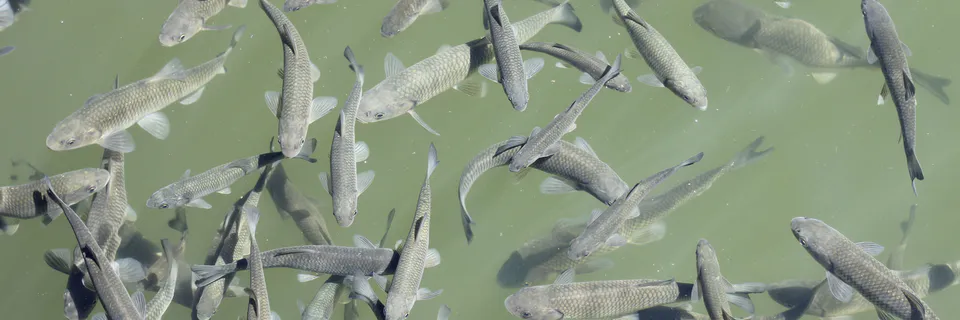
The fish studied belong to a single family: Cyclidae (Tilapia baloni; T. rendalli, Tilapia sp).
2.3. Sampling and samples preparation
Fish samples were collected in March 2009 and August 2015 at the site of the locality of Kapolowe-Mission, located downstream of the mining activities (n=21) and presumed to be polluted. On the other hand, reference fish samples were taken upstream of any mining activity of the Panda, Kasungwe and Congo rivers at their sections presumed not to be polluted by mining waste and located near their sources (n=11). Fish were caught by net at the Kaoplowe-Mission site. After capture the fish samples were placed in small packing bags(28 cmx17 cm) and transported in insulated boxes to the freezer for conservation. The preparation consisted of stripping the samples of their viscera and scales using a knife. After cleaning with distilled water, put in a bucket, the samples were dried in Binder brand ovens at 70 °C for 48 hours. After drying, the samples were crushed and powdered using porcelain mortars and pestles. The samples were then sent to the laboratory.
2.4. Chemical analysis of samples
Eleven metal trace elements namely Al, As, Cd, Co, Cu, Mn, Ni, Pb, Se, U and Zn were selected and assayed using Inductively Couple Plasma Mass Spectrometry Couple (ICP-MS) at the laboratory of the Catholic University of Leuven in Belgium and Inductively Couple Plasma Optical Emission Spectroscopy (ICP-OES) at the laboratory of the Congolese Control Office (OCC) in Lubumbashi, DR Congo.
2.5. Statistical analysis
To assess and evaluate the health safety of fish from the Lake Tshangalele, the concentrations of fish samples from the lake were, by the Wilcoxon test as described by Ancelle (2002), compared with the concentrations of the reference fish samples from the Panda and Kasungwe rivers as well as from the Congo River at the level of their sections not polluted with mining wastes.
2.6. Health risk
a). Hazard quotient
It was necessary to assess the health risk to which a person regularly consuming fish from Lake Thangalele is exposed. A health risk refers to a more or less probable immediate or long-term risk to which public health is exposed (Akoto and al., 2014).
The health risk associated with fish consumption is expressed by the hazard quotient DQ. This is calculated for the oral route based on the following formula: . In this formula: C represents the MTE concentrations of fish in mg/kg; F represents the frequency of exposure ; Q is the quantity of fish ingested per day (kg/day). For the locality of Kapolowe-Mission, the quantity of fish ingested by an adult or a child are recorded in Table II which gives the results of the calculation of the hazard quotient (DQ) associated with the consumption of fish from Lake Tshangalele for 5 trace metal elements (TMEs). ADI is the permitted daily intake or reference dose. P represents the body weight of the consumer (Akoto et al., 2014). The average body weight of an adult, female or male, (60kg) and that of children (28kg) were given to us by one of the health centers of Kapolowe-Mission. The daily intake allowed is mg/kg for Cd, for Cu, for Ni, for Pb and for Zn. If the DQ value is greater than 1, it means that there is a high chance that there are harmful effects on health. On the other hand, if the DQ value is less than 1, it means that there is no potential health risk associated with the consumption of fish (Akoto et al., 2014). The higher the DQ value, the greater the probability of adverse health effects occurring (Akoto et al., 2014; Amirah et al., 2014).
b). Survey method and questionnaire
To assess the health risk associated with the consumption of fish from Lake Tshangalele, a survey was conducted. Our sample was 148 inhabitants, made up of stratified sampling and quota. This sample consisted of 50% adults and 50% children aged 10 to 12 years.
The survey questionnaire included 3 main questions
1°) How many days a week do you consume fish from Lake Tshangalele with your family?;
2°) How many fish does a family member consume at a meal?;
3°) What is the number (in fishermen's language this means size, caliber...) of fish usually consumed by the family? A certain number of fish of different « numbers » had been weighed to know their average weight. This made it possible to estimate the average weight of fish that an interviewee consumes on average per day.
c). Health risk with multiple pollutants
It has been shown that for exposure to two or more pollutants at the same time, such as metal trace elements, adverse health effects add up, and the total hazard quotient (DQ) value is equivalent to the sum of the hazard quotients of all pollutants that have contaminated fish or any other food. Thus, for the trace metal elements, we have: (Akoto et al., 2014).
III. RESULTS
Table I: Concentrations of Metal Trace Elements in fish samples collected from the Lake Tshangalele at the Kapolowe-Mission locality site (mg/kg).
| N° | Code | Nom scientifique | Al | As | Cd | Co | Cu | Mn | Ni | Pb | Se | U | Zn |
| 1 | KAM P10 | Tilapia baloni Trewavas & Stewart | 20,5 | 0,283 | 0,389 | 20,157 | 8,67 | 63,01 | 0,802 | 0,188 | 0,934 | 0,09 | 128,5 |
| 2 | KAM P11 | Tilapia baloni Trewavas & Stewart | 54,1 | 0,143 | 0,49 | 15,574 | 16,76 | 53,77 | 0,328 | 0,208 | 1,062 | 0,071 | 134,1 |
| 3 | KAM P12 | Tilapia baloni Trewavas & Stewart | 66,0 | 0,347 | 0,668 | 28,647 | 19,41 | 70,96 | 4,123 | 0,494 | 1,104 | 0,068 | 127,8 |
| 4 | KAM P13 | Tilapia baloni Trewavas & Stewart | 16,5 | 0,138 | 0,31 | 10,381 | 10,23 | 95,13 | 0,466 | 0,53 | 0,668 | 0,106 | 120,9 |
| 5 | KAM P15 | Tilapia baloni Trewavas & Stewart | 728,3 | 0,628 | 2,291 | 82,248 | 105,3 | 262,11 | 1,57 | 1,289 | 0,31 | 0,337 | 175,5 |
| 6 | KAM P16 | Tilapia baloniTrewavas & Stewart | 85,8 | 0,206 | 0,555 | 15,607 | 13,47 | 67,91 | 0,601 | 0,27 | 2,291 | 0,114 | 184,1 |
| 7 | KAM P17 | Tilapia baloni Trewavas & Stewart | 36,9 | 0,212 | 0,44 | 17,178 | 14,48 | 51,92 | 0,469 | 0,237 | 0,555 | 0,17 | 112 |
| 8 | KAM P18 | Tilapia rendalii | 56,4 | 0,125 | 0,611 | 9,602 | 2,63 | 21,87 | 0,291 | 0,533 | 0,44 | 0,018 | 136,9 |
| 9 | KAM P19 | Tilapia Sp | 2,612 | 30,889 | 0,531 | 13,77 | 10,34 | 19,623 | 0,502 | 0,031 | 0,346 | 0,028 | 0,329 |
| 10 | KAM P20 | Tilapia Sp | 23,148 | 46,7 | 0,931 | 12,424 | 31,071 | 11,936 | 0,299 | 0,028 | 0,213 | 0,043 | 0,798 |
| 11 | KAM P21 | Tilapia Sp | 15,737 | 34,028 | 0,939 | 12,146 | 14,83 | 2,393 | 0,446 | 0,026 | 0,401 | 0,002 | 0,424 |
| Moyenne | 100,5 | 10,3 | 0,7 | 21,6 | 22,5 | 65,5 | 0,9 | 0,35 | 0,7 | 0,1 | 101,9 | ||
| Ecart-type | 209,7 | 17,7 | 0,5 | 20,8 | 28,4 | 71,2 | 1,1 | 0,4 | 0,6 | 0,1 | 68,6 |
The number values of concentrations above the WHO, FAO and EU thresholds are as follows: a). For Cd: OMS (1/11) et EU (11/11; b). For Cu: OMS (1/11) et EU (11/11); c). For Ni: EU (11/11; d). For Cu: OMS (0/11) et EU (4/11); e). For Zn: OMS (0/11) et EU (8/11).
3.2. Results of the statistical analysis
As a result of the statistical analysis by the Wilcoxon test, only Arsenic (As) was considered to have contaminated Lake Tshangalele. Tableau II: Results of the calculation of the health risk related to the consumption of fish from Lake Tshangalele at the Kapolowe-Mission site for 5 TMEs (Cd, Cu, Ni, Pb, Zn, Cd).
| N° | Average quantity of fish consumed by a surveyed inhabitant and number of inhabitants habitually consuming this quantity | Health risk related to the consumption of fish from Lake Tshangalele at Kapolowe-Mission for each MTE individually and total DQ for 4 MTEs (Cu, Ni, Pb, Zn) | Total health risk for 5 MTEs (Cu, Ni, Pb, Zn plus Cd) | ||||||
| Quantity of fish (g) | Number of inhabitants | Cu | Ni | Pb | Zn | Total DQ for Cu, Ni, Pb, Zn) | Cd | ||
| A Adults | |||||||||
| 1 | 500 | 6 | 0,9 | 0,07 | 0,16 | 0,58 | 1,71 | 6,00 | 7,71 |
| 2 | 490 | 2 | 0,9 | 0,07 | 0,16 | 0,57 | 1,71 | 5,88 | 7,59 |
| 3 | 453 | 4 | 0,8 | 0,07 | 0,15 | 0,53 | 1,66 | 5,43 | 7,09 |
| 4 | 426 | 2 | 0,8 | 0,06 | 0,14 | 0,49 | 1,49 | 5,11 | 6,60 |
| 5 | 378 | 2 | 0,7 | 0,05 | 0,12 | 0,44 | 1,26 | 4,53 | 5,79 |
| 6 | 343 | 4 | 0,6 | 0,05 | 0,11 | 0,40 | 1,16 | 4,11 | 5,27 |
| 7 | 245 | 2 | 0,4 | 0,03 | 0,08 | 0,28 | 0,79 | 2,94 | 3,73 |
| 8 | 227 | 8 | 0,4 | 0,03 | 0,07 | 0,26 | 0,76 | 2,72 | 3,48 |
| 9 | 204 | 2 | 0,39 | 0,03 | 0,06 | 0,23 | 0,71 | 2,44 | 3,15 |
| 10 | 196 | 2 | 0,38 | 0,03 | 0,06 | 0,22 | 0,69 | 2,35 | 3,04 |
| 11 | 173 | 2 | 0,38 | 0,02 | 0,05 | 0,20 | 0,65 | 2,07 | 2,72 |
| 12 | 147 | 12 | 0,28 | 0,02 | 0,04 | 0,17 | 0,51 | 1,76 | 2,27 |
| 13 | 142 | 2 | 0,27 | 0,02 | 0,04 | 0,16 | 0,49 | 1,70 | 2,19 |
| 14 | 86 | 6 | 0,16 | 0,01 | 0,02 | 0,10 | 0,29 | 1,03 | 1,32 |
| 15 | 84 | 2 | 0,16 | 0,01 | 0,02 | 0,09 | 0,28 | 1,00 | 1,28 |
| 16 | 76 | 4 | 0,10 | 0,01 | 0,02 | 0,08 | 0,21 | 0,91 | 1,12 |
| 17 | 60 | 2 | 0,10 | 0,01 | 0,02 | 0,07 | 0,20 | 0,72 | 0,92 |
| 18 | 49 | 2 | 0,09 | 0,00 | 0,01 | 0,05 | 0,15 | 0,58 | 0,73 |
| 19 | 42 | 4 | 0,08 | 0,00 | 0,01 | 0,05 | 0,14 | 0,50 | 0,64 |
| 20 | 38 | 4 | 0,07 | 0,00 | 0,01 | 0,04 | 0,12 | 0,45 | 0,57 |
| B Children | |||||||||
| 37 | 250 | 6 | 1,0 | 0,08 | 0,18 | 0,62 | 1,88 | 6,50 | 8,38 |
| 240 | 2 | 1,0 | 0,08 | 0,17 | 0,60 | 1,85 | 6,24 | 8,09 | |
| 227 | 2 | 0,9 | 0,07 | 0,1,6 | 0,56 | 1,69 | 5,90 | 7,59 | |
| 223 | 2 | 0,9 | 0,07 | 0,16 | 0,55 | 1,68 | 5,79 | 7,47 | |
| 220 | 2 | 0,9 | 0,07 | 0,15 | 0,55 | 1,67 | 5,72 | 7,32 | |
| 200 | 2 | 0,8 | 0,06 | 0,14 | 0,50 | 1,50 | 5,20 | 6,70 | |
| 180 | 2 | 0,7 | 0,06 | 0,12 | 0,45 | 1,33 | 4,68 | 6,01 | |
| 170 | 2 | 0,7 | 0,04, 05 | 0,12 | 0,42 | 1,29 | 4,42 | 5,71 | |
| 160 | 4 | 0,6 | 0,05 | 0,11 | 0,40 | 1,16 | 4,16 | 5,32 | |
| 150 | 2 | 0,6 | 0,05 | 0,11 | 0,37 | 1,13 | 3,90 | 5,03 | |
| 147 | 2 | 0,6 | 0,04 | 0,10 | 0,36 | 1,10 | 3,82 | 4,92 | |
| 142 | 2 | 0,5 | 0,04 | 0,10 | 0,35 | 1,0 | 3,69 | 4,68 | |
| 122 | 2 | 0,5 | 0,04 | 0,08 | 0,30 | 0,92 | 3,17 | 4,09 | |
| 110 | 4 | 0,4 | 0,03 | 0,08 | 0,27 | 0,78 | 2,86 | 3,64 | |
| 98 | 8 | 0,4 | 0,03 | 0,07 | 0,24 | 0,74 | 2,54 | 3,28 | |
| 90 | 2 | 0,37 | 0,03 | 0,06 | 0,22 | 0,68 | 2,34 | 3,02 | |
| 76 | 4 | 0,3 | 0,02 | 0,05 | 0,19 | 0,56 | 1,97 | 2,53 | |
| 64 | 6 | 0,26 | 0,02 | 0,04 | 0,16 | 0,48 | 1,66 | 2,14 | |
| 60 | 6 | 0,25 | 0,02 | 0,04 | 0,15 | 0,46 | 1,56 | 2,02 | |
| 56 | 2 | 0,20 | 0,02 | 0,04 | 0,14 | 0,40 | 1,45 | 1,85 | |
| 49 | 2 | 0,20 | 0,01 | 0,03 | 0,12 | 0,36 | 1,27 | 1,63 | |
| 42 | 4 | 0,20 | 0,01 | 0,03 | 0,10 | 0,34 | 1,09 | 1,43 | |
| 38 | 4 | 0,15 | 0,01 | 0,02 | 0,09 | 0,27 | 1,00 | 1,27 | |
In the table above, we can see the following. a). Individual DQ values of Cu, Ni, Pb and Zn: none of the 4 TMEs has a DQ value greater than 1. b). Collective DQ values of Cu, Ni, Pb and Zn: the total number of DQs with values greater than 1 and resulting from the summation of the individual DQ values of Cu, Ni, Pb and Zn is 50 out of 148 i.e 33,7%; c). For Cd: the total number of DQs with values greater than 1 is 132 out of 148 i.e. 89,1%; d). Collective DQ values of 5 MTEs namely Cu, Ni, Pb, plus Cd: the total number of DQs with values greater than 1 is 136 out 148 i.e. 91,8%; e). For all 5 TMEs namely (Cu, Ni, Pb, Zn plus Cd): the DQs values greater than 1 range from 1,12 to 8,38.
IV. DISCUSSION
4.1. Results of the Wilcoxon test
As is the only one of the 11 measured MTEs, namely Al, As, Cd, Co, Cu, Mn, Ni, Pb, Se, U and Zn (Table 2) to have been found to contaminate Lake Tshangalele after statistical analysis by the Wilcoxon tes.
4.2. Results of the health risk assessment
4.2.1. Single-pollutant health risk
a). Cu, Ni, Pb and Zn
There is no hazard quotient value greater than 1 for individual Cu, Ni, Pb, and Zn. This suggests that an inhabitant of Kapolowe-Mission who regularly feeds on fish from Lake Tshangalelele would have very little chance of suffering adverse health effects from any of these 4 metal trace elements if this fish contained only one TME.
In very low doses, Cu is a well-known trace element. It is essential for the synthesis of hemoglobin, normal bone formation, and maintenance of myelin in the nervous system (Wright & Welbourn, 2002). However, chronic exposure can cause irritation of the affected areas, including the mucous membranes, nasal cavities, eyes. It causes headaches, stomach aches, dizziness, digestive disorders such as vomiting and diarrhea (ASEF, 2017).
In small quantities, nickel is essential but if the absorption is too great, it can pose a health risk. Chronic inhalation Ni poisoning results in changes in the nasopharynx and respiratory tract epithelium. Chronic changes may include rhinitis, polyps, asthma or pulmonary fibrosis. In addition, an increased incidence of lung cancers has been observed (Gates et al., 2023)
It should be noted that Pb is classified as one of the most toxic metal trace elements. Pb is toxic even at low concentrations and has no significant biological properties in humans and animals (Miquel 2001). Lead poisoning is manifested by renal damage characterized by discrete tubular involvement and/or a slight reduction in the glomerular filtration rate. This can sometimes lead to the development of chronic nephritis (Lauwerys, 1999). Encephalitis is the most serious manifestation of lead poisoning. In addition, lead poisoning causes anemia, high blood pressure, depression in iodine uptake by the thyroid and digestive disorders resulting in colic (Lauwerys, 1999).
Zinc is essential for normal growth, reproduction, and life expectancy in animals (Lauwerys). In chronic exposure to Zn, bone marrow and neurological effects may occur. Chronic digestion of Zn, and resulting Cu deficiency, result in sideroblastic anemia, granulocytopenia and myelodysplasmic syndrome (Angnew and Slesinger, 2022).
b). Cd
Cd has several values of the hazard quotient (DQ) greater than 1 (Table II): 132 out of 148 or 89.1% 91.9%, including 58 adults out of 148 (39.2%) and 74 children out of 148 (50%). All of this indicates that the people of Kapolowe-Mission who regularly consume fish from Lake Tshangalele are at great risk from the toxic effects of Cd. This shows that the fish from Lake Tshangalele is unfit for human consumption.
Prolonged exposure to cadmium in humans can lead to kidney damage, bone fragility, harmful effects on the respiratory system, reproductive disorders and an increased risk of cancer and especially in the occurrence of prostate and lung cancers (Lauwerys, 1999; Viala, 2005).
4.2.2. Health risk due to multiple pollutants
a). Cu, Ni, Pb and Zn
When we consider the health risk associated with the consumption of fish from Lake Tshangalele caught in Kapolowe-Mission and contaminated with Cu, Ni, Pb and Zn, the results obtained show that the values of the hazard quotient resulting from the summation of the hazard quotients of all 4 METC combined and greater than 1 are 50 out of 148 corresponding to 50 consumers out of 148, i.e.33,7% We have just obtained a somewhat surprising result: 50 DQ greater than 1 for metallic trace elements that individually had no DQ value greater than 1. The potential harmful effects of these 4 metallic trace elements were added together (multi-pollutant health risk principle) and 50 values of the DQ greater than 1 were obtained. Indeed, the values of the DQs ranged from 0.07 to 0.9 for Cu, from 0.00 to 0.07 for Ni, from 0.01 to 0.16 for Pb and for Zn from 0.04 to 0.58. None of the 4 metallic trace elements had a single DQ value greater than 1 individually.
This shows that the health quality of a fish depends not only on pollutants with high concentrations, but also on those with low concentrations. Indeed, the latter, even if individually they are not harmful to the consumer because of their low concentration levels, but at least their potential harmful effects added together. Thus, there is a high probability that the health of the potential consumer will be exposed to a risk of harmful effects added to several known and/or unknown pollutants. Thus, 33,7% of inhabitants of Kapolowe-Mission consuming fish from Lake Tanganyika are exposed to toxic effects of Cu, Ni, Pb and Zn together. This shows that the fish from Lake Tanganyika is not suitable for human consumption.
b). Cu, Ni, Pb, Zn plus Cd.
It can be seen that of the 148 consumers, inhabitants of Kapolowe-Mission for whom the value of the hazard quotient is greater than 1 for 5 ETMs, namely, Cu, Ni, Pb, Zn and Cd, we have 62 out of 74 adults or 81.7% and 74 out of 74 children or 100%, and a total of 136 inhabitants of Kapolowe-Mission out of 148 or 91.8%. This means that the health of the 91.8% of the inhabitants of Kapolowe-Mission who consume the fish of Lake Tshangalele among whom the survey was carried out, are exposed to the toxic and harmful effects of Cu, Ni, Pb, Zn and Cd. This shows that the fish of Lake Tshangalele is not suitable for human consumption.
If we compare the result of statistical analysis with the method of calculating hazard quotient (DQ) to assess the health risk linked to the consumption of fish, we can notice that the second method is better. Indeed, as a result of the statistical analysis by the Wilcoxon test, only As is considered to have contaminated fish from Lake Tshangalele. But, with the assessment of the health risk linked to the consumption of fish, we observe that the health quality of a fish depends not only on pollutants with high concentrations, but also on those with low concentrations even if individually they are not harmful to the consumer because of their low concentration levels. But at least their potential harmful effects add together.
We can see that children are more exposed than adults to the pollutants contained in fish, even though they generally consume smaller quantities per person than adults. Indeed, when we examine the formula to calculate the hazard quotient i.e. , we see that the weight P is in the denominator and therefore its value is inversely proportional to that of the hazard quotient. Since the average weight of children is lower than that of adults, the hazard quotient for them tends to be higher. The health risk associated with the consumption of fish contaminated with pollutants depends in particular on the weight of the consumer.
V. CONCLUSION
This study showed us that the fish from Lake Tshangalele is not suitable for human consumption since by consuming this fish 81,7% of adults and 100% of children, with a total of 136 inhabitants out of 148 or 91,8%, have a high risk of suffering from the potential of harmful effects of only 5 trace metal elements studied, which are Cu, Ni, Pb, Zn and Cd, without taking into account the other possible pollutants non measured.
We believe that this study provided a response to many inhabitants of the south-east of the Democratic Republic of Congo, who often ask themselves, if they can eat fish from Lake Tshangalele polluted by mining waste without risk to their health. The pathologies that can be caused in humans by the different metal trace elements studied in this study have been described, albeit in a succinct manner, to draw the attention of the reader, especially the consumer, so that they know whatsomebody can expect by consuming fish from the Lake Tshangalele.
We believe also that this description of some pathologies will draw the attention of decision-makers in the Haut-Katanga Province, so that rigorous measures are taken to prohibit metallurgical plants from dumping their mining wastes into aquatic ecosystems, particularly those that provide fish to the population.
Conflict of Interest
The authors declare no conflict of interest.
Ethical Approval
Not applicable
Data Availability
The datasets used in this study are openly available at [repository link] and the source code is available on GitHub at [GitHub link].
Funding
This work did not receive any external funding.
References
Cite this article
Related Research


Special Issue
Launch a focused special issue to highlight research, emerging trends, and expert insights in your academic field.