


IntelliPaper
Abstract
With the advent of the digital era, Artificial Intelligence (AI) technology has demonstrated significant potential and posed challenges in the field of education. This study aims to delve into the application and impact of AI technology in personalized ideological and political education within higher education curricula. Firstly, it analyzes the current state of AI applications in curriculum-based ideological and political education and the main challenges faced. Further, through empirical research, the paper explores how AI technology empowers and aids professional courses, making the teaching of professional knowledge and ideological content more intuitive, vivid, and efficient, while constructing new models of "Intelligent+" professional courses and "+Intelligent" ideological and political education. The study also evaluates the effectiveness of these technologies in personalized teaching and their specific impact on students' ideological and political qualities. Finally, based on reflections and summaries of practical outcomes, it proposes optimization strategies for personalized ideological and political education assisted by AI. This research provides new perspectives and practical guidelines for personalized ideological and political education in higher education in the digital age, aiming to promote educational innovation and development to better meet future educational needs.
Explore Digital Article Text
I. INTRODUCTION
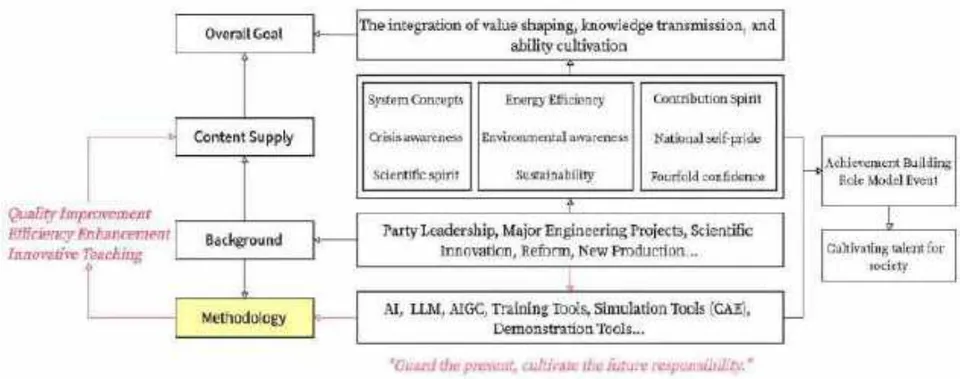
With the rapid development of artificial intelligence (AI) technologies, the digital era has profoundly influenced innovation and transformation across various fields, including education. The integration of AI into education offers new opportunities for reforming teaching models . In higher education, particularly in ideological and political education (hereafter referred to as "ideological education"), leveraging AI to achieve personalized teaching and enhance educational effectiveness has become a critical area of exploration . This study aims to investigate the application of AI in personalized ideological education within curricula, analyze its practical outcomes and existing challenges, and propose corresponding improvement strategies. The goal is to organically combine value shaping, knowledge transmission, and ability cultivation. By utilizing technologies such as AI, large language models (LLMs), and generative content (AIGC), the study seeks to optimize content delivery, integrate specialized courses with ideological teaching models, and construct an intelligent teaching system. Ultimately, data-driven approaches aim to enhance teaching quality, forming an "intelligent+" specialized course model and a "+intelligent" ideological teaching ecosystem, supporting the educational mission of "cultivating talent for the Party and the nation" and achieving innovation and quality improvement in ideological education. The main research content and implementation approaches is illustrated below.
II. AI EMPOWERMENT IN SPECIALIZED COURSE IDEOLOGICAL TEACHING MODELS
In his address at the National Education Conference, General Secretary Xi Jinping emphasized the persistent use of contemporary Chinese socialist ideology to shape and educate, implementing the moral education project of the new era. This directive provides clear guidance for the construction of ideological education in university curricula. The introduction of AI into specialized course teaching offers possibilities for realizing "intelligent+" teaching models.
AI-Assisted Generative Personalized Ideological Education Content: Utilizing Natural Language Generation (NLG) technology and large pre-trained models (such as ChatGPT and DeepSeek), it is possible to automatically generate ideological education content related to specialized courses. This content closely aligns with course learning objectives, ensuring the unity of professionalism and ideological elements. By developing content generation systems, relevant lectures, case studies, and discussion questions can be automatically produced based on specific course themes and student learning progress, enhancing the pertinence and effectiveness of teaching.
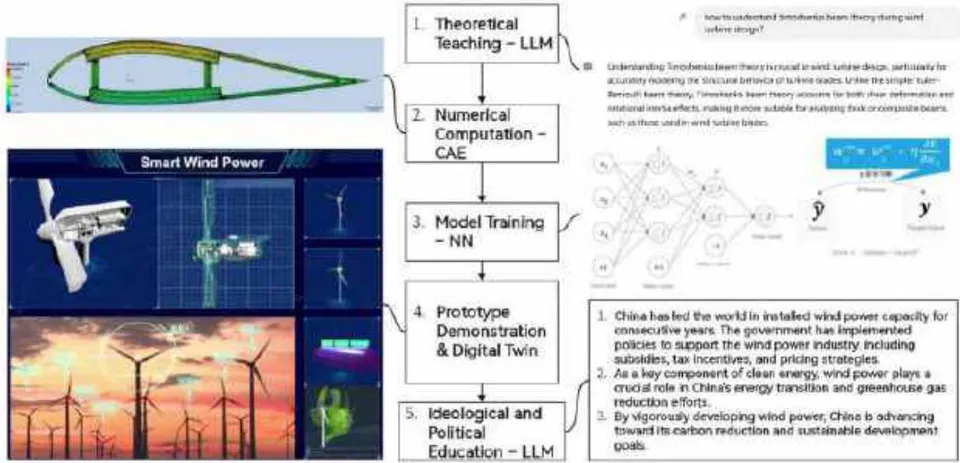
Application of Digital Twin Technology in Experimental Teaching: Digital twin technology creates digital models of physical entities, achieving a blend of virtual and real teaching experiences . In engineering courses, Computer-Aided Engineering (CAE) simulation technology, combined with reduced-order models and advanced modeling using software like Unity, can generate and test virtual replicas of various engineering designs and material applications . This approach not only enhances students' experimental learning experiences but also improves the accuracy of experimental results. Students can conduct complex experimental designs and analyses without physically constructing experimental equipment, receiving immediate feedback and adjustments. The implementation path of the "intelligent+" specialized course teaching model is illustrated below.
III. INNOVATIONS IN STUDENT DEVELOPMENT MODELS EMPOWERED BY ARTIFICIAL INTELLIGENCE
In the realm of student development, the application of AI technology offers new avenues for personalized education. By incorporating data analysis and intelligent systems, teaching models can be innovated, leading to significant enhancements in educational outcomes.
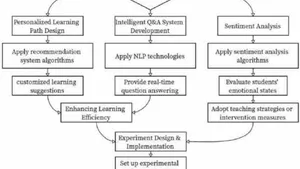
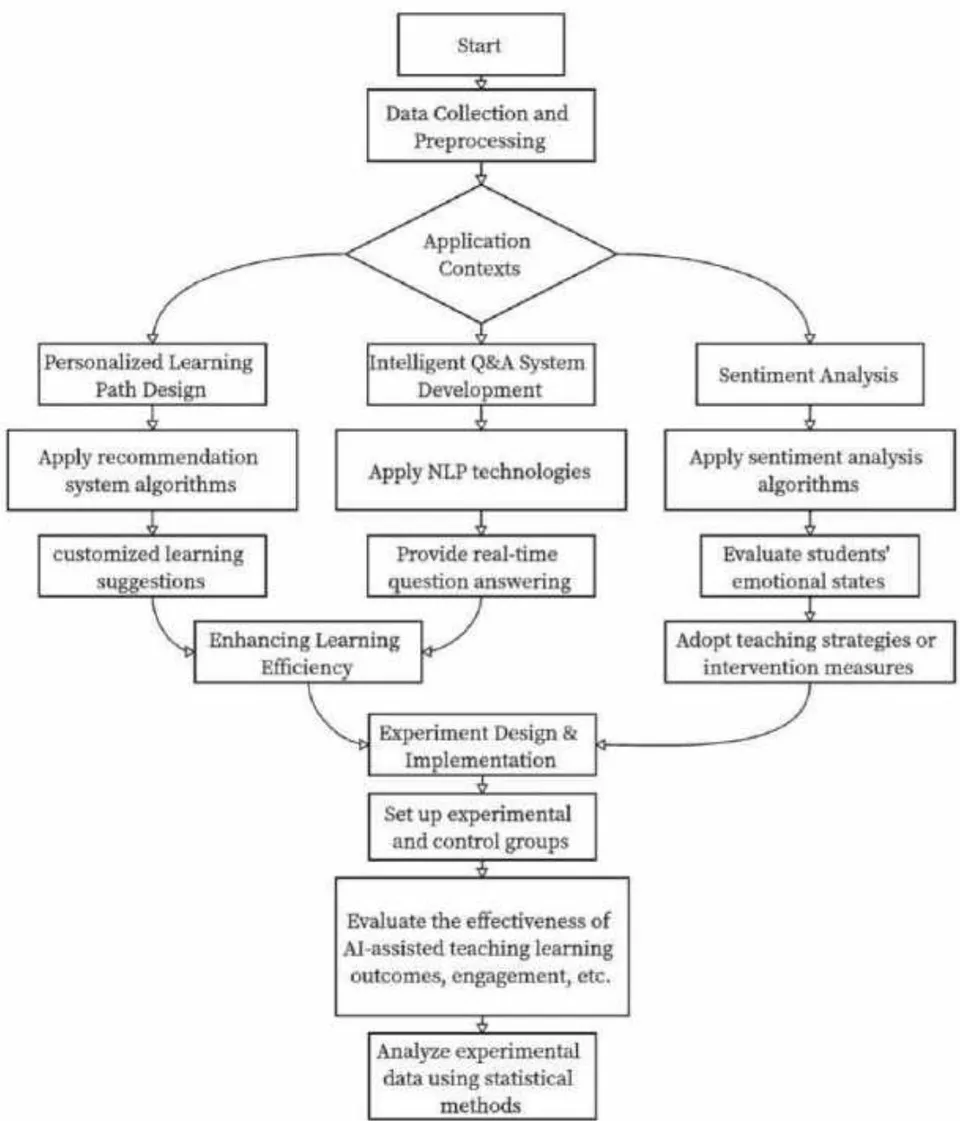
Designing Personalized Learning Pathways: Utilizing Python and AI models, data on students' learning behaviors, academic performance, and online interactions are collected, processed, and analyzed. Based on this data, personalized learning paths are crafted. Collaborative filtering and content recommendation algorithms match students' learning preferences and abilities, providing tailored learning suggestions. This approach aids in boosting students' motivation and effectiveness, achieving individualized instruction.
Development and Application of Intelligent Q&A Systems: Employing natural language processing technologies, especially large language models, intelligent Q&A systems are developed to offer students immediate and accurate answers and explanations of key concepts. This enhances the interactivity and efficiency of learning, assisting students in receiving timely guidance and support during independent study sessions.
Emotion Analysis Based on Student Interaction Data: Through algorithms like Long Short-Term Memory (LSTM) networks and BERT, students' textual inputs and interaction data are analyzed to assess their emotional states. Teachers can utilize this real-time feedback to promptly adjust teaching strategies, providing targeted support and interventions to promote students' holistic development.
IV. PRACTICAL APPLICATIONS OF AI IN PERSONALIZED IDEOLOGICAL AND POLITICAL EDUCATION
In practical teaching scenarios, the application of AI technology offers new perspectives and methods for personalized ideological and political education. Below are specific case studies and application contexts.
Construction of Intelligent Teaching Platforms: By integrating AI technology, intelligent teaching platforms are built to achieve smart distribution of educational resources and dynamic monitoring of the learning process. For instance, AI algorithms analyze students' learning behaviors to automatically recommend ideological and political education resources that align with their interests and needs, thereby enhancing learning outcomes. This intelligent analysis method enables precise cultivation of students, increasing classroom interactivity and engagement, and contributes to innovative ideological and political education.
Application of Virtual Reality Technology: Utilizing VR technology, immersive teaching scenarios are created, allowing students to experience historical events or social phenomena firsthand, deepening their understanding and acceptance of ideological and political content. This teaching method enhances the vividness and appeal of instruction, increasing student participation.
Intelligent Assessment and Feedback Systems: Developing intelligent assessment systems that use AI technology to comprehensively evaluate students' learning outcomes and provide personalized feedback. For example, by analyzing students' assignments and exam performances, the system can identify knowledge gaps and offer corresponding learning suggestions, helping students continuously improve and advance.
The implementation path of the "+Intelligent" student development paradigm is illustrated below.
V. REFLECTIONS ON THE USE OF ARTIFICIAL INTELLIGENCE IN PERSONALIZED IDEOLOGICAL AND POLITICAL EDUCATION
Although AI technology has shown great potential in personalized ideological and political education, there are still some issues and challenges in its practical application that require in-depth reflection and continuous improvement.
Integration of Technology with Educational Philosophy: The application of AI technology should be integrated with educational philosophies to avoid focusing solely on technological advancement while neglecting the essence of education . When introducing AI, it is essential to fully consider educational objectives and student needs to ensure that the use of technology genuinely contributes to improving teaching outcomes.
Data Privacy and Ethical Concerns: When collecting and analyzing student data, great attention must be paid to data privacy and ethical issues . Clear data usage guidelines should be established to ensure the security of students' personal information and prevent data misuse or leaks. Additionally, AI algorithms may carry inherent biases, which could affect students' learning experiences, especially those from diverse cultural backgrounds or different socioeconomic statuses. Therefore, educators and policymakers need to work together to ensure the fair use of AI and prevent exacerbating the digital divide.
Transformation of the Teacher's Role: The introduction of AI technology places new demands on the role of teachers . Teachers need not only to master the basic principles and applications of AI but also to develop critical thinking skills to evaluate and oversee AI systems' decision-making processes. At the same time, teachers should focus on providing humanistic care, avoiding excessive reliance on technology that overlooks the emotional and interpersonal connection between teachers and students.
VI. CONCLUSION
Artificial intelligence technology brings new opportunities and challenges to personalized ideological and political education. Through the reasonable application of AI, intelligent resource distribution, dynamic monitoring of the learning process, and personalized learning paths can enhance teaching effectiveness. However, in the application process, it is crucial to ensure the integration of technology with educational philosophy, prioritize data privacy and ethical safety, and consider the evolving role of teachers. Only by fully addressing these factors can AI truly empower personalized ideological education and promote educational innovation and development.
Conflict of Interest
The authors declare no conflict of interest.
Ethical Approval
Not applicable
Data Availability
The datasets used in this study are openly available at [repository link] and the source code is available on GitHub at [GitHub link].
Funding
This work did not receive any external funding.
References
Cite this article
Related Research

Special Issue
Launch a focused special issue to highlight research, emerging trends, and expert insights in your academic field.