



IntelliPaper
Abstract
The research examined the influence of legal risk on the performance of selected deposit money banks in Nigeria using (primary) data sourced from bank employees through a well-structured questionnaire. The study used Structural Equation Modelling (SEM), and the hypotheses of the study were tested using Partial Least Square (PLS) technique. The model consisted of four latent variables which are legal risk, environmental risk, institutional risk, and performance. Performance served as the explained variable, legal risk, environment risk, and institutional risk served as the explanatory variables; legal risk is the main explanatory variable, while environmental and institutional risks are the control variables. It was observed that legal risk negatively and significantly influences performance. Similarly, the control variables have a significant effect on performance. Therefore, it is recommended that banks take a precautionary approach in managing legal risk by striving to anticipate and prevent it.
Explore Digital Article Text
I. INTRODUCTION
According to Malm, Soyeh, and Kanuri (2023), litigation risk can adversely influence firm-level operating performance for some reasons. The reputation of the sued companies with their clients, investors, and other stakeholders can first be tarnished by legal proceedings. Furthermore, some significant legal disputes may drag on for years in court before ultimately forcing businesses into bankruptcy after the lingered legal proceedings must have significantly impaired its earnings capacity. Litigation may influence managerial judgment and, as a result, interfere with the ability to sustain future earnings, which is a crucial component of business performance. The management of litigated companies may anticipate an increase in the observed risk of scheduled budget shortfalls as well as a probable rise in the price of external financing. For instance, in order to ensure the sustainability of performance, financial institutions tend to hedge by imposing greater interest rate spreads on loans given to companies that are being sued, according to Yuan and Zhang (2015) and Arena (2018). A study conducted by Hadani (2020) revealed that a damaged reputation brought on by lawsuits conveys an incorrect signal to stakeholders like investors and external auditors, which has a negative impact on business operations. In addition, businesses that are sued may lose their current suppliers, clients and indeed other value-adding stakeholders, which may impact the quality of their products or services and their future cash flow (Chakraborty, Gao and Musa, 2022).
Over the years, a common perspective on legal risk has developed; the activities of financial institutions sometimes result in litigation which has a financial implication on the performance of the firm. On the relationship between legal risk and financial performance of banks, there is nevertheless, little empirical research. Due to this, it's crucial that businesses need to pay closer attention to this problem and standardize their risk management practices, thus lowering the financial implications of legal risk. Therefore, investigating how lawsuit risk affects firm performance can aid management in comprehending the economics of litigation risk. The researchers are thus motivated to analyse how legal risk affects the performance of some selected banks in Nigeria.
Litigation risk is becoming a hot subject of academic research in different parts of the world today. For instance, Zhu and Huang (2023) examined how litigation risk spreads throughout the supply chain. These researchers uncover compelling evidence that suppliers' cash holdings are negatively impacted by customers' litigation risk. They also discovered that the litigation risk of consumers decreases trade credit for customers, raises both financing costs and operating risk. Arena and Julio (2023) equally analyzed litigation risk management through corporate payout policy and stated that firms facing legal risk tend to pay lower dividends or omit payments but distribute cash through share repurchases. The findings of these scholars are however limited to litigation processes and scantily account for statutory and regulatory omissions and (or) infractions, which according to Malm, Soyeh and Kanuri (2023) influence corporate performance. Sadly, these literature are equally remote and cannot expressly be adapted to fix Nigerian local inefficiencies.
Consequently, it was observed that there are significantly few empirical studies on the relationship between legal risk and Nigerian bank's performance. Likewise, most reviewed literature are prone to using financial measures such as profitability, revenue base and earnings per share (EPS) to measure banks' performance, leaving scanty studies (most of which are already outdated) to explore the originality of primary data and qualitative yardsticks, especially from the employees' perspective. Thus, this study is set to investigate the effect of legal risk on the performance of deposit money banks in Nigeria by uniquely using Structural Equation Modelling (SEM) and Partial Least Square (PLS) technique to analyze the collated primary data.
The broad objective of the study is to investigate the links between legal risk and performance of deposit money banks in Nigeria. In this context, the specific objectives and hypotheses of the study are stated as follows:
To examine whether legal risk influences performance positively.
To investigate if legal risk and performance are significantly related.
Hypothesis of the Study
Legal risk does not influence performance positively.
Legal risk and performance are not significantly related.
Significance of the Study To sensitize the relevant bank stakeholders of the intrinsic danger inherent in the hitherto infamous or relatively unknown legal risk in Nigeria, with a view to jointly and proactively prevent the crystallization of such risk.
II. LITERATURE REVIEW
According to Mas-Colell, Whinston, and Green (2019), legal risk is the possibility of suffering financial or reputational loss because of operating with reckless disregard for the law and how it pertains to the company. The Basel II agreement from 2003 classified legal risk as a component of operational risk. It includes the possibility of suffering monetary or reputational harm because of a legal problem of any kind. This could involve a failure to grasp or an incorrect understanding of how laws and regulations relate to a firm. However, businesses can take steps to lower this risk.
Thus, this category of economic risk is triggered by legal restrictions, such as litigation. As soon as a business incurs huge financial losses due to legal procedures, it faces a legal risk. Other components of legal risk are regulatory, compliance, contract, dispute, and reputational risks. Both regulatory and compliance risks are the most common in relation to the financial sector, as all financial institutions all over the world are usually regulated by laws, statutes, and other government ordinances. So, failure to adhere to any or some of the laid down rules constitute risk for the financial institutions because non-compliance can invite grave consequences such as revocation of license, suspension from certain activities, fines, penalties etc.
Over the years, organizational performance has been the most pressing issue for every firm either financial performance or non-financial performance. The management teams of various organizations are concerned about knowing the elements that will stimulate the performance of their organizations positively. Therefore, they seek to adopt or take the appropriate steps to achieve a perpetual positive result. However, the term organizational performance has been defined by various authors; Singh and Misra, (2021) opined that organizational performance is difficult to define as corporate goals change quite frequently with multi-faceted approaches, hence concluded that both financial and non-financial indices are elements of organizational performance. Contu (2020), see performance as the degree to which an organization, with some informational, financial, and human resources, positions itself effectively on the business market.
Also, Mwangi, Muathe and Kosimbei (2014) defined performance as gauges that are used to determine how effectively a company utilizes its resources to create investment returns for its stockholders. Performance is equal to the well-known 3Es which are economy, efficiency, and effectiveness of a particular activity, Javier (2002). In the study of Richardo and Wade (2010), they assert that organizational performance is the capability of a firm realizing its stated goals and objectives. Hefferman and Flood (2006) refer to performance as an indicator that incorporates productivity in addition to quality, reliability, and more elements.
For the purpose of this study and in line with the literature gap earlier identified, the performance indicators are employee output, shareholders' satisfaction, customers' satisfaction, and social contribution.
Using a Logit Binary Regression model, Ogunlami and Maroof (2021) examined the effect of environmental risk, reputational risk, and legal risk on the performance of Nigerian manufacturing companies. The researchers found out that the performance of manufacturing companies is negatively and significantly impacted by environmental, reputational, and legal risks. In order to ensure that these risks are properly managed with the help of enterprise risk management tools and by providing actionable insights into their entire organizations, the researchers advised that management of manufacturing companies should pay greater attention to these risk factors.
To investigate the effect of litigation risk on company performance in China, Hui He, and Wei Shi (2023) choose data spanning the years 2011 to 2020. Through the amount of debt financing, they explored the effect of litigation risk on business performance. Their findings show that litigation risk has a negative impact on corporate performance and that this impact is transmitted through a company's capacity for debt financing. The effect of litigation risk on corporate performance is also found to decrease with increasing levels of internal controlling and analyst monitoring.
Virglerova, Conte, Amoah and Massaro (2020) examined the perception of legal risk and how it impacts SMEs businesses. The authors used primary data that were collected through questionnaires from a total number of one thousand, nine hundred and thirty-five SMEs in different countries. The countries are the Czech Republic, Poland, Hungary, Slovakia, and Ukraine. The hypotheses of the study were analysed using z-score and chi-square tests. According to the researchers' findings, 60% of SMEs believe that managing legal risk is appropriate while 39% believe that business regulations are excessively burdensome. Statistics however show a significant difference in the assessment of legal risk between SMEs from the Czech Republic and those from other countries (Slovakia, Poland, Hungary, and Ukraine).
Munjal and Malarvizhi (2021) conducted a study on the effect of environmental performance on financial performance of Indian banks. The period of this study was grouped into two, the first period was from 2013 to 2014 and the second period was from 2017 to 2018. Data from eighty-three banks were collected for these periods. The banks were grouped into five, twenty (20) are foreign banks, twenty-three (23) of them were banks owned by the private sector, three (3) are co-operative banks, sixteen (16) are regional rural banks and twenty-one (21) owned by the public sector. The study used content analysis to extract the necessary information about environmental performance and this was used to construct the environmental disclosure score index. In analysing the effect of environmental performance on financial performance, the authors used a hierarchical multiple regression method. The findings of this work showed that environmental performance has no significant effect on financial performance of these banks.
2.1 Theoretical Review
This paper is anchored on the theories of risk management and value at risk (VAR).
Risk Management Theory: Pyle (1999) developed the risk management theory and the theory focused on the banking environment; thereby sermonizing all measures that a bank can put in place to eradicate and (or) reduce risks and uncertainties to the barest minimum. This theory thus suitably justifies the basis for which legal risk is being measured in association with corporate performance.
Value at risk (VAR) considers the estimate of possible losses associated with a particular investment. Value at risk is an integrated framework with strong economic preposition that includes market structure (Bromiley, McShane, Nair, & Rustambekov 2014). Saunders, Cornett, and McGraw (2006) posited that managers should make decisions that will be favourable to the shareholders when selecting an investment. Since they have many investment options, there is need for them to consider the trade-off between risks and returns associated to the investment being chosen. Therefore, this concept is viable in determining the influence of legal risks and controls on the financial performance of banks.
III. METHOD
Primary data was used for this study and it was sourced with the use of a well-structured questionnaire. The population of the study is all the quoted Nigerian banks with a current total figure of fourteen (14), the sampling technique was purposive and 10 (ten) banks were chosen as the sample size, while the scope included legal risk indicators of different effects on banks' performance. To achieve a survey that is representative, manageable, and reflective of the desired level of precision (Shukla, S. 2020), three hundred (300) questionnaires were randomly distributed among mid-level management staff from the 10 (ten) sampled banks in their Lagos State branches. The questionnaire was distributed to a minimum of 30 respondents per chosen bank and each respondent was expected to have atleast 10 (ten) years' banking experience, so as to ascertain that the required data were obtained from veterans. The results of the instrument were adopted to examine the influence of legal risk on the constructs using Structural
Equation Model, (SEM) and the estimation technique for the research is Partial Least Square. The Structural Equation Model was adopted because of its strength in the assessment of measurement error and its explicit capacity in offering more insightful and better valid results when compared with other alternative methods of analyses. Content validity was used to validate the research instrument, as same was given to experts in the area of this discipline for a thorough review and impartial contribution. The instrument reliability was established using Cronbach Alpha and coefficient to give a measure of the construct validity and gauge the consistency of the instrument based on the average internal correlation of a set of inquiries that evaluate the idea. The validity of the internal consistency is greater if Cronbach Alpha is closer to 1. The questionnaire's reliability however had a Cronbach Alpha of 0.7 and it is thus considered valid.
The descriptive statistics like tables, charts, diagrams, and graphs are used for data presentation and analysis as applicable. For inferential statistics, the parametric statistical method of structural equation modeling analysis was used in testing the relevant research hypotheses. SMARTPLS, a statistical software for social sciences, was used to analyse the data.
Model Specification
In the notion of Hamid, Sanaz, and Hadi (2013), and Isiaka (2018), the following model specifications are introduced with little modifications to address the objectives of this study using structural equation modelling (SEM) as stated below:
The Construct Equation:
Measurement Equations
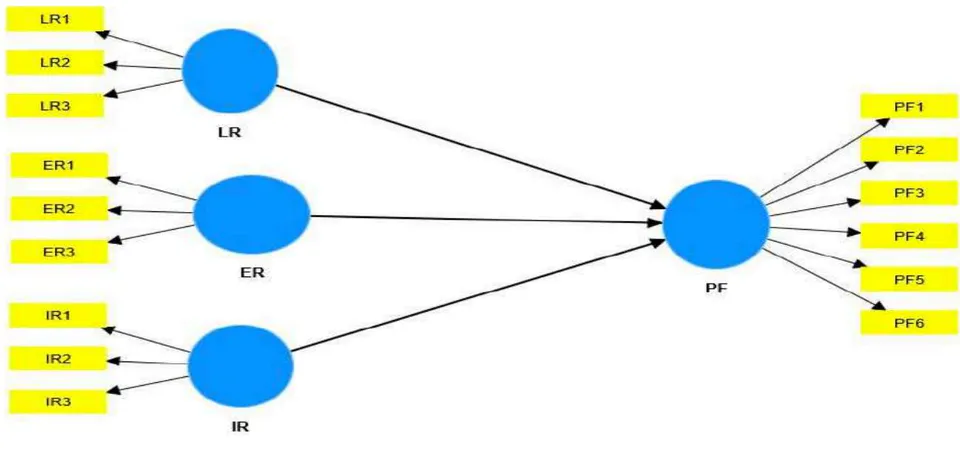
Graphical Representation of the Model
IV. RESULTS AND DISCUSSIONS
The result of this study is presented below. Prior to the presentation of the main findings, the descriptive statistics on the construct variables and the demographic results are presented. Also, the descriptive statistics result shows the means, median, standard deviations, skewness, and excess kurtosis values. The following results (demographic result, descriptive statistics results, reliability, validity test, path result, and model fitness results) are reported under this section.
The demographic profile of respondents is recorded. These records cover the sex, age, educational level, and organizational position of the respondents. These records are presented by the use of pie chart, bar chart, and area chart. These are shown in the figures below.

Figure 4.1: Shows the demographic profile of respondents with respect to sex. From the information gathered 148(54%) are male while 125(46%) are female. This figure shows that there is little gap between the male respondents and the female respondents. Thus, this reveals that there is gender diversity.
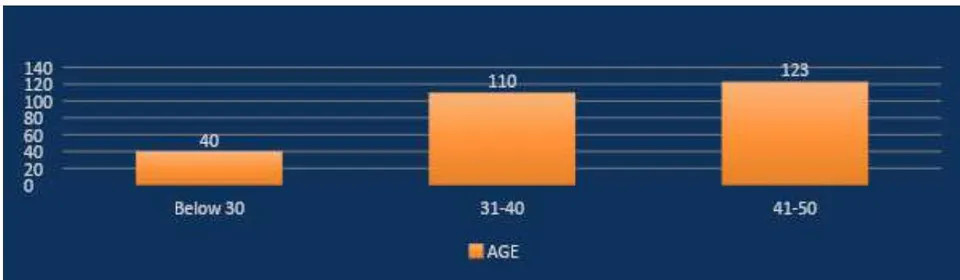
Looking at the ages of the respondents of this study, it is noted that about 40(14.7%) are below the age of 30. Respondents between ages of 31-40 are about 110(40.3%); participants between 41-50 years old are 123(45.1%). This value is a bit different from the value of respondents between 31-40 years. In addition, there are no responses from age 50 and above, this suggests that none of the respondent is above age 50.
{"image_source":{"path":"images/4aad8a0185dfa423f066471d9a9ec1c06664260d1e92f899f4f380df53e09a09.jpg"},"content":"","chart_caption":[{"type":"text","content":"Figure 4.3: Level of Education"}],"chart_footnote":[]}
The above shows that 12(4.4%) have OND/NCE certificate as the time of conducting this investigation. It was also gathered that about 142(52%) respondents have a first degree. Respondents with postgraduate degrees are about 104(38.1%). Lastly, 15(5.5%) respondents have professional qualifications. Thus, the structured questions with regards to the context of this study were well answered by the respondents.
{"image_source":{"path":"images/5b8b474f845513d688b733dc4159406909518c870188c7c4adaac35b0055940b.jpg"},"content":"","chart_caption":[{"type":"text","content":"Figure 4.4: Organizational Position"}],"chart_footnote":[]}
Figure 4.4 shows the demographic profile of respondents with respect to organizational position. From the information collected only 29(10.6%) are low-level officers/staff, while middle-level officers/staff are about 158(57.9%). Respondents that are senior officers/staff are about 52(19%) and those that were not in the earlier mentioned categories are about 34(12.5%).
Table 4.1: Descriptive Statistics of the Constructs
| Mean | Median | Observed min | Observed max | Standard deviation | Excess kurtosis | Skewness | Number of observations used | |
| ER | 0 | -0.42 | -4.04 | 1.885 | 1 | 2.627 | 0.109 | 273 |
| IR | 0 | -0.422 | -4.029 | 1.381 | 1 | 0.159 | 0.044 | 273 |
| LR | 0 | -0.119 | -4.087 | 1.573 | 1 | 1.385 | -0.253 | 273 |
| PF | 0 | -0.241 | -4.18 | 1.728 | 1 | 1.273 | -0.065 | 273 |
As shown in table 4.1 the characteristics of the construct variables employed in this study. All the latent variables' mean, median, maximum value observed, minimum value observed, standard deviation, excess kurtosis, skewness, and number of observations, are reported in the above table. The latent variables are ER-environmental risk, IR-institutional risk, LR-legal risk, and PF-performance. All the latent variables have zero mean values, one for standard deviation, and their skewness values are close to zero. This is an indication of normal distribution. Also, all the construct variables have excess kurtosis value less than 3, this shows that the distribution has a fatter tail than that of a normal distribution.
4.1 Factor Loading Result
A simple correlation between the variables and the factors is called factor loading. The factor loading indicates how accurately the items reflect the underlying factor. A loading value of 0.7 and above is considered appropriate. The loading values of the items of this study are reported in the table below.
Table 4.2: Outer loadings
| ER | IR | LR | PF | |
| ER1 | 0.934 | |||
| ER3 | 0.9 | |||
| IR1 | 0.966 | |||
| IR3 | 0.942 | |||
| LR1 | 0.952 | |||
| LR3 | 0.484 | |||
| PF3 | 0.892 | |||
| PF4 | 0.803 | |||
| PF5 | 0.914 | |||
| PF6 | 0.181 |
In the above table, the loading factors of the items used for analyzing the hypotheses of this study are reported. Items that have negative loading values have been deleted. It is seen that ER1, ER3, IR1, IR3, LR1, PF3 PF4, and PF5 have strong loading factors. Item LR 3 has a loading value of approximately 0.5 or 50 percent. This implies that its loading value is not too strong but can still be used. Nevertheless, only item PF6 has a weak loading factor.
The f-square statistics measure the strength of each predictor variable used in explaining the dependent/endogenous variable and the result is displayed below.
Table 4.7: F-Square Statistics
| f-square | Conclusion | |
| ER -> PF | 0.891 | Large |
| IR -> PF | 0.379 | Large |
| LR -> PF | 0.254 | medium |
In the table above the f-square statistics result is presented. The f-square effect size by the rule of thumb (>=0.02 is small; >= 0.15 is medium; >= 0.35 is large) (Cohen, 1988). The effect of ER and IR on PF is large while the effect of LR on PF is medium.
4.3 Evaluation of the Inner Model
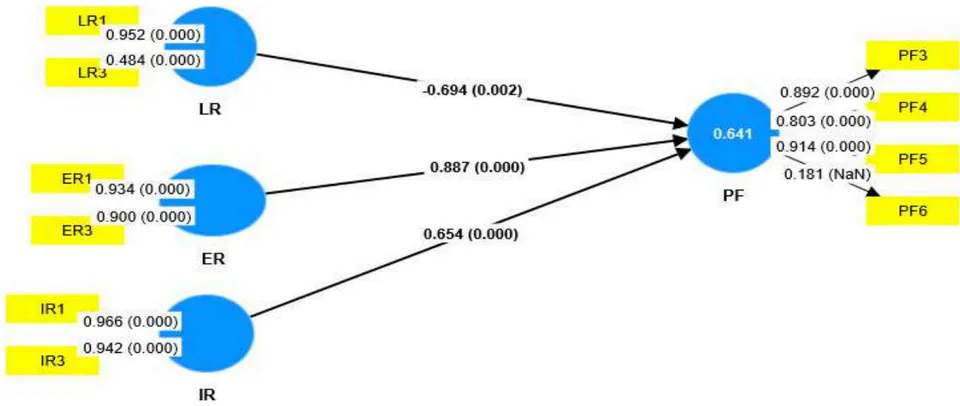
Figure 4.8 below illustrates the outcomes of the analysis of this measurement model using Partial Least Square (PLS), which explains the R square value and t-statistics results.
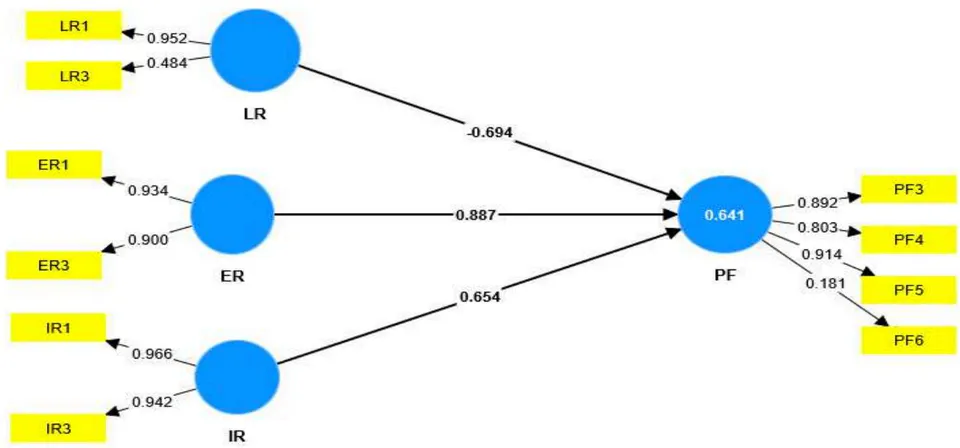
Fig 4.8: Standard Measurement Model
| R-square | R-square adjusted | |
| PF | 0.641 | 0.637 |
From the above figure and table, the R-square and R-square adjusted are 0.641 and 0.637 respectively. Therefore, the joint influence of the independent variables on the dependent variable is approximately 64 percent.
4.4 Test of Hypotheses
The hypotheses are stated in the null form, and they are stated thus: Legal risk does not affect performance and Legal risk and performance are not significantly related. The analysis is done using Partial Least Square (PLS).
Table 4.8: Test of Hypothesis One and Two
| Original sample (O) | Sample mean (M) | Standard deviation (STDEV) | T statistics (|O/STDEV|) | P values | |
| ER -> PF | 0.887 | 0.902 | 0.105 | 8.461 | 0.000 |
| IR -> PF | 0.654 | 0.676 | 0.175 | 3.737 | 0.000 |
| LR -> PF | -0.694 | -0.722 | 0.226 | 3.071 | 0.002 |
From the above table, the result of the test of hypothesis is reported. The path coefficient value linking ER to PF is 0.89 with a probability value of 0.00. Also, the path coefficient figure connecting IR and PF is 0.65 with a 0.00 probability value. This is an indication that the two control variables have a positive and significant influence on performance. Nevertheless, the path coefficient associating LR and PF is -0.69 with an associated probability value of approximately 0.00. This suggests that the link between LR and PF is negative and significant. Thus, legal risk affects performance significantly. This result is further explained graphically as seen below.
{"image_source":{"path":"images/e53f7ad4cc5e03244f8145c7cb7aa18d1323729767f5ea11f76622aab44a1781.jpg"},"content":"","chart_caption":[],"chart_footnote":[]} {"image_source":{"path":"images/b4a6224d4978b85f44ba5b09384c93d78d81b2d70a3957c88089531faa5eefd1.jpg"},"content":"","chart_caption":[],"chart_footnote":[]}
{"image_source":{"path":"images/33c6f806fef0098da0a0f3f14a80b5eb3101bddb7942a881a16fd32ac732f131.jpg"},"content":"","chart_caption":[{"type":"text","content":"Figure 4.9: Path Coefficients Histogram"},{"type":"text","content":"Figure 4.9 shows the path coefficient histogram of ER-PF, IR-PF, and LR-PF respectively. From the graph, it is noticed that the path coefficients of ER-PF follow a normal distribution while that of IR-PF, and LR-PF does not."}],"chart_footnote":[]}
V. CONCLUSION AND POLICY RECOMMENDATIONS
This study has evidently contributed to the scantily discussed but empirically complex relationship between legal risk and banks' performance, especially by measuring performance with non-financial metrics. The research carefully singled out legal risk from other banks' risk sources, clearly explaining that litigation exposure is merely a subset of legal risk, and subsequently establishing significant negative relationship between legal risk and performance to the extent that a shabbily managed statutory, compliance and regulatory vulnerabilities may gradually or instantly erode values to culminate in liquidation.
The relationship between legal risk and performance was examined using SEM and it was recorded that legal risk and performance are significantly and inversely related. Judging from the result of the test of hypotheses, legal risk does not only affect organizational performance, but legal risk and performance are also significantly related. This aligns exactly with the study of Ogunlami and Maroof (2021) whose research was although indigenous to Nigeria but was rather centered on the manufacturing sector.
Therefore, and in relation to the Nigerian banking sector, this study concludes that a significant decrease in legal risk will make performance increase significantly. Also, the control variables; environmental and institutional risks have significant impact on organizational performance.
It is therefore recommended that financial institutions should take a precautionary approach to managing risks, while specifically striving to anticipate and prevent legal risk and its associated uncertainties. The banks should also endeavor to identify and quantify the implications of legal risk early enough, so that they can holistically factor it into their risk management processes.
Conflict of Interest
The authors declare no conflict of interest.
Ethical Approval
Not applicable
Data Availability
The datasets used in this study are openly available at [repository link] and the source code is available on GitHub at [GitHub link].
Funding
This work did not receive any external funding.
References
Cite this article
Related Research

Special Issue
Launch a focused special issue to highlight research, emerging trends, and expert insights in your academic field.