


IntelliPaper
Abstract
This research, purely theoretical, highlights in a synthetic way the evolution of the most salient approaches of the concept of management from its genesis to its modern conception, through a numerous kind of schools, including the classical one centered on the administrative and scientific organization of work and the human relations one, whose ideology reacts against the excesses of the technical and scientific approach aiming to improve the work of employees and the satisfaction of their needs. Moreover, the comparison of the evolution of the management along with the leadership concept has revealed that the use and the perception of these two concepts have evolved according to the geo-economics and technological contexts that have marked the history of commercial and industrial relations, particularly within developed countries such as United States, Japan, France and UK. On one hand, some authors think that management and leadership are similar while others state that they are completely opposite on the other hand. Meanwhile, other writers argue that these notions are indeed two different courses of action, but complementary and cannot be isolated because of the dynamic aspect of today’s organizations and their managerial implications.
Explore Digital Article Text
I. INTRODUCTION
The evolution of management in the 21st century, following two centuries of development in managerial thought, invites us - as researchers in the field of management sciences in general, and leadership studies in particular - to clarify the ambiguity between the concepts of management and leadership through their semantic and functional nuances. The purpose of this theoretical research, which focuses on leadership, is not to delve into the details as we did in our article dedicated to the definitions of leadership where we highlighted that definitions of leadership are evolving and differ in time and space, depending on the context, the personality of leaders, their followers and, above all, their internal interactions as well as those with the external environment (ZAMANI, H. & AIT SOUDANE, J., 2020). Instead, this article aims to provide a concise synthesis of its evolution, highlight the main characteristics that differentiate it from the notion of leadership, and, most importantly, emphasize the strong interdependence that links these two concepts. In other words: Is complementarity between managers and leaders essential for organizations' prosperity and sustainability?
As we went through the literature, we noticed that the interaction between leadership and management has insufficiently been explored in detail or in a deeper comparative framework, such as specific aspects of each notion within an organization and more importantly, their various interactions and interdependence.
To further address this issue, we will begin by presenting the origins and evolution of the concept of management, followed by its various interactions with leadership, before focusing on their main managerial implications.
II. THE CONCEPT OF MANAGEMENT
2.1. Origins
The linguistic origin of the word "manager" comes from the Latin manus, meaning "hand." This word was first used in England in 1588. Scottish economist Adam SMITH (1723-1790) used the terms "manage", "manager" and "management" in his famous work entitled "Inquiry into the Nature and Causes of the Wealth of Nations", published in 1776. From 1880 onwards, the term "management" began to appear in texts written by American engineers (HOFSTEDE, 1993). Hofstede's Cultural Dimensions Theory is a framework used to understand etiquette and facilitate communication across cultures in areas ranging from business to diplomacy, and where the differences in culture across countries depend on several key dimensions including power distance, uncertainty avoidance, individualism-collectivism, masculinity-femininity, short vs. long-term orientation, and restraint vs. indulgence. Furthermore, it was not until the early 20th century that the word "management" was popularized by the American Frederick W. TAYLOR. TAYLOR (1856 - 1915) to describe what he had previously called the study of work or the study of tasks, and what we now call industrial engineering.
On the other hand, the term "leader" (or "Dirigeant" in French), is defined by the Larousse dictionary as "a person who is at the head of an organization of any kind." While this term can be seen as one of the possible translations of "manager" in Anglophone literature, it is worth noting that the Anglo-Saxon interpretation places greater emphasis on the role of the individual rather than their position within the organization.
According to the Oxford dictionary, a "manager" is "a person responsible for controlling or administering an organization or a group of employees." This implies that, in the absence of a universal principle or standard, leaders from different cultures and backgrounds may interpret this term in a much broader sense than merely a position within an organization.
Thus, the term "leader" can refer not only to those at the top of an organization but also to individuals involved in the administration of a company or institution at any level of the hierarchy. It further means that, within the sphere of operational management, the title of "leader" is specifically reserved for those who make decisions and ensure their execution (K. Vu, 2013).
2.2. Evolution of the Concept of Management
Although reflections on business organization began with the advent of the industrial era in the 19th century, management only evolved significantly at the dawn of the 20th century, progressing through three main phases. First, the industrialization phase, during which the social function of management was primarily focused on personnel administration. Next came the phase of integrating human relations into large organizations, marked by reactions against the limitations of Scientific Organization of Work (SOW), the sociology of work, and the growing recognition of non-economic factors such as motivation and productivity. Finally, the Information and Communication Technologies (ICT) phase, during which economic globalization underscored the importance of strategic Human Resources (HR) management, emphasizing both quantitative and qualitative optimization through processes like selection for recruitment, training, communication, and motivation...
In this regard, several schools and theories have contributed to the development of the concept of management, focusing on administrative and scientific work organization, the integration of the human factor and technology, and motivation.
2.2.1. The Classical School
With the objective of increasing organizational productivity, the classical school focused on the administrative and scientific organization of work, where humans were viewed primarily as a workforce motivated by financial factors, depending on their behavior within the organization. Three key authors contributed to the establishment of this school: F.W. Taylor, Henri Fayol, and Max Weber.
❖ Taylorism (Frederick Winslow Taylor, 1856-1915)
An engineer by profession, the American Frederick W. Taylor developed the Scientific Organization of Work during the Second Industrial Revolution, drawing on research conducted in steel companies in the United States. Taylor scientifically studied industrial operations and proposed "principles of work organization that enabled unskilled labor to quickly adapt to the new machines" (N. Dorval, 1988). The goal was to define the optimal procedure for performing work. In this early attempt to rationally organize businesses, the role of the engineer was central, as the organization was based on the vertical division of labor. This approach relied on the scientific allocation of workers and tasks, with each task being timed to establish a minimum completion time. Furthermore, tasks were carefully observed to eliminate unnecessary operations and identify the best method to assign each worker a specific task according to their skills. In this context, decisions based on experience and intuition lost their importance and relevance. Employees were no longer allowed to propose ideas or assume responsibilities, as their role was limited to executing the assigned tasks.
❖ Jules Henri Fayol (1841-1925)
Based on his experience and observations as a French engineer, scientist, and company director, Henri Fayol developed his theory on business management. He established a list of 14 general principles that serve as a guide for effective management. These include the division of work, discipline, unity of command and direction, the degree of centralization or decentralization, the hierarchical chain, order, fairness in employee treatment, staff stability, and initiative. Within this framework, Fayol's approach emphasizes a doctrine grounded in decentralization logic and a clear distinction between hierarchical roles and advisory roles, a model later associated with Sloan (Déry R., 2007).
- The Rationalization of Managerial Thought – Max Weber (1864-1920)
As an economist and sociologist, Max Weber was the third influential figure in the effort to standardize managerial thought. For Weber, the best form of management is one based on rules, adherence to the hierarchical chain, and respect for positions rather than individuals.
Weber focused on defining the ideal bureaucratic administration as a strictly hierarchical structure that derives its efficiency from impersonal, transparent rules applicable to all. This framework ensures rational decision-making and transforms the company into a space for structured, rationalized interactions among individuals. In such a system, rules, procedures, and structures are clearly defined and formalized to maximize efficiency in achieving objectives. Within this model, the engineer produces the ideas and design, while the worker embodies the productive force.
Building on the foundational works of the three key contributors to Scientific Management (SOW), who sought to generalize management theory and practice, two other authors - Elton Mayo and Kurt Lewin - significantly advanced managerial approaches through the Human Relations School. Their contributions have had a lasting impact on modern-era management.
2.2.2. The Human Relations School
The Human Relations School is an intellectual movement that emerged in the 1930s, reacting against the excesses of Scientific Management (SOW) by emphasizing the integration of workers into the organization and improving their working conditions (N. Dorval, 1988). In the United States, Elton Mayo, a professor at Harvard University, was the leading advocate of this school of thought. Mayo introduced new methods to Scientific Management, including human relations policies, Participative Management by Objectives (PMBO) , and decentralization. The ultimate goal was to improve the social climate within organizations by focusing on employee supervision and communication, both of which played a central role in encouraging employee engagement and their integration into a social group. This, in turn, fostered a sense of belonging, which enabled the simultaneous satisfaction of individual needs and organizational goals. Elton Mayo's research focused on understanding the real motivations of workers to improve their working conditions with the aim of enhancing productivity. Between 1927 and 1932, Mayo's team conducted studies at the workshops of the Western Electric Company in Hawthorne (Wren & Bedeian, 2009) to examine the relationship between workers' motivations, their working conditions, and productivity levels.
These studies scientifically demonstrated that human factors were often more significant than physical conditions in motivating employees to increase their productivity. Mayo also showed that efforts should focus more on aligning organizational goals with workers' objectives, where personal goals and motivations would take on a central role.
By emphasizing the human factor in organizations, Elton Mayo became the first to challenge the behavioral assumptions of Scientific Management (SOW) as established by Taylor and Fayol.
In the same vein, the American psychologist and sociologist Kurt Lewin conducted studies on small groups and the forms of power within them . The results highlighted the benefits of cooperation over the division of labor, thus reinforcing Elton Mayo's approach. Even further, Lewin's theories on leadership confirmed the critical importance of collaboration compared to the strict division of tasks.
In addition to integrating the human factor into Scientific Management (SOW), as demonstrated by Mayo and Lewin, other significant aspects were also addressed by Eric Lansdown Trist, who is considered the founder of the socio-technical systems school.
2.2.3. Eric L. Trist and the Socio-Technical Systems Theory (1909–1993)
Eric Lansdown Trist was a psychologist, teacher, consultant, and a leading figure in the field of organizational development. He co-founded the "Quality of Work Life" movement and was an influential member of the Tavistock Institute of Human Relations in London, renowned for its "T-groups," which studied self-organizing systems and group dynamics during the 1950s and 1960s. He was also one of the key founders of the Tavistock Institute of Human Relations in London, established in 1946. The Institute brought together psychologists and sociologists conducting research, particularly on issues related to work within organizations.
In 1949, along with a group of researchers from the Tavistock Institute of Human Relations in London, Eric Trist conducted studies at a British coal mine near Yorkshire. Their work revealed a new approach to organizing work through the characteristics of highly autonomous, self-organizing, and accountable teams. The example of the Yorkshire coal mine demonstrated that a new alignment between the needs of customers, producers, and their technology could be achieved in an alternative way, challenging the production system dominated by Frederick Taylor's Scientific Management principles. Eric Trist coined the term "socio-technical system" to emphasize that the interaction issues between people, tools, and techniques are not accidental but result from bottlenecks in the system. This insight led him to develop the Socio-Technical Systems Theory in 1952. It is about a theory that considers both the social and technical aspects when designing jobs. He was one of the leading advocates of socio-technical theory. He views organizations as open systems that constantly interact with their external environment and are composed of a techno-economic subsystem, a social subsystem, and an environmental subsystem, all within an organizational framework that must be jointly optimized. This approach allows for analysing the relationships between the different components and the mechanisms for regulating them (Jérôme Ibert, 2017). For Trist, the socio-technical approach highlights the absurdity of the fragmentation of tasks introduced by Taylorism. Instead, it treats the work system as a whole, using it as the unit of analysis rather than studying individual and isolated tasks.
For him, effective management requires a multiform analysis that considers both expertise and the attention given to individuals within an organization. This approach challenges the classical conception, which holds that a single form of work organization corresponds to a specific technology. In fact, the socio-technical school proposes the creation of autonomous or semi-autonomous groups, with a certain degree of freedom regarding the organization of their work, based on the necessary effort of training and gaining the commitment of the personnel involved.
Indeed, according to this author, management issues must be analyzed systemically, considering the following four subsystems: The environmental subsystem; The social subsystem, inherent to the psychosocial aspects of humans, with their subjective and sometimes irrational characteristics; The technical subsystem, primarily linked to mass production supported by the use of technologies; The organizational structure, designed to connect and align these elements.
In fact, this theory marks a sharp contrast with Frederick Taylor's Scientific Management. Moreover, other theories primarily focused on motivation have emerged, the most notable being Maslow's Hierarchy of Needs, Frederick Herzberg's Hygiene and Motivation Factors, Douglas McGregor's Theory X and Theory Y, and William Ouchi's Z Theory.
2.2.4. The Motivation Theories
With the Human Relations School, Taylor's hypothesis of the rational economic man was challenged by motivation theory, which focuses on the individual and aims to fulfill each person's needs. This theory, developed by A.H. Maslow attempted to establish a relationship between productivity and the satisfaction of workers' needs (N. Dorval, 1988). In addition to Maslow, other authors have also contributed to the development of motivation theory, which deserves further exploration.
- Abraham H. Maslow and the Hierarchy of Needs (1908–1970)
The American psychologist Abraham H. Maslow developed, based on observations made in the 1940s and presented in 1943, a theory of needs closely tied to motivation to identify the needs that drive human behavior (Abraham Maslow, 1973). In this regard, he formulated his theory and structured these needs hierarchically, drawing on the work of American psychologist Henry Murray, who identified twenty-seven different needs that people strive to satisfy (Murray, H. A., 1938). It was published in the second edition of his work "Motivation and Personality" published in 1970 where Maslow presented his motivation theory in its entirety, commonly known as Maslow's Pyramid. Within this framework, Maslow emphasizes that his classification of needs is universal while underlining that the specific nature of motivation is shaped by various determinants such as culture, social environment, or education. He further explains that behind every motivation or object of desire lies a fundamental need.
F. Herzberg and the Hygiene and Motivation Theory
As organizational theory evolved, it became clear that certain factors influence individuals' motivation and satisfaction to varying degrees. In this context, Frederick Herzberg sought to identify the different factors driving motivation and satisfaction in an industrial environment and to highlight their relationships and impacts on productivity. To achieve this, Herzberg focused on motivation and, in 1959, developed a list of factors based on Maslow's Hierarchy of Needs. He distinguished between two categories of job elements: those related to working conditions, team relationships, and salary, which he grouped as hygiene factors, and those addressing deeper aspirations, which he called internal factors (task content, achievement, promotion, independence, and autonomy) (Kennedy C., 2003). According to Herzberg, hygiene factors are not true sources of motivation but rather elements of satisfaction. Once these needs are met, they reduce dissatisfaction but cease to be motivating. However, the absence of these factors can lead to discontent and demotivation. Conversely, only internal factors, which are intrinsic to humans, act as true motivators. Individuals are driven to do their utmost not only to achieve their goals but also to exceed them. Thus, Herzberg concluded that hygiene factors must first be present in the workplace before motivation factors can be used to effectively stimulate workers.
Douglas McGregor and Theories X and Y (1906–1964):
Another key figure in the school of motivation, Douglas McGregor, a social psychologist, drew on Maslow's Hierarchy of Needs to develop a theory on the management of organizations (Douglas McGregor, 1971). In this regard, he formulated in 1960 a philosophical view of humanity through his two theories, X and Y, whose principles have influenced the design and implementation of personnel policies and practices within organizations . These two opposing perspectives theorized how people perceive human behavior in the workplace and organizational life.
According to Theory X, the role of management is to coerce and control employees (autocratic style). Indeed, beyond their constant concern for security, they inherently dislike work and will avoid it whenever possible. Similarly, they prefer to be directed because they do not seek responsibility, have little or no ambition, and must therefore be forced, controlled, directed, or threatened with punishment to achieve the organization's goals.
In contrast, Theory Y offers new assumptions that are the complete opposite of those in Theory X. These assumptions are rooted in a deeper understanding of human behavior. In this perspective, the role of management is to develop employees' potential and help them channel that potential toward shared goals (participative style). This is because, far from being lazy, people enjoy working autonomously and are naturally driven to succeed. Furthermore, they commit to achieving the expected objectives based on the rewards tied to their completion.
Combining lower-order needs (Theory X) and higher-order needs (Theory Y), McGregor suggested that company management could use either set of needs to motivate employees. However, he argued that better results would be achieved by applying Theory Y rather than Theory X. It is worth noting that McGregor also proposed the idea of Theory Z, but he did not develop it further.
William Ouchi and Theory Z In response to the rapid rise of Japanese companies, particularly in terms of motivation and productivity, and the deep challenges faced by American and European organizations in the 1980s—when Japan became the world's second-largest economic power in 1981, with productivity levels twice that of the United States—many researchers began to view the Japanese model as a solution to these issues.
Among these scholars, William Ouchi, an American professor and management expert, conducted studies on the differences between Japanese and American management styles. In his renowned book, "Theory Z: How American Management Can Meet the Japanese Challenge" (Ouchi, 1981), he sought to develop a management style that combines the best Japanese techniques, adapted to Western societies, while also leveraging the advantages offered by the American management system. Through this comparative analysis, aimed at applying and adapting the best Japanese methods to Western societies, Ouchi identified one of the main characteristics of Theory Z, also known as "Japanese management." According to Ouchi, this theory focuses on the importance of employee well-being, engagement, and loyalty, with the goal of promoting job stability and ensuring higher productivity along with elevated employee morale and satisfaction. These core principles allow organizations to adopt long-term evaluations and provide continuous training focused on versatility, thereby avoiding the pitfalls of overly specialized jobs. Through Theory Z, Ouchi concluded that the ideal company, referred to as a "Z company," functions as a community of equals with a shared culture where employees collaborate to achieve common goals. This type of organization guides behavior based on commitment, loyalty, and trust, rather than relying on strict hierarchy and supervision.
While the evolution of management theories has significantly transformed organizational dynamics, particularly with the integration of the human factor and its various motivations to improve productivity, modern managers continue to implement it while adapting it to the numerous challenges of today.
2.2.5. Modern Management
Since the beginning of the 21st century, the general environment of organizations has transformed significantly, becoming increasingly
Variable, Uncertain, Complex, and Ambiguous (VUCA). The pressure from this environment is growing stronger and is expressed through key variables that need to be managed both in the short term and anticipated for the medium and long term.
This is reflected in the numerous changes and constraints that organizations face today, such as globalization of activities, technological innovations, social expectations, regulations, political movements, cultures and value systems, economic challenges (such as the growing professionalization of personnel, increased competition, capital concentration, and greater state intervention), ecological concerns, and broader societal phenomena, such as ethics, union radicalization, and public health. In such an environment, organizations can no longer be managed as they were in the past, as traditional concepts and practices have become inadequate.
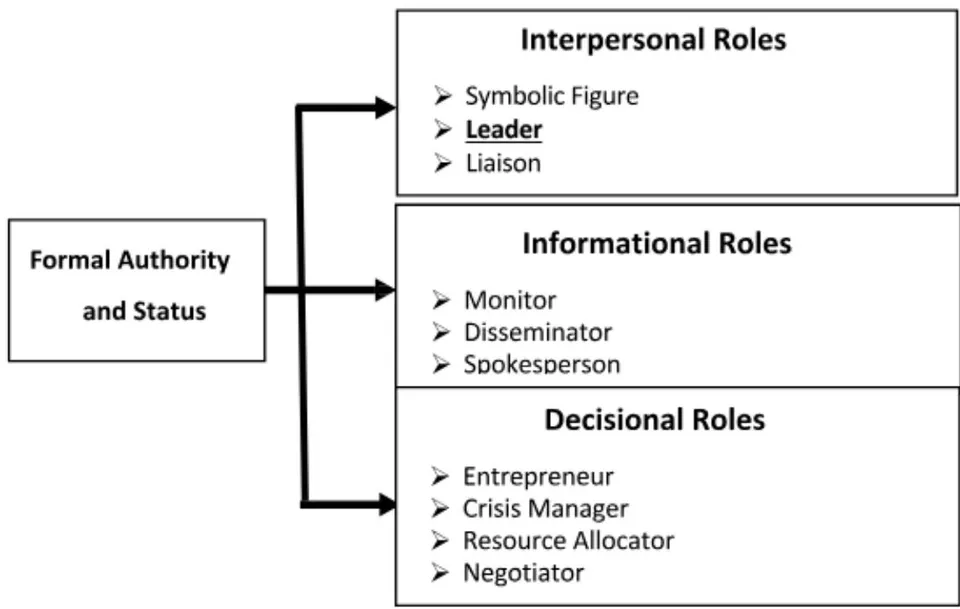
In this context, Henry Mintzberg argues that today's management is fundamentally anti-Taylorian. He concluded that the manager's role can be described through ten essential roles that form an integrated whole. These roles consider interpersonal relationships, information management, and decision-making processes, as illustrated in Figure 1 below (Mintzberg H., 2006).
During his first visit to Morocco, at a training session organized by the international cabinet Icompétences in April 2014 in Casablanca, Mintzberg highlighted the importance of considering the human factor within organizations. He stated: "By seeking efficiency at all costs and in the short term, organizations risk losing what truly matters: the commitment of individuals. The drive to professionalize management could be the main danger, leading to a loss of team engagement." Thus, management has evolved significantly since the beginning of the 19th century, thanks to the contributions of eminent authors and researchers who have greatly improved organizational management. This evolution spans from the Scientific Management approach to modern management, where employees, as human beings, have increasingly become the central focus of managers. In parallel with the evolution of management, the concept of leadership has also developed, establishing itself as a theory and practice essential for the sustainability of organizations, particularly in the Century, where challenges have become increasingly complex and uncertain. In this regard, to avoid confusing these two concepts, it is important to examine the significant differences that distinguish them.
III. MANAGEMENT AND LEADERSHIP: WHAT'S THE DIFFERENCE?
A recent study revealed that the concepts associated with leadership and management have often been conflated, considered one and the same phenomenon by some and then considered by others to be quite distinctive. The same ambiguity is even truer at the level of application and practicality. Only a handful of studies have attempted empirically to differentiate between the two concepts (Ronnie Thomas Collins II and Claudia Algaze; Barry Z. Posner; 2023).
Thus, analyzing several articles addressing these two themes has allowed us to identify three prominent positions. First, management and leadership are considered synonyms and therefore similar. Second, some authors argue that the two concepts are entirely distinct. Finally, there is the position that, while the two notions are indeed different, their presence and interdependence remain essential for the prosperity of organizations.
3.1. Management and Leadership: Two Interchangeable or Even Similar Concepts
In the past, the distinctions between the notions of "leadership" and "management" were blurry and often used interchangeably (Matthew R. Fairholm, 2002). Indeed, these terms were treated as synonyms across all academic disciplines focusing on management and leadership studies, by a number of scholars (Azad et al., 2017; Bass, 1990; Kent, 2005) while others have, however, suggested the two are distinctly different (Algahtani, 2014; Kniffin et al., 2020; Kotterman, 2006).
This practice was particularly prevalent during the industrial era, when researchers adopted the values of the industrial paradigm and equated leadership with effective management. Indeed, the merging of these two concepts continued to dominate leadership studies until the late 1980s (Joseph C. Rost, 1985). Management has typically been centered on organizational processes and structures, while leadership emphasized people and the human side of the enterprise. These two domains have often been referred to as task or production versus people or relationships (Blake and Mouton, 1964; Hersey and Blanchard, 1969; Yukl et al., 2002). Others have conceptualized these two domains as working with "things" or working with "people." Bennis and Nanus (2007, p. 12) made the argument that "managers do things right, while leaders do the right thing."
Indeed, several authors and practitioners continue to equate the two concepts, making no distinction between them (Zaleznik, 1977). Researchers such as Fiedler defend this practice of assimilation in the name of diversity of thought or academic freedom within a culture of permissiveness. Since the 1960s, Fiedler has upheld that leaders and managers are the same (Joseph C. Rost, 1991). For their part, Northouse and Yukl argue that there is no strict distinction between leadership and management, as leaders often perform managerial tasks, and managers, in turn, take on leadership roles (Busse Ronald, 2014).
It is important to note, however, that while some authors have considered these two concepts to be similar, others firmly believe that the two notions remain fundamentally different.
3.2. Management and Leadership: Two completely different concepts
Several authors have thoroughly reexamined the notion of leadership to identify the key characteristics that distinguish it from management, particularly in terms of personality, roles, and the nature of the work environment (See Table 1 below).
Tableau 1: Distinction between Leadership and Management
| MANAGER | LEADER |
| Manages complexity (Transactional Leadership) | Manages change (Transformational Leadership) |
| Roles/Activities | |
| - Sets objectives (short-term focus)- Develops an action plan- Creates an organizational structure- Recruits- Informs and delegates- Controls- Ensures the smooth running of daily activities- Resolves conflicts- Takes an impersonal approach to goals- Promotes a facilitation approach- Engages with people based on their role- Centralizes knowledge | - Builds a vision (long-term focus)- Strategically orients the organization- Develops strategies- Aligns teams- Motivates and inspires- Stays the course- Appeals to values, aspirations, and fundamental human emotions- Nurtures creativity- Seeks out opportunities- Engages with people intuitively and empathetically, rather than based on the organization's hierarchy- Generates new ideas |
| Personality | |
| - Rational- Methodical- Organized- Cautious- Structured- Teamwork advocate- Perseverant | - Strong personality- Charismatic- Independent- Empathetic- Emotional- Intuitive- Daring; Courageous and Passionate |
| Work Environment | |
| Organized | Chaotic/Turbulent |
In 1977, Zaleznik was the first to highlight the contrast between leadership and management when addressing organizational issues. He portrayed the leader as an artist, using creativity and intuition to navigate chaotic situations, while the manager was depicted as a controller, relying on logic and pragmatism (Richard Bolden, 2004).
This approach has been supported by other authors, who emphasize that the difference between managers and leaders lies in their perceptions and responses to "chaos and order." Managers embrace processes, seek stability and control, and instinctively try to resolve problems quickly. In contrast, leaders tolerate chaos and a lack of structure and are willing to delay problem-solving to gain a deeper understanding of the underlying issues (Susanne Burns et al., 2011). In the same vein, Schermerhorn and his collaborators argue that the role of management is to promote stability and ensure the organization functions smoothly, while the role of leadership is to drive meaningful and adaptive changes to align with the organization's environment (Schermerhorn, J., et al., 2000).
In the same year (1977), Warren Bennis also argued that leadership is different from management. On this point, he stated: "To lead is not to manage; the difference between the two is crucial. I know many institutions that are very well managed and very poorly led."
Similar statements appear in numerous articles. In their book published in 1985, Bennis and Nanus note: "To manage" means 'to accomplish, to achieve, to take responsibility for.' To lead means 'to influence, to guide in direction, action, or opinion' (Bennis, W., & Nanus, B., 1985). For these two authors, managers are people who "do things right," while leaders are those who "do the right things." The difference can be summarized as activities of vision and judgment effectiveness versus the mastery of routines and efficiency (Joseph C. Rost, 1991). Similarly, leaders act as catalysts with a focus on strategy (Bryman, A., 1986), while managers are operators or technicians primarily concerned with achieving immediate operational objectives (Richard Bolden, 2004).
In this same context, managers are masters of routine inasmuch as they accomplish tasks and are efficient (Warren Bennis & Burt Nanus, 1985); whereas leaders are masters of change they influence and are effective (Matthew R. Fairholm, 2002).
Once again, the clear distinction between management and leadership gained consensus among leadership researchers in the 1980s, affirming that leadership is fundamentally different from management and that the two terms should not be used as synonyms. In this context, Rost developed a conceptual model that differentiates leadership from management based on twelve distinct criteria (Joseph C. Rost, 1991).
In 1989, the distinction between leaders and managers resurfaced with emphasis through the publication of a famous article in the Harvard Business Review (Abraham Zaleznik, 1977; 1992; 2007). This article caused an uproar in business schools. Zaleznik highlighted that the distinction between management and leadership is based on personality differences between managers and leaders. According to the same author, leaders are fully committed, driven by their courage and convictions, to realizing their own vision, while the behavior of managers is dictated by consensus and guided by procedural and administrative tasks in day-to-day operations. In the same vein, Zaleznik shows us that good leaders do everything in their power to move things forward, whereas managers are content to implement the leader's vision. This distinction between the two concepts was also emphasized in the work of Kotter, who highlighted the leadership focus on driving change (Bolden R., 2004).
In 2007, Sloane emphasized that innovation is the main distinction between managers and leaders, noting that successful and competitive organizations are led by individuals who demonstrate and foster a culture of creativity, entrepreneurship, and risk-taking (Sloane, P., 2007).
Thus, it is essential to conclude that while these two concepts are distinctly different, other authors advocate for a middle-ground position, where management and leadership, though distinct, remain complementary and essential for the prosperity and sustainability of any organization.
3.3. Management and Leadership: Two complementary concepts
First, it is important to emphasize that a significant body of research suggests that, far from being distinct, the practices described as "management" and "leadership" are part of the same work. Based on detailed observations of what managers actually do, Mintzberg identified 10 key roles, one of which is "leadership" (see Figure 1).
He concluded that, rather than being separated and distinct from management, leadership is simply one dimension of a multidimensional management role (Richard Bolden, 2004).
Moreover, J. Gosling and H. Mintzberg observe that separating management and leadership poses a risk. According to these authors, leadership without managerial knowledge can harm the organization, as the leader may become disconnected from administrative realities and exhibit arrogant behavior capable of undermining the very foundations of the organization. Conversely, a manager lacking leadership expertise suffers from a lack of inspiration and may display apathetic behaviors, which can jeopardize the organization's survival (J. Gosling & H. Mintzberg, 2003).
In reality, the two concepts are closely connected and represent two sides of the same coin: on one hand, the responsibility toward employees and the optimal management of processes, which fall under the domain of managed activities; and on the other hand, the guidance of employees to motivate them to achieve the set objectives.
Ultimately, management and leadership evolve over time, requiring leaders to seek a balance between the two.
As an example, in the area of "results in Table 02" he explains that effective management brings order and relevance to organizational processes and objectives, while leadership is required for driving dynamic, long-term changes (Richard Bolden, 2004).
| Leadership functions | Management functions | |
| Creating an Agenda | Establishing direction: A vision for the future, developing change strategies to achieve objectives. | Plans and budgets: Deciding on action plans and timelines and allocating resources. |
| Personnel Development | Aligning People: Communicating the vision and strategy, influencing the creation of teams that accept and validate the objectives. | Organizing and Managing Personnel: Designing the structure, assigning personnel, developing policies, and ensuring procedure follow-ups. |
| Execution | Motivating and inspiring: Encouraging people to overcome obstacles and satisfy their human needs. | Control and Problem Resolution: Monitoring results against the plan and taking corrective actions where needed. |
| Results | Producing positive and sometimes dramatic changes. | Producing order, coherence, and predictability. |
3.4. Managerial Implications of the Two Concepts
This research addresses the importance of managing an organization through the nature of the management approach adopted by a company, while considering the degree to which Management (M) and Leadership (L) are implemented. In other words: Does the organization rely exclusively on management or on leadership? Is it governed by managers and leaders who are completely independent of one another? Is it led by a single leader who already possesses managerial skills?
These questions prompt us to highlight the main managerial implications associated with each configuration, offering leaders and managers at the helm of organizations a preliminary insight. The table below will serve as a foundation for further brainstorming and in-depth diagnostics, supported by appropriate experiments and training programs. The goal is to leverage the opportunities presented while anticipating and mitigating, if not countering any potential imminent risks.
| Situation | Opportunities | Risks | |
| 1.Leadership (L) is perceived as Management (M) (similarity) | - Well-developed strategies and well-executed action plans.- Well-established operational procedures and regulations.- Good organizational design.- Financial autonomy.- Functional autonomy.- Effective controls | - Lack of vision.- Excessive authority- Lack of anticipation- Risk of conflicts- Lack of coordination.- Lack of coherence- Information not systematically shared.- Bankruptcy... | |
| 2. Approach Focused2. Approach Focused exclusively on M or on L (Distinct) | M | Same as Situation 1 | Same as Situation 1 |
| L | - Well-developed vision- Transparency in the decision-making process- Consideration of the human factor (motivation and influence)- Strong ambitions for change- Strong inspiration/role model-Excellent communication strategy-Favorable platform for innovation and creativity (talents)-Excellent long-term performance-Skill in negotiations... | -Poor administration (HR, daily activities)-Uncalculated ventures-Instability/turbulence-Risk of bankruptcy... | |
| 3.Integrated Approach (Simultaneous consideration of M and L) | -Easy implementation of the vision-High degree of coherence in direction-Compatible strategies and action plans-Efficient communication strategy-Trust is easy to maintain-Opportunity for innovation and creativity-Excellent performance | -Resistance to change-Funding issues-Incompetence of certain-employees-Conflicts of interest | |
IV. CONCLUSION
In summary, while management and leadership have often been used interchangeably by many authors under the pretext of academic permissiveness, the polarized view of managers and leaders as completely different individuals can also be misleading and potentially harmful in practice.
Indeed, if we believe that leaders and managers are inherently different people, we might conclude, on the one hand, that it is necessary to frequently change the management team as circumstances evolve, and on the other, managers can't become leaders (and vice versa). Such a perspective greatly underestimates the potential of individuals in both management and leadership
Source: Self-conceived roles. However, this does not mean that all individuals possess the skills required to be good leaders and managers, nor that there is a single, appropriate profile for all situations. Instead, to achieve maximum effectiveness, we should aim to recruit and train "leader-managers" who are capable of fully assuming these roles. According to Raubenheimer (2004), both managers and leaders are essential to an organization's prosperity, as leaders develop the vision while managers execute it (Sultan Aalateeg, 2017).
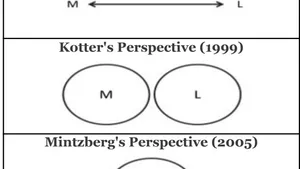
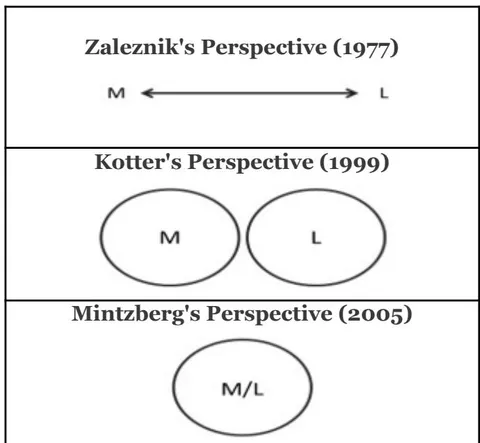
In this regard, many authors conclude that only organizations that combine both sets of competencies can thrive in times of turbulence (Zaleznik, 2004; Kotter, 2001; Gosling & In reality, the evolution of the relationship between management and leadership appears to hold promising prospects, following the trend initiated by Mintzberg in 2005. He asserts that an organization can only achieve the desired prosperity by adopting an approach focused on the integration of management and leadership within the same management strategy (see Figure 2 below).
These integrated strategies focused on the development of highly competent "manager-leaders" remain, in our view, the best approach for organizations—particularly large companies—to address the numerous challenges of the 21st century, which have become increasingly volatile, uncertain, complex, and ambiguous, as demonstrated by the COVID-19 health crisis outbreak.
Furthermore, beyond the findings of this research, which remain purely theoretical, our work has certain limitations. To be more conclusive, it requires additional empirical evidence drawn from multiple organizations, where the management approach would be subjected to qualitative and quantitative experimentation.
It is also important to highlight other constraints in this regard, particularly in the public sector, where the burden of administrative procedures, combined with resistance to change, severely hinders the spirit of innovation and creativity among leaders and managers, especially at the strategic level.
Similarly, in certain countries, mentalities and cultural norms do not allow for the effective and meaningful integration of a gender approach in the leadership sphere. This represents a significant barrier to the emergence of competent leaders capable of addressing the numerous challenges of tomorrow. In Morocco, for example, despite the significant increase in the feminization rate within the public sector—from 34% in 2002 to 39.5% in 2015—the appointment of women to positions of responsibility, while it has evolved from 10% in 2002 to 21.5% in 2015, remains concentrated at the lower levels of public administration (Benabdelhadi A., El Kaout H., 2018).
Conflict of Interest
The authors declare no conflict of interest.
Ethical Approval
Not applicable
Data Availability
The datasets used in this study are openly available at [repository link] and the source code is available on GitHub at [GitHub link].
Funding
This work did not receive any external funding.
References
Cite this article
Related Research

Special Issue
Launch a focused special issue to highlight research, emerging trends, and expert insights in your academic field.