



IntelliPaper
Explore Digital Article Text
I. INTRODUCTION
In today's context of international integration, modern woodcut art in Vietnam has evolved under the influence of historical, economic, political, and cultural factors. Artworks created during this period exhibit fresh stylistic changes, distinctive nuances, and contemporary relevance. Contemporary art is a fusion of various art forms, and the era of Industry 4.0 has reshaped the artistic thinking and aesthetic perspectives of creative individuals. The process of international exchange and integration serves as a precursor to the development and diversification of artistic trends. Groups of authors following distinct creative trends engage with the community, observe societal changes, aiming to capture beauty and reflect the contemporary spirit in each artwork.
II. BACKGROUND
2.1 Diversity in Techniques and Expressive Forms
Modern woodcut art in Vietnam is influenced by contemporary artistic trends worldwide and has steadily developed. In the past, artists primarily focused on creating solemn and revolutionary-themed works. However, today, these themes are less common, replaced by subjects that reflect contemporary life. The issues of integration and development directly impact the creative perspectives of many artists. As a result, art adapts to new artistic trends to blend with the modern art scene globally. Consequently, modern woodcut art during this period embodies contemporary diversity and innovation.
From the traditional hand-printing technique using handmade paper materials, often in small sizes and made from natural materials, today's artists have shifted towards using large-sized imported papers like Canson and foreign-made handcrafted papers. Furthermore, they even print directly onto canvas (toile) using modern printing machines to create artworks with large dimensions and high artistic quality.
Moving away from traditional woodcut techniques, artist Tu Duyen explored new material techniques like silk printing on woodblocks, which she calls "Seal of Approval".
Her artwork, "Better to be a demon in the South than a king in the North" inspired by the resolute words of General Tran Binh Trong in the face of Mongol invaders, serves as a powerful source of inspiration. The artwork portrays Tran Binh Trong as an unyielding figure, standing tall. It seems to strip away the essence of a forgotten hero who sacrificed himself for the nation and its people.
The innovation in techniques within modern woodcut art in Vietnam has acted as a catalyst for artists, particularly for those who matured after the year 2000. They have been exposed to technology and frequent international exchanges, leading to various new modes of expression and artistic presentation.
Contemporary art today is a fusion of various art forms, and the rapid development of information technology and global connectivity has transformed the artistic thinking and aesthetic perspectives of creative individuals. New shifts in economics, culture, and politics in the early 21st century have had an impact on artistic movements in Vietnam. Notably, this period has seen an increase in the number of woodcut artists in Vietnam, with many exemplary artists and high-quality works that hold great aesthetic value, such as Le Thanh Tru, Nguyen Xuan Dong, Tran Van Quan, Le Xuan Chieu, Nguyen Duc Hoa, To Uyen, Nguyen Nghia Phuong, Doan Minh Ngoc, Dang Minh Thanh, Phan Hai Bang, Pham Khac Quang, Vu Dinh Tuan, Nguyen Khac Han, Vu Bach Lien, and others.
In general, woodcut art during this period has been a unique and technically rich medium, possessing high aesthetic value in the minds of art enthusiasts. It has had a certain influence on the artistic sensibilities and spiritual life of the people. Woodcut art in this era is clearly vibrant, diverse, and rich, with numerous notable artists and works.
The artworks unveiled during this period reflect a more youthful and open-minded perspective in art, with many experiments ranging from realism to innovation, from decorative trends to realistic ones. These can be seen as new signs, an inevitable consequence of the international integration process, representing a definite innovation in Visual Arts with fresh forms of expression. As a result, the content, themes, and creative ideas of artists have expanded and gained respect. Artists are now free to paint what they like, based on their thoughts, without being confined to revolutionary or military themes as in the past. Modern woodcut art in Vietnam has indeed become more open, contemporary in outlook, and has seen numerous international exhibitions and collaborations between domestic artists and their international friends.
During this period, the forms of artistic expression have undergone changes. The dynamics of the market economy and international integration trends have instilled strong emotions and practical experiences in artists, enabling them to create contemporary artworks. Many artists have developed their unique artistic styles, enriching the field of modern woodcut art while maintaining their national identity. Artists like Le Thanh Tru, Nguyen Xuan Dong, Tran Van Quan, To Uyen, Tran Tuyet Mai, Nguyen Duc Hoa, Vu Dinh Tuan, and others have shaped their artistic styles that add depth to modern woodcut art in Vietnam, keeping its national essence intact.
In this era, artists have selectively embraced European modern art techniques in spatial handling, form expression, color usage, and the essence of Eastern woodcut art to create a distinctive character for modern woodcut art in Vietnam. It can be said that contemporary artistic concepts and perspectives have evolved, with many innovative approaches, improved and diverse materials in a positive direction.
During this period, woodcut art has transformed in terms of space and size. It has evolved from being primarily a graphic art form to incorporating more painterly aspects, particularly with an emphasis on color, showcasing the art's ability to harmonize in a spatial context. Woodcut art during this time exhibits new technical elements, intricate detailing, expressive freedom, depth in pictorial representation, and a variety of methods for conveying artistic ideas by individual artists.
Artists have shifted from small-scale spatial layouts to grand and majestic compositions. Traditional woodcut techniques, characterized by the use of single-color areas and simple lines, have evolved into reduction woodcut techniques that use multiple colors to manage light relationships in expansive woodcut artworks. These artworks exemplify the splendid scale of woodcut art, such as Nguyen Trung Tin's "Hoa Binh market" with dimensions of 70cm x 200cm, Le Xuan Chieu's "Ho Chi Minh City triumphant song" measuring 110cm x 175cm, Huynh Thi Tu's "flock of sheep" with a size of 65cm x 135cm, and Nguyen Khac Han's "Chase your dreams" measuring 100cm x 300cm.
The works published during this period reflect a younger, more open-minded perspective, with fresh nuances in their forms of expression and increased diversity. There is a connection to traditional Vietnamese art, Eastern art, and various new forms of artistic expression that exhibit Western artistic influences. Many experiments ranging from realism to innovation trends are new indicators, an inevitable consequence of international integration, a definite innovation in contemporary Visual Arts with various forms of artistic expression today.
2.2 Diverse Trends in Creative Work
As the history of art in the world progresses into modern society, the need for innovation becomes increasingly essential. Therefore, artistic innovation has no fixed point, in other words, no artistic trend or style is immutable. The process of international exchange and integration serves as a prerequisite for the development and diversification of artistic trends. As a result, each artist consistently showcases their work wherever they are, employing specific techniques and materials, and each work reflects the regional characteristics of each country and ethnicity. Each trend group expresses unique characteristics in the way they articulate the visual language of each author in terms of composition, engraving and printing techniques, the use of color, and the construction of imagery within their works.
2.2.1 Group of Artists Following the Traditional Woodcut Preservation Trend
The majority of works created by the group of artists who aim to preserve traditional values often involve black and white woodcut, executed with great finesse. Artist Nguyen Phu Hau manipulates space within his artworks to evoke a sense of levity and fantasy, as seen in his piece "Dragon and serpent ascending to the clouds" (2009). Artist Le Thanh Tru, on the other hand, preserves the distinctive characteristics of traditional woodcut, bearing a resemblance to Dong Ho paintings and paying little attention to the laws of proximity in his works, as evident in "Dong Thap early morning" (1996). Nguyen Manh Hung employs intricate curved lines with bold strokes and skillfully refines black areas to create beautiful compositions. Tran Đinh Phuoc Loi leans towards romanticism with an airy and ethereal quality, but one can still perceive a captivating sense of luminosity and movement within his artwork. Nguyen Khac Han captivates his audience with his masterful traditional woodblock carving techniques, achieving an exceptional level of precision that transcends the constraints of traditional woodcut. Notably, the content of his works often delves deep into social critique, as exemplified by "Project for my child" (2016) and "by oneself" (2020).
In general, artists following this trend utilize a system of imagery borrowed from traditional folk woodcut, combined with modern shaping elements to convey contemporary themes. The distinctive feature of the traditional preservation trend is its emphasis on lines and distinct blocks, coupled with limited color usage, resulting in a rustic and close resemblance to various Vietnamese folk art styles such as Dong Ho, Hang Trong, and Do The from the southern region.
Artists in the traditional trend primarily focus on shapes and colors while letting go of the black outlines of the forms, blurring the lines that connect the elements in what is commonly referred to as the "single-line diagram." This specific technique has the ability to infuse rhythm and a rich tempo into the artwork.
Through the process of approaching both Eastern and Western art, these artists have combined shapes, blocks, and smooth lines to create a rhythm and tempo that elicits aesthetic expression, establishing the distinctive characteristics of modern Vietnamese woodcut.
2.2.2 Group of Artists in the Innovation Trend
In the 21st century, artists must find a harmonious balance between emotion and technology to reach higher levels of artistic expression, enriching and diversifying the emotional nuances of contemporary art. The visual language continually tends toward innovation, with each artist choosing their own path and approach to create harmony in their artistic expression.
"In general, Vietnamese artists and particularly those in the innovation trend tend to focus on experimenting with the new and the unusual but rarely offer theories or explanations for what they convey in their works" [5].
The innovation trend in art refers to the process of making something new in a particular art form compared to what existed before. In the realm of woodcut, innovation entails deviation from traditional art in terms of technique or expression (color, lines, composition, imagery, etc.).
Each material has its own unique characteristics, and woodcut or lacquer paintings, regardless of how much one wants to innovate in terms of materials or techniques, cannot be easily innovated in the same way as oil paintings or watercolors. This is because oil and watercolor materials allow artists to quickly express spontaneous emotions, whereas woodcut or lacquer paintings require a significant amount of time to handle the technical aspects of the materials.
Furthermore, woodcut are closely tied to the traditions of Vietnamese folk art, so when artists attempt to innovate, the methods of expression are markedly different from those in Western oil paintings.
The innovation trend in modern Vietnamese woodcut in the early 21st century is characterized by its diversity in content and experimental forms. Notably, there have been explorations in changing perspectives, modes of expression, alterations in block carving techniques, printing techniques, large-scale printing, combining various materials, and using multiple printing plates. Technical innovations are seen as specialized tools that assist artists in conveying complex forms and expressing the intentions of their works in a more modern direction.
Handling shaping elements like decorative motifs, strong color usage, contrasting shapes, innovative lines, and the artistic interpretation of content all contribute to the creation of modern woodcut that meet specific interior design criteria and have high practical utility. These qualities are advantageous for the group of artists following the innovation trend.
Many experiments have been noted, including innovations in technique, woodblock carving, printing, color processing, post-printing treatments, and the exploration of large-scale printing and overprinting effects on the artwork. However, many experimental trends are still seen as positive signals in the creative process that need further time to take clear shape. Despite the various creative experiments, a significant proportion of the woodcut works during this period reflect vivid realities regarding the socioeconomic development of the country. This is also a distinct and unique feature of modern Vietnamese woodcut.
On the other hand, the imagery, language, and expressive techniques that are simple and closely tied to social realities can be seen as a distinctive characteristic in woodcut during this period.
2.2.3 Group of Artists in the Realism Trend
The realism trend places a strong emphasis on the tangible aspects of the artwork, focusing on imagery and scenes that are closely connected to nature, daily life, and labor in the external social context. Realism is an expression of an artist's "view" of the objective world. However, true success in realism is achieved when the portrayal is so faithful that it captures the essence of the subject.
In general, the majority of modern Vietnamese woodcut, despite technical innovations in carving, printing, and coloring, lean towards realism. Although there are different trends, the element of realism is pervasive in the genre of modern woodcut in Vietnam. The artists' creative perception is greatly influenced by the dominant aspects of real life. Their works seldom separate from the daily reality that is unfolding. Many artists employ traditional woodcut techniques, producing raw prints in multiple layers of color before adding final lines. For instance, Dang Huong's work "Return to Truong Sa" (Figure 1) and Le Thanh Tru's "The path of Mau Than" (Figure 2) are examples of this approach.
Additionally, some artists employ multi-color block printing that aligns along the edges, creating harmony during the printing process. This technique allows for variations in line thickness and hidden details within the innovation trend, as seen in works like Vu Dinh Tuan's "Ladies I, II, III, IV" (Figure 3) and Pham Khac Quang's "Human market" (Figure 4).
Many artists prioritize expressive lines, focusing on motion, rhythm, and the combination of lines before adding a layer of blurred lines. For instance, Vu Bach Lien's "Winter is coming" (Figure 5), Dang Minh Thanh's "Still life with Phu Dung flowers" (2012), and Huynh Thi Tu's "Flock of sheep" (Figure 6) all follow this approach.
The diversity in content and forms of expression also depends on the composition of the artistic team. Young artists who grew up after the war tend to depict contemporary social themes, such as Nguyen Nghia Phuong's "Test tube" (2011), Vu Dinh Tuan's "Lady with her reflection" (2011), Do Thi Thanh Tam's "making a living" (2013), Nguyen Tran Bao Linh's "before the show" (2013), Nguyen Van Chung's "Study online" (2022), and Doan Minh Ngoc's "The era of technology 4.0" (2019).
On the other hand, artists who lived through the war continue to carry the weight of historical themes and express them through a social realism lens. Their works often focus on the past, such as Tran Nguyen Dan's "Hoi An in my eyes" (2007), Hoang Trung Hieu's "Truong Son Forest" (2015), and Nguyen Phu Hau's "Comrade" (2017).
The distinctive feature of the realism trend is that the artworks rarely detach from the daily real world unfolding around the artists. Artists in the realism trend breathe new life into the existing reality, turning it into imagery and elevating it through the language of printing, carving, color blending, and painting. This approach makes the reality depicted in woodcut more flexible and captivating.
A defining characteristic of modern Vietnamese woodcut during this period is that they bridge the gap between graphic art and painting, infusing a strong sense of color and embodying a sense of harmony within the realm of contemporary art.
III. CONCLUSION
Modern Vietnamese woodcut both reflect the connection to the traditional folk woodcut and carry forward the values of modern woodcut, while also possessing their own unique nuances, gradually shaping the characteristics of modern woodcut in the early 21st century. New elements in woodcut today include highly detailed carving techniques, expressive freedom, a sense of elevation in visual art, a variety of colors, and diverse methods for conveying artistic ideas, which contribute to the diversity, harmony, and distinctive visual language of each artist. During this period, woodcut exhibit new vitality, diverse creative trends, richness in subject matter, material techniques, and forms of artistic expression that result in beautiful artworks.
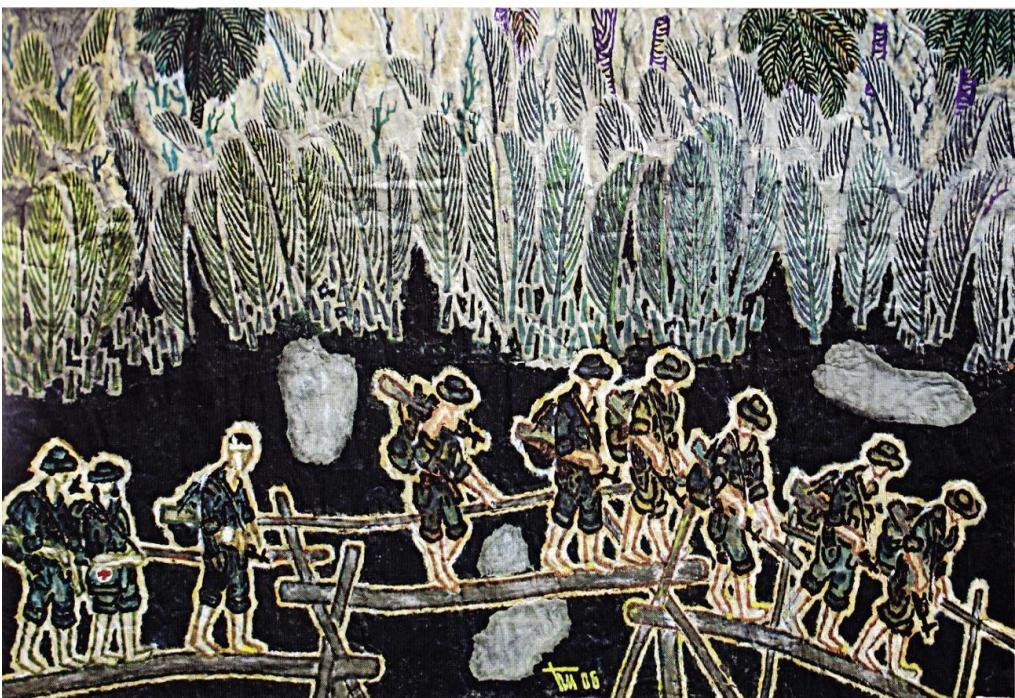 Figure 2: Le Thanh Tru, The path of Mau Than, 2008, 120cm x 180cm
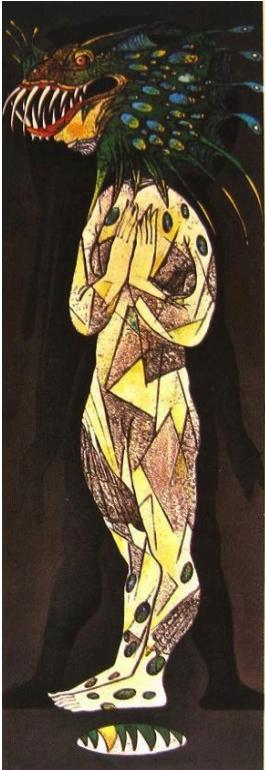
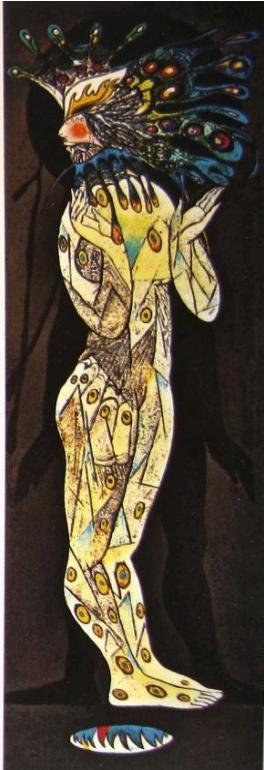
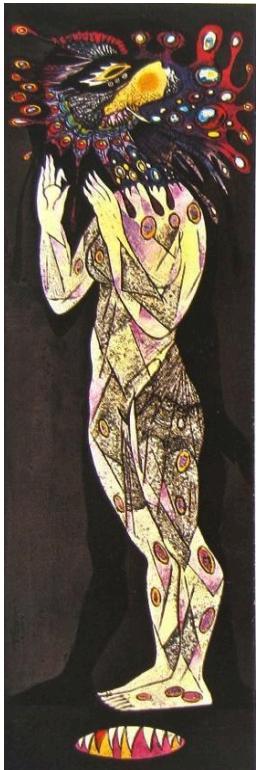 Figure 3: Vu Dinh Tuan, The Ladies I, II, III, IV, 2009, Woodcut, 40cm x 110cm
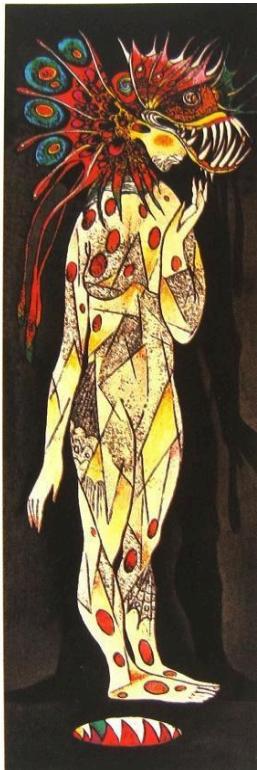
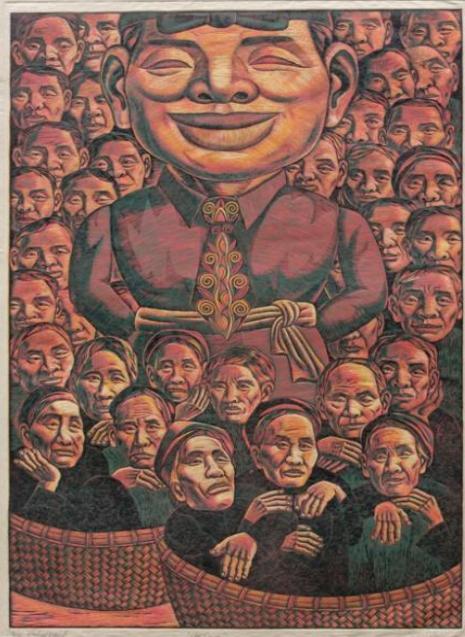
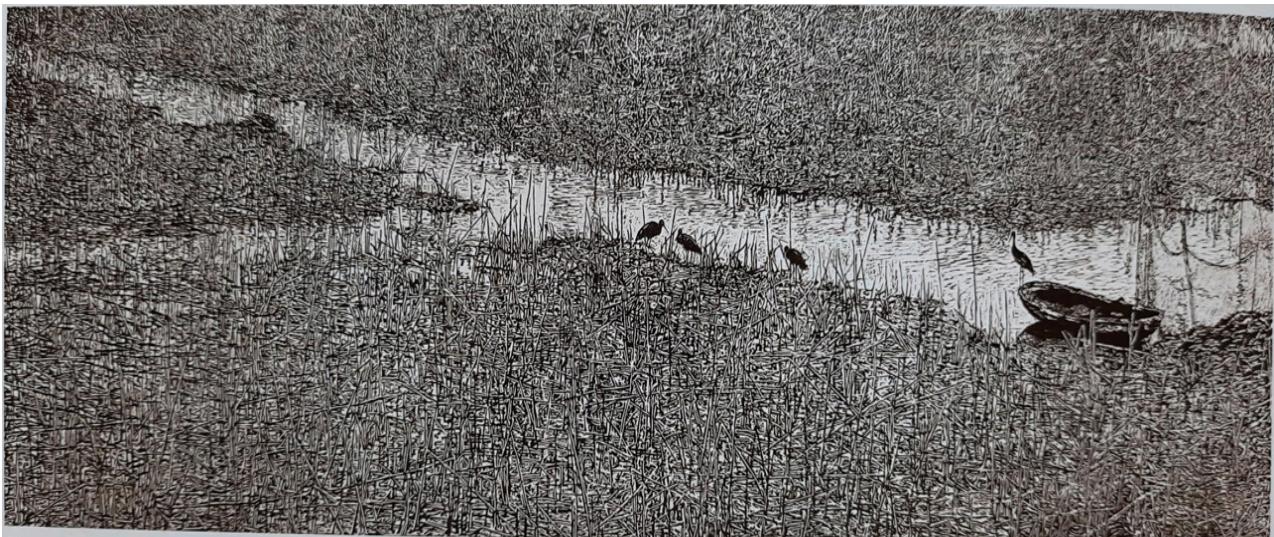 Figure 4: Pham Khac Quang, Human Market, 2010, Woodcut Figure 5: Vu Bach Lien, Winter is coming, 2011, Woodcut, 70cm x 217cm
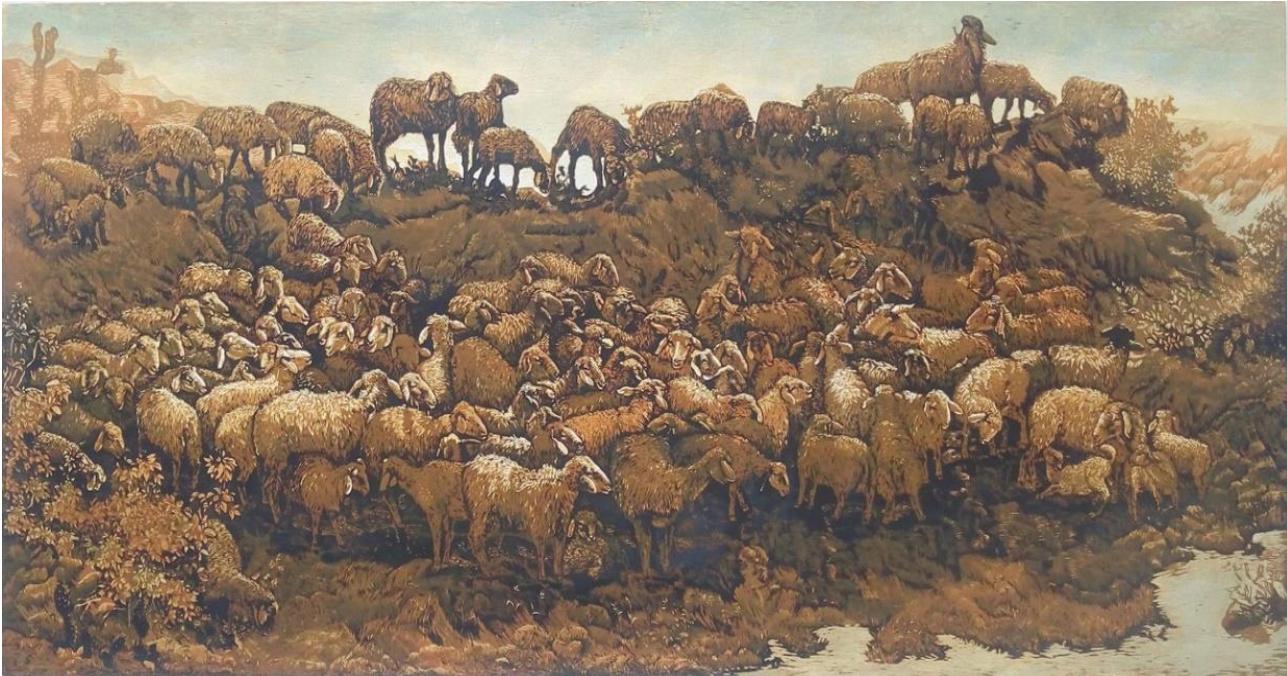 Figure 6: Huynh Thi Tu, The flock of sheep, 2015, Woodcut, 65cm x 135cm
Conflict of Interest
The authors declare no conflict of interest.
Ethical Approval
Not applicable
Data Availability
The datasets used in this study are openly available at [repository link] and the source code is available on GitHub at [GitHub link].
Funding
This work did not receive any external funding.
References
Cite this article
Related Research


Special Issue
Launch a focused special issue to highlight research, emerging trends, and expert insights in your academic field.
