






IntelliPaper
Abstract
Gambling over the past centuries has evolved in terms of its expansion and form. Sports betting as one of the forms or components of gambling has grown globally over the years in the Americas, Europe, Asia and Africa. As a result, there is a reason to expect that gambling among university student may be more preponderant today than in previous years. Thus, the study explores the motivational factors towards sport betting and its widespread of problem gambling severity among university students. Descriptive survey design was adopted for the study. A fair representative sample size of 351 was determined through the Krejcie and Morgan minimum sample size determinant. Means, standard deviations, frequency counts, percentages were used in the analysis of the data. The study found that money was the leading motivational factor for university students’ sports gamblers. Thus, the study recommends the setting up of a ‘Gaming Research Unit’ in partnership with the Students’ Support Office (StuFSO) under the auspices of the university, to generate levies from gambling centres sited on and around the university’s campuses to help finance bursaries for average but needy students of the university who may be engaging in sport betting.
Explore Digital Article Text
I. INTRODUCTION
Sports betting as an industrial sector has grown globally over the years, and is a component of the package sold for game days in the Americas, particularly in the developed world. Mwadime (2017), reports that illegal gambling alone can reach $500 million. Global Gambling Revenue in 2018 has been measured at 435 billion dollars and is an increasing part of the global economy (Global Betting and Gaming Consultants - GBGC Report, 2018). The countries with retracting economies often frequently use gambling as a source of revenues (Cassidy, Pisac & loussouarn, 2013). The GBGC announced in 2018 that Asia is the largest gambling market with a percentage of 31.3, while the USA is the largest game industry jurisdiction. Sixty million Nigerians aged 18-40 are active sports bettors in Africa, as stated by gamblingafrica.com. Data from South African governments indicate that more than 50% of adults in South Africa sports bet (Nzimande, Louw, Mannya, Bodasing & Ludin, 2010). This was also recorded for south, east, central and western Africa. According to a 2014 report published by Price Water House Coopers, Nigeria, Kenya and South Africa betting markets in 2018 worth $37 billion and that the popularity of sportsbooks online such as Bet365, 888Sport, Safari Bet and Betway has been increasing.
According to bettingcompaniesghana.com, the games industry in Ghana only took off in the last decade. Inferring from the site, in just over a decade, the industry has seen a booming effect, and over 20 regional casinos and betting firms are currently operating in Ghana. There are also hundreds of foreign casinos and betting brands in the country. Ghana has an even more recent growth of online gambling and betting industry. A burst of online casinos and betting companies began operating in the country in order to cater for the preponderant audience (bettingcompanies inghana.com). Also, offline betting companies have been made available online. Through new channels such as the internet and social media, there have been increasing advertising of sports activities (Derevensky, Sklar, Gupta, Messerlian, 2010; Binde, 2014). The trend has been recently identified in the introduction of television gambling advertising in countries such as, Ghana, South Africa, Kenya, Nigeria, USA, Canada, etc. (Koross, 2016; Milner, Hing, Vitartas & Lamont, 2013; Ssewanyana & Bitanihirwe, 2018).
Today, the widespread of legitimate gambling, promotions of gambling activities coupled with easy accessibility via the internet has exposed many university students to the act (Conrad, 2008). As a result, there is a reason to expect that university students gambling may be more preponderant today than in previous years (Winters, Stinchfield, Botzet, & Anderson, 2002).
Pathological gambling prevalence among university students is projected to be 5.6%, almost three times the preponderant of 1.9% in the general adult population (Shaffer & Bethune, 2000). Usually, sports betting, poker, bingo, non-casino slot machines, cockfights, racing on horses or grass-hounds, throwing parts, internet gaming, rattles, tickets for scratching and winning ticketing, state-run lotteries and pull tabs are posited by Verbeke and Dittrick-Nathan (2007) as youth or student gambling events. On the motivational level, Verbeke and Dittrick-Nathan also found that students gamble for fun, for socialization, for money and for risk-winning scenario thrills. They further stated that, students often gamble to avoid issues at home or at school, to keep them from feeling isolated, and to relieve feelings of depression, isolation and other negative moods. In addition, to the factors that motivate students to gamble, McBride and Derevensky (2012), found that students are more likely to gamble because of easy access to internet and internet cafés, game centres, betting venues, need for immediate satisfaction and an interest in increasing social standing.
Researchers have examined the pathways and processes that lead individuals to gamble (e.g., Wu, Tao, Tong, & Cheung, 2012; Chen, Wu, & Tong, 2015; Francis, Dowling, Jackson, Christensen, & Wardle, 2015 etc.). According to the New York Council on Problem gambling (www.nyproblemgambling.org), many individuals use gambling to avoid handling personal feelings or problems, they 'escape' into activities such as internet gambling and playing at slot machines to avoid interaction with others and to avoid having to confront existing problems. Research has shown that youth with gambling problems are more likely to report using gambling as a form of escape or to relieve daily hassles or stress (Derevensky & Gupta, 2004).
These youth have positive attitudes toward gambling and subsequently seek out gambling for its perceived benefits: excitement, relief of boredom, power or control, and socialization (Derevensky & Gupta, 2004). Neighbors, Lostutter, Cronce, and Larimer (2002), from their "comprehensive set of 16 gambling motives" based on open-ended responses revealed that most college students gamble to win money, for fun, for social reasons (such as making of friends etc.), for excitement, or just to have something to do. McGrath et al. (2010), also found that gambling for money and for charitable events were frequently endorsed motivational factors for gambling. From the study of Rodriguez, Neighbors, Rinker, and Tackett (2015), intrinsically motivated motives were operationalized with items such as, 'for the pleasure I feel when my knowledge of the game improves', and 'because it is the best way I know of for meeting friends', whereas extrinsically motivated motives were represented by items such as 'to buy something I have been dreaming of' (i.e., gambling to become rich). Individuals who were more intrinsically motivated gambled because the gambling brought them excitement, an opportunity to obtain knowledge, and a sense of accomplishment. However, extrinsically motivated gamblers gambled because of external rewards such as money and social approval. Further, they found that gamblers who were motivated for intrinsic reasons were more likely to continue investing resources into gambling activities, though it was noted that gambling is less likely to be intrinsically motivated when it crosses the threshold into becoming problematic. Mwadime (2017), ironically found that majority of the respondents perceived self-controlled when betting. Prior to this, Wardle et al. (2007), found that respondents with higher levels of education were less likely to gamble; 61% of those with a degree compared with 73% who were educated to GCSE/O level equivalent. The British Gambling Prevalence Survey (Wardle et al., 2007) also found that people in higher income households were more likely to gamble". Affirming the above findings, Ahaibwe, Lakuma, Katunze and Mawejje (2016), mentioned that the propensity to gamble is strongly influenced by personal income level. In Ghana, Ofosu and Kotey (2020), revealed that sports betting participants viewed betting as a means to an end, a chance to improve their financial circumstances. Thus, the above show that the socioeconomic background of the individual could be a motivational factor for gambling. Could this also be the case of university students?
However, a study by Koross (2016), among university student cited Custer and Milt (1985) who argued that gambling motives were different among gamblers. They classified gamblers into six categories based on their purpose for gambling: (a) social gamblers, who play for fun and are not emotionally affected by their wins or loses; (b) professional players, who gamble as a career and play for money but can tolerate losses as part of their business; (c) antisocial gamblers, whose only purpose is winning and thus might cheat during gambling to ensure they win; (d) serious social gamblers, who gamble as a leisure and social activity; (e) relief and escape gamblers, who play to seek emotional relief; and (f) addictive and compulsive gamblers, whose gambling behaviours are not self-controlled and affect their lives negatively. To investigate these determinants as stated by Custer and Milt, Koross (2016), established that money was the main and biggest motivator causing university students to gamble.
Similarly, Kam, Wong, So, Un, and Chan (2017), found that university students gamble for three main reasons, that is seeking entertainment, killing time, and as a result of peer influence. This was evident in Kenya as the mass media broadcasts show how the winners celebrate and motivate others to continue betting since they have chances of winning millions of money.
Students also seem to rely on the money from the bets for their daily up keep and entertainment.
The other motivational factors were betting for enjoyment and to be together with peers in that students stated them as their main motivational factors. Others indicated that boredom was their motivational factor, instead of being idle they utilize their 'leisure time' by betting – this was subtly realised in the work of Kwarteng-Nantwi, Adu-Akoh & Edjah (2022). The above motivating factors were some of the reason students gave when the Ghana News Agency, GNA spoke with students in the Sunyani Technical University.
Hence the researchers seek to find out whether this will be the case of the university of Cape Coast or will there be other concealing factors stimulating students to bet especially in sport bets on campus? Also, the study sought to determine the various gambling severity levels/groups using the Canadian Problem Gambling Severity Index (CPGSI).
II. CONCEPTS, EMPIRICS AND THEORY
Problem gambling often depends on whether the gambler or the 'relatives of the gambler' suffers harm. Severe problem gambling may be diagnosed as pathological gambling if the gambler meets certain criteria on the DSM-V (APA, 2013).
Problem gambling as stated in the works of these gambling researchers (Calado, & Griffiths, 2016; Jazaeri, & Habil, 2012; Griffiths, Wardle, Orford, Sproston, & Erens, 2011) refers to all the harmful behaviours resulting from constant gambling. Ferris and Wynne (2001) in their development of the Canadian Problem Gambling Index defined Problem gambling as the adverse effects on the gambler, on other individuals, his/her social life or even on the community as a result of the individual's excessive gambling behaviour.
Problem Gambling Severity groupings or sub-types are "non-problem gambler", "low risk gambler", "moderate risk gambler", and "problem gambler". These groups have different intensity of severity level. Shen, Kairouz, Nadeau and Robillard (2015), established that problem gamblers massively engage in varied locations and more diversely in gambling activities, than moderate-risk or even non-problem gamblers. A long time study by Petry and Weinstock (2007), revealed that out of 1356 university student participants, 23% reported ever gambling on the internet. Almost two-thirds (61.6%) of regular Internet gamblers were problem gamblers. The preponderance of internet gambling of Petry and Weinstock (2007) may be demographically influenced as students in these universities may have readily accessible Wi-Fi. University students have been identified as "an at risk group in relation to online gambling" (Wood, Griffiths, & Parke, 2007). The problem of gambling peaks due to the fact that many students (18-24 years) use the internet regularly (Productivity Commission; PC, 2010). Similarly, Griffiths and Parke (2010) and King, Delfabbro, and Griffiths (2010) found that the use of smartphones and other mobile devices has facilitated the preponderance and rise of gambling among the youth. Given the global expansion of the gambling industry, Williams, Volberg and Stevens (2012), found a significant increase in the preponderance of problem gambling to be inevitable. Griffiths (2009) also reported that availability of opportunities to gamble and the preponderance of problem gambling within a community are known to be linked. Giralt et al. (2018), indicated that participation in gambling activities is common among under-aged adolescents and that preponderance of problematic gambling exceeds rates of adults.
From the work of van der Maas et al (2018) in Ontario, Canada, preponderance of problem gambling was quite low in their adult sample. The large majority, 90.3% of those who participated in gambling in the 12 months prior to the survey were classified as non-problem gamblers based on the Problem Gambling Severity Index, PGSI (score of 0). 7.1% participants were classified with low-level gambling problems (PGSI: 1–2). The number of problem gamblers as identified by the PGSI (8+) was 0.1% of the population. It was found that prevalence rates of risk and problem were very low but similar to those reported in previous Australian study that used the PGSI in samples of adolescents and young adults (Delfabbro, King & Griffiths, 2014).
In Africa, the preponderance of gambling among students was observed by Koross, 2016. Though the sample size of Koross, was small (100 university students), it was conducted in an African university setting so it provides the researchers with a compelling case and what to anticipate as the study was conducted. According to Koross (2016), there is a high preponderance of gambling among university students in Kenyan university. Majority of the students, 50% indicated that they bet at least once a week, while 28% indicated that they bet at least once a fortnight and 12% at least once a month and 7% at least once in the past three months. The findings showed that almost all the students do bet at varying frequency counts. This agrees with the findings of Ly (2010) who established in his study that almost 60% of university students are regular gamblers. The findings also indicated that university gambling students can be grouped into six types of gamblers; compulsive gamblers, serious social gamblers, casual social gamblers, antisocial or personality gamblers, escape gamblers and professional gamblers. With the issues of gamble severity, Mwadime (2017), found that more than once a week bets were the most common frequency of betting followed by weekly bets. In support of this, Caldeira et al (2017), stated that frequent or daily gambling was rare and that gambling weekly or gambling more than once within a week was relatively high. Ahaibwe, Lakuma, Katunze and Mawejje (2016), also stated that the youth are likely to bet on sports on a daily basis compared to the older bettors but in all the weekly sports bet was very high. Mwadime (2017), further found that more than half of the respondents who gambled sometimes win their bets. Their wins instigated a personal believe and a high level of confidence among gamblers as this resulted in sports betting addiction.
With regard to motivation the researchers explored Self-determination Theory (SDT). The theory of Self-determination explicates how one relates with his/her social environment. It is a broader perspective of man's personality and motivation. According to Neighbors and Larimer (2004), motivational orientations are important determinants of problem gambling. SDT deals with how both intrinsic and extrinsic motivation influence one's responses within a situation.
According to Deci and Ryan (1985), extrinsic motivation is where external sources influences the behaviour of an individual. Extrinsically motivated gamblers are more likely to continually engage in sport betting because of external rewards such as money and social approval (Rodriguez, Neighbors, Rinker & Tackett, 2015).
On the other hand, intrinsic motivation comes from the individual's own inner drivers. Individuals who are more intrinsically motivated in their reasons for gambling were more likely to gamble because it offered excitement, an opportunity to obtain knowledge, and a sense of accomplishment (Rodriguez, et al, 2015).
However, SDT differentiates between autonomous motivation and controlled motivation (Ryan & Deci, 2008). When people are autonomously motivated, they act with a full sense of willingness and volition, wholly endorsing that which they are doing because they find it either interesting and enjoyable, or consistent with their deeply held, integrated values. Autonomous motivation would be associated with less problematic gambling. This is because the individual is conscious of the potential risks posed by his/her gambling behaviour. In contrast, when people's motivation is controlled, they act out of coercion, seduction, or obligation. They tend to experience pressure and compulsion, rather than concurrence and choice. Controlled motivation would be associated with more problematic gambling (Neighbors & Larimer, 2004). As a motivational theory, SDT examines why people behave the way they do. "Research suggests that people are motivated to gamble because of the emotions, social connections, monetary gain, self-worth, and intellectual challenge that are commonly related to gambling" (e.g., Chen, Wu, & Tong, 2015; Francis, Dowling, Jackson, Christensen, & Wardle, 2015; Wu, Tao, Tong, & Cheung, 2012).
According to Deci and Ryan (2000), there are three psychological needs that motivate the self to initiate behaviour. These needs are said to be universal, innate and psychological and include the need for competence, autonomy, and social relations (relatedness). Self-determination theory, propose that people need to feel the following in order to achieve psychological growth:
-
Competence: People need to gain mastery of tasks and learn different skills. It is found that people continually gamble because they want to gain full knowledge of the system; that is to "learn the game", "to feel competent", hence make more wins out of their bets (Shinaprayoon, Carter & Goodie, 2017).
-
Autonomy: People need to feel in control of their own behaviours and goals. For example, gamblers are sometimes attracted to sports betting because they can research information about teams and the odds of winning. They can also increase their self-esteem by appearing to be knowledgeable about games and that they have control over the tendencies to win or lose a bet.
-
Connection or Relatedness: People need to experience a sense of belonging and attachment to other people. According to Shinaprayoon, Carter and Goodie, there is a reason to believe that people gamble because they want to be socially recognised among their peers.
According to Ryan and Deci (2015) people tend to be amotivated for a behaviour when they do not feel competent to do it or when they do not value the outcomes that are likely to follow the behaviours. They opine that the concept of amotivation refers to people having no intentionality or motivation. Many gamblers are faced with amotivation when they are challenged by the fact that they play for money, but sometimes feel they do not get a lot out of their gambling activities. Thus, many motivation theories use the primary distinction of individuals being motivated versus unmotivated. But, SDT, however, has a tripartite differentiation of autonomous motivation, controlled motivation, and amotivation (Ryan, & Deci, 2015). One being intrinsically or extrinsically motivated may have some level of challenges on himself or on the elements within his environment. Basically, the critics of this theory highlights that individuals who lack self-determination will attempt to put the blame on someone or something else in an attempt to take of the pressure from themselves.
III. THEORETICAL MODEL [BLASZCZYNSKI AND NOWER PROBLEM AND PATHOLOGICAL GAMBLING MODEL]
The Pathways Model (Blaszczynski & Nower, 2002), is a theoretical framework that proposes three pathways for identifying subtypes of problem gamblers. The model asserts that all individuals with gambling disorder share common ecological factors of availability, accessibility, and acceptability of gambling, combined with cognitive distortions and habituation, resulting from operant conditioning that occurs in the gambling environment. The model shows the different characteristics that could be exhibited by a problem gambler as a result of nature and nurture experiences by the individual.
Pathway 1: Behaviourally Conditioned (BC)
Pathway 1 gamblers are characterized by an absence of specific pre-morbid features of psychopathology, and their gambling results largely from the effects of conditioning, distorted cognitions surrounding probability of winning and disregard for the notion of independence of events, and/or a series of bad judgments/poor decision-making rather than because of impaired control. Gamblers fitting of this typology are differentiated by the absence of any pre-existing clinically significant psychopathology (Blaszczynski & Nower, 2002). However, it is suggested that BC gamblers can develop co-morbid correlate behaviours such as depression and anxiety, but such disorders are a consequence of problematic gambling rather than being contributing factors. It is also suggested that "BC gamblers may demonstrate instability, fluctuating between heavy gambling and pathological gambling"
(Nower & Blaszczynski, 2016). Moreover, gamblers typically receive wins in highly variable patterns (Browne, Rockloff, Blaszczynski, Allcock, & Windross, 2015), and it has been theorized that variable reinforcement schedules are a powerful environmental factor that maintain gambling behaviour" (Hurlburt, Knapp & Knowles, 1980). It is proposed that "counselling and minimal intervention programmes benefit this subgroup" (Nower & Blaszczynski, 2016).
Pathway 2: Emotionally Vulnerable
Pathway 2 gamblers share similar ecological determinants, conditioning processes, and cognitive schemas; however, these individuals are present with pre-morbid drug abuse, anxiety, and/or depression, a history of poor coping and problem-solving skills, problematic family background experiences, and major traumatic life events that fuel gambling participation motivated by a desire to modulate affective states and/or meet specific psychological needs. This subgroup of gamblers displays "higher levels of psychopathology, in depression, anxiety and alcohol dependence" (Blaszczynski & Nower, 2002). In contrast, Pathway 2 gamblers are emotionally vulnerable as a result of psychosocial and biological factors, utilizing gambling primarily to relieve aversive affective states by providing escape or arousal. Once initiated, a habitual pattern of gambling fosters behavioural conditioning and dependence in both pathways.
However, psychological dysfunction in Pathway 2 gamblers makes this group more resistant to change and necessitates treatment that "addresses the underlying vulnerabilities as well as the gambling behaviour" (Blaszczynski & Nower, 2002).
Pathway 3: Biologically-Based Impulsive
Finally, Pathway 3 gamblers possess psychosocial and biologically-based vulnerabilities similar to Pathway 2 but are distinguished by a high degree of impulsivity, antisocial personality and attention deficit disorders, manifesting in severe multiple maladaptive behaviours. Clinically, gamblers with a background history of impulsivity engage in a wider array of behavioural problems independent of their gambling, including substance abuse, suicidality, irritability, low tolerance for boredom and criminal behaviours. In an interactive process, the effect of impulsivity is aggravated under pressure and in the presence of negative emotions. Poor interpersonal relationships, excessive alcohol and poly drug experimentation, non-gambling-related criminality and a family history of antisocial and alcohol problems are characteristic of this group. Gambling starts at an early age, rapidly escalates in intensity and severity, may occur in binge episodes and is associated with early entry into gambling-related criminal behaviours. These gamblers are less motivated to seek treatment in the first instance, have poor compliance rates and respond poorly to any form of intervention. Blaszczynski, Steel and McConaghy (1997), have labelled these gamblers the 'antisocial impulsivist' sub-type.
The diagram below in Figure 1 shows Problem and Pathological Gambling Model of Blaszczynski and Nower (2002).
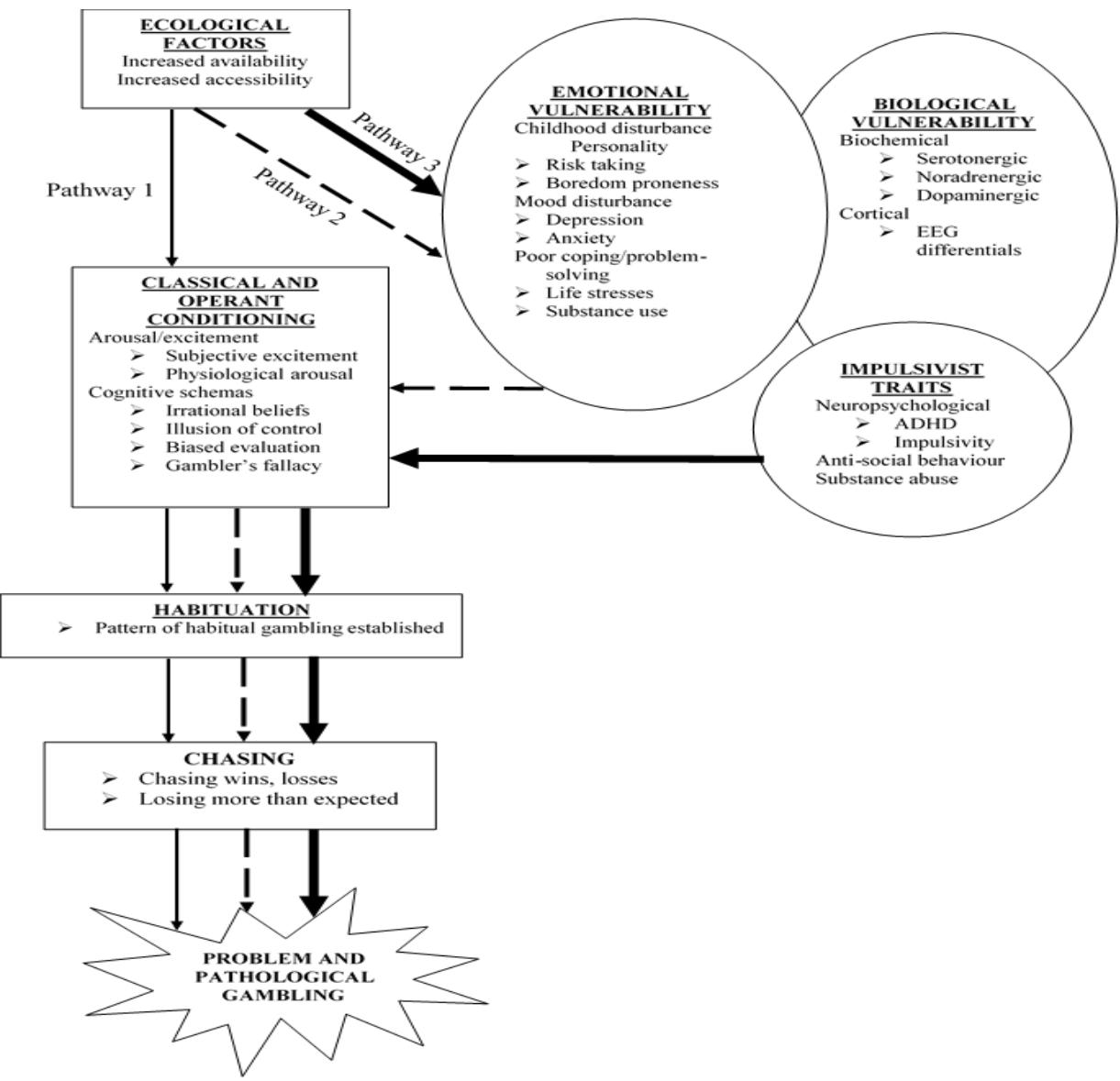 Figure 1: Problem and Pathological Gambling Model of Blaszczynski and Nower (2002)
IV. RESEARCH METHODS
Descriptive survey design was used in the study. In descriptive design research, the nature of a certain phenomenon is defined and events are determined and reported the way they exist. The adoption of descriptive survey design was to ensure high objective standard in the analysis and answering of the research questions.
The accessible population for the study were all level 400 students (4,172) of the University of
Cape Coast. This sample was selected because they have spent 4 years on the university's campus and are well acquainted with the university's environment. A fair representative sample size was determined through the Krejcie and Morgan (1970) minimum sample size determinant.
According to Krejcie and Morgan a fair representation of a population of 4,172 is 351. The researchers further used disproportionate stratified sampling technique to draw from each college the number required for the study. With disproportionate sampling, different strata (colleges) have different sampling characteristics and hence difference percentages were surveyed from each college.
Table 1: The total number of level 400s sampled for the study
| Colleges | No. of level 400 student in a college/ Per (%) sampled. | Expected no. of sample from each college |
| "College of Education Studies" | 1064 (11.8%) | 126 |
| "College of Health and Allied Sciences" | 666 (6.3%) | 42 |
| "College of Humanities and Legal Studies" | 1704 (8.8%) | 150 |
| "College of Agric. and Natural Science" | 738 (4.5%) | 33 |
| Total | 351 |
The precision of the design was highly dependent on the sampling percentage/fraction allocation of the researcher. The disadvantage of this technique is that some sample will be overrepresented or underrepresented which will result in skewed results. Nonetheless, this has a merit of increasing the likelihood of fair representation and virtually ensure that any key characteristics of individuals in the population are included in the same population in the sample (Fraenkel & Wallen, 2012).
Questionnaires were used to conduct the study. The Modified Gambling Motivation Scale was adopted for this study to measure the motivation of students towards sports gambling.
Shinaprayoon, Carter and Goodie (2017) discovered six broad motivations for gambling. The scale is a six-factor structured scale of 28 items, which sought to measure motivation for gambling. The internal consistencies of the MGMS total scores ( ) (Shinaprayoon, Carter & Goodie, 2017). The instrument consists of dimensions with items that measure the individual's motivation for gambling. These variables are: Intellectual challenge (8-items), Excitement (4-items), Socialization (4-items),
Monetary gain (4-items), Social recognition (4-items) and Amotivation (4-items). The scale is a 4-point Likert-type scale (1=strongly disagree, 2=disagree, 3=agree, 4=strongly agree). Scores on each subscale is the average of the items. Higher scores indicate greater motivation to gamble for a specific reason or greater motivation to gamble in general. Each subscale score ranges from 0 to 4. A mean of 0.00 to 2.49 was regarded as low and those statements that scored a mean from 2.50 to 4.00 was regarded as high. The criterion value of 2.50 was calculated for the scale. To obtain the criterion value (CV=2.50), the scores were added together and divided by the number of scales (4+3+2+1=10/4=2.50). This allowed the researcher to assess specific motivations or a general motivations of gambling.
The Problem Gambling Subtype Index (PGSI) of the CPGI was also used to assess the preponderant rate of problem gambling. The PGSI 9 - items are scored between 0-27. The 9 items below are scored as: 0 for each response of "Never", 1 for each "sometimes," 2 for each "most of the time," and 3 for each "almost always." A score of between 0 and 27 points is possible. There are four classification categories based on the following cut-points for PGSI scores: 0 = non-problem gambler, 1-2 = low risk gambler, 3-7 = moderate risk gambler 8+ = problem gambler.
Depending on a respondent's score on these nine PGSI items, he or she may be classified as being in one of four gambler sub-types, namely: (a) non-problem gambler, (b) low risk gambler, (c) moderate risk gambler, and (4) problem gambler. Scoring the 9-item PGSI is key hence no item was altered in anyway.
V. ANALYSIS, RESULTS AND DISCUSSIONS
Data collected was processed using the Statistical Product and Services Solution (SPSS) version 22 software. Means and standard deviations values were used to determine motivations towards gambling. Frequency count and percentages were used to determine the preponderant rate of problem gambling.
5.1 Motivational Factors of Sport Gambling/Betting
The researchers assessed student's motivational factors of gambling. To derive evidence for students' motivations of gambling, university students were made to rate their desire to gamble using four-point Likert type scale. Means of each item were computed and the various means of the each variables (i.e: Intellectual challenge, Excitement, Socialization, Monetary gain, Social recognition and Amotivation) were later compounded and computed in other to determine which variable highly motivate students to gamble. Table 2 presents the results.
Table 2: Means, Standard Deviations and Ranks of Motivation for Sport Gambling
| Motivation towards Sport Gambling | M | SD | MR |
| "I play for money". | 2.16 | 1.097 | $1^{st}$ |
| "I play for money, but I sometimes worry if I should continue playing" | 2.14 | .994 | $2^{nd}$ |
| "It is quick and easy money". | 2.14 | 1.033 | $2^{nd}$ |
| "I play for money, but I sometimes wonder if it is good for me". | 2.12 | 1.012 | $4^{th}$ |
| "I feel important when I win". | 2.12 | 1.023 | $4^{th}$ |
| "It is exciting to sport bet" | 2.09 | 1.019 | $6^{th}$ |
| "I play for money, but I sometimes feel I do not get a lot out of it". | 2.08 | 1.007 | $7^{th}$ |
| "I am curious to know what will happen in the game". | 2.07 | 1.011 | $8^{th}$ |
| "It makes me a lot of money". | 2.07 | .996 | $8^{th}$ |
| "I play for money to buy what I desire". | 2.06 | 1.046 | $10^{th}$ |
| "I enjoy learning new strategies". | 2.06 | .997 | $10^{th}$ |
| "It gives me a thrill or strong sensation". | 2.05 | .955 | $12^{th}$ |
| "Sport bet allows me to test my control". | 2.00 | .950 | $13^{th}$ |
| "I enjoy knowing my ability in this game". | 1.99 | .937 | $14^{th}$ |
| "I like it when I can control the game". | 1.99 | .938 | $14^{th}$ |
| "I play for money, but I sometimes wonder what I get out of sport bet". | 1.98 | .980 | $16^{th}$ |
| "I enjoy improving my knowledge of the game". | 1.97 | .966 | $17^{th}$ |
| "It gives me a feeling of control". | 1.97 | .908 | $17^{th}$ |
| "It is the best way to spend time with friends" | 1.95 | .902 | $19^{th}$ |
| "It is the best way to relax". | 1.93 | .890 | $20^{th}$ |
| "It allows me to enjoy myself enormously". | 1.93 | .925 | $20^{th}$ |
| "It is my hobby to clear my mind". | 1.90 | 1.384 | $22^{nd}$ |
| "It makes me feel important". | 1.87 | .874 | $23^{rd}$ |
| "I feel competent when I sport bet". | 1.87 | .871 | $23^{rd}$ |
| "I experience strong sensations when I gamble". | 1.83 | .859 | $25^{th}$ |
| "It is the best way I know to eliminate tension". | 1.82 | .846 | $26^{th}$ |
| "To show others that I am a dynamic person". | 1.77 | .795 | $27^{th}$ |
| "I want to be envied by others". | 1.77 | .857 | $27^{th}$ |
| Mean of means/Standard Deviation | 1.99 | .748 |
The results of Table 2 shows that, majority of the student participants in the study on a total-base were lowly motivated to engage in sport betting in the university of Cape Coast. This was evident after the calculated means for all the items on the motivation scale scored a mean less than the test value of 2.50 (MM=1.99, SD=.748). From the results, though generally the majority were lowly motivated due to the presence of non-gambler students among the sample, but when ranked, student who gambled were highly motivated by the fact that they gamble for money (M=2.16,
SD=1.097). Most of them expressed that, "they play for money", but "they sometimes worry if they should continue playing" (M=2.14, SD=.994,). Others asserted that "it was a quick and easy means of getting money" (M=2.14, SD=1.033). In another evidence, it reported that "many play for money, but they sometimes wonder if it was good for them" (M=2.12, SD=1.012). The findings show that most of the students who gambled were motivated to gamble because of the money they earn. From the above Table 2, it was evident that some of the items were ranked more than others.
Table 3: General Motivation for Sport Gambling by Students' Sport Bettors
| General Motivation for Sport Gambling | M | SD | MR |
| Monetary gain | 2.10 | .922 | $1^{st}$ |
| Amotivation | 2.08 | .856 | $2^{nd}$ |
| Intellectual challenge | 2.01 | .823 | $3^{rd}$ |
| Excitement | 1.97 | .769 | $4^{th}$ |
| Socialization | 1.89 | .789 | $5^{th}$ |
| Social recognition | 1.88 | .716 | $6^{th}$ |
| Mean of means/Standard Deviation | 1.99 | .748 |
From Table 3, as stated earlier, majority were less motivated, because the calculated mean was less than the test value of 2.50 (MM=1.99, SD=.748). Generally, those who gambled were motivated because of the monetary gain (M=2.10, SD=.922).
Again, excitement was the next motivational factor for gambling (M=1.97, SD=.769). Least on the ranks, socialization (M=1.89, SD=.789) and
This was followed by the fact that majority experience amotivation for their gambling behaviour (M=2.08, SD=.856). Next on the rank was that good number of sport bettors were motivated by the fact that it was intellectually challenging to sport gamble (M=2.01, SD=.823).
social recognition (M=1.88, SD=.716) were also motivational drives for student who sports bet in the University of Cape Coast.
Theoretically, the results found in the study was in line with the theory of self-determination. The self-determination theory (SDT) deals with how both intrinsic and extrinsic motivation influence one's responses within a situation. SDT examines why people behave the way they do. To this, students who engaged in sport betting responded to gambling in relation to the factor(s) that drives them. SDT also states that people tend to be amotivated for a behaviour when they have no intentionality or motivation.
Empirically, some findings validated the results of this study. McGrath et al. (2010) in their study reveal that gambling for money and for charitable events were frequently endorsed reasons for gambling. In support of the findings, Koross (2016), established that money was the main and biggest motivator causing university students to gamble. He further stated that students rely on the money from the bets for their daily up keep and entertainment. Similarly, in Ghana, Ofosu and Kotey (2020), revealed that sports betting participants viewed betting as a means to an end, a chance to improve their financial circumstances.
They further reported that for a return of substantive payoff, the participants were willing to stop sports betting, thereby indicating that the financial payoffs were the main motivation for sports betting. Also, they asserted that participants were both risk-aware and risk-averse but engaged nevertheless in betting for a chance of winning a high payoff. In the same line, Neighbors et al. (2002), from their comprehensive set of 16 gambling motives based on open-ended responses revealed that most college students gamble to win money, for fun, for social reasons, and for excitement. For social reasons, Aguocha et al (2020), found that social acceptability (by parents and peers) is recognized as a very important motivation factor towards gambling.
The results from this study also revealed that a good number of students who engages in sport betting were amotivated. This was also in line with Neighbors et al. (2002), who found that students gamble for no reason than just to have something to do. Also, Mwadime (2017), affirms the findings of the study when he found that majority of the respondents perceived self-controlled when betting. That is, most student believe that they were in control of their gambling behaviour and for that matter bet to challenge their intellect. This finding from the study contradicted the finding of Salonen, Hellman, and Castr (2018), among south-eastern university students who reported that they feel angry about not controlling their gambling activities. From the study, most of the students who bet are basically motivated to do so because of the monetary component of gambling.
5.2 Preponderance of Problem Gambling Severity Among University Students
The research question was answered by using the nine items from the Problem gambling behaviour on the instrument which formed the Problem Gambling Severity Index, PGSI. The results of the 9-items from the four-point Likert scale type questions were merged and computed so as determine rate of prevalence for the various problem gambling severity or gambler sub-type.
Table 4: Preponderance of Problem Gambling Severity Source: Field survey (2020)
| Gambler sub-type | Freq. | Per (%) |
| Non-Problem Gambler | 189 | 53.8 |
| Low risk Gambler | 10 | 2.8 |
| Moderate risk Gambler | 51 | 14.5 |
| Problem Gambler | 101 | 28.8 |
| Total | 351 | 100.0 |
From Table 1, it was realised that most of the participants were classified as non-problem gamblers (n=189, 53.8%). More than one-fourth of the participants were problem gamblers (n=101, 28.8%). Also, 14.5% (51) were found to be moderate risk gamblers with low risk gamblers recording the least (n=10, 2.8%) among the participants. The result showed that all the four levels of gambling classification was identified by the Canadian Problem Gambling Index instrument.
In other works, van der Maas et al (2018), discovered that problem gambling was quite low in their sample as compared to non-problem gamblers based on the PGSI. This was also similar to the findings of this study. For van der Maas et al, the percentage of problem gambling was very low in their study but comparing the percentages, though the percentage of problem gambling in this study was low, it was relatively higher than the findings of Maas et al. It was also found that a good number of students who bet, spend some of their monthly income on sport betting.
Confirming this, Ahaibwe, Lakuma, Katunze and Mawejje (2016), also revealed that on average, those who gamble spend about 12 percent of their monthly income on gambling activities. They noted that expenditure on gambling by the gambler to some extent is impulsive and not budgeted for, and hence participants tend to underreport the facts. The findings could be attributed to the unregulated gambling and gaming centres in and around the university communities.
VI. CONCLUSIONS AND RECOMMENDATIONS
It was also found that money was the leading motivational factor for students' sports bettors. It could be concluded that a good number of students on the university's campus are challenge financially or may have unmet financial needs. It could also be concluded from the findings that most students struggle with their self-identity as they were also in self-doubt as to their motivations of gambling. From the findings, a good number of students were found to be problem gamblers and as such it could be concluded that sport betting is very prevalent on the University's campus. This could be attributed to the fact that there are unregulated gambling centres in the university's communities. Likewise the easy access to Wi-Fi or internet connections on the university's campus could have resulted in most student's engaging in sport betting. Some of these bettors could indulge in the act secretly through the easy access of the Wi-Fi at their various halls or hostels in order to avoid any stigma that comes with one going to the game centres to place their bets.
The researchers recommend that since a good number of students had unmet financial needs, the university through its new initiative of Students' Support Office (StuFSO) which provides support to brilliant but needy students should also widen their scope in amassing resources to also provide for average students who may be engaged in gambling the opportunity to apply for a semester bursary which will cater for the students basic needs within a semester. Application of this bursary should come with a contract that students who apply will produce a budget of their basic expenses in the semester and also sign a bound to the effect that their semester's GPA will significantly increase in that semester. This would be the baseline for obtaining another bursary for another academic semester. This in a way could also reduce the red-tapes in the system for obtaining financial help with the university. To amass resource for such an agenda, for instance, a proposed 'Gaming Research Unit' in partnership with the Students' Support Office (StuFSO) under the auspices of the University, could generate levies from these gambling centres sited on the university's campuses to finance the bursaries for average but needy students of the university.
The researchers recommend that gambling educational programmes and awareness seminars should be embarked by the University. To effectively and consistently achieve and execute this on the university's campus, the university and the department of Psychology and Education should consider creating a "Gaming Research Unit" which will focus on designing and evaluating of gambling products in and around the university's environment. This unit could also liaise with other universities in the country to work together with the gambling companies under the auspices of the Gaming Commission of Ghana to put in protective measures to minimise the harm from gambling. The leadership, stakeholders and parents of wards in the university communities could also be involved in the awareness of the preponderance of problem gambling among university students.
Conflict of Interest Statement
The authors state that there is no conflict of interest.
Ethical Approval
The data used for the estimates do not include confidential information about individuals or animals that may raise ethical concerns.
Consent for Publication
The authors grant his consent for publication of this paper.
Funding
The writing of this paper has not been funded or sponsored. It was done at the authors' expense.
Data Availability Statement
The data used in this paper is fully available and can be accessed upon request.
ACKNOWLEDGEMENT
We are thankful to the various authors and reviewers whose works have been cited in this work.
Conflict of Interest
The authors declare no conflict of interest.
Ethical Approval
Not applicable
Data Availability
The datasets used in this study are openly available at [repository link] and the source code is available on GitHub at [GitHub link].
Funding
This work did not receive any external funding.
References
Cite this article
Related Research


Special Issue
Launch a focused special issue to highlight research, emerging trends, and expert insights in your academic field.
