




IntelliPaper
Abstract
In the digital age, managing organizational change has become increasingly challenging. Leaders must balance visionary strategies with compassionate engagement to construct organizational resilience and adaptability. This paper examines how organizations can utilize new technologies, particularly blockchain, to enhance modern work styles while addressing the challenges of digital transformation. Technological advancements offer substantial benefits, such as improved efficiency, transparency, and competitiveness. However, they also present significant obstacles, including high implementation costs, resistance to change, cybersecurity risks, and regulatory complexities. Adequate leadership in this evolving landscape requires a structured change management approach that integrates technology and addresses the human aspects of transformation. Leaders can reduce resistance and foster organizational alignment by adopting people-centered strategies that promote collaboration and continuous learning. The study highlights that product innovation, processes, business models, and organizational structures can position companies for long-term success. Proactive leadership, strategic adaptability, and a commitment to ethical and sustainable practices are essential for navigating change and empowering organizations to become more resilient, competitive, and prepared for future disruptions. This research highlights the need to blend innovative solutions with firm leadership to manage organizational transitions effectively, ensuring sustainable growth in an increasingly dynamic global environment.
Explore Digital Article Text
I. INTRODUCTION
Knowing and having some essential management information can be the first factor in any change in this area of an organization. Most leaders and managers seek updates and good ways to improve the organization's situation by providing new ideas and methods for making changes and having high outcomes. Therefore, effective change management is essential for organizations to thrive in today's competitive business environment. Many theories and approaches to change management can conflict with one another, lack empirical support, and depend on untested assumptions. Todnem (2005) addressed this issue by examining key theories and methods to develop a new framework for managing change while suggesting areas for further research.
Several key factors are typically considered in Organizational Change Management, including the organization itself, company dynamics, teamwork, managers, leaders, CEOs, HR, modification processes, goal achievement, technology, and new programs in the IT concept. The current study focused on these as its priority and boldly highlighted the importance of new technology in the management system, particularly in changing moods.
Firstly, it is essential to understand the organization in order to implement change management effectively. An organization comprises various departments and staff members who work together to achieve specific goals and improve internal and external outcomes. It can be understood as an association of different groups united by a common objective. Within the organization, individuals collaborate to create more significant opportunities. Instead of discussing general explanations about organizations, it is crucial to identify the technologies and new methods essential for modernizing these entities. Change is necessary, especially within the management system. The critical question is: What are the latest technologies related to the organization concept? (Prosci, 2024).
The landscape of modern organizations is increasingly shaped by technological advancements, as highlighted in the work of Fosso Wamba et al. (2019), Lăzăroiu et al. (2023), Queiroz and Fosso Wamba (2019), Rejeb et al. (2020), and Wamba and Queiroz (2020). These scholars emphasize the critical need for organizations to adapt effectively to these transformations to thrive in an ever-evolving business environment. Technological innovations such as Artificial Intelligence (AI) and Machine Learning (ML) are revolutionizing traditional organizational frameworks by automating complex tasks and enabling the analysis of vast datasets. These capabilities enhance decision-making processes and streamline operations, improving organizational efficiency and collaboration. Additionally, blockchain technology has emerged as a pivotal tool, offering secure and transparent data sharing and transaction processing methods. This innovation significantly reduces the risk of fraud, and fosters trust among various stakeholders, thereby underpinning more robust organizational networks. Moreover, the Internet of Things (IoT) and the advent of 5G networks merit considerable attention. The enhanced connectivity of 5G allows IoT devices to gather and analyze real-time data, significantly improving resource management and promoting more agile operations. This capacity for real-time data analysis is essential for organizations striving to meet dynamic market demands.
Cloud computing or online delivery systems via the internet support these transformations by providing scalable and flexible IT resources. This adaptability enables organizations to adjust to changing circumstances while facilitating remote work and collaboration among distributed teams. The rise of virtual organizations, empowered by advances in digital communication technologies, has led to increasingly fluid and dynamic organizational structures. These virtual entities typically consist of geographically dispersed teams leveraging electronic communication, which fosters collaboration and innovation. Another important consideration is the role of semantic computing, which employs formal ontologies to enhance comprehension within organizational contexts. This approach improves coordination and cooperation by clarifying dependencies and integration risks inherent in complex organizational systems. Incorporating these technologies is essential for successful digital transformation, allowing organizations to foster innovation, maintain competitiveness, and effectively navigate the complexities of the modern business landscape. However, it is equally vital to consider managers' preferences when implementing these organizational changes. Identifying and understanding the key characteristics that managers prioritize—such as adaptability, open-mindedness, effective listening, being well-informed, receptiveness to new ideas, strong communication skills, commitment, problem-solving capabilities, and a deep understanding of organizational needs—will significantly influence the success of these transitions. In summary, the interplay between technology and effective management practices is crucial for organizations seeking to leverage innovation for sustainable growth and adaptability in a rapidly changing environment.
Table 1: Summary of Technology and Management System/ Actions and Process
| Step | Action | Description |
| Create Urgency | Identify the need for digital transformation | Use primary and secondary data and industry trends to demonstrate why adopting new technology is essential. |
| Build a Coalition | Group-up a digital leadership team | Identify the key stakeholders, digital champions, and influencers who can drive the change forward. |
| Develop Vision & Strategy | Define a digital roadmap and goals | Establish clear objectives for how new technology will enhance work efficiency and improve business outcomes. |
| Communicate Vision | Use digital platforms to engage team members | Virtual meetings, internal social networks, and digital newsletters are used to keep employees informed. |
| Empower Employees | Provide digital training and resources | Schedule workshops, e-learning courses, and hands-on experience to build digital skills. |
| Generate Wins | Implement & celebrate small tech-driven wins | Begin with pilot projects and quick wins to build momentum and boost confidence. |
| Sustain Acceleration | Scale digital initiatives and iterate improvements | Expand initiatives across teams and refine the approach based on feedback. |
| Anchor in Culture | Foster a digital-first mindset & policies | Incorporate digital tools into everyday workflows, foster innovation, and revise policies to support a contemporary workstyle. |
The key factors to consider for effective change management are flexibility and open-mindedness. These qualities enable managers to adapt to new situations and appreciate diverse perspectives, which are essential for navigating the complexities of organizational change (Pollack, 2025).
Additionally, strong communication skills are crucial for ensuring clear and open dialogue. Effective communication facilitates information sharing and helps minimize misunderstandings during the change process. Managers who communicate well can clearly articulate their vision, set expectations, and provide constructive feedback (CoffeePals, n.d.). Another critical factor is problem-solving ability, which involves identifying issues and developing practical solutions. Managers who excel in this area can promptly address challenges, ensuring smoother transitions during periods of change (Pollack, 2025).
Understanding the organization's needs is essential. This involves comprehending its goals, culture, and operational dynamics. By doing so, managers can implement changes that align with the organization's objectives, ensuring that these changes are relevant and practical (Champlain College Online, n.d.).
II. TYPES OF ORGANISATIONAL CHANGE
There are words and explanations about organizational change, such as Strategic change, Process, Cultural, Technological Structural Changes, and structural changes, each of which has many points. Strategic Changes consider aligning business strategies with market trends. Process Changes are Enhancing or redesigning workflows and operations. Cultural change transforms organizational culture, values, and behaviours (being flexible and open-minded about organizational culture). Technological Changes implement new tools or systems. Structural Changes are Adjusting organizational hierarchies or roles (positions and job descriptions) (TEDx Talks., 2015, January 5).
2.1 Identifying the Need for Change -External and Internal Pressures
Considering several key internal and external factors that influence the Organization is essential. Effective communication plays a critical role and includes various aspects, such as Conflict management, Disaster management, Problem-solving, and finding solutions, Acting as a flexible advisor, Generating new ideas to address conflicts and challenges, Creating an optimistic work atmosphere, Seeking advice from external experts, such as psychologists. Additionally, it is essential to stay informed about new policies and responsibilities while educating staff about organizational behaviour. Encouraging effective communication in the workplace is vital, and this should be supported by appropriate facilities, well-defined tasks and positions, and the necessary tools (such as software and measurement instruments). Safety is paramount, and the workplace must promote mental and physical health. Salary and rewards should be commensurate with each position and employee performance, and monthly evaluations should be conducted to assess performance (Hafeez et al., 2029; Omisore & Abiodun, 2014; Pumble, 2023).
2.2 Highlighted Skills
Creating a satisfying and happy workplace requires a comprehensive approach to prioritizing organizational goals and employee well-being. Reward systems can be particularly effective when they align with employees' efforts and achievements, fostering motivation and job satisfaction. A positive relationship between management and staff, built on trust, transparency, and effective communication, fosters a healthy work environment.
Managers should actively listen to employee concerns and avoid bias to ensure fairness and inclusivity. Collaboration and involvement are crucial; empowering staff to contribute meaningfully promotes team cohesion. Indirect monitoring and supportive and attentive leadership help build autonomy and confidence among employees.
Effective meetings and clear communication channels facilitate the smooth exchange of ideas and acknowledge individual skills, including soft skills, which enhance personalized engagement and development. Team building, cooperation, and negotiation skills are vital for maintaining relationships and achieving organizational objectives. Encouraging creativity, problem-solving, and conflict management enables innovative solutions and effective resolution of workplace challenges.
Language skills are particularly important for clear communication, especially within diverse teams. Moreover, proactively and strategically managing risks and disasters ensures workplace stability and resilience. By combining these elements, organizations can cultivate a dynamic and fulfilling work environment where employees thrive, stay engaged, and contribute to long-term success.
2.3 Which Factors Caused by Change at Organization?
Change at work, driven by internal or external factors, significantly affects an organization and employees' organizational behaviours. Likewise, It shapes workplace dynamics and influences how employees and managers adapt for growth and sustainability. Branding During Change Maintaining a strong brand identity during transitions also builds trust among clients and employees while communicating the organization's values, which organizations must consider. Enhancing soft skills such as change initiatives highlights the need to identify and improve employees' soft skills, such as adaptability and teamwork, which boost morale and productivity, and it is necessary to support and consider managers. In addition, updating systems and roles in any organization and company can be done by implementing changes that often require modernizing workplace tools and managerial approaches to ensure competitiveness and efficiency. Besides that, Revising Standard Operating Procedures (SOPs), which adapt SOPs, is crucial for enhancing productivity and fostering a mindset of continuous improvement.
Additionally, Innovative Strategies are essential in Embracing updated leadership approaches to help organizations remain relevant and succeed in evolving markets. Maintaining Communication likewise creates Strong relationships, and regular Communication with employees and partners ensures alignment and shared goals during transitions. Also, effective delegation means assigning roles that match individual strengths, which enhances accountability and operational efficiency. Revisiting Vision and Mission Change requires reassessing the organization's vision and mission to align with new goals, providing clarity and direction for all.
Unfreeze Workplace: Welcome to Change!
It is vital to have correct and logical answers to the questions below to have a general overview of unfreezing any organization.
- What do the managers have to plan for when making any change? Which essential needs must be addressed?
2. Which Process?
3. Do you have any replacement?
- Having support/ how do you support the team?
5. Having the skills to understand needs and changes (listening with understanding)
Effective management of organizational change requires a thoughtful and strategic approach. The following key areas should be addressed: 1. Identification of the need for change: It is essential to acquire a comprehensive understanding of the motivating factors after the change, which may include market competition, technological advancements, or existing inefficiencies within the organization.
-
Establishment of clear objectives: Defining measurable goals and expected outcomes is crucial for guiding the change process and assessing its success.
-
Stakeholder engagement: Identifying key stakeholders, including employees, customers, and partners, and involving them throughout the process fosters collaboration and support.
-
Resource planning: Strategically allocating the necessary resources, such as time, financial investments, and personnel, is vital for the effective implementation of change.
-
Development of a communication plan: A well-structured communication strategy should articulate the rationale, details, and processes associated with the change, ensuring all stakeholders are informed and aligned.
-
Risk assessment: It is important to anticipate potential resistance and barriers and to devise appropriate strategies for mitigating these challenges.
-
Assessment of training needs: Conducting a thorough analysis of skills gaps and arranging for relevant training or upskilling is crucial in preparing the team for successful adaptation to the change. This structured approach will facilitate a smoother transition and enhance the overall effectiveness of the change initiative.
To better understand the change process within an organization, it is essential to consider various factors related to unfreezing. Unfreezing involves creating awareness about the necessity for change, challenging the current status quo, and highlighting issues with the existing system. It is essential to build a sense of urgency and gain buy-in from stakeholders.
The next stage, changing or transitioning, encompasses several key elements, including implementing new systems, processes, or behaviours. This stage also includes training and development programs to upskill employees, offering emotional and practical support during the transition, and encouraging collaboration and open communication to address any doubts or resistance.
Finally, refreezing reinforces new practices through rewards, recognition, and regular feedback. Establishing policies and procedures that align with the changes made and ensuring long-term sustainability by embedding these changes into the organizational culture is vital.
Replacement or alternatives involve phased approaches instead of a complete overhaul. For example, implementing Pilot Programs can test changes on a smaller scale before a full rollout. Consider making incremental changes by introducing adjustments gradually to prevent overwhelming the team. You can also use behavioral nudges, which are subtle incentives or encouragements to guide desired behaviors. Finally, engaging third-party consultants can provide a fresh perspective and help fill skill gaps.
To ensure robust support during organizational change, it is imperative to focus on the following key factors:
-
Clear Communication: Maintain transparent communication. Employees must be fully informed about the organization's goals, the benefits of change, and the steps involved. This clarity is non-negotiable for building trust and alignment.
-
Emotional Support: It is essential to address team anxieties directly. Empathetic support through counseling or coaching creates a strong foundation of emotional well-being.
-
Training: Equip employees with the necessary skills and knowledge to succeed in their new roles. Robust training programs are crucial for fostering confidence and adaptability.
-
Employee Involvement: Involve team members in the change process. Their input is invaluable and enhances their commitment, making it vital to foster collaboration effectively.
-
Recognition: Celebrate short-term victories and recognize individual contributions. This practice is essential for maintaining high morale and fostering a culture of appreciation within the organization.
Feedback Channels: Establish clear, safe channels for employees to voice their concerns and ideas. Empowering the team by listening actively and addressing their input is critical. Organizations that prioritize these factors will successfully support their teams and drive meaningful change.
Managers need specific skills to effectively address their teams' needs and changes: 1. Active Listening: Focus on employees' concerns without interruptions.
-
Empathy: Validate employees' feelings and experiences.
-
Analytical Thinking: Identify underlying needs from feedback.
-
Adaptability: Be flexible based on team input.
-
Conflict Resolution: Mediate disagreements and misunderstandings.
-
Transparency: Communicate openly when addressing issues.
-
Non-Verbal Communication: Recognize body language and tone. By developing these skills, managers can create trust and collaboration, ensuring smoother transitions during change initiatives.
Which Types of Organisations are Ready to Change? Which Factors Have to Be Considered?
The first and most important factor in preparing for change is ensuring that staff members are informed and familiarized with the reasons for the change. It is essential that they clearly understand why the change is necessary, which can be achieved by providing relevant information and training. Ignoring this step can lead to significant challenges and difficulties during the change process.
Additionally, several other factors should be considered. These include recognizing and integrating changes with the help of experts, combining various approaches and strategies—such as innovative or unique ideas—and developing work processes across different areas and segments. It is also vital to establish and share successes with the team.
Organizations will be better prepared to initiate and embrace change if these processes and ideas are followed.
2.4 How to Manage Risk in Changing Management?
Effective risk management during a change requires thorough planning, clear communication, and proactive stakeholder engagement. Start by assessing potential risks, such as operational disruptions and resistance to change. Develop a detailed succession and handover plan to ensure continuity. Transparent communication is essential. To minimize uncertainty, announce the management change early, explain its reasons, and address any concerns. To preserve institutional knowledge, document processes, and facilitate knowledge transfer among team members. To maintain stability and morale, involve key employees in the transition, provide necessary training, and reaffirm the organization's core values. Monitor performance through key performance indicators (KPIs), gather feedback, and adapt strategies to address emerging issues. Having contingency plans in place is vital. Ensure the new management aligns with the organization's culture and complies with legal and governance requirements. Lastly, it creates a positive environment by acknowledging the contributions of outgoing leaders, welcoming new ones, and conducting a post-transition review to learn from the experience and make improvements (Cameron & Green, 2020).
2.5 How Do You Develop a Risky Situation?
Happening risk, particularly in an organisational system, is assumed as one of the everyday situations in which having adequate knowledge to reduce it and conduct it in the high positive results and benefits can be considerable. Besides that, some factors can cause high and outstanding outcomes in developing and managing risky situations, such as considering staff requirements, the role of partners or stakeholders who directly and indirectly collaborate with the organization, the role of leaders in introducing and leading changing situations, and the risk of the organization. Besides that, risk management strategies should be markable. Leaders and managers must apply them correctly, as they differ based on workplace cultural factors and managers' attitudes. In different research and documentaries, the roles and importance of leaders in developing and managing risky situations are considerable; therefore, it can prove adequate training and knowledge for preparing suitable fields and situations of risky factors and conducting them accurately. The organizations must always be ready to accept and face any risk.
2.5.1 Leadership and Communicating Change Management
Leadership and change management are interrelated disciplines essential for guiding organizations through transitions. These transitions can occur due to internal objectives, market conditions, or unforeseen challenges. Successfully managing these transitions requires a solid foundation in several key areas:
a. Technology Utilization: Effectively leveraging technology is crucial for facilitating change.
b. Training: It is essential to provide comprehensive information and training for team members, including having experts available to support others.
c. Understanding Leadership and Change Management: A firm grasp of both theoretical and practical aspects of leadership is critical for effective change management.
d. Focus on Change Management Operations: Prioritizing the operational aspects of change management helps streamline the process.
e. Preparation: Designing thorough preparation plans and gathering necessary pre-information is vital for a smooth transition.
Company Culture: A supportive culture creates a favorable backdrop for successful change initiatives.
Progress Review: Regular assessments of progress ensure that the change management process stays on track.
These factors significantly influence the change management process, which knowledgeable leaders navigate skillfully.
2.6 What is Leadership? Why is it Important?
The concept of leadership should focus on the leader's meaning and role, which is to guide team members in achieving the company's goals and requirements. It is essential to recognize that leadership is integral to success. Leaders play a crucial role in organizations, and their effectiveness varies based on several factors, including communication among members and clearly defining the organization's goals. In an effective leadership dynamic, rationality in the workplace fosters healthy communication between staff and the CEO. Additionally, creating a friendly and trustworthy atmosphere at work is essential. This includes promoting diversity and equity, encouraging healthy competition, possessing solid knowledge, being flexible, researching communication methods, maintaining a positive mindset, and being a good listener. Understanding and managing any changes within the organization is also crucial. Leaders must have adequate justification for changes and be supportive of their teams. Building trust and friendship, appreciating team members, and understanding the work culture are all essential components of effective leadership.
2.7 How to Manage Leadership Styles in Changing Concepts?
1. Leadership in the Context of Change
Leadership is influencing and inspiring individuals or groups toward achieving a common goal. In times of change, effective leadership becomes even more essential. Key aspects include Vision Setting, which refers to Leaders who must articulate a compelling future vision to align teams with the desired outcomes. A clear vision reduces uncertainty and builds trust. Emotional Intelligence, which talks about Leaders with high emotional Intelligence, can empathize with employees' concerns and manage resistance effectively. They recognize emotional undercurrents and adjust communication and support accordingly. Decision-making, which considers Balancing quick, decisive action with inclusive decision-making, is vital during change. Leaders must remain adaptable, reassessing strategies as new information emerges. Role Modeling talks about how leaders must embody the change they advocate for, setting a standard for behavior and commitment.
2. Change Management Frameworks
Change management refers to structured approaches for transitioning individuals, teams, and organizations to a new state. Popular frameworks include Kotter's 8-Step Process, Lewin's Change Model, and ADKAR Model, each conducting a changing process according to the workplace situation and requirements. In this framework, different items, such as Strategies for Leading Change, which include Communication, Building Trust, Engagement and Inclusion, Training and Development, Addressing Resistance, Continuous Feedback and Adaptation, Challenges in Leadership, and Change Management, must be considered.
III. PRESENCE OF MODERN TECHNOLOGY AND INNOVATION IN THE ORGANIZATION AND CHALLENGE MANAGEMENT
Modern technology and innovation are crucial to organizational success by enhancing efficiency, competitiveness, and adaptability. However, these advancements also pose challenges that organizations must manage effectively. This comprehensive guide examines the importance of technology and innovation in organizations and the challenges associated with managing them. Modern technology has revolutionized organizational operations, improving efficiency, productivity, and decision-making. Key technological advancements have been explored in various studies. For instance, Wambo et al. (2019) and Wamba and Queiroz (2020) examined the impact of blockchain technology on operations, stressing the necessity for managers to remain open to new ideas and solutions and highlighting the importance of being well-informed and open-minded when adopting innovative technologies in organizational processes.
3.1 Digital Transformation
Digital transformation refers to the thorough integration of digital technologies into every aspect of an organization, fundamentally changing how operations are carried out and how value is delivered. This transformation goes beyond simply adopting new technologies; it requires a significant cultural shift in which organizations embrace continuous innovation, agility, and a readiness to challenge traditional norms. The emergence of technologies such as artificial intelligence, blockchain, and quantum computing has dramatically accelerated this transformation across various industries (Philip, 2021). For example, retail has seen companies invest significantly in modernizing operations and improving customer experiences through digital means. Similarly, the healthcare and financial services industries are experiencing considerable digital shifts, which require agile responses to the changing technological landscape. In the corporate world, the structure of executive leadership teams is evolving to manage and drive digital transformation initiatives effectively. New roles, such as Chief Transformation Officer and Chief Experience Officer, have become essential for navigating the complexities of modern enterprises. This development underscores the increasing importance of cross-functional leadership and continuous learning, enabling organizations to remain competitive in a rapidly changing environment.
3.2 Digital Transformation, Change Management, and Leadership
The successful implementation of digital transformation initiatives is closely tied to effective change management and leadership. Bass (1985) described that transformational leadership highlights leaders' role in inspiring and motivating employees to prioritize the organization's collective goals over their personal interests. In digital transformation, transformational leaders are crucial in creating an environment that fosters innovation and change by encouraging the adoption of new technologies and processes. Philip (2021) argues that integrating leadership concepts into digital transformation efforts is essential, as leaders play a vital role in developing a new vision and executing strategies for transformation. The study also indicates that incorporating the elements of transformational leadership behaviours can significantly enhance the success of digital transformation initiatives.
Agile leadership is a relevant framework, especially in the dynamic and complex business environments that arise during digital transformation. Agile leaders emphasize adaptability, promote self-organizing teams, and support iterative problem-solving approaches. Weber and colleagues (2022) present the Digital Transformation Leadership Framework, which outlines leadership roles critical for addressing the challenges posed by digital transformation. Their research highlights the necessity for leaders to demonstrate flexibility and responsiveness, allowing organizations to navigate the uncertainties and rapid changes accompanying digital transformation effectively.
Furthermore, integrating digital leadership within the transformational leadership paradigm has positively impacted organizational performance. A recent study employing transformational leadership theory as a guiding framework demonstrates that digital leadership when aligned with digital transformation efforts, enhances business performance by effectively integrating digital technologies into business operations (Shields, 2022). This alignment underscores the critical role of leadership in articulating a clear vision for digital transformation and motivating teams to embrace and implement digital initiatives successfully. In summary, the intersection of digital transformation, change management, and leadership is underscored by theoretical frameworks such as transformational and agile leadership. These frameworks provide valuable insights into the leadership behaviours and change management practices essential for successful digital transformation. Organizations are better positioned to navigate the complexities and challenges inherent in the digital transformation landscape by fostering environments that encourage innovation, adaptability, and collective leadership.
3.3 Digital Transformation Canvas
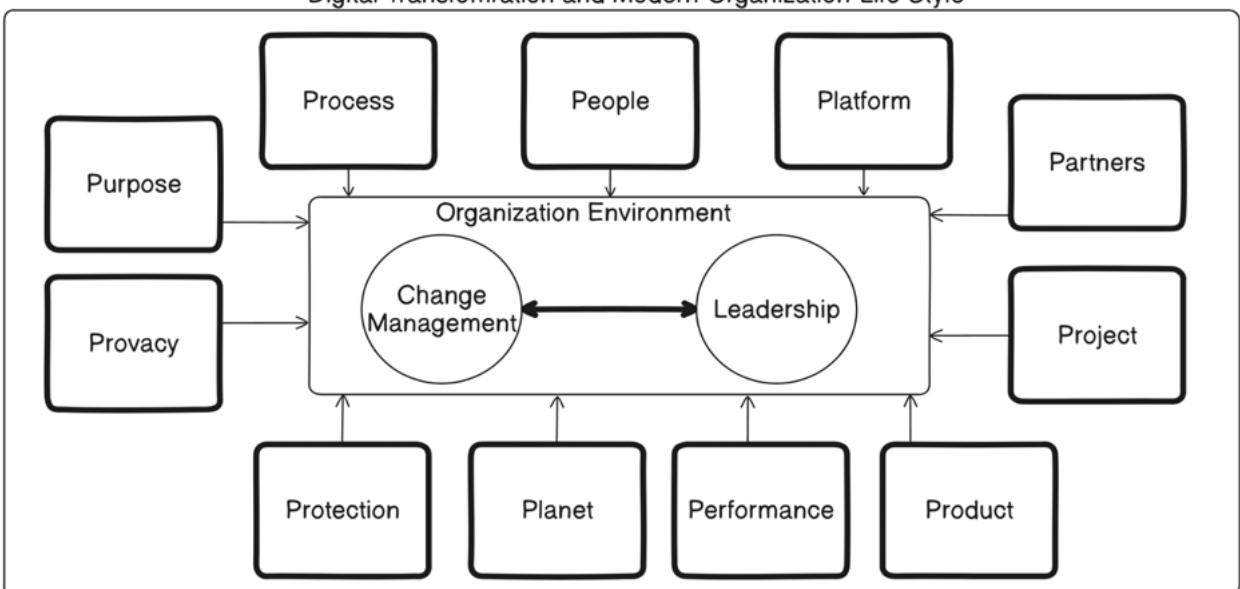
Organizations face challenges aligning digital transformation with their business strategy, developing necessary digital skills, and adapting internal processes. Digital leadership, defined as strategically guiding digitalization for the enterprise and its ecosystem, is crucial in navigating these challenges. Organizations can utilize the Digital Transformation Canvas to effectively manage digital transformation, a conceptual tool that provides a systemic view by integrating strategic and operational perspectives. This canvas consists of four main categories: Digital Transformation Strategy, which defines the purpose and strategic direction; Digital Transformation Operational Pillars, including processes, people, platforms, and partners; Digital Transformation Value, which articulates the expected benefits in product, performance, and planet; and Digital Transformation Pitfalls, addressing data protection and privacy. The canvas enables managers to visualize and communicate digital transformation initiatives, facilitating the selection of projects that align with the organization's strategic goals.
Digital Transfomration and Modern Organization-Life Style Figure 1: Digital transformation/ Modern work lifestyle.
3.4 Effects of Digital transformation and modern lifestyle on speed of changing management with considering updated leadership
According to Elia et al. 2024, The Digital Transformation Canvas (2024) is assumed to be a conceptual framework that facilitates the strategic design and implementation of digital transformation initiatives. It comprises 11 key elements categorized into four domains: strategy, operational pillars, value, and pitfalls. Among these, nine elements begin with the letter "P," and they are mentioned in continuation of the explanations, which start with Purpose: This element describes the overarching aim that justifies and motivates an organization's digital transformation efforts. It aligns with the business strategy and may arise from internal strategic plans or external market demands. The second P, as it is known, is the process of transformation, which affects specific business functions and workflows, such as marketing, sales, supply chain management, and customer service. The Process element ensures that digital initiatives integrate seamlessly with existing or newly designed business operations. The third P, which is known by the title of People, focuses on digital transformation and requires the active participation of stakeholders, including internal (employees, management) and external (customers, partners). Ensuring digital literacy and fostering a culture of innovation are crucial for success. The fourth one is Platform, which refers to the technological infrastructure that supports digital transformation, including enterprise resource planning (ERP), customer relationship management (CRM) systems, cloud computing, big data analytics, and artificial intelligence solutions. In focusing on the Ps, the fifth one is Partners, which talks about Successful transformation, which often depends on external collaboration with technology vendors, research institutions, consultants, and service providers who bring expertise and resources to facilitate digital initiatives. The Sixth P is a Project explaining that A structured approach to managing digital transformation is necessary, including budgeting, timelines, and risk assessment. This element ensures that initiatives are aligned with organizational capabilities and strategic priorities.
Additionally, the seventh one is Product, which focuses on Digital transformation and often leads to the creation of new digital products or the enhancement of existing ones with digital features. Examples include smart devices, digital platforms, and software-driven services. The eighth P is Performance, which talks about Organizations measuring the success of their digital transformation initiatives through economic and operational performance indicators, such as revenue growth, cost reduction, innovation metrics, and customer satisfaction. Moreover, the last one is Planet, which addresses digital transformation's environmental and societal impact, emphasizing sustainability, corporate social responsibility, and reducing the ecological footprint through digital initiatives. These elements provide a comprehensive framework for organizations seeking to navigate the complexities of digital transformation by integrating strategy, technology, and value creation while addressing potential challenges.
Considering the above information about Ps elements and points that explain an organization in general, Effective leadership is essential for successful digital transformation, extending beyond individual traits to include a multifaceted approach involving peers, supervisors, and organizational culture. Digital transformation leadership encompasses roles, competencies, behaviors, and enablers. Key roles include mentors, enablers, networkers, innovators, managers, mentees, and pioneers. Critical competencies involve aligning digital tools with business challenges and fostering collaborative learning. behaviours include openness to experimentation, risk tolerance, and adaptability. Enablers include a clear vision, top management commitment, cultural change, and partner collaboration.
The Digital Transformation Canvas serves as a component-based framework that defines the digital transformation process and facilitates collaborative work among stakeholders. By adopting the canvas, organizations can enhance communication transparency, increase stakeholder trust, and empower individuals and teams to pursue new initiatives. The canvas also supports the development of a transformative vision, enabling organizations to anticipate market trends and solve complex problems. Furthermore, its modular architecture allows for continuous adjustments and promotes adaptability, making organizations more entrepreneurial and open to change.
IV. COMMUNICATION AND COLLABORATION TOOLS
Advancements in communication technology have made seamless teamwork possible, even in remote work environments. Video conferencing tools such as Zoom, Microsoft Teams, and Google Meet enable effective communication among team members. Collaboration platforms like Slack, Trello, and Asana enhance project management and improve teamwork. Cloud-based document-sharing services, including Google Drive and Dropbox, simplify accessing and collaborating on files.
4.1 Blockchain and Decentralized Technologies
Blockchain technology is a beacon of transparency, security, and efficiency, revolutionizing transaction processing and record-keeping with its vast and impactful applications. Cryptocurrency transactions enable seamless, decentralized financial operations, allowing individuals and businesses to transfer value effortlessly globally. Smart contracts automate the execution of business deals, ensuring that terms are met without intermediaries, streamlining operations, and reducing costs. At the same time, supply chain tracking enhances trust and accountability by making the journey of products from origin to consumer transparent and traceable. Innovation is the lifeblood of organizations striving to thrive in today's competitive landscape, enabling them to adapt swiftly to market shifts and fulfill evolving consumer demands through various key types. Product innovation focuses on creating groundbreaking or enhanced products that captivate consumers, exemplified by Apple's iPhone, which has transformed into a multi-functional marvel with cutting-edge features, and Tesla's electric vehicles that revolutionize sustainable transportation. Process innovation enhances internal workflows to boost efficiency, cut costs, and refine operations, with lean manufacturing techniques minimizing waste and AI-driven supply chain optimization reshaping logistics. Business model innovation redefines how organizations generate and deliver value, as seen in subscription-based platforms like Netflix and Spotify, which have transformed entertainment consumption, alongside sharing economy pioneers like Uber and Airbnb that revolutionize travel and accommodation. Organizational innovation reimagines corporate structures, management styles, and workplace cultures, such as Agile methodologies, that provide flexibility in software development. At the same time, remote and hybrid work models reflect a transformative shift toward adaptability. However, despite the myriad benefits of technology and innovation, organizations encounter significant challenges, including high implementation costs that present daunting obstacles for small and medium-sized enterprises (SMEs) striving to compete with larger counterparts. Resistance to change, stemming from employee anxieties over job displacement due to automation and entrenched organizational cultures that hinder the adoption of innovative practices, adds complexity.
Furthermore, the leap into the digital domain increases vulnerability to cybersecurity risks, where data breaches and ransomware attacks can lead to dire financial repercussions and tarnished reputations. Rapid technological advancements necessitate ongoing learning and adaptation to keep pace, as organizations may find legacy systems quickly becoming obsolete, requiring costly upgrades. Integration issues arise when deploying new technologies, making it challenging for businesses to harmonize AI, Internet of Things (IoT), and cloud solutions with existing systems. Additionally, regulatory and compliance challenges, including government regulations on data privacy like GDPR and CCPA, impose intricate requirements that can be difficult to navigate. Lastly, ethical and social concerns regarding AI bias and responsible technology usage are critical issues, as automation-driven job losses risk exacerbating socioeconomic divides, raising pressing questions about the future of work.
4.2 Strategies for Effective Technology and Innovation Management
To overcome these challenges, organizations should adopt strategic approaches: Leadership and Change Management- Strong leadership is essential in fostering a culture of innovation-Change management frameworks, for instance, Kotter's 8-Step Change Model) can guide transitions. Employee Training and Upskilling - Investing in continuous learning ensures employees adapt to new technologies. Organizations should offer AI, data analytics, and cybersecurity training programs. Cybersecurity Best Practices- Implement robust cybersecurity frameworks, including endpoint protection and data encryption. Conduct regular security audits and employee awareness training: Collaboration and Partnerships. Partnering with technology providers can streamline innovation adoption. Collaborating with startups and research institutions fosters innovation. Agile and Scalable Infrastructure, including Cloud-based solutions, offer scalability and cost-effectiveness. Implementing modular and flexible IT architectures ensures adaptability. Ethical and Responsible AI Use, which focuses on Organizations, should implement ethical AI frameworks. Transparent and explainable AI models help build trust among stakeholders.
V. CONCLUSION
Effective leadership and change management requires a careful balance of vision, strategy, and empathy. Leaders must navigate operational changes while addressing the human aspects of transformation, fostering resilience and adaptability within their teams. A well-structured approach that combines innovative strategies, technological advancements, and strong leadership is essential for successfully navigating organizational transitions.
Blockchain technology, innovation, and digital transformation present significant opportunities for organizations to enhance efficiency, transparency, and competitiveness. However, these advancements also pose challenges such as high implementation costs, resistance to change, cybersecurity risks, and regulatory compliance issues. To overcome these obstacles, leaders must adopt structured change management frameworks while prioritizing a people-centred approach that promotes collaboration and continuous learning.
By leveraging innovation in products, processes, business models, and organizational structures, companies can position themselves for long-term success. Proactive leadership, strategic adaptation, and a commitment to ethical and sustainable practices empower organizations to manage change effectively, emerging more assertive, resilient, and better prepared to handle future disruptions.
ACKNOWLEDGMENT
The researchers extend their gratitude for the support provided by C3S Business School in Barcelona, Spain.
Conflict of Interest
The authors declare no conflict of interest.
Ethical Approval
Not applicable
Data Availability
The datasets used in this study are openly available at [repository link] and the source code is available on GitHub at [GitHub link].
Funding
This work did not receive any external funding.
References
Cite this article
Related Research



Special Issue
Launch a focused special issue to highlight research, emerging trends, and expert insights in your academic field.
