

IntelliPaper
Abstract
The objective of achieving effective demand for the minimization of poverty in Africa is revealed by economic, governance and survey data collected by The Heritage Foundation’sIndex of Economic Freedom, BTI Transformation Index Report, Transparency International’s-Corruption Perception Index, Fund for Peace’sFragile State Index, The World Bank Data, The End of Poverty (Sachs, 2005), and Poor Economics(Banerjee et. al., 2011). These nongovernmental entities’ reports, and scholarly books explainAfrica’s poverty and what makes it perpetual andsuggest ideas for minimizing it. This data is used to measure correlation among indicators of rule of law, public corruption, quality of governance, and fragility of states, and to determine trends toward policy enactment while documenting the current level of Africa’s poverty. In addition, this statistical analysis allows the study to show strengths or weaknesses of the international community’s poverty reduction method and the need for its transformation. The lack of substantial reduction in poverty on the continent makes it essential for African governments to automate and industrialize their economies, particularly their agricultural sectors where a majority of Africans work. The data gathered was also used to create charts, graphs, and tables to assist readers to better understand the economic development policy and agricultural industrialization strategy discussed in the study.
Explore Digital Article Text
I. INTRODUCTION
One potential reason for abject poverty in Africa (specifically Sub-Saharan Africa) is the lack of equilibrium in effective demand. This is an economic phenomenon that motivates companies to produce or manufacture goods or services for increased revenues based on consumer spending and in pursuit of profit. Effective Demand is the level of demand that represents a population (consumers) of a market's real intention to purchase (expenditure) products or services with the disposable income (earnings) or means to pay. This analysis takes into consideration that "purchasing power" is the value of a currency expressed in terms of the number of goods or services that a unit of money can buy, which can be adversely affected or weakened over time due to inflation (Hayes, 2022; Investopedia economics). Such buying power can be beneficial to a developing nation or region's economy, such as Sub-Saharan Africa's, if domestic firms manufacture the commodities (goods or services) involved. In other words, increased income is the kind of market transaction that can ignite economic growth and development. However, this is only possible when populations (consumers) with buying power are constrained in another or a different market, in this case that of advanced countries. Basically, this is the opposite of notional demand (Hayes, 2022; Investopedia economics).
Due to the need for internal demand, the acquisition of purchasing power or disposable income for their population, citizens, and consumers, becomes a critical issue for African governments. Stated differently, the issue African and developing countries' populations are encountering is acquiring disposable income, which is usually earned from permanent employment, as in developed countries. However, the vulnerable employment that Africans and developing countries' populations are engaged in does not give them access to disposable income from their modest earnings. These kinds of marginal jobs include car loaders, store front vendors, sugar cane grinders, cash crop farmers, wheelbarrow riders, motorcyclists, street peddlers, wood cutters, rock crushers, charcoal producers and many more workers that "do not participate in the formal economy" (Gobewole, 2016b). This lack of available consumer expenditure (aggregate demand) from vulnerable workers (most of Africa's population) makes it challenging to achieve effective demand in their economies. These countries have difficulty reaching a healthy point of equilibrium between aggregate demand and supply. Gobewole (2022) discussed the effect of vulnerable employment on a country's economy in his book Constitutional Neopatrimonialism in Liberia.
The problem is that reducing poverty with vulnerable jobs is a temporary solution to sustain a higher standard of living. These kinds of jobs, the main employment for most Liberians [Africans], do not provide a permanent salary, pension plan, health coverage, skills development, or job security and do not allow entrepreneurs to diversify into new businesses, critical factors needed in transforming a nation's economy (Gobewole, 2022, p.172).
Therefore, African governments need to enact legislation and/or institute economic policies, specifically agriculture industrialization, that will improve their citizens' technical skills and give them permanent employment, including high-tech jobs.
II. METHODOLOGY
This study took an average measurement of Property Rights, Judicial Effectiveness, and Government Integrity (which are components of Rule of Law) to acquire a figure for Rule of Law (The Heritage Foundation: Index of Economic Freedom, 2019). The scores and ratings for Rule of Law and Governance were acquired from The Heritage Foundation: Index of Economic Freedom, 2019 and BTI Transformation Index Report, 2019.
For example, Table 1 revealed that Mauritius has scores for property rights, judicial effectiveness, and government integrity of 69.5, 62.1, and 40.3 respectively, on a 100-point scale. The average of these scores gives Mauritius a Rule of Law score of 57.3. The same approach was applied in determining the Rule of Law score for the study's nine other countries. The Governance ratings of the ten countries were measured on a scale of one to ten (1-failed to 10-good) (BTI Transformation Index Report, 2019). The original Governance scores were multiplied by ten (10) for all countries, to make the figures for Rule of Law and Governance Quality correspond. This allowed the chart for Rule of Law, Governance, and Corruption to effectively reveal correlations among the figures. For example, Mauritius had a Governance score of 6.76, which was multiplied by 10 to equal 67.6. This made it efficient to correlate Mauritius' Rule of Law score of 57.3, its Governance Quality score of 67.6, its Corruption score of 52 (acquired from Corruption Perception Index, 2019), and its State Stability score of 38.9 (acquired from Fragile States Index Annual Report 2019) to identify trends across Africa. As indicated on Table 1, the same method was applied to the ten countries in the study. However, Chad and Central Africa Republic have State Stability scores of 108.5 and 108.9 respectively, which is above this study's 100-point scale.
This anomaly is a result of both countries being listed as "High Alert" on the Fragile States Index, from where the figures were adopted (Fund for Peace, 2019).
Table 1
| Country | Property Rights/Judicial Effectiveness/Government Integrity | Rule of Law Average Score 2019 | BTI Transformation Index Score 2019 | Governance Quality (Good, Moderate, Weak, and Failed) | Corruption Perception Index Score 2019 | Fragile States Index 2019 |
| Mauritius | 69.5 + 62.1 + 40.3 = 171.9/3 = | 57.3 | 6.76 x 10 = | 67.6 | 52 | 38.9 |
| Botswana | 58.1 + 45.7 + 52.4 = 156.2/3 = | 52.1 | 6.81 x 10 = | 68.1 | 61 | 59.5 |
| South Africa | 58.8 + 39.3 + 39.7 = 137.8/3 = | 45.9 | 6.10 x 10 = | 61 | 44 | 71.1 |
| Ghana | 49.1 + 44.2 + 35.5 = 128.8/3 = | 42.9 | 6.23 x 10 = | 62.3 | 41 | 65.9 |
| Gambia | 39.9 + 42.5 + 41.2 = 123.6/3 = | 41.2 | 5.73 x 10 = | 57.3 | 37 | 83.9 |
| Djibouti | 29.7 + 18.1 + 28.1 = 75.9/3 = | 25.3 | 5.17 x 10 = | 51.7 | 30 | 85.1 |
| Central African Republic | 19.6 + 29.6 + 23.2 = 72.4/3 = | 24.1 | 3.81 x 10 = | 38.1 | 25 | 108.9 |
| Burundi | 20.6 + 31.0 + 26.2 = 77.8/3 = | 25.9 | 3.25 x 10 = | 32.5 | 19 | 98.2 |
| Chad | 26.7 + 24.6 + 23.2 = 74.5/3 = | 24.8 | 2.63 x 10 = | 26.3 | 20 | 108.5 |
| Zimbabwe | 29.7 + 24.8 + 15.8 = 70.3/3 = | 23.4 | 2.72 x 10 = | 27.2 | 24 | 99.5 |
BTI Transformation Index Report. (2022). Country Dashboard for political transformation, economic transformation, and governance index. Retrieved from https://www.bti-project.org.
The institution of Rule of Law is pertinent because of its correlation with public governance. In other words, the quality (weak, average, and strong) or non-existence of a country's Rule of Law is associated with its degree of Governance (failed, moderate, and good). As a result, the codification of the components of Rule of Law (property rights, judicial effectiveness, and government integrity) and their level of enforcement is critical to a functional government.
III. LITERATURE REVIEW
The key problem for the poorest countries is that poverty itself can be a trap. When poverty is very extreme, the poor do not have the ability—by themselves—to get out of the mess. Here is why: Consider the kind of poverty caused by a lack of capital [disposable income] per person. Poor rural villages lack trucks, paved roads, power generators, irrigation channels. Human capital is very low, with hungry, disease-ridden, and illiterate villagers struggling for survival (Sachs, 2005, p. 54).
Lack of social and economic capital leads to even less social and economic capital in a vicious cycle.
In addition, one economist proposed that Africans are consistently made ill by tropical diseases which limit their ability to exhibit their full-potential and make their life span short, contributing to the private and public sectors' incapacity (Sachs, 2005), exacerbating poverty in Africa. David S. Landes (1999) stated that Sub-Saharan Africa threatens all who live or go there... We now know for example that many people harbor not one parasite but several; hence are too sick to work and are steadily deteriorating... The effect on organs may be imagined: they waste the liver, cause intestinal bleeding, produce carcinogenic lesions, interfere with digestion and elimination. The victim comes down with chills and fever, suffers all manner of aches, is unable to work, and is so vulnerable to other illnesses and parasites that it is often hard to say what is killing him.... We know this scourge as snail fever, liver fluke, or, in more scientific jargon, as schistosomiasis or bilharzia, after the physician who first linked the worm to the disease in 1852. It is particularly widespread in tropical Africa, but afflicts the whole of that continent (Landes, 1999, p.8).
Africa's very geographical position and climate may be contributing to the poverty trap. However, technology and public policy could offer an escape from this trap if good governance and smart economic policy, along with outside aid, were applied.
Much of the continent is trapped in a situation that African governments are unable to eradicate, so that they need assistance from the international community. The problem of poverty is also attributed to public corruption and bad governance, which is recognized by the international community. Jeffrey D. Sachs (2005) stated that "Everything comes back, again and again, to corruption and misrule. Western officials, including the countless 'missions' of the IMF and the World Bank to African countries, argue that Africa simply needs to behave itself better, to allow market forces to operate without interference by corrupt rulers" (pp. 188-189). This is corroborated, and extended into the colonial past, by Gobewole's (2018a) assertion that "The overarching strategy of natural resource extraction by advanced nations, former colonists, and now China, and the African leaders' implementation of neopatrimonialism (to enrich themselves) have impoverished a large percent of Africans" (p. 8). To escape this trap, "The rich countries do not have to invest enough in the poorest countries to make them rich; they need to invest enough so that these countries can get their foot on the ladder" (Sachs, 2005).
Despite the reason for Africa's impoverishment, some economists have discouraged giving development assistance to poor countries, claiming that such action creates a population of dependent people. Abhijit V. Banerjee and Esther Duflo explained the argument against aid to developing countries in their book Poor Economics: A Radical Rethinking of The Way To Fight Global Poverty.
[A]id does more bad than good: It prevents people from searching for their own solutions, while corrupting and undermining local institutions and creating a self-perpetuating lobby of aid agencies. The best bet for poor countries is to rely on one simple idea: When markets are free and the incentives are right, people can find ways to solve their problems. They do not need handouts, from foreigners or from their own government (Banerjee & Duflo, 2011, p. 3-4).
Banerjee and Duflo argue that there will be incentives for individuals (actors, entrepreneurs, citizens, etc.) to pull themselves out of poverty. Some experts even provide empirical evidence that shows that poor countries can experience economic growth if their markets are free. William Easterly provided statistical evidence rejecting the theory that poor countries need aid to escape poverty in his book The White Man's Burden: Why the West's Efforts to Aid the Rest Have Done So Much Ill and So Little Good.
Did the poorest countries [most in Africa] in 1950 remain stuck in poverty over the next half century? Well, no. The poorest fifth of countries in 1950 increased their income over the next five decades by a factor of 2.25. The other four fifths increased their income by a factor of 2.47... We can statistically reject that the growth rate of the poorest countries as a group was zero (Easterly, 2006, p. 38).
In other words, Easterly contended that a "poverty trap" does not exist in the poorest countries of Africa, because there is no empirical (statistical) evidence to support that claim. However, the statistics provided earlier show a period of strong economic advancement in Africa from 1990 to 2015 (Beegle & Christiaensen, 2019). While outside aid will likely be wasted with corrupt governance, in combination with thoughtful policies it can spur higher incomes and growth in Africa.
However, policy throughout Africa has not often been thoughtful. The problem is that Africa's markets are dysfunctional due to unfair economic and trade policies imposed by the international community, notably the World Bank, International Monetary Fund, and World Trade Organization., a strategy implemented partly for advanced countries and their multinational corporations' financial benefit. Gobewole (2018a) discussed this market distortion in his book Continental Impoverishment.
European Union trade policy requires certain size, weight, and chemical residues for African fruits which compels small farmers to purchase fertilizers and conduct lab-tests they cannot afford (The Trade Trap, 2012). In other words, the subsidies provided by their governments to European corn, Asian rice, and U.S. cotton farmers, the chemical residue requirement, and the smoke level on dry fish requirements allows multinational corporations to dump their grains, concentrated fruit products, and canned fish on Africa's markets (which lowers prices and bankrupted small farmers), while disqualifying African fruits from trading in advanced nation markets (Gobewole, 2018a, p. 62-63).
These trade barriers include a restriction for African farmers to establish commodity contracts (futures, options, etc.) with multinational corporations. Such an unfair product qualification standard, and minimum access to most developed country markets, undermine the theory that incentives in competitive markets will lead to growth in poor countries. Gobewole (2018a) stated that "the IMF, World Bank, and World Trade Organization, require developing nations to liberalize their capital and consumer product markets without implementing equitable policies like 'spending requirement for advanced nations to purchase Africa's agriculture commodities' in developed nations (Stiglitz, 2002). This phenomenon has allowed multinational corporations, usually owned by advanced nations, to cheaply acquire essential raw materials from developing [poor] nations without paying a fair price"
(Stiglitz, 2002, p. 64), a system that is preventing Africa from igniting economic growth that could minimize poverty on the continent. This is critical to poverty reduction in Africa where approximately sixty percent of the population earned their living from the agriculture sector.
Another issue contributing to poverty in African countries is their public institutions' quality, encompassing the rule of law, democratic accountability, state authority, and an independent press. These are the entities that enable society to function and allow the government to administer effective governance, the primary responsibility of every government. As a result, a country's public institution level of quality is critical to the implementation of public policy and national security while in pursuit of economic objectives. However, these institutions are weak in most African countries as reflected in Chart 3 below. This author (2016b) further discussed the relevance of public institutional quality in government in his book Liberia's Political Economy: An Examination of Public Institutional Quality.
A strong rule of law, an effective democratic accountability, and a strong state authority are responsible for economic development in advanced nations. In other words, realistically, Liberia [Africa] should not be a poor nation [continent] because of its wealth in natural resources, its raw agricultural commodities, and its available workers. Instead, the nation's [continent's] moderately weak, failed, or nonexistent institutions have created an environment for public officials, foreign investors, and concessionaires to extract valuable natural resources for high profits; make property registration difficult; and make it impossible to develop productive capability (Gobewole, 2016b, p. 168).
In response to continued economic underperformance, in the 1960s the international community began instituting economic programs to eradicate poverty in African countries. Jeffrey D. Sachs discussed international organizations' approach to poverty resolution in Africa.
The IMF and World Bank virtually ran the economic policies of the debt-ridden continent, recommending regimens of budgetary belt tightening known technically as structural adjustment programs. These programs had little scientific merit and produced even fewer results. By the start of the twenty-first century Africa was poorer than during the late 1960s, when the IMF and World Bank had first arrived on the African scene, with disease, population growth, and environmental degradation spiraling out of control (Sachs, 2005, p. 189).
Under this program, some countries experienced extreme economic decline that led to political instability and civil war in the 1990s, a visible indication that International Monetary Fund and World Bank initiatives, such as structural adjustment programs, were a failure. Clearly, pursuing a different economic strategy would have been the best way forward, particularly, an approach that would assist African countries to industrialize their economies, specifically the agriculture sector. It would likely have been more effective to institute an economic strategy like "Import Substitution Industrialization," a technical name for a program that allows developing or poor countries to transform their industrial structure and subsidize their new or infant companies. While Africa remained under colonialist policies by another name, the developed countries hypocritically instituted very different policies with their own borders. Gobewole (2018a) stated that "England, Germany, France, Italy, and North America [were] raised to empire [and a modern state] status because of slave labor, resources extracted from colonies, infant industry policies, and industrialization of their production structure, which transformed their economies. These activities enhanced inventiveness, innovation, and productivity in the creation of essential technologies" (p. 75). Such a strategy would assist African governments to improve their population's technical skills (productive capability), give them permanent employment (high-tech jobs), and provide steady incomes with benefits (health coverage, retirement program, pension plan, etc.). This would mean the kind of jobs that give a country's population access to permanent and disposable income that can enable developing or poor countries to achieve effective demand, growing and developing their economies, the overall goal for African countries.
IV. ESSENTIAL ECONOMIC STRATEGY
The policy to achieve effective demand in Africa will need to be collaborative among nation states as well as regionally focused. This means the participating countries must implement a single economic policy. A recommended approach is to simultaneously industrialize their agriculture sectors, a strategy which will improve their populations' productive capability and their consumption expenditure (spending). For example, in an advanced economy like the United States, consumer spending in the late twentieth century accounted for approximately sixty six percent (66%) of its gross national product (Baumol and Blinder, 1988). In addition, the United States has the authority to manipulate those expenditures through taxation to control (decrease or increase) the levels of consumers' disposable income, which means the purchasing power (dollar amount) they can keep or spend. And to manipulate consumer spending power through monetary policy. This capacity is critical for developing and emerging economies around the world. However, African governments lacked, and continue to lack, that flexibility because most of their population (consumers) does not have a permanent income from employment, which is essential to ignite economic expansion. Basically, this is Africa's primary economic problem that requires solutions to minimize or eliminate poverty.
This makes the public policies African countries implement essential to economic growth and development. Industrialization and trade policies are a strategy that Sub-Saharan African countries can institute through collaboration and agreement. Even before a new policy can be created, these nations can reinstitute a familiar policy "Import Substitution Industrialization" that has been implemented in the past with positive results. A trade and economic policy that advocates the replacement of foreign imports with domestic production. This author (2016b) previously discussed the effects of such a government economic strategy:
The implementation of an economic strategy like "import substitution industrialization" will allow Liberia's [Africa's] government to enact policies that protect its infant industries, subsidize them effectively, and give them time to develop their productive capabilities before engaging in competition with advanced nations' industries (Chang, 2014)...In other words, a constant IQ [Institutional Quality] plus GI [Government Intervention] policies like tariffs and subsidies will increase PC [Productive Capability] by creating new managerial skills, technical knowledge, and industrial practices, which will equal ED [Economic Development] that produces a higher standard of living for Liberian citizens.
Stated differently, Liberia's [Africa's] government can develop its workforce's capability, create high-tech jobs, enhance entrepreneurship, and develop its economy by reforming its property rights policy (land ownership), renegotiating some of its concession agreements, levying tariffs on some agriculture commodities export, banning the exportation of some raw agriculture produce, and levying tariffs on the importation of some consumer goods, while subsidizing local producers and domestic firms in the agriculture industry (Gobewole, 2016b, p. 101-102).
The process of taking advantage of effective demand begins with the citizens of a country or region having sufficient purchasing power (disposable income) to pay entities for their products. In addition, a population with access to high levels of disposable income from permanent earnings gives investors and entrepreneurs an ability to invest in domestic firms (new and existing) whose products can compete with foreign companies, specifically multinational corporations. To accomplish objectives such as permanent earnings and disposable income, Africa has to enhance its population's productive capability (technical skills) and transform its industrial structure, including the agriculture sector. This author (2018a) further discussed essential economic strategy for African governments:
African nations will need to make necessary sacrifices to give their populations, entities, and industries opportunity to enhance their technical skills, productive capability, and innovative knowledge. These are critical prerequisites for transforming a nation's industrial structure (Chang, 2003; Stiglitz et. al., 2015)... In other words, successful and sustained economic growth demands the creation of a learning society based on college education, technical skills, manufacturing knowledge, managerial concepts, and productive capabilities (Gobewole, 2018a, p. 67).
The issue is African countries' inability to institute trade policies and economic strategies that allow them to enhance effective demand. This would maximize the available natural and human resources that can be leveraged to accomplish that objective. One method of creating demand for African commodities is by developing an industrial economy and improving the labor force to function in that environment. This means transforming citizens' work skills (as indicated above) from performing manual tasks to performing technical skills, specifically, in the agriculture sector, which is critical throughout sub-Saharan Africa. Gobewole (2018a) stated that "The acquisition and diffusion of such knowledge among citizens and firms is the underpinning for creating and igniting entrepreneurial initiatives, fostering economic growth, and sustaining development in Africa. Such a manufacturing or production process can begin with African governments building factories that use iron ore to manufacture steel, latex to produce plastic goods and fruits to produce juices" (p. 68).
This is a strategy that can transform developing economies into advanced economies through industrialization and creation of a workforce with technical skills, while enhancing the nation's overall productive capability (Gobewole 2016b). A population with effective technical skills and productive capability maintains citizens with permanent (not vulnerable) jobs, such as engineers, designers, technicians, and operations, that allows them to develop effective demand for goods or services of domestic firms. This employment opportunity will help to minimize and eventually eliminate poverty in a country. In other words, the existence of enduring employment and government provision of social programs, sometimes referred to as the "safety net", is critical to poverty reduction and advancement of a nation's economy. When not undermined by corruption, this situation can result in increased revenue and tax generation that leads to better public services such as healthcare, educational programs, and public utilities, essential services that are needed in African and all developing countries.
V. DATA ANALYSIS AND FINDING
A large-scale growth and processing of agriculture commodities into consumer and commercial products is Africa's best strategy to begin the minimization of poverty. This has a high poverty reduction potential because a large percentage of Africa's population is engaged in farming, hunting, and transporting this produce to market. In addition, transforming the agricultural sector will free workers for other job sectors, such as manufacturing and services, that should be advanced simultaneously with the modernization of agriculture.
However, the continent's labor force statistics reported by nongovernmental organizations like The World Bank, The International Labor Organization, and Afrobarometer do not reflect the actual workforce. In most cases, these entities lack the ability to gather data from subsistence farmers, child workers, informal laborers, and vulnerable workers that make up a large percent of Africa's labor force. For example, "Seventy-four percent of all female workers in Liberia are informal laborers, and 41 percent of university-educated women work informally, compared to 24 percent of university-educated men" (Council on Foreign Relations, 2022), a statistic that demonstrates the flaw in the current labor force reporting system.
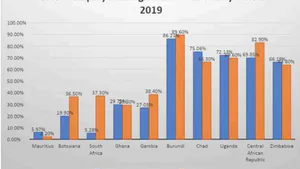
Chart 1 provides an example of such inaccurate information. The Chart reflects figures of Total Labor Force, National Populations, and Employment in Agriculture for this study's ten sample countries in 2019. As reported by The World Bank Data, it misleadingly reveals that a small percentage of the population of Sub-Saharan Africa earned their living from the agriculture sector. The Total Labor Force figure (acquired from The World Bank Data, 2019) is approximately 74 million of a Total Population of 190.2 million people in the study's ten sample countries. Of the 74 million employed people, approximately 32 million (approximately 31,605,409) are officially described as agriculture sector employees. These numbers do not account for the labor participation of the remaining approximately 116 million people in the sample countries' population. While some are children, or not working for other reasons, many of these individuals are engaged in vulnerable and substance labor mostly associated with the traditional agriculture encompassing a pre-industrial style of food production reflecting traditional cultural beliefs and using traditional tools, existing natural resources, and organic fertilizer (Gobewole, 2016). In 2010 Liberia had a vulnerable employment rate of 77.9 percent and an informal employment rate of 68 percent of its population (Gobewole, 2022). Those figures include subsistence farmers, vulnerable laborers, and child workers who are not accounted for by the international organizations' statistical data, a population with the highest potential of being lifted from poverty if African nations industrialized their agriculture sector (and developed other sectors). For example, child laborers (not allowed in advanced economies) are a large percentage of the individuals engaged in vulnerable employment and subsistence farming associated with the agriculture sector in the sample countries. This author (2022) stated that, regarding child labor:
This standard is not adequately applicable to Liberia (and most developing countries) for a few reasons. First, this definition of age requirement would render half of Liberia's population ineligible to work (or considered child labor). However, developing countries like Liberia (and other African countries) have no alternative but to allow younger children to participate in vulnerable employment, that is low-skill employment, to sustain their families and communities. Therefore, such misleading statistical information about unemployment, from the Afrobarometer Round 6 Survey, partly distorts the real effect of permanent employment and public corruption (Gobewole, 2022).
In other words, African countries simply cannot afford to institute the full child labor protections of more advanced countries. However, limiting hours of child work and providing education are critical to Africa's future.
Statistics show that an over-reliance on rudimentary agriculture methods is a poor growth strategy. Chart 1 shows the total labor force participation, as well as the employment in agriculture, for ten African countries in 2022.
{"image_source":{"path":"images/c23ca3e5dd0e224297a22f77a497bd3ddd9cc4128a0139ed615696c994c90b36.jpg"},"content":"","chart_caption":[],"chart_footnote":[]}
BTI Transformation Index Report. (2022). Country Dashboard for political transformation, economic transformation, and governance index. Retrieved from https://www.bti-project.org.
The World Bank Data. (2022). Labor force total. Retrieved from https://data.worldbank.org/indicator/sl.tlf.totl.in?locations
Chart 2 reveals that, among ten African countries, those with a higher percentage of their recorded labor force in agriculture have higher poverty rates, while the countries with a lower percentage of their recorded labor force in agriculture have lower poverty rates.
{"image_source":{"path":"images/dface8aa3ad58d9cf2d321033cf9ce33ca053dab9c5976b45c734f47862724c7.jpg"},"content":"","chart_caption":[{"type":"text","content":"BTI Transformation Index Report. (2022). Country Dashboard for political transformation, economic transformation, and governance index. Retrieved from https://www.bti-project.org."}],"chart_footnote":[]}
Even though these labor statistics are distorted because, as indicated above, the official labor participation does not capture subsistence farmers, child workers, informal workers, and vulnerable workers of the agriculture sector, the point is underscored that opportunity for Sub-Saharan African nations to ignite economic growth and reduce poverty among their citizens can be accomplish through agricultural industrialization. This approach will allow workers to improve their technical skills by performing advanced agricultural functions like processing raw commodities in consumer goods, enhancing productivity, and maintaining permanent employment.
Therefore, a good starting point to ignite economic growth and development is by industrializing the agriculture sector. Currently, the commercial, concession, and subsistence (small holder) farmers are producing a variety of agricultural commodities (cocoa, coffee, corn, rice, palm oil, cassava, etc.) without significant advanced technological (mechanization, irrigation, storage, modern equipment, all-weather road, etc.) capability available to them. Moreover, the majority of these products are sent to advanced countries and multinational corporations for raw materials. This means that other countries capture most of the value of, and profits from, these products.
This lack of high-tech capability leads to diminished product yield, crop dysfunction, and low annual agricultural productivity. In addition, this deficiency is enhanced by unfair trade policies imposed on Africa's agriculture sector by the World Trade Organization. Such as fruits and fishery goods being prohibited from advanced countries' markets. In addition, the quality of rule of law in the study's sample countries shows a relationship to their poverty and fragility levels. Simply put, a country with a strong rule of law is likely to have good governance, lesser public corruption, and a lower poverty rate.
Chart 3 reveals a strong correlation between a high Rule of Law score and problems with corruption and stability in 2019 in ten African countries: Mauritius, Botswana, Ghana, South Africa, Gambia, Djibouti, Burundi, Zimbabwe, Chad, and the Central African Republic.
{"image_source":{"path":"images/8833c1f8f9441a9be343585f8745cf2427cf19533a45bfb3e57b6ccc55fff114.jpg"},"content":"","chart_caption":[{"type":"text","content":"Chart 3."}],"chart_footnote":[]}
Transparency International. (2019). Corruption perception index 2019: The global coalition against corruption. Retrieved from https://www.transparency.org.
Fund for Peace. (2019). Fragile states index annual report 2019. Retrieved from https://fragilestatesindex.org.
The Heritage Foundation [Terry Miller, Anthony B. Kim, and James M. Roberts]. (2022). 2022 index of economic freedom. Retrieved from https://www.heritage.org/index.
These figures indicate that a strong rule of law leads to lower corruption and more stability in the study's sample countries. In addition, this analysis shows that a country's public institution quality has an effect on its political economy by enhancing the provision of public goods.
VI. CONCLUSION
Rising and persistent poverty in Africa is due to public institutional dysfunction that affects market activities. Most countries in Africa have weak rule of law, democratic accountability, and state authority, along with scant or no independent press that is critical to exposing corruption in their economic and political systems. Public institutions' effective performance is the reason for market stabilization, competition among private firms, creation of high-tech jobs, and enhancement of high productivity that sustain advanced countries' economies. Altering Africa's public institutions, its trade policies, and its industrial structure to more resemble those in advanced countries will improve productive capability. This, in turn, will create the permanent employment that fosters effective demand, the appropriate approach for ensuring disposable income and increased purchasing power for a large percentage of Africa's population. This is the only way to reduce poverty on the continent. In other words, Africans do not need to be too constrained, too sick, or prevented by international organizations' programs, such as structural adjustment, to extract themselves from multidimensional poverty. Instead, the implementation of effective public institutions will allow Africa to achieve its poverty reduction goals. For Sub-Saharan Africa, the agriculture sector is the best place to begin simply because a large percent of the region's work activities is in that sector, including subsistence farmers, vulnerable workers, child workers, and informal laborers. Unfortunately, statistical data that quantify these workers is not available in most Sub-Saharan African countries. Therefore, this study has used the best data available to show that only an industrial policy beginning with agriculture will ignite effective demand and economic development across sub-Saharan Africa.
Conflict of Interest
The authors declare no conflict of interest.
Ethical Approval
Not applicable
Data Availability
The datasets used in this study are openly available at [repository link] and the source code is available on GitHub at [GitHub link].
Funding
This work did not receive any external funding.
References
Cite this article
Related Research

Special Issue
Launch a focused special issue to highlight research, emerging trends, and expert insights in your academic field.