


IntelliPaper
Abstract
We will attempt to summarize in this text the private scientific research that our team has conducted on rotational dynamics over the past forty years. The document analyses the rotation and orbiting of rigid solid bodies, and specifically of celestial bodies, arriving at a Theory of Dynamic Interactions (TDI) as a solution to the problems not resolved by Kepler’s and Newton’s laws, by taking into account the simultaneous orbital and rotational movements of planets. The text describes experiments that demonstrate how a body in rotation and translation can alter its trajectory, thus challenging the classical Newtonian model. The TDI explains the behaviours of bodies that simultaneously orbit and rotate, and it can be applied to dynamic phenomena that meet those conditions, such as the case of boomerang flight, gyroscopes, or the anomalies observed in the Pioneer probes, offering a new interpretation of these behaviours. The text suggests that this theory provides new insights into understanding rotational dynamics and the harmony of the universe, proposing a defined mathematical model for modern physics and for certain natural phenomena.
Explore Digital Article Text
I. INTRODUCTION
Driven by our interest in observing the universe—both the dynamics of the cosmos and the interactions of atomic particles—we began an investigation into the dynamic behaviour of rotating rigid bodies. We carried out the necessary experimental tests, subjecting these bodies to new, non-coaxial rotations, ultimately developing a new theory: the so-called Theory of Dynamic Interactions (TDI), supported by a specifically conceived mathematical framework.
In the solar system, all planets rotate on their own axes and orbit around the Sun. The first modern scientist to study the motion of the planets was the German astronomer Johannes Kepler in the 17th century. Kepler formulated three fundamental laws for understanding celestial mechanics, which laid the foundation for the development of orbital physics.
Later, Newton explained these behaviours through his Law of Universal Gravitation, which Einstein accepted and incorporated into his Theory of Relativity. However, Kepler's laws referred exclusively to the orbiting of planets and did not analyse their axial rotation.
The Theory of Dynamic Interactions (TDI) that we propose, offers an update to this problem, and provides justification for the simultaneous rotation and orbiting of celestial bodies—an aspect not previously considered, as I have already presented in other articles and developed through various cases and assumptions. Therefore, the TDI we present justifies this behaviour, and its application allows us to understand the simultaneous rotational and orbital movement of planets and other celestial bodies.
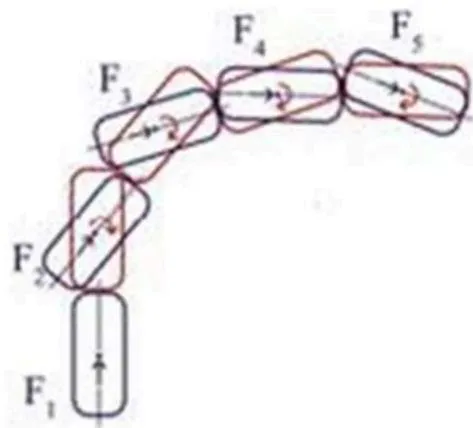
TDI explains that a body in space, following a rectilinear trajectory and possessing translational and rotational velocity around its main axis, when subjected to an external torque not aligned with its intrinsic rotation, does not generate a new rotation, but rather modifies its trajectory.
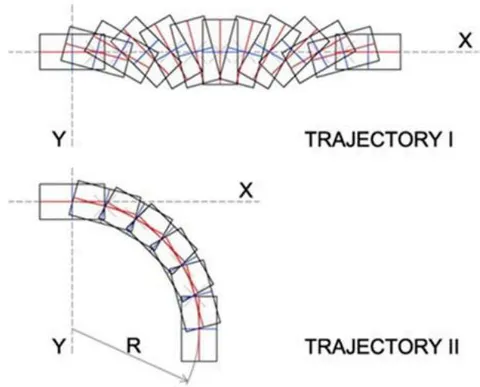
In our experimental tests, we concluded that the velocity field generated, for example, by a torque resulting from buoyancy and weight—when not aligned with the intrinsic rotation of the object—causes the object to rotate around a vertical axis perpendicular to the external torque (Figure 1), thereby altering its trajectory.
In that figure, the displaced object is shown in red (with its previous orientation), and in black is the new orientation of the object due to the resulting dynamic coupling. We concluded that under these conditions, a coupling occurs—an interaction between two velocity fields (the translational field already present and the anisotropic one generated by the new torque). As a result, the object's trajectory changes, initiating an orbit similar to that of Earth around the Sun, which would be closed if the external conditions remain constant.
With that initial experimental test, we concluded that the accepted model attempting to explain Earth's behaviour around the Sun was incorrect, and that it is not solely the Law of Universal Gravitation that enables the observed orbital trajectory simultaneous with Earth's rotation.
II. INTERPRETATIVE ERROR
For me, all of this began many years ago when I wanted to investigate the research of my professor Miguel Catalán. Miguel Catalán was a spectroscopist and, in the 1920s, in the laboratories of Imperial College London, he discovered multiplets in the manganese spectrum — groups of lines with characteristic regularities. Catalán demonstrated that the study of multiplets led to a better understanding of the energy states of atomic electrons and allowed for the definition of the structure of matter. However, the rotational and orbital behaviour of an atom's outer electrons remained a mystery in those years.
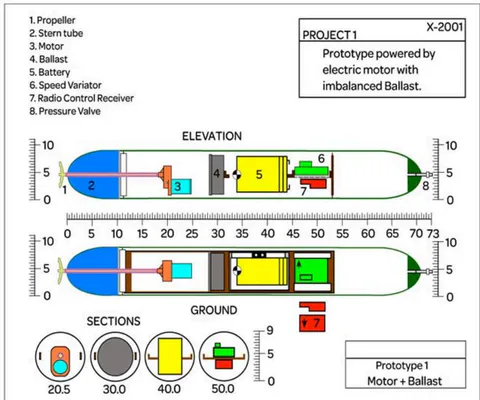
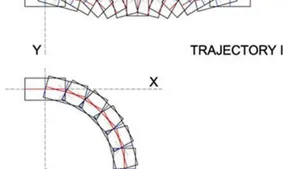
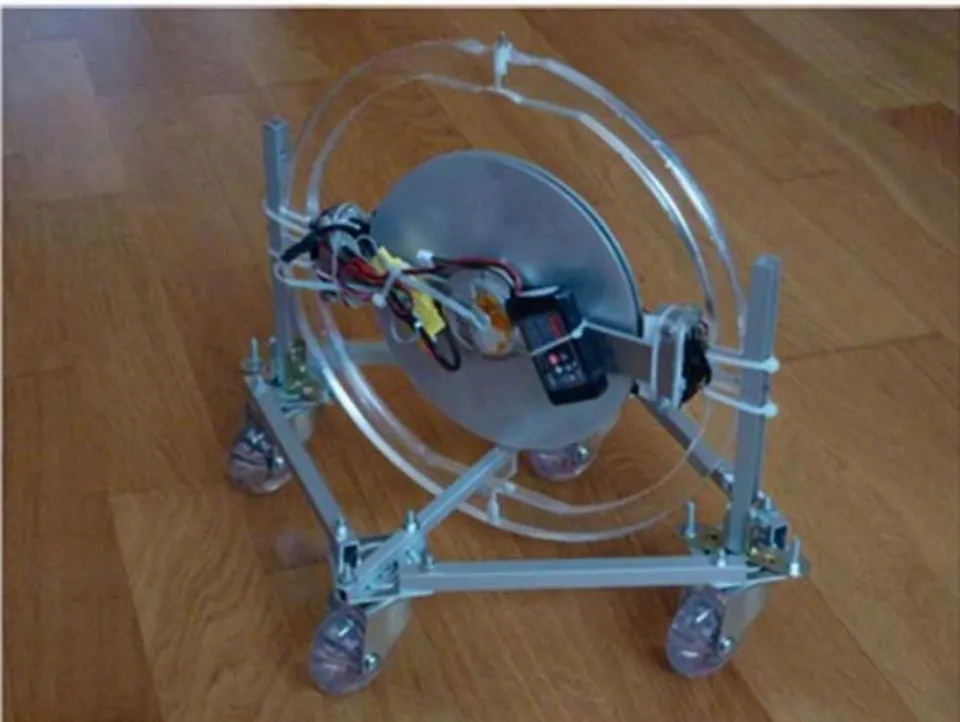
In this context, we concluded that Newton's laws could be valid under assumptions without accelerations, but not when dealing with moving bodies that rotate. To test this, we conducted an experimental trial with a waterborne vehicle, designed according to the scheme shown in Figure 3.
As shown in the video https://advanceddynamics.net/wp-content/uploads/2014/02/31Submarino_Prototipo_I.mp4, we can assume the vehicle follows a straight-line trajectory, equipped with translational velocity and intrinsic rotation around its principal axis of inertia, which is subjected to a new torque not coaxial with the intrinsic rotation — for example, the buoyancy/weight pair, contained in the drawing plane, as in our experiments.
In such a case, the anisotropic velocity field generated by this buoyancy/weight pair forces the vehicle to perform a turn around a vertical axis, perpendicular to the external torque acting upon it.
We repeated the experiments with other vehicles (see Figure 5) and came to the conclusion that the model proposed by Newton to justify the Earth's orbit — which was later upheld by Einstein — was, in our opinion, clearly flawed and needed to be replaced by the model conceived by the TID (Theory of Dynamic Interactions).
Moreover, Newton's statement would necessarily produce a variable or undulating orbit for both the Earth and the Moon: their trajectories would be influenced by gravitational forces at each point of their orbits. In the case of the Moon, its orbit would fluctuate depending on the relative positions of the Sun and the Earth with respect to the Moon. The resulting orbit would not be the same if these bodies were in conjunction or in opposition.
On the other hand, the Theory of Dynamic Interactions not only justifies the orbits of Earth, the Moon, and celestial bodies, but also provides insight into other natural dynamic phenomena, such as: the
The gyroscope would make this movement flight of the boomerang, the spinning top's dance, the gyroscope, the gyroscopic pendulum, epostracism, atmospheric vortex phenomena, dynamic confinement, the dynamic anomalies of the Pioneer probes, dynamic lever mechanics, steering of vehicles without rudders, spinning balls and curveballs, roll coupling in airplanes, bouncing bombs from World War II, the Euler disk, or soda cans that lift off without an upward force — among many other dynamic examples we can observe in bodies with intrinsic rotation.
A multitude of cases whose behaviour, in our opinion, had not been correctly explained until now.
All of these examples, and many more, are described in the second volume of the book:
NEW PARADIGM IN PHYSICS, and can also be explored via the portals:
https://advanceddynamics .net/http://www.dinamicafundacion.com/and in various videos.
The experimental tests carried out are easily reproducible according to the scientific method. Advanced Dynamics has announced three successive contests for possible refutation or antithesis of the proposed theory, without receiving any response. The presentation videos of the TID can also be found at:
https://youtu.be/keFgx5hW7igor http://www.youtube.com/watch?v=k177OuTj3Gg&feature=related.
This strange behaviour of rotating bodies is due to the phenomenon of precession, which occurs when a rotating body in motion is forced to perform a new rotation around a new axis. Newton's mechanical model of the Universal Law of Gravitation should be considered an approximation — although it has endured for centuries in our scientific paradigm.
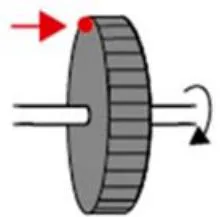
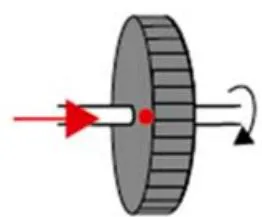
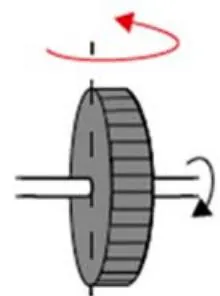
Figure 4: Precession in rotational dynamics is generated when a force is applied to a rotating body, forcing it to perform a new rotation around a new axis. The body's response is not that new rotation, but rather a reaction as if the force had been applied at another point, forcing it into an orbital motion — due to the coupling of the new induced rotation, with the existing translational velocity — thereby generating the orbital trajectory of celestial bodies.
Our TID hypotheses are based on the coupling of translational velocity fields at each point of the moving object — even if these fields are caused by translational movements or generated by external actions that could create new rotations not aligned with any other preexisting ones in the body.
We believe that our proposals and the results obtained from our experimental tests suggest new horizons for rotational dynamics and new keys to understanding the harmony of the universe. The universe is made up not only of forces but also of their effects, as they constantly act on celestial bodies in rotation with constant translational velocity, resulting in a closed orbit. Thus, it is a system in motion, yet also in a constant state of dynamic equilibrium. Isn't this very equilibrium we observe in the cosmos the essence of celestial mechanics?
The orbital movements we observe in celestial bodies are the result of dynamic coupling not foreseen in Classical Mechanics, as expressed in the TID, enabling a secular dynamic equilibrium. Consequently, we believe the TID mathematical model we propose is of great conceptual importance.
Furthermore, we think it is not only necessary to understand the dynamics of rotating bodies, but also that of the cosmos — with bodies that orbit and have constantly recurring motions — which make possible systems that have been in dynamic equilibrium for centuries, and are not necessarily in a process of unlimited expansion.
We even believe that this new dynamic theory improves our understanding of the universe and the matter from which it is made.
III. MATHEMATICAL FORMULATION
Non-coaxial moments generate an anisotropic distribution of velocities, which, when coupled with the translational velocity field, causes a rotation in the velocity of the center of mass. The variation in the direction of the velocity can be obtained by applying the mathematical formula of our model:
The operator matrix will be:
So, the velocity vector will rotate by an angle alpha due to this dynamic coupling. The velocity vector will be in the form, in the body frame:
The proposed mathematical formulation has been subsequently complemented and developed by Arturo Rodriguez Palenzuela in his book: Rotational Field Theory.
The author proposes a new description of two types of motion already known in physics, namely rotation and precession of objects, which, according to the theory presented, experience them in a unified manner.
These rotational and precessional movements would be generated, starting from rest, by the action of new macroscopic forces, whose associated fields would be dynamically related by equations similar to Maxwell's equations of Electromagnetism.
In his book, and in his writings, Rodriguez Palenzuela also describes the connection with the Dynamic Interactions Theory. As a demonstration of the validity of the Rotational Field Theory, he presents the result of a simulation of Chandler's motion developed from the postulated model.
These proposals result from private scientific research carried out by Advanced Dynamics team for over 40 years, seeking nomological relationships of non-inertial systems. The objective of these investigations was to understand the dynamic laws of rotating bodies in space, by analyzing their behavior.
As a result of this research project, dynamic behavior laws have been found in environments where Classical Mechanics laws are not applicable. A new dynamic and mathematical theory for bodies with intrinsic rotation has been proposed. Through repeated experimental tests, this dynamic theory has been confirmed with certainty, revealing how to conceive the true development of scientific knowledge in this area of nature.
This new paradigm suggests new keys to understanding the cosmos and posits celestial mechanics equilibrium as a logical and rational result of these new dynamic hypotheses, but also allows us to imagine the poetry of our universe, comparing the movement of celestial bodies to the flight of a boomerang.
New Paradigm
In our opinion, this represents a substantial shift in the basic assumptions or models within the dominant theory of dynamic science. We are truly proposing a paradigm shift.
This new physical framework defines a new image of the world and makes it possible to justify behaviours that, until now, were considered chaotic or insufficiently understood. Our objective is to share the surprising results obtained and to attract interest toward the research of this new area of knowledge — rotational dynamics — and its many remarkable scientific and technological applications. The Theory of Dynamic Interactions (TDI) is a fascinating concept. We believe our proposal offers entirely original content, and that the conclusions we present constitute a new paradigm in physics, one that had not been formulated until now.
IV. SUMMARY OF CONCLUSIONS
As a result of this dynamic research work, we propose the following summary of our conclusions:
There is a broad area of research, still insufficiently developed, in rotational dynamics for rigid solid bodies subjected to accelerations caused by simultaneous non-coaxial rotations.
This area of knowledge can be analysed under both relativistic and non-relativistic mechanics frameworks.
The hypotheses are based on new criteria regarding velocity coupling and rotational inertia.
After conducting the non-relativistic experimental tests presented, we concluded that new general behavioural laws can be deduced based on the analysis of the dynamic fields generated.
We have also derived an equation of motion for rigid solid bodies undergoing translational movement with intrinsic angular momentum, when subjected to new, non-coaxial torques or moments. This defines their dynamic behaviour and has led to a deep mathematical analysis and development of the behaviour of bodies with intrinsic rotation and arbitration.
We found a clear physical and mathematical correlation between rotation and translation. This mathematical connection allows us to identify a physical relationship between the transfer of rotational kinetic energy and translational kinetic energy, and vice versa.
This mathematical model implies that bodies with intrinsic rotation and translational movement, when subjected to successive non-coaxial forces, will begin an orbiting motion as a result of the dynamic interactions generated.
As long as the initial angular momentum remains constant and a second non-coaxial torque or moment acts, the center of mass of the moving body will follow a closed orbit, without requiring the existence of any centripetal force.
There is no need to include unstructured effects, fictitious forces, or supposedly deduced expressions such as dark energy or dark matter in order to conceive a model of the cosmos and a dynamic behaviour of nature that is coherent with observational experience.
A revision of the mathematical models derived within the framework of General Relativity is advisable, incorporating the equation of motion we propose and the dynamic criteria of the TDI.
The Theory of Dynamic Interactions also allows us to answer the initial aporia: to become aware of and understand the physical and mathematical correlation between arbitration and intrinsic rotation.
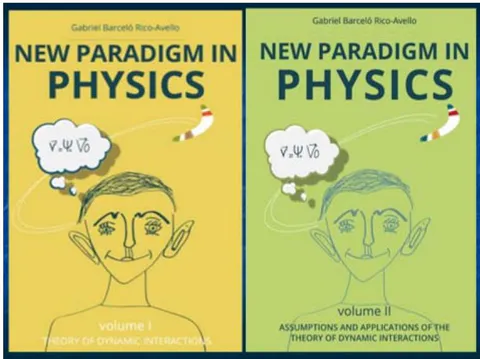
Several books have been published on the results obtained, in Spanish or in English, as well as over seventy articles throughout the course of the research.
We recommend reading Section 5.4 of Volume I of New Paradigm in Physics, as well as the book Theory of Rotational Fields by Arturo Rodríguez Palenzuela (2022), which proposes the mathematical development of the Theory of Dynamic Interactions, rotational fields, and the Chandler motion.
An antithesis prize for the TDI was announced three times, and on all three occasions, it remained unawarded.
To access more complete documentation on the Theory of Dynamic Interactions, please visit:
http://www.advanceddynamics.net/ http://www.dinamicafundacion.com/
V. EXPERIMENTAL TESTS AND VIDEOS
Over recent years, various experimental tests have been conducted with fully satisfactory results. These tests confirm the dynamic hypotheses on which the Theory of Dynamic Interactions is based.
Videos of these experiments can be seen at the following links:
http://www.youtube.com/watch?v=P9hGgoL5ZGk&feature=related
http://www.youtube.com/watch?v=XzTrGEtJGXU&feature=related
http://www.youtube.com/watch?v=dtMqGSU9gV4&feature=related
http://www.youtube.com/watch?v=qK5mW2j2nzU&feature=related
Barceló, G.: Theory of Dynamic Interactions.
Videos, 2002. http://www.youtube.com/watch?v=P9hGgoL5ZGk&list=PL3E50CF6AEBEED47B http://www.youtube.com/watch?v=XzTrGEtJGXU&list=PL3E50CF6AEBEED47B http://www.youtube.com/watch?v=dtMqGSU9gV4&list=PL3E50CF6AEBEED47B http://www.youtube.com/watch?v=qK5mW2j2nzU&list=PL3E50CF6AEBEED47B http://www.youtube.com/watch?v=vSUkd4slHGQ http://www.youtube.com/watch?v=P9hGgoL5ZGk&feature=c4-overview-vl&list=PL3E50CF6AEBEED47B Bauluz, E.: New Dynamic Hypotheses. Madrid, 2011. http://www.youtube.com/watch?v=vSUkd4slHGQ Sánchez Boyer J.: Imago Universi. Video, Madrid, 2013. https://vimeo.com/62247544 Pérez, L. A.: Reflecting New Evidence on Rotational Dynamics, 2013. Video. http://vimeo.com/68763196 Pérez, L. A.: The Dance of the Spinning Top. Video, Valladolid, 2015. www.advanceddynamics.net/spinning-top-video/ Pérez, L. A. The Pendulum of Dynamic Interactions. Video. 2015 www.advanceddynamics.net/the-pendulum-video. https://www.dropbox.com/s/rrjb1786ub75a8h/PIDing_m.mp4?dl=0 Sanchez Boyer J.: The Flight of the Boomerang II, Video. 2015 https://www.dropbox.com/s/stng5b2co1441hk/Boomerang_ENG_mini.mp4?dl=0 https://www.youtube.com/watch?v=mGfrGW5fhOg&feature=youtu.be
We have tried to summarize in this article, for the first time, a summary of the research work developed in Rotational Dynamics, proposing a new model to understand the behaviours of rigid bodies, planets, or celestial bodies when they have intrinsic rotation and orbit.
Conflict of Interest
The authors declare no conflict of interest.
Ethical Approval
Not applicable
Data Availability
The datasets used in this study are openly available at [repository link] and the source code is available on GitHub at [GitHub link].
Funding
This work did not receive any external funding.
Cite this article
Related Research


Special Issue
Launch a focused special issue to highlight research, emerging trends, and expert insights in your academic field.