



IntelliPaper
Abstract
The contingent valuation method is widely known in the academic world for being a simple and flexible non-market estimation method, which is widely used in environmental cost-benefit analysis and in environmental impact assessment schemes. Its empirical application is almost a standard issue at a global level, however, little has been discussed about the limitations, difficulties and potential it has for the valuation of water resources. In this line, the article seeks to identify the main water resources studied, the econometric techniques used, the objectives and conclusions reached in the studies that cover this topic. To achieve this, anexhaustive bibliographic review is proposed using the PRISMA methodology, in the Scopus, Scielo and Ebsco repositories, emphasizing publications made in Spanish, Portuguese and English worldwide. The results show a tendency to analyze the services of drinking water, wetlands and lakes, in which there is a prevalence of the binomial logit and probit models as econometric instruments and where the aim is essentially to estimate the willingness to pay.
Explore Digital Article Text
I. INTRODUCCIÓN
El método de valoración contingente se ha convertido en una de las metodologías de valoración no comercial más utilizadas (Clara et al., 2018; Velasco et al., 2018), siendo, a su vez, un método simple y flexible que se utiliza ampliamente en el análisis de costo-beneficio ambiental y la evaluación de impacto ambiental (García-Ayllón, 2019). Su aplicación en la economía ambiental contiene elementos metodológicos útiles para la estimación de valores de no uso, valores de uso no comerciales y, de ambos a la vez, de los recursos ambientales (Becerra et al., 2021). El método es particularmente capaz de evaluar un cambio hipotético en un bien o servicio ambiental y, puede expresar el rango completo del valor económico total (Khomalli et al., 2020). Sin embargo, se basa en el supuesto de que las personas encuestadas son capaces de expresar con precisión (y honestamente) cuánto están dispuestos a pagar por el bien o servicio en cuestión (Bertram y Larondelle, 2017; Rupérez-Moreno, 2015).
La mayoría de los análisis económicos tienen como objetivo explicar el intercambio (transacciones) en el mercado frente a los recursos hídricos, a través de datos que puedan ser recopilados. No obstante, al existir diferencias significativas entre un análisis teórico o empírico y este intercambio, la valoración contingente es la base metodológica para juzgar la credibilidad y fiabilidad de los análisis económicos respecto a la valoración ambiental de recursos hídricos (Rewitzer et al., 2017; Tonin, 2019). Generalmente, los individuos no adquieren un bien o servicio directamente, la escaza información y/o datos implica que se diseñen métodos de evaluación que permitan tomar decisiones frente a la valoración ambiental de recursos hídricos.
Al abordar esta problemática, es preciso comenzar con el análisis y discusión de la de metodología de valoración contingente. Si bien existe evidencia empírica, es preciso que se trabaje con el supuesto de que no se cuenta con información sobre transacciones reales de valoración ambiental de recursos hídricos, con la finalidad de analizar y comparar los resultados sobre la hipotética disposición a pagar (Hellerstein, 2020). La evaluación de la metodología de valoración contingente implica: credibilidad, sesgo (también conocido como confiabilidad) y precisión de las respuestas. La credibilidad se refiere a la respuesta que dan los individuos frente a la pregunta que se les realiza. El sesgo representa el tamaño y dirección que puedan estar presentes en las respuestas (Weimer, 2019). Y finalmente, la precisión muestra la variabilidad en las respuestas. En esa dirección, Kahneman y Knetsh (1992) evidencian inconsistencias en los resultados de la aplicación de la metodología de valoración contingente y la teoría económica, llamadas "anomalías de la valoración" o "efecto de incrustación". Las mismas que pueden derivarse de: aumentar la muestra para precisar las respuestas o no evaluar las consideraciones del uso en el análisis de costo-beneficio al determinar la credibilidad y el sesgo (Cichón, 2019; Girma et al., 2020; Makwinja, 2020).
Se entiende por efecto de incrustación, a las respuestas similares frente a la disposición a pagar, esto incluso donde la teoría refiere que estas respuestas sean muy diferentes (Fujiwara et al, 2019). Un ejemplo sería: la disposición a pagar por limpiar un lago es igual al de limpiar cinco lagos. Generalmente, se entiende que el efecto de incrustación surge de la inexistencia de preferencias individuales por el bien o servicio en cuestión, adicional de las limitaciones presupuestarias. Estos efectos de incrustación, limitan al investigador a la posibilidad de seleccionar un método apropiado para determinar la disposición a pagar de los agentes frente a un bien o servicio. Así también, estudios de valoración contingente presentan patrones predecibles, señalando así, problemas potencialmente graves, como sesgos hipotéticos y exageraciones, desacuerdos entre la disposición a pagar y la disposición a aceptar (Fujiwara et al, 2019). De igual forma, la metodología de valoración contingente no mide las preferencias que se intenta medir. Además, los resultados no contribuyen a una buena toma de decisiones, conllevando básicamente al error.
Dados los importantes valores de uso y no uso indirectos, a menudo fuera del sitio involucrados, los recursos hídricos han sido el foco de atención en varios estudios de valoración contingente (Schinck et al., 2020). Muchos de estos estudios procuran estimar el valor económico total que reportan los recursos hídricos (Vargas et al., 2021). El valor económico total, que no debe confundirse con el valor total del ecosistema, consiste en valores de uso y no uso (Liu, 2020). El método de valoración contingente es el único procedimiento de carácter económico que es capaz, en lo fundamental, de dar cuenta de posibles estímulos de no uso subyacentes a las declaraciones de valor emitidas por las personas. Mientras que los valores de uso representan los valores vinculados con el uso real de los diversos bienes y servicios que suministran los recursos hídricos, los valores de no uso, no tienen relación alguna con el uso real o potencial de estos bienes y servicios (Becerra et al., 2021).
Los diferentes recursos hídricos son sistemas hidroecológicos complejos, cuya estructura nos proporciona bienes o productos que implican una utilización directa de una o más características del recurso, mientras que los procesos de los ecosistemas nos brindan servicios hidrológicos y ecológicos, apoyando o protegiendo las actividades humanas o las propiedades humanas sin ser utilizados directamente (Guo et al., 2020). La caracterización de los recursos hídricos, por lo general, contienen a las denominadas aguas subterráneas, aguas superficiales, aguas continentales, ríos, lagos, aguas de transición, acuíferos y aguas costeras (Becerra et al. 2021). Juntos, estos recursos hídricos son transcendentales para la salud humana y el devenir del ambiente natural y, son valiosos para cualquier economía del mundo. Los recursos hídricos son insumos necesarios para todas las actividades productivas desarrolladas en sectores económicos como la agricultura (tierras cultivables y no arables, la acuicultura, la pesca comercial y la silvicultura), la industria (por ejemplo, generación de energía) y el turismo, así como, para el consumo humano y no humano de los hogares. A pesar de la enorme importancia que tienen los recursos hídricos para la humanidad, en todo el mundo, los países han experimentado graves pérdidas de los mismos. La gestión sostenible de estos activos es de gran relevancia. Dado que este proceso de gestión no es gratuito, requieren una valoración precisa y significativa para poder sopesar los costos y beneficios de su conservación (Medvedeva et al., 2019).
El presente artículo busca efectuar metodológicamente una revisión exhaustiva de la literatura respecto a la aplicación del método de valoración contingente a los recursos hídricos. Se pretende identificar los recursos hídricos más frecuentes sobre los cuales se efectúa la valoración ambiental empleando el método de valoración contingente, describir las técnicas econométricas empleadas y analizar los objetivos y principales conclusiones de los estudios de valoración ambiental de recursos hídricos, dado su uso extendido a nivel conceptual y empírico.
II. METODOLOGÍA
Como el trabajo se basa su estructuración en una revisión sistemática de la literatura, se siguen los pasos establecidos en la metodología PRISMA. Esta revisión analiza exhaustivamente los artículos publicados sobre el tema planteado en el presente trabajo, para encontrar las respuestas a los objetivos definidos previamente y, para este fin, se empleará varios criterios para identificar los artículos que deberán ser incorporados en la revisión, y posteriormente compendiará los hallazgos (Arya et al., 2021).
La búsqueda se efectúa en los repositorios Scopus, Scielo y Ebsco, donde el criterio de búsqueda temático es el de "valoración contingente" en los idiomas español, portugués e inglés. En torno al ámbito geográfico, se decidió no efectuar ninguna discriminación y, por tanto, el análisis se efectúa a nivel mundial. Se precisa que no se diferencia en torno al acceso a las revistas, sean estas de libre acceso o no. De igual forma, es necesario destacar que el horizonte temporal en el cual se efectúan las búsqueda va acotado entre el 2017 y 2021. En la tabla 1 se resume el proceso de búsqueda precisado en estas líneas.
Tabla 1: Resultados de la búsqueda y selección
| Repositorio | Código | Filtro de búsqueda | Resultados | Temática | Región | Objetivos | Artículos no repetidos |
| SCOPUS | AA1 | valoración contingente | 179 | 16 | 16 | 9 | 9 |
| AA2 | contingent valuation | ||||||
| AA3 | avaliação contingente | ||||||
| SCIELO | BB1 | valoración contingente | 25 | 11 | 11 | 5 | 4 |
| BB2 | contingent valuation | ||||||
| BB3 | avaliação contingente | ||||||
| EBSCO | CC1 | valoración contingente | 10 | ||||
| CC2 | contingent valuation | 2 | 2 | 2 | 1 | ||
| CC3 | avaliação contingente |
El proceso de tamizaje permitió depurar la información, prescindiendo de aquellos artículos que no contienen información relacionada con los objetivos del presente trabajo. En la figura 1 se presenta el resumen del proceso de depuración siguiendo lo establecido en la metodología PRISMA.
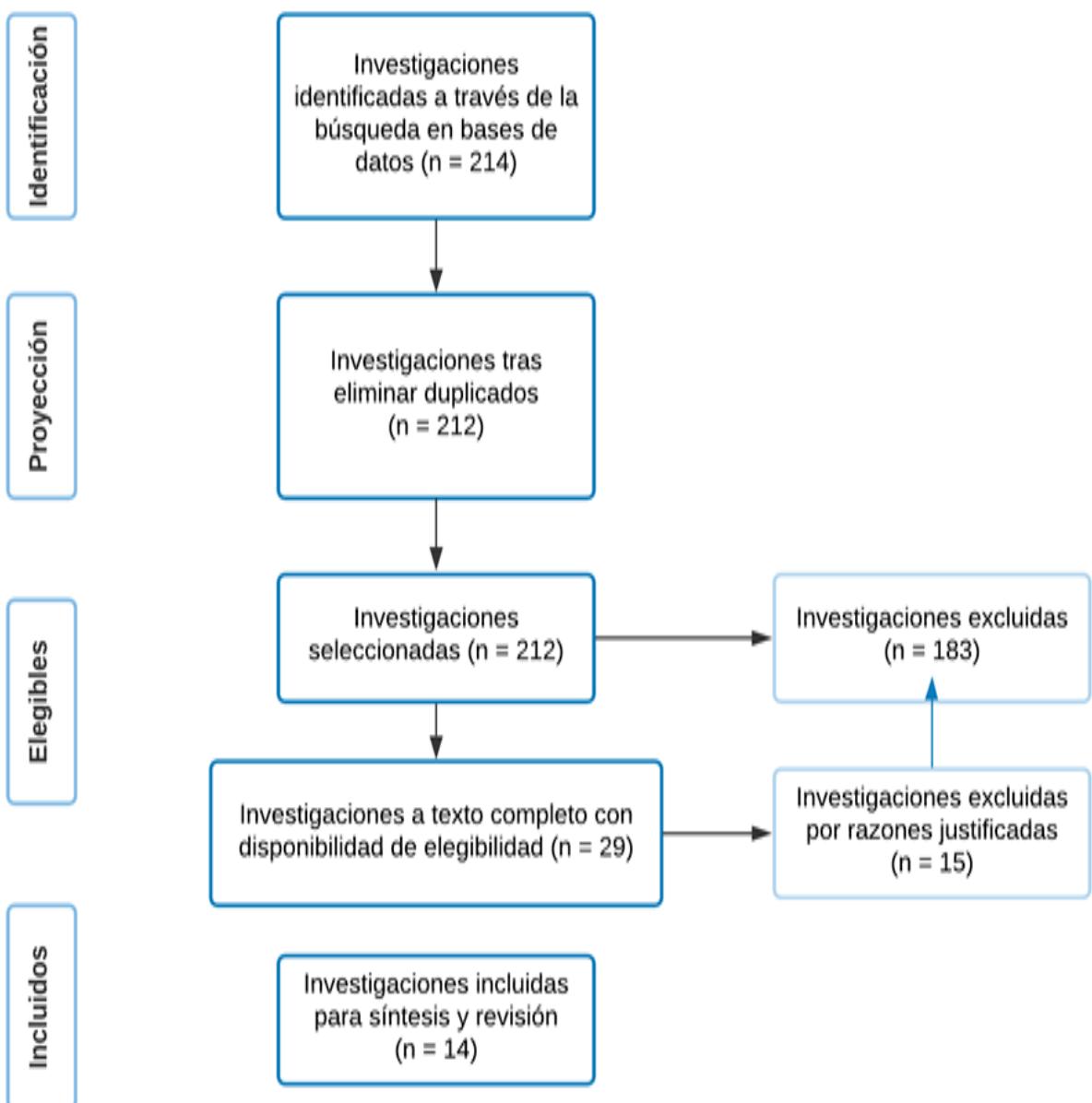 Figura 1: Diagrama de flujo PRISMA
III. RESULTADOS
A partir de la revisión y análisis de los 14 artículos identificados previamente, se precisa los primeros resultados de los mismos.
3.1 Características Generales de los Artículos
Una vez aplicada la metodología Prisma, se identificó 14 artículos orientados a los objetivos del presente trabajo y que cumplen con las especificaciones dadas en el apartado anterior. De estos 14 artículos, se puede notar una amplia variedad de países donde fueron desarrollados. La mayoría de las investigaciones se llevaron a cabo en países latinoamericanos, aunque también se notan trabajos desarrollados en países asiáticos y europeos. Mientras que países africanos o norteamericanos se hacen presente en una menor proporción. La tabla 2 muestra lo señalado en estas líneas.
Tabla 2: Artículos filtrados según la metodología PRISMA
| Repositorio | Autor, año | País | Continente |
| SCOPUS | (Eskandari et al., 2020) | Irán | Asia |
| SCOPUS | (Šebo et al., 2019) | Eslovaquia | Europa |
| SCOPUS | (Ndebele y Forgie, 2017) | Nueva Zelanda | Oceanía |
| SCOPUS | (Cichon, 2019) | Polonia | Europa |
| SCOPUS | (Roy et al., 2019) | India | Asia |
| SCOPUS | (Girma et al., 2021) | Etiopía | África |
| SCOPUS | (Schinck et al., 2020) | Canadá | Norteamérica |
| SCOPUS | (Sehreen et al., 2019) | Bangladesh | Asia |
| SCOPUS | (Del Saz et al., 2020) | España | Europa |
| SCIELO | (Hernández et al., 2019) | México | Latinoamérica |
| SCIELO | (Tudela, 2017) | Perú | Latinoamérica |
| SCIELO | (Zavaleta et al., 2020) | Perú | Latinoamérica |
| SCIELO | (Cahui et al., 2019) | Perú | Latinoamérica |
| EBSCO | (Bravo et al., 2019) | Ecuador | Latinoamérica |
De acuerdo a los datos consignados en la tabla 2, se puede notar en el ámbito latinoamericano la presencia de tres trabajos desarrollados en Perú, uno en México y otro en Ecuador. Por el lado europeo se presenta un trabajo por cada país: Eslovaquia, Polonia y España. Lo mismo sucede a nivel asiático en torno a Irán, India y Bangladesh. El represente oceánico es Nueva Zelanda y el africano Etiopía.
lagos, aguas de transición, aguas costeras y acuíferos. En este acápite se presentan los recursos contemplados en los artículos identificados para la presente revisión. A continuación, se muestran los datos en la tabla 3, mientras que en la figura 2 se resume la participación de cada recurso respecto al total.
3.2 Recursos Hídricos Analizados
El agua satisface un conjunto variado de necesidades y servicios humanos básicos, que se clasifican como funciones de soporte vital para la sociedad. El acceso al agua potable es fundamental para el mantenimiento de la vida y muchos servicios ecológicos y ambientales del agua son fundamentales para la existencia de sistemas vivos, incluido el de los seres humanos (Guo et al., 2020; Medvedeva et al., 2019). Los recursos hídricos incluyen, tal como se mencionó líneas arriba, aguas superficiales, aguas subterráneas, aguas de tipo continental, ríos,
Tabla 3: Recursos hídricos analizados en cada artículo
| Lago | Humedal | Agua potable | Aguas residuales | Microcuenca | Diversos |
| (Šebo et al., 2019) | (Eskandari et al., 2020) | (Schinck et al., 2020) | (Tudela, 2017) | (Bravo et al., 2019) | (Zavaleta et al., 2020) |
| (Cichon, 2019) | (Ndebele y Forgie, 2017) | (Sehreen et al., 2019) | |||
| (Girma et al., 2021) | (Roy et al., 2019) | (Del Saz et al., 2020) | |||
| (Hernández et al., 2019) | |||||
| (Cahui et al., 2019) |
{"image_source":{"path":"images/54c0b30246a0ca8467422089bb60c9b9ba899dc13e2d4d513297342aba7d0b1a.jpg"},"content":"","chart_caption":[{"type":"text","content":"Figura 2: Recursos hídricos analizados en cada artículo (Porcentaje respecto al total)"}],"chart_footnote":[]}
Los datos mostrados reflejan una mayoritaria presencia de estudios destinados a la valoración de los servicios de agua potable (35.7%). Esto se atribuye al hecho de que la valoración del agua potable ayuda a una asignación eficiente, que a menudo ha sido el principal punto de discusión en la gestión de los recursos hídricos (Islam et al., 2019). Seguidamente figuran los lagos y humedales con una participación del 21.4% (3 artículos cada uno), esto debido a que ambos recursos son ecosistemas altamente productivos que proporcionan una serie de bienes y servicios que son valiosos para las personas (Aryal et al., 2021). Finalmente, se identificó un solo estudio destinado a la evaluación de aguas residuales (Tudela, 2017), otro referido a una microcuenca (Bravo et al., 2019) y el estudio de Zavaleta et al. (2020) que contempla la evaluación de los diferentes recursos hídricos que forman parte del Santuario Nacional de Calipuy ubicado en el Perú.
3.3 Modelamiento Econométrico Empleado
La revisión efectuada permite dejar en claro que no existe un solo modelo econométrico que pueda ser empleado como único, al momento de aplicar la metodología de valoración contingente. (Becerra et al., 2021). Esto se genera, en buena medida, por el tipo de instrumento de levantamiento de información que se aplica al momento de realizar las investigaciones. Normalmente la pregunta de valoración contingente es una interrogante dicotómica de doble límite y ello faculta la aplicación de modelos econométricos de elección discreta para variables dicotómicas (Banna et al., 2016). Sin embargo, la utilización de uno u otro depende, también, de la forma en la que fue planteada la cuestión al entrevistado y de las condicionantes determinadas en el cuestionario. En la tabla 3 se presentan los resultados encontrados en torno a esta cuestión.
Tabla 3: Modelamiento econométrico empleado en cada artículo
| Repositorio | Autor, año | Modelo econométrico |
| SCOPUS | (Eskandari et al., 2020) | Tobit de dos etapas (Probit binomial y modelo Lineal) |
| SCOPUS | (Šebo et al., 2019) | Logit binomial |
| SCOPUS | (Ndebele y Forgie, 2017) | Logit binomial |
| SCOPUS | (Cichon, 2019) | No emplea |
| SCOPUS | (Roy et al., 2019) | Modelo lineal |
| SCOPUS | (Girma et al., 2021) | Modelo censurado por intervalos |
| SCOPUS | (Schinck et al., 2020) | Probit binomial y modelo censurado por intervalos |
| SCOPUS | (Sehreen et al., 2019) | Logit binomial |
| SCOPUS | (Del Saz et al., 2020) | Logit binomial., Modelo Spike y Logit Extendido |
| SCIELO | (Hernández et al., 2019) | Logit binomial y Tobit |
| SCIELO | (Tudela, 2017) | Logit binomial y modelo lineal |
| SCIELO | (Zavaleta et al., 2020) | No emplea |
| SCIELO | (Cahui et al., 2019) | Logit binomial y Tobit |
| EBSCO | (Bravo et al., 2019) | Logit binomial |
Tal como se puede apreciar en la tabla 2, la mayoría de trabajos se decantan por la aplicación del Modelo Logit Binomial. En esta línea se encuentran 4 artículos. No obstante, también se puede detectar el uso del Modelo Logit Binomial acompañado de modelos alternativos como el Modelo Spike y Logit Extendido (Del Saz et al.,
2020), Tobit (Cahui et al., 2019; Hernández Cuevas et al., 2019) y el modelo lineal (Tudela, 2017). Por otra parte, Eskandari et al. (2020) hace uso de un modelo Tobit de dos etapas que emplea en un primer momento un Modelo Probit Binomial y posteriormente un modelo lineal.
En el caso de Roy et al. (2019) se utiliza el modelo lineal por medio de la aplicación de mínimos cuadrados ordinarios. Girma et al. (2021) emplean un modelo censurado por intervalos, a partir del condicionamiento de la pregunta planteada en su cuestionario. Schinck et al. (2020) realizan un trabajo interesante combinando el modelo probit binomial con un modelo censurado por intervalos. Finalmente, se precisa que lograron identificarse dos trabajos (Cichon, 2019; Zavaleta, 2020) que no hacen uso de ningún modelamiento econométrico, sino más bien, se concentran en un análisis estadístico descriptivo que permite alcanzar los objetivos planteados en su investigación.
3.4 Objetivos Principales Buscados
La valoración de los recursos hídricos es un instrumento importante para el diseño e implementación de políticas de gestión (Vargas et al., 2021) eficiente de los recursos hídricos. Estas políticas orientadas a prevenir la degradación y el agotamiento de dichos recursos, requieren previamente determinar su valor en términos económicos e incorporar esta información al momento de tomar decisiones al respecto (Islam et al., 2019; Rupérez et al., 2015). En ese sentido, los artículos analizados apuntan a tres objetivos principales distribuidos conforme se aprecia en la siguiente tabla y en la figura 3.
Tabla 4: Objetivo principal planteado en cada artículo
| Estimar la disposición a pagar | Estimar el valor total | Identificar factores condicionantes |
| (Šebo et al., 2019) | (Ndebele y Forgie, 2017) | (Eskandari et al., 2020) |
| (Roy et al., 2019) | (Cichon, 2019) | |
| (Girma et al., 2021) | (Zavaleta, 2020) | |
| (Schinck et al., 2020) | (Bravo et al., 2019) | |
| (Sehreen et al., 2019) | ||
| (Del Saz et al., 2020) | ||
| (Hernández et al., 2019) | ||
| (Tudela, 2017) | ||
| (Cahui et al., 2019) |
{"image_source":{"path":"images/caa1bde527b5a0249985bb9f61700a693d35807fb889a79c994471a61d455108.jpg"},"content":"","chart_caption":[],"chart_footnote":[{"type":"text","content":"Nota: "},{"type":"equation_inline","content":"^{a}"},{"type":"text","content":" DAP = Estimar la disposición a pagar. "},{"type":"equation_inline","content":"^{b}"},{"type":"text","content":" VALOR TOTAL = Estimar el valor total. "},{"type":"equation_inline","content":"^{c}"},{"type":"text","content":" \nFACTORES = Identificar factores condicionantes."}]}
Figura 3: Objetivo principal planteado en cada artículo (Porcentaje respecto al total)
De acuerdo a la información consignada en la tabla 4 y en la figura 2, se aprecia que la mayoría de trabajos tienen como objetivo principal la estimación de la disposición a pagar (9 artículos). En este punto, es pertinente hacer la aclaración de que la disposición a pagar se orienta primordialmente a: la mejora de la calidad del agua, en tanto, los recursos hídricos analizados, la conservación del recurso hídrico o por mejoras en la dotación y abastecimiento de los servicios involucrados con el recurso hídrico. En una proporción menor de trabajos (4 artículos), se aprecia que el objetivo radica en estimar el valor económico total de los servicios ecosistémicos derivados del recurso hídrico (Becerra et al., 2021). Finalmente, se logró encontrar un trabajo que se orienta principalmente a identificar los factores que condicionan la disposición a pagar de la población objeto de estudio.
No obstante, vale la pena efectuar una aclaración en este punto. Si bien se logró identificar que los trabajos tienen un objetivo principal., bajo el cual se desarrolla la investigación, también se encontró que los objetivos específicos abordan de manera parcial y en algunos casos de manera total los tres objetivos planteados en la tabla 4. Así, se puede afirmar que todos los 14 artículos revisados para el presente trabajo, comparten la orientación de sus objetivos.
3.5 Resultados Relevantes
Ahora bien, en la figura 4 se detallan los principales resultados que comparten los artículos analizados para el presente trabajo.
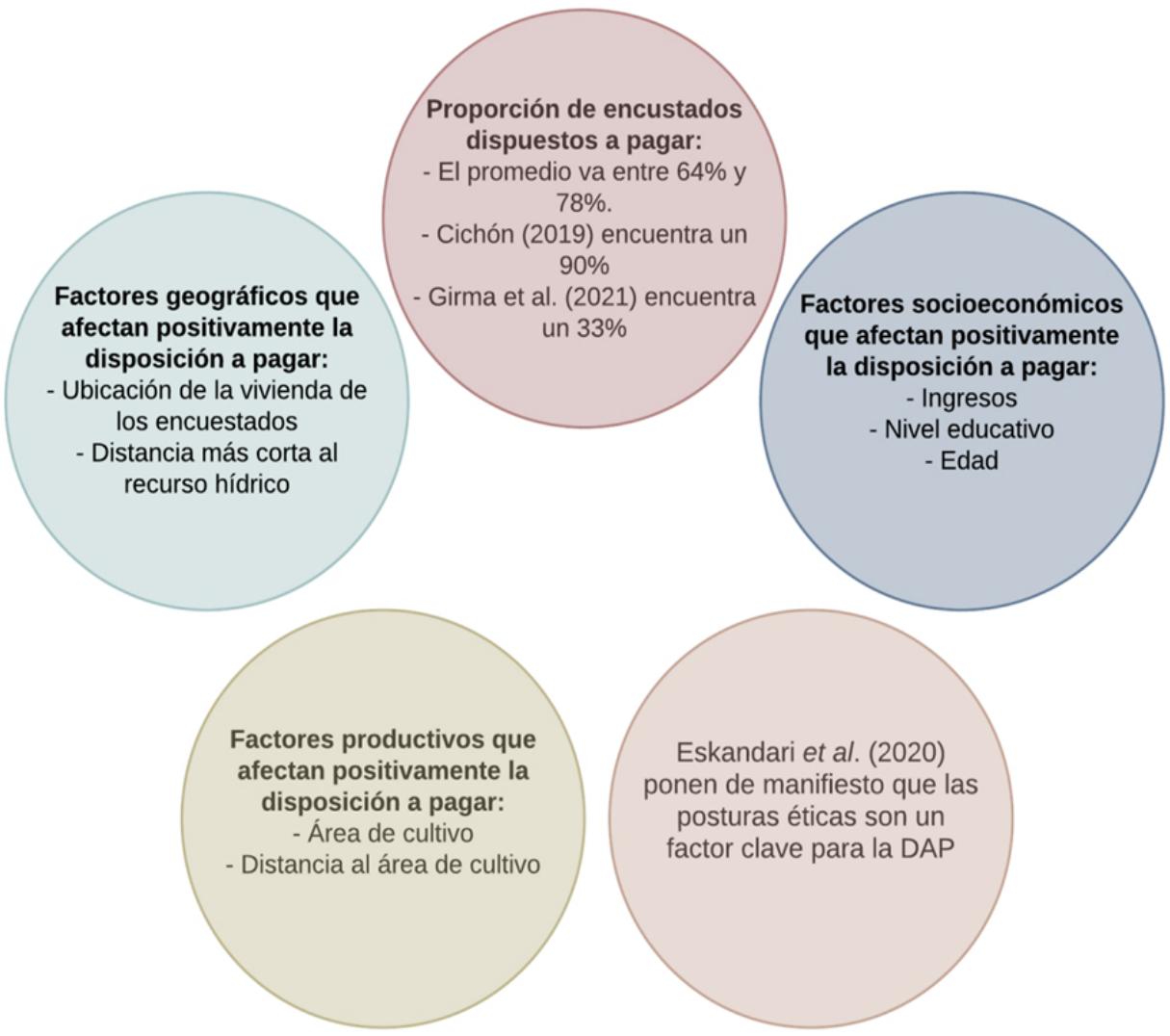 Figura 4: Principales resultados compartidos en los artículos analizados
IV. CONCLUSIONES
En este documento, se identificaron las estimaciones de los valores de uso y no uso asociados a diferentes funciones hidroecológicas y biogeoquímicas de los recursos hídricos en un exhaustivo análisis de estudios de valoración contingente de recurso hídricos. El estudio proporciona información sobre los principales recursos hídricos estudiados, destacando principalmente los estudios sobre agua potable, humedales y lagos. Se presentaron los principales modelos econométricos que se vienen empleando al momento de aplicar el método de valoración contingente. Es preciso destacar que estos son variados, fundamentalmente por la pregunta planteada en los cuestionarios de recolección de datos, destacando principalmente los modelos logit y probit binomial, aunque también se logró identificar combinaciones de herramientas econométricas sobre la base de estas.
En torno al principal objetivo que persiguen los estudios al momento de efectuar la valoración ambiental de recursos hídricos, se logró determinar que la gran mayoría de estos buscan estimar la disposición a pagar o no de los beneficiarios directos e indirectos de los recursos. De igual forma, se presentó los principales factores que deben tenerse en cuenta al intentar transferir valores ambientales sobre la base de estudios de valoración contingente. Las estructuras y procesos de los ecosistemas proporcionan un complejo heterogéneo de funciones socioeconómicas altamente interrelacionadas.
Finalmente, teniendo en cuenta la variabilidad de tamaños de muestra empleados dentro de los trabajos seleccionados, el análisis produce resultados ligeramente diferentes en cuanto a la importancia y el tamaño del efecto de las diferentes variables sobre los valores de la disposición a pagar. Aunque se ha desplegado un considerable esfuerzo para especificar las características de las funciones ambientales y, en consecuencia, los bienes y servicios ambientales involucrados, otros aspectos importantes que pueden haber ayudado a explicar las diferencias en los resultados de la valoración no se pudieron precisar. Este es un problema común en este tipo de trabajos como resultado de la información insuficiente e inadecuada proporcionada en los estudios de valoración analizados. En muchos estudios falta información relevante sobre los valores socioeconómicos de las muestras, por no hablar de las características socio-psicológicas y culturales de los encuestados.
Conflict of Interest
The authors declare no conflict of interest.
Ethical Approval
Not applicable
Data Availability
The datasets used in this study are openly available at [repository link] and the source code is available on GitHub at [GitHub link].
Funding
This work did not receive any external funding.
References
Cite this article
Related Research


Special Issue
Launch a focused special issue to highlight research, emerging trends, and expert insights in your academic field.
