




IntelliPaper
Abstract
The process of designing- an-effective synthesis plan for a target molecule remains a signifi1cant challenge in organic synthesis. Synthesis planning involves determining the steps to synthesize a desired molecule. Retrosynthesis, developed by Elias James Corey and recognized with a Nobel Prize in 1990, is a systematic approach that involves working backwards from- the target-molecule to identify the -starting materials-. Retrosynthetic analysis is a-- valuable technique but requires a comprehensive understanding of chemical substances, compound classes, reactions, and reaction conditions. This understanding enables chemists to effectively plan and analyze the synthesis of the target molecule. Through analyzing the target molecule and identifying possible disconnections, chemists can think creatively and devise innovative solutions for complex synthetic problems. This article serves as an introduction to retrosynthesis, highlighting its importance and fundamental theoretical concepts (strategies) that can be combined to plan the synthesis of organic compounds.
Explore Digital Article Text
I. INTRODUCTION
The main objective of organic synthesis is to efficiently construct a target compound using available starting materials and reagents, which involves designing a synthetic plan .
When planning the synthesis of a target molecule, various factors such as simplicity, availability of starting materials, product yield, economics, and safety must be taken into account .
Syntheses can be broadly categorized into two types: linear and convergent. Linear synthesis involves a series of sequential transformations, resulting in lower overall yield due to the longest route to the target molecule . Convergent synthesis involves synthesizing key fragments independently and then combining them to make the target molecule, leading to a higher overall yield and greater efficiency .
The process of designing a synthesis is similar to solving a puzzle, with multiple pathways available to reach the desired end. Some pathways are productive while others are not . The retrosynthetic approach, or disconnection approach, is commonly used to design the synthesis plan for a target molecule , and has introduced a new way of thinking about synthetic problems, and inspiring several synthetic organic chemists .
II. PRINCIPLES OF RETROSYNTHETIC ANALYSIS
To make the target molecule, use of a series of one-step reactions and determining which reactions to use follows a technique called retrosynthetic analysis .
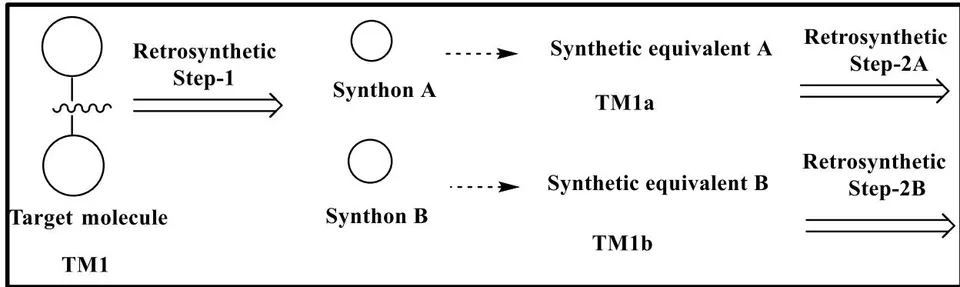
The principle of retrosynthesis analysis involves working backwards from a target molecule to identify precursor molecules and their corresponding synthetic strategies . This involves breaking bonds in the target molecule to obtain simpler precursors and determining the synthetic strategies required to produce them . This requires a thorough knowledge of chemical reactions and their mechanisms, as well as practical experience . For- every structure- derived from- a target, it in turn becomes a template for further- analysis- . The process involve the use of synthons, which are not real hypothetical molecules or fragments generated from bond disconnections during retrosynthetic analysis, simplifies the synthetic strategy and enables chemists to plan the synthesis of complex molecules more efficiently and The synthetic- plan- resulting- from retrosynthetic- analysis- functions as a blueprint- for the synthesis of the desired- molecule . The symbols used in retrosynthetic analysis include a wavy line to represent disconnection and a retrosynthetic arrow to show the backward movement from the target molecule to simpler molecules. The strategic plan should be clear, while tactical issues deal with the actual execution of the plan .
2.1 Goals of Retrosynthetic Analysis
This approach has proven successful in synthesizing a wide range of intricate natural products and pharmaceuticals .
The aim of disconnection is to simplify the target molecule by identifying possible disconnections, breaking it down into readily obtainable starting materials .
It is crucial to carefully select the building blocks to ensure they can be assembled efficiently in a convergent manner to form the desired molecule .
Chemists are encouraged to think creatively and come up with innovative solutions to overcome complex synthetic challenges (13).
The objective is for organic chemists to devise a chemically feasible synthetic pathway That- is-economically-efficient and environmentally-viable, and minimizes the-number of-reaction steps required .
2.2 Retrosynthetic Techniques (The Strategies)
The probable substrate and product are related through two key processes: the- conversion of one-functional- group- to another- (known as functional group interconversion), and reactions that involve the formation or breaking of C-C bonds and lead to changes in the carbon skeleton .
Retrosynthesis involves a variety of techniques for breaking down target molecules into simpler precursor molecule such as retrosynthetic disconnections, is often used in combination with other retrosynthetic techniques, such as functional group interconversion and retrosynthetic analysis of protecting groups, to arrive at a feasible synthetic route .
In addition, computer-aided retrosynthetic analysis is a new and powerful approach that can greatly accelerate the development of new drugs and materials by rapidly evaluating thousands of possible synthetic routes .
Retrosynthetic disconnections is an essential part of the retrosynthesis approach, allowing the chemist to break down a target molecule into simpler fragments . The process determines the bonds that need to be formed to create the final product. By doing this, chemists can identify the important structural elements and functional groups needed in the precursor molecules, and create a synthetic route that constructs these molecules from simple starting materials .
In organic chemistry, a chemical bond can be broken in two ways: Homolytic cleavage and heterolytic cleavage. The specific bond cleavage that occurs is dependent on the reaction conditions and the molecules engaged. Heterolytic cleavage creates ions with positive and negative charges and this type of cleavage is frequent in reactions of polar molecules, driven by differences in electronegativity. Homolytic cleavage generates two radicals, and it usually happens in reactions involving free radicals, initiated by the supply of energy .
A-Polar- disconnections- are- intuitive- and- form the foundation- of a considerable- portion- of retrosynthetic- logic- and a valuable technique which involves the breaking of polar bonds, a bond between carbon and a heteroatom, such as oxygen, nitrogen, or sulfur to generate two fragments. The resulting fragments can then be further manipulated and functionalized before being reconnected to form the desired target molecule .
The concept of bond polarity is important in the disconnection process , and the introduction of the "synthon" has provided insight into the origin of reaction products . In polar disconnection, there are two categories of synthons that are utilized: electron donor synthons (d) and electron acceptor synthons (a). The former refers to nucleophilic fragments that possess a negatively polarized (electronegative) carbon atom, while the latter refers to electrophilic fragments that have a positively polarized (electropositive) carbon atom .
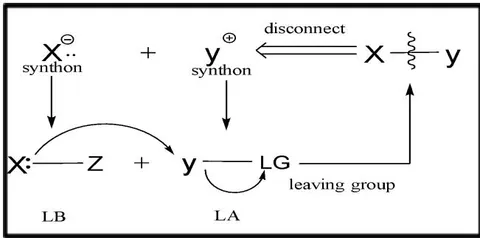
A key aspect of successful retrosynthetic analysis which requires experience and practice is recognizing which synthons are stable can be used directly and which ones require conversion into synthetic equivalents , is a real molecule or reagent capable of being designated as a synthon and employed in a synthetic procedure and functional group interconversion (FGI) .
| d-Synthons | Synthetic equivalent | a-Synthons | Synthetic equivalent |
| (alkyl anion) | RMgX, RLi, , RCuLi | (alkyl cation) | RX, |
| (aryl anion) | Ar MgX, Ar Li, , Ar CuLi | Ar+(aryl cation) | Ar X, Ar |
| RCHO | |||
| RC C-(acetylide) | RC C-Ag+ | ||
| MeS- | MeSH | HCOH | |
| RO- | RONa | R- (acylium ion) | RCOCl, RCOOR, RCOOOR |
| KCN | RC C | RC CBr | |
| HC =O | HCOOR, CH(OR) | ||
| CR OH | R C=O | ||
| RC(OH)CH | R-epoxide |
2.3 Manipulation of the Functional Groups
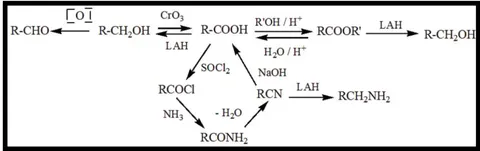
In synthetic organic chemistry, before the disconnection of a target molecule, manipulation of functional groups may be necessary when disconnection fails to facilitate the generation of synthetic equivalents, also can simplify reactions and reduce molecular complexity . Functional group interconversion (FGI), Functional group addition (FGA) and functional group removal (FGR) are methods of manipulating chemical groups that can simplify syntheses .
1-Functional group interconversion: is technique that involves transforming one functional group into another if the carbon skeleton remains unchanged through substitution, addition, elimination, oxidation, or reduction and FGI simplifies disconnection to arrive at a feasible synthetic route for the target molecule . For example, alcohols can be converted into various other functional groups, making them a versatile starting material for many functionalized aliphatic compounds .
2-Functional Group Addition (FGA): Can be beneficial in directing reactivity towards particular sites of a molecule and streamlining a synthesis. Adding functional groups like double bonds or carbonyl groups can be useful in guiding the introduction of substituents. An example of this is introducing a carbonyl group into a substituted cyclohexane target molecule, which could potentially facilitate the introduction of a substituent via enolate alkylation .
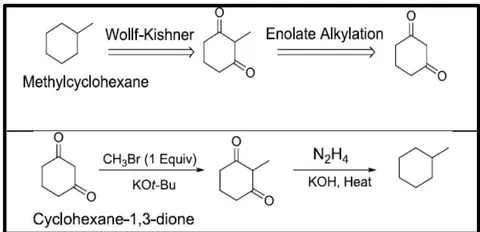
Scheme 4: An example of functional group addition (FGA) in directing reactivity to specific sites
Before disconnection of a target molecule (TM), FGA may be done to facilitate synthetic equivalents are got .
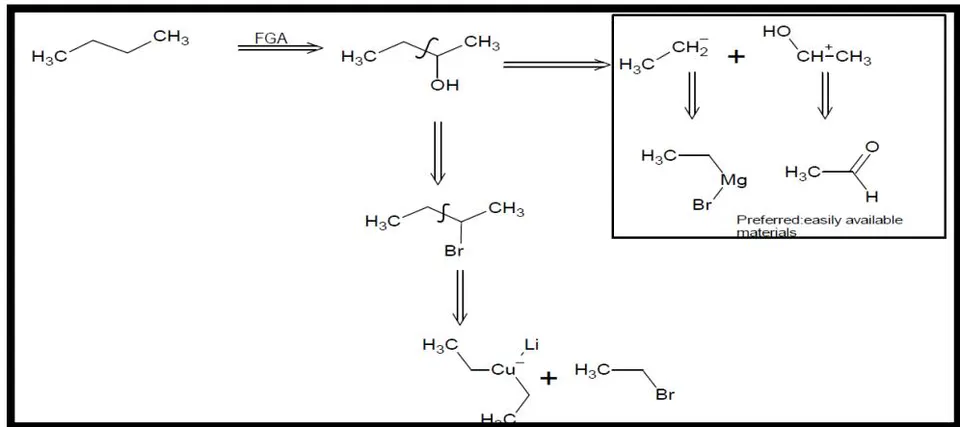
Scheme 5: An example for Functional Group Addition (FGA) to facilitate synthetic equivalents
3-Functional Group Removal (FGR): involves extracting a specific functional group to obtain the precursor required for the target molecule. .
| Function group | Reaction for function group removal |
| R-C≡C-, RC=C- | |
| R-OH | TsCl(P-toluene sulfonyl chloride), MsCl (methane sulfonyl chloride) -LiAlH4(Lithium aluminum hydride), BH3(Trihydridoborate) |
| R-C=O | a) Treatment with NaBH4 (sodium borohydride) followed by hydroxide group (OH) addition.b) Reduction using Kizhner reagent (NH2NH2).c) Reduction utilizing Clemmensen conditions (Zn/Hg; HCl). |
| R-SH | Raney nickel catalyst |
| R-NH2 | Diazotization with nitrous acid (HNO2). |
Certain inherent characteristics of a molecule can provide guidance during analysis.: Disconnection of molecules according to the functional groups present in the target molecule .
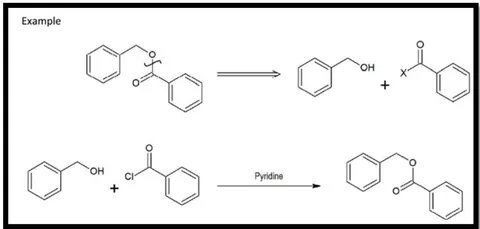
1-One-group disconnections, target molecule with one function group A-C-X bond disconnection In the C-X bond disconnection, the reactions are typically ionic and involve heteroatoms. The resulting synthon is usually cationic and the corresponding synthetic equivalent will have a good leaving grou (Y) attached .
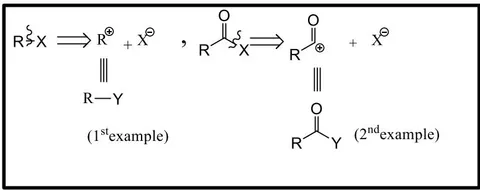
The importance of the second example is huge as it involves reactions that result in acylation .
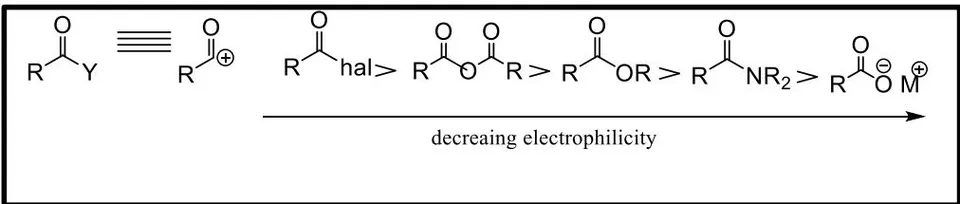
Alcohols
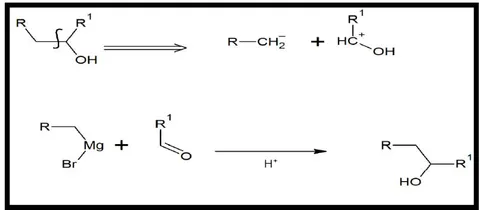
Alcohols are a prominent illustration of disconnection adjacent to the hydroxyl functional group, specifically involving the carbanion synthon and -hydroxyl cation synthon. The synthetic equivalent of carbanion resembles an organometallic compound .
- If the alcohol is primary go for HCHO + RMgBr.

- If the alcohol is secondary go for RCHO + R'MgBr
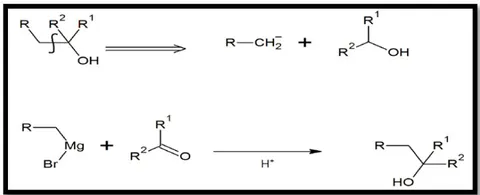
- For tertiary alcohol, disconnection adjacent to a branching carbon in a chain
2.4 Carbonyl compounds
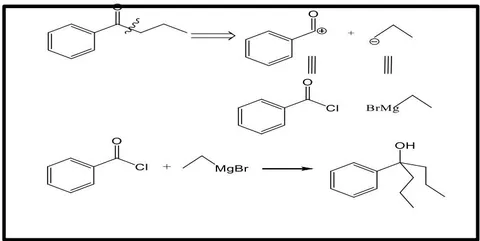
- Carbonyl compound disconnected at carbonyl group back to acyl cation and carbanionic synthons .
- Disconnection between the alpha(α) and beta (β) carbon atoms adjacent to the carbonyl group .
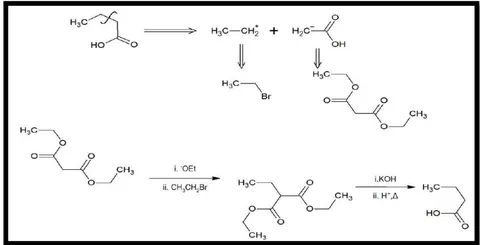
- Disconnection between the and carbons of carbonyl group .
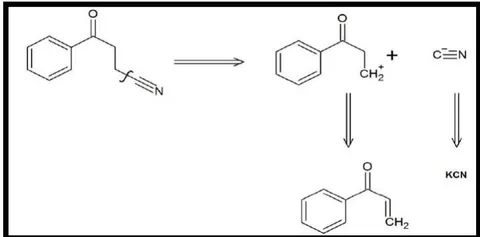
- Disconnection of carbonyl compounds brunched at -carbons .
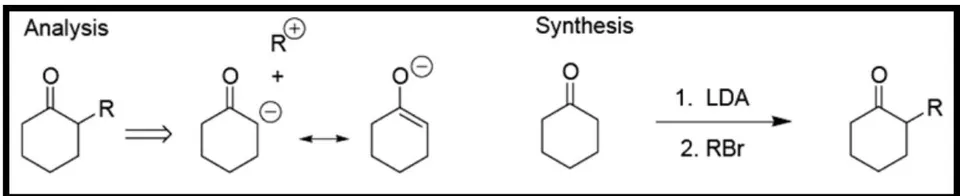
Scheme 14: C–C Bond disconnection of carbonyl compound brunched at α-carbons (LDA=Lithium diisopropylamide)
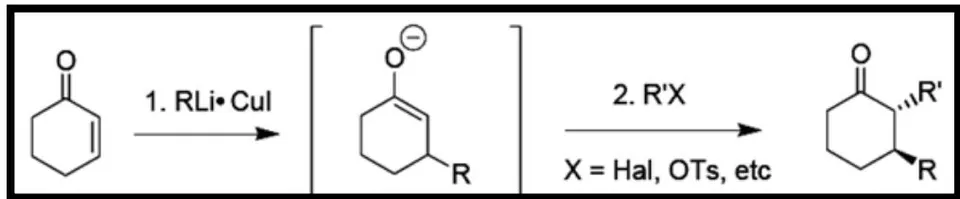
- Disconnection of carbonyl compounds brunched at -carbons .
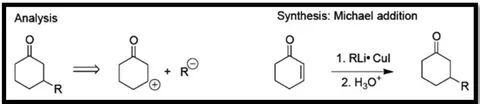
1. RLi• Cul
Scheme 15: C–C Bond disconnection of carbonyl compound brunched at β -carbons - The amalgamation of the preceding two synthetic methods enables the incorporation of two additional functional groups .
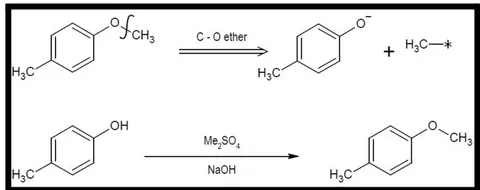
C- Disconnection at the heteroatom is performed in compounds comprising two segments connected by a heteroatom. For example disconnection of ethers and sulphides :

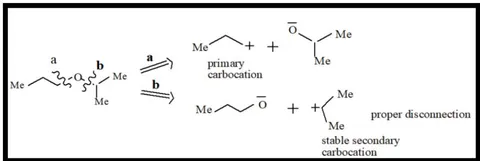
The disconnection occurring at the heteroatom within linear compounds is likewise influenced by the stability of the synthons .
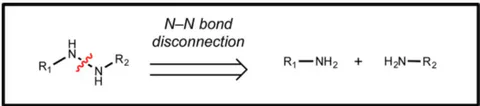
D- Heteroatom-Heteroatom Disconnections: In this approach, the target molecule is Disconnected at a bond between two heteroatoms, such as oxygen-oxygen, nitrogen-nitrogen, or sulfur-sulfur. The resulting fragments can be functionalized and reconnected to form the target molecule .
2- Two-group disconnection
When analyzing the synthesis of difunctional group compounds, the strategy chosen for disconnection depends on the functional group and their positions within the molecule. If the chemical groups are in proximity to one another, it is preferable to use the convergent disconnection strategy, as they can be derived from a common intermediate. However, if the functional groups are far apart and cannot be derived from a common intermediate, the linear disconnection strategy is preferred .
In two group disconnections, the molecule is disconnected somewhere else because of presence of a functional group and the relationship between two function group depend on how distance they are and polarization that they impart on the backbone .
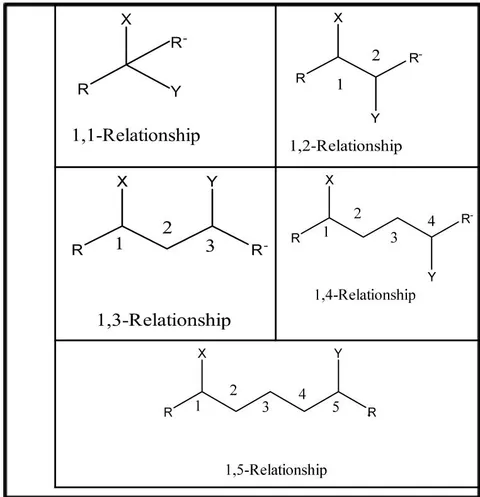
A- In a 1,1-Relationship:
In organic chemistry, when discussing acetals, the disconnection of one carbon-oxygen (C-O) bond results in the automatic disconnection of the other C-O bond, known as a 1,1-disconnection .

B- In a 1,3-Relationship In organic chemistry, disconnection of a carbonyl compound with a nucleophile at the third carbon generates an electrophilic synthon, which can be obtained from an , -unsaturated carbonyl compound. Typically, this type of synthesis involves a Michael-type reaction .
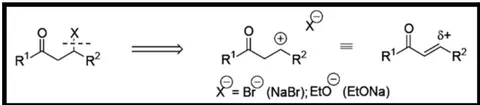

Scheme 23: Disconnection of 1,3-carbonyl- and hydroxgroups

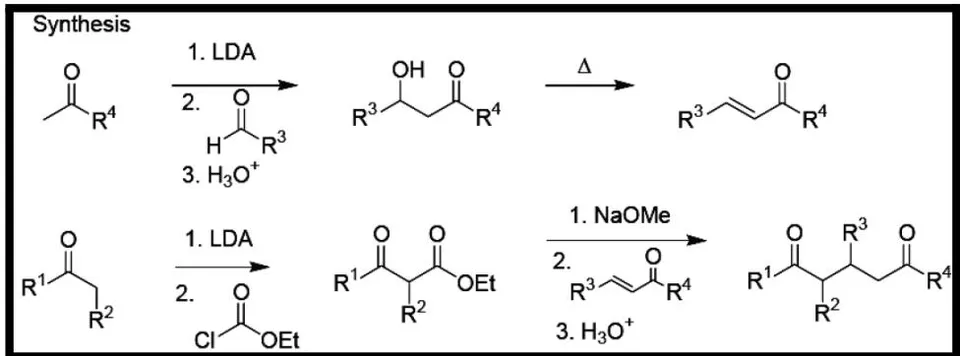
If Carbonyl- and/or hydroxgroups are found in 1,5 patterns, this provides a suggestion to utilize one of the traditional carbonyl reactions for synthesis. 1,5-Michael additions result in 1,5 dioxygenation patterns. .
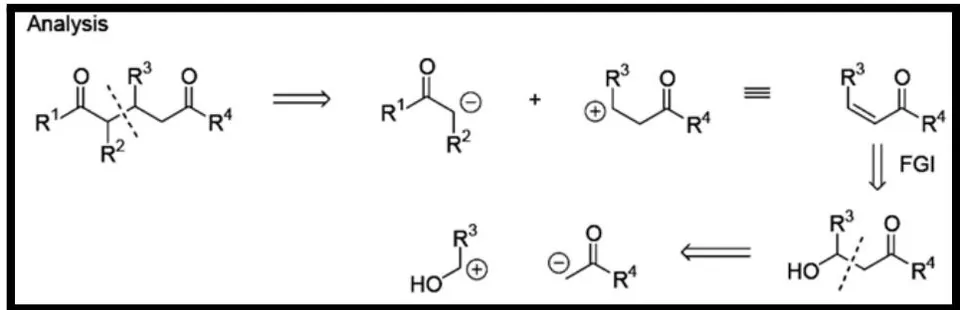
Scheme 25: Disconnection of 1,5-dicarbonyl compound
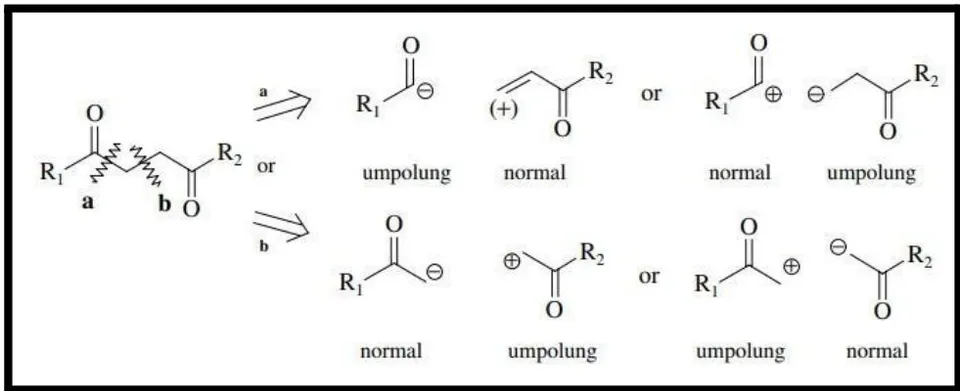
D- In a 1,2 and 1,4-dicarbonyl Relationship present a challenge in terms of disconnecting them by valid retrosynthetic steps.
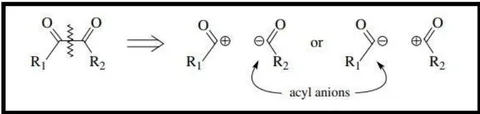
For instance, the disconnection of the bond between the carbonyl groups in a 1,2-diketone presents complexity, requiring one carbonyl group to display typical electrophilic behavior while the other carbonyl carbon must exhibit nucleophilic character, such as an acyl anion or equivalent, contrary to the typical polarity of a carbonyl group. .
2.5 Umpolung of reactivity
This indicates the necessity for synthetic counterparts or synthons demonstrating reversed polarity (umpolung). The advancement of reagents featuring umpolung reactivity has proven to be a significant enhancement in contemporary synthetic techniques .
Umpolung of reactivity is a concept in organic chemistry that involves reversing the polarity of a functional group through chemical modification. The term was introduced by D. Seebach and E.J. Corey and has been extended to the reversal of any commonly accepted reactivity pattern. This alteration facilitates subsequent reactions of the functional group that would otherwise be unattainable. It is crucial to comprehend and devise techniques for inducing umpolung in organic reactions, as polarity assessment during retrosynthetic analysis aids chemists in identifying instances where umpolung strategies are necessary to synthesize a target molecule .
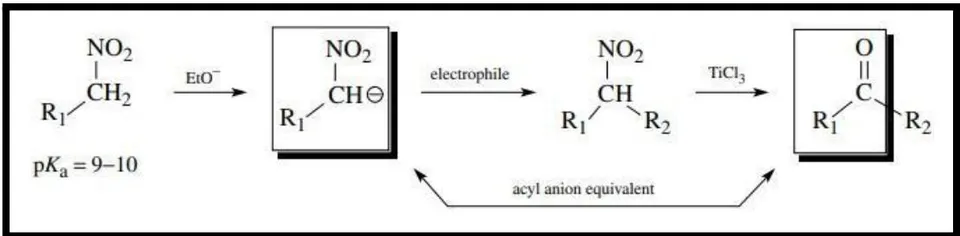
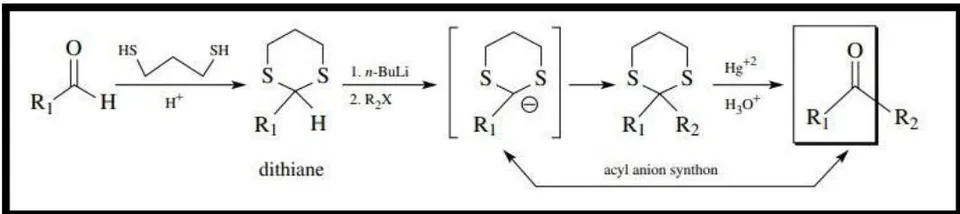
1-Carbonyl umpolung: Acyl anion equivalents represent the prevailing umpolung synthons, with three strategies employed for their generation, all adhering to a comparable methodology. These strategies incorporate functional groups capable of preserving a negative charge on an adjacent carbon and can subsequently be converted back into a carbonyl group .
A-Nitroalkanes can function as nucleophiles and as equivalents of acyl anions, and the nitro group can undergo cleavage to produce the carbonyl group. .
B-1,3-dithianes (thioacetals), can be used as a synthon for the acyl anion. Alkyl lithium bases can deprotonate 1,3-dithianes (thioacetals), resulting in strong nucleophilic anions. The carbonyl group can be regenerated by hydrolyzing the dithiane group .
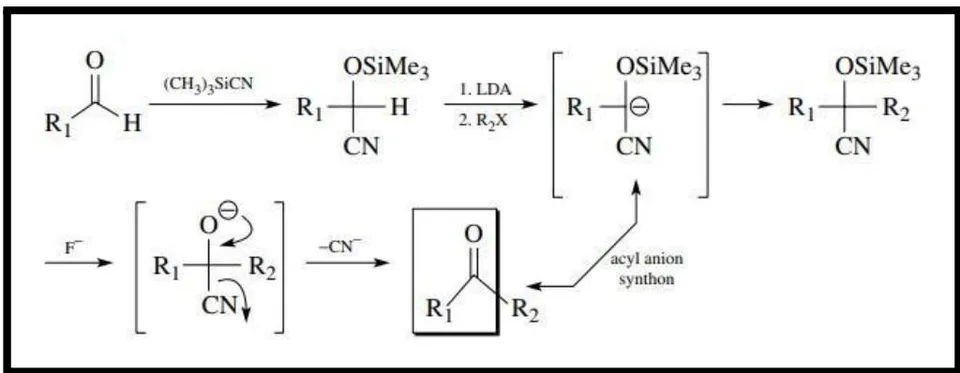
C-Cyanide Umpolung: The cyanide ion is a unique umpolung reagent that undergoes polarity inversion in many reactions. Cyanohydrin derivatives, derived from carbonyl compounds via addition of hydrogen cyanide or trimethylsilyl cyanide, have found extensive utility as acyl anion synthons. The cyano group acidifies the position of these derivatives, enabling alkylation of the anion and subsequent unveiling of the hydroxy group through cyanide elimination .
For instance, Cyanide serves as a pivotal catalyst in the benzoin condensation reaction, wherein a bond is forged between two carbons that conventionally act as electrophiles .
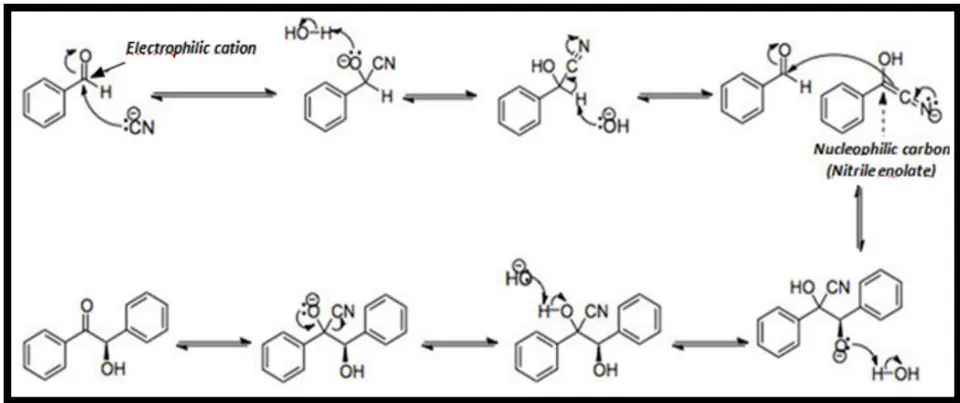
2- -Carbonyl umpolung
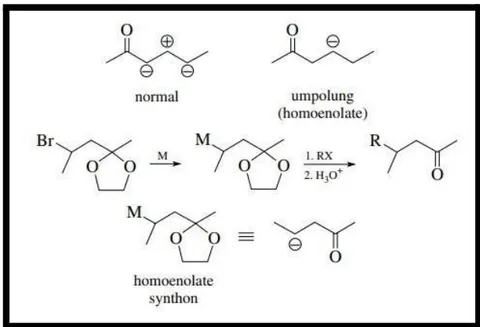
A- The use of homoenolates is a common strategy in organic synthesis to transform the position of a carbonyl compound from an electrophilic to a nucleophilic center, a -bromo acetal is employed, which can undergo metallation to yield a -carbanion equivalent. Subsequent hydrolysis of the resulting acetal group yields the ketone, thereby serving as a synthon for a -carbonyl anion, which functions as an umpolung reagent.
These strategies enable reactions that would otherwise be difficult or impossible to achieve, making them an important tool in organic synthesis .
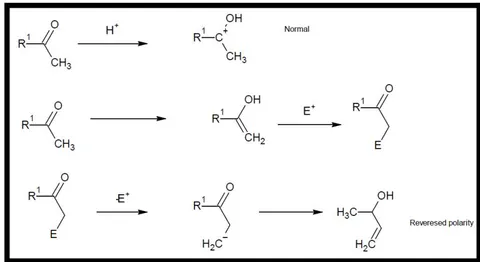
B-Enolization: by enolizing a ketonic moiety with an electrophile at carbon we can make a terminal carbon at position as negative .
3- Epoxidation: In a 1,2 –Relationship, molecules containing heteroatom adjacent to C atoms are considered as derivatives of alcohols. Disconnection of such molecules need umpolung of reactivity to an epoxide .
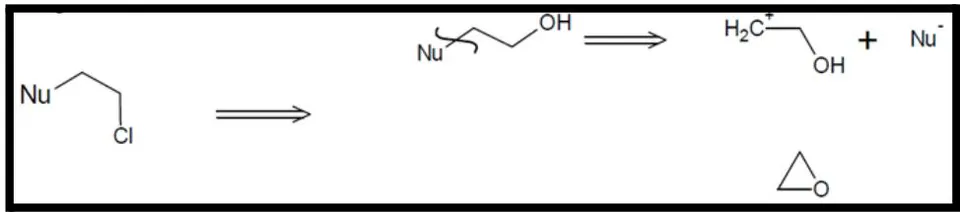

The epoxide is a highly reactive and versatile three-membered cyclic ether with a significant ring strain. Its oxygen atom is electrophilic while the carbon atoms are nucleophilic. Substituting the ring carbon atoms with substituents that either donate or withdraw electrons. enhances the epoxide's reactivity . Epoxides are frequently used as synthons for the preparation of other compounds, such as alcohols, amines, and carboxylic acids, through nucleophilic ring-opening reactions with Grignard reagents, organolithium compounds, or amines. Additionally, epoxides are valuable precursors for the synthesis of -hydroxy carbonyl compounds, which are intermediates in organic synthesis that can be further transformed into a variety of functionalized compounds .
B-Radical Disconnection
While polar disconnections are integral to retrosynthetic analysis, the utilization of radical disconnections also plays a significant role in this analytical approach. can provide a more direct and efficient route to synthesizing organic compounds, minimizing the need for chemistry involving the use of protective groups and interconversions of functional groups. . In this approach, the target molecule is disconnected at a carbon-carbon bond, typically at a point of unsaturation, using a radical reaction and in the absence of functional groups, alkyl and aryl groups should be preserved as building blocks and not disconnected. The resulting fragments can be functionalized and reconnected to form the target molecule .
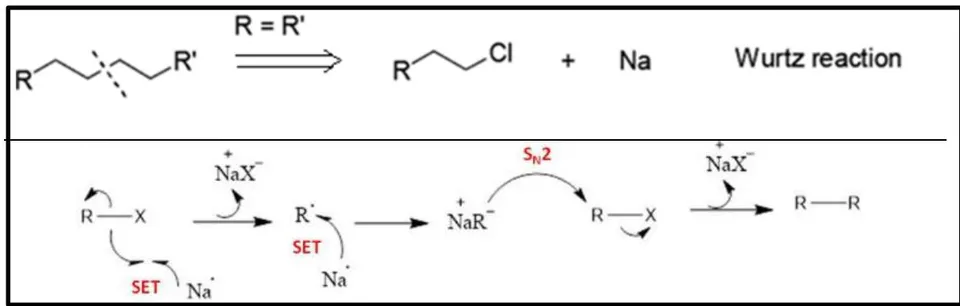
The Wurtz reaction exemplifies a reaction that facilitates the formation of carbon-carbon bonds that used to connect two alkyl or aryl halides and involves the use of metallic reducing agents to generate alkyl radicals. Although the Wurtz reaction can synthesize a variety of organic compounds, it is limited to coupling identical alkyl or aryl halides.
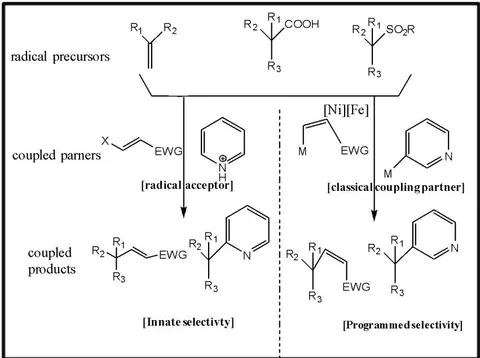
Methods for cross-coupling involving one-electron radicals have recently gained attention for their chemoselective profiles and ability to simplify synthesis. Two broad classifications of Radical Cascade Reactions (RCC) can be delineated: innate and programmed .
Innate RCC involves the addition of a radical to a radical acceptor, with the regio- and stereochemical result being determined by the innate bias of the acceptor . Programmed RCC, on the other hand, involves the interception of a radical by a mediator (e.g., a metal catalyst) facilitates bond formation with a functionalized counterpart . One notable aspect of Radical Cascade Reactions (RCC) is their utilization of both starting materials (such as olefins and carboxylic acids) and intentionally designed functional groups (e.g., sulfones) as platforms for precise bond creation .
III. APPLICATION OF RADICAL CROSS-COUPLING
1- Hydrogen atom transfer radical cross-coupling
Hydrogen atom transfer (HAT) has emerged as a potent strategy for strategically constructing C–X and C–C bonds using olefinic substrates .
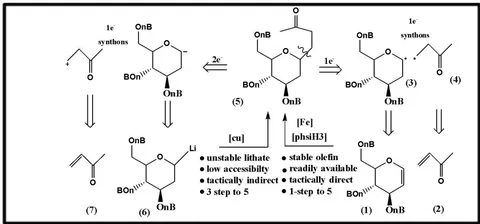
Scheme (39) include different strategic methods for preparation glycan, The conventional two-electron approach for synthesizing glycoside derivatives necessitated the laborious preparation of a litigated precursor 6 from olefin (1) before its coupling with Michael acceptor (7), whereas the one-electron strategy involved the direct radical combination of synthons (3) and (4). In practice, olefin (1) was employed as a one-electron precursor in an intrinsic radical coupling reaction with (2) under Fe catalysis, employing PhSiH3 as a stoichiometric hydride source .
2-Redox-active ester radical cross-coupling (RCC), carboxylic acids can undergo conversion into redox-vactive esters (RAEs), serving as reactive partners in the RCC process. This method involves specific active esters like HOAt, HOBt, NHPI, and TCNHPI, which possess the capability to accept an electron, initiating a series of reactions that ultimately release CO2 from the original alkyl group. These esters can be employed in radical decarboxylative transformations, generating carbon-centered radicals essential for the formation of new C-C/C-X bonds. Combining these RAEs with premetalated nucleophiles and a transition metal catalyst enables their involvement in programmed, decarboxylative RCC reactions, offering inherent advantages in terms of chemo- and regioselectivity. This advancement facilitates the direct synthesis of unnatural amino acid derivatives and the straightforward preparation of simple arenes .
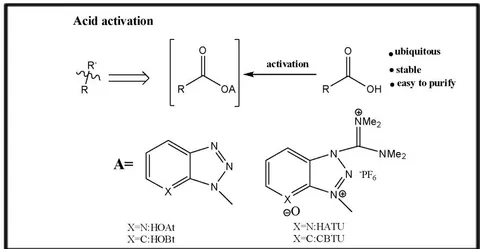
3- Desulfonylative radical cross-coupling: The sulfone functional group offers versatility in various nucleophilic substitution reactions, particularly fluorination. A subsequent reductive radical desulfonation typically follows. Recognizing N-phenyl sulfonyl tetrazoles as suitable counterparts for RCC represents a robust strategy for efficiently introducing fluorine atoms into valuable synthetic intermediates .
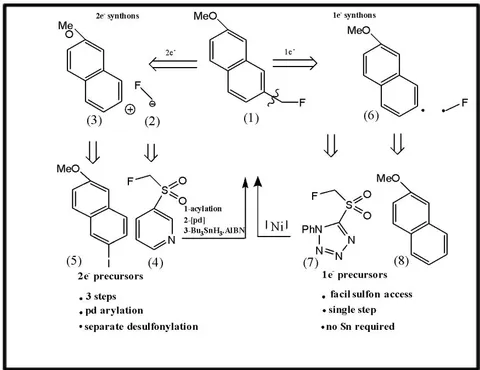
Scheme (41), the synthesis of naphthalene (1) was documented employing a two-electron approach catalyzed through copper (Cu), with retrosynthetic analysis utilizing synthons (2) and (3). Nevertheless, this approach presented a limitation, as it necessitated the generation of a highly reactive nucleophile from (4), which involved two supplementary steps to obtain compound (1). In contrast, an alternative tactic was implemented utilizing sulfone (7), capitalizing on radical synthon (6). This radical synthon was subsequently coupled with arylzinc8 under the influence of a nickel (Ni) catalyst. This direct methodology obviates the requirement for toxic tin (Sn) reagents and prefunctionalization, facilitating a direct and controllable integration of the fluoromethyl group.
IV. COMPUTER-AIDED RETROSYNTHETIC ANALYSIS OR SYNTHETIC PLANNING
Computer-aided retrosynthetic analysis is a new technique that uses computational algorithms to generate feasible synthetic routes for a target molecule. This approach can greatly accelerate the development of new drugs and materials by rapidly evaluating thousands of possible synthetic routes . The development of computer-aided synthesis planning (CASP) was aimed at improving the efficiency of chemical synthesis by integrating chemical knowledge, resulting in significant time and resource savings for synthetic chemists . This approach has the potential to revolutionize the way synthetic chemists plan and design synthetic routes for target molecules, ultimately leading to the discovery of new reaction pathways . The first CASP system, called Logic and Heuristics Applied to Synthetic Analysis (LHASA), was created by Corey in 1972. Since then, standardized tools such as SMILES , CML , SMARTS , ECFP , and InChI Advanced techniques have been devised to convert chemical compounds or reactions into data that can be read by machines.
4.1 General structure of CASP system
One key principle of retrosynthesis analysis is breaking down the target molecule into simpler building blocks and proposes a synthetic route to assemble them.
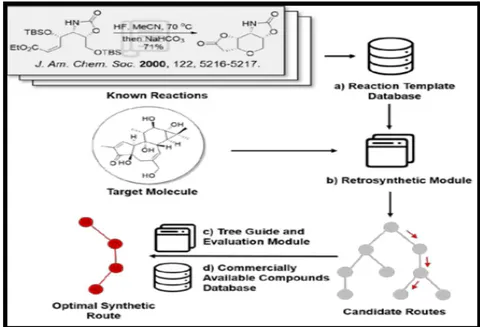
The CASP system is made up of four modules (Figure 2) : The initial module comprises the reaction template database, housing established reactions along with their bond-breaking regulations. This database can be populated either manually or automatically extracted from both commercial and publicly available databases . During bond disconnection processing, the program retrieves relevant reaction templates and adheres to their associated guidelines. The efficacy of the resultant synthetic pathway hinges upon the breadth of the reaction template database, with a more expansive database increasing the likelihood of optimal retrosynthetic analysis. The second component is the retrosynthetic module, which aligns input molecule structures with known reactions from the template database and returns the most compatible outcome. The program iterates to break down generated precursors until commercially available precursors are identified or the user-defined maximum step limit is reached. The third module, the tree guide and evaluation module, assesses candidate precursors and synthetic routes, directing the retrosynthesis toward locally and globally optimal directions. The fourth and final component is the database of commercially available compounds, serving as the terminus of the retrosynthetic analysis system and preventing the algorithm from further dissecting commercially available precursors .
4.2 Computational techniques
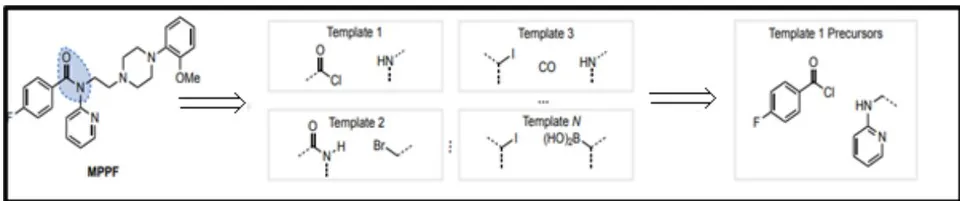
Computer aided synthetic planning involves several computational techniques. Automated retrosynthesis programs commonly utilize data-driven approaches, which can be categorized into two main types: template- based and template-free . Template-based approaches involve extracting large reaction templates from reaction data and applying them to products to find a match using subgraph isomorphism. Conversely, template- free approaches do not depend on pre-established templates and are subdivided into: (i) graph- based methods and (ii) sequence -based methods. Graph-based techniques utilize computational repositories to recognize structural attributes within the target molecule, such as aromatic rings, acyclic rings, alkyl groups, and more. This method employs a dataset to identify all compounds containing a specific substructure that matches the target molecule, along with a vast array of organic reactions accessible for application. .
Sequence-based methodologies, conversely, reframe the challenge of devising reaction pathways as akin to language translation, employing a string representation of molecules. This representation transforms the three-dimensional structure of a chemical into a sequence of symbols that can be readily interpreted by computer software . Cutting-edge predictors for both forward and reverse reactions are constructed based on the Transformer architecture and utilize SMILES as the string representation. These approaches have achieved considerable success in making broad predictions and have laid the groundwork for the advancement of retrosynthesis predictors .
There are many different CASP programs available, ranging from older ones like, LHASA and SECS to newer ones like Chematica , IBM RXN , and 3N-MCTS . The evolution of CASP programs has empowered computers to strategize the synthesis of intricate molecules incrementally. Additionally, the incorporation of artificial intelligence (AI) into retrosynthetic analysis has yielded substantial advancements in this domain. .
The development of CASP programs can be divided into three categories:
1-Hand coded rules with logical algorithms, which were used by early CASP programs due to hardware limitations. Although manual encoding requires deep chemical expertise, it remains an important method for database collection. Early programs encountered various problems such as incapability for stereoselective design, ignorance of reaction context (the factors that can influence the outcome of a reaction, such as temperature, pressure, solvent, concentration, and reaction time), and limited scope of chemical rules. However, there are limitations in keeping up with the daily updates of thousands of new chemical reactions reported, as well as the potential for inadvertent mistakes during manual encoding. These programs have offered valuable insights and served as inspiration for the creation of more pragmatic software solutions, such as Chematica. .
2-Automated extraction of reaction templates have emerged as a cost-effective and efficient approach for database maintenance. This technique reduces the labor costs associated with manual input and enables the rapid incorporation of vast chemical knowledge at an unmatched pace. Some commercial software has emerged in recent years that adopt automatic extraction of reaction rules, such as ICSYNTH and Scifinder . Nevertheless, auto-extraction still faces challenges, including limitations in reconciling the extension degree from reactive centers with computational speed and the mechanical incorporation of activating groups, potentially overlooking the influence of distant functional groups. The identification of activating functional groups and the integration of compatibility information in a more intelligent manner remain unresolved issues for future research .
3-Machine learning algorithms are complex and require iterative operations to simulate human learning behaviors. In recent years, machine learning has become a popular direction in computer science, especially for tasks that are difficult for conventional algorithms . Within CASP programs, machine learning algorithms employ chemically labeled reactions to train models capable of forecasting potential retrosynthetic pathways for novel target molecules. Over the past decade, machine learning has become a prevalent tool in CASP programs, enhancing their capabilities and broadening their scope. Techniques such as ANN and seq2seq models excel at extracting extensive sets of reaction templates, enriched with chemical context, thereby enhancing the reliability and precision of retrosynthesis. However, challenges remain in the development of machine learning in CASP programs, such as the high computational cost of training reinforcement learning models and the complicated nature of the simulations generated by ANN and seq2 seq models. Despite these challenges, it is clear that the synthetic community will continue to drive advancements in machine learning models for CASP programs .
4.3 Evaluation process
The evaluation process has posed a considerable hurdle for CASP programs until recent times . To tackle this challenge, a dual scoring methodology is implemented, which encompasses assessing both the executed reaction steps and the intricacy of the substrates. This strategy introduces the Chemicals Scoring Function (CSF) and Reaction Scoring Function (RSF) concepts, which evaluate the "synthetic positions" (sets of substrates) and "synthetic moves" (reactions) respectively. The CSF prioritizes the simplest substrates, while the RSF prioritizes the shortest syntheses without encountering reactivity conflicts or necessitating protection chemistries . The aggregate difficulty or "cost" of synthesis is quantified by summing these functions, with the aim of minimizing this sum in sought-after syntheses. Typically, a comprehensive scoring function encompasses considerations such as the cost of building blocks , yield at each step, avoidance of toxic compounds and functional group incompatibility, and pathway length. Nonetheless, the formulation of an ideal pathway scoring function remains an unresolved challenge. Artificial intelligence models, like the Monte Carlo Tree Search (MCTS) algorithm, are often utilized to approach the global optimum by conducting numerous simulations .
Chemists have access to various computer-based retrosynthesis software, each with unique capabilities and interfaces. Some examples include:
SciFinder: A chemical database with over 150 million substances and 68 million sequences of chemical reactions. It has a retrosynthesis planning tool that suggests synthetic routes for target molecules based on its reaction database.
Reaxys: A web-based platform with a database of over 240 million organic and organometallic reactions. It has a retrosynthesis tool that allows users to search for synthetic routes to target molecules.
Chematica: A software program that uses algorithms and machine learning techniques to propose synthetic routes for target molecules. It searches a database of over 40 million organic reactions and optimizes the synthetic route based on various factors.
USP-DIPPR: A software program that provides data and tools for drug synthesis and formulation. It includes a retrosynthesis tool that suggests synthetic routes based on a database of over 400,000 organic and inorganic compounds.
Synthia: A software program that uses machine learning algorithms to predict the outcomes of chemical reactions and suggest synthetic routes for target molecules, including small molecule and peptide synthesis.
4.4 Limitation and challenge
Overall computer-aided synthetic planning (CASP) is a promising area of research that aims to assist chemists in designing and optimizing synthetic routes for target molecules. However, there are still several challenges and limitations associated with CASP. One of the main challenges is the availability and quality of data, which is limited and of varying quality. Another challenge is the complexity of chemical reactions, which can involve multiple steps and various reaction pathways, making it difficult to predict the most efficient synthetic route. Additionally, CASP currently relies heavily on expert input and rule-based algorithms, which may not capture the full complexity of chemical reactions. Finally, there is also a need for user-friendly interfaces and tools to enable chemists to use CASP effectively. Addressing these challenges and limitations is necessary for the effective implementation of CASP in the future .
V. CONCLUSION
Retrosynthesis is a strategic approach in organic chemistry that involves breaking down complex target molecules into simpler building blocks through retrosynthetic analysis. The goal is to design an efficient and practical synthetic route by considering factors such as reactivity and availability of starting materials. Retrosynthetic analysis relies on fundamental organic chemistry principles and requires a deep understanding of chemical reactions. After completing the analysis, chemists proceed with forward synthesis to execute the planned synthetic steps in the opposite direction. This involves selecting suitable reaction conditions, purification methods, and characterization techniques to successfully synthesize the target molecule.
Future remarks retrosynthesis is a foundational concept in organic chemistry that continues to evolve and play a crucial role in the development of synthetic routes for complex molecules.
Advancements in computational chemistry and artificial intelligence are expected to enhance the efficiency and accuracy of retrosynthetic analysis, aiding chemists in generating pathways, predicting reactions, and optimizing synthetic routes.
The integration of retrosynthesis with emerging fields like flow chemistry and automation holds the potential for more streamlined and automated synthesis processes, enabling faster and more cost-effective production of complex molecules.
The future of retrosynthesis involves the integration of advanced computational tools and technologies to expedite the discovery and synthesis of new molecules, with wide-ranging applications across pharmaceuticals, materials science, and fine chemicals.
ACKNOWLEDGMENT
We extend our heartfelt gratitude to the individuals associated with the Department of Pharmaceutical Chemistry, Faculty of Pharmacy, University of Baghdad, for their invaluable support and assistance during the progression of this research endeavor.
Conflicts of Interest
The authors affirm that there are no conflicts of interest pertaining to the publication of this manuscript.
Deno, N. C.; Richey, H. G.; Liu, J. S.; Lincoln, D. N.; Turner, J. O. J. Am. Chem. Soc. 1965, 87, 4533–4538
Corey, E. J. Retrosynthetic Thinking - Essentials and Examples. Chem. Soc. Rev. 1988, 17, 111–133.
Walker, J. Retrosynthetic Analysis and Synthetic Planning Life's Perspectives. 2014, 1-33.
de Souza, R. O. M. A.; Miranda, L. S. M.; Bornscheuer, U. T. A Retrosynthesis Approach for Biocatalysis in Organic Synthesis. Chem. Eur. J. 2017, 23(50), 12040–12063.
Corey, E. J. Robert Robinson lecture. Retrosynthetic thinking - Essentials and examples. Chem. Soc. Rev. 1988, 17(April), 111–133.
Fray, G. Organic synthesis. The disconnection approaches. Vol. 7, Endeavour. 1983, 157 p.
Seyferth, D. Organic chemistry. Science [Internet]. 1979, 205(4405), 487–488. Available from: http://www.ncbi.nlm.nih.gov/pubmed/17758787
Trost, B. M. Times to The Atom Economy A Search for Synthetic Efficiency. Science (80-) [Internet]. 1991, 254, 1471–1477. Available from: www.sciencemag.org
Todd, M. H. Computer-aided organic synthesis. Chem. Soc. Rev. 2005, 34(3), 247–266.
Synthetic Organic Chemistry. Synth. Org. Chem.
Barcelona, U. De. Design of Organic Synthesis Part I. Strategies.
Dörwald, F. Z. Side Reactions in Organic Synthesis: A Guide to Successful Synthesis Design.
389 p.
Mondal, S. Unit V: Synthon Approach and Retrosynthesis Applications. 2021;(March).
Ackerman-Biegasiewicz, L. K. G.; Arias-Rotondo, D. M.; Biegasiewicz, K. F.; Elacqua, E.; Golder, M. R.; Kayser, L. V., et al. Organic Chemistry: A Retrosynthetic Approach to a Diverse Field. ACS Cent. Sci. 2020, 6(11), 1845–1850.
Wiley, J. Designing Organic Syntheses. New York [Internet]. 2010, J. Am. Chem. Soc., 30(50), 16766–16776. Available from: http://www.ncbi.nlm.nih.gov/pubmed/21159948
Breinbauer, R. Chemical Synthesis of Hormones, Pheromones and Other Bioregulators. Synthesis 2013, 45(07), 978–978.
Strategy of synthesis. Org. Synth. 2007, 232–300.
Plehiers, P. P.; Coley, C. W.; Gao, H.; Vermeire, F. H.; Dobbelaere, M. R.; Stevens, C. V., et al. Artificial Intelligence for Computer-Aided Synthesis in Flow: Analysis and Selection of Reaction Components. Front. Chem. Eng. 2020, 2(August).
Corey, E. J.; Todd, W. Wipke. Computer-assisted design of complex organic syntheses. Sci. 1969, 166(3902), 178–192.
Smith, M. B.; March, J. March's Advanced Organic Chemistry. March's Advanced Organic Chemistry.
Bromides, H. Synthesis and Retrosynthesis 1. Summary of First Semester Reactions Useful in Synthesis.:1–13.
Corey, E. J.; Cheng, X.-M. Structure-Based and Topological Strategies [Internet]. Logic Chem. Synth. 1989, 33–46 p.
Wang, J.; Lundberg, H.; Asai, S.; Martín-Acosta, P.; Chen, J. S.; Brown, S.; Farrell, W.; Dushin, R. G.; O'Donnell, C. J.; Ratnayake, A. S.; Richardson, P.; Liu, Z.; Qin, T.; Blackmond, D. G.; Baran, P. S. Kinetically Guided Radical-Based Synthesis of C(sp^3)–C(sp^3) Linkages on DNA. Proc. Natl. Acad. Sci. U.S.A. 2018, 115 (28), E6404–E6410.
Oh, R. C. H.; Oh, C. Unit III: Synthetic Approaches Retrosynthesis and Retrosynthetic Analysis; Terminologies used in Retrosynthesis. 1990;(2).
Wender, P. A.; Verma, V. A.; Paxton, T. J.; Pillow, T. H. Function-oriented synthesis, step economy, and drug design. Acc. Chem. Res. 2008, 41(1), 40–49.
Waldman, A. J.; Ng, T. L.; Wang, P.; Balskus, E. P. Heteroatom – Heteroatom Bond Formation in Natural Product Biosynthesis.
Paulsen, H. International Edition in English. Angew. Chem. Int. Ed. Engl. 1982, 21(3), 155–173.
Umpolung Synthons - Planning Organic Syntheses Organic Chemistry.
Alleva, J. Strategies in Synthetic Planning: Modern Stylistic Points in Retrosynthetic Analysis. MacMillan.
Evans, D. A.; Bartroli, J.; Shih, T. L. Enantioselective Aldol Condensations.
Erythro-Selective Chiral Aldol Condensations via Boron Enolates. J. Am. Chem. Soc. 1981, 103(8), 2127–2129.
Smith, J. M.; Harwood, S. J.; Baran, P. S. Radical Retrosynthesis. Acc. Chem. Res. 2018, 51 (8), 1807–17.
Crossley, S. W. M.; Obradors, C.; Martinez, R. M.; Shenvi, R. A. Mn-, Fe-, and Co-Catalyzed Radical Hydrofunctionalizations of Olefins. Chem. Rev. 2016, 116 (15), 8912–9000.
Frank, M. G.; annis, Watkins M. HHS Publ. Access.Physiol. Behav. 2019, 516 (80), 678–87.
Wang, J.; Lundberg, H.; Asai, S.; Martín-Acosta, P.; Chen, J. S.; Brown, S., et al. Kinetically Guided Radical-Based Synthesis of C(sp3) – C(sp3) Linkages on DNA. Proc. Natl. Acad. Sci. U. S. A. 2018, 115 (28), E6404–10.
Ishii, T.; Ota, K.; Nagao, K.; Ohmiya, H. N-Heterocyclic Carbene-Catalyzed Radical Relay Enabling Vicinal Alkylacylation of Alkenes. J. Am. Chem. Soc. 2019, 141 (36), 14073–7.
Kong, W.; Yu, C.; An, H.; Song, Q. Photoredox-Catalyzed Decarboxylative Alkylation of Silyl Enol Ethers to Synthesize Functionalized Aryl Alkyl Ketones. Org. Lett. 2018, 20 (2), 349–52.
Fu, M. C.; Shang, R.; Zhao, B.; Wang, B.; Fu, Y. Photocatalytic Decarboxylative Alkylations Mediated by Triphenylphosphine and Sodium Iodide. Sci. 2019, 363 (6434), 1429–34.
Landelle, G.; Panossian, A.; Pazenok, S.; Vors, J. P.; Leroux, F. R. Recent Advances in Transition Metal-Catalyzed Csp2-Monofluoro-, Difluoro-, Perfluoromethylation and Trifluoromethylthiolation. Beilstein J. Org. Chem. 2013, 9, 2476–536.
Bi, C.; Che, G.; Bao, D.; Qiao, W.; Sun, L.; Collins, M. R.; et al. Modular Radical Cross-Coupling with Sulfones Enables Access to sp^3-Rich (Fluoro)alkylated Scaffolds. Sci.2018, 80 (April), 75–80.
Pensak, D. A.; Corey, E. J. LHASA—Logic and Heuristics Applied to Synthetic Analysis. 1977, 1–32.
Wang, Z.; Zhang, W.; Liu, B. Computational Analysis of Synthetic Planning: Past and Future. Chin. J. Chem. 2021, 39 (11), 3127–43.
Murray-Rust P, Rzepa HS. Chemical Markup, XML, and the Worldwide Web.
Basic Principles. J. Chem. Inf. Comput. Sci. 1999;39(6):928–42.
Holliday GL, Murray-Rust P, Rzepa HS. Chemical markup, XML, and the world wide web.
CMLReact, an XML vocabulary for chemical reactions. J. Chem. Inf. Model. 2006;46(1):145–57.
Rogers D, Hahn M. Extended-Connectivity Fingerprints. 2010;742–54.
Heller S. InChI – the worldwide chemical structure standard. J. Cheminform. 2014;6(S1):1–9.
Coley CW, Green WH, Jensen KF. Machine Learning in Computer-Aided Synthesis Planning. Acc. Chem. Res. 2018;51(5):1281–9.
Gómez-Bombarelli R, Wei JN, Duvenaud D, Hernández-Lobato JM, Sánchez-Lengeling B, Sheberla D, et al. Automatic Chemical Design Using a Data-Driven Continuous Representation of Molecules. ACS Cent. Sci. 2018;4(2):268–76.
Schneider N, Lowe DM, Sayle RA, Landrum GA. Development of a novel fingerprint for chemical reactions and its application to large-scale reaction classification and similarity. J. Chem. Inf. Model. 2015;55(1):39–53.
Carbonell P, Jervis AJ, Robinson CJ, Yan C, Dunstan M, Swainston N, et al. An automated Design-Build-Test-Learn pipeline for enhanced microbial production of fine chemicals. Commun. Biol. 2018;1(1):1–10.
Szymkuć S, Gajewska EP, Klucznik T, Molga K, Dittwald P, Startek M., Computer-Assisted Synthetic Planning: The End of the Beginning. Angew. Chem. Int. Ed.
55, 5904–5937. -
Schwaller P, Gaudin T, Lányi D, Bekas C, Laino T. "Found in Translation": predicting outcomes of complex organic chemistry reactions using neural sequence-to-sequence models. Chem. Sci. 2018;9(28):6091–8.
Kayala, M. A.; Baldi, P. ReactionPredictor: Prediction of complex chemical reactions at the mechanistic level using machine learning. J. Chem. Inf. Model. 2012, 52(10), 2526–2540.
Bøgevig, A.; Federsel, H. J.; Huerta, F.; Hutchings, M. G.; Kraut, H.; Langer, T.; et al. Route design in the 21st century: The IC SYNTH software tool as an idea generator for synthesis prediction. Org. Process Res. Dev. 2015, 19(2), 357–368.
Blurock, E. S. Computer-Aided Synthesis Design at RISC-Linz: Automatic Extraction and Use of Reaction Classes. J. Chem. Inf. Comput. Sci. 1990, 30(4), 505–510.
Coley, C. W.; Rogers, L.; Green, W. H.; Jensen, K. F. Computer-Assisted Retrosynthesis Based on Molecular Similarity. ACS Cent. Sci. 2017, 3(12), 1237–1245.
Segler, M. H. S.; Waller, M. P. Neural-Symbolic Machine Learning for Retrosynthesis and Reaction Prediction. Chem. - Eur. J. 2017, 23(25), 5966–5971.
Schwaller, P.; Laino, T.; Gaudin, T.; Bolgar, P.; Hunter, C. A.; Bekas, C.; et al. Molecular Transformer: A Model for Uncertainty-Calibrated Chemical Reaction Prediction. ACS Cent. Sci. 2019, 5(9), 1572–1583.
Coley, C. W.; Green, W. H.; Jensen, K. F. RDChiral: An RDKit Wrapper for Handling Stereochemistry in Retrosynthetic Template Extraction and Application. J. Chem. Inf. Model. 2019, 59, 2529–2537.
Dai, H.; Li, C.; Coley, C. W.; Dai, B.; Song, L. Retrosynthesis prediction with conditional graph logic network. Adv. Neural Inf. Process. Syst. 2019, 32(NeurIPS), 1–11.
Lin, K.; Xu, Y.; Pei, J.; Lai, L. Automatic retrosynthetic route planning using template-free models. Chem. Sci. 2020, 11(12), 3355–3364.
Jin, W.; Coley, C. W.; Barzilay, R.; Jaakkola, T. Predicting organic reaction outcomes with weisfeiler-lehman network. Adv. Neural Inf. Process. Syst. 2017, 2017-Decem (Nips), 2608–2617.
Somnath, V. R.; Bunne, C.; Coley, C. W.; Krause, A.; Barzilay, R. Learning Graph Models for Retrosynthesis Prediction. Adv. Neural Inf. Process. Syst. 2021, 12(NeurIPS), 9405–9415.
Yan, C.; Ding, Q.; Zhao, P.; Zheng, S.; Yang, J.; Yu, Y. RetroXpert: Decompose retrosynthesis prediction like a chemist. Adv. Neural Inf. Process. Syst. 2020, 2020-Decem (NeurIPS).
Liu, B.; Ramsundar, B.; Kawthekar, P.; Shi, J.; Gomes, J.; Luu Nguyen, Q.; et al. Retrosynthetic Reaction Prediction Using Neural Sequence-to-Sequence Models. ACS Cent. Sci. 2017, 3(10), 1103–1113.
Sutskever, I.; Vinyals, O.; Le, Q.
V. Sequence to sequence learning with neural networks. Adv. Neural Inf. Process. Syst. 2014, 4(January), 3104–31.
Conflict of Interest
The authors declare no conflict of interest.
Ethical Approval
Not applicable
Data Availability
The datasets used in this study are openly available at [repository link] and the source code is available on GitHub at [GitHub link].
Funding
This work did not receive any external funding.
References
Cite this article
Related Research


Special Issue
Launch a focused special issue to highlight research, emerging trends, and expert insights in your academic field.