


IntelliPaper
Abstract
This academic essay titled “The Price of Survival. On the Ontology of Animals in Transcaucasia, Using the Example of Georgia” was developed in the wake of a professional trip to an international congress held inTbilisi, the capital of Georgia, in October 2024.
At its core, the study analyzes snapshots of a human-pet constellation which, in Georgia, has given rise to a daily “culture of indifference.” This culture reflects fundamental ontological questions about coexistence, polemically mirroring the ethical and moral categories between human existence and the status of the animal as a “thing.”
The empirical dimension of the paper is illustrated through numerous encounters with suffering animals in Georgian urban spaces. These observations illustrate the cruel living conditions under which pets are forced to exist—without societal recognition and in the absence of institutional animal welfare structures.
In addition, the findings are placed within a historical framework, discussing and interpreting human-animal relationships ranging from antiquity to the 21st century.
Explore Digital Article Text
This outline contains, between the chapters, so-called memos-notes that have a direct empirical reference to the topic and reflect the author's experiences. In total, there are three memos that emerged during 2024-2025. Georgia geographically belongs to Transcaucasia. The Eastern parts of the Caucasus mountains are geographically referred to as Transcaucasia. Georgia, is located in the South Caucasus and has a rich palette of cultural-ethnic diversities, providing enriching variety in the country. The capital is Tbilisi, and the official language is Georgian. The Georgian language is unique and has its own script. Georgia's political system is a parliamentary republic; since the 2000s the country has looked toward EU/NATO accession prospects. Georgia also has a rich cultural history and UNESCO World Heritage Sites such as the sacred buildings of Mtskheta can be found on its territory (UNESCO World Heritage).
Further impressions and first-hand information will follow during the course of this article: encounters on the streets of Tbilisi, conversations with passers-by as well as with hotel staff, as well as with Chechen taxi drivers who took me to the mountain villages of the Caucasus. In these villages, there are still archaic shepherd cultures, whose members share what they own with their four-legged companions.
I. INTRODUCTION
Tbilisi (Tiflis), Georgia in October 2024. At 4:00 PM, my Georgian taxi driver picks me up from the hotel, which is in the city center of Tbilisi, to take me to the airport. The hotel staffers' farewells are very warm and my last impression before we start our journey is the suffering on the streets, where hundreds of pets-dogs and cats-lead a miserable existence. This is where my essay begins: it concerns living beings who, like our Homo sapiens sapiens species, have sensations and despite this fact are still cruelly pushed to the verge of existential destruction in the 21st century. Given the lack of animal protection in this Caucasus republic, the "stage of life" is created, on which humans practice a culture of disregard for animals. Georgia and its homeless pets are in a coexistent disharmony-a theme I will address with phenomenological and empirical frameworks. Returning to my trip to the airport: The taxi driver drives through the outskirts of Tbilisi, areas that hardly any tourist has seen. These districts lie along rivers, are largely uninhabitable, yet host hundreds of stray animals. My assumptions are confirmed: animals in need are a pervasive problem in this country-visible to the eyes and perceptions of foreign tourists who visit it. For a moment, I glance through the car window and let the burden of the streets overwhelm me. Helplessness, but also anger, are emotions that fight inside me. As a person who grew up in a culture where animals are treated with empathy and respect, chasms open that I perceive as pain both mentally and physically. Since my childhood in Poland, I have grown up with dogs and for 16 years owned a hunting dog named Tasi. The taxi driver notices my silence and comments: "...You know, I have had guests from the USA for many years who are shocked by the plight of the stray dogs and cats, so I often bring guests together with the animals to the airport. Most Americans want to rescue the dogs from this misery and simply take them to the USA..." "...May I ask you why foreign tourists do that and not the locals?," is my question and I do not receive an answer.
Distress and ethical abuse of pets seem not to be relevant topics here. Upon my arrival at the airport, I learn that my flight to Germany will depart several hours later. I use the time to once again inspect the premises of the airport. Most of the flights are set to depart for Tehran and Kabul.
Only now do I realize that I have been spatially and mentally distanced from my European cultural circle. During the scientific exchange days at the congress at Tbilisi University I had missed that Georgia borders Western Asia and has almost immediate proximity to Iran. If I should perceive the ontology of the animal-human relationship as a crossing of cultural colors, that would be a fitting assumption. However, this problem also occurs in Europe, for instance in Bulgaria and Romania. With this prelude to my topic, I want to inform readers about the structure of my article. The philological lens of my text will build a bridge to empirical inquiry. Current scientific results in molecular biology on the evolution of the wolf, which became the domesticated dog, paired with philosophical ethics (Kant, Heidegger). The conceptual structure of my text is arranged so that after each theoretical "key," a local everyday encounter in Georgia is described.
Habermas emphasises that, even though animals cannot become full discursive partners through language, they should be treated as beings deserving of care in social interactions. Humans must represent the interests of animals since animals cannot advocate for themselves. Humans must respect animals even when they are not capable of discourse (cf. Habermas 1991). Antispeciesism is an ethical stance opposing the discrimination of living beings. All beings should receive equal consideration from humans. Habermas derives this in particular from the discourse principle (D) and ties it to moral rights for all. This contributes to the emergence of peacefully coexisting societies (cf. Hilgerloh-Nuske 2017:15). Porzel (2004) connects linguistics with information technology, focusing on artificial intelligence. In an expert interview he explained how research on animals shapes the understanding of language in linguistics and, in particular, softens hard boundaries between humans and the rest of fauna (cf. ibid: 21).
1.1 Categorization. How are animals ontologically "conceived"? On the philosophy of subjectivity and consciousness with respect to the environment.
1.2 Philosophy has asked for millennia what exists and what properties beings have—such as humans. Ontology, in the philosophical sense, deals with the fundamental structures of reality and is the doctrine of being. It systematizes entities-concrete or abstract phenomena, properties or processes. Yet, ontology remains separate from epistemology or metaphysical considerations, i.e. regarding questions about God. If ontology turns its "magnifying glass" toward animals, it speaks of "living beings" that differ from humans since they are not capable of logical thinking. In critical ontology, living beings like animals are considered as "individually existing" and "living entities". In this context, J. Klosters lays out Nicolai Hartmann's approach to critical ontology. It also concerns objects such as animals, which he situates as individual "living beings" within their own world.
According to Hartmann, the nature of the subject-the-human being-can be understood along several interrelated and mutually complementary categories. Klosters investigates what general role ontology can take and, in particular, what importance a "critical" ontology should have.
Since Hartmann favors the analytic method, he seeks to begin the ascent from the relatively rational fields that are well established and long cultivated-namely epistemology, logic, ethics, etc.-to an "irrational" ontology. Yet, he must admit that the subject and its influence on these disciplines must also be taken into account (see Klösters 1929: 27). Here, one may speak of a being that intrudes into our sphere of knowledge and of which we immediately perceive that it exists completely independently of our interpretation and decision. This being is grounded in its own conditions of being and laws of being. Although phenomenology of knowledge must clearly expose the aporia with its antinomies-logical contradictions and special paradoxes-in order to later connect them to a harmonious solution, there remains a certain tension between phenomenology and the theory of knowledge. If knowledge is once bound to a particular sphere of being, Hartmann wants to show that knowledge as a thing in itself is a link and a condition of broader relations and conditions of being. "...To grasp the conditions of knowledge" thus already means "to grasp certain relational elements of a larger system of conditions of being..." (p. 280). Consequently, for Hartmann there necessarily emerges a purely ontological determination of consciousness. The projection of thinking—its crossing over into higher determinations of being-is possible precisely because "the entire consciousness, along with its conceptual formations and scientific expansions, is only a mode of being, perhaps its highest stage" (p. 281). Accordingly, the relations of being grounded in the objective being are partly situated in the living sphere of consciousness; they fall "with one end" into the sphere of thought (Klösters, cited in Hartmann 1921: 29f).
1.3 Socialization of the dog. Early indications of the relationship between humans and wolves. The noblest of all animals-the dog.
Connecting the argumentative chain between the relation of humans and animals, ontology refers to the animal, in our case domesticated animals such as dogs. Ontologically, the descendant of the wolf-the dog-is defined through its biological existence as well as its individual developments and behaviors in the context of genetic origin and environmental influences. These aspects are among the most important features in behavioral research. There is also an ecological closeness to humans.
Deciphering the genetic basis of phenotypic diversity is one of the central goals of modern biological research. Pets offer a unique opportunity to make a significant step toward this goal. The dog is the most phenotypically diverse mammal. As the biomolecular research of Uppsala University confirmed, the dog was domesticated from the gray wolf about 11,000 to 30,000 years ago. After domestication, a period of intensive breeding led to the massive phenotypic diversity we observe today in dog breeds. These two phases of strong positive selection during domestication and breed formation have likely left their signature in the genome (cf. Ratnakumar et al. 2013).
The Ice Age as a geological epoch and the "Mammoth Steppe" as a biogeographical substrate (Guthrie 1990, Fig. 4) are the most important factors in the evolutionary puzzle of canids and likewise of humans. In more recent times, understanding of these factors has changed significantly (Schleidt/Shalter 2018: 12).
Toward the end of the Ice Age, humans domesticated wolves that fed on waste from human camps. Through selection, they created the variety of dog breeds we know today. Or, another hypothesis: the wolves took the initiative and persuaded the wealthy humans to part with some of their abundance by presenting themselves as loyal servants and hunting companions.
Is it conceivable that already 135,000 years ago, Neanderthals, after surviving several climate changes as gatherers and occasional large-game hunters during the Ice Age, also entered the hypothetical ecosystem of large reindeer herds "managed" by wolf packs? Did they already huddle with canids back then? Did humans already begin to push wolves from the apex of the food pyramid even then? (ibid.6, 18).
It is a strange-sounding term, because the encounter between wolves and modern humans, as mentioned above, occurred long before the time from which we can speak of human dwellings in the sense of a "domus." Canids used sleeping caves much earlier. Therefore, perhaps we should speak of "Kubilation" starting from instead of domestication, as proposed earlier (Schleidt 1998) and consider who may have kubilitated whom (ibid. p.16).
Dogs and wolves belong to the broad spectrum of predators and scavengers whose evolution began about 10 million years ago, together with that of herd-living ungulates. During the Ice Age, the gray wolf-Canis lupus-was the predominant predator in Europe. By keeping pace with the migrations of ungulate herds, it became the first "herder" among mammals (ibid. p.1).
They hunt together, sleep together in the same den and raise their young together. This time-honored social system facilitated the domestication of the dog. Observe wolves in a pack sniffing each other, wagging their tail to greet, licking each other, and guarding their young and you see all the characteristics we love in dogs, including their loyalty. The "E Pluribus Unum" of the pack goes far beyond the "Unum," the unity of a group of self-serving fighters. As with state-forming insects (bees and ants), where the colony is only one unit of selection (Moritz
1993), the pack became one of the many levels at which natural selection acts (see ibid. p.5).
In summary, from a biological perspective, the process of the intertwining of human and dog becoming only makes sense if we regard it as co-evolution. While the evolution of humans and our primate heritage has long attracted general interest since Darwin's "The Descent of Man", the evolution of wolves and dogs has thus far been the concern of only a few paleontologists specializing in carnivores of the Ice Age. As far as we can tell, the ancestry of the dog has not yet been linked to the ancestry of modern humans. Therefore, we may ask: what was the state of affairs among our ancestors and did some wolves diverge from their kin and become the immediate ancestors of dogs? (cf. Schleidt/Shalter 2018, pp. 23f., citing Darwin).
Memo
October 2024, Georgia
During my long stay at Tbilisi Airport, caused by the significant delay of the plane from Germany, I keep recalling the distressing moments and encounters I experienced in Georgia over the past seven days. Unforgettable are the scenes on the streets-with pets, and with people who seem to hardly notice these four-legged creatures anymore. My first day began pleasantly with moving into a centrally located hotel in Tbilisi. The staff spoke Russian-an advantage, since both I and the hotel owners understand the language. What remains especially vivid in my memory, however, is my first car ride: the way local taxi drivers drive is like a stunt show-no regard for speed limits and sometimes only a few centimeters away from the car in front. This sense of chaos and dynamism stayed with me during my later solo excursions into the Caucasus Mountains. The next day, together with our scientific team and colleagues from Tbilisi University, I went on an excursion to the surrounding monasteries of the city, which seem to form a protective ring around the capital. Yet, even before our departure, I was confronted for the first time with an unmistakable sight: dogs and cats stretching endlessly along the roads. I could hardly believe my eyes: silent, dying, starving animals lying in the dust and inhaling exhaust fumes, right in the middle of throngs of people who hardly paid any attention to them. From that moment on, a painful time began for me. I would have preferred to cancel everything immediately and fly back home. My thoughts revolved around one issue only: the absence of effective animal welfare in Georgia.
I asked myself about the Christian understanding of those people who consider themselves Christians and heirs of this culture-how can they exist amidst such a "co-inferno"? Before our host came to pick us up at the hotel, I spoke with the owners. The hostess told me that this horrific situation of the animals had become almost like a "normal culture" on the streets of Tbilisi-around 300,000 homeless animals live there, in a city with a population of 1.25 million people.
I ask about possible animal welfare organizations, volunteer helpers, or veterinarians who could sterilize the animals or at least end their suffering through euthanasia.
The reply shakes me deeply: "...No, such a service for animals does not exist. There is only one shelter, funded by a Georgian multimillionaire, but it can take in perhaps five percent of the street animals. A free veterinarian-that does not exist here. Sterilization costs about 50 euros, while most Georgians earn between 180 and 280 dollars a month..." The words of the hotel hostess trouble me. She explains the misery of the animals by pointing to the country's economic weakness. Indeed, a large part of the infrastructure seems to be worn down, outside of the city center, which has been nicely polished for tourists. In many apartment buildings, windowpanes are missing and replaced with cardboards. But for me, this is not a sufficient explanation.
I myself come from the late phase of communist Poland, where we had to live with hardship and crises-but dying animals directly at our doorsteps were never seen. After an hour of waiting, our hosts finally arrive-delays here hardly seem worth any mention. Together, we drive to the city of Mtskheta and to the surrounding monasteries. Even today, a year later, it is still difficult for me to put into words and write down what I saw. In the monasteries, two worlds opened up before me: one in which well-fed nuns and monks devoutly accept alms-and another, right outside the houses of God, in which starving dogs and cats, with trembling bodies and pupils wide like coins, languish in the agony of their approaching death. I so wish I had never had to witness so much suffering with my own eyes. I asked one of the monks the question:
"...Could you explain to me why so much suffering exists here before the House of God and no one does anything about it? Do you not see that the animals are dying here...?" The monk showed no reaction and only answered:
"...We must take care of people, not animals..." I responded:
"...Do you know Saint Francis? Among us Catholics, he is regarded as the patron saint of animals, of the environment and of all creation..." But the monk gave no reply. As a form of protest, I refused to enter the church and instead spoke with the merchants selling their goods to pilgrims. Some of them claimed to have adopted two or three dogs-though I wondered if this was truly the case. At the foot of the mountain, I discovered an old "recluse" surrounded by horses, dogs and a flock of small cats. He told me that in this culture, animals have no significance whatsoever for most people-even though those same people regularly attend church, bow before the altars and make generous donations.

As early as the following day, I tried on my own to find answers to the compassion I have gradually developed. More on this at the beginning of Chapter 3.
II. ANIMALS IN THE SHORT TIMELINE OF PHILOSOPHICAL THOUGHT
In the next step, we turn our attention to the ontology of the animal and the human being. We will illustrate this through a brief timeline of philosophy as well as through Christian and Buddhist ethics. In doing so, we will focus on essential questions, such as how a mammal-the human-defines itself and how animals are viewed within the spectrum of moral ethics. Furthermore, we will examine various perspectives on what being human and being animal could mean, and how animals ought to be treated. Animal ethics in a broader sense can, for example, oppose meat consumption and animal sacrifice, but also oppose ritual ideas of purity or the notion of spiritual transmigration (such as in the Indian doctrine of reincarnation).
Antiquity. In De Animalibus ("On Animals"), Aristotle made extensive observations and descriptions of animals. His most important sources on animal ontology are above all his own writings on natural history. It is only in his philosophical works that Aristotle asserts a rigid boundary between human and animal. In his natural history writings, however, he describes this boundary as fluid and attributes rational actions to animals in De Animalibus-above all, the capacity for practical wisdom, phronesis. Nevertheless, it is his philosophical works that are decisive for the subsequent ancient discussion of animals. In his Politics, Aristotle refers to animals (and, incidentally, also to slaves) as rightless "living tools." Here, he formulates the famous thesis that the human being is zoon lagon echon and zoon politikon (that is, a rational and a "political" being; (Latin: animal rationale and ens sociale). Animals, he argues, are incapable of this rational and linguistic capacity, though they can express joy and pain, since they are sentient-similar to human beings. The question of thinking and language, however, ultimately remains unresolved in his work. An explicit animal ethics in the narrower or proper sense first emerges with later thinkers, in particular with Theophrastus-Aristotle's student and successor as head of the Peripatetic School in Athens-and with Plutarch , the most influential animal-friendly philosopher of the Roman era, though primarily known as a historian.
Both emphasised the physical and psychological similarities between humans and animals and they advocated for a more animal-friendly attitude (cf. Markreider 2015: 7-10).
Christian Ethics
Christian ethics draws on the messages of the Bible, where various verses address the relationship between humans and animals - for example, in Genesis 1:26-27: God created humankind in His image and granted them dominion over animals. However, this dominion also entails "responsibility and care" for them. The prophet Isaiah goes even further with his reflections, describing in Isaiah 11:6–9 an almost ideal state of peace in which humans and animals live in harmony-for instance: "The lion shall eat straw like the ox." This imagery symbolizes a future free from enmity between man and animal. Thus, animals are creations of God and form part of His creation.
The Middle Ages
Medieval discussions of ethical questions concerning animals were shaped, for instance, by Thomas Aquinas, who based his arguments on biblical texts. Islamic philosophers of the Middle Ages also pursued similar lines of reasoning drawn from the "revealed scriptures," among them the renowned physician and philosopher Avicenna (Ibn Sīnā), an 11 century scholar active in Persia (cf. ibid. 16). In his 2025 study, Steigert demonstrates that the Middle Ages regarded animals as God's creatures; this endowed them with a certain value and, at minimum, prohibited cruel treatment in the sense of animal cruelty (Stone 1998). Steigert further cites Aquinas, who emphasised that, although animals possess sensations, they exist ultimately for the service of humankind.
Animals were often considered to exist for the benefit of humans, which justified their killing as long as cruelty was avoided (Barad, 1995, p. 142). At the same time, within the foundations of animal ethics, animals were in some cases also regarded as moral role models, especially in terms of their natural virtuousness (Salisbury, 2011, pp. 81-107). Overall, the Middle Ages laid the foundation for many later discussions in animal ethics, even though animals continued to be viewed and treated primarily through theological and anthropocentric lenses (Oelze, 2018, p. 11; ibid. 2025, pp. 8f).
The Enlightenment
During the Enlightenment, European philosophical thought turned to the historical and political upheavals of the time and drew on Kant's ideas (1785/2004). Reflection on the animal and its inner life began to take shape, inspiring thought about Goethe's "other" creatures. Individualism and humanism, science and theology, paved the way for modern animal ethics in Europe and continued to influence it far beyond Darwin's time (cf. Ingensiep, 2018, p. 1). (Accessed on 14.08.2025: https://link.springer.com/chapter/10.1007/978-3-476-05402-9_3.)
In his article "Kant's Moral Philosophy and Duties with Regard to Animals and Non-Rational Nature in General", Geismann (2016) explores Kant's animal ethics and argues that humans have both duties of virtue and duties of right with regard to animals and non-rational nature. However, this is not because animals are animals or nature is nature, but because the human being is human-more precisely: because the human being is to be understood as a moral subject of duties and rights, as a person (ibid., p. 1).
In his interpretation of Kant and animal ethics, Geismann refers to Fritz Jahr, who proposed applying the Kantian categorical imperative-in the version of the "humanity as an end" formula-also to the natural world around us, especially to living nature. The original formulation reads:
"Act in such a way that you treat humanity, whether in your own person or in the person of any other, always at the same time as an end, never merely as a means."
From this, Jahr developed the so-called "bioethical imperative" in the form of the sentence:
"Respect every living being in principle as an end in itself and treat it, if possible, as such!" (cf. ibid., cited in F. Jahr 2016, pp. 1f).
Kant himself also explained:
"Act only according to that maxim whereby you can at the same time will that it should become a universal law." (Kant, 1785, Vol. 4)
Kant's categorical imperative, understood as the basis for the doctrine of morals, law and ethics, is rooted in human arbitrium. In contrast to animal arbitrium (arbitrium brutum), human arbitrium as free will (arbitrium liberum), or practical freedom, is negatively defined by the fact that it is affected by sensory impulses, but – unlike in animals-not completely determined by them. Positively understood, it is the capacity to act independently of the compulsion of sensory drives based on reasons, to determine oneself to actions in the sensible world through motives, that is, through reason as the cause. This self-determination consists in the setting of ends (which presupposes reason-guided motives, but does not automatically render them "rational"). The empirically given capacity "to set any end at all" is, for Kant, "the distinguishing characteristic of humanity (as opposed to animality)."
Since no one can have an end without making the object of their will an end for themselves, it is an act of the freedom of the acting subject-not an effect of nature-to have any end at all for one's actions (Geismann, 2016, p. 7).
Neuthard (2023) notes that with growing interest, the interdisciplinary field of research known as Animal Studies-also referred to as Human-Animal Studies-has developed (ibid. 2023, p. 33; Kompatscher et al., 2017, pp. 17 ff.). Scholars in this field investigate the interactions, relationships and dynamics between humans and animals. They examine the roles animals occupy in culture and society, as well as how the ways of life of humans and animals intersect and influence each other. Thus, Animal Studies focuses on exploring the points of contact between animal and human societies (cf. Kompatscher et al., 2017, p. 16).
One of the most influential approaches in contemporary animal ethics is the debate on preference utilitarianism, which was developed by Peter Singer. Preference utilitarianism is a modern version of utilitarianism that emerged in the 20th century. Its basic idea: utility is determined by the extent to which the preferences or desires of the individuals involved are fulfilled. Simply put, preference utilitarianism evaluates an action based on how well it satisfies the preferences of those affected, as far as possible (Der Beisbart, 2009, p. 25).
The utilitarian Singer is inspired by John Stuart Mill (1863). His famous work Animal Liberation (1975/1990) is where he first introduces the concept of preference utilitarianism.
What does it mean? Happiness is not exclusive to humans, but is grounded in the fact that all sentient beings are capable of experiencing sensations (and thus pain and pleasure). This gives rise to a moral obligation: humans are morally required to consider the interests of animals.
For example: "I find it morally objectionable when animals are abandoned..." Here, utilitarianism offers a criterion for decision-making to determine which action is morally right in a given situation: among all available options, the one that maximizes overall utility must be chosen (cf. ibid., p. 18).
In modern philosophy, Heidegger provided an ethical interpretation of the relationship between animal husbandry and animal ethics. In his work, he reflects on the relationship between humans and animals from the perspective of a humanist-considering human existence, which shares much with the animal realm, even though he views animals as "living beings" that do not possess the same kind of consciousness and therefore cannot develop a relationship to the "world."
How do human beings and Dasein relate to one another, and what does this relationship mean for Heidegger's engagement with anthropology?
Following Kant, the anthropological question arose of how the human being-as a theoretical, practical, aesthetic and religious-philosophical subject-can be systematically defined and how these definitions might be coherently integrated. A question that had already been rejected by both Herder and Hegel (Johanßen 2017: 91ff).
In his lecture The Fundamental Concepts of Metaphysics (1929/30), Heidegger attempts to work through the anthropological ambiguity of Being and Time by trying to understand "world" through a distinction between stone, animal and human-as worldlessness, poverty in world, and world-forming (Johanßen 2017: 98, quoting Heidegger 2004: 263).
"Dasein is a being that does not merely occur among other beings. It is, rather, ontically distinguished by the fact that in its being this being is concerned about its very being..." (Heidegger 1984: 12)
Thus, Heidegger characterises human Dasein as a mode of being that-unlike other forms of being-relates to itself and is responsible for leading its own life (ibid., p. 23).
The animal is man minus X; hyperbolic anthropology presents man as the animal plus X. Yet, animals are too diverse to be merely defined in a privative way, and if anything, the human being is characterized less by excess than by deficiency and weakness. From this, one might infer the possible dissolution of the anthropological difference (cf. Wild 2013: 33).
At this point, I would like to establish a transition to contemporary animal research and shift my further arguments toward behavioral therapy for dogs.
Memo (ibid., 2024)
Following my distressing observations in the surroundings of Tbilisi (I visited three cities), I have come to realize that it is not "only" the capital that is overrun with animals in need. The same "medieval" bleakness prevails among the four-legged animals in cities up to 250 km further north in Georgia.
In the final seven days of my stay, I attempted to exhaust my means in trying to understand why this state of animal suffering exists as it does. I reached out to animal welfare organizations in Tbilisi and visited the capital's only animal shelter, which is located in a run-down suburb at the edge of the city.
My Georgian taxi driver reacted to my questions with indifference and appeared visibly annoyed by my concern for the fate of domestic animals.
Upon arrival at the shelter, I was welcomed by the director, M., who introduced me to two of the staff members.
"...How many dogs are you responsible for?" I ask.
"...The three of us take care of over 500 adult dogs and 68 puppies..."
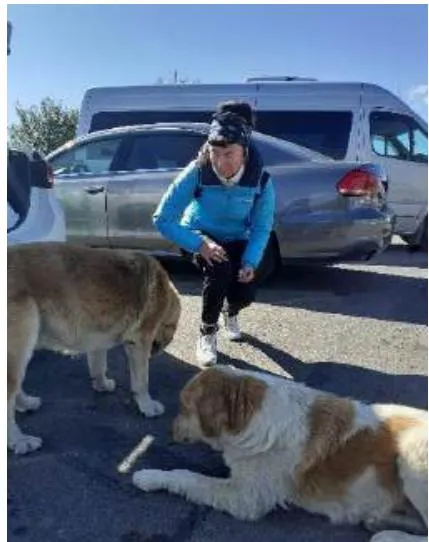
After hearing this, I was left speechless. Further comments seem unnecessary. To my surprise, dogs of all kinds of breeds approach me—ranging from large, noble Kangals and fighting dogs to small ones. None of them behaves aggressively. I am familiar with the behavior of abused animals who, having lost all trust in the outside world, tend to become aggressive. But here, it's different: just like in the monasteries, all the animals seem "unnaturally" gentle and submissive.
At this point, I have to revise my previous perception.
All of the dogs housed in this "shelter" are, in fact, among the truly fortunate-because simply having something resembling a "home" is a privilege compared to the misery outside. For my visit, I had bought several kilos of dry and wet food, which-surprisingly-is just as expensive in Georgia as it is in Germany, despite the fact that the Georgian population earns very low wages. After spending time with the animals, I speak briefly with M. and his two colleagues before leaving this place-a place that leaves one deep in thought.
III. APPLIED RESEARCH
3.1 Behavioral Therapy Approaches for Dogs
Around the year 1900, the first publications on "animal psychology" appeared, along with guides on how to intentionally influence the behavior of dogs (e.g., hunting dogs, police service dogs) through training. Since then, attitudes toward the keeping of dogs and other companion animals have changed significantly.
Animals are no longer kept solely for a specific purpose but have become part of a social human-animal community.
In close cohabitation with humans, situations may arise that pose physical and psychological strain for both sides. When such stress is perceived by the pet owner, they may seek support from various professionals, as Röhrs and Schöning explain in their article "From the Beginnings of Animal Behavioral Therapy to the Present-Evidence-Based Behavioral Medicine versus Empiricism."
The authors reference the work of several scholars, including Askew (1991), who conducted early research on "modern" animal behavioral therapy in the United States during the 1970s.
Therapy for animals drew from findings in various scientific disciplines, particularly ethology and comparative psychology, and initially remained a theoretical field of study within university research institutions.
In the 1980s, animal behavioral therapy entered practical application and was practiced primarily by biologists and a few veterinarians. Training programs in Clinical Animal Behavior began to emerge at universities with appropriate academic departments. Knowledge of ethology across different species plays a key role in the prevention of behavioral issues (Turner, 1995; Schmidt, 2002).
A key task of animal behavior therapists is to "provide scientific information about companion animal behavioral problems and methods of correction" (Askew, 1991). Educating pet owners about species-appropriate care, normal behaviors, and the developmental stages of young animals can help prevent behavioral problems and strained human-animal relationships. In prevention, special attention is given to the topics of fear and aggression behavior (ibid. 2013:2).
According to Unselm (1997), behavioral therapy is understood as "the treatment of behavioral problems such as a behavioral disorder or an owner-unwanted behavior in animals, through training the animal and providing counseling sessions to change the behavior of the animal's owner" (ibid. 2013:3).
Memo (ibid., 2024)
Following my attempts to establish contact with veterinarians and the sole animal helper, M. and his small mini-team, I gradually gather impressions of the lack of animal welfare in Georgia through numerous conversations with locals. These conversations often arise spontaneously-while shopping at bakeries or supermarkets, during bus rides, with travel guides on longer excursions, with waiters in cafés and in other chance encounters.
On the second-to-last day of our conference stay, I skip the social festivities. Instead, I order a taxi to take me into the higher valleys of the Caucasus, hoping to observe and search for answers.
My colleagues warn me against venturing out alone-but my curiosity outweighs every precaution.
My taxi driver is a Chechen. His car is barely roadworthy: the wheels are missing rims and the car body shows clear signs of a past accident. Yet, he greets me warmly-a young man, open and kind-hearted.
Throughout my 30-year teaching career in Germany, I have become familiar with the mentality of the mountain peoples. In the early 2000s, I many students from this region attended my classes. From my taxi driver, I learn a great deal about the country and its people.
He never stops talking-sharing stories of his difficult life as a refugee in Georgia, where daily survival is a constant struggle-made even harder by the visible misery of the stray dogs.
After a long drive, we finally reach the valleys of the southern Caucasus. Here, idyll and raw, untamed nature merge into one. It is breathtaking.
This is the Georgia I wanted to see-unfiltered, without makeup, without the tourist-friendly facade often staged for Western visitors whose primary aim is consumption.
We encounter shepherds who live in a way that seems almost archaic, together with their flocks of sheep and horses. The welcome is warm. I'm invited to drink tea infused with rose petals. We speak openly, and they respond to my interest in the land and its people with the comment:
"We'll show you where the stray animals live here, too..."
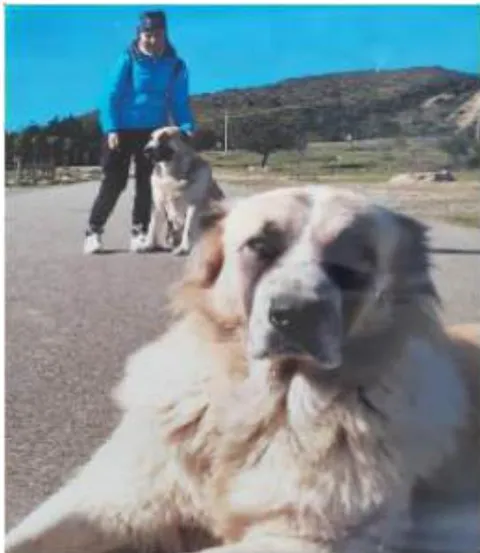
They take me to a remote valley where several packs of true Caucasian Kangals roam freely. Majestic, imposing-and yet, once again, surprisingly gentle.
For them, I've brought five large sacks of dry food and spend two full hours in their company. Watching these dogs in their natural habitat was the crowning moment of my intense and often emotionally exhausting stay in Georgia.
As evening falls, the day comes to a close. I say my goodbyes once more to my four-legged friends and return to Tbilisi.
Back at the hotel, however, my colleagues show little enthusiasm for my solo excursions.
IV. CONCLUSION
Dogs have found their way into a wide variety of human cultures. Of course, not all wolves became herders-just as not all humans did.
Beyond the herds of hoofed animals, humans remained gatherers or specialized as fishers, gardeners, hunters-and eventually became farmers. The dog complemented human abilities and brought advantages in many areas-not only in herding and hunting, but also as pack carriers, guardians, living hot water bottles, diaper service, and loyal companions, such as guide dogs for the blind (Schleidt/Shalter 2018: 23).
In the field of Human-Animal Studies, the focus is on the diverse and complex relationships between humans and animals.
These relationships in modern societies are marked by stark contrasts and deep ambivalences: On one hand, animals are increasingly recognised as autonomous subjects in close personal relationships; on the other hand, there exists a wide range of socially accepted and economically driven human-animal interactions that treat animals as objects-such as in food production or animal testing.
Human-Animal Studies critically examine this diversity and the tensions it produces.
Contradictions in Human-Animal Relationships: Historical Development and Socio-Cultural Variability Human-animal relationships are marked by profound contradictions throughout their historical development and across different socio-cultural contexts. Scholars critically examine, among other things, "...power relations in this area, the artificial boundary between humans and other animals, [...] the discrimination of living beings based on their species membership (speciesism) [as well as] the categorization of animals..." (Kompatscher 2019) (Accessed August 19, 2025: Mensch-Tier-Bezie hung | socialnet Lexikon).
The Australopithecus, an early animal-like being, underwent a remarkable evolutionary transformation over thousands of years. Yet even as a biological animal species, Homo sapiens sapiens experienced a unique form of co-evolution with other four-legged creatures during the last Ice Age-especially with wolves. A symbiotic relationship emerged in which the wolf, acting as a hunting companion, contributed significantly to the survival of hunter-gatherer communities.
However, with the rise of monotheistic revealed religions, humans began to distance themselves from their biological origins. They came to view themselves as the "crown of creation," thus introducing a division between human and animal that continues to influence many cultures to this day. The animal became subject to human mercy-its life and death determined by those who possess language and power.
The price of survival under conditions of dominance and control carries a distinct cultural imprint. One example of this can be seen in Georgia, the country briefly introduced earlier. There, domestic animals-disconnected from any sense of what life might mean-pay a cruel price simply for having been born in this place.
From the moment of birth, their lives become a relentless race against death: hunger, pain and hopelessness dominate their unbearable daily existence in the 21st century. For many, survival is measured in months or a few short years—until they starve.
The song "I'll Stand by You" by British rock singer Chrissie Hynde might serve as a conclusion to these reflections, powerfully reinforcing the arguments presented here. It is dedicated to all those living beings who receive neither comfort nor protection from their suffering, and yet still spread hope-the hope that there will always be people ready to help without conditions and with full commitment. People who are willing to stand up for hundreds of thousands of abandoned companion animals and animals across the globe, just when they need it most.
I dedicate this song to all the homeless animals—who will never hear it, nor understand it- but who will live on in my memory forever.
I'll stand by you Won't let nobody hurt you I'll stand by you Take me in, into your darkest hour I'll stand by you (The Pretenders 1994)
Final Memo 2024-2025
After arriving in Germany, I did not take the time I needed to recover from what I had seen. Instead of practicing self-care, I organized informational events attended by my students, colleagues and acquaintances.
Together with my graphic designer, I created posters which I made accessible in public places across Germany and at the clinics of my former veterinarians to raise awareness about the lack of animal welfare in Georgia. In fact, I was able to collect donations in cash, which were sent to acquaintances I know in Tbilisi; the funds were sent three times. With this money, almost 750 kilograms of dry dog food were purchased.
However, due to the lack of engagement from locals-who perceived the aid efforts as one-sided-I was forced, with great emotional pain, to stop my efforts. It was very important to me that my steps to help be seen as "help for self-help," meaning that locals would strengthen their awareness of their own capabilities and actively participate in a shared project. Above all, to take an active role in social processes, to break down mental barriers-such as those preventing animal welfare-and to use their own resources wisely, even if it was only one Lari (Georgian currency).
Even if my steps and those of my fellow campaigners did not seem to lead to sustainable development, I know very well that nothing in this world is as certain as change.
Half a century ago, Konrad Lorenz wrote:
"... Among all non-human beings, whose mental life, with regard to social behavior, the delicacy of their feelings and the capacity for true friendship comes closest to that of humans, i.e., the noblest of all animals in the human sense, is a fully female dog..." (Lorenz 1950).
Jane Goodall, the most prominent primatologist and chimpanzee researcher, commented on Lorenz's statement: "...Watch wolves in a pack, how they sniff each other, wag their tails as greeting, lick one another, and protect their young, then you will see all the traits we so love in dogs, including their loyalty... Even after centuries of selective breeding, it would probably be difficult, if not impossible, to breed a chimpanzee that could live with humans and form even a remotely good relationship with them as our dogs do. This has nothing to do with intelligence, but with the need to help, to follow, and to seek recognition..." (Goodall 1997).
Conflict of Interest
The authors declare no conflict of interest.
Ethical Approval
Not applicable
Data Availability
The datasets used in this study are openly available at [repository link] and the source code is available on GitHub at [GitHub link].
Funding
This work did not receive any external funding.
References
Cite this article
Related Research

Special Issue
Launch a focused special issue to highlight research, emerging trends, and expert insights in your academic field.