

Abstract
This study reports on the latest stage of a collaborative project at the University of Tennessee (Knoxville, TN, USA). The objective of the project was to design an avatar chatbot (Slabot) capable of eliciting L2 oral responses in Spanish from students and evaluating them according to the criteria established by the American Council on the Teaching of Foreign Languages (ACTFL). After an initial test of Slabot in the spring of 2025 yielded positive results, the present study was conducted in the fall of 2025 in an upper-level undergraduate university course. Of the 19 students who participated, one student’s response reached an aggregate length appropriate for an ACTFL evaluation, and evidence for awarding a particular ACTFL rating is documented. This study concludes that Slabot’s design contributed significantly to the length of this response (24 min 53 s). More broadly, this study suggests that linking an avatar chatbot’s physical features to course content, rather than having students interact with avatar chatbots whose identity is unknown to them, not only facilitates the assignment of an ACTFL ranking but also provides students with an incentive to develop their L2 skills independently.
Explore Digital Article Text
Introduction
In Episode IV of Star Wars (Lucas, 1977), Princess Leia accomplishes what language teachers aim to achieve in their courses: inspiring students to develop their L2 skills independently. The Princess accomplishes this by using what would today be called an avatar chatbot, which is modeled on Leia and projected by R2D2 to heighten the urgency of the task she communicates. This task requires that the viewers of the avatar chatbot, Luke Skywalker and Obi-Wan Kenobi, demonstrate their proficiency in saving the galaxy by defeating the Dark Side, which they ultimately do. The present study concludes that the physical appearance of an avatar chatbot, like that of Leia, can be an important component of achieving an L2 objective. This confirms theories advanced in research on the form of avatar chatbots, which underscore the importance of designing them as recognizable figures to motivate student engagement. The conclusions in this study were reached through analysis of data collected during an experiment in the fall of 2025 involving an innovative avatar chatbot, or Second Language Acquisition chatbot (Slabot). The design of Slabot, its personalization in the spirit of the image projected by R2D2, provided students with a platform to use their L2 oral skills and the instructor with a means of evaluating those skills according to American Council on the Teaching of Foreign Languages (ACTFL) criteria.
Review of Related Literature
Research (Chen et al., 2022) has established a link between interaction with avatar chatbots and the motivation to learn independently. In addition, research on the importance of designing avatar chatbots to promote interaction has highlighted the usefulness of their realistic representation. Chaves and Gerosa (2021) assert that interaction between humans and avatar chatbots is affected by “adopting or neglecting—a particular characteristic [that] may influence the way humans perceive the chatbots.” With respect to personification, or an avatar chatbot’s “perceived identity and personality representations” (Chaves and Gerosa, 2021), studies (Gong, 2008; Koda, 2003) have revealed that human-like characteristics enhance interaction. Research (Qin et al., 2024; Schmitt and Buschek, 2021; Sun et al., 2023) also indicates that the anthropomorphizing of fictional avatar chatbots contributes to conceptualized responses by humans who interact with them.
These studies essentially confirm the effectiveness of what occurred “a long time ago in a galaxy far, far away,” according to the plot of Star Wars. In this context, it merits pointing out that Princess Leia directs her message to Obi-Wan Kenobi, an old acquaintance of the Princess. On the other hand, Luke Skywalker sees the Princess for the first time before Kenobi, at a prior moment in the film. In this scene, “Star Wars IV Luke finds the message,” Luke is attempting to repair a recently purchased R2D2, when he stumbles across a recorded message carried by the droid. Although the Princess does not ask Skywalker to respond to questions as Slabot does, her message convinces him to act (find Kenobi) in part because of what she says (“Help me Obi-Wan Kenobi, you’re my only hope”) but also because of her appearance. Skywalker’s facial expressions and the fact that he says, “Who is she? She’s beautiful,” reveal that he is pleased by the physical characteristics of the image of Leia projected by R2D2. The recording of the video by Leia, whose representation via R2D2 accentuates the real Leia’s physical features, underscores the importance of design in ensuring that the objective of an exercise is met. Just as Leia’s realistic appearance motivates Luke to act, research (Tien Tan et al., 2025) has demonstrated that students prefer avatar chatbots that incorporate features of the instructor.
It is logical to conclude that the incorporation into Slabot of visemes that articulate the instructor’s voice (as discussed below) contributed to “the fact that one student’s response in the spring of 2025 reached 1 min and 10 s [, which] indicates the potential for Slabot to perform a pioneering function for an avatar chatbot, namely, to elicit ACTFL ratable speech samples” (Kaplan, 2026). In the initial experiment in the spring of 2025 in Spanish 331 (Introduction to Hispanic Culture), only 5 students interacted with Slabot. However, as speculated previously (Kaplan, 2026), a larger sample might result in responses that “exceed 1 min and 10 s and reach 1 min, 30s, or even two minutes” (Kaplan, 2026). This possibility inspired the formulation of the parameters for the present study:
During the fall of 2025, the objective will be to determine whether more accurate indications of ratable ACTFL speech samples might be produced after answering five questions. Rather than being an extra-credit assignment, interaction with Slabot will be a required activity in the fall of 2025 in another course in which students view El laberinto del fauno, in-person Spanish 434 (Hispanic Culture Through Film). Spanish 434, also taught entirely in Spanish [like Spanish 331], is an upper-level in-person course typically enrolling 20–25 students that is usually taught twice per week (Tuesday and Thursday), as two 75-min classes during a 16-week semester (Kaplan, 2026, p. 12-13).
Researchers are only beginning to understand the impact of linking the design of avatar chatbots to context rather than creating them randomly or generically, as in the cases of ACTFL’s Ava and other commercial platforms such as Duolingo. The Slabot exercise described above, conducted at the University of Tennessee in Spanish 434 in the fall of 2025, produced empirical evidence that the design of an avatar chatbot can positively impact the development of L2 skills.
Materials and methods
This study continues a collaborative project that began in the spring of 2025 at the University of Tennessee (Knoxville, TN, USA). The collaborative team consisted of Dr. Gregory B. Kaplan as faculty leader, and a technical production team lead by Dr. Jason Johnston (Executive Director of Online Learning), and that was comprised of Naomi Breeden (Executive Director of Solutions), Michael Eilers (Graphic Designer), Chris Emberton (Assistant Director of Interactive Learning Technologies), Jonathan Fuqua (Web Application Developer), and Dani Powers (Graphic Designer).
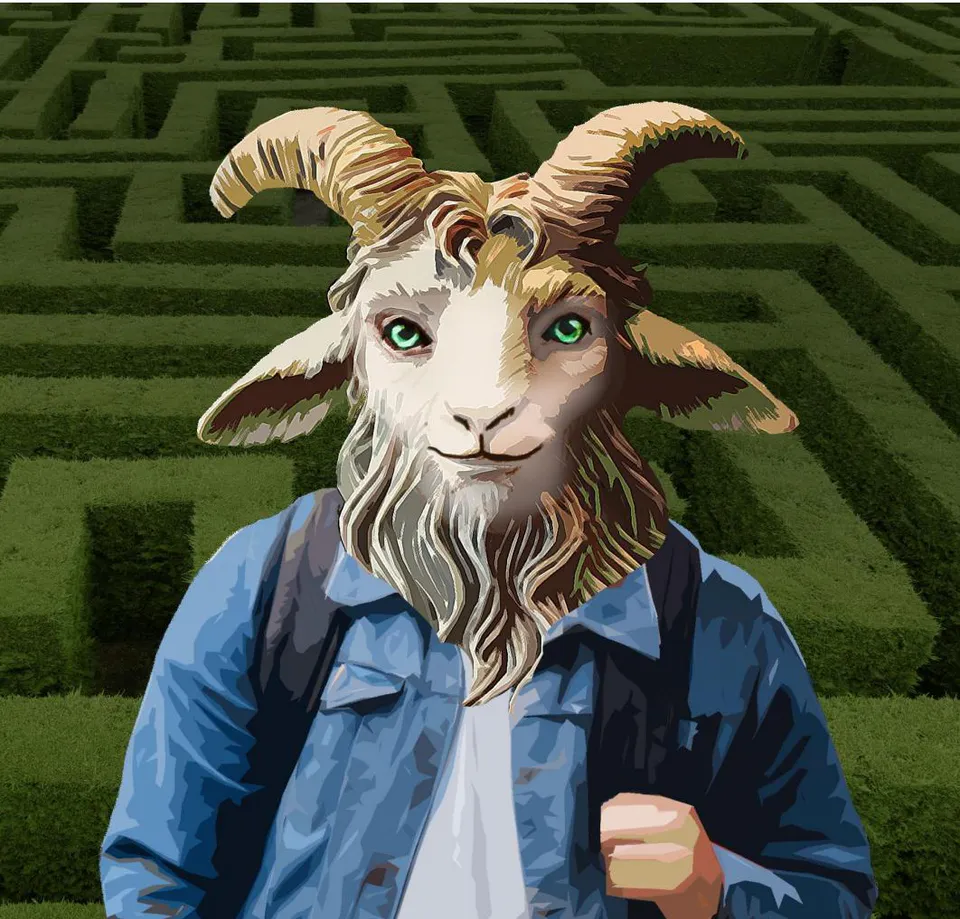
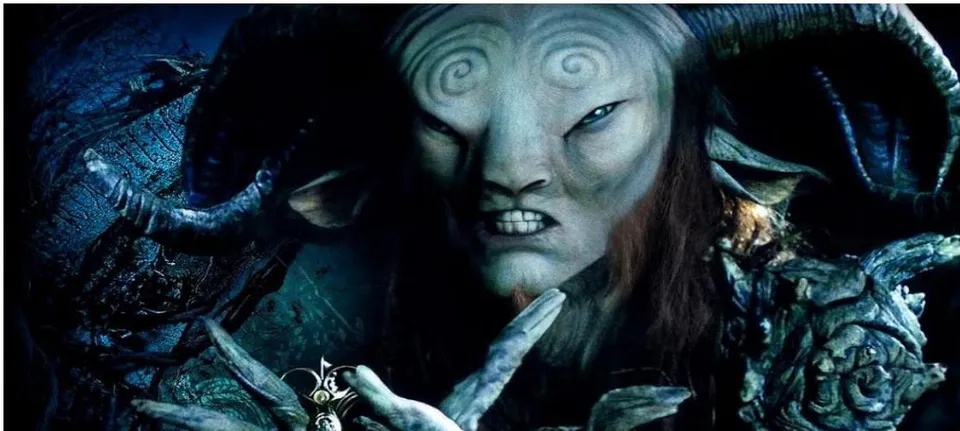
The creation of Slabot by the collaborative team is described in a previous study (Kaplan, 2026). The physical appearance of Slabot, as portrayed in Figure 1, combines human and animal features, in the spirit of fauno (one of the principal characters, as portrayed in Figure 2) in Guillermo del Toro’s feature-length movie El laberinto del fauno (Pan’s Labyrinth) (Toro, 2006).
As discussed previously (Kaplan, 2026), Slabot was envisioned as an avatar chatbot that could benefit students by providing an opportunity to practice oral skills and, potentially, instructors by providing them with sufficient material for an ACTFL evaluation. The fact that students interacted with Slabot in the fall of 2025 is a confirmation that the first objective was achieved. Indeed, in a preliminary description of the exercise, students learned that this was the only objective, and they were not informed that material for an ACTFL rating was also being sought. All students who interacted with Slabot were either majors or minors in Hispanic Studies, and enrolled in upper-level (300, 400) courses, and as such had completed all course requirements at the beginning (100) and intermediate (200) levels (which are available at: https://wlc.utk.edu/spanish/). ACTFL criteria are typically used to evaluate the oral skills of upper-level students with a major or minor in Hispanic Studies at the University of Tennessee.
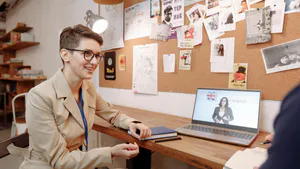
An ACTFL evaluation is assigned after an Oral Proficiency Interview (OPI) which requires a “ratable speech sample” (ACTFL OPI Examinee Handbook 2024, p. 4). The ACTFL ratable speech sample is obtained during a 15 to 30-minute in-person interview. The ACTFL interview can also be conducted virtually for 20 to 40 minutes, a process known as the ACTFL Oral Proficiency Interview-Computer (ACTFL OPIc). The ACTFL OPIc is performed by an avatar chatbot, called Ava, whose physical appearance varies according to the language being tested, as illustrated in Figure 3.
Figure 3: Sample images of the ACTFL OPIC avatar chatbot ACTFL Oral Proficiency Interview-Computer 2024, p. 5.
As described by Language Testing International, which is responsible for selecting the physical appearance of Ava:
Ava is an avatar figure that personifies the OPIc interviewer. Test takers listen to her questions and respond to her. Having the picture of Ava on the screen helps to engage the test takers in conversation and mimics a one-on-one conversation with a native speaker of the target language. (Examination Evaluation, 2015, pp. 17–18)
The individual responsible for assessing the results of an OPIc assigns a rating based on a speaker’s performance across the criteria of three areas (Global tasks and functions, Accuracy, and Text type) in one of four proficiency levels (Superior, Advanced, Intermediate, and Novice):
Superior Global tasks and functions: Support opinions, hypothesize, and deal with topics abstractly. Accuracy: Errors virtually never interfere with communication or distract the native speaker from the message. Text type: Extended Discourse.
Advanced Global tasks and functions: Narrate and describe in major time frames and deal effectively with an unanticipated complication. Accuracy: Understood without difficulty by speakers unaccustomed to dealing with non-native speakers. Text type: Paragraphs.
Intermediate Global tasks and functions: Create with language, initiate, maintain, and bring to a close simple conversations by asking and responding to simple questions. Accuracy: Understood with some repetition by speakers accustomed to dealing with non-native speakers. Text type: Sentences.
Novice Global tasks and functions: Communicate minimally with formulaic and rote utterances, lists and phrases. Accuracy: May be difficult to understand, even for speakers accustomed to dealing with non-native speakers. Text type: Individual words and phrases. (Examination Evaluation, 2015, p. 6)
While the OPIc criteria and proficiency levels are widely accepted for assessment, “[h]aving the picture of Ava on the screen … to engage the test takers in conversation” is not the most effective method according to current research, which establishes that “emotional expressiveness” and “naturalness of movement” have “a positive effect on user engagement” (Zhang and Wu, 2024). Although the Ava avatar chatbot moves its mouth as it speaks, as a standardized tool intended for international use, Ava lacks the type of custom features instilled in Slabot, which is a model for a design that can be tailored to any university course that requires students to speak. To demonstrate the importance of incorporating such features into the design of avatar chatbots, Slabot was modeled on a fictional character familiar to the five students who participated in a pilot project at the University of Tennessee in April 2025. Like Ava, Slabot was endowed with visemes, or visual facial representations of phonemes (the sounds of basic units of speech). In other words, a viseme refers to the mouth shape and facial expression that correspond to a particular sound or word when animating an avatar chatbot. An avatar endowed with visemes is more life-like, and thus more likely to produce more optimal results.
Results
As its course description in the University of Tennessee Undergraduate Catalog reveals, the content of Spanish 434, which is taught entirely in Spanish, varies from one instructor to another (University of Tennessee Undergraduate Catalog, 2025):
Analysis of selected films on subjects concerning life, culture, and artistic traditions in the Hispanic world; exploration of ideological, philosophical social, and political implications of films and a comparison of them with treatments of related subjects in other types of artistic production.
The fall 2025 offering of Spanish 434 focused on the Spanish Civil War (1936-1939) and Francisco Franco’s dictatorship from 1939 until 1975. Students read several literary texts in Spanish that center on these topics and then viewed their cinematic adaptations, including Guillermo del Toro’s screenplay for El laberinto del fauno (Toro, 2005), which takes place in 1944, during the early years of Franco’s dictatorship. After reading the screenplay, students viewed the film (Toro, 2006) and then interacted with Slabot.
19 students interacted with Slabot to complete the required assignment, which counted for seven percent of the final grade. As suggested previously (Kaplan, 2026), the “fact that students will be required to interact with Slabot in Spanish 434 might add some length to their responses,” rather than interact during an extra-credit assignment, as had occurred in Spanish 331 in the spring of 2025.
This speculation was borne out by the results obtained in the fall of 2025. The students received the following instructions to complete the required assignment:
El experimento (la tarea obligatoria) consiste en responder a siete preguntas de un avatar sobre la película El laberinto del fauno y la vida de Miguel Muñoz. Tu interacción con el avatar y tu respuesta serán grabadas, y tú y el profesor tendrán acceso a esta grabación. Mientras estés grabando tu respuesta, no se te permitirá utilizar AI, notas escritas ni leer ningún texto.
Instrucciones para responder a las siete preguntas:
Presiona “Reproducir.”
Escucha la pregunta.
Elige “Insertar.”
Selecciona “Multimedia.”
Selecciona “Cargar/grabar contenido multimedia.”
Presiona “Record” y graba una respuesta en español con todos los detalles que puedas recordar. (Es posible que aparezca una ventana emergente [pop-up] y debas permitir el acceso al micrófono y la cámara).
Cuando termines tu respuesta, presiona “Finished.”
Presiona “Save media.” Solo tendrás un intento.
The experiment (the required assignment) consists of answering seven questions from an avatar about the film Pan’s Labyrinth and the life of Miguel Muñoz. Your interaction with the avatar and your response will be recorded, and you and the professor will have access to this recording. While recording your response, you are not allowed to use AI, take written notes, or read any text.
Instructions for answering the seven questions:
Press “Play.”
Listen to the question.
Choose “Insert.”
Select “Media.”
Select “Upload/Record Media.”
Press “Record” and record a response in Spanish with as many details as you can remember. (A pop-up window may appear, and you may need to allow access to your microphone and camera.)
When you have finished your response, press “Finished.”
Press “Save Media.” You will only have one attempt.
Slabot asked each student seven questions. The first five questions were designed “to inspire students to progress through levels of profundity in their responses, from repetitive details to speculative discourse” (Kaplan, 2026). When creating the questions attention was also paid to the ACTFL guidelines for assigning a rating, which is determined by an “individual’s ability to use the language in all types of situations, with regard to topics that may or may not be familiar and in contexts that may or may not have been encountered previously” (ACTFL Proficiency Guidelines, 2024, p. 6). In this spirit, the first five questions required students to provide information on the film they had recently watched:
Primera pregunta: En la película, el papel del fauno es guiar a Ofelia en sus tres tareas. ¿Cuáles son esas tareas?
First question: In the movie, Pan’s role is to guide Ofelia in her three tasks. What are those three tasks?
Segunda pregunta: El director de la película, Guillermo del Toro, mezcla un mundo real con otro imaginario, ¿qué tienen en común ambos mundos?
Second question: The director of the film, Guillermo del Toro, mixes a real world with an imaginary one: what do the two worlds have in common?
Tercera pregunta: ¿Cuáles son algunas características del capitán Vidal?
Third question: What are some of the characteristics of Captain Vidal?
Cuarta pregunta: ¿Cómo trata el capitán Vidal a Ofelia?
Fourth question: How does Captain Vidal treat Ofelia?
Quinta pregunta: En tu opinión, ¿cuál es la moraleja de la película?
Fifth question: In your opinion, what is the moral of the film?
The final two questions asked by Slabot placed students in a context that they had not “encountered previously” by asking them to speculate about a video (https://www.youtube.com/watch?v=T-j-G2GiE6I [accessed on 25 April 2026]) in which an individual who experienced the Spanish Civil War and Franco’s dictatorship firsthand, Miguel Muñoz (b. 1925, d. 2022), is interviewed and asked to explain some of the hardships that he endured during his lifetime:
Sexta pregunta: El laberinto del fauno tiene lugar en 1944. En unos días verás un vídeo sobre Miguel Muñoz, un hombre que vivió en España durante los años 40. ¿Qué crees que Miguel dirá sobre cómo era su vida entonces?
Sixth question: El laberinto del fauno takes place in 1944. In a few days, you’ll see a video about Miguel Muñoz, a man who lived in Spain during the 1940s. What do you think Miguel will say about what his life was like back then?
Séptima pregunta: Miguel Muñoz nació en 1925. ¿Qué le dirías a Miguel sobre cómo su vida podría verse afectada por los acontecimientos mundiales-políticos, sociales, económicos o militares-entre 1925 y 1945?
Seventh question: Miguel Muñoz was born in 1925. What would you tell Miguel about how his life might be affected by world events-political, social, economic, or military-between 1925 and 1945?
The aggregated results for the 19 students who completed the assignment are revealed in the table below. The times are indicated by seconds (e.g., 22) and minutes:seconds (e.g., 1:26), and responses that failed to upload are indicated by “X.” In addition, the lack of a response from one student (number 12) is indicated by a “?”.
The reasons these responses were not uploaded were technical and non-technical. Concerning the former, several students performed the exercise while using mobile browsers that are not currently supported by Canvas, the course shell used at the University of Tennessee. Students were advised to interact with Slabot on a desktop or laptop computer and not to use these mobile browsers, including iOS Safari and Firefox, which restricted student 3 from uploading responses to all seven questions, and which restricted two other students, numbers 1 and 5, from uploading responses to questions 6 and 7, respectively. In the case of student 12, the student appears to have simply neglected to upload the seventh response.
Aggregated results of student interactions with Slabot in the fall of 2025.
| Student number | Q 1 | Q 2 | Q 3 | Q 4 | Q 5 | Q 6 | Q 7 | Total time |
|---|---|---|---|---|---|---|---|---|
| 1 | 22 | 1:26 | 43 | 36 | 36 | X | 34 | 4:17 |
| 2 | 1:02 | 49 | 33 | 35 | 40 | 28 | 44 | 4:51 |
| 3 | X | X | X | X | X | X | X | X |
| 4 | 17 | 42 | 15 | 29 | 36 | 42 | 1:03 | 4:04 |
| 5 | 13 | 17 | 27 | 9 | 13 | 11 | X | 1:30 |
| 6 | 18 | 17 | 8 | 11 | 12 | 17 | 17 | 1:40 |
| 7 | 1:09 | 59 | 51 | 47 | 1:12 | 45 | 50 | 6:33 |
| 8 | 22 | 40 | 36 | 39 | 45 | 52 | 1:04 | 4:58 |
| 9 | 44 | 1:13 | 41 | 42 | 1:22 | 1:07 | 1:12 | 7:01 |
| 10 | 21 | 1:15 | 22 | 46 | 2:06 | 25 | 1:04 | 6:19 |
| 11 | 7 | 25 | 21 | 21 | 23 | 21 | 42 | 2:40 |
| 12 | 3:03 | 4:31 | 3:13 | 4:18 | 3:22 | 6:26 | ? | 24:53 |
| 13 | 18 | 32 | 23 | 24 | 43 | 28 | 34 | 3:22 |
| 14 | 25 | 21 | 30 | 31 | 27 | 31 | 53 | 3:38 |
| 15 | 19 | 28 | 16 | 19 | 24 | 37 | 47 | 3:10 |
| 16 | 22 | 20 | 24 | 16 | 33 | 29 | 45 | 3:09 |
| 17 | 9 | 36 | 43 | 25 | 25 | 21 | 39 | 3:18 |
| 18 | 35 | 26 | 40 | 37 | 38 | 35 | 27 | 3:58 |
| 19 | 22 | 31 | 45 | 32 | 12 | 34 | 27 | 3:23 |
As the results of the student interaction with Slabot in the fall of 2025 reveal, response 12 was 24 min 53 s long, which was appropriate for an ACTFL rating, as explained below. The results provided the instructor with a wealth of useful data for assessing and correcting grammatical skills. Moreover, the case of student 7 is interesting insofar as this student participated in the initial Slabot experiment in the spring of 2025. In this experiment (documented in Kaplan, 2026), Slabot only asked the students the first question, and the response of student 7 lasted 33 s. When student 7 was asked the same question in the fall of 2025, the response measured 1 min 9 s. The 36-second increase in response time may have occurred because the student viewed El laberinto del fauno twice, which underscores the importance of incorporating topics familiar to students into questions to achieve longer response times.
The response by student 12 is remarkable, not only for the level of detail but also because of its length. As OPI interviewers and language teachers know, it is rare for a student to speak an L2 for 25 minutes. Slabot’s ability to elicit a 25-minute response suggests that the value of such an avatar chatbot is enhanced by linking its design to course content. The response by student 12 was the following:
Pregunta 1 (3:03): En El laberinto del fauno, um, el fauno le da a Ofelia tres tareas para mostrar si ella es la princesa del mundo mágico. La primera tarea es para entrar, um, un árbol grande y obtener una llave del que es en el estómago de un sapo grande. Y el sapo es, el sapo vivo en el dentro del árbol y, um, Oliv, Ofelia, tiene que entrar del, um, del árbol y, uh, hace que el sapo para salir. (1:00) Y, entonces, ella puede obtener la llave. La segunda tarea es en el salón de hombre pálido, y es, él es un monstruo con, um, ojos en sus manos. Y, Ofil, Ofelia tiene que buscar la llave para abrir una caja y sacar unas dagas. Pero ella haceste un error porque ella, en el durante de ese actividad ella come dos uvas y esta acción despierta el monstruo y ella corre y puede escapar del hombre pálido. Y la tercera tarea para ella es muy dificil porque (2:00) ella tiene que matar a su hermano, que es un bebé, y es como un sacrificio para un ritual. Y Ofelia no puede hacerse esto, esta tarea porque quiero proteger a su hermano. Y en el final ella muere pero en el mundo mágico ella, ella, uh, es la princesa del mundo mágico, y, um, la acción de protegiendo a su hermano es la cosa que causa a ella convierte en el, en la princesa (3:00) del mundo mágico.
Question 1 (3:03): In Pan’s Labyrinth, um, the Faun gives Ofelia three tasks to determine whether she is the princess of the magical realm. The first task involves entering-um-a large tree to retrieve a key located inside the stomach of a large toad. The toad lives deep within the tree, and-um-Ofelia must venture inside and coax the toad to come out. (1:00) Only then can she retrieve the key. The second task takes place in the chamber of the Pale Man-a monster with-um-eyes located in his hands. Ofelia must use the key to unlock a box and retrieve several daggers. However, she makes a mistake: during the course of this task, she eats two grapes. This action awakens the monster, forcing her to flee in order to escape the Pale Man. The third task is extremely difficult for her because (2:00) she is required to kill her brother-an infant-as a sacrificial offering for a ritual. Ofelia finds herself unable to carry out this task, as she wishes to protect her brother. Ultimately, she dies; yet, in the magical realm, she is revealed to be the true princess. Indeed, the very act of protecting her brother is what allows her to transform into-and take her rightful place as-the princess (3:00) of the magical realm.
Pregunta 2 (4:31): En la historia, el mundo real y el mundo mágico tiene muchas cosas en común. Um, una cosa es que en dos mundos Ofelia tiene que enfrentarse con muchas problemas y situaciones dificiles. Por ejemplo, en el mundo real su mamá está muy enferma y embara, emberezada, y su salud no es bueno. Y. también, uh, Vidal es una persona, persona muy mal y no tiene un buen enérgia y tiene mucho odio. Entonces, Ofelia tiene que (1:00), tiene que vivir su vida con todos esos problemas. Y el mundo mágico tiene que hacer tareas muy peligrosas para, um, para, uh, para prover, para probar su, su, um, lo siento. Uh, ella tiene que hacer la tarea para probar si es, él, ella es una persona buena y, y es un buen princesa para el mundo mágico. Y la segunda cosa en común es que las dos, los dos mundos tienen muy reglas, muchas reglas (2:00) y, um, eso es, es un ejemplo en su vida real es que Vidal tiene muchas reglas que son muy estrictas para, um, Ofelia y su mamá seguir. Y, um, se enojarse co, como los dos mujeres no siguen las reglas. Y también el fauno tiene, tiene reglas estrictas para que ella necesita seguir. Y un ejemplo de las reglas es, son, es las tres tareas. Y el tercero, uh, cosa en común es, um, los dos mundos (3:00) son muy peligrosos. Um, por ejemplo, en la vida real en ese momento en historia real hay una guerra y no es una situación de viviendo muy seg, segura. Y todos los dias tienen que sacrificar su sien, sentimiento de una vida muy cómodo porque la guerra es un evento muy tenso. Y también hay mucha violencia.Y también en el mundo mágico hay monstruos que son muy (4:00) peligrosos que pueden, uh, matar a Ofelia, como, uh, el hombre pálido. Y esos, esos, uh, monstruos, muestrar que en, que la situación de ella, ella no puede escapar de las eventos males en su vida.
Question 2 (4:31): In the story, the real world and the magical world share many things in common. For one thing, in both worlds, Ofelia has to face numerous problems and difficult situations. For example, in the real world, her mother is very ill-and pregnant-and her health is poor. Furthermore, Vidal is a truly wicked individual; he radiates bad energy and is filled with hatred. Consequently, Ofelia is forced (1:00) to live her life amidst all these difficulties. In the magical world, she must undertake very dangerous tasks to-well, to prove herself. She has to complete these tasks to demonstrate that she is a good person and a worthy princess for the magical realm. The second thing the two worlds have in common is that they both possess a great many rules. (2:00) An example of this in her real life is that Vidal imposes numerous rules-which are extremely strict-that Ofelia and her mother are expected to follow. He becomes furious whenever the two women fail to abide by these rules. Similarly, the Faun has strict rules that she is required to obey. A prime example of these rules is the set of three tasks she must complete. The third thing the two worlds have in common (3:00) is that they are both extremely dangerous. For instance, in her real life-set against the backdrop of actual history-there is a war going on, making for a very unsafe living environment. Every day, they are forced to sacrifice their sense of comfort and security, as the war creates a constant atmosphere of tension. There is also a great deal of violence. Likewise, in the magical world, there are monsters-such as the Pale Man-that are highly (4:00) dangerous and capable of killing Ofelia. These monsters serve to illustrate that, given her circumstances, she cannot escape the malevolent forces at work in her life.
Pregunta 3 (3:13): El capitán Vidal tiene muchos características males, uh, por ejemplo, él es un, tiene, tiene un personaje muy fuerte y serio. Y también es muy estricto. Y quiere que todos, uh, están, en su control y quiere que todos los, uh, lo obedece. Y también es una persona autoritaria y hablo la, la manera que él habla es muy dura y es claro que él no tiene, uh, cariña para ninguna persona, uh, no para Ofelia, no para su esposa. (1:00) Y él solo, um, le importa su trabajo y para mantener control y orden. Y otro característica es que él es muy violento y en pel, en la película, um, podemos ver que él, uh, no, él no tiene problemo hacerse, hacer nada a ninguna persona para obtener que, que, um, él quiere y, um, no, no tiene problema con usar violencia y tácticos muy, um, males para, (2:00) para, um, para obtener lo que quiere. El es poder o, nin, um, como varies cosas. Y también él es muy orgulloso y le importa su imagen y su apellido y cómo, um, otras personas, uh, ve a él y la imagen otras personas tienen para él. Y, um, eso es por lo que él quiere un hijo no un hija porque, uh, cree que un hijo var, um, va a, um, (3:00) uh, generar mucho odio y, um, buenas cosas para su familia y su nombre.
Question 3 (3:13): Captain Vidal possesses many negative traits; for instance, he has a very strong and serious demeanor. He is also extremely strict. He wants everyone under his control and demands that everyone obey him. Furthermore, he is an authoritarian figure; the way he speaks is very harsh, and it is clear that he holds no affection for anyone-neither for Ofelia nor for his wife. (1:00) His sole concern is his work-specifically, maintaining control and order. Another characteristic is his extreme violence; throughout the film, we see that he has absolutely no qualms about doing whatever it takes to anyone (2:00) to get what he wants. He has no issue employing violence and highly malicious tactics to achieve his ends-whether that involves power, status, or various other objectives. He is also intensely proud; he cares deeply about his image, his family name, how others perceive him, and the reputation he projects to the world. This is precisely why he desires a son rather than a daughter-because he believes that a male heir will (3:00) bring great honor and prestige to his family and his name.
Pregunta 4 (4:18): Vidal trata a Ofelia muy mal y esta tratamiento mal es desde el principio de la historia. Y él no s, uh, se ve a ella como una niña pero ve a ella co, uh, como una cosa muy molesta. Y, um, cuando ella, uh, llega al primera, uh, no le habla mucho y él no tiene, uh, la intención para ser, um, uh, patic, uh, simpático con ella. Y, um, Ofelia tiene mucha imaginación y, um, (1:00) uh, uh, ella mucha imaginación y cómo, y, uh, Vida, Vidal no entiende a mágico o imaginación. Y, um, él cree que, uh, cosas como eso son tontas. Y por esta razón siempre, uh, le habla con un, um, tono muy frío y, uh, antipático. Y, um, él cree, él no le gusta la idea que no puede controlar a Ofelia porque Ofelia, um, tiene (2:00) imaginar mucho y como transportar a s, a su mismo a un mundo mágico. Y, um, él no le gusta y, um, él muy, eno se, muy, él se enoja mucho cuando Of, um, no tiene control estricto de Ofilia. Y, um, pero, también, por esta razón, uh, él ignora a ella muchos y trata a ella como si no importante. Y, al final, uh, Ofelia se lleva a su hermano para, um, para sacrificar (3:00) pero ella no sacrifica a su hermano. En eso me, momento, Vidal, um, Vidal, uh, sien, se siento mal, y eso es porque la vida de su hijo es en peligro. Entonces, no le importa, no l, no le importa mo, mucho, um, uh, la salud o seguridad de Ofelia. Solamente le importa su bebé. Y eso es esta sentimiento que, esto sentimiento que él siente muestra que, um Ofelia, no es, un, uh, (4:00) una o, una persona muy importante en su vida. Y, um, no le importa su, uh, sus, su personalidad, su seguridad, todos.
Question 4 (4:18): Vidal treats Ofelia very poorly-and this mistreatment begins right from the start of the story. He doesn’t view her as a child; instead, he sees her as a mere nuisance. When she first arrives, he barely speaks to her, and he has absolutely no intention of being kind or pleasant toward her. Ofelia possesses a vivid imagination (1:00), which is something Vidal simply cannot comprehend. He believes that such things are foolish. For this reason, he always addresses her in a very cold and hostile tone. He dislikes the idea that he cannot control Ofelia, particularly because she spends so much time (2:00) imagining things and mentally transporting herself into a magical world of her own. He resents this, and he becomes furious whenever he lacks strict control over her. Consequently-and for this very reason-he frequently ignores her and treats her as if she were completely insignificant. In the end, Ofelia takes her baby brother away, ostensibly to sacrifice (3:00) him-though she ultimately does not go through with it. At that moment, Vidal is overcome with distress-specifically because his son’s life is in danger. Thus, he cares very little-if at all-about Ofelia’s health or safety; his only concern is his baby. This sentiment reveals that Ofelia is not, (4:00) in his eyes, a significant figure in his life. He cares nothing for her personality, her safety, or anything else about her.
Pregunta 5 (3:22): En mi opinión, la moraleja de la pelícua, pelicula es, um, hay muches situaciones como, um, hacer la cosa correcta es más importante de solamente, um, obedece a órdenes. Y, lo siento, Ofelia vive en una vida muy dificil. Su situaciones, su situación es muy dificil porque ella tiene personas en su vida que, uh, quiere que ella solamente sigue a, uh, lo que dice a ella. Um, el fauno es como eso (1:00) y Vidal también. Pero Ofelia puede, um, pensarse por si misma y es, e eso es una cosa muy buena. Y, um, ella muestra que puede pien, pensar en si misma cuando ella, um, elige a proteger a su hermano y no sacrifica él, uh, en el ritual. Y, um, es, esta, es, es un momento muy importante en la película y la historia porque muestre, muestra, um, la corazón buena de Ofelia. Y (2:00) una otra moraleja es para, es que, iman, imaginación y la creencia en mágica puede darnos, um, esperanza y fuerza como s, uh, um, s, uh, enfrentamos con situaciones muy dificiles en nuestres vidas. Y en la historia el mundo mágico en, en una manera, uh, permite a Ofelia para sentirse fuerte porque su vida real ella tiene muy, mucha, um, mucha odio de Vidal e, y es (3:00) una negativa muy grande. Entonces, ella lucha con la neguetiva, negue, negatividad, um, con su imaginación y creencia en elementos, uh, un poco de sobrenatural.
Question 5 (3:22): In my opinion, the moral of the movie is-um-that there are many situations where doing the right thing is more important than simply-um-obeying orders. And-I feel for her-Ofelia leads a very difficult life. Her situation is extremely tough because she has people in her life who-uh-want her to simply follow-uh-whatever they tell her to do. Um, the Faun is like that (1:00), and so is Vidal. But Ofelia is able to-um-think for herself, and that is a very good thing. And-um-she demonstrates that she can think for herself when she-um-chooses to protect her brother rather than sacrificing him-uh-in the ritual. And-um-this is a very important moment in the film and the story because it reveals-um-Ofelia’s good heart. And (2:00) another moral is that imagination-and a belief in magic-can give us-um-hope and strength as we-uh-face very difficult situations in our lives. And in the story, the magical world-in a way-allows Ofelia to feel strong, because in her real life, she faces a great deal of-um-hatred from Vidal; it is (3:00) a massive source of negativity. So, she combats this negativity-um-with her imagination and her belief in elements that are-uh-somewhat supernatural.
Pregunta 6 (6:26): Él probablemente, um, describe que su vida es muy, muy dificil en los años 40s. Um, y es un, una época muy dificil para vivir. Y eso es porque la guerra, uh, sucede en y, y, um, y Francisco Franco tiene poder en ese momento en historia. Y, um, esos son elementos muy dificiles de vida en los años 40s. Y la parte que es muy triste es que él, en este momento, uh, fue una, (1:00) um, un niño. No es un adulto. Entonces, um, es esos momentos cambia la manera que probablemente cambia el manera que él, um, ve a mundo. Y probablemente mencionará com, uh, de, um, el hambre y la, la falta de comida porque en esos años, um, tienen que dividir la comida, uh, entre, uh, su familia y otros en el país y, um, la comunidad. Entonces, no hay (2:00) suficiente comida para todos las personas. Y, um, um, hay, hay muy, uh, e, e, él problem, probablemente también mencionará que, um, tienen que hacer muy cosas en secreta. Por ejemplo, um, cuando, uh, cultiva grano en, uh, si, cuando cultiva el grano, um, necesita que, um, uh, oscurar y hacerse segura de que, um, el gobierno y la comunidad no ve a (3:00) es, esa grano porque, um, porque el gobierno no le gusta, uh, las personas de la comunidad tienen poder o secretos como eso. Y, um, también Miguel probablemente, um, hablará co, uh, sobre el miedo que s, uh, tienen él y su familia y el país, porque, um, la autoridad del gobierno y Francisco Franco, uh, fue muy, uh, fuerta. Y, um, uh, las personas no tienen (4:00) la libertidad para hacer, um, como, como, como todos, como quieres no pueden hablar las cosas que quieres, quieren. Y, um, también la ropa y el pelo es, um, son elementos que no tienen control porque si el gobierno, um, da cuenta de que, uh, es una miembro del par, del, uh, republicano, um, uh, el gobierno corta a el pelo de los, las mujeres (5:00) que son partes de rep, republicanos. Y eso es una manera adicionalmente de, um, tienen control de, uh, sus personas y la país. Y también, um, él probablemente dice que, um, hay muy hipocresía porque en realmente, um, uh, uh, en esa situación una persona tienen, uh, pensamientos y ideas para, uh, sobre, um, algunos, uh, temas o eventos. Por, (6:00) uh, pero no puede expresar a sus sentimientos porque es, es muy peligroso y, um, no se como el gobierno o la autoridades va a, um, reaccionar a esa, esa información.
Question 6 (6:26): He probably-um-describes his life in the 1940s as being very, very difficult. Um, and it was a very difficult era to live through. This was because the war-uh-was taking place, and-um-Francisco Franco held power at that moment in history. And-um-these were very challenging aspects of life in the 1940s. The truly sad part is that, at this time-uh-he was (1:00) just a child. He wasn’t an adult. Consequently-um-those moments altered his perspective; they likely changed the way he-um-viewed the world. He will probably mention-uh-the hunger and the scarcity of food, because during those years-um-they had to ration food-uh-among his family, others in the country, and-um-the community. So, there wasn’t (2:00) enough food for everyone. And-um-he will likely also mention that-um-they had to do many things in secret. For example- um-when he grew grain-uh-when he cultivated crops-um-he needed to-uh-wait until dark and ensure that-um-the government and the community didn’t see (3:00) that grain. This was because-um-the government didn’t like it when people in the community possessed power or kept secrets like that. And-um-Miguel will also likely-um-speak about the fear that he, his family, and the entire country experienced, because-um-the authority of the government and Francisco Franco was very-uh-powerful. And-um-people didn’t have (4:00) the freedom to act as they pleased; they couldn’t speak their minds or say the things they wanted to say. And-um-clothing and hairstyles are also elements over which people have no control; for instance, if the government-um-realizes that a woman is a member of the Republican Party-um-the government cuts the hair of those women (5:00) who are affiliated with the Republicans. And this is yet another way for them to-um-exert control over their citizens and the country. Furthermore-um-one could likely argue that there is a great deal of hypocrisy involved, because, in reality-um-in such a situation, an individual possesses thoughts and ideas regarding-um-certain issues or events. However, (6:00)-um-they cannot express their feelings, because doing so is extremely dangerous; one simply does not know how the government or the authorities will-um-react to such information.
Discussion
The response length by student 12 permitted the assignment of an ACTFL rating, which was determined to be at the Advanced level. The student demonstrated this proficiency by narrating in “major time frames” (albeit by using the historical present tense). In addition, the student was understood without difficulty by an instructor used to listening to non-native speakers and demonstrated the ability to develop ideas by using interrelated sentences, that is, paragraphs. The fact that student 12 produced a response that reached an appropriate length for an ACTFL evaluation validated current theories on the design of avatar chatbots and confirmed predictions made during the first stage of the Slabot experiment (Kaplan, 2026).
At the same time, student 12 committed a good number of grammatical errors in Spanish. Several examples of such errors are found, for example, at the beginning of the answer to question 2:
En la historia, el mundo real y el mundo mágico tiene muchas cosas en común. Um, una cosa es que en dos mundos Ofelia tiene que enfrentarse con muchas problemas y situaciones dificiles. Por ejemplo, en el mundo real su mamá está muy enferma y embara, emberezada, y su salud no es bueno.
Grammatical errors:
En la historia, el mundo real y el mundo mágico tiene: use of the incorrect third-person singular indicative verb “tiene” rather than the correct third-person plural indicative verb “tienen”;
Ofelia tiene que enfrentarse con muchas problemas: use of the incorrect feminine adjective “muchas” rather than the correct masculine adjective “muchos”;
su salud no es bueno: use of the incorrect masculine adjective “bueno” rather than the correct feminine adjective “buena.”
Other examples of grammatical errors are found in the first minute of the answer to question 3:
El capitán Vidal tiene muchos características males, uh, por ejemplo, él es un, tiene, tiene un personaje muy fuerte y serio. Y también es muy estricto. Y quiere que todos, uh, están, en su control y quiere que todos los, uh, lo obedece. Y también es una persona autoritaria y hablo la, la manera que él habla es muy dura y es claro que él no tiene, uh, cariña para ninguna persona, uh, no para Ofelia, no para su esposa.
Grammatical errors:
muchos características males: use of the incorrect masculine adjective “muchos” and the non-existent form “males” rather than the correct feminine adjectives “muchas” and “malas” (muchas características malas);
Y quiere que todos, uh, están, en su control y quiere que todos los, uh, lo obedece: use of the incorrect present indicative verb “están” rather than the present subjunctive verb “estén” and use of the incorrect third-person singular present indicative verb “obedece” rather than the third-person plural present subjunctive verb “obedezcan”;
él no tiene, uh, cariña para ninguna persona: use of the non-existent noun “cariña” rather than the correct masculine noun “cariño.”
The appearance of these grammatical errors places student 12 into a sub-category of Advanced proficiency, or Advanced Low proficiency. The rating of “Advanced Low” was confirmed by a colleague at the University of Tennessee who had also received ACTFL training. The results of the second evaluation can be obtained by contacting the author at [email protected].
Speakers at the Advanced Low level “demonstrate the ability to narrate and describe in all major time frames … in paragraph length discourse. ..[but] with noticeable self-correction and a certain ’grammatical roughness” (ACTFL Oral Proficiency Interview, 2005). Student 12 engages in self-correction on many occasions, and the grammatical errors described above illustrate grammatical roughness. Examples of self-correction are found in the answers to:
Question 1: es la cosa que causa a ella convierte en el, en la princesa del mundo mágico; incorrect masculine definite article “el” replaced by the correct feminine definite article “la”;
Question 4: no le habla mucho y él no tiene, uh, la intención para ser, um, uh, patic, uh, simpático con ella; non-existent adjective “patic” replaced by the correct form “simpático”;
Question 5: es un momento muy importante en la película y la historia porque muestre, muestra; incorrect third-person singular subjunctive verb “muestre” replaced by the correct third-person singular indicative verb “muestra”;
Question 6: Y la parte que es muy triste es que él, en este momento, uh, fue una, um, un niño; incorrect feminine indefinite article “una” replaced by the correct masculine indefinite article “un.”
Conclusions
The present study demonstrates the effectiveness of an avatar chatbot designed to complement course content. It is instructive to underscore the fact that Slabot was not created generically, as in the ACTFL OPIc and other commercial platforms, but was the product of attention paid to linking the physical form of the avatar chatbot to a context familiar to students who interacted with it. In the fall of 2025, this design enabled students to practice their Spanish in familiar and unfamiliar situations, which, as underscored above, was one of the reasons that Slabot was created. In this light, it is interesting to speculate that more students might have submitted responses appropriate for ACTFL evaluation if they had been informed that this was an objective of the exercise. At the same time, as projected previously (Kaplan, 2026), Slabot was able to elicit a student response in the fall of 2025 that was evaluated according to ACTFL criteria, which speaks to the importance of tailoring an avatar chatbot to encourage optimal results.
Moreover, the level of detail provided by student 12 facilitated the assignment of an ACTFL rating of Advanced Low. This highlights the importance of establishing thematic parameters for an interview that an interviewer can monitor (such as whether all students in a course have seen a film on which an interview is based), rather than offering instructions whose completion is difficult to monitor, such as “[r]eading or listen[ing] to the news for the weeks leading up to taking the OPI or OPIc” (Tips for OPI and OPIc, 2026). It is instructive to return at this point to the analogy between an effective avatar chatbot and the success of the image of Princess Leia projected by R2D2 in motivating a novice, Luke Skywalker, to achieve “Superior proficiency” and help rescue the galaxy from the Dark Side. The goal of the Slabot experiment is not as lofty, though its universal appeal lies in its adaptability to any L2 course.
Of course, while the sample of 19 students considered here is appropriate for an exploratory classroom-based study, the results are not meant to be generalized beyond this sample without further testing. In Slabot’s case, the final stage of the experiment took place in the spring of 2026, when the same assignment described in the present study was implemented in Spanish 331. This was the first time that the Slabot assignment was required at the 300-level at the University of Tennessee, and the results collected from 47 students interacting with Slabot will form the basis of a future study.
Abbreviations
The following abbreviations are used in this manuscript:
| b. | born |
| d. | died |
| min | minutes |
| s | seconds |
Conflict of Interest
Ethical Approval
Not applicable
Data Availability
Funding
This work did not receive any external funding.
References
Cite this article
Related Research

Special Issue
Launch a focused special issue to highlight research, emerging trends, and expert insights in your academic field.